
Exactly how I'd spend a weekend in the Dordogne countryside
You stop in Le Bugue after a short drive, thinking you’ll grab a coffee and walk through the market before heading somewhere else. It looks busy at first, but within half an hour, stalls start packing up, people leave all at once, and when you try to sit down, most cafés are either full or not serving anymore. It’s not a bad experience, it just doesn’t quite line up.
That’s usually the part that’s hard to see before you arrive.
A weekend in the Dordogne isn’t about finding more places to visit. It’s about understanding how the day actually moves between markets, cafés, and short drives, and adjusting slightly so things fall into place instead of working against each other. If you get that right, everything becomes easier without needing to plan much.
This guide is built around those small adjustments. When to visit the markets so they still feel active, where cafés are easiest to sit in without rushing, how to fit in simple walks without turning them into a full plan, and where to stay so you’re not constantly driving between villages.
How to get to the Dordogne
Reaching the Dordogne region is surprisingly easy, and once you arrive, you’ll be ready to immerse yourself in the calm, rustic charm of this area. The three nearest airports to the Dordogne are:
Bordeaux-Mérignac Airport (BOD) – This is the most accessible airport for those traveling from outside of France. It’s about a two-hour drive from Bordeaux to the Dordogne region. Bordeaux itself is worth a visit if you have some extra time, known for its wine culture and charming riverside.
If you fancy a weekend or a few days in Bordeaux, we cover all cozy areas and cafés (and wine bars) in this piece.
Bergerac Dordogne Périgord Airport (EGC) – Located closer to the heart of the Dordogne, this regional airport offers convenient access to the area. It’s perfect for those arriving from within Europe, particularly the UK.
Limoges Airport (LIG) – A bit further away (approximately two and a half hours by car), Limoges is another good option for travelers seeking access to the Dordogne, especially those coming from southern France.
Once you land, the best way to get around the Dordogne is by car. Renting a car gives you the freedom to explore the quaint towns and hidden gems at your own pace. It’s a quiet, peaceful way to move between yoga retreats, markets, and scenic walking paths, where public transport is sparse.
Places like this tend to feel even quieter once you’ve seen how similar villages work in this Auvergne villages guide.
Where to stay in the Dordogne
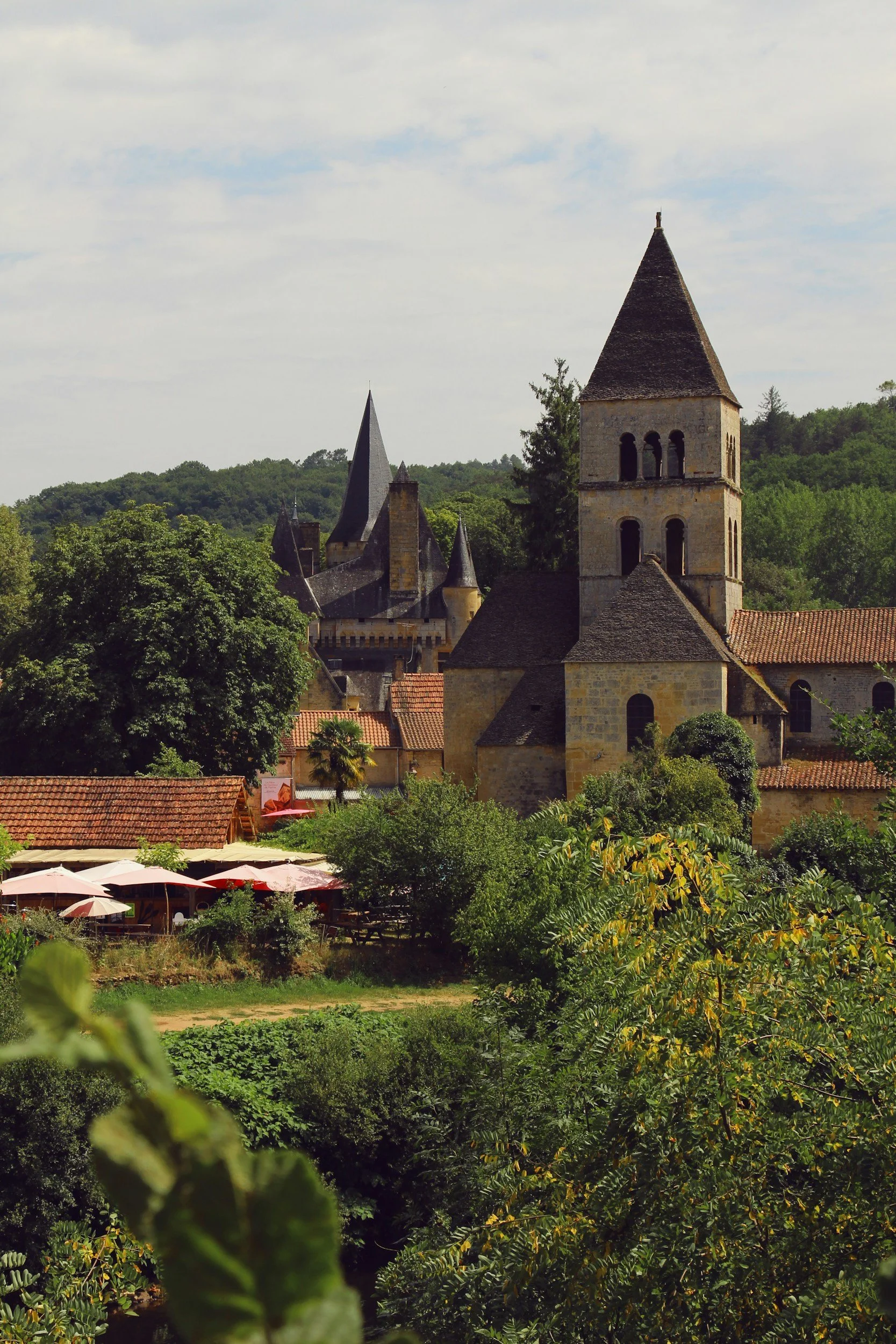
Where you stay in the Dordogne matters more than it looks at first. On a map, everything seems close, but once you’re driving between villages, it adds up quickly. Roads are narrow, you slow down through every small town, and it’s easy to lose an hour just moving between places. For a weekend, it’s usually better to stay in one area and keep things close.
In Le Bugue, things are simple from the start. The village sits along the Vézère river, and most daily needs are within walking distance. There’s a weekly market, a few bakeries, and easy access to riverside paths if you just want to get out for an hour without planning anything. From here, you can reach places like Les Eyzies or smaller nearby villages in under 25 minutes by car, which makes it easier to structure your day without rushing. La Maison des Merveilles fits well if you want something low-key and easy. It’s inside the village, so you can walk out in the morning for coffee or a short stroll, then drive out later once things open.
If you want something quieter and don’t mind being a bit more remote, the area around Gavaudun feels more spread out. You’re not walking to anything here, so days tend to be slower by default. You’ll usually head out for one main stop, maybe a market or a village, then come back and stay put for the afternoon. Domaine de Gavaudun works well for that kind of setup. It’s the type of place where you actually use the property, whether that’s sitting outside in the late afternoon or staying in for dinner instead of going out again.
Around Saint-Avit-Sénieur, you get a slightly different pace again. The village itself is small, and most people visit during the day, so evenings are very quiet. Staying nearby means you’re close to places like Beaumont-du-Périgord without being right in them. Le Mas de Montet is set just outside the village, so you’ve got space around you and can go for short walks directly from the property. It works best if you don’t want to be out all day and prefer to come back earlier rather than chasing one more stop.
One thing that’s worth knowing before booking is how evenings work in this part of France. Smaller villages don’t have many restaurants, and a lot of places are only open on certain days or require reservations. If you’re staying somewhere more remote, it helps to check in advance whether you’ll eat on-site or need to drive out for dinner, because there usually isn’t a backup option nearby.
For a weekend, the easiest setup is to choose one base and stay there. Moving between accommodations sounds good in theory, but it takes more time than expected, and you end up packing and driving instead of actually enjoying the area. Once you’re settled in one place, the Dordogne becomes much easier to move through without overthinking it.
It also helps to know the difference between somewhere that’s calm and somewhere that’s simply shut down, which becomes clearer in this quiet vs closed piece.
Yoga retreats and wellness options that actually fit into a Dordogne weekend
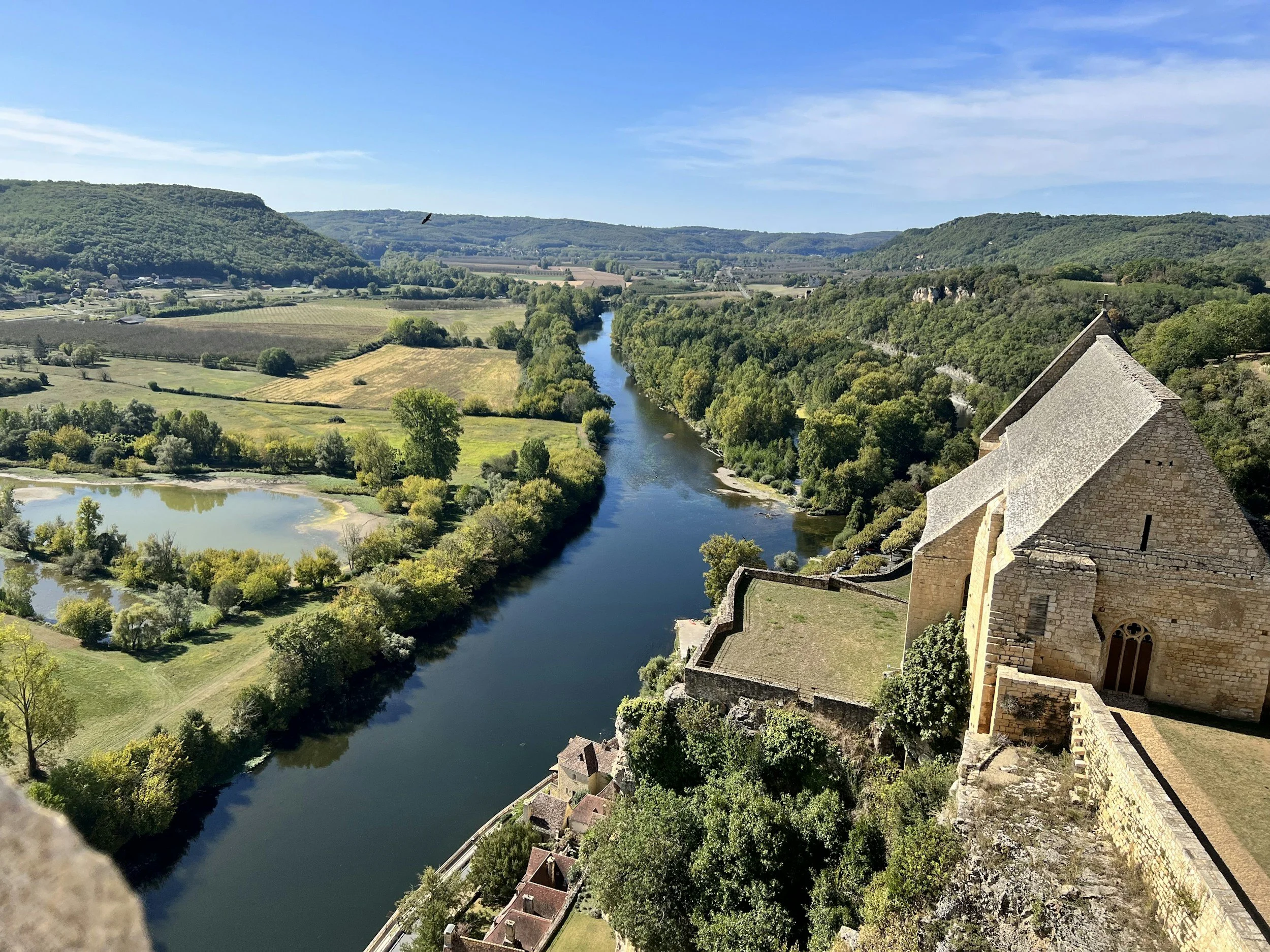
Wellness in the Dordogne usually isn’t something you build a full plan around. It tends to sit in between everything else, and it works better when it stays close to where you’re based rather than becoming something you need to drive to at a specific time.
Around Le Bugue and the Vézère valley, you won’t find many permanent yoga studios with fixed daily schedules. Most sessions are small and seasonal, often run by guesthouses or visiting teachers. That means availability changes, and classes aren’t always listed clearly online. In practice, it’s easier to check with your accommodation a day or two before and see what’s actually running. When classes are available, they’re usually early morning around 08:00–09:00 or early evening, which fits around market visits or a short walk without needing to rearrange your whole day.
If you’re staying somewhere like Domaine de Gavaudun, the structure is different. Here, yoga is often part of the stay rather than something you book separately. A typical day might start with a morning session before breakfast, then a few hours where you can head out to a nearby village or market, followed by another session later in the afternoon. It works well if you don’t want to think about scheduling and prefer to keep most of your time in one place. It also means you’re not driving back and forth between activities, which makes the day feel more settled.
In and around Saint-Avit-Sénieur, wellness is less organised but easier to fit in without planning. If you’re staying just outside the village, you can usually step straight onto quiet paths through fields and wooded areas without needing a marked route or a destination. These are short, flexible walks, often 30–60 minutes, and they work well in the early morning before anything opens or later in the day once visitors have left. It’s not structured, but it’s consistent and doesn’t require any booking.
For something more formal, spa options do exist across the region, but they’re spread out and often tied to hotels rather than standalone facilities. Access usually depends on availability, and in many cases you’ll need to reserve a time slot in advance, even if you’re not staying there. These spaces are generally used for a couple of hours in the afternoon rather than as full-day experiences. Because they’re not concentrated in one area, it only really makes sense to visit one if it’s already close to where you’re staying.
One thing that tends to work better here is keeping expectations realistic. A Dordogne weekend isn’t set up for back-to-back classes or a packed wellness schedule. What does work is combining one organised session, a place where you can spend time outside without planning a route, and enough flexibility to adjust the day depending on weather or opening hours. Once you stop trying to structure it too tightly, it becomes much easier to fit into the kind of trip you’re already having.
Where you stay really to matters more than you think here, especially once you’ve looked at these rural guesthouses.
If you’re still figuring out where to go in this part of France, these southern villages make it easier to narrow things down.
Visiting Dordogne markets: how to actually plan your days around them
Markets in the Dordogne follow a fixed weekly pattern, and once you’re there, you realise quickly that timing and layout matter more than which market you pick. Most stalls are set up by 08:30, things are at their best between 09:00 and 10:30, and after 12:30 you’ll see people packing down rather than setting up. If you arrive late, it doesn’t feel lively, it just feels like you missed it.
In Le Bugue, the Tuesday market runs from Place de l’Hôtel de Ville down along the streets toward the Vézère, with the busiest section around the main square. If you enter from the river side instead of the square, it’s easier to move through the first stretch before it gets crowded. By 09:00, you can still walk at a normal pace, stop where you want, and actually look at what’s on offer. After 10:30, especially near the centre, you’ll start waiting at stalls rather than browsing. The roast chicken stands usually sit toward the middle of the market, and those are the first to build queues, often from around 10:00. Bakeries bring in fresh stock early, so if you want bread that’s still warm, it’s better to buy it before 09:30 rather than at the end of your loop. Once you’ve picked up food, it’s a short walk down toward the riverbank where it’s quieter, and you don’t have to stand and eat in the middle of the crowd.
In Sarlat-la-Canéda, the layout makes a big difference to how the market feels. It spreads through Rue de la République, Place de la Liberté, and into smaller side streets that aren’t obvious until you’re already there. If you stay only on the main street, it feels overcrowded. If you move one or two streets off, it opens up. Arriving around 08:30–09:00 means you can still walk the full route without stopping constantly. After 10:00, movement slows down, especially near the central square. The covered market (Marché Couvert) inside the old church is one of the few places where you can step inside and get a break from the flow outside, and it’s also where you’ll find more prepared food if you’re planning to eat. If you’re driving, it’s usually faster to park on the edge of town and walk in rather than trying to get close to the centre, where traffic builds quickly.
The Sunday market in Saint-Cyprien is more straightforward. It runs along the main street, and the full length takes about 15–20 minutes to walk. It doesn’t spread into multiple streets like Sarlat, so you don’t need to plan a route. Arriving around 09:00 gives you the best balance, stalls are fully open, but it hasn’t filled up yet. By late morning, it’s still active, but you’ll notice more people arriving from surrounding villages, and parking becomes less predictable.
A few small details make a noticeable difference once you’re there. If you see something you want, it’s better to buy it immediately. Going back later often means waiting in a longer queue or finding the stall already sold out, especially for hot food. Cash is still useful, particularly in smaller markets, even though more stalls now accept cards. It also saves time, since you’re not waiting for card machines to process payments when things get busy.
Traffic are another thing to factor in. Around 11:30–12:30, roads leading out of market towns start to fill up, especially in Sarlat where most visitors leave at the same time. If you leave just before that, the difference is noticeable, and you’ll have more flexibility for whatever you do next.
Markets really do shape of your days more than anything else, and this weekly markets guide helps you plan around them.
And some weekends naturally turn into slow browsing and small finds, which is where this brocante guide comes in!

Scenic walks in the Dordogne that are easy to fit into a weekend
Walking in the Dordogne works best when you keep it close to where you’re staying rather than driving out for specific named routes. Most of the good paths aren’t marked as full hikes. They’re short stretches between villages, river paths, or farm tracks that you link together depending on how much time you have. You’ll often start on a quiet road, turn onto a gravel path, and then end up back in a village without ever following a single signposted loop.
Around La Roque-Gageac, the easiest starting point is along the D703 road that runs beside the river. There’s a narrow path at the edge of the village that continues under the cliffs, and if you follow it out toward the bend in the river, it becomes noticeably quieter after the first 10–15 minutes. Most people stay close to the centre, so continuing just a bit further gives you more space. If you want to extend it, you can keep walking in the direction of Castelnaud-la-Chapelle, but it’s not necessary to reach it for the walk to work. A simple out-and-back of around 45–60 minutes is usually enough, especially earlier in the morning before traffic builds on the road beside you.
In Domme, you’re walking above the valley rather than along it. From Place de la Halle, you can follow the outer edge of the village toward the viewpoints overlooking the Dordogne river. The main terrace areas get busy, but if you keep walking along the edge toward the quieter streets, the number of people drops quickly. There are small paths leading out just beyond the village walls, and even a short extension of 20–30 minutes takes you away from the main flow of visitors. This works well in the late afternoon when most people have already left and the village starts to quiet down.
Closer to Saint-Cyprien, walking is less structured, which is why it stays quieter. From the centre, you can be out of the village within 10 minutes, following small roads or tracks that lead through farmland and low wooded areas. There aren’t always clear signs or defined loops, but that’s part of how locals use these paths. You can walk for 30 minutes, turn onto a different track, and loop back without needing a fixed route. It’s an easy way to get a longer walk without planning it in detail.
If you’re based in Le Bugue, the Vézère river paths are the most practical option. Starting near the bridge in the centre, you can follow the river in either direction. One side tends to be busier, especially closer to town, but if you cross the bridge and walk a bit further out, it becomes quieter within 15–20 minutes. These paths are flat and easy to follow, which makes them useful either early in the morning before heading out or later in the day when you don’t want to drive anywhere.
Another option that works well without needing a full plan is walking between two nearby villages and using the car or a short drive to return. For example, short sections between smaller places near Saint-Cyprien or Le Bugue can be walked in under an hour, and you avoid doubling back on the same path. It’s not always signposted as a single route, but using local roads and marked footpaths makes it manageable if you keep the distance realistic.
A few practical details make these walks easier. Most routes are exposed, so starting before 10:00 or after 16:00 is more comfortable in warmer months. Surfaces are usually a mix of gravel, dirt, and quiet roads, so standard walking shoes are enough. Water isn’t always available once you leave the village, so it’s worth bringing what you need with you rather than expecting to find a café along the way.
If you’re thinking of extending your trip, the pace here connects naturally with somewhere like the Lot Valley.
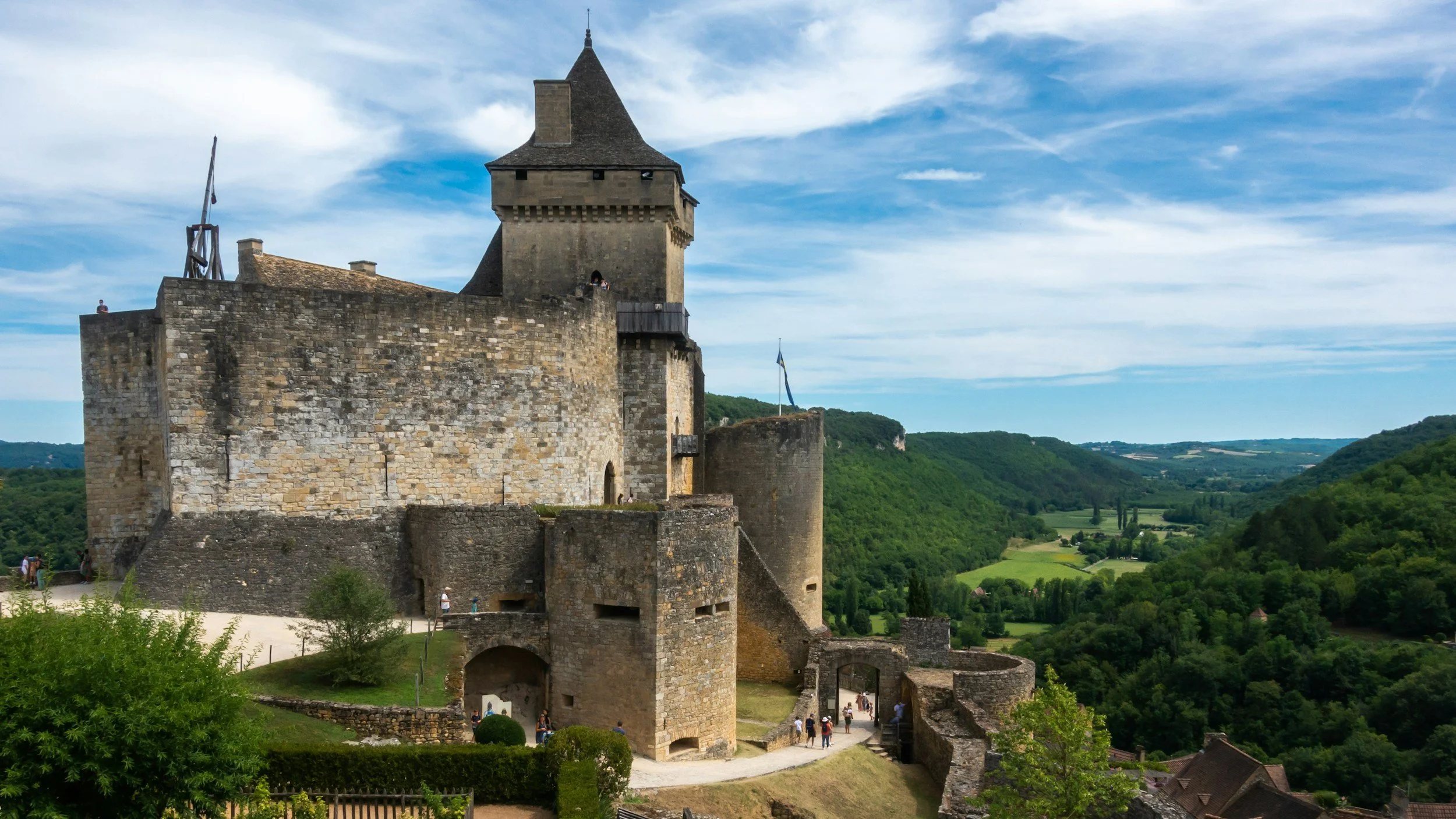
The feel here shifts slightly depending on where you base yourself, something that comes through in this Périgord Noir guide.
It’s also the kind of region people end up choosing after skipping the obvious, which is exactly what this France alternatives piece leans into.
Cafés in the Dordogne that are actually worth sitting down in
Cafés in the Dordogne don’t run all day in the way you might expect. Most open in the morning, get busy around late morning and lunch, then slow down or close for a few hours before the evening. If you’re looking for a place to sit for a while, timing matters more than the café itself. Mid-morning around 09:30–11:00 or later in the afternoon from around 15:30 is usually when things feel more settled.
In Périgueux, you have more flexibility than in smaller villages, which makes it easier to find somewhere you can stay without feeling rushed. Cacaothé sits just off Place de la Clautre, a short walk from the cathedral, and it’s one of the few places where people stay longer than a quick coffee. Inside, there are a few quieter tables toward the back, and if you arrive before 10:30, you’ll usually be able to choose where you sit rather than taking whatever is free. It fills up quickly around midday, so it works better earlier or later in the day.
Out in the countryside, cafés tend to be tied to a specific stop rather than something you come across naturally. Boukie’s Bookshop & Café is one of those places you go to deliberately. It’s not in a central village, so you’ll need to plan the visit, but once you’re there, it’s easy to stay for a while. There are only a handful of tables, and most people spend time browsing before sitting down. It’s a good stop if you’re already driving between villages and want a break that doesn’t feel rushed or crowded.
In villages like Saint-Cyprien and Le Bugue, cafés are more straightforward. You’ll find them around the main square or along the central street, and they tend to fill up right after the market or during lunch. If you want something quieter, it’s worth walking a street or two away from the main square rather than sitting right in the centre. Even a short detour usually makes a difference. In Le Bugue, for example, cafés closer to the river tend to be calmer than those directly in the main square once the market crowd is still around.
One detail that often surprises people is how service slows down between lunch and the evening. Some cafés stop serving food entirely, and others close for a few hours. If you’re planning to sit for a longer break in the afternoon, it’s better to choose a place that stays open through that gap rather than assuming you’ll find another option nearby.
It also helps to keep expectations realistic. These aren’t places where you’ll always find a quiet corner in the middle of the day without planning for it. If you arrive at the right time, you can sit for an hour or two without any issue. If you arrive at peak time, it’s usually quicker to have your coffee and move on.

Café des Colonnes – Ribérac
In Ribérac, Café des Colonnes sits directly on Place Nationale, right where the weekly market takes place. It’s one of those places that’s in constant use rather than set up for visitors, which changes how it feels depending on the time of day.
In the morning, people stop briefly for coffee at the counter or sit outside facing the square while the town starts to move. Around lunchtime, the focus shifts to the plat du jour, served at a steady pace rather than in quick rotations, and tables fill with a mix of locals and a few visitors who’ve stayed on after the market. If you arrive between 12:30 and 13:30, it’s usually at its busiest, so it works better slightly earlier or later if you want a quieter table.
The interior hasn’t been updated much, with tiled floors, simple wooden chairs, and handwritten boards listing the day’s options. It’s not designed for long stays in the middle of the day, but outside of peak hours, you can sit longer without feeling rushed. In the afternoon, once lunch clears, the pace slows again, and it becomes easier to stay for a coffee or a glass of wine without needing to move on quickly.
If you’re visiting on a Friday, when the market runs in Ribérac, the café is part of that routine rather than separate from it. It’s usually easier to walk through the market first, then come here once things start to thin out, instead of trying to find a table in the middle of it. Outside of market days, it’s much calmer, and you can choose where to sit without waiting.
If you’re drawn to wine regions with the same quieter feel, this Bugey weekend gives you another direction to consider.
What you start to notice once you’ve been here a couple of days
At some point, you’ll probably have that moment where you leave one place thinking you’ll quickly stop somewhere else, and it just doesn’t work. You’ve just left the market, it feels like there’s still time in the day, but when you arrive somewhere new, things are already closing or not quite open yet, and you end up standing around deciding what to do next.
It happens easily in places like Sarlat-la-Canéda or Ribérac, especially late morning into early afternoon. Everything shifts at once, and if you’re in between stops at that exact time, it feels slightly off.
Once you notice it, you usually stop trying to “use” that part of the day. You stay where you are a bit longer, or you don’t rush to the next place straight away.
FAQ: planning a weekend in the Dordogne
What time should you visit Dordogne markets to avoid crowds?
The best time is between 08:30 and 10:00. After 10:30, markets in places like Sarlat-la-Canéda become harder to move through, especially near central squares. By 12:30, stalls start packing down.
Which Dordogne market is best for a short weekend trip?
If you want a larger market, Sarlat-la-Canéda works best. For something easier to manage, Saint-Cyprien or Le Bugue are more practical and take less time.
Can you visit two markets in one day in the Dordogne?
It’s not recommended. Markets run at the same time in the morning, and driving between them usually means arriving when one is already closing.
Why do cafés in the Dordogne close in the afternoon?
Most cafés follow local service hours. After lunch, many close or slow down between roughly 14:00 and 17:00 before reopening later. This gap is part of the daily routine, especially in smaller villages.
What is the best time for a café stop in the Dordogne?
Mid-morning (around 09:30–11:00) or late afternoon (after 15:30). Early afternoon is less reliable, as some places close between lunch and dinner.
Do you need to plan café stops in advance?
Not fully, but it helps to know one or two options near where you already are. Outside larger towns like Périgueux, choices are limited once places close.
Where should you stay in the Dordogne for easy access to markets and walks?
Staying near Le Bugue or Sarlat-la-Canéda keeps most activities within a 20–30 minute drive. More rural stays are quieter but require more planning for meals and daily outings.
Do you need a car in the Dordogne?
Yes. Most villages, markets, and countryside walks are not connected by reliable public transport.
What are the easiest scenic walks in the Dordogne?
Short river paths near Le Bugue and village-edge walks in Domme or La Roque-Gageac are the easiest to fit into a day without planning a full route.
What time of day is best for walking in the Dordogne?
Before 10:00 or after 16:00. Midday can be hot and exposed, especially in summer.
What is the biggest mistake when planning a Dordogne weekend?
Trying to move between too many places in one day. Even short distances take longer than expected, especially around market towns.
Why does the Dordogne feel difficult to plan in the middle of the day?
Because different parts of the day don’t overlap well. Markets are ending, cafés are between services, and moving between towns takes longer than expected. If you leave one place around 11:30–13:30, you often arrive somewhere else when things are closing or not fully open yet. It’s usually easier to stay where you are during that window instead of switching locations.
Is it better to base your day around a market or around a village?
A market works better as your starting point, not the main plan. Once you’ve been through it, it’s easier to stay nearby for the rest of the day instead of driving somewhere new. Trying to build a full day around multiple stops usually means you’re moving at the wrong times.
Why do some cafés feel rushed while others are easy to sit in?
It’s mostly about timing and location. Cafés in central squares turn over tables quickly, especially late morning and lunch. Places just outside the centre, or those you reach after the main crowd has left, tend to be much easier to sit in for longer.
What’s the easiest way to avoid crowds without changing your itinerary?
Shift your timing slightly. Arriving 30–60 minutes earlier at markets or visiting cafés just after the main rush changes the experience more than going somewhere “less known.” In places like Sarlat-la-Canéda, timing matters more than location.