Asolo or Bassano del Grappa? It depends on the weekend you want.
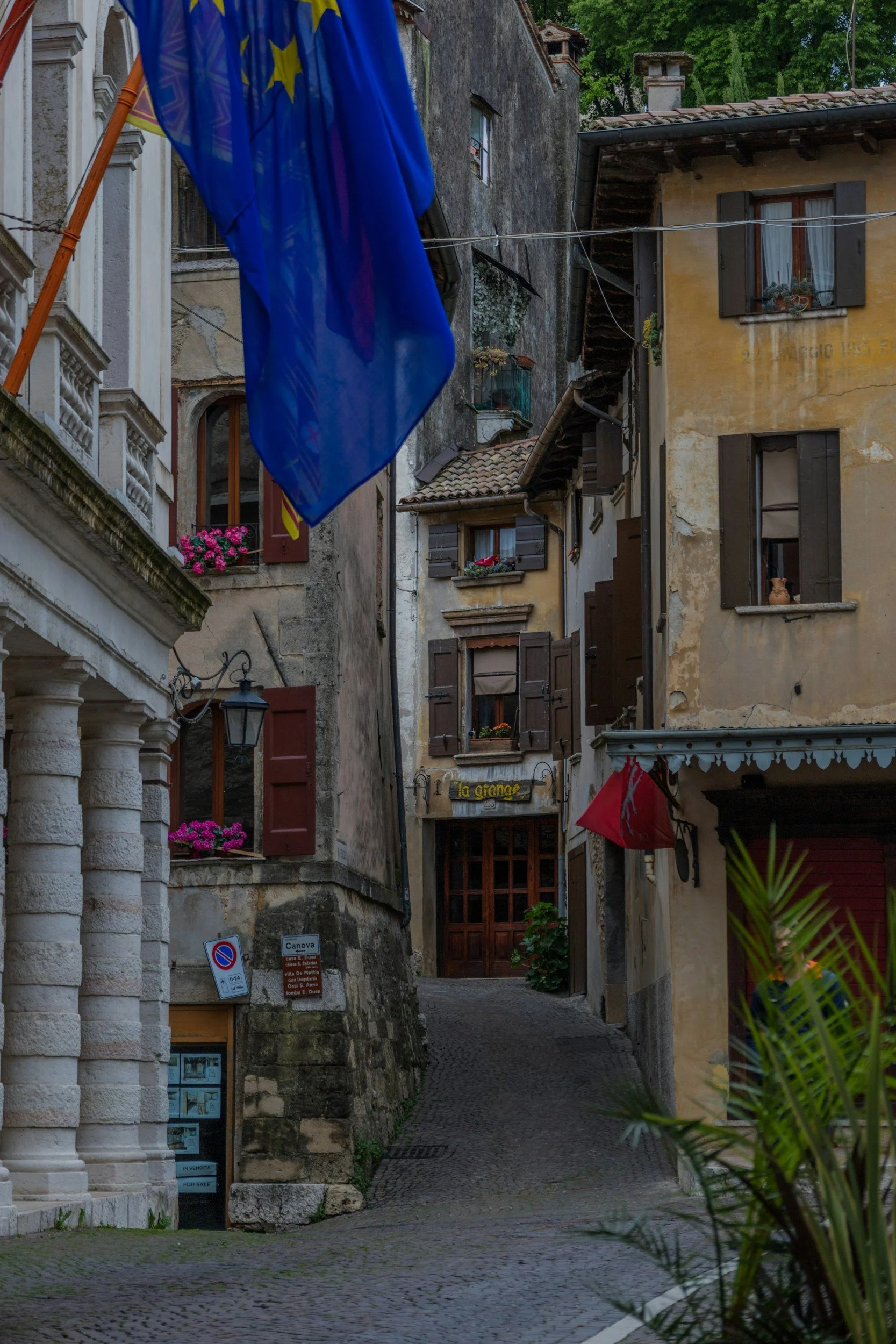
Asolo and Bassano del Grappa often end up on the same Veneto itinerary, especially for travellers looking for a smaller alternative to Venice. On a map they seem close enough that the choice hardly matters. In reality, they suit very different types of weekends.
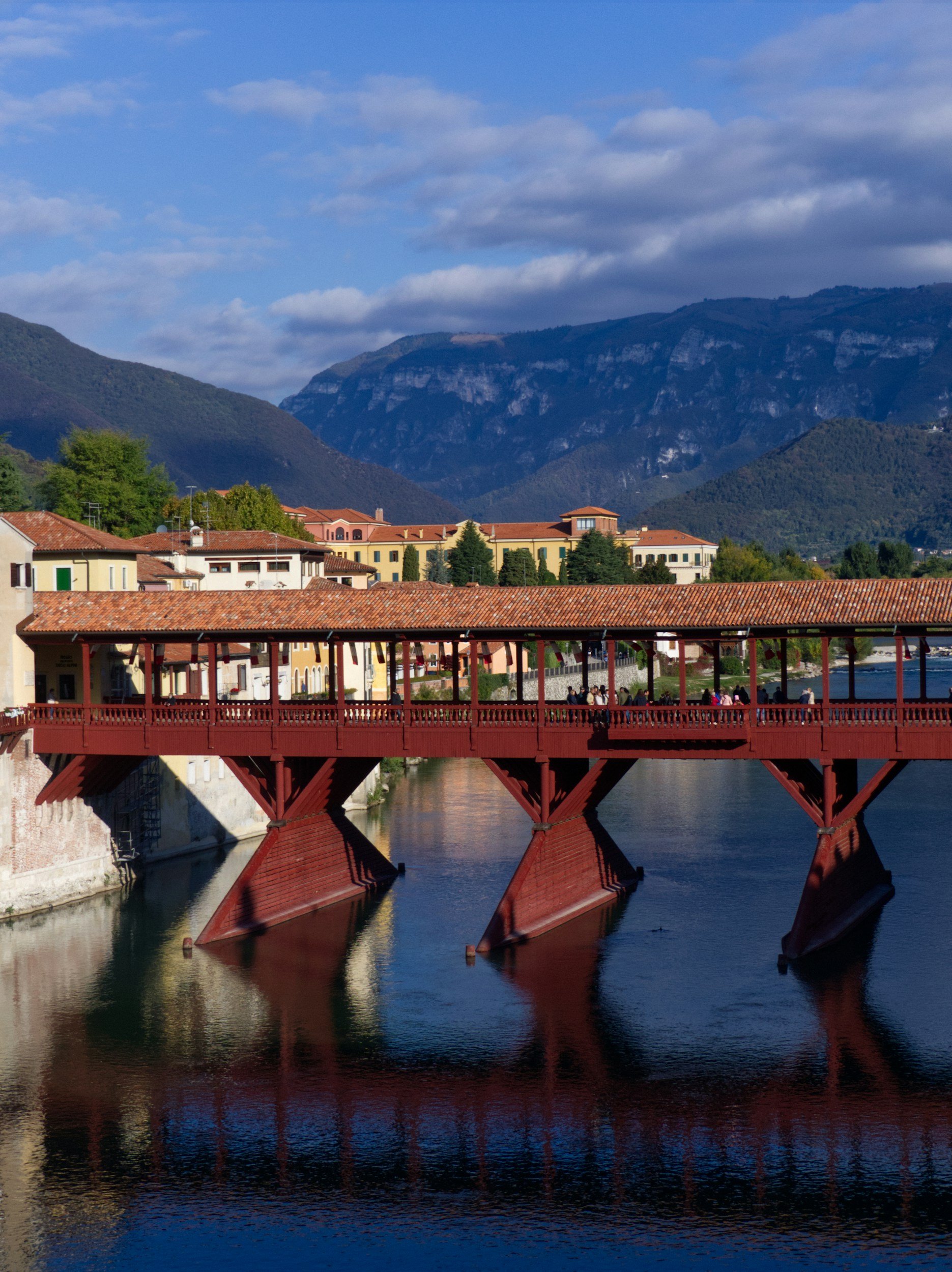
Bassano del Grappa is centred around the Brenta River, the Ponte Vecchio, Piazza Libertà, and Piazza Garibaldi. It has a busy but manageable feel, with enough cafés, wine bars, restaurants, and evening aperitivo spots to fill a couple of days without much planning. The train station sits within walking distance of the historic centre, making it easy to arrive from Venice, Padua, Vicenza, or Treviso and start exploring straight away.
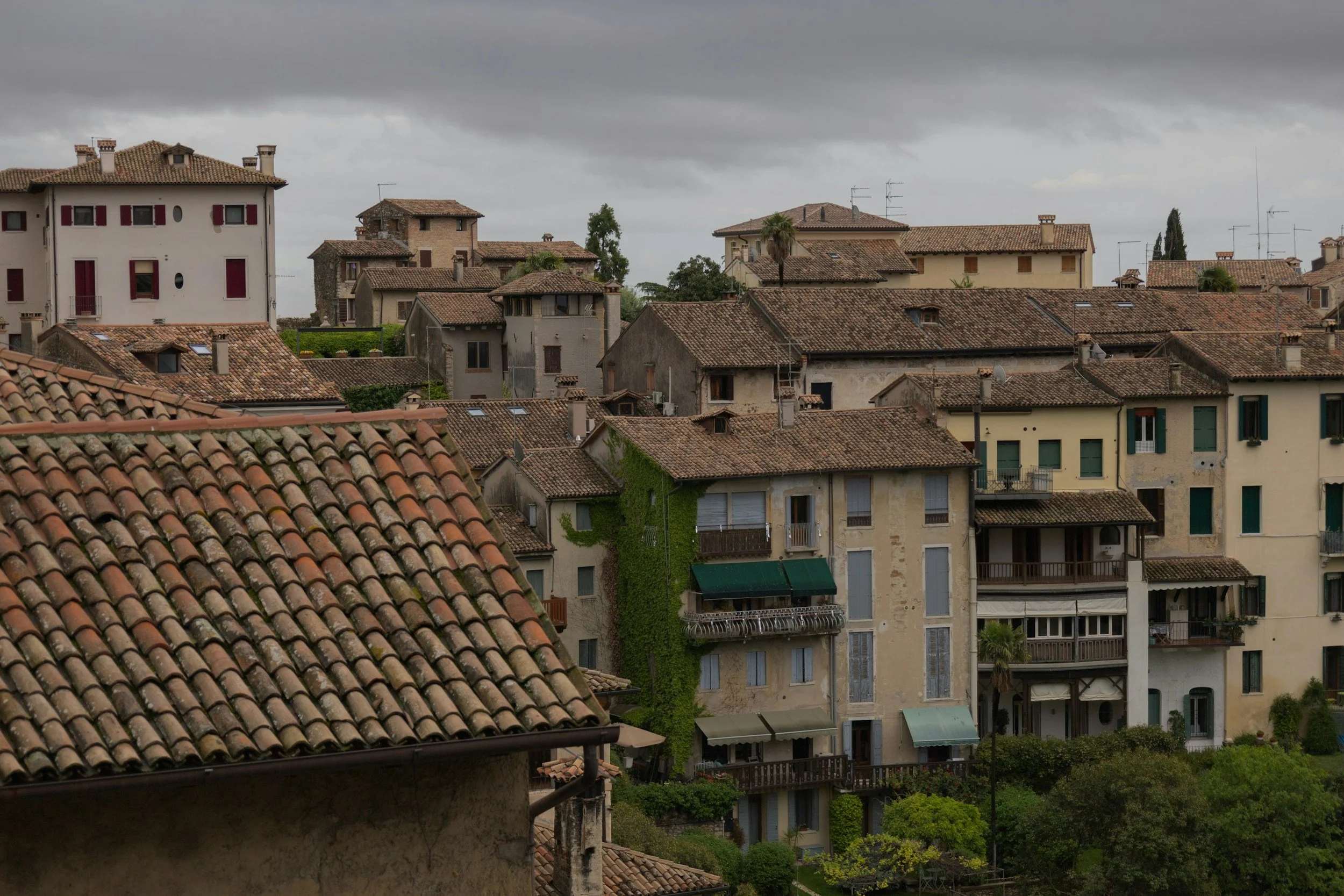
Asolo feels smaller and more tucked into the landscape. The historic centre is compact, with elegant streets climbing around Piazza Garibaldi and views across the Asolani hills, but much of what makes the area interesting sits outside the town itself. Places such as Possagno, Maser, Monfumo, and the Prosecco hills are all nearby, which means having a car gives you far more flexibility.
That difference matters more than which town looks prettier in photos. If you want a weekend where everything is within walking distance and the days naturally fill themselves, Bassano del Grappa is usually the easier choice. You can spend the morning by the river, browse the market, stop for lunch in the centre, walk across the Ponte Vecchio, and still have plenty left to do the next day.
Asolo makes more sense when you want a smaller hill-town stay and you are happy to plan around parking, restaurant bookings, and nearby places such as Possagno, Maser, Monfumo, or the Prosecco hills. It can be lovely for one night or a slower countryside weekend, but it is not as effortless without a car and the centre is much quicker to cover.
So the real question is not which town is better. It is whether you want a weekend built around one lively, walkable town or a quieter countryside stay where much of the experience happens beyond the town centre.
If you are already drawn to this part of northern Italy, the wider context is worth keeping in mind, especially alongside this guide to the Prosecco hills, because the whole area makes more sense once you stop treating each town as a separate weekend idea.
Getting there from Venice, Treviso, or Verona (and why Bassano is easier without a car)
From Venice, Bassano is one of the more straightforward weekend trips you can plan without overthinking it. If you’re starting from Venezia Santa Lucia or Mestre, there are regular regional trains heading inland, usually taking just over an hour. Some are direct, others require a simple change in places like Castelfranco Veneto, but the overall route is predictable and doesn’t require much coordination. Once you arrive in Bassano del Grappa, the station is close enough to the centre that you can walk in without needing a taxi or bus. You step out, follow the main road toward town, and within 10 to 15 minutes you’re already near Piazza Garibaldi, with the rest of the centre opening up from there.
From Treviso, the journey is even shorter, typically around 45 minutes to just over an hour depending on connections. Again, the main thing is that the last part of the trip is simple. You arrive, you walk, and you’re in. There’s no final stretch where you’re waiting for a bus or trying to figure out a taxi situation on a quiet platform.
From Verona, Bassano is still manageable for a weekend, though it’s less direct. You’re usually changing at Vicenza or Padova, and the total journey is closer to two hours. It’s still realistic for a Friday arrival and Sunday departure, but it requires a bit more attention to timing. Even then, once you arrive, the ease of the final 10-minute walk into town makes up for the extra step earlier in the journey.
Asolo works differently from all three starting points. The closest train stations are not in the town itself, so you’re always dealing with a second leg. From Venice, you might take a train to Castelfranco Veneto or Montebelluna, which is straightforward enough, but from there you still need to reach Asolo by bus or taxi. Buses do run, but they are not frequent enough to ignore the timetable, especially on weekends or in the evening. A missed connection can easily add an hour to what looked like a simple trip.
From Treviso, the distances are shorter, but the pattern is the same. Train to Montebelluna, then a bus up to Asolo, or a taxi if you want to avoid waiting. From Verona, it becomes more complicated again, with at least one train change before you even reach the point where you still need to organise the final stretch.
This is where the difference between the two towns becomes very clear in practice. Bassano allows you to think in one step: train in, walk to your hotel, start the weekend. Asolo requires two steps, and the second one depends on timing. If you’re travelling light and enjoy figuring out connections, it’s manageable. If you want a Friday evening arrival where everything just works, Bassano is much easier.
With a car, the balance shifts. From Venice or Treviso, driving to Asolo takes around an hour to an hour and a half depending on traffic, and the final approach through the foothills makes more sense than trying to piece together train and bus. You can park just outside the centre, walk up into town, and then use the car for short drives to places like Maser or Possagno the next day. Bassano is also easy by car, but it doesn’t need it in the same way. In fact, once you’re in town, the car often stays parked for most of the weekend.
So the decision comes down to how you want the trip to start. If you want to arrive, walk, and settle in without thinking about logistics, Bassano is much better. If you’re already planning to drive and want to include the surrounding hills as part of the weekend, then Asolo becomes the more natural choice.
Getting around Asolo vs Bassano without a car (and when you’ll need one)
Bassano is the easier town to choose if you want the weekend to work without a car. The train station sits close enough to the old centre that you can arrive with a small suitcase and walk straight in without needing to solve anything first. From the station, it is roughly 10 to 15 minutes to Piazza Garibaldi and Piazza Libertà, then only a few more minutes down toward the Ponte Vecchio. That matters on a short trip because the arrival already places you inside the weekend rather than leaving you at a station outside town waiting for a bus or taxi.
Once you are in Bassano, most of what you came for sits within a very walkable area. You can move between the piazzas, the civic museum area, Via Matteotti, the grappa shops near the bridge, the Brenta riverbanks, and the quieter streets behind the main centre without thinking about transport. A car can be useful if you want to drive up toward Monte Grappa, visit Marostica more flexibly, or explore smaller villages in the foothills, but for Bassano itself it is something you park rather than something you need.
Asolo is different from the moment you start planning the route. There is no train station in the historic centre, so if you are coming by rail you are usually looking at Castelfranco Veneto, Montebelluna, or Cornuda and then working out the last part by bus, taxi, or private transfer. That can be done, but it changes the mood of the trip because you need to check connections carefully, especially on Sundays or outside the busiest hours. For a two-night weekend, that extra step can feel annoying if you only wanted a simple Veneto break.
With a car, Asolo makes much more sense. You can park below or just outside the centre, walk up into Piazza Garibaldi, then use the town as a base for the places that make this part of the Asolani hills worth staying in. Possagno is close for the Canova museum and temple, Maser is nearby for Villa Barbaro, and the smaller roads around Monfumo and Cavaso del Tomba give you a very different weekend from staying only inside Asolo’s compact centre. Without a car, Asolo can still be beautiful for one night, but you may notice the limits quickly. With one, it becomes part of a wider countryside trip rather than just a small hill town you finish exploring after lunch.
If you're arriving by train and wondering which smaller towns are actually worth getting off for between Venice and the mountains, Northern Italy by train is a useful place to start before you lock in your route.
Arriving into Bassano by train and walking straight into the historic centre
The station in Bassano del Grappa is small and easy to read. You step off the train, walk past a couple of platforms, and you are already outside without dealing with long corridors or confusing exits. Right in front of the station there is usually a line of taxis, a few buses pulling in and out, and a mix of locals heading home and visitors looking at their phones for directions. Most of the time, you don’t need any of that.
The simplest route is straight ahead along Viale delle Fosse, then continuing toward the centre. It does not take long before the streets start to change. You pass ordinary apartment buildings first, small shops, a pharmacy, a bar where people are standing at the counter for a quick espresso. Within a few minutes, the pavements get a bit busier and the buildings start to feel older, closer together, more clearly part of a town that has been lived in for a long time.
Piazza Garibaldi is usually the first point where you feel like you’ve arrived. It’s not a dramatic entrance, but that’s part of why it works. There are arcades along the sides, small shops underneath, and people moving through in a way that feels practical rather than staged. From there, Piazza Libertà is just around the corner, and this is where you start to get your bearings properly. You’ll notice cafés setting up tables, locals stopping for a drink, and the main streets leading off in different directions.
If you arrive in the late afternoon, this part of the walk is particularly useful. You can drop your bag, step back out, and within five minutes be in the middle of the town’s daily rhythm without needing to look anything up. The route down toward the Ponte Vecchio is easy to follow from the main squares. You pass along Via Matteotti, where shop windows mix everyday clothing stores with bakeries and small food shops, and then the street gradually pulls you toward the river.
The first time you reach the bridge, it tends to feel like a natural continuation of the walk rather than a separate attraction. You step onto the wooden structure, notice the Brenta running below, and see people stopping halfway across to look out or take a photo. On the far side, there are a couple of well-known grappa spots, but also smaller places where people are sitting outside with a drink, especially toward early evening.
What makes Bassano easy in this first hour is that nothing requires a decision. You are not choosing between transport options or figuring out how to reach the centre. You are already in it. If your hotel is somewhere near Piazza Libertà, the whole arrival might take 15 minutes from stepping off the train to putting your bag down. Even if you’re staying slightly further out, the distances are short enough that you don’t feel disconnected from the centre.
If you arrive earlier in the day, the walk has a slightly different feel. Shops are open, the squares are more active, and you’ll notice people doing small errands, picking up bread, meeting briefly for coffee. If you arrive on a Thursday morning, the market changes the route completely, with stalls spreading through the centre and making the walk slower but more interesting. You might find yourself stopping earlier than planned, picking up fruit, or adjusting the route just to see more of it.
There are also small practical details that make this arrival smoother than in many other Italian towns. You don’t need to drag your suitcase over long stretches of uneven stone to reach the centre. You don’t need to wait for a bus that runs once an hour. You don’t need to guess where the main area starts. The transition from station to historic centre is gradual enough that by the time you reach the main squares, you already know where things are.
By the end of that first walk, you usually have a clear sense of how the rest of the weekend will work. You know how long it takes to get back to the station, where the main cafés are, how to reach the river, and which streets feel quieter if you want to step away from the busiest areas. It removes a lot of the small friction things that can eat into a short trip, which is why Bassano works so well for a two-night stay without a car. This is also where Bassano fits well with a train-friendly Italy weekend, because the arrival does not require a car to make the trip feel complete.
Driving up into Asolo and where you actually park before entering town
Arriving in Asolo by car is a completely different experience from stepping off a train in Bassano.
The drive into Asolo usually starts off quite unremarkable, especially if you’re coming from Venice or Treviso. You pass through places like Montebelluna or Castelfranco Veneto, moving along wider roads with retail parks, roundabouts, and everyday traffic. It only starts to change in the last 10 to 15 minutes. The road narrows slightly, the pace slows, and you begin to notice vineyards, small roadside chapels, and signs pointing toward Asolo Centro rather than just Asolo.
As you approach, you don’t get a single clear “arrival moment.” Instead, the town appears in fragments. You might first notice the Rocca sitting above everything on the hill, then a cluster of terracotta roofs below, then signs directing you toward the historic centre. The roads here are still easy to drive, but they’re not the kind where you linger. You’re paying attention to turns, watching for ZTL signs, and looking for where to park rather than taking in views.
Parking is the part to understand before you arrive. The most practical option is usually Parcheggio Forestuzzo, which sits just below the historic centre. It’s clearly signposted as you come in, and from there it’s a short uphill walk into town. The surface is gravel, there are usually plenty of spaces earlier in the day, and you’ll often see a mix of local cars and visitors who have done the same thing. There are also smaller parking areas closer to Via Collegio and near Porta Loreggia, but these fill up faster and can involve a bit of circling if you arrive late morning on a weekend.
Once you’ve parked, you’re on foot almost immediately. The walk up into the centre takes around five minutes, depending on where you park, and it’s a steady incline rather than a long climb. You’ll pass stone walls, a few residential doors, and occasionally small signs pointing toward guesthouses or restaurants. Then you come out into Piazza Garibaldi without much warning.
The square is smaller than many people expect. There’s the fountain in the middle, arcaded buildings along one side, and cafés already set up with tables facing inward. Places like Caffè Centrale and Bar Due Mori are usually among the first you notice, especially if it’s mid-morning and people are stopping for coffee or a spritz. From here, everything branches out in short, walkable stretches. One street leads toward the Duomo di Santa Maria Assunta, another toward the castle and the Teatro Duse, and another begins the gradual climb toward the Rocca.
If you arrive on a Saturday around 11, this is when you’ll notice how quickly Asolo fills up. The main parking areas may already be close to full, and the square can feel busy because everything is concentrated in a small space. On the second Sunday of the month, when the antiques market is on, the centre changes completely. Stalls fill the streets around Piazza Garibaldi and along Via Browning, selling everything from old prints and books to ceramics and small furniture. It’s worth seeing if you’re interested in that kind of market, but it does make arrival and parking slower.
If you’re there on a Thursday morning and the market is running, it’s worth keeping in mind how different this feels compared to Italian summer market towns, where the whole week often revolves around those few hours.
If you’re staying overnight, it’s worth checking where your accommodation is located in relation to parking. Some places in the centre require you to leave your car in Forestuzzo and walk up with your bag, while others just outside the walls offer easier access. Hotels like Albergo al Sole sit right in the centre, which is ideal once you’re settled, but you still need to handle parking first and then walk in.
The ZTL (limited traffic zone) signs are also something to watch. You can’t drive freely into the historic centre, and it’s easy to miss a sign if you’re focused on navigation. It’s safer to aim for the main parking areas and walk in rather than trying to get closer.
After that first arrival, the car becomes useful again the next day. You can leave Asolo in the morning and drive 10–15 minutes to Possagno to visit the Tempio Canoviano and the Gipsoteca Canoviana, or head toward Maser to see Villa Barbaro. The roads between these places are quiet and easy, passing through small villages and farmland rather than busy routes.
That’s why Asolo works best when the car is part of the plan rather than an inconvenience. You use it to arrive, leave it parked while you’re in the centre, and then use it again the next day to explore the surrounding hills, drive toward Maser or Possagno, or continue further into the Prosecco area.
How busy Asolo vs Bassano gets around 11am on a Saturday
Saturday around 10:30 to 12:30 is where the difference between these two places becomes very obvious, especially if you arrive without a fixed plan and expect to just move through the town naturally.
In Bassano, the centre is active but spread out in a way that rarely feels overwhelming. Piazza Garibaldi and Piazza Libertà are the busiest points, but even there, the space is wide enough that people don’t cluster too tightly. Locals are moving between shops, stopping briefly for coffee at places like Caffè Italia or under the arcades, and continuing on. You’ll see a mix of errands and weekend routines rather than just visitors.
From the piazzas, the flow pulls toward Via Matteotti and then down to the Ponte Vecchio, but the movement is gradual. You can step slightly off the main line at any point and find quieter streets within a minute or two. For example, if you turn away from the main route toward the smaller streets behind Piazza Libertà, you’ll find bakeries, small clothing shops, and residential entrances where the pace slows down immediately.
Around the Ponte Vecchio, it does get busy, especially late morning when people arrive from Vicenza, Padova, or nearby towns. You’ll notice people stopping in the middle of the bridge, taking photos, or waiting to cross in both directions. Even then, it doesn’t usually feel stuck. You can cross, continue along the Brenta on either side, and the space opens up again within a few minutes. If it feels too crowded, the easiest adjustment is to step away from the bridge and walk along the river path instead, where there’s usually more room.
Cafés in Bassano at this time are active but not impossible. If one terrace is full, you can move on without it turning into a search. Standing at the bar for a quick coffee is always an option, and many locals still do this even on weekends, which keeps things moving.
Asolo behaves very differently at the same time of day. By 11:00, most of the available parking areas, especially Parcheggio Forestuzzo and the smaller spaces closer to the centre, are either full or close to it. You may need to circle once or twice or wait for someone to leave, which already sets a different tone for the visit.
Once you walk up into Piazza Garibaldi, the compact size of the centre becomes clear. A few full café terraces, a couple of small groups walking through, and some people stopping at the fountain are enough to make the square feel busy. Places like Caffè Centrale and Bar Due Mori fill up quickly, and there aren’t many alternative spots just around the corner. If you’re hoping to sit outside, you may need to wait or adjust your timing.
The main streets branching from the square, including Via Browning and the route toward the cathedral, can feel crowded simply because they are narrow. You notice every group, every stop, every pause. It’s not chaotic, but it is contained. If someone stops to look in a shop window, the movement behind them slows immediately.
The walk up toward the Rocca can be a useful way to step away from this. As you leave the centre and start climbing, the number of people drops quite quickly. By the time you’re halfway up, it’s often much quieter, with only a few others making the same walk. From the top, you’ll see how small the centre actually is compared to the surrounding countryside.
If you happen to arrive on the second Sunday of the month, the antiques market changes everything. Stalls line the streets around Piazza Garibaldi and along Via Browning, and the town fills with people browsing books, prints, ceramics, and smaller objects. It’s one of the better markets in this part of Veneto if you enjoy that kind of thing, but it also means that moving through the centre becomes slow. Parking takes longer, cafés are busier, and the town feels much more crowded than on a normal Saturday.
One detail that often gets overlooked is timing within that late morning window. In Bassano, arriving at 11:30 instead of 10:30 doesn’t change much. The town absorbs the difference. In Asolo, that same hour can shift the experience from calm to noticeably busy, especially in good weather.
If you prefer quieter moments, Bassano gives you more flexibility to find them without planning. In Asolo, it’s more about timing your arrival earlier, stepping away from the square when needed, or accepting that the centre will feel full for a few hours before easing again later in the afternoon.
Is there enough to do for a full weekend in Asolo or Bassano?
Walking distances in Bassano between the bridge, piazzas, and quieter streets
One of the reasons Bassano works so well for a short stay is how quickly you understand the distances. Nothing feels far, but it also doesn’t collapse into a single street the way smaller towns sometimes do.
From Piazza Libertà to the Ponte Vecchio is roughly a five-minute walk, and that short stretch carries most of the town’s movement. You leave the square, pass under the arcades, and follow Via Matteotti, where you’ll move past clothing shops, small food stores, and bakeries. In the morning, this is where you’ll notice people picking up bread or stopping for a quick coffee before continuing on. By late morning, the same route fills with a mix of locals and visitors heading toward the river.
Once you reach the Ponte Vecchio, you can cross in a minute or two if you keep moving, but most people slow down here. It’s narrow enough that you notice others stopping, but not so crowded that it becomes frustrating unless you arrive at peak times. On the far side of the bridge, the atmosphere shifts slightly. You’ll find places like Grapperia Nardini, where people stand at the bar or take a drink outside, especially late in the afternoon. Just beyond that, if you continue a few minutes further, the crowds drop off quickly and you reach quieter stretches along the Brenta.
If you want to move away from the busiest line between the piazzas and the bridge, it only takes a couple of turns. From Piazza Libertà, stepping into the smaller streets behind the square brings you into a different pace almost immediately. Streets like Via Bellavitis or the lanes running parallel to Via Roma have fewer shops and more residential entrances, small offices, and quieter corners. You’ll still find cafés and bakeries, but they’re used more by locals than by people passing through.
The walk between Piazza Garibaldi and Piazza Libertà is barely a minute, but it helps to think of them as slightly different spaces. Piazza Garibaldi has more of a functional feel, with shops and everyday activity, while Piazza Libertà tends to draw more people sitting at cafés or meeting briefly before moving on. You’ll move between them several times without thinking about it, especially if you’re staying nearby.
If you continue beyond the main centre, you can extend your walk without needing a plan. From the bridge, following the river south for 10–15 minutes brings you into calmer stretches where you’ll see people walking dogs, sitting along the water, or just passing through. It’s not a formal promenade the whole way, but there are enough paths and open areas to keep walking without needing to turn back immediately.
Heading in the opposite direction from the centre, away from the bridge, you can walk toward the edges of town in around 15–20 minutes. The streets become more residential, with fewer shops and more apartment buildings, small gardens, and local bars that don’t rely on weekend visitors. It’s not where most people spend their time, but it’s useful if you want a longer walk without leaving town.
What makes Bassano easy is that all of these distances sit within a compact area. You can leave your hotel, reach the main square in a few minutes, walk to the bridge, cross the river, and be in a quieter area within 15 minutes total. There’s no need to organise transport or map out routes in advance. If one area feels too busy, you adjust by turning a corner rather than changing plans entirely.
By the end of the first day, you usually stop thinking about distances altogether. You know how long it takes to get from your hotel to the piazza, from the piazza to the bridge, and from the bridge to a quieter stretch of the river. That familiarity is what allows the weekend to feel relaxed without becoming repetitive, because you’re moving through the same spaces in slightly different ways each time.
Asolo’s compact centre and how quickly you’ve “seen it”
Asolo is easy to understand within the first couple of hours, and that’s something to be aware of rather than a drawback. The historic centre is small enough that most of the main streets connect back to Piazza Garibaldi, and you naturally loop through the same places more than once without trying.
From the square, everything branches out in short distances. Walking from Piazza Garibaldi to the Duomo di Santa Maria Assunta takes only a few minutes, passing under arcades and along Via Browning where you’ll notice small shops, galleries, and a few café terraces. Continue a little further and you reach the castle area and Teatro Duse, which are also close enough that they don’t feel like separate stops. You’re never far from the centre, even when you think you’ve moved away from it.
The walk up to the Rocca is the only part that feels like a proper change of pace. From the edge of town, the path begins to climb, and within 10–15 minutes you’re above the centre looking back down over the rooftops and out toward the plains below. It’s worth doing, not because it adds a long activity to the day, but because it gives you a clearer sense of where Asolo sits. Even so, it doesn’t take half a day. You go up, spend some time at the top, and come back down into the same streets you’ve already walked.
Back in the centre, the pattern repeats quite quickly. Piazza Garibaldi remains the main place you return to, whether for coffee, a drink, or just passing through. Streets like Via Regina Cornaro and Via Colmarion bring you back toward the same cluster of cafés and shops. You might take slightly different turns, notice a small detail you missed earlier, or step into a shop, but the overall layout doesn’t expand in the way it does in a larger town.
That’s why many people feel like they’ve “seen” Asolo by late afternoon if they arrived in the morning. You can have lunch in the square, walk the main streets, go up to the Rocca, visit the cathedral area, and still have time left in the day. By early evening, you already know where everything is and how it connects.
This becomes clear on a second day if you stay entirely within the centre. The café options are the same, the streets are familiar, and there aren’t hidden districts that suddenly open up. If you enjoy repeating the same places in a slower way, that can work well. You might return to the same café in the morning, take a different route up toward the Rocca, or sit longer over lunch. But if you’re expecting a town that keeps unfolding, Asolo doesn’t really do that.
The way to extend the experience is to step outside the centre. A short drive brings you to Possagno in about 10 minutes, or to Maser in a similar time, and the roads between these places pass through small villages and farmland that feel very different from the centre of Asolo. Even just driving a few kilometres out toward Monfumo changes the scale of the weekend, with quieter roads, scattered houses, and viewpoints that aren’t part of the main town walk.
Inside Asolo itself, though, the distances remain tight. From one end of the centre to the other rarely takes more than 10 minutes on foot. That’s what makes it easy to navigate, but it’s also why the town works best when you’re comfortable with a smaller footprint and a slower pace rather than expecting to fill two full days entirely within its streets.
Does Asolo or Bassano get repetitive after one day?
In Bassano, the second day doesn’t feel like a repeat unless you follow the exact same routine without thinking about it. Most people arrive, walk through Piazza Libertà, head down Via Matteotti, cross the Ponte Vecchio, and then loop back. That’s the obvious first-day route. The difference is that on day two, you usually start using the town differently without planning it.
Mornings are a good example. If you head out earlier, around 8:30 or 9, the centre feels completely different. Bakeries are open, a few cafés already have people standing at the bar, and the streets are quieter. Places like Pasticceria Biaggioni or smaller local bakeries just off the main streets have a steady flow of locals picking up bread and pastries. You’re walking through the same area, but it doesn’t feel like the same experience as late morning the day before.
The river also changes things more than you expect. Instead of just crossing the Ponte Vecchio and turning back, you can stay on the far side and keep walking. If you follow the Brenta south for 10–15 minutes, the crowds drop off quickly. You’ll see people walking dogs, sitting along the edge of the water, or just passing through on their way somewhere else. It feels more like a local route than part of a weekend visit. You can then cross back over at a different point or return through quieter streets behind the main centre.
Another easy shift is moving slightly away from the main piazzas. Streets behind Piazza Libertà or toward Via Bellavitis are less busy and feel more residential. You’ll pass small offices, local bars, and shops that aren’t set up for people passing through once and leaving. Even just choosing a different café changes the pace. Sitting near the bridge feels different from sitting in the main square, even if it’s only a few minutes apart.
Food also naturally breaks things up. One day you might sit down for a longer lunch near the centre, the next you might keep it simple and eat something closer to the river or grab something quick and keep walking. Aperitivo is the same. Near Piazza Libertà it feels more social and central, while closer to the bridge it’s more spread out, especially later in the afternoon.
If you want a small change without turning it into a full trip, Marostica is about 15 minutes away by car. You can go there in the morning, walk across the main square with the chessboard pattern, and be back in Bassano for lunch. It doesn’t feel like leaving your base, just stepping away for a few hours.
Asolo is different because the centre is so compact. By the second morning, you already know where everything is. Piazza Garibaldi, the cafés, the short streets leading off it, the route up toward the Rocca — none of it takes long to get familiar with.
That shows up quickly during the day. Around 10:30 or 11, you’re back in the same square, seeing the same cafés filling up again. If you didn’t get a table the day before, you might try again, but there aren’t many alternatives just around the corner. You can walk the same streets again, maybe take a slightly different turn, but the overall structure doesn’t change.
The Rocca is still worth doing, but it doesn’t take long. You walk up, spend some time there, and come back down into the same part of town. After that, most people find themselves circling back toward the square again.
What usually makes the second day in Asolo feel different is leaving the town for a bit. Possagno is about 10 minutes by car and gives you something completely different, with the Canova museum and the temple on the hill. Maser is just as close, and Villa Barbaro is a clear stop if you’re already in the area. Even just driving out toward Monfumo or along the smaller roads around the hills changes the day. You pass vineyards, quiet houses, and stretches where you don’t see many people at all.
Lunch is often where the difference really shows. Staying in Asolo means choosing from the same small group of restaurants again. Driving out gives you more variety, often in places that feel less focused on weekend visitors. When you come back in the afternoon, the town feels calmer again, and it makes more sense as a base rather than the main focus of the whole day.
If you stay entirely inside Asolo, the second day usually becomes slower rather than different. You sit longer, walk more casually, maybe return to the same café. That can be exactly what you want. But if you’re expecting new parts of town to open up, that doesn’t really happen.
So the difference is quite simple once you’ve experienced both. In Bassano, you stay in town and just shift how you use it. In Asolo, the second day works better if you step outside the centre, even if it’s only for a few hours.
If Bassano del Grappa feels a little too busy for the kind of trip you're planning, other small towns may be a better fit without adding complicated travel days.
Cafés, aperitivo spots, and where you naturally spend time
Bassano’s café scene around Piazza Libertà and along the Brenta river
You’ll probably end up using Piazza Libertà more than you expect, not because it’s the most beautiful square, but because everything passes through it. If you leave your hotel and don’t have a plan, you naturally drift there within a few minutes. The cafés sit under the arcades, and people use them in a very everyday way. In the morning, most locals stand at the bar, order a quick espresso, maybe a cornetto, and leave within a couple of minutes. If you sit outside instead, you’ll notice you’re in the minority before 10.
Places like Caffè Italia or the bars along the edge of the square don’t feel like “destination cafés.” You just pick one that has space and sit down. If it’s busy, you move on. There’s no real difference in doing that here, and that’s part of what makes it easy. Around 10:30–11, the tables start filling up, especially on weekends, but people don’t stay for hours. There’s a steady turnover, so you rarely get stuck waiting unless you’re set on one specific spot.
From there, you almost always end up walking toward the bridge. Via Matteotti is the main route, and it’s not just cafés. You’ll pass bakeries, small delis, clothing shops, and places selling local products. Around late morning, you’ll see people stepping in and out quickly, picking things up rather than browsing. If you want something simple, this is where you grab it instead of sitting down again.
Once you reach the Ponte Vecchio, the pattern changes a bit. People slow down more here. Some cross the bridge and turn straight back, others stop halfway, and some head to the grappa bars at the end. Grapperia Nardini is the obvious one. You’ll see people standing outside with a small glass, not making a big deal of it. It’s quick, casual, and part of the routine rather than something you plan in advance.
If you cross the bridge and keep walking for a few minutes instead of turning back, it gets quieter fast. Most people don’t go beyond that first stretch. Along the Brenta, there are a few places where you can sit closer to the water, but even if you don’t stop anywhere, the walk itself is worth it. You’ll pass people walking dogs, a few cyclists, maybe someone sitting right by the river with a drink. It feels more local there, less like everyone is following the same path.
In the afternoon, especially around 16:00–18:00, the river side becomes more active again. People come down for aperitivo, and instead of everyone being in the square, they spread out more between the bridge and the riverbank. You’ll notice small groups standing with drinks, not always sitting, just stopping for a while before moving on.
One thing that stands out in Bassano is that you don’t really “choose a café for the day.” You move between places without thinking about it. Coffee in the square, something small along Via Matteotti, a drink near the bridge, maybe another stop later in the afternoon. It’s all within a few minutes’ walk, so you don’t plan it, you just adjust depending on what feels right at the time.
By the second day, you already know where you’d rather sit. Maybe you avoid the busiest part of Piazza Libertà and choose a quieter bar just off it, or you go straight toward the river because you prefer that side of town.
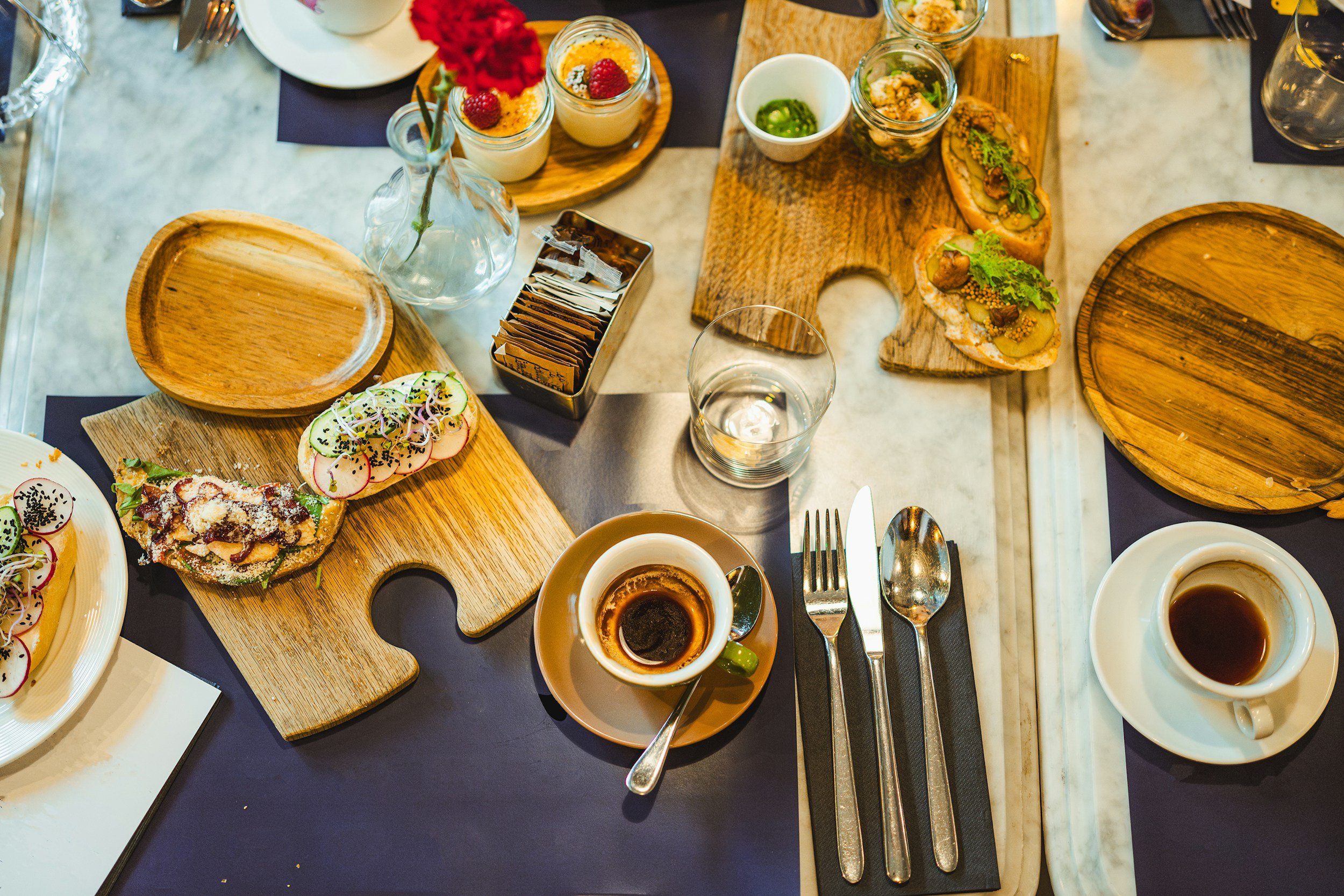
Asolo’s small cluster of cafés and terraces and how limited the choice is
In Asolo, you don’t really “find” cafés. You arrive in Piazza Garibaldi and they’re all right there in front of you.
After walking up from Parcheggio Forestuzzo, you step into the square and within a few seconds you’ve already seen most of your options. Caffè Centrale sits right on the corner with tables facing the fountain, and that’s where most people end up without thinking about it. By around 10:30 on a Saturday, it’s usually full. People are already sitting with cappuccinos, a few have moved on to spritz, and the same tables tend to turn over slowly.
If you don’t get a table there, you might drift a few steps to Bar Due Mori. It’s just around the corner, slightly more tucked in, and feels a bit more local in the morning. You’ll see people standing at the bar ordering a quick espresso and leaving within a minute or two. If you go inside instead of waiting outside, you’ll almost always get served faster. That’s normal here and often easier than hovering around the terrace.
From the square, it’s tempting to walk off along Via Browning thinking you’ll discover more places, but that’s where you realise how small the centre actually is. There are a couple of spots along that street, maybe a wine bar or a café with a few tables, but it doesn’t open up into a new area. You’re still in the same short stretch, and if one place is busy, the next one probably is too.
The same happens if you walk toward the Duomo. You pass a few places, but nothing that changes your options in a meaningful way. Within five minutes, you’re already looping back toward Piazza Garibaldi again without really planning to.
Timing matters a lot more than where you go. Before 10:00, it’s easy. You can pick almost any table, sit where you want, and it feels relaxed. Around 11:00, it shifts. The square fills up quickly, and if the weather is good, every terrace is taken. At that point, your choices are simple: wait, stand at the bar, or come back later.
Lunch time, around 12:30 to 14:00, is another shift. The same cafés turn into lunch spots, and you’ll see plates of pasta, simple salads, and glasses of wine replacing coffee. It’s not a huge food scene, but it works if you’ve planned it. After about 14:30, things calm down again, and that’s actually one of the nicest times to sit in the square. Fewer people, easier to get a table, and you don’t feel like you’re competing for space.
Late afternoon builds again, especially around 17:00. People come back for aperitivo, and the same places fill up again with spritz, wine, and small snacks. You’ll see groups standing, not just sitting, and the square feels more social for a couple of hours before dinner.
What stands out is that you keep coming back to the same few places without really deciding to. Coffee in the morning, something cold in the afternoon, maybe a drink later, all within the same 30–40 meters. It’s not that there aren’t options, it’s just that they don’t spread out across the town.
If you walk up toward the Rocca or out along the quieter streets, it becomes very clear. The cafés stop, and you’re suddenly in residential areas with closed doors, stone walls, and no places to sit down. That’s why everything keeps pulling you back to the square.
The only real way to change it is basically to leave town for a bit. Even a short drive out toward Maser or into the hills around Monfumo gives you a completely different place to stop for coffee or lunch.
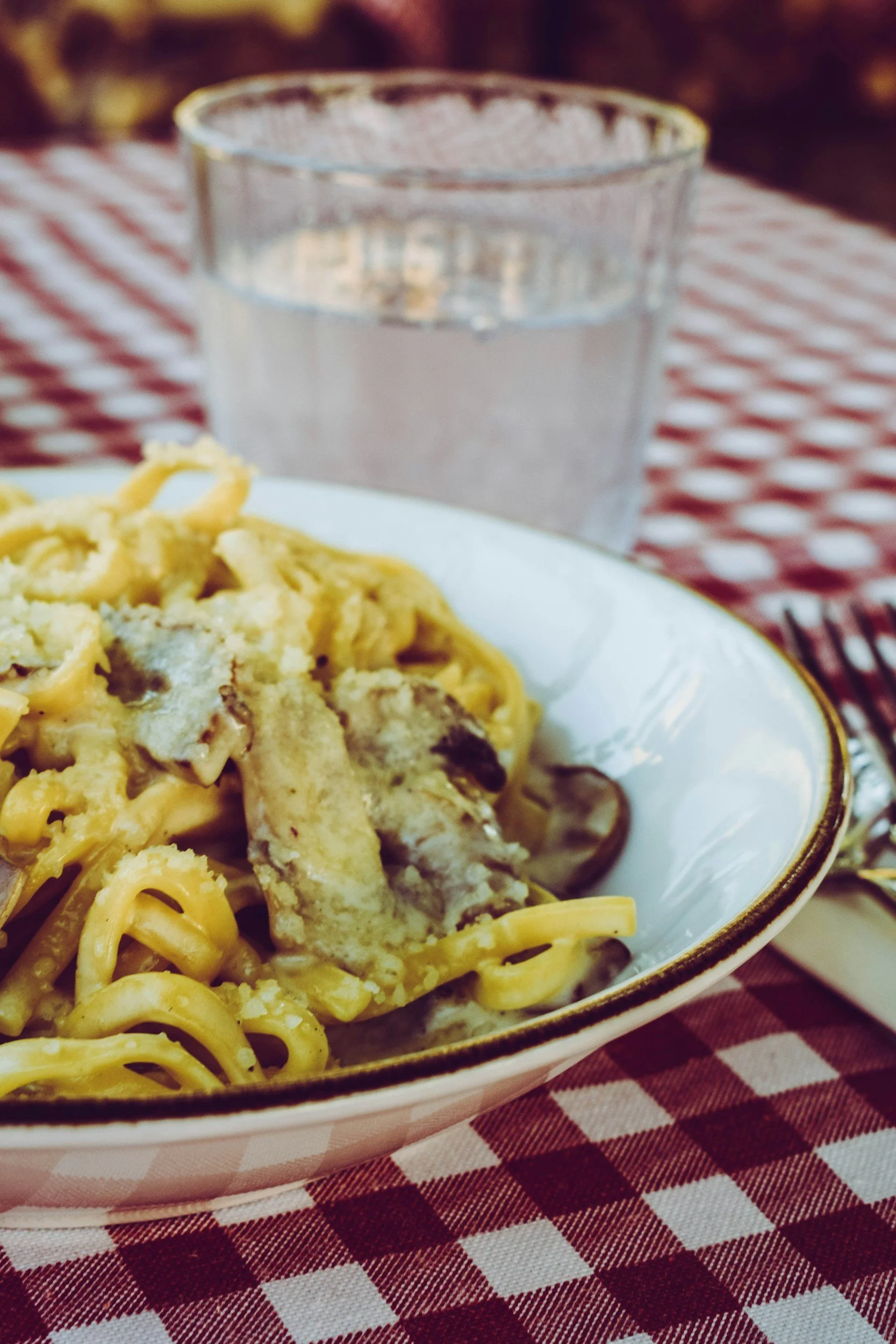
Where evenings actually happen in both towns (and when they quiet down)
In Bassano, the evening kind of spreads out on its own. You’ll probably start around Piazza Libertà without planning it, just because that’s where everything is. Around 18:00, people are already out for aperitivo, mostly standing just outside the bars under the arcades with a spritz or a glass of wine. No one really settles in for long at this point. It’s more like a first stop before dinner.
Then people start drifting toward the bridge. You’ll do the same without thinking about it. The walk down Via Matteotti feels different in the evening than during the day. Shops are closing, people are slower, and you’re not really heading anywhere specific. By the time you reach the Ponte Vecchio, it’s busy again, but in a relaxed way. People stop in the middle, lean against the sides, talk, take a photo, then move on.
Right at the end of the bridge, Grapperia Nardini is still one of the main spots. You’ll see people standing outside with a small drink, often just one before heading off again. It’s not somewhere people sit for hours, it’s more like a quick part of the routine. If you keep walking past it, even just a few minutes along the Brenta, everything opens up. Fewer people, more space, some sitting by the river, others just walking. It’s a good place to slow things down without needing to find another bar.
Dinner in Bassano is pretty flexible. People start sitting down around 19:30, but it’s not all at once. You’ll see tables filling gradually, especially around Piazza Libertà, while closer to the river it feels a bit more relaxed. After dinner, the town doesn’t just stop. People head back out, walk toward the bridge again, or grab one more drink somewhere. Around 21:30–22:30 there’s still enough going on that you don’t feel like everything has shut down.
Asolo is much more contained, and you notice that straight away. Everything happens around Piazza Garibaldi. Around 18:00, the same cafés you saw earlier fill up again. Caffè Centrale is usually the busiest, with people sitting outside facing the square, and Bar Due Mori just around the corner is another easy option, especially if you go inside and stand at the bar.
But that’s really it. People pick a place and stay there. You don’t see the same movement between different spots, because there aren’t really any other areas to move to. If you walk away from the square, even just a couple of minutes along Via Browning or toward the cathedral, it gets quiet quickly.
Dinner matters more here because it becomes the main part of the evening. Most people sit down around 19:30–20:00, and on a Saturday the good places fill up. Once everyone is inside, the square actually calms down a lot. You’ll still see a few people passing through, but it’s not the same as Bassano where things keep shifting.
After dinner, there isn’t much of a second round. You might walk back through the square, maybe see a couple of tables still occupied, but that’s about it. By around 21:30–22:00, it already feels quiet, especially if you move away from the centre. Walking up toward the Rocca or along the side streets at that point, you’ll barely pass anyone.
So the difference is pretty clear once you’ve experienced both. In Bassano, the evening stretches a bit and you naturally move between a few places without planning it. In Asolo, you stay in one spot, go to dinner, and then the day winds down not long after.
You’ll notice this most clearly on menus, especially in spring, and it makes more sense once you’ve looked at how food seasons change across Italy and why certain ingredients suddenly appear everywhere.
Food scene: what you’ll realistically eat over a weekend
Traditional dishes you’ll find in Bassano and how varied menus are
Food in Bassano shows up in small ways first, not just when you sit down for a meal. Walking along Via Matteotti or just off Piazza Libertà in the morning, you’ll see bakeries with trays of pastries going out, people stepping in for a quick espresso and something sweet, and deli counters already set up with prepared dishes for later in the day. It doesn’t feel like a “food destination” in the obvious sense, but it’s constant.
If you’re there in spring, you’ll notice white asparagus almost immediately. Not in a subtle way. It’s written on chalkboards outside restaurants, listed as the main special, sometimes even printed as a separate seasonal menu. This is the local asparagus from Bassano del Grappa (Asparago Bianco di Bassano DOP), and it’s treated quite simply. You’ll see it served with boiled eggs and olive oil, or laid over risotto, or paired with something like prosciutto. You’re not looking for creativity here, just whether it’s in season and how fresh it is.
For a proper sit-down meal, places like Osteria Trinità or Ristorante Birraria Ottone give you a good sense of what the town actually eats rather than something adapted for visitors. You’ll see bigoli pasta come up often, thicker than spaghetti and usually served with duck ragù or sometimes anchovy-based sauces. Polenta shows up in different forms, sometimes as a base for meat dishes, sometimes fried or grilled on the side.
Closer to the river, especially around the streets leading toward the Ponte Vecchio, the menus tend to be slightly simpler. You’re more likely to see straightforward pasta dishes, grilled meats, and plates designed to work with a glass of wine rather than a long meal. This part of town leans more into where you’re sitting than what you’re eating, especially in the evening.
Lunch is where Bassano is easiest. Around 12:30, places start filling, but you’re not locked into anything. You can sit down somewhere near Piazza Libertà and have a full meal, or you can keep it lighter. There are small bakeries and takeaway spots along the central streets where people pick up something simple and move on. It’s very normal to eat quickly and continue walking rather than turning lunch into the main event.
Dinner is where the range becomes clearer. You’re not choosing between two or three obvious places. Within a 5–10 minute walk, you’ll find enough options to change your mind without it becoming a search. One night you might end up in a traditional trattoria with a heavier menu, the next closer to the river with something simpler and a better view. You don’t need to plan this in advance unless you’re set on a specific restaurant on a Saturday.
One detail that’s easy to miss is how tied the food is to timing rather than just location. If you sit down early, around 19:00–19:30, things are calmer and you’ll have more choice. By 20:30 on a weekend, the better places are usually full, especially if they have outdoor seating. It’s not a city where you can walk in anywhere at peak time and expect a table without waiting.
There’s also a strong link between food and the grappa culture here, even if you don’t think about it at first. After dinner, people often stop at Grapperia Nardini or somewhere nearby for a small glass, not as a big moment, just as a continuation of the meal. It’s quick, informal, and part of the routine rather than something separate.
Restaurant options in Asolo and whether you need to book ahead
In Asolo, dinner is something you think about earlier than you normally would, mainly because there aren’t many places to choose from once you’re in the centre. After walking up into Piazza Garibaldi, you’ve already seen most of your options without trying. The restaurants sit along the square itself and along the short streets branching off it, especially Via Browning and Via Colmarion. You might walk a loop through these streets, glance at a few menus, and realise quite quickly that this is more or less the full picture.
Albergo al Sole is usually the first place that stands out. It sits slightly above the square, and the terrace looks out over the rooftops, which makes it one of the most in-demand spots in the evening. Those tables are often reserved well before dinner service starts, especially on weekends or in good weather. If you walk past around 18:30, you’ll often already see reserved signs on the better tables, even though no one is sitting there yet. It’s not the kind of place you rely on for a spontaneous dinner unless you’re happy to sit inside.
At street level, the other restaurants feel more relaxed at first, but they fill just as quickly. Osteria al Bacaro is one of the more typical options, with a short, handwritten-style menu that changes with the season. You’ll see dishes like bigoli with ragù, gnocchi, sometimes a risotto if it’s on that day, and a couple of meat-based second courses. The menus are not long, and they don’t need to be. In autumn, radicchio appears often, especially in risotto or grilled as a side. In spring and early summer, things lean lighter, but still very much within the same regional style.
Lunch is easier to manage because the timing is more forgiving. If you sit down before 12:30, you’ll usually find a table somewhere without much effort. Around 13:00, most places fill at the same time, and because the centre is so small, it can feel like everything is suddenly busy. There isn’t much spillover into other areas, so your options are to wait, go inside rather than sit outside, or come back later. By around 14:30, it clears out quite quickly again, and you can sit almost anywhere without thinking about it.
Dinner works differently. Most places open around 19:30, and by 20:00, the better tables are already taken. Outdoor seating is always the first to go, especially in Piazza Garibaldi where people want to sit facing the square. The issue isn’t just that restaurants are busy, it’s that they all get busy at the same time. If one place is full, the next one usually is too, because they’re all within a few steps of each other and working with similar numbers of tables.
That’s why booking ahead makes such a difference here. It doesn’t need to be complicated. Walking past in the afternoon, checking a menu, and reserving for later is usually enough. Without that, you can end up doing the same loop through the square and the surrounding streets, looking at the same places again and hoping something has opened up.
Another thing you notice is that dinner becomes the main event of the evening in Asolo. People don’t really move between different spots before or after in the same way as in a larger town. They choose a place, sit down, and stay there. Once service is underway, the square itself actually becomes quieter, because most of the activity moves indoors or onto restaurant terraces rather than into the streets.
What lunch and dinner feel like in Asolo vs Bassano
In Bassano, lunch just fits into whatever you’re already doing. Around 12:30, you’ll notice places near Piazza Libertà and along Via Matteotti starting to fill, but it’s not a single rush. Some people sit down for a proper plate of bigoli with ragù or a risotto, others grab something quick from a bakery just off the main streets and keep walking. If you head toward the bridge around that time, you’ll see the same thing. A few full tables, others turning over quickly, and plenty of people just passing through without stopping at all.
It’s easy to keep things light here. You don’t feel like you have to choose the “right” place or commit to a long meal. If somewhere looks too busy, you walk another minute or two and try again. There are enough options within that small area that lunch never really slows the day down unless you want it to.
Dinner has more of a rhythm, but it still doesn’t take over the evening. People start sitting down around 19:30, some earlier, some later, and the town keeps moving around it. You might eat near Piazza Libertà, then walk down to the Ponte Vecchio afterward, or start closer to the river and drift back toward the centre. After dinner, people come back out. You’ll see them walking across the bridge again, stopping briefly at Grapperia Nardini, or just passing through the square before heading back. Around 21:30 or 22:00, there’s still enough going on that it doesn’t feel like the day has ended.
Asolo feels more fixed in comparison. Lunch happens in a tighter window, usually between 12:30 and 14:00, and most people sit down properly rather than grabbing something quickly. Around Piazza Garibaldi and along Via Browning, the restaurants fill at roughly the same time, and because there aren’t many of them, it can feel like everything is busy all at once. If you arrive earlier, it’s easy. If you arrive in the middle of that window, you might wait or take whatever table is available.
Then it drops off quite quickly. By around 14:30, the tables clear, and the square becomes noticeably quieter again. There isn’t much of a long, slow afternoon lunch culture spilling into the rest of the day. People eat, leave, and the centre resets.
Dinner in Asolo is more of a set plan. People arrive around 19:30–20:00, and once they sit down, they stay there. Restaurants like Albergo al Sole or Osteria al Bacaro fill up, especially outside, and that’s where most of the evening happens. You don’t see people moving between places before or after in the same way. Once you’ve eaten, you might walk back through the square, but there aren’t many options to continue the night.
By around 21:30–22:00, it’s already quiet. If you walk away from Piazza Garibaldi toward the cathedral or up the streets leading out of the centre, you’ll notice how quickly everything drops off. There are no second stops waiting around the corner.
So the difference is quite simple when you’re actually there. In Bassano, you eat when it suits you and keep moving. In Asolo, especially in the evening, the meal becomes the main part of the day, and everything else sits around it.
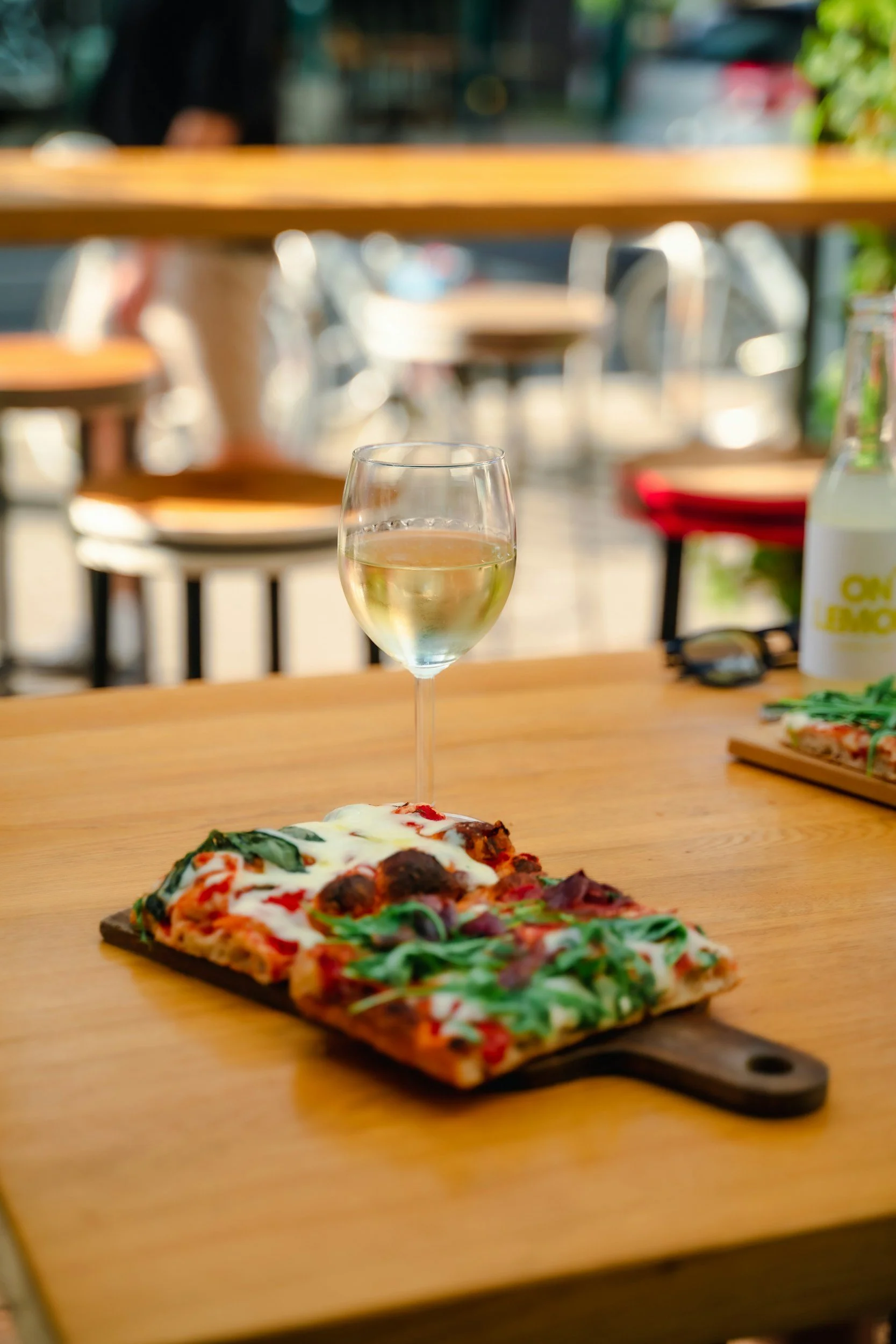
Bassano’s weekly market and how much of it is for locals vs visitors
If you’re in Bassano on a Thursday morning, the centre doesn’t feel like the same town. By around 8:30–9:00, stalls are already set up across Piazza Libertà and Piazza Garibaldi, spilling into the connecting streets and parts of Via Matteotti. You don’t walk into a neat “market area.” You just run into it as you move through the centre.
The first thing you notice is how practical it is. Along one side of Piazza Garibaldi, you’ll find fruit and vegetable stalls stacked with whatever’s in season. In spring, that often means asparagus everywhere, not just one stall but several, along with strawberries and early greens. Nearby, there are cheese counters cutting pieces to order, cured meats laid out in trays, and bread stalls where people stop for a minute, buy what they need, and leave.
Then you turn a corner and it shifts completely. Rows of clothing stalls, tables with socks, kitchen tools, simple household items, things you wouldn’t go out of your way to look for as a visitor. And that’s the point. People here aren’t browsing for fun, they’re doing their weekly shop. You’ll see the same pattern over and over: someone stops at a stall, exchanges a few words, pays, and moves on quickly to the next one.
If you walk slowly through the centre around 10:00–11:00, it’s at its busiest. The space between Piazza Libertà and Via Matteotti can feel crowded, especially near the food stalls. But it doesn’t feel like a tourist crowd. Most people have a clear reason for being there. They’re carrying bags, moving with purpose, and not stopping to take photos or look around for long.
You can step out of it quite easily though. Turn off into one of the smaller streets just behind the main squares, and within a minute it quiets down again. That’s useful if you want to see it without getting stuck in the busiest stretch.
Closer to the bridge, the market thins out. You might still find a few stalls along the way, but most of it stays around the central piazzas. That means you can walk through the market, then continue down to the Ponte Vecchio and be back in a completely different atmosphere within five minutes.
In case you arrive early, around 8:30–9:30, it feels almost entirely local. By 11:00, there are more visitors mixed in, especially people coming in for a few hours from nearby towns. By around 12:30, you’ll notice stalls starting to pack down. By 13:30, a lot of it is already gone, and by mid-afternoon, the centre is back to normal.
It’s also one of the few moments where Bassano feels less like a weekend destination and more like a working town. You see how people actually use the space. The same Piazza Libertà where you’ll sit for coffee later is, for a few hours, just a place to buy vegetables, bread, or something practical.
Daily routines in Asolo and what’s actually open outside peak times
In Asolo, the day has very clear “on” and “off” moments, and once you’ve been there a few hours you start to work around them without thinking.
If you go out early, around 8:30–9:00, Piazza Garibaldi is almost empty. Caffè Centrale will be open, but most people are inside at the bar rather than sitting outside. You’ll see a couple of locals stopping for a quick espresso, maybe someone picking up a pastry, and that’s it. The rest of the square is still waking up. Shops are closed, chairs are stacked, and you’ll hear more from delivery vans than from people.
By around 10:30, it shifts quite quickly. The square fills, the outdoor tables are set up, and the cafés start to look like they did in the photos. Via Browning picks up a bit as well, with people walking through and stopping at the few shops and galleries there. But the key thing is how short that stretch is. If you walk two minutes away toward the Duomo di Santa Maria Assunta or down one of the side streets like Via Canova, it drops off almost immediately. You go from busy to quiet without any transition.
Lunch is the busiest point of the day. Between about 12:30 and 13:30, the restaurants around the square all fill at roughly the same time. Albergo al Sole, Osteria al Bacaro, the smaller places nearby — they’re all working with limited tables, so it doesn’t take much for everything to feel full. You’ll see people waiting briefly, checking menus again, or walking a small loop through the same streets to see if something has opened up.
Then, quite quickly, it’s over. Around 14:30, the tables clear, and the square empties out in a way that’s quite noticeable. Some shops close for a few hours, and the streets become quiet again. If you walk through Via Browning or toward the cathedral at that time, you might not pass many people at all. It’s not a gradual slowdown, it just stops.
That mid-afternoon stretch, roughly 14:30–16:30, is when Asolo feels the most still. If you weren’t expecting it, it can feel like you’ve arrived at the wrong time. Cafés are either quiet or half-empty, shops are closed, and there isn’t another part of town to move to. This is usually when people either slow down completely, sit somewhere and wait it out, or leave town for a couple of hours.
Around 16:30–17:00, things start to come back. Caffè Centrale and Bar Due Mori fill again, but now it’s for aperitivo. You’ll see spritz, small snacks, people sitting longer, but it’s still the same small cluster of places. There’s no second area that picks up. Everything happens in the same 30–40 meter stretch around the square.
After that, it moves straight into dinner. By 19:30, most people are sitting down, and once they do, the square actually becomes quieter again. You’ll see a few people passing through, but most of the activity is inside restaurants. By around 21:30, if you step away from Piazza Garibaldi, the town is already very calm. Streets like Via Browning, Via Canova, or the path leading up toward the Rocca are almost empty.
One detail that’s easy to miss is how little overlap there is between these phases. Morning, lunch, afternoon, aperitivo, dinner - they don’t blend into each other much. They happen one after the other, and in between, there are gaps where not much is going on.
That’s why timing matters more in Asolo than in most places. If you arrive mid-afternoon expecting things to be open and active, it can feel flat. If you arrive earlier, leave during the quiet hours, and come back later, it makes a lot more sense.
And realistically, that’s how most people end up using it. Coffee in the morning, lunch in the centre, a quiet afternoon either walking up to the Rocca or driving out toward Maser or Possagno, then back again for aperitivo and dinner. The town itself doesn’t stretch much beyond that, so the routine becomes quite clear once you’ve been there for a few hours.
Shops, bakeries, and small details in these towns
In Bassano, you don’t have to look for “local life,” you just walk into it. The stretch from the station toward Piazza Libertà is already useful for this because it doesn’t drop you straight into the postcard version of town. Along Viale delle Fosse and into Via Roma, you pass places people actually use every day: a tabacchi, a pharmacy, a couple of bars already open with people standing at the counter, not sitting outside.
Once you reach Via Matteotti, it becomes more obvious. This is where most people walk toward the bridge, but it’s also where a lot of everyday stops happen. Around 9:00–10:00, bakeries are still busy. Pasticceria Biaggioni is one of the easier ones to notice, with people stepping in for a pastry and coffee, but there are smaller panetterie nearby where you’ll see trays of focaccia, simple sandwiches, and bread being picked up quickly rather than displayed. Nobody is browsing. They go in, order, leave.
A bit further along, you’ll pass Alimentari-style shops with prepared food in the window, things like roasted vegetables, pasta salads, or small ready-made dishes that locals pick up for later. These places matter more than they look because they show how people actually eat here during the week, not just where visitors sit down for lunch.
Under the arcades around Piazza Libertà, shops open gradually rather than all at once. Around 10:30, everything is running, but earlier you’ll see shutters halfway up, people setting things up, or stepping out for a quick coffee. Libreria Palazzo Roberti is worth walking into if it’s open, not because it’s famous, but because it feels like a place people use regularly. Same with smaller clothing shops and household stores nearby. They’re not designed to catch your attention, but they give the centre more depth than just cafés and restaurants.
If you’re there on a Thursday, the market changes everything. Piazza Garibaldi fills with food stalls, and suddenly the centre is being used in a completely different way. People are buying fruit, vegetables, cheese, meat, and then moving on. You’ll see regulars going back to the same stall each week. It’s fast, practical, and not set up for browsing slowly.
Asolo is much quieter in comparison, and you have to pay a bit more attention to notice the same kind of details. In the morning, around 9:00, Piazza Garibaldi is still almost empty. Caffè Centrale is open, and a few people stand at the bar for coffee, but most tables are empty. Along Via Browning, some shops are still closed, others just opening. It’s not a place where everything starts at the same time.
There are a couple of small bakeries and food shops in the centre, but you don’t have much choice. You might stop for a pastry or pick up something small, but it’s more about convenience than seeking out a specific place. What stands out instead is how briefly people use the town. Someone stops for coffee, someone else opens a shop, a delivery van pulls up and leaves within a few minutes.
If you walk away from the square, even slightly, it changes quickly. Along Via Canova or the streets leading toward the cathedral, it becomes residential almost immediately. Closed doors, a few signs, maybe a small workshop or gallery, but not much movement. It’s not empty, but it’s quiet in a way that feels normal rather than staged.
The afternoon gap is also more noticeable here. Around 14:30–16:30, many shops close, and the centre feels almost still. If you walk through at that time, you might only pass a few people. Then around 17:00, things open again, but on the same small scale as before.
There aren’t layers of streets or different shopping areas to move between. Everything happens in that small cluster around Piazza Garibaldi, and outside of it, the town returns to being very calm. It’s a different kind of everyday life compared to Bassano. Less visible, more limited in where it happens, and much more tied to specific times of day rather than constant activity.
Views and surroundings: hills, vineyards, and walking options nearby
Walking routes from Asolo into the surrounding hills and olive groves
Most people in Asolo end up doing the walk to the Rocca, but what actually matters is how you do it and what you do after, because that’s where the area starts to open up.
If you start from Piazza Garibaldi, you’ll pass the Duomo and then follow the small streets that lead uphill. Via Canova is usually the most natural way out. At first, it still feels like town, narrow lanes, stone walls, a few houses, then quite quickly you’re out of it. Within five minutes, the noise drops and you’re on a proper uphill path. It’s not long, but it’s enough to feel like you’ve left the centre behind.
The climb to the Rocca takes around 15–20 minutes. The path is uneven in places, especially after rain, and there’s not much shade, so it’s worth doing earlier in the morning or later in the afternoon. As you go up, you start to get small openings in the view, then suddenly you’re at the top with the whole area laid out below you. You see Asolo directly beneath you, then beyond that the flat stretch toward Montebelluna and Treviso.
Most people go straight back down the same way, but that’s where it becomes a bit limited. If you have the time, it’s better to extend the walk slightly instead of heading straight back to Piazza Garibaldi.
From the Rocca, you can take paths that lead out toward the hills behind the town rather than directly down. These routes aren’t marked as major trails, but you’ll find smaller roads and tracks heading toward places like Santa Caterina or in the direction of Monfumo. Once you’re on these, it becomes much quieter. You might pass a couple of people, maybe a car, but long stretches where you don’t see anyone at all.
This is where you start to notice the olive trees and small vineyards properly. They’re not arranged for visitors, just part of the landscape. You’ll walk past low stone walls, gates leading into private properties, and houses spaced far enough apart that it feels quite open. There aren’t viewpoints every few minutes, just occasional gaps where you can see out across the hills.
If you follow the road out toward Monfumo for 20–30 minutes, you’ll be completely outside the town without it ever feeling like a “hike.” It’s more like walking along quiet country roads that happen to start right next to the centre. There’s no infrastructure here. No cafés, no shops, no signs telling you where to go next. That’s why most people don’t go far beyond the Rocca.
One useful way to do it is to walk up to the Rocca, continue a bit further out along one of these quieter roads, then turn back when it feels right. You don’t need to complete a loop. Just going 15–20 minutes beyond where most people stop is enough to change the experience.
If you don’t want to walk the whole way from town, you can also drive a few minutes out and start from there. Parking along the smaller roads toward Monfumo or Santa Caterina gives you quicker access to the quieter parts without the initial climb. From there, you can walk through the same landscape but with more time in the open areas rather than on the approach.
One thing to be aware of is how little there is once you leave the centre. No water stops, no places to sit, no shortcuts back other than the way you came. It’s very simple, but that’s part of what makes it feel different from staying in the square. This is also where Asolo starts to make more sense as a base. If you only stay in the centre, it can feel quite small. But once you step out into the hills, even for an hour, you realise how much space sits just beyond it.
The Asolani hills also make more sense if you enjoy gentle countryside drives and short walks rather than big hiking days. The area around Monfumo, Maser, and Possagno gives you small roads, villas, churches, and hillside views without needing to push into the Dolomites. If you are already exploring northern Italy beyond the obvious routes, Asolo pairs naturally with these quieter Italian wine villages, especially in autumn when the food and wine side of the trip becomes more interesting.
Flat riverside walks and longer routes around Bassano
In Bassano, you don’t plan a walk. You end up on one.
Most people reach the Ponte Vecchio at some point, cross it, take a photo, maybe stop at Nardini, and then turn straight back. The difference is what happens if you don’t turn back.
If you cross the bridge and keep walking to the right (south side of the Brenta), within about three minutes everything changes. The noise drops, the crowds disappear, and you’re on a path that locals actually use. It runs along the river with a mix of gravel and paved sections, and it’s completely flat. You’ll pass a few benches, bits of grass where people sit, and stretches where it feels surprisingly open for being so close to the centre.
Around 10–15 minutes in, you’ll notice fewer and fewer people. Maybe someone running, someone walking a dog, but long stretches where it’s just you and the river. If you keep going another 10–15 minutes, you’re basically outside the town without ever having made a decision to “leave.” That’s what makes it work. You can turn back whenever you want and be back at the bridge in under half an hour.
If you cross the bridge and go left instead (north side), it’s a bit less obvious but still worth doing. The path isn’t as clearly defined at first, and fewer people go that way, but that’s exactly why it feels different. You’ll pass quieter sections, a few houses close to the water, and wider views along the river. It’s less of a “route” and more of a series of connected paths, but it’s still easy to follow if you just stay near the river.
One simple loop that works well is this: start in Piazza Libertà, walk down Via Matteotti to the Ponte Vecchio, cross it, go right along the river for 15–20 minutes, turn back, cross the bridge again, and return through the centre. It takes about 45 minutes at a slow pace and feels like you’ve seen two completely different sides of the town.
If you want something slightly longer without turning it into a full hike, you can keep following the river further out toward Campese. It’s still flat, still easy, just longer. You’ll notice the town fading out completely after a while, replaced by open stretches, a few scattered houses, and hardly anyone around. Most visitors never go that far, which is why it feels so quiet.
What’s useful here is how close everything is. From Piazza Libertà to the bridge is five minutes. From the bridge to a quiet stretch of river is another five. You don’t need to block out half a day or bring anything special. You just go, walk a bit further than you planned, and come back.
This is also what makes day two feel different without trying. The first time, you probably just cross the bridge and head back. The second time, you keep going. Or you go earlier, when it’s quieter. Or later, when the light changes. It’s the same place, but you use it differently.
If you're continuing south after Bassano del Grappa and want somewhere with a completely different feel, time in Ravenna shows how different an Italian long weekend can look once you swap hills and prosecco country for mosaics and Adriatic streets.
Using Asolo or Bassano as a base for the Prosecco hills
If the Prosecco hills are part of your plan, where you stay starts to matter quite quickly. On a map, both Asolo and Bassano look close enough, but in practice they connect to that area in very different ways.
From Asolo, you’re already on the edge of it. If you leave town heading north, you’re in the hills within 10–15 minutes without doing anything complicated. The road toward Maser is usually the first stretch people take, and from there you can continue toward Cornuda, Crocetta del Montello, or further into the Valdobbiadene area. It doesn’t feel like a “day trip,” more like a natural extension of where you’re already staying.
Driving from Asolo toward Valdobbiadene takes around 30 minutes, depending on how often you stop, and you will stop. The roads are narrow in parts but easy enough, and they wind through vineyards, small villages, and stretches where there’s not much traffic at all. You’ll pass signs for local producers rather than large, obvious wineries, and some places only open if you call ahead. It’s not set up for quick visits. You need a bit of time and flexibility.
The area around Santo Stefano, San Giovanni, and up toward the Strada del Prosecco is where things start to feel more defined. You’ll see more tasting rooms, small terraces, and places where you can sit for a glass of wine without planning too much in advance. Even then, it’s not crowded in the way bigger wine regions are. You might stop somewhere for a drink, then continue driving without a fixed plan.
From Bassano, the same area is still reachable, but it feels more like a separate trip. You’re usually looking at around 45–60 minutes by car to reach the central Prosecco hills, depending on the route. You pass through towns like Romano d’Ezzelino or Crespano del Grappa first, and the shift into vineyard landscape takes a bit longer.
It’s still very doable as a day trip, but you notice the difference. You leave Bassano with a clear intention to go somewhere else, rather than just continuing your surroundings. If you only have two days, it takes up a larger part of one of them.
Without a car, this becomes much harder from either base, but especially from Bassano. There are no simple train connections into the heart of the Prosecco hills, and buses are limited and not well timed for a relaxed visit. From Asolo, you have a slightly better chance of piecing something together, but it’s still not straightforward enough to rely on.
That’s why Asolo works better if the hills are a main focus. You can leave after breakfast, drive for 10–15 minutes, stop somewhere for a while, continue on, and be back in town without it feeling like a full-day commitment. It fits around the rest of the trip.
From Bassano, it’s more of a planned outing. You’ll likely head out in the late morning, spend a few hours in the hills, and return in the afternoon or early evening. It works, but it’s a different type of day.
The actual experience in the hills is the same from both places. The difference is how easily you get into it and how much of your day it takes.
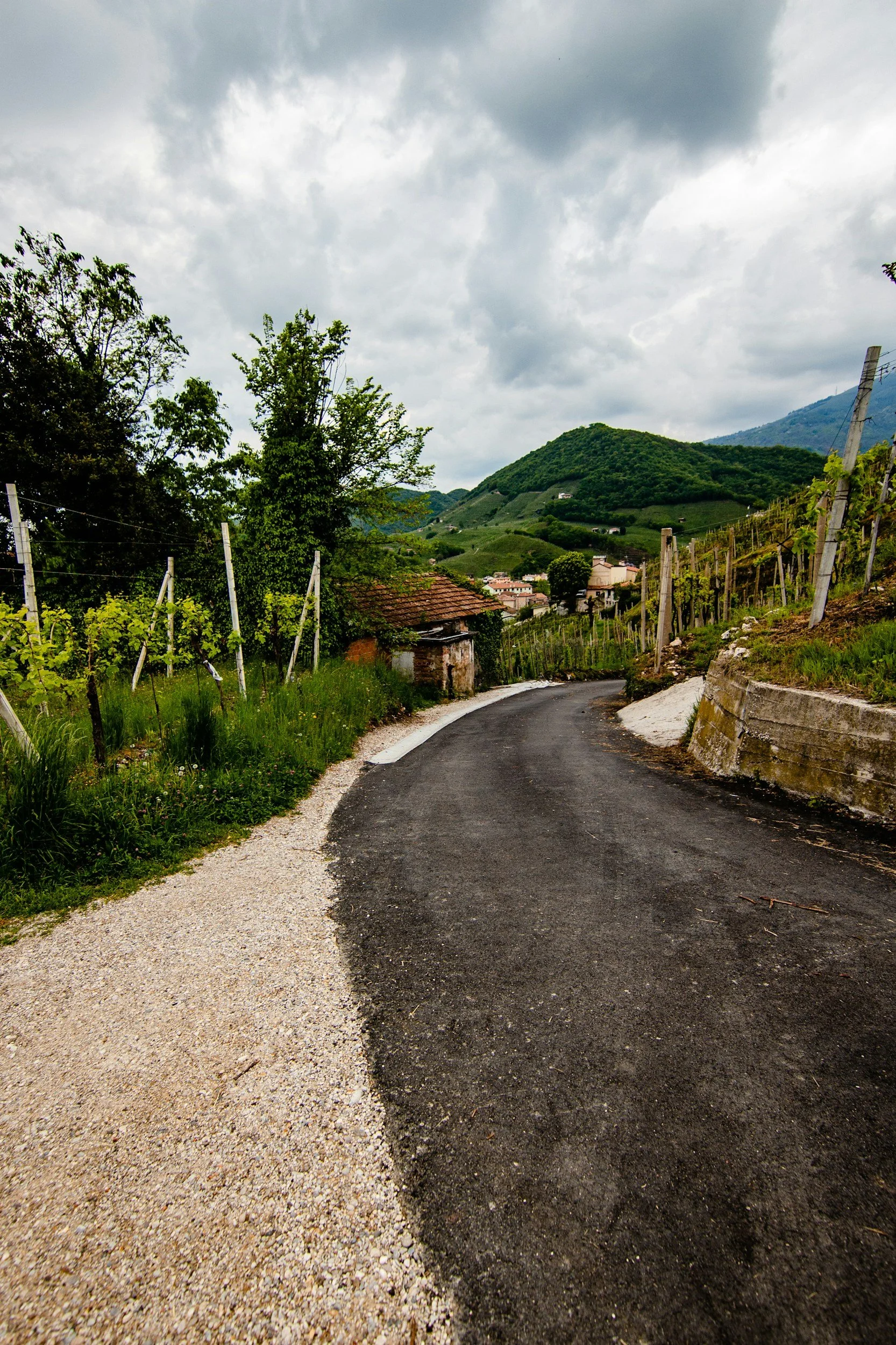
Short trips from Asolo vs Bassano that actually make sense
Easy connections from Bassano to Marostica or Cittadella
From Bassano, stepping out for a few hours is straightforward, and you don’t need to turn it into a full day. Marostica is the easiest place to start because it’s close enough that it doesn’t interrupt the rest of your plans. By car, it’s about 15 minutes. You leave Bassano heading south-west, pass through a few smaller roads, and arrive just outside the walls where parking is clearly signposted. Most people use Parcheggio Campo Marzio or the spaces near the lower castle.
Once you’re there, everything centres around Piazza degli Scacchi. It’s not a large town, and you’ll see most of it quite quickly. The square itself is laid out like a chessboard, and even if there’s nothing happening, it’s still the main point. From there, you can walk up toward the upper castle if you feel like it. The path is quite direct, and from the top you get a clear view back down over the town and surrounding hills. If you don’t want the climb, staying around the square and the streets just off it is enough for a short visit.
Most people spend about one to two hours here. You can stop for a coffee in the square, walk a loop through the centre, and head back to Bassano without it feeling rushed. It works well either in the morning before lunch or mid-afternoon when Bassano is quieter.
Cittadella is slightly further but still easy to fit in. By car, it’s around 25–30 minutes, heading south-east from Bassano. The main difference is that Cittadella has a very clear structure. The town is completely enclosed by medieval walls, and you can walk the full circuit on top of them. Parking is simple, with several areas just outside the walls, such as Parcheggio Villa Rina, and from there you walk straight into one of the gates.
The wall walk is the main reason to go. It takes about an hour at a slow pace, and you get views both into the town and out across the surrounding countryside. You don’t need to plan much beyond that. Once you’re back down, you can walk through the centre, stop for a drink, and leave. The town itself is quiet, with a few cafés and shops, but it doesn’t try to keep you for a full day.
If you’re doing both, it’s better to split them across different parts of your stay rather than combining them. Marostica works well as a quick stop that fits around Bassano, while Cittadella feels more like a focused visit built around the walls.
What makes both of these work from Bassano is how little effort they take. You don’t need to reorganise your whole day. You can leave after breakfast, be somewhere else within 30 minutes, and still be back in Bassano in time for lunch or an afternoon by the river.
Short drives from Asolo to small villages that don’t appear on maps easily
From Asolo, the best short trips aren’t the obvious ones. They’re the ones you don’t really plan in detail, just small roads you follow for 10–20 minutes that take you out of the centre and into places that feel barely marked.
If you leave Asolo heading north toward Monfumo, the change happens almost immediately. Within five minutes, you’re out of the town and on narrow roads that curve through vineyards and scattered houses. Monfumo itself is small, more a cluster than a town, with a church, a few houses, and views back across the hills. You don’t go there to “see something,” you go because it’s quiet and close enough to reach without thinking about it.
From there, you can keep driving without a fixed route. Roads connect loosely between places like Castelcucco, Cavaso del Tomba, and the smaller hamlets in between. You’ll pass olive trees, vineyards, and stretches where there’s very little traffic. Sometimes you’ll come across a small bar or a simple restaurant, but not in a way that feels planned. You stop if it looks open, otherwise you keep going.
Heading toward Maser is another easy option, only about 10 minutes from Asolo. Most people go there for Villa Barbaro, but even if you’re not planning to visit the villa, the drive itself is worth it. The roads are slightly wider here, with more open views and farmland, and you’ll pass through a landscape that feels more spread out than the centre of Asolo.
If you continue further out toward Possagno, around 10–15 minutes away, the scenery shifts again. The Tempio Canoviano is visible from a distance, sitting higher up, and the town itself feels quieter and more local. It’s one of the few places nearby that has a clear point to visit, but it still fits easily into a short drive rather than needing a full day.
The key with these routes is that they don’t require a plan. You don’t need to map out stops or follow a strict route. You can leave Asolo after breakfast, drive for 20 minutes, stop somewhere that looks interesting, and head back before lunch or later in the afternoon.
How much you actually need to plan in Asolo vs Bassano
In Bassano, it’s almost too easy. You’re sitting in Piazza Libertà or walking along Via Matteotti, you look at a map for two minutes, and you already know what your options are. Marostica is about 15 minutes. Cittadella is half an hour. Even heading up toward Campese along the Brenta is just a matter of crossing the bridge and continuing. You don’t really “plan” it, you just decide and go.
Say it’s 10:30 and you’ve had coffee near Piazza Libertà. You could walk back to your hotel, grab your bag, and be in Marostica before 11:00. You park just outside the walls near Piazza degli Scacchi, walk across the square, maybe head up toward the upper castle if you feel like it, and be back in Bassano in time for a late lunch. Nothing about that needs booking, checking, or committing to a full day.
Cittadella works the same way, just slightly longer. You drive 25–30 minutes, park outside the walls near one of the gates like Porta Vicenza, walk up onto the walls, do a full loop in about an hour, and come back. You don’t need to line anything up in advance. You just go when it suits you.
Even without a car, Bassano is easier than it looks. There are buses running to nearby towns, and while they’re not constant, they’re frequent enough that you can check once and work around it. It doesn’t feel like you’re building your whole day around a schedule.
Asolo is where things slow down a bit, not because it’s harder, but because nothing happens by accident.
If you’re sitting in Piazza Garibaldi and think about leaving town, you usually need to decide where you’re going first. Maser is 10 minutes away, Possagno maybe 15, Monfumo even closer. But you don’t just head in a direction and see what happens. You check where you’re parking, whether something is open, and what you’ll actually do when you get there.
Take Villa Barbaro in Maser as an example. It’s one of the obvious nearby stops, but you still need to check opening hours before you go. If you arrive at the wrong time, it’s closed, and there isn’t much else in immediate walking distance to replace it. Same with wineries in the hills. Many of them don’t operate like walk-in places. You often need to call ahead or at least know which ones are open.
Lunch works the same way. In Bassano, you can leave town and find somewhere on the way without thinking about it. Around Asolo, you’re more likely to decide in advance where you’re going to eat, especially if you don’t want to end up back in the same square again.
Without a car, this becomes even more obvious. There are buses, but they’re not something you rely on casually. You check times, you plan around them, and if you miss one, it’s not a five-minute wait. It turns a simple idea into something you have to organise.
Even the small drives feel different. Heading out toward Monfumo or along the roads behind Asolo is easy, but you’re still choosing a direction rather than just drifting into it. The roads are quieter, there are fewer signs, and fewer obvious stops. You don’t stumble across things in the same way.
Hotel and guesthouse options in Bassano across different budgets
In Bassano, where you stay is less about finding the “perfect” area and more about how you arrive and how much you want to walk. The centre is small enough that most places work, but a few streets make things easier without you thinking about it.
If you’re coming by train, staying somewhere between the station and Piazza Libertà saves you time straight away. From Bassano del Grappa station, you walk along Viale delle Fosse and into Via Roma, and within 10–12 minutes you’re in the middle of town. Along that route, you’ll find smaller hotels and guesthouses that don’t look special online but work well in practice. You can check in, drop your bag, and be sitting in a café on Piazza Libertà without needing a taxi or dragging your suitcase over cobblestones.
Closer to the centre, around Piazza Libertà, Piazza Garibaldi, and the streets just behind them, you’ll find more character but also more variation. Some places are inside older buildings with uneven layouts, smaller rooms, or staircases instead of lifts. You’re staying for the location here. Step outside and you’re already in the middle of things, two minutes from Via Matteotti, five minutes from the Ponte Vecchio. If you’re planning to go back and forth during the day, this makes a difference.
Hotel Al Castello is a good example of something just outside the busiest stretch. It sits on the edge of the centre, so you’re not dealing with noise late in the evening, but you can still walk into Piazza Libertà in under five minutes. This kind of location works well if you want the town to feel close but not right outside your window.
If you move slightly further out, toward Viale Diaz or the residential streets behind Via Roma, you’ll find more practical options. These are often family-run guesthouses or smaller B&Bs where the setup is simple but reliable. Rooms tend to be larger, parking is easier, and you’re still only 10–15 minutes on foot from the centre. It’s not the part of town you’d choose for atmosphere, but it works well if you’re arriving by car or staying a couple of nights.
For something more polished, Hotel Belvedere is a bit further from the centre, closer to the station side, and feels more like a traditional hotel. You’re looking at a 15-minute walk into town, which is still manageable, especially if you’re only going in once or twice per day rather than constantly moving back and forth.
At the higher end, Villa Ca’ Sette sits just outside Bassano in a quieter area, and you notice the difference straight away. It’s not somewhere you step out and wander into town in a couple of minutes. You either drive or take a longer walk. But if you want a calmer base, especially in summer, it works well. It feels separate from the centre rather than part of it.
One thing that’s worth knowing is that you don’t need to overspend to stay central. Because the town is so compact, even mid-range places put you within a short walk of everything. The trade-off is usually the building itself. Older rooms, less soundproofing, or simpler interiors rather than location.
Parking is where your choice matters more. If you book somewhere right in the historic centre, you’ll likely park outside the ZTL (limited traffic zone) and walk in. That’s not a problem, but it’s something to expect. Places just outside the centre usually have easier access, sometimes even on-site parking, which can save time if you’re coming and going.
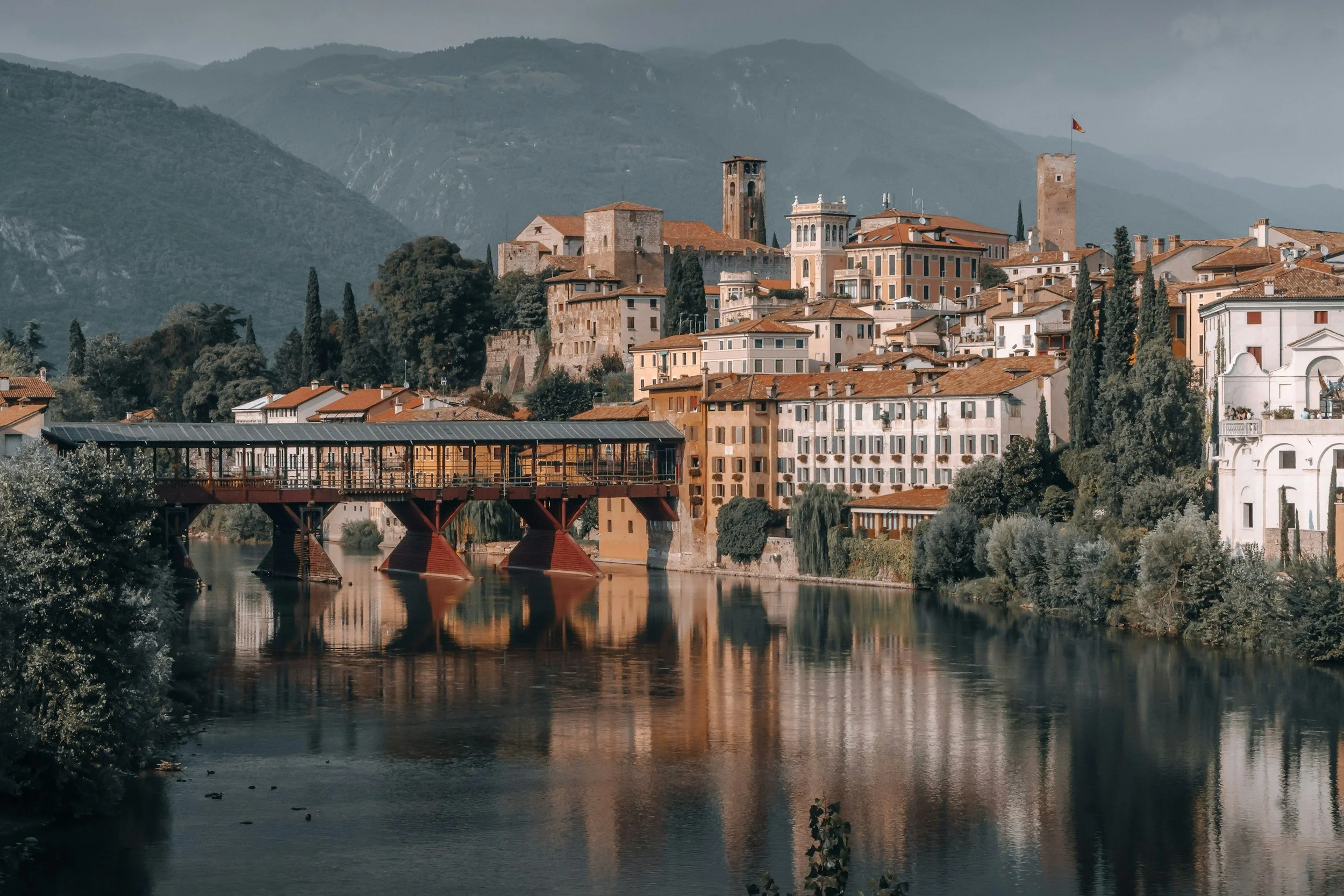
Limited stays in Asolo and how early places book out
In Asolo, you don’t spend long comparing hotels because there aren’t many to compare. Most of the places you’d actually want to stay are within a few minutes of Piazza Garibaldi, along Via Browning, Via Colmarion, or just behind the square. You can walk the whole area in ten minutes and you’ve already passed most of them.
Albergo al Sole is usually the first one people notice, partly because of where it sits just above the square. If you look up in the late afternoon, you’ll see the terrace set for dinner and a few rooms facing out over the rooftops. Those rooms don’t hang around. If you’re planning a Friday–Sunday stay, they’re often gone well in advance, especially in spring and early autumn. It’s not a place you leave until a few days before unless you’re lucky.
The smaller guesthouses in the same streets work in a similar way. Some only have a handful of rooms, sometimes less than ten, so it doesn’t take much for them to fill. You might find something midweek without trying too hard, but weekends are different. By the time you start checking seriously, a few places are already fully booked, and suddenly your options drop fast.
What catches people off guard is how quickly that happens. In a bigger town, if one hotel is full, you move to the next one down the street. In Asolo, you walk that same short loop around Piazza Garibaldi, Via Browning, and back again, and realise you’ve already seen most of what’s available.
If you start looking a bit later, you’ll notice the map pushing you outward. Places just outside the centre, a few minutes’ drive toward Maser or along the quieter roads behind Asolo, start to appear. These are often converted villas or countryside stays with more space, easier parking, and sometimes better views, but they change how you use the town. You’re no longer stepping out into the square in the morning. You’re driving in, parking again, and then walking up.
Arrival is another small detail that’s easier to handle if you plan ahead. A lot of these places don’t run like full-service hotels. Check-in is often arranged at a specific time, and if you arrive late, you’ll need to let them know in advance. It’s not difficult, but it’s not something you want to figure out while you’re already on the way.
If you know your dates, it’s worth booking early and then forgetting about it. Waiting doesn’t usually reward you here. It just limits your options, especially if you want something central where you can walk out to Piazza Garibaldi in a minute or two.
The trade-off is simple. Stay in the centre and you need to book ahead. Wait too long and you’ll still find something, but it’s more likely to be outside the town, and the whole feel of the stay changes slightly.
Is it easier to stay outside and drive in?
This is one of those decisions that looks minor when you’re booking, but you feel it every time you go in and out of town.
In Bassano, staying just outside the centre often ends up being the easiest option without feeling like a compromise. If you’re anywhere around Viale delle Fosse, Via Roma, or near the station side, you’re still only 10–15 minutes on foot from Piazza Libertà. You can park once, leave the car, and just walk in and out whenever you want. Even if you do drive in, it’s simple. Places like Parcheggio Prato Santa Caterina or the spaces along Viale delle Fosse are right on the edge of the historic centre, and from there it’s a short, flat walk into the piazzas.
The ZTL (limited traffic zone) sounds more complicated than it is. You don’t need to drive into the centre. You stop just outside, walk in, and you’re there within a few minutes. That’s why staying slightly out works so well here. You avoid narrow streets, you don’t deal with finding a spot right in the centre, and you still move around easily.
It also makes the rest of your day simpler. If you decide mid-morning that you want to go to Marostica, you’re already near your car. You don’t have to go back into the centre to pick it up or think about timing. The same applies if you want to head toward Cittadella or just drive out along the Brenta. Bassano works in a way where the centre is part of your day, not something you have to organise around.
Asolo feels different even though the distances are smaller. If you stay in the centre, you walk up once, settle in, and everything is within a couple of minutes. Piazza Garibaldi, the cafés, the restaurants, it’s all right there. You don’t think about your car again until you leave.
If you stay outside, you’re repeating the same small routine each time. You drive up, usually park at Parcheggio Forestuzzo or one of the smaller areas just below the centre, then walk up into town. It only takes a few minutes, but you notice it because you do it every time you want to go in. You’re not dipping in and out casually like in Bassano. You go in, stay for a while, then leave again.
Parking itself isn’t difficult, but it’s not unlimited either. Late morning and early afternoon, especially on weekends, you might need to circle once or wait for a space to open. It’s not a big issue, just something that slows things down slightly if you’re going back and forth.
Where staying outside Asolo starts to make more sense is if you’re already planning to drive around during the day. If you’re heading to Maser, Possagno, or just following the smaller roads toward Monfumo and the hills, then being based just outside saves you from going up and down into the centre each time. You leave in the morning, come back later, and that’s it.
There are also more countryside-style places just outside Asolo, small villas, agriturismo stays, properties with views over the hills. These feel very different from staying in the centre. More space, quieter evenings, easier parking. But they change how you use Asolo. You’re visiting the town rather than living in it for a couple of days.
So it comes down to how you want the days to work. In Bassano, staying outside often feels just as easy as staying in the centre, sometimes easier. In Asolo, staying outside works well if you’re already driving around, but if you want to walk out the door and be in Piazza Garibaldi within a minute, staying in the centre makes a noticeable difference.
How both towns change between April, summer, and autumn
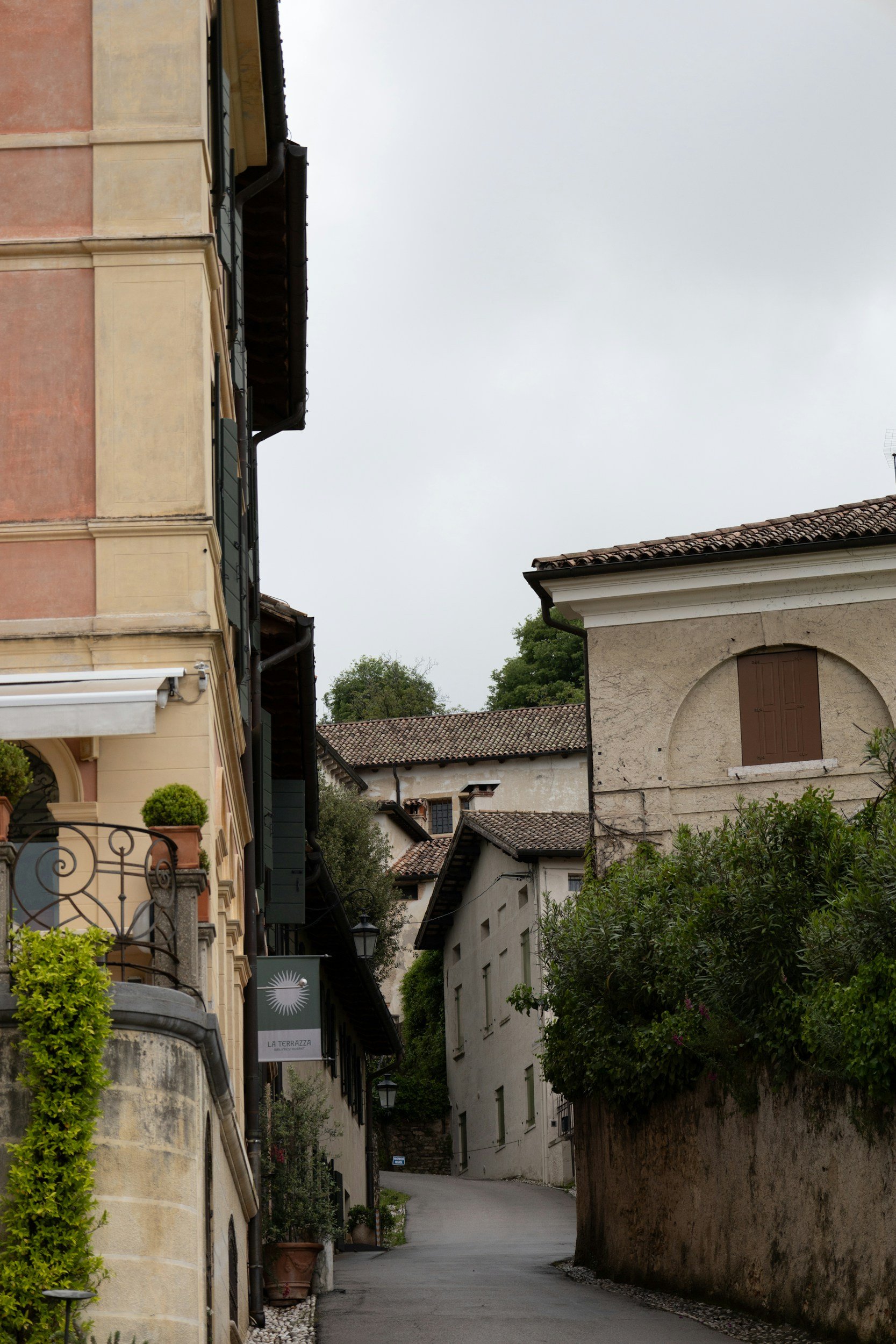
How busy Bassano actually gets on weekends
Bassano does get busy on weekends, but it’s very specific where and when it happens. If you arrive on a Saturday around 11:00, you’ll feel it straight away between Piazza Libertà and the Ponte Vecchio. That short stretch along Via Matteotti is where everyone ends up, and the bridge is where it slows down the most. People stop in the middle, lean against the sides, wait for space, and it creates small pauses where you’re just moving with the flow.
But it doesn’t spread far. If you turn off that route, even slightly, it changes within a minute. Walk behind Piazza Libertà toward Via Bellavitis or along the quieter streets near Via Roma, and it feels much more normal again. You still see people, but you’re not adjusting your pace all the time.
The river helps a lot here. If the centre feels full, you cross the bridge and keep walking instead of turning back. Within five minutes along the Brenta, it’s already quieter. Most people don’t go beyond the first stretch near the bridge, so the further you walk, the more space you get.
Saturday is the busiest day, especially late morning into early afternoon. Around 10:30 it starts building, by 12:00 it’s at its peak, and then it eases slightly after lunch. Sunday feels different. It’s usually calmer in the morning, then fills again around lunch, but in a slower way. More people sitting down, fewer moving through quickly.
Local events change the feel more than the day of the week. Bassano has a lot of smaller events through the year, food weekends, wine tastings, seasonal markets, and they usually take over Piazza Libertà or the streets around it. You’ll notice stands set up, people stopping more often, and small queues forming. It doesn’t turn into a huge festival, but it makes the centre feel tighter and slower to move through.
In spring, especially around asparagus season, you’ll see more focus on food. Restaurants highlight it, and sometimes there are small events or tastings linked to it. In autumn, similar things happen with seasonal products. Even if you didn’t plan around it, you’ll notice it just by walking through the piazza.
One thing that’s useful to know is how quickly it resets. By around 15:30–16:00, the midday crowd drops off. You can walk through the same streets again and it feels easier. Then later, around 18:00, people come back out for aperitivo, but they spread out more between the squares and the river, so it doesn’t feel as concentrated as late morning.
If you want to avoid the busiest moments, early morning works best. Before 10:00, even on a Saturday, Piazza Libertà is still relatively calm, cafés are open, and you can move around without thinking about it. Or go later in the afternoon when things open up again.
What makes Bassano manageable is that the crowds stay in a small area. You’re never stuck in it for long unless you choose to stay there. A couple of turns or a short walk along the river, and it already feels different.
How quickly Asolo fills up in high season
In Asolo, high season doesn’t feel big. It feels tight.
You notice it first when you arrive, not when you start walking. If you come in late morning on a Saturday in May, June, or September, the first thing that slows you down is parking. Parcheggio Forestuzzo is the main one most people use, just below the centre, and by around 10:30–11:00 it’s often full or close to it. You end up circling once, maybe waiting for someone to leave, then walking up into town already a bit slower than you expected.
Once you reach Piazza Garibaldi, pretty much everything is taken. Tables at Caffè Centrale are full, Bar Due Mori has people standing inside at the counter, and anyone arriving is doing the same short loop around the square, checking if something has opened up. Because the space is small, you notice it straight away. It only takes a handful of groups for it to feel like there’s nowhere to sit.
The same thing happens along Via Browning. It’s one of the main streets leading out from the square, and it doesn’t take much for it to feel busy. A few people stopping at a shop window, a couple of groups walking slowly, someone checking a menu, and suddenly the whole street moves at half speed. It’s not chaotic, just contained.
Lunch is the point where it peaks. Around 12:30–13:30, places like Albergo al Sole and Osteria al Bacaro are full, especially outside. You’ll see people standing near the entrance, waiting to be seated, or walking back toward the square to try somewhere else. The problem is, there isn’t somewhere else. You’re choosing between the same small group of restaurants, and they all fill at the same time.
Then it drops off quite quickly. By around 14:30, the square starts to empty. Tables clear, some shops close for a few hours, and the whole centre feels quieter again. If you walk through Via Browning or toward the cathedral at that time, you might pass only a few people. It’s a very clear reset.
Late afternoon picks up again, but in a softer way. Around 17:00–18:30, people come back for aperitivo. You’ll see spritz on the tables, small plates, people sitting longer, but it doesn’t feel as tight as lunch. It’s more spread out over time, even if it’s still in the same 30–40 meter stretch.
Evenings don’t build much beyond that. Restaurants fill early, especially the outdoor tables, and once people are inside, the square actually becomes calmer again. By around 21:30, if you walk away from Piazza Garibaldi toward Via Canova or up toward the Rocca, it’s already very quiet.
One thing that’s easy to miss is how little you need to walk to get out of it. If the square feels full, you go two minutes toward the Duomo or along a side street and it changes immediately. The crowd doesn’t spread. It stays right in the centre.
So high season in Asolo isn’t about large crowds everywhere. It’s about how quickly a very small area fills up, and how noticeable that becomes. You don’t avoid it by going somewhere else in town, you adjust by timing. Earlier in the morning, mid-afternoon, or later in the evening, and it feels like a different place again.
Quieter months when both places feel very different
Once you get into late October, November, and then January through early March, both towns change, but not in the same way at all.
In Bassano, things are still running, just with more space around them. If you walk into Piazza Libertà around 9:30 on a weekday, cafés are open as usual, people are standing at the bar having a quick espresso, and shops along Via Matteotti are open. It doesn’t feel like a “quiet tourist town,” it feels like a place that just has fewer visitors passing through.
The difference shows up in how easy everything becomes. You can walk straight across the Ponte Vecchio without slowing down. No one stopping in the middle, no waiting to pass. If you go down along the Brenta around 10:00–11:00, especially on the south side after the bridge, you might only see a handful of people. Someone running, someone walking a dog, but long stretches where it’s empty.
Lunch is easy in a way that feels very different from a spring or summer weekend. Around 12:30, you can walk into places near Piazza Libertà or along the streets toward the bridge and sit down without thinking about it. No checking menus outside, no waiting. It’s more locals, fewer day visitors. You notice people coming in for a proper lunch rather than just passing through.
Evenings are quieter but still there. Around 19:30, restaurants are open, people are eating, but there are fewer tables outside, and by around 21:00–21:30, things start winding down. You can still walk through the centre, maybe cross the bridge again, but it’s calm rather than active.
Asolo feels more extreme in comparison.
If you arrive mid-afternoon in November or January, say around 15:00, Piazza Garibaldi can feel almost empty. Not quiet in a peaceful way, just very still. Tables cleared, a few chairs stacked, maybe one café open with a couple of people inside. If you walk along Via Browning at that time, you might not pass anyone for a minute or two.
Morning is the best time to see it working. Around 9:00–10:00, Caffè Centrale is open, Bar Due Mori as well, and you’ll see a few locals stopping in. But it doesn’t build much beyond that. It stays small. A few people, then a pause, then a couple more.
Lunch happens, but it’s short and contained. Around 12:30–13:30, restaurants like Albergo al Sole or Osteria al Bacaro are open and you can sit wherever you want. No bookings needed, no waiting. But by around 14:30, it’s over. Tables clear quickly, and the centre goes quiet again.
That gap in the afternoon is much more noticeable here than in Bassano. Between about 14:30 and 17:00, a lot of shops close, and there isn’t much reason to stay in the square unless you’re just sitting somewhere. This is when people either go for a walk up toward the Rocca or leave town for a bit.
Evenings are very short. Around 19:30–20:00, people sit down for dinner, but once they’re inside, the square empties out. By around 21:00–21:30, if you walk away from Piazza Garibaldi toward Via Canova or up the hill, it’s almost completely empty. No second stop, no one moving between places.
The difference really comes down to how much continues without visitors. In Bassano, the town keeps going, just at a slower pace. In Asolo, the quieter months strip it back to a few active hours, and outside of those, it can feel very still.
If you plan around that, it works well. In Bassano, you don’t need to adjust much. In Asolo, it helps to time your day, be out in the morning, maybe step outside the town in the afternoon, then come back for dinner.
Evening atmosphere and how late things stay open
Bassano after dinner: bars, walks, and people still out
Bassano is better after dinner. The centre has enough bars, gelato stops, and walking routes that the evening does not end the moment you leave the restaurant. If you’ve eaten around Piazza Libertà, you’ll usually end up back there without thinking about it. Some tables are still occupied, a few bars under the arcades are open, and people are either finishing a drink or deciding where to go next. It’s not busy like earlier, but it’s not empty either.
From there, most people drift down Via Matteotti again. It’s a different walk than during the day. Fewer people, slower pace, and you’re not moving with a crowd. You can take your time. Shop windows are dark, a few lights are still on, and you hear more conversation than anything else.
The Ponte Vecchio is still the main point people go to. Around 21:30–22:30, there are always people on it. Some leaning on the sides, some crossing back and forth, others just stopping in the middle for a minute. It’s not crowded, but it never feels empty either.
Right at the end of the bridge, Grapperia Nardini is still open, and you’ll see small groups standing outside with a glass. Most people don’t stay long. It’s more like a quick stop after dinner rather than somewhere you spend the whole evening. A few doors down, there are other bars where you can sit if you want to stay longer, but a lot of people just keep moving.
If you cross the bridge and continue along the Brenta instead of turning back, it gets quieter within a couple of minutes. The path is still easy to follow, and you’ll pass a few people walking or sitting by the river, but it’s much more spread out. This is where the evening slows down properly. You don’t need to find another place, you just walk for a bit and then head back when you feel like it.
Back in the centre, there are still a few options if you want one last drink. Around Piazza Garibaldi and the nearby streets, some bars stay open a bit later, but it’s not a long list. By around 22:30–23:00, things start to wind down more clearly, especially during the week. On a Saturday, it holds a bit longer, but even then it never turns into a late-night place. It’s low-key, but it gives you a reason to stay out a bit longer.
Asolo after dinner: what’s open and when it shuts down
Asolo after dinner is much quieter. In Asolo, the evening more or less ends when dinner ends. You feel it the moment you step out from the restaurant.
If you’ve eaten somewhere around Piazza Garibaldi, you come back into the square and it’s already calmer than when you sat down. A few tables are still occupied at Caffè Centrale, maybe a couple of people finishing a drink at Bar Due Mori, but no one is really arriving anymore. It’s more people wrapping up than starting anything new.
Around 21:00, there’s still a bit of movement, but it’s small. Someone crossing the square, a couple walking slowly past the fountain, a few voices from the terraces. That’s about it. You don’t see people looking for another bar or moving between places because there isn’t anywhere else to go.
If you walk away from the square, it drops off quickly. Via Browning, which felt busy earlier, is almost empty. A few lights on, shutters down, maybe one shop still open if you’re lucky. Head toward the Duomo or take Via Canova and it becomes very quiet within a minute or two. You hear your footsteps, maybe a door closing somewhere, and that’s it.
By around 21:30–22:00, you’re down to one or two places still open around the square. Caffè Centrale might still have a couple of tables outside if the weather is warm, and Bar Due Mori usually stays open a bit longer inside, but there’s no second wave of the evening. No smaller bars tucked away, no places that pick up later.
If you think about walking up toward the Rocca after dinner, it’s technically possible, but it feels very different from during the day. The path is dim, there’s no one else around, and it’s more of a quiet walk than something you naturally drift into at night.
By 22:00, the town already feels finished for the day. You can still walk through Piazza Garibaldi, but there’s very little happening. A couple of people sitting, maybe a quiet conversation, but no sense of anything continuing.
Even in summer, this doesn’t change much. Dinner might stretch slightly later, and you might see a few more people sitting outside, but the overall it’s the same. People eat, have a drink, and then head back.
It’s not something you work around, it just sets the pace. If you’re expecting to go somewhere after dinner, you’ll run out of options quickly…
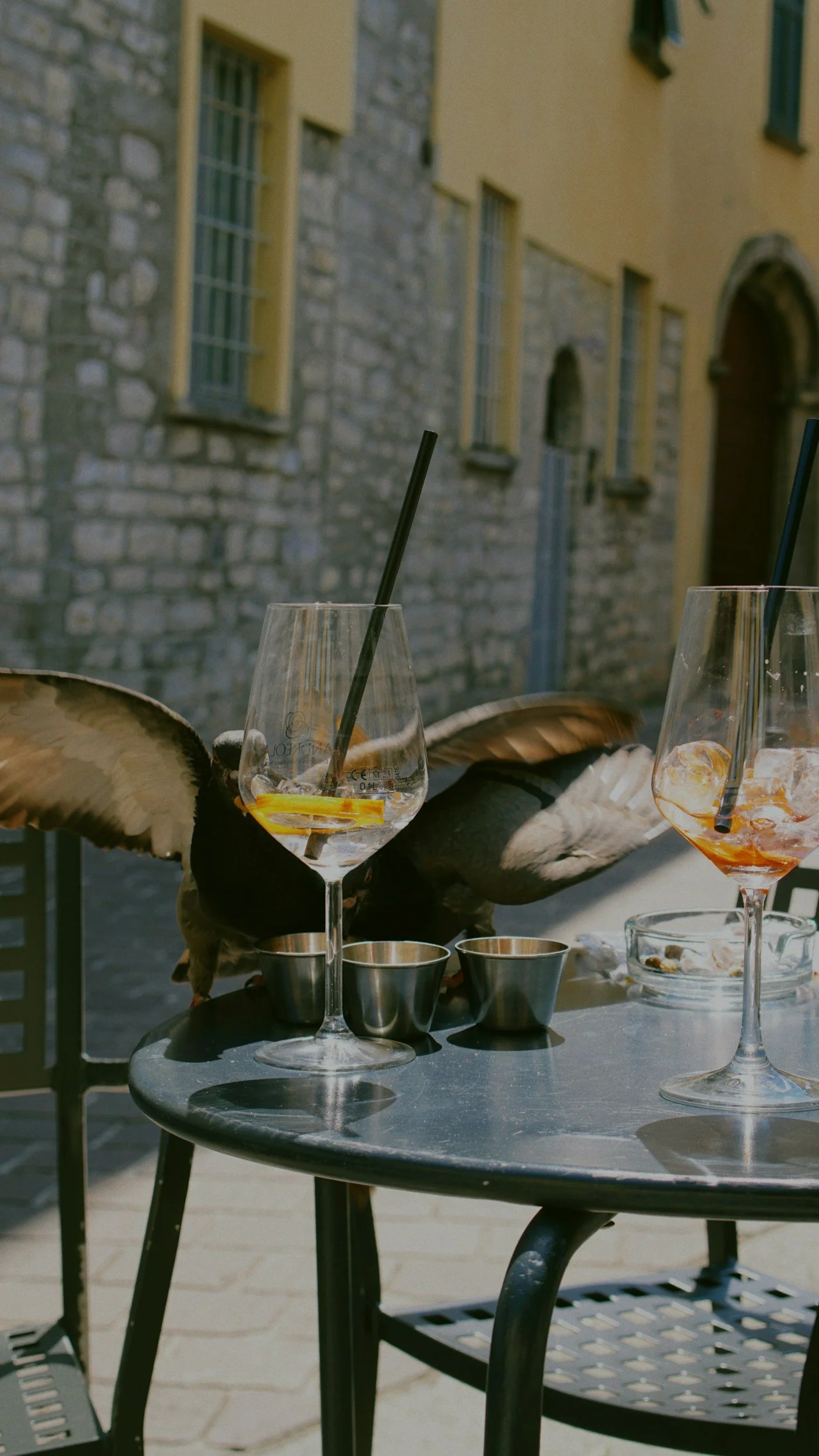
Who each place tends to suit for a weekend trip
Bassano works well if you like having things around you without needing to organise them. You arrive at the station, walk down Viale delle Fosse, continue along Via Roma, and within ten minutes you’re already in Piazza Libertà. You can drop your bag and go straight out again without thinking about timing. Coffee at one place, then a short walk, then maybe across the bridge, then back again later. It all connects without effort.
It also suits you if you don’t want to commit too early. You can decide at 11:00 that you’ll go to Marostica, drive 15 minutes, walk around Piazza degli Scacchi, and be back in Bassano for a late lunch near Via Matteotti. Or you skip it entirely and just walk along the Brenta instead. Nothing really locks you in.
Food is part of that. If one place near Piazza Libertà looks full, you walk another minute and try somewhere else. If you feel like something quick, there are bakeries and small food shops along the main streets. If you want a longer dinner, you find that too. You don’t need to book everything ahead to make it work.
Evenings suit the same kind of pace. After dinner, you walk back through the centre, maybe stop briefly near the bridge, maybe cross it again, maybe head down along the river for ten minutes. You don’t need to decide where the night goes, you just follow what’s open and where people are.
Asolo suits you if you’re fine with things being more contained and a bit more fixed.
You arrive, park below the centre, walk up into Piazza Garibaldi, and that small area becomes your base. You’ll pass Caffè Centrale multiple times, walk along Via Browning more than once, and recognise the same restaurants by the second evening. That’s not a downside unless you’re expecting constant variation.
It works better if you’re comfortable deciding a few things in advance. Where you’ll eat, when you’ll eat, whether you’ll drive out to Maser or up toward Monfumo for a few hours. If you don’t plan anything, the town can feel quite small quite quickly.
At the same time, it suits a slower way of using the day. Coffee in the square, a short walk up toward the Rocca, back down again, maybe a drive out into the hills, then back for aperitivo. You’re not moving between different areas, you’re returning to the same one at different times.
Evenings are quieter and shorter. After dinner, you might walk once across the square, maybe stop for a final drink if something is still open, and then that’s it. There isn’t anywhere else to go, so the day ends naturally without you needing to decide.
So it’s less about personality and more about how you like your time to work.
If you want flexibility, easy movement, and the option to change plans as you go, Bassano makes that simple. It also works well if you are building a wider northern Italy route around train-friendly towns rather than major cities, especially alongside peaceful Italian towns for friend getaways.
In case you’re fine with a smaller base, repeating the same streets, and shaping the day a bit more yourself, Asolo fits better.
When splitting your time between Asolo and Bassano works better
If you’re arriving by train, Bassano is the natural place to start. You get off at Bassano del Grappa, walk down Viale delle Fosse, continue along Via Roma, and within ten minutes you’re already near Piazza Libertà. No taxi, no waiting around. You can drop your bag and go straight out for coffee, walk down Via Matteotti, cross the Ponte Vecchio, and get a feel for the place without thinking about transport at all.
Trying to do the hills from there without a car is where it gets awkward. You can piece together buses, but it’s not something you want to rely on for a short stay. This is where switching base helps. The next morning, instead of forcing a day trip, you move on. A taxi from Bassano up to Asolo takes around 20–25 minutes, usually along the SP248, and you arrive right below the centre. From there, it’s a short walk up into Piazza Garibaldi and everything changes. Smaller space, slower pace, and you’re already closer to Maser, Possagno, and the roads leading toward Monfumo.
If you have a car, doing it the other way around often works better. Start in Asolo. You drive up, park once near Parcheggio Forestuzzo, and use that first day to move around properly. Head out toward Maser in the morning, maybe stop near Villa Barbaro if it’s open, continue toward Possagno, or just follow the smaller roads behind Asolo where you pass vineyards and scattered houses without seeing many people. You come back in the afternoon, walk up into the square again, and keep the evening simple.
Then the next day, you drop down to Bassano. It’s about a 20-minute drive, nothing you need to plan around. You park once near Viale delle Fosse or Prato Santa Caterina, leave the car, and switch to walking. That second day becomes much easier. You move between Piazza Libertà, Piazza Garibaldi, and the bridge, maybe walk along the Brenta, maybe decide last minute to go to Marostica. You don’t need the car anymore, which is a relief after using it the day before.
It also helps if you don’t want to feel stuck in one rhythm for two nights. Asolo can feel very small by the second day if you stay only in the centre. Bassano can feel slightly too active if you were expecting something quieter in the evenings. Splitting it avoids both. You get one evening where dinner is the main thing, then another where you can still walk, have a drink, and stay out a bit longer.
Even small timing things start to work in your favour. You might land in Bassano on a Thursday and catch the market around Piazza Garibaldi in the morning, then move on. Or you spend your first evening in Asolo when it’s quieter, then your second in Bassano where there’s a bit more going on after dinner.
The key is how little effort the switch takes. You’re not losing a day to travel. You check out mid-morning, drive or take a taxi for 20 minutes, and you’re somewhere else before lunch. It feels more like changing neighbourhood than changing destination.
So if you’re trying to balance easy arrival, access to the hills, and a different pace across two days, combining them tends to work better than trying to make one place cover everything.
If you’re already leaning toward somewhere smaller and quieter, you might recognise the same feeling in a quieter side of northern Italy around Lake Orta, where the days are similar but stretch out even further.
FAQ: Asolo vs Bassano del Grappa for a weekend
Is Asolo or Bassano del Grappa better for a weekend trip?
Bassano works better if you want an easy, flexible weekend where you can arrive by train, walk everywhere, and not plan much. Asolo works better if you’re happy with a smaller base around Piazza Garibaldi and are either driving or keeping the pace slower.
If you’re not driving, this is where things start to matter more than you expect, especially if you’ve looked into countryside stays in Italy without a car and how quickly your options narrow once you leave train routes.
Is Asolo worth visiting or is Bassano del Grappa a better base?
Asolo is worth it if you’re interested in the hills around Maser, Monfumo, and Possagno, or want a quieter overnight stay. Bassano is the better base if you want more to do within walking distance and easier logistics.
Can you do Asolo and Bassano del Grappa in one weekend?
Yes, and it often works better than choosing one. The drive takes about 20–25 minutes. One night in each gives you both a walkable town base (Bassano) and access to the hills (Asolo) without overplanning.
Which is easier to reach by train: Asolo or Bassano del Grappa?
Bassano. The train station is a 10–12 minute walk from Piazza Libertà via Via Roma. Asolo doesn’t have a train station, so you’ll need a bus or taxi from Castelfranco Veneto or Bassano.
Do you need a car in Asolo?
Yes, if you want to explore beyond the centre. You can stay in Piazza Garibaldi without one, but visiting places like Maser, Villa Barbaro, or the Prosecco hills is much easier by car.
Is Bassano del Grappa walkable for a weekend?
Yes. The centre, including Piazza Libertà, Piazza Garibaldi, Via Matteotti, and the Ponte Vecchio, is compact. You can also walk along the Brenta river for longer, flat routes without needing transport.
Which town is better for restaurants: Asolo or Bassano?
Bassano has more choice, especially around Piazza Libertà and toward the bridge. You can usually find a table without booking. In Asolo, most restaurants are around Piazza Garibaldi, and dinner often needs to be booked ahead on weekends.
Do you need to book restaurants in Asolo in advance?
Yes, especially Friday and Saturday evenings. Places like Albergo al Sole fill early, and there aren’t many alternatives within the centre.
Which is better for visiting the Prosecco hills: Asolo or Bassano?
Asolo. You’re 10–30 minutes from areas like Valdobbiadene, Maser, and Santo Stefano. From Bassano, the same trip takes longer and feels more like a planned day out.
How busy is Bassano del Grappa on weekends?
The busiest area is between Piazza Libertà and the Ponte Vecchio, especially late morning on Saturdays. Side streets and riverside paths are much quieter within a few minutes’ walk.
Does Asolo get crowded in summer?
It fills quickly rather than getting heavily crowded. Piazza Garibaldi and Via Browning feel busy late morning and at lunch, but the rest of the town stays quiet.
Is Asolo or Bassano better in winter or off-season?
Bassano stays active year-round, with shops and cafés open throughout the day. Asolo becomes very quiet outside peak months, with fewer open places and long gaps in the afternoon.
Where should you stay in Bassano del Grappa for a weekend?
Anywhere between the train station and Piazza Libertà works well. Via Roma and Viale delle Fosse give easy access on foot, with simpler parking than inside the historic centre.
Where is the best area to stay in Asolo?
Close to Piazza Garibaldi. Staying further out means driving in and parking each time, usually at Parcheggio Forestuzzo.
Is it better to stay in Asolo town or outside in the countryside?
Stay in town if you want to walk to cafés and restaurants. Stay outside if you’re driving and planning to explore the hills, with easier parking and quieter surroundings.
What is there to do in Bassano del Grappa after dinner?
People walk through Piazza Libertà, head toward the Ponte Vecchio, and often stop briefly at Grapperia Nardini. The riverside paths along the Brenta are also easy to walk in the evening.
What is there to do in Asolo at night?
Evenings are short. After dinner, a few places around Piazza Garibaldi stay open briefly, but by around 21:30–22:00 the town is already quiet.