

These Tuscan farm stays prove you don't need a car
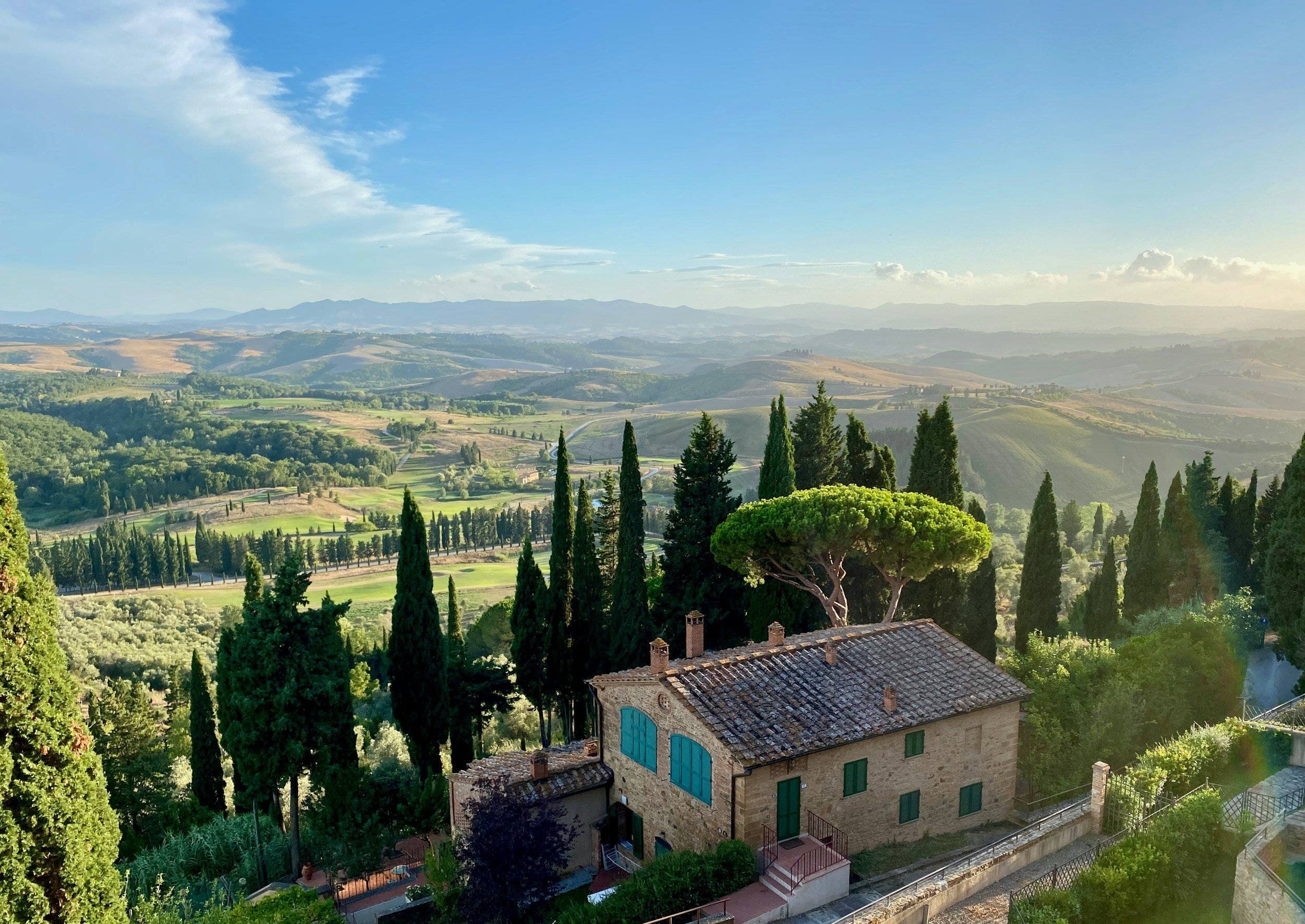
Let’s face it… Tuscany has a car problem! Not the traffic kind, but the assumption that to see the “real” Tuscany, you have to rent a car and zig-zag between hill towns on winding roads. Cue the stress: expensive rentals, confusing Italian road signs, steep driveways, and parking nightmares in medieval villages.
But here’s the good news: you can absolutely explore the Tuscan countryside without driving, and in many ways, it’s a better experience.
Going car-free in Tuscany forces you to slow down. You’re not rushing between towns or glued to Google Maps. Instead, you settle in. You stay longer. You notice more… you walk more, talk more, rest more. And that’s when the magic of Tuscany really starts to show up.
If you’re someone who likes to travel slowly (who prefers long breakfasts, scenic walks, and reading in the garden to checking off a list of towns) this is your kind of Tuscany. It’s also perfect if you’re traveling solo, want to lower your environmental impact, or just hate the idea of white-knuckling it through unfamiliar roads.
In this guide, you’ll find five authentic farm stays (agriturismi) in the Tuscan hills that are reachable by train or bus - no rental car required. These aren’t big hotels or slick resorts. They’re family-run farms, countryside guesthouses, and cozy retreats where you can stay put for a few days, eat well, sleep deeply, and actually feel where you are.
Each one offers something special: homemade food, sweeping views, cooking classes, farm animals, or just peace and quiet. And we’ve included exactly how to get to each one without a car, so you can spend less time planning and more time enjoying your trip.
Whether you're traveling from Florence, Rome, or another part of Italy, these stays are proof that you don’t need four wheels to find a beautiful place to rest in Tuscany.
If you’re trying to figure out which towns actually make sense without a car (and which ones look good but are a hassle), tuscan villages is worth a quick look before you decide.
Let’s get into it.
La Pietriccia, Chianciano Terme: farm stay near the Val d’Orcia
La Pietriccia sits just outside Chianciano Terme on the SP146 that runs toward Montepulciano. You leave the main spa area around Viale della Libertà and within a few minutes the buildings drop away into open fields, olive trees, and scattered farmhouses. It’s not remote, but it feels separate enough that you’re not dealing with any of the town’s daytime movement.
The closest train stop is Chianciano–Montepulciano, on the line between Florence and Rome via Chiusi. From there, it’s about a 10-minute taxi ride up toward Chianciano Terme and then a few minutes further out along the SP146. Taxis usually wait outside the station, but if you’re arriving later in the day, it’s worth arranging one in advance since it’s a small station and things slow down quickly in the evening.
The exact position of the property makes a difference once you’re there. You’re far enough from the centre that you don’t hear buses or people heading out early in the morning, but still close enough that getting back into town is simple. The road outside is used mostly by locals moving between Chianciano and Montepulciano, and after dinner hours, it’s quiet.
The rooms are part of a small agriturismo layout rather than a single building. You’ve got a handful of units, spaced so that you’re not looking into another room. Most face outward toward the fields rather than inward, which keeps things quieter during the day. If you leave the shutters open in the morning, the light comes in gradually over the land rather than directly from a street or courtyard. At night, it gets properly dark. There’s no street lighting nearby, and you won’t see light coming from neighbouring buildings.
Breakfast is served on-site within a set window and usually includes bread, cakes, fruit, and coffee. It’s simple and consistent, and most people don’t stay long before heading out. There’s no all-day service, so once breakfast is done, you either leave for a few hours or settle back into the property.
Getting around without a car works because of how the local transport is set up, but you need to keep it simple. From Chianciano Terme, buses run toward Montepulciano roughly every hour during the day. The main stop is near Piazza Italia, which is about 5 minutes by taxi from La Pietriccia. From there, the bus climbs up to Montepulciano, stopping near Porta al Prato. Once you’re there, the town is fully walkable, from the lower streets like Via di Gracciano nel Corso up to Piazza Grande.
If you want to pick up food or supplies, the easiest place is along Viale della Libertà in Chianciano Terme. There are supermarkets and small shops where locals do their daily shopping, and it’s a straightforward stop on the way back from the bus or train. It’s better to do this earlier in the day, as some smaller shops close in the afternoon.
For a more local feel in the evening, Chianciano Vecchia is the place to go. It sits uphill from the newer town and is reached via a short drive or taxi. The streets are narrow and mostly residential, with a few restaurants opening around 19:30–20:00. It’s not busy in the way Montepulciano can be, and you can usually find a table if you arrive early rather than late.
If you’re planning your days, it helps to think in short loops rather than full itineraries. A typical day might be a morning trip to Montepulciano, a walk through the town, lunch somewhere along the main street, and then back to La Pietriccia by mid-afternoon. Trying to add Pienza or other Val d’Orcia villages without a car makes the day more complicated, so it’s better to keep those as separate plans if needed.
If your trip is as much about what you eat as where you stay, slow food tuscany helps you avoid ending up somewhere that feels more set up for visitors than locals.
Organic Farm Stay in Tuscany: Fattoria La Vialla near Arezzo
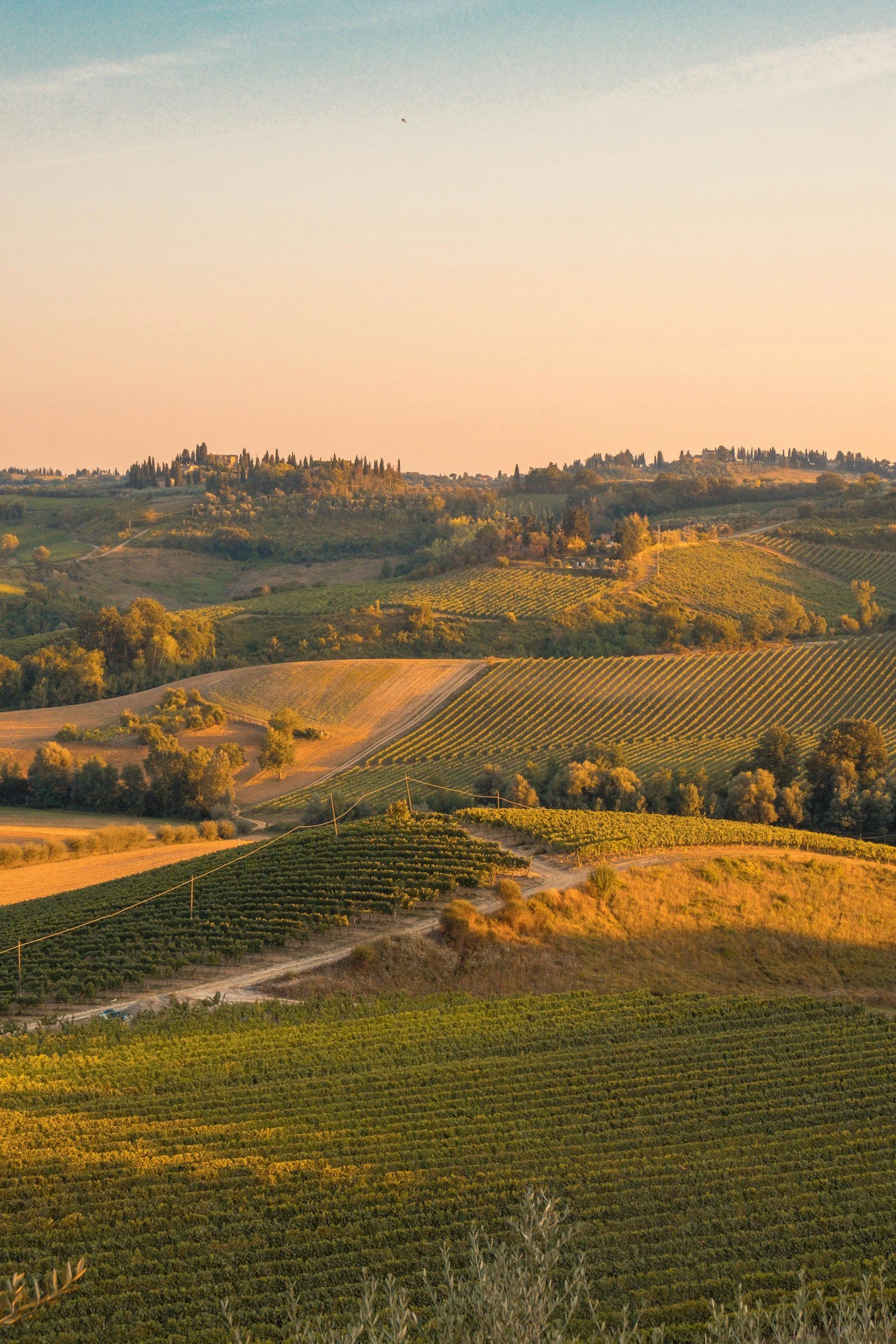
Fattoria La Vialla sits in the hills just outside Castiglion Fibocchi, about 20 minutes northeast of Arezzo. You don’t arrive into a single building. The farm is spread across a large area, with restored stone houses, olive groves, vineyards, and dirt roads linking everything together. When you turn off the SP1 and start driving the smaller roads toward the estate, you’ll notice quickly that there’s no clear “centre” to it. You’re entering a working landscape rather than a hotel.
If you’re travelling without a car, Arezzo is the main arrival point. Trains from Florence take about an hour, and from Rome around two hours. From Arezzo station, it’s a 20-minute taxi ride out toward Castiglion Fibocchi. There isn’t a reliable bus option all the way to the farm, so that last stretch needs to be arranged ahead of time, especially if you’re arriving in the afternoon when taxis are less frequent.
Once you’re there, the layout takes a bit of getting used to. Accommodation is spread across different farmhouses, some closer to the main reception and shop area, others further out along gravel tracks. Distances vary. A short walk for some, a longer one for others. It’s worth checking your exact location when booking, because it affects how often you’ll move around the property.
Inside, the apartments are practical and built for staying in rather than heading out for every meal. You’ve got a kitchen, a table, and enough space to settle in for a few days. Windows usually face open land rather than other buildings, so you’re not looking onto a courtyard or a road. In the morning, you’ll see farm activity starting in the distance, but not right outside your door.
Food is central to how the place runs. The farm produces its own olive oil, wine, sauces, pasta, and preserves, and there’s a shop on-site where you can buy these directly. Instead of a standard restaurant schedule, most people cook in their apartment using what they’ve picked up there. There are also certain days when meals are served more communally, but it’s not a constant restaurant setup.
If you do want to eat out, Castiglion Fibocchi is the closest option, about 10 minutes away by car. It’s a small village with a handful of restaurants and a main square, but it’s not somewhere with endless choice. Arezzo is more reliable for that, especially around Corso Italia and near Piazza Grande, where you’ll find more cafés and places open throughout the day.
During the day, you don’t need to leave unless you want to. The farm has its own internal roads and paths, and you can walk between olive groves, vineyards, and different parts of the estate without following a marked route. You might pass workers moving between fields or see activity around the production areas, depending on the season, but it’s not set up as something to watch or join. It’s just happening in the background.
If you do go out, Arezzo works well for a half-day. It’s not a large city, and you can walk from the train station up toward the centre in about 15–20 minutes. Piazza Grande, with its sloped square and surrounding buildings, is the main point, but most people end up walking the smaller streets around it and then heading back.
If vineyard stays are part of the plan but you’re not sure how they actually work without a car, tuscany vineyards makes that a lot clearer.
Podere Il Casale, near Pienza: agriturismo with wide views over the Val d’Orcia
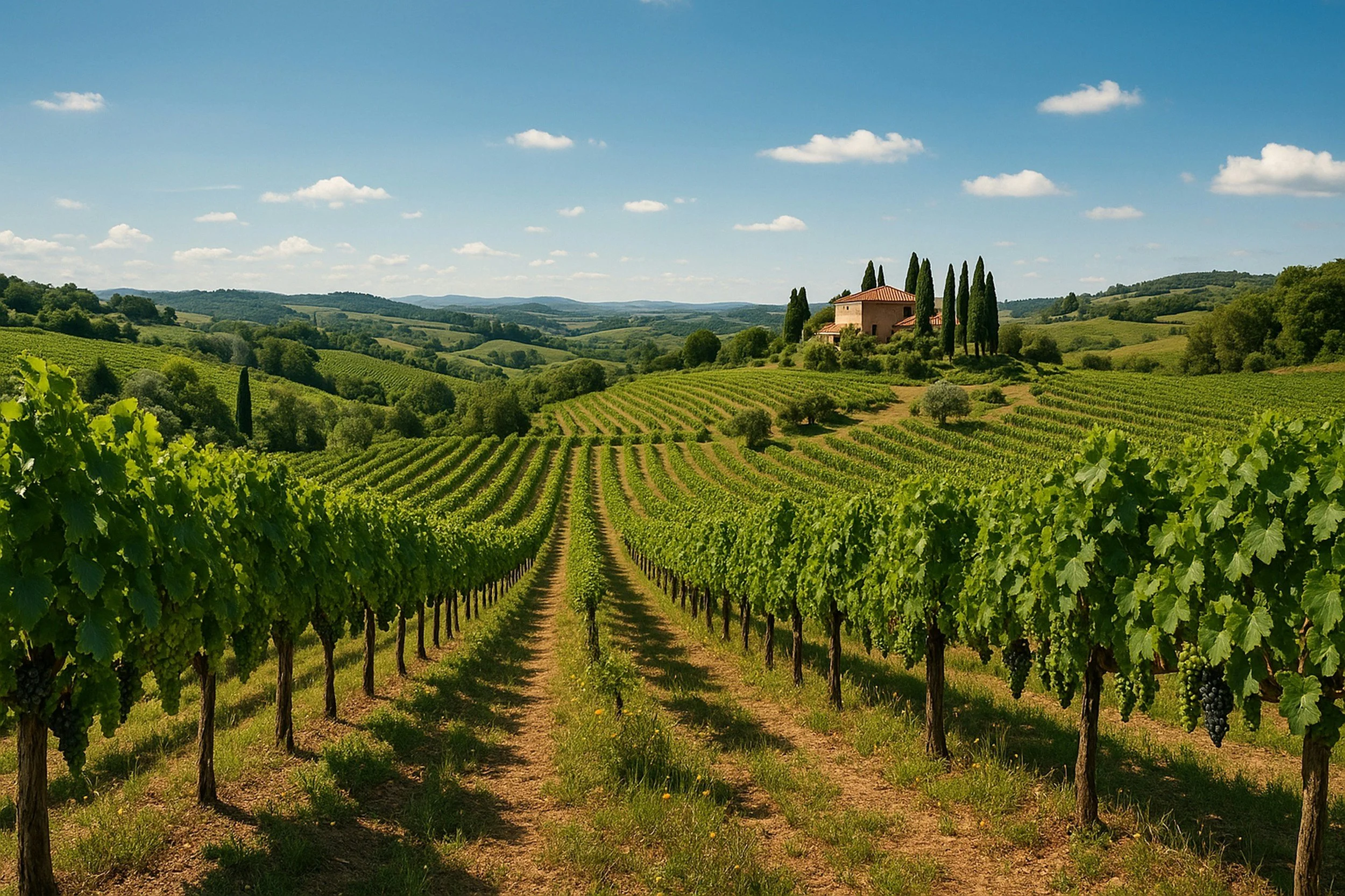
Podere Il Casale sits on the road between Pienza and Monticchiello, on the SP18 that curves through one of the most open parts of the Val d’Orcia. If you leave Pienza through Porta al Prato and drive for about 5–10 minutes, the town disappears behind you and the road drops into a stretch where it’s mostly fields, gravel tracks, and a few scattered farmhouses. You’ll pass a couple of viewpoints where people stop briefly, but after that, there’s very little movement.
Arriving without a car takes a bit more planning, but it’s manageable if you keep it simple. Most people come via Chiusi–Chianciano Terme station. From there, the drive up takes around 45 minutes, following the SR146 past Montepulciano Stazione and then climbing toward Pienza. Taxis don’t always wait at the station, especially outside peak hours, so it’s better to book one in advance rather than assume you’ll find one on arrival.
The first thing you notice when you get there is how open it is. You’re not tucked into a village or surrounded by buildings. The farmhouse sits on a slope, and from the terrace you’re looking straight across the valley toward Monticchiello and the rolling hills beyond. During the day, you’ll see the occasional car on the road in the distance or someone walking one of the dirt tracks, but it’s not constant.
The rooms are spread between the main farmhouse and nearby buildings, and they’re set up in a way that makes sense for a working farm rather than a hotel. You don’t have identical layouts. Some rooms open directly onto outdoor space, others are slightly more enclosed, but most face outward toward the valley. If you open the window early, you’ll hear very little. No traffic, no voices, just the occasional movement from the farm itself.
Food is one of the main reasons people stay here, and it shapes how the day works. The restaurant is on-site, and it’s not something you dip in and out of throughout the day. Lunch and dinner follow set times, and most guests plan around that. If you’re there for dinner, you’ll notice people start arriving a bit earlier, sitting outside before it begins, and then staying in for the rest of the evening rather than heading out again.
If you do want to leave, Pienza is the closest option, but it’s not something you do casually without a car. It’s a short drive, but on foot it takes closer to 40 minutes along the road, which is fine during the day but less appealing in the evening. Most people either arrange a taxi for a short visit or just go once during their stay and leave it at that.
When you go into Pienza, it’s easy to keep it simple. Enter through Porta al Prato, walk along Corso Rossellino, stop near Piazza Pio II, and then loop back. The whole town can be covered in under two hours if you’re not stopping for a full meal. If you want something quick, there are small food shops and bakeries along the main street, but they close in the afternoon, so timing matters.
Back at the farm, there’s more space than it first seems. There are dirt tracks leading off in different directions, and you can follow them without needing a plan. One path heads toward Monticchiello, another loops back across the fields. You’ll pass olive trees, small plots of vegetables, and the occasional outbuilding. It’s not a marked hiking area, but you can walk for an hour without crossing a main road.
In case you’re still trying to piece together how a few days here should actually look, slow tuscany is helpful for getting the pacing right.
Agriturismo Il Leopoldino, Vicopisano: a quiet farm stay between Pisa and Lucca
You leave Pisa on the SS67, pass the airport traffic and the bigger junctions, and within 15–20 minutes everything flattens out. The roads get straighter, fields open up on both sides, and you start seeing irrigation canals running parallel to the road. Then you turn off toward Vicopisano and it gets even quieter. Narrow lanes, hedges, the occasional farmhouse set back from the road. No reason for anyone to be driving there unless they live nearby.
Il Leopoldino sits in that stretch, just outside Vicopisano, far enough from the main road that you don’t hear it at all. When you arrive, there’s no sense of a busy property. You’re not pulling into a large car park or a reception area with people coming and going. It’s more like arriving at a house where everything is already settled.
Getting here without a car is one of the reasons it works for this kind of trip. Pisa Centrale is the easiest station. From there, it’s about 20–25 minutes by taxi depending on traffic leaving the city. If you’re coming from Florence, Pontedera-Casciana Terme is another option, slightly closer, and from there it’s about 15–20 minutes by taxi. Buses do run toward Vicopisano from both Pisa and Pontedera, usually stopping near Via Provinciale Vicarese, but they don’t go all the way to the property, so you’ll still need that last short ride.
The landscape here is different from what most people expect in Tuscany. No steep hills or vineyard views. It’s flat farmland, with rows of vegetables, patches of olive trees, and long dirt tracks cutting between fields. During the day, you might see someone working in the distance or a tractor moving slowly along one of the roads, but it’s not constant. By late afternoon, that activity fades and it stays quiet.
Rooms are in a restored farmhouse with a small number of units. You’re not stacked on top of other guests. Windows face outward, not into shared courtyards, so you’re looking at fields rather than people. The shutters are something you’ll end up using naturally. Closed during the hottest part of the day, open again in the evening when the air cools down. You can leave windows open at night without hearing anything apart from the occasional distant sound.
Breakfast is served in a set time window, usually in a shared room or outside when the weather allows. Bread, pastries, coffee, fruit. People come in, eat, and leave. There’s no long breakfast sitting around, and once it’s done, the place goes quiet again until people return later.
Vicopisano is the closest place to step out to, and it’s worth doing once. It’s about 5 minutes by car. You can park just outside the centre near Via del Pretorio and walk in. The streets lead uphill toward Rocca del Brunelleschi, which sits above the village. From there, you get a clear view over the surrounding farmland, which makes more sense once you’ve seen it from above. Down in the centre, around Piazza Cavalca, there are a few small cafés and local spots, but nothing that keeps you there all day.
If you want to pick up something to eat, it’s easier to do it earlier rather than later. There are small shops along Via Loris Baroni and nearby streets, but they close in the afternoon. For anything more reliable, it’s better to stop in Pisa or Pontedera before heading back.
Pisa is the easiest day trip. About 25 minutes by car or taxi. If you go, it helps to keep it short. Enter the city, walk toward Piazza dei Miracoli early in the day, then move away from it before the crowds build. Streets like Borgo Stretto are better for a slower walk and somewhere to stop for a coffee or something quick to eat. By midday, it’s usually enough, and you can head back before the traffic builds again.
Lucca is slightly further, around 30–35 minutes, but works well if you want a longer outing. The easiest way to see it is to get up onto the walls near Porta San Pietro or Porta Santa Maria and walk a section of them. It’s flat, lined with trees in parts, and you can go as far as you like without needing a plan. Drop down into the centre when you’ve had enough and head back.
Closer to the farm, you don’t need to go anywhere. There are small roads and dirt tracks running between the fields that you can use for walking. No signs, no set routes. Just follow a path, turn when it feels right, and come back. You’ll pass irrigation canals, rows of crops, and maybe a farmhouse or two, but not much else.
Dinner is the only part that needs a bit of thought. There isn’t a full restaurant running every night at the agriturismo, and nothing is within walking distance in the evening. Vicopisano has a few places, but they don’t all open every night, and they tend to open around 19:30. It’s easier to decide during the day whether you’re going out or staying in, and if you’re staying in, pick something up before you come back.
Podere Montisi, Calenzano: a quiet countryside stay just outside Florence
You leave Florence heading north on the A1 side or via Sesto Fiorentino, pass the industrial edge and retail parks, and within 15–20 minutes the road starts to climb toward Calenzano Alto. It’s a quick shift. The traffic drops, the road narrows, and you start passing olive trees and low stone houses instead of apartment blocks. Podere Montisi sits up in those hills, not far in distance, but far enough that you stop hearing the city completely.
The last stretch is along smaller roads branching off Via di Baroncoli. You’ll notice how little movement there is once you turn off. A few local cars, maybe someone walking a dog, but no through traffic. The road doesn’t really lead anywhere beyond the hillside homes, so it stays quiet even during the day.
If you’re arriving without a car, Calenzano station is the closest option. Trains from Florence Santa Maria Novella take around 15 minutes. From the station, it’s about a 10–15 minute taxi ride up into the hills. You can also arrive via Prato Centrale, which has more frequent trains, but adds a bit of distance for the final taxi. There are buses running up toward Calenzano Alto, but they don’t go all the way to the property, so you’ll still need that last stretch by taxi.
The setting here is different from the postcard version of Tuscany. You’re not looking out over wide, open valleys like in Val d’Orcia. It’s more enclosed. Rolling hills, clusters of trees, olive groves, and small clearings where the views open up briefly. In the afternoon, the light moves through the trees rather than across open land, which changes the feel of the place completely.
The accommodation is spread across a restored farmhouse rather than a single hotel-style building. Some units open directly onto outdoor space, others are tucked slightly further inside the structure. It’s worth checking the exact layout when you book, because it affects how much space you have outside your door. Most rooms face outward toward the hills, so you’re not looking into shared areas or across to other guests.
During the day, you’ve got a few options that don’t require much planning. Calenzano is about 10 minutes away and is where you’ll go for anything practical. Along Via di Prato and near Piazza Vittorio Veneto, there are supermarkets, bakeries, and small cafés. It’s not somewhere you go for atmosphere, but it’s useful for picking up food or having a quick coffee.
If you want something with more character, it’s worth going slightly higher up to Calenzano Alto. It’s the older part of town, with a small square and a few quieter streets. You won’t spend long there, but it’s a different pace compared to the lower town.
Florence is close enough that you can treat it as a short visit rather than a full-day trip. From Calenzano station, trains run regularly into Santa Maria Novella. Once you arrive, you’re already in the centre. You can walk straight out, pass along Via degli Avelli, and within minutes you’re in the main streets. The key is timing it. Go early or later in the afternoon, and leave again before it gets too crowded.
If you prefer to stay closer, there are small roads and tracks around the property that you can use for walking. They aren’t marked trails, just local routes between houses and olive groves. You can head out for 30–60 minutes without needing a plan, and you won’t cross any busy roads.
Food is something to think about earlier in the day. There isn’t a full restaurant running every night at the property, and nothing is within walking distance once it gets dark. Restaurants in Calenzano and Prato usually open around 19:30, but not all of them open every night, especially outside summer. It’s easier to decide during the day whether you’re going out or staying in.
And if you’re picturing long walks through the landscape but don’t want to overcomplicate it, vineyard hikes shows where that’s realistically doable from a base.
If you’ve got a feeling Tuscany might be a bit too obvious or busy depending on timing, ascoli piceno is a good comparison before you lock anything in.
Tuscany without a car: why it’s easier (and often better) than it looks
You arrive at a small station like Chiusi-Chianciano Terme railway station or Arezzo railway station, step off the train, and within a few minutes you’re already out of the usual travel rhythm. No queue for a rental car, no figuring out directions on unfamiliar roads, no pressure to keep moving. Just one short taxi ride and then you’re in.
That’s the part most people miss when they assume Tuscany “needs” a car.
The region looks spread out on a map, but in practice, a lot of it is built around a few key rail lines and short connections. Florence links easily to Arezzo, Pisa, Lucca, and Chiusi. From those points, the final stretch into the countryside is usually 10–40 minutes by taxi. It’s not complicated, just different from driving door to door.
Take Chiusi as an example. It’s one of the most useful arrival points if you’re heading toward the Val d’Orcia. Trains from both Florence and Rome stop there regularly, and from the station you can reach places like Pienza or Montepulciano with a single taxi ride. You’re not hopping between multiple connections. You’re just finishing the journey in one step.
The same applies further north. Pisa and Pontedera connect directly to Florence, and from there you can reach smaller towns like Vicopisano or Calenzano with a short transfer. Once you’re based somewhere, you don’t need to move every day.
That’s where the experience shifts.
When you don’t have a car, you stop trying to fit in five towns in one day. You pick one place, maybe one outing, and the rest of the time you stay where you are. It’s not about covering distance, it’s about how the day feels once you’re there.
It also changes how you move through places when you do go out. Arriving in Montepulciano by bus, you step out near Porta al Prato and walk up through the town. No parking, no looping around narrow streets, no deciding where to leave the car. Same in Florence or Lucca. You arrive, you walk, and you leave when you’re done.
There are practical advantages too. You don’t need to think about ZTL zones in historic centres, you’re not navigating unfamiliar roads at night, and you’re not adjusting your day around driving times. If you plan your arrival and one or two outings, the rest takes care of itself.
The only place where you need to be slightly more organised is food and timing. Smaller towns and agriturismos don’t always have restaurants open all day, and buses don’t run late into the evening. That just means deciding earlier whether you’re staying in or heading out, rather than leaving it until the last minute.
For something simple to build your days around once you’re there, italy markets gives you an easy anchor that fits naturally into a slower stay.
And if this is just one stop on a longer train trip, italy train trip helps you see how Tuscany fits in without turning it into a complicated route.
Best train routes to use for Tuscany without a car
You don’t need to figure out every local connection in Tuscany. A few rail lines do most of the work. If you use these properly, the rest of the trip becomes one short taxi ride at the end.
Florence → Pisa Centrale (≈ 1 hour)
From Firenze Santa Maria Novella railway station to Pisa Centrale railway station, trains run frequently throughout the day. You can usually just show up and get on the next one.
Pisa Centrale is a large station with taxis lined up directly outside the main exit on Piazza della Stazione. From here:
Vicopisano is about 20–25 minutes by taxi via Via di Prato
Calci is around 20 minutes toward the Monte Pisano hills
The countryside around Pontedera is 15–20 minutes away
A small detail: if you arrive mid-morning, you’ll avoid most of the airport traffic that builds later in the day around Pisa.
Florence → Arezzo (≈ 1 hour)
From Firenze Santa Maria Novella railway station to Arezzo railway station, trains are regular and straightforward.
Arezzo station sits just below the old town. If you walk out and go uphill along Viale Michelangelo or Corso Italia, you’ll reach the historic centre in about 15–20 minutes. Taxis wait outside the station, usually along Piazza della Repubblica.
From here:
Castiglion Fibocchi is about 15–20 minutes by taxi
The eastern Tuscan countryside is within a 20–30 minute radius
You can reach smaller farm stays without needing multiple connections
This route works well if you want something quieter than Pisa but still easy to reach.
Florence → Chiusi-Chianciano Terme (≈ 1h30–2h)
This is the main entry point for Val d’Orcia. Trains run from Firenze Santa Maria Novella railway station to Chiusi-Chianciano Terme railway station with regular departures.
The station itself is small and practical. Taxis wait outside on Via Oslavia, but not consistently throughout the day. If you arrive after 17:00–18:00, it’s better to have one booked.
From Chiusi:
Chianciano Terme is about 15–20 minutes uphill
Montepulciano is around 30–40 minutes via the SP17
Pienza is roughly 40–50 minutes along the SR146
You’ll notice the landscape change during this drive. Flat land around Chiusi, then gradually more hills as you move toward Pienza.
Pisa Centrale → Pontedera-Casciana Terme (≈ 15–20 minutes)
This is a short regional line from Pisa Centrale railway station to Pontedera-Casciana Terme railway station.
Pontedera station is smaller but still has taxis outside, usually near Piazza Unità d’Italia.
From here:
You can reach farm stays in 10–20 minutes
It’s closer than Pisa for some countryside locations
Roads out of Pontedera quickly turn into smaller rural routes
This route is useful if you want something quieter than staying near Pisa but still connected.
Florence → Lucca (≈ 1h20, usually via Pisa)
From Firenze Santa Maria Novella railway station to Lucca railway station, you’ll often change at Pisa Centrale, but the transfer is simple.
Lucca station sits just outside the city walls. From the platform, it’s a 2–3 minute walk to the walls near Porta San Pietro. You don’t need a taxi here.
Once inside:
Via Fillungo is the main street through the centre
You can walk the full city walls in about an hour
Everything stays within a compact area
Lucca works well as a short visit without needing to plan much.
Things to know about visiting Tuscany without a car
This is where most trips either feel easy or quietly frustrating. On paper, Tuscany looks compact. In reality, the way you connect between places matters more than distance.
What works well
Staying near a station that connects well
Not every station works the same. Places like Chiusi-Chianciano Terme railway station, Arezzo railway station, and Pisa Centrale railway station sit on main lines with regular trains from Florence and Rome. You step off, walk straight out, and either find a taxi rank or have one waiting. From Chiusi, for example, it’s a single 30–45 minute drive up toward Montepulciano or Pienza. No extra transfers, no confusion.
Planning your day around one clear route
A simple day from Chiusi might be: taxi to your agriturismo, settle in, then the next morning take a bus from Chianciano Terme up to Montepulciano. You get off near Porta al Prato and walk uphill through the town. That’s enough. Trying to add Pienza after that means checking bus times, waiting, and rushing back.
Booking taxis from smaller stations ahead of time
At stations like Chiusi or Pontedera-Casciana Terme, taxis don’t always line up outside unless a train has just arrived. Mid-afternoon or early evening, you might not see any at all. Booking one for your arrival time means you walk out and leave immediately instead of waiting.
Choosing accommodation near real access points
Agriturismos near roads like the SR146 (between Chiusi and Pienza) or close to towns like Vicopisano or Calenzano are much easier to reach. You don’t want to be 8–10 km down a gravel road with no clear access. That’s where the “no car” idea starts to break.
Using trains for main moves, not short distances
Florence to Pisa Centrale takes about an hour and runs constantly. Florence to Arezzo is similar. Florence to Chiusi is around 1h30–2h. These are easy, predictable routes. Trying to use public transport between smaller places like Pienza and Monticchiello is where time disappears.
Timing your food stops properly
If you’re in a place like Pienza, shops along Corso Rossellino start closing in the afternoon. If you want bread, cheese, or anything simple for later, you pick it up before 14:00–15:00. Waiting until the evening means you’ll find very little open.
What doesn’t work as well
Trying to move between Val d’Orcia villages in one day
On a map, Pienza, Monticchiello, and San Quirico d’Orcia look close. Without a car, they’re not easy to connect. Buses run, but not frequently enough to move between them smoothly. It’s easier to pick one and stay with it.
Relying on buses late in the day
Buses from places like Montepulciano or Pienza back toward Chiusi or Chianciano thin out in the evening. After 18:00–19:00, options drop quickly. If you stay out for dinner, you’ll likely need a taxi back.
Booking places that look “peaceful” but are too far out
Some countryside stays are 45–60 minutes from the nearest station once you factor in the final roads. That adds up quickly. A place 20–25 minutes from Chiusi or Pisa feels easy. A place an hour away feels like a transfer.
Arriving late into smaller stations
If your train arrives at Chiusi at 20:00 or later, the station is quiet. No taxis waiting, no buses running. You don’t want to be figuring that out after you’ve already arrived.
Trying to fit in Florence, Pisa, and Val d’Orcia in two days
It looks doable, but without a car it turns into constant moving. One base works better. Either stay near Pisa/Lucca or stay near Chiusi/Montepulciano. Mixing both in a short trip makes everything tighter than it needs to be.
FAQs about visiting Tuscany without a car
Can you travel around Tuscany without a car?
Yes. Tuscany is well connected by train between Florence, Pisa, Lucca, Arezzo, and Chiusi. From these towns, most countryside stays are 10–40 minutes away by taxi, making it possible to visit without renting a car.
Where to stay in Tuscany without a car?
The easiest areas are near Pisa, Arezzo, Chiusi, and Florence. From these train hubs, you can reach agriturismos near Montepulciano, Pienza, Vicopisano, and Calenzano with a short taxi ride.
How do you get from Florence to the countryside without a car?
Take a regional or high-speed train from Florence Santa Maria Novella to a nearby station like Chiusi-Chianciano Terme, Arezzo, or Pisa Centrale. From there, a taxi completes the final 10–40 minute journey.
Is it easy to visit Val d’Orcia without a car?
Partly. You can reach the area via Chiusi or Montepulciano station, but villages like Pienza and Monticchiello require a taxi. It’s easier to stay nearby and plan one outing at a time.
How much do taxis cost in Tuscany from train stations?
Short taxi rides from stations typically range from €20 to €60 depending on distance. For example, Chiusi to Pienza or Montepulciano is usually around €40–€60.
Can you rely on public transport in rural Tuscany?
Trains are reliable between major towns, but buses to smaller villages run less frequently and don’t operate late in the evening. Most travellers combine trains with taxis.
Is Tuscany walkable without a car?
Yes in towns like Florence, Lucca, Pisa, and Montepulciano, where everything is within walking distance. In the countryside, walking is limited to the area around your accommodation.
Do you need to rent a car for agriturismo stays in Tuscany?
No, if you choose the right location. Many farm stays are within a short taxi ride from train stations like Pisa, Arezzo, or Chiusi.
Is it cheaper to visit Tuscany without a car?
Often yes. You avoid rental fees, fuel, tolls, and parking. If you limit your travel to one or two day trips, trains and taxis can be more cost-effective.
What is the easiest itinerary for Tuscany without a car?
Base yourself in one area, such as near Pisa or Chiusi, stay 2–3 nights, and plan one or two outings to nearby towns like Lucca, Florence, or Montepulciano.