Skip the summer crowds. Italy's food markets are better later.
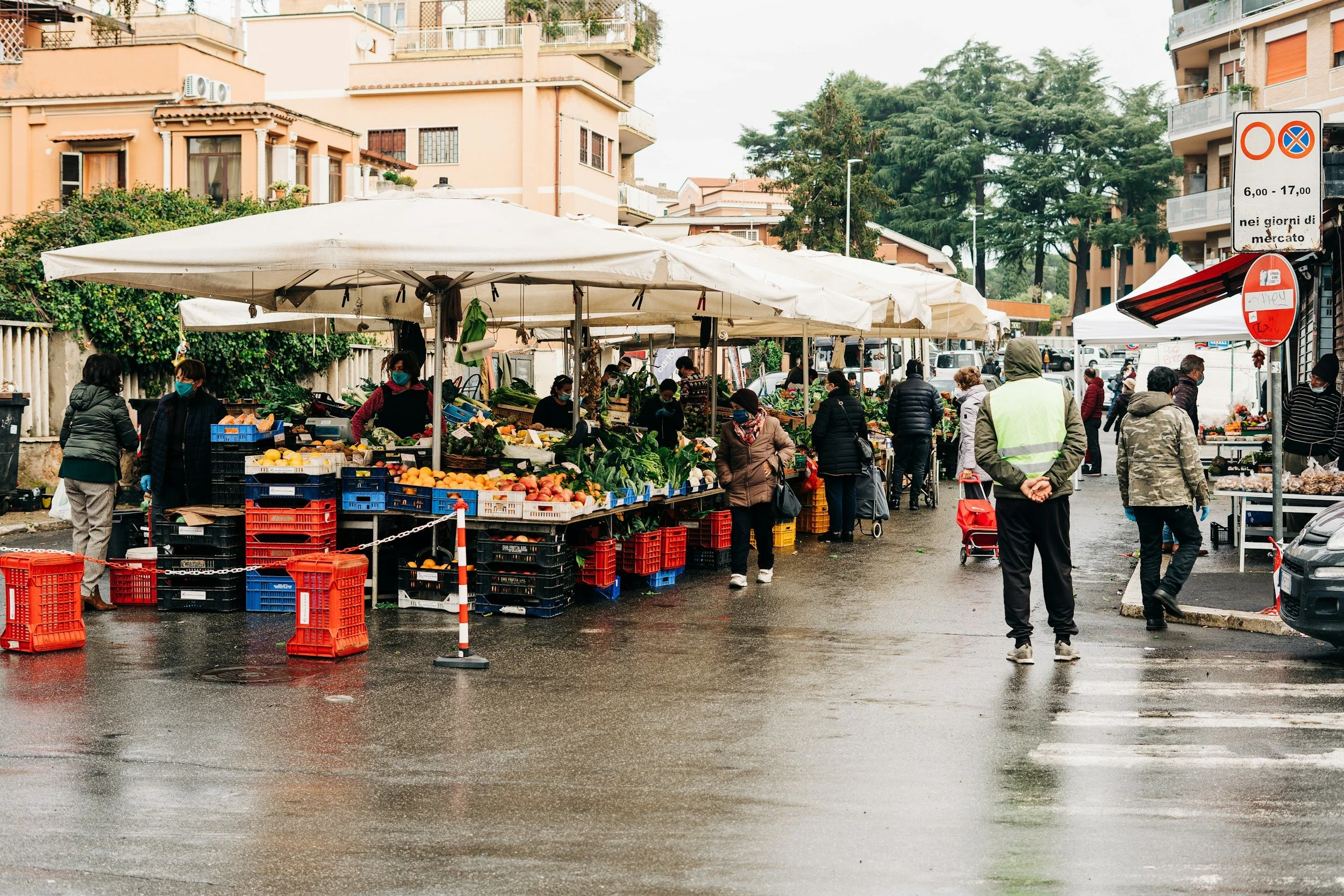
If you show up at an Italian food market in November instead of August, the first thing you notice is that nobody is killing time. People arrive with proper bags, not backpacks. They already know which side of the street the egg stall sets up on and which baker runs out first. There’s no circling, no hovering. Shopping happens quickly, and by late morning you can already see stalls packing down.
Outside summer, markets don’t soften the experience for visitors. They operate around local routines, and if you don’t line up with those, you feel it immediately. Opening hours are shorter and less forgiving. A fish stall that stays until 1pm in July might be gone by 11.30am in January. Some vendors don’t bother coming at all if the weather’s bad or if demand hasn’t been strong the week before. Nothing is announced. You’re expected to know.
What changes most is the purpose of the market. In summer, stalls often sell a little of everything. Outside summer, they sell what actually moves. You’ll see the same vegetables week after week, arranged the same way, because that’s what people cook with at home in winter. A cheese stall might only carry three or four wheels instead of ten, and they’re usually already cut to the sizes regular customers buy. There’s no sense of choice for choice’s sake.
These markets only hold together in towns where daily life doesn’t thin out after September. You can usually tell before you even reach the stalls. The streets around the market are active early, cafés are open on weekdays without advertising brunch, and shops nearby close for lunch because they always have. The market sits where people already pass through on their way to work, school, or errands. When you arrive and notice that most shoppers are already on their way home by mid-morning with their bags full, it’s clear this market exists because it’s needed, not because it’s nice to look at.
Late October to early December: harvest overlap and everyday shopping
This period is usually the easiest moment to visit Italian food markets outside summer without having to work too hard around timing. It still feels like normal life rather than winter survival mode. In places like Cuneo or Bra, markets are busy enough to feel alive but calm enough that nobody is rushing you along. You’ll often see the overlap clearly on the stalls. Late grapes from the hills still showing up next to piles of pumpkins meant to last weeks, figs lingering for a short window, and tomatoes appearing in smaller crates with prices that suggest they’re not meant to hang around.
Markets are still operating on fairly familiar hours. Vendors usually start setting up mid-morning, not at sunrise, and many stay until early afternoon if the weather behaves. Saturdays work well almost everywhere, but weekday markets are often just as good in towns where locals rely on them, like Arezzo or Ascoli Piceno. What drops away during this time are the stalls that mostly existed for summer. You notice fewer places selling hot food to eat standing up and more stalls focused on ingredients people are clearly buying for the week.
Around the market, daily routines start to settle back in. Cafés reopen after the late-summer slowdown, though often with shorter hours and no attempt to stretch the day. In towns like Ceglie Messapica or Nardò, coffee happens a bit later in the morning, and lunch starts earlier than you might expect if you’re used to summer schedules. Markets usually begin winding down before kitchens really get going, which makes it easy to shop first, then sit down to eat without feeling rushed or out of sync with the place.
That late autumn overlap you see at the markets is closely tied to olive oil season in central Italy. If you’re travelling in Umbria around this time, the frantoi aperti period adds another layer to market visits, with mills opening and olive oil becoming part of daily conversation rather than a souvenir.
January and February: reduced hours, reliable routines
January and February don’t give you much room to improvise… If you miss the window, you miss the market. In places like Cuneo or Arezzo, some vendors only turn up one day a week, and when they’re done, they’re gone. There’s no easing into the afternoon and no waiting around for late arrivals. Turning up around noon usually means you’re already too late.
What you get in return is clarity. A market that’s open in January is open because people actually use it. The stalls are few, but every one of them is doing real business. You’ll see piles of greens that hold up in the cold, boxes of potatoes and onions, bread sold in sensible loaves, and cured meats that don’t need any explaining. In places closer to the coast, or towns tied to rivers, fish stalls still appear, though often with just a handful of options laid out on ice rather than a full spread.
Cold changes the way the whole morning works. Vendors arrive later because nobody wants to stand around in the dark, and shoppers move through quickly without stopping to chat. Covered stalls suddenly matter, and so does how far you have to walk. In hill towns like Orvieto, that uphill stretch you barely noticed in autumn starts to feel like a too much. Cafés open later, often closer to nine, and lunch starts earlier, especially in the north, where markets are already packing up while kitchens are setting tables.
March and early April: locals returning, produce shifting
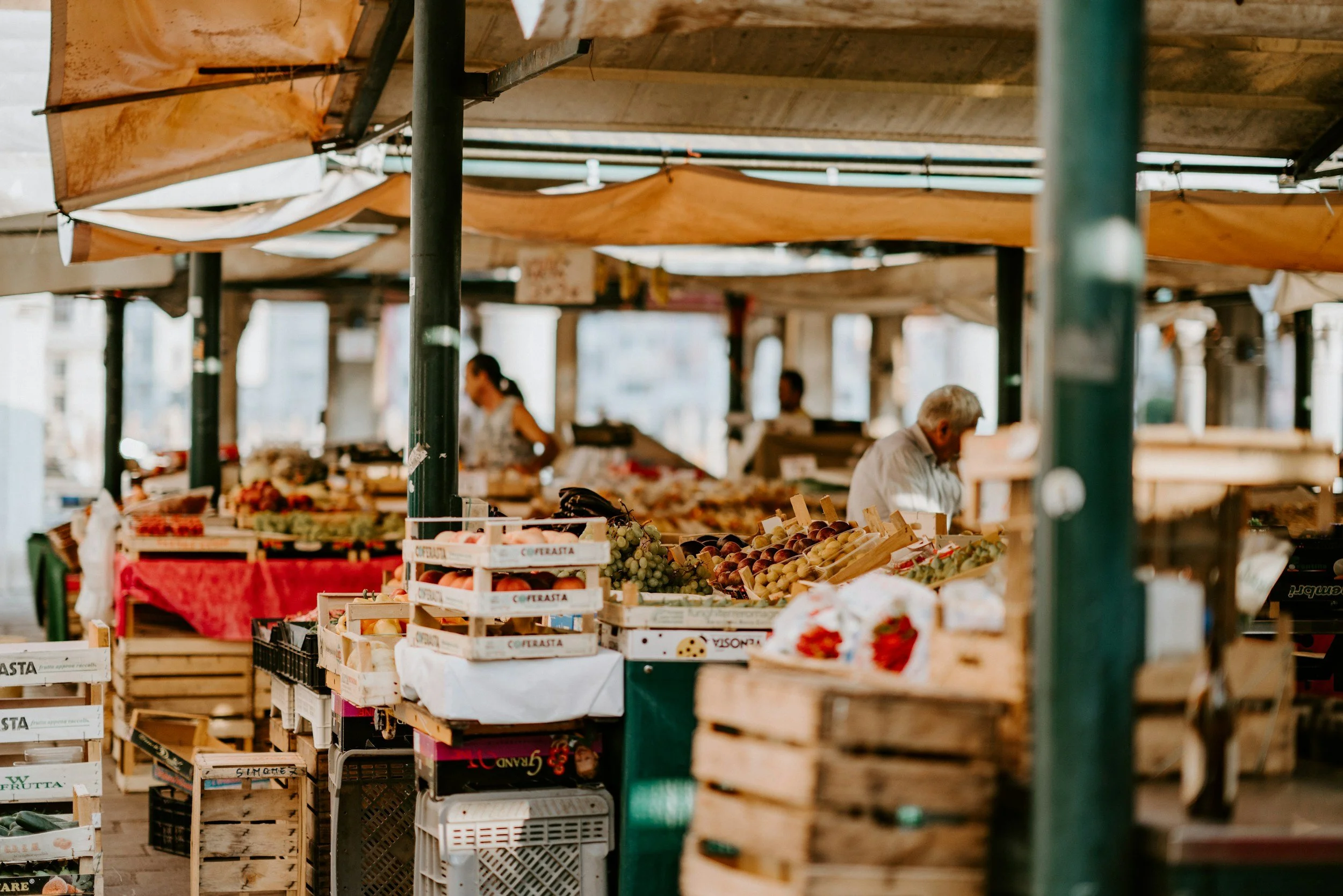
March is when markets stop feeling like a task and start feeling usable again. You notice it on arrival, not because anything looks dramatic, but because the flow changes. In places like Ascoli Piceno, people aren’t rushing straight in and out anymore. They arrive, check two or three stalls instead of one, and sometimes stand around long enough to decide what they actually feel like cooking. Winter vegetables are still everywhere, but they’re no longer the whole story. You’ll see small crates of early greens placed almost cautiously on the edge of a stall, bunches of herbs that weren’t there a few weeks ago, and fruit sellers testing one new item instead of switching everything at once.
Vendors behave differently too. They talk a bit more! They don’t pack down the second a rush slows. In towns like Bra, you might see a seller rearranging produce mid-morning rather than closing early, which never happens in January. Regular customers are still there, but they’re not moving at winter speed anymore. Someone stops to ask if something will be back next week. Someone else adds an extra loaf of bread instead of sticking to the usual order.
Timing becomes much less stressful. You no longer have to plan your entire morning around the market clock. In southern towns like Ceglie Messapica or Nardò, turning up closer to late morning still works, and most stalls are very much open. Cafés nearby quietly stretch their hours again, which means you can shop, walk a bit, and then sit down without feeling like you’re about to miss your chance to eat. It’s not lively in a summer sense, but it’s comfortable, readable, and forgiving, which is exactly what makes this period so easy to work with.
Northern Italy: markets tied to real weekly routines
Cuneo market days after October
Cuneo is one of those places where the market doesn’t really change character after summer, it just tightens up. From late October onwards, the main market still runs properly, but on a more practical schedule. Stalls usually start setting up around Piazza Galimberti and along Corso Nizza a bit later than they do in warmer months, and by early afternoon many are already packing down. Locals tend to arrive mid-morning, do a fast loop, and head home before the cold settles in. If you turn up early, it can feel quiet, and if you arrive too late, you’ll see gaps where stalls were an hour earlier.
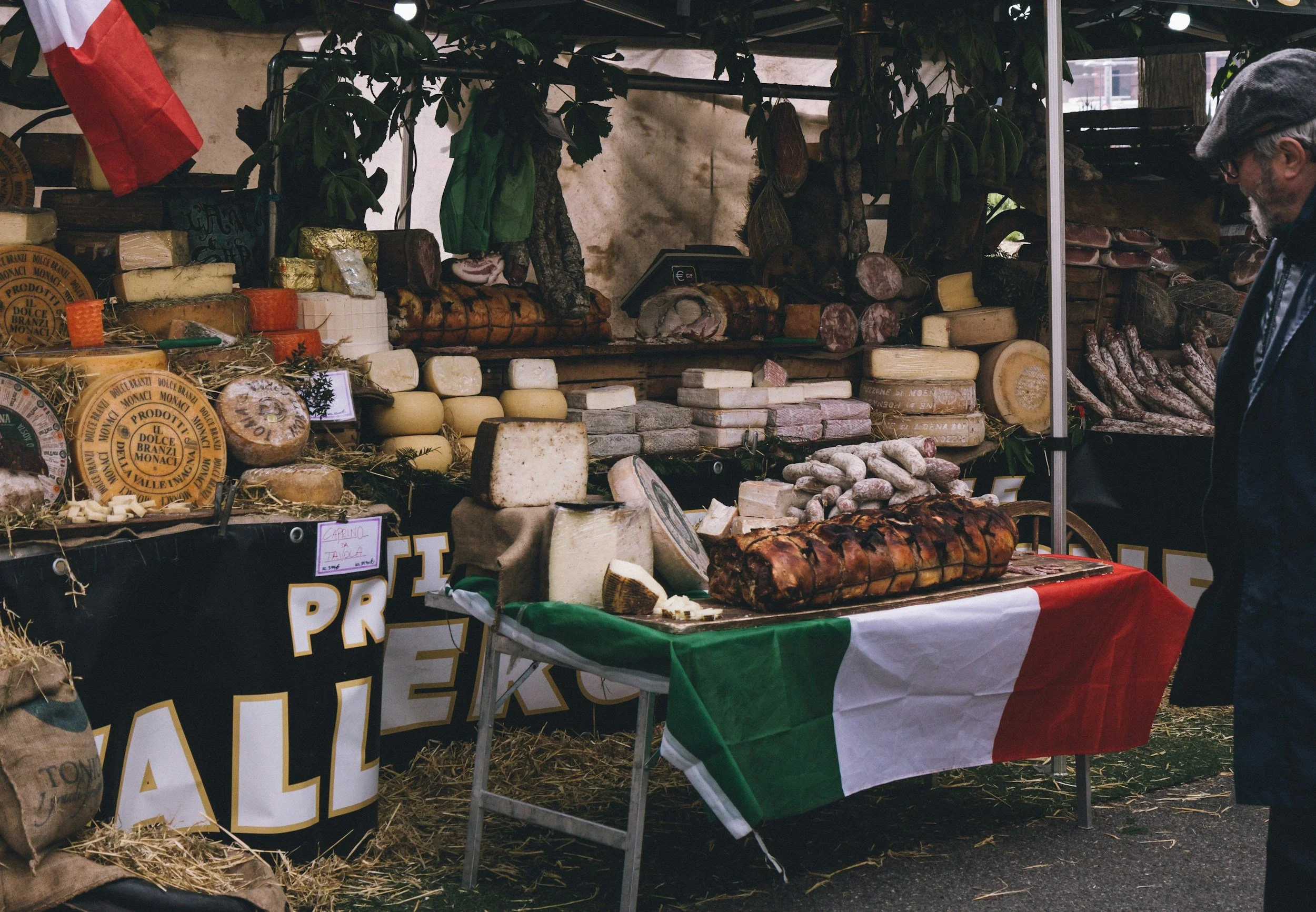
What’s on the tables reflects where Cuneo sits geographically. This is valley country, and the market shows it. You’ll see sacks of potatoes stacked low to the ground, piles of cabbages and leeks meant for long cooking, apples from nearby orchards, and pears firm enough to last a week. Cheese stalls are especially worth paying attention to at this time of year. Tomme from the surrounding Alpine areas is everywhere, usually cut to order, along with cured sausages and salami that are clearly made to get people through winter. Fresh pasta stalls still appear, but there are fewer of them, and they tend to sell out quickly rather than hanging around all day.
The layout makes the market easy to manage, even when it’s cold. Everything sits within a compact, flat area, so you’re not trekking between sections or dealing with hills. Most places to stay are within a ten-minute walk, which matters in November and December when standing around gets uncomfortable quickly. Cafés around the market usually open mid-morning and fill steadily rather than all at once. If you arrive between about 9:30 and 11:00, you’ll catch the market at its most functional, busy enough to feel alive, but early enough that vendors are still focused on selling rather than packing up.
Bra on a normal weekday, outside the weekend crowd
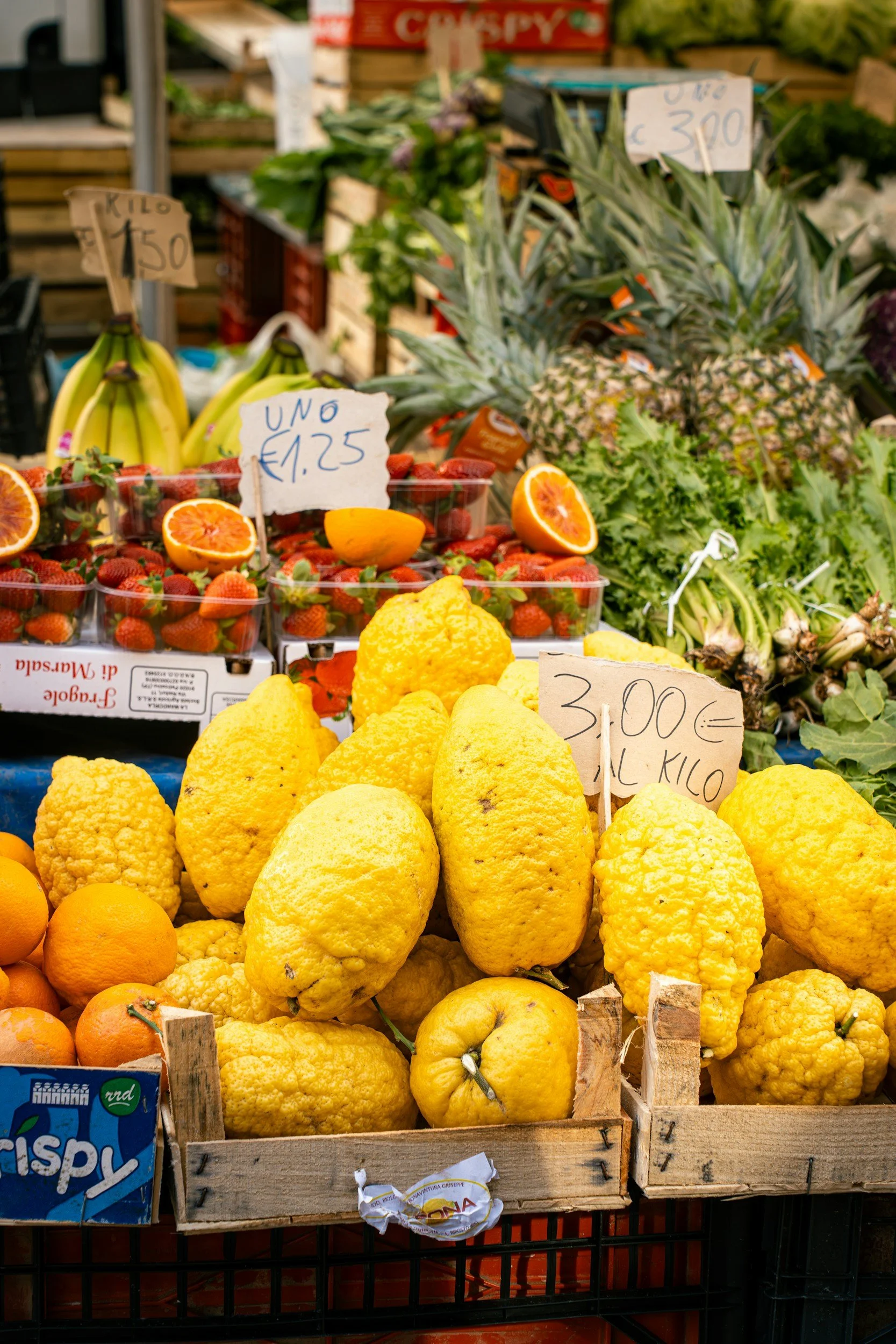
Bra gets talked about a lot because of food culture, but the weekday market outside summer is much more low-key than people expect. It’s not set up for wandering or tasting your way through the morning. Locals come in with a short list, usually on the same day each week, and they go straight to the stalls they trust. The difference between the weekday and weekend market is obvious as soon as you arrive. Fewer stalls, fewer people, and no sense that anyone is there casually.
The market leans heavily toward meat, cheese, and bread, especially once autumn settles in. Butchers and salumi producers take up more space than produce sellers, and bakery stalls stay busy all morning with people buying bread meant to last several days. The fruit and vegetable selection is seasonal and fairly tight, often limited to what’s coming from nearby farms rather than anything imported. Vendors don’t talk much unless you ask something specific, and they expect you to order clearly and move along. It’s efficient without being rushed.
Late autumn and winter mornings in Bra often start under a layer of fog, which changes how the market feels. Things get going later than you might expect, and there’s usually a clear peak between about ten and noon. Cafés open once the fog lifts a bit, and people tend to combine shopping with a short coffee stop rather than sitting around. The town centre is compact and flat, so staying close makes a difference. You can walk across the whole market area in minutes, which matters when it’s cold and nobody is interested in hanging around longer than necessary.
Bergamo lower town neighborhood markets
In Bergamo, the markets that matter outside summer aren’t anywhere near the old city walls. They’re down in the lower town, set up in residential areas where people shop on their way back from errands or before heading home for lunch. These are proper neighborhood markets, the kind that keep going all year because the same people rely on them every week. You don’t get clusters of stalls spread across a square. Instead, markets run along specific streets or small open areas that already make sense for daily life.
Timing is important here. Most of the action happens in the late morning, once people have dropped kids at school or finished other errands. Commuters stop by quickly, buy what they need, and move on. Covered stalls are common, often set up under awnings or alongside buildings, which makes a real difference in winter when rain and cold settle in. The food is very Lombard. Greens that hold up well in colder weather, mushrooms when they’re in season, butter, milk, and cheeses that people use every day rather than anything special.
Getting around is easy, but distance still matters. Buses connect the neighborhoods well, though staying within walking distance makes the whole thing feel simpler and more natural. Cafés around these markets are clearly local spots. People stop for a fast espresso, often standing at the bar, then head straight back out…
Getting to these northern Italian market towns without making it complicated
Getting to towns like Cuneo and Bra is easy as long as you don’t overthink it and you don’t arrive too late. Both are on regional train lines from Turin, and the trains are clearly set up for people who live there, not for flexible sightseeing days. Early and mid-morning trains run more reliably than late ones, which matters because markets don’t wait around. If you’re aiming to see the stalls properly, getting in around nine in the morning usually works. Both stations are close enough to the centre that you can walk straight to the market area without needing a taxi or bus.
Bra is especially simple. The station drops you close to town, and everything you need is within a short, flat walk. On market days, you’ll see people heading in the same direction with shopping trolleys or sturdy bags, which is usually a better guide than following signs. Staying overnight helps, but even as a day trip it works well if you arrive early and don’t plan anything else before lunch.
Bergamo is slightly different because the markets worth visiting aren’t where most visitors go. Trains from Milan run often and are easy, but once you arrive, ignore the pull of the old town. The neighborhood markets are down in the lower city, spread through residential areas. If you’re staying overnight, choosing somewhere in the lower town makes life much easier, especially in winter when walking uphill isn’t fun. Local buses are frequent and straightforward, but if you’re already nearby, walking is usually quicker.
Driving works too, but market days change the rules. In Cuneo and Bra, parts of the centre are restricted while stalls are set up, so parking just outside the core and walking in is usually the least stressful option. In Bergamo’s lower town, parking depends very much on the street, and signs actually matter, so it’s worth paying attention rather than assuming anything is fine for an hour.
The main thing to remember is that these markets run on local time, not visitor time. Arrive early, stay close, and don’t expect flexibility once the morning is underway. If you get that part right, everything else tends to feel easy.
If you’re planning this kind of trip without renting a car, there are plenty of market towns in Europe where daily life, food shopping, and cafés still work perfectly on foot or by train. We’ve put together a guide to European market towns that work well without a car, focusing on places where you don’t need to plan around driving to eat or shop.
Central Italy: towns where markets replace supermarkets year-round
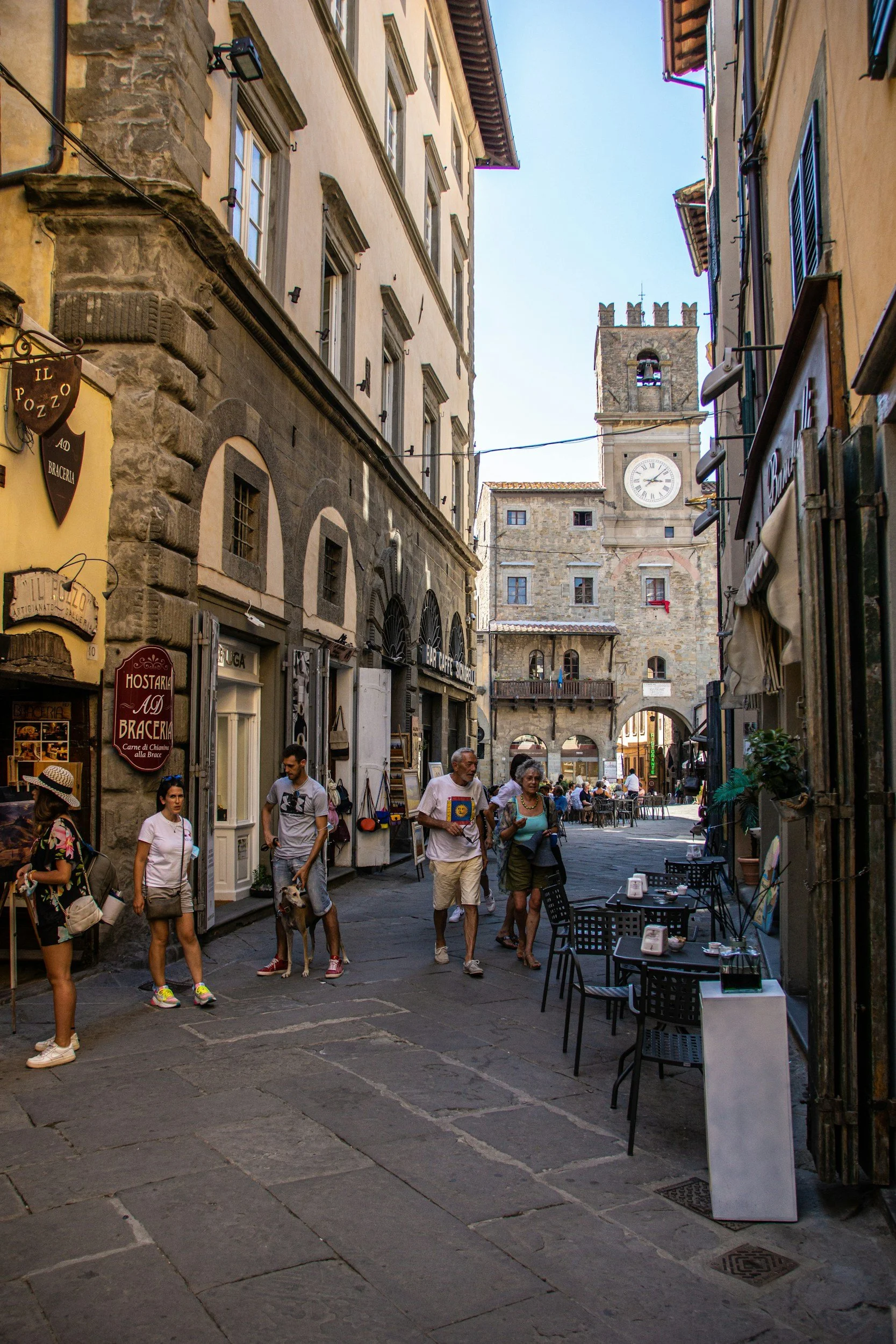
Arezzo weekly food market outside summer
Arezzo’s weekly market works outside summer because it’s part of normal life here, not something added on. Once autumn arrives, the market gets a bit smaller, but it doesn’t lose its shape. The same vendors turn up in the same spots, and regulars follow the same routes every week. You can tell people know exactly where they’re going. There’s very little stopping to look around and almost no doubling back.
The stalls are set up for everyday cooking. Winter vegetables take over most of the space, usually piled in sturdy boxes rather than laid out to look pretty. Bread, fresh pasta, and cheese stalls stay busy right through the morning, especially with people buying enough to last several days. You don’t see much prepared food, but the bakery stalls matter. They sell warm focaccia, simple pastries, and bread that people eat on the walk home or save for later. Nothing feels designed to slow you down.
Getting there is easy, which makes a big difference once it’s cold. The station is close enough that you can walk straight to the market without thinking about transport. The streets around the market are flat and straightforward, so you’re not dealing with hills or long distances. Once shopping is done, cafés nearby fill up quickly. Most people stop briefly for a coffee, often standing, then head off. Lunch starts earlier than you might expect if you’re used to bigger cities, and by early afternoon the market is already packing down and the town settles back into its normal weekday pace.
Orvieto local shopping markets in winter
Orvieto in winter is very clear about one thing: you move on its terms. The hill decides how the market works, and nobody fights it. On market mornings, most people come up from Orvieto Scalo using the funicular or the elevators. You can spot them straight away… They step out at the top, bags already in hand, and head off without stopping. Nobody is strolling around to see what’s on offer. They know exactly where they’re going.
The winter market is small and practical. There’s no padding. Stalls sell what people need to cook at home and nothing extra. You’ll see crates of greens, potatoes, onions, squash, and not much else on the vegetable side. Olive oil shows up in the same containers week after week, usually from producers just outside town. Bread sells early and then it’s gone. The cured meat stalls work fast because most customers are regulars. Orders are short, weights are specific, and there’s no chatting unless you start it.
Everything is squeezed into a short part of the day. Winter light doesn’t last long here, and the market follows that. If you arrive late in the morning, you’re already catching the tail end. Once the main rush is over, stalls pack down without hesitation. Cafés are scattered around town, and not all of them bother opening in winter. The ones that do usually open in the morning and close again after lunch. Most people shop first, eat second, and by early afternoon the streets quiet down again, like the market was just a brief, necessary stop.
Ascoli Piceno food markets beyond festival season
Ascoli Piceno outside summer feels very settled, and the markets follow that mood. Once the festival crowds disappear, shopping shifts back to the areas locals actually use every day, especially around the streets just off Piazza del Popolo rather than the square itself. People come in early, often on their way to work or errands, and shopping is just something that needs doing before the rest of the day starts.
Food here stays very consistent through the colder months. Olive ascolane don’t disappear just because it’s not summer. You still see them shaping the counters at butcher shops and deli stalls, with trays being prepped early in the morning. Bread and fresh pasta are constants, and vegetable stalls stick to what people actually cook with during the week. Nothing feels dressed up or seasonal for show. The same products turn up again and again because that’s what people expect to find.
Getting around makes everything easy. The centre is compact, flat, and walkable, so moving between stalls never feels like effort. Cafés open reliably in the morning, even outside peak season, and many people clearly plan shopping around a coffee stop rather than the other way around. It’s common to see someone finish at the market, grab a quick breakfast or espresso nearby, and head off again. By late morning, most of the food shopping is already done!
If Ascoli Piceno stood out while reading, there’s a more detailed guide that looks at the town as a real alternative to Tuscany, especially for travellers who care more about food, walkability, and daily rhythm than vineyard visits.
Getting to these central Italian market towns without turning it into a project
Getting to Arezzo, Orvieto, and Ascoli Piceno is mostly about understanding how Italians actually move around on weekday mornings, not about finding the fastest route on paper.
Arezzo is the simplest of the three. It sits right on a major train line, and the station is close enough to the centre that you can walk straight to the market area without thinking about buses or taxis. Regional trains from Florence run regularly, especially in the morning, and arriving between eight and nine gives you plenty of time before stalls start winding down. The walk from the station is flat and practical, which matters once it’s cold and you’re carrying bags.
Orvieto takes a bit more planning, but only because of the hill. Trains stop at Orvieto Scalo, not up in town, and from there almost everyone uses the funicular or the public elevators. Once you’re up top, everything is walkable, but you don’t want to be dealing with the climb on foot in winter if you don’t have to. Arriving early matters more here than anywhere else, because the market window is short.
Ascoli Piceno is slightly slower to reach, but very straightforward once you’re there. Trains from the coast or from larger regional hubs don’t run as often, so checking schedules ahead of time helps. The station sits just outside the centre, and the walk in is easy and flat. Once you’re in town, everything related to food shopping is close together, which makes early mornings feel manageable even if you’ve just arrived.
Driving works for all three, but market days change the rules. Parts of the centre may be restricted while stalls are set up, and parking is usually easier just outside the core areas. If you’re visiting specifically for markets, arriving early and staying overnight makes everything calmer.
Southern Italy: markets that never really stop
Ceglie Messapica everyday food markets in winter
In Ceglie Messapica, winter food shopping happens out in the open and in plain sight. The everyday market activity is spread through the streets just outside the historic centre, especially around Via San Rocco and the surrounding blocks, where vegetable sellers and bread vans stop on the same days every week. Even in January, you’ll see people coming down with canvas bags mid-morning, often after a quick errand rather than as a planned outing. There’s no single “market moment” here. Shopping happens steadily, in short bursts, because people live close enough to come back again the next day.
The stalls themselves are very specific in what they sell. Vegetable sellers focus on what grows and keeps well locally. You’ll see crates of fennel with long stems still attached, dark leafy greens used for soups, sacks of potatoes, and piles of onions that look like they’re meant for the whole week, not one meal. Bread usually comes from nearby bakeries and arrives in batches rather than sitting out all morning. It sells fast and gets replaced. Dairy is simple and regional, things like fresh mozzarella or ricotta brought in small quantities, clearly meant to be eaten the same day.
Winter weather makes all of this easier rather than harder. Temperatures are mild enough that people don’t stress, and stalls don’t need to pack up early because of cold. The centre of town is compact, and most accommodation is within a short walk of where the food stalls set up, so carrying bags home never feels like a chore. You see people stopping halfway, chatting briefly, then continuing on, because distances are short and familiar.
Mornings blend naturally into café stops. After shopping, many people head toward small bars near the centre for coffee, often standing at the counter rather than sitting for long. Lunch follows without much planning, usually earlier than in summer but not sharply so. Compared to northern markets, there’s more flexibility here. You can arrive later in the morning and still find stalls open, but by early afternoon everything winds down. Food shopping is finished, shutters come down, and the town slips into its midday pause, ready to start again the next day.
Nardò weekly market vibes outside summer
Nardò’s weekly market feels very fixed in place, especially outside summer. It sets up along the same stretch near Via XX Settembre and the surrounding streets every single week, and once the seaside traffic drops off, the crowd is almost entirely local. People don’t usually drift in from the historic centre out of curiosity. They arrive with purpose, usually from nearby neighbourhoods, pushing small shopping trolleys or carrying bags they’ve clearly used for years.
In winter, citrus really takes over. Oranges, mandarins, and lemons are stacked high, often still with leaves attached, and sold in generous quantities. Greens fill in the rest of the produce stalls, things meant for everyday cooking rather than anything decorative. Cheese sellers do steady business, especially with local varieties that people recognise without asking questions. What you don’t see much of are ready-to-eat foods. A few stalls still sell snacks, but most of that side of the market disappears once summer ends. Bakeries, on the other hand, stay busy. Bread sells well through the late morning, often picked up as the last stop before heading home.
The market works best in a very clear window. Between about 09.30 and 11.00, everything is running properly. After that, it thins out fast. By early afternoon, stalls are already loading up vans, and the streets clear almost all at once. If you plan to eat first and shop later, you’ll miss most of it. Doing it the other way around makes much more sense here.
Nardò itself makes things easy. The town is flat, the streets are wide, and walking with full bags never feels like a problem. Winter weather rarely interferes, so there’s no need to stress, but the timing still matters. Once the market winds down, it’s really over.
Modica neighborhood food markets in off-season
In Modica, once summer is over, food shopping moves away from the postcard streets almost completely. The historic centre is still there, but locals aren’t buying their food there. They shop in their own neighbourhoods, usually on the same streets every week, often just a few minutes from home. Small stalls pop up in familiar spots, sometimes outside a bakery or along a wider street where vans can pull in easily. People stop by briefly, pick up what they need, and carry on. Nobody turns it into an outing.
The food is very everyday and very specific to how people cook here. Vegetable stalls sell greens, onions, potatoes, tomatoes meant for sauce, not for slicing, and whatever else is in season and reliable. Bread comes from nearby bakeries and sells early, especially in the morning. Dairy is local and simple, often fresh ricotta or a couple of familiar cheeses that people buy without asking questions. The chocolate shops are a separate world. Locals don’t mix chocolate buying with food shopping. If they’re buying chocolate, that’s a deliberate stop, not something picked up along with vegetables.
The hills are the main thing to think about. Modica is layered, and even short distances can feel long if you’re walking uphill with bags. Staying close to where you plan to shop makes a big difference, especially outside summer when there’s no reason to push yourself. Winter weather is mild enough that stalls keep their usual hours, and there’s no sense of rushing to beat the cold.
Cafés open steadily through the morning, usually small places tucked into residential streets rather than busy squares. People stop in after shopping, often just for a quick coffee, then head home. Lunch follows the usual pattern, and by early afternoon most food shopping is already finished. The stalls disappear quietly, and the neighbourhood goes back to normal, ready to do the same thing again the next day.
Things that change outside summer and matter in real life
Outside summer, markets stop being flexible. They’re no longer something you squeeze in between other plans. Market days become the spine of the week, especially in smaller towns. Miss the Saturday market and you’re not trying again tomorrow, you’re waiting several days, sometimes a full week. That has a real impact on how you plan arrivals. Turning up the night before a market day suddenly matters much more than getting there early the same morning.
Mornings tighten too. Vendors don’t stretch the day once the weather cools. If business slows, they pack up, simple as that. A market that feels busy at ten can look half empty an hour later. This catches a lot of people out. The safest way to approach it is to treat the market as the first thing you do, not something you build up to. Coffee can wait. Lunch definitely can. Once the stalls start disappearing, they don’t come back.
Cash quietly becomes part of the routine again. Outside peak season, some vendors stop taking cards altogether, especially for small purchases. Locals know exactly how much cash to bring and don’t think twice about it. Turning up without any means you start making compromises you didn’t plan for, skipping a cheese stall you wanted or settling for whatever place happens to take cards. It’s not hostility, it’s just not worth the effort for them when things are slower.
The atmosphere shifts in small but noticeable ways. People move through faster. Browsing without buying feels awkward in a way it doesn’t in summer. Vendors aren’t unfriendly, but they’re focused. Orders are quick, conversations are short, and most people already know what they want. Once you understand that, the whole experience feels easier. You stop hesitating, and you shop with more confidence.
How weather and distance actually affect visiting Italian markets
Weather outside summer doesn’t ruin market visits, but it changes the margins. In the north, cold mornings shrink the useful window more than people expect. In places like Cuneo or Bra, vendors are less willing to stand around once fingers go numb, which means markets can peak and fade quickly. A morning that looks promising at nine can feel half over by eleven. Dressing warmly helps, but timing matters more than layers.
Hill towns add a different kind of friction. Damp air settles in, stone streets stay cold, and standing still becomes uncomfortable faster than you’d think. Covered stalls suddenly make a big difference, not as a nice extra, but as the reason you can shop without rushing. In places like Orvieto or Modica, you start noticing which stalls are tucked against walls or under awnings, and those are the ones people cluster around first.
Distances feel different in winter too. A ten-minute walk on a map can feel long when you’re carrying bags and moving uphill in a coat. Public transport still runs, but often less often, especially midday. Missing a bus because you lingered too long at a stall can mean waiting longer than you want to. This is where accommodation choice really matters. Staying within walking distance of the market area changes the whole experience. You can head out when it suits you, drop bags back if needed, and avoid turning a simple shop into a whole project.
These details sound small, but they shape the day. When weather and distance are working against you, markets feel rushed and frustrating. When you plan around them, everything becomes calmer, and the market fits into the day!
For a deeper look at how food shapes daily routines outside peak season, Parma is another place where markets, bakeries, and producers still structure the week once summer ends. This Parma travel guide focuses on food culture that’s tied to everyday life rather than seasonal crowds.
What’s actually on the stalls once summer produce is gone
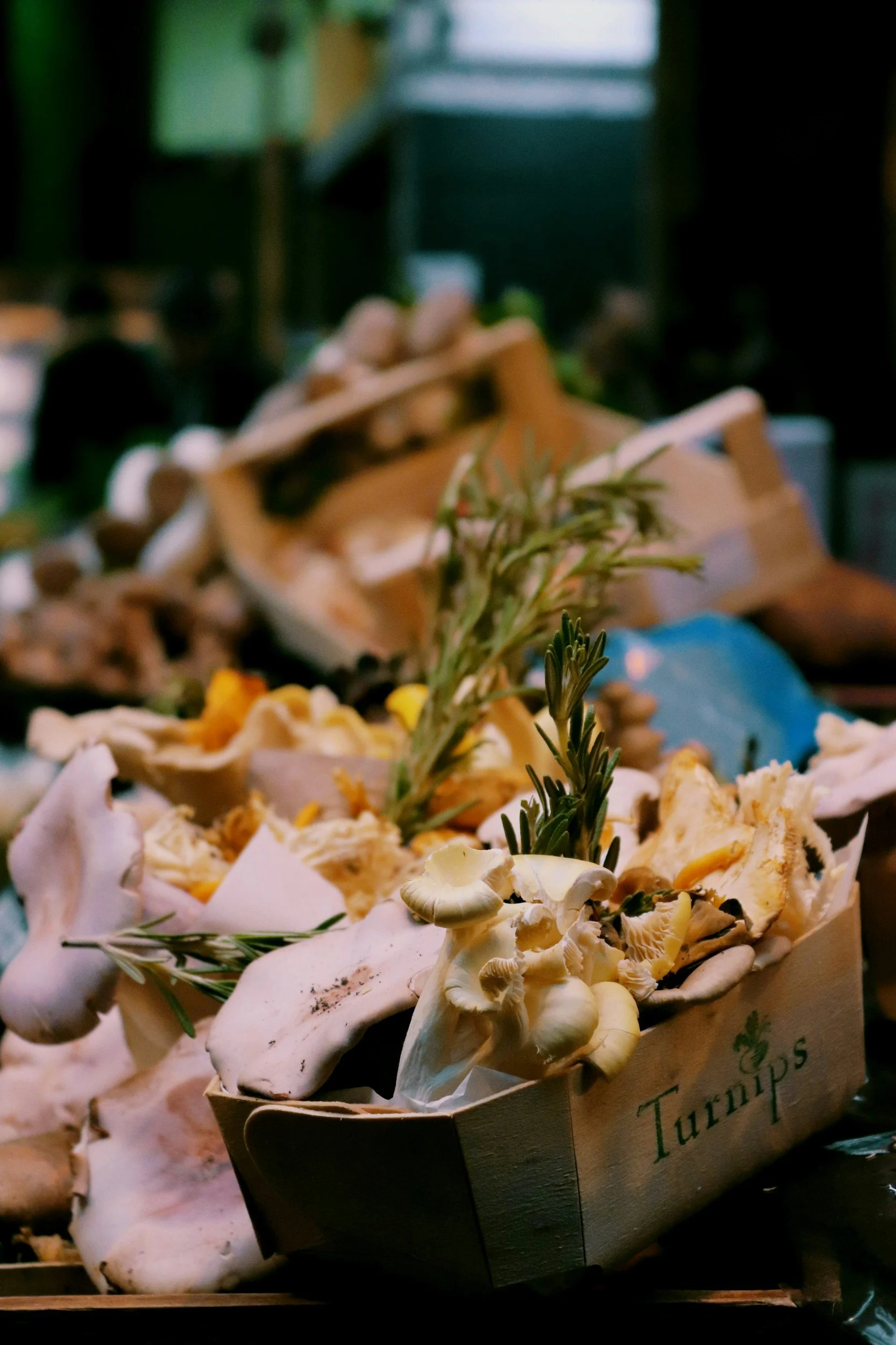
When summer produce drops off, the market doesn’t feel empty, it feels more grown-up. Tomatoes vanish almost overnight, peaches are gone, and nobody replaces them with something decorative. Instead, the stalls fill with things that clearly belong in a kitchen where someone is cooking every day. Big bunches of chard and cavolo nero tied with string, chicory piled straight into crates, vegetables that look like they’re meant to be washed, chopped, and cooked slowly rather than photographed.
Root vegetables take over a lot of space. Potatoes come in sacks, not baskets. Carrots still have dirt on them. Onions are sold by the kilo because that’s how people actually buy them. Citrus shows up quietly at first, often stacked to one side, then slowly spreads until half the market smells faintly of oranges and mandarins. Mushrooms appear only when someone has a good supply. One week they’re everywhere, the next week they’re gone again, and nobody seems surprised.
Meat and cheese stalls start to dominate visually. Salami hangs lower and in longer rows, cheeses are firmer and cut in solid wedges, and nothing is explained unless you ask. Preserved foods move forward too. Buckets of olives, jars lined up behind the stall, pickled vegetables meant to be eaten midweek when nobody feels like cooking anything complicated. The whole market shifts from variety to usefulness.
Hot food stalls stop selling snacks and start selling fuel. Soups, stews, slices of baked dishes that were made early that morning and kept warm. People eat standing up, finish quickly, and head home. These stalls aren’t trying to keep anyone around. Once the food is gone, they close…
Arrival timing that avoids empty stalls
Outside summer, timing really matters. Trains that arrive late in the morning often get you there just as things are winding down. You’ll still see stalls, but you’ll also see vans half packed and sellers starting to look at their watches. It feels like turning up halfway through something rather than at the start.
Staying overnight makes everything easier. Waking up already in town means you can arrive while stalls are full and people are still shopping properly, not rushing to finish. It also changes the mood of the day. You’re not checking the time or trying to squeeze things in.
Markets work best when they’re the first thing you do! Shop, carry the bags, then figure out the rest. Coffee after shopping feels right. Lunch stops being stressful. Once you plan the day this way, it feels obvious, and you stop chasing a market that’s already starting to disappear.
This way of travelling also suits short, self-contained trips. If you like the idea of arriving by train, staying put, and organising your days around food rather than sightseeing, this guide to solo travel in Italy by train for a long weekend fits naturally with off-season market travel.
How to make the most out of these Italian markets
If food markets are one of the reasons you’re travelling in Italy, the off-season quietly changes what’s worth paying attention to. It stops being about size or variety and becomes much more about function. The towns that work well outside summer are the ones where the market still holds the week together. That’s why places like Cuneo, Bra, Arezzo, Orvieto, Ascoli Piceno, Ceglie Messapica, Nardò, and Modica keep showing up in this kind of travel. The stalls are there because they need to be, not because anyone is visiting.
This type of trip works best when you give yourself a bit of slack in the schedule. Staying two or three nights in one place makes a real difference. It means you’re not trying to squeeze a market in between trains or hoping it’s still running when you arrive. It also gives you time to notice things that actually help, like which bakery opens early enough to grab bread before the market gets busy, which café reliably opens on a winter morning, or which streets feel active before the rest of town really gets going.
Markets outside summer are also a surprisingly good way to decide where to go in the first place. If a town still runs a proper food market in January or February, it usually means other basics are in place too. Cafés that don’t shut down for months, shops that keep normal hours…
If you’re planning a trip to Italy between late autumn and early spring and want it to feel steady rather than improvised, letting real market towns shape the route makes life easier. You end up eating better without trying, moving less, and letting the mornings decide how the day will be. That’s often when travel stops feeling like a project and starts feeling like you’ve dropped into a place that’s carrying on as usual.
FAQs about visiting Italian food markets outside summer
When is the best time to visit food markets in Italy outside summer?
Late autumn, winter, and early spring can be some of the best times, especially from October to March. Markets are less crowded, more local, and reflect what’s actually in season rather than what’s expected by visitors.
Are Italian food markets open year-round?
Yes, but they change depending on the season. In winter, markets may be smaller or shorter, while in August some markets reduce hours or close temporarily. Regular weekly markets usually continue, but with fewer stalls.
What are Italian markets like in winter?
Winter markets focus on practical, seasonal food. Expect root vegetables, cabbage, beans, citrus in the south, cheeses, and preserved products. They feel quieter and more local compared to summer.
Are Italian markets better in autumn than summer?
In many places, yes. Autumn markets often have more variety, especially during harvest season, with mushrooms, grapes, and seasonal vegetables. They also feel less crowded and more connected to local routines.
Do Italian markets close in August?
Some do, especially in smaller towns. Others run with fewer vendors or shorter hours. August is one of the least reliable times for markets, particularly inland or in less tourist-focused areas.
What time of day should you visit Italian markets?
Morning is best, usually between 8:30 and 11:30. After midday, many stalls begin packing up, especially outside major cities.
Which Italian regions have the best off-season markets?
Regions like Piedmont, Emilia-Romagna, Tuscany, and parts of southern Italy (like Campania or Sicily) have strong market culture year-round, especially in smaller towns.
Do you need to speak Italian to visit local markets?
No, but it helps to keep things simple. Many transactions are quick and practical, and pointing or using basic phrases is usually enough.
Are food markets in Italy worth visiting if you’re not buying ingredients?
Yes. Markets are one of the easiest ways to understand what’s actually in season and how people shop day to day, even if you’re not cooking.
What should you expect from smaller town markets in Italy?
They are usually focused and practical. You won’t find large displays or variety across all ingredients, but what is there is seasonal and used locally. Markets often reflect the needs of the town rather than visitors.
How do market days affect what you can eat in Italy?
Market days often determine what restaurants serve for the next few days. Arriving on a market day usually means better variety and more seasonal dishes.
Is it better to visit markets in cities or small towns?
Small town markets tend to feel more local and seasonal, while city markets are larger and more consistent but less tied to what’s grown nearby.
Are Italian food markets worth visiting in winter or are they too small?
Yes, but they’re different. Winter markets are smaller and more focused, with fewer stalls and less variety. What’s there is seasonal and practical rather than curated, which often makes them more useful if you want to see how people actually shop.
Do Italian markets run in bad weather?
Most do. Rain doesn’t usually cancel a market, but it can reduce the number of stalls. In colder months, markets may feel quieter or more spread out, especially in smaller towns.
What day are markets held in Italian towns?
Most towns have one main weekly market day, often midweek (Tuesday to Thursday) or Saturday. Outside cities, this day shapes what’s available locally for the rest of the week.
Can you eat at Italian markets or are they just for shopping?
It depends on the market. Some larger markets have food stalls where you can eat simple dishes on the spot, while smaller town markets are more focused on shopping rather than prepared food.
Why do some Italian markets feel empty compared to others?
Timing is usually the reason. Visiting outside peak hours, on a non-market day, or during periods like August or winter can make markets feel much quieter. It doesn’t mean they’re not worth visiting, just that you’re seeing a different version of them.
Is it better to plan your day around a market in Italy?
Yes, especially in smaller towns. Markets often set the rhythm for the day, and arriving while they’re active gives you a clearer sense of what’s in season and what people are actually buying.