The Sicily I'd recommend after your first visit
When people plan a trip to Sicily, they usually start with the same places. Palermo, Taormina, and the beaches around Cefalù are some of the most visited parts of the island, especially during summer.
But Sicily is much larger than those destinations.
Across the island there are many smaller towns where daily life still feels slower and far less crowded. In coastal towns you’ll see fishing boats in the harbour, local cafés opening early for espresso, and small restaurants where lunch is still a long, relaxed part of the day.
These places don’t feel empty or tourist-focused. They are towns where people live year-round, where markets, bakeries, and cafés are part of everyday life, and where visitors can experience Sicily in a more natural way.
Travelers who like discovering quieter places often realise that destinations like these are perfect for a relaxed solo travel weekend in Italy, where small towns and easy train routes make exploring feel simple rather than rushed.
This guide focuses on quieter towns and coastal escapes across Sicily. Some are small fishing towns by the sea, others are historic hilltop villages with views across the countryside.
Savoca
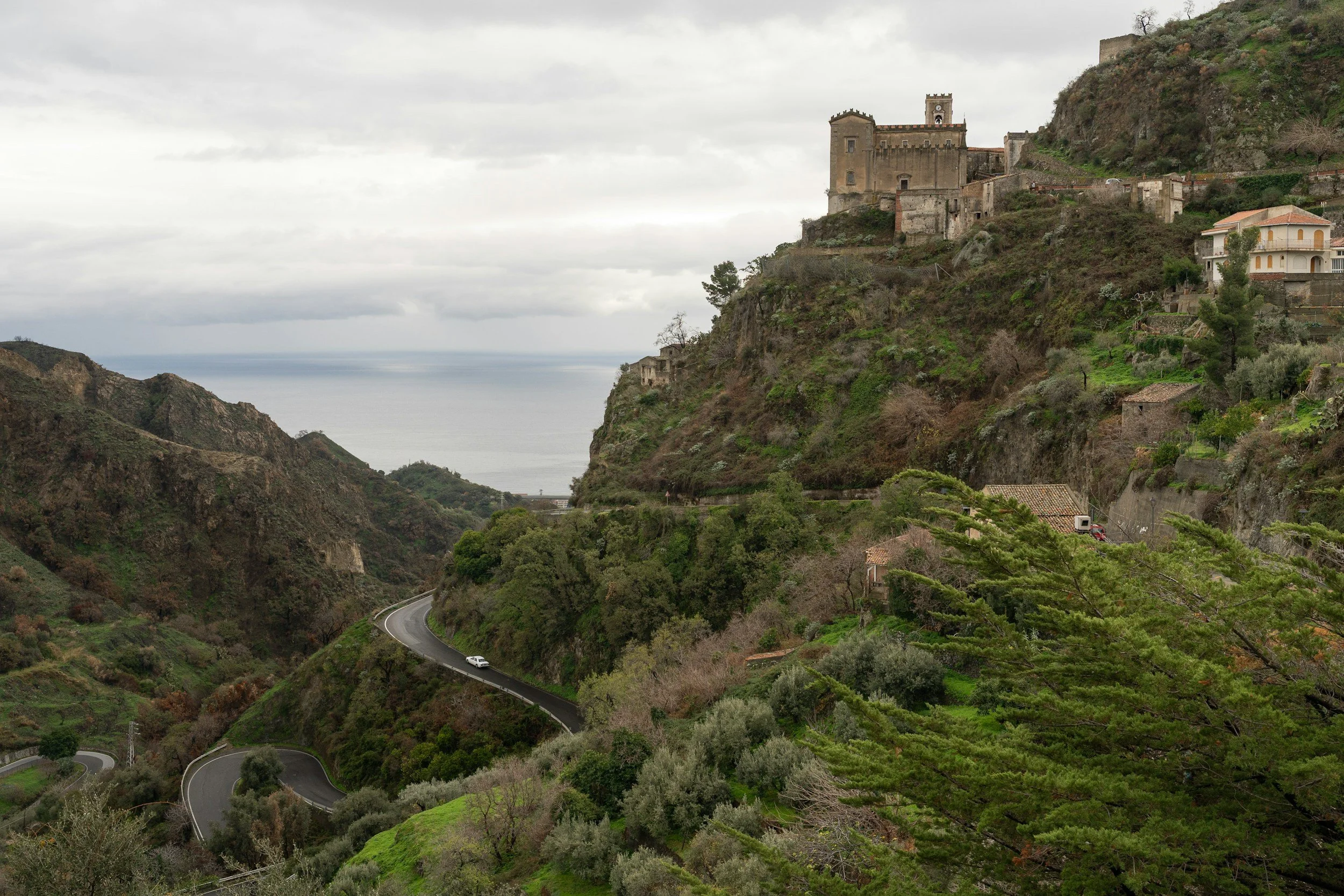
Savoca is a small hilltop village on Sicily’s east coast, about 30 minutes north of Taormina and overlooking the Ionian Sea. Many travelers first hear about it because scenes from The Godfather were filmed here, but once you arrive the film connection quickly fades into the background.
Most of the time, Savoca simply feels quiet.
The village sits on a hillside above the coastal town of Santa Teresa di Riva, and the streets wind slowly upward between old stone houses, small churches, and shaded squares. Cars rarely pass through the historic centre, so the pace of the place becomes obvious almost immediately. You hear footsteps on the stone streets, conversations drifting from open windows, and the occasional scooter passing through before things go quiet again.
Savoca isn’t a village with a strict sightseeing route. The best way to explore is simply to walk. Narrow lanes lead uphill and downhill, sometimes opening into small viewpoints where you can see across the green hills toward the Ionian coastline.
One of the best viewpoints in the village is near Chiesa di San Nicolò, the church that appears in The Godfather. The short walk up from the centre is easy, and from the terrace outside the church you can see the coastline stretching south toward Taormina.
Back in the village centre, many visitors stop at Bar Vitelli, a small café made famous by the film but still operating as a normal local bar. Even with the movie connection, the atmosphere remains relaxed. People sit outside with espresso or granita while the village moves slowly around them.
Savoca is not a place filled with attractions or long lists of things to do. That’s part of why people end up staying longer than expected. The streets invite slow wandering, and the views appear naturally as you move through the village rather than at one single viewpoint.
If you enjoy towns where history feels part of everyday life, you might also like Matera in southern Italy. Walking through its ancient stone streets gives you a similar feeling of stepping into a place that hasn’t rushed to modernise.
Calamosche Beach, Vendicari Nature Reserve
Calamosche Beach is located inside the Vendicari Nature Reserve on Sicily’s southeast coast, between Noto and the fishing village of Marzamemi. It’s one of the most well-known natural beaches in the reserve and very different from Sicily’s developed beach areas with lidos and beach clubs.
To reach the beach, visitors walk about 15–20 minutes along a flat dirt path from the Vendicari parking area. The trail passes through low Mediterranean vegetation and open landscape before reaching the coast.
At the end of the path, the coastline opens into a small sheltered bay with fine golden sand and clear, shallow water. Because the beach sits between two rocky headlands, the sea is often calmer here than along more exposed parts of the coast, which makes it a comfortable place for swimming.
If it’s coastal towns you’re drawn to, Sicily’s quieter seaside villages often remind people of Italy’s Cilento Coast, where fishing towns, long lunches, and calm beaches define the rhythm of the day.
Even though Calamosche is well known, the protected setting keeps it feeling relatively natural. There are no beach clubs, no restaurants, and no rental services, so the atmosphere stays simple compared with many other Sicilian beaches.
Visitors usually bring water, snacks, and shade for the day. Once you arrive, most people settle in for several hours for swimming, relaxing, and enjoying one of the most beautiful stretches of coastline in the Vendicari reserve.
The same slower atmosphere appears in rural parts of Italy too. Places like the Sabina Hills outside Rome show how beautiful the countryside can be when you spend time in villages surrounded by olive groves instead of big cities.
Love the island life? You’ll love what we have discovered in Greece…
What if there were hidden pockets of paradise, islands still off the radar, where you can enjoy authentic Greek life without the overwhelm of mass tourism? Well, there are - five, in fact. Ready to discover them? Lets talk about five underrated Greek islands that are still peaceful, untapped, and perfect for those looking to escape the crowds, connect with nature, and bask in true Greek culture. Trust me, you’ll want to experience these before everyone else does.
Noto: Sicily’s Baroque Town Near Vendicari
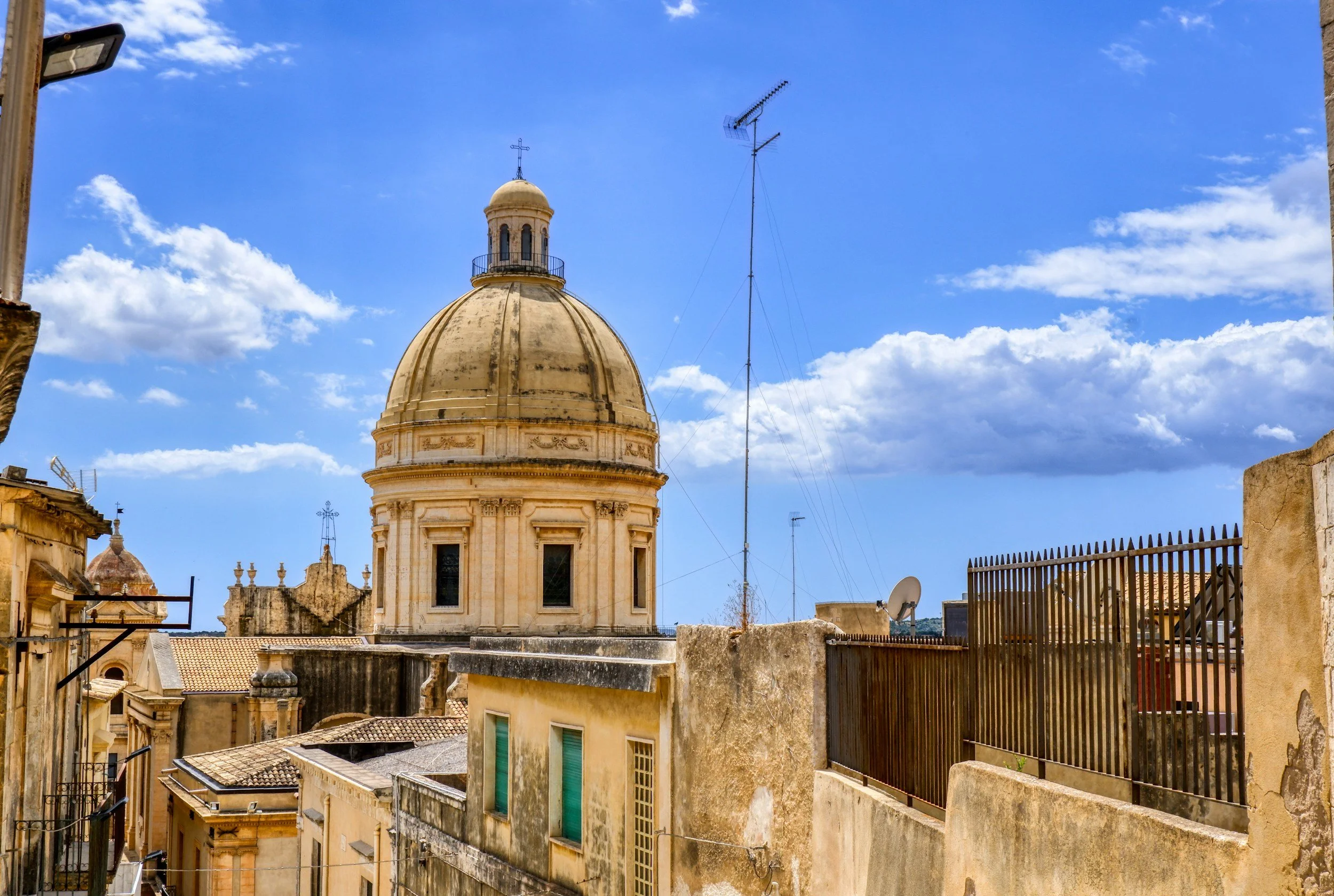
Noto is located about 35 km south of Syracuse in southeastern Sicily and is one of the main towns of the Val di Noto UNESCO World Heritage region. The historic town was rebuilt in the 18th century after a devastating earthquake in 1693, which is why so many of its buildings share the same distinctive Baroque style.
Most visitors explore Noto along Corso Vittorio Emanuele, the main street that runs through the historic centre. Walking along this wide avenue gives you a good introduction to the town’s architecture. Within a short distance you’ll pass several of its most recognisable landmarks, including Cattedrale di San Nicolò, Palazzo Ducezio, and Chiesa di San Carlo al Corso, where you can climb to a small terrace for views across the rooftops.
Despite its UNESCO status, Noto often feels calmer than Sicily’s most crowded destinations. Many travelers visit on day trips from Syracuse, the beach towns around Vendicari Nature Reserve, or from Marzamemi, which means the streets tend to be quiet in the early morning before the cafés fill up.
Stopping for coffee or granita along Corso Vittorio Emanuele is part of the experience. Historic cafés like Caffè Sicilia, famous for its almond granita and pastries, attract both locals and visitors.
If you want to see the town at its most relaxed, arrive early in the morning or later in the afternoon when the heat softens and locals begin gathering again in the main squares for the evening passeggiata.
Another place with a similar feeling is Levanto in Liguria - a relaxed coastal town where mornings start with coffee by the sea and evenings are spent strolling through the harbour streets.
Exploring the Countryside of the Val di Noto
Beyond the historic town, the Val di Noto countryside stretches across southeastern Sicily with rolling hills, olive groves, vineyards, and traditional farms.
Driving just ten to fifteen minutes outside Noto quickly changes the scenery. The Baroque streets give way to rural roads lined with dry-stone walls, almond trees, and olive groves, a landscape that has shaped the region’s agriculture for centuries.
The area is well known for producing extra virgin olive oil, almonds, and Nero d’Avola wine, and many small farms offer tastings or agriturismo experiences. These countryside properties often combine olive cultivation with vineyards or citrus groves, giving visitors a glimpse into how Sicilian agriculture still works on a smaller scale.
The Val di Noto also sits close to several nature areas along the coast, including Vendicari Nature Reserve, where wetlands, beaches, and bird-watching areas attract visitors throughout the year.
Combining time in Noto with a drive through the surrounding countryside gives a broader sense of the region. It’s a landscape where historic towns, farms, and coastal nature reserves sit only a short distance apart.
Marzamemi: A Small Fishing Village on Sicily’s Southeast Coast
Marzamemi is a small seaside village on Sicily’s southeast coast, about 25 minutes from Noto and just south of the Vendicari Nature Reserve. Historically it was a tuna fishing port, and parts of the old tonnara (tuna processing buildings) still sit around the harbour.
The centre of the village is Piazza Regina Margherita, a small square facing the sea where low stone buildings house cafés, seafood restaurants, and small shops. Boats still move in and out of the harbour, and the pace of the village is noticeably slower than in Sicily’s larger coastal towns.
Many visitors combine a morning exploring Vendicari Nature Reserve or Calamosche Beach with lunch in Marzamemi, where restaurants specialise in fresh tuna, swordfish, and seafood caught along this stretch of coast.
In the early evening the square fills with locals and visitors sitting outside cafés while the fishing boats return to the harbour.
If you enjoy landscapes where walking and good food naturally belong together, you might also like hiking through the Prosecco Hills in northern Italy. The trails wind through vineyards and quiet villages, with views that feel very different from Sicily but just as memorable.
And if your travels tend to revolve around food and wine, you might also enjoy exploring Tuscany’s smaller vineyard estates, where tastings often happen in quiet countryside settings rather than crowded wine tours.
Erice: A Hilltop Town Above Trapani
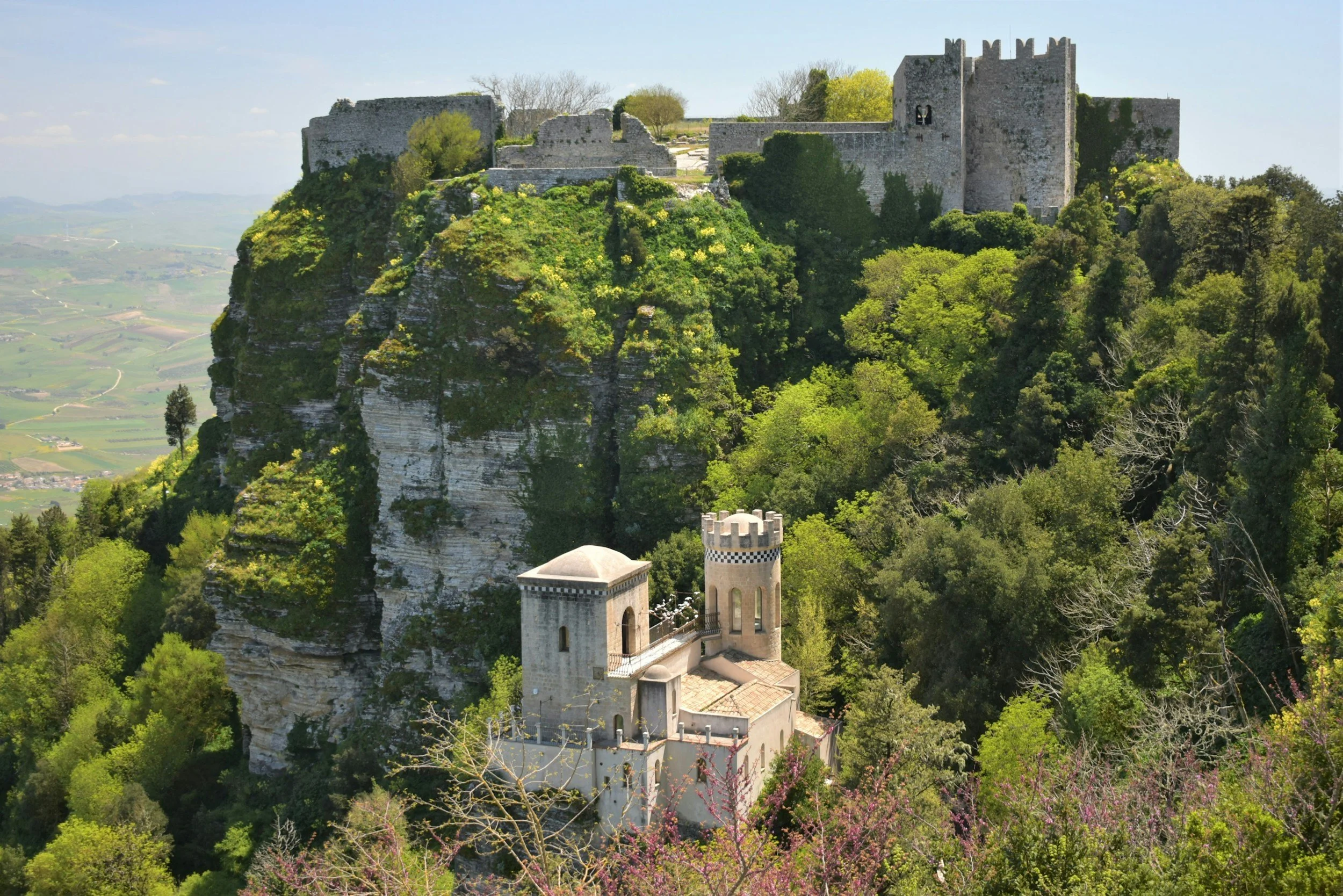
Erice sits high above the west coast of Sicily, about 750 metres above sea level on Mount Erice, directly overlooking the port city of Trapani and the Egadi Islands. The town is one of Sicily’s best-preserved medieval settlements, with stone streets, defensive walls, and churches that date back several centuries.
Most visitors reach Erice either by driving the winding mountain road from Trapani or by taking the Funivia di Erice cable car, which climbs from the edge of the city up to the hilltop in around ten minutes. The difference in atmosphere becomes noticeable almost immediately once you arrive. The air is cooler, the streets are quieter, and the views open wide across the coastline below.
The historic centre is compact and easy to explore on foot. Narrow stone streets weave between small squares, old monasteries, and simple houses built from pale local stone. Because the town sits on a plateau, several streets suddenly open toward viewpoints where you can see across Trapani’s salt flats, the surrounding countryside, and the Egadi Islands out in the Mediterranean.
One of the most recognisable landmarks is Castello di Venere, a Norman-era castle built on the ruins of an ancient temple dedicated to Venus. The castle stands on the edge of the cliff, surrounded by small gardens where visitors can walk along the walls and look out over the coastline.
Erice is also known across Sicily for its traditional pastries. Many travelers stop at Pasticceria Maria Grammatico, a historic bakery famous for its almond pastries and genovesi, a warm pastry filled with custard. Sitting at a small café table with coffee and pastries is part of the experience of visiting the town.
For travelers who like cooler mountain landscapes after time by the sea, the Dolomites slow travel guide shows another side of Italy entirely - alpine villages, dramatic peaks, and some of the most beautiful walking routes in Europe.
Unlike Sicily’s larger destinations, Erice doesn’t rely on big attractions. Most of the experience comes from simply walking through the streets, stopping at viewpoints, and enjoying the slower pace of a hilltop town that has changed very little over time.
And if you enjoy the kind of towns where markets are still a weekly ritual, you might enjoy these Italian summer market towns where locals still gather to shop, eat, and catch up with neighbours.
Wine lovers often find that quieter regions reveal the most character. A good example is Italy’s Prosecco Hills, where vineyards roll across steep hillsides and small villages sit between the vines.
The Alcantara Valley and the Alcantara Gorges
The Alcantara Valley sits on the northern side of Mount Etna, roughly 20–25 minutes inland from Taormina and Giardini Naxos on Sicily’s east coast. The valley follows the Alcantara River as it flows from Etna’s slopes toward the Ionian Sea, cutting through volcanic rock along the way.
The area is best known for the Alcantara Gorges (Gole dell’Alcantara), a narrow canyon formed when lava from Mount Etna flowed into the river thousands of years ago. As the lava cooled rapidly in the water, it created tall basalt columns and hexagonal rock formations that now form the vertical walls of the gorge.
Visitors can reach the gorge through Parco Fluviale dell’Alcantara, the main access point near the village of Motta Camastra. From here, steps lead down into the canyon where the river runs between the dark volcanic cliffs.
The water in the Alcantara River stays very cold year-round, even during summer, because it comes from mountain springs higher up around Mount Etna. Some visitors wade along the riverbed, while others join guided body-rafting or canyoning tours that explore deeper sections of the gorge.
Outside the canyon itself, the surrounding valley is known for its vineyards, citrus groves, and small farms, many of which benefit from the fertile volcanic soil around Etna. Rural roads through the valley also offer access to hiking areas and viewpoints looking back toward the volcano.
Because the Alcantara Valley sits slightly inland from Sicily’s busiest coastal resorts, it often feels quieter than places like Taormina. Many travelers visit for a few hours to explore the gorge before continuing toward Mount Etna or back to the coast.
Food markets are another way to understand everyday life in Italy. If you enjoy discovering local ingredients while traveling, these Italian food markets outside the busy summer season offer a very different atmosphere from peak-season tourism.
FAQ: Slow Travel in Sicily
Is Sicily safe for solo travelers?
Yes, especially in smaller towns and coastal villages. As always, take standard precautions (like avoiding empty streets at night in big cities), but overall Sicily is friendly and welcoming - especially if you’re traveling at a slower pace and staying in local guesthouses.
When is the best time to visit Sicily for fewer crowds?
Late April to mid-June and September to October are ideal. You’ll get warm weather, blooming landscapes or grape harvest vibes - and far fewer tourists than in peak summer.
Where can I go in Sicily to avoid tourist crowds?
Skip Taormina and Cefalù in summer. Instead, try:
Scicli or Modica for baroque beauty and fewer buses
Marzamemi for a seaside village feel
San Vito Lo Capo before July or after mid-September
Castelbuono for slow days in the Madonie Mountains
Favignana or Filicudi if you’re into island escapes
Do I need a car to explore Sicily?
If you’re sticking to big towns with train stations, no. But for hidden coves, hill villages, and olive farm stays… it’s worth renting a small car. Driving can be chaotic in cities, but the countryside is peaceful (and stunning).
Is Sicily good for digital nomads or working remotely?
Yes, but Wi-Fi can be patchy in rural areas. If you're working remotely, stay in places that mention high-speed internet or are used to hosting remote workers. Noto, Syracuse, and Palermo have co-working spots too.
Can I swim in Sicily in spring or autumn?
Yes! May and October can still offer swimmable days, especially in the south or on the smaller islands. The sea is clearest in shoulder season and beaches are much quieter.
What should I eat in Sicily besides pasta?
Arancini (fried rice balls - perfect for picnics)
Caponata (sweet-and-sour eggplant dish)
Cannoli (obviously)
Granita with brioche (ideal slow breakfast)
Local seafood dishes like spaghetti alle vongole or sarde a beccafico
Do I need to speak Italian or Sicilian?
No, but it helps. English is spoken in tourist areas, but in smaller villages, it’s polite (and appreciated) to know basics like grazie, buongiorno, and per favore. People are kind and will often help you anyway.
Are there slow travel experiences I should look for?
Yes… stay in agriturismos (farm stays), join a cooking class in someone’s home, visit a vineyard during harvest, or simply take a long lunch in a village square.