April is the month I'd choose for Italy's lake towns
Northern Italy’s lake region is famous for Lake Como and Lake Garda, but many travellers assume you need a car to explore the smaller towns. In reality, several beautiful Italian lake towns can be reached easily by train, making them perfect for a slow, car-free trip.
April on the northern Italian lakes is a practical month to travel if you prefer things running smoothly without the pressure of peak season. You get off a morning regional train from Milano Centrale in Stresa or Desenzano and you can walk straight into town. In Stresa, it’s about five minutes downhill from the station to the promenade. In Desenzano del Garda, you follow Via Marconi for roughly ten minutes and you’re at the old harbour. No transfers, no waiting around.
Orta San Giulio is different. You arrive at Orta-Miasino station, which sits uphill from the lake. The walk down into the old town takes around 25 minutes along a narrow road. With a light bag, it’s manageable. With heavier luggage, most people call a taxi for the short ride! Once you’re in the historic center, everything is within walking distance.
Daytime temperatures in April usually range between 14 and 20 degrees. Early mornings are cooler, especially near the water. If you’re out before 9:00 along the lake in Stresa or Desenzano, it can still be under 10 degrees. You’ll notice it while standing outside a café waiting for it to open. In Stresa, bars along Corso Italia start serving coffee early, and locals stop in before work. In Orta, cafés around Piazza Motta open slightly later, and the square remains quiet until the sun reaches it.
By late morning, the warmth builds. On Lake Maggiore and the southern side of Lake Garda, the sun heats the stone façades and promenades. Sitting near Desenzano’s harbour around midday feels comfortable without looking for shade. Lake Orta stays slightly cooler because the hills rise close around the town. The sun reaches the main square later, and the temperature drops sooner in the evening.
Evenings require an extra layer. Around 19:30 or 20:00 near the water, the temperature falls quickly once the sun drops behind the hills. In Orta, the slope above Sacro Monte blocks the light early. In Stresa and Verbania, a steady breeze crosses the lake after sunset. It’s not strong, but it’s enough that you won’t want to sit outside without a jacket.
Snow remains visible on higher peaks in the distance. From Lake Maggiore, you can see it toward the Swiss border. From Lake Garda, the northern mountains still hold white patches in April. At lake level, gardens are active. In Verbania, Villa Taranto’s spring flowers are already in bloom. The contrast between flowering beds and snow-covered ridges is noticeable, especially on clear days.
Ferry schedules are lighter at the beginning of the month. On Lake Orta, boats to Isola San Giulio run regularly but not constantly, with gaps of 20 to 30 minutes. From Stresa to the Borromean Islands, departures are spaced out through the day rather than running continuously. By mid-April, more crossings are added, particularly on weekends. It’s practical to check the timetable posted at the dock once you arrive instead of relying on assumptions.
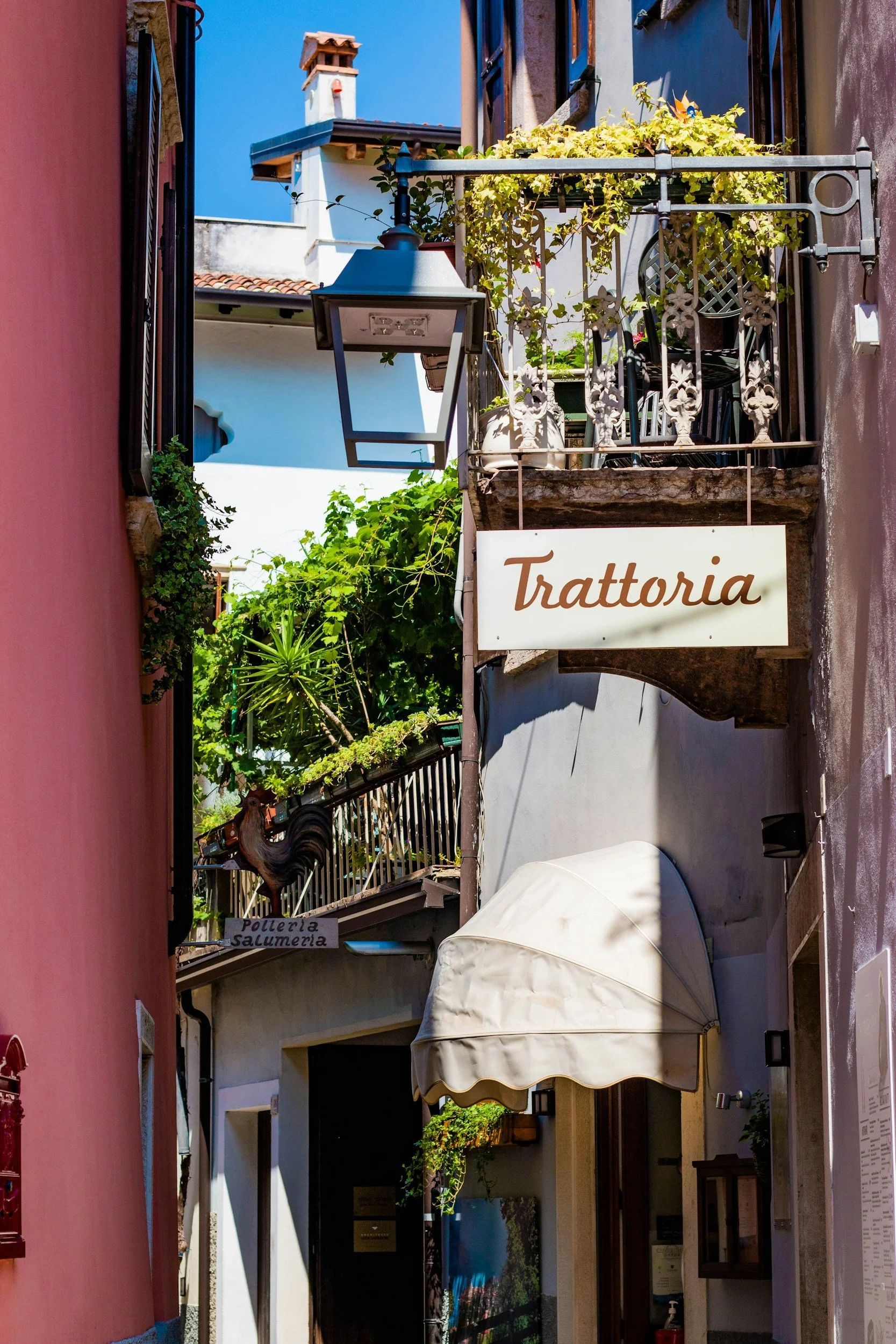
Towns operate normally in April. Bakeries open early. In Stresa, you can buy fresh bread in the morning and walk down to the lake within minutes. In Desenzano, supermarkets near the center are fully open year-round. Restaurants serve complete menus, though some larger lakeside terraces that depend on high summer visitors may still be closed in early April. Smaller trattorias and local cafés continue operating because they serve residents as well as visitors.
Accommodation is easier to secure than in peak season. Centrally located rooms in Stresa, Verbania, or Desenzano are available without booking months ahead. Apartments near the lake remain accessible, and prices reflect shoulder season rather than summer demand.
Easter briefly increases activity. Trains heading north from Milan fill up, and promenades in Stresa or Desenzano see more local visitors in the afternoons. Outside of the holiday period, weekdays are steady. Trains run on time. Ferry queues are short. You can walk through historic centers without adjusting your pace around large groups. April remains manageable and predictable across the lakes.
If you’re deciding between lake areas, this Lake Orta in spring gives you a good sense of how quiet it can actually feel that time of year.
Arriving by train – what it’s actually like stepping off in these towns
Arriving by train on the lakes is straightforward, but each town feels slightly different the moment you step off the platform. The main rail lines from Milan split north toward Switzerland and east toward Venice, and the lake towns sit along those routes rather than at the end of remote branches. You’re not arriving somewhere isolated. You’re stepping into towns that are used to trains!
The stations themselves are practical. Don’t expect dramatic views the second the doors open. In Stresa, you step out onto a quiet street lined with low apartment buildings and a couple of small hotels. You cross Corso Italia, roll your suitcase downhill for about five minutes, and the lake suddenly appears at the end of the street. It’s simple and direct. In Desenzano del Garda, the station sits slightly above town. You walk down Via Marconi for around ten minutes, passing residential blocks and a few cafés, and then the old harbour opens up in front of you. It feels connected rather than separate.
Orta San Giulio takes a bit more planning. The train stops at Orta-Miasino, which sits uphill from the lake. From there it’s about two kilometres down to the old town. The road is narrow and curves steadily downhill. With a small bag, it’s manageable and takes around 25 minutes. With heavier luggage, most people call a taxi, which is a short five-minute ride. Once you’re in the historic center, you won’t need transport again.
Verbania works differently again. You get off at Verbania-Fondotoce station, which is set back from the lake. From there, local buses run toward Pallanza and Intra roughly every 30 minutes. The bus ride takes about 15 minutes, depending on traffic. It’s not complicated, but you do need to factor in that extra connection.
Cobblestones are common in the historic parts of these towns. In Orta San Giulio, the streets around Piazza Motta are uneven and narrow. In Stresa, some of the side streets between the station and the lake are smoother, but the older lanes closer to the water are still stone. Small suitcase wheels struggle here… If you’re staying in the center, it helps to pack lighter or choose accommodation close to where you arrive.
Once you’ve settled in, most of these towns are easy to manage on foot. The lakefront promenades in Stresa and Desenzano are flat and wide. Orta has gentle slopes away from the water, and Verbania’s Pallanza area stretches along the lake with minimal incline. It’s only when you book something uphill or outside the historic core that walking becomes more demanding.
Ferry docks are usually right along the main promenade. In Stresa, the dock sits about five minutes from Piazza Cadorna and close to the row of cafés facing the lake. You buy tickets at the kiosk next to the water and wait on a simple floating platform. In Desenzano, the ferry departure point is near the old harbour, roughly ten minutes from the train station if you walk directly down. If you plan to move between towns by boat, staying within a short walk of the dock makes everything easier.
Food shopping is easy. In Stresa, there’s a Conad within walking distance of the center. In Desenzano, larger supermarkets sit just outside the historic area but still within 10–15 minutes on foot. Smaller Carrefour Express shops appear in central streets. Bakeries open early, often by 7:00, and close for a few hours in the afternoon before reopening briefly. If you’re staying in an apartment, you can buy bread, fruit, pasta, and basics without needing a car. The key is choosing accommodation close to the center rather than on the hills above town.
Stresa (Lake Maggiore) – direct train from Milan and flat lakeside access
If you’re coming from Milan and want a lake town where everything feels simple the moment you arrive, Stresa is one of the easiest places to start. You leave Milano Centrale on a regional train heading toward Domodossola, sit for just under an hour, and the train pulls into a small station with a single main platform. Nothing dramatic happens when the doors open. You step outside onto Piazza Marconi, usually with a few taxis waiting and people walking downhill with weekend bags.
From the station it’s about a five-minute walk to the lake. You follow Corso Italia downhill, passing a small tabacchi shop, a bakery that already smells like fresh bread in the morning, and a couple of quiet apartment buildings with balconies full of plants. About halfway down the street you start seeing cafés opening their doors. If you arrive early enough, locals are standing at the counter for espresso before heading to work. By the time you reach the bottom of the street, Lake Maggiore suddenly appears between the buildings and the promenade stretches along the water.
Dragging luggage here isn’t difficult. The slope is noticeable but short, and most hotels sit somewhere between the station and the lake anyway. Places like Hotel La Palma or the small guesthouses along Via Duchessa di Genova are within a few minutes’ walk of the promenade. Unless you deliberately choose something higher up the hill, you won’t spend long pulling a suitcase over pavement.
Once you reach the water, the town becomes very easy to move around. The promenade runs flat along the lake and passes a row of old Belle Époque hotels, small gardens, and benches facing the islands. You’ll see locals walking dogs, people sitting with coffee from nearby cafés, and ferry boats moving slowly across the water toward the Borromean Islands.
The ferry dock sits close to Piazza Marconi and is impossible to miss. Boats leave throughout the day for Isola Bella, Isola dei Pescatori, and nearby towns like Baveno and Verbania-Pallanza. In April the schedule isn’t quite as packed as summer, but ferries still run steadily. Tickets are sold at the small booth beside the dock. People usually gather along the railings watching the boats arrive before boarding.
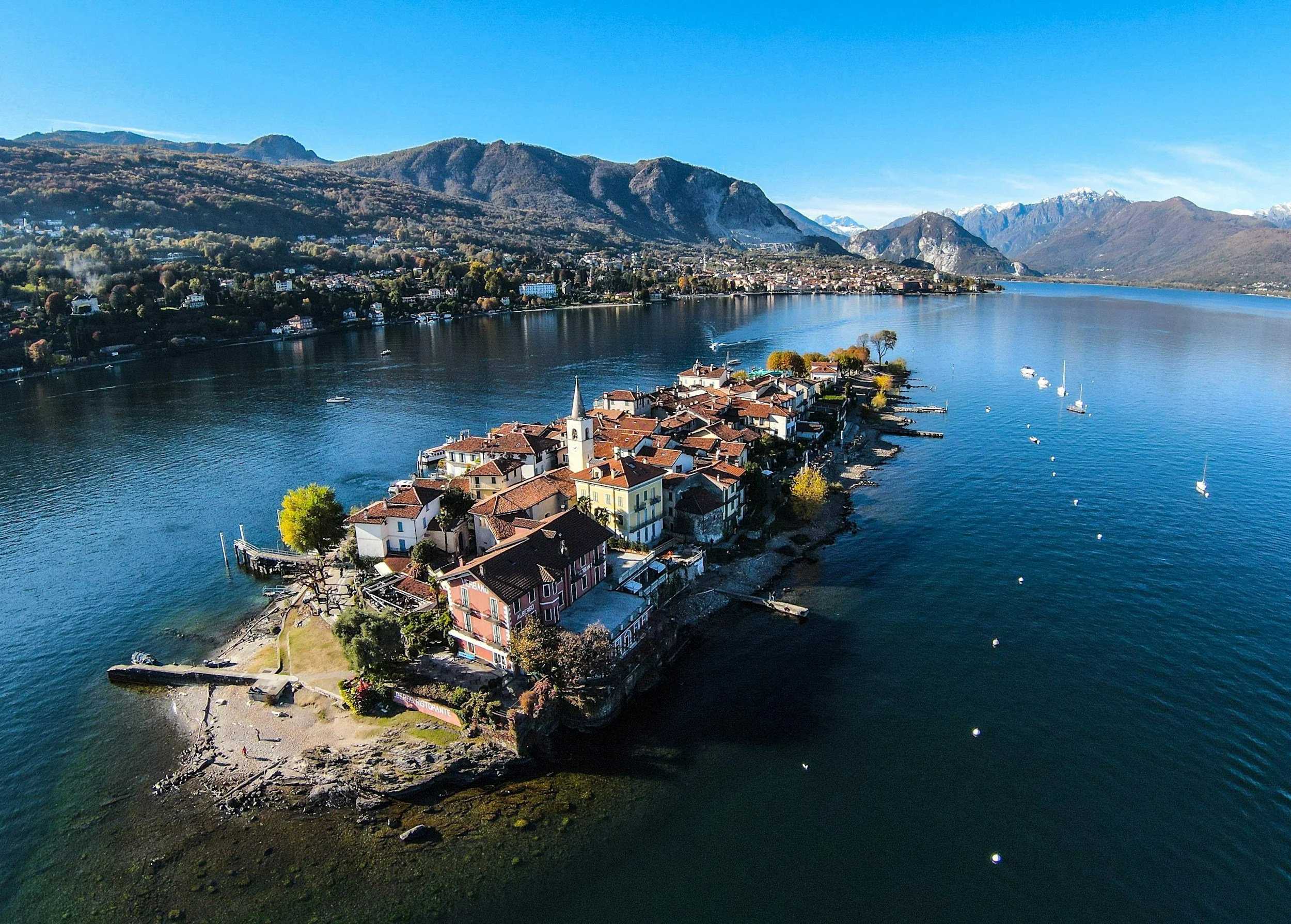
The Borromean Islands are the reason many people stay in Stresa. Isola Bella is the one everyone recognizes because of the palace and the layered gardens that climb up the island. Isola dei Pescatori feels much smaller and quieter, with narrow stone lanes, little restaurants facing the water, and fishing boats tied along the harbour edge. Ferries run often enough that you can go out to the islands for a couple of hours and come back to town whenever you want lunch.
Back in Stresa, daily life revolves around the lakeside streets and Piazza Cadorna. In the morning, cafés along Corso Italia slowly fill up. People stop by places like Pasticceria Marcolini for cappuccino and pastries before walking down to the lake. Around midday, restaurants start opening for lunch. Many serve simple lake fish, pasta, and salads, and tables along the promenade fill gradually between about 12:30 and 14:30.
April is relaxed enough that you can usually walk into restaurants without planning ahead. On weekdays, most places still have empty tables even around lunch. Friday and Saturday evenings feel a little busier as people arrive from Milan for the weekend, but the town never feels overwhelmed.
Stresa works particularly well if you don’t want a car. The train station, ferry dock, cafés, grocery stores, and restaurants are all within a short walk of each other. A Conad supermarket sits about ten minutes from the lake if you’re staying in an apartment and want to cook. Bakeries open early, pharmacies are scattered through the center, and most errands take just a few minutes on foot.
For exploring the lake, ferries take the place of driving. You can leave Stresa in the morning, cross to Baveno for a walk along another waterfront, or visit Verbania and its gardens, then return in the afternoon. At the end of the day you simply walk back through the same streets toward your hotel. Everything stays close together, which makes the whole town easy to settle into after you arrive.
Orta San Giulio (Lake Orta) – quieter than Maggiore and manageable by rail
Orta San Giulio feels completely different from the towns on Lake Maggiore. The lake is smaller, the town is smaller, and the first thing you notice when you arrive is how quiet everything is. There are no big promenades or long rows of hotels. Instead, there’s one compact historic center sitting right at the water, with narrow streets that lead directly to Piazza Motta.
Getting there from Milan takes a little more effort than Stresa, but it’s still simple. You leave Milano Centrale on a regional train heading toward Novara, which takes about forty minutes. At Novara you change platforms and catch the train that continues north toward Domodossola. About thirty minutes later the train stops at Orta-Miasino.
When you step out of the station you won’t see the lake yet. The station sits higher up in a quiet residential area with a few houses, gardens, and a small bar across the road where locals stop for coffee. From here, the old town of Orta San Giulio is about two kilometres downhill.
Many people just walk it. The road winds down past stone walls, olive trees, and small villas with iron gates. It takes around twenty-five minutes and the descent is steady but not steep. If you’re carrying a backpack or small suitcase, the walk is actually quite pleasant. With larger luggage, most people call a taxi. The ride takes five minutes and drops you right at the entrance to the historic center. Taxis aren’t always waiting at the station, so it’s normal to call one or wait a few minutes after a train arrives.
April can feel a bit in-between depending on the region, so checking Italian food seasons helps you know what’s actually available while you’re there.
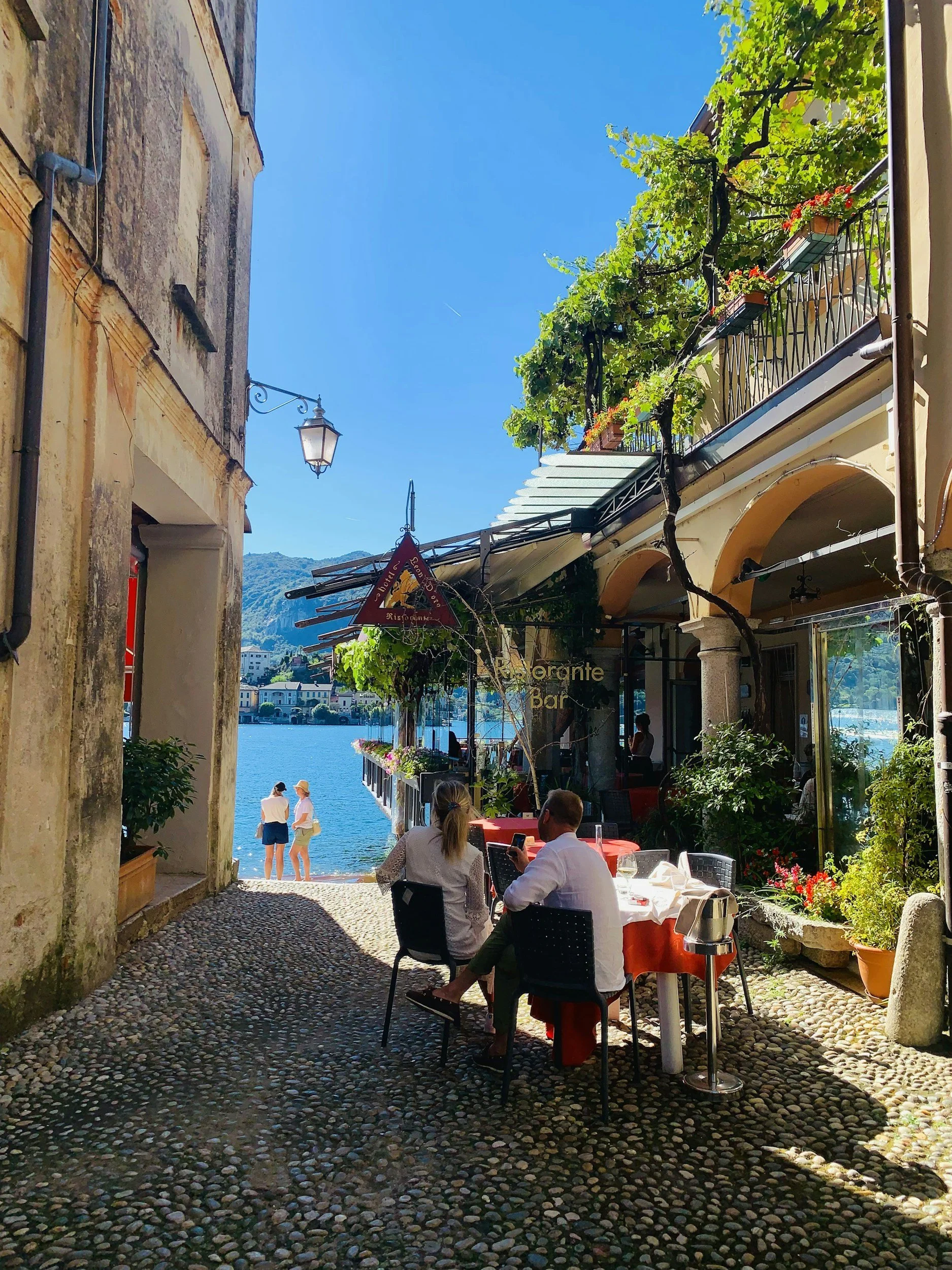
The moment you reach the town, everything changes. Cars stop at the edge of the historic center and the streets become narrow stone lanes. You walk through a short passageway and suddenly Piazza Motta opens in front of you. The square sits directly on the lake, with cafés on one side and wooden boats tied along the edge of the water.
Most hotels and small guesthouses are tucked into the streets just behind the square. Places like Locanda di Orta or Hotel Leon d’Oro sit only a minute or two from the water. Staying inside the old town makes everything easier because you’re already where the restaurants, cafés, and boat dock are located.
From the small dock beside Piazza Motta, boats cross regularly to Isola San Giulio. You can see the island clearly from the square - a small cluster of stone buildings rising out of the water. Boats leave every 20–30 minutes in April depending on the day. The ride takes about five minutes, barely long enough to sit down before you’re stepping onto the island.
Isola San Giulio is tiny but worth the short crossing. A narrow stone path circles the island, passing old houses with small gardens, quiet courtyards, and the Basilica di San Giulio near the center. The full walk around the island takes less than an hour. Most people wander slowly, stop for photos near the water, and then catch the next boat back to town.
Back in Orta, the day moves slowly. Cafés around Piazza Motta open around 8:00 in the morning. Tables fill gradually with people drinking cappuccino and eating cornetti while looking out over the lake. A place like Caffè Olina is popular for breakfast and tends to have a few outdoor tables already occupied before mid-morning.
Lunch starts around 12:30. Small restaurants sit just behind the square along streets like Via Olina and Via Caire Albertoletti. Many serve simple dishes (pasta, risotto, lake fish) and most close again mid-afternoon before reopening for dinner.
April brings visitors, especially on weekends, but the town rarely feels crowded. On weekdays you can walk through the narrow streets and hear footsteps on the stone. Delivery vans pass slowly through the square in the morning, and by evening the town becomes quiet again once the last boats return from the island.
The streets rise gently away from the lake, especially if you walk toward Sacro Monte di Orta above the town. If you prefer staying on flatter ground, it helps to choose accommodation close to Piazza Motta. Everything important sits within a few minutes there.
Groceries are simple but limited inside the historic center. There’s a small shop where you can buy bread, cheese, fruit, and basic supplies. Larger supermarkets sit up the hill outside town along the main road. Walking there takes about ten or fifteen minutes uphill, and most people pick things up during the afternoon and carry them back down.
Orta is the kind of place where you naturally slow down without trying. You might walk to the island in the morning, have lunch in the square, wander through the streets for a while, and sit by the water before dinner. There’s not much pressure to move around because the town itself is the place you end up spending most of your time.
Desenzano del Garda (Lake Garda) – train station directly on the Milan-Venice line
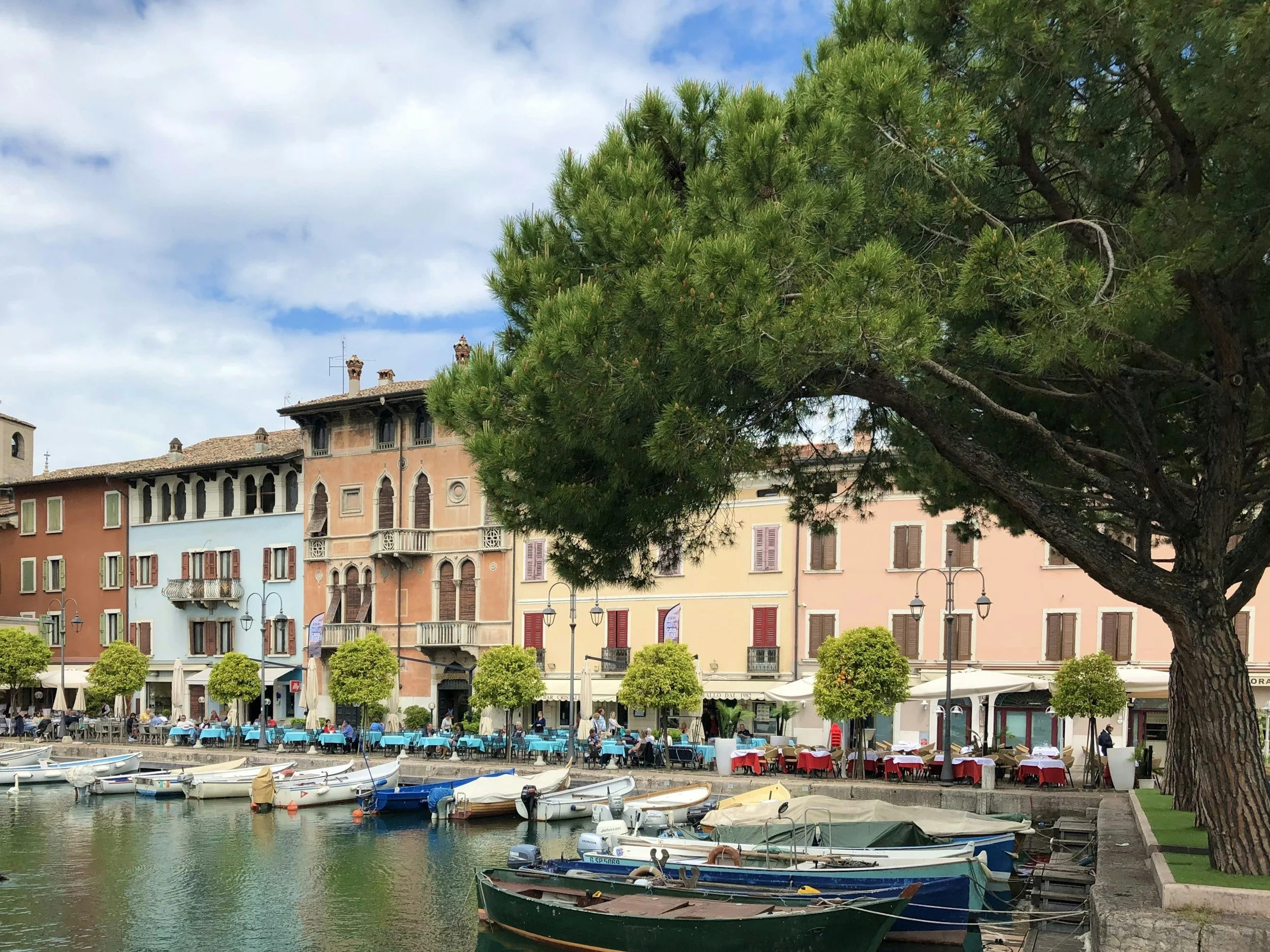
Desenzano del Garda is one of the easiest towns on Lake Garda to reach by train. It sits directly on the Milan–Venice railway line, so trains stop here constantly throughout the day. If you leave Milano Centrale on a high-speed Frecciarossa or Italo train, the journey takes about fifty minutes. Regional trains take a little longer but run more frequently, so you usually have several options each hour.
The station sits slightly above the town rather than right on the lake. When you walk out of the station building you’ll see a roundabout, a few cafés, and a taxi stand. From there you simply follow Via Marconi downhill toward the water. The walk takes around ten minutes and is straightforward even with luggage. The road is wide, the pavement smooth, and you pass a mix of residential buildings and small shops along the way.
As you continue downhill the buildings start opening toward the lake. Eventually the street ends near the old harbour, Porto Vecchio, where small fishing boats and cafés line the water. This part of town feels lively most of the day. People sit at outdoor tables, ferries arrive and depart from the nearby dock, and locals walk along the promenade.
Most hotels and apartments are located between the station and the harbour or just behind the lakefront streets. Places like Hotel Vittorio or small guesthouses around Via Porto Vecchio are only a few minutes from the water. Because everything sits fairly close together, you rarely spend much time walking between your accommodation, restaurants, and the ferry dock.
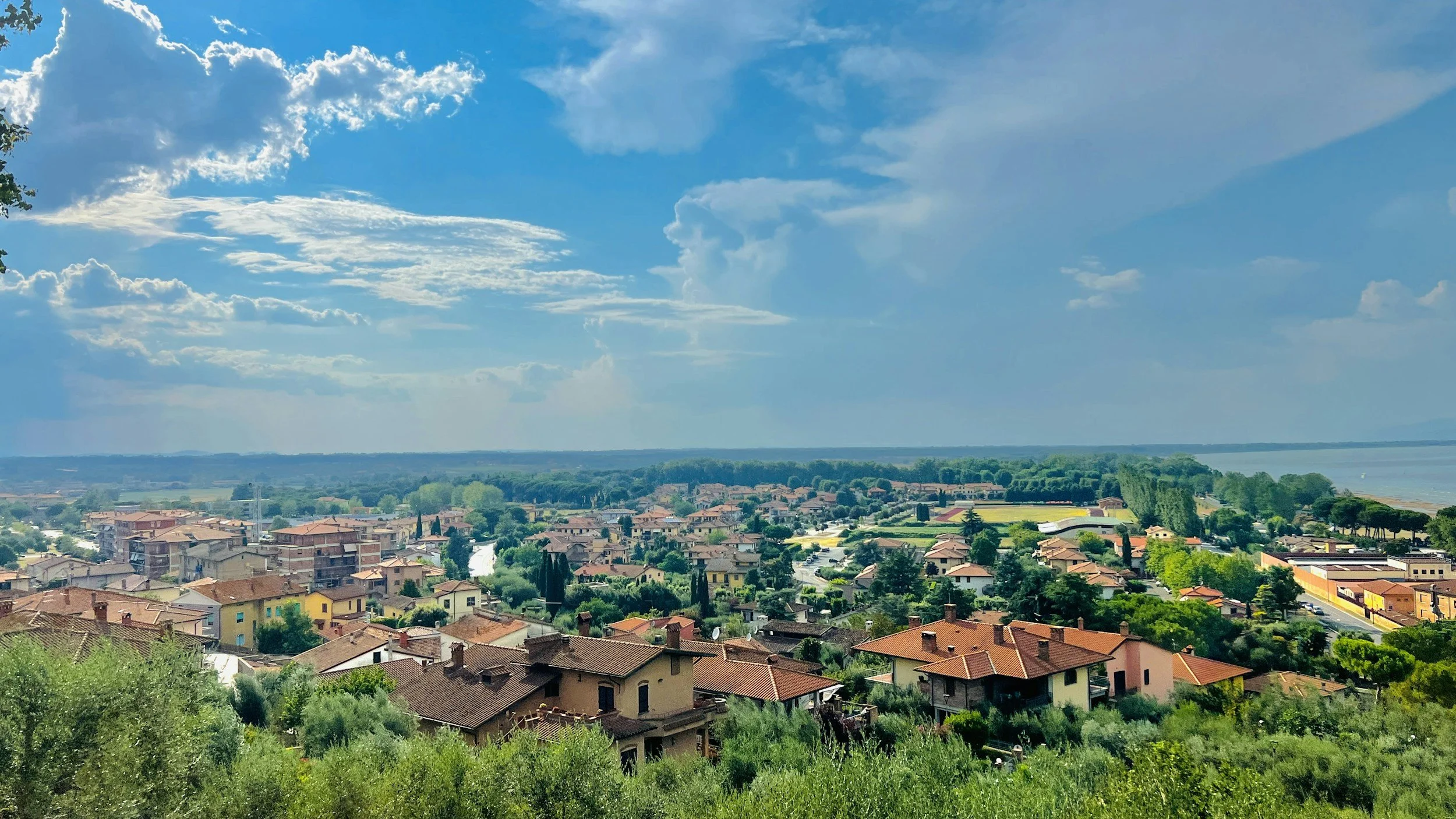
April weather on the southern side of Lake Garda is often slightly warmer than around the other lakes. By mid-month, daytime temperatures frequently reach 18 or 20 degrees, especially in the early afternoon. Sitting outside along the harbour with a coffee or glass of wine feels comfortable without needing shade yet. The promenade that runs along the lake is wide and flat, so it’s easy to walk slowly along the water or find a bench facing the lake.
From Desenzano’s ferry dock you can reach several other towns on Lake Garda. Boats run to Sirmione, Salò, and occasionally further north depending on the timetable. Early April schedules are lighter, especially during the week, but ferries still run consistently through the day. The dock sits right beside the harbour, about ten minutes from the train station if you walk directly down Via Marconi.
Behind the harbour, the old town climbs slightly uphill through narrow streets and small squares. Streets like Via Castello and Via Sant’Angela Merici lead up toward Desenzano Castle, which sits on a hill overlooking the lake. Along the way you pass bakeries, wine bars, and small shops selling local olive oil and wine from the surrounding region.
Cafés start opening early in the morning, especially around Piazza Malvezzi near the harbour. People stop for espresso and pastries before work, and by mid-morning the outdoor tables begin filling with visitors arriving by train or ferry. Because Desenzano has a train station on a major line, the town stays active throughout the year rather than only during summer.
Groceries and everyday services are easy to find on foot. A Conad supermarket sits just outside the historic center, and smaller grocery stores and bakeries are scattered along streets behind the harbour. Pharmacies, wine shops, and gelato places are all within a few minutes’ walk of the main square.
If you’re staying without a car, Desenzano works well as a base. Ferries make it easy to visit nearby towns across the lake, and trains connect quickly to other places along the southern shore. Peschiera del Garda, for example, is only about fifteen minutes away by regional train. When you arrive there, the station sits just a five-minute walk from the lake and the entrance to the old fortified town.
Because the town spreads gently from the station down to the water, you rarely need buses or taxis once you arrive. Most days you simply walk between the harbour, the cafés, and the promenade. Even outside the main summer season, Desenzano stays busy enough that restaurants and shops remain open, which makes it easy to settle in for a few days without worrying about logistics.
Verbania (Lake Maggiore) – a quieter lake town locals actually live in
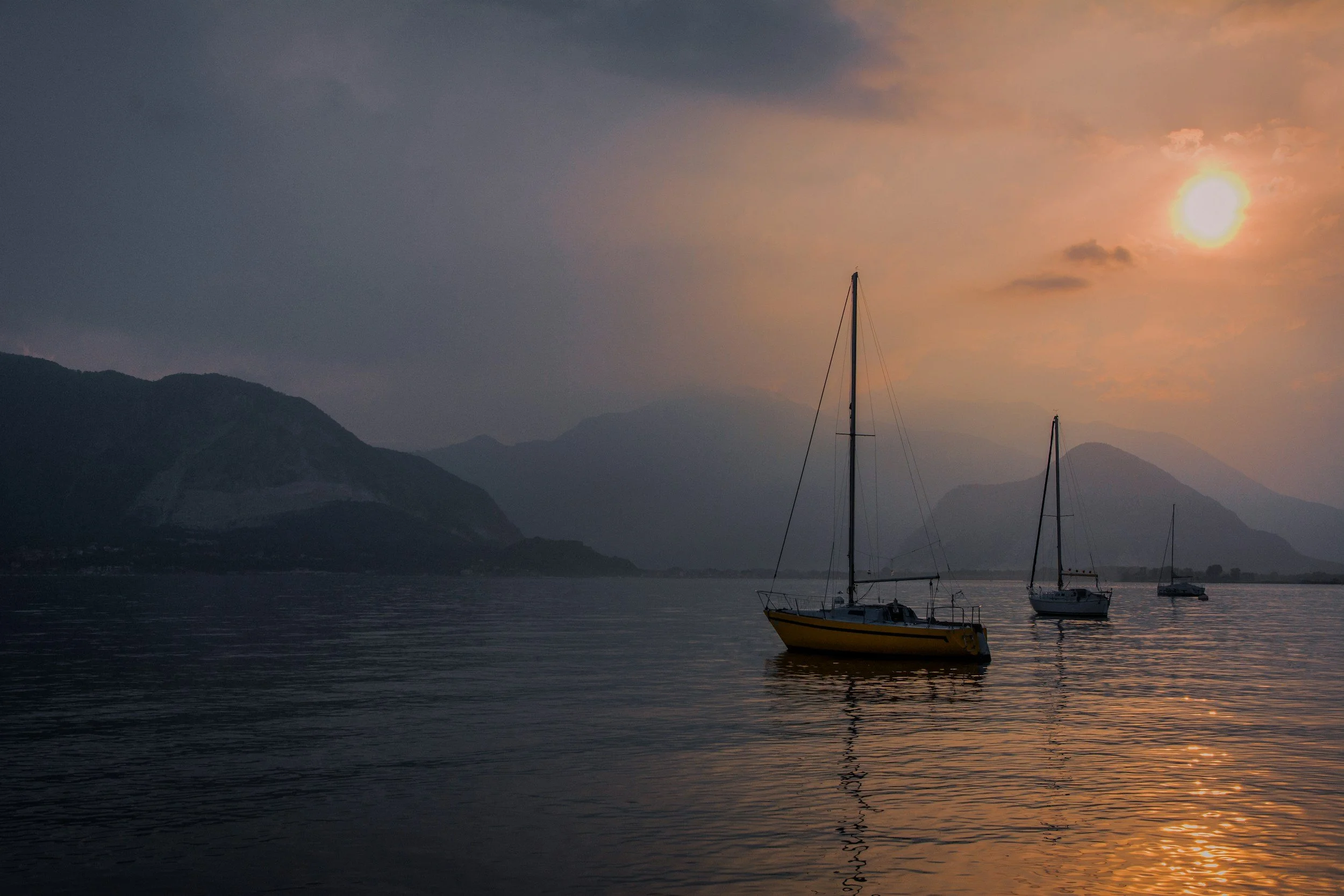
If Stresa feels like the polished side of Lake Maggiore, Verbania feels more like a normal town that happens to sit on the lake. You still have cafés, ferries, and a long waterfront, but there are fewer grand hotels and far more apartment buildings where people actually live year-round. Laundry hangs from balconies, grocery bags appear in bicycle baskets, and the morning routine is mostly locals walking to work or stopping for coffee.
Getting here by train takes one extra step compared with Stresa. You stay on the same line from Milan, heading toward Domodossola, but you get off at Verbania-Fondotoce instead. The station sits a little inland, surrounded by quiet residential streets and small industrial buildings rather than lake views.
When the train arrives, people usually head straight for the bus stop outside the station. Local buses run toward the lake roughly every thirty minutes. The ride takes about fifteen minutes and passes through residential areas, small gardens, and a few roadside cafés before the road opens up and Lake Maggiore suddenly appears between the buildings.
Most visitors get off in Pallanza, the part of Verbania that sits directly along the water. From the bus stop it’s only a short walk to the promenade. The lake is wide here, and the mountains on the opposite side rise straight up from the shoreline. The promenade runs along the water past trees, benches, and a row of cafés with outdoor tables.
The town feels relaxed in a very everyday way. Early in the morning you’ll see locals walking dogs along the lake or sitting outside bars with espresso. Cafés like Bar Imbarcadero or small neighbourhood spots near Piazza Garibaldi start filling up gradually as the morning goes on.
One of the best reasons to come to Verbania in spring is Villa Taranto. The botanical gardens sit about twenty minutes on foot from the ferry dock in Pallanza. The walk follows the lake past old villas with large gardens and stone gates. By April the gardens reopen and the paths are full of colour - tulips, camellias, magnolias, and rows of carefully planted flower beds overlooking the lake.
The lakefront itself is flat and easy to walk. From the ferry dock you can stroll along the promenade toward the gardens or back toward the small harbour without dealing with hills. Streets start climbing gently only once you move away from the water and into the residential parts of town.
Another part of Verbania, Intra, sits a short distance further along the lake. It feels slightly busier and more practical. This is where you’ll find larger grocery stores, bakeries, and everyday shops. The weekly market takes place here on certain mornings, filling Piazza Mercato with stalls selling fruit, cheese, bread, and clothing.
Because Verbania has a larger local population than towns like Stresa, cafés and restaurants operate year-round. Bars open early for coffee, bakeries sell fresh bread in the morning, and small restaurants begin lunch service around 12:30.
Ferries leave from the dock in Pallanza and connect the town with other places around Lake Maggiore. Boats cross regularly to Stresa and sometimes further along the lake depending on the schedule. In April the timetable is lighter than summer but still reliable enough for day trips.
Getting here takes a bit more coordination because of the train-and-bus combination, but once you arrive the town is easy to navigate. Most things happen along the lakefront, and daily errands rarely require more than a short walk.
If you want a base on Lake Maggiore that feels less polished and more like a real town, Verbania works well. You still have ferries, cafés, and views across the lake, but the atmosphere is quieter and more local than the neighbouring resort towns.
What mornings actually look like in these lake towns
Mornings around the northern Italian lakes follow a quiet routine that becomes easy to fall into after a day or two. Bakeries open early, café doors are already unlocked by the time the first ferries start moving, and the lakefront promenades slowly fill with locals walking dogs or stopping for a quick coffee before work.
In Stresa, mornings usually begin along Corso Italia, the street that runs between the train station and the waterfront. Around 7:30 or 8:00, cafés like Bar Torino and Pasticceria Marcolini are already serving espresso and warm pastries. Locals stand at the counter for a quick coffee, while visitors drift toward the promenade. The lake sits quiet in the early light, and the first ferry staff start preparing boats at the dock near Piazza Cadorna.
In Orta San Giulio, the day starts a little later. The stone streets are almost empty before eight. Walking down Via Olina, the narrow street that leads into Piazza Motta, you’ll usually see restaurant owners opening shutters and setting out tables. By the time cafés like Caffè Olina begin serving breakfast, the square slowly fills with people ordering cappuccino and pastries while looking across the water toward Isola San Giulio.
Desenzano del Garda feels more active earlier in the morning because it’s a larger town. Around Piazza Malvezzi and the old harbour, cafés open early for commuters and local residents. Pasticceria Garibaldi, one of the well-known bakeries in town, often has people stopping in for coffee and fresh pastries before heading to work. Walking along the harbour road, you’ll see fishermen preparing small boats and shop owners opening their doors for the day.
Towns like Desenzano have that same relaxed rhythm you find in other Italian coastal towns, like the small Ligurian town described in this slow travel guide to Levanto, where mornings also begin slowly with coffee, bakeries, and walks along the water.
In Verbania, mornings tend to start along the waterfront in Pallanza. The promenade near Piazza Garibaldi fills slowly with people taking a walk beside the lake. Small cafés along the water open their doors and place chairs outside facing the lake. The atmosphere stays calm, with locals reading the newspaper over coffee or walking toward the ferry dock.
By mid-morning, the towns begin to feel more active as visitors start arriving by train or ferry. But early in the day, before the streets fully wake up, the lake towns still feel calm and very local.
Which lake town works best in April – terrain, trains, and lifestyle
When you start comparing these lake towns in April, the differences mostly come down to terrain and how much moving around you want to do during the day. The lakes themselves aren’t far apart geographically, but daily life feels very different once you’re actually walking through them.
Lake Maggiore is generally the easiest to navigate on foot. The promenades in towns like Stresa and Verbania Pallanza are long, flat, and built for walking along the water. In Stresa you can stroll from the ferry dock past the lakeside gardens and the row of old hotels without dealing with hills. Verbania has a similar setup along the Pallanza waterfront, where the promenade stretches past cafés, small parks, and benches facing the lake.
Logistically, Stresa tends to be the simplest place to arrive. The train stops directly in town, and within five minutes you’re already at the lake. Ferries leave regularly from the dock near Piazza Marconi and connect easily to the Borromean Islands and nearby towns. Verbania, on the other hand, requires the extra bus from Verbania-Fondotoce station. It’s not complicated, but it adds one extra step when you arrive.
Lake Orta works differently again. The town of Orta San Giulio is smaller and more contained than anywhere on Lake Maggiore. Once you walk down from Orta-Miasino station and reach Piazza Motta, the whole town fits within a short network of stone streets around the lake. Distances are short, but transport connections are limited. You’re less likely to move between towns during the day and more likely to stay in the same place.
Lake Garda, especially on the southern side, feels more connected to the rail network. Desenzano del Garda and Peschiera del Garda both sit directly on the Milan–Venice railway line. Trains stop constantly, including high-speed services, which makes arriving and leaving very easy. The terrain is flatter than many parts of northern Lake Garda, and both towns are simple to walk once you reach the water.
If you enjoy discovering smaller towns like these, you might also like this collection of peaceful Italian towns that work well for a relaxed weekend with friends, many of which are just as easy to explore on foot.
Further north on Lake Garda, towns become steeper and more spread out along the mountains. Places like Limone or Malcesine are beautiful but require buses or ferries to reach, and streets climb quickly away from the lake. If you’re travelling without a car in April, the southern towns tend to be simpler bases.
Weather also varies slightly between the lakes. April in Lombardy and Piedmont, where Lake Maggiore and Lake Orta sit, often brings short rain showers rather than full rainy days. You’ll often see a mix of clouds and sun moving across the lake during the afternoon. Lake Garda, particularly the southern end around Desenzano, tends to stay a little drier, though wind across the lake can pick up quickly in the afternoon.
If you prefer arriving by train and immediately walking into town, Stresa and Desenzano are the most straightforward options. Everything sits close together and ferries handle longer distances across the lake.
If you don’t mind a short taxi ride or bus connection and prefer a place where the whole town fits within a few streets, Orta San Giulio is a good choice. Once you’re there, you mostly stay put and explore on foot rather than moving between multiple destinations.
Other Northern Italian lake towns you can reach by train
A few smaller lake towns in northern Italy also work surprisingly well without a car. They aren’t always mentioned in typical lake itineraries, but if you’re comfortable using trains and the occasional bus, they can be very easy places to settle into for a few days.
Arona, on the southern end of Lake Maggiore, is one of the simplest. Regional trains from Milano Centrale reach Arona in just over an hour, and the station sits very close to the town center. When you step out of the station you’re already within walking distance of the lake. A ten-minute walk down Corso Cavour brings you to the waterfront promenade where cafés and small restaurants face the water.
Arona feels smaller and more local than Stresa. Instead of grand lakeside hotels, you’ll see apartment buildings, small bakeries, and neighbourhood bars where people stop for coffee in the morning. The promenade stretches along the lake with benches and trees, and the view across the water reaches toward the hills on the opposite shore. From here you can also walk up toward the Colossus of San Carlo Borromeo, a huge statue that overlooks the lake from the hillside above town.
Further east, Peschiera del Garda sits on the southern edge of Lake Garda and is another town that works well without a car. Trains from Milan and Venice stop here frequently, and the station sits only about five minutes from the entrance to the historic center.
Walking from the station, you cross a small bridge and enter a fortified town surrounded by thick stone walls and canals. Inside the walls the streets form a compact network of cafés, gelato shops, and small restaurants. Boats pass through the canals, and the lake itself is just a few minutes further along the waterfront path. Ferries from Peschiera connect to towns like Sirmione and Desenzano, making it easy to explore the southern part of Lake Garda without driving.
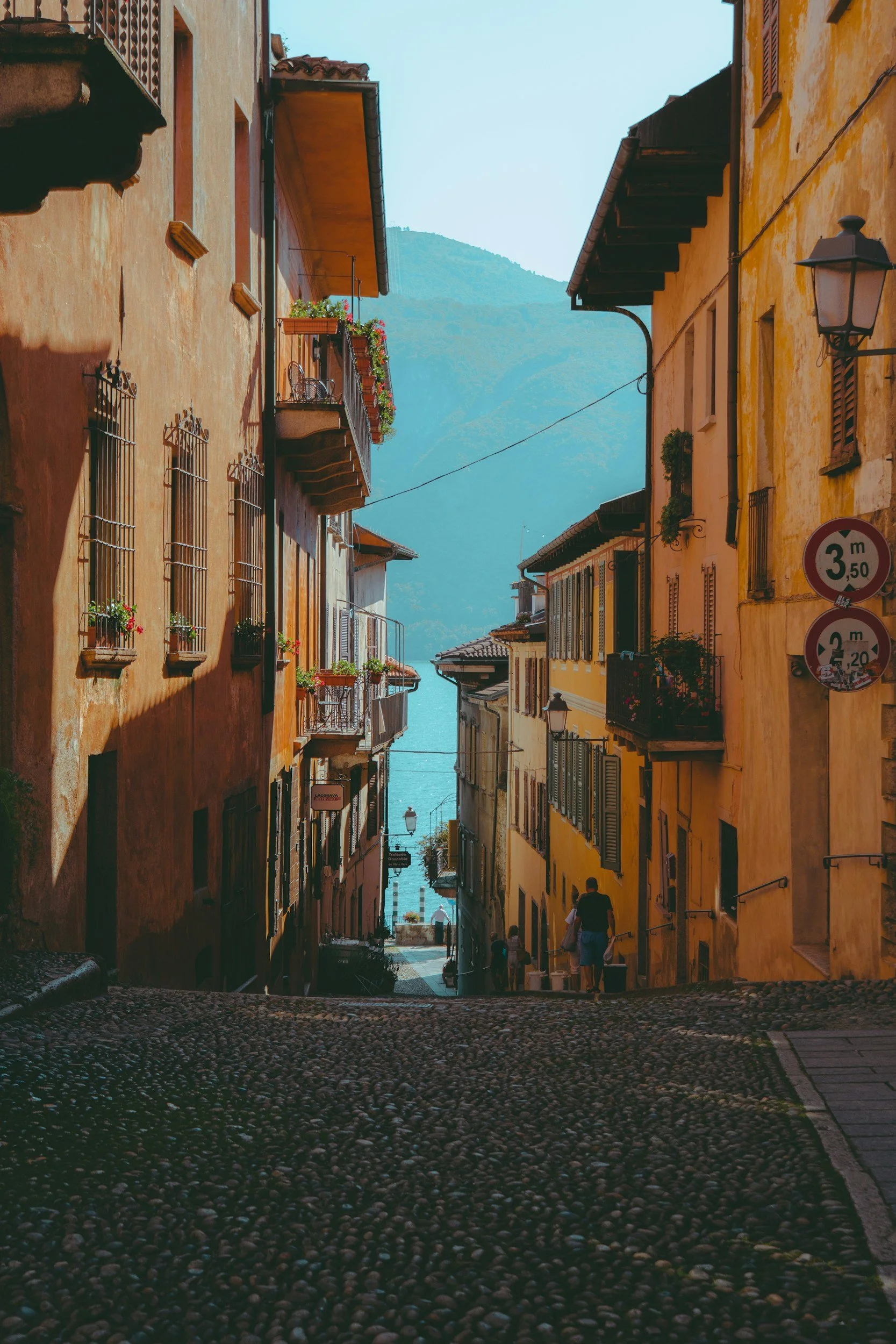
Cannobio, further north on Lake Maggiore, requires a little more coordination but so worth it!. There’s no train station directly in town, so most people arrive by train to either Verbania or Locarno and continue by bus along the lake. The bus ride follows the shoreline with views of small villages and steep hillsides dropping toward the water.
Once you arrive, Cannobio feels compact and relaxed. The historic center sits directly beside the lake with a small harbour and a long waterfront lined with pastel-coloured buildings. Restaurants and cafés face the water, and narrow streets lead back toward quiet residential areas. In April the town remains calm, with enough cafés and restaurants open to feel comfortable without the heavy summer crowds.
Another smaller lake worth mentioning is Lake Iseo, which sits between Lake Garda and Lake Como. The town of Iseo itself is easy to reach by regional train from Brescia. The station is about a ten-minute walk from the lakefront and the small harbour where ferries depart.
From here boats cross to Monte Isola, the large island sitting in the middle of the lake. The ferry ride takes about fifteen minutes. In April the schedule is slightly reduced compared with summer, but crossings still run regularly throughout the day. Monte Isola is known for its quiet villages and narrow roads where cars are limited, making it a peaceful place to explore on foot or by bicycle.
Each of these towns works without a car if you stay somewhere central. The key is choosing accommodation within walking distance of the lakefront and transport connections. Once you arrive, you can walk everywhere, with trains and ferries filling in the longer distances between towns.
How to reach the northern Italian lakes from Milan by train
Most people start their trip at Milano Centrale, the main train station in Milan. It’s large, busy, and a little chaotic the first time you walk through it, but once you’re on the train the journey to the lakes becomes very simple. Several of the main railway lines leaving Milan pass right by the lakes, so you’re not dealing with remote branch routes or complicated transfers.
For Lake Maggiore, you just take a regional train from Milano Centrale heading toward Domodossola. Trains usually leave about once an hour. The ride to Stresa takes just under one hour. When the train arrives, the station is small and quiet compared to Milan. From there you walk downhill along Corso Italia for about five minutes and suddenly the lake is in front of you.
If you stay on the same train for another stop or two, you’ll reach Verbania-Fondotoce. The station sits slightly inland, so most people take a local bus from there toward Pallanza or Intra, the parts of Verbania that sit directly on the lake. The bus ride takes around fifteen minutes and stops near the waterfront.
Getting to Lake Orta involves one small change. From Milano Centrale you take a train to Novara, which takes about forty minutes. In Novara you simply switch to another train heading toward Domodossola. After roughly half an hour the train stops at Orta-Miasino, the station above the lake. From there you can either walk downhill into Orta San Giulio (about twenty-five minutes) or take a short taxi ride.
For Lake Garda, things are even easier. The lake sits along the Milan–Venice railway line, which means trains pass through constantly. High-speed trains from Milano Centrale reach Desenzano del Garda in around fifty minutes. Regional trains take about an hour and usually cost less.
Many people start with a short train trip from Milan and build the rest of the trip from there. If you like planning trips this way, this guide on slow solo train trips around Italy shares a few easy routes that work well for long weekends.
Desenzano’s station sits slightly above town. From there it’s a ten-minute walk downhill along Via Marconi until you reach the old harbour and the lakefront cafés.
Another stop along the same line is Peschiera del Garda. The journey from Milan takes about an hour. When you step out of the station, the lake is already nearby. You cross a bridge and walk straight into the old fortified town surrounded by canals.
Buying train tickets in Italy is very straightforward. You can book them online before your trip, but many people simply buy them at the station using the self-service ticket machines. These machines accept cards and are usually located right inside the station entrance.
Once you reach the lake towns themselves, you probably won’t need the train again for a while. Most places are small enough to explore on foot, and ferries handle the longer distances across the lake.
Where to stay if you want everything within walking distance
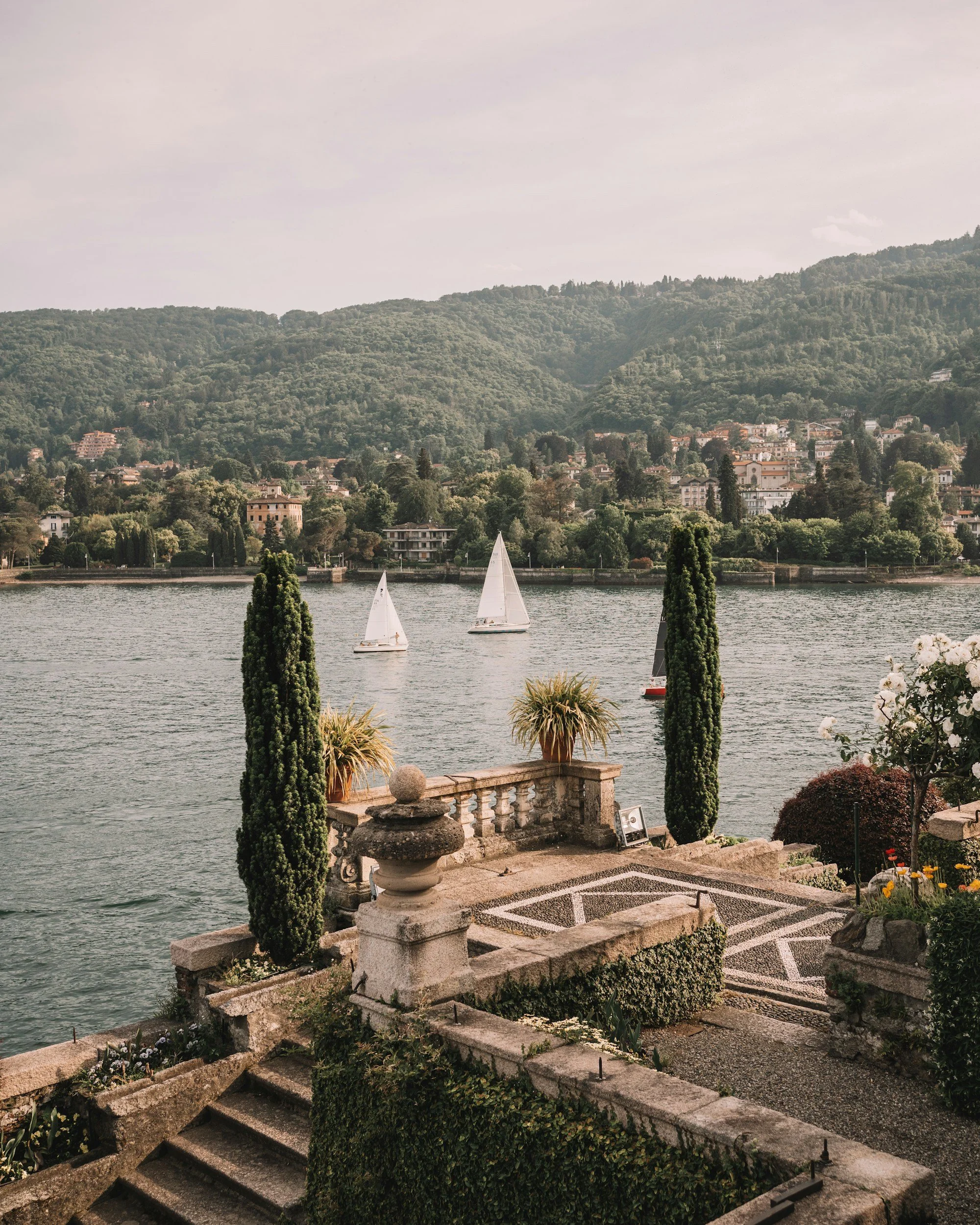
One thing that makes these lake towns easy without a car is how compact the centers are. If you choose accommodation close to the water, most daily errands end up being a short walk. Coffee in the morning, groceries in the afternoon, dinner by the lake in the evening - everything tends to sit within a few streets.
In Stresa, the most convenient area is between Corso Italia and the lakefront near Piazza Cadorna. This part of town sits right between the train station and the ferry dock, so you can walk everywhere in a few minutes. Small hotels and guesthouses line streets like Via Duchessa di Genova and Via Garibaldi, and the promenade is just around the corner. Places like Hotel La Palma and Hotel Regina Palace sit directly on the waterfront if you want a room facing the lake.
In Orta San Giulio, the easiest place to stay is simply inside the historic center near Piazza Motta. Once you’re here, the whole town unfolds within a few narrow stone streets. Small hotels such as Locanda di Orta or Hotel Leon d’Oro sit right near the square, which means cafés, restaurants, and the boat dock to Isola San Giulio are all within a minute or two on foot.
Desenzano del Garda spreads slightly more than the other towns, but staying near Porto Vecchio or Piazza Malvezzi keeps everything close together. These streets sit right beside the harbour where ferries arrive and where most cafés and restaurants cluster. From here you can walk to the train station in about ten minutes, making it easy if you’re arriving or leaving by rail. Hotels and small apartments around Via Porto Vecchio and Via Castello are particularly convenient.
In Verbania, the most practical area is Pallanza, especially near Piazza Garibaldi and the ferry dock. The promenade runs right past this part of town, and cafés, restaurants, and the boat departures are all close together. If you stay here, you can walk along the lake toward Villa Taranto gardens in about twenty minutes or wander toward smaller neighbourhood cafés nearby.
Choosing accommodation close to the lake usually makes the biggest difference. Even if something looks close on a map, a place sitting a few hundred meters uphill can mean a noticeable climb at the end of the day. Staying near the waterfront keeps everything (coffee, groceries, ferry docks, and evening walks) within a comfortable distance.
If you’re traveling on your own or just want a calmer pace, this take on quiet solo travel in Europe helps you see where this kind of trip works best.
Is April a good time to visit the Italian lakes?
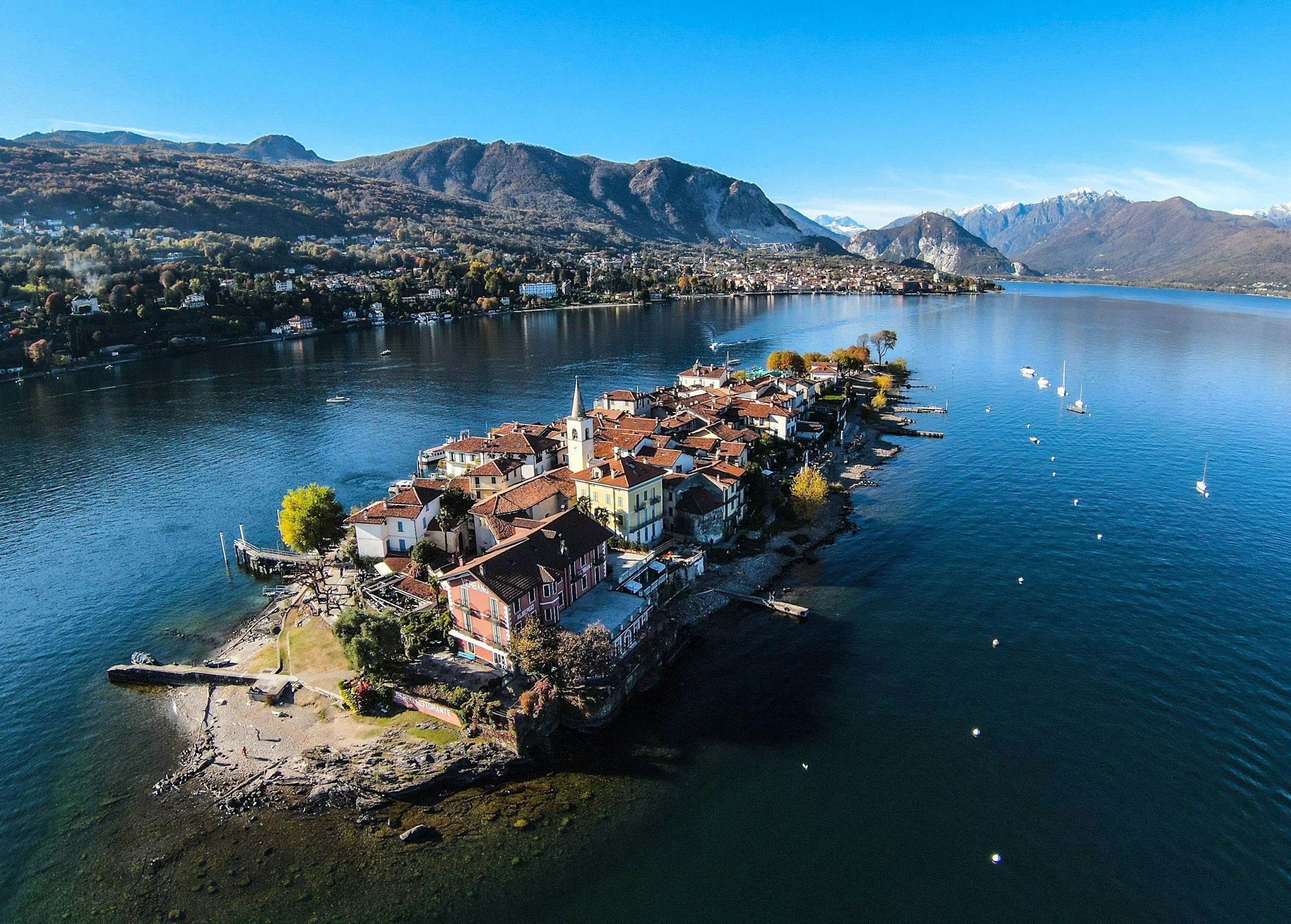
April is one of those months when the lakes start feeling alive again but haven’t tipped into the busy summer season yet. The towns are open, ferries are running, and cafés are back to their normal routines, but you’re not dealing with the crowds that arrive in June and July.
Most days land somewhere between 14 and 20°C, depending on the week and which lake you’re on. Around Lake Garda, especially in towns like Desenzano or Peschiera, it often feels a bit warmer once the sun is out. On Lake Maggiore and Lake Orta, mornings can still be cool, especially near the water. If you head out early for a walk along the promenade, you’ll probably want a light jacket.
The towns themselves are fully functioning by April. Bakeries open early (usually around 7:00 or 7:30) and people stop in for coffee and a pastry before work. Cafés set out their outdoor tables again, especially on sunny days, and the lakefront starts filling with people walking dogs or sitting with espresso facing the water.
Restaurants follow the usual Italian pace. Lunch typically runs from about 12:30 to 14:30, then many places close for a few hours before reopening around 19:00 for dinner. You don’t usually need reservations in April unless it’s a Friday or Saturday evening.
Ferries between the towns are already running, though the schedule is still building toward the summer timetable. Early in the month you might see fewer departures during the middle of the day, but the main routes still operate. By the second half of April, the connections become much more frequent.
Spring also means the lakeside gardens reopen. In Verbania, the botanical gardens at Villa Taranto start their season again, and over on the Borromean Islands the gardens on Isola Bella begin welcoming visitors. Along the promenades in towns like Stresa and Pallanza, the trees start turning green and flower beds are being planted again after winter.
Weekdays feel particularly relaxed. You’ll see visitors walking along the waterfront or stopping for lunch, but the pace is steady. Weekends can get a little busier, especially if the weather is warm, because people from Milan often take the train to the lakes for the day.
For travelers arriving by train and exploring on foot, April often ends up being one of the easiest times to visit.
Some evenings are quieter than expected in April, and this guide to outdoor cinemas in Italy shows what that looks like later in the season if you’re comparing timing.
If you enjoy this kind of quiet spring landscape, another beautiful place to experience it is the alpine valley described in this guide to a slow wildflower weekend in Valle Maira, where the scenery feels just as calm but much more remote.
Getting around the northern Italian lakes without a car in April
Traveling around the northern Italian lakes without a car is very doable, but a few small details make the experience much easier. Trains in this part of Italy run frequently and usually on time, though short delays of five or ten minutes are normal. Regional trains connect most of the lake towns through the main rail lines that run from Milan toward Switzerland and Venice.
Stations are generally simple to navigate. Platforms are clearly marked, and electronic boards show departures and any delays. At Milano Centrale the station is large, but once you’re on the train the journey becomes straightforward. Smaller stations like Stresa or Desenzano del Garda are much quieter, often with just a few platforms and a small café nearby.
Tickets for regional trains can be bought online, but many people simply use the machines in the station before departure. The machines are easy to use and accept cards. If you’re traveling between towns like Desenzano and Peschiera del Garda, it often takes less time to buy the ticket at the station than to plan it in advance.
Ferries play a big role in moving around the lakes, especially on Lake Maggiore and Lake Garda. In April, the ferry schedule is still transitioning from winter to summer. Boats run regularly, but the frequency changes as the month goes on. Early April might have fewer departures during the middle of the day, while later in the month more crossings are added.
Because of that, it’s worth checking the timetable once you arrive rather than relying on what you saw online before your trip. Ferry docks usually display the day’s schedule on large boards near the ticket counters. In towns like Stresa or Desenzano, the ticket office staff can also tell you which boats are running that day.
Packing for April requires a little flexibility. The daytime weather often feels warm once the sun is out, especially around Lake Garda, but mornings and evenings can still be cool. Walking along the lake early in the morning usually means wearing a light jacket. By midday you might be comfortable sitting outside with just a sweater.
Shoes matter more than people expect. The historic centers in towns like Orta San Giulio and parts of Stresa are paved with uneven stone streets. Comfortable walking shoes make a noticeable difference if you’re pulling luggage or spending the day exploring on foot.
If you’re staying in an apartment rather than a hotel, grocery shopping is simple. Most towns have at least one larger supermarket such as Conad or Carrefour within walking distance of the center. Smaller grocery shops and bakeries sit along the main streets. Bread, fruit, pasta, cheese, and fresh vegetables are easy to pick up for simple meals.
One small detail to remember is that many Italian supermarkets close for a few hours in the afternoon, often between about 13:00 and 15:30. They reopen again in the late afternoon and stay open into the evening.
Choosing accommodation close to the lake makes everything much easier. On maps, a place that sits 400 or 500 meters uphill might not look far, but those streets can feel steep when you’re walking back from dinner or returning from the ferry dock. Staying near the waterfront usually means everything (from cafés to grocery stores) remains within a comfortable walking distance.
If you’re planning a longer Italy trip beyond the lakes, two places that offer a completely different atmosphere are the quiet southern coastline described in this Cilento Coast travel guide, and the countryside vineyards featured in this guide to Tuscany’s lesser-known wine estates and cultural spots.
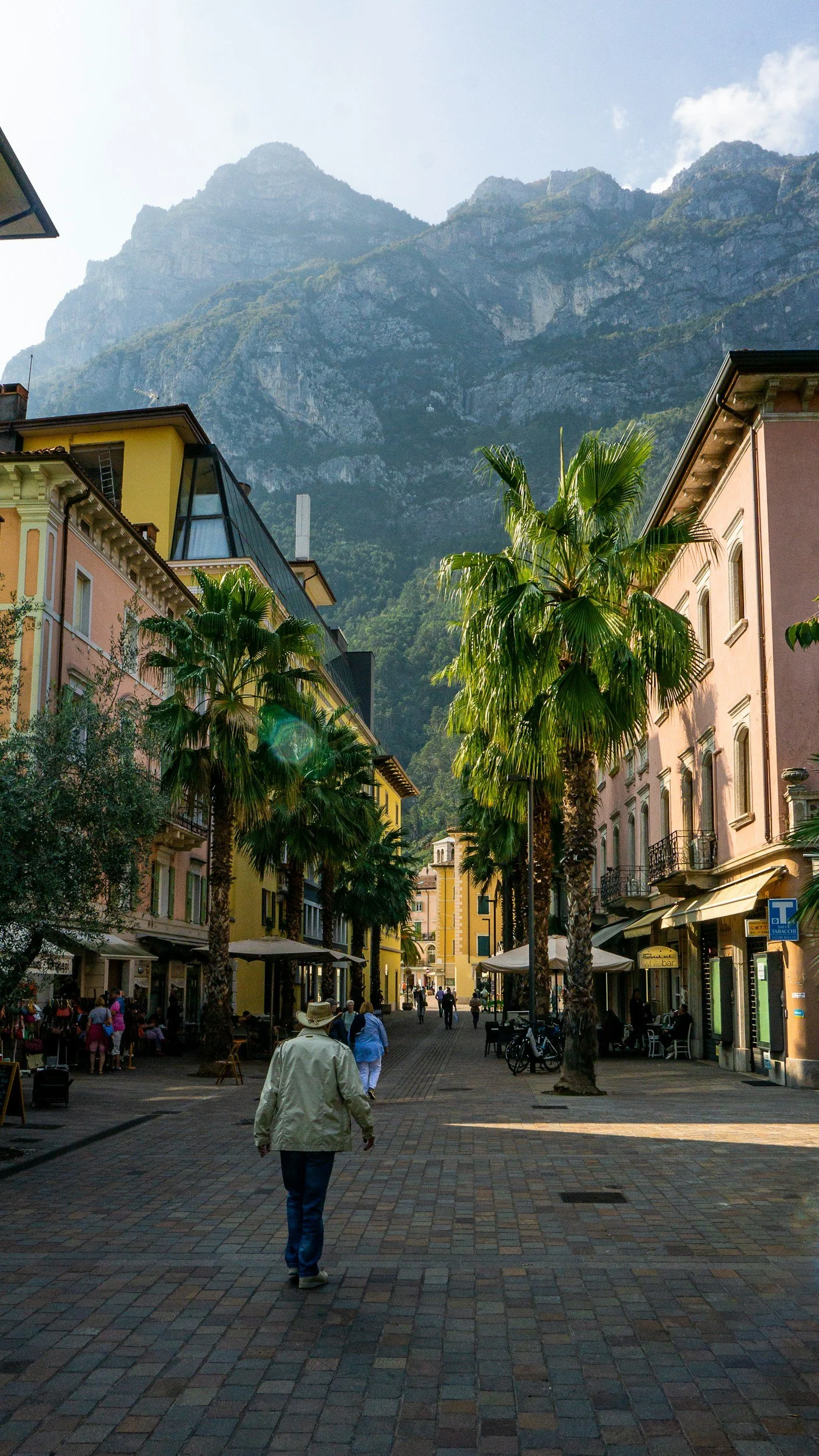
When renting a car would actually make things easier
Most of the towns mentioned here work well without a car, but there are situations where renting one does make life simpler. The biggest difference appears when you want to explore smaller places that sit outside the train network.
Take the northern end of Lake Garda as an example. Towns like Riva del Garda or Limone sul Garda sit further up the lake where the mountains close in around the shoreline. Getting there without a car usually means taking a train to Rovereto or Desenzano and then switching to a bus that winds along the lake road. The journey works, but it takes longer and requires paying attention to bus schedules. With a car you simply follow the lakeside road and stop wherever you want along the way.
The same applies if you’re planning to move between several lakes in a short amount of time. Traveling from Lake Maggiore to Lake Garda, for example, involves at least one or two train changes and sometimes a bus connection depending on the route. Driving cuts that down significantly. You can leave Stresa in the morning and reach Desenzano in roughly two hours, stopping along the way if you want to stretch your legs or have lunch in a small town.
One region where having a car really opens up the landscape is the countryside described in this guide to the Prosecco Hills in northern Italy, where vineyards and hill towns sit scattered across the valleys.
Early April can also make a car slightly more useful because ferry schedules are still building up toward summer frequency. Boats between towns run regularly, but not always every hour. If you’re planning to visit multiple small places in one day, having a car gives you more flexibility than waiting for the next crossing.
That said, if your plan is to stay mostly in Stresa, Orta San Giulio, Desenzano, or Verbania, a car usually becomes more of a hassle than a help. Historic centers in these towns have restricted traffic zones, and parking close to the lake can be limited or expensive. Most daily errands (coffee, groceries, dinner, ferry departures) are already within a short walk.
In practice, many visitors who arrive by car end up leaving it parked most of the time anyway. The towns themselves are built for walking, and ferries cover the longer distances across the lake much more comfortably than driving around the shoreline.
If you’re not set on the lakes, places like Ascoli Piceno offer a completely different setting with a similar pace.
FAQs visiting the Italian lakes by train
Can you visit the Italian lakes without a car?
Yes, and for most trips it’s easier than people expect. You can reach towns like Como, Stresa, and Desenzano del Garda directly by train, and from there continue by ferry or local bus. The main limitation isn’t getting there, it’s moving between smaller villages once you arrive, which is where ferries become essential.
What is the easiest Italian lake to visit by train?
Lake Como is the easiest. Trains from Milan reach Como San Giovanni in about 35 minutes, and from there ferries connect to places like Varenna and Bellagio. You don’t need a car at any point if you plan your route around ferry lines.
How do you get from Milan to the Italian lakes by train?
From Milan:
To Lake Como: trains to Como San Giovanni or Varenna-Esino (35–70 minutes)
To Lake Maggiore: trains to Stresa (around 1 hour)
To Lake Garda: trains to Desenzano del Garda or Peschiera del Garda (1–1.5 hours)
All of these routes run frequently and don’t require advance booking for most regional trains.
Do you need to book trains in advance in Italy?
For regional trains, usually not. You can buy tickets on the day at the station or through apps. For faster trains (like Frecciarossa), booking ahead is better, but most lake routes from Milan are simple regional connections.
Are ferries reliable on the Italian lakes?
Generally yes, but schedules vary by season. On Lake Como, ferries between Como, Bellagio, and Varenna run regularly, but in April they may be less frequent than in summer. It’s worth checking the timetable the day before rather than assuming high frequency.
Is April a good time to visit the Italian lakes without a car?
Yes, but you need to plan slightly more. April is quieter and easier to move around, but ferry schedules and opening hours are not at full summer levels. You’ll have more space, but fewer departures, so timing matters more.
Which towns on the Italian lakes are best without a car?
Towns with train stations or strong ferry connections work best:
Varenna (train + ferry hub on Lake Como)
Como (direct train access + ferries)
Stresa (train + boat access to the Borromean Islands)
Desenzano del Garda (train + lake access)
Smaller villages without direct transport links are harder to reach without a car.
How do you get between towns on Lake Como without a car?
Ferries are the main way. From Varenna, you can easily reach Bellagio and Menaggio, while Como connects to multiple towns along the lake. Buses exist but are slower and less predictable than boats.
Is it better to stay in one place or move between lakes?
For a short trip, staying in one area works better. Lake Como or Lake Maggiore each have enough to fill a few days without needing to move. Trying to visit multiple lakes by train in a short time can feel rushed.
What are the biggest mistakes when visiting the Italian lakes without a car?
Trying to visit too many towns in one day
Not checking ferry schedules in advance
Staying somewhere without good transport links
Assuming everything runs as frequently as in summer
Planning around transport instead of against it makes the trip much easier.