
The northern Galicia towns I'd choose without a car
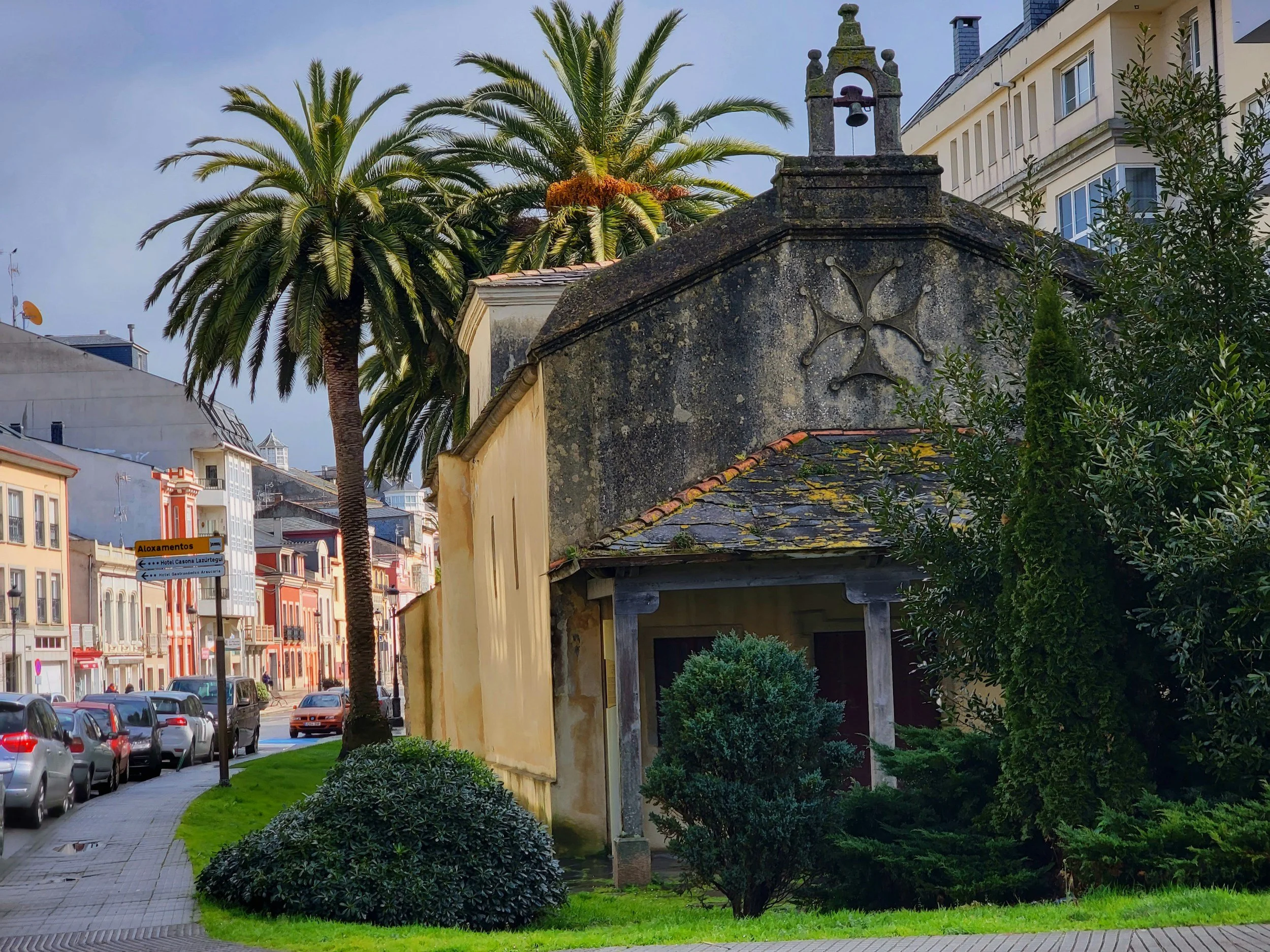
One of the reasons I think northern Galicia is surprisingly difficult to plan from home is that almost every town looks equally tempting.
I remember sitting with far too many tabs open, convinced I'd finally narrowed it down, only to spot another harbour town or another medieval square that looked just as nice as the last one. From home they all seem to promise more or less the same trip, with compact historic centres, pretty coastlines and public transport that looks perfectly manageable, so it's easy to think you could pick almost any of them and have a similar experience.
Then you get there…
One town has a railway station, but you'll spend twenty minutes dragging your suitcase uphill before you even reach the old centre. Another doesn't have a train at all, yet turns out to be much easier because everything you'd actually want to do is only a few minutes away on foot. Somewhere else feels wonderfully lively on a Saturday afternoon, then catches you out the next day when the market has disappeared, half the cafés are closed and you're wandering around wondering where everyone went.
That's the part you can't really see from Google Maps! It's easy to compare train stations, bus routes and hotel prices when you're planning, but those things don't tell you what it's actually like to spend a few days somewhere. They don't tell you whether you'll still be happy sitting outside the same café on your third morning, whether the town has enough going on to make you want to stay another day, or whether you'll quietly start looking up bus times because you've already seen everything you wanted to see.
Some places make it incredibly easy to slow down and stay put for four or five days. Others are much better if you like heading somewhere different every morning before coming back for dinner. A few really come into their own during summer, while others hardly seem to change once the seasons do, and after travelling around this part of Galicia I realised there isn't a single town I'd confidently call the best.
So rather than ranking towns from best to worst, I wanted to look at what they're actually like once you're there. The sort of things I found myself noticing after the first day or two, like whether cafés open early enough if you've got a morning bus to catch, whether everything is close enough to walk with your luggage, how quickly the streets empty after dinner, and whether you end up spending your time enjoying the place itself instead of thinking about where you should have stayed instead.
Once you've found a town that suits the way you like to travel, northern Galicia honestly becomes much easier than it first looks, and you'll probably spend a lot less time worrying about buses and trains than you did while planning the trip.
Galicia is surprisingly easy to explore... once you know where to stay
Planning a trip around northern Galicia without a car usually starts in a pretty similar way. You save a handful of towns, open Google Maps and realise none of them actually look that far apart. Betanzos sits between A Coruña and Ferrol. Cedeira is only a little further up the coast. Viveiro and Ribadeo don't seem much further again, and before long it's easy to convince yourself that you could simply move every couple of days without giving it much thought.
I fell into exactly the same trap when I was planning my first trip.
Looking at the map, it honestly felt like I could move between towns every couple of days without giving it much thought. Everything seemed close enough, and once I saw there were trains running across Galicia I assumed the northern coast would work in much the same way.
It doesn't.
Getting between A Coruña, Santiago de Compostela, Pontevedra, Vigo and Ourense is easy enough on Renfe, but once you start heading north you quickly realise you're travelling differently. A journey that looked simple on Google Maps might mean taking the train to Ferrol and then switching to a regional bus for the last part of the trip, or working around a timetable with only a few departures that day. None of that is a problem once you know about it, but it's the sort of thing that's almost impossible to spot when you're sitting at home trying to decide where to stay.
That's also why I stopped looking at transport connections first, and started thinking about what life would actually look like once I arrived.
Betanzos is a good example. At first glance it looks like the obvious choice because it has two railway stations, but the station most people use, Betanzos-Cidade, sits outside the medieval centre, so you still have a walk before you reach the cafés, squares and streets you'll probably spend most of your time exploring. Cedeira is almost the opposite. It doesn't have a railway at all, but the bus leaves you only a few minutes from Praza Roxa, the harbour and Rúa Ezequiel López, so you're almost immediately in the middle of everyday life instead of wondering which direction to drag your suitcase.
If you'd only looked at the map, Betanzos would probably seem like the easier choice.
After spending time in both, I'm not convinced it actually is.
One thing that's easy to overlook when you're planning from home is how much the towns change depending on which day you arrive, because across northern Galicia the week is still shaped by things that barely show up on Google Maps. A Tuesday morning can feel much livelier than a Sunday afternoon simply because the market is on, while the following day the same square is suddenly much quieter. Outside the busiest summer weeks you'll also notice that some independent cafés, restaurants and small shops close for an extra day during the week, and Sunday bus timetables often look very different from the rest of the week, so the experience of staying somewhere for three or four days isn't always the same from one morning to the next.
Those ended up being the details I remembered far more than whether a journey had taken twenty minutes longer than I'd expected, because once you've arrived it's quite rare that you think about the train or bus you caught to get there. What stays with you is whether you can wander out for breakfast without checking opening hours first, whether it's easy to pop back to your hotel for an hour in the afternoon before heading out again, or whether you're standing in an empty square on a Sunday wondering where everyone has disappeared to.
That's also why I don't think there's much value in ranking these towns purely by their transport connections. They're all perfectly manageable without a car, but they solve that in completely different ways. Some have railway stations, others rely almost entirely on regional buses, and a few simply work because once you've arrived you'll spend the rest of your stay exploring on foot without giving the journey there another thought.
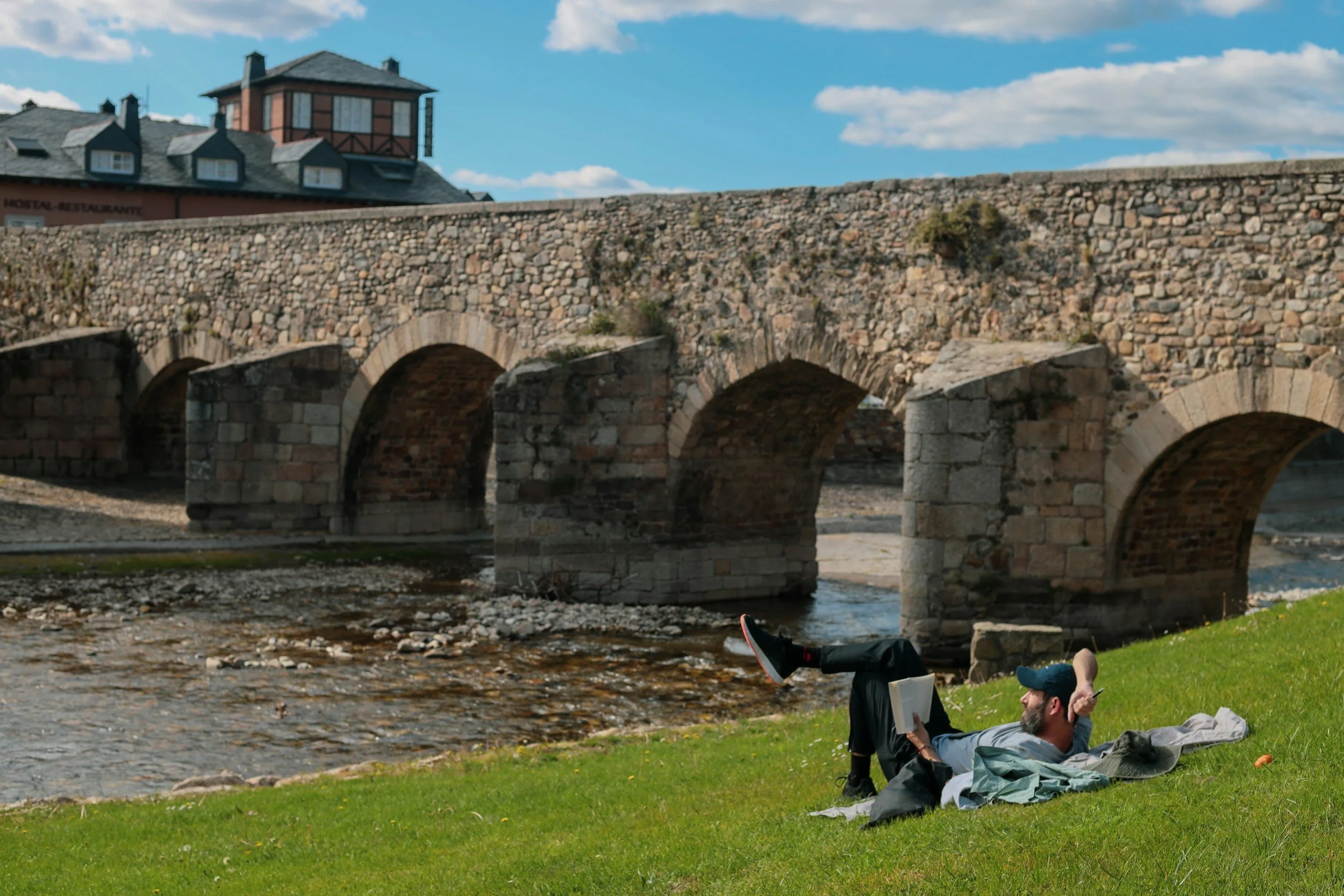
If you're flying into Madrid or continuing elsewhere in Spain afterwards, it's worth reading this Renfe guide first because it answers a lot of the questions people only realise they have once they're already travelling.
If it's your first trip to Galicia, I'd start in Betanzos
If you're visiting northern Galicia without a car for the first time, I think Betanzos is one of the easiest places to start. It's small enough that you find your bearings surprisingly quickly, but it never feels like you've seen everything after a couple of hours, and getting there is refreshingly uncomplicated compared with some of the smaller towns further up the coast. If you're planning to continue towards places like Cedeira, Viveiro or Ribadeo, it also makes a very natural first stop rather than somewhere you simply pass through.
Reaching Betanzos is straightforward whether you land in A Coruña or Santiago de Compostela. From A Coruña Airport it's simply a case of taking the airport bus into the city before continuing by Renfe from the main railway station, while Santiago works in much the same way, with regular airport buses connecting with trains that reach Betanzos in well under an hour. One thing I appreciated was not having to organise the whole day around a single departure. Trains run often enough that the journey feels flexible, which isn't something you can always say once you start travelling further along the northern coast.
The part that catches most people out isn't the train journey itself, but where you end up once you step off it.
Betanzos-Cidade sits outside the medieval centre, so the first thing you'll notice is that you don't arrive in the postcard version of Betanzos straight away. Instead, there's a twenty-minute walk into town, mostly uphill, and if you've packed a large suitcase you'll probably be ready to put it down by the time you reach your accommodation.
I actually ended up liking that walk much more than I expected. Rather than stepping straight into the historic centre, you watch the town gradually change around you. The apartment blocks become less frequent, the streets grow quieter and, before long, you're crossing Porta da Ponte Vella with the old town unfolding in front of you. It feels less like arriving at a tourist attraction and more like finding your way into a town that's been carrying on with everyday life long before you showed up.
From there, you can forget about transport for a while because Betanzos is the sort of place that naturally pulls you from one street to the next without much of a plan. One minute you're walking along Rúa Nova, the next you've wandered into Praza da Constitución, before finding yourself down one of the narrow lanes that branch off towards Rúa da Cerca because something in a bakery window caught your eye.
That's also what I like most about the old town. It isn't immaculate or carefully staged in the way some historic centres are. People are carrying shopping bags home, stopping to chat outside the bakery, unlocking front doors hidden between cafés and restaurants, and it never feels as though everyday life has stepped aside simply because visitors have arrived. Even in the middle of summer, I never had the feeling that Betanzos existed for tourists first and everyone else second.
That becomes even more obvious first thing in the morning.
Before nine in the morning, Betanzos still feels like it's waking up. People stop at Panadería La Nueva or Panadería Da Cunha on the way through town, cafés start filling up with regulars and you'll see shopkeepers standing outside their doors chatting before opening for the day. If your visit falls on a Tuesday, Thursday or Saturday, I'd make sure you're out early because that's when Praza dos Irmáns García Naveira fills with market stalls. Farmers drive in from villages across the comarca with boxes of tomatoes, peppers, onions, beans, cheeses and fresh bread, and most of the people walking around aren't there because they've read about the market. They're there because it's market day and this is where they've always bought their vegetables.
A couple of minutes away, the restored Mercado Municipal carries on much the same morning routine. The fish counter is usually the busiest, people stop to ask what's fresh that day before deciding what they'll cook later, and you'll often see someone picking up a few slices of ham or local cheese on the way out. It's not a market where every stall is trying to sell souvenirs or gourmet products. It's simply where people in Betanzos still do part of their weekly food shopping, which also makes it far more interesting to wander around for a while.
For breakfast, I'd walk over to Cafetería Lanzós near Igrexa de Santiago. It isn't somewhere people travel across Galicia to visit, and that's exactly why I enjoyed it. By the time I arrived, there were Camino walkers eating toast before setting off again, older couples reading the newspaper over coffee and a handful of people who clearly came in most mornings because nobody needed to ask what they wanted. I ended up staying much longer than I'd planned, partly because the café was really nice but mostly because it was one of those places where you could sit quietly for an hour and watch the town get on with its day. Around midday, a few of the coffees had been replaced with small glasses of vermouth, someone ordered a plate to share, and without anything particularly exciting happening, the whole place had shifted into lunchtime.
Before heading much further into the old town, I'd stop at Rabizas on Rúa Nova. Most people come for the empanadas, but it's also somewhere I'd pick up an almond cake or a couple of pastries to keep in my bag for later. If you're there before mid-morning, you'll have the best choice. Leave it until lunchtime and there's a good chance some of the things you were hoping to try have already sold out, especially on market days when the town is busier than usual.
Around midday, you can almost tell the time without looking at your watch. The streets are noticeably busier than they were a couple of hours earlier, more people are arriving from A Coruña and Santiago de Compostela, and the restaurant terraces around the old town start filling up surprisingly quickly. Before long you'll hear the same question coming up again and again: Where are you having tortilla?
Betanzos has become famous across Spain for its runny tortilla, and everyone seems to have an opinion about where it's done best. The two names you'll hear most often are Casa Miranda and Mesón O Pote. Ask three people which one is better and you'll probably get three different answers, so I wouldn't spend too much time trying to find the "right" one. If you're staying in Betanzos for a couple of nights, I'd simply have lunch at one and dinner at the other. It's a much more enjoyable way to do it than trying to decide which restaurant has the better reputation before you've even sat down.
If you're staying overnight, don't disappear after dinner because that's when Betanzos changes again. By six or seven o'clock, most of the people who came up from A Coruña or Santiago de Compostela for lunch have already left, the queues outside the tortilla restaurants have gone and the streets are noticeably quieter. People start drifting back into Praza da Constitución after work, friends meet for a drink before heading home and children are still playing in the square while parents sit outside with a beer or a glass of wine. It feels much closer to the town you walked through first thing that morning than the one you saw in the middle of the day, and it's probably the part of Betanzos I enjoyed most.
If you've still got room for one last stop, I'd walk over to La Travesía Vinos. The wine list focuses on producers from across Galicia, including bottles from Ribeiro, Rías Baixas, Valdeorras and Ribeira Sacra, and the staff are usually happy to suggest something if you don't know where to start. Most people seem to order a glass, a few tapas and then stay longer than they'd probably planned, which tells you quite a lot about the place without me needing to describe it.
One place I'd check before you go is Parque do Pasatiempo. It's one of the most unusual parks in Galicia, but restoration work has meant it's been opening and closing in stages over the past few years. It's worth checking the latest information before you build your day around it.
If it happens to be closed, I honestly wouldn't worry too much. I'd use the extra time to walk around the old town instead. Pop into Igrexa de Santa María do Azougue, wander over to Praza da Constitución, have another coffee if you find somewhere you like, or duck into one of the little independent shops. Those were the parts of Betanzos I enjoyed most anyway, and they're much easier to appreciate when you aren't trying to fit everything into a few hours.
That's also why I'd stay for at least two nights if you can. Once you've arrived, there's very little to think about. Everything in the centre is within walking distance, you don't need to keep checking bus or train times, and you can just enjoy being there. When you do leave for somewhere like A Coruña, Santiago de Compostela or Ferrol, it doesn't feel like you've only scratched the surface before moving on.
Thinking about continuing beyond Galicia? This route follows the northern coast without needing a car and makes it much easier to work out what to visit next.
Cedeira is quieter than most people expect
Cedeira looks slightly trickier to reach than Betanzos at first because there isn't a railway station, but in practice it's very straightforward. Most people travel to Ferrol by train or long-distance bus and then change onto the regional bus to Cedeira E.A.. The journey usually takes just over an hour and follows the coast through Valdoviño, Pantín and Vilarrube, so even the transfer feels like part of the trip rather than just a way of getting there. Timetables do change depending on the season, though. Summer services are usually more frequent, while buses between September and June, especially at weekends, can be less regular, so I'd always check the timetable for the day you're travelling rather than relying on a timetable you found a few weeks earlier.
One thing I really like is where the bus actually drops you off. Cedeira E.A. is right in town, so you're only a few minutes' walk from Avenida de Castelao, Praza Roxa, the shops along Rúa Ezequiel López and the harbour. Once you've checked into your accommodation, it's surprisingly rare to think about transport again. Most days naturally revolve around walking between the waterfront, the market, cafés, restaurants and the promenade, and after a few hours it's easy to forget that Cedeira doesn't have a railway station at all.
I'd stay somewhere between Praza Roxa, Avenida de Castelao and the harbour rather than booking somewhere beside Praia da Madalena. The beach is only a ten-minute walk from the centre anyway, but chances are you'll spend more time walking into town than walking down to the sand. You head out for coffee in the morning, wander back after browsing the shops, stop at the harbour before dinner or nip out for an ice cream after sunset. After a couple of days, having everything within a few minutes' walk becomes far more useful than waking up right beside the beach.
If you're looking at a map, I'd use Praza Roxa as your reference point. From here it's only a short walk to the harbour, Rúa Ezequiel López, the market hall and most of the cafés you'll probably end up visiting more than once. In the mornings you'll see parents dropping children off at school nearby, pensioners sitting on the benches before the cafés fill up and locals cutting across the square on their way into town. It was officially called Praza do Sagrado Corazón for years, but almost everyone simply called it Praza Roxa because of the red paving. Eventually the official name caught up with what people had been saying all along.
The town really starts to wake up down by the harbour. Walk along Avenida de Castelao before nine and you'll usually find fishing boats unloading their catch, delivery vans squeezing into the narrow streets with bread and produce for the cafés, and neighbours stopping for a quick coffee before work. Around the fish market you'll often spot seagulls waiting hopefully for scraps while people pause to see what's come in that morning. It feels much more like the working side of Cedeira than the beach ever does.
From there it's worth wandering inland through Rúa Real, Praza da Marieta and Rúa Ezequiel López. This is where everyday life happens. You'll find the greengrocer with crates of seasonal fruit outside the door, the butcher wrapping up someone's lunch order, the local bakery with trays of empanada coming out of the oven and small clothing shops where the owner is often behind the counter. Most of these businesses still close for lunch, usually from around two until five, so if there's anything you want to buy, it's easier to do it in the morning and leave the afternoon for the beach, the harbour or another slow walk through town.
If you enjoy browsing bookshops when you travel, I'd have a look inside Librería La Paz. It's been part of Cedeira for more than fifty years and is the sort of place that's getting harder to find. Alongside books and newspapers you'll find stationery, sewing supplies, perfumes, children's school things and all sorts of everyday bits and pieces that locals still come in to buy. You get the impression it's as much part of daily life as it is a bookshop, and that's exactly why I found it more interesting than another shop selling magnets and postcards.
A couple of minutes away on Rúa de España, Librería Nova is another place worth calling into if you're already wandering through the centre. Like many of the independent shops in Cedeira, it still closes for lunch before opening again later in the afternoon. It sounds like a small detail, but after a day or two you start to realise that much of the town still follows that rhythm. If you leave shopping until three o'clock, there's a good chance you'll be coming back later.
For breakfast, I wouldn't spend time searching for the best flat white or a speciality coffee shop. That's not really what Cedeira does. I'd simply pick one of the cafés around Praza Roxa or Rúa Ezequiel López and settle in for half an hour. Ambute, on Rúa López Cortón, is a good example. Early in the day you'll see people ordering coffee, toasted bread with tomato, pastries or a quick breakfast before work. Come back later and it's a completely different place. The coffee cups have been replaced by glasses of Albariño, beers and small plates to share, and people who stopped in for ten minutes in the morning are suddenly staying for much longer.
If you fancy picking something up for a walk, I'd head to Horno Artesano Arribi on Rúa Pitilleira, just by Cuatro Caminos. It's one of those bakeries where it's difficult to leave with only one thing. Alongside fresh bread and cakes, the display is usually filled with different kinds of empanada, including fillings like hake, monkfish, conger eel and turbot that you don't come across every day. It's also one of the easiest places to try pastelón de Cedeira, the town's own pastry, which makes a nice alternative if you've already had plenty of Galician empanada elsewhere. They normally only open in the mornings from Monday to Saturday, so I'd call in before lunch rather than assuming you can come back later.
I'd also have a look around Mercado Municipal, but I'd do it in the morning while everything is still in full swing. The market makes much more sense once you've walked down to the harbour first. Fishing boats are coming and going, seafood is being unloaded, and a little later you'll see many of the same ingredients appearing on lunch menus around town. It reminds you that seafood isn't just something restaurants put on a menu because visitors expect it. It's part of everyday life here.
If there's one local speciality you'll keep seeing, it's percebes, the goose barnacles collected from the wave-battered rocks along this stretch of coastline. They aren't something restaurants can promise every day because everything depends on the sea. Rough weather means the harvesters can't get out safely, and there are strict seasons and quotas that protect the stocks. It also means that what ends up on your plate is tied to what's been happening out on the Atlantic over the last few days, which somehow makes ordering them feel even more connected to the place.
If you're planning one proper seafood lunch in Cedeira, I'd book a table at Restaurante Badulaque on Rúa Area Longa. The menu changes with what's available, but this is somewhere to look for fish that arrived at the harbour that morning rather than a long menu trying to cover everything. Depending on the season, you might find lubina (sea bass), rodaballo (turbot), merluza (hake), rape (monkfish) or shellfish like navajas and zamburiñas, alongside Galician classics such as octopus. It mainly opens for lunch, so I'd plan around that instead of assuming you can come back later for dinner. Outside the busiest summer weeks it's usually closed on Tuesdays as well, so it's worth checking before you arrive.
If you're after something a little less formal, Mesón Muiño Kilowatio, just a short walk from the harbour, has a completely different feel. It's the sort of place where one table is sharing a plate of chipirones, another has ordered pimientos de Padrón and a few zamburiñas, while someone at the bar has only stopped in for a beer and a tapa before heading home. A Taberna do Jojo is another place I'd keep in mind for traditional Galician cooking. If percebes are on the menu when you're there, it's worth ordering a portion. They aren't available every day, and seeing them listed usually means the conditions out on the coast have allowed harvesters to get safely onto the rocks.
One thing that's easy to forget if you're used to bigger cities is that Cedeira still follows its own routine. Outside July and August, restaurants often have different opening days, and some only serve lunch for part of the week. I always check opening hours a day or two beforehand rather than assuming everywhere will be open, especially if I'm visiting in autumn or winter.
By three o'clock, some of the independent shops have pulled down their shutters for the afternoon, the harbour is quieter and you'll notice far fewer people walking through the centre than there were at lunchtime. It never feels deserted, just unhurried. Later in the afternoon, people begin drifting back towards Praza Roxa, children are out playing around the square, terraces start filling again and the promenade becomes busy with locals out for an evening walk along the marina before dinner.
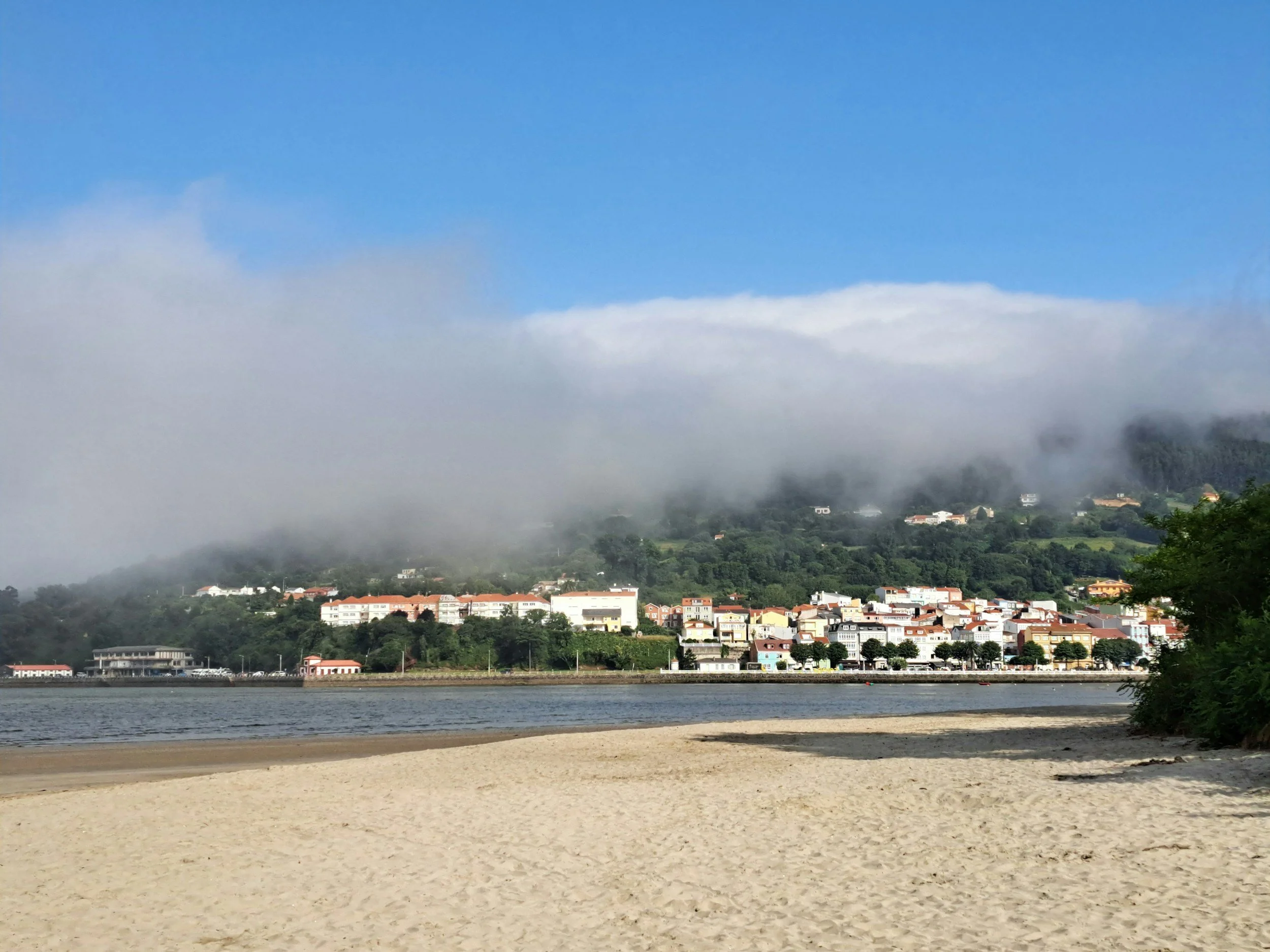
If Cedeira is the town you're leaning towards, it's also worth spending a couple of minutes on where to stay before you book because the different areas feel surprisingly different once you're there.
If you're visiting outside summer, I'd decide where you want to eat before the evening rather than waiting until half past eight and hoping somewhere catches your eye. Cedeira isn't the kind of place with dozens of restaurants competing for attention, and that's part of what makes it so enjoyable. The places that are open tend to fill steadily with local regulars rather than people wandering from menu to menu looking for somewhere to eat.
One thing I learned quite quickly in Cedeira is not to plan every day too far ahead. The buses run when they run, but it's the weather that usually decides what makes sense to do. If you wake up to clear skies, I'd head straight for Paseo Marítimo da Madalena before the wind has a chance to pick up. Follow the promenade all the way to San Isidro, then keep walking uphill through the houses for another five minutes until you reach the sign for Miradoiro da Robaleira. From there, the path continues through pine and eucalyptus woodland towards the lighthouse, with plenty of places to stop and look back over the harbour, the Ría de Cedeira and the cliffs stretching north towards Cape Ortegal. If you've got time, it's worth making the short detour down to the little coves at Mi Señora and Cerdeiras, which locals also call Burbullas.
I'd save that walk for a dry day, though. The woodland paths can be muddy after rain, and they're much more enjoyable when the ground has had a chance to dry out. If the weather isn't playing along, I'd stay in town instead. Wander around Igrexa de Santa María do Mar, call into a few of the independent shops before they close for lunch, or settle into a café and see what the afternoon brings. The weather changes quickly here. I've seen low cloud disappear within an hour and turn into a bright afternoon, and I've also watched sunshine give way to Atlantic rain not long after leaving the harbour.
Getting to Cedeira takes a little more planning than Betanzos because of the bus connection from Ferrol, but once you've arrived it doesn't really cross your mind again. If you're staying around Praza Roxa or Avenida de Castelao, almost everything is within a few minutes' walk. One morning you might head down to the harbour to see what the fishing boats have brought in, another you might decide it's too windy for Robaleira and spend an extra hour in a café instead. Some days you'll book a long seafood lunch because the weather isn't great, while on others you'll end up walking much further than you expected. That's why I'd give yourself a few days here. Cedeira is much easier to enjoy when you don't feel like you have to fit everything into one afternoon.
If you're already wondering whether Cedeira deserves more than a quick stop, I wrote a more detailed guide about what it's actually like to spend a few days there: life in Cedeira.
Viveiro feels more like a place to live than a place to visit
If Betanzos is somewhere I'd recommend for slowing down after arriving in Galicia, Viveiro is the place I'd choose once I wanted to stay somewhere for several days without feeling as though I'd seen everything after the first afternoon. It has a larger local population than many of the towns along this stretch of the coast, a much broader mix of shops, cafés and restaurants, and a centre that stays active well beyond lunchtime. Instead of revolving around visitors, daily life carries on around them, which is exactly what makes Viveiro such an enjoyable place to use as a base.
Getting to Viveiro is straightforward without a car. The easiest route is to take a train to Ferrol and continue by the narrow-gauge Renfe Cercanías AM railway (formerly FEVE), which follows Galicia's northern coastline to Viveiro. If you're travelling from A Coruña or Santiago de Compostela, it's usually quicker to take a bus, with regular services running throughout the week. Viveiro also has a small bus station within walking distance of the historic centre, making it easy to continue to nearby towns or arrive directly without needing a taxi. Once you're in the centre, almost everything can be explored on foot, although you'll notice the hills if you head up to viewpoints such as Monte San Roque or walk beyond the old town towards the surrounding neighbourhoods.
One of the things I noticed quite quickly in Viveiro is how often you end up back beside the Landro. Walk from Praza Maior towards the harbour, cross over to Covas, or wander through the streets around Praza Pastor Díaz, and before long you're following the river again. After a day or two it starts to feel completely natural. You stop checking the map because the river is usually enough to tell you where you are.
Once you walk through Porta de Carlos V, the old town feels like somewhere people still use every day. Around Praza Maior, Praza Pastor Díaz, Rúa Pastor Díaz and Rúa María Sarmiento, you'll pass everything from family-run jewellers and opticians to pharmacies, bakeries and small clothing shops. Librería Porta da Vila is worth a browse if you enjoy bookshops when you travel, while Pastelería Vale is a good place to stop if you fancy something sweet to take with you. On Saturday mornings especially, you'll see people calling into the bakery for fresh bread, stopping at the greengrocer with a shopping trolley, or chatting outside the cafés before carrying on with the rest of their errands.
If you happen to be in town during one of the shopping weekends or seasonal markets organised by the Centro Comercial Histórico de Viveiro, you'll notice even more people out in the streets. Local shops often stay open later, the squares become busier and there are usually small events taking place around the centre. It doesn't feel like something put on for tourists. It feels like a town making the most of its own high street, which is probably why the centre still feels so enjoyable to wander around even outside the main summer season.
One thing I always end up doing in Viveiro is taking my time in the morning. Even by nine o'clock, nobody seems to be in much of a hurry. People stop for breakfast before work, call into the bakery on the way home or sit outside with a coffee while the old town slowly wakes up. If you're looking for somewhere to start the day, Cafetería 12, overlooking Praza da Fontenova, is an easy choice. You can stop in for coffee and toast before heading out, and if you happen to wander back later, you'll find exactly the same place serving cakes, wine and drinks well into the evening. It never feels like it has to reinvent itself depending on the time of day.
If you've read older guides to Viveiro, you might come across Pastelería Fontenova, which had been part of the town for more than seventy-five years before closing in early 2026. These days I'd head to Vale Pastelería instead. The family still bakes its own bread, empanadas, cakes and the local Tarta de Viveiro, and the branch on Rúa Ramón Canosa is somewhere you can just as easily stop for breakfast as pick up something to eat later. I'd grab a slice of Tarta de Viveiro if they've got it, along with an empanada for lunch if you're planning to spend the day walking. It's the sort of bakery you'll probably find yourself calling into more than once rather than somewhere you visit simply because it's been recommended.
Seafood might get most of the attention, but Viveiro has just as much of a sweet tooth. Alongside Tarta de Viveiro, you'll see colinetas, bizcochones and almond cakes in bakery windows around town, especially at Vale Pastelería. If you've already eaten your way through more than enough Tarta de Santiago elsewhere in Galicia, this is a good excuse to try something that's much more closely tied to Viveiro itself.
If local markets are usually the highlight of your trip, you might also enjoy these coastal market towns before deciding where to spend a few extra days.
Around lunchtime, the harbour is the place I always end up drifting back to. Fishing boats are coming and going, people stop along the railings to see what's happening on the water and restaurants begin writing up the day's fish on their boards. Much of it comes through nearby Celeiro, one of Galicia's busiest fishing ports, so what's on the menu can change from one day to the next. One afternoon you might find merluza de pincho, rape, rodaballo or bonito del norte, while another day it's the shellfish that steals the show. That's one of the reasons I'd avoid choosing somewhere just because you've already looked at the menu online.
Evenings have a different feel again. Unlike some smaller coastal towns that become very quiet after dinner, people are still out walking through the old town, stopping for a drink around Praza Pastor Díaz or heading towards a performance at Teatro Pastor Díaz. Families are out for an evening stroll, friends are catching up over a glass of wine and the cafés around the square stay busy long after the shops have closed. If you're visiting in summer, don't rush back to your hotel after dinner. Viveiro is at its nicest once the heat starts to fade and everyone comes back outside.
If you're staying for a few days, I'd definitely spend one evening over in Covas. From the old town, it's about a twenty-minute walk across Puente da Misericordia, following the Landro past the marina before the river opens out towards the beach. It's an easy walk and one I found myself doing more than once. In summer, people are still sitting outside with ice creams, children are playing along the promenade and groups gather on the beach long after dinner. Come back in October or November and you'll see a different side of it, with dog walkers, runners and neighbours out for an evening stroll before heading home. It never feels like you've left Viveiro behind. It just feels like another part of the town.
If you've got the energy, I'd also make the climb up to Monte San Roque at least once. It's the only walk where you'll properly notice the hills, but the view at the top explains the layout of Viveiro better than any map. You can see the old town wrapped around the Landro, the harbour, Celeiro, Covas and the coastline stretching out towards the Cantabrian Sea. After spending a couple of days walking through the streets below, it's satisfying to see how everything fits together.
That's probably why I'd stay three or four nights instead of passing through for one. Viveiro isn't somewhere I'd try to rush. You might spend one morning browsing the shops around Praza Maior, another walking over to Covas, another climbing to Monte San Roque, and still find yourself sitting in the same café twice because you liked it the first time. By the end of the trip you'll probably have your own favourite bakery, your own favourite walk and your own favourite square to sit in, and for me that's usually a good sign that I've chosen the right place to stay.
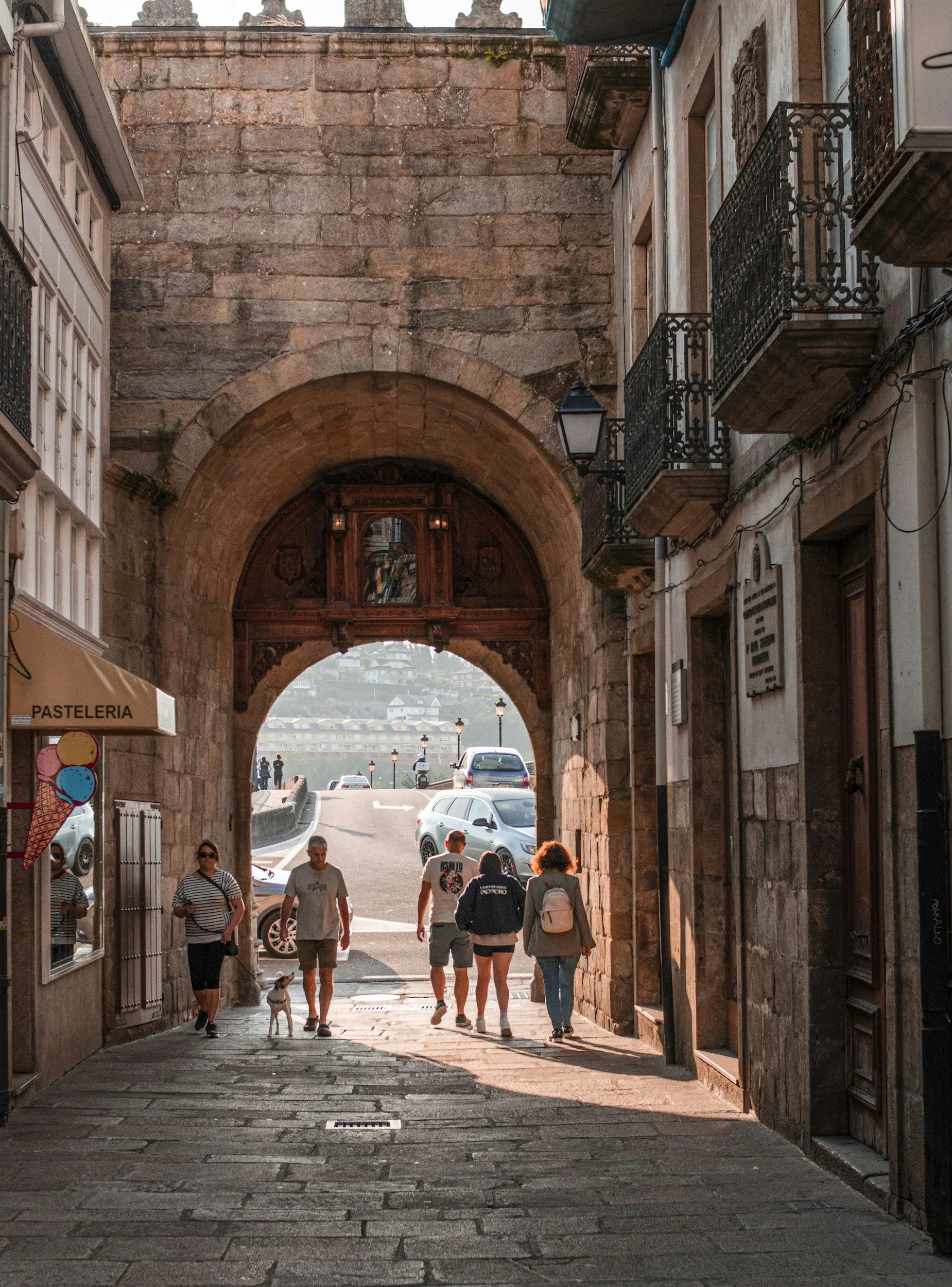
Ribadeo is worth visiting even if you never make it to Praia das Catedrais
Many people arrive in Ribadeo with one plan: visit Praia das Catedrais, take a few photographs at low tide and continue along the coast. That's understandable, but it also means they miss one of the most enjoyable towns in northern Galicia. Ribadeo has enough cafés, independent shops, and waterfront walks to justify several nights on its own, and I actually think that's the better way to experience it. The famous beach becomes an optional day out rather than the entire reason for coming.
Reaching Ribadeo without a car is actually very straightforward. The town has both a bus station and a Renfe Cercanías AM (FEVE) station, and they're only a short walk from the centre. If you're coming from A Coruña or Santiago de Compostela, I'd normally take the bus because it's quicker. Coming from Ferrol or travelling on into Asturias, the FEVE line is the more memorable journey, winding its way along the coast through fishing villages, river estuaries and stretches of countryside that you'd completely miss on the motorway.
I'd look for somewhere to stay around Plaza de España if you can. From there it's only a few minutes on foot to both stations, the marina, Rúa San Roque, the restaurants around the old town and the waterfront. Once you've dropped your bags off, there's very little reason to think about transport again. Most of Ribadeo is easy to cover on foot, whether you're heading down to the harbour for lunch, wandering through the historic streets or walking out towards the estuary in the evening.
Once you've arrived, Ribadeo is an easy town to get around on foot. There are a few hills, but most of the places you'll actually visit are only a short walk apart. From Plaza de España, it's only a couple of minutes down to the marina, and in the other direction you can be browsing the shops along Rúa San Roque almost straight away.
You'll probably end up crossing Plaza de España several times a day without really thinking about it. Torre dos Moreno, the Pazo de Ibáñez, the town hall and Santa María del Campo all look onto the square, but what I noticed more was how many local people seemed to use it. Children were running around the gardens, friends stopped to chat on their way across town and the café terraces slowly filled up as the morning went on. If you're interested in architecture, it's also the best place to stand back and properly appreciate the details on the façade of Torre dos Moreno, one of Ribadeo's best-known buildings.
One of the reasons I enjoyed Ribadeo so much is that I never had the feeling I was walking through a town built around visitors. It feels very local. Along Rúa San Roque, Rúa Rodríguez Murias and the surrounding streets you'll find independent clothes shops, delicatessens, wine merchants, bakeries, opticians, pharmacies and small family-run businesses that have been here for years. You'll see people popping in to collect a prescription, buying bread on the way home or stopping to chat outside the butcher's rather than rows of souvenir shops selling the same things. It makes the centre feel like somewhere people actually use every day, and I think that's one of the reasons it's such an enjoyable place to spend a few days.
If you're in Ribadeo on a Wednesday, I'd start the morning at the Mercado de Abastos. Farmers from across A Mariña arrive with fruit and vegetables that have been picked the day before, local honey, fresh bread, cheeses and jars of homemade preserves, while the fish counters change depending on what has come ashore that morning. It's worth taking a slow lap before buying anything because there's usually more than one stall selling the same produce, and every now and then you'll come across something that's only in season for a few weeks. During the summer, the Sunday market spills out into the centre as well, bringing even more local producers into town.
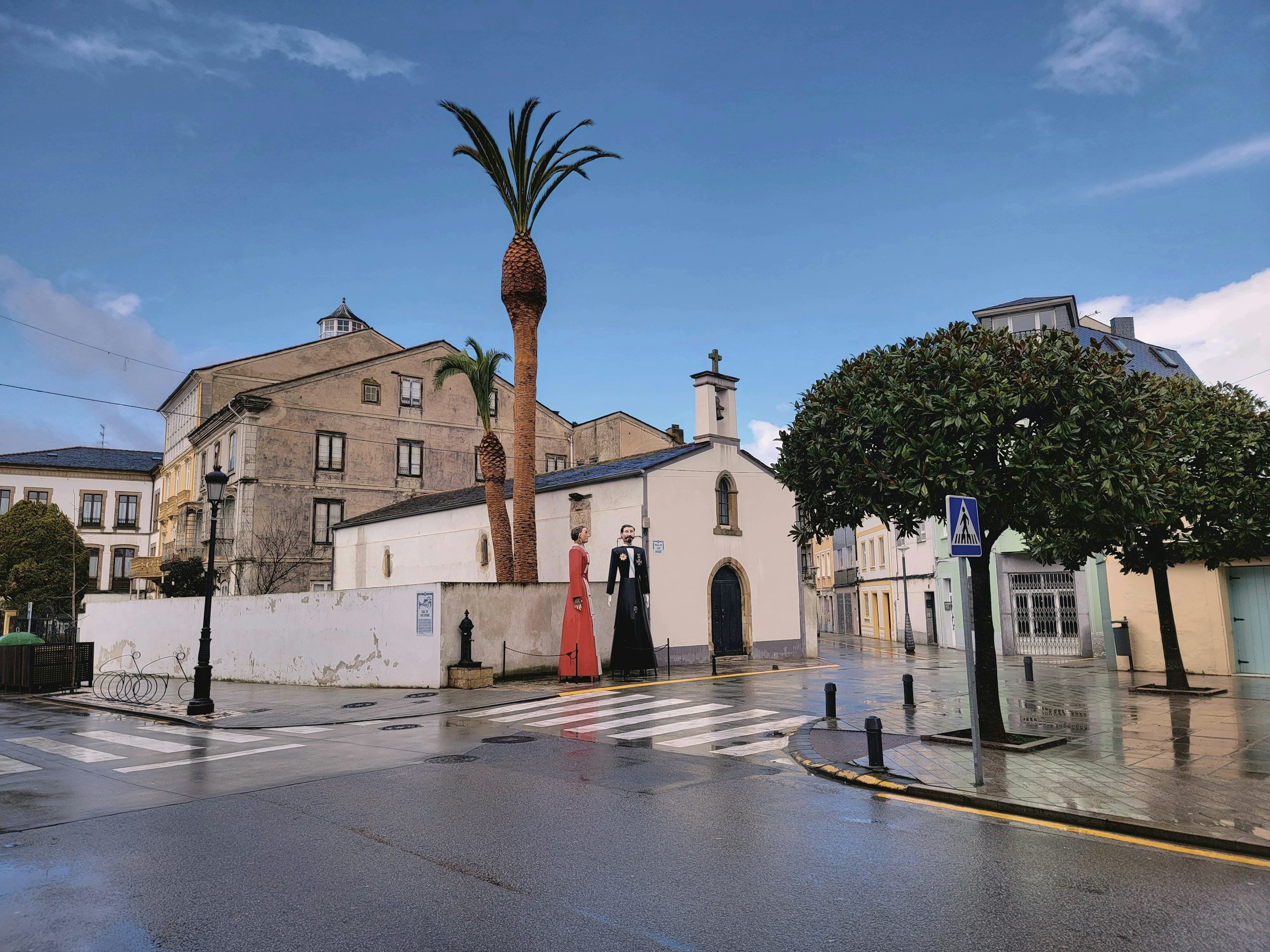
Cadaqués has a very different vibe, but if you're curious how Spain's smaller seaside towns compare, this market weekend is an interesting contrast.
From there, I'd walk down towards Porcillán Marina. It only takes a few minutes, but the town changes completely. The market baskets disappear, the fishing boats come into view and people start slowing down along the waterfront. Some are sitting on the benches looking across the Ría de Ribadeo, others are waiting for friends outside the cafés or wandering down towards O Cargadoiro.
The old iron-loading pier is one of my favourite places in Ribadeo, especially towards the end of the day. Built in 1905 to load iron ore onto ships, it's now where people come for an evening walk or simply to stand at the end of the pier for a while. Looking back towards town, you can see the marina below you, the towers of Santa María del Campo, the colourful houses climbing the hillside and, on the opposite side of the estuary, the first villages in Asturias. It's one of those views that explains Ribadeo much better than a map ever could.
I'd also make time for a long lunch while you're here. Seafood is what most people come for, and rightly so. Depending on the season, you'll see merluza, pulpo, navajas, zamburiñas, bonito del norte and other fish landed in nearby ports appearing on menus across town. O Lar de Manolo is a good choice if you're after traditional Galician cooking, while A Horta de San Roque takes local ingredients in a slightly more modern direction without losing the regional character.
For breakfast or an afternoon break, I'd keep Mareta Café, La Galletería and Cafetería Churrería Linares in mind. They're all places I'd happily return to rather than cafés I'd visit once just to tick them off. Before heading out for the day, I'd also call into one of Ribadeo's bakeries for an empanada or something sweet to take with you. It makes an easy lunch if you're walking out towards Faro de Illa Pancha or spending the afternoon exploring the coast.
If you're in Ribadeo during the summer, you'll notice the busiest part of the day is usually late morning and early afternoon. That's when people heading to and from Praia das Catedrais pass through town, café terraces around Plaza de España fill up and it can suddenly feel much livelier than it did over breakfast. It doesn't last particularly long, though. By early evening the coaches have gone, the queues outside the cafés have disappeared and you'll see more local families and groups of friends than day-trippers. The marina is quieter, people sit along O Cargadoiro watching the boats on the estuary and the old town settles back into its usual pace. It's one of the reasons I'd always stay at least a couple of nights instead of treating Ribadeo as somewhere to stop on the way to the beach.
One thing I hadn't really appreciated before visiting is how close Asturias feels. From the waterfront and several streets around the old town, you can already see the villages on the opposite side of the Ría de Ribadeo. They're only separated by the estuary, so crossing into another region is surprisingly quick. You can catch the FEVE train east, drive over the Puente de los Santos or simply take the boat across to Castropol if the service is running. Even if you don't cross the estuary yourself, it's nice sitting on the harbour watching the fishing boats, sailing boats and little passenger boats moving between Galicia and Asturias throughout the day.
I'd base myself in Ribadeo rather than just passing through on the way to Praia das Catedrais. The beach is well worth seeing, but after a couple of days I found myself looking forward just as much to wandering through the old town, calling into the market, picking up something from a bakery before a walk or ending the day down by the marina.
If you're staying near Plaza de España, everything is close enough that you can forget about transport for a while. The train station, bus station, Mercado de Abastos, the marina, cafés and restaurants are all within an easy walk, so it's just as easy to head out for ten minutes as it is to spend the whole afternoon exploring.
By the second day you'll probably have your own routine. Maybe it's breakfast at Mareta Café, an empanada from one of the bakeries before walking out to O Cargadoiro, or one last stroll along the waterfront after dinner to watch the light over the Ría de Ribadeo…
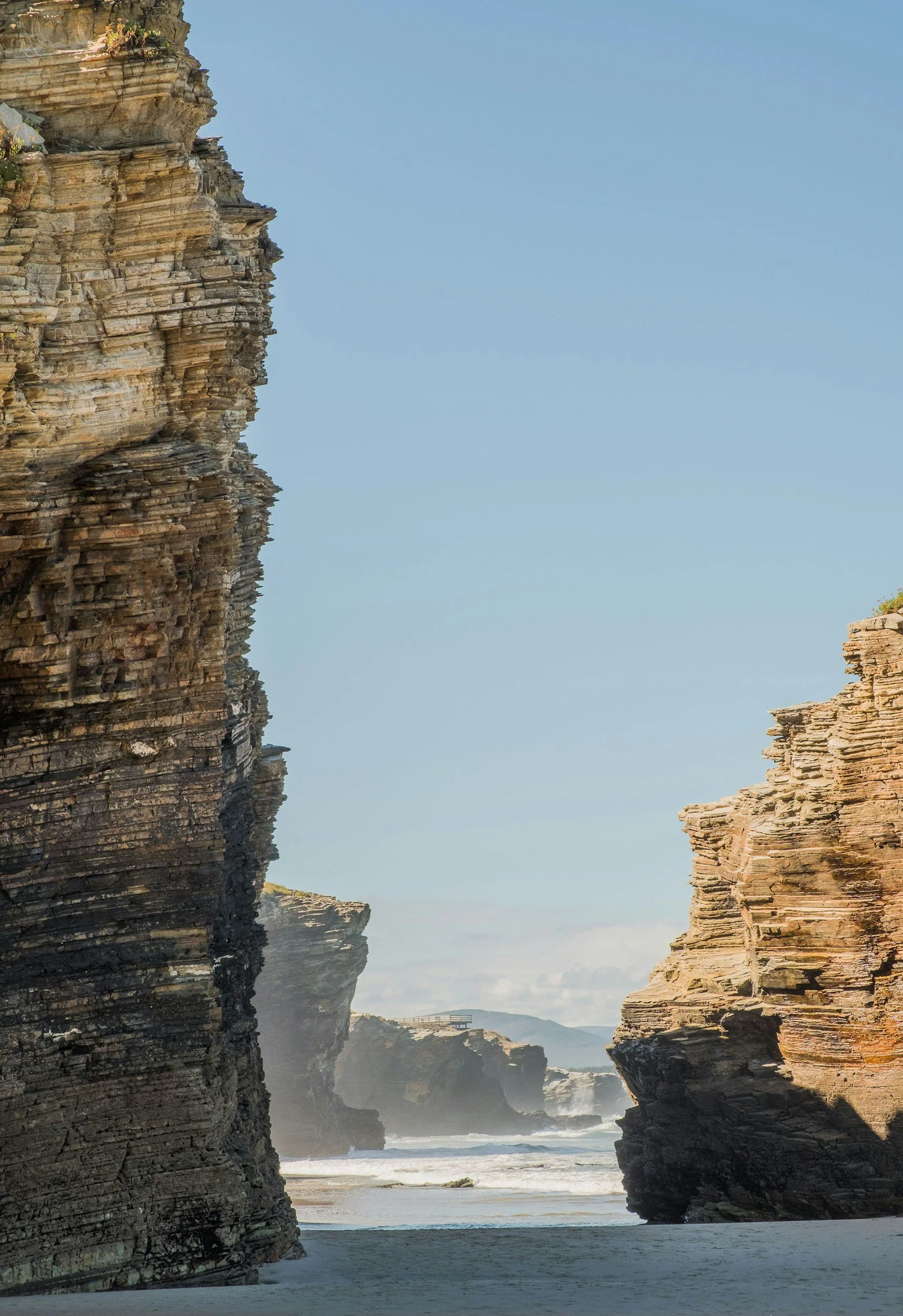
Planning to visit later in the year? These autumn escapes might change which part of northern Spain makes the most sense for your trip.
Mondoñedo deserves more than a stop between buses
At first glance, Mondoñedo looks a little less convenient than places like Ribadeo or Viveiro because there isn't a railway station. Every journey starts with the bus, so it's worth checking departure times before you start making plans for the day. Miss one, and you might be waiting a while for the next.
That said, I never found it frustrating. If anything, it changes the way you spend your time. Instead of trying to squeeze in another stop before catching the next train, you slow down a little. You have another coffee in the square, wander into a shop you hadn't noticed earlier or decide to stay a bit longer over lunch. After a day or two, you stop thinking about the bus altogether and just work around it.
Buses arrive from Lugo, Ribadeo, Vilalba and other towns across A Mariña, and the bus station is only a five-minute walk from the old town. I'd stay somewhere around Praza da Catedral if you can. From there it's easy to walk everywhere you'll probably end up during your stay, whether that's breakfast at a bakery, an afternoon wandering through the old streets or dinner in one of the restaurants around the square. Once you've dropped your bags off, the town is small enough that your feet do the rest.
You'll cross Praza da Catedral so many times that it quickly becomes your reference point for everything else. It's where you'll stop for a coffee in the morning, walk through on your way back from the bakery and probably end up sitting for a while before dinner. The cathedral is impossible to ignore, but after a day or two I found myself paying just as much attention to everything happening around it. Pilgrims on the Camino del Norte arrive with backpacks and walking poles, neighbours stop to chat outside the cafés, and people cut across the square carrying shopping bags on their way home. It feels like the centre of everyday life as much as the centre of the old town.
Before you leave the square, look up towards the Seminario de Santa Catalina. It's much bigger than most people expect, and seeing it towering above the cathedral makes it much easier to understand why Mondoñedo became such an important religious centre. If you're interested in history, I'd also spend an hour in the Diocesan and Cathedral Museum. Alongside medieval sculptures and Flemish paintings, you'll find illuminated manuscripts, gold and silver religious objects, choir books and centuries-old documents that have remained in Mondoñedo rather than being moved to one of Galicia's larger cities. It gives a much fuller picture of the town than simply walking through the streets outside.
After you've spent a little time around the cathedral, it's impossible not to notice how many people leave the square carrying a white pastry box. Most of them are heading to Confitería La Alianza, which has been baking Tarta de Mondoñedo since 1892. If you've never tried it before, don't expect something light. It's rich with almonds, candied fruit, angel hair squash and syrup, and even a small slice goes a long way. It's completely different from Tarta de Santiago, and I'd choose it every time if I wanted to take home something that's genuinely associated with Mondoñedo.
Just around the corner, Pastelería Val de Brea is another place I'd call into. The window is usually filled with handmade chocolates, pastries and seasonal cakes, and it's the sort of bakery where people stop in for one thing before leaving with three. If you're catching a bus later in the day, it's also an easy place to pick up something for the journey.
Keep wandering through the streets around Praza da Catedral and Rúa Progreso, and you'll come across little food shops selling mountain cheeses from A Mariña, local honey, jars of jam, biscuits, cured sausages and other things that rarely make it into supermarket shelves. I always think these are the nicest places to browse because there's no rush. You wander in, see something you've never heard of before, ask a question, taste something if you're lucky and walk out with lunch without ever planning it.
One walk I'd definitely make time for is Barrio dos Muíños. It's only a few minutes from Praza da Catedral, but it feels like a different part of town altogether. The Valiñadares River splits into narrow stone channels that once powered dozens of watermills, and you spend much of the walk crossing little bridges or following the sound of running water. Even in the middle of summer it stays cool here thanks to the trees and the river, and because most people never wander this far from the cathedral, it's often surprisingly quiet.
Back in the centre, the cafés are already busy by nine or half past. People call into the bakery before work, someone is reading the newspaper over a coffee and you'll usually see pilgrims sorting out the day's walk before setting off again. Around lunchtime the day changes again. The buses leave, a lot of the people who came for a couple of hours head home, and suddenly you notice how quiet the streets have become. Later in the evening, the restaurants are still open, neighbours stop to chat in Praza da Catedral and another handful of pilgrims arrive with backpacks, but there isn't much else competing for your attention. After spending time in larger Galician towns, the evenings here feel remarkably peaceful.
If you've got an hour to spare, I'd also walk up to Alameda dos Remedios. The climb only takes a few minutes, and once you're there it's easy to see why local people still use it as somewhere to escape the centre for a while. Tall chestnut and plane trees shade the paths around the Santuario dos Remedios, and from the viewpoints you can look back across the rooftops of Mondoñedo towards the green hills surrounding the valley. Come back in October during As San Lucas, and it's a completely different scene. The quiet paths fill with horses, market stalls, octopus tents and families who've been coming back year after year. The rest of the year, you'll probably share the walk with a few locals out for some fresh air and not many other people.
If you've got time for one last walk, head uphill on one of the paths leading out of town. It doesn't take long before the rooftops begin to fall away below you and the cathedral towers stand out against the green valley. Looking back from higher up also gives you a much better sense of how small Mondoñedo really is, tucked between wooded hills with quiet country roads disappearing in every direction.
I'd give Mondoñedo at least two or three nights rather than trying to fit it into a long afternoon. The bus timetable means you'll probably have a little more time than you expected anyway, and after a day or two it stops feeling like a limitation.

If you're travelling on your own, you might also like these small-town ideas, especially if cafés, local life and walkable streets matter more to you than ticking off attractions.
There isn't one perfect base. That's what makes northern Galicia so interesting.
When I first started planning this trip, I spent far more time comparing bus routes and train connections than anything else. I wanted to make sure I'd picked the most practical base. Once I was actually there, that stopped mattering surprisingly quickly.
After the first morning, I wasn't checking timetables anymore. I was wondering whether to have another coffee before the market opened, whether the clouds would clear enough for a longer walk or whether I should stay one more night because there was still a restaurant I wanted to try. Getting there had been the difficult part. Being there was easy.
I also wouldn't try to fit all of these towns into the same trip. They're close enough on a map to make it look tempting, but they never felt interchangeable. I liked Mondoñedo most when I stopped worrying about the next bus. In Viveiro, I found myself wandering back towards the harbour several times a day without really planning to. Betanzos made much more sense once the market filled the streets, while Ribadeo became noticeably quieter after the afternoon crowds had gone home. Cedeira was the place where I kept checking the forecast before deciding what to do that day.
If I had a week, I'd split it between one coastal town and one inland town instead of trying to compare places that offer much the same experience. Viveiro and Mondoñedo are the combination I'd choose. One day might finish with grilled fish by the harbour before a walk along the waterfront, while the next begins with coffee in Praza da Catedral, a slice of Tarta de Mondoñedo and nowhere in particular that you need to be.
I also stopped worrying about finding the "best" town quite early on. They all gave me something different. Some mornings I wanted the sea, other days I wanted a slower place where the loudest sound was the cathedral bells or people chatting across the square. Looking back, I don't think I'd change much about that. I'd simply spend a little longer in each place before moving on.
If you're still deciding whether Galicia is the right fit, these quiet Spanish towns are a good place to compare different regions before making up your mind.
A few things I'd know before booking anything
After travelling around northern Galicia without a car, I found that the things I worried about before leaving weren't always the things that mattered once I arrived. I spent far more time comparing bus connections than I ever spent thinking about where my hotel was, yet it was the location of my accommodation that made the biggest difference day to day.
I'd always stay as close to the historic centre as possible, even if it costs a little more. In Viveiro, Ribadeo and Betanzos, being a few minutes from the old town means you can walk to the market, the station, cafés, restaurants and your hotel without giving it much thought. Stay another kilometre away and you suddenly notice the extra walk when you're pulling a suitcase over cobbles or heading for an early bus with a backpack on your shoulder.
It's also worth packing with those streets in mind. Most of these towns are built on hills, and many of the old lanes are paved with uneven stone rather than smooth pavements. I was very glad to have a small suitcase that I could lift up a flight of steps when I needed to. A large hard-shell case would have been much less enjoyable by the second or third town.
Mornings are a little different from what some people expect, too. Bakeries are often open long before the cafés begin filling up, so you'll see people leaving with warm bread while many terraces are still empty. If you're the sort of person who likes sitting down for breakfast at eight, you'll have more choice in Viveiro or Ribadeo than somewhere like Mondoñedo or Cedeira, where cafés tend to open a little later and the mornings unfold at a slower pace.
I'd leave a little room for spontaneity when it comes to restaurants. Outside July and August, it's completely normal for independent places to close one or two days a week, and it isn't always on a Monday. I quickly got into the habit of having a couple of options in mind rather than setting my heart on one place. It saves the disappointment of turning up to a handwritten "Cerrado" sign on the door.
If you're able to choose your travel dates, I'd try to be in town on market day. The difference is obvious as soon as you step outside. Farmers are unloading vans before the stalls are fully set up, people arrive carrying shopping trolleys instead of backpacks, the bakeries are busier than usual and the cafés fill up much earlier than on an ordinary weekday. Even if you don't buy anything, it's one of the nicest mornings to wander around with no particular plan.
I also found myself checking bus and train times on the official operators' websites rather than relying entirely on Google Maps. Google is useful for finding your way around, but it doesn't always keep up with seasonal timetable changes or some of the smaller regional bus routes. For buses, Bus.gal and the individual operators' websites were usually the most reliable source. If you're travelling on the Renfe Cercanías AM line, still better known to many people as FEVE, it's worth checking the timetable before you leave for the station. Services are much less frequent than on Spain's main rail network, so missing one can easily mean a much longer wait than you expected.
Sundays and public holidays are also worth keeping in mind when you're planning your route. Buses and trains usually run less often, many independent shops stay closed and some cafés open for shorter hours, even though restaurants in the larger towns generally continue serving lunch and dinner. If you're moving between towns on a Sunday, I'd always check the timetable before booking accommodation. A connection that works perfectly on a Wednesday might not exist at all at the weekend.
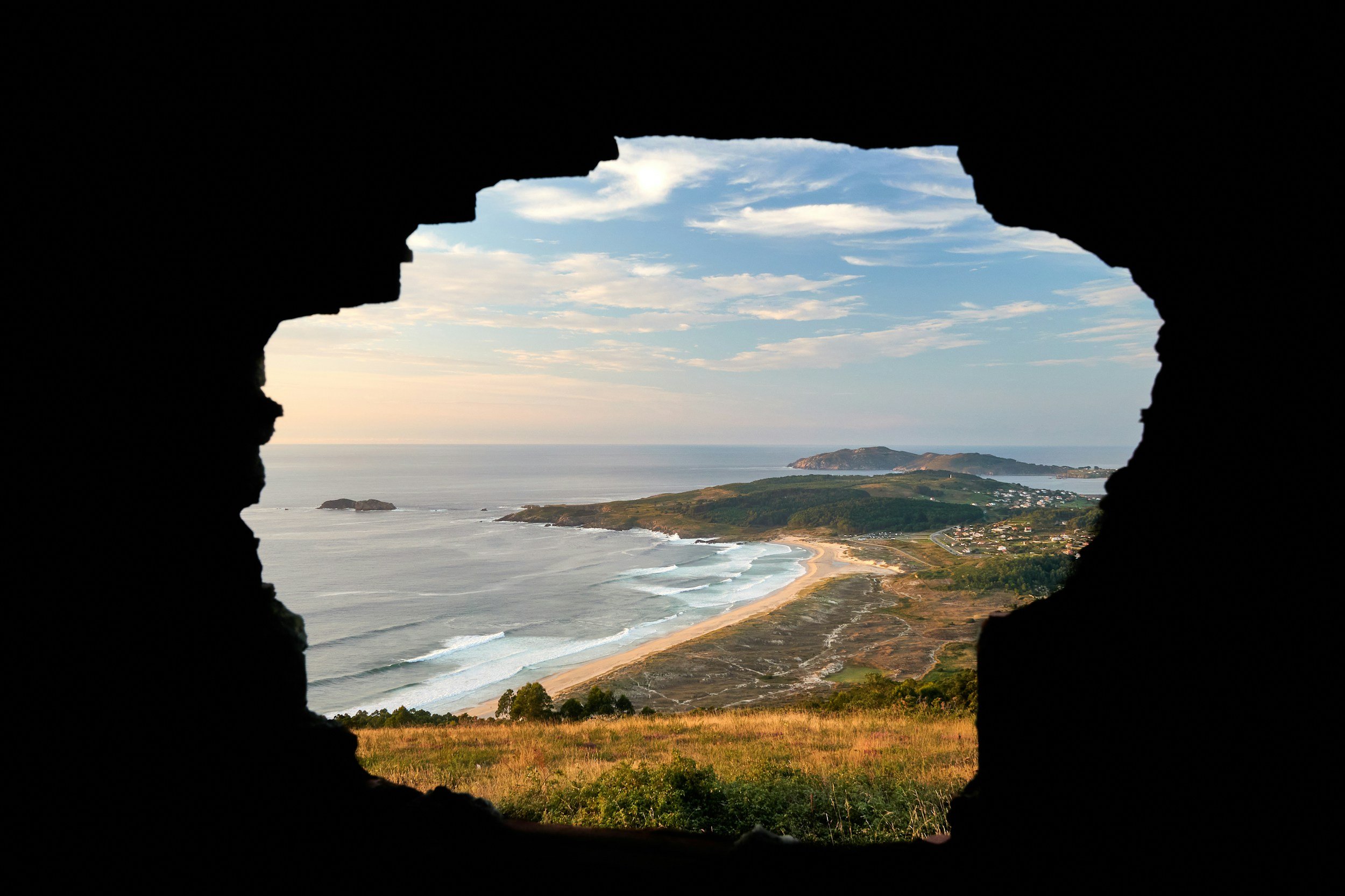
Soria couldn't feel more different from Galicia, but if you're choosing between Spain's greener north and its quieter inland regions, this Soria guide makes the differences much clearer.
FAQs about visiting Galicia
Can you explore northern Galicia without renting a car?
Yes, and that's actually one of the things I enjoyed most about travelling here. The public transport isn't as fast or frequent as you'll find around Spain's bigger cities, but it connects the main towns surprisingly well if you plan your days sensibly.
The biggest shift is changing your expectations. Instead of trying to fit three places into one day, you naturally spend longer in each town. Once I stopped treating the buses and trains as something that slowed me down, I realised they were encouraging me to travel in a way that suited northern Galicia much better.
Which town would you recommend for a first trip?
If this is your first visit, I'd probably tell you to choose Viveiro or Betanzos.
Viveiro feels like somewhere you can settle into almost immediately. There are plenty of cafés, restaurants, harbour walks and little streets to explore without feeling like you've "done" the town after one afternoon.
Betanzos is smaller but has a lovely rhythm to it, especially if your visit happens to coincide with a market day. It gives you a really good introduction to northern Galicia without feeling overwhelming.
Would you choose Ribadeo or Viveiro for a first trip?
I'd choose Viveiro if you want somewhere you'll happily spend four or five days without needing to think about excursions.
I'd choose Ribadeo if you like the idea of combining Galicia with Asturias or if visiting Praia das Catedrais is already part of your plans.
They're both easy to visit without a car, but they have very different personalities. Viveiro feels more like a working coastal town, while Ribadeo has a slightly busier atmosphere during the day before becoming much calmer in the evenings once many beach visitors have gone home.
Where would you stay for a week without a car?
I'd split the week between two places rather than trying to see everything.
If it were my trip, I'd probably spend four nights in Viveiro and three in Mondoñedo. They complement each other beautifully. One gives you the coast, seafood restaurants and lively evenings, while the other slows everything down with quiet streets, historic bakeries and mornings that begin around Praza da Catedral.
If you'd like to include Asturias as well, I'd swap Mondoñedo for Ribadeo instead.
Would you stay in one town or move around?
For a shorter trip, I'd stay put.
One thing I noticed was that these towns become much more enjoyable once you stop thinking about transport. By the second morning you're buying breakfast from the same bakery, recognising the walk back to your hotel and no longer checking your map every few minutes.
That's when the trip starts to feel less like sightseeing and more like simply spending time somewhere new.
Is the FEVE railway practical for travelling around northern Galicia?
Yes, as long as you know what to expect.
The former FEVE line, now operated by Renfe Cercanías AM, isn't a high-speed railway. Trains are relatively infrequent and the journey follows the coastline at a relaxed pace.
I wouldn't use it if I were trying to squeeze several towns into one day, but if you've got time, it's a lovely way to travel. Some of the views between Galicia and Asturias are reason enough to choose the train over the bus.
Can you explore the Galician coast using only public transport?
You can, but I wouldn't expect to reach every beach or tiny fishing village.
The larger coastal towns are well connected, but some of the smaller places only have a handful of buses each day, especially outside summer.
Rather than trying to cover the entire coastline, I'd choose one town as a base and explore what's nearby. I found that approach much more enjoyable than constantly moving on.
Do I need to book buses and trains in advance?
Most of the time, no.
Local buses and the FEVE railway generally don't require advance booking, although it's always worth checking the timetable before you travel because services can be quite spread out.
The journeys I'd think about booking earlier are the longer coach routes from cities such as Santiago de Compostela or A Coruña, especially if you're travelling on a Friday afternoon, Sunday or during a public holiday.
What's something people don't usually think about before they book?
Where their accommodation actually is.
It's easy to save a little money by booking somewhere on the edge of town, but if you're arriving by bus or train with luggage, those extra fifteen or twenty minutes uphill can quickly become frustrating.
For this kind of trip, I'd almost always stay in or very close to the historic centre. It makes everything else feel easier.
When is the best time of year to travel around northern Galicia by public transport?
I'd happily visit at almost any time of year, but May, June, September and early October are probably my favourites.
Everything is open, buses and trains are running regularly, and the towns still feel lively without the crowds that arrive during the busiest weeks of summer.
Autumn is particularly lovely if you enjoy markets, cafés and quieter streets, while winter has a calm atmosphere that really suits places like Mondoñedo.
Did you ever wish you'd rented a car instead?
Honestly, very rarely.
There were one or two tiny villages I'd have liked to visit, but I never felt that I was missing the essence of northern Galicia.
If anything, travelling without a car made me notice more. I walked through neighbourhoods I would've driven past, stopped in cafés because I had half an hour before the next bus and ended up discovering places I hadn't planned to visit at all.
Which town surprised you the most?
Probably Mondoñedo.
I expected to admire the cathedral and move on. Instead, I found myself remembering completely different things afterwards. The smell of fresh bread drifting out of the bakeries in the morning, the little waterways running through the old mill quarter and how quiet the streets became once the buses had left for the day.
It's not the easiest town to reach, but it might be the one that stayed with me the longest.
If you could give one piece of advice before someone books this trip, what would it be?
Leave a little room for changing your mind.
Some of my favourite moments weren't the ones I'd planned. They were the extra hour I spent in a café because it started raining, the market I happened to arrive during without realising it was market day, or deciding to stay for one more evening because I wasn't quite ready to leave.
Northern Galicia isn't somewhere I'd try to optimise. It's somewhere I'd give a little space to surprise me.