
These European markets are the reason I love travelling in spring
Spring markets in Europe look romantic in photos, but in real life they are about small, practical decisions. What time you arrive. Whether the square is in full sun by 10:30. Whether your hotel is three minutes away on foot or a twenty-minute walk uphill with a tote bag cutting into your shoulder. If you treat the market as the anchor of the day instead of something you slot in between a museum and a train connection, everything becomes easier. In Uzès, for example, Place aux Herbes fills steadily from around 9:00. By 11:30 you’re weaving between locals carrying wicker baskets and visitors hesitating in the middle of the square. Arriving at 9:45 feels completely different from arriving at noon.
It also helps to think through the basics before you even step onto the cobblestones. Are you staying on a quiet side street five minutes from the square, like near Rue Grande Bourgade in Uzès, or are you parked outside town and relying on a car? Do you want to buy fresh chèvre wrapped in paper, a still-warm baguette from a bakery like Boulangerie Provençale just off the square, and a punnet of strawberries that need to be eaten the same day? Because once you’re carrying soft fruit and cheese, you’re not strolling aimlessly anymore. You’re heading somewhere with purpose. Spring complicates this further. One Saturday in April can feel like early summer, with linen dresses and rosé already open on café tables. The next week, a cold wind cuts across the square and vendors pull on extra layers, and suddenly the asparagus looks early and the strawberries less convincing.
You also need to be honest about what kind of market morning you actually enjoy. Some people want a focused shop: asparagus, goat cheese, bread, done. Others want to browse ceramics, old linens, vintage cutlery, and then circle back for olives and tapenade. In L’Isle-sur-la-Sorgue, the Sunday market mixes food with antiques along the river, and that changes the rhythm completely. If you love rummaging through old postcards and enamelware before buying tomatoes, you’ll stay longer. If you don’t, you’ll feel stuck. Spring is often the best season for these markets because locals are fully back into their weekly routines and the produce is shifting into something lighter and more interesting. But you still have to plan for the unglamorous details: a mistral wind that makes sitting outside unpleasant, a Pentecost weekend that doubles the crowd, a café that doesn’t open until 10:00 even though you’ve been awake since seven. Markets run on local life first. When you move with that instead of against it, the morning feels easy.
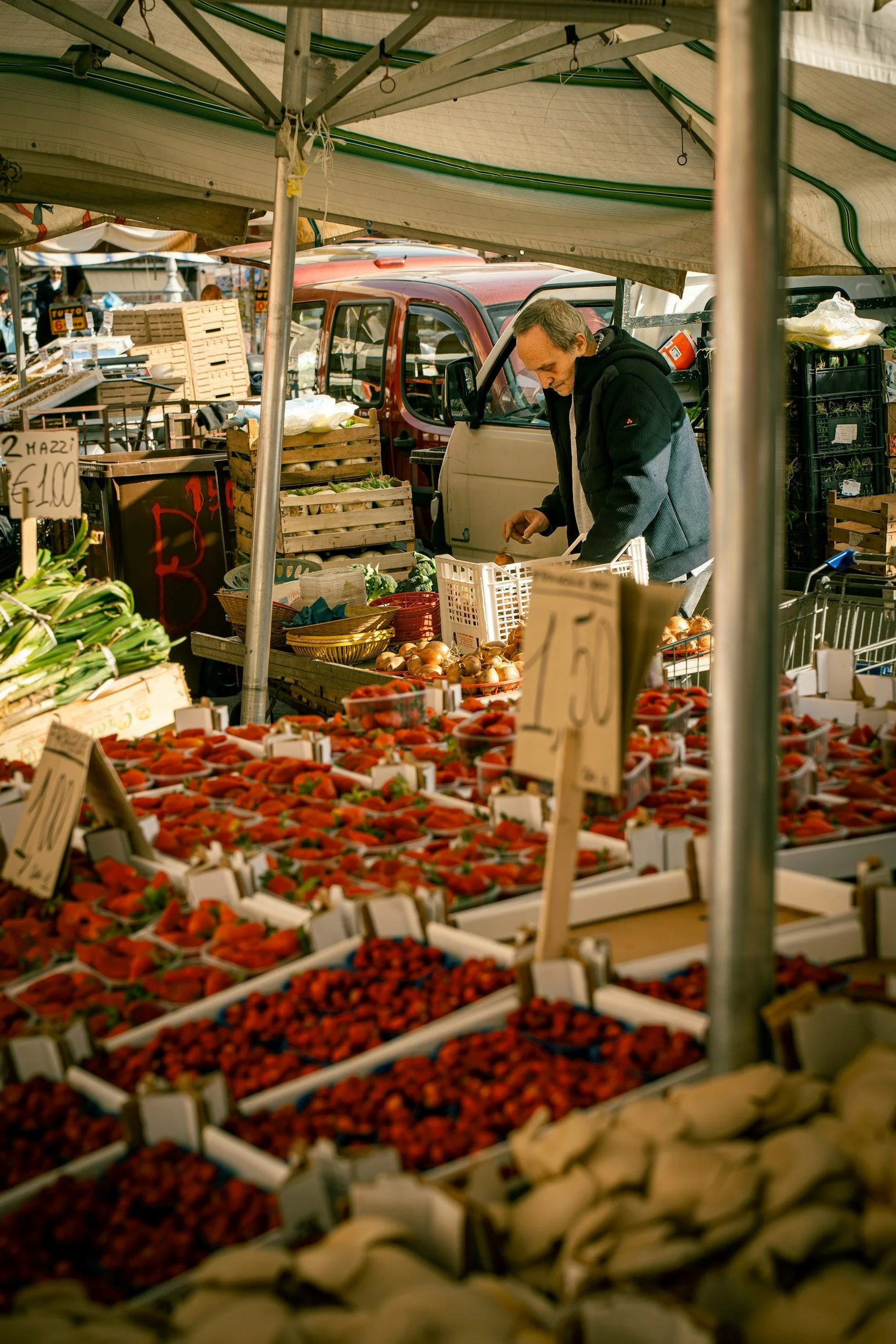
What “spring” actually looks like at the market table
It sounds simple to say “I’m going to Europe in spring,” but once you’re standing in a market square at 9:30 in the morning, you realise March and May are completely different worlds.
Take March in much of France. You walk into a market in a place like Sarlat or even smaller towns in the Gard, and the tables are solid and practical. Wheels of cheese. Saucisson hanging in rows. Potatoes in wooden crates. Walnuts, jars of honey, tins of pâté. It’s comforting, and it’s very local, but it’s not yet that bright, overflowing spring produce scene people imagine. You might see strawberries, but they’re often the early ones, and you can tell by how carefully people inspect them before buying.
Go further south, though, and March changes. In Ortigia in Sicily, citrus still dominates in the best way. You’ll see blood oranges stacked high, lemons everywhere, fresh herbs, capers, olives, and fish counters that are clearly serving locals who are cooking that day. Tomatoes might be there, but they’re not at their best yet, and you can tell by what people are actually buying. In Spain, March markets can feel lively and practical at the same time, especially in Andalusia where it’s already warmer but not hot.
April is when things start to shift more obviously in France and northern Italy. In Uzès, you’ll notice asparagus properly taking over certain stalls, and the chèvre selection suddenly feels more varied again. Radishes, spring greens, the first strawberries that actually taste right. You start buying things that make sense for lunch the same day instead of just pantry staples. In Italy, April is when artichokes and fava beans become hard to ignore. You don’t need a guidebook to tell you it’s spring, you can see it in what’s piled up on the tables.
By May, markets feel steadier week to week. The vendors are fully back into their routine, and the selection doesn’t swing wildly with every temperature change. Annecy in late May is a good example. The old town streets are lined with stalls, flowers look properly seasonal, and you can shop in the morning and then walk down to the lake without bumping into full summer crowds. In Lucca, May Saturdays make sense because you can do the market, then walk the walls comfortably before it gets too warm.
Early June is often the sweet spot if you want the summer feeling without July pressure. Sarlat in early June still feels manageable, but the market looks richer and more generous than it did in March. Innsbruck in early June can still have snow on the mountains in the distance, but the Markthalle feels fresh and lively, and you can sit outside afterwards without needing a coat.
The biggest mistake is assuming spring means the same thing everywhere. Sicily in March is not Tuscany in March. Andalucía in April is nothing like northern France in April. Even within one country, altitude changes everything. A market in a mountain valley can still feel crisp at 9:00 in early June, while a coastal market further south is already busy and warm by mid-morning. If you plan with that in mind instead of just looking at the calendar, you’ll land in the right place at the right time and the stalls will make sense the moment you see them.
The small weather details that change everything on market morning
You don’t really understand how much weather matters until you’ve done the same market twice under completely different skies. A dry, bright Saturday in northern France feels spacious and relaxed. The same square in light rain feels compressed within minutes.
In places like Sarlat or even smaller towns in the Dordogne or Loire Valley, many markets are set up in open stone squares. If it starts raining, everyone shifts under the awnings at once. Shoppers slow down. People stop in the middle of narrow lanes to open umbrellas. Vendors pull plastic covers halfway over crates of produce. What felt wide and easy at 9:30 can feel crowded and slightly chaotic by 10:15. It’s not dramatic, but it changes how long you want to stay. You browse less, and buy faster. And suddenly that café on the corner becomes less about enjoying a coffee and more about getting warm and dry.
Wind matters too. In towns like Uzès, if the mistral picks up, you feel it in the square. Napkins fly off tables. Vendors hold down paper bags with one hand while weighing vegetables with the other. Sitting outside after the market isn’t as pleasant, even if the sun is technically out. On calm days, Place aux Herbes feels easy and open. On windy days, you’ll probably do your shopping and then head somewhere more sheltered for coffee.
Go further south, and the issue flips. In Andalucía, by late April, heat can arrive quickly. Jerez at 10:00 in the morning might already feel warm enough that you’re glad you wore linen instead of denim. Markets still run exactly as they always do, because they’re daily life, but your comfort depends on adjusting your timing. Starting earlier makes a difference. So does being realistic about what you’re buying. Soft strawberries, fresh fish, or anything delicate won’t enjoy sitting in a tote bag while you wander for two hours. If you’re staying nearby, you can drop things off and head back out. If you’re not, it’s smarter to buy what you’ll eat immediately or later that same morning.
Heat changes your pace too. You move slower and you’re less likely to circle back to a stall you liked earlier. In Spanish markets, especially in the south, that mid-morning warmth nudges you toward finishing your shopping and finding shade rather than lingering.
In alpine regions, the dynamic is different again. Snowmelt timing affects how a Saturday feels in a place like Innsbruck. When the mountains start looking fully accessible and the sun appears after a stretch of grey days, locals come out in numbers. Car parks fill earlier. Bakeries sell out faster. Cafés around the Marktplatz get busy sooner than you’d expect in what still technically feels like “spring.” A town that felt quiet in early March can suddenly feel lively by late May on the first properly warm weekend.
None of this means avoiding these days. It just means adjusting. If you want calm, you arrive earlier. If you like energy, you lean into it and accept that the square won’t feel sleepy. Weather doesn’t ruin market mornings, but it does quietly shape them. When you plan with that in mind instead of hoping for perfect conditions, the day feels much easier.
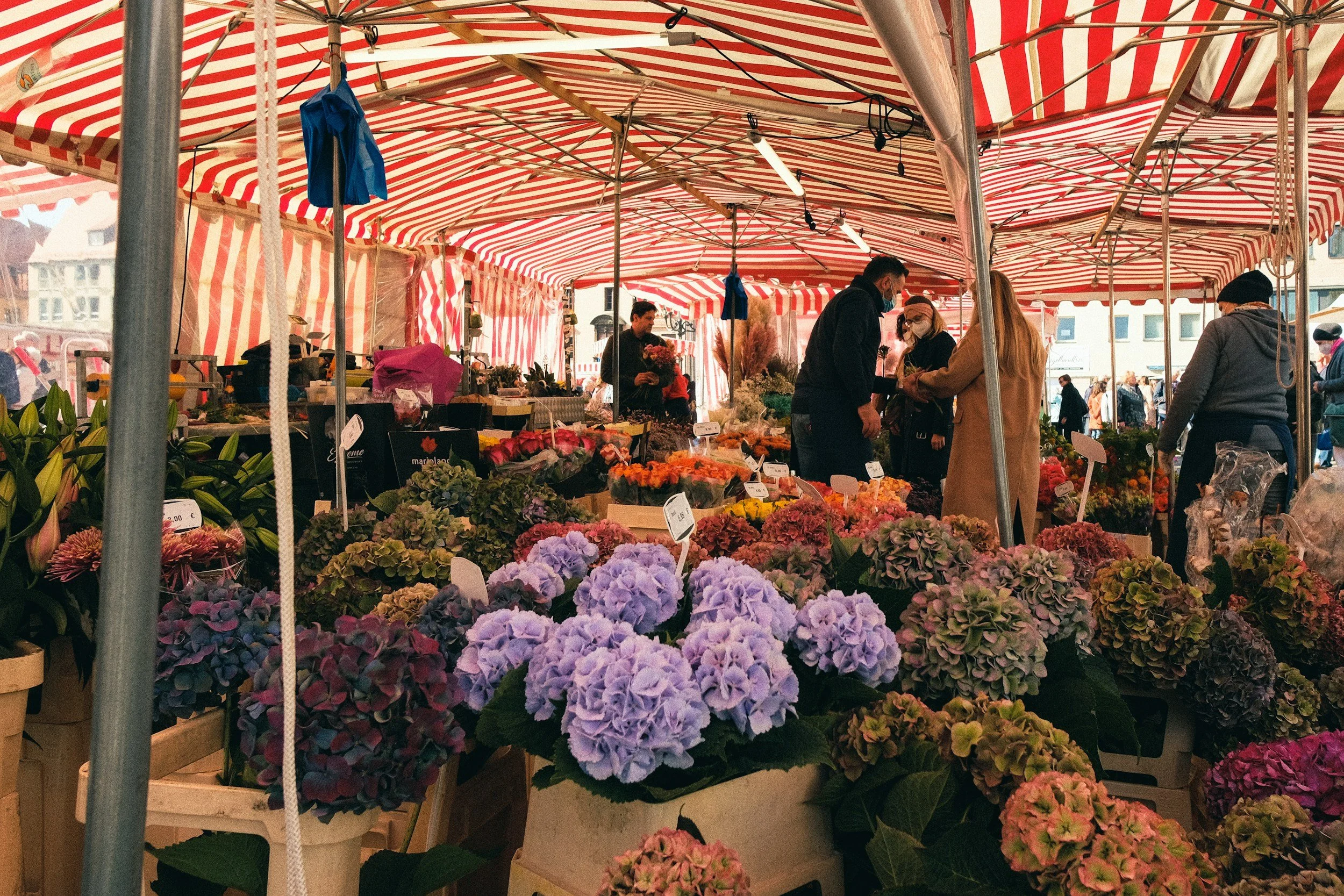
Holiday weekends and local fêtes that quietly change market mornings
If you’ve ever walked into a market thinking it would be calm and found every single café chair taken by 10:00, it was probably the calendar, not bad luck.
Easter is the big one. In France especially, even towns that feel very local the rest of the year can suddenly fill up. Uzès over Easter doesn’t feel like a random April Saturday. It feels like a long weekend. More French families are in town. Restaurants that normally take walk-ins are fully booked. Bakeries sell out faster. The market still runs, but it feels tighter, louder, more compressed. Sometimes you’ll see extra seasonal stalls. Other times you’ll notice a regular vendor missing because they’ve gone to a bigger regional fair for the weekend.
In Italy, Easter week does the same thing. The market is technically the same, but the atmosphere shifts. Accommodation is harder to find. Cafés around the square are busy earlier. If you arrive expecting the sleepy version of a Tuscan town you visited in March, you might be surprised by how much energy there is. It’s not chaotic, just fuller.
Pentecost in France is another one people underestimate. It’s a classic short domestic break, especially in regions that are easy to reach from bigger cities. Annecy over Pentecost feels very different from Annecy on a random May weekend. The market runs as usual, but you wait longer for bread, you weave more through people, and you might circle once or twice before finding somewhere to sit for coffee.
Then there are local fêtes. These are harder to predict unless you check the town’s event calendar, but they can completely change the layout. A section of the market might move because the main square is being set up for an evening event. Extra food stalls appear selling festival snacks instead of everyday produce. In L’Isle-sur-la-Sorgue, special antiques weekends expand the footprint of the market and draw in a much bigger crowd than a normal Sunday.
None of this is a reason to avoid these weekends. It just helps to know what you’re walking into. If the market is the main reason you’re visiting, arriving the day before makes everything easier. Walk through the square when it’s empty. Notice where the produce usually sits. See which cafés are just far enough from the centre to feel calmer. The next morning, even if it’s busier than expected, you won’t feel disoriented. You’ll know exactly where to start!
France in spring, when the markets feel like weekly life again
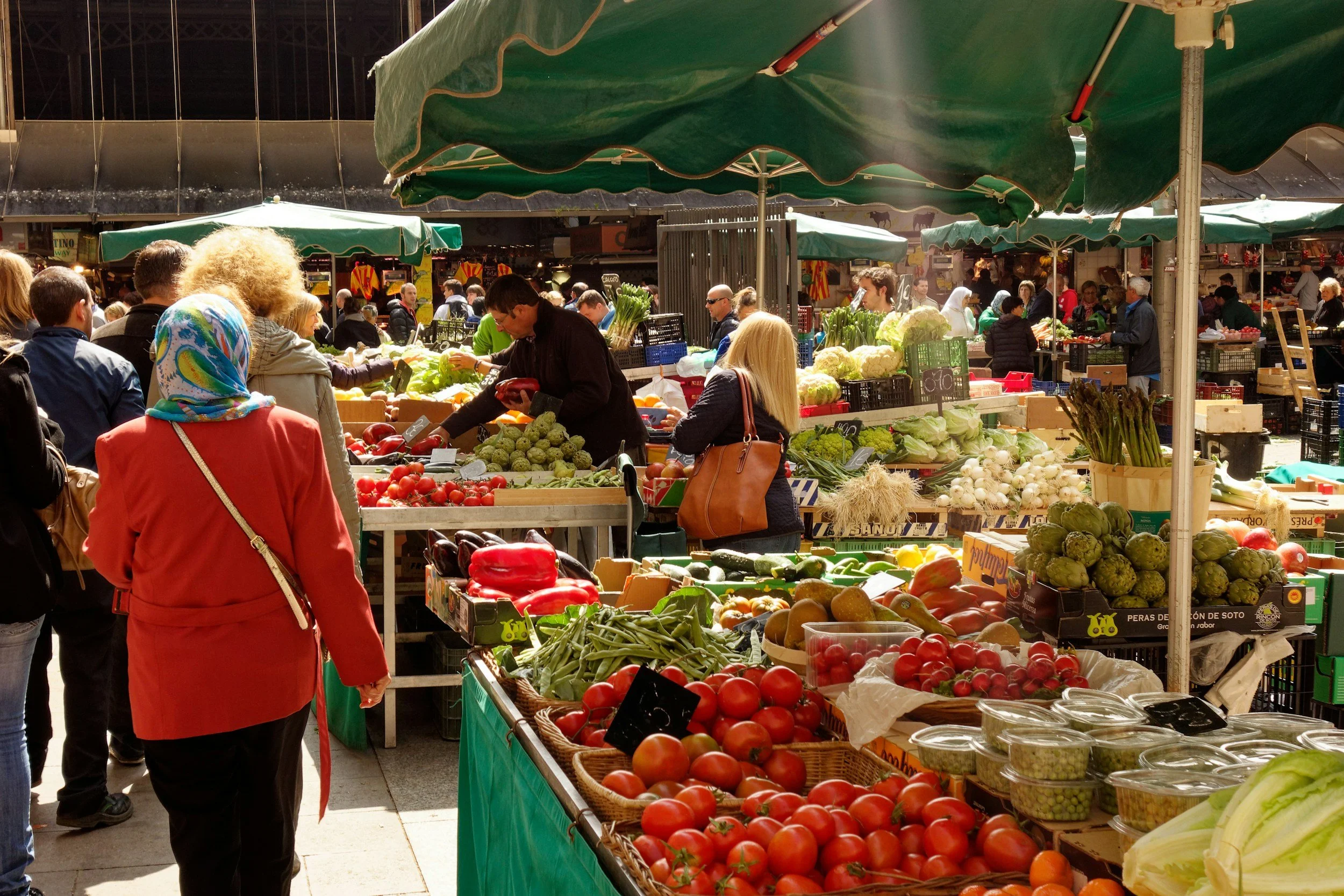
French markets in spring are different from summer markets, and that difference is exactly why they’re so good. By April and May, the stalls look alive again, but the squares haven’t tipped into full holiday mode. You’re not navigating selfie sticks. You’re moving around locals who are buying asparagus for lunch and arguing lightly over which chèvre they prefer this week.
The best mornings are the simplest ones. You wake up, walk five or ten minutes through quiet streets, and suddenly you’re in the middle of it. In Uzès, that means turning a corner and seeing the first vegetable stands lining Place aux Herbes. In Annecy, it means following the narrow streets of the old town until the market just appears around you. No parking and timetable stress. Just a normal Saturday pace.
When you treat the market like part of your morning instead of an “activity,” it works better. You buy what actually looks good. A small round of fresh chèvre wrapped in paper. A baguette still warm from a bakery like Maison Comte near the square. Strawberries that smell right when you lean closer. Then you step away from the tightest part of the stalls and find a café that isn’t directly in the busiest line of traffic. In Sarlat, that might mean walking one or two streets away from the densest section before sitting down.
France has markets that are famous for a reason, but in spring the sweet spot is often the one that feels full without feeling overwhelmed. The produce has shifted away from winter storage vegetables and back toward things you actually want to eat the same day. Asparagus shows up in proper bundles. Radishes still have their leaves attached. Flower stalls look intentional instead of sparse.
The practical side matters more than people admit. If you’re staying twenty minutes outside town and relying on a car, your entire market morning changes. You’ll hesitate before buying soft fruit. You’ll think twice about cheese if the sun is already warming up the square. You’ll rush because you’re aware of parking time or a drive ahead of you. If you’re staying within walking distance, everything feels easier. You can buy properly, drop things off, and head back out without worrying about what’s happening inside your tote bag.
Uzès on a Saturday in April - Place aux Herbes, proper asparagus, and knowing when to step aside
If you turn into Place aux Herbes just before 9:30 on a Saturday in April, the market is already properly underway. Vendors are set up, the first wave of locals has done one loop, and the square feels full but still easy to move through. The space itself helps. It’s round, lined with arcades and old stone façades, and shaded in parts by tall plane trees. That shade matters more than you’d think. By 10:30 the sun has shifted, and one side of the square is noticeably warmer than the other.
The real produce sits in the centre cluster. That’s where you start. In April in the Gard, white asparagus is the thing to look for. Thick, tight bundles stacked upright, the cut ends still slightly damp. Vendors trim the bases quickly and wrap them in paper with a practiced twist. You’ll hear prices called out “trois euros le kilo” and see regulars buying without hesitation.
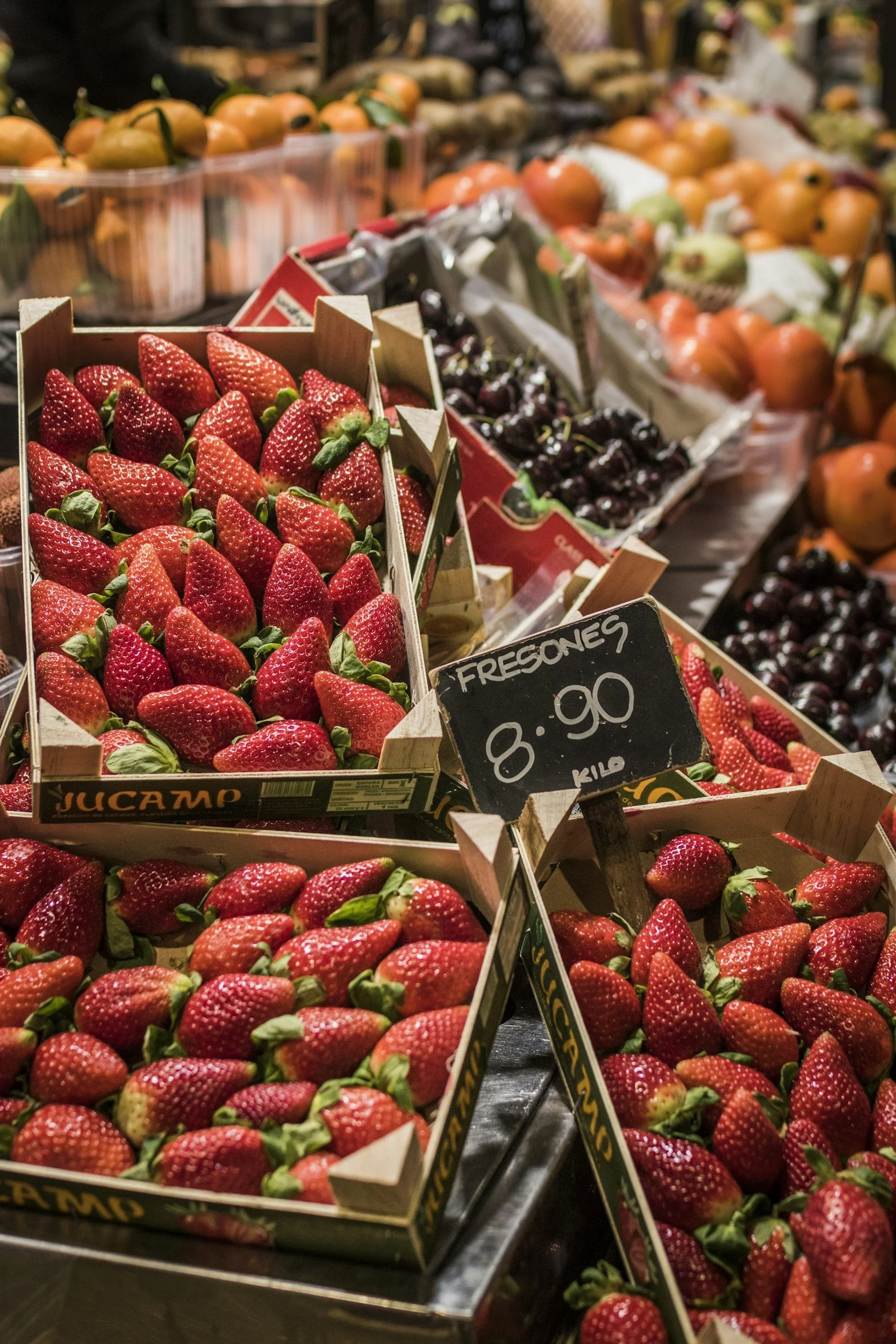
Strawberries begin to look serious around this time of year too. They’re usually sold in shallow wooden trays, not plastic clamshells, and you can tell how good they are by how quickly the top layer disappears. If a stall has already sold through half its display before 10:30, that’s a good sign. If the trays are untouched closer to 11:30, they’re probably still early-season.
The chèvre stalls sit slightly off the tightest walking line, often near the edge of the square under the arcades. Small fresh rounds, some rolled in herbs, some coated lightly in ash. The soft ones are cut with wire rather than a knife so they hold their shape. It’s one of the few places where people actually slow down. You’ll see locals discussing which farm it came from, not just grabbing and leaving.
If you’re staying on one of the small streets just off the square (near Rue Grande Bourgade or tucked behind Rue Jacques d’Uzès) the whole morning is different. You can buy asparagus, strawberries, even a small tub of brandade de morue or picholine olives, and be back in your room in five minutes. If you’re parked near Boulevard Gambetta, you’ll feel the pressure by 10:30. That parking area fills quickly, and the walk back with a heavy bag under full sun isn’t as charming as it sounds.
Do the market first. Always. By 10:45 the tightest part of the square (roughly between the central produce cluster and the fountain) becomes noticeably slower to cross. People stop to chat. Strollers get wedged sideways. The cafés facing directly onto the square, especially the ones under the deepest arcades, are already close to full.
It’s better to shop, walk your food back if you’re staying nearby, then return for coffee. Even stepping one street away from the exact centre makes a difference. You still hear the hum of the market, but you’re not in the middle of it.
By 11:30 the change is clear. Bread from nearby bakeries starts selling out. The sunny side of the square feels warm. Movement is slower. That’s usually the moment to stop buying.
Uzès in April works because it feels balanced. The asparagus is real and the strawberries are almost there. The chèvre selection makes sense. It hasn’t tipped into June yet, when the square tightens earlier and the energy shifts. That’s the version that feels like a real Saturday in Uzès!
If you’re looking beyond the well-known names, there are some of the quieter French market towns that still feel fully local worth building a spring trip around.
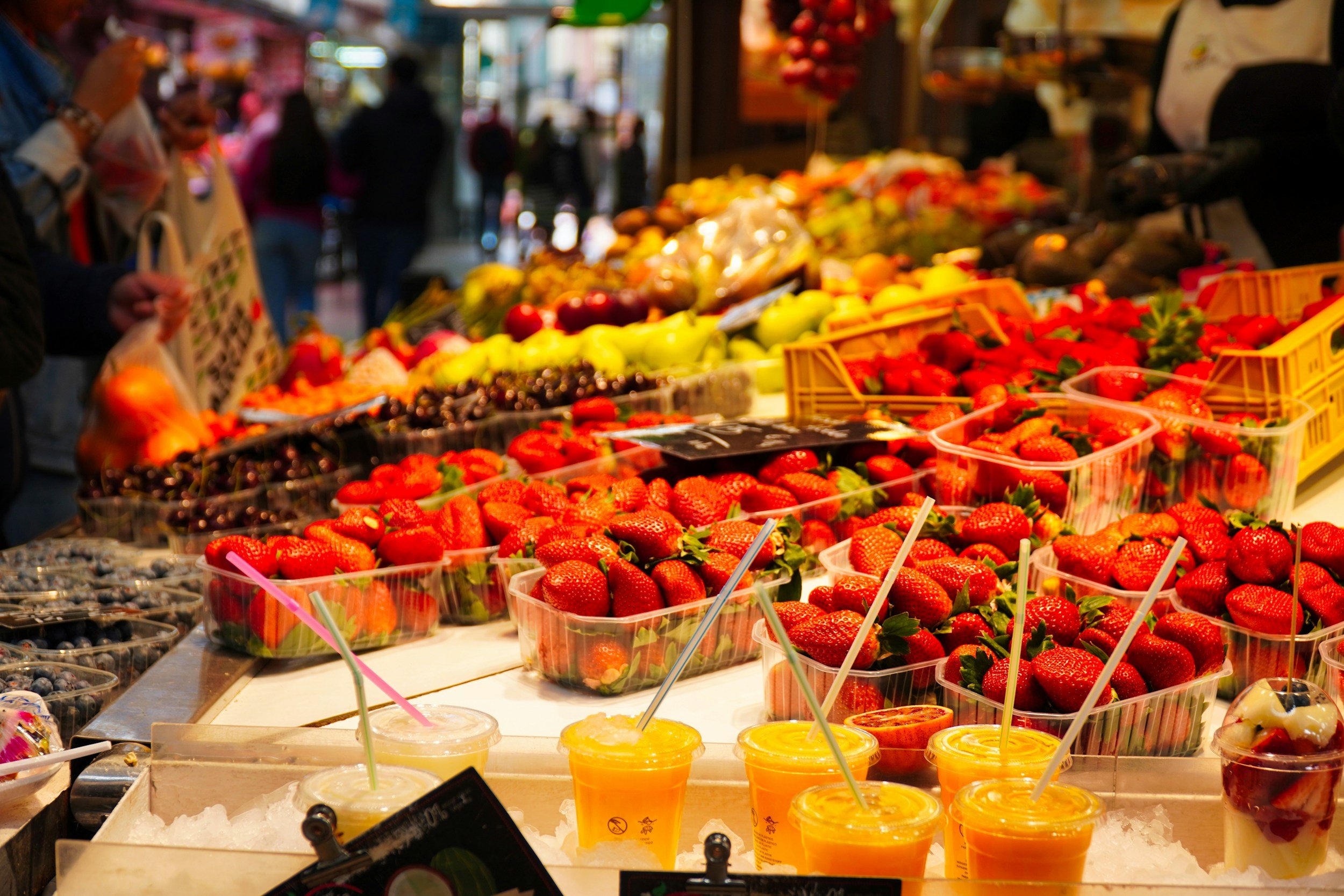
L’Isle-sur-la-Sorgue on a Sunday in May - start on Quai Jean Jaurès, food first, antiques later
Sunday in L’Isle-sur-la-Sorgue is not subtle. By 9:00 the stretch along Quai Jean Jaurès is already properly busy. Food stalls line the main loop near the river, while antiques spill outward toward Avenue des 4 Otages and into the smaller streets behind the Collégiale Notre-Dame-des-Anges. If you arrive after 10:30, you’ll feel the compression almost immediately, especially near the narrow bridges where people stop to look at the water wheels turning in the Sorgue.
In May, the river usually runs high and fast. You can hear it under the bridges. The air near the water stays slightly cooler than the open streets, which is welcome once the sun rises higher. Early in the morning, some of the cobbles along the river edge are still damp. They’re uneven in places, especially near the bridge crossings, and it’s the kind of surface where flat shoes with grip make the difference between relaxed and irritated.
Start with food while you still have space to move. The main produce stalls cluster along the central loop, and that’s where you’ll see asparagus stacked in bundles, trays of strawberries that actually look worth buying, and local goat cheeses like pélardon wrapped in paper. Tapenade is often spooned fresh into small plastic tubs from larger bowls. You might catch the smell of rotisserie chickens turning slowly near the edge of the square. It’s practical shopping here, not decorative.
By around 10:45 the tightest stretch is usually between the central food loop and the first bridge crossing. Movement slows. People hesitate mid-step to look at antique tables. If you’ve left food shopping until this point, you’ll feel it. It’s much easier to buy what you need early, then step away.
Coffee is better slightly off the main flow. The cafés directly facing the busiest stretch fill quickly. Cross a bridge, move one street back, and you’ll find tables where you can still hear the market without being in the thick of it.
The antiques are everywhere once you start looking properly. Stacks of old Provençal linens, wooden crates of cutlery, enamel pitchers, framed prints, loose silverware laid out on cloth. Some lanes are wide enough to browse comfortably. Others tighten fast once late morning hits. If you love digging, choose one or two streets and go properly. If not, don’t feel obliged to walk every single loop.
Parking is the quiet stress point here. Avenue des 4 Otages fills steadily through the morning. Smaller lots closer to the centre are often full by 9:30. If you arrive after 10:30, expect to park slightly further out and walk in. Leaving is slowest between 13:00 and 14:30, when the narrow streets near the bridges move at half speed and cars inch forward.
The smoother version is simple. Arrive early. Do food first. Sit slightly off the tightest part of the river loop. Wander antiques if you feel like it. Leave before mid-afternoon if you’re driving.
L’Isle-sur-la-Sorgue in May is busy, but it’s manageable when you know exactly where the tight points are and when to step aside.
Annecy Old Town market in late May - cheese first, then walk straight to the lake
Annecy’s market runs through the old town rather than around one single square. You’ll find it along Rue Sainte-Claire, around Place Sainte-Claire, and down toward the canals near Palais de l’Île and Pont Perrière. On Sundays in late May, it feels full but still manageable if you get there early.
Around 9:00 it’s easy to move. By 10:30, the narrow part of Rue Sainte-Claire slows right down, especially where the cheese stalls sit under the arcades. People stop longer there. Reblochon stacked in thick rounds. Tomme de Savoie cut fresh. Beaufort laid out in big wedges. You’ll see saucisson hanging just above the counter and sometimes diots from Savoie vacuum-packed nearby. It’s a very mountain-leaning selection. Less olives, more alpine dairy.
Late May mornings can surprise you. The sun might be bright, but the breeze from Lake Annecy keeps the air cool before 10:00. If it rained overnight, the stone streets can still feel slightly slick underfoot. A light layer is useful early on. You’ll want it while you’re standing at a stall deciding on cheese, and you won’t need it once you’re walking along the water.
Flower stalls sit directly on the stone with buckets of peonies and simple mixed bouquets. In late May, the colours feel sharp against the pale buildings! The canal water reflects the awnings above, and when the light hits it right, the whole street brightens quickly. Stunning.
If you’re staying inside the old town (somewhere near Rue Royale or just off Place Sainte-Claire) the morning is straightforward. Buy what you need, walk five minutes back, drop it off, and head out again. If you’re driving in, choose Parking Sainte-Claire or Bonlieu and stick with it. By mid-morning on a sunny Sunday, they fill steadily. Trying to get closer to the centre just means circling tight streets that aren’t built for it.
Around 11:00 the shift is obvious. The stretch near Palais de l’Île gets tight. People stop for photos. The bridges narrow. That’s when it’s better to move outward. From the market to Pont des Amours and the Jardins de l’Europe is a short walk. Within minutes you’re out of the stone streets and onto wide paths along the lake.
Annecy in late May works best in that order. Market early. Cheese and bread sorted. Then straight to the water once the streets start to slow.
Sarlat market in Dordogne in early June - walnut products, spring duck, tourists not fully arrived
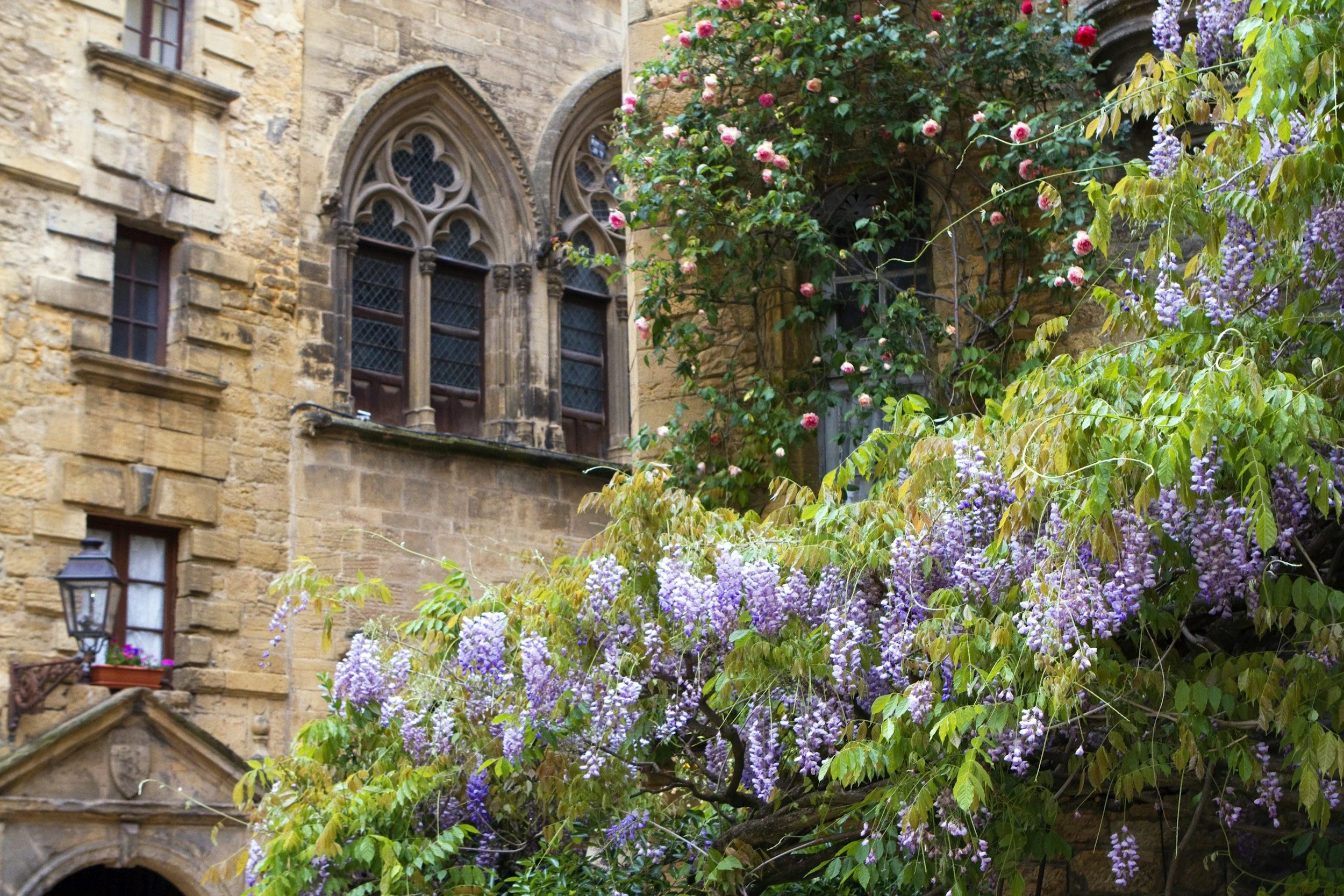
Sarlat in early June is one of those timings that can still feel manageable, even though it’s a well-known destination. Early June usually has more seasonal variety in the stalls than April, and it’s before the full summer crush arrives. The Dordogne walnut identity shows up everywhere, including walnut oils, walnut cakes, and other regional products, but the point of early June is that you’ll also see spring produce and market food that feels like local shopping rather than purely visitor-targeted items.
The old town layout helps because you can move through different streets and escape the densest points without leaving the market completely. If one section is too crowded, you can shift direction and find a quieter stretch without losing the market feeling. Sarlat is also a market where you’ll see lots of duck-related products, and in early June they still feel like a normal part of the stall mix rather than something staged. If you’re buying anything perishable, it works best when you’re staying close enough to drop things off, because Dordogne afternoons can warm up, and you don’t want to spend hours carrying food around while you wander.
A calm schedule is market from around 09:00 to 11:00, then lunch outside the busiest core, then a slower afternoon either walking locally or doing something small nearby without a long drive. Dordogne distances can look short but feel long once you add village traffic and parking. If you base yourself with that reality in mind, the market day feels easy.
Getting to smaller French market towns without a car - trains work, but plan the last few kilometres
You absolutely don’t need a car to do French market towns. But you do need to accept one thing: the final few kilometres are often the part that requires thinking.
Most smaller towns aren’t sitting right on a major train line. The pattern usually looks like this: high-speed or mainline train to a bigger hub, TER regional train to a smaller station, and then either a bus or a short taxi ride to the centre.
Take Uzès. There’s no train station in town. You train into Nîmes, then take a regional bus that runs roughly hourly. It drops you close to the centre, and from there it’s a short walk. It works well if you check the bus time in advance. It’s frustrating if you assume they run every ten minutes.
L’Isle-sur-la-Sorgue is simpler because it has its own station. From there, it’s about a 15–20 minute walk into the old town. Flat, manageable, but you’ll feel it if you’re carrying cheese and strawberries on the way back in warm weather. Annecy is easier again. The station is roughly ten minutes from the old town on foot, which makes it one of the more straightforward market towns to reach without a car.
The part people don’t plan is the taxi. And sometimes the taxi is the smartest move. In rural areas, taxis don’t just sit outside tiny stations waiting. If the bus schedule doesn’t line up or the station is several kilometres out, booking a taxi in advance removes a lot of stress. It’s not overcomplicating things. It’s just how transport works outside big cities.
If you’re basing yourself somewhere well connected (Avignon, Nîmes, Lyon) you can treat market days as specific outings. Pick one or two. Plan the connection properly. If needed, book the last stretch taxi ahead of time instead of hoping to find one at midday when everyone else is leaving.
Overnight stays make everything easier. You arrive early, do the market, check in, and you’re not watching the clock for a return train at 12:42. You leave when it feels right, not when the timetable forces you to.
The simplest rule is this: arrive before 9:30. Markets feel completely different before the mid-morning tightening starts. If you’re already stressed from a missed connection, the mood carries into the square. If the train times are realistic and that last bit is sorted in advance, doing French market towns without a car feels calm, not complicated.
Italy in spring - artichokes piled high, ricotta still warm, weekday markets that make more sense
Italian markets in spring feel practical. You walk in, look at the tables, and within five minutes you’ve changed your lunch plan.
In Verona, Piazza delle Erbe in April is all about artichokes and white asparagus from Veneto. The artichokes are stacked high, leaves tight, and you’ll see older women pressing them gently before buying. It’s not delicate browsing. It’s inspection. On a Tuesday morning you can stand comfortably at a stall and actually look. On a Saturday, by 10:30, you’re adjusting your position constantly because the square tightens.
Bologna is different again. At Mercato delle Erbe midweek, the pasta counters are busy but not chaotic. Fresh tortellini laid out in rows. Parmigiano wheels open and being cut to order. In spring, fava beans and peas start filling the front tables. You’ll hear vendors calling out prices in quick bursts. People move with purpose. Saturday compresses faster, especially late morning. Tuesday at 9:30 feels calm and real.
In Lucca on market day around Piazza Napoleone, the produce tells you it’s spring. Fava beans in long green pods. Fresh pecorino that’s softer than the aged versions you see later in the year. Small bundles of wild greens with no labels because locals already know what they’re buying. It’s just normal weekly shopping.
In Florence, Mercato di Sant’Ambrogio is the better option if you want something that feels local. In late April and May, you’ll see ricotta still slightly warm in metal tins in the morning. Artichokes trimmed neatly and stacked in tight piles. Bunches of herbs that actually smell strong when you pass by. Go midweek and you can move properly. Late Saturday morning is a different story.
Further south in Ortigia, spring looks different. Blood oranges taper off. Lemons are still everywhere. Fresh ricotta sells quickly early in the day. Fish counters are active before 10:00, and by midday certain things are already gone. It’s not about atmosphere. It’s about what’s ready.
Weekdays matter a lot in Italy. A Wednesday in Bologna or Verona feels like daily life. A Saturday feels like everyone arrived at once. If you want to actually browse, choose a weekday! If you’re there on a weekend, arrive early.
Spring works because the produce is clearly shifting… One week artichokes dominate. The next week you notice more peas and fava beans. By May, white asparagus is fully in. You don’t need a checklist. Walk in before 10:00, do one full loop, and buy what looks right that morning. The stalls tell you what’s in season.
If you’re staying longer, pairing a market town with a few slower days in the Sabina Hills creates a good balance.
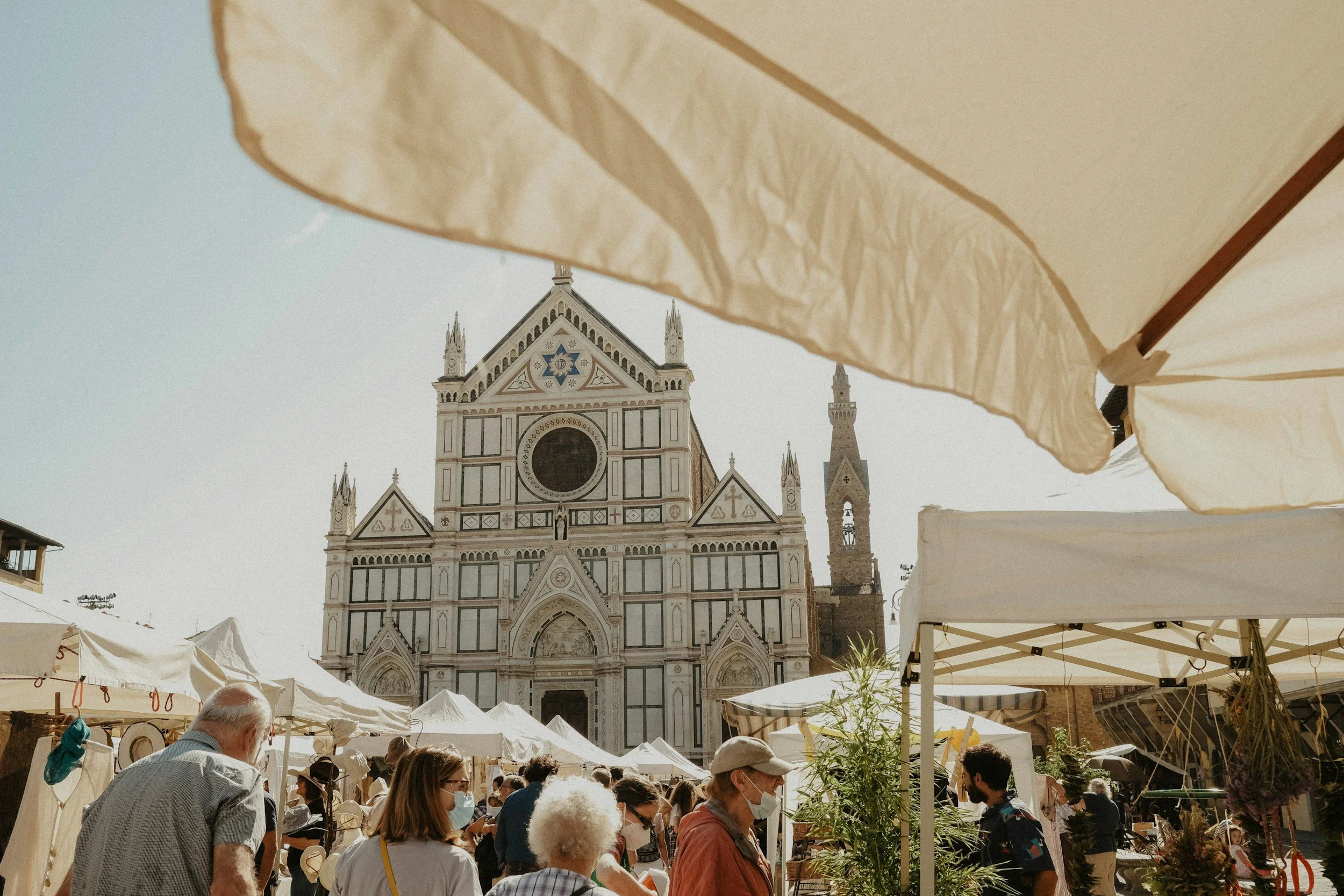
Verona in April - Piazza delle Erbe before 10, asparagus in piles, don’t get stuck near Via Mazzini
Piazza delle Erbe is never quiet. It sits right under Torre dei Lamberti, with the Madonna Verona fountain in the middle, cafés pressed along the edges, and people constantly cutting through toward Via Mazzini. If you expect a peaceful local square, you’ll be annoyed. If you treat it as a quick spring stop, it works.
Go before 10:00. Around 9:00 on a Tuesday or Wednesday, you can still move at your own speed. Vendors are set up, the striped awnings are out, and the produce looks fresh instead of handled. By 10:30, especially on Saturday, the square tightens. The narrow stretch near the arch to Via Mazzini slows to half speed because people stop for photos and forget they’re standing in the way.
April is when the artichokes start taking over the tables. Big piles, tight leaves, trimmed stems scattered on the ground under the stall. Vendors snap the outer leaves to show freshness. White asparagus from Veneto shows up more reliably from mid-April onward. Thick, pale bundles laid flat and sold by the kilo. Earlier in the month it can be hit or miss. Later, you’ll see it on several stalls at once.
Not every stand is worth your time. Some are clearly aimed at visitors - dried fruit in tall cones, colourful sweets, limoncello bottles lined up for photos. Just move past those. The better produce sits closer to the fountain and along the main line of fruit and vegetable stalls.
On a weekday morning, you’ll notice locals buying a few items and leaving quickly. Someone grabbing asparagus and heading off. Someone else checking strawberries one by one. On a Saturday, you’re moving with the crowd whether you like it or not.
Do one clean loop. Start near the fountain, circle the main produce line, buy what looks good that day (artichokes, asparagus, maybe early strawberries) and step away before it feels tight. If you want coffee, don’t sit right on the square unless you enjoy constant movement around your table. Walk one street off and it’s much calmer.
Verona in April isn’t about finding stillness. It’s about catching the square before it clogs near Via Mazzini and noticing when spring produce starts pushing winter off the tables.
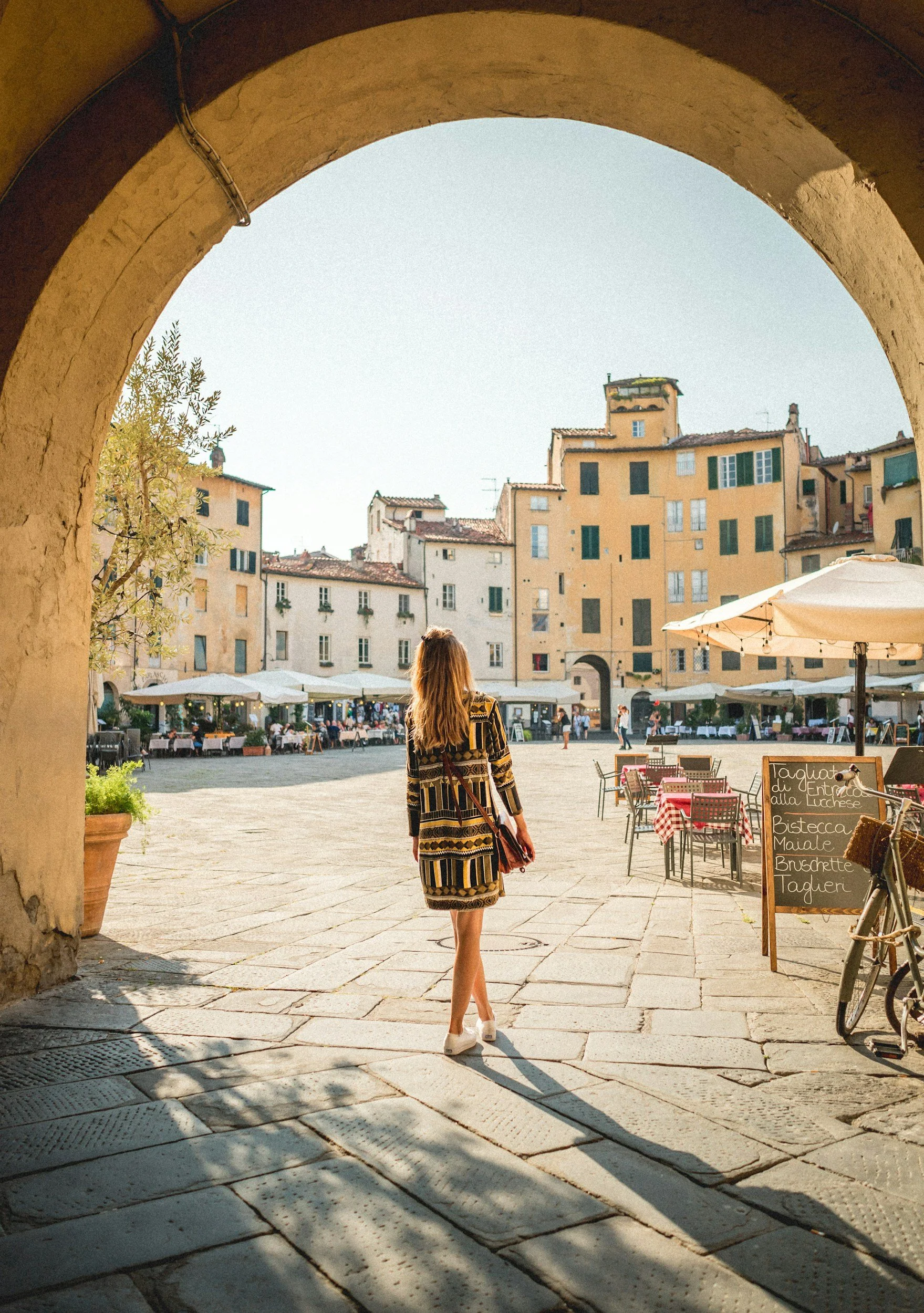
Lucca on a Saturday in May - Piazza Napoleone first, then up on the Mura
On Saturdays, the market in Lucca spreads across Piazza Napoleone and along Via Vittorio Veneto inside the city walls. It’s a big, open square, so you see the rows of stalls from a distance as you approach. By 9:00 everything is fully set up. By 11:00, the middle of the piazza starts feeling tight, especially once the sun sits high and there’s very little shade.
May is when the tables start looking properly Tuscan again. Broad beans (fava beans) are piled into deep crates, pods bright green and slightly dusty. Locals often buy them by the kilo, snapping one open to check the size before committing. Fresh pecorino toscano shows up in softer spring versions, not just the aged wedges. Some are pale and mild, meant to be eaten the same day. It’s common here to eat fava beans raw with slices of pecorino, and you’ll see people buying both from nearby stalls without overthinking it.
There’s usually a mix of produce, cheese, salumi, clothing, and household goods. It helps to focus on the food first while the selection is at its best. The produce tends to cluster more toward the centre rows of Piazza Napoleone. If you drift too long through the clothing stalls along the outer edges, you can miss the best fruit and vegetables before they thin out.
The square itself gets full sun by late morning. By 10:30 on a clear day, you feel the heat building off the stone. That’s another reason to arrive early. Do one clean loop through the produce and cheese. Buy what makes sense (fava beans, pecorino, maybe early zucchini blossoms if they’re in) and then leave the piazza before it slows down.
From there, head straight to the walls. One of the nearest ramps is just a few minutes’ walk away, and you don’t need stairs. The Mura di Lucca are wide enough for walkers and cyclists side by side. In May, before midday, locals are already doing their morning loop. You’ll see people jogging, older residents walking dogs, children learning to ride bikes on the flat stretch. The trees lining the top provide steady shade, and the path feels open compared to the square below.
If you’re staying inside the walls, everything flows naturally. Market, quick stop back at your accommodation to drop food, then up onto the walls without thinking about transport. If you’re arriving by train, the station is roughly ten minutes on foot from Porta San Pietro, flat and straightforward. No bus transfers or taxi needed. Just walk through the gate and you’re inside.
Parking outside the walls near Porta San Pietro fills steadily on Saturdays, especially from mid-morning onward. If you’re driving, arriving early makes a real difference.
Ortigia in March - go before 9, buy citrus, ignore the tomatoes
Ortigia’s market isn’t a square you stroll into. It’s a narrow strip along Via Emmanuele de Benedictis, starting near the Temple of Apollo and running toward the small harbour. Stalls on both sides. Awnings pulled low. Fish on ice. Citrus stacked high. You’re in it as soon as you turn the corner!
March here feels bright and active, but it’s still a transitional month. Blood oranges are usually still excellent in the first half of March. Vendors slice one open to show the deep red inside, juice dripping onto the crate. If they look good and locals are buying them by the bag, get some. Lemons are strong too. Big, heavy ones piled loosely rather than arranged perfectly.
Tomatoes are there, but they’re not the reason to come. They’re not bad, just not at their peak yet. You’ll see more locals buying fennel, artichokes, capers, olives, and wild greens. Capers from Pantelleria sit in open containers. Pistachios from Bronte show up in sacks. Fresh ricotta in metal tins is usually available early in the morning, and if you arrive before 9:00 it can still feel newly made.
The fish section pulls you in whether you plan to cook or not. Swordfish cut thick. Whole sea bream. Shrimp lined up in neat rows. Vendors shout prices back and forth across the lane. The smell of frying seafood drifts from nearby counters. If you have a kitchen, this is where you make dinner happen. If you don’t, admire it and move on.
The street is tight. Two people with bags passing each other already feel like a small negotiation. Once a cruise ship docks in Syracuse, you’ll feel it. Groups move in from the direction of the harbour and the Temple of Apollo. The bottleneck forms right where the open space narrows back into the market lane. Check the port schedule before you go! On cruise days, 8:30 feels relaxed. 10:30 feels packed.
By late morning the heat builds quickly. The awnings trap warmth and the stone reflects light. It’s not unbearable, but you’ll notice the shift. Movement slows because there’s simply less room.
The best way to do Ortigia in March is simple. Arrive early. Walk the length of Via Emmanuele de Benedictis once without stopping too long. Buy blood oranges while they’re still good. Maybe fresh ricotta, olives, a small bag of pistachios. Skip the tomatoes. Then turn off toward a quieter side street or down toward the water and eat your citrus by the harbour where there’s a breeze.
It’s not summer abundance yet. It’s citrus season fading out, seafood in full swing, fennel and capers holding their place. Go early, and leave before the lane tightens.
Bologna Quadrilatero on a weekday morning - narrow lanes, real counters, leave before lunch
The Quadrilatero is smaller than it looks on a map. You walk off Piazza Maggiore and within a few steps you’re in Via Pescherie Vecchie, where the buildings almost lean toward each other. Shop windows are open, counters spill close to the street, and people step in and out without much space in between.
Around 9:00 on a weekday it feels steady but workable. Delivery crates are still stacked against walls. Staff are wiping down glass counters. A few locals stand at the entrance of Tamburini waiting for their number to be called. By late morning, that same stretch feels tighter. Around 12:30 especially, Via Drapperie slows to a shuffle once people head in for lunch.
Tamburini’s display is hard to ignore. Parmigiano wheels cracked open, not neatly sliced but broken into uneven chunks. Mortadella cut fresh from a thick roll, the slices laid flat in waxed paper. The smell of cheese and cured meat hangs in the air because the lanes don’t breathe much.
A few steps further, pasta shops like Paolo Atti lay out trays of tortellini in tight rows. They’re small! Smaller than most visitors expect. In spring you’ll see tortelloni filled with ricotta and spinach, sometimes early asparagus folded into seasonal versions. Orders are weighed quickly, wrapped, handed over. No long explanations.
Between delis you’ll find small produce stands. Fava beans in green pods piled loosely in crates. Artichokes trimmed back and stacked. Peas scooped into thin paper bags. It’s not arranged for photographs. It’s compact and practical.
The sound shifts as the morning moves on. At 9:30 you mostly hear shop doors opening and short exchanges at counters. By 11:45, glasses clink at standing tables. People lean half into the lane with wine in hand. The walking space narrows again.
The best version of this morning is short. Pick one goal before you enter. Fresh tortellini for dinner. A piece of Parmigiano. A few slices of prosciutto. Maybe fava beans if they look good. Carrying too much in streets this narrow is uncomfortable once it fills.
If you want to eat what you bought, Osteria del Sole is right there… basic, loud, standing room heavy by midday. Otherwise, step back into Piazza Maggiore once you’ve finished. The open space feels like relief after the tight lanes!
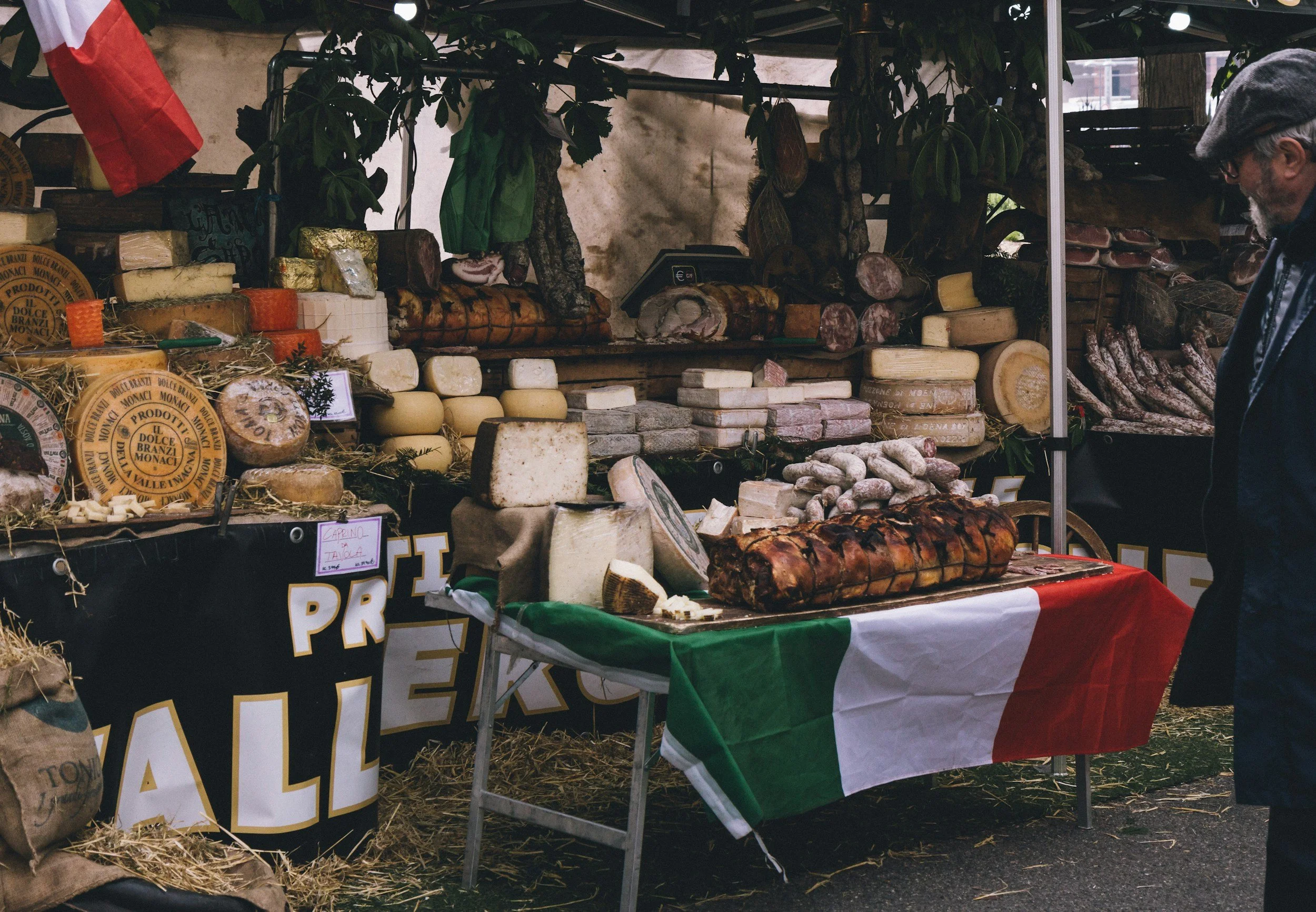
Trains in Italy in spring: pick routes that get you in before 10 and out without stress
Italian market mornings are unforgiving if you arrive too late. If your train pulls in at 11:10, you’ll still see stalls open, but certain things will already be gone. Fresh ricotta in Bologna often sells out early. Smaller batches of seasonal produce disappear first. By late morning, you’re looking at what’s left, not what was best.
So the first rule is simple: choose trains that get you into town before 9:30 or 10:00.
Florence to Lucca works well because Regionale trains run regularly, usually just over an hour, sometimes direct, sometimes with a change in Pisa depending on the service. Lucca station sits just outside Porta San Pietro. You walk through the gate and you’re inside the walls within minutes. No buses. No taxi needed. That’s the kind of route that makes sense for a market day.
Bologna to Verona is another straightforward one. Regionale Veloce trains take roughly an hour. Verona Porta Nuova station isn’t in the historic centre, but it’s a flat 15–20 minute walk to Piazza delle Erbe. If you prefer, buses run frequently from outside the station. Because Verona is a hub, return trains are frequent. You’re not trapped by one departure window.
Catania to Syracuse for Ortigia is different. The regional train takes about an hour. Syracuse station sits across the bridge from Ortigia island, about a 20-minute walk depending on pace. It’s manageable, but you feel it more if you’re carrying food. Return trains aren’t constant (sometimes hourly) so check the return before committing to a specific market morning.
The mistake is only checking arrival times. Always look at the return frequency too. If the next train home isn’t for three hours, that changes the mood once you’ve finished your market loop. Standing on a platform at 13:45 with cheese in your bag feels different from having three departures per hour to choose from.
Spring is generally smoother than summer. Fewer packed trains. More available seats. But weekends in May can still fill quickly, especially on routes between major cities. Bologna Centrale can bottleneck at the platform exits. Florence’s regional platforms can feel chaotic late morning. Build in a little time for that.
The routes that work best for market days share a few simple traits: arrival before 10:00, a station close enough to walk, and return trains frequent enough that you don’t plan your morning around one single departure.
Spain in spring - loud fish counters, late mornings, shutters down by two
Spanish markets feel different the moment you step inside. Most of them are municipal buildings with tiled floors, fluorescent lighting, metal shutters half rolled up in the morning. You don’t drift in quietly. You walk straight into voices, knives on chopping boards, numbers being called.
In Málaga, Mercado de Atarazanas starts slowly and then builds. At 9:00 a few fish stalls are still arranging ice. By 10:30 the central aisle is fully alive. Anchovies laid in tight silver rows. Red prawns stacked neatly. Someone arguing lightly over the price of clams. The stained-glass window at the far end throws colour across the floor once the sun rises high enough. If you arrive too early, it feels half-awake. If you arrive at 11:00, it feels like the right moment.
San Sebastián’s La Bretxa is more layered. Fish downstairs, produce upstairs. The lower floor smells of salt and ice. Hake and anchovies dominate in spring. Upstairs you’ll see artichokes, broad beans, and neat displays of asparagus. Regular customers hold small paper number tickets and wait without fuss. It’s orderly, but it’s not quiet.
Valencia’s Mercado Central is larger and brighter, almost cathedral-like inside. Spring produce shows up clearly here: habas in green pods, early loquats in southern stalls, tomatoes improving week by week but not yet summer-sweet. The aisles are wide enough that you don’t feel pressed, but the fish section still gathers a crowd late morning.
What surprises people most is timing. These markets don’t peak at 8:00. They build into late morning. Around 10:30 to 12:30 is when they feel complete. After 14:00, many stalls close fast. Shutters roll down without much warning. Sundays are often closed entirely outside the biggest cities.
The other thing is about lunch. If you finish browsing at 11:45 and expect to sit down for a full meal at 12:15, you’ll likely find kitchens not ready. Spanish lunch starts later. It’s normal to eat properly at 13:30 or 14:00. Trying to force an earlier schedule just creates frustration.
Spring makes this easier. It’s warm but still alright, especially in Andalucía. Broad beans, artichokes, better citrus, strong seafood - the stalls look full without the heavy summer crush.
Jerez in April - Mercado Central late morning, feria changes the pressure
April in Jerez depends entirely on the calendar. If Feria del Caballo is on, the whole town shifts. Even in the morning you’ll see more movement toward the fairgrounds outside the centre. Around Plaza del Arenal the cafés fill earlier. The streets between Calle Larga and the market feel narrower simply because more people are out. The market still runs as usual, but the space around it tightens faster.
On a normal weekday outside feria week, Mercado Central de Abastos feels steady and grounded. The building sits just off Plaza Esteve, white and open with arches on all sides so air moves through. From the outside you can already see the fish counters in the centre. Inside, seafood takes up the middle rows, with produce and meat lining the perimeter.
By 10:30 it’s properly awake. Before that, some stalls are still arranging displays. Around 11:30, the fish section is at full pace. Dorada and lubina laid whole on ice. Choco (cuttlefish) cleaned and stacked. Shrimp in small heaps. Vendors calling out prices, scales moving constantly. The floor near the seafood is usually damp from melting ice and quick rinses.
Spring produce is practical. Broad beans in thick green pods. Artichokes trimmed and piled low in crates. Tomatoes present but not yet at peak sweetness. You’ll also see chickpeas, dried beans, and bottles of sherry vinegar stacked near pantry goods. Nothing is styled. It’s built for cooking.
If you’re staying nearby, buying fish makes sense because you can walk back quickly. If not, it’s smarter to keep your purchases light. Olives. A piece of cheese. Bread. The sun in April can already feel strong by midday, and carrying seafood while searching for a lunch spot gets uncomfortable fast.
During feria week, the difference shows up around noon. More people filtering through the lanes. Tabancos filling earlier. Groups dressed up passing by the market on their way toward the fairgrounds. If you prefer calmer energy, arrive closer to 10:00 and leave before 12:00.
After the market, you’re only a short walk from Calle Larga. If you sit right near Plaza del Arenal, expect noise and movement. A few streets away, it’s a lot calmer.
If you prefer a coastal vibe instead of a city square, a slower market weekend in Cadaqués works especially well in late spring.
Girona market days in May - Catalan spring vegetables, temperature swings, midweek calm
Girona wakes up slowly in May. At 9:00 the light is still soft over Plaça del Lleó, and you’ll probably want a light jacket. The market is already running, but it doesn’t feel rushed. A few elderly shoppers arrive with small wheeled carts. Stallholders are arranging the last crates. The indoor section smells faintly of fish and damp stone.
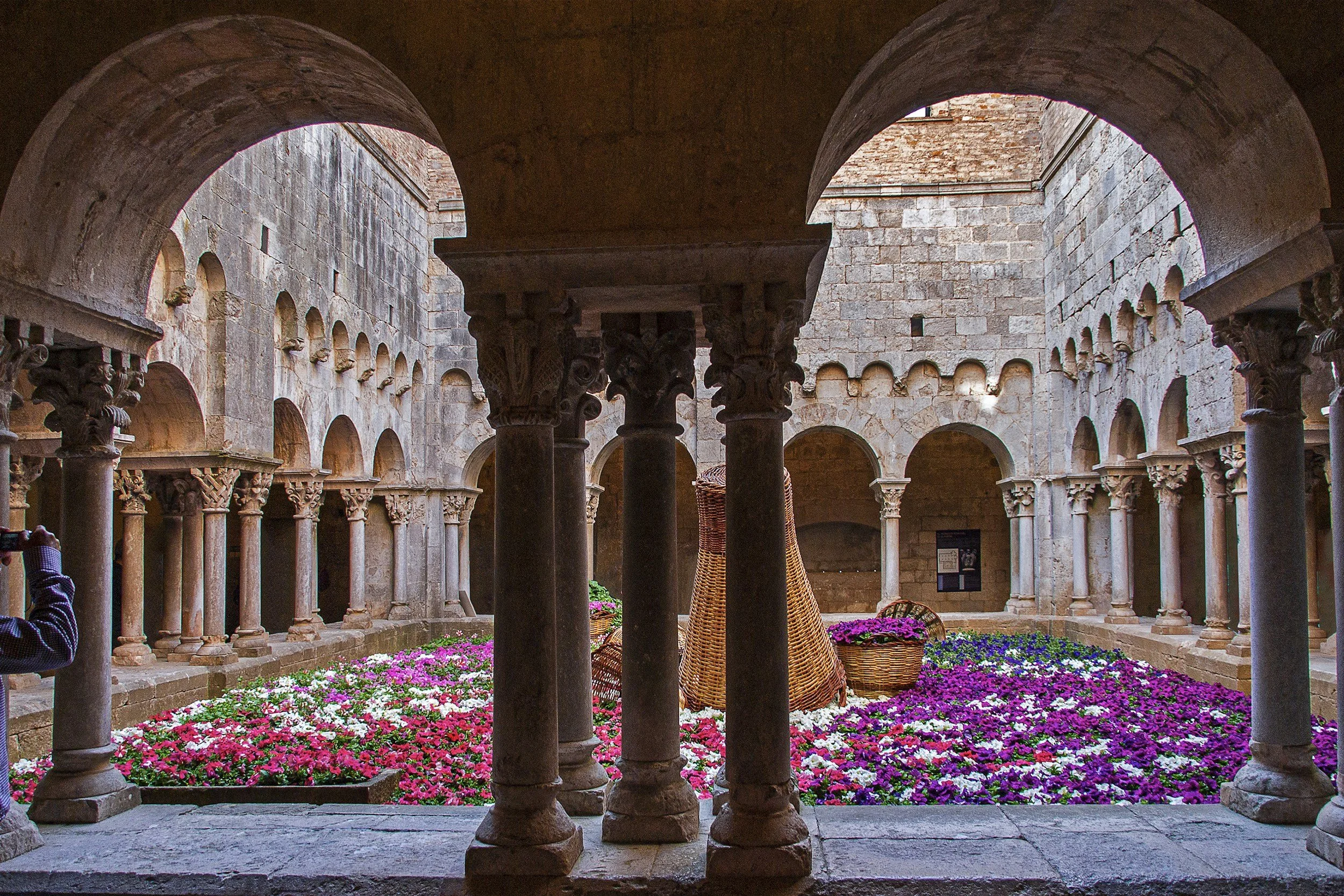
Mercat del Lleó is partly covered and partly open. Inside, the fish counters sit under fluorescent lights, ice already melting slightly by mid-morning. Outside in the square, produce stalls line up in rows. Broad beans are piled high in green pods. Artichokes sit in tight stacks. Asparagus appears more confidently as May moves on. Strawberries start looking properly red and worth buying around mid-month.
You hear Catalan as much as Spanish. Short conversations. Quick exchanges. Someone asking for half a kilo, not a basketful. Nothing feels staged. People buy, pay, move on.
By 10:30 the square is properly awake. The cool edge of the morning fades. If the sun is strong, the open side of the plaza warms quickly while the covered section stays slightly darker and cooler. The temperature difference between 9:00 and 13:00 can be bigger than you expect, especially if you started the day underdressed.
The fish section draws regulars. Hake, sardines, cuttlefish laid out simply. The floor near those counters is usually wet from rinsing and melting ice. It’s not polished. It’s functional.
Midweek is noticeably easier. On a Tuesday you can stand still and choose properly. Saturday pulls in more people from surrounding towns. The square fills faster once the sun is up. Around 14:00 shutters begin coming down inside. It happens quickly.
Getting there is simple. From the train station it’s about a 15-minute flat walk. High-speed trains from Barcelona arrive fast, but even the slower regional trains are easy. You step out of the station and just walk straight in.
Once you’re done, cross one of the bridges over the Onyar. The pastel façades reflect in the water. Rambla de la Llibertat starts to buzz late morning, but one street off and it’s calmer again.
San Sebastián in late spring - La Bretxa midweek, fish downstairs, Parte Vieja fills fast
La Bretxa sits right at the edge of Parte Vieja, a few minutes from Plaza de la Constitución. You step in from the street and go downstairs first… that’s where the serious fish counters are. The building feels modern and functional. Upstairs, in the older arcaded section, you’ll find produce, cheese, and meat.
Late spring is a strong moment here because the city hasn’t tipped fully into summer crowds yet, but the counters look confident. Around 9:30 on a Tuesday, the fish section is fully set. Hake laid in long pale fillets. Anchovies tight and silver. Kokotxas displayed carefully. Txangurro (spider crab) sometimes visible depending on supply. Customers pull small number tickets and wait their turn while fish are cleaned behind the counter.
The difference between Tuesday and Saturday is obvious. By 11:30 on a weekend, Parte Vieja starts feeding visitors into the market. Pintxo crowds spill outward. The aisles narrow quickly. On a weekday, you can stand still long enough to choose properly.
Upstairs, spring produce shifts week to week. Artichokes, peas, asparagus, broad beans. Strawberries improve steadily through May. Idiazabal cheese appears in firm wedges at the cheese counters. Guindilla peppers sit in jars near the deli stalls. It’s Basque through and through.
Rain changes everything here. If it’s wet outside, the entire old town compresses into covered spaces, and La Bretxa fills faster. On clear midweek mornings, it breathes more easily… Most fish stalls start winding down after 13:30 or 14:00. It’s not a gradual fade. Shutters come halfway down and counters are cleared quickly.
If you’re staying in Parte Vieja, buying fish makes sense. You’re five minutes from your kitchen. If not, keep it small - strawberries, cheese, something you’ll eat the same day.
Afterwards, walk toward La Concha. The sea air feels different from the tight indoor market. In late spring, the promenade is active but not yet packed.
La Bretxa is best midweek, mid-morning, before the old town crowd spills in and before the fish counters start closing.
Palma in March - Pere Garau mid-morning, citrus strong, outside the old town bubble
Pere Garau sits in a residential part of Palma, centred around Plaça Pere Garau and spilling into Carrer Nuredduna. It’s about a 20-minute walk from Plaça Major, far enough that you leave the old town rhythm behind. You don’t see souvenir shops here. You see apartment balconies and locals heading out with shopping carts.
Inside the covered hall, the floor tiles are blue and white, slightly worn. Fish counters run along one side. Dorada, sardines, sometimes small local catches depending on the boats. Butchers hang cuts plainly. Sobrasada sits thick and deep red behind glass. Mahón cheese wedges appear at the dairy stalls. Ensaimadas and almond cakes show up in the bakery counters, often wrapped in simple paper.
Outside, the market extends into the surrounding streets. Produce stalls line up along Carrer Nuredduna. In March, citrus is still dominant. Oranges piled high. Lemons sold loose. Artichokes, spinach, early broad beans. You’ll also notice a broader mix of ingredients here compared to the old town - North African spices, Latin American vegetables, plantains alongside local produce…
The crowd is steady and purposeful. Around 9:30 it’s active but not too busy. Older residents with wheeled carts stop at the same stall each week. Conversations are quick. No one lingers long in the aisles.
March mornings can feel cool inside the hall, especially in the shaded areas. Step outside into the square and the sun feels stronger than expected. By 13:00 it’s noticeably warmer.
Many stalls begin closing around 14:00. It doesn’t fade slowly. Shutters come down and the street clears quickly.
Almond blossom season on the island is usually earlier (late January into February) but almond products remain everywhere in March. You’ll see bags of local almonds, almond pastries, gató d’ametlla, and small bottles of almond liqueur. If you’re planning a short drive inland later in the day toward the Serra de Tramuntana, the countryside still feels open and quiet this time of year.
Pere Garau works best mid-morning, before noon. Go there if you want Palma without the old town performance. Buy citrus, maybe a piece of sobrasada, something almond-based, and walk back through residential streets instead of returning straight to the cathedral area.
Market hours in Spain - late starts, shutters down by two, lunch not at twelve
Spanish market timing catches a lot of northern Europeans off guard. You arrive at 8:30 expecting full momentum and find half the shutters still rolling up. You finish shopping at 12:30 expecting to sit down for a full lunch and realise kitchens haven’t started properly yet.
Most municipal markets build into late morning. 10:30 to 12:30 is usually when everything feels fully running. Fish counters are active. Produce is replenished. Conversations are loud. Before 9:00, some stalls are still setting up. After 14:00, many begin closing quickly. It’s not a slow fade. Shutters drop and the floor is being hosed down within minutes.
The second surprise is the gap between shopping and eating. If you finish browsing at 12:15 and walk into a restaurant expecting a full menu, you might find only coffee and pastries available. In many towns, proper lunch service starts around 13:30 or even 14:00. Before that, some places are resetting kitchens or simply not open yet.
This creates a strange hour in between. You’ve finished shopping, you’re hungry, but the town hasn’t switched into lunch mode. The easiest fix is simple. Either buy something small at the market (a piece of tortilla, olives, bread, fruit) or accept that lunch is later and slow the pace down.
It also explains why stacking too much into the morning rarely works. Market, museum, early lunch, train - it sounds tidy on paper but clashes with local timing. If you treat the market as the main late-morning anchor and let lunch follow naturally at 13:30 or 14:00, the day feels smoother.
Spanish markets don’t run on an early-start, early-lunch clock. They build slowly, peak mid to late morning, and shut down decisively…
Smaller countries that work well in spring - less pressure, easier mornings
If you don’t want every stop to be France, Italy or Spain, smaller countries make spring market trips feel lighter. Shorter walks from the station. Fewer tour groups. Markets that still feel like something people use every week.
In Ghent, the Friday market at Vrijdagmarkt is simple and steady. A long rectangular square with cheese stalls, roast chicken vans, flowers, fabric. Locals arrive by bike, do one round, head home. Around 11:00 it’s lively but not tense. From Gent-Sint-Pieters you hop on a tram and you’re in the centre quickly. No long transfers.
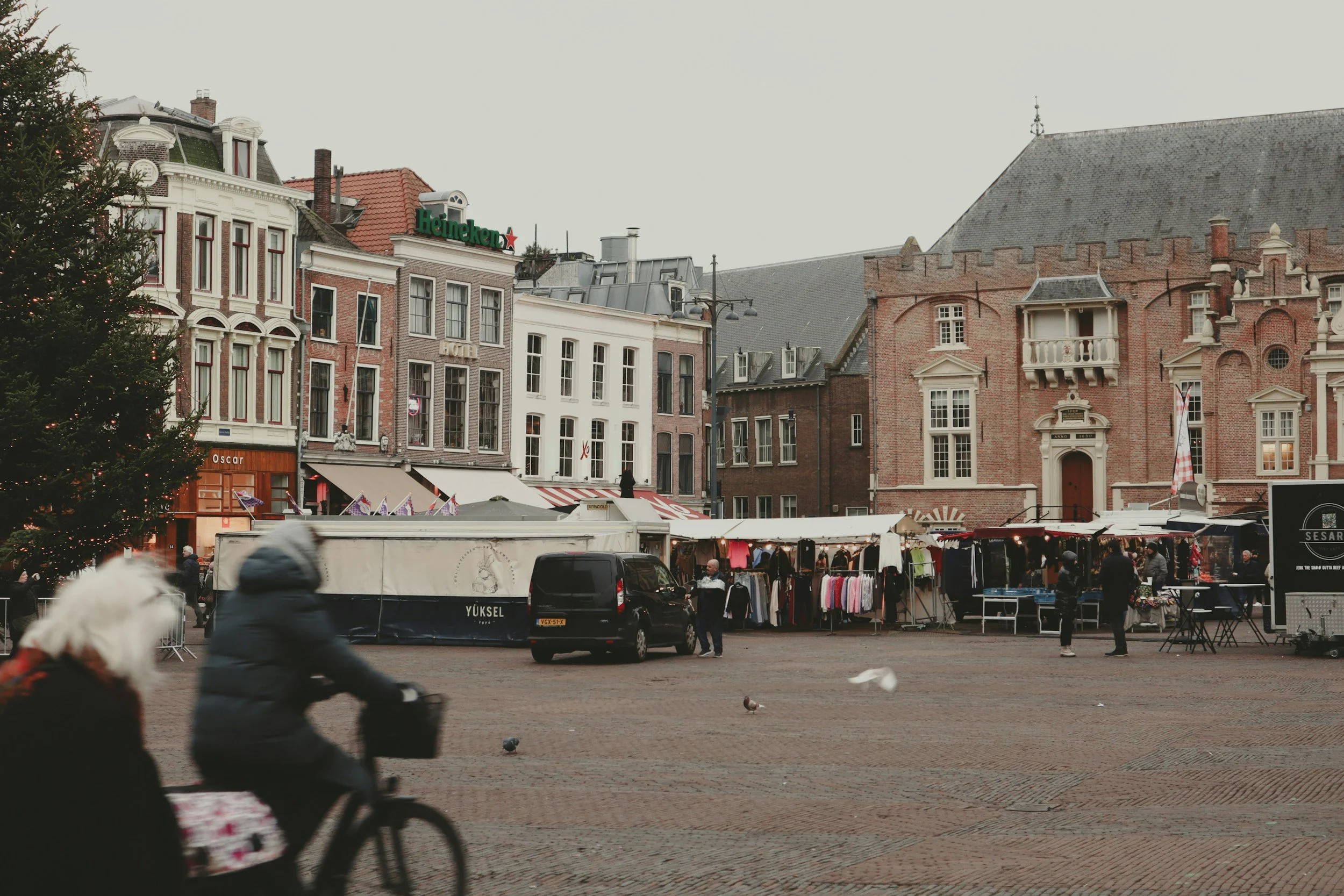
Haarlem works well if you want the Netherlands without Amsterdam crowds. On Saturdays, Grote Markt fills up in front of St. Bavo’s Church. In spring there are tulips and ranunculus in buckets, cheese stacked high, fish stalls slicing herring. It’s compact. One loop and you’ve seen it properly. The train from Amsterdam takes about 15 minutes and the station is right by the centre.
If you want the Netherlands without Amsterdam intensity, Haarlem in spring by train is one of the easiest additions to a market-focused trip.
Setúbal in Portugal feels grounded. Mercado do Livramento has long fish counters (sardines, sea bass, octopus) and tiled walls that make the place bright inside. Citrus and greens dominate in spring. The station is a short walk away. You can finish the market and be at the waterfront within minutes.
If you’re looking east instead of south, Kraków’s quieter spring vibe is another strong seasonal option:
Ljubljana is even more relaxed. The Central Market runs along the river between the bridges. It’s stretched out rather than packed into one square, so it doesn’t feel tight. Spring vegetables show up early. Around 13:00 many stalls start closing fast. The old town is small enough that you just walk everywhere.
In Innsbruck, Markthalle sits by the river with alpine cheese, bread and seasonal produce inside. Outside tables appear once the weather improves. The station is about 15 minutes on foot. You might still see snow on the peaks, but the town itself feels mild by midday.
The common thread is scale. You can do the market without fighting for space! You can get coffee without queueing. You can walk the whole town without planning transport. Lovely, right?
Spring helps because terraces are open but not packed, and produce is moving beyond winter. Choose towns where the station is close and the market is still part of weekly life. That’s where these smaller countries make sense.
For a completely different spring tone, a literary spring in Edinburgh offers a slower, rain-softened version of the season.
Ljubljana in April - wild garlic on wooden tables, coffee by the river after
Ljubljana’s Central Market runs in a long line along the Ljubljanica, between Triple Bridge and Dragon Bridge. You don’t “enter” it in a dramatic way. You’re walking through the old town and suddenly there are wooden tables on your right, the river on your left, and people buying vegetables like they do every week.
At 9:00 in April it’s still cool along the water. You’ll see stallholders pulling crates into place, stacking lettuce, lining up jars. The air smells faintly of damp stone and greens. By 11:30 the light is different. The sun hits the embankment and jackets come off.
Wild garlic is everywhere in April. Bright green bunches tied with elastic bands, sometimes piled directly onto the table without much fuss. You smell it before you see it. Radishes with soil still clinging to the roots. Early asparagus. Spinach and tender lettuce. Apples are still around, but they’re no longer the main event.
Honey stalls draw people in. Jars lined up in rows - acacia, chestnut, darker forest honey. Small handwritten labels. Some stalls sell pumpkin seed oil in thick green bottles. Under Plečnik’s colonnade, just behind the outdoor tables, you’ll find cheese counters with wedges of Tolminc, meat stands with kranjska klobasa hanging in neat rows, bakeries selling slices of potica wrapped simply in paper.
If the weather turns wet, everyone shifts under the colonnade and it tightens fast. On a clear April day, the long river stretch keeps it open. Around 13:30 farmers begin packing up. Tables empty quickly and vans edge in to load crates.
The train and bus station are about a 10–15 minute flat walk away, so you don’t need to plan transport. Once you’re here, you stay on foot.
I recomend you to start at Triple Bridge, walk the length toward Dragon Bridge calmly, buy something small (honey, wild garlic, maybe cheese) and then step down to the river path. Sit for coffee facing the water while the market slowly thins out behind you.
Ghent in May - Vrijdagmarkt early, flowers under Artevelde, cheese before eleven
Vrijdagmarkt is a big, slightly sloping cobbled square with Jacob van Artevelde standing in the middle, arm raised as if he’s still addressing the crowd. On Fridays the entire space fills up with long rows of stalls running almost from one end to the other. It’s open, so if there’s wind in May, you feel it straight across the square.
By 9:30 the flower stalls are already busy. Buckets of tulips, ranunculus, and as the month moves on, the first peonies. People stop, choose quickly, tuck bouquets under an arm and move on. It’s not staged for visitors. It feels like a weekly routine.
Cheese sellers line one stretch with wheels stacked high - Passendale, Oud Brugge, Chimay. Wedges are cut thick and wrapped in white paper. You’ll see people taste before committing. A few metres away, bakeries have tables laid out with loaves and pastries. There are roast chicken vans turning slowly on spits. Fabric and clothing stalls sit between food vendors. It’s mixed and practical.
The centre near the Artevelde statue tightens first. Around 11:00 that’s where you start stepping around groups who’ve stopped to talk. Bikes cut along the edges of the square. If you prefer more space, stay toward the outer rows and move steadily rather than hovering.
Getting there is simple. Tram 1 from Gent-Sint-Pieters drops you near the centre. From there it’s a short walk through residential streets into the square. No need to plan complicated transfers.
Once you’re done, you can slip toward Patershol in a few minutes. The narrow lanes feel different immediately - quieter, older, more tucked in. Or head toward the Graslei and Korenlei canals where the water reflects the gabled houses.
Vrijdagmarkt in May feels active but not overwhelming. Flowers early, cheese cut to order, the smell of roast chicken drifting across the cobbles. Go before eleven, keep moving, then step off the square before it feels tight. The rest of Ghent is right there waiting without needing a schedule. So much to explore!
Innsbruck in early June - Markthalle by the Inn, alpine produce emerging
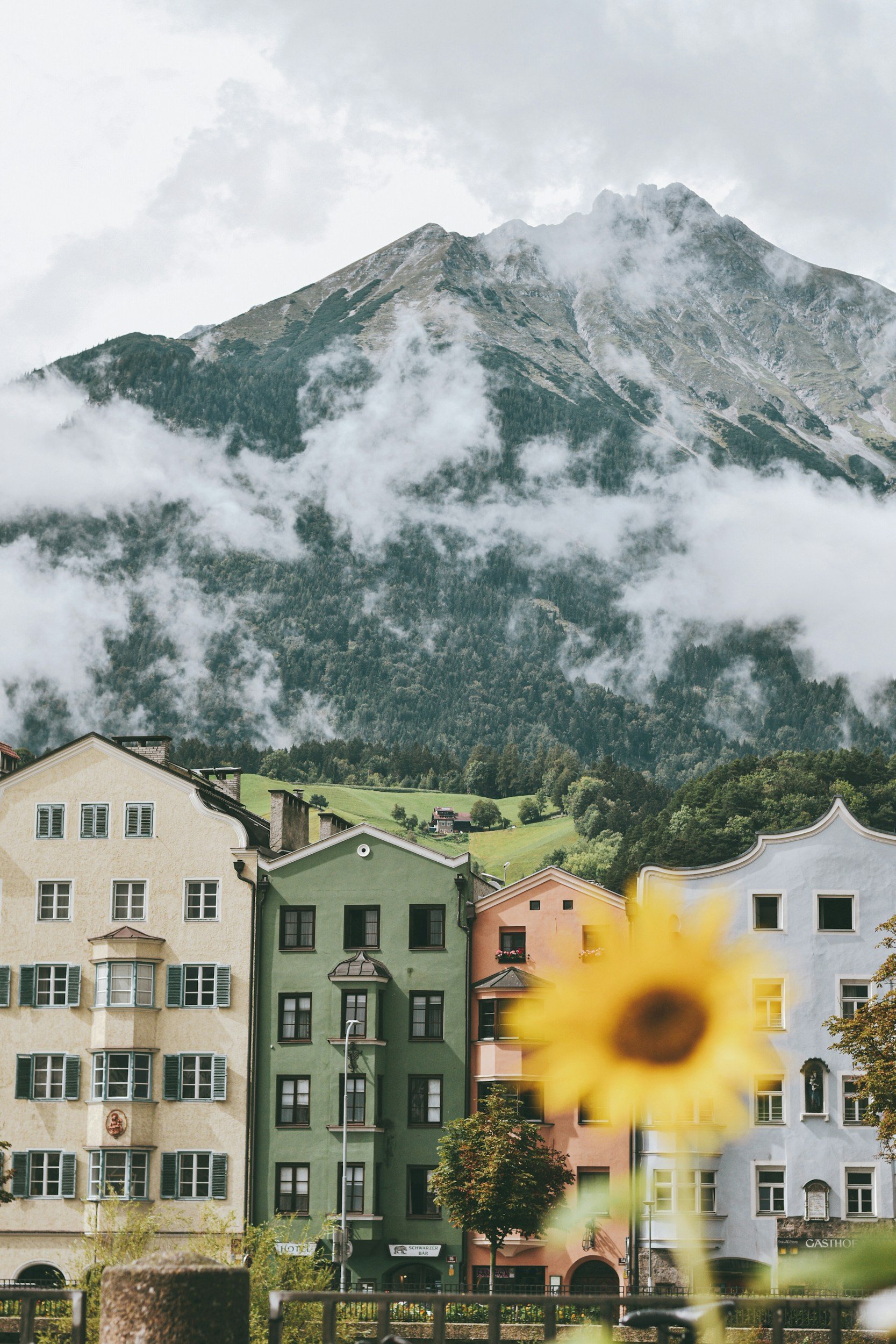
Markthalle Innsbruck sits along Herzog-Siegmund-Ufer directly beside the Inn River, a short walk across the bridge from the old town. The building itself is understated from the outside, but inside it functions as a steady, year-round food hall rather than a temporary market setup.
Early June is a transitional moment in Innsbruck. Snow is often still visible along sections of the Nordkette above the city, particularly in the mornings when visibility is clear. At ground level, however, terraces along the river are open and the town operates in a more summery rhythm. That contrast is part of what makes this period interesting.
Inside the hall, permanent counters line the space. Tyrolean Speck hangs behind glass in thick cuts. Graukäse, the region’s distinctive grey cheese, sits alongside milder alpine varieties. Bakeries display Schüttelbrot in tall stacks. Honey from mountain regions and bottles of Zirbenschnaps are common on specialty counters.
In early June, produce from surrounding valleys becomes more visible. Bundles of chives and other alpine herbs appear, along with lettuces and asparagus from lower elevations. The selection is regionally grounded rather than expansive. Customers tend to buy with purpose, often in practical quantities rather than small tasting portions.
The hall is compact and manageable. A full circuit can be completed in twenty to thirty minutes without rushing. For that reason, it works best as a focused morning stop rather than a destination requiring extended time. By late morning, particularly on Saturdays, visitor numbers in the old town increase and some foot traffic spills across the river toward the hall. Many stalls begin winding down by early afternoon, often around 13:30 or 14:00.
After leaving the hall, the river path offers an immediate change of pace. From there, it is equally easy to return toward the old town or continue along the Inn promenade.
In early June, Innsbruck balances late spring and early summer conditions. Alpine herbs and regional cheeses inside the hall, snow still visible on the peaks above, and outdoor life active along the river below.
Timing details that actually change a spring market morning
Most market mornings don’t fall apart in a dramatic way. They just slowly become inconvenient. You arrive at 11:45 thinking you’re perfectly on time, and the asparagus you wanted is already gone. The fish counter in Spain is rinsing down ice. The strawberry stall in France has three small punnets left and a handwritten “complet” sign.
Spring makes this more noticeable because quantities are smaller. Early-season produce isn’t piled endlessly high. When it’s gone, it’s gone.
In a lot of French towns, farmers begin packing up around 12:30 once they’ve sold through their best stock. In Spain, fish counters often start cleaning down by 13:30. In Italy, the market may technically run into the early afternoon, but the strongest produce is usually chosen well before noon.
The first warm Saturday in April is another shift. Suddenly everyone wants asparagus and strawberries at the same time. The square feels busier than the week before even though nothing else has changed.
Weather plays its own part. A strong Mistral in Provence can make stallholders lower awnings or pack up early. A sudden shower in northern Italy pushes everyone under the same narrow overhang and the space tightens fast. In mountain towns, it can look bright at 9:00 and turn cloudy before lunch.
If you’re already in the region, it’s worth seeing what Provence looks like just before peak lavender, when everything still feels open and not yet crowded.
Cash still makes things smoother in many smaller markets. Some stalls take cards. Some only do above a minimum. Some prefer cash outright. It’s rarely consistent across the square. ATMs are often near bank branches, not in the market itself, and those branches may close early on Saturdays in spring.
Parking catches people too. Italian ZTL zones are often active during market hours. French towns sometimes close the streets around the square entirely on market mornings, so the route you drove the night before no longer works. If you’re staying nearby and walking in, you avoid most of that.
In France, Easter weekend and Easter Monday can alter normal schedules. In Belgium, May bank holidays sometimes move weekday markets to different days. The market might run, but cafés nearby may open later than you expect.
None of this requires a spreadsheet! It just means checking three simple things before you go: what time the market really peaks, how you’re paying, and how you’re getting there.
Once you’re inside the market, everything is straightforward. It’s the edges of the morning (arrival, payment, weather, parking) that usually decide whether it feels smooth or slightly frustrating.
Building the rest of the morning around the market
Market mornings feel best when you pair them with one or two nearby routines that are genuinely close and don’t require extra logistics. The goal isn’t to “do more,” it’s to keep the day flowing naturally once you’ve finished shopping. Spring is ideal for this because temperatures are usually comfortable enough for walking and sitting outside, and you don’t have the extremes that make you rush back indoors.
A market morning pairs well with the gardens that are genuinely worth visiting in spring, especially before summer crowds arrive.
Keep things simple: bakery, coffee, a walk, and a meal that fits local timing. If you keep those pieces close to the market area, you can have a full day without feeling like you planned an itinerary.
Bakeries that sell out before noon (especially in France and Italy)
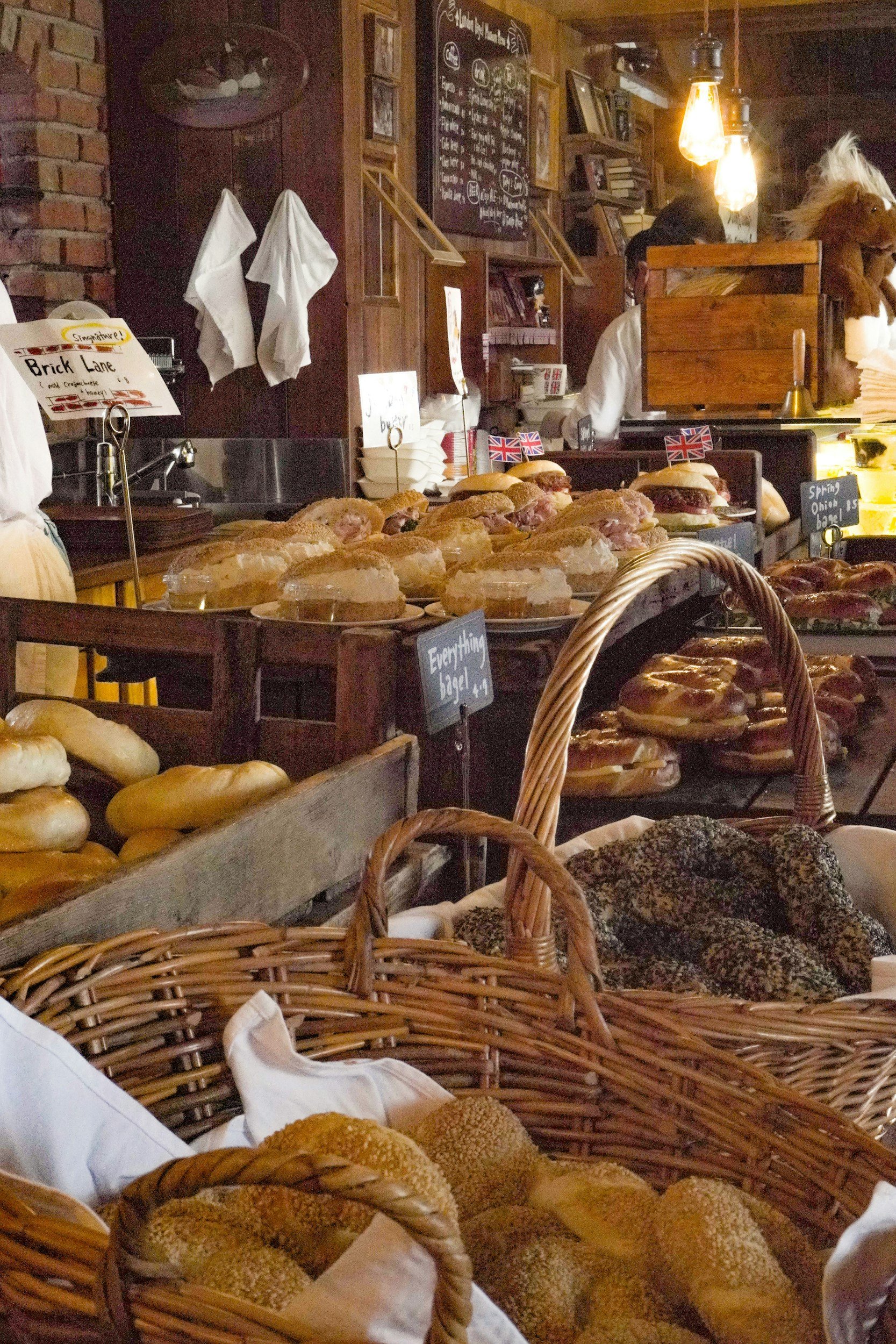
In many French market towns, bakeries sell out of the specific things people actually want by late morning, especially on Saturdays. If you want a particular bread, a certain pastry, or something that works for later in the day, it’s better to buy it either before the market or immediately after. Waiting until 12:30 and then hoping for choice is often a disappointment, especially in towns where locals do a strong Saturday morning bakery run.
In Italy, the pattern is similar but tied to the morning rush and to specific items like focaccia or small pastries. If you show up late, the best stuff is often gone, and what’s left can be fine but not what you were hoping for. This matters because market mornings tend to make you hungry, and if you don’t plan for it, you end up buying something random out of convenience or eating at a time that doesn’t match the local rhythm.
A simple move is to identify one bakery near your market route and treat it as part of the loop. Buy something small for the morning, and if you want something to take back, buy that at the same time, because carrying a loaf of bread is easier than trying to find a bakery again once you’re already loaded with market bags.
Coffee culture differences: stand at the bar in Italy, sit longer in France, counter culture in Spain
Coffee is one of the easiest ways to reset after a market, but it helps to follow local habits. In Italy, the quick version is standing at the bar, especially if you don’t want the coffee stop to turn into a long sit-down. Tables can be limited, and in some places sitting implies you’re committing to a slower service. In France, sitting for longer is normal, and a terrace coffee after the market is part of the weekend routine in many towns. In Spain, counter culture is common, and coffee can be a short, functional pause, but the later lunch timing means you don’t necessarily want to turn it into a full snack unless you’re adjusting your whole day later.
If you treat coffee as a built-in pause rather than something you squeeze in, you can avoid the market overload feeling where you keep moving, buying, and deciding without stopping. It’s also the point in the morning where you can look at what you bought and decide whether lunch is going to be a picnic, a sit-down meal, or something simple and quick.
Combining market day with regional train day trips
Regional train day trips can work well on market days if you keep the scope realistic. If you want to shop properly, you need time. If you also need to catch a train at 11:45, you’ll rush and you’ll buy less, and the morning starts feeling like a stressfull. A calmer approach is either doing the market and staying local for the rest of the day, or doing a short train hop in the afternoon only if you’re not carrying perishable food and you’re not forcing a tight return…
Often the easiest structure is market on one day, regional day trip on the next. Spring usually allows that because accommodation is less constrained than in summer, and you can stay two or three nights without feeling like you’re overcommitting. This is also where you can keep the trip feeling grounded: one day for shopping and eating, one day for walking and exploring, without stacking everything into a single packed day.
Spring produce reminders by country and what actually starts showing up
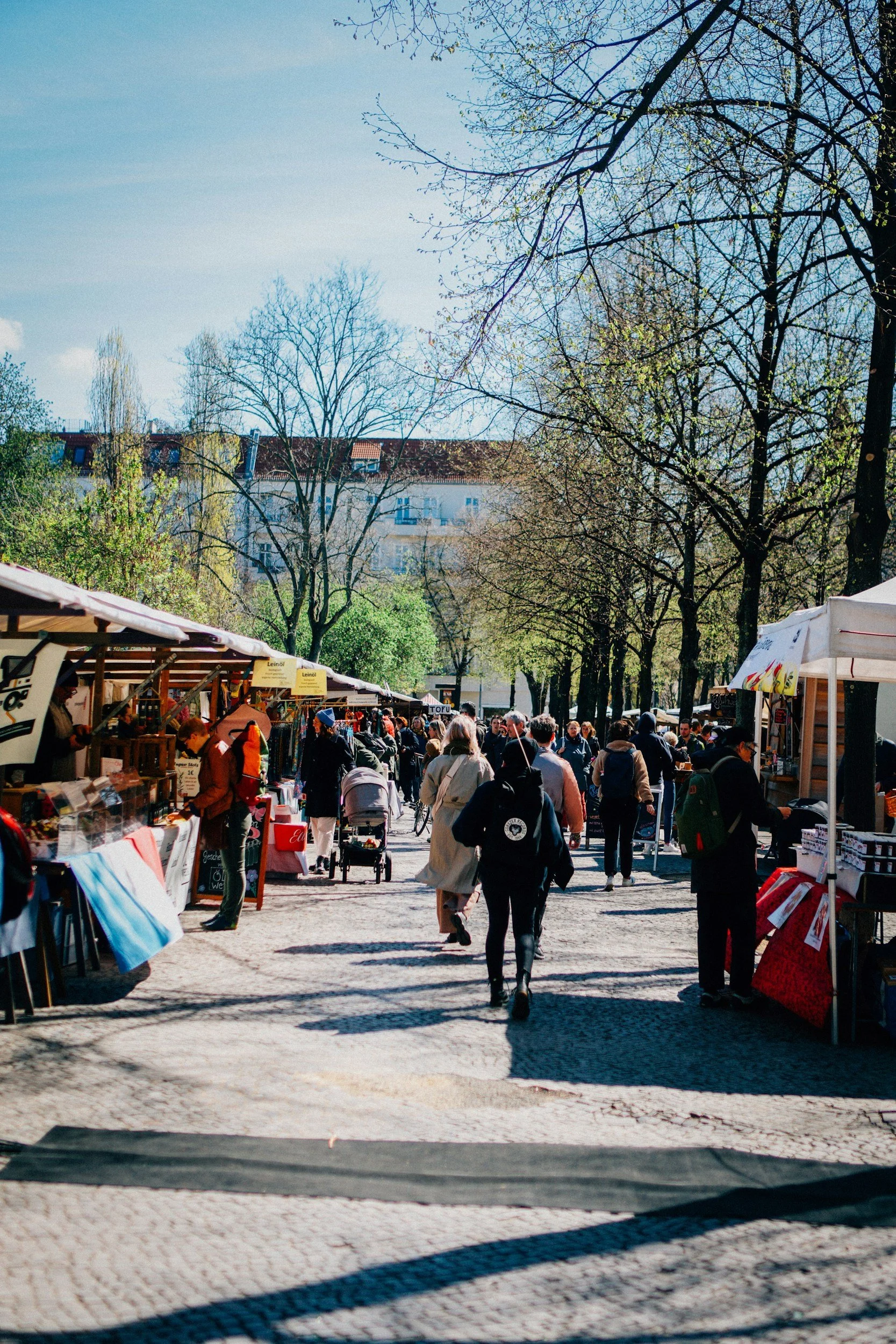
Spring doesn’t arrive all at once. It shifts week by week, and it shifts differently depending on where you are. If you’re moving between regions on the same trip, what looks “right” in one place might still be early in another.
In France, March is still mostly leeks, carrots, cabbage, stored apples. It can look stubbornly wintery outside the south. In Provence or the Gard, green asparagus and the first local strawberries start appearing in April. In Burgundy or Alsace, that same shift might be later. By May you’ll see artichokes in real piles, peas in open crates, broad beans spilling out of sacks. Tomatoes will be there, but in most regions they’re not worth getting excited about yet.
In Italy, artichokes are everywhere in early spring, especially around Rome. In April, fava beans start showing up - often sold in pods, meant to be shelled and eaten with pecorino. Asparagus improves through April into May. Strawberries get better as the weeks go on. In Sicily, blood oranges can still be strong in March. In northern Italy, everything lags slightly behind. You’ll see tomatoes all year, but proper summer flavour comes later.
In Spain, the south moves first. In Andalucía, asparagus, peas, and strawberries are already visible in April. In northern Spain, especially along the Atlantic coast, spring feels slower. Strawberries improve in May. Seafood counters get more varied as the weather warms, especially in coastal cities. Tomatoes exist year-round, but spring is not peak.
In Belgium and the Netherlands, white asparagus is the sign the season has properly changed. Once you see it stacked high on several stalls, you know it’s April or May. Strawberries follow not long after. March still leans heavily on storage vegetables and greenhouse produce.
In Slovenia, wild garlic (bright green and pungent) is the giveaway that April has arrived. It appears on multiple tables at once. Asparagus and leafy greens follow. In Austria, valley produce starts showing up by late April, but mountain areas take longer. Early June brings more alpine herbs and stronger asparagus presence, even if there’s still snow on the peaks above town.
Spring markets change quickly. A warm spell can push strawberries forward. A cold week can delay asparagus completely. The simplest way to read a market is to look at what several vendors are piling high. That’s usually what’s genuinely in season that week.
France - asparagus, strawberries, fresh chèvre, early rosé
In France, asparagus is one of the clearest spring signals. In April, it becomes the obvious purchase in many markets, and you’ll often see different sizes and types depending on region. Strawberries start appearing earlier in warmer areas, but late April into May is when they become more reliable. Fresh chèvre also becomes more prominent again, with more variety and that sense that vendors are back in their spring-summer cycle.
Early rosé starts popping up in conversation and in some stalls, but it’s not something you need to chase unless you already want it for a meal. The more useful shift is seeing more spring herbs, lighter vegetables, and seasonal pantry items that change what people are cooking. If you’re not cooking, those purchases still translate into easy meals: bread, chèvre, strawberries, and something salty from a stall like olives or charcuterie.
Italy - artichokes, fava beans, wild greens, new olive oil finishing
In Italy, artichokes are often the spring anchor, especially in April. Markets that serve local cooks will have them in serious quantity, and you’ll see people buying them with purpose, not just as a decorative seasonal item. Fava beans are another spring staple, and they tend to show up in ways that make you think about lunch immediately, because they pair so easily with cheese and cured meats or a simple pasta dish if you’re cooking.
Wild greens vary by region, but spring is when you see more of that “in-between” produce that isn’t heavy winter food and isn’t summer fruit either. If you’re buying to eat rather than cook, the most useful purchases are still the simple ones: good bread, cheese, olives, a piece of fruit, and something seasonal you can snack on without needing a kitchen.
Spain - broad beans, peas, early stone fruit in the south
In Spain, broad beans and peas are common spring features, and in the south you can start seeing early stone fruit earlier than you might expect if you’re thinking in northern European seasons. Timing shifts by region and year, so it’s better to use the market itself as your guide. If multiple stalls have the same produce piled high, that’s usually what’s good that week.
Spanish markets also make it easy to buy ingredients that work without cooking. You can build a simple day around fruit, nuts, bread, olives, and small prepared items. That matters in warm spring weather because you don’t want to carry fragile purchases for hours, and you don’t want your lunch plan to depend on a restaurant being open at exactly the time you expected.
Before you book a Spring weekend getaway in Europe
Spring markets are a bit unpredictable. Some weeks the strawberries are great. The next week they’re not. One Saturday feels lively and full. The next feels almost quiet.
That’s normal.
You might turn up hoping for something specific and realise the season hasn’t quite shifted yet. Or you arrive without expectations and end up buying whatever three different stalls are clearly proud of that morning.
Some market days stretch out. You start at 9:30 and somehow it’s nearly noon. Other times you’re done in forty minutes with a small paper bag and no need to stick around.
That’s also normal.
The difference in spring is that nothing feels forced. Towns aren’t at full summer volume. Vendors aren’t rushed off their feet. You can stand at a stall and actually decide what you want instead of reacting to the crowd behind you.
If you build a trip around one or two market mornings and give them space (arrive the day before, don’t leave immediately after) they tend to settle the whole stay. You eat better. You move more slowly. You stop checking the time so often.
It doesn’t need to be bigger than that.
Sometimes it’s just a square, a bag with bread and cheese, and a cozy morning with only yourself as a comapny.
Spring markets in Europe: common questions before you go
When do spring markets start in Europe?
Most weekly markets run year-round, but the noticeable spring shift usually begins in April. In southern Spain and Sicily, you’ll see spring produce earlier, sometimes from March. In northern France, Belgium, Austria, and parts of northern Italy, the change can feel delayed until late April or even May. The market doesn’t “start” in spring - it just looks different week by week as produce changes.
What time should I arrive at a spring market?
For most European markets, arriving between 9:00 and 10:30 gives you the best balance of full stalls and manageable crowds. After 11:30, popular produce may be picked over, and movement through the square can slow down. In Spain, fish counters often begin winding down by around 13:30. In smaller French towns, farmers sometimes pack up shortly after noon once stock is sold.
Are European markets open on Sundays in spring?
It depends on the town. Many French and Italian towns have strong Sunday morning markets. In Spain, some markets run midweek instead. What catches people off guard is that even if the market is open, surrounding shops and cafés may have reduced hours on Sundays, especially in March and April. Always check the specific town’s weekly schedule rather than assuming.
Do I need cash at European markets in Spring?
Yes, carrying cash is still advisable, especially in smaller towns in France, Italy, and Spain. Some vendors accept cards, but not all, and minimum payment limits vary. ATMs are not always located directly in the market square, so it’s easier to withdraw cash before you arrive.
What spring produce is in season in Europe?
In April and May, you’ll commonly see asparagus, artichokes, fava beans, peas, broad beans, early strawberries, and fresh goat cheese in many regions. Southern Europe shifts earlier than northern Europe. Tomatoes are widely available but usually not at peak flavour until summer. The easiest way to judge what’s in season is to look at what multiple stalls are stacking in quantity.
Is spring a good time to visit European market towns?
Yes, especially April and May. Accommodation is generally easier to find than in July and August, restaurants are less booked out, and market squares feel active without being overcrowded. Weather can vary, so layering clothing helps, but overall spring offers a balanced atmosphere in most small towns.
How many nights should I stay in a market town?
Two nights is usually enough to arrive, enjoy the market properly, and leave without rushing. If you want to use the town as a base for short regional trips or prefer a slower pace, four nights works well in spring when towns are less compressed than in high summer.
Are European spring markets crowded?
They can be busy on warm weekends and around Easter, but they are generally less dense than peak summer markets. Weekday mornings tend to feel more local and manageable. Crowds vary significantly by town, so smaller cities and neighbourhood markets often feel calmer than famous historic centres.