
The Languedoc market towns I'd never rush through
Most people arrive in Languedoc with slightly the wrong plan for the region. They try to fit too much into the days because the distances on the map look manageable, especially between the coast and the inland towns around Hérault and Gard. In reality, the pace of the day changes constantly depending on where you are, what day it is, whether there’s a market on, whether it’s Sunday, whether you’ve arrived before lunch closures begin.
A town like Pézenas can feel busy and social in the morning, almost sleepy by three in the afternoon, then lively again once people start drifting toward wine bars in the evening. Not dramatically lively. Just enough movement around the squares that you stay outside longer than planned.
Saturday mornings shape a lot of these towns more than people expect. Not only the markets themselves, but the hours around them. Deliveries arriving early, and bakers opening before sunrise. Café terraces slowly filling while stallholders are still unloading vegetables and flowers from white vans parked awkwardly along narrow streets.
In Pézenas, people start gathering around the cafés near Place Gambetta fairly early, especially on market mornings. Some are there for coffee before shopping. Others already have oysters and white wine on the table before noon. A few streets away, Rue de la Foire becomes difficult to move through properly once the market reaches full speed. Elderly locals with shopping trolleys weaving through visitors stopping in the middle of the street to photograph peaches and linen dresses.
And then by early afternoon it all thins out surprisingly fast.
That happens repeatedly across inland Languedoc. The region has these very distinct periods of activity and silence throughout the day that visitors often misread at first. You can walk through a town at 1pm and think it feels busy, then return at 4pm and find half the shutters closed and barely anyone sitting outside. Some cafés reopen late. Others never reopen after lunch at all except during peak summer weeks.
The inland towns usually hold together better than the coastal ones if the plan is to spend a few days mostly walking, eating, sitting outside, repeating the same streets. Places like Clermont-l’Hérault or Saint-Chinian still feel like functioning regional towns first and visitor destinations second. Pharmacies full at midday. Teenagers gathering around the tabac after school. Hardware shops beside wine caves and bakeries.
Clermont-l’Hérault especially has that slightly untidy atmosphere that tends to age well over a longer stay. The market spreads out around Place de la République and into smaller side streets where cafés stay busy with people actually meeting each other rather than passing through for an hour. Some terraces fill early and stay occupied until late afternoon without much turnover. Nobody seems especially concerned about freeing tables quickly.
The difference becomes more noticeable if you spend time around the coast beforehand. Closer to the Mediterranean, especially in summer, towns can feel fragmented during the middle of the day because everyone disappears toward beaches, campsites, second homes. Inland, more of the day still happens directly in the town centers.
Several towns look train-accessible when researching them online, but the reality is often a station outside town, an irregular bus connection, or a steep walk in full sun with luggage over uneven pavement. Arriving in Sommières from Montpellier sounds straightforward until you realise the final part depends on a regional bus timetable that becomes much thinner on weekends.
After a while, you start planning days differently without really thinking about it. Market first. Long lunch second. Move between towns late afternoon instead of midday. Avoid arriving anywhere new on Sunday evenings if possible.
And some places simply work better once you stop treating them as stops on an itinerary. Saint-Chinian is one of them. Early in the morning, vineyard workers stop for coffee around the promenade while bakery deliveries are still happening nearby. Later in the evening, the wine bars fill gradually and people stay sitting outside long after dinner service settles down. That side of Languedoc is easy to miss entirely if you only pass through for a few hours between destinations.
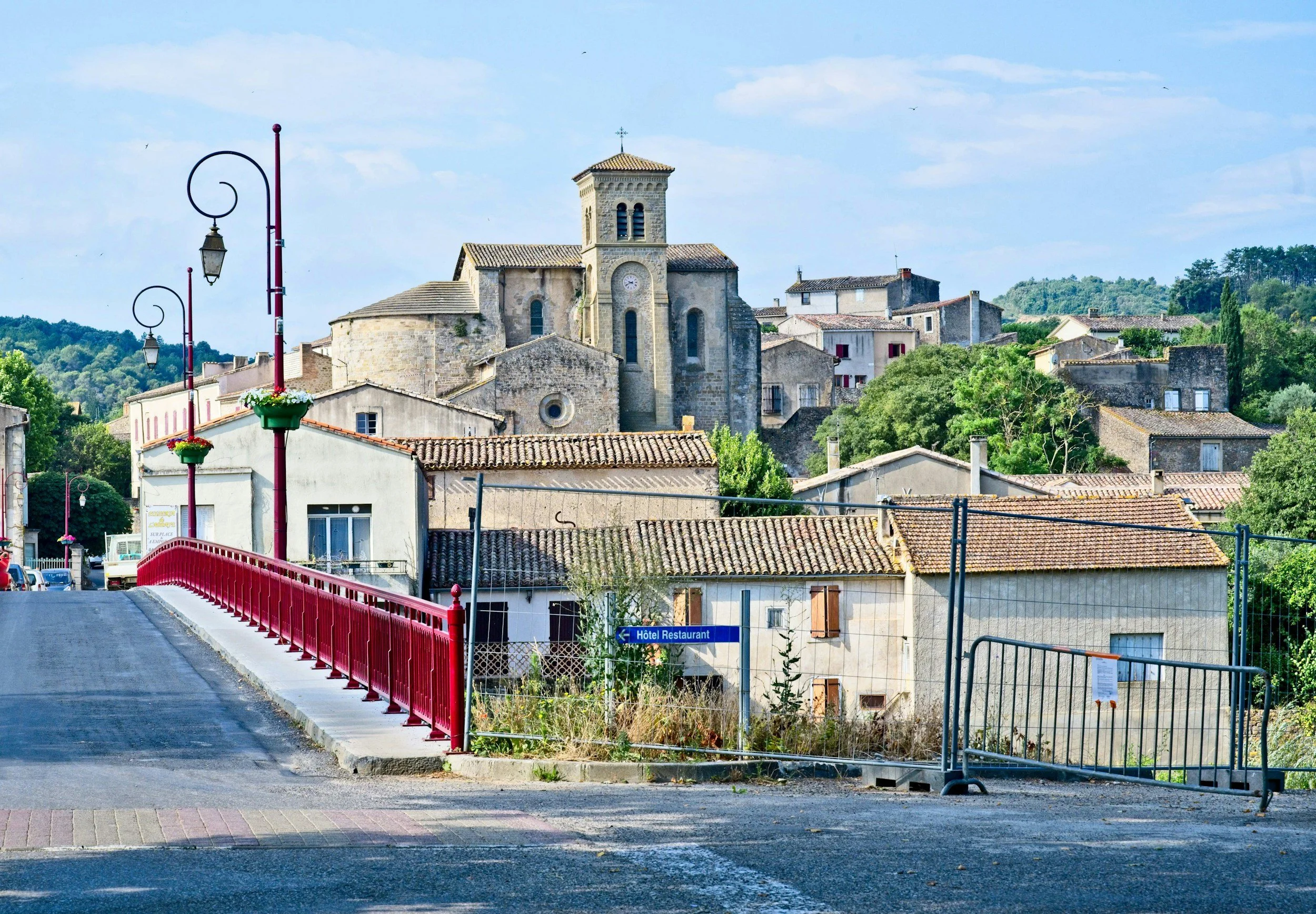
Where Languedoc actually is and how people usually get there
Languedoc stretches across a large part of southern France between Provence and the Spanish border, although the version most travelers picture is usually the area around Montpellier, Béziers, Narbonne, Nîmes, and the inland towns scattered through Hérault and western Gard.
The geography changes faster than people expect. One hour you’re near flat Mediterranean lagoons with campsites and salt air, then suddenly the roads turn inland toward vineyards, scrubby hills, river valleys, and small stone towns sitting below the Cévennes foothills. Distances look short on paper, but the region feels much larger once you start moving between towns slowly instead of driving straight through on the motorway.
For most international travelers, Montpellier is the easiest entry point. The airport is small enough to move through quickly, and the Saint-Roch train station connects well to the rest of the region. From there, towns like Sète, Nîmes, Béziers, Lunel, Agde, and Narbonne are straightforward by train. The inland towns are slightly less simple.
Pézenas, for example, doesn’t have its own train station anymore, despite being one of the better-known market towns in the area. Most people arrive through Agde or Béziers, then continue by regional bus. The bus from Béziers is manageable if you travel light, although summer arrivals in the middle of the afternoon can feel longer than they actually are. Taxi availability around smaller stations also becomes less reliable on Sundays.
Sommières usually means arriving through Montpellier or Nîmes first, then switching to regional buses. Saint-Chinian works best by car unless you’re comfortable staying mostly within the town itself once you arrive. Olargues becomes significantly easier with a car, especially outside peak season when transport schedules thin out.
A lot of people underestimate how rural parts of inland Languedoc still are once you leave the main rail corridor. Not remote exactly, but less connected than Provence. Some stations sit outside town centers entirely, with awkward uphill walks on uneven pavement and very little shade during summer heat. Midday arrivals can feel rough with luggage.
The region also works differently depending on how you structure the trip. Trying to move towns every day usually becomes tiring surprisingly quickly because transport between inland places often routes back through larger hubs first. Staying three or four nights in one base tends to feel far more natural here than constantly relocating.
Pézenas is usually where people begin, though. Partly because it’s easier to reach than some of the smaller inland towns, partly because the Saturday market has become one of the better-known ones in the region. But once you spend an actual weekend there instead of arriving for a few midday hours, the town starts feeling less like a market destination and more like a place built around long mornings and late evenings that happen to include a market in the middle of them.
A lot of people combine inland Languedoc with a few days further north through Burgundy, and Tournus works especially well if you’re continuing by train toward Lyon or Dijon.
And if you’re building a longer France route around markets rather than major cities, these Loire Valley towns pair surprisingly well with Languedoc because the café and market vibe feels similarly local.
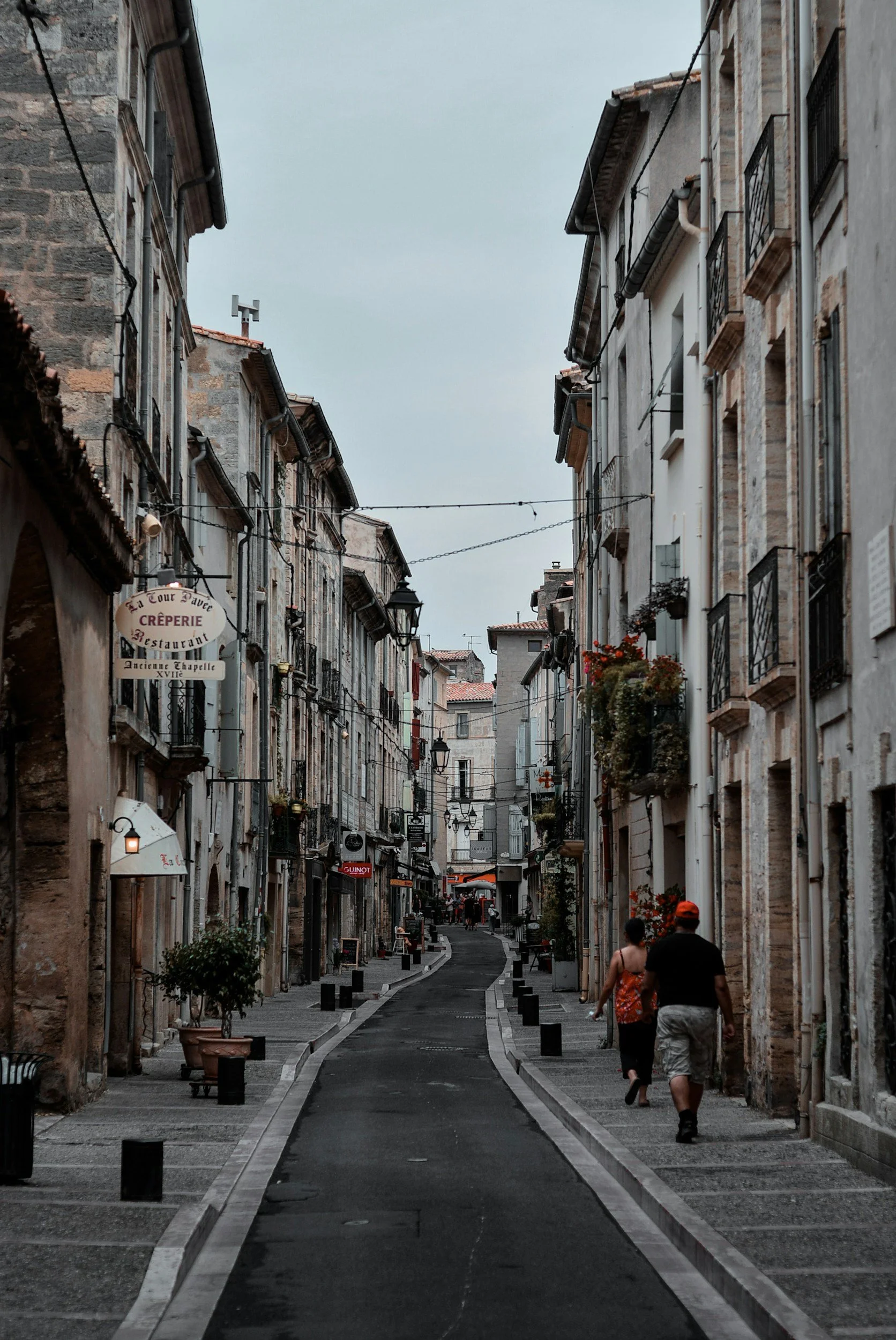
A weekend in Pézenas beyond the Saturday market
Pézenas is the kind of town that gets much better once you stop trying to use your time efficiently there, because the people who leave disappointed are usually the ones trying to fit the market, lunch, shopping, and a quick walk through the old center into a few tightly planned hours before driving somewhere else.
You notice pretty quickly that the town doesn’t really move like that.
If you stay inside the historic center for a couple of nights instead of visiting for an afternoon, your days start organizing themselves around smaller routines without you really planning it. You end up walking down Cours Jean Jaurès constantly because nearly everything flows through there at some point during the day. In the morning it’s market vans unloading flowers, oysters, peaches, crates of tomatoes, folding tables scraping against the pavement while cafés are still setting out chairs. By late morning it turns noisy and crowded in a slightly chaotic way that feels much more local than polished. Then by mid-afternoon, after the market disappears almost all at once, entire sections suddenly go quiet except for restaurant terraces lingering over long lunches in the shade.
This may caught you off guard the first time they stay overnight here, especially if you’re traveling alone and not used to how southern French towns can suddenly empty between lunch and evening. One hour Rue de la Foire feels impossible to move through properly because somebody has stopped in the middle of the street to buy olives while another person is balancing six baguettes under one arm, then suddenly you’re walking through the same street hearing almost nothing except cutlery from an open restaurant window somewhere above you.
And honestly, that quieter stretch in the middle of the day is part of why Pézenas works so well for solo travel. There’s enough movement that you never feel stranded sitting somewhere alone with a coffee or glass of wine, but the town also gives you space to disappear for a few hours without feeling like you constantly need an itinerary.
The old center is bigger than people expect too, and far less polished than the photos online usually make it seem. Around Rue des Orfèvres, Rue de l’Opéra, and Rue Triperie Vieille, you keep drifting into streets where half the storefronts look permanently half-open and nobody seems particularly interested in rushing you into buying anything. Some of the antique stores barely feel like businesses at all. You walk inside and the owner is sitting at the back reading the newspaper while old mirrors, silverware, paintings, and dusty ceramics pile into each other under dim yellow lighting.
You’ll pass tiny independent galleries tucked into old stone buildings where doors stay open during the afternoon heat, and places like Galerie Anne Cros or some of the smaller artist studios near Place des États Généraux feel more like extensions of people’s homes than formal gallery spaces. The independent bookstore Un Point Un Trait (personal favourite!) becomes a very good place to escape once the heat gets too heavy outside around three or four in the afternoon, especially because that whole section of the old town stays slightly cooler than the more exposed streets around the market.
And there are certain streets you’ll probably keep returning to simply because they feel good to walk through at different times of day. Rue Montmorency early in the morning before the heat arrives, and the smaller lanes behind Place Gambetta once restaurant tables start filling in the evening. The quieter residential edges near Avenue de Verdun where the old center begins dissolving into more ordinary apartment buildings, pharmacies, laundromats, scooters parked badly on corners, people carrying groceries home through streets most visitors never really bother exploring.
The Saturday market itself spreads much further than first-time visitors usually expect, which is part of why it still feels like a functioning regional market instead of a tourist version of one… Around Cours Jean Jaurès you’ll find flowers, produce, oysters packed in ice, giant tubs of olives, roast chickens turning slowly beside potatoes soaking in fat underneath. Then suddenly the streets narrow and you end up in sections selling old books, table linens, woven baskets, vintage postcards, handmade soap, kitchen knives.
And by late morning the entire center becomes so congested in places that trying to walk efficiently stops being realistic anyway. Around 11:30 near Rue Conti, you’re mostly moving at the speed of whoever is in front of you, which is usually somebody discussing tomatoes in detail with a vendor while carrying far more bags than seems physically manageable.
The cafés are part of the reason Pézenas works so well over several days too because the town still has places where you can comfortably settle in for coffe and cake without feeling like staff are trying to rotate tables quickly. Les Palmiers is especially good earlier in the morning before the market reaches full speed, while Café de la Poste near Place Gambetta works better later once the square fills up and you can just sit watching the whole vibe of the town changing around you.
In the evenings, L’Entre Pots and La Ripaille both stay busy in that very southern French way where nobody arrives particularly early but suddenly every table is full by around nine. People order bottles from vineyards around Faugères, Montpeyroux, Saint-Chinian and it’s all very natural and local. You’ll see groups sitting for hours over wine and small plates while chairs scrape across the stone pavement and conversations drift between tables.
And because Pézenas still feels like a real town rather than only a visitor destination, the atmosphere changes a lot depending on the day of the week and season. Sunday evenings outside peak summer become genuinely quiet quite early. Around Rue Alfred Sabatier and some of the smaller backstreets behind the center, shutters close, restaurant kitchens wind down, and suddenly your footsteps start echoing off the stone again in a way they didn’t on Saturday night.
Transport into the town is probably the least “romantic” part of the whole experience and honestly deserves more honesty than most travel articles give it. Pézenas no longer has a train station, so most people arrive through Béziers or Agde first before switching to regional buses, and while the connections are technically straightforward, they can feel surprisingly tiring in summer once luggage and heat become involved. Agde station especially feels harsher than people expect, with very little shade around the bus areas, and then once you finally arrive in Pézenas itself you immediately remember that rolling a suitcase through uneven medieval streets uphill in thirty-five degree heat was never going to feel elegant.
Which is also why staying somewhere directly inside the old center matters much more here than booking sites make it sound. Pézenas feels best once you can simply walk downstairs in the evening and drift between wine bars, restaurants, cafés, and quieter side streets without thinking about parking, driving, or getting back to some outer road after dinner.
By the second morning, you already know which bakery still has fougasse left before nine, which route through the market avoids the worst bottlenecks, which square gets sun first and which one stays shaded longest. The town becomes familiar surprisingly quickly in a way that feels very easy to settle into!
If you’re trying to decide whether Pézenas still feels more local than Uzès these days, this weekend comparison makes the differences obvious very quickly.
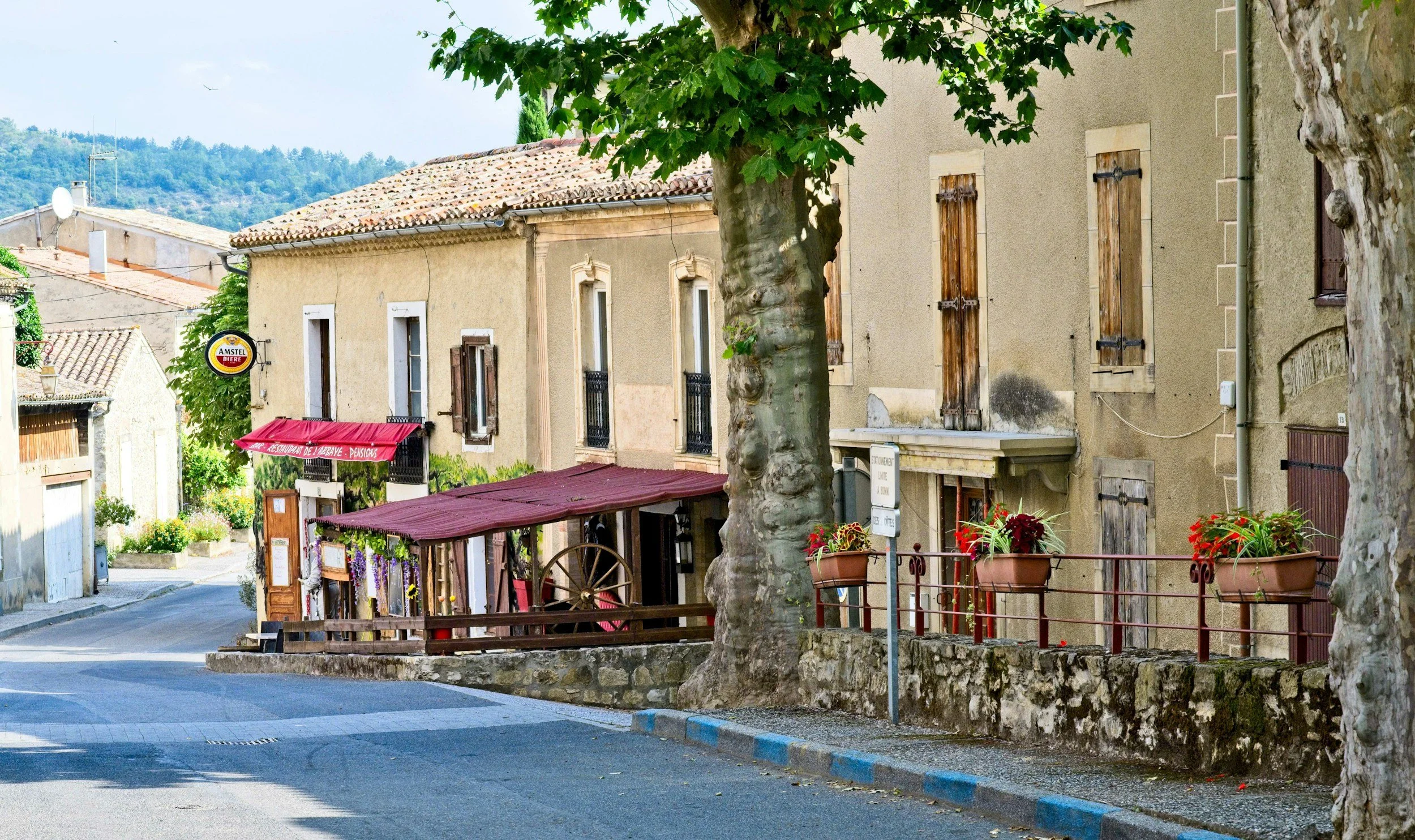
Clermont-l’Hérault for market mornings and long lunches
Clermont-l’Hérault usually gets treated as somewhere you pass through on the way to Saint-Guilhem-le-Désert, Lac du Salagou, or the coast, which means a lot of people never really stop long enough to understand why the town actually works so well for a slower few days in this part of Languedoc.
At first glance, it doesn’t have the visual perfection people expect from southern France. The buildings around the center are slightly uneven, shutters faded from the heat, scooters parked diagonally across pavements, electrical wires hanging between old facades. Parts of Boulevard Gambetta feel practical rather than picturesque. There are pharmacies, discount shops, tabacs, slightly chaotic cafés where nobody seems especially concerned about presentation.
And honestly, after a while that starts becoming the appeal.
Uzès feels composed. Clermont-l’Hérault feels authentic and lived in!
The center around Place de la République starts moving properly early in the morning, especially on Saturdays when the market spreads through the surrounding streets and under the plane trees near Les Halles Clermontaises. You’ll hear deliveries before you even reach the square. Metal café chairs scraping over stone pavement. Stallholders arguing while unloading vegetables and flowers from white vans parked half on the curb. Bakery queues forming before 8am while the air still feels relatively cool.
Maison Azor near Rue Doyen René Gosse is one of those places you’ll probably end up returning to repeatedly without planning to because it actually opens early enough to matter. Good bread, very good pastries, strong coffee, and absolutely no interest in showing off some curated French bakery experience for visitors. By around 9am on Saturdays, the line usually spills partially outside.
Further into the center, around Rue de la Fraternité and Rue Pasteur, the market becomes denser and more chaotic in a way that still feels genuinely local rather than decorative. You’ll pass oysters packed into crushed ice beside cheap clothing racks, old men discussing tomatoes loudly beside stalls selling kitchen knives and hardware tools. Some people are clearly there for the social side of the morning, but most are doing actual shopping.
And because the town hasn’t been “polished” into some idealized southern France version of itself, you don’t spend the whole day surrounded by people trying to stage the perfect market morning.
That slightly messy everyday atmosphere is part of what makes Clermont-l’Hérault work so well.
If you’re traveling alone, Clermont-l’Hérault feels unusually easy because there’s enough everyday movement around you constantly that sitting somewhere for a long lunch or slow coffee never feels awkward. Nobody notices or cares very much. You can stay outside Café de la Place watching the market thin out for over an hour without getting the sense staff are impatient for table turnover.
By around 2pm, sections of the town suddenly become quiet enough that you can hear forks against plates from upstairs apartment windows left open in the heat. Around Rue René Gosse and the smaller side streets behind the church, shutters close halfway, scooters disappear, and the light becomes harsh against the pale stone walls. Some cafés stay open. Others vanish entirely until evening.
That slightly uneven daily pace is part of why the town feels more human and local in a way.
By day two, you’ll start to notice things like which side of Place Salengro stays shaded longest once the heat becomes unbearable. Which café still serves decent coffee after lunch instead of burnt machine espresso. Which streets feel cooler to walk through because the buildings sit close enough together to block the sun properly.
Around the old center there are also a handful of smaller independent places worth slowing down for rather than just passing by on the way to the lake. Librairie Papeterie Calligramme has that old-fashioned independent bookstore feeling where people actually browse slowly instead of rushing through. Nearby, little homeware and ceramics shops around Rue de la Fraternité sell things that still feel tied to the region rather than imported “French market” souvenirs repeated across Provence.
There are also small artist studios hidden through the center that rarely appear in guides because they don’t really advertise themselves heavily. Around the quieter lanes behind Église Saint-Paul, you’ll sometimes find gallery spaces open almost casually during the afternoons, with paintings, ceramics, or photography spilling into old stone rooms that still feel more like workshops than retail spaces.
And then there’s the food side of Clermont-l’Hérault, which honestly ends up stronger than people expect from a town that barely appears in most southern France itineraries.
Le Tournesol remains one of the better places for long lunches that actually feel connected to the area instead of generic “French regional cuisine” repeated for tourists. Le Pré Saint Jean, slightly outside the center, is worth the extra effort for dinner if you want something slower and more serious without becoming overly formal about it. In the evenings, places around Place Salengro start filling gradually from around 6:30 onwards once the heat leaves the square and people drift back outside.
Groups order bottles from producers around Terrasses du Larzac and stay at tables for hours while children run between chairs and scooters continue weaving through streets that feel far too narrow for them.
And if you walk uphill slightly toward the edges of town near the old Château des Guilhem ruins in the evening, you start getting wider views back across the rooftops, church towers, and surrounding hills that most people completely miss because they never stay long enough to wander outside the immediate center.
Transport-wise, Clermont-l’Hérault works better than many inland Languedoc towns because the bus connections toward Montpellier are frequent enough that you don’t feel isolated without a car. But the experience still feels very southern France in practical terms. Summer bus stops with almost no shade, and delays nobody announces. Walking back from the station area carrying groceries while cicadas scream from dry trees nearby.
And because Lac du Salagou sits so close, a lot of visitors completely ruin the pacing by trying to force everything into one rushed day. Market in the morning, lake in peak afternoon heat, quick dinner somewhere, then driving away exhausted.
Salagou itself is far nicer later in the evening once the harsh afternoon light softens across the red earth around the lake, while Clermont-l’Hérault feels best earlier in the day when the market, cafés, bakeries, and streets around Place de la République still feel fully alive before the long afternoon slowdown begins.
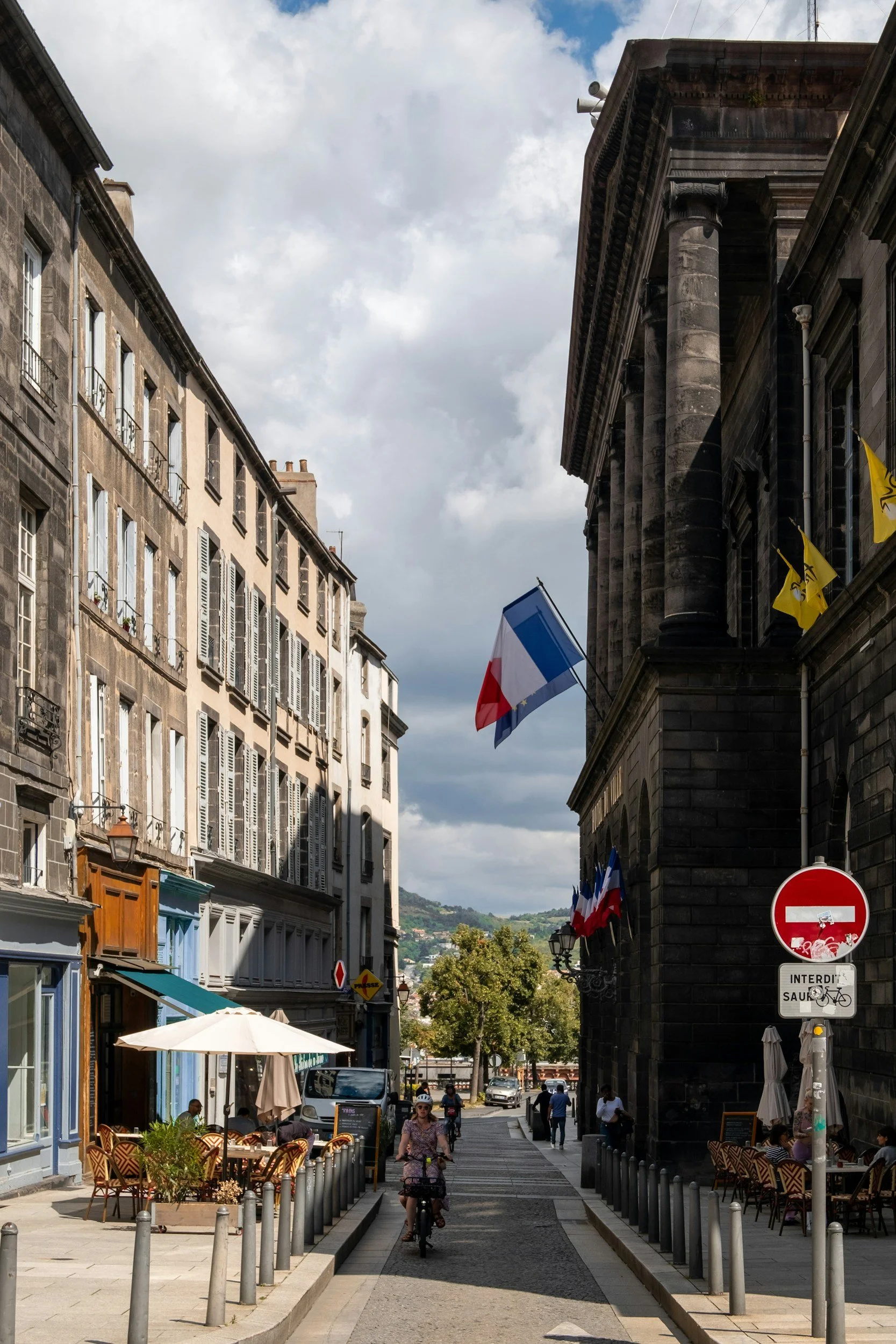
Saint-Chinian and the wine bar culture inland
Saint-Chinian feels different almost immediately because the town still revolves around the vineyards around it rather than visitors moving through on carefully planned weekend itineraries. Closer to the coast around Béziers, especially during summer, you notice how many towns empty themselves out every morning toward campsites, beaches, or holiday rentals near the Mediterranean. Saint-Chinian doesn’t really do that. The movement stays in the center all day instead of disappearing somewhere else.
If you stay near Allées Gaubert for a few nights, you start noticing that early mornings begin surprisingly early here. Around 7:30am, delivery vans are already parked under the plane trees while bakery queues start forming before the heat fully settles over the square. Maison Cabiron usually smells like warm bread halfway down the promenade before you even see the storefront properly, and by eight o’clock the cafés already have people outside reading newspapers over coffee while cyclists stop briefly before heading deeper into the vineyards around Berlou or Assignan.
The Thursday and Sunday markets fit into the town much more naturally than the larger Saturday markets in places like Pézenas because Saint-Chinian already has people outside constantly anyway. You walk through stalls selling olives, oysters, cheeses, flowers, vegetables, but then immediately beside them somebody is just stopping for cigarettes at the tabac or arguing about parking spaces outside the pharmacy. Nothing feels separated into a “market atmosphere” for visitors.
And honestly, that’s part of why the town works so well over several days instead of a quick afternoon!
You stop trying to structure everything quite so much. Mornings become coffee at Café de l’Allée while the market slowly builds around the promenade. Then maybe a long lunch somewhere around Place Jean Jaurès before the afternoon heat empties parts of the center almost completely for a few hours. Later in the evening, the exact same terraces fill again, except now everybody’s drinking local wine instead of espresso.
The wine culture in Saint-Chinian feels very normal in the best possible way. You’re not constantly being guided into tastings or hearing long explanations about terroir every five minutes. People order local bottles because that’s what’s produced around them, and because nearly everybody sitting outside seems to know somebody connected to a vineyard somewhere nearby.
By early evening, the whole atmosphere along Allées Gaubert starts shifting without much fuss. Coffee turns into wine almost automatically. Tables that were half empty an hour earlier suddenly fill up once the heat finally leaves the pavement and people start drifting outside again for the night.
Le Vernazobre is one of the nicest places to sit because it stays relaxed even when it’s busy. You’ll see bottles from vineyards around Berlou, Roquebrun, and Assignan appearing on tables beside olives, small plates, charcuterie, bits of cheese, and nobody seems particularly interested in rushing through the evening. Nearby, Café de la Paix still feels properly local, especially earlier in the night when older regulars sit outside reading newspapers or talking across tables before dinner service fully takes over the square.
And Saint-Chinian gets surprisingly cozy later in the evening once things quiet down slightly.
Around Place Jean Jaurès, the smaller terraces soften once the day crowd disappears and people settle in properly for the night. You hear chairs dragging slowly across the stone, glasses clinking somewhere further down the street, somebody talking from an upstairs apartment with shutters still open because the air is finally cooling off. Some nights you end up sitting outside far later than planned simply because the whole town feels so unhurried after dark.
And the center itself rewards wandering without much direction because Saint-Chinian still has enough slightly faded ordinary life mixed into everything. Around Rue de la Voie Ferrée and the quieter streets behind the promenade, you pass tiny hair salons, old pharmacies, little grocery stores, wine caves, apartments with shutters left open while televisions flicker somewhere inside. Some of the independent shops feel like they haven’t changed in twenty years.
There’s also Librairie Clareton tucked quietly into the center, which becomes a very good place to disappear into during the hottest part of the afternoon when half the town temporarily shuts down. Nearby, there are a few small galleries and artist workshops hidden through the older streets around the church where doors stay half-open during the day without much signage outside. You find them (almost accidentally!) while wandering uphill away from the promenade.
And the uphill parts of Saint-Chinian are worth wandering through slowly because the atmosphere changes completely once you leave the flatter center behind. The streets narrow, the stone walls hold onto the day’s heat well into the evening, and every so often you suddenly get these open views across vineyard-covered hills without any official viewpoint or sign announcing them. Around Notre-Dame-de-la-Barthe especially, the light late in the evening becomes softer and the whole valley around the town starts opening up beneath you in layers of vineyards, cypress trees, dry hillsides, and pale stone roads disappearing toward tiny villages most people never reach.
Without a car though, you feel the limitations here fairly quickly once you start wanting to explore outside the center. On maps, villages like Berlou, Roquebrun, or Babeau-Bouldoux look close enough together to casually visit, but once you’re actually here you realize how spread out the vineyards really are. The roads are steep, narrow, hot in summer, and not particularly enjoyable to walk for long stretches unless you’re deliberately planning proper hikes. Taxi availability is inconsistent enough that spontaneous winery visits become awkward quickly, and the regional buses are limited to the point where you have to think ahead much more than people expect beforehand.
Which honestly helps preserve the atmosphere a bit because Saint-Chinian still feels grounded compared to more famous wine destinations elsewhere in southern France.
The evenings especially stay relaxed in a way that’s getting harder to find in better-known wine towns. Around Allées Gaubert and Place Jean Jaurès, you’ll hear glasses clinking and conversations drifting across terraces late into the night, and vineyard workers still dusty from the day sit beside cyclists, local families, retirees, couples sharing bottles from producers twenty minutes away.
And after two or three days, the town starts becoming familiar in very small ways. You already know which terrace gets shade first once the afternoon heat becomes unbearable, which bakery runs out of fougasse too early on market mornings, which streets uphill catch the best evening light, and which wine bars stay busy latest once the rest of the center begins quieting down for the night.
The inland market atmosphere around places like Saint-Chinian feels very different from the quieter villages deeper into Provence, especially once you read these Provence towns side by side.
If the slower wine-town atmosphere around Saint-Chinian appealed to you more than the coast, this guide to market day in Nyons has a surprisingly similar feel in spring.
Sommières works best if you stay overnight
Sommières can feel slightly exhausting if your entire experience of the town happens between late morning and lunch on a Saturday, which is exactly when most people arrive from Montpellier, Nîmes, or nearby villages. By around 11am, the old center becomes so full that moving through the market stops feeling like wandering and starts feeling more like slowly negotiating your way through bottlenecks of people carrying flowers, oysters, melons, olives, baguettes, and market bags that keep catching against café chairs.
Around Rue Général Bruyère and Place du Marché, the streets narrow enough that everything slows down naturally once the crowd builds. Someone stops to buy apricots and suddenly twenty people behind them stop too. Café servers somehow continue squeezing through impossible gaps carrying trays of espresso and glasses of rosé while accordion music drifts somewhere through the arches near the covered market hall.
And because the market spreads through so much of the center instead of staying neatly contained to one square, the entire town starts absorbing the atmosphere. Near Quai Frédéric Gaussorgues by the river, terraces are already full before midday while people lean against the stone walls eating takeaway socca, oysters, roast chicken, strawberries sold in little cardboard baskets that barely survive the heat by lunchtime.
The market itself is still genuinely good though, partly because enough of it still feels practical rather than staged. There are plenty of ceramics and linen stalls obviously, but you also get huge produce sections where people are clearly doing actual weekly shopping. Around the covered market you’ll see locals loading wheeled shopping trolleys with vegetables while arguing about tomatoes beside seafood counters packed into melting crushed ice.
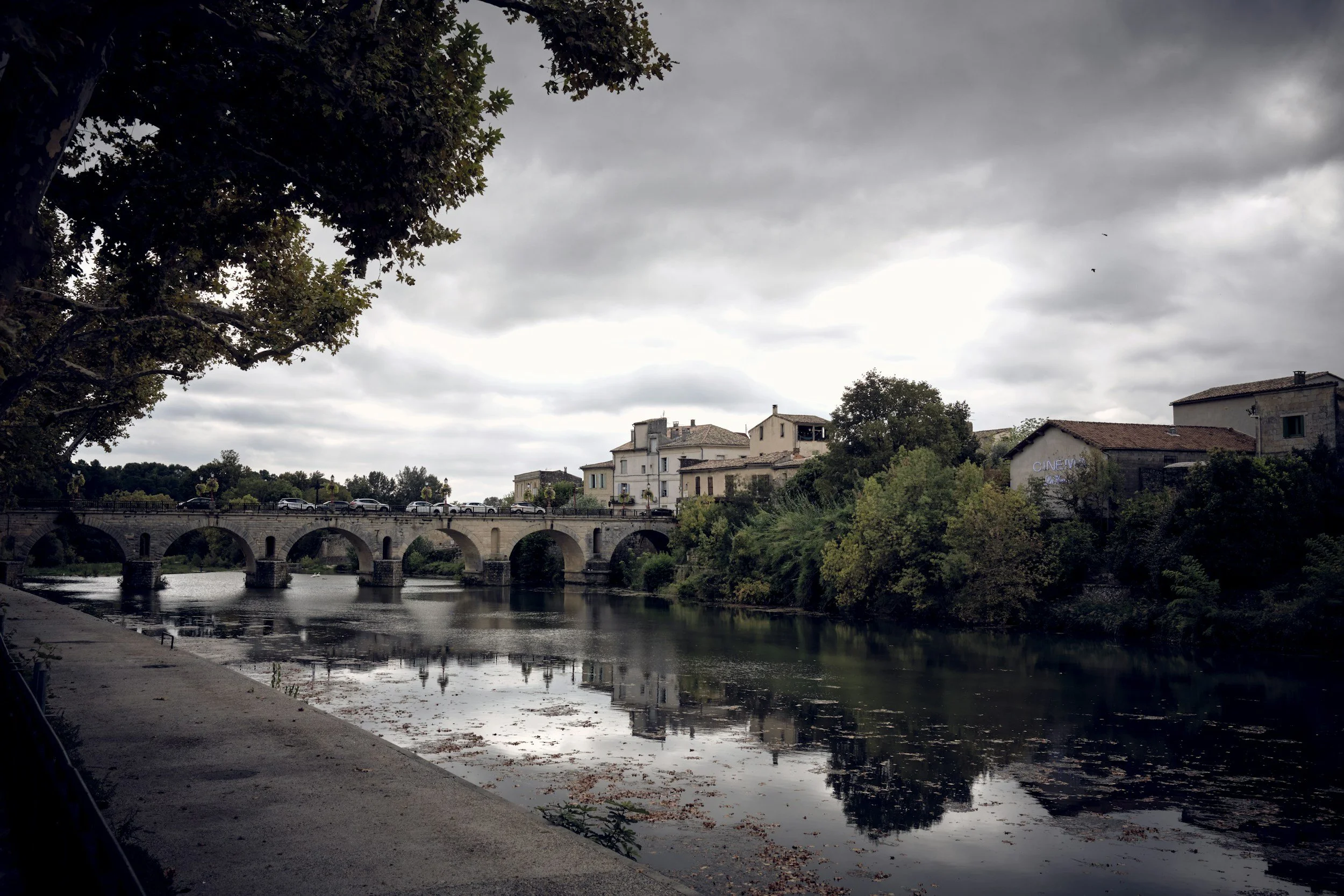
And then around lunchtime, the entire town slows down in a very southern French way that people either love immediately or find slightly frustrating at first. Lunches stretch forever here on Saturdays! Service slows. Nobody seems remotely concerned about turning tables quickly (love that!) Along the river especially, people settle in properly once they’ve found a terrace and stay there for hours while the heat builds against the stone buildings around the bridge.
That’s usually the point where visitors trying to “do” Sommières in one day start getting restless.
But once you stay overnight instead, the whole place changes completely after the market crowd leaves.
Around six in the evening, the bridge empties almost all at once and the town finally exhales a bit. The takeaway crêpe stalls close. Market vans disappear from the outer streets. Suddenly you can hear the river beneath the arches again and the center starts filling instead with people staying for the night or locals reclaiming the terraces after the busiest part of the day has ended.
And honestly, this version of Sommières is far better than the market version.
Around Rue Compane and the smaller lanes behind the center, people sit outside apartment doors talking while restaurant tables slowly refill under warm yellow lights strung between old stone buildings. The heat stays trapped in the walls long after sunset, especially in the uphill streets near the château ruins where the air still feels warm at ten o’clock at night.
Sansavino becomes much nicer later in the evening once the daytime turnover disappears and the whole place settles into wine, long dinners, and people lingering over bottles from nearby vineyards around Gard and Pic Saint-Loup. Bichette near the river works better after dark too when the terrace calms down and the riverfront loses that crowded midday feeling.
And because Sommières still feels slightly rough around the edges in places, the evenings never become overly formal… scooters squeeze through streets that feel too narrow for vehicles. Someone is always dragging chairs across the pavement somewhere nearby, and conversations drift from upstairs windows above the cafés while people sit outside much later than they originally intended.
You also start noticing parts of Sommières that basically disappear during the busiest market hours because everybody stays clustered around the bridge, the riverfront, and the main market streets. Later in the afternoon, once things calm down and the heat pushes people away from the busiest terraces, the smaller lanes around Rue Antonin Paris and Rue Taillade become much nicer to wander through slowly without really having a plan.
Librairie Café Sommières is one of the best places to hide for a while once the middle-of-the-day heat becomes too much. It’s the kind of bookstore where people actually sit and stay for a bit instead of rushing through, and the cooler stone interior feels especially good after walking through the bright riverside streets.
A few doors further along, you’ll pass little ceramics studios and art spaces that barely look like businesses from outside. Some just have bowls, paintings, or handmade cups sitting quietly in the window while the door stays half open. Around these streets, there are also tiny wine shops like Cave de l’Horloge where the bottles are mostly local and nobody’s trying to turn buying wine into some polished tasting experience.
And honestly, some of the nicest parts of Sommières are the slightly quieter corners uphill behind the center where the market crowd rarely goes properly. Small staircases leading toward the château ruins, laundry hanging above the lanes, old shutters left open while people cook dinner inside apartments overlooking the streets below.
You’ll suddenly find tiny little squares with two benches and almost nobody there while the riverfront is still packed twenty meters away. Then somewhere nearby you hear glasses clinking from a hidden terrace or somebody talking loudly from a balcony above Rue Taillade while the evening slowly cools down around the old stone walls.
And some of the nicest parts of Sommières are actually uphill away from the market entirely.
If you walk toward the château ruins later in the evening once the temperature drops slightly, you start getting little openings between buildings where the rooftops, bridge, and Vidourle river suddenly appear below you. Not official viewpoints with signs and railings. Just ordinary corners between houses where the town opens up for a second before disappearing again behind stone walls and shutters.
The transport side is still awkward though and probably the main reason Sommières stays slightly calmer than towns with direct rail access.
The old railway infrastructure still runs beside the town, which makes everybody assume there must be a train station nearby, but the SNCF connection disappeared years ago. Most people arrive by bus from Montpellier or Nîmes instead, and while the journey itself is manageable, it never feels especially elegant in summer once you’re standing beside a roadside stop with luggage in thirty-five degree heat trying to work out whether the delayed bus is actually yours.
And once you arrive, the center immediately reminds you that old stone towns and rolling suitcases hate each other.
The uphill sections around Rue Cavalier and the steeper lanes behind the river become genuinely tiring with luggage, especially because the stone holds heat well into the evening. Some accommodations advertise themselves as “walking distance” from the center, which technically may be true, but those uphill returns after dinner feel significantly longer late at night than they sound on booking sites.
Staying directly inside the old center changes the whole experience because Sommières really becomes an evening town once the market finishes and the riverfront quiets down again.
The brocante culture around Pézenas and Sommières makes much more sense once you know what to look for before arriving.
Lodève feels rougher around the edges in a good way
Lodève is not the kind of town people usually romanticize online when they talk about southern France. Nobody’s posting aesthetic market reels from here every five minutes. The center feels older, more worn in, less arranged. Some streets are genuinely scruffy. A few shopfronts look like they haven’t been touched since the early 2000s. And somehow the town benefits from that because it still feels like people actually live here year-round instead of performing a version of regional life for visitors.
You feel the landscape changing before you even reach the center. The roads around Lodève start pulling upward toward the Larzac plateau and suddenly the softer vineyard scenery lower down in Hérault gives way to dry limestone hills, darker vegetation, wind, sharper evening light. Even in July, the air cools properly at night here. You notice people putting jackets back on outside cafés after sunset while places closer to Béziers still feel heavy and hot.
The Saturday market around Place de la République feels very different from the prettier market towns nearby too. Less decorative and more functional. You see people buying actual household things instead of slowly browsing for souvenirs and artisanal soap. Around the seafood stalls near Les Halles de Lodève, older couples stand eating oysters with little plastic forks while carrying grocery bags already full of vegetables and bread. Nearby somebody’s selling tools, kitchen knives, cheap clothing, rotisserie chickens dripping fat onto trays of potatoes underneath.
And because the market spills into streets that still feel very local, the atmosphere stays grounded even once it gets busy. Around Rue Neuve des Marchés and Boulevard de la Liberté, mechanics stop for coffee before work while market stalls are still setting up.
The afternoons become extremely quiet here once lunch finishes. Not in a charming curated way either. More abrupt than that! Around two o’clock, shutters start closing against the heat and suddenly parts of the center feel almost empty apart from somebody carrying groceries home or sitting outside Café du Commerce with a tiny coffee that somehow lasts an entire afternoon.
Café du Commerce still feels like the kind of place where people actually know each other instead of somewhere designed around visitors passing through for lunch. Early in the morning, older regulars sit outside with tiny coffees and folded copies of Midi Libre while market deliveries are still happening around Place de la République. Nobody seems in a hurry to leave. By late morning, the terrace gets louder once the market crowd spreads through the square and people start stopping for glasses of rosé before lunch instead of coffee.
Le Bahia nearby has a slightly different atmosphere and usually starts filling earlier with workers, cyclists, and people grabbing quick breakfasts before heading toward the roads climbing out toward the Larzac. Around lunchtime, the tables outside spill further into the square once the heat settles into the center and everybody starts moving more slowly.
You end up structuring your afternoons differently here without really planning to.
Maybe you disappear into Librairie Papeterie Azais because the cool interior feels better than sitting outside in full sun. Maybe you wander uphill behind Cathédrale Saint-Fulcran through streets that feel almost too quiet for the middle of the day, passing little ceramic workshops, second-hand shops, faded green shutters left open above narrow staircases.
The cathedral keeps reappearing no matter where you walk. You turn a corner and suddenly it’s there again between the buildings. Late in the evening the square around it becomes one of the nicest places in town because the stone starts catching softer light while the cliffs beyond Lodève slowly darken behind it.
And the uphill streets behind the cathedral are where Lodève starts feeling really good.
Around Rue du Cardinal de Fleury and the smaller staircases climbing behind the old center, the town suddenly opens into little rooftop views across the valley without any signs telling you to stop there. Laundry hanging above the streets. Somebody cooking dinner with windows open, and glasses clinking from terraces back down toward Place de la République.
And later in the evening, the mood around these cafés changes again once the town cools down properly. Around Rue de la Sous-Préfecture and the smaller streets leading away from the cathedral, people drift back outside after hiding indoors through the hottest hours of the afternoon.
A few minutes away, Le Petit Sommelier becomes one of those places where people accidentally stay much longer than planned because the whole evening feels unhurried. Bottles from nearby producers around Montpeyroux and Saint-Saturnin keep appearing on tables beside olives, charcuterie, little plates of cheese, and nobody seems interested in rushing dinner along. Around the same area, you’ll also find tiny wine caves and independent food shops tucked between old stone buildings where locals stop on the way home for bread, wine, or takeaway pizza before the center quiets down again later at night.
The food and wine side of Lodève stays very tied to the surrounding landscape too. You see much more wine from Terrasses du Larzac here than the coastal bottles dominating lower parts of Hérault, and places like Le Petit Sommelier pour wines from Montpeyroux, Saint-Saturnin, Jonquières without turning everything into a vineyard experience. People just sit outside for hours with bottles already open on the table before dinner even arrives.
L’Atelier Nomade nearby feels much more relaxed later in the evening once the town cools down properly, and during summer you notice how much longer people stay outside here compared to towns lower down toward the coast because the nighttime air actually becomes comfortable.
The Musée de Lodève is also worth spending proper time in, mostly because the geology sections completely change how the surrounding landscape looks afterward once you head back outside. Suddenly the cliffs and dry valleys around town make much more sense.
And Lodève works surprisingly well without a car if you’re happy staying put for a few slower days. The bus from Montpellier is easy enough and the center stays compact once you’re here. Markets, cafés, bookstores, wine bars, evening walks uphill through the old streets - none of that requires planning.
The second you want to properly reach the Larzac plateau or smaller villages outside town though, you feel the limits quickly. Everything looks deceptively close from Lodève itself, especially late in the day when the cliffs catch the evening light, but buses become awkward very fast once you start trying to move around the region properly.
And the town definitely won’t suit people who need packed itineraries… Some weekday afternoons actually feel almost empty outside peak summer. Sundays even more so. But if you like towns that still feel slightly messy, local, imperfect, and shaped more by the landscape around them than tourism, Lodève becomes surprisingly easy to settle into after a couple of days.
If this side of France is already pulling you away from packed Riviera itineraries, the quieter villages in Périgord Noir tend to attract the exact same kind of traveler…!
The atmosphere in inland Languedoc during September and October feels completely different again, and these autumn weekend towns are useful if you’re deciding whether to come back later in the year instead of summer.
Olargues feels more Cévennes than classic Languedoc
Olargues feels completely different from the rest of these towns and you notice it before you even reach the village itself. The roads start twisting harder through the hills, vineyards slowly disappear into chestnut trees and darker forest, and the whole landscape becomes rougher and more dramatic the closer you get to the Cévennes edge. Even in the middle of summer, the evenings cool down properly here. Not slightly cooler. Actually cool enough that people start pulling jackets back on outside the cafés after dinner!
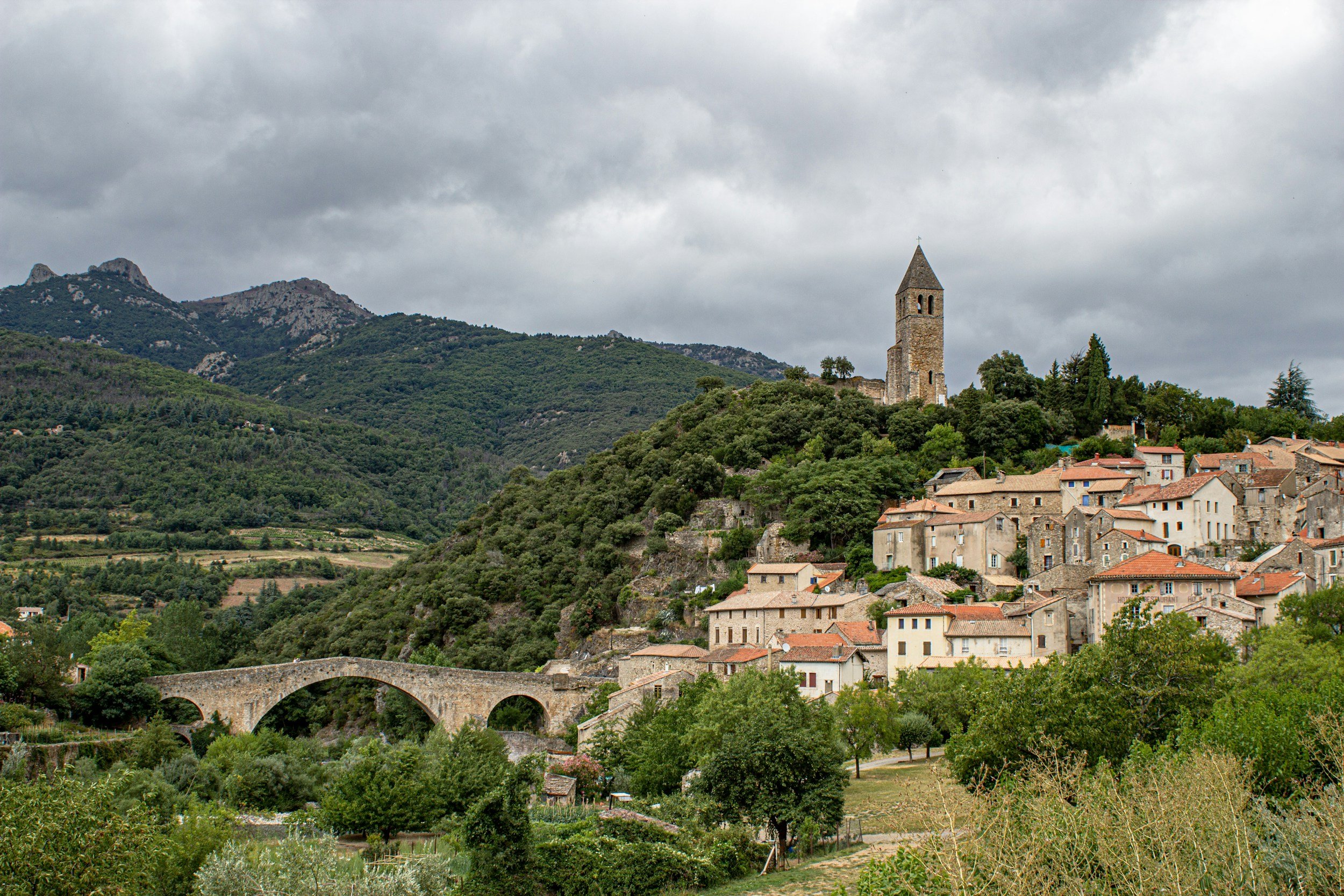
The village somehow manages to look almost impossibly beautiful without tipping over into feeling staged for visitors. The old Pont du Diable bridge still dominates the entrance into the center, but the nicest parts of Olargues are usually the steep little streets climbing upward behind it where everything folds into uneven staircases, tiny vaulted passages, old stone terraces, cats sleeping in windows above the river, laundry hanging between houses that look medieval until somebody opens a garage door underneath them and pulls out a scooter.
Around Rue du Barry and the upper lanes near the old bell tower, you keep getting these sudden openings across wooded hillsides and rooftops without any official viewpoint signs telling you to stop there. You’ll just turn a corner and suddenly the whole valley appears below you for a few seconds before disappearing again behind stone walls and narrow alleys.
And because Olargues still functions as the main practical town for a lot of the smaller villages scattered through these hills, the atmosphere stays grounded even in the middle of summer when cyclists from the Voie Verte start filling the terraces around the bridge.
Saturday mornings don’t feel curated here. Around Place de la Mairie, people are doing actual weekly shopping before driving back toward places like Saint-Vincent-d’Olargues, Mons, or tiny hamlets further into the mountains where almost nothing opens properly during the week. You see crates of vegetables being loaded into dusty hatchbacks beside bags of animal feed and giant bouquets of flowers wrapped in paper. Someone’s carrying hardware supplies from the little bricolage shop while another person queues for bread at Boulangerie Pâtisserie Reynes before the fougasse disappears completely.
Near the river, the rotisserie chicken stall starts drawing people surprisingly early, especially once the smell drifts through the market around late morning. Cyclists stop for quick coffees at Café de la Poste still wearing helmets and sunglasses while older locals settle into much slower mornings nearby with newspapers spread across the tables. Around the small produce stalls closest to the bridge, people argue over melons, tomatoes, chestnut honey from nearby hillsides, goat cheeses wrapped in leaves from farms somewhere higher up toward the Parc naturel régional du Haut-Languedoc.
And because the market stays compressed into the center instead of spreading endlessly through the town, you keep circling back through the same streets all morning without really planning to. You cross the bridge again. Stop for another coffee. End up beside the river for twenty minutes watching cyclists push bikes uphill through streets that were clearly never designed for bicycles in the first place.
By midday, the stone around the bridge starts reflecting heat back into the square while the upper lanes near Rue du Barry stay cooler and quieter. That’s usually when the village slows slightly and people start settling properly into lunch instead of continuing through the market.
Olargues is one of those places where you keep meaning to move on with your day and somehow never really do.
You stop at Café de la Poste for a quick coffee beside the bridge and end up still sitting there an hour later because the whole terrace keeps changing around you. Cyclists roll in from the Voie Verte route covered in dust from the trail toward Saint-Pons-de-Thomières, somebody parks a bike directly against the stone wall beside the river, another group is already halfway through lunch with bottles of rosé sweating on the table while older locals nearby are still on their first tiny espresso of the morning.
And because the cycling route cuts straight through the village, there’s this constant slow movement all day without Olargues ever feeling busy in the stressful way bigger market towns can. You hear bike wheels rattling over the bridge stones every few minutes. People stopping to refill water bottles at the fountain near Place de la Mairie. Cyclists asking whether the climb toward Mons is “really that bad” while somebody else is already ordering a second beer before continuing the route.
By around midday, the lower part of the village near the river starts getting properly hot, especially around the bridge where the stone reflects the heat back hard once the sun reaches the center. That’s usually when people drift uphill into the narrower lanes around Rue du Barry because the shade stays longer there and the air feels cooler between the stone walls.
And the atmosphere changes almost immediately once you leave the bridge area behind.
A few streets uphill, you stop hearing the cyclists and market noise properly. Tiny staircases leading toward the old bell tower where you suddenly get these views across chestnut-covered hills and rooftops without any signs telling you to stop there.
Then you head back down toward the river again and the whole village feels social and alive all over again.
The nicest parts of Olargues are often the quieter corners uphill behind the church where the market noise and river sounds almost disappear completely. Around the old Commanderie quarter, there are tiny ceramic studios, little galleries inside vaulted stone rooms, workshops selling chestnut honey, handmade pottery, woven baskets, watercolor paintings of the surrounding hills. None of it feels heavily commercial… Some doors stay half open all afternoon while the owners sit inside talking or working quietly in the shade.
There’s also a tiny bookstore tucked into the upper part of the village that most people walk straight past because the sign is partly hidden behind climbing plants and the opening hours seem flexible at best. Inside, it smells like old paper and cool stone walls even in August. Check it out!
By late afternoon, once most of the day visitors leave, Auberge de la Tour becomes especially good once the stone walls start holding the last warmth from the day and people settle into very long dinners outside. There are smaller places near the river too where cyclists stop earlier in the day for salads, charcuterie, cold wine, then disappear again before the quieter evening atmosphere settles over the village.
And some evenings here become almost strangely quiet for somewhere this beautiful, especially outside peak summer. Sunday nights catch people off guard all the time because kitchens close earlier than expected and parts of the village empty quickly after dinner service finishes. You walk through streets that were full of market visitors and cyclists a few hours earlier and suddenly hear almost nothing except water below the bridge and somebody talking from an upstairs window left open to the cooler air.
There are small practical things you only really notice after staying a couple of days too. The stone streets become slippery after rain. Some staircases are genuinely awkward with luggage, and without a car, Olargues becomes limiting surprisingly quickly once you want to explore further beyond the village itself. The transport connections technically exist, but not in a relaxed spontaneous way. Buses thin out heavily outside summer and moving between villages deeper into the hills starts taking much longer than it looks on maps.
A lot of people try combining the Voie Verte, market mornings, nearby villages, river swimming, and long dinners into one short weekend and end up spending half the trip moving between things instead of actually settling into the place. Olargues feels much better if you stay there for a few days.
If Olargues made you want more small towns where bookstores, slower afternoons, and café life matter more than sightseeing, you’d probably love Montolieu as well.
Inland Languedoc moves completely differently from the coast
Closer to the Mediterranean, especially around the stretch between Marseillan, Valras-Plage, Gruissan, or the smaller places outside Sète, the center life keeps breaking apart during summer because everybody disappears toward the sea by late morning. You’ll walk through a town at 10:30am thinking it feels lively enough, then come back an hour later and suddenly half the terraces are empty because people have driven off toward beaches, campsites, boats, supermarkets with giant parking lots full of inflatables and coolers.
The inland towns hold onto people differently.
Around somewhere like Clermont-l’Hérault, for example, the center stays active all afternoon because people are still moving through the town normally instead of treating it like a stop before the beach. The tabac near Place de la Victoire still has people drifting in and out at four in the afternoon. Someone’s sitting outside with coffee at Café des Négociants while the bakery next door keeps selling bread well past lunchtime because people are actually around all day.
And after a while, you realise the towns inland feel less interrupted somehow.
Near the coast, lunch often feels squeezed between beach hours. Inland, especially once you move toward the wine towns and foothills, lunch becomes the entire middle of the day. Around places like Bédarieux or Gignac, tables stay occupied forever once people sit down properly. Carafes of rosé appear before menus (loving this!) Somebody orders coffee while somebody else at the same table is already moving onto wine.
And the practical side of all this changes the experience more than people realise beforehand.
The train network along the coast is actually pretty easy. You can move between Montpellier, Sète, Agde, Béziers, Narbonne without thinking too hard. The second you cut inland though, the whole rhythm slows down. Suddenly you’re standing beside a roadside bus stop outside Lodève wondering whether the delayed bus is actually yours because the timetable taped to the shelter faded years ago.
And inland towns really do force you into slower days whether you planned for that or not.
You can’t move through them with the same speed as coastal towns because things close unexpectedly. Kitchens stop serving earlier than Google claims they do. Small grocery stores shut for two hours in the afternoon. Some cafés are packed on market mornings and then nearly empty twenty-four hours later.
In places like Olargues or Saint-Guilhem-le-Désert, even the sunlight changes your day because parts of the village lose evening sun much earlier once the hills close around them. Certain terraces become cold surprisingly fast after sunset while people two streets lower are still sitting outside in short sleeves.
And honestly, some of the nicest moments happen during the hours most people accidentally plan away.
Late afternoons when the heat empties the streets and you end up inside little independent places because nowhere else feels comfortable. A wine cave in Bédarieux where somebody’s explaining local bottles while a dog sleeps under the counter. Tiny bookstores with handwritten opening hours that may or may not be accurate. Small galleries near Péret or Saint-Pons where the owner barely notices you walked in because they’re busy talking to somebody local about lunch plans.
Those slower in-between hours are where Languedoc starts separating itself from more formal parts of southern France.
Some afternoons feel almost strangely uneventful. Especially outside July and August. You’ll walk through a town at 2:30pm and wonder where everybody went. Then around seven in the evening, chairs start scraping across terraces again, shutters reopen, somebody’s carrying pizzas through the square, wine glasses appear on tables, and the whole place slowly returns.
If you only stay one night somewhere, you mostly experience the postcard version of these towns - the market, the busy café terrace, the pretty evening light.
Some travelers end up preferring inland Languedoc simply because Provence can become frustrating without a car, especially in smaller villages, which is exactly why this guide to getting around Provence helps before planning both regions together.
Languedoc makes more sense after the second day
One thing people consistently get wrong about this part of southern France is assuming the towns work best as quick stops between bigger destinations.
They really don’t.
You see it constantly once you start moving around the region properly. Somebody arrives in Pézenas at noon, rushes through the Saturday market already half packed away in the heat, eats lunch near Place Gambetta, then drives onward toward the coast three hours later thinking they’ve “done” the town. Same thing in Olargues where people cycle part of the Voie Verte, take photos on the bridge, eat beside the river, then leave before the village actually becomes quiet enough to feel like itself.
And honestly, some towns here barely make sense until the middle of the second day.
Because the useful details aren’t really the obvious things people photograph.
It’s knowing the upper streets behind Rue du Barry in Olargues stay cooler much longer in the afternoon than the riverfront below. It’s realising the best tables in Saint-Chinian are not the ones directly on Allées Gaubert but slightly further back once the evening wind starts moving through town after sunset. It’s learning that in Pézenas, half the center still feels asleep before nine in the morning except for bakery queues near Place Ledru Rollin and antique dealers quietly dragging furniture outside before the crowds arrive.
And there are little frictions nobody really explains properly beforehand.
How quickly the stone streets in Sommières become exhausting with luggage once temperatures hit thirty degrees by midday. How Sunday evenings in Olargues can suddenly leave you with almost no dinner options if you didn’t already notice which restaurants quietly close after lunch outside July and August. How buses through inland Hérault sometimes technically exist but still force you into strange two-hour gaps sitting beside roundabouts outside villages because the connection timing makes no sense.
You also start noticing which towns are genuinely comfortable to spend time alone in for long stretches and which ones become awkward once the market ends.
Clermont-l’Hérault stays surprisingly alive late on Saturdays around Place Salengro even after the market disappears. Lodève becomes almost weirdly quiet between about two-thirty and five outside summer, especially around the cathedral streets once the shutters close against the heat. In Pézenas, the atmosphere changes street by street depending on where the tour groups drift. Around Rue Montmorency things calm down much faster than near Place de la République once lunch finishes.
And after a few days, your own routine starts changing too.
You stop trying to fit four towns into one weekend. You start planning around market days instead of squeezing them between drives. Maybe you deliberately stay in Saint-Chinian on a Monday because you know the terraces feel softer and more local once the weekend visitors disappear. Maybe you choose Olargues specifically because the evenings cool down enough to actually sleep properly in summer with the windows open.
Some of the nicest moments here happen during hours most itineraries accidentally erase.
Buying cherries at a nearly empty produce stall in Pézenas while the market is still setting up at eight in the morning. Sitting outside a tiny wine cave in Lodève while the owner explains why half the bottles from nearby Terrasses du Larzac vineyards never leave the region because production stays too small. Walking through Sommières late at night once the bridge finally empties and hearing people talking from open apartment windows above Rue Compane while the river below goes almost completely dark.
And the region still has enough roughness around the edges that the days don’t feel overly curated for visitors.
Sometimes the bakery already sold out of what you wanted. Sometimes the terrace you planned to sit at is unexpectedly closed because somebody’s cousin got married. Sometimes the bus just never appears exactly when it’s supposed to. The region can be inconvenient in small ways.
But hey, those imperfections are also part of why these towns still feel alive once you stay long enough to move beyond the market photos and actually dive into the local culture.
If you enjoy towns that become much better once the market crowd disappears in the evening, you’ll probably also want to look at Semur-en-Auxois, which has a very similar after-hours atmosphere.
A lot of people underestimate how tiring car logistics become in southern France villages, so these walkable Provence stays are useful if you’re planning the next part of the trip around cafés and market towns instead of driving constantly.
FAQ: small market towns in Languedoc
Which Languedoc market towns still feel local instead of touristy?
Saint-Chinian, Lodève, and Clermont-l’Hérault still feel heavily shaped by everyday local life rather than tourism, especially outside July and August. In Saint-Chinian, the cafés around Allées Gaubert fill with vineyard workers and local families long before visitors arrive for wine weekends, while Lodève’s Saturday market around Place de la République still revolves around practical shopping more than decorative stalls. Clermont-l’Hérault also keeps a very local rhythm once the Saturday market finishes, particularly around Place Salengro later in the evening.
Is Pézenas too touristy now?
Pézenas gets busy on Saturdays between roughly 10am and 2pm, especially around Place Gambetta, Rue de la Foire, and the antique shops near Rue des Orfèvres. But the atmosphere changes noticeably once the market crowd leaves. Early mornings and evenings still feel much calmer, particularly in the smaller streets behind the main squares where restaurants and wine bars stay active after day visitors leave for the coast.
Which Languedoc town is best for cafés and long lunches?
Saint-Chinian and Pézenas are probably the strongest overall for café-based weekends where you spend large parts of the day outside without needing packed itineraries. Saint-Chinian works especially well for wine-heavy evenings around Allées Gaubert, while Pézenas has more cafés, antique shops, bookstores, and restaurants spread naturally through the center.
Is Olargues worth visiting without doing the Voie Verte cycling route?
Yes, especially if you stay overnight. A lot of people arrive in Olargues purely because of the Voie Verte, but the village itself becomes much quieter and better once the daytime cyclists leave. The upper streets around Rue du Barry, the river terraces near the Pont du Diable, and the cooler evenings near the Cévennes foothills make it work well even without cycling.
Which market town in Languedoc is best for solo travelers?
Sommières, Pézenas, and Saint-Chinian tend to work especially well solo because the centers stay active enough throughout the day that sitting alone at cafés or wine bars never feels awkward. Sommières is particularly good if you enjoy wandering slowly between river terraces, bookstores, and smaller wine bars after the Saturday market crowd disappears.
Are Languedoc market towns good without a car?
Some are easier than others. Sommières works fairly well from Montpellier or Nîmes by bus, while Pézenas is manageable from Agde or Béziers. Olargues and Saint-Chinian become harder without driving because regional buses slow down heavily outside summer and Sundays can feel especially limiting. Inland Hérault generally requires more flexible timing than the coastal train corridor.
Which town in Languedoc has the best Saturday market?
Pézenas probably has the strongest overall Saturday market if you want a larger atmosphere with antiques, produce, cafés, and wine bars all integrated into the center. Sommières feels more river-focused and crowded by midday, while Clermont-l’Hérault stays more practical and local overall.
How many nights should you stay in Pézenas or Sommières?
Two or three nights usually works much better than a quick day trip because both towns change significantly after the market hours end. Pézenas becomes calmer and more restaurant-focused in the evenings, while Sommières feels almost like a different town once the Saturday market crowd leaves and the riverfront quiets down.
What is the quietest market town in Languedoc?
Olargues is probably the quietest overall, especially outside peak cycling season. Lodève can also feel extremely calm during weekday afternoons once lunch hours finish and much of the center temporarily shuts down. Both towns work best for people comfortable with slower evenings and less nightlife.
When is the best time to visit inland Languedoc market towns?
Late May, June, September, and early October are usually the best balance between active markets, open restaurants, and manageable temperatures. Inland towns like Lodève and Pézenas can become extremely hot in July and August because the stone centers trap heat well into the evening.
Why do inland Languedoc towns feel different from coastal towns?
The inland towns keep more continuous daily life in their centers because people aren’t spending entire days moving between beaches and campsites. Around places like Clermont-l’Hérault, Saint-Chinian, or Lodève, cafés and bakeries stay active throughout the day in a way many coastal towns don’t during summer.
Which Languedoc town is best for wine bars without heavy wine tourism?
Saint-Chinian stands out most strongly here because wine culture still feels integrated into daily life rather than organized around tastings and vineyard experiences. Around Allées Gaubert, local bottles from nearby vineyards appear naturally on tables throughout the evening without the polished atmosphere you get in more tourism-focused wine regions.