Where to stay in the Lot Valley without a car
You've decided on the Lot Valley. Now comes the part that most guides skip over…
You open a map and immediately see names like Cahors, Figeac, Saint-Cirq-Lapopie, Puy-l'Évêque and Souillac. They all look relatively close together. The photographs all look so appealing. Many articles simply list them as places to visit and leave you to figure out the rest.
The problem is that these towns function very differently once you're travelling without a car.
Please note, for this guide, 'without a car' means towns where you can arrive by train, settle in on foot and comfortably spend several days without needing to drive.
A place that works well for a two-hour visit can feel frustrating as a base for five nights. A village that looks central on a map might require bus schedules, taxis and careful planning every time you want to go somewhere else. Meanwhile, some of the easiest and most enjoyable places to stay rarely get recommended first.
If your trip involves arriving by train, walking to dinner, browsing a market in the morning and exploring at a realistic pace rather than rushing between sights, your choice of base will shape the entire experience.
This guide focuses on the towns that genuinely work without a car, including where the train stations are, which market days are worth planning around, where evenings become surprisingly quiet and which places are easier to stay in for several days than they first appear.
Because in the Lot Valley, choosing the right town matters far more than choosing the right hotel.
If you’re continuing west after the Lot Valley, this Périgord route fits naturally into the journey.
How to get to the Lot Valley without a car
The easiest way to reach the Lot Valley without driving is by train, and where you arrive often ends up influencing where you should stay.
Cahors sits on the railway line between Toulouse and Brive-la-Gaillarde, making it one of the simplest arrivals in the region. If you're flying into Toulouse, you can usually be in Cahors in around an hour and a half without needing to change trains multiple times. For that reason alone, many travellers use Cahors as their first base.
Figeac takes a little longer to reach but remains one of the strongest options for a car-free trip. Trains connect Figeac with Toulouse, Capdenac and other parts of southwest France, and the station is close enough to the centre that most visitors can walk to their accommodation in ten minutes or so. Compared to some of the smaller villages in the valley, arriving in Figeac feels refreshingly straightforward.
Saint-Cirq-Lapopie is where things become more complicated. Despite being one of the region's most photographed destinations, there is no train station in the village itself. Reaching it usually involves a bus connection from Cahors, a taxi, or seasonal transport services depending on the time of year. It's entirely possible without a car, but it's not the place most people should choose as their first stop in the region.
Souillac is another useful arrival point that often gets overlooked. The town sits on the main rail corridor between Toulouse and Paris, making it particularly convenient if you're travelling through France by train rather than flying directly into the southwest.
One thing that's easy to underestimate before looking at a map is how spread out parts of the Lot Valley actually are. Distances between towns can look short, but public transport isn't designed around sightseeing itineraries. A village that appears twenty kilometres away may require a train, a bus and a wait between connections.
That's one of the reasons Figeac and Cahors work so well as bases. Once you've arrived, you can spend several days exploring on foot without constantly needing to organise the next journey.
If for example Figeac appeals because everything sits within walking distance, you'll probably find yourself comparing it with Collioure without a car, another place where arriving by train feels surprisingly straightforward.
If you’re wondering whether the wider region deserves more than a quick stop, this guide helps you see how the Lot Valley fits together.
In case travelling without a car is shaping your whole trip, this Béziers guide shows how another southern French town works on foot.
Figeac is the town many train travellers end up wishing they had booked for longer
If you're trying to decide where to stay in the Lot Valley without a car, Figeac is probably where I would start.
The train station sits just south of the centre and the walk into town takes less than ten minutes, which sounds completely unremarkable until you've spent time looking at some of the other places people recommend in the region. A lot of villages in the Lot Valley are beautiful once you're there, but arriving often involves a bus connection, a taxi or a level of transport planning that starts to wear thin after a few days. In Figeac, you step off the train and you're effectively already in town.
Most visitors naturally gravitate towards Place Champollion first. The square is difficult to miss and it forms a natural starting point for exploring the centre, but what makes Figeac work as a base isn't any single square or attraction. It's how easily the different parts of town connect together once you've spent a day or two there.
Place Carnot, Rue Gambetta, Rue Séguier and the smaller lanes around the market hall all sit within a short walk of each other, which means the centre feels compact without feeling limited. If you decide halfway through the morning that you'd rather browse a bookshop than sit in a café, or pick up food for lunch instead of heading straight back to your accommodation, none of it requires any planning.
Saturday is the day that really reveals what kind of town Figeac is.
The market spreads through Place Carnot, Place Champollion, Place Vival and the streets connecting them, creating the sort of atmosphere where the entire centre feels involved. Around the Halle de Figeac you'll find producers selling Rocamadour cheese, walnuts, honey, duck products, seasonal fruit and vegetables from across the department, while the smaller side streets often feel just as interesting as the main market itself. Some people are shopping for the week, others are catching up with neighbours and visitors tend to get absorbed into it all without really noticing.
If you're staying in an apartment, it's worth arriving with an empty shopping bag.
The market has a habit of turning a quick browse into lunch, dinner and breakfast for the following day.
A few streets away, Place des Écritures attracts most people because of the enormous Rosetta Stone installation that honours Jean-François Champollion, who was born in Figeac. It's worth seeing, but some of the nicest parts of this area are the quieter lanes surrounding it. Small galleries, workshops and independent businesses occupy old stone buildings that don't immediately draw attention to themselves, and the atmosphere feels noticeably different from the busier market squares.
The Musée Champollion is also worth keeping in mind if you're staying for several days. Even visitors with no particular interest in Egyptology often end up enjoying it because the museum tells a broader story about writing, language and communication rather than simply focusing on one historical figure.
One thing that surprised me about Figeac was how well it handles the hours between doing things.
Some towns feel at their best when you're actively sightseeing and become less interesting once you've worked through the obvious attractions. Figeac seems to benefit from the opposite. A morning can disappear surprisingly quickly between coffee on Place Champollion, a detour through Librairie Le Livre en Fête, a stop at Maison Lissajoux for pastries and an unplanned wander through streets you weren't aiming for in the first place.
The same applies later in the day. The walk towards the Célé River and Le Pont d'Or isn't something you'll find highlighted in many guidebooks, yet it's one of the parts of town that often stays with people. The atmosphere becomes noticeably calmer near the water, particularly in the early evening when the market crowds have disappeared and the centre begins settling into a different rhythm.
Figeac also has an advantage that becomes more obvious outside the main summer season.
Visit in October and you'll still find cafés open, markets running and enough activity in the centre that the town feels lived in rather than waiting for visitors to return. That's not always the case elsewhere in the valley and it's one of the reasons Figeac works so well as a longer base.
The practical side of staying here is worth mentioning too because it's the sort of thing people only discover after they've already booked accommodation. Some of the prettiest guesthouses sit above the historic centre and the views can be very tempting when you're scrolling through photographs online. After carrying groceries uphill from the Saturday market or walking back in the afternoon heat, those views can start feeling slightly less important. Staying somewhere close to Place Carnot, Place Champollion or Rue Gambetta usually makes everyday life much easier, particularly if you're relying on your feet rather than a car.
Evenings are another area where Figeac quietly outperforms some of the smaller villages nearby. The centre doesn't shut down the moment dinner finishes. People are still sitting outside, restaurants remain busy, and if you've forgotten something for breakfast, want a bottle of wine for the apartment or simply feel like taking another walk before heading back for the night, the town still feels awake.
That's probably the detail I keep coming back to when comparing Figeac with other places in the Lot Valley.
The market is excellent. The architecture is beautiful. The train connections make life easier. But plenty of towns can offer one or two of those things.
What makes Figeac different is that the practical side of daily life is just as strong as the sightseeing. You never spend much time thinking about how to get somewhere, where to eat or whether there's enough happening to fill another day. Everything sits close together, the centre remains active throughout the week and the town has enough depth that a four or five night stay rarely feels repetitive.
For a trip through the Lot Valley without a car, that's a surprisingly difficult combination to find.
Figeac isn’t the only French town that becomes more enjoyable once you stay longer than a night or two. These towns make a strong case for staying put.
Cahors is the place that makes the rest of the Lot Valley easier
The longer I looked at places to stay without a car in the Lot Valley, the more Cahors kept ending up back at the top of the list.
Not because it's the prettiest town in the region or because it has the most famous sights, but because so many of the practical things you end up caring about after the first day are already built into daily life here.
The train station sits southwest of the old centre and the walk into town takes around fifteen minutes. By the second day, you'll probably stop thinking about the station entirely. Most of your time ends up concentrated between Boulevard Gambetta, Place Chapou, Rue Nationale and the streets around Halle de Cahors, which is where much of the town's daily life seems to revolve.
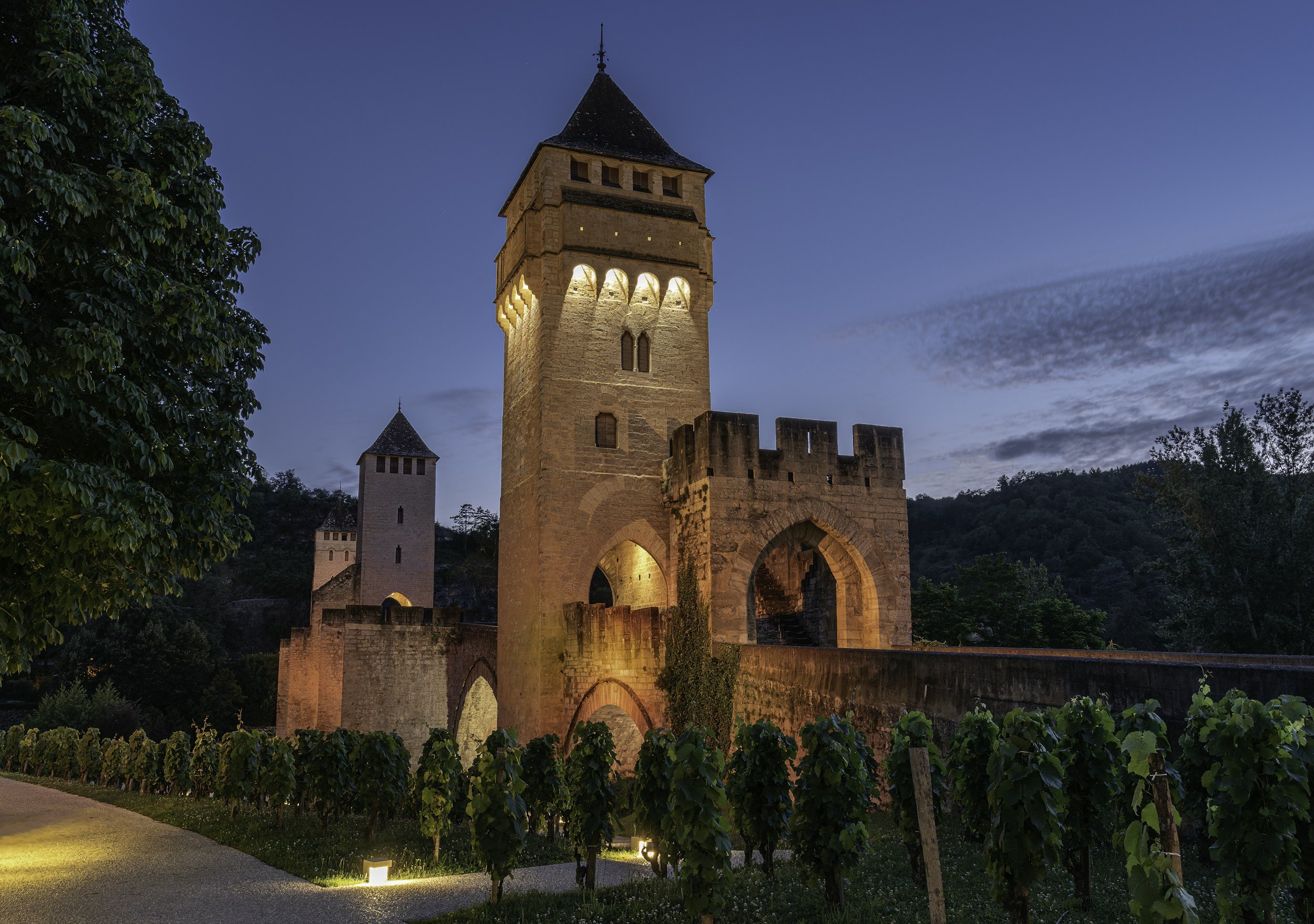
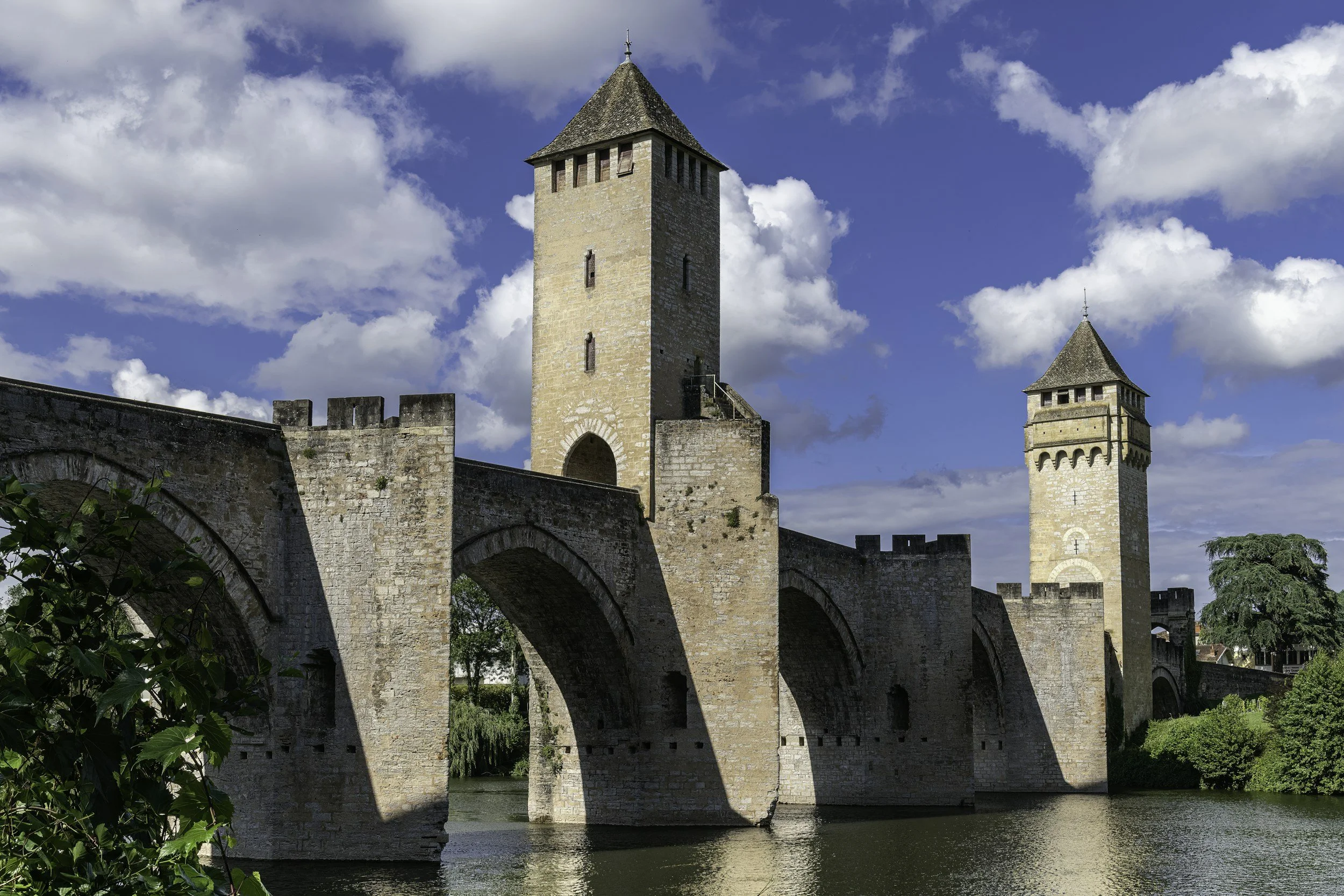
Pont Valentré is usually one of the first places people head after arriving in Cahors, especially if they've seen photographs of the town before the trip. The bridge is impressive, particularly late in the day when the light starts catching the stone towers, and it's worth walking across at least once. After that, most days tend to revolve around completely different parts of town.
By the second morning, there's a good chance you'll be somewhere around Halle de Cahors instead, looking at what has arrived from the surrounding countryside, or walking along Rue Nationale with a coffee in one hand and no particular destination in mind. Boulevard Gambetta becomes surprisingly familiar after a few days. So does Place Chapou. They're the sorts of places you keep passing through because that's where everyday life in Cahors seems to naturally gather.
One thing I found interesting about Cahors is how quickly the town stops feeling like somewhere you're sightseeing and starts feeling like somewhere you're temporarily living. You begin recognising which bakery you prefer. You work out the quickest route between Boulevard Gambetta and the cathedral. You probably notice that some of the quieter lanes behind Cathédrale Saint-Étienne feel completely different at eight in the morning than they do in the middle of the afternoon.
Those small routines end up occupying far more of your week than the famous bridge.
The Saturday market spreads through large sections of town and draws people in from villages across the department. Wednesday is different. Smaller, quieter and noticeably more local. If you're deciding between arriving on Thursday or Friday, I'd choose Friday every time simply because waking up in Cahors on a market Saturday is a much better introduction to the town than arriving in the middle of the week.
Around the market district you'll find bakeries opening early, wine shops, independent food stores and cafés that are useful rather than memorable. Le Bordeaux has become something of a local institution because it works at almost any time of day. Coffee in the morning, a drink later on, people meeting friends, people reading newspapers, visitors trying to decide where to go next. If you're staying nearby, you'll probably walk past it more often than you planned.
The area around Cathédrale Saint-Étienne ended up being one of the parts of Cahors I kept walking through without really intending to.
In the morning, particularly on Wednesdays and Saturdays, there are usually people heading towards the market or carrying shopping back home through the surrounding streets. Around lunchtime, the terraces nearby fill up and the centre feels much busier. Then, a few hours later, things change again.
By early evening, Boulevard Gambetta is usually still active, but some of the smaller streets around the cathedral become surprisingly quiet. You can turn off Rue Nationale, walk a couple of minutes towards the cloister and suddenly feel much further away from the busiest part of town than you actually are.
Most visitors spend more time talking about Pont Valentré, but I found myself returning to this part of town much more often. Not because there was something specific to see, but because it sits right between so many of the places you'll actually use during the week. If you're staying near the centre, there's a good chance you'll walk past the cathedral several times a day without planning to.
One thing Cahors does particularly well is give you options when the weather refuses to cooperate. If rain arrives halfway through the morning, it's easy to lose an hour or two inside Halle de Cahors, browse the independent shops along Rue Nationale or spend some time around Cathédrale Saint-Étienne and its cloister rather than cutting the day short.
On sunnier days, most people naturally drift back towards the river. The walk from Pont Valentré towards the banks of the Lot is an easy one, particularly in the late afternoon when the light starts hitting the old stone buildings across the water. The Jardin Secret de la Daurade is worth looking out for if you're wandering through the historic centre, and so is the quieter area around Square Olivier-de-Magny, which many visitors pass without noticing.
The nicest part is that none of these places require a plan. You might start the morning with coffee at Le Bordeaux on Boulevard Gambetta, end up at the market hall, take a different street back towards Place Chapou and suddenly find yourself in a small courtyard or garden that wasn't on your itinerary at all. Cahors has quite a few corners like that.
The biggest difference between Cahors and many of the smaller towns nearby only becomes obvious after three or four days. In places like Saint-Cirq-Lapopie or Puy-l'Évêque, you eventually become aware of the limits. Which restaurants are open, and which streets become quiet. Whether you need to organise transport tomorrow.
Saint-Cirq-Lapopie is the place to choose when the village itself is the trip
Saint-Cirq-Lapopie is usually the first place people look at when planning a trip to the Lot Valley, which can create the impression that it's also the obvious place to stay.
If you're travelling without a car, that's worth thinking about a little more carefully.
Unlike Cahors and Figeac, there isn't a train station a short walk from the centre. Most visitors arrive via Cahors and continue by bus, taxi or seasonal transport services before climbing up into the village itself. Once you're here, the village naturally becomes the focus of the trip because leaving and returning isn't something you do on a whim.
That doesn't make Saint-Cirq-Lapopie a bad choice, just a different one.
Most people experience the village as a day trip. They arrive around lunchtime, walk through Rue de la Pelissaria, stop at a viewpoint overlooking the Lot Valley and leave a few hours later. Staying overnight gives you access to a completely different side of the village, particularly in the early morning and late evening when most visitors have disappeared.
One thing that becomes obvious surprisingly quickly is how small your world becomes once you're staying in Saint-Cirq-Lapopie rather than visiting it for an afternoon.
On the first day, the village feels larger than expected. There are staircases leading off in different directions, viewpoints you haven't reached yet and small lanes that look worth exploring. A couple of mornings later, you've usually settled into your own route through the village. Maybe you walk up towards the church before breakfast. Maybe you stop at the same terrace every morning because it's one of the first places to catch the sun. Maybe you find yourself taking the path towards the cemetery viewpoint again, not because you haven't seen it before, but because the light over the valley looks completely different from the day before.
That's probably the biggest difference between Saint-Cirq-Lapopie and somewhere like Cahors.
In Cahors, it's easy to decide over breakfast that you'd like to spend the afternoon somewhere else. There are trains leaving throughout the day, different neighbourhoods to wander through and enough cafés, markets and shops that your days can look quite different from one another.
Saint-Cirq-Lapopie tends to pull you in the opposite direction.
Most days revolve around the village itself. You walk through Rue de la Pelissaria more often than you expect, and recognise the same gallery owners opening their doors in the morning. You pass the same stone houses on your way back from dinner. By the third or fourth day, you're not really exploring anymore. You're returning to places!
Whether that sounds appealing or limiting is probably the easiest way to decide if Saint-Cirq-Lapopie is the right base for your trip.
A couple of mornings into the trip, I realised I was walking the same streets again. But not because there was nowhere else to go. More because Saint-Cirq-Lapopie isn't really the sort of place where you're constantly looking for the next thing.
You head down Rue de la Pelissaria, notice a gallery opening up for the day, stop for a coffee somewhere you've already been once before and end up taking a different staircase back simply because it catches your eye. Half an hour later you're standing somewhere overlooking the rooftops and couldn't really explain how you got there.
The village is full of little routes like that! A passage you ignored yesterday suddenly turns into a view across the valley, or a doorway you've walked past three times catches the morning light differently. You find yourself looking up more than looking ahead.
By mid-morning, people start arriving from Cahors and the streets become busier, but before that there is a short window where the village feels less like a destination and more like somewhere people actually live. Deliveries arrive. Someone is opening shutters. Restaurant owners are setting out tables for lunch.
Later in the week, I found myself walking down towards Tour-de-Faure more often than climbing towards the viewpoints. Looking back at Saint-Cirq-Lapopie from below gives a completely different impression of the village. From up in the streets, everything feels compact. From the valley floor, you realise how improbably it sits on the cliffside.
The village's artistic history also becomes more noticeable once you slow down. André Breton bought a house here and famously described Saint-Cirq-Lapopie as a place where he had stopped wishing to be elsewhere. The Maison André Breton remains part of the village, and the influence of artists is still visible today through small galleries, workshops and artisan spaces scattered through the medieval streets. The Daura Houses artist residency continues that tradition and adds another layer to the village beyond the postcard views that attract most visitors.
If you're hoping for extensive shopping, this isn't really that sort of place. There are artisan workshops, galleries, local crafts and food products, but you're not going to spend an entire afternoon browsing boutiques. The same applies to restaurants. There are good options, including places like Le Cantou and Le Saint Cirq Gourmand, but if you're visiting during summer it's worth reserving ahead because the choice is naturally more limited than somewhere like Cahors.
A few days into the trip, you stop using Saint-Cirq-Lapopie the way most visitors do.
The viewpoints are still there, but they stop being the main event.
Instead, you start noticing practical things. Which restaurant is open tonight. Whether you should buy something from the small grocery before heading back up through the village. Which route is steepest when you're carrying a bag. Which terrace gets crowded first around lunchtime.
If you're staying several nights, there's a good chance you'll walk through Rue de la Pelissaria multiple times a day simply because most routes seem to lead back there eventually. The same goes for Place du Carol. Not because you're sightseeing, but because that's where you end up passing through on the way to dinner, coffee or your accommodation.
One thing worth knowing before booking a longer stay is that the village isn't packed with options. That's part of the appeal for some people and frustrating for others. Outside the busiest summer weeks, you'll want to check restaurant opening days rather than assuming everything is open every evening.
Le Cantou is a reliable choice if you're staying in the village for a few nights, while Lou Bolat has one of the better terrace locations. Neither is somewhere you'll travel across France specifically to eat at, but that's not really the point. They're the sort of places that become part of your routine when you're staying nearby.
The walk down towards Tour-de-Faure is another thing that starts making more sense after a few days. Most visitors see the village from above. Looking back at it from below gives a much better idea of how dramatic the setting actually is.
By the fourth day, you're usually no longer trying to see everything.
You're buying breakfast, deciding where to sit for coffee and figuring out whether you have time for another walk before dinner.
That's generally when people realise whether Saint-Cirq-Lapopie was the right choice for them or not. And in case Saint-Cirq-Lapopie has you looking for smaller southern French villages, start here before adding more stops.
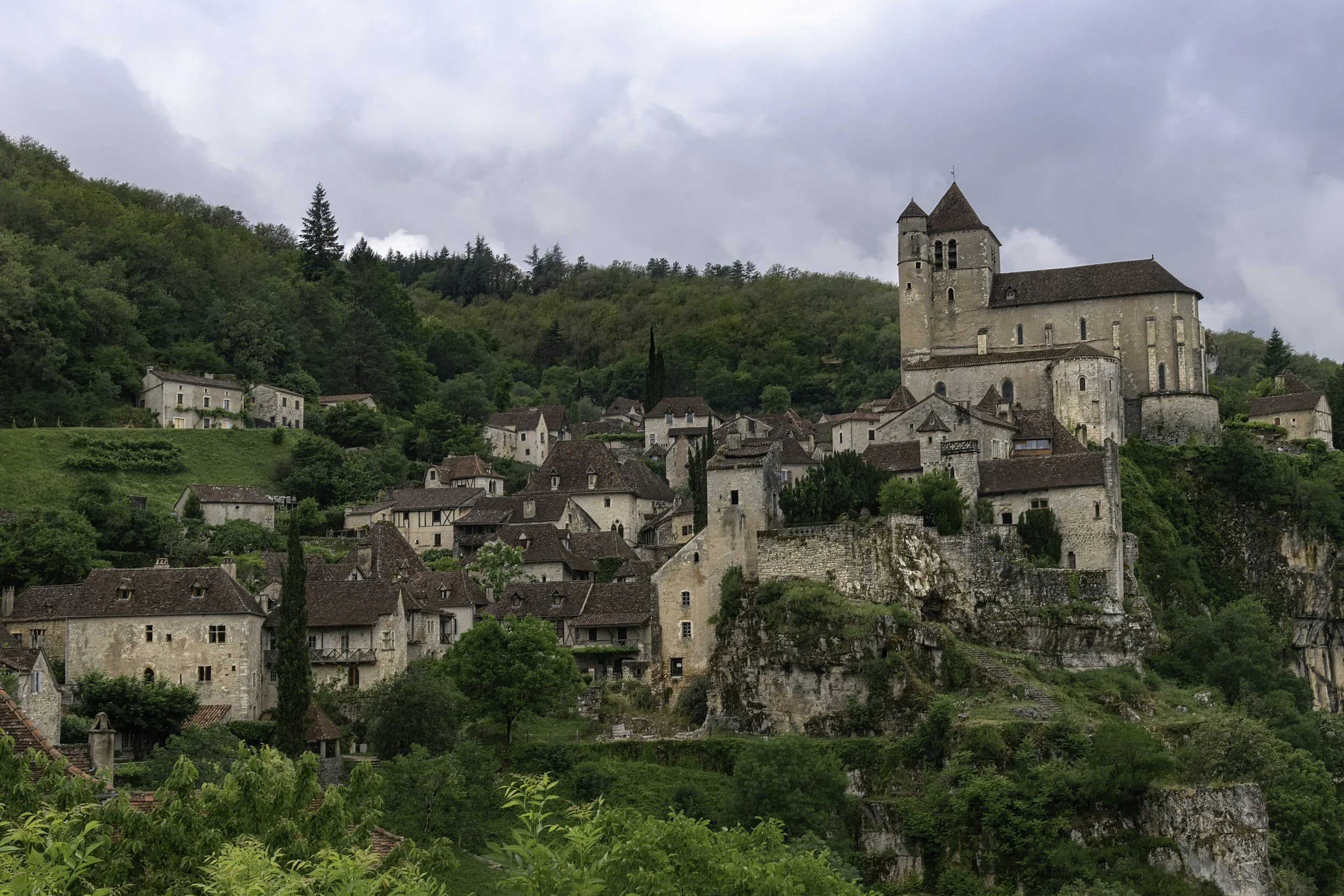
Puy-l'Évêque suits travellers who don't need constant activity
One thing I didn't appreciate until looking more closely at Puy-l'Évêque is how much the town changes between the riverside and the upper medieval quarter.
Most visitors spend at least some time around the old keep, the Tour de Puy-l'Évêque, and the steep lanes surrounding Place de la Truffière, but after a few days you realise that much of daily life happens lower down. The riverfront around Quai Bessières is where people seem to slow down at the end of the day, particularly during summer when tables start filling up long before sunset.
If you're staying in Puy-l'Évêque for a few nights, Tuesday tends to arrive much sooner than expected because the market becomes part of the town long before most visitors make it down for breakfast. The streets around Place de la Truffière begin filling up early, stallholders are still arranging produce while the first shoppers are already making their rounds, and by the time the cafés start filling with people stopping for a coffee, much of the serious shopping is already underway.
What makes the market interesting isn't its size. Cahors is larger. Prayssac is larger on Fridays. It's the fact that the market still feels closely tied to everyday life in the surrounding countryside. People arrive knowing exactly which stalls they're heading for, stopping to chat with producers before moving on with bags full of vegetables, cheese, walnuts and whatever happens to be in season. If you're staying in an apartment, there's a good chance you'll end up adjusting your plans around it because it's an easy place to pick up lunch, dinner and half the things you didn't realise you needed.
One thing I noticed about Puy-l'Évêque is that the market doesn't completely take over the town. You can spend some time wandering through the stalls, walk a few minutes towards the upper streets near the old bishop's quarter and suddenly find yourself away from most of the activity again. The town never feels overwhelmed by it.
After a couple of mornings in Puy-l'Évêque, there's a good chance you'll stop overthinking breakfast.
You walk down into town, pick up bread and pastries from the bakery, maybe grab a coffee if somewhere is already open, and then carry everything back through the old streets before the day properly gets going. If you're staying in the upper part of town, that short walk up and down the hill becomes part of the routine surprisingly quickly.
Dinner is similar, and Puy-l'Évêque isn't the sort of place where you're choosing between twenty different restaurants every evening. After a few days, you start recognising the same terraces and menus. Le Médiéval is one of the places you'll keep walking past in the old centre, while Le Bistrot de Puy-l'Évêque is often busy with a mix of visitors and locals, particularly during summer.
This part of the Lot is wine country, so it would be a shame not to order a local Cahors wine at least once while you're here. Most places will have several options by the glass, and if you're unsure what to choose, asking for a local Malbec is usually a safe place to start. It pairs particularly well with the dishes that appear on menus throughout the valley: duck, confit, lamb, walnuts and Rocamadour goat's cheese.
One evening you might order a salade quercynoise with duck and walnuts. Another night it's a simple plate of local cheese with a glass of red wine while watching the light disappear over the river. Nothing feels especially complicated here, which is probably part of the appeal.
By the third or fourth evening, you're usually not researching restaurants anymore. You're just heading into town and seeing what feels good that night.
One thing I like about Puy-l'Évêque as a car-free stay is that it doesn't feel particularly seasonal. July and August are obviously busier, especially along the river, but the town doesn't rely on summer in quite the same way as some smaller villages in the valley. Visiting in September or October often means quieter streets, harvest activity in the surrounding vineyards and easier access to restaurants without reservations.
If you're staying for a week, Prayssac is the excursion that makes the most sense. The Friday market is significantly larger than many visitors expect and draws people from across the surrounding wine region. The atmosphere is different from Puy-l'Évêque as well. Slightly busier, slightly more commercial and with a broader range of food stalls and local produce. A lot of visitors focus entirely on Saint-Cirq-Lapopie and never realise that places like Prayssac are often where residents actually do their weekly shopping.
The biggest surprise for me was that Puy-l'Évêque never really felt like a place that needed filling with activities. Some mornings you might spend an hour around the market. Other days you walk through the upper town, stop by the river and realise most of the afternoon has disappeared. Whether that's enough for you is probably the real question when deciding whether to stay here without a car.
If Puy-l’Évêque sounds right but you’re comparing it with other quiet French regions, this comparison helps narrow the choice.
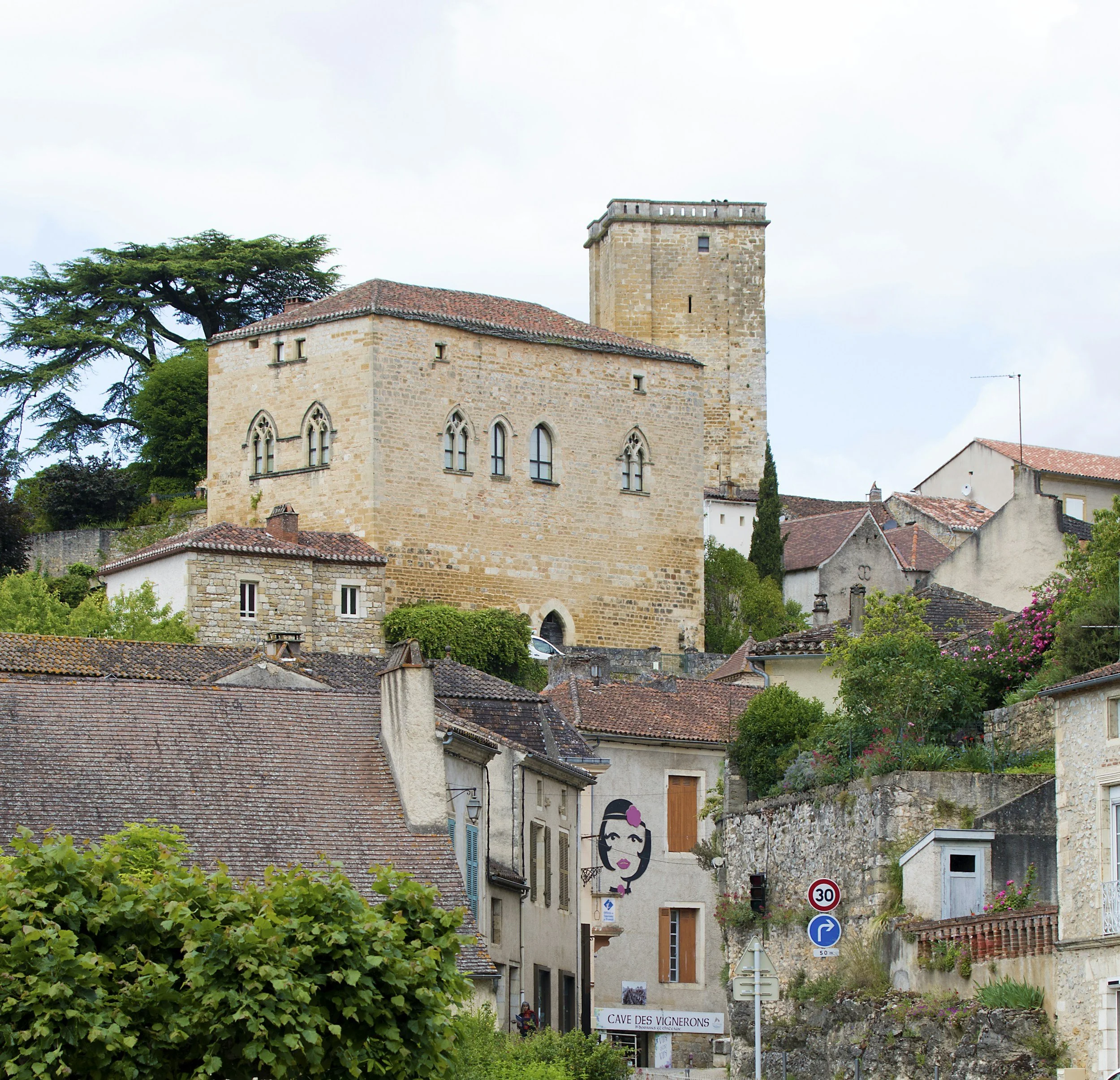
Souillac is often the town people overlook
Souillac rarely features in the photographs that convince people to visit the Lot Valley in the first place.
Most travellers are looking at Saint-Cirq-Lapopie, Rocamadour or one of the villages perched above the river long before they start considering Souillac, which is slightly ironic because if you're travelling without a car, it's one of the places that makes the entire region feel considerably easier.
The station sits within walking distance of the centre and has direct rail connections towards Toulouse, Cahors, Brive-la-Gaillarde and Paris. That immediately changes the experience. Instead of arriving and wondering how you're going to reach your accommodation, you're usually checking in within a few minutes of leaving the platform.
What surprised me most about Souillac is how much of the town revolves around everyday life rather than tourism.
Around Place Pierre Betz, Rue de la Halle and the streets surrounding the Abbaye Sainte-Marie, you'll find the sort of businesses that make a longer stay comfortable. Bakeries, cafés, pharmacies, wine shops, small food stores and practical services are woven into the centre because Souillac functions as a hub for the surrounding area rather than simply a destination people pass through.
Friday is the day the town feels most alive.
The market spreads through Place Doussot, Place Saint-Martin and the surrounding streets, drawing people in from villages across this part of the Dordogne and Lot. Arrive before nine if you can. The atmosphere is completely different from late morning when the centre becomes noticeably busier. Alongside the expected fruit, vegetables and cheeses, you'll usually find walnuts, duck products and regional specialities that reflect the agricultural landscape surrounding the town. The market has existed in some form since the nineteenth century and still feels tied to the region rather than created for visitors.
If you're staying during summer, there's also a smaller Wednesday evening producers' market near the tourist office. It doesn't have the scale of Friday morning, but it's a pleasant way to spend an hour and often feels more local than many of the larger markets elsewhere in southwest France.
The area around the abbey deserves more attention than it usually receives. Most visitors walk through, admire the Romanesque architecture and continue towards Rocamadour, but the surrounding streets are where you'll spend your time if you're actually staying in town. The old Saint-Martin quarter hosts seasonal exhibitions, art installations and cultural events throughout the year, while the restored Beffroi regularly becomes part of local festivals and exhibitions.
One place that feels particularly tied to Souillac is the Louis Roque distillery. Even if you don't normally visit distilleries, it's an interesting stop because Vieille Prune has become almost synonymous with the town itself. The shop also stocks local products that make surprisingly good train-friendly souvenirs, including walnut products, chocolates and preserves from the surrounding region.
The Dordogne River tends to receive less attention than the Lot River further south, yet some of the nicest walks in Souillac are along the water. The riverbanks feel connected to daily life rather than developed as a visitor attraction and on warm evenings you'll often find people sitting along the banks, cycling through town or heading towards one of the riverside paths without much sense of urgency.
Another thing I appreciate about Souillac is that it remains useful outside the main tourist season. Visit in October and the Friday market is still there. The bakeries are still busy. Local people are still using the centre. That sounds obvious, but some of the smaller villages in the Lot Valley can feel dramatically different once summer ends.
If you're staying for a week, Souillac also opens up some of the easiest day trips in the region. Rocamadour becomes much more realistic without a car, Martel is within easy reach and the northern Dordogne Valley starts feeling accessible rather than complicated.
That's really where Souillac earns its place in this guide.
It isn't the most photographed town in the Lot Valley and it probably won't be the place that dominates your Pinterest board before the trip. What it does offer is a combination that can be surprisingly difficult to find in this region: a railway station, a genuine market town, enough cafés and restaurants for a longer stay, and a centre that still feels active when the day visitors have gone home.
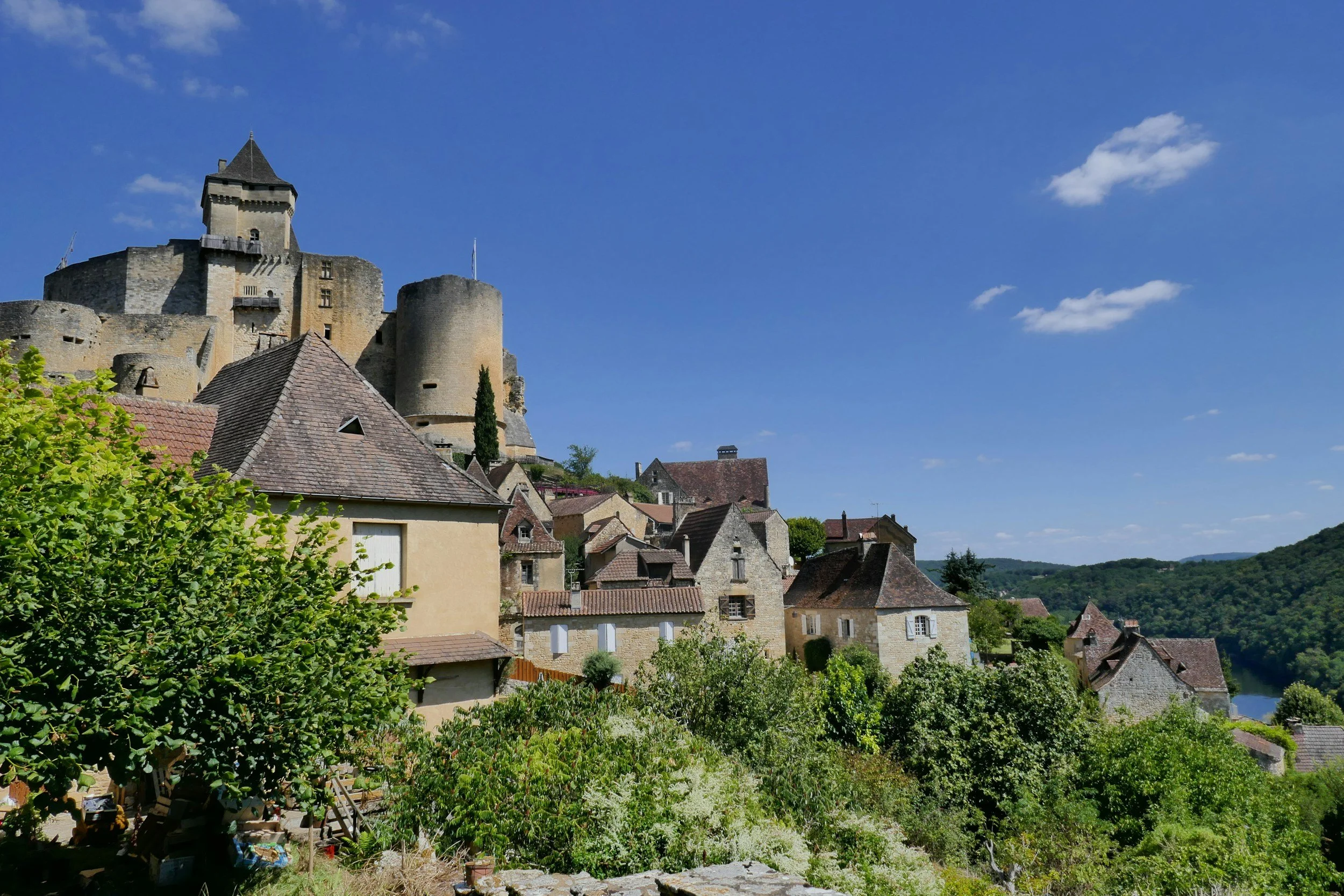
Still deciding between a market town and a Provençal village? This breakdown makes the choice much easier.
If market days are one of the reasons you're coming
One thing that surprised me while researching the Lot Valley is how different the markets actually feel from one town to the next.
A lot of guides simply tell you when they happen, but if you're choosing where to stay without a car, the atmosphere around those market days ends up mattering just as much as the market itself because you're waking up in that town, buying breakfast there, walking through the streets before the stalls disappear and often planning the rest of your day around what is happening in the centre.
Cahors is probably the easiest example. On a Saturday morning, the town feels completely different from a Tuesday afternoon. Around Halle de Cahors, Place Chapou and the surrounding streets, producers arrive from across the department and the centre fills up surprisingly early. If you're staying nearby, it's worth being out before nine because by late morning some of the busiest sections are shoulder-to-shoulder with shoppers, particularly around the food stalls. The scale is impressive, but what I like most is that it still feels like a market people genuinely use. You'll see visitors taking photographs, of course, but you'll also see people loading up bags with vegetables, cheese and enough food to get them through the week.
Figeac feels less concentrated. The market spills through Place Carnot, Place Champollion and several smaller streets in between, so instead of arriving at a market, it feels more like you keep accidentally finding yourself back in it. You walk off looking for a bakery and somehow end up standing beside a stall selling strawberries from the Lot or Rocamadour cheese. For a longer stay, I actually prefer this setup because the market becomes part of the town rather than a separate event taking over the centre for a few hours.
Puy-l'Évêque is much smaller, but that's exactly why some people end up preferring it. Tuesday mornings don't have the same energy as Cahors, yet they often feel more personal. People know the producers. Conversations seem longer. The market wraps naturally around the rhythm of the town rather than dominating it. Afterwards, people drift towards cafés or head back up through the old streets carrying bags rather than continuing on to the next attraction.
Saint-Cirq-Lapopie doesn't really fit into the same category at all. The summer evening market is less about stocking up on food for the week and more about being there at the right time of day. By then, many of the day visitors have already left, the temperature has dropped and the atmosphere around the riverside feels completely different from the middle of the afternoon. If you're staying overnight, it's one of the few moments when the village belongs more to the people staying there than the people passing through.
If market days are genuinely important to your trip, I'd probably choose Figeac or Cahors as a base. Cahors gives you the biggest market and the widest choice of produce, while Figeac has the sort of market that naturally becomes part of everyday life during a longer stay.
Puy-l'Évêque and Saint-Cirq-Lapopie are different. Their markets are enjoyable, but they're more likely to be something you happen to experience while staying there rather than the reason you chose the town in the first place.
The markets are one thing, but if you want to know what to actually eat once you’re there, local dishes will make the region feel much easier to order from.
If your trip falls later in the year, these markets are worth keeping in mind before finalising your route.
For those who plan weekends around market days, these towns are another good example of places where the market shapes the trip.
What I would pay attention to before booking
The thing that surprised me most while comparing these towns wasn't which one had the most to see or which one looked best in photographs. It was how differently a week could unfold depending on where you chose to stay.
A lot of travel guides focus on helping you decide which places are worth visiting, but that's only part of the decision in a region like the Lot Valley. If you're travelling without a car, you're also choosing where you'll buy groceries, where you'll end up having dinner on a random Wednesday evening and what the town feels like once you've already been there for a few days.
Those details are much harder to research beforehand, yet they often end up shaping the trip far more than another viewpoint or attraction.
As I worked through the different towns, I found myself paying attention to things that wouldn't normally make it into a guidebook. Whether the centre still felt active outside market days. Whether there were enough places open throughout the week that you weren't constantly checking opening hours. Whether the town felt connected to the surrounding region or slightly cut off once you arrived.
The answers varied more than I expected.
Places that look fairly similar on a map can create completely different experiences once you're actually staying there. Some towns naturally encourage you to stay put, settle in and spend most of your time locally. Others make it easy to move around, change plans and use the town as a base for exploring further afield.
That's probably the biggest reason I wouldn't choose accommodation in the Lot Valley based purely on photographs or a list of attractions.
The question I'd be asking myself is much simpler than that.
Can I imagine being happy here when nothing special is happening?
Not on market day, and not on the day I'm visiting somewhere famous. Just an ordinary morning in the middle of the trip when I'm heading out for breakfast, wandering through town and deciding what to do next.
The answer to that question is often a better guide than any ranking of sights, and it's usually what separates a place that's enjoyable to visit from a place that feels good to stay in.
FAQ:s about travelling to the Lot Valley by train
What is the best town to stay in the Lot Valley without a car?
For most visitors, Cahors is the easiest choice. The train station is within walking distance of the centre, there are direct rail connections to Toulouse and Paris, the Saturday market is one of the largest in the region and you'll have enough cafés, restaurants and shops nearby that you won't need to plan every day around transport.
That said, "best" depends on the kind of trip you're planning. Figeac feels more like a traditional market town, Saint-Cirq-Lapopie is better if you want to stay in one of the region's most dramatic villages, and Souillac works particularly well if train access is your priority.
Which town in the Lot Valley is easiest to reach by train?
Souillac, Cahors and Figeac are all excellent options, but Souillac is arguably the simplest. The station sits close to the centre and has direct connections to Toulouse, Brive-la-Gaillarde and Paris.
Cahors is almost as convenient and offers more restaurants, markets and day-trip opportunities once you've arrived.
Is Figeac or Cahors better without a car?
If you're looking for the widest choice of restaurants, cafés and transport connections, Cahors usually comes out ahead.
Figeac feels smaller, more compact and slightly easier to settle into for a week. The Saturday market spreads through Place Carnot, Place Champollion and several surrounding streets, which means the market becomes part of daily life rather than a separate attraction.
A lot of visitors end up preferring Figeac even though Cahors is larger.
Can you spend a week in Saint-Cirq-Lapopie without a car?
Yes, but only if you're comfortable with the village becoming the focus of the trip.
Saint-Cirq-Lapopie works differently from Cahors or Figeac. Most people staying here spend more time in the village itself and less time moving around the region. The setting is extraordinary, but transport requires more planning because there is no train station in the village.
For a long weekend, it's one of the most memorable places to stay in the Lot Valley. For a full week, it depends on how much variety you need.
What is the most walkable town in the Lot Valley?
Figeac is probably the easiest town to explore entirely on foot.
The train station sits close to the centre, the main squares are connected by pedestrian-friendly streets and most cafés, restaurants, bakeries and shops are concentrated within a relatively small area.
Cahors is also walkable, although the centre is larger and spread across a wider area.
Which town in the Lot Valley has the best market?
For size and variety, Cahors is difficult to beat. The Saturday market around Halle de Cahors and Place Chapou attracts producers from across the department and fills much of the historic centre.
Figeac is my favourite if you're staying for several days because the market feels woven into the town itself. Instead of one concentrated market area, the stalls spread through several squares and streets, making the whole centre feel alive.
Puy-l'Évêque is smaller but often feels more local, particularly on Tuesday mornings.
Which town in the Lot Valley has the most restaurants within walking distance?
Cahors has the greatest variety.
Around Boulevard Gambetta, Place Chapou, Rue Nationale and the streets surrounding Cathédrale Saint-Étienne, you'll find everything from simple cafés and wine bars to more ambitious restaurants serving regional dishes and Cahors wines.
Figeac comes second and offers plenty of choice for a smaller town.
Where should I stay in the Lot Valley if I don't want to drive every day?
Cahors, Figeac and Souillac are the strongest options because all three have railway stations and enough restaurants, cafés, markets and services that you can comfortably spend several days there without needing a car.
If avoiding transport logistics is one of your priorities, these towns make the trip considerably easier.
Is Souillac a good base for visiting Rocamadour?
Yes.
Souillac is one of the most practical bases for visiting Rocamadour without a car because of its railway connections and position in the northern part of the Lot. It also works well if you'd like to combine Rocamadour with places such as Martel, Gourdon or the Dordogne Valley during the same trip.
Many visitors overlook Souillac in favour of more famous towns, but it's often one of the easiest places to stay.
Which town in the Lot Valley works best outside summer?
Cahors and Figeac are usually the safest choices outside the main tourist season because they remain active throughout the year.
Restaurants, markets and local businesses continue operating at a level that makes longer stays enjoyable even in autumn and winter. Smaller villages can feel noticeably quieter once summer visitors disappear, which some travellers love and others find limiting.
Can you visit Rocamadour without a car?
Yes, although it requires a little more planning than many people expect.
The nearest railway station is Rocamadour-Padirac, which sits outside the village itself. Depending on the season, you'll need a shuttle bus, taxi or longer walk to reach the centre.
Many travellers find it easiest to visit Rocamadour as a day trip from Souillac.
Is the Lot Valley worth visiting without a car?
Absolutely.
In fact, many of the region's highlights lend themselves surprisingly well to slower travel. Market towns such as Cahors and Figeac, riverside places like Puy-l'Évêque and railway-connected bases such as Souillac allow you to experience a large part of the region without driving.
The key is choosing the right town before you book accommodation. In the Lot Valley, that decision often shapes the trip far more than any individual attraction.