Planning the Alba truffle fair? Here's what I'd book first.
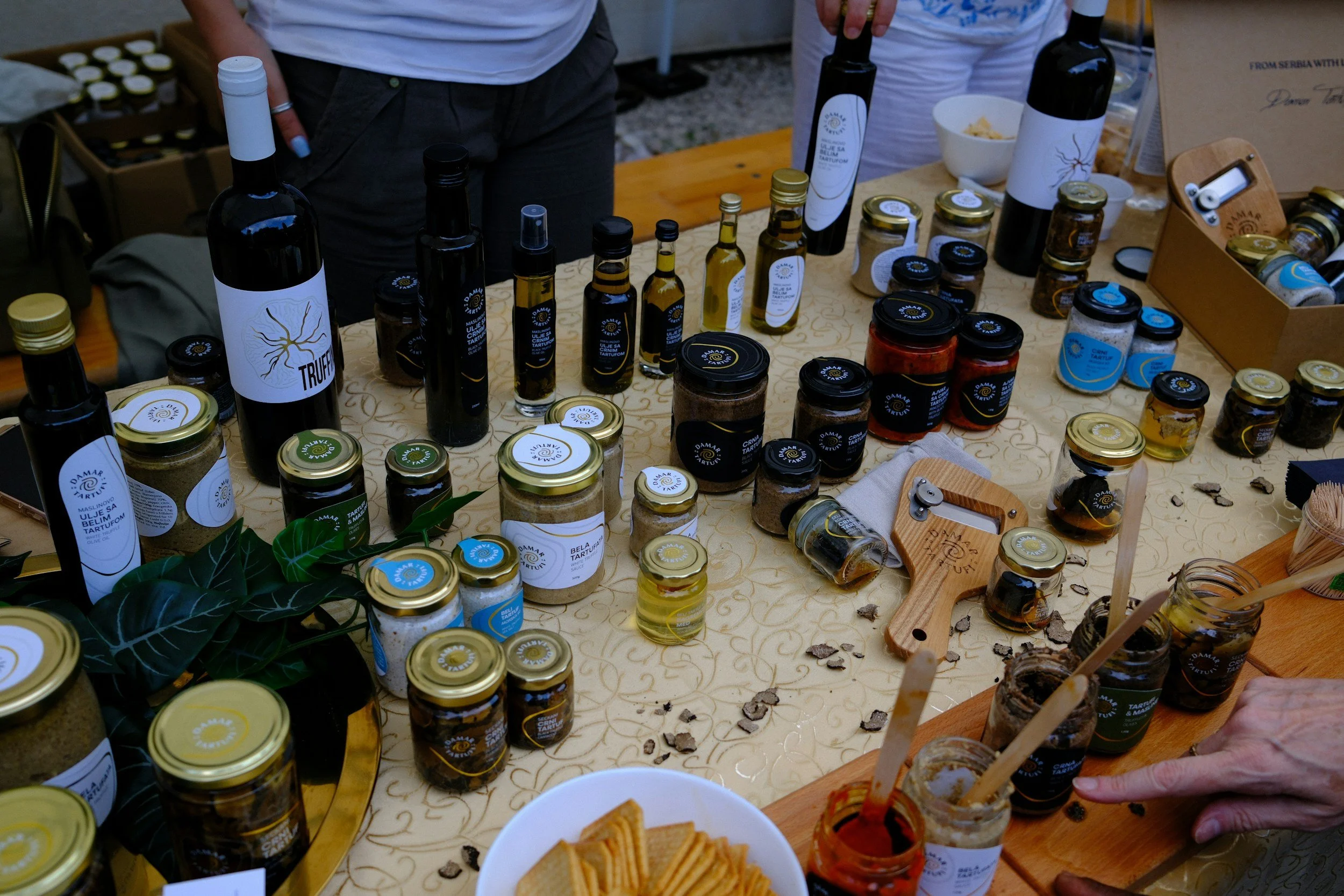
Alba is a small town in northern Italy, located in the heart of the Langhe hills in the Piedmont region. It’s about an hour from Turin, and just under two from Milan, surrounded by a patchwork of vineyards, hazelnut groves, and forested hills. It’s not a place people stumble upon by accident. Most come here for a reason - and in autumn, that reason is usually white truffles.
From October 11 to December 8, 2025, Alba becomes the centre of the truffle world. The Alba White Truffle Fair (Fiera Internazionale del Tartufo Bianco d’Alba) is one of the biggest and oldest of its kind, drawing chefs, food lovers, wine makers, and curious travelers from all over. What makes this season interesting isn’t just the truffles - it’s how the whole area slows down a bit.
The mornings are calm, sometimes foggy, but usually clear by midday. You’ll hear leaves underfoot if you’re walking through the vineyards. Restaurants start bringing out heartier dishes again, think tajarin with truffle, stews, and seasonal soups with things like leeks and pumpkin.
The fair gets the attention, but it’s really the everyday pace that stands out in this region.
White truffles grow underground, only in very specific climates: shady oak forests, damp soil, cool nights. Piedmont’s Langhe region has exactly the right conditions, and has for centuries. The truffles here are still foraged by trained dogs and their handlers, called trifolai, often in the same spots their families have used for generations. The tradition is quiet, local, and deeply tied to the land. And you don’t need to be a foodie to appreciate it.
If you're visiting during the fair, you could stay in Alba - but we think it's better to base yourself in one of the nearby hill towns. Somewhere calm, with space to rest between visits to the fair. These villages (like La Morra, Neive, Barolo, or Monforte) are close enough to reach Alba easily, but give you the kind of setting that makes the whole experience more grounded.
Because here's the thing: the fair can be busy. Alba fills up fast on weekends. Hotels get booked months in advance. The market gets crowded. Restaurant tables disappear. If you’re not into big crowds or timed schedules, it’s easy to feel like you're in the wrong place.
But if you plan ahead (even just a little) and approach the trip more like a countryside break with a few truffle-focused outings, it becomes something else entirely. A walk through the woods on a truffle hunt. A wine tasting in a family-run cantina. A slow lunch in a village trattoria with fog on the hills outside the window. A few hours at the fair, and then back to quiet streets and a good book.
This is a guide to that kind of trip.
The one where the Alba Truffle Fair is part of your experience, not the whole thing. Where you can enjoy the best of the season (truffles, yes, but also slow meals, small towns, wine, and walks) without getting caught up in a frenzy of reservations and to-do lists.
We’ll share:
Where to stay nearby that still feels central but not chaotic
How to get to Alba and around the Langhe
What events and tastings are worth booking in advance
How to shape a few slow, satisfying days without overplanning
If you’ve ever been curious about truffle season but didn’t want to be elbow-to-elbow in a tasting hall, this is your moment!
Truffle season is short and easy to mistime, so a quick look at Italian food seasons can save you from arriving just after it peaks.
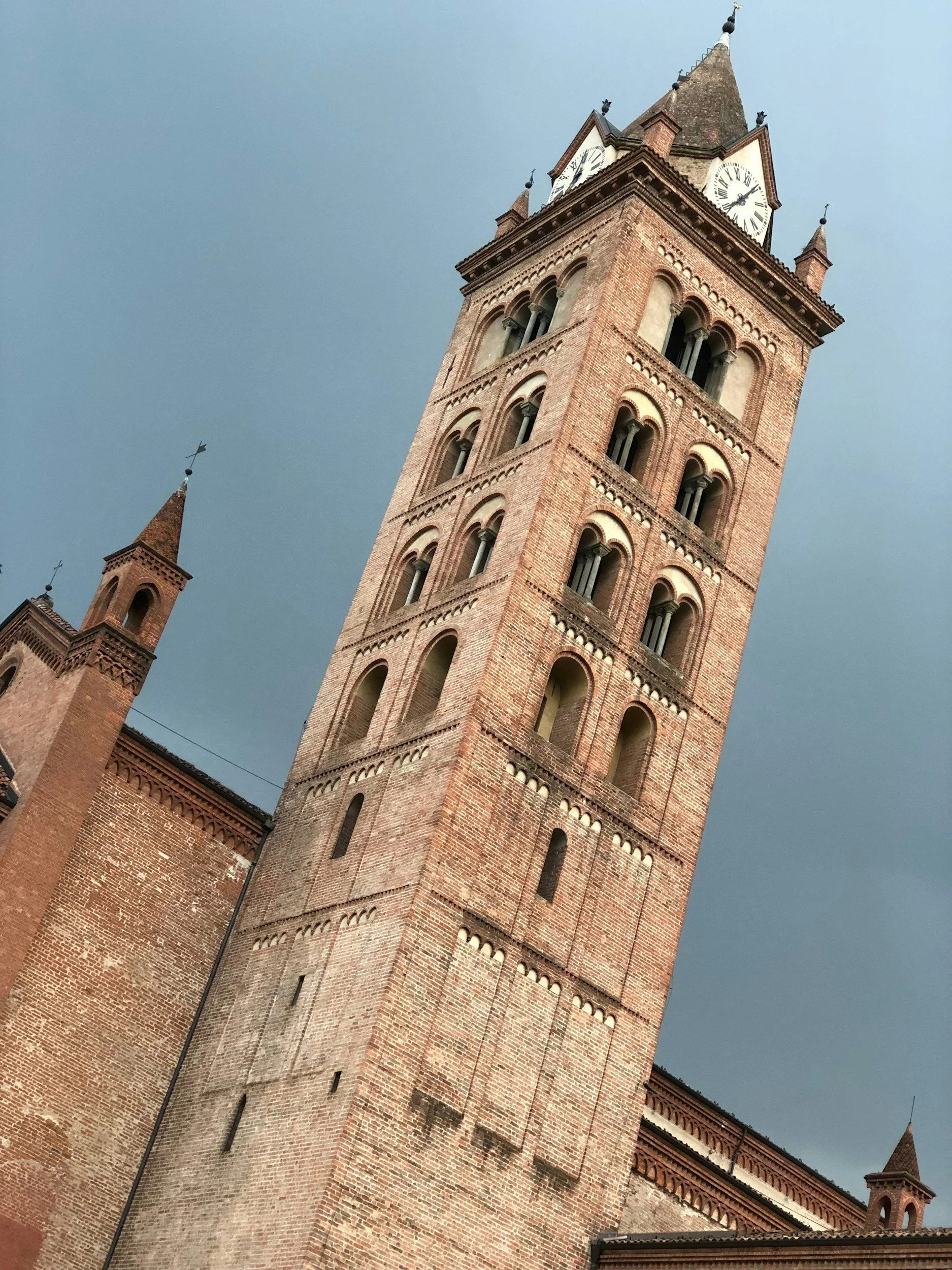
Getting to Alba (and around the Langhe)
If you’re coming from outside Italy, the closest major airports are Turin and Milan. From there, you can either rent a car or take the train. Alba is reachable by regional train, though keep in mind that many of the surrounding villages aren’t directly connected - you’ll need a car, driver, or help from your host to get around.
For a slower trip, we suggest staying in one base and letting your hosts help arrange transfers or local taxis for tastings, truffle walks, and dinners. Most boutique hotels and agriturismos in this region are well-versed in helping guests navigate the fair season. And if you’re staying several days, many will even drive you into Alba for the day and pick you up after dinner.
Driving in this area is also manageable if you’re comfortable with winding roads and occasional fog in the mornings. Parking in Alba can be tight on weekends, but midweek it’s less of an issue.
If you’re thinking of combining this with a stop further south, these stays near Florence give a calmer base than staying in the city.
Where to stay near Alba for the white truffle fair
Staying in Alba sounds like the obvious choice, until you try to drive in on a Saturday morning. Roads around Corso Torino back up early, parking near the centre disappears, and once you’re inside the old town around Via Vittorio Emanuele, it’s busy in a way that’s hard to step out of.
That’s why most people who’ve been here before stay just outside. You go into Alba for a few hours, then leave again without having to deal with it all day.
La Morra is one of the easiest places to base yourself. It’s about 15 minutes by car, and the road in is straightforward even after dark. You come back in the evening, park once, and walk up towards Piazza Castello where a few restaurants stay open. It’s not empty, but it’s calm enough that you don’t feel like you need a plan.
Neive takes a bit more effort to reach, closer to 20 minutes, and the last part of the drive narrows as you get into the historic centre. Once you’re there, everything is within a short walk. Stone streets, small corners, a few places open for dinner, and then it quiets down quickly after that. It’s a good option if you want somewhere that stays low-key even during the fair.
Serralunga d’Alba is smaller again. One main road up towards the castle, a couple of places to eat, and not much else once the day visitors leave. It works if you want something very quiet, but you won’t move around much once you’re back.
Monforte d’Alba has a bit more life in the evening, mostly around Piazza Umberto I. You can sit outside with a glass of wine, and there’s enough open that it doesn’t feel empty, but it never gets busy in the same way Alba does.
Barolo is the one people hesitate on because of the name, but during truffle season it actually settles down after late afternoon. You still have tasting rooms and restaurants open, but the daytime traffic disappears. It’s about 15–20 minutes into Alba, depending on where you stay, and the drive is easy once you’ve done it once.
Wherever you book, check two things before anything else: parking and how you’ll get in and out of Alba. A place with its own parking or the option to arrange a driver makes a bigger difference than the room itself. And book early, especially for weekends, because most of these towns only have a handful of rooms and they fill quickly once the fair dates are announced.
A lot of people try to rush this trip, but these countryside stays show where it actually makes sense to slow down.
How to visit the Alba white truffle fair (without getting overwhelmed)
The Alba White Truffle Fair runs in Autumn from October to December, with events spread across nearly two months. But if you want to understand how the fair works (and how to enjoy it without feeling rushed) it helps to know the season.
Most of the key events happen on weekends. Saturdays and Sundays are when Alba gets busiest: food stalls line the streets, guided tastings pop up in piazzas, and the narrow roads around the historic centre start to fill with groups and tour buses. It’s lively, festive, and a little chaotic. For some travelers, that’s exciting. But if you prefer quieter days and a bit more space, there are ways to do it differently.
The fair’s main hub is the Truffle World Market, held inside the Cortile della Maddalena, right in the centre of Alba. This is where you can see, smell, and buy fresh white truffles, directly from local trifolai (truffle hunters) and their dealers. Prices change week to week depending on availability, but the market is open to everyone, and you don’t have to buy anything to enjoy it. Just walking through the space is worth it with its earthy aromas, soft lighting, hushed conversations about truffle quality. You’re close to the source.
There’s also a wine section, featuring bottles from across the Langhe (Barolo, Barbaresco, Dolcetto) and a rotating calendar of tastings, cooking demos, and education sessions. Some are free to enter, others require tickets. If you're interested in attending anything led by a well-known chef or sommelier, book early. Popular sessions (especially those with truffle-pairing menus or wine flights) often sell out several weeks in advance.
Don’t worry if you don’t speak Italian! Many events now include printed translations, and a growing number of sessions are either bilingual or English-friendly. But it’s always worth double-checking this before you book.
It’s not just about the fair itself, and checking market days in Italy helps you plan the days around it properly.
A few tips to make the fair easier (and more enjoyable):
Arrive early: The truffle market usually opens by mid-morning. Get there at or just after opening if you want to browse while it’s quieter. Crowds tend to peak between 11:30 am and 2:30 pm.
Go midweek if possible: While the weekends are the main draw, there are still events, wine tastings, and market stalls open during the week - especially in late October through early November, which tends to be peak season for truffle quality.
Stay outside the centre: If the weekend energy isn’t your thing, consider basing yourself in one of the nearby hill towns and just taking a day trip into Alba for the fair. You’ll have the calm of the countryside and still get to enjoy the best parts of the event.
Skip the crowds altogether: If you're not interested in squeezing through tasting tents or standing in long queues, skip the big weekend events and book a truffle hunt or private tasting through a local agriturismo instead. Many of them offer smaller, slower, more personal experiences.
The Alba White Truffle Fair isn’t a single event. You don’t have to go on one specific day to experience it - you just have to show up with a bit of curiosity (and maybe a light scarf), and enjoy this time of the year in Italy.
Booking truffle hunts, tastings, and autumn dinners in the Langhe
One of the best ways to experience truffle season isn’t at a market stall - it’s by following a local trifolao and their dog into the woods. A proper truffle hunt is slower, quieter, and more personal than anything you'll find in Alba on a busy weekend. It’s also one of the few experiences where you really feel connected to the land, the season, and the rhythm of the region.
Most hunts are arranged through boutique hotels, agriturismos, or local tour guides, and they usually last around 1.5 to 2 hours. Some finish with a small lunch or tasting; others are more immersive and include a visit to a wine cellar or cheese producer afterwards. If you're staying in one of the nearby villages (Neive, Monforte d’Alba, or La Morra, for example), ask your host. Many have long-standing relationships with local truffle hunters who don’t advertise online but are open to visitors who come recommended.
If you’re looking for something smaller and more grounded, prioritize family-run agriturismos. These often organize truffle walks on their own land or nearby hills, and the pace tends to be slower - less about "show" and more about sharing how the process really works. The dogs are usually the star of the show, and you’ll learn how scent, season, and experience all come together.
What to expect from a truffle hunt:
Walks usually take place in the morning or late afternoon (when it’s cooler and the truffle scent is easier to track).
You’ll need sturdy shoes or boots, as the paths can be muddy.
Most guides speak enough English to explain the basics, but even when they don’t, the experience is still easy to follow.
Hunts run rain or shine, so bring a jacket just in case.
Truffle tastings and local autumn menus
You don’t need to organise a formal tasting to eat truffles during the fair, because most of it happens quietly in everyday restaurants, and you only really notice it once you sit down and see how the menus change from one week to the next.
In Alba, especially around Via Vittorio Emanuele and the smaller streets leading off Piazza Risorgimento, restaurants begin adding truffle dishes as the season starts, usually without making a big point of it. You’ll walk past handwritten menus or boards outside where tajarin with white truffle appears alongside the usual dishes, or you’ll only see it once you’re already inside and looking more closely at the menu. In some places, the truffle itself is kept visible near the counter or brought out as soon as someone orders, which makes it clear that it’s being used fresh rather than as something prepared in advance.
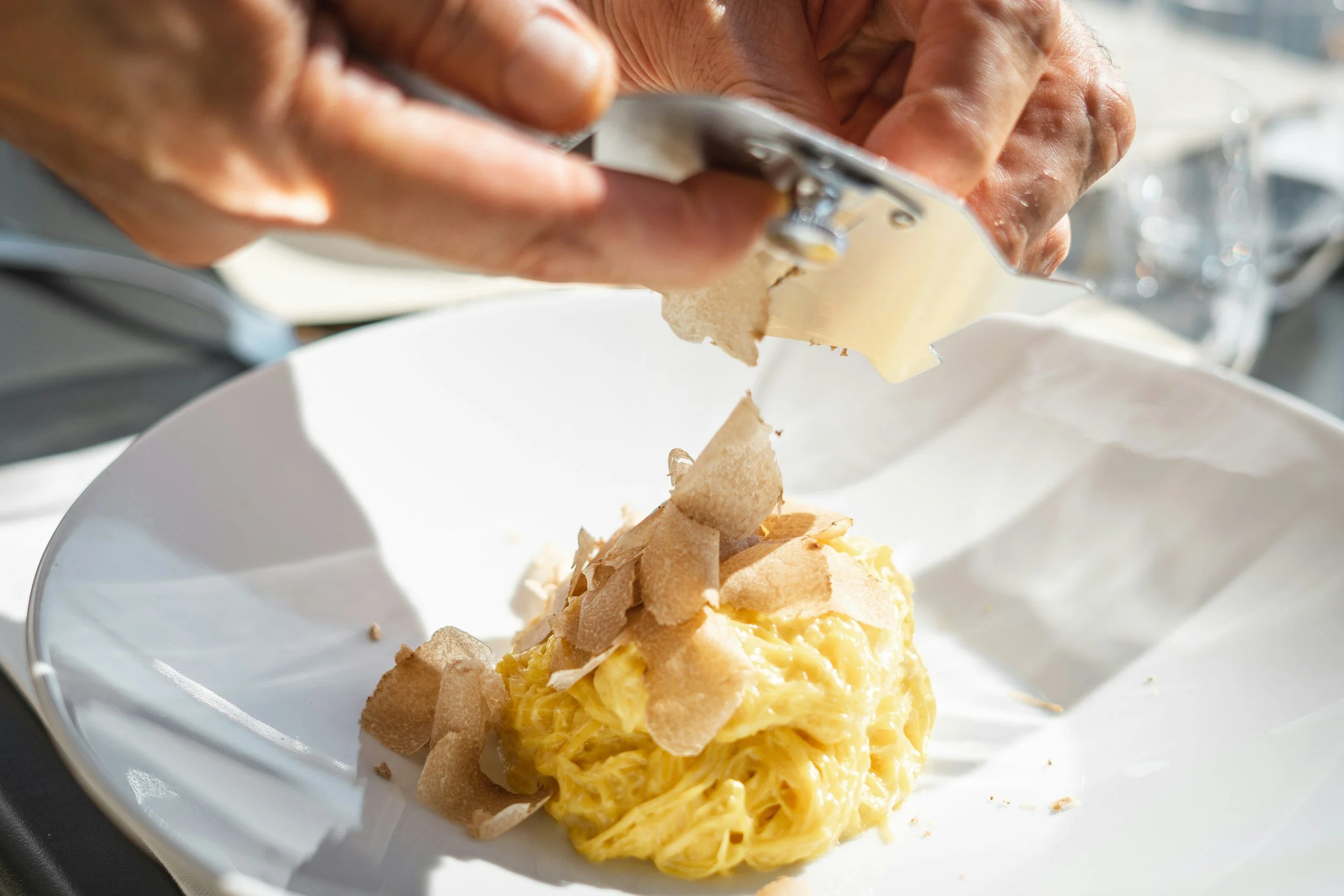
The way it’s served is consistent across most places, whether you’re in Alba or one of the surrounding villages. You order a simple dish, often tajarin with butter or an egg, and then the truffle is brought to the table whole, shown to you briefly, and shaved directly over the plate. It’s priced by weight, so you decide how much you want in the moment, which is why most people start with a smaller amount and adjust later rather than committing to too much straight away.
Tajarin is the dish you’ll come across most often, and it’s usually kept very simple on purpose so nothing interferes with the truffle. The pasta is thin and rich with egg, the butter is light, and the portion might look small at first, especially if you’re used to larger plates, but it’s usually enough when you’re eating more than one course. The egg dishes are even more straightforward, served warm in a small pan or dish, and brought out immediately after the truffle is shaved so everything stays hot.
In villages like La Morra, Monforte, or Neive, the setup feels slightly more low-key, and menus aren’t always updated online, which means you often rely on what’s written on a board inside or what the waiter mentions when they come over. The structure is the same, but it feels less visible until you’re already sitting at the table.
Dinner tends to fill up quickly during the fair, especially from Friday through Sunday, so booking ahead makes a difference if you have a specific place in mind. Lunch is more flexible, and arriving just after opening, around 12:15 or 12:30, usually gives you more options without needing to plan in advance, even in smaller towns where there are only a handful of restaurants.
It’s common to think about combining truffle meals with winery visits, but in practice it works better to separate the two, since most wineries don’t serve full meals and restaurants don’t rush service. A cellar visit in the morning followed by a long lunch nearby fits the pace of the area much more naturally.
After a couple of meals, what stands out is how little the food changes from place to place, and how intentional that is. The base stays simple, butter, egg, pasta, and the variation comes from the truffle itself and how much you choose to add, which is why even similar dishes don’t feel repetitive across different restaurants.
Alba truffle fair dinners in castles, wineries and cellars

During the Alba Truffle Fair, you’ll start seeing references to “cene insolite” or special dinners tied to the fair calendar, but they’re not always obvious unless you’re actively looking for them ahead of time. These aren’t regular restaurant bookings. They’re one-off events held in places you wouldn’t normally have access to, like private wine cellars, historic villas outside Alba, or rooms inside castles in towns like Grinzane Cavour.
Each one is set up differently. Some follow a structured format with a fixed menu and wine pairings, often involving guest chefs or collaborations between local producers. Others feel more like extended tastings, where you move through several courses over a longer evening, sometimes with the producer or winemaker present. You don’t choose dishes on the night. You book a seat, arrive at a set time, and follow the evening as it’s planned.
The locations are part of the appeal, but they also affect how the evening runs. If the dinner is held in a winery, you’ll usually be seated close to the cellar or barrels, and the wines come directly from the estate. In places like old villas or former convent spaces, the setup tends to be more formal, with longer tables and a slower pace between courses.
Tickets are limited and tend to sell out quickly, especially for weekends or anything connected to well-known chefs or Barolo and Barbaresco producers. Most of them are released through the official fair calendar, and once dates are confirmed, it’s worth checking regularly rather than waiting, because availability changes fast.
It’s also worth paying attention to location before booking. Some of these events are held outside Alba, and getting back afterwards means either arranging a driver or planning the route in advance, since taxis aren’t easy to find late at night in smaller towns.
If you’d rather keep things more flexible, the surrounding villages run smaller food events on weekends throughout the season. These sagre are much less structured, usually set up in a village square or local hall, with a short menu focused on one or two dishes. You don’t book ahead, you just arrive, order, and sit down at long shared tables. The food is simpler, but it gives you a way to try local dishes without committing to a full evening event.
Booking tips for a smoother trip
Let your accommodation help – Most boutique hotels, agriturismos, and guesthouses are more than happy to help with booking a truffle hunt or meal. Some will even call ahead and reserve on your behalf, especially if you’re not comfortable navigating Italian websites or phone calls.
Be flexible with timing – If your dates are set, book early. If you have flexibility, aim for a weekday visit or later in the season, when crowds are thinner but the truffles are still excellent.
Don’t overpack your schedule – One truffle event a day is plenty. Leave space for a walk, a wine stop, or even just a nap. The food is rich, and the pace of the countryside rewards slowness.
Expect to pay more in Alba – Tastings and meals in the town centre tend to be priced higher than in the surrounding villages. For better value (and atmosphere), look to the hills.
Getting around the Langhe without a car
A lot of people assume you need a rental car to visit the truffle fair. And while driving gives you the most freedom, it’s not the only way to experience the region - especially if you’re staying in one of the hill towns or coming just for a few days.
If you’re flying into Turin or Milan, trains run regularly to Alba, with a change at Asti or Turin Porta Nuova depending on your route. From Alba, you can explore on foot, join local truffle hunts that include transport, or hire a private driver for a half-day outing. It’s slower, but it works.
Some smaller towns like Neive, Barbaresco, or La Morra are reachable by regional buses or pre-arranged taxis. If you're staying in a boutique hotel or agriturismo, ask ahead, as they often have someone they trust who can pick you up from Alba station or drive you to a winery.
For day trips or tastings, wine estates and restaurants will often include pickup/drop-off if you’re booking a lunch or tour. This isn’t something they always advertise online, but it’s common practice in the area, and usually just takes an email or call to arrange.
If you’d rather not drive at all:
Base yourself in Alba and do truffle walks or dinners within walking distance
Plan one or two pre-booked excursions with included transport
Let your host help arrange transfers - they often know drivers who offer fair prices
And if you do rent a car, know that driving in the Langhe is straightforward, but some of the village roads are narrow and winding. Take your time. Parking is usually available outside town centres, and most places are walkable once you arrive.
This is a region made for slow travel. Even if you skip the car, you can still see a lot without rushing from one stop to the next…

Slow travel during truffle season
You arrive in Alba thinking you’ll spend most of the day there, and within half an hour you realise that’s not how it works. Somewhere between Via Vittorio Emanuele and Piazza Risorgimento, you’re moving slowly without meaning to, stopping because everyone else is stopping, trying to read menus posted outside restaurants that are already full for lunch.
So you leave earlier than planned.
You walk back to where you parked, usually somewhere just outside the centre along Corso Europa or near the edge of town, get back in the car, and within ten minutes everything changes. The traffic drops, the roads open up, and you’re driving past rows of vines instead of shop windows.
That shift is the whole trip.
You head up towards La Morra without really deciding to. The road climbs in a few turns, and by the time you reach Piazza Castello, Alba already feels further away than it is. You find a table without trying too hard, sit down, and lunch takes over the afternoon in the way it always does here. Tajarin arrives first, then maybe something else, then coffee, and no one is moving you on.
By the time you leave, it’s already after 14:30, and the idea of going back into Alba doesn’t make much sense anymore.
Instead, you take a slower road out towards Barolo or cut across towards Monforte, not because there’s something specific to see, but because the drive itself becomes the next part of the day. You stop once, maybe twice, or not at all, and eventually head back without feeling like you’ve missed anything.
Evenings are quieter than people expect. Outside Alba, most villages settle quickly, and unless you’ve booked dinner, you’re not going anywhere else. You open something you picked up earlier, sit for a while, and let the day end without trying to extend it.
The fair gives you a reason to be there, but it’s not where you spend most of your time…
If you’re debating coast vs countryside after this, this Levanto guide makes that choice a lot clearer.
And in case you want to see what everyday food culture looks like outside the fair, these Italian market towns are a better reference.
If you’re in the mood for more autumn flavours
October and November are such good months for slowing down. The crowds are gone, the food gets richer, and even the light feels a little softer. If you’re already thinking beyond Alba, here are a few more autumn trips we love:
In Normandy, cider takes centre stage. The backroads along the cider route are full of quiet farm shops, tastings, and cafés that make you want to stay longer than planned. You can read more about it in our Normandy Cider Route guide.
In Umbria, olive oil season starts in early November. It’s less polished than Tuscany, but that’s part of the charm. Think village markets, long countryside walks, and warm tastings in old mills. We’ve shared our favourites in this Frantoi Aperti guide.
If you’re curious about wine regions that don’t always make the headlines, we’ve put together a round-up of lesser-known wine destinations in Europe - ideal if you’d rather skip the big tours and talk to the winemaker themselves.
And if you want to stay in Piedmont a little longer, we’d definitely recommend visiting a few of the Langhe wine villages. La Morra, Barolo, Neive... all walkable, all beautiful, and perfect for slow travel in autumn.
FAQs about the Alba white truffle fair
When is the Alba white truffle fair held?
The Alba White Truffle Fair runs from early October to early December, with the busiest weekends typically falling between mid-October and mid-November. Saturdays and Sundays are when the main market and events are active.
Do you need tickets for the Alba truffle fair?
You don’t need a ticket to enter Alba or walk around the town, but access to the official truffle market (Fiera Internazionale del Tartufo Bianco d’Alba) requires a paid ticket. These can be bought online in advance or at the entrance, but weekends often sell out.
How much do white truffles cost in Alba?
Prices vary depending on quality and the season, but white truffles are sold by weight and can range from €3 to €7 per gram, sometimes more for premium pieces. In restaurants, the final price depends on how much is shaved onto your dish.
Where is the main truffle market in Alba located?
The official truffle market is held in central Alba, usually near Piazza Risorgimento, inside a covered hall. It’s easy to find once you’re in the old town, and there are signs directing you from the main streets.
And if you’re still figuring out whether to base yourself in a food city or not, this Bologna guide makes that decision easier.
What are the best days to visit the Alba truffle fair?
Weekends have the most activity, including markets and special events, but they are also the busiest. Visiting early in the day or arriving on a Friday can make the experience easier to manage.
Where should you stay during the Alba truffle fair?
Most people stay outside Alba in nearby towns like La Morra, Neive, Monforte d’Alba, or Barolo. These are within 15–20 minutes by car and are much quieter in the evening, while still giving easy access to the fair.
Do you need to book restaurants during truffle season in Alba?
Yes, especially for dinner and weekends. Restaurants fill quickly once the fair is underway. Lunch is easier to manage without a reservation if you arrive early, around 12:00–12:30.
Can you visit truffle farms or go truffle hunting in Alba?
Yes, but truffle hunts need to be booked in advance with a guide. They usually take place early in the morning or late in the afternoon in the surrounding countryside, often combined with tastings or a meal.
Is Alba worth visiting during truffle season if you don’t like truffles?
Yes. The area is still worth visiting for the food, wine, and scenery. Many restaurants offer full menus alongside truffle dishes, and the surrounding villages and vineyards are just as appealing during autumn.
Can you visit the Alba truffle fair without a car?
You can reach Alba by train, but getting around the surrounding villages is difficult without a car. To explore places like La Morra, Barolo, or Neive and visit wineries or restaurants easily, having a car makes a big difference.
What time should you visit the Alba truffle market to avoid crowds?
Before 10:00 is the easiest time to walk through without queues. After 11:00, especially on weekends, the area around Piazza Risorgimento becomes crowded, and you’ll spend more time moving through people than actually seeing the stalls.
Where do you park in Alba during the truffle fair?
The easiest areas are just outside the centre, along Corso Europa or near Piazza Medford, where you’ll find larger parking spaces. From there, it’s a 10–15 minute walk into the old town. Parking closer to Via Vittorio Emanuele is limited and usually full by late morning.
How far in advance should you book truffle dinners or special events?
For weekends in October and November, it’s best to book at least 2–3 weeks in advance, especially for anything listed on the official fair calendar or involving well-known restaurants or wineries.
Is it better to visit Alba or the surrounding villages during the day?
Alba is busiest in the middle of the day, while villages like La Morra, Monforte, and Neive stay much quieter. Many people go into Alba in the morning, then leave for lunch and spend the rest of the day outside the town.
What should you order with white truffle in Alba?
Start with tajarin with butter or a simple egg dish. These are the most common and let the truffle stand out. Avoid heavier sauces, as most places keep dishes intentionally simple during the season.