
The Provençal market towns I keep coming back to every autumn
I think one of the biggest mistakes people make when planning a trip to Provence is deciding which market they want to visit before they've thought about what they actually want from the weekend. It sounds almost too obvious to question because the markets are usually the reason people start looking at Provence in the first place, and if you search online you'll mostly find articles ranking the biggest ones, the prettiest ones or the ones you simply have to visit. I used to plan my trips exactly the same way, but after a few autumn visits I realised that I'd been asking completely the wrong question.
The market almost never decides whether I want to come back to a place.
What usually decides it is everything that happens once the market starts packing away. Whether there are still cafés I'd happily spend another hour in, whether the old streets are somewhere I actually want to wander without feeling like I've already seen everything, whether there's a good bakery for the following morning, an interesting brocante that isn't trying too hard, or a wine bar where it feels perfectly normal to order one glass before dinner instead of rushing to the next village because that's what the itinerary says.
That's why this article ended up looking quite different from what I'd originally planned. I could easily have written another guide to Provence's biggest markets, but I don't actually think that would help you choose where to spend an autumn weekend. A famous market doesn't automatically make a town interesting for three days, just as a quieter market doesn't mean you'll run out of things to do by lunchtime. In fact, a couple of the places I'd happily return to every autumn aren't the ones that usually dominate the guidebooks at all.
What I wanted instead was to look at the towns as complete weekends rather than market mornings. Some are brilliant if antiques are the reason you're travelling. Others make much more sense if your idea of a good Saturday involves filling a bag with local cheese, walnuts and bread before finding somewhere to sit for lunch. A few become noticeably better once the summer crowds disappear, while others are at their best simply because they make travelling without a car far easier than most people realise.
If you're trying to work out whether Apt, Nyons, Vaison-la-Romaine or L'Isle-sur-la-Sorgue is the right choice, that's what this guide is really here to help with. Not by telling you which market is the biggest, but by helping you choose the town you'll still be pleased you booked once the stalls have gone home, the afternoon has slowed down and the rest of the weekend is still waiting.
In case you're travelling a little earlier in the year, this Provence in May itinerary shows how differently the region feels before the summer crowds arrive.
Why I'd plan Provence differently in autumn
I think a lot of people imagine autumn in Provence as summer after the crowds have gone home. The markets are still there, there are a few more empty tables outside the cafés and everything just feels a little quieter. That's certainly what I expected before I started visiting later in the year, but it's not really how I'd describe it now because the markets themselves hardly change at all. Instead, it's everything around them that starts shifting, and that's what makes an autumn weekend feel surprisingly different.
If you're planning a trip around the markets, the good news is that you don't have to rethink your itinerary just because it's October. Apt still fills its old streets every Saturday morning, Saint-Rémy-de-Provence is still busiest on Wednesdays, Vaison-la-Romaine keeps its Tuesday market, Nyons still revolves around Thursday and L'Isle-sur-la-Sorgue still has both its Thursday and Sunday markets, so it's perfectly possible to plan a whole weekend around those days months in advance. That's particularly useful if you're travelling without a car because the regional ZOU! buses and TER trains still make those towns easy to reach, even once the main summer season has finished.
Where autumn really starts making a difference is in the things you end up bringing home. During summer it's easy to notice the lavender, soaps, table linen and all the other stalls that have become part of Provence's image, but by October my shopping bag usually looks completely different. One weekend it might be walnuts grown around the foothills of Mont Ventoux, a piece of Picodon, fresh mushrooms after a week of rain and a loaf of bread that barely makes it back to the hotel before I've torn into it. Another time it's late figs, grapes, honey from the Luberon or a bottle of olive oil that someone has just opened for tasting because the new harvest has finally arrived. Around Nyons, Les Baux-de-Provence and the olive-growing villages of the Alpilles, you can really feel that change towards the end of October and into November, when conversations at markets, farm shops and cooperatives naturally start revolving around this year's olives rather than the summer.
I also plan my weekends a little differently once autumn arrives because I'm much less interested in finding the biggest market than I am in finding the town I'll still enjoy once the market has packed away. L'Isle-sur-la-Sorgue is probably the best example. I'd still recommend visiting, but I'd choose Thursday almost every time because I can wander through the market without constantly stopping for crowds, then spend the afternoon around Le Village des Antiquaires, browse the dealers along Avenue des Quatre Otages or walk back through the quieter canals once most of the day visitors have left. I'd make exactly the same argument for Nyons and Vaison-la-Romaine, where the market feels much more connected to everything else happening locally at that time of year, whether that's the start of the olive harvest, wineries welcoming visitors after the grape harvest or cafés that suddenly have time for people enjoying long lunches instead of turning tables as quickly as possible.
The smaller brocantes become much more interesting as well, partly because so many of them are tied to harvest weekends, village fêtes and local food festivals rather than existing as separate antiques events. It's not unusual to arrive expecting a morning of vintage finds and discover that half the square is filled with walnut growers, olive producers or local wine estates, while the village hall is serving lunch and the antique stalls carry on around the edges. Those are exactly the kinds of weekends I now look for because they feel rooted in the season rather than organised around tourism, and they're also the events that are hardest to discover unless you're checking municipal calendars, local tourist offices and sites like Brocabrac before you travel.
If you're travelling without a car, I'd probably spend more time looking at the day of the week than the season itself because that has a much bigger impact on how easy the weekend will be to put together. Saturday is by far the simplest day to build around, with regional ZOU! buses and TER connections still running a fairly full timetable, whereas Sunday can become surprisingly restrictive once you're trying to reach smaller villages in the Luberon, the Alpilles or around Mont Ventoux. That's one of the reasons I nearly always choose one market town for the weekend instead of trying to move around too much. I'd rather arrive on Friday, enjoy the market on Saturday, then leave Sunday for whatever I didn't have time for the day before, whether that's a vineyard, an olive mill, a village brocante or simply another slow walk through the town once most visitors have gone home.
That's probably also why my priorities have changed over the years. In the middle of summer I completely understand why people head straight for the biggest markets because they're part of the attraction, but by October I'm much more interested in what happens once the market starts packing away. I'd still recommend L'Isle-sur-la-Sorgue, but if you asked me which day I'd choose, I'd say Thursday without hesitating. The market is still large, but it's easier to stop and browse properly, and afterwards there's still plenty of time to wander through Le Village des Antiquaires, explore the dealers around Avenue des Quatre Otages or simply enjoy the canals without feeling as though you're moving with one long line of people. I feel much the same about Nyons and Vaison-la-Romaine. The markets are excellent, but they're only one part of the weekend. Once autumn arrives, they're surrounded by wine estates finishing the grape harvest, olive producers preparing for the new season and cafés that feel like somewhere you'd happily sit for another hour rather than somewhere you're only passing through before driving to the next village.
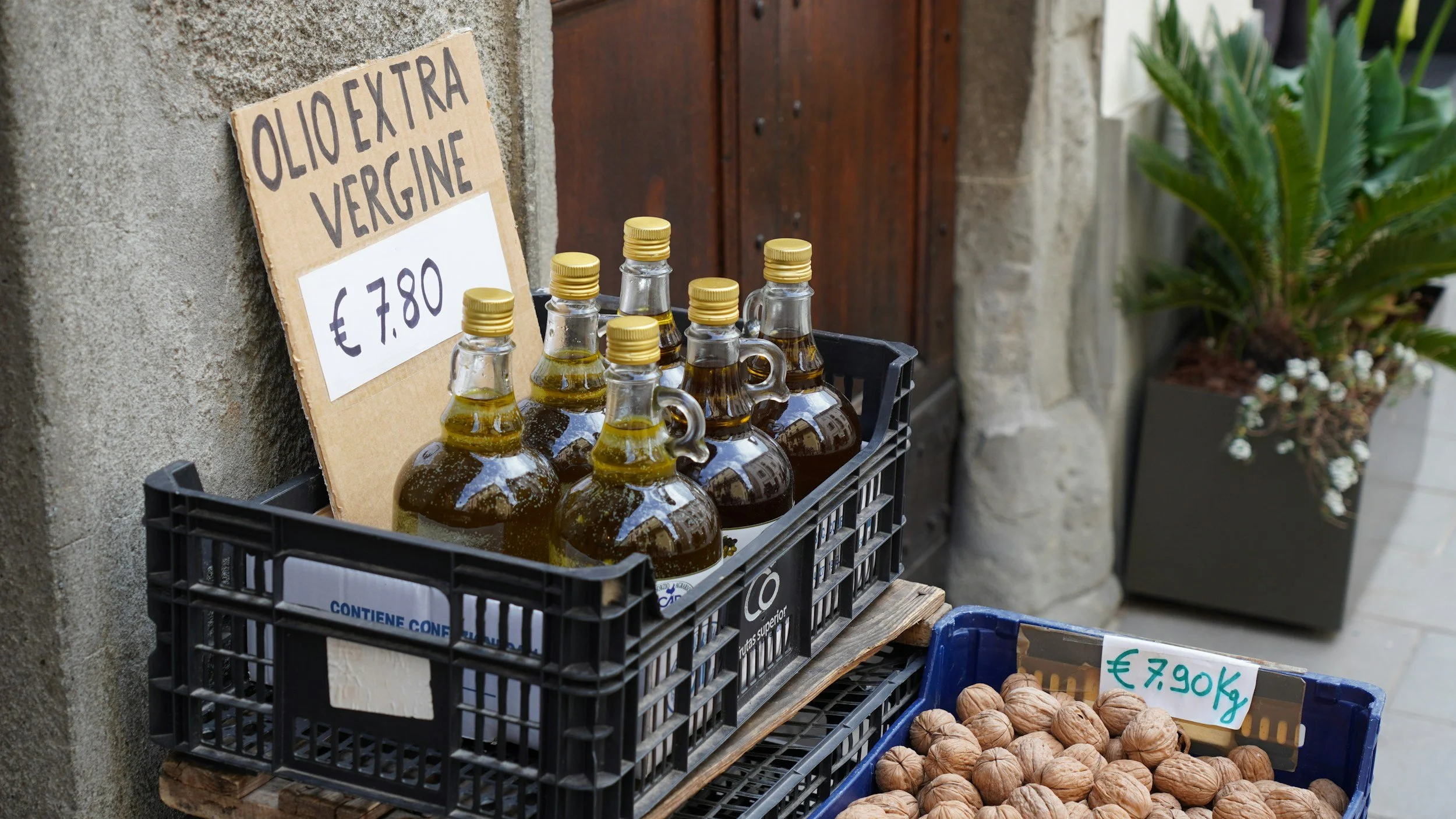
If you're still deciding where to base yourself in Provence these walkable hotels are all in towns where you can comfortably explore the area without hiring a car.
I’d choose a Thursday in L’Isle-sur-la-Sorgue
L’Isle-sur-la-Sorgue is one of the few places in Provence where I would deliberately ignore the advice repeated in almost every guide and skip the biggest market day. Sunday is impressive, especially when the brocante takes over Avenue des Quatre Otages alongside the Provençal market winding through Place de la Liberté, Place Ferdinand Buisson, Rue Carnot and the streets beside the Sorgue, but it can also turn the centre into one long queue by late morning. The town’s weekly markets run on both Thursday and Sunday from 7am until 1pm throughout the year, and in autumn I would choose Thursday unless the open-air brocante is the main reason for the trip.
Thursday is not a secret version of L’Isle-sur-la-Sorgue with nobody else around, and I would be suspicious of anyone describing it that way. It is still a proper market morning, with produce, cheese, charcuterie, olives, clothes and household goods filling the centre, but it is much easier to stop when something catches your eye instead of being carried along by everyone walking behind you. Arrive around nine rather than trying to be first through the streets at seven; the food stalls are already trading, the town has properly opened and you still have time before the busier part of the morning begins. By midday, people are already turning their attention towards lunch and traders begin preparing to leave, so arriving at eleven and assuming you have the whole day for the market is the sort of small mistake that makes the visit feel more rushed than it needs to.
The other reason Thursday works is that it leaves room for the antiques, although this is where the details matter. L’Isle-sur-la-Sorgue has around 300 antique dealers spread across several separate villages, warehouses and galleries, rather than one single antique quarter that can be covered in half an hour. Most permanent dealers open mainly from Friday to Monday, with only some starting on Thursday, so I would not promise that every courtyard and showroom will be unlocked simply because the market is running. Thursday is the better compromise for someone who wants the food market and a calmer town; Friday through Monday gives you the widest choice of permanent antique businesses, while Sunday adds the outdoor brocante and the largest crowds.
That's a distinction I almost never see mentioned, and it's one that's worth knowing before you book your hotel because the weekly market and the permanent antique dealers don't always follow the same rhythm. It's easy to assume that Thursday, with one of L'Isle-sur-la-Sorgue's biggest market days, is automatically the best day for antiques as well, but that isn't necessarily the case. Le Carré de L'Isle, at 13 Avenue des Quatre Otages, currently opens from Friday to Monday, and Les Antiquaires du Quai de la Gare follows a very similar schedule, so if your main reason for visiting is the permanent antique galleries rather than the outdoor market, Thursday can actually be a little frustrating.
That's why I'd plan the weekend slightly differently. I'd still arrive on Thursday because the market is much easier to enjoy than it is on Sunday and the town has a lovely atmosphere throughout the afternoon, but I'd treat the antiques as something for the following day instead. Spend Thursday wandering the market, stopping in whichever dealers happen to be open, browsing the independent shops around the canals and finding somewhere good for dinner, then leave Friday for Le Carré de L'Isle, Les Antiquaires du Quai de la Gare and the other permanent galleries once they're properly open. For me, that's another reason staying overnight makes far more sense than trying to squeeze L'Isle-sur-la-Sorgue into a quick day trip from Avignon. You end up seeing both sides of the town instead of having to choose between them.
The permanent antique centres are different enough that I wouldn't try to rush through all of them in the same afternoon. They each have their own feel, and once you've walked around two or three of them it becomes obvious that they're not all aimed at the same person.
If I wanted a relaxed couple of hours with plenty to browse and somewhere easy to stop for lunch, I'd head for L'Île aux Brocantes at 7 Avenue des Quatre Otages. Around forty dealers are gathered around a leafy courtyard beside the Sorgue, so instead of constantly walking back out onto busy streets you're moving naturally from one gallery to the next, with Le Bistrot de Coco in the middle if you need a break. It's one of those places where I always seem to spend longer than I'd planned because there's no obvious route through it. You just keep spotting another gallery you hadn't noticed five minutes earlier.
Hôtel Dongier Antiquités, on Esplanade Robert Vasse, feels completely different. It's much smaller, quieter and set inside a beautifully restored seventeenth-century coaching inn, so I'd probably recommend it to someone who enjoys antique furniture, paintings, mirrors, faience, glass and decorative arts more than rummaging through boxes of vintage bits and pieces. Even if you don't buy anything, it's worth stepping inside simply because the building itself is part of the experience.
Most people have heard of Le Village des Antiquaires de la Gare, but I don't think everyone realises quite how varied it is. Downstairs you'll find dealers specialising in traditional antiques, while Nouvel Vag upstairs brings together several galleries focusing on twentieth-century design, contemporary art and modern decorative pieces. I like that contrast because it quietly reminds you that L'Isle-sur-la-Sorgue isn't just about farmhouse tables, old enamel jugs and confit pots, even though that's often the version that ends up all over Instagram. If you're interested in lighting, architectural salvage, religious art, vintage design or statement pieces for interiors, you'll probably find yourself spending much longer here than you'd expected.
That's also why I wouldn't arrive with a shopping list. One gallery might be full of eighteenth-century Provençal furniture, while the next specialises in mid-century lighting or contemporary ceramics, and five minutes later you're looking at architectural stonework or old apothecary cabinets. The variety is much bigger than most people expect, and I think that's part of what keeps L'Isle-sur-la-Sorgue interesting even if you've visited before.
I'd save Maison Jouvaud until the point in the morning when you're actually ready for a coffee and something sweet rather than making it your first stop just because everyone else seems to photograph it. The family business has been here since 1948, and the shop on Avenue des Quatre Otages feels like much more than a pâtisserie. One room is filled with chocolates and confectionery, another with beautifully made cakes, while the shelves are lined with tableware, kitchen pieces and homewares that make it surprisingly difficult to leave empty-handed. It's an easy place to lose half an hour without really noticing, especially because you're walking between the antique galleries and the historic centre anyway. I'd just avoid leaving it until lunchtime on a Sunday because that's when the queue usually stretches out of the door.
One mistake I think a lot of people make is heading straight back to the station once the market starts packing away. Personally, that's when I'd slow down instead because the town becomes much easier to enjoy once the busiest part of the day is over. I'd wander along Rue du Docteur Tallet towards Campredon Art & Image, set inside the beautiful eighteenth-century Hôtel Donadéï de Campredon, then continue towards Fondation Villa Datris if contemporary sculpture interests you or La Filaventure Brun de Vian-Tiran, which is probably one of the most overlooked stops in town. It isn't another museum full of objects behind glass. Instead, it tells the story of one of France's oldest wool manufacturers, and if you've spent the morning admiring antique linen, Provençal textiles and beautifully furnished interiors, it suddenly makes perfect sense as the next place to visit.
Rather than wandering aimlessly once you've crossed the canals, I'd also make use of the town's official antiques route, which links the main dealer clusters around Esplanade Robert Vasse, Avenue des Quatre Otages, Le Village des Antiquaires and the streets back towards the Sorgue. It's a much more enjoyable way to explore because you're constantly discovering galleries you probably wouldn't have noticed otherwise, and it saves you from doubling back through the busiest market streets every twenty minutes. By the time you eventually walk back towards the station, L'Isle-sur-la-Sorgue feels completely different from the place that greeted you first thing in the morning, and I honestly think that's the version of the town that's easiest to enjoy.
Getting here without a car is normally straightforward because the L’Isle-sur-la-Sorgue–Fontaine-de-Vaucluse station sits within walking distance of both the antique quarter and the historic centre, with direct regional trains towards Avignon and Marseille. There is no staffed ticket office, although the station has a ticket machine, and the nearest staffed counter is at Avignon Centre, so buying the ticket on your phone beforehand is the easiest option. One important current complication is that major works on the Marseille–Avignon line via Cavaillon are disrupting weekday services between 8am and 5pm until 11 December 2026, with replacement transport operating during closures. Anyone travelling this autumn should check the live TER timetable rather than relying on the usual half-hour journey quoted in older articles.
So, would I choose Thursday or Sunday?
For me, it's Thursday almost every time.
I'd happily trade the biggest crowds for a market I can actually enjoy walking around, then spend the rest of the afternoon browsing the canals, dropping into whichever antique dealers happen to catch my eye and staying overnight so Friday can be all about the permanent galleries once they've opened properly. That combination simply makes much more sense than trying to fit everything into one busy Sunday.
The only time I'd deliberately choose Sunday is if the outdoor brocante itself is the main reason I'm visiting and I'm prepared for the fact that the busiest streets around Avenue des Quatre Otages will be packed for most of the morning. There's nothing wrong with that if it's the experience you're after, but it's a very different visit.
That's probably the biggest thing I took away from L'Isle-sur-la-Sorgue. Autumn doesn't suddenly turn it into a quiet little market town, and I don't think it needs to. What it does give you is enough breathing room to realise that the antiques scene stretches far beyond the outdoor stalls, from contemporary design galleries and specialist dealers to old coaching inns filled with furniture, art and objects that most day visitors never even realise are there. Stay an extra night and it's much easier to see why so many people come back again and again.
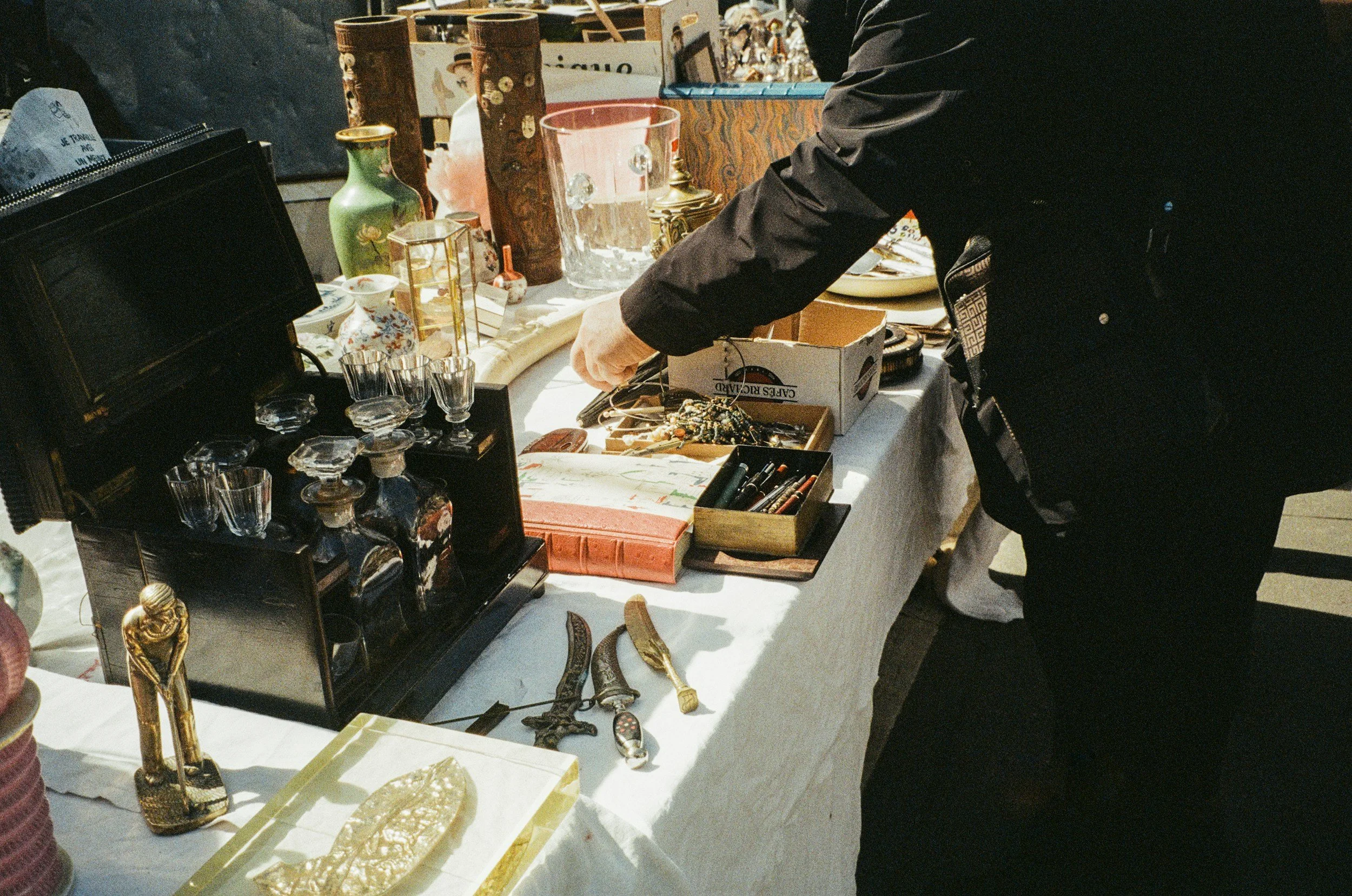
Apt makes much more sense once summer is over
Apt probably isn't the town that ends up on the front of a Provence guidebook, and I think that's one of its biggest strengths. You don't arrive to a perfect hilltop skyline like Gordes, and the streets aren't as obviously polished as somewhere like Roussillon, but after a couple of visits I stopped caring about that because Apt feels like somewhere people still genuinely use. On Saturday mornings you're sharing the streets with shoppers from villages across the Luberon, people collecting bread for the weekend, buying cheese, chatting to growers they've known for years or stopping for a coffee before carrying on with the rest of the morning. It never feels as though the market has been put on for visitors. You're simply stepping into something that was happening long before tourism arrived.
That Saturday market is enormous. More than 300 traders spread through the old town every week, filling Place de la Bouquerie, Rue des Marchands, Rue de la République, Rue Eugène Brunel, Place Carnot, Place Gabriel Péri, Place Jean Jaurès, Place Saint-Pierre and the streets around Cathédrale Sainte-Anne, so I'd forget about trying to follow a route and just wander. One thing I would do, though, is arrive earlier than feels necessary. Eight o'clock might sound ambitious on holiday, but by half past eight the atmosphere is completely different, especially if you're hoping to stop and talk to producers or buy food rather than simply weaving through the crowds. By lunchtime the first traders are already packing away, and if rain is forecast that can happen even earlier.
Most visitors only ever hear about Saturday, but Apt also has a Tuesday farmers' market, and I honestly think it's worth mentioning because it's a completely different experience. It's much smaller, you'll never mistake it for one of Provence's grand weekly markets, but that's exactly why I like it. If your idea of a good morning is filling a bag with local cheese, fruit, bread and whatever vegetables happen to be in season before finding somewhere to sit for coffee, Tuesday often makes more sense than Saturday because you're not sharing the streets with hundreds of other people.
I also wouldn't leave Apt without spending a little time beyond the market itself. Maison du Fruit Confit is one of those places that tells you something about the town rather than simply selling you something, because candied fruit has been part of Apt's identity for centuries and you'll see it everywhere once you start paying attention, from bakery windows to little delicatessens tucked into the side streets. If you're putting together a picnic, this is also a good place to look for Bleu d'Apt, local honey from the Luberon and seasonal preserves that you won't necessarily find on every market stall. Those quieter shops are one of the reasons I never rush away once the market begins winding down.
One of the reasons I keep coming back to Apt in autumn is that the market never feels as though it's trying to celebrate the season. It simply reflects what's happening across the Luberon that week. By the time October arrives, the melons and apricots have almost disappeared, replaced by crates of late grapes, fresh walnuts, squash, mushrooms after a spell of rain and stalls piled high with different varieties of honey, goat's cheese and olives. It's all very understated, which is probably why I like it so much. Nobody is trying to create an "autumn market." People are just selling what's ready.
The same goes for truffles. Plenty of articles make it sound as though you'll be wandering past baskets of black truffles throughout autumn, but that's a bit misleading. The main black truffle season doesn't really begin until much later, so if you're visiting in September or early October you're much more likely to come across truffle products than freshly dug truffles. Producers like the Florent family from Gordes regularly bring truffle butter, oils and seasonal products to the market, but if you're hoping to buy the famous Tuber melanosporum, you'll have a much better chance later in the year.
I'd actually always keep an eye out for instead is sous-feuilles, a small raw-milk goat's cheese matured inside chestnut leaves. It's one of those products that's easy to miss because nobody is shouting about it, but the Berger-Ricard family has been producing it for generations and it's exactly the sort of thing I like bringing home from Provence because you rarely come across it outside the region.
I nearly always begin around Place de la Bouquerie, not because there's a right way to walk through the market, but because that's where I naturally end up slowing down. Just around the corner on Rue de la Sous-Préfecture, Boucherie Malavard has been part of everyday life in Apt for decades, and if I were putting together lunch I'd much rather buy prepared Provençal dishes, charcuterie or tapenade there than pick up vacuum-packed products from one of the temporary souvenir stalls. That's one of the nice things about Apt. The market blends into permanent food shops so naturally that it isn't always obvious where one ends and the other begins.
I usually drift from there towards Rue des Marchands, where places like Comptoir de l'Ambroisie and Cabécou & Poivre d'Âne carry on selling regional cheeses, olive oil, preserves and Luberon specialities long after the market traders have packed away. I think that's one of the biggest differences between Apt and some of the prettier villages nearby. When the market finishes, the town doesn't suddenly feel as though the day's over. People are still shopping, bakeries are still busy, cafés are still filling up for lunch and there's no real reason to rush for the next bus simply because the stalls have gone.
One part of the market I nearly always end up coming back to is Place du Septier, partly because it's easy to miss if you simply keep following the busiest streets. It feels a little less hectic than the main market route, and that's where I've often found some of the producers I end up buying from, whether it's proper sourdough bread, organic fruit and vegetables or seasonal produce that doesn't immediately catch your eye from the other side of the square. It also marks the point where Apt starts feeling less like one long market and more like an ordinary town again, which is usually when I slow down rather than trying to see everything before lunchtime.
Just a couple of minutes away, at 68 Rue Eugène Brunel, Les Soleils de Philippe is exactly the sort of place I hope to find in market towns. It's an old and second-hand bookshop tucked inside a former chapel, with shelves filled with everything from Provençal history and regional cookbooks to old travel books, maps and the kind of unexpected finds that only second-hand bookshops seem to produce. I wouldn't try to squeeze it into the busiest part of Saturday morning because that's missing the point a little. It's much nicer once the market has started winding down and the streets have become quieter.
Most people already know that candied fruit is Apt's speciality, but I think it's worth taking that one step further instead of buying the first colourful box you see beside the market. La Maison du Fruit Confit, on the Aptunion site just outside the historic centre, tells the story behind an industry that has been part of the town for centuries rather than turning it into another souvenir. You can taste different fruits, see how everything from apricots and pears to cherries, melon and citrus peel is slowly candied, and browse the shop before sitting down in the tearoom if you need a break from the crowds. I nearly always leave it until the afternoon because by then the market has packed away, the old town has started to empty and there's no reason to keep circling the same streets when one of Apt's most interesting local businesses is only a few minutes away.
One thing I realised quite quickly is that not every "wine experience" around Apt makes sense if you're travelling without a car, even though plenty of articles make it sound as though you can simply wander from the market to a vineyard. Once you start looking at the map, most of the estates are scattered across the countryside and the public transport isn't really designed around wine tasting.
That's why I think Cave de Sylla is such a useful stop. The cooperative has been part of Apt since 1925, and because it's right beside the former railway line, now converted into the Véloroute du Calavon, you can easily walk there from the old town after lunch. It's not trying to recreate the experience of sitting among the vines, but if your main goal is tasting wines from the surrounding Luberon without organising taxis or driving yourself, it's by far the easiest option.
The estates themselves take a little more planning. Domaine de Font Alba, between Apt and Rustrel, welcomes visitors for tastings and vineyard walks by reservation, but I wouldn't promise anyone that it's an easy afternoon by public transport because it simply isn't. If you're happy hiring an e-bike for the day or booking a taxi in advance, it's absolutely doable, but otherwise I'd rather be honest and suggest enjoying the wines in Apt before saving the countryside vineyards for another trip.
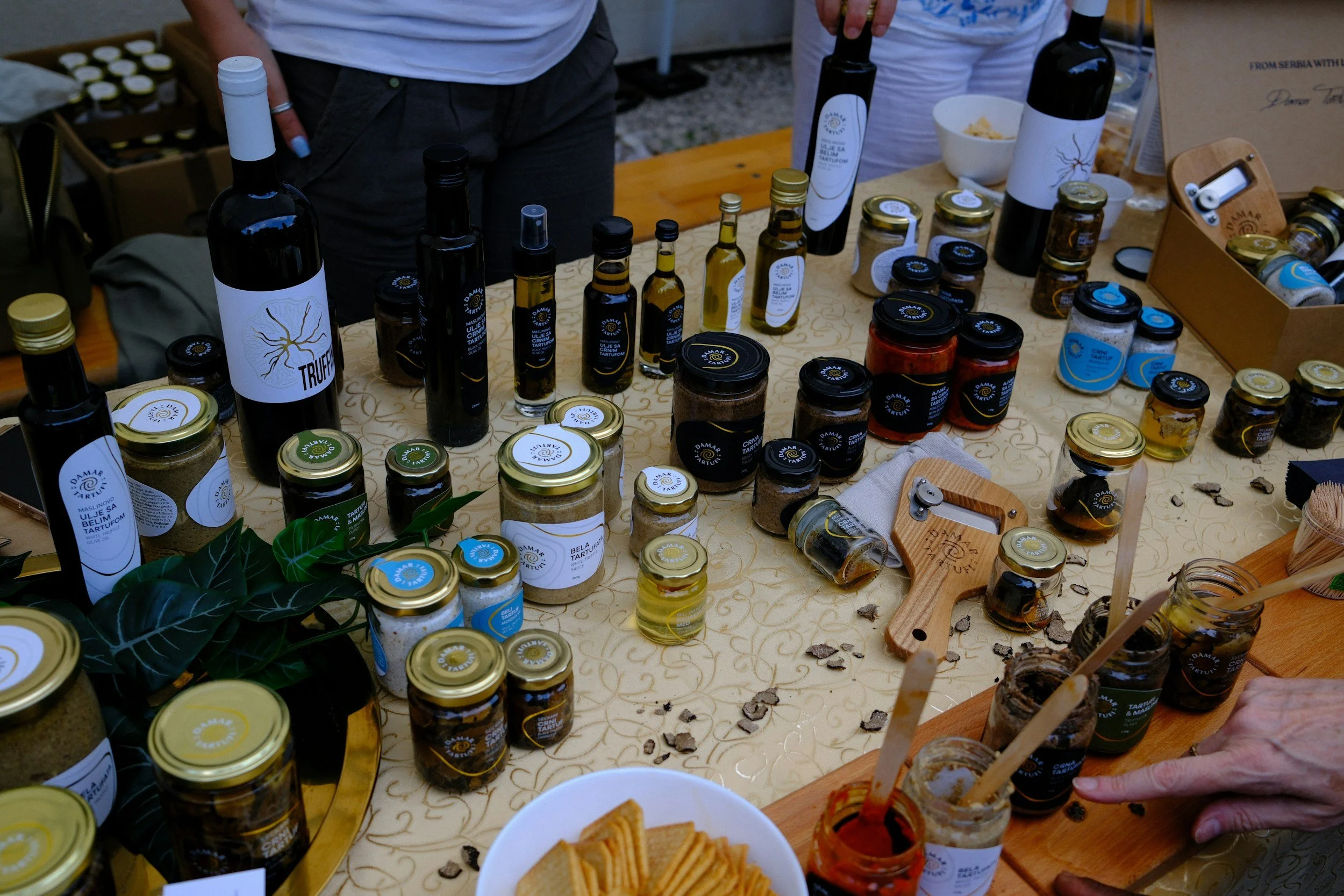
The same goes for olive oil. If you're visiting in September or early October, it's worth remembering that the new pressing season hasn't really started yet, so don't expect every mill to be producing fresh oil. Around Apt, that usually gets underway in November and continues into December, which is when places like Moulin à Huile du Colorado are at their busiest. Moulin Jullien, in Saint-Saturnin-lès-Apt, welcomes visitors outside the main production period and sells excellent organic olive oil, but getting there without a car still takes a bit of planning. An e-bike works well if the weather is good, a taxi is realistic if you've booked ahead, but if you've only got a weekend in Apt, I'd probably keep things simple and buy directly from the olive growers already selling at the Saturday market. You'll still come home with something genuinely local, and you won't spend half the afternoon trying to make bus timetables fit around a tasting.
Getting to Apt takes a little more planning because the railway line closed many years ago, but I wouldn't let that put you off. Regional ZOU! buses connect the town with Avignon, Cavaillon, Aix-en-Provence and Manosque, and the bus station is only a short walk from the historic centre. It's not somewhere I'd visit for a rushed morning. Apt works much better when you stay for a couple of nights because once you've seen the market, there's still plenty of reason to keep exploring.
By early afternoon the market traders are loading their vans, but that's usually when I start wandering without any real plan. Cathédrale Sainte-Anne is suddenly quiet enough to step inside without feeling you're interrupting anyone, Les Soleils de Philippe is somewhere you can actually browse rather than squeezing between other people, and if you've picked up a few things for lunch you can easily slow the day down before walking out to Cave de Sylla for a tasting or continuing to La Maison du Fruit Confit. None of those places are hidden, but they're much easier to appreciate once the busiest part of Saturday has passed, and together they make Apt feel like much more than somewhere you came for a market…
Nyons quietly becomes one of the most interesting places in Provence once autumn arrives
Most articles introduce Nyons as the olive town of Provence, but I've always felt that description makes it sound much more one-dimensional than it really is. It gives the impression that you arrive, buy a bottle of olive oil, perhaps wander through the market for an hour, and then continue towards somewhere with prettier streets or a more famous name. After spending time here in autumn, I don't think that's how Nyons works at all.
Olive growing is everywhere, but not in a way that's been packaged up for visitors. It's just part of everyday life. You hear people talking about how the harvest is looking while they're queueing at the market, you see locals carrying tins back from the cooperative, olive nets begin appearing beneath the trees before picking has even started, and as the season moves on there's a quiet sense that the whole town is gradually working towards the weeks when the mills will be running at full pace. None of it feels like a performance, which is probably why I enjoy it so much.
That's also why I think Nyons deserves more than a couple of hours on the way to somewhere else. It's the sort of place that reveals itself quite slowly, and if you only arrive for Thursday morning's market before heading back onto the road, you'll probably leave thinking you've seen everything there is to see. Stay for another day and the town starts feeling completely different because the market is only one small part of what makes Nyons worth the journey in the first place.
The weekly market has been held here since the Middle Ages and still takes over much of the historic centre every Thursday morning, spreading across Place des Arcades, Place de la Libération, Place Buffaven, Rue des Déportés, Rue des Grands Forts and the surrounding lanes. Unlike many Provençal markets, it doesn't feel as though it's trying to entertain visitors first. People are here because it's market day, and that makes a surprising difference to the atmosphere. You'll still find stalls selling lavender and soap, but they sit alongside growers selling walnuts from the Baronnies, mountain honey, Picodon goat's cheese, seasonal fruit and vegetables, tapenades, olives and bread that disappears surprisingly quickly during the first couple of hours of the morning. By around one o'clock, the market begins folding away almost as quickly as it appeared, and that's exactly when I'd slow the day down instead of moving on to the next destination.
One of the things I like most about Nyons is that almost everything you end up doing somehow leads back to olives. Not in a forced "olive trail" sort of way, but because that's simply how the town has grown over the centuries. You can spend the morning at the market, wander over to Vignolis afterwards and suddenly realise that the cheese you've just bought, the olive oil you're tasting and even the local wines all come from the same landscape surrounding the town.
That's why I think Vignolis is worth much more than a quick stop in the shop. Yes, you'll find shelves filled with Nyons olive oil, tapenade, preserves, wines from the Baronnies and Vinsobres appellations, local cheeses and plenty of things that are difficult to resist taking home, but the cooperative also explains how the Tanche olive became the first olive in France to receive AOP status and why that matters to the people producing it today. If you're travelling without a car, it's also one of the easiest ways to get a feel for the wider region because so many local producers are represented under one roof instead of being spread across dozens of individual farms.
From there I'd walk over to La Scourtinerie, partly because it's only a few minutes away and partly because it's unlike anywhere else I've visited in Provence. The family business has been weaving scourtins since 1882, the thick fibre mats that were once used when pressing olives for oil, and although the production process has changed enormously since then, the workshop never disappeared. Today those same looms are still running, producing colourful rugs, placemats and homewares instead, and you can watch people working before wandering through the small museum and shop. I think what I like most is that it doesn't feel polished or staged for visitors. You're walking through a business that's still making things every day, which somehow makes the whole story of Nyons' olive industry feel much more tangible than if you'd only read about it on an information board.
I also wouldn't rush between the two. The walk itself takes you through ordinary streets where you'll pass little delicatessens, cafés and specialist food shops, and that's something I appreciate about Nyons in general. It doesn't feel as though the attractions have been gathered into one tourist quarter. They're simply part of the town, and spending an afternoon wandering between them feels much more natural than trying to tick them off one after another.
Autumn is the time I'd choose for Nyons every single time, not because the olive harvest is in full swing yet, but because you can feel it getting closer. The main picking season usually begins in November, although by October the town is already looking ahead to it. Nets begin appearing beneath the trees, producers start talking about the coming harvest and the landscape changes in a way that's completely different from the Provence most people picture. The olive groves keep their soft silver-green colour while the vineyards around Vinsobres, Mirabel-aux-Baronnies and the lower slopes of the Baronnies Provençales turn yellow, copper and deep red, so if you're expecting endless lavender fields you'll be looking at a very different side of the region.
If you've got a free afternoon, I'd also make time for part of the Sentier des Oliviers. It starts just outside the centre and is an easy walk rather than a proper hike, but that's exactly why I like it. After spending the morning at the market, visiting Vignolis and wandering through La Scourtinerie, it helps tie everything together because you're suddenly walking through the same groves that supply the cooperative and seeing just how closely the town is linked to the surrounding landscape. It's only when you're out there that you realise how many of the conversations you've heard during the day, whether about this year's harvest, irrigation or the different olive varieties, all begin in these hills.
Nyons is also one of the few places where I never feel as though buying a bottle of olive oil is simply another souvenir. I'd still start at Vignolis because tasting several oils side by side gives you a much better idea of the differences than picking one at random, but I'd also keep an eye out for bottles from producers such as Moulin Dozol-Autrand, Moulin Ramade and Huilerie Richard, all of which have been producing oil in the region for generations. The differences are often quite subtle at first, especially if you don't taste olive oil very often, but once someone talks you through them it's surprising how quickly you begin noticing the peppery finish of one oil, the softer fruitiness of another or the way each producer reflects a slightly different part of the surrounding landscape. That's exactly the kind of tasting I enjoy because nobody is trying to convince you that one bottle is the best. They're simply encouraging you to discover which one you enjoy most.
Getting to Nyons takes a little more planning because there's no railway station, but I honestly don't think that's much of a drawback once you know what to expect. Regional ZOU! coaches connect the town with Montélimar, Orange and several smaller towns across the Drôme and northern Vaucluse, and as long as you check the timetable before booking, particularly if you're travelling on a Sunday, it's a very straightforward journey. Once you've arrived, the market, Vignolis, La Scourtinerie, the old town, cafés and most of the places you'll actually want to visit are all within easy walking distance, so the car isn't something you'll miss.
What keeps bringing me back to Nyons isn't really the olive oil. It's the fact that the town never seems to revolve around visitors in the first place. Nobody is trying to convince you that you're in Provence's olive capital because people here don't really need to. Olive growing is simply woven into everyday life, whether that's somebody calling in at Vignolis on the way home, chatting about how this year's harvest is looking at the Thursday market or driving past groves that have been in the same families for generations.
That's also why I'd choose it over some of the better-known market towns if I wanted a quieter autumn weekend. Not because there's more to do, and not because it's prettier than places like Gordes or L'Isle-sur-la-Sorgue, but because everything feels completely unforced. The market, the olive groves, the little food shops, La Scourtinerie and the cafés all belong to the same everyday life, and I think that's much harder to find than another beautiful village with a famous weekly market.
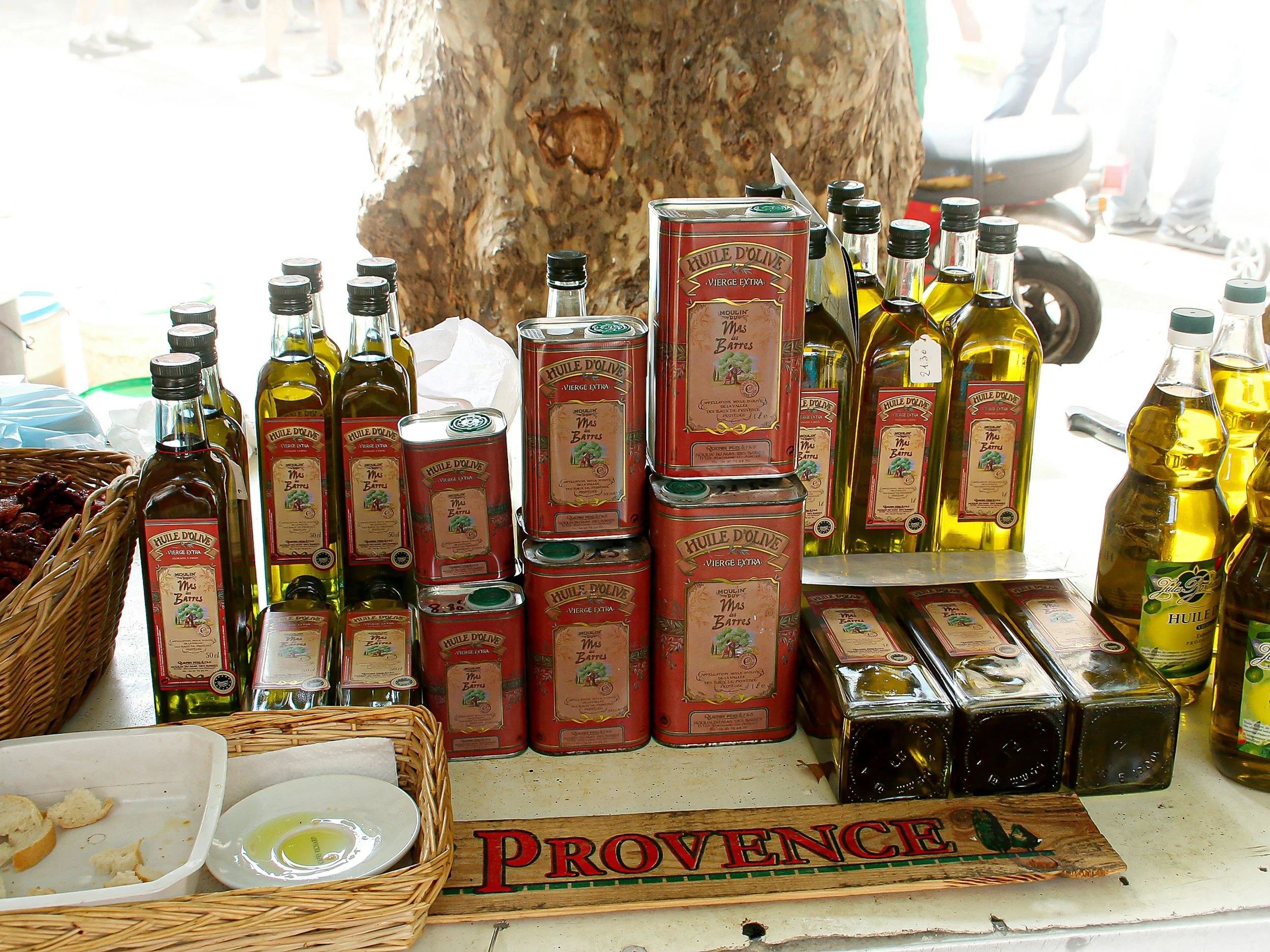
If you're wondering whether Aix-en-Provence belongs on the same trip, this spring guide helps you decide when it actually makes the most sense to visit.
Vaison-la-Romaine if you like brocantes as much as food markets
Of all the market towns in Provence, Vaison-la-Romaine is probably the one I'd choose if I wanted a long autumn weekend rather than just a busy Saturday morning. I know places like Gordes, L'Isle-sur-la-Sorgue and Saint-Rémy-de-Provence usually get more attention, but I find myself coming back to Vaison for a different reason. Once the market is over, the town doesn't feel as though the day's finished. If anything, that's when I start slowing down because there's still the Roman quarter, the medieval streets, little wine bars tucked into the lower town and restaurants pouring bottles from Gigondas, Vacqueyras, Cairanne and the surrounding Rhône villages without you needing to leave Vaison at all.
I'd still build the trip around Tuesday, though. The market has been part of life here since 1483, and every week it spills through Cours Taulignan, Place Montfort, Place Burrus, Rue de la République, Avenue Général de Gaulle and the surrounding streets until much of the lower town feels taken over by it. If you're arriving without a car, it's worth catching one of the earlier buses from Orange or Carpentras because arriving before nine makes a surprisingly big difference. The producers are still setting out their stalls, the cafés are busy with locals rather than day-trippers and it's much easier to stop for breakfast before the narrow streets fill up. I nearly always do exactly that instead of heading straight into the busiest part of the market, because once you've got a coffee and something warm from one of the bakeries, the whole morning feels much less rushed.
I almost always end up buying breakfast from Boulangerie Pâtisserie Renouard on Place Montfort, not because it's some hidden favourite, but because you're going to walk straight past it anyway. Rather than joining the busiest part of the market straight away, I'd grab a coffee and something to eat, find a bench for ten minutes and let the town wake up around me before disappearing into the market streets. It makes the morning feel much less frantic, especially if you've arrived on one of the earlier buses from Orange.
If you're staying overnight, I'd leave Pâtisserie Gilles Peyrerol until later in the day instead. It's only a short walk away on Cours Henri Fabre, but it feels like a completely different place once the market has packed away. By then you're choosing pastries alongside people finishing work or picking something up on their way home rather than standing in the middle of a queue of market shoppers, and I actually prefer seeing Vaison at that pace.
That's probably what I enjoy most about the town. The market is a big part of Tuesday, but it never feels like the whole reason to come. By early afternoon the traders are loading their vans, yet the cafés around Place Montfort and the terraces overlooking the Pont Romain are only just filling up for lunch, and from there it's an easy walk into the Roman archaeological park or up through the steep lanes of the Haute Ville. Those three parts of Vaison, the market, the Roman town and the medieval hilltop, all sit within walking distance of each other, which means the day keeps unfolding naturally instead of ending the moment the last stall disappears.
I think that's one of the biggest differences between Vaison-la-Romaine and some of Provence's better-known market towns. You never get the feeling that you've missed the main event because the market has finished. If anything, the afternoon is when the town starts slowing into its normal pace, and that's usually when I end up enjoying it most!
I wouldn't rush over to Puymin or La Villasse first thing in the morning, even though that's what you'll often see recommended. Personally, I think they work much better once the market has finished and the pace of the town has changed a little. By then you're no longer trying to squeeze Roman ruins, the market and the medieval streets into the same few hours, and it becomes much easier to give each place the time it deserves. I've ended up doing it both ways, and every time I've visited in autumn I've preferred leaving the archaeological sites until after lunch.
From there it's only a short walk across the Pont Romain, but I never feel any need to hurry because the medieval Haute Ville rewards exactly the opposite approach. The climb takes you through narrow lanes, old stone houses and little squares like Place du Poids, before continuing towards the Cathédrale Sainte-Marie-de-l'Assomption, and although the distance isn't particularly far, the atmosphere changes surprisingly quickly. An hour earlier you were weaving between market stalls and shoppers carrying baskets full of cheese and vegetables; now you're hearing church bells, passing the occasional resident heading home and finding streets where you can quite happily wander for ten minutes without meeting anyone else.
I'd keep walking all the way to the top rather than turning around halfway, not because there's one spectacular viewpoint waiting at the end, but because the upper town is where Vaison starts feeling less like a place people visit and more like a place people live. In autumn, when the summer crowds have thinned out, the little streets around Rue de l'Évêché and the lanes behind the cathedral become wonderfully quiet, laundry hangs between old stone houses, shutters begin closing as the afternoon turns into evening and you get a much better sense of why people choose to make their lives here instead of simply passing through for the Tuesday market.
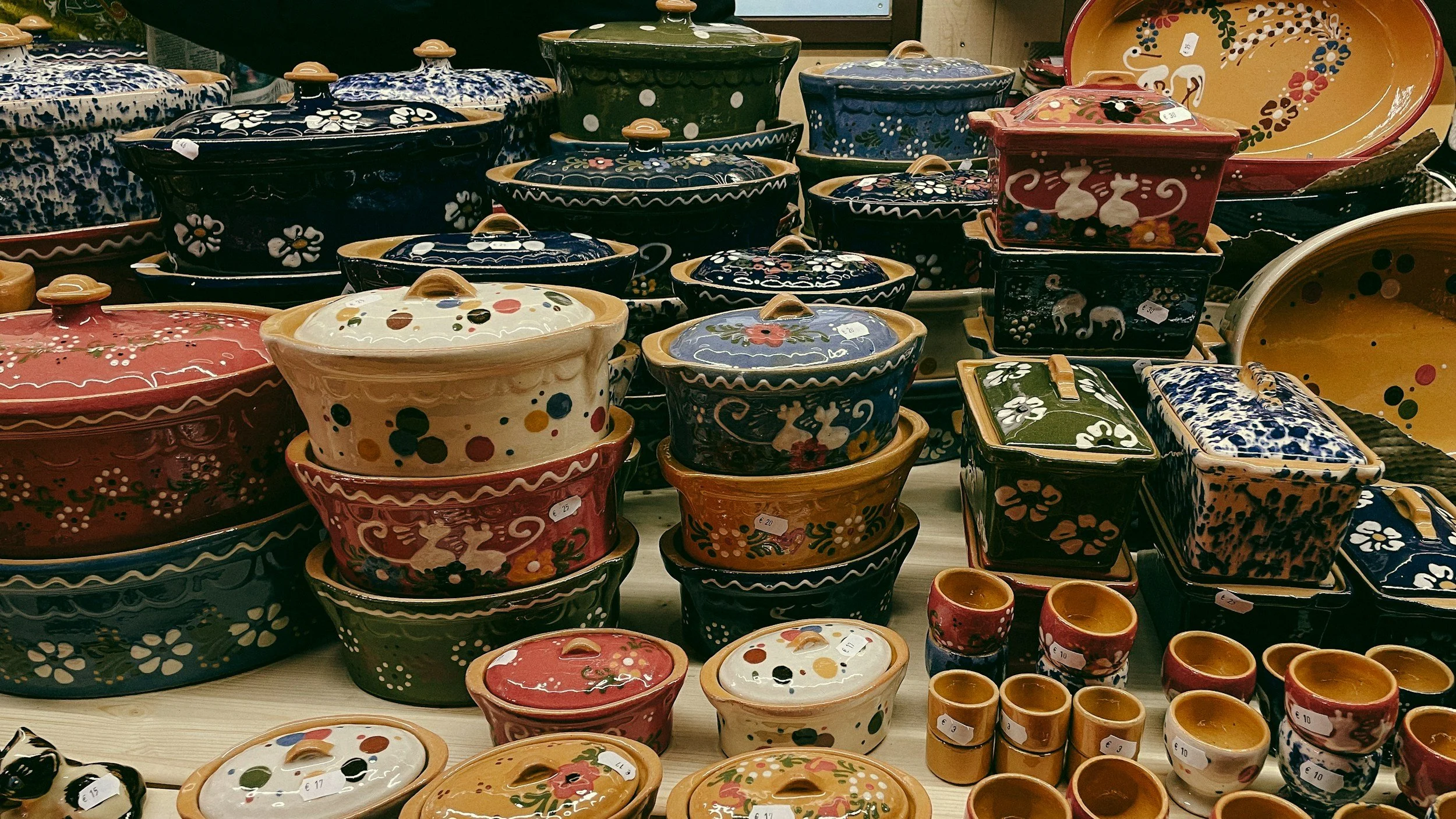
If I had room in my suitcase, I'd probably end up leaving Vaison with something from a brocante as well as a bag of food from the market. It doesn't have the scale of L'Isle-sur-la-Sorgue, and I don't think it needs to. Places like Vide-Château on Cours Taulignan or Brocante de l'Ouvèze on Avenue Marcel Pagnol feel much more like independent shops than destinations in their own right, which means you can wander in because something catches your eye rather than feeling as though you've arrived somewhere you're expected to spend the next two hours. One visit it might be old enamel kitchenware or Provençal pottery, the next it's a shelf of regional cookbooks or a piece of furniture that's somehow followed you all the way back to your hotel in your head. I like that they're a little rough around the edges because it makes the whole experience feel much more genuine.
The same goes for wine. One of the reasons I'd happily spend a few extra days in Vaison is that some of the southern Rhône's best-known villages are right on the doorstep. Gigondas, Vacqueyras, Rasteau, Cairanne, Séguret and Roaix are all close enough to build a day around, but I wouldn't make the mistake of trying to combine a vineyard visit with Tuesday's market because both deserve more time than that. I'd rather enjoy the market without watching the clock, have dinner in town, then use Wednesday for whichever village I'm most curious about instead. It makes the whole trip feel much less rushed, and you're not spending half the day wondering whether you're going to miss the last bus back.
That's probably why Vaison-la-Romaine is the place I'd choose if someone gave me a long autumn weekend and told me to pick just one market town. The market is excellent, but it's almost beside the point after a while because every part of the town gives you another reason to stay a little longer. You wander through the market in the morning, cross the Pont Romain after lunch, lose track of time in the medieval streets, end up browsing a brocante you hadn't planned to visit and finish the day with a bottle from Gigondas or Vacqueyras instead of wondering where to drive next. I never feel as though I have to fill every hour in Vaison because the town already does that for me, and I think that's one of the hardest qualities to find in Provence. There are plenty of places that are beautiful for an hour or two. There are far fewer where three autumn days still doesn't feel like quite enough.
If you're still deciding whether Apt is actually the better choice or if Gordes is worth the crowds, this side-by-side comparison makes the decision much easier.
The brocantes I'd make a detour for
After a while I realised I was walking past a lot of the expensive antiques without really stopping. They were beautiful, of course, but I wasn't furnishing a country house in Provence and I wasn't looking for an eighteenth-century armoire to ship back to Sweden. Most weekends I was much happier coming home with an old enamel coffee pot, a stack of faded linen napkins or a slightly battered wooden crate that had clearly been used for years before ending up on a folding table somewhere.
That's why I don't automatically head for the biggest antiques market anymore.
If I'm looking for serious dealers, fine furniture or architectural pieces, I'd still go straight to L'Isle-sur-la-Sorgue because nowhere else in this part of Provence really compares. There are galleries there where you can spend half an hour looking at mirrors or Provençal cabinets that belong in magazines rather than somebody's sitting room, and I completely understand why people travel across Europe to visit them.
Most of the time, though, that's not what I'm hoping to find.
I actually enjoy the smaller brocantes much more because they feel less curated. One Saturday you might come across a table covered in old café glasses, chipped pottery and kitchen utensils that have probably been sitting in the same family for decades. The next weekend it's boxes full of vintage gardening tools, piles of embroidered table linen, recipe books with handwritten notes tucked between the pages or baskets that still have somebody's name written underneath. None of it is especially valuable but that's almost the point.
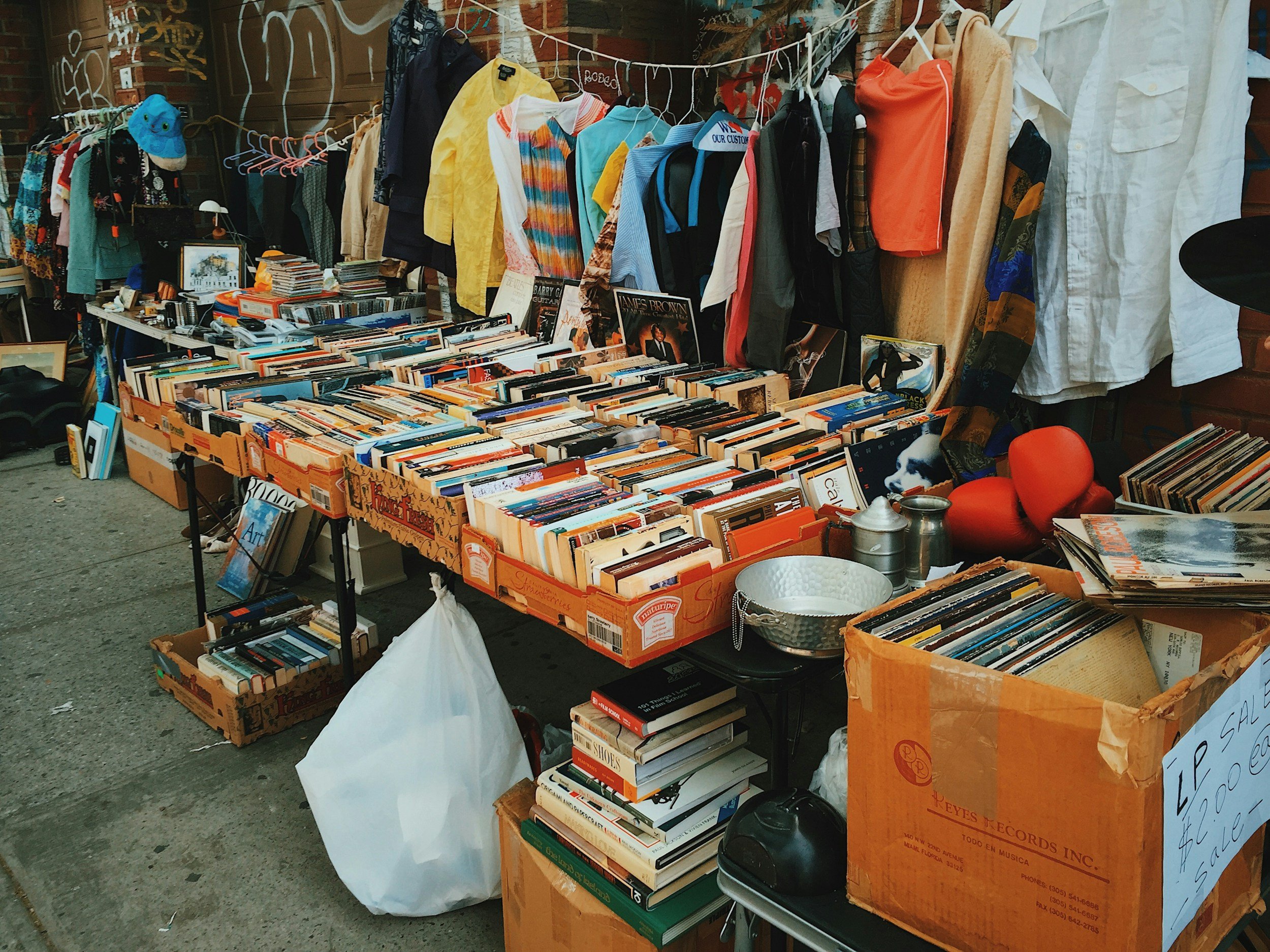
Villeneuve-lès-Avignon
Villeneuve-lès-Avignon is probably the place I'd send anyone who enjoys that sort of morning. The Saturday brocante on Place Charles David doesn't feel polished in the slightest, and I mean that as a compliment. I never arrive with a shopping list because I know it'll be useless within five minutes anyway. Instead I just wander around until something catches my eye, chat to whoever's behind the table if they're in the mood, then carry on. Sometimes I leave empty-handed. Other times I find one small thing that reminds me of the weekend every time I see it at home, and honestly, those are the purchases I remember far more than the expensive antiques I admired but never seriously considered buying!
This is also one of the easiest brocantes to include without a car. Local buses connect Villeneuve-lès-Avignon with central Avignon in just a few minutes, so you don't need to hire a car or rely on awkward rural bus connections simply to spend a couple of hours browsing. Once you've finished, it's an easy walk towards Fort Saint-André, La Chartreuse, or one of the cafés around Place Jean Jaurès, which makes the whole day feel much more relaxed than constantly moving between villages.
If your dates happen to line up, I'd also keep an eye on Carpentras. Throughout autumn the town regularly hosts large grand déballages around the Parking des Platanes, bringing together professional dealers selling everything from antique furniture and Provençal pottery to paintings, old signage and vintage garden pieces. Unlike many one-day village fairs, Carpentras is straightforward to reach by TER train, which makes it one of the easiest larger brocantes to work into a car-free itinerary. I wouldn't travel there expecting one specific item, but if you enjoy spending a couple of hours wandering between dealers without the scale of L'Isle-sur-la-Sorgue, it's a very enjoyable alternative.
One event I always look for before booking a trip is the monthly vide-grenier in Pernes-les-Fontaines. It's nothing like L'Isle-sur-la-Sorgue, and I think that's exactly why I enjoy it. Nobody arrives expecting museum pieces or beautifully presented antiques. You're much more likely to find somebody clearing out a garage, an attic or a family home, which means the tables are full of the sort of things I'd never expect to see in an antique gallery. Old preserving jars, copper pans blackened from years of use, handwritten recipe books, boxes of vinyl records, embroidered tablecloths, café crockery that's missing a cup or two and photographs that make you wonder who the people were. Sometimes I leave without buying anything. Other times I come away with one small thing I wasn't looking for five minutes earlier.
The vide-grenier is usually held on the last Sunday of the month at Aérodrome Edgar Soumille, so it does take a little more planning if you're relying on public transport, but I don't really mind that. It still feels like a Sunday morning that's happening for the people who live there rather than something organised for visitors, and I think that's becoming surprisingly difficult to find.
That's also why I spend far more time looking at village calendars than lists of famous antiques markets. Every autumn, places like Oppède, Lourmarin, Grillon and sometimes Apt quietly fill their calendars with little brocantes that sit alongside harvest weekends, wine festivals and village fêtes. You can spend half an hour looking through old enamelware or vintage linen, then wander across the square because somebody's serving walnut tart, roasting chestnuts or pouring this year's wine. Half the time the brocante isn't even the main event, and I think that's what makes these weekends so enjoyable!
Another thing I've learnt is not to rely too heavily on articles that promise the best brocantes in Provence. Many of the smaller events are organised by local associations, so dates sometimes move and new ones are added quite late. Before every trip I check the municipal event calendar, Brocabrac, the local tourist office and Vide-Greniers.org, even if I already think I know what's happening. More than once I've ended up changing my plans because a village I'd barely heard of was hosting a brocante that weekend.
If you're travelling without a car, I'd also be a little selective about which brocantes you build the weekend around. Villeneuve-lès-Avignon, Avignon, Carpentras and L'Isle-sur-la-Sorgue are all very straightforward because you can step off the train or bus and be wandering through the market a few minutes later. Some of the smaller village vide-greniers are wonderful, but they can also mean a regional bus that only runs a handful of times a day, followed by a walk along country roads before you even reach the first stall. Every now and then that's absolutely worth it, especially if there's a harvest festival or village fête happening at the same time, but most weekends I'd rather spend those extra couple of hours wandering around the town itself than watching the clock for the last bus home.
One habit I've picked up over the years is carrying a bit more cash than I think I'll need. The established antique dealers almost always take cards now, but village vide-greniers are a different story because you're often buying directly from people emptying a garage, a loft or a family home. I've lost count of the number of times I've found something I really wanted only to discover they couldn't take a card. Most of the things I've brought home have cost less than lunch anyway. A faded market basket, embroidered linen napkins that now come out whenever friends visit, a pile of handwritten French recipe cards tucked inside an old cookbook, or a little glazed olive jar that sits on my kitchen shelf. Those kind of finds.
If you're tempted to keep exploring after Provence, Drôme Provençale feels like a very natural next step, with slower villages, excellent markets and even fewer visitors.
I'd stop chasing the biggest market and plan the weekend differently
One thing I'd do differently after spending time in these towns is stop assuming the biggest market automatically makes the best weekend. It sounds logical when you're planning from home. You look at the calendar, find the largest market and build the whole trip around it. I used to think that was the obvious thing to do as well. Now I'm not so sure!
Take L'Isle-sur-la-Sorgue. If antiques are what you're really interested in, I honestly wouldn't feel any pressure to visit on Sunday just because that's what every guide recommends. I'd rather arrive on Thursday, enjoy the weekly market while you can still stop to look around properly, spend the afternoon wandering through the antique galleries around Avenue des Quatre Otages and Le Village des Antiquaires, then stay until Friday when many of the permanent dealers are open again. You end up seeing far more than if you're simply following the Sunday crowds from one stall to the next.
Planning this article actually made me realise that I'd organise an autumn weekend in Provence very differently now than I would have a few years ago.
If someone asked me where to spend three days, I don't think I'd hesitate before recommending Vaison-la-Romaine. Tuesday gives you one of the best markets in Provence, but that's never really the reason I'd stay. I'd stay because I know Wednesday isn't an afterthought. You can spend the morning wandering through the Roman archaeological park while it's still quiet, stop for lunch before heading up into the Haute Ville, or catch a bus towards Gigondas, Vacqueyras or Séguret without feeling as though you've already done everything worth doing in town. By the end of the weekend it never feels like you've simply come for a market. It feels as though you've based yourself somewhere that happens to have an excellent one.
I'd make a completely different choice if food was at the top of my list. In that case I'd book Apt without giving Gordes much thought at all. Gordes is beautiful, and I completely understand why people want to see it, but if you gave me the choice between standing at another viewpoint or wandering through Rue des Marchands with a warm loaf under one arm, a piece of local goat's cheese in my bag and absolutely no plans beyond lunch, I'd choose Apt every single time. Once the market begins winding down I'd wander into Les Soleils de Philippe, call in at La Maison du Fruit Confit, maybe stop at Cave de Sylla on the way back, and enjoy the afternoon without worrying about where I was supposed to be next. That's the version of Provence I find myself wanting to come back to.
If someone asked me to choose between Nyons and one of Provence's better-known market towns, I don't think I'd start by talking about the market at all. I'd ask what they were hoping to do once they'd finished wandering around with a basket in one hand and a coffee in the other. If they wanted to taste different olive oils, browse independent food shops, spend an hour in La Scourtinerie or follow the Sentier des Oliviers out through the groves before heading back into town, I'd point them towards Nyons without thinking twice. The market is what gets most people there. Everything around it is what makes me want to stay.
Planning this article has also reminded me how differently I travel through Provence now compared with a few years ago. I used to think I should see as many famous markets as possible before going home, but these days I'd much rather choose one town and get to know it properly. Provence always looks deceptively compact on a map, yet once you're relying on TER trains and ZOU! buses, moving between villages takes more time than most people expect, and I don't think that's a bad thing. I'd rather spend that extra afternoon wandering into a bakery because something in the window caught my eye, stumbling across a village brocante that wasn't in any guidebook, or ordering another glass of Cairanne because the last bus isn't for another couple of hours.
If you're putting this weekend together by train, this TER train guide will save you a surprising amount of time when you're planning connections!
If you're planning to continue west after this trip, I'd spend a morning in Saint-Rémy as well. This slow morning guide explains exactly why it's worth arriving early.
If this article has convinced you to travel in autumn, you'll probably also want to see how Provence's markets change from spring through winter before choosing your dates.
If I only had one autumn weekend in Provence...
If I only had one long autumn weekend in Provence, I don't think I'd even consider trying to squeeze three different market towns into the same trip anymore. It always sounds achievable when you're planning from home because nothing looks especially far apart on the map, but once you start matching market mornings with TER trains, ZOU! buses and the fact that most markets are busiest at exactly the same time, the whole weekend quickly starts revolving around timetables instead of the places you've travelled to see. I'd rather choose one town, unpack my bag and know I've got enough time to enjoy it properly instead of constantly wondering when I need to leave again.
I'd start in L'Isle-sur-la-Sorgue on Friday afternoon, not because I was trying to fit another market into the itinerary, but because it's one of the easiest places in Provence to settle into for a couple of days. I'd check into my hotel, wander over towards Avenue des Quatre Otages while many of the permanent antique dealers are still open, then make my way back along the canals without really worrying where I was going. That's one of the things I enjoy most about arriving the day before the market. There isn't the same pressure to see everything, so it's much easier to duck into a gallery because something in the window catches your eye, stop for a glass of wine beside the water or take the longer route back through Quai Rouget de Lisle and Rue Carnot simply because the evening light makes the town feel different. By the time people start heading home with fresh bread tucked under one arm and the cafés fill with locals finishing work, it no longer feels like you're arriving in one of Provence's busiest market towns. It just feels like you've arrived in a town where tomorrow happens to be market day.
I'd leave L'Isle-sur-la-Sorgue fairly early on Saturday, partly because it's the easiest day of the week to move around by public transport and partly because I never like arriving at Apt once the market is already in full swing. TER trains and the regional ZOU! buses are still running a much fuller timetable than they do on Sundays, so there's no real pressure to rush. I'd much rather arrive while the traders are still unpacking, before Rue des Marchands, Place Gabriel Péri, Place de la Bouquerie and the little streets around Cathédrale Sainte-Anne are shoulder to shoulder with shoppers. That's also when I find myself buying the things I actually came for instead of whatever happens to catch my eye in the busiest part of the market. A good loaf of bread, a piece of local goat's cheese, walnuts from the Baronnies, maybe a jar of honey if there's still room in my bag, and then, almost without fail, something completely unexpected that I hadn't planned to carry home at all.
By early afternoon a lot of people are already heading back towards the bus station, but that's usually when my favourite part of Apt begins. I'd wander out to La Maison du Fruit Confit while it's quieter and spend a little time there because it's one of the few places that properly explains why candied fruit became such a big part of the town's identity instead of simply selling colourful boxes to tourists. Afterwards I'd drift back towards Les Soleils de Philippe on Rue Eugène Brunel, knowing full well I'll probably lose half an hour browsing books I have no chance of fitting into my suitcase, before finding somewhere around Place du Septier or Rue Saint-Pierre for a late lunch. By then the market has almost disappeared, chairs are being stacked away, and the streets settle back into their normal pace. I think that's when Apt is easiest to understand, because you're no longer looking at one of Provence's biggest Saturday markets. You're simply looking at Apt.
By Sunday, I'd be quite happy not having much planned at all. Partly because the regional ZOU! buses are noticeably less frequent than they are on Saturday, but mostly because I've learnt that my favourite last mornings are usually the ones where I stop looking at maps altogether. If I were staying in Apt, I'd probably hire an e-bike or book a taxi out to Domaine de Font Alba if I'd arranged a tasting, or simply wander over to Cave de Sylla if I was travelling east later that afternoon. If I were in Nyons, I'd happily spend the morning between Vignolis and La Scourtinerie, especially if the olive harvest had already begun and the first new oils were appearing on the shelves. None of that sounds particularly exciting on paper, but that's never really been the point. By the last morning, I'm usually much happier slowing the weekend down than trying to squeeze in one final attraction before heading for the station.
I also never leave Provence empty-handed, although what comes home with me is rarely the sort of thing you'd find in a souvenir shop. It's usually whatever I've enjoyed eating or drinking over the weekend. A piece of Picodon wrapped in paper, walnuts from the Luberon, a bottle of olive oil from Nyons, fruit confit from Apt, or a loaf of bread that somehow survives the journey home better than it probably should. Those are the things that end up lasting longest anyway because a few weeks later I'll open the cupboard, find that bottle of olive oil or the last pieces of candied fruit, and immediately remember where I bought them! Love that.
If you like the quieter side of Provence, there are plenty more places that never seem to make the usual itineraries. I put together my favourite lesser-known market towns after several trips around the region.
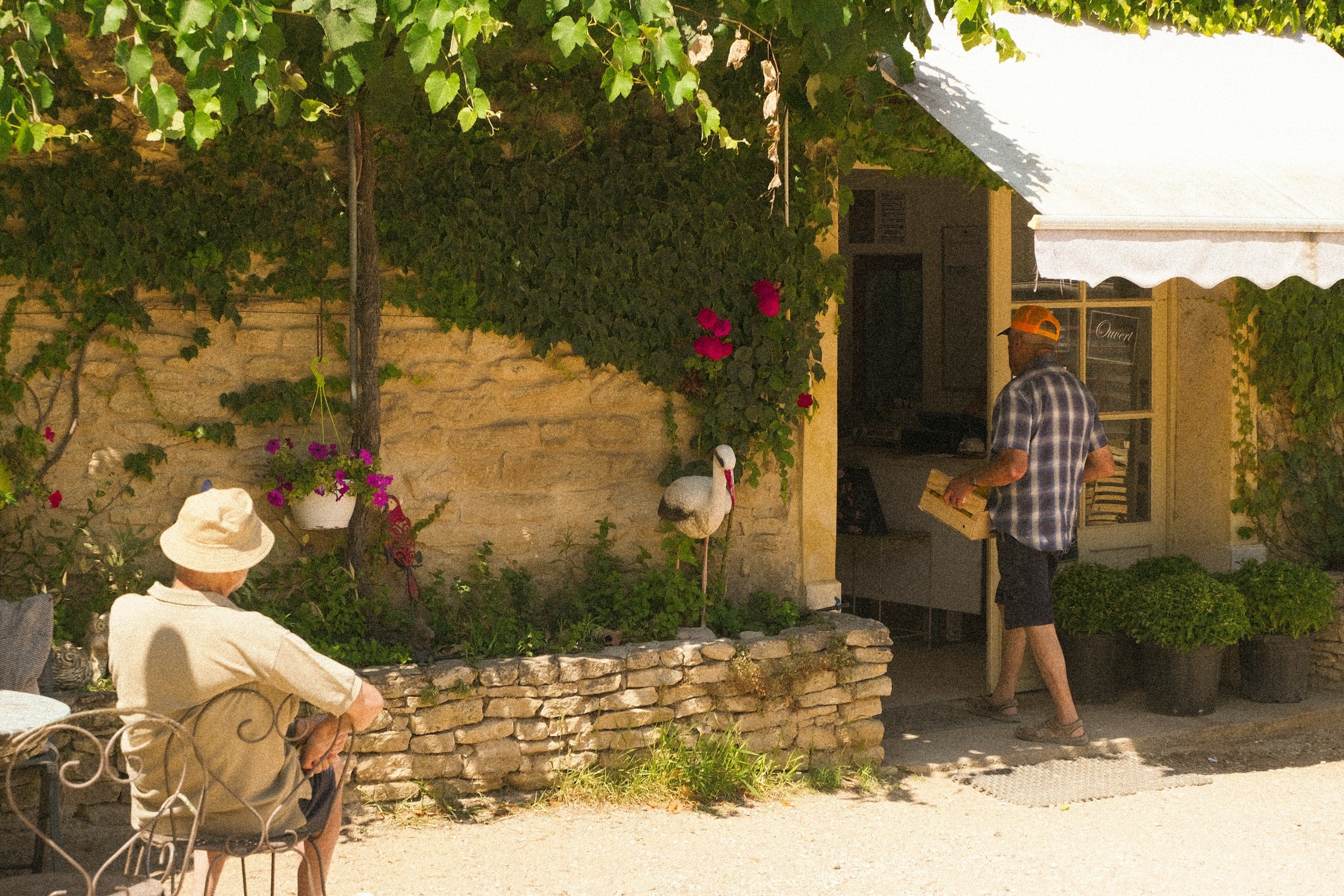
Crowds tend to put you off…? Then you'll probably enjoy these quieter market towns even more than some of Provence's famous names.
FAQs about Provence in autumn
Which Provençal market town is best in autumn?
I honestly don't think there's one right answer because the towns all suit slightly different trips.
If food is your priority, I'd head to Apt, where the Saturday market reflects what's happening across the Luberon during harvest season and the town still feels busy long after summer has ended. If you're more interested in antiques, L'Isle-sur-la-Sorgue is difficult to beat, especially if you stay long enough to explore the permanent dealers instead of only visiting the Sunday market. For a longer weekend, Vaison-la-Romaine gives you the widest mix of markets, Roman history, cafés and nearby wine villages, while Nyons is the place I'd choose if olive oil, local food and a slower pace matter more than famous sights.
Is autumn a good time to visit Provence's markets?
I actually think it's one of the best times of year.
The markets don't suddenly disappear after summer, but they do start feeling more local again. You'll still find the famous weekly markets in towns like Apt, Vaison-la-Romaine and L'Isle-sur-la-Sorgue, but the produce changes with the season, harvest festivals begin appearing on village calendars and it's much easier to browse without spending the whole morning moving with large crowds. For me, autumn is when Provence starts feeling less like a destination people are visiting and more like a region going about everyday life.
Can you explore Provence's market towns without renting a car?
Yes, much more easily than many people expect, although some towns are definitely easier than others.
L'Isle-sur-la-Sorgue has a TER railway station within walking distance of the centre, Apt is well connected by the regional ZOU! coach network, Vaison-la-Romaine is easy to reach by bus from Orange or Avignon, and Villeneuve-lès-Avignon is only a short local bus ride from central Avignon. Where people usually run into problems isn't reaching the towns themselves. It's trying to visit several villages in the same day. Public transport works best when you choose one town as your base instead of constantly moving around.
Is L'Isle-sur-la-Sorgue better on Thursday or Sunday?
If it's your first visit and you really want to experience the famous outdoor brocante, Sunday is still worth seeing.
If you're hoping to enjoy the town itself, I'd honestly choose Thursday. The weekly market is still excellent, the streets are much easier to walk through and you'll have more time to explore the permanent antique dealers around Avenue des Quatre Otages and Le Village des Antiquaires without feeling as though you're moving with one enormous crowd.
Which Provençal market is best if I love food more than antiques?
I'd choose Apt.
The Saturday market isn't simply about buying souvenirs or local specialities. It reflects what growers across the Luberon are producing that week, so in autumn you'll see walnuts, late figs, mushrooms, squash, goat's cheese, honey and plenty of regional produce arriving from the surrounding countryside. It feels like a market people genuinely use rather than one created mainly for visitors.
Which town is best if I want antiques but don't like huge crowds?
I'd look beyond L'Isle-sur-la-Sorgue's Sunday market.
Villeneuve-lès-Avignon has a much smaller Saturday brocante that's easy to reach from Avignon, while Carpentras regularly hosts larger dealer weekends throughout autumn if your dates happen to line up. They're completely different experiences from L'Isle, but that's part of the appeal. They feel more like places people browse because they enjoy antiques, not because they've travelled to see a famous market.
Are Provence's village brocantes worth visiting?
Absolutely, as long as you go with the right expectations.
A village vide-grenier is very different from a professional brocante. You're much more likely to come across old kitchenware, books, linen, baskets, garden tools or furniture being cleared from family homes than carefully restored antiques. That's exactly why I enjoy them. You never quite know what you'll find, and they often take place alongside harvest festivals or village celebrations that most international visitors never hear about.
When do olive harvests start in Provence?
It depends on the area and the weather, but most olive harvesting begins around November rather than early autumn.
If you're visiting in late September or October, you'll usually see towns preparing for the season rather than actively harvesting. That's still a lovely time to visit because olive mills begin reopening, markets start filling with new-season products and villages like Nyons naturally shift towards olive growing as winter approaches.
How many market towns should you visit during one weekend?
Fewer than you probably think.
It's very tempting to try squeezing three or four famous markets into one trip, especially when they look close together on a map. Personally, I'd choose one main market town, stay for two or three nights and use the extra time to visit a nearby vineyard, brocante or smaller village instead. Provence is much more enjoyable when you're not constantly checking the next bus or train.
Where can I find autumn brocantes in Provence?
The larger antiques destinations are easy to plan around because they happen regularly, but the smaller village brocantes change every year.
Before travelling, I usually check the local tourist office, municipal event calendars, Brocabrac and Vide-Greniers.org alongside my accommodation plans. Some of the best autumn brocantes take place in villages like Oppède, Pernes-les-Fontaines, Lourmarin or Grillon, and they're often announced only a few weeks beforehand. Those are usually the mornings that end up being the most memorable.
Which Provence market town is easiest to reach by train?
If you're relying on trains rather than hiring a car, L'Isle-sur-la-Sorgue is the easiest place to start. The TER station is only a short walk from the canals and the historic centre, so you can arrive with a small suitcase and be wandering the market streets within minutes. Carpentras is also served by TER trains from Avignon, while Apt, Nyons and Vaison-la-Romaine all rely on regional buses for the final part of the journey.
What's the difference between a brocante and a vide-grenier?
People often use the words interchangeably, but they're quite different.
A brocante usually brings together professional antique dealers selling furniture, paintings, ceramics, linen and decorative pieces. A vide-grenier is much more like a village clearing out its attics and garages. You'll often find old books, enamel kitchenware, baskets, vintage clothes, café crockery and family furniture alongside things that have very little value beyond the memories attached to them.
If I had to choose just one, I'd probably pick a good village vide-grenier. You never really know what you'll find, and that's half the fun.
Which market town is best for antiques?
For serious antiques, L'Isle-sur-la-Sorgue is still in a league of its own.
If you're hoping to browse beautifully restored furniture, architectural salvage, mirrors or decorative arts, that's where I'd go.
If you're more interested in affordable vintage finds, old household objects and the thrill of discovering something unexpected, I'd spend more time looking at village brocantes and vide-greniers instead.
Is October a good month for Provence markets?
I'd argue it's one of the best.
The weekly markets are still running as normal, but the atmosphere changes completely. Instead of lavender souvenirs and summer crowds, you'll start seeing walnuts, mushrooms, squash, late figs, new olive oils, local wines and seasonal produce taking over the stalls. The temperatures are also much more comfortable if you're planning to spend several hours walking around a market.
Which Provence market town has the best cafés?
If cafés are just as important to you as the market itself, I'd probably choose Vaison-la-Romaine.
The Tuesday market is excellent, but what makes the town stand out is that people don't disappear once it's over. The cafés around Place Montfort, the restaurants near Pont Romain and the wine bars scattered through the lower town mean you can happily spend the rest of the afternoon without feeling like the day has finished.
Are Provence markets open all year?
Many of the weekly markets are.
Places like Apt, Vaison-la-Romaine, Nyons and L'Isle-sur-la-Sorgue continue holding their main weekly markets throughout the year, although the size of the market and the produce naturally change with the seasons.
It's the smaller brocantes, harvest fairs and village vide-greniers that are more seasonal and often only appear on local calendars a few weeks beforehand.
How early should you arrive at a Provençal market?
Earlier than most guidebooks suggest.
If I'm travelling specifically for the market, I try to arrive between 8:00 and 8:30. The stalls are already open, the producers still have their best selection and it's much easier to browse before the busiest part of the morning. By late morning, especially in places like Apt or L'Isle-sur-la-Sorgue, the narrow streets can become surprisingly busy.
Which market town is best if you enjoy cooking?
I'd choose Apt.
The market feels like somewhere people shop for the week rather than somewhere designed around souvenirs, so you'll find excellent cheeses, bread, olives, honey, seasonal vegetables, walnuts and fresh fruit alongside local producers selling directly from their farms. If you enjoy renting an apartment and cooking with local ingredients, it's one of the easiest towns to build a weekend around.
Are Provence markets expensive?
Not necessarily.
Food is often very reasonably priced, especially if you're buying fruit, vegetables, bread or cheese directly from producers. Antiques are a different story. Professional dealers in L'Isle-sur-la-Sorgue usually know exactly what they're selling, so prices often reflect that. Smaller village brocantes and vide-greniers are where I've found some of my favourite affordable pieces.
Can you combine wineries and market towns without a car?
Yes, but I'd keep your expectations realistic.
Towns like Vaison-la-Romaine and Apt make excellent bases because nearby vineyards are only a short taxi ride or organised tour away. I wouldn't try to squeeze a winery visit into the same morning as a major market, though. The experience is much more enjoyable if you spread it across two days instead of trying to rush both.
Do Provence markets still feel local?
Many of them do, especially once summer is over.
The famous markets naturally attract visitors, but in autumn you'll also see plenty of locals shopping for bread, cheese, vegetables and whatever happens to be in season. That's one of the reasons I enjoy travelling at this time of year. It feels much closer to everyday life than peak summer.
How much time should you allow for a Provence market?
I'd set aside at least half a day.
Not because you'll spend four hours shopping, but because the market usually becomes the start of everything else. Some of my favourite memories have come after the stalls began packing away, when I wandered into a bakery I'd missed earlier, discovered a small brocante down a side street or found a café that suddenly had empty tables once the crowds disappeared. Those quieter hours are just as much a part of the experience as the market itself.