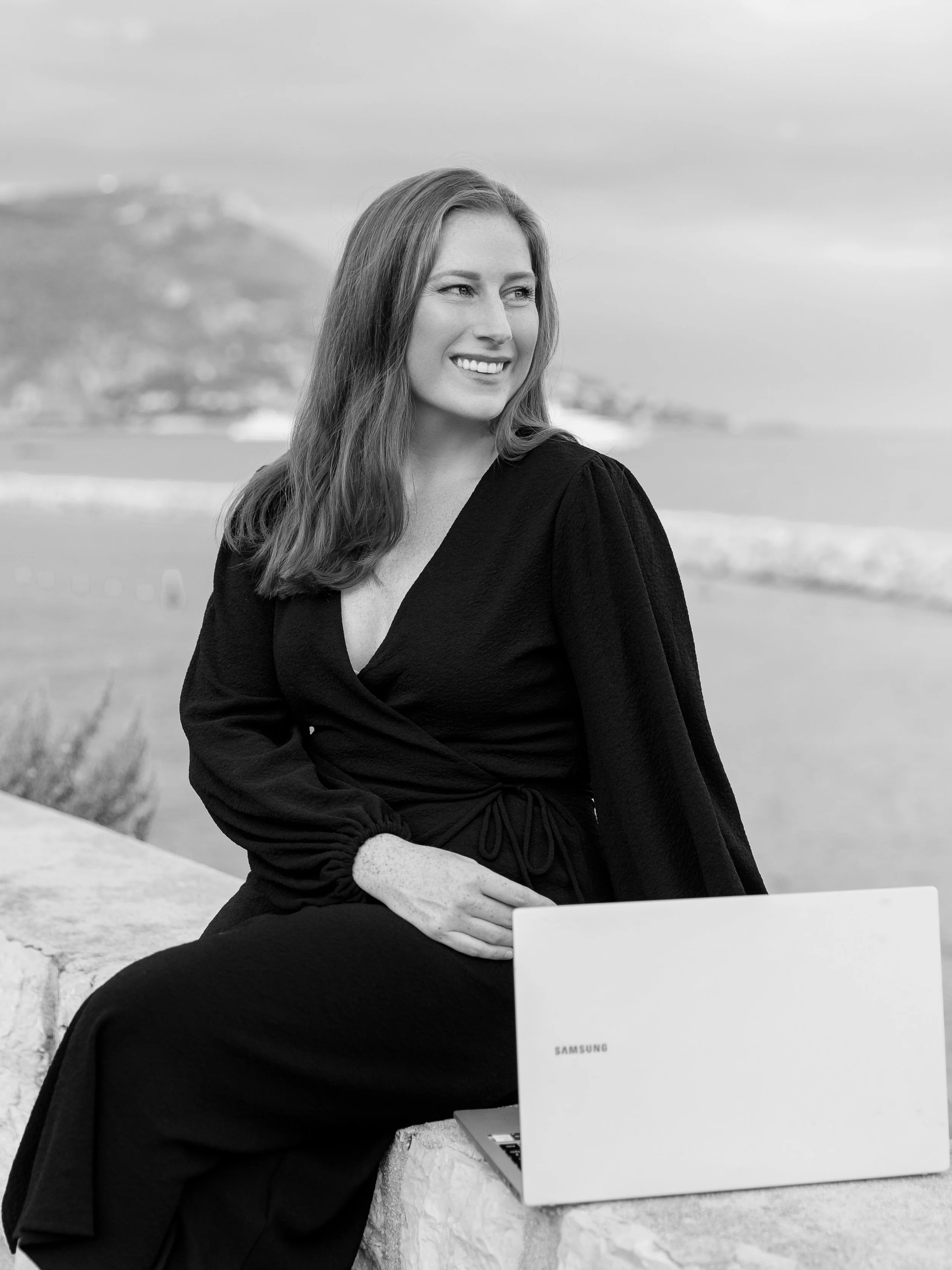
Don't stay on the train. These southern German towns are worth stopping for
A lot of southern Germany looks wonderfully simple when you're planning a trip from home.
You open Google Maps, zoom in on Bavaria or Baden-Württemberg, and start spotting attractive-looking towns along railway lines. The station appears close to the centre. The photographs look promising. Before long you've built an itinerary around half a dozen places that all seem as though they'll offer roughly the same experience.
Then you arrive and realise they don't…
Some towns are genuinely easy without a car, where you can step off the train, walk ten minutes to your hotel, and spend the next couple of days wandering between cafés, riverfront paths, old market squares and neighbourhood streets without thinking about transport again. Others look equally appealing online but involve awkward bus connections, stations that sit much farther from the centre than expected, or historic districts that become surprisingly quiet once the day visitors disappear.
This part of Germany is one of the easiest regions in Europe to explore by rail, but not every stop works equally well as an overnight destination, which is often where the difference lies. A place can be enjoyable for two hours and still feel difficult to spend two nights in. Another might seem fairly ordinary when you first arrive, only to become much more interesting once the afternoon crowds leave, the market stalls pack away, and the town settles into its usual routine.
The towns in this guide aren't here because they're the most famous places in southern Germany. In fact, some travellers pass through them without staying at all. They're here because they work particularly well as train stops, whether that's because the station sits exactly where you want it to, because the town becomes more enjoyable after dark, or because there is enough going on to justify slowing down for a day or two before continuing further along the line.
If you're putting together a rail itinerary through southern Germany and trying to decide where it's actually worth getting off the train rather than simply changing trains, these are the places I'd look at first.
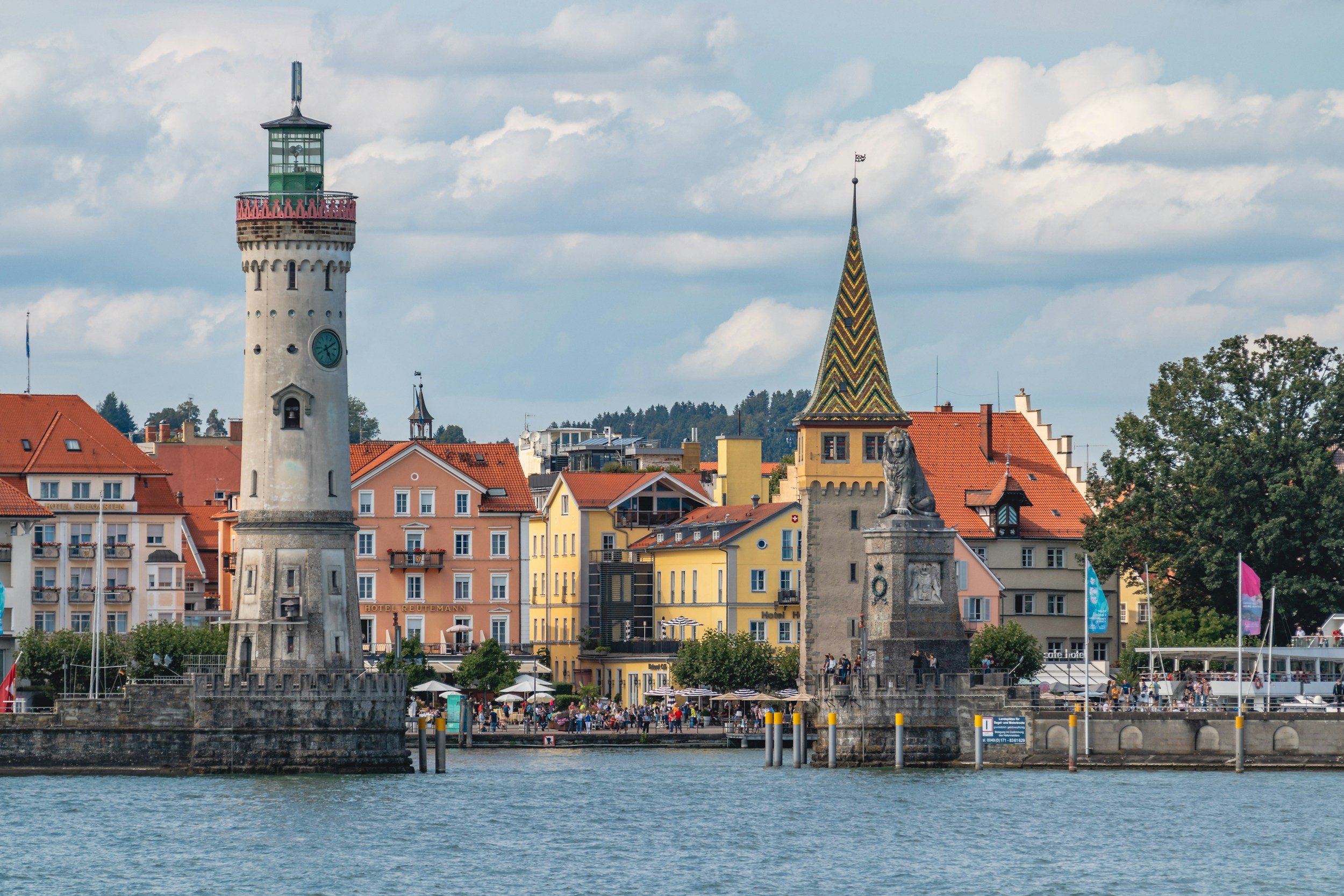
Lindau: where Lake Constance, Austria and Switzerland all feel within reach
If you're arriving from Munich, Lindau is one of the easier places in southern Germany to reach entirely by rail, with direct connections taking a little over two hours depending on the service. Travelling from Zurich is even simpler, which is one reason you'll hear a mixture of German, Swiss German and international visitors around town, particularly during summer. Unlike some lake destinations where the station feels disconnected from the centre, Lindau-Insel places you right where you want to be. Within a few minutes of stepping off the train you'll find yourself walking towards Maximilianstraße, passing the Kunstmuseum Lindau and heading naturally towards the waterfront.
The harbour tends to attract most of the attention, but some of the nicest parts of the island sit slightly beyond the routes most visitors follow. Around Gerberschanze, for example, you'll find one of the quieter corners of the old town, where benches face the lake and the views stretch across the water towards Austria. Continue a little farther and you'll reach the western side of the island, where the atmosphere becomes noticeably more residential and where evening walks often feel entirely different from the busier waterfront near the lighthouse.
Lindau is also one of those places where the cafés people return to are not always the ones with the best views. Grossstadt Café has built a loyal following for its coffee and breakfast, while Café Augustin tends to attract a mix of locals and visitors who have wandered away from the harbour. If you're staying overnight rather than passing through, you'll probably find yourself spending more time in places like these than in front of the lighthouse.
The same is true in the evening. Many visitors naturally gravitate towards restaurants overlooking the water, yet some of the more memorable meals can be found slightly inland. Valentin has become something of a favourite among regular visitors, while Wissingers im Schlechterbräu offers a more traditional atmosphere that feels rooted in the town rather than the tourist season. Neither requires a special detour, which is partly the point. Lindau works best when you're not constantly chasing attractions.
What often surprises people is how many small details reveal themselves once you've been here for a full day. You start noticing the independent shops tucked between larger storefronts on Maximilianstraße, the residents carrying flowers home from the market, the way people gather around the harbour for sunset but disappear towards quieter streets afterwards, and how often your walks eventually lead you back to the lake whether you intended them to or not.
If you have a second day, follow the shoreline towards Bad Schachen rather than returning immediately to the harbour. Lindenhofpark is one of the nicest places around Lake Constance to spend an unhurried hour, particularly on clear mornings when the mountains appear across the water. It isn't the sort of place people usually rush to photograph, which is probably one reason it remains so enjoyable.
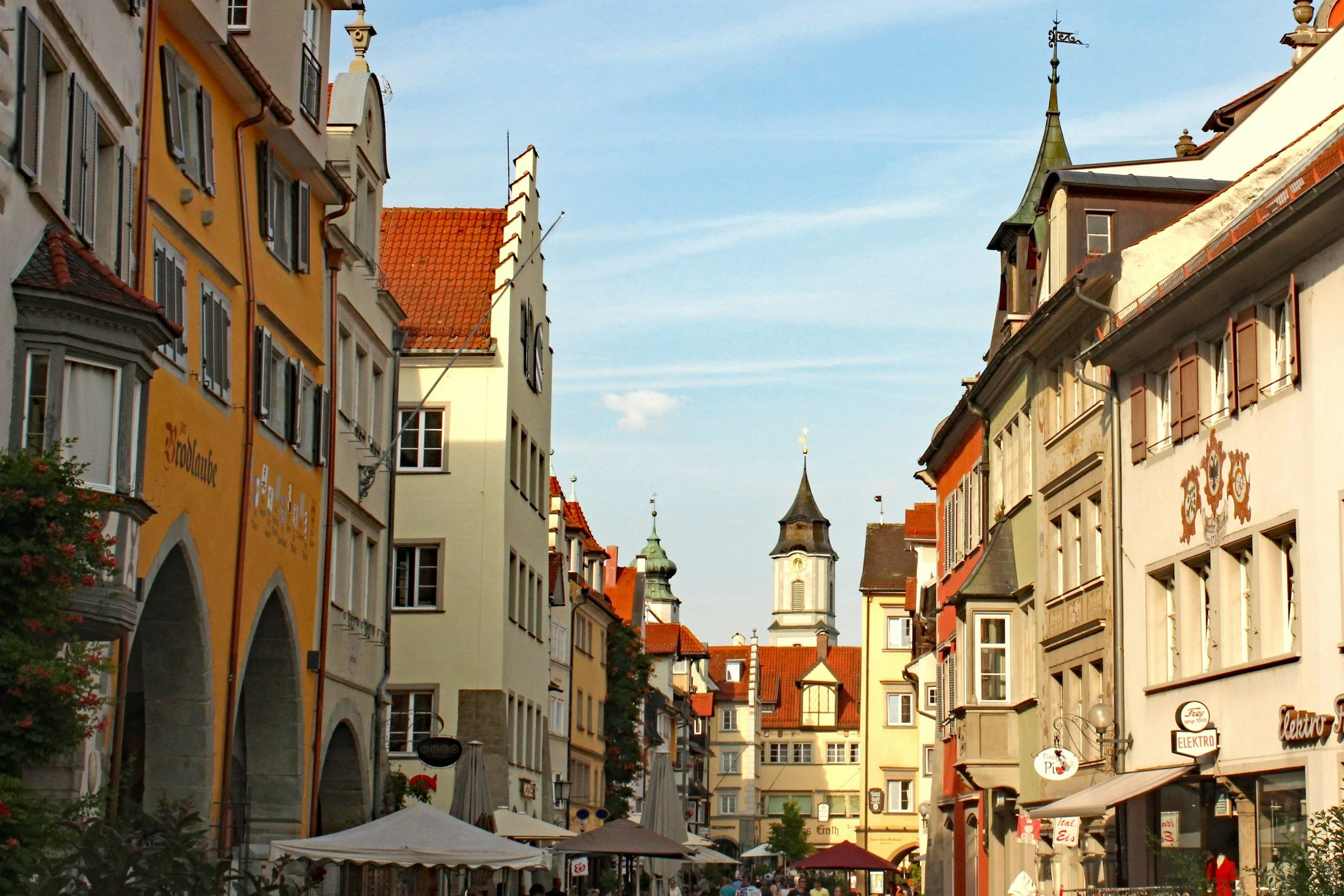
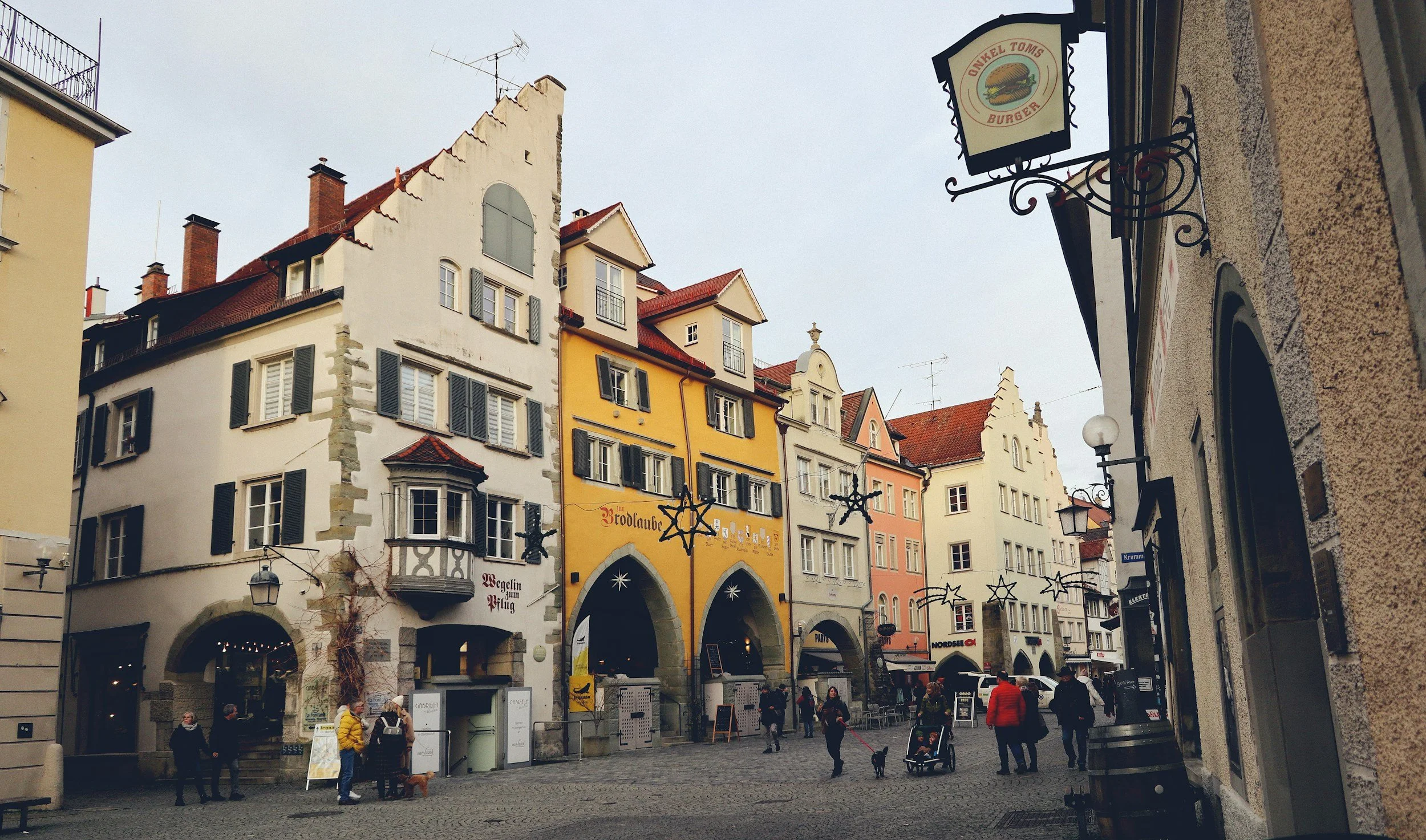
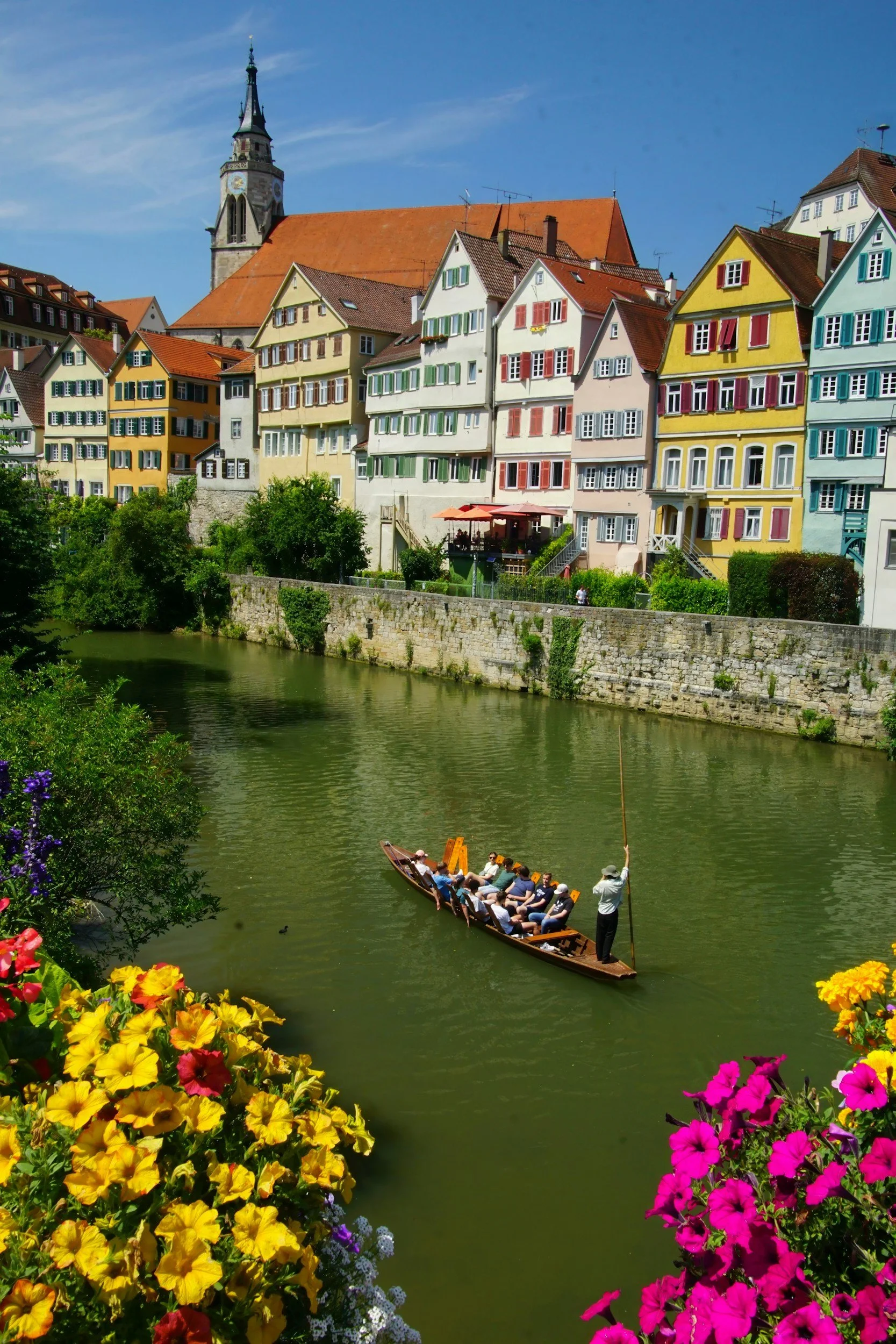
Tübingen: the stop that quietly steals two days from your itinerary
A lot of people arrive in Tübingen through Stuttgart and are standing in the old town less than fifteen minutes after leaving the station, which is one of the reasons the town works so well without a car. You don't really have to think about logistics once you're here.
The first thing I noticed wasn't the castle or the river. It was the number of bookshops!
Not the kind that exist because visitors might wander in while sightseeing, but actual bookshops that seem to be doing a steady trade on a Tuesday morning. Osiander occupies a huge building in the centre and always seems busy, while places like Buchhandlung Gastl feel more like somewhere you'd pop into regularly if you lived nearby. The university is probably part of the reason, but whatever the explanation, books seem to occupy more space in Tübingen than they do in most towns this size.
The same thing happens with cafés.
Around Holzmarkt and the streets leading down towards the Neckar you'll pass places that are already full before lunchtime. Café Lieb is one of those places that everybody seems to know. Café Hanseatica feels a little quieter. Then there are smaller places you only notice because every outdoor table is occupied despite the fact that it's eleven o'clock on a Wednesday.
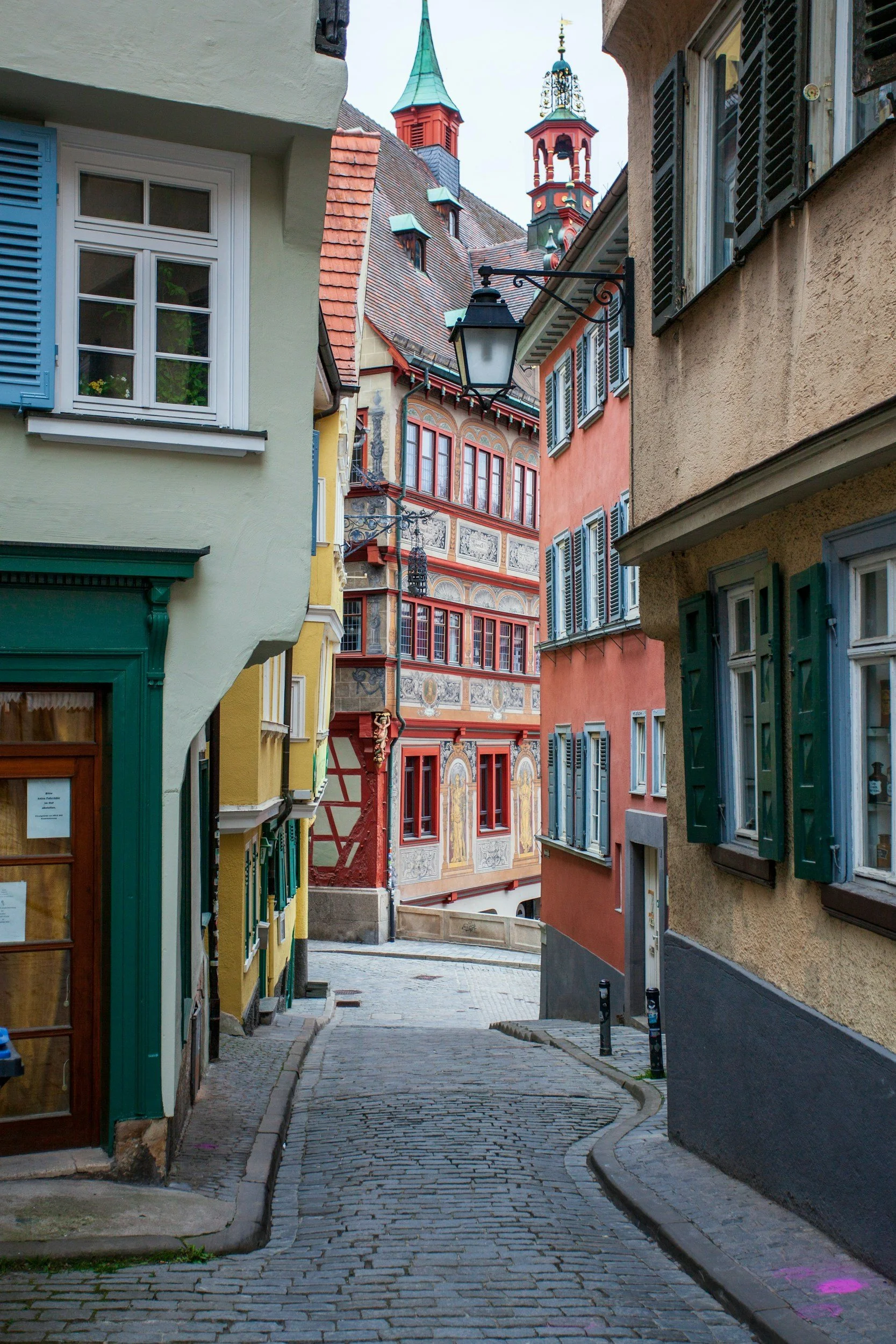
If you keep walking uphill, eventually you'll end up around Burgsteige whether you planned to or not. The route towards Schloss Hohentübingen isn't difficult, but it's steeper than it looks when you're standing down in the centre. The climb passes old houses, narrow staircases and small corners of town that most people don't photograph because they're too busy heading for the castle itself…
Market days change the atmosphere completely. By mid-morning on Wednesdays and Saturdays, Marktplatz is full of flower stalls, local produce, bread, cheese and residents doing their weekly shopping. Come back a few hours later and the square has almost reset itself. The stalls disappear, tables reappear outside restaurants and you'd never know the market had been there.
Most visitors spend their time between Marktplatz, Holzmarkt and the Neckar, which makes sense because that's where much of daily life happens. The riverbanks around Neckarinsel fill up quickly once the weather is decent. What surprised me more was how quickly things quieten down once you leave those areas behind. Around Nonnenhaus you'll find smaller independent businesses, quieter streets and far fewer people wandering around with maps in their hands. It isn't far away. Most people simply never make it there.
The food scene is actually better than you might expect from a town this size. Mauganeschtle has been serving Swabian dishes for years, Weinstube Forelle remains a local favourite near the river, and around Haagtor you'll find smaller restaurants and wine bars that feel much more neighbourhood than destination.
If you've got a second day available, Bebenhausen is only a short bus ride away and feels completely detached from the university atmosphere back in town. One moment you're surrounded by students and bicycles, the next you're walking past monastery buildings and forest paths - and that's probably why Tübingen is difficult to squeeze into a quick stop.
Not because there's one major attraction you have to see, but because every time you think you've covered the town, another street, café, bookshop or corner of the river seems to pull you somewhere else.
If the university-town atmosphere in Tübingen was what appealed to you most, Görlitz offers another side of Germany that many international visitors completely overlook.
Not every memorable German rail journey heads south. If you're debating between mountains and coastline for your next trip, these North Sea islands offer a completely different pace.
If you're turning this train trip into a longer holiday and still deciding where to stay, these boutique stays are some of the most interesting accommodation options we've come across in Germany.
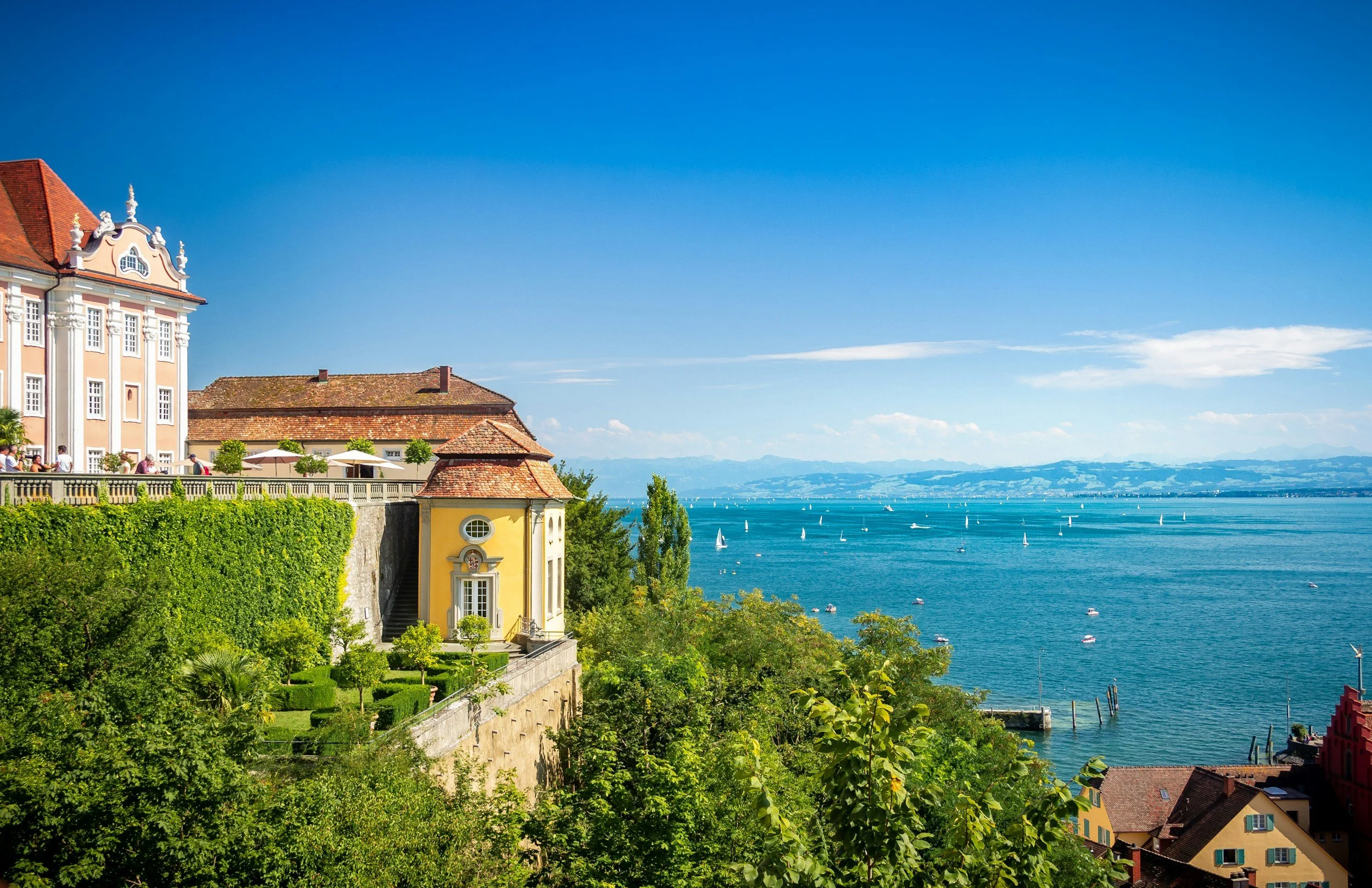
Meersburg: where the day feels completely different from the evening
If you're travelling around southern Germany by train, there's a good chance you'll arrive in Meersburg via Friedrichshafen and cross the final stretch by ferry, which is part of the reason so many people underestimate the town. Most passengers step off the boat, spend a few hours exploring, have lunch somewhere overlooking the lake and then join the queue for the next crossing a few hours later. By the middle of the day, particularly in summer, it can feel as though the entire waterfront is moving to the same timetable.
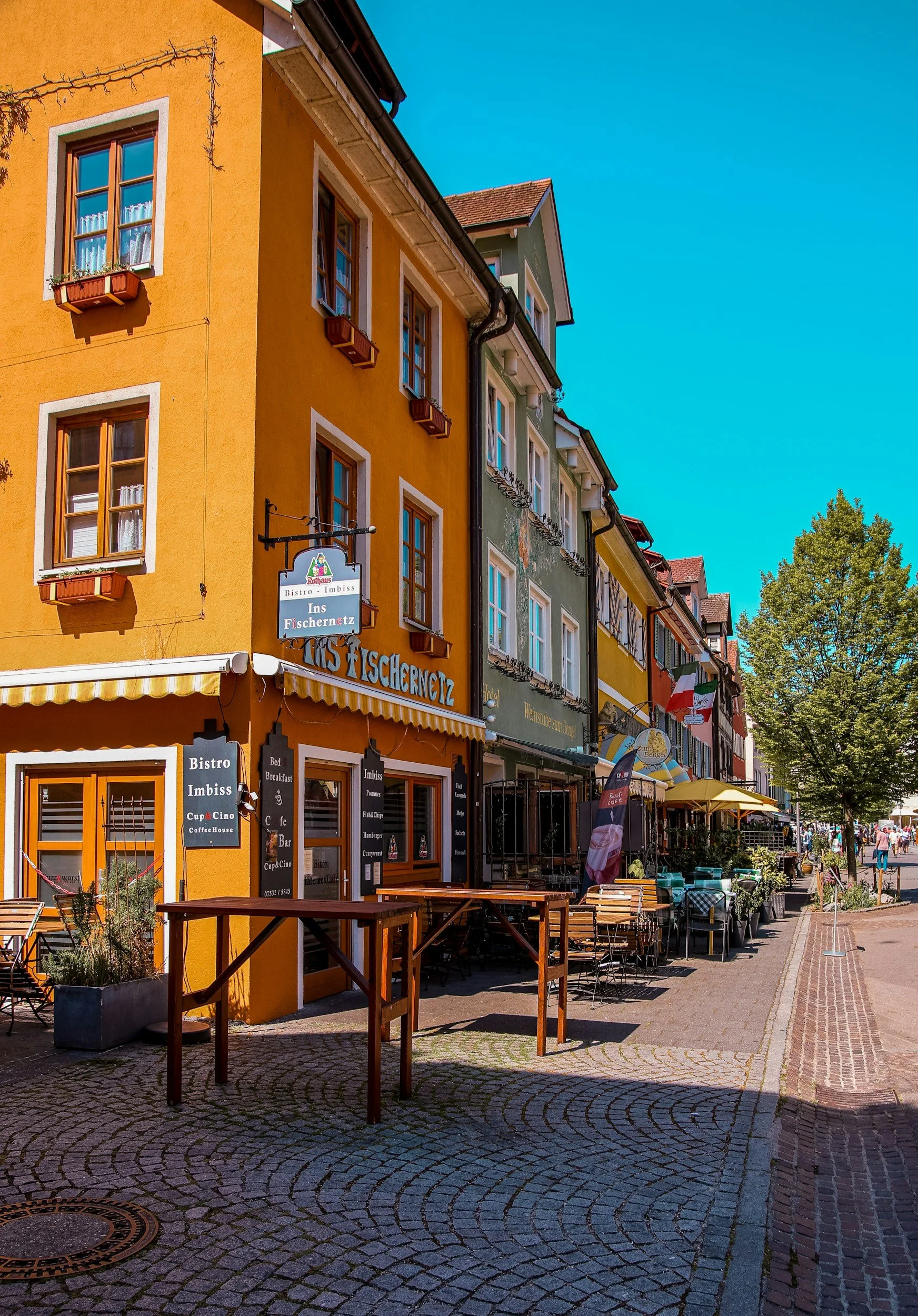
The first thing you'll notice when you arrive is that Meersburg isn't really a waterfront town at all, at least not in the way people expect. The promenade, harbour and ferry terminal sit at the bottom of the hill, but most of the character is up above in the older part of town where steep cobbled streets connect wine taverns, small squares and buildings that have been standing here for centuries. The climb catches people off guard because everything looks so compact from the water, yet within ten minutes of leaving the ferry you'll find yourself walking uphill through streets that feel completely removed from the bustle below.
Most visitors make a beeline for the castle, which makes sense because it's one of the oldest inhabited castles in Germany, but some of the nicest parts of Meersburg sit between the main sights rather than at them. I found myself spending far more time wandering around streets like Winzergasse, Vorburggasse and the lanes branching away from Marktplatz, where vine-covered walls, old wooden shutters and tiny courtyards seem to appear unexpectedly between restaurants and wine taverns. It's also where you'll find many of the independent businesses that give the town its personality, including Buchhandlung Seeufer, a local bookshop that feels refreshingly unchanged in a world where so many historic centres have become dominated by souvenir stores.
The wine culture here isn't something that's packaged up for visitors. It's simply woven into daily life. Vineyards begin almost immediately above the town and continue across the surrounding slopes, which means local wines appear everywhere, from restaurant menus to small wine shops tucked into corners of the old town. Staatsweingut Meersburg has been producing wine here for hundreds of years and is worth knowing about even if you're not planning a tasting because it helps explain why the landscape looks the way it does and why so much of the town revolves around wine rather than tourism.
One of the walks I enjoyed most started above the town and followed the vineyard paths towards the edge of the slopes overlooking Lake Constance. Most people stay close to the castle terraces, which means these paths remain surprisingly quiet, especially early in the morning when the lake is still calm and the ferries haven't started moving back and forth across the water. On clear days you can see all the way towards the Swiss shore, while the Alps sit in the distance behind it all. The views are wider than anything you'll get from the castle and somehow feel less staged because you're sharing them with local dog walkers and vineyard workers rather than tour groups.
You'll probably end up stopping for coffee more than once here, partly because the hills have a habit of making every second break feel justified and partly because there are enough places tucked into the old town that it's difficult to walk past them all. Café Gross is usually one of the busiest spots from the morning onwards, especially if the weather is good, while Café Am Schlossplatz has outdoor tables that are perfect for people-watching when the streets start filling up later in the day. I also found myself drawn towards the smaller places hidden among the lanes around Marktplatz where people seem far less interested in catching the next ferry and far more interested in stretching out a conversation for another hour.
The difference between the waterfront and the upper town becomes particularly obvious once you've been in Meersburg for a day or so. Down by the lake you'll see people checking ferry times, looking at maps and trying to fit everything into an afternoon. Up around Vorburggasse, Kirchstraße and the smaller streets behind the castle, people seem to move through the day differently. Shop owners chat in doorways, wine deliveries appear outside restaurants and outdoor tables stay occupied long after the lunch rush has ended.
Dinner is where I'd stay up in the old town. Winzerstube zum Becher has been around for generations and feels exactly like the sort of place you'd hope to find in a wine-growing town like this, while Casala is a good option if you're in the mood for something a little more contemporary without losing the local connection. If lake fish is on the menu, you'll see plenty of whitefish and perch from Lake Constance appearing throughout town, often alongside wines produced within walking distance of where you're sitting.
If you have time before dinner, it's worth wandering through the streets around the Obertor and Marktplatz where some of the smaller independent businesses are tucked away. You'll find local wine shops, delicatessens selling regional products and small galleries that many visitors walk straight past on their way to the castle. Galerie Bodenseekreis is one worth knowing about, particularly if you're interested in regional artists, while the streets themselves are often just as interesting as whatever you're heading towards.
One of my favourite viewpoints wasn't actually at the castle at all. Following the vineyard paths above town towards the Staatsweingut gives you a much broader view across the lake, and because most visitors stay close to the centre, it's surprisingly easy to find yourself standing there with only a handful of other people around. On clear days you can see across to Switzerland, ferries crossing the lake below and rows of vines stretching back towards the town, which does a much better job of explaining why Meersburg developed the way it did than any information board ever could.
There are also a few cultural surprises tucked away between the wine taverns and restaurants. The Bibelgalerie is often overlooked entirely, while Galerie Bodenseekreis regularly showcases regional artists and provides a welcome change of pace if you've already spent a day walking through vineyards and historic streets. Neither is likely to be the reason you visit Meersburg, but both help explain why the town works better as an overnight stop than many people expect.
If you're still in Meersburg towards the end of the afternoon, you'll notice people gradually making their way back towards the ferry terminal. The streets don't become empty, but they do become easier to walk through. You stop having to move around groups taking photos, restaurant staff start setting tables for the evening and suddenly it feels like most of the people around you are actually staying in town.
I found myself spending much more time in the upper town once the afternoon rush was over. The streets around Marktplatz, Vorburggasse and Winzergasse felt completely different when there weren't hundreds of people moving between the ferry and the castle. You could wander without constantly stepping aside, browse a shop because it looked interesting rather than because you needed a break from the crowds, or stop for a glass of local wine without feeling as though everyone around you was watching the clock.
If you're travelling around southern Germany by train, there's a good chance you'll arrive in Meersburg via Friedrichshafen because that's the easiest route for most people. The train gets you as far as Friedrichshafen Stadt, and from there it's a short walk to the ferry terminal where boats cross Lake Constance throughout the day. It's one of those arrivals that's actually worth paying attention to rather than treating as a connection because the vineyards, church towers and hillside houses of Meersburg gradually come into view long before the ferry reaches shore.
That's also why so many people only spend a few hours here. The crossing is easy, the old town is compact and it's tempting to squeeze it into a day trip before heading somewhere else around the lake. By lunchtime the waterfront is usually full of people doing exactly that.
Southern Germany isn't the only part of Europe that works brilliantly without a car. If you're already thinking ahead to colder months, Leiden in winter is one of the easiest city breaks to combine with train travel.
If the towns in this guide have you looking at train routes through Germany already, these fairy-tale towns might help narrow down where to go next.
Füssen: the town most people miss while visiting Neuschwanstein
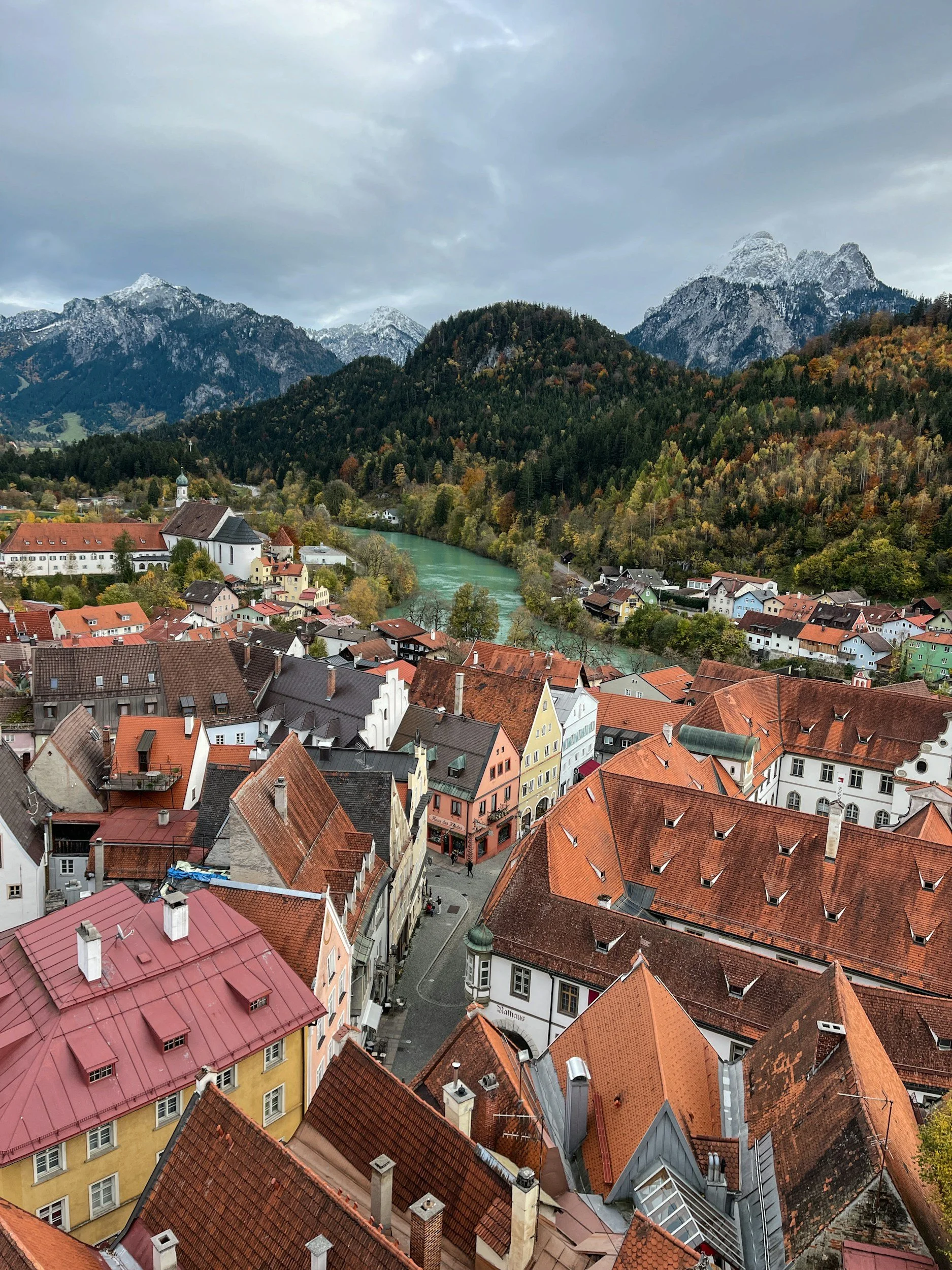
One thing I noticed fairly quickly is that most visitors rarely make it beyond the section between Reichenstraße and the bus stops heading towards Hohenschwangau. If you spend any time around the smaller streets behind St. Mang's Abbey, particularly around Brunnengasse and the quieter residential lanes leading towards the Lech, the number of people drops off surprisingly fast even during summer.
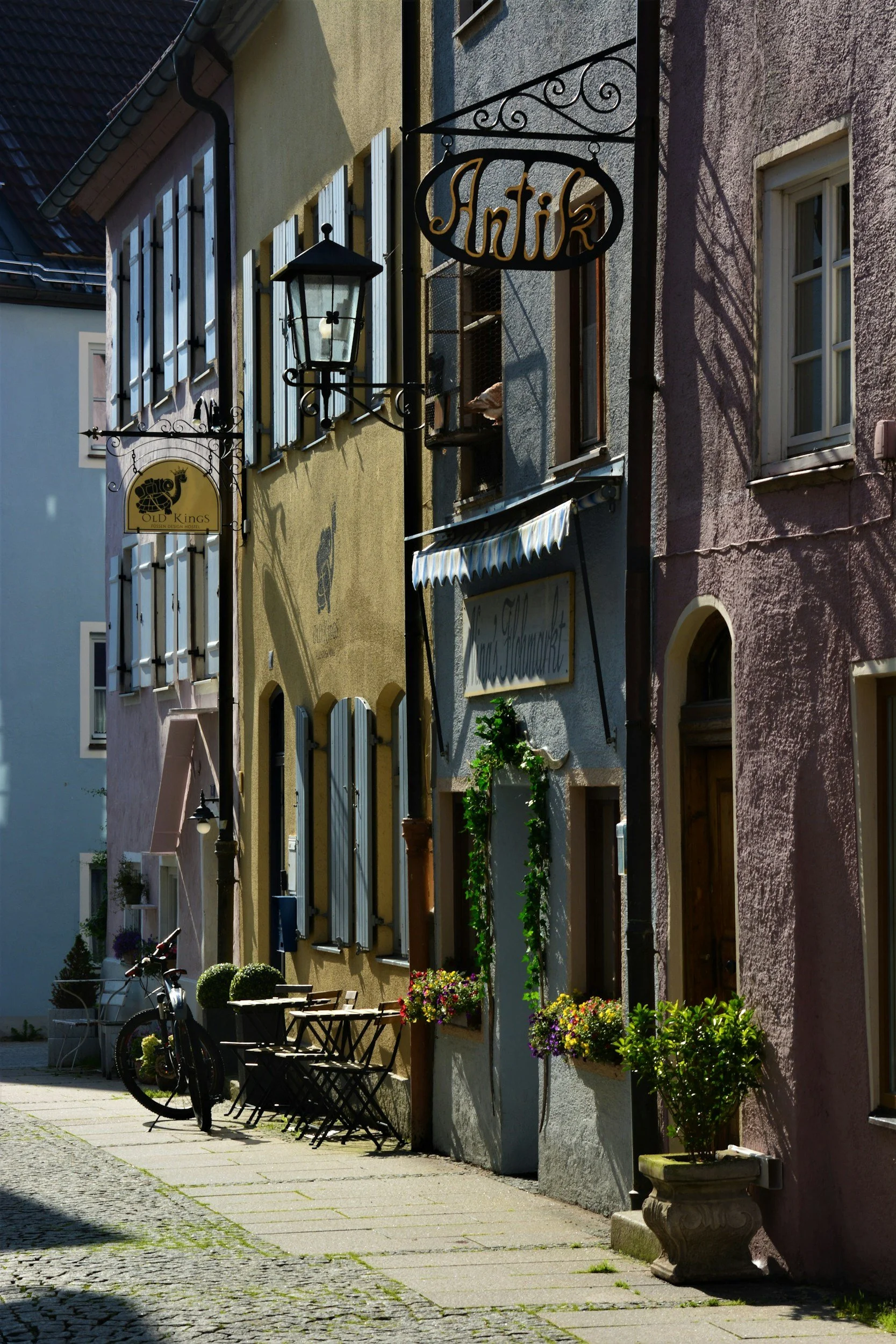
The area around Brotmarkt is worth paying attention to as well. Most people pass through it without really stopping, yet some of the more interesting independent businesses in town are tucked around there rather than on the main shopping street. You'll find small delicatessens selling regional cheeses and sausages from the Allgäu region, family-run bakeries and shops that feel like they primarily exist for residents rather than visitors.
If you're staying overnight, mornings and afternoons can feel like two completely different towns. Before nine o'clock, particularly outside peak summer season, Reichenstraße is remarkably quiet. Shopkeepers are opening up, delivery vans are squeezing through streets that already feel too narrow for them and the mountains suddenly seem much closer when there aren't crowds filling every gap between the buildings.
Later in the day, especially when castle buses begin returning from Neuschwanstein, the centre becomes considerably busier. That's usually when I found myself heading away from the main streets and down towards the river instead.
Most people stop at Lechfall, take a few photographs and turn around. The path continuing beyond it is much more interesting. Follow it towards Kalvarienberg and you'll gradually leave the busiest part of Füssen behind. The climb isn't particularly long, but it's enough to give you a completely different perspective over the town, the Lech and the surrounding mountains. Late afternoon is often nicest up there because the light falls across the rooftops rather than directly into your eyes, and you'll usually find far fewer people than at the viewpoints associated with Neuschwanstein.
Another thing that doesn't get mentioned very often is how connected Füssen feels to the lakes around it. Weissensee, for example, feels completely different from Alpsee despite being only a short distance away. While Alpsee is heavily tied to the castle area, Weissensee often feels much more local. During warm weather you'll see residents swimming from small lakeside spots, paddleboarders crossing the water and families spending entire afternoons there rather than ticking off attractions.
Food-wise, many visitors end up eating in the first restaurant they find after returning from Neuschwanstein, which is understandable but often means missing some of the more interesting places. Around Schrannengasse and the streets behind St. Mang's Abbey you'll find smaller restaurants where menus change seasonally and where regional ingredients still play a large role. The Allgäu region has a strong food culture and you'll see local cheeses appearing everywhere from breakfast menus to evening dishes.
If art interests you, spend a little more time inside Hohes Schloss than most visitors do. The Staatsgalerie occupies part of the castle and often gets overshadowed by the views outside. The painted illusion windows on the exterior walls are also worth looking at properly rather than walking straight past them. Most people photograph the castle from a distance but never stop to notice the details once they're standing in front of it.
One thing I kept finding in Füssen was that the places I enjoyed most weren't necessarily the places I'd planned to visit. A quiet bench above the Lech. A side street near the abbey. A bakery near Brotmarkt with a queue of locals on a Tuesday morning. The town has enough visitors that it's easy to assume everything revolves around Neuschwanstein, but the more time you spend there, the more obvious it becomes that there's another version of Füssen operating alongside it.
Füssen sits at the end of one of Bavaria's most scenic railway lines, which means getting there is much easier than many people expect. Direct trains run from Munich throughout the day and the journey usually takes around two hours, passing small villages, church steeples, lakes and increasingly dramatic mountain scenery as you head south towards the Austrian border.
One thing that works particularly well about Füssen is that the station is right in town. You're not arriving on the outskirts and trying to work out a bus connection. Within a few minutes of stepping off the train you'll already be walking towards Reichenstraße, passing bakeries, outdoor cafés and people dragging suitcases towards hotels before heading off to Neuschwanstein.
Most visitors barely notice the station area because they're focused on castle buses, but it's actually one of the reasons Füssen works so well as a train stop. You can arrive just before lunch, leave your bags at a hotel and be wandering through the old town ten minutes later without needing to think about transport again for the rest of your stay.
If you're continuing further into the Alps afterwards, Füssen also works as a surprisingly good place to stay. Regional buses connect the town with Hohenschwangau, Hopfen am See, Weissensee and several hiking areas, which means you can spend a couple of days here without ever needing a car.
Several of the towns in this guide are ideal for wandering independent shops and bookshops, and if you're already planning a little suitcase space for the journey home, this guide to second-hand Germany might save you some research.
The Bavarian landscape around Füssen often leaves people wanting more mountain scenery, and if you're travelling outside summer, this winter route through the Bavarian and Bohemian Forests feels like a completely different side of the region.
And if the castles around Füssen leave you wishing there was a way to experience more of Europe's historic landscapes on foot, this castle trail combines historic routes with local food stops along the way.
Dinkelsbühl: Bavaria's quieter medieval town
Getting to Dinkelsbühl takes a little more effort than some of the other towns in this article, which is probably one of the reasons it still feels the way it does. Most people arrive by train via Dombühl before continuing by bus for the final stretch into town, and while that extra connection might put some travellers off, it also filters out a lot of the crowds that tend to descend on Bavaria's more famous medieval towns. By the time you walk through one of the old gates and into the centre, it already feels a world away from the bigger destinations most visitors are chasing.
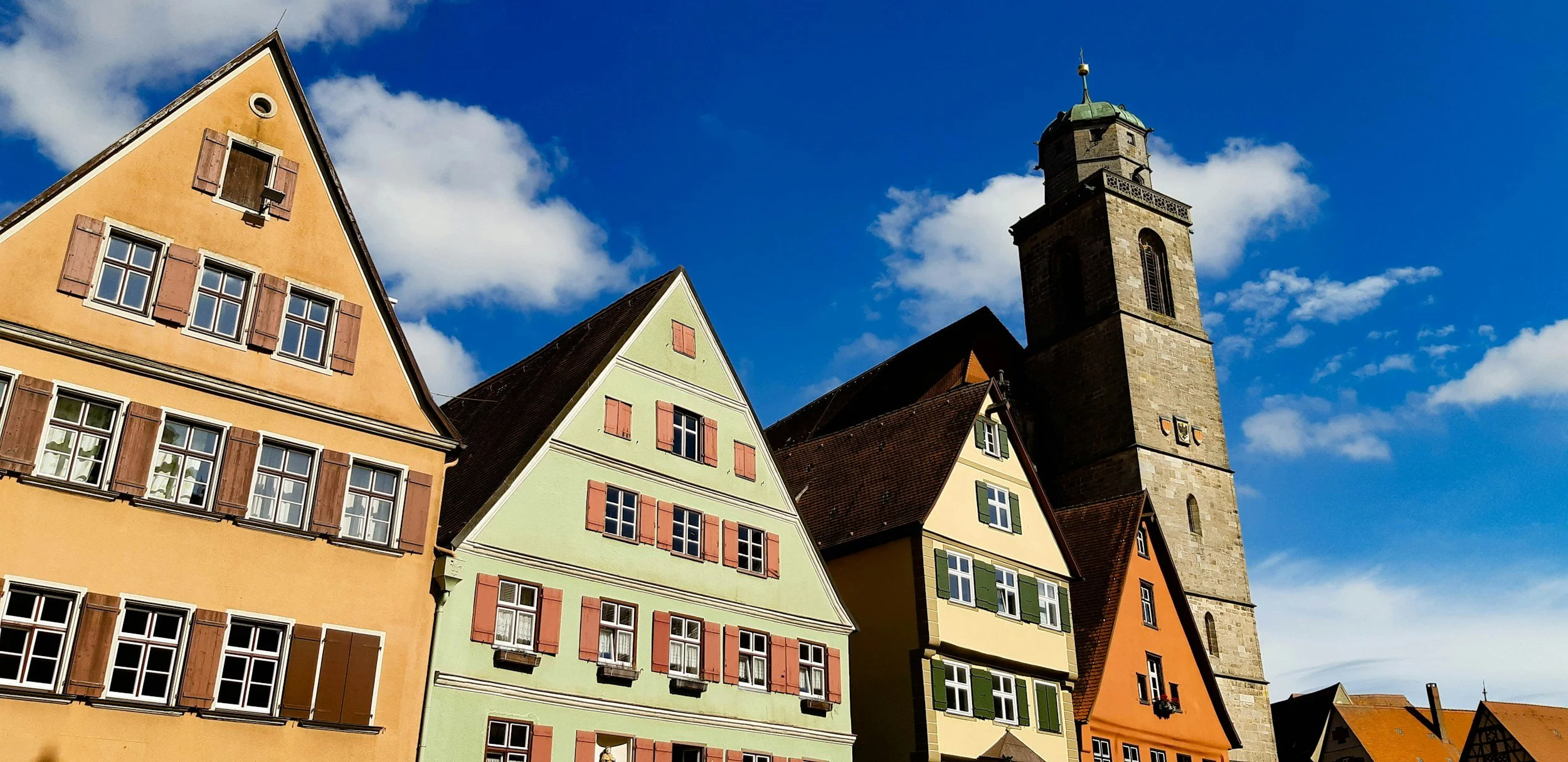
I found myself spending most of my time in the area between Weinmarkt, Segringer Straße and Nördlinger Tor, not because that's where all the attractions are concentrated but because those streets seem to reveal something different every time you walk through them. Early in the morning you'll pass bakery deliveries squeezing through gaps that don't look wide enough for modern vehicles, shop owners unlocking doors and residents carrying shopping baskets across the square long before most visitors have finished breakfast. A few hours later the same streets are full of people photographing the colourful façades, yet somehow Dinkelsbühl never feels overwhelmed in the way larger destinations often do.
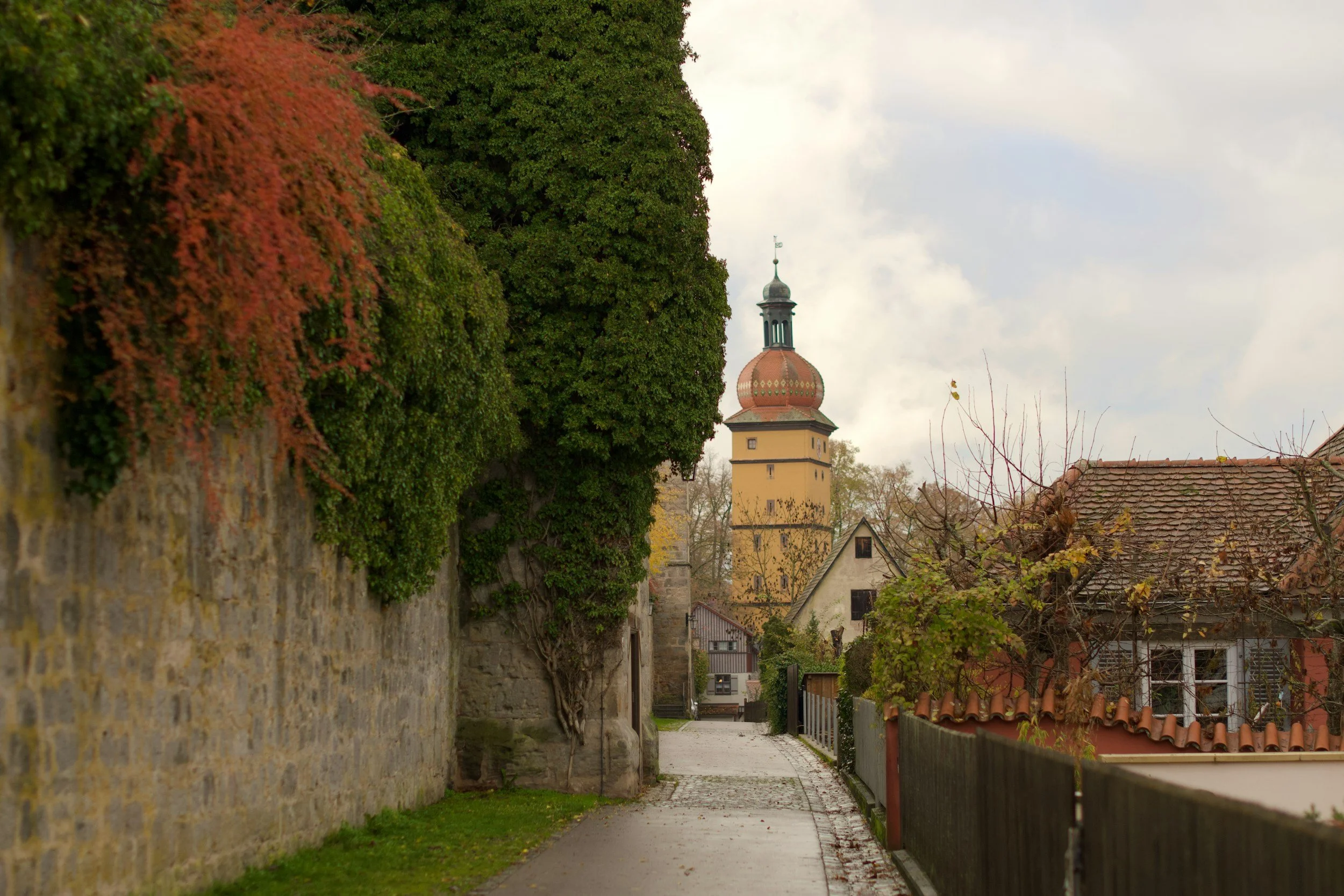
The stretch towards Rothenburger Tor is particularly nice if you enjoy wandering without much of a plan. Some of the prettiest corners of town aren't around the main square at all but tucked along residential streets where flower boxes spill from windows, bicycles lean against centuries-old walls and life carries on largely unchanged regardless of how many people are walking around with cameras. The town walls are worth spending time on too. Most visitors photograph them from below, but walking sections of the wall gives you a completely different perspective. Instead of looking at Dinkelsbühl, you're looking into it. Back gardens, churchyards, workshops and rooftops start appearing in ways they never do from street level.
Weinmarkt is the sort of place where it's easy to get distracted. You might be heading towards the town walls and then suddenly you're standing outside Buchhandlung Leseratte looking through the window because you've spotted a book you recognise. A few doors away there are small food shops selling Franconian products, local wines and things people actually take home and use rather than souvenirs destined for the back of a cupboard.
The cafés around the centre all seem to have their own regular crowd. Café am Münster is usually busy from the morning onwards, especially on market days, while Café Haag often has the same familiar faces sitting outside with coffee and cake long after breakfast is over. Around Segringer Straße you'll also pass bakeries where locals are still queuing for bread before most visitors have worked out where they're having lunch.
What I liked was that everything sits mixed together. here!The florist is next to the café, and the café is next to the bookshop. Somebody is carrying flowers home, somebody else is buying bread, and a few metres away somebody is taking photographs of a building that's been standing there for hundreds of years.
By the time dinner rolls around, most people seem to end up somewhere around Weinmarkt, which isn't surprising because some of the town's best-known restaurants are right there. Meiser's is usually busy, especially at weekends, and Goldenes Lamm has been serving Franconian food for so long that it feels woven into the town itself rather than simply operating in it. If you're curious about regional dishes, you'll find plenty of local classics on both menus, along with seasonal specials that change throughout the year.
Café Haag sits right on the square and is one of those places where it's easy to stop for a quick coffee and somehow still be there much later. On market days especially, it's a good spot to sit for a while and watch the square gradually change as the stalls pack up and the restaurants start getting ready for the evening.
If you wander a little beyond the main square, you'll also come across smaller bakeries and cafés around Segringer Straße where locals are picking up bread for the next morning or stopping for a chat on their way home. Those places rarely appear in travel guides, but they're often the ones that tell you the most about a town.
Haus der Geschichte sits in a part of town that's worth walking around even if you never step inside. A lot of visitors spend most of their time between Weinmarkt and Münster St. Georg, but once you start heading towards Nördlinger Tor, things become noticeably quieter. The streets are narrower, there are fewer cafés and souvenir shops, and you'll often have entire stretches of the town wall almost to yourself.
The area around Nördlinger Tor is also one of the best places to get a sense of how large Dinkelsbühl actually is. From the market square, everything feels compact, but once you're walking along the walls and passing through the old gates, you realise just how much of the medieval layout is still intact. Most people never make it much farther than the centre, which is probably why this part of town feels so different from Weinmarkt even though it's only a few minutes away on foot.
If you're in Dinkelsbühl on a Wednesday or Saturday morning, it's worth making your way through Weinmarkt before breakfast rather than afterwards. By eight or nine o'clock, the square is already filling with flower stalls, seasonal fruit and vegetables, local cheeses, bread, honey and the sort of practical shopping people are actually taking home for the week rather than buying as souvenirs. You'll see residents arriving with shopping trolleys and baskets, stopping to chat between stalls and discussing everything from asparagus prices to whether the strawberries are any good yet.
The market changes the centre completely for a few hours. Café tables are occupied earlier than usual, bakery queues are longer and there are far more people carrying bunches of flowers or bags of produce than cameras. If you grab a coffee from Café am Münster or Café Haag and sit outside for a while, you'll notice that most of the people crossing the square aren't there to sightsee. They're there because it's market day and this is where they do their shopping.
Getting to Dinkelsbühl takes a little more effort than places like Tübingen or Füssen, which is probably one of the reasons it feels different once you're there. Most people arrive by train via Dombühl, a small station on the line between Nuremberg and Crailsheim, before catching the connecting bus into town. The transfer is straightforward and timed to match arriving trains, but it's enough of an extra step that many visitors simply continue elsewhere.
About fifteen minutes later, you're stepping off the bus just outside the old town walls.
What I liked was that the extra connection immediately filters out the rush you find in some of Bavaria's better-known destinations. By the time you've walked through Segringer Tor or made your way towards Weinmarkt, you're already surrounded by half-timbered buildings, bakeries opening for the day and residents going about their normal routines.
If Dinkelsbühl was the town you could picture staying longer in, these fairy-tale towns are worth a look before you start planning your next Germany trip.
And if you're already wondering where to find another place with bookshops, cafés and enough going on to fill a few days without ever feeling busy, take a look at Görlitz. It's one of those towns people rarely mention until after they've been there.
Travellers who enjoy towns like Dinkelsbühl often end up looking for more places where everyday life still happens behind the postcard views. Monschau in spring offers a very different corner of Germany with a surprisingly similar appeal.
If you're continuing north after Bavaria and Baden-Württemberg, the landscapes around the Eifel make a surprisingly easy addition to a rail itinerary. This 24-hour Eifel guide helps you work out whether it's worth adding a stop.
Gengenbach: the Black Forest town that's easier than you think
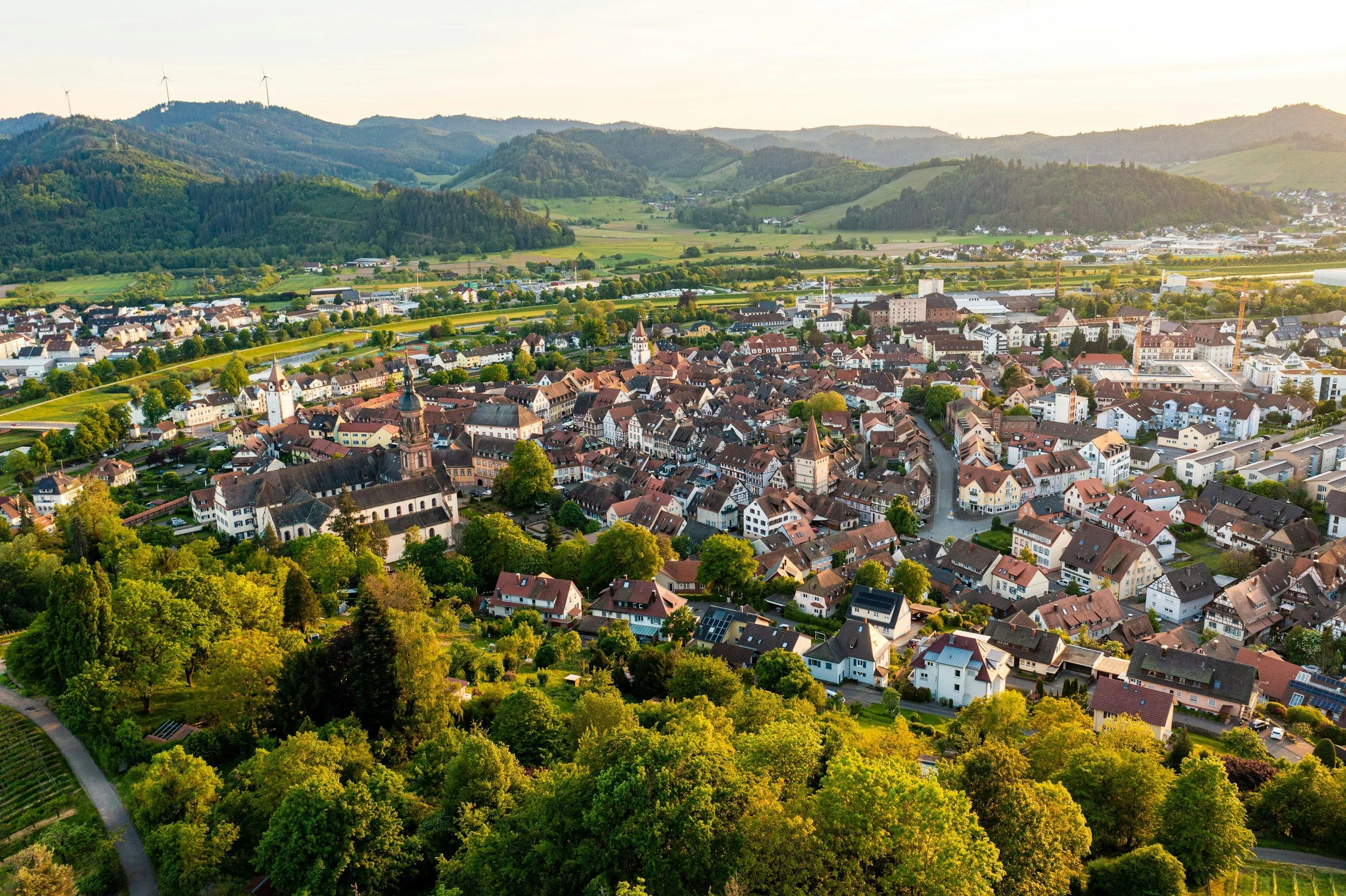
One of the things I liked about Gengenbach was how quickly the town gives way to vineyards.
In a lot of wine regions you need to leave town first. Here you can finish breakfast in Marktplatz, walk through a couple of residential streets and find yourself surrounded by vines ten minutes later without really noticing where the town ended and the countryside began. The paths climbing up towards the vineyards behind Niggelturm were some of the walks I returned to most often because the views keep changing as you gain height. One minute you're looking down over church towers and tiled rooftops, the next you're looking across rows of vines towards the hills of the Black Forest.
The route up towards Jakobskapelle is worth knowing about if you're staying overnight. Most visitors never make it that far because they're only in town for a few hours, but the chapel sits above Gengenbach with views stretching across the Kinzig Valley and it's one of those places that makes you realise how small the old town actually is. Early morning is particularly nice up there before the day has properly started and before the first regional trains begin bringing visitors into town.
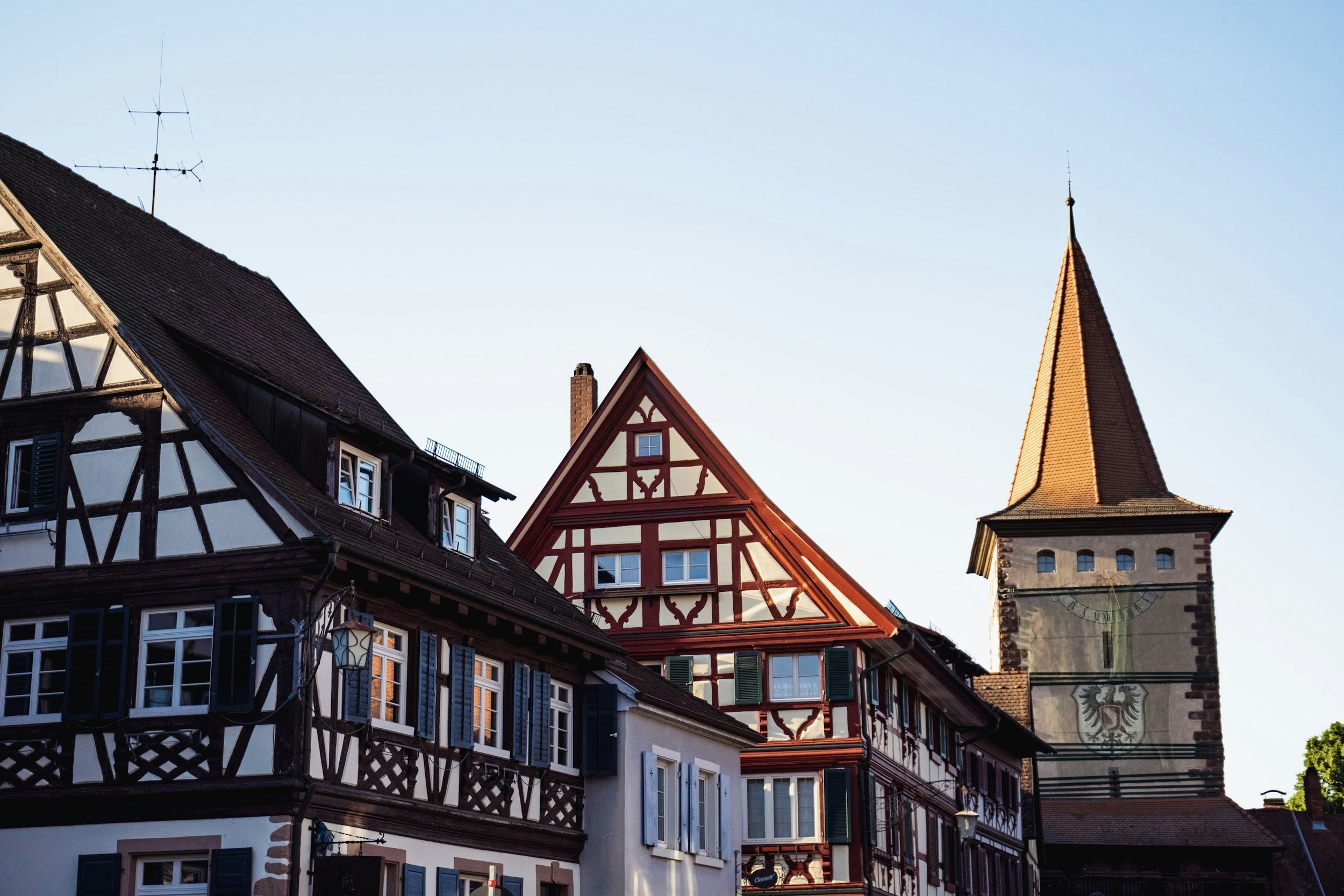
Back in the centre, I found myself drifting back towards Engelgasse more often than Weinmarkt. Everybody passes through the main square at some point, but Engelgasse and the streets connecting it to Höllengasse felt much more interesting to wander through without a plan. One minute you're looking into a shop window, the next you're peering through an archway into a courtyard you hadn't noticed before, or stopping outside a wine tavern because the menu is written on a chalkboard that looks like it hasn't moved in years.
If you keep walking in the direction of Niggelturm, the town starts feeling a little quieter. The cafés thin out, there are fewer people taking photos and you begin noticing details that are easy to miss around Marktplatz, like old signs hanging above doorways, tiny gardens squeezed between buildings and sections of the medieval town wall still running behind houses. I ended up taking the same route several times because it never felt quite the same twice.
One of the nicest short walks starts around Engelgasse and continues towards the old fortifications near Niggelturm and the Kinzigtor area. It only takes a few minutes, but it gives you a much better sense of how compact Gengenbach really is and how quickly the centre gives way to vineyards, gardens and quieter residential streets.
The bakery situation is also dangerous if you like pastries….! Before nine o'clock, Bäckerei Dreher and the smaller bakeries around Victor-Kretz-Straße are already busy with locals collecting bread for the day. You can usually tell which places people actually use because there will be a queue before many visitors have left their hotels. The smell of fresh bread seems to drift through half the town during the morning!
Towards the end of the afternoon, more people start appearing outside places like Winzerstüble, Gasthaus Zum Turm and the smaller wine taverns tucked into the streets around Engelgasse and Höllengasse. You'll notice fairly quickly that most tables aren't covered in bottles from all over Germany. More often than not, people are drinking wines produced a few kilometres away, and if you look through a menu you'll see names from around Ortenau appearing again and again.
One thing I liked about Gengenbach was that wine never felt separated from the town itself. The vineyards are right there above the rooftops, so when you're sitting outside with a glass of Riesling or Spätburgunder, there's a good chance you're looking at the hillsides where the grapes were actually grown. Around Klosterstraße and Victor-Kretz-Straße you'll also come across small wine shops and local producers selling bottles from nearby vineyards rather than stocking hundreds of labels from across the country.
If you're walking through the centre before dinner, it's worth wandering beyond Marktplatz for a while. The area around Engelgasse, Adlergasse and the streets leading towards Niggelturm tends to feel a little quieter, and you'll often find yourself passing tiny wine taverns, courtyards and restaurants that aren't immediately obvious from the main square. Those were usually the places that caught my attention most because they felt like somewhere people had been meeting for years rather than somewhere created for visitors to discover.
I wasn't expecting to spend as much time looking into shop windows as I did. Around Höllengasse, Engelgasse and the smaller streets linking them together, you'll come across wine merchants selling bottles from vineyards just outside town, delicatessens stocked with Black Forest ham, local cheeses and jars of honey from producers in the surrounding hills, and specialist shops where the shelves seem to be filled with things people actually buy rather than souvenirs aimed at visitors.
The area around Victor-Kretz-Straße is good for this as well. One minute you're looking at local schnapps and fruit brandies, the next you're standing outside a chocolatier wondering whether you really need to take a box home with you. Most of the shops are small enough that the person behind the counter often seems to know half the people walking through the door.
The cultural side of Gengenbach feels much the same. Haus Löwenberg hosts exhibitions, concerts and events throughout the year, but I found the smaller spaces scattered around the centre just as interesting. Depending on when you visit, you might come across local artists exhibiting work inside historic buildings, temporary exhibitions tucked into courtyards or small galleries occupying spaces that don't immediately look like galleries from the outside. Around Klosterstraße and the lanes leading away from Marktplatz, it's worth keeping an eye on noticeboards and open doorways because some of the most interesting things aren't heavily advertised.
Getting to Gengenbach is actually quite easy. Most people arrive via Offenburg, one of the main railway hubs in the region, and from there it's usually less than ten minutes on a regional train before you're stepping onto the platform in Gengenbach. The station sits right beside the town, which means you can arrive with a suitcase, walk a few hundred metres and already be standing in Marktplatz wondering where to stop for coffee first.
That's one of the reasons I think Gengenbach works so well in a train itinerary through southern Germany. You don't arrive and immediately need to figure out a bus connection, organise a taxi or spend half an hour getting to the part you actually came to see. Within minutes you're walking through the old town, and if you keep going for another ten or fifteen minutes you'll already be climbing into the vineyards above town!
Gengenbach isn't the only place where vineyards and forest meet. If you're wondering where to spend a few extra days in the region, this Black Forest guide helps you decide whether it's worth extending your trip.
The mistake most people make when travelling through southern Germany
One thing that's easy to underestimate when planning a train trip through southern Germany is how much time gets lost to the gaps between places. Not the train journeys themselves, because most of them are surprisingly easy, but the process of arriving somewhere new, finding your hotel, getting your bearings and working out where everything is. On paper, visiting six towns in six days can look efficient. In practice, it often means leaving just as you're starting to understand a place.
The towns in this article are all small enough that you can walk across most of them in an hour or two, which sometimes creates the impression that you've seen everything quite quickly. What tends to happen instead is that the places become more interesting once you've stopped looking for the obvious sights. You notice which streets become quiet after lunch, which bakery has a queue before eight in the morning, where residents actually spend their evenings and which café seems to have the same regulars every day of the week.
That's one of the reasons southern Germany works so well by train. You're not travelling through a region built around major attractions connected by motorways. You're travelling through a patchwork of university towns, market towns, wine towns, lakeside towns and Black Forest communities that are close enough together to combine, but different enough that they never really blend into one another.
If you're deciding between adding another destination or spending an extra night somewhere you've already booked, I'd almost always choose the extra night. Not because there's more to see, but because places like these reveal themselves gradually. The first afternoon is usually spent figuring things out. The second morning is often when you start noticing where you actually are.
If you're discovering Germany by rail, some of the continent's most overlooked journeys are surprisingly close by, including several routes that rarely appear in the usual train travel roundups. Lesser-known routes is a good place to start if you're already thinking about where to go after southern Germany.
FAQ:s about train travel in South Germany
What are the best towns in southern Germany to visit by train?
If you're looking for towns that are genuinely easy to explore without a car, Tübingen, Lindau, Meersburg, Füssen, Dinkelsbühl and Gengenbach are all strong choices. The key difference is that you can step off a train and start exploring almost immediately rather than spending another hour figuring out buses, taxis or complicated connections.
How many days do you need for a southern Germany train trip?
A week is enough to visit several towns, but most people try to fit too much into their itinerary. Southern Germany works best when you spend at least two nights in some places rather than moving every day. Towns like Tübingen and Gengenbach reveal far more on a second morning than they do during a quick afternoon stop.
Is southern Germany easy to travel without a car?
Much easier than many people expect. Cities like Munich and Stuttgart are well connected to smaller towns by regional and intercity trains, and several of the destinations in this guide have stations within walking distance of the historic centre. Places such as Füssen, Tübingen and Gengenbach are particularly straightforward for car-free travellers.
Which southern Germany towns are less crowded than Rothenburg ob der Tauber?
Dinkelsbühl is often the first place that comes to mind. It has many of the things people travel to Rothenburg to see, including town walls, half-timbered buildings and historic gates, but generally feels less busy. Gengenbach is another good option if you're interested in historic centres without the same volume of visitors.
Can you visit Füssen without visiting Neuschwanstein Castle?
Absolutely. Most people associate Füssen with Neuschwanstein, but the town itself has plenty to keep you occupied for a couple of days, including Hohes Schloss, St. Mang's Abbey, the Lech River paths, nearby lakes such as Weissensee and a surprisingly good food scene. Some visitors end up enjoying Füssen more than the castle itself.
Is Meersburg worth staying overnight?
Yes, particularly if you're visiting between late spring and early autumn. Many people arrive by ferry, spend a few hours in town and leave again, which means Meersburg feels noticeably different once the day-trippers have gone home. Staying overnight also gives you time to explore the vineyard paths above town and enjoy the lakefront outside the busiest hours.
What is the easiest Black Forest town to visit by train?
Gengenbach is one of the easiest. Most travellers arrive via Offenburg and the station is only a short walk from the centre. Unlike some Black Forest destinations that require multiple bus connections, you can be wandering through the old town within minutes of arriving.
Which town in southern Germany has the best market atmosphere?
That depends on what you're looking for, but Dinkelsbühl's market mornings are particularly enjoyable because they're still used heavily by residents. Arrive early and you'll find flower stalls, local produce, bread, honey and people doing their weekly shopping rather than a market aimed primarily at visitors.
Are southern Germany train journeys scenic?
Many of them are. The route into Füssen becomes increasingly alpine as you head south from Munich, while journeys around Lake Constance offer views of vineyards, lakeside towns and mountains in the distance. Even shorter regional routes often pass through countryside, vineyards and smaller towns that are easy to miss when travelling by car.
What is the biggest mistake people make when planning a southern Germany rail itinerary?
Trying to fit too many places into one trip. On a map, the towns can look close together, and train connections are often efficient, which makes it tempting to move every day. In reality, many of the best experiences happen once you've settled in, found a favourite café, discovered a quieter street or spent a second morning in the same place.