
Leiden is the Dutch city I'd choose for a winter weekend
The train from Amsterdam is short enough that you don’t really settle into it, and then you’re already stepping out at Leiden Centraal, following the flow toward the city without thinking about directions yet. You pass the buses, keep walking along Stationsweg, and by the time you reach the canal at Morspoort, the whole thing has already shifted into something quieter without needing a clear moment to mark it.
From there, most people drift toward Breestraat, but it’s not the kind of street you stay on for long. You pass through it more than you experience it, maybe noticing the entrance to Van Stockum without going in yet, and then you turn off without deciding to, ending up along Rapenburg where the pace changes properly.
Rapenburg isn’t trying to show you anything. The buildings sit close to the water, some belonging to the university, others clearly lived in, and you can tell the difference in small ways rather than anything obvious. Around the middle stretch, bikes tend to collect near the railings in a way that slightly blocks the pavement, not enough to be a problem, just enough that you have to adjust your path as you walk past. A few windows are already lit even though it’s still early in the afternoon, while others stay dark, and you catch yourself looking in without meaning to.
If you keep going, you pass the entrance to the Hortus Botanicus, which is usually quieter than expected in winter, and then you cross one of the small bridges that bring you back toward the centre again. You’re not really navigating at this point, just moving through whatever feels easiest.
By the time you reach Nieuwe Rijn, people have started settling into the cafés along the canal. At Borgman & Borgman, the tables facing the water are usually the first to fill, and you’ll notice that people sit down and stay there, coats still on, cups in front of them that aren’t going anywhere quickly. No one is checking the time, and no one is being moved along, which makes it easy to do the same.
If you continue toward Haarlemmerstraat, there’s slightly more movement, but it doesn’t change the pace much. It’s where people run errands rather than spend time, so you pass places like Bakkerij van Maanen where there’s often a small line, watch it move slower than expected, and then keep walking because you don’t actually need anything from there.
At some point, the cold catches up with you in a way that’s hard to ignore, and you stop looking around and just step inside wherever you are. Van Stockum makes sense when you’re nearby, not because it stands out from the street, but because once you’re inside it opens up into narrow aisles and shelves that feel slightly too full. You pick something up, read a few pages without moving, then shift somewhere else without deciding to, and before you realise it you’ve been there longer than you planned…
When you step back outside, the temperature feels sharper than before, and that’s usually when somewhere like the Rijksmuseum van Oudheden becomes the obvious next step, not because you planned to visit it, but because it’s right there along Rapenburg and you don’t feel like being outside for a while. You walk through a few rooms, not following the route properly, stopping when something catches your attention and moving on when it doesn’t, and you leave without feeling like you’ve missed anything important.
By mid-afternoon, you’ve started to recognise where you are without checking. The bridge near Stadhuisplein comes up again, the turn back toward Breestraat feels familiar, and you realise you’ve been looping through the same parts of the city without trying to see everything at once.
The light shifts quickly in winter. One moment it still feels like afternoon, and then the reflections in the canal take over, and everything looks slightly different even though nothing has changed. You find yourself back near the water again, maybe along Nieuwe Rijn or one of the smaller canals nearby, and the cafés look warmer from the outside than they did earlier.
You go in somewhere, sit down, warm up, watch the same small movements repeat outside (bikes crossing the bridge, someone stopping briefly, then moving on again) and without really noticing it, you’ve stopped thinking about what you’re doing for the day.
By early evening, the streets thin out. Not empty, just quieter. Most windows are lit now, and you pass through residential streets on your way back without needing to decide on a route.
Dinner ends up being whatever is nearby rather than something you’ve chosen in advance. Somewhere like In Den Doofpot if you feel like sitting longer, or a smaller place where you can walk in, sit down, and leave when you’re done without much thought.
If this kind of winter pace feels right, you might enjoy how Cambridge works as a slow, bookish city, especially outside term time.
Bookshops & cafés in Leiden
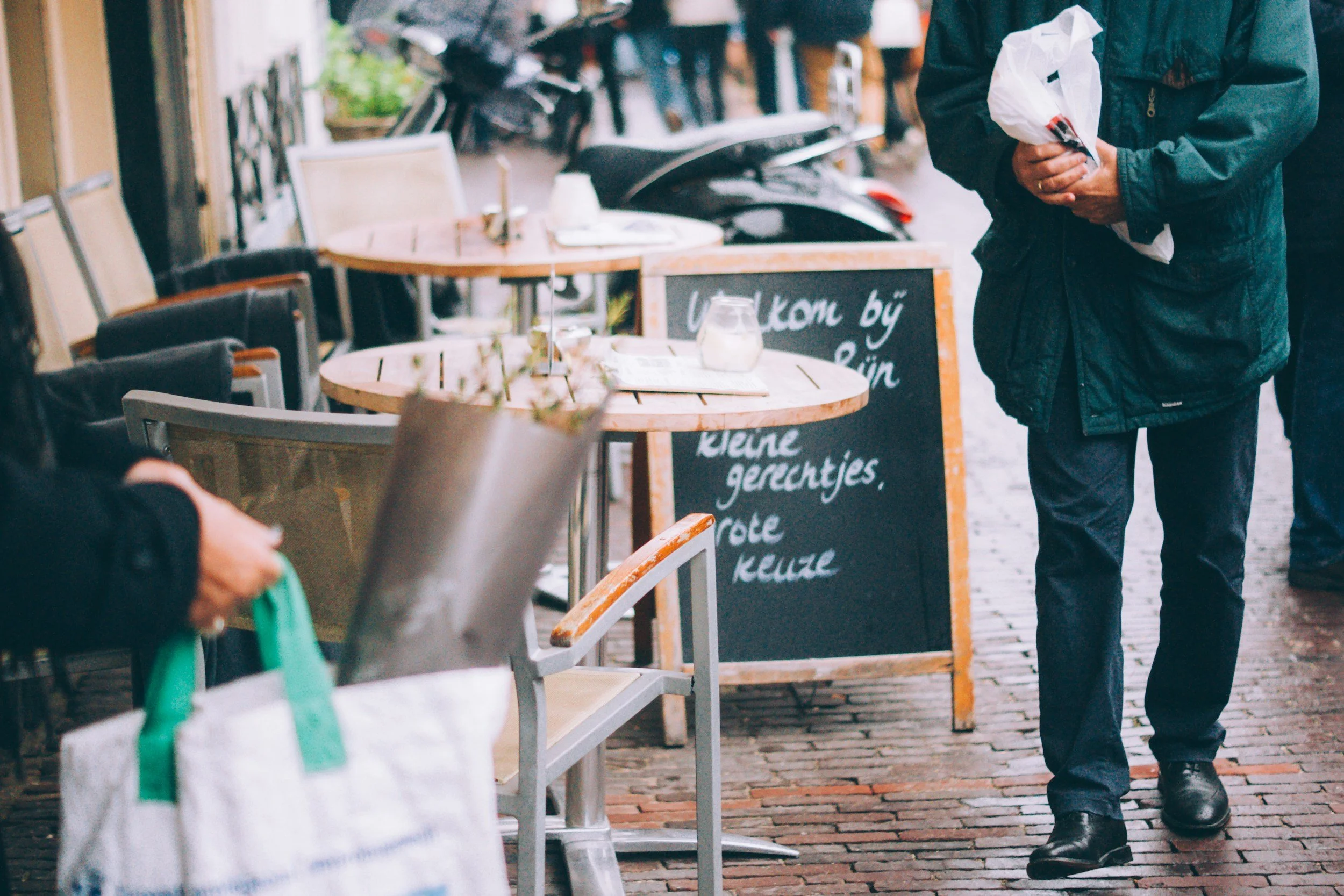
Bookshops in Leiden aren’t grouped together or marked out in any obvious way, which is part of why they work so well here. You don’t set time aside to visit them. You just end up inside one while moving between streets, usually because it’s cold or because something in the window catches your attention for a second longer than expected.
Mayflower Bookshop is the one you return to if you read in English. It sits along a busier stretch, close enough to the centre that you’ll likely pass it more than once without planning to. Inside, it’s straightforward. Narrow aisles, shelves that go further back than they first appear, and a layout that doesn’t try to guide you anywhere specific. Fiction is easy to browse without feeling curated or arranged to sell you something in particular, and the non-fiction leans heavily toward history, politics, and travel rather than anything lifestyle-focused. You tend to stand in one spot longer than you meant to, reading a few pages before deciding. It’s not somewhere you spend an hour, but you usually leave with something you’ll actually read later that evening.
The smaller second-hand shops nearby take a bit more time, mostly because they’re less structured. Once you move past the front section, any clear organisation starts to disappear. Shelves are packed tightly, sometimes double-stacked, and the selection feels shaped by students and long-term residents rather than visitors passing through. Academic paperbacks show up everywhere. Philosophy, history, linguistics. Dutch novels with worn covers and titles you won’t recognise unless you’re looking for them. Every now and then you come across pencil notes in the margins or underlined sections that someone clearly spent time with, and you end up reading those just as much as the actual text.
When you step back outside, Café Barrera is usually nearby enough to make sense without thinking about it. Late morning or mid-afternoon works best, when there’s a steady flow of people coming in and out but no pressure to give up your table. The front window seats are the easiest place to settle if you’ve picked up a book. People come in to warm up, leave again, and sometimes return later. You order once and stay as long as you want. No one checks.
Annie’s sits right on the water and feels different straight away. Brighter, more movement, more conversations overlapping. It works better as a shorter stop, somewhere to sit down, reset, maybe write a few notes before heading back out. You don’t stay there for long stretches with a book, but it’s useful in between.
Everything is close enough that you don’t need to plan any of it. A bookshop, then coffee, then a short walk along the canal, then somewhere else when you feel like going inside again. You’re never crossing the city for one thing, and you don’t lose the shape of the day if you change direction halfway through.
If you tend to travel this way, there are a few quiet towns you can reach easily by train that make the same kind of days possible.
Walking the Canals in Leiden
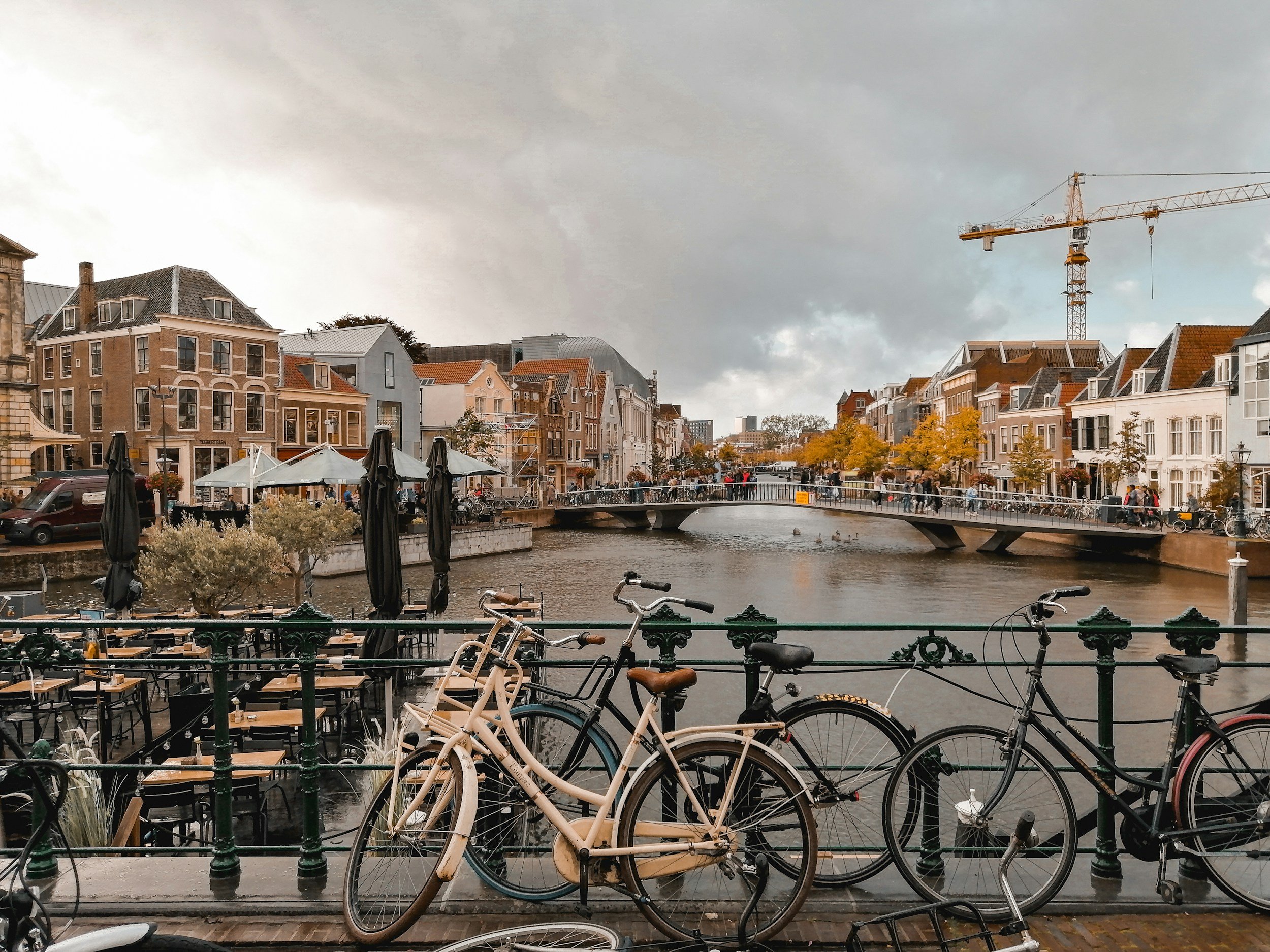
Walking in Leiden mostly means staying close to the canals and letting the same streets come up again. You don’t gain much by pushing outward, and the centre holds enough variation to keep things interesting without needing distance.
Rapenburg is long, quiet, and lined with older houses that sit close to the water. There’s very little to distract you here, which makes it an easy street to walk more than once. It works especially well earlier in the day, before things pick up elsewhere.
Nieuwe Rijn feels different. More movement, more people passing through, especially around the market area. It’s useful rather than peaceful, and you’ll probably cross it several times without planning to. During the day it keeps the city feeling lived-in; in the evening it thins out quickly.
Breestraat connects everything, whether you mean it to or not. It’s where the supermarkets are, where you end up buying something practical, where you cross paths with more people. It’s not a street you linger on, but you need it, and you’ll recognise it as your reference point by the second day.
The smaller streets between these main lines are where walking feels easiest. Narrow enough to quiet things down, residential enough that you don’t feel like you’re on display. This is where you slow without noticing, mostly because there’s nothing asking you to move faster.
There’s no real reason to walk far beyond this core unless you have a specific destination in mind. The city doesn’t reward distance. Ten or fifteen minutes along the canals is usually enough before you turn back or head inside again, especially in winter.
After a day or two, directions stop mattering. You recognise places by position rather than name. The bridge you always cross. The corner where you hesitate before turning. The stretch you avoid when the wind cuts straight through. That’s enough to move around without thinking about it.
Leiden isn’t the only place where short walks are enough. A few of these small towns near big cities are also ideal for walks and strolls.
Museums and everyday culture in Leiden
Museums in Leiden aren’t something you build your day around in advance. They sit along the same streets you’re already walking, especially around Rapenburg, so you end up going in because it makes sense at that moment rather than because you planned it earlier.
The Rijksmuseum van Oudheden is the easiest one to step into without thinking too much about it. It’s right on Rapenburg, close enough that you’ll pass it more than once, and it works well when the weather turns or your hands get too cold to stay outside. Inside, the rooms are clearly laid out but not overwhelming. Egyptian statues, Roman objects, long corridors where you don’t feel rushed through. You can walk into one section, spend ten minutes there, then leave without feeling like you’ve only seen half of it. That’s part of why it works in winter. It doesn’t demand a full afternoon.
A few minutes away, Museum Volkenkunde feels slightly different. Larger, more open spaces, exhibitions that change often, and a mix of objects and storytelling that pulls you through more naturally. It’s close to the station side of the centre, so it often ends up being one of the first or last stops rather than something in the middle of the day.
If you keep walking along Rapenburg, you’ll come across Rijksmuseum Boerhaave. This one takes a bit more focus. Old scientific instruments, anatomy, early medicine. It’s quieter, and you tend to move through it more slowly without realising. It’s not crowded, even on weekends, which makes it easier to take your time.
What stands out in Leiden isn’t just the museums themselves, but how close everything sits. You don’t leave one place and feel like you need to reset before the next. You step back outside, cross a bridge, and you’re already somewhere else.
The university is part of that without needing to be pointed out. Buildings along Rapenburg and the surrounding streets are still in use, which means you’re walking through an active academic space rather than something preserved. You’ll see students moving between lectures, bikes coming and going, lights on inside rooms where people are clearly working. It doesn’t feel like a campus set apart from the city. It’s just part of it.
There are smaller places too, like the Hortus Botanicus Leiden just off Rapenburg. In winter, it’s quieter and more limited, but still worth passing through if it’s open. The greenhouses are warmer, slightly humid compared to the cold outside, and you don’t stay long, but it breaks up the day in a different way.
Even outside the museums, culture in Leiden isn’t something you go looking for directly. It shows up in smaller ways. Posters on walls for lectures or exhibitions, notice boards outside university buildings, bookshop windows with titles you don’t recognise, but that clearly belong to someone’s course or research.
If winter travel for you is mostly about interiors, there are other places where museums, cafés, and libraries quietly take over the day once the weather turns.
Evenings and dinner in Leiden
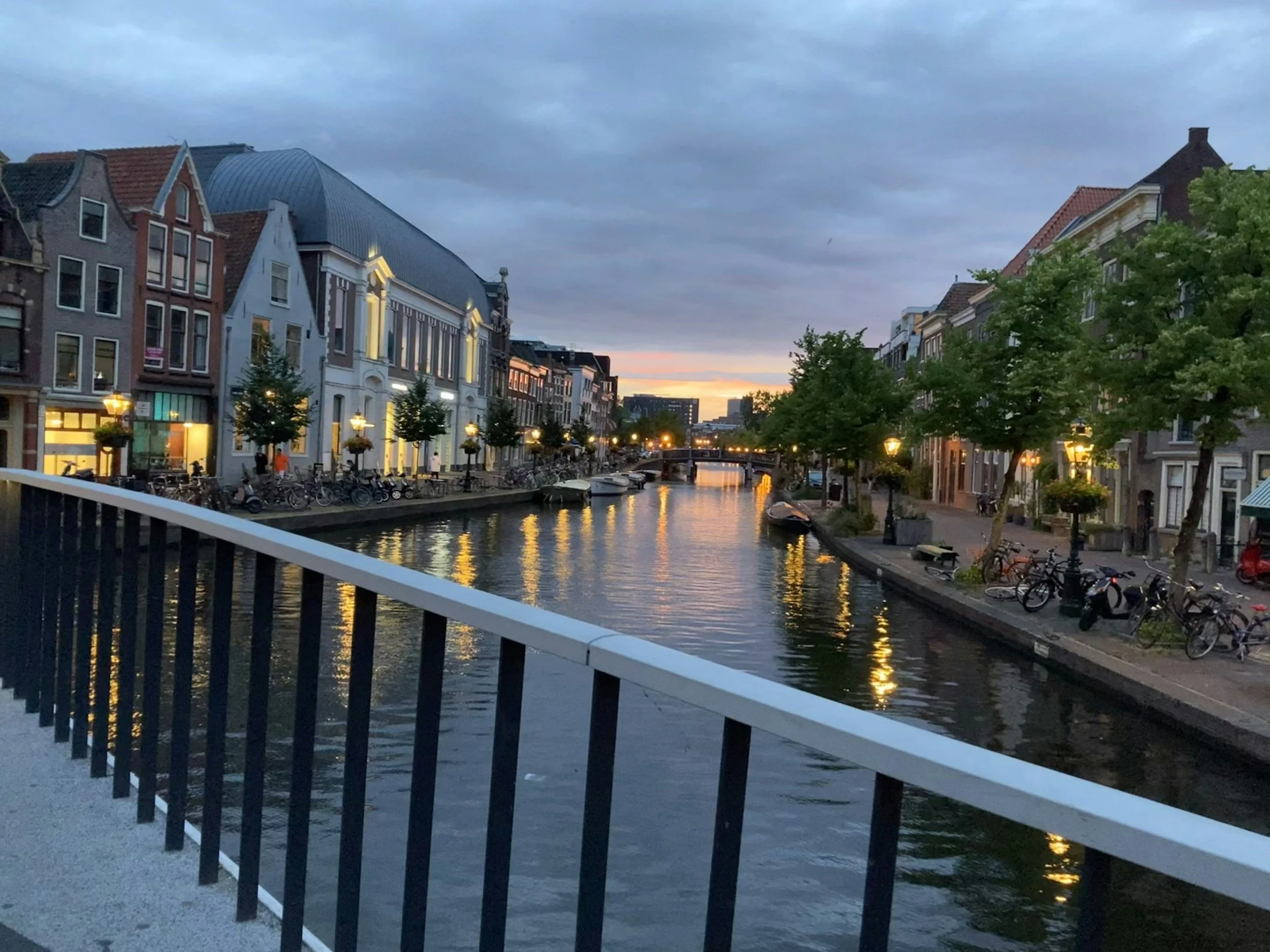
By late afternoon, you’re usually already back near the water without planning it. Around Nieuwe Rijn and Apothekersdijk, the shift into evening is easy to spot. Lights come on inside the restaurants first, then along the canal, and within a short stretch you can see most of your options just by walking past.
You don’t need to decide in advance. You walk along the canal, look through a few windows, and pick somewhere that feels right in that moment.
On Nieuwe Rijn, places fill steadily rather than all at once. Tables closest to the water go first, especially the ones where you can still see the reflections in the canal while you’re sitting down. If you keep walking a few minutes, Apothekersdijk tends to feel slightly quieter, with smaller restaurants spaced closer together. It’s a good stretch if you don’t want anything too busy.
If you feel like sitting down for a longer dinner, In Den Doofpot is just off Rapenburg and worth walking to on purpose. Inside, it’s calm without being stiff. Tables are spaced out enough that you’re not aware of other people’s conversations, and the pace of the meal is slower without feeling forced. It’s the kind of place where you notice time passing, but not in a way that makes you check it.
For something more straightforward, Oudt Leyden on Steenstraat works well if you want something warm and uncomplicated. It’s been there for years, and it feels like it. Wooden interior, slightly worn menus, and dishes that come out quickly without much ceremony. You don’t stay all evening, but you leave satisfied.
Closer to the centre, Brasserie de Poort near Morspoort is another easy option if you’re heading back toward the station side. It sits right by the water, and in winter the inside feels noticeably warmer after being outside for a while. You can walk in without booking and settle in without thinking too much about it.
What stands out is how little effort it takes to find somewhere decent. You’re never more than a few minutes away from a place where you can sit down and eat properly, and you don’t have to reorganise your evening to get there.
After dinner, the same streets quiet down quickly. Nieuwe Rijn still has some movement, but once you step away from the canal, it changes. Smaller streets behind Breestraat and around Rapenburg feel almost residential again. Most windows are lit now, and you catch glimpses of people inside rather than out.
If you walk back along Rapenburg, the canal is darker but clearer at the same time. Fewer people, fewer bikes, more space between everything. You notice the sound of your steps more than during the day.
If Leiden feels right, but you want something slightly more structured with a bit more going on in the evenings, this winter weekend in Utrecht gives you that same canal setting with a bit more rhythm to the day.
If you like places where evenings end early without feeling empty, you might want to look at a few calm European cities that feel better in winter than summer.
Where to Stay in Leiden in Winter
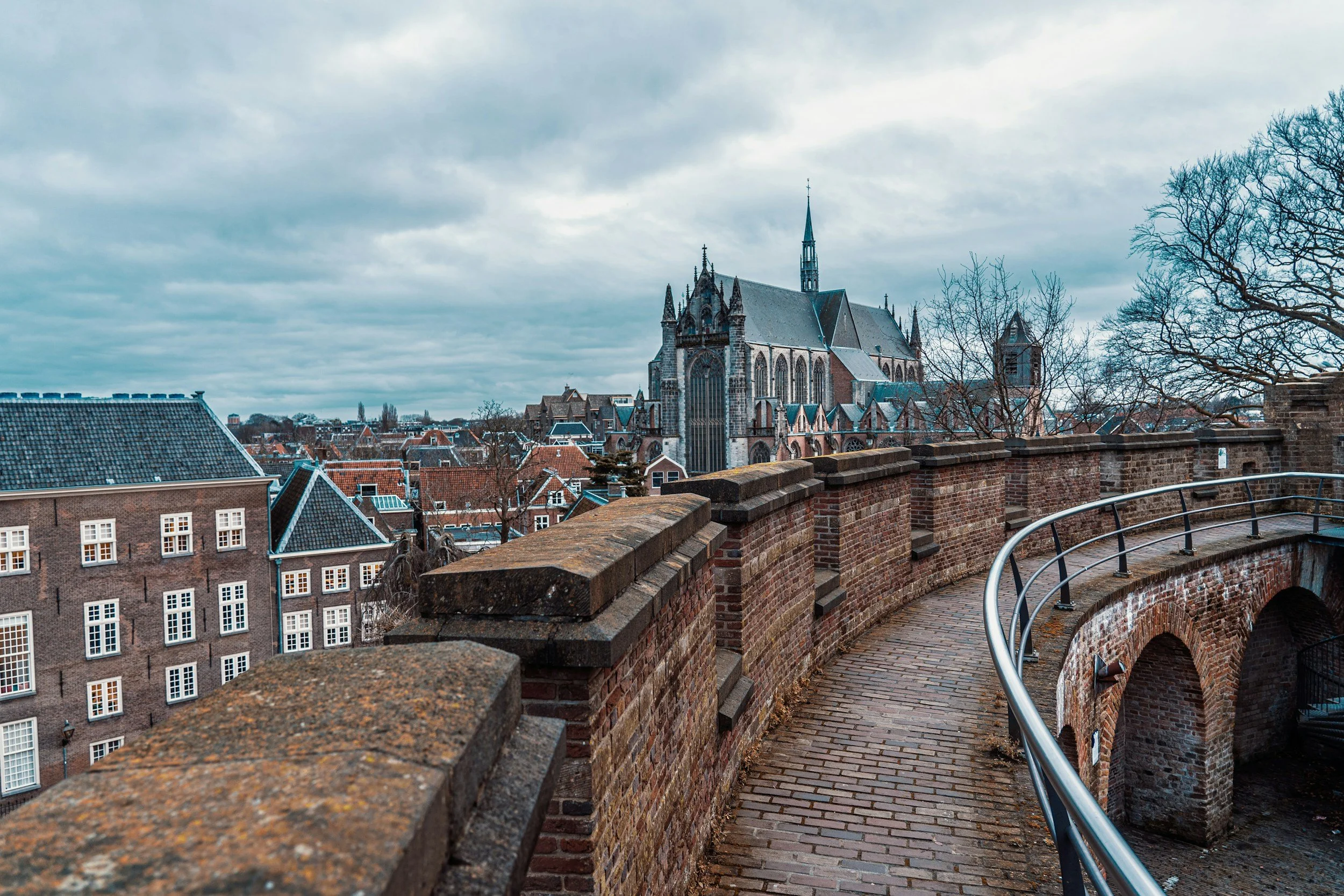
Where you stay in Leiden matters more in winter than it does at other times of year. You come back earlier in the evening, you spend more time indoors, and the room needs to work for more than just sleeping.
Staying central makes the biggest difference. Anywhere close to Rapenburg, Nieuwe Rijn, or just off Breestraat keeps everything walkable without effort. You can step out for a short walk or coffee without planning it, and turning back early never feels like cutting the day short.
Boutique Hotel Huys van Leyden is the most natural fit if you’re looking for a small, quiet hotel. It’s set in a historic building close to the centre, and the rooms feel settled rather than temporary. There’s enough space to sit comfortably in the evening, which matters if you’re reading or writing. It’s calm without being precious, and well suited to winter stays.
Boutique Hotel Steenhof works well if you prefer something slightly more polished but still low-key. It’s housed in a former townhouse near the Singel, close enough to everything without being on the busiest streets. Rooms are comfortable, and it suits trips where you’re moving in and out during the day rather than staying out late.
If you’re staying for more than a couple of nights, an apartment can be a better option than a hotel. A small kitchen, a proper table, and heating you can adjust yourself make evenings easier. Look for places near Rapenburg or Nieuwe Rijn, or just outside the tightest part of the centre. Being able to step out briefly without committing to a long walk matters more than having extra space.
And once you get used to this pace, it’s hard not to start looking beyond the obvious cities entirely, which is where these smaller Dutch towns start to make more sense than staying in Amsterdam.
Getting to and Around Leiden
Leiden is easy to reach, which is part of why it works so well for short winter trips. You don’t need to plan much around travel, and arrival doesn’t feel like a separate stage of the journey.
If you’re coming from Schiphol Airport, trains run directly to Leiden Centraal throughout the day. The journey usually takes around 20 minutes. From the platform, you’re already close. The centre starts almost immediately, and most central hotels and apartments are within a short walk or a quick taxi ride.
From Amsterdam, trains are frequent and straightforward, usually taking 35–40 minutes from Amsterdam Centraal. It’s an easy enough connection that Leiden also works as a base if you’re arriving late or leaving early and don’t want to deal with multiple changes.
Once you’re in Leiden, you don’t need transport to get around. The centre is compact, and everything mentioned in this guide is walkable. Streets connect naturally, distances are short, and turning back early never feels like a hassle. In winter especially, that matters more than saving a few minutes.
If you do need to go a little further, buses run from near the station and around the centre, but most visitors won’t use them. Taxis are available, though rarely necessary unless you’re arriving late with luggage or staying slightly outside the centre.
Bikes are everywhere, but for a short winter stay they’re optional rather than essential. Walking suits the pace of the city better, and most days you won’t be out long enough to miss having one.
You’ll probably notice how easy it is to move between cities here, and if you’re already thinking about coming back in a different season, Haarlem in spring feels completely different but just as easy to spend time in.
FAQ: Leiden in Winter for Solo Travel
Is Leiden worth visiting in winter?
Yes, especially if you’re looking for a city that’s easy to move through without needing a full itinerary. Winter brings fewer visitors, shorter days, and a slower pace, which makes places like Rapenburg, Nieuwe Rijn, and the smaller streets around Breestraat feel more local than seasonal. You won’t get big events or outdoor energy, but you get space to actually enjoy the city.
How many days do you need in Leiden?
Two days is usually enough. One day tends to cover the centre around Rapenburg, Nieuwe Rijn, and the main museums like Rijksmuseum van Oudheden. A second day lets you slow down, revisit the same areas, spend time in bookshops, and sit longer in cafés without feeling like you should move on.
Is Leiden good for solo travel?
Leiden works very well for solo travel because everything is within walking distance and there’s no pressure to structure your day. Cafés like Barrera or spots along Nieuwe Rijn are used to people sitting alone, and places like Van Stockum or smaller second-hand bookshops give you something to do without needing company.
What are the best things to do in Leiden in winter?
Walking along Rapenburg and the surrounding canals is the easiest way to experience the city. From there, you naturally move between bookshops, cafés, and museums. The Rijksmuseum van Oudheden and Rijksmuseum Boerhaave are good indoor options when it gets cold, and the Hortus Botanicus is worth a short visit if it’s open.
Are museums in Leiden worth visiting?
Yes, mainly because they’re easy to fit into your day. Most of them sit close together around Rapenburg, so you don’t need to plan routes or dedicate full days. You can go in for an hour, leave, and continue walking without disrupting anything.
Where should you eat in Leiden in the evening?
Areas around Nieuwe Rijn and Apothekersdijk are the easiest places to find dinner without planning ahead. If you want something slower and more traditional, In Den Doofpot is a good option. For something more casual, places like Oudt Leyden or smaller restaurants along the canal work well.
Is Leiden walkable in winter?
Yes, the city centre is compact and easy to navigate on foot. Most places mentioned in this guide are within 5–15 minutes of each other. Even in colder weather, you don’t need public transport unless you’re staying further out.
How do you get to Leiden from Amsterdam?
Direct trains run frequently from Amsterdam Centraal to Leiden Centraal, with a journey time of around 30–35 minutes. From the station, it’s about a 10-minute walk to the historic centre.
What is Leiden known for?
Leiden is known for its university, canals, and strong academic history. It has one of the oldest universities in the Netherlands, and that influence shows in its bookshops, museums, and the overall feel of the city, especially around Rapenburg.
Is Leiden better than Amsterdam for a quiet city break?
If you’re looking for something quieter and easier to move through, Leiden is often a better choice. It doesn’t have the same scale or constant activity as Amsterdam, which makes it easier to spend time there without feeling rushed.