If you only have one day in the Eifel, start here
The Eifel region in western Germany sits between Cologne, Aachen, and the Belgian border, and it’s one of those places that feels surprisingly calm considering how close it is to major cities. Forested hills, small rivers, and historic towns define the landscape here, and it only takes about an hour of driving from Cologne before the scenery begins to change.
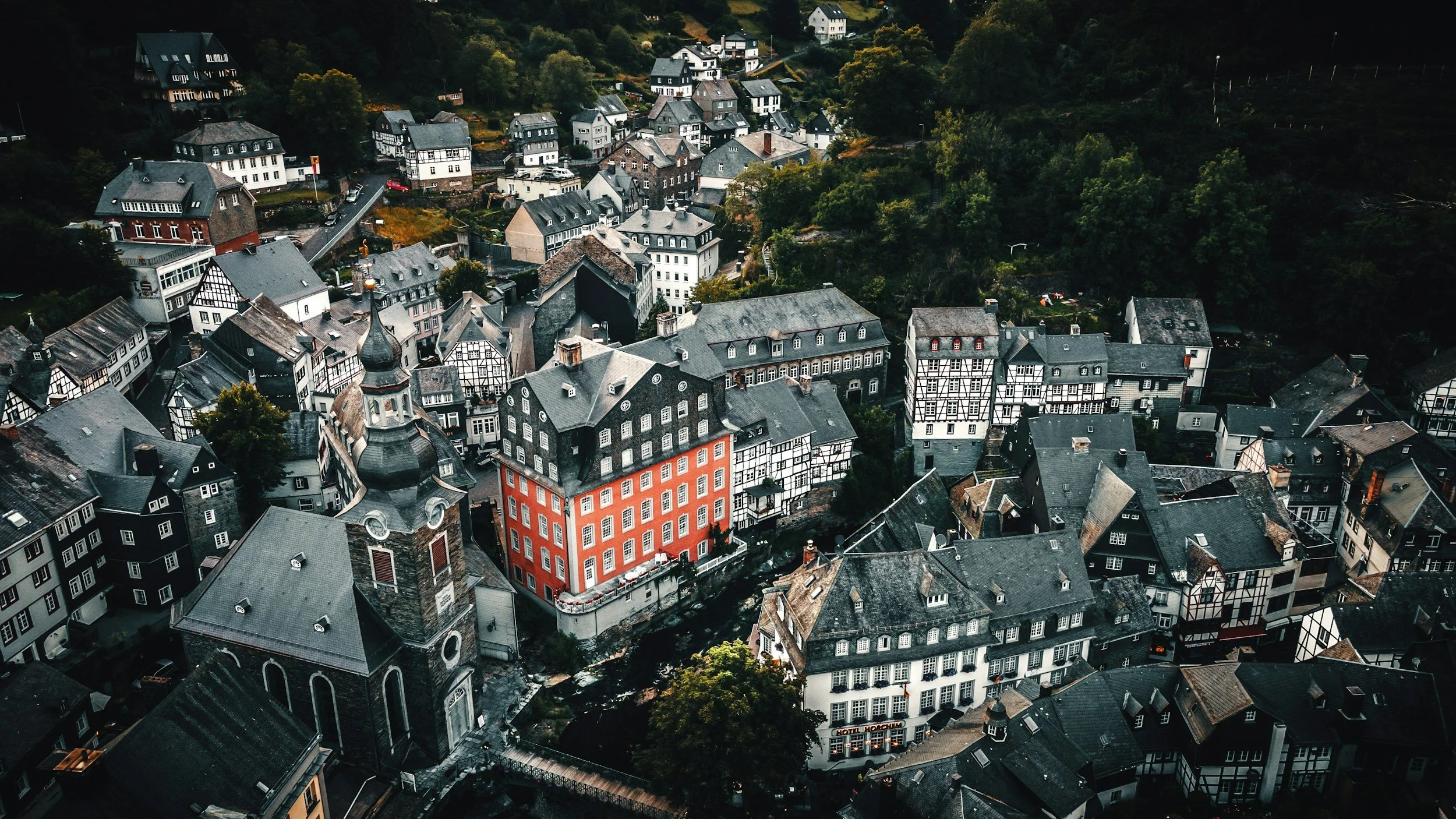
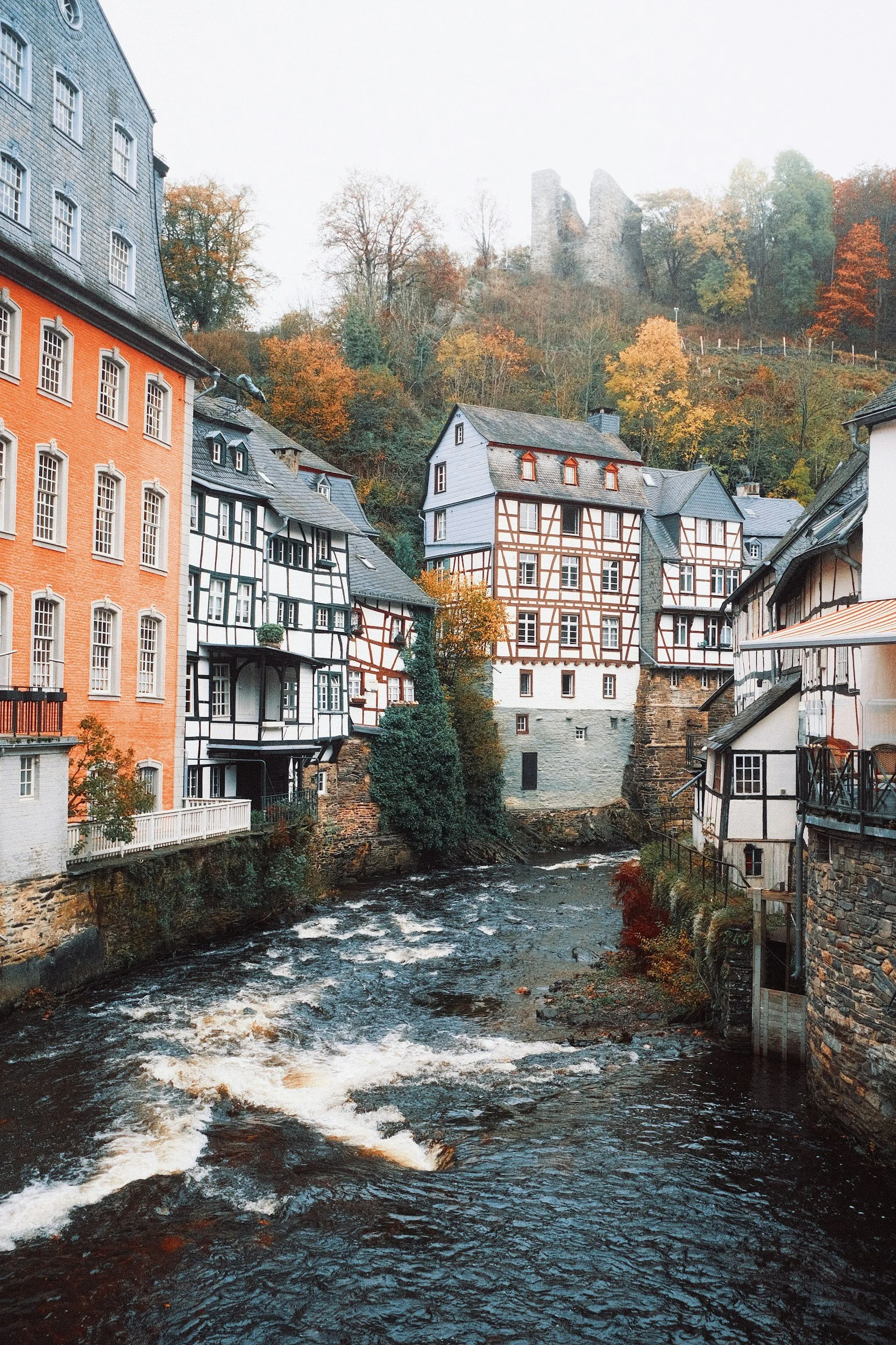
Two towns that capture the atmosphere of the Eifel particularly well are Monschau and Bad Münstereifel. Monschau sits deep in a narrow valley along the Rur River, where tightly packed half-timbered houses climb the hillsides above the water. Bad Münstereifel, about an hour away, is surrounded by preserved medieval town walls and quiet streets that still follow their original layout.
The wider region is also home to Eifel National Park, a protected area known for forests, hiking trails, and lakes such as Rursee, which attract visitors looking for nature rather than big-city sightseeing.
Because these towns are relatively close together, they work well as a short trip. In 24 hours in the Eifel, you can wander through medieval streets, stop in small cafés, and see a quieter side of western Germany that many travelers pass by on their way between Cologne and the Ardennes.
This guide shows how to spend a relaxed day exploring Monschau and Bad Münstereifel, two of the most characterful towns in the region.
How to Get to the Eifel from Cologne or Bonn
The Eifel region is surprisingly easy to reach from western Germany’s major cities. Cologne and Bonn are both about one hour away, which makes the area a popular weekend escape for locals.
If you’re traveling by car, the drive is simple and scenic, with quiet countryside roads leading through forests and small villages.
Public transport is also possible. Bad Münstereifel can be reached by regional train from Cologne, while Monschau is usually accessed by bus or car, as the town itself does not have a train station.
Many visitors combine a visit to the Eifel with time in Cologne or Aachen, making it an easy addition to a longer trip through western Germany.
Morning in the Eifel: Villages, Guesthouses, and Quiet Streets
Morning is one of the best times to experience the Eifel. The towns and villages here wake up slowly, and before the day-trippers arrive the streets often feel calm and almost residential.
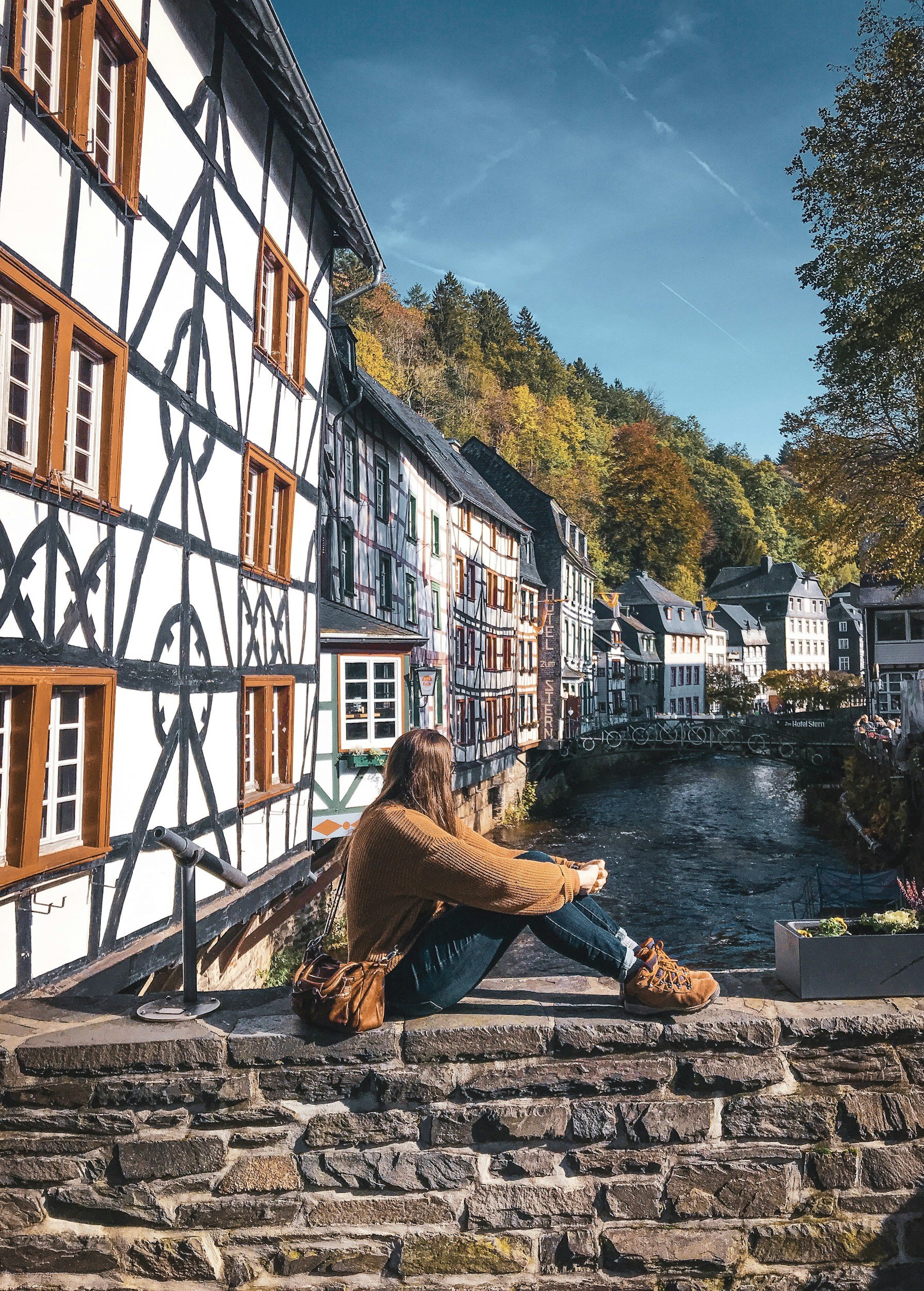
In places like Monschau, narrow streets follow the curves of the Rur River, with rows of dark timber-framed houses leaning slightly toward the water. Small bakeries begin opening early, and the smell of fresh bread drifts through the historic centre while locals stop in for coffee.
Many travelers stay in small family-run guesthouses or pensions, which are common throughout the region. These places often occupy historic buildings and tend to feel more personal than larger hotels. Breakfast usually includes regional breads, local cheese, and simple German pastries.
Walking through the village in the morning gives you time to notice the details - flower boxes on the windows, narrow alleys leading uphill, and the quiet sound of water moving through the town. It’s a gentle way to start the day before heading out to explore the wider Eifel landscape.
Best Places to Stay in the Eifel: Boutique Hotels & Guesthouses
If you prefer smaller places to stay, Löffelmühle Boutique Bed & Breakfast offers a quiet base for exploring the Eifel countryside. The property sits in the Elz Valley near the village of Monreal, an area known for its forested hills and walking trails.
The guesthouse occupies a restored historic mill, and the building still retains many of its original stone and timber features. With only a small number of rooms, the atmosphere feels calm and personal rather than hotel-like.
Staying somewhere like this works well for the pace of the Eifel region. Mornings are slow, with breakfast typically served in a shared dining space before guests head out to explore nearby towns such as Monschau or the walking routes in Eifel National Park.
Because the property sits in a valley surrounded by woodland, it’s especially quiet in the evenings. After a day of exploring the region, it’s the kind of place where people tend to settle in early, enjoy the surrounding landscape, and recharge before the next day’s drive through the Eifel.
The rooms are thoughtfully designed, with panoramic windows offering views of the surrounding forest and river. Whether you’re soaking in the tub or sipping coffee on the terrace, you’ll feel completely at ease. The chef prepares incredible local meals using fresh, regional ingredients - a true highlight of your stay. This place make it the perfect base for exploring the quiet beauty of the Eifel.
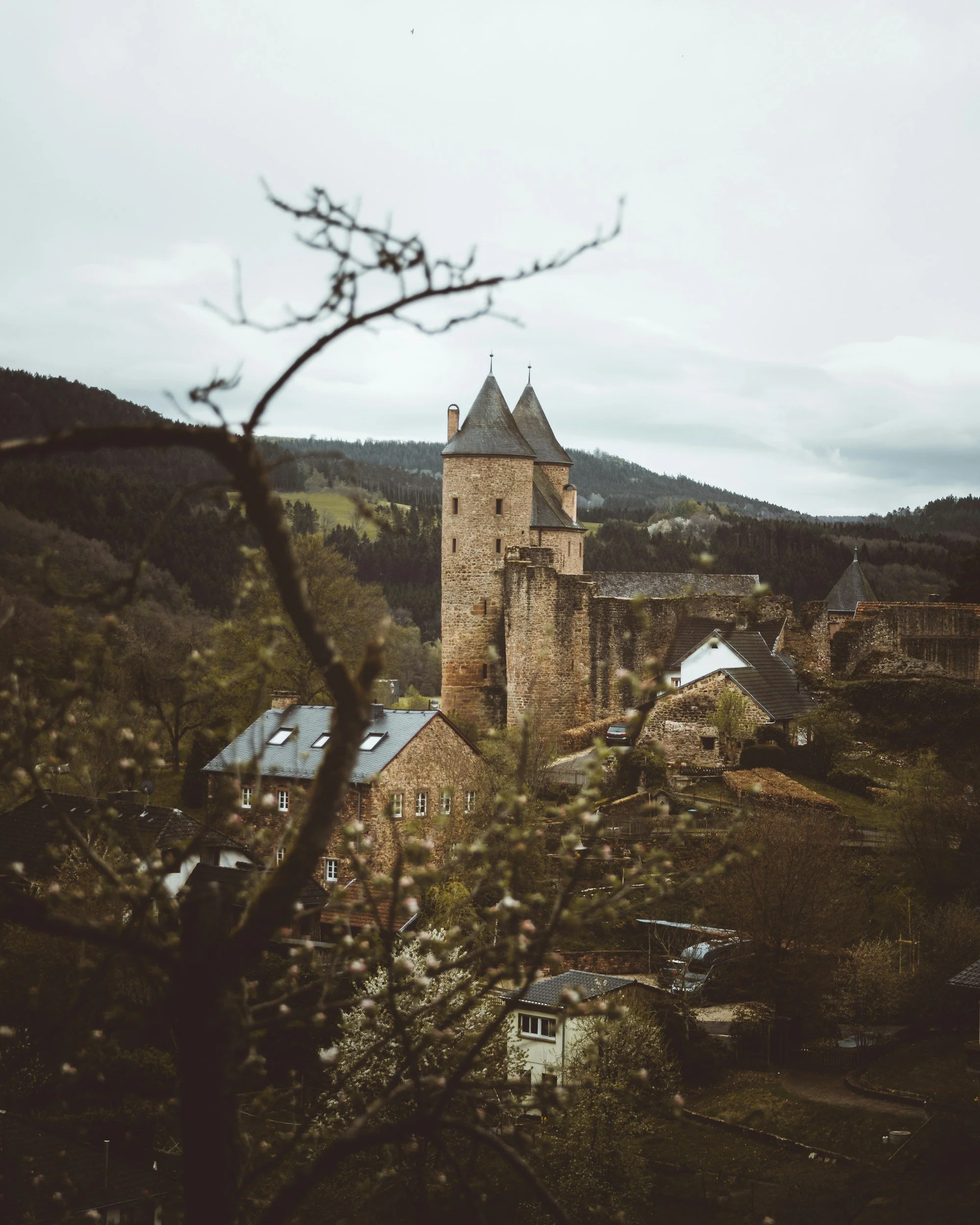
If you’re looking for a peaceful, cozy place to relax in the Eifel, Boutique Hotel Landhauszeit in Bad Münstereifel is just what you need. This charming, family-run hotel has everything you could want for a slow, easy getaway. It’s small, intimate, and offers that perfect mix of vintage charm and modern comfort.
When you walk into your room, you’ll instantly feel at home. Each space is thoughtfully decorated with a mix of vintage and contemporary touches, creating a warm, inviting atmosphere. The owners are incredibly welcoming, so you’ll feel like you’re staying with friends, not just at a hotel.
One of the best things about staying here? The craft beer selection. Yep! The owner, who’s a certified beer sommelier, has handpicked over 100 different craft beers, and there’s a self-service fridge on the terrace where you can grab a cold one whenever you want. It’s the perfect spot to unwind after a day of exploring, especially when you can enjoy a drink while soaking up the views of the Eifel landscape.
Breakfast here is another treat. The buffet is filled with fresh, local ingredients, many sourced from nearby markets and farms. It’s the kind of breakfast that makes you feel like you’re truly experiencing the local culture.
Breakfast in Monschau: Cafés and Local Flavours in the Eifel
Morning is one of the nicest times to experience Monschau. Before the day visitors arrive, the narrow streets along the Rur River are still quiet and the town feels almost residential.
Several small cafés and bakeries begin opening early around the historic centre. One well-known stop is Café Rur, located right by the river, where people often sit outside with coffee and pastries while watching the water move slowly through town. Another popular spot is Konditorei Café Am Roten Haus, a traditional pastry café known for cakes and German-style breakfast plates.
Many travelers staying overnight in the Eifel choose small guesthouses where breakfast is included. Two places known for their relaxed mornings are Löffelmühle Boutique Bed & Breakfast, located in the nearby Elz Valley, and Boutique Hotel Landhauszeit.
At Löffelmühle, breakfast is served in a bright dining room overlooking the surrounding forested valley. Fresh bread rolls, local butter, homemade jams, and strong German coffee create a simple but satisfying start to the day.
Landhauszeit offers a slightly more boutique atmosphere while still focusing on regional ingredients. Guests typically find a spread of good German bread, cheeses from the region, cold cuts, fresh fruit, and eggs prepared to order.
Whether you start the morning in a quiet guesthouse or a small café in the historic centre, breakfast in Monschau tends to set the tone for the rest of the day: slow, relaxed, and unhurried before exploring the streets and surrounding landscapes of the Eifel.
Things to Do in Monschau & Bad Münstereifel: Exploring Two of the Eifel’s Most Characterful Towns
After breakfast, the best way to experience the Eifel is simply to spend time walking through its historic towns. Both Monschau and Bad Münstereifel are compact, easy to explore on foot, and their historic centres still follow medieval street layouts that make wandering feel natural rather than rushed.
The two towns sit about 45 minutes apart by car, but they offer slightly different atmospheres. Monschau lies deep in a narrow river valley near the Belgian border, while Bad Münstereifel spreads out inside preserved town walls surrounded by forested hills.
Together, they give a very good sense of what makes the Eifel region special: historic towns that still feel lived-in, quiet streets, and easy access to nature just outside the centre.
If quiet landscapes appeal to you, Germany also has places where the night sky is still clearly visible. The Westhavelland Dark Sky Reserve near Berlin is one of the best locations in the country for stargazing.
Exploring Monschau
Monschau is one of the most recognisable towns in the Eifel region. The historic centre sits tightly along the Rur River, where rows of dark half-timbered houses line the water and narrow streets climb up the surrounding hillsides.
Most visits begin around Marktplatz, the small central square beside the river. From here you can easily wander through the historic streets, crossing the little bridges that connect both sides of town. Early in the morning or later in the afternoon, the atmosphere is especially calm, and it’s easy to take your time exploring without crowds.
One of the most interesting stops in town is the Historische Senfmühle Monschau, a traditional mustard mill that has been producing mustard using stone mills for more than 130 years. Visitors can step inside to see how the mustard is made and sample several varieties that are still produced using regional recipes.
For a view over the valley, walk up to Burg Monschau (Monschau Castle). The walk takes about 10–15 minutes from the town centre and leads through quiet streets and wooded paths. From the castle terrace, you can look down over the cluster of half-timbered houses along the river and the surrounding forested hills that frame the town.
Another historic landmark worth visiting is the Rotes Haus, an elegant red merchant house that once belonged to a wealthy cloth-trading family. Monschau became an important textile centre in the 18th century, and the museum inside the building gives a glimpse into how merchants and manufacturers shaped the town’s prosperity.
Even without a strict plan, Monschau is a place that rewards slow wandering. Small bakeries, artisan shops, and cafés appear around nearly every corner, and the sound of the river running through town creates a calm backdrop as you explore.
If Monschau is the main reason for visiting the Eifel, it’s worth spending more time exploring the town and its surroundings. The valley, river walks, and forest paths nearby make it easy to stay longer than planned.
You can find more ideas in this guide.
Discovering Bad Münstereifel
While Monschau sits in a narrow valley, Bad Münstereifel has the atmosphere of a classic walled medieval town.
The historic centre is surrounded by remarkably well-preserved town walls that date back to the 13th century, with several gates still marking the entrances to the town. One of the most recognisable is Orchheimer Tor, a tall stone gate that immediately signals you’re stepping into the historic part of the town.
Inside the walls, narrow streets lead past half-timbered houses, small boutiques, bakeries, and traditional cafés. The Erft River flows gently through the town centre, and small bridges connect the streets on both sides of the water. It’s the kind of place where people stroll slowly, stop for coffee, and sit along the riverbanks.
One of the town’s most important historic buildings is Stiftskirche St. Chrysanthus und Daria, a Romanesque church whose origins date back to the 11th century. The church played an important role in the early development of the town and still stands as one of the most significant historic landmarks in the region.
Bad Münstereifel is also known as a spa town, and the surrounding hills form part of the wider Eifel National Park landscape. Several hiking paths begin just outside the town walls, making it easy to combine a walk through the historic centre with time in nature.
Even a short walk outside town quickly leads into quiet forest paths where beech and spruce trees cover the hillsides. The contrast between the historic town and the surrounding countryside is part of what makes this area of the Eifel so enjoyable to explore.
Because the town combines medieval architecture with access to nature, it works particularly well for travelers who want to slow down and experience a quieter side of western Germany.
Why This Part of the Eifel Is Worth Visiting
Monschau and Bad Münstereifel may be smaller than Germany’s more famous destinations, but that’s part of their appeal. The towns feel authentic and easy to explore, and they offer a glimpse of everyday life in the Eifel region without the intensity of busier travel hubs.
Spending a day here often ends up being less about ticking off sights and more about simply enjoying the pace of the place - walking along the river, sitting in a café, or exploring a historic street that hasn’t changed much in centuries.
For travelers looking for a slower way to experience Germany, this part of the Eifel makes a surprisingly memorable stop.
Many German towns have small vintage stores and second-hand shops tucked between cafés and bakeries. If you enjoy browsing while traveling, it can be a fun way to experience the local shopping culture.
Where to Eat in the Eifel: Traditional German Food & Local Specialties
After a morning wandering through Monschau or Bad Münstereifel, lunch is the perfect moment to slow down and enjoy the food traditions of the Eifel. The region sits within the Rhineland, where cooking tends to be simple, hearty, and deeply tied to the surrounding countryside.
Menus in this part of Germany usually revolve around local staples like pork, potatoes, seasonal vegetables, and slow-cooked meat dishes. Many restaurants also work with nearby farms and regional producers, so ingredients often come from villages scattered across the Eifel hills.
Two places that work especially well for a relaxed midday stop are Em Höttchen in Bad Münstereifel and Zum Haller in Monschau.
Lunch at Em Höttchen, Bad Münstereifel
If you're exploring Bad Münstereifel’s historic centre, Em Höttchen is an easy and welcoming place to stop for lunch. The restaurant sits inside the medieval town walls, just a short walk from the main shopping street and the small bridges crossing the Erft River.
Inside, the space feels like a traditional Rhineland tavern. Wooden beams, simple wooden tables, and warm lighting create a relaxed atmosphere that fits perfectly with the slower rhythm of the town.
The kitchen focuses on regional German comfort dishes. You’ll often see schnitzel served with fried potatoes, hearty stews, and classic Rhineland favourites like Rheinischer Sauerbraten, a slow-cooked beef dish traditionally marinated with vinegar and spices. Another local staple you might spot on the menu is Reibekuchen, crispy potato pancakes that are common across the Cologne and Eifel region.
Many guests pair lunch with a regional Kölsch or German lager, which works well with the richer dishes.
On warmer days, the terrace is a great place to sit for a while and watch the quiet rhythm of the town. Bad Münstereifel is not a place people rush through, and lunch here tends to follow that same relaxed pace.
Lunch at Zum Haller Restaurant, Monschau
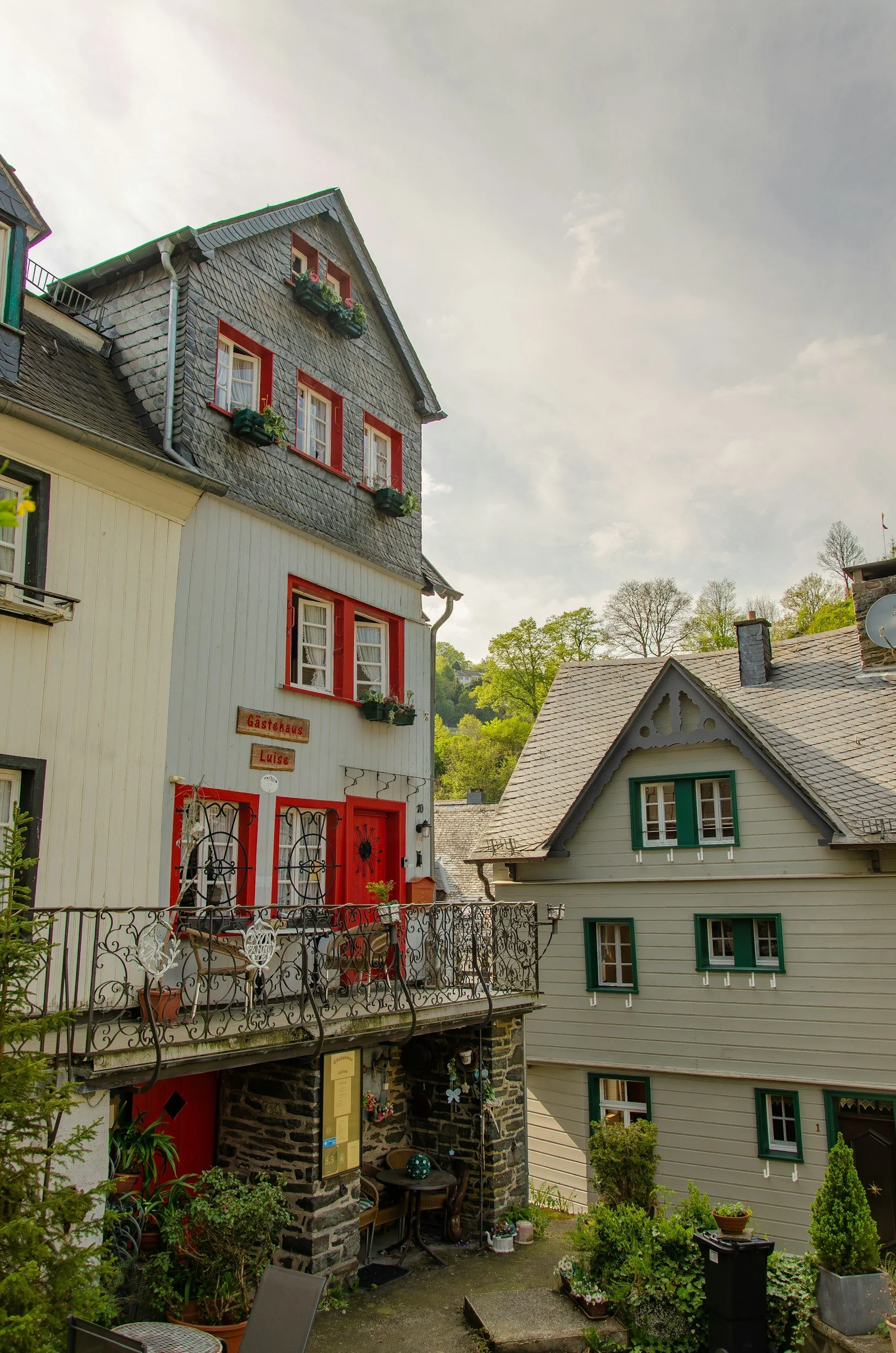
In the heart of Monschau’s historic centre, Zum Haller is one of those restaurants that feels like part of the town itself. The building sits within one of Monschau’s classic half-timbered houses, only a short walk from the Marktplatz and the Rur River promenade.
Inside, the atmosphere is warm and informal. Wooden interiors, a lively bar area, and closely spaced tables give the place the feel of a traditional German pub where locals and visitors mix easily.
The menu includes a mix of classic German dishes and casual pub favourites. Schnitzel is a popular choice here, often served with fries or potato salad, and you’ll also find soups, hearty meat dishes, and a few lighter options. Depending on the season, menus sometimes include Flammkuchen, a thin Alsace-style flatbread topped with crème fraîche, onions, and bacon that’s common across western Germany.
One thing many visitors notice is the friendly atmosphere. The owners, Jacqueline and Marco, are known for welcoming guests in a relaxed and personal way, which helps the restaurant feel more like a neighbourhood spot than a tourist stop.
Because Monschau attracts a steady stream of weekend visitors, especially during summer and autumn, reserving a table ahead of time can be a good idea.
A Quick Note About Food in the Eifel
One thing many travellers notice in this region is that lunch is still considered the main hot meal of the day. Restaurants tend to serve their most substantial dishes around midday, which is why stopping for a proper lunch works so well during a day of exploring the Eifel.
Meals here aren’t overly complicated or trendy. Instead, the focus is on simple dishes prepared well, generous portions, and food that feels satisfying after a morning walking through historic towns or hiking the surrounding hills.
In a region like the Eifel, that straightforward approach to cooking fits perfectly with the slower pace of travel that draws people here in the first place.
Eifel National Park & Surrounding Villages: Scenic Drives and Quiet Forest Walks
After lunch, it’s worth leaving the historic town centres for a while and exploring the landscape that defines the Eifel region. The area is known for its rolling volcanic hills, dense beech forests, and winding country roads, and even a short drive quickly shows how rural and peaceful this part of western Germany still is.
From both Monschau and Bad Münstereifel, you can reach the edge of Eifel National Park in under an hour. The park covers more than 110 square kilometres of protected woodland, valleys, and reservoirs, making it one of the largest continuous natural areas in western Germany.
Many visitors combine a town visit with a slow drive through the surrounding countryside, stopping at viewpoints, lakes, and trailheads along the way.
Walking in Eifel National Park near Schleiden
One of the easiest gateways into the national park is the small town of Schleiden, located about 30 minutes south of Monschau. From here, several marked trails lead directly into the protected forest landscape.
One of the most famous routes in the region is the Eifelsteig, a long-distance hiking trail that runs roughly 313 kilometres between Aachen and Trier. While the full trail is a multi-day adventure, shorter sections around Schleiden are perfect for a relaxed afternoon walk.
The landscape here is typical of the Eifel: quiet forest paths, small streams cutting through narrow valleys, and gentle hills covered in mixed woodland.
A particularly scenic area nearby is Rursee, one of the largest reservoirs in the region. Walking paths follow the shoreline and offer wide views across the water, with forested hills rising on the opposite side. Locals often come here for slow weekend walks or bike rides, especially in late spring and early autumn when the forests are at their most colourful.
Even a one-hour walk in the park is enough to get a sense of the quiet rhythm of the landscape.
Exploring the Countryside around Bad Münstereifel
If you're based in Bad Münstereifel, you don’t have to travel far to find good walking routes. The hills surrounding the town are filled with small paths that lead through fields, orchards, and wooded ridges typical of the northern Eifel.
Several marked trails begin just outside the medieval town walls and quickly lead into open countryside. Within minutes, the narrow streets of the historic centre give way to farmland, forest paths, and quiet rural roads.
From the higher paths above town, you can sometimes look back down into the valley and see the church towers and half-timbered roofs of Bad Münstereifel clustered along the Erft River.
The forests here are largely made up of European beech trees, which turn brilliant shades of gold and copper in autumn. During spring and early summer, the same hills are covered in bright green foliage and wildflowers along the edges of the trails.
Because the terrain is relatively gentle, you don’t need serious hiking experience to enjoy the area. Many visitors simply follow a marked path for an hour or two before returning to town for dinner.
Dinner in the Eifel: Monschau & Bad Münstereifel Restaurants
As the evening settles in, dinner is a chance to slow the pace even further and experience the regional food culture of the Eifel. The restaurants in this part of western Germany tend to focus on seasonal ingredients, traditional Rhineland cooking, and produce from nearby farms.
Meals are usually generous and comforting rather than elaborate. Many kitchens work with ingredients typical of the region such as game, mushrooms, potatoes, and locally raised meat, reflecting the agricultural landscape surrounding the Eifel hills.
If you’re staying around Bad Münstereifel or Monschau, one place that captures this regional approach particularly well is Restaurant Eifelei.
Dinner at Restaurant Eifelei, near Bad Münstereifel
Just outside Bad Münstereifel, in the small village of Rupperath, Restaurant Eifelei offers a more rural dining experience that reflects the landscape around it. The restaurant sits surrounded by fields and countryside, making it a peaceful place to end the day after exploring the Eifel.
The atmosphere is relaxed and welcoming. Inside, the space feels warm and rustic without being overly formal, with wooden interiors and soft lighting that create an easy, unhurried setting for dinner.
The kitchen focuses on regional Eifel cuisine, with many ingredients sourced locally. Seasonal vegetables, herbs, and salads often come directly from the restaurant’s own garden, while meat and other produce are sourced from nearby farms in the surrounding countryside.
Menus change depending on the season, but you’ll often find dishes that reflect the cooking traditions of the Rhineland. These can include slow-cooked meat dishes, regional stews, fresh vegetable plates, and lighter seasonal options alongside heartier classics.
Because the restaurant sits slightly outside the town centre, the setting feels particularly calm in the evening. Many guests linger over dinner, enjoying the slower rhythm of the countryside before heading back to their guesthouse or hotel.
It’s the kind of place that works well after a full day exploring the Eifel’s historic towns and forest trails!
Have you heard of Germany’s North Sea islands? If your idea of the perfect escape involves long coastal walks, wind in your hair, and not hearing a single engine all day - these islands might be exactly where you need to be. Check it out!
Dinner in Monschau: Restaurant Rur-Café
If you're staying in Monschau’s historic centre, Restaurant Rur-Café is an easy and reliable place to settle in for dinner. The restaurant sits right along the Rur River, only a short walk from the town’s Marktplatz and the historic bridges that cross the old town valley.
Inside, the atmosphere feels relaxed and traditional, with wooden interiors and a casual dining room that reflects the character of the surrounding half-timbered buildings. It’s the kind of place where hikers finishing a section of the Eifelsteig trail, locals, and visitors exploring Monschau all end up at the end of the day.
The kitchen focuses strongly on regional ingredients from the Eifel. According to the restaurant, more than half of the ingredients used in the dishes come from producers within the region. One of the more distinctive elements on the menu is meat sourced from German Weideschwein, a free-range heritage pig raised near the Kommern Open-Air Museum, about 30 minutes from Monschau.
Menus typically feature hearty Rhineland dishes, including pork specialties, seasonal vegetable plates, and comforting classics like schnitzel or slow-cooked meat dishes served with potatoes and regional sauces. Portions tend to be generous, reflecting the rural food traditions of the Eifel.
Because the restaurant sits directly in the historic centre, it’s an easy place to end the evening after walking through the narrow streets of Monschau. After dinner, many visitors take a short walk along the Rur promenade, where the town’s half-timbered houses reflect softly in the river.
Best Time to Visit the Eifel
The Eifel region can be visited throughout the year, but each season offers a slightly different experience.
Spring and early summer bring bright green forests and wildflowers along the hiking trails. This is one of the best times for walking in Eifel National Park and exploring the small villages without crowds.
Autumn is particularly beautiful in the region, when the beech forests turn shades of gold and copper across the hills. Many travelers visit Monschau at this time for slow walks and scenic drives.
Winter is quieter but still charming, especially in towns like Monschau where half-timbered houses and narrow streets create a cozy atmosphere during the colder months.
If wandering through Monschau’s narrow streets made you wish there were more towns like this, the good news is that Germany is full of them. Places where half-timbered houses lean over small rivers, cafés spill onto quiet squares, and evenings feel slower than they should in modern Europe. You can disvover a few more of these wonderfully atmospheric places here.
Why the Eifel Is One of Western Germany’s Most Underrated Regions
While Germany is often associated with destinations like Bavaria or the Black Forest, the Eifel remains one of the country’s quieter regions.
Instead of large tourist hubs, the area offers historic towns, forest landscapes, and small rural villages that feel genuinely lived-in. Places like Monschau and Bad Münstereifel allow visitors to experience traditional architecture, regional food, and countryside walks without the intensity of more heavily visited destinations.
For travelers who enjoy slower days (walking through old streets, stopping at local cafés, or exploring forest trails) the Eifel offers a different side of Germany that many international visitors still overlook.
FAQs About Visiting the Eifel Region
What is the Eifel region in Germany?
The Eifel region is located in western Germany, spanning parts of North Rhine-Westphalia and Rhineland-Palatinate. Known for its beautiful landscapes, the Eifel is a mix of rolling hills, dense forests, charming villages, and serene lakes. It’s one of the most peaceful and picturesque regions in Germany, offering a perfect escape for nature lovers, slow travelers, and those seeking a more relaxed, less touristy experience.
The region is also home to several nature parks and the Eifel National Park, making it an excellent destination for hiking, cycling, and exploring quaint towns like Monschau, Bad Münstereifel, and Blankenheim. The Eifel has a rich history and boasts medieval castles, historic sites, and traditional villages, making it an ideal location for those interested in culture and nature.
When is the best time to visit the Eifel region?
The Eifel region can be visited year-round, but the best times to go are in spring (April to June) and autumn (September to November). In spring, the region is lush and green, with flowers blooming across the countryside, making it perfect for hiking and outdoor activities. Autumn offers stunning foliage as the forests turn golden and red, creating a cozy, picturesque atmosphere.
If you're a fan of outdoor activities like hiking, biking, and nature walks, these seasons are ideal because the weather is mild and the crowds are thinner compared to the summer months. Winter can also be a magical time to visit if you enjoy a quiet, snowy landscape and the charm of small villages decorated for the holidays. However, it's best to check the weather forecast, as it can get chilly and occasionally snowy.
How do I get to the Eifel region?
Getting to the Eifel is easy from major cities in Germany, especially from Cologne (Köln) or Bonn. The Eifel is about a 1-2 hour drive from both cities, and you can reach it by car via the A1 or A61 highways. The region is also accessible by public transport, with several train connections from Cologne or Bonn to towns like Monschau and Bad Münstereifel.
If you're flying in, the closest airports are Cologne-Bonn Airport (CGN) and Düsseldorf Airport (DUS), both of which are about 1-1.5 hours away from the Eifel by car. You can also take a combination of train and bus services to get to smaller towns within the region. Car rentals are recommended if you want to explore the countryside at your own pace, especially if you plan to visit more remote spots like Schleiden or Blankenheim.
What are the best towns to visit in the Eifel region?
The Eifel is full of beautiful, quiet towns, each offering its own unique charm. Here are some of the best towns to visit:
Monschau: Known for its cobblestone streets, half-timbered houses, and stunning views of the Rur River, Monschau feels like a fairy tale. It’s a perfect spot for a peaceful stroll, with plenty of cafes, shops, and galleries to explore.
Bad Münstereifel: This town is famous for its historic town walls, charming medieval architecture, and boutique shopping. It’s also close to several nature reserves, making it a great base for hiking or exploring the countryside.
Blankenheim: A small village surrounded by beautiful forests, Blankenheim is perfect for a quiet retreat. Don’t miss the Blankenheim Castle and its stunning views over the surrounding hills.
Schleiden: Situated within the Eifel National Park, Schleiden is a nature lover’s paradise. It’s the perfect starting point for hikes through the national park and a great place to enjoy the region’s outdoor beauty.
What outdoor activities can I do in the Eifel?
The Eifel region is a haven for outdoor enthusiasts, offering a wide range of activities for nature lovers:
Hiking: The Eifel boasts hundreds of kilometers of hiking trails, including routes in the Eifel National Park and around beautiful lakes like Rursee. There are trails for all levels, from leisurely walks to more challenging hikes up the hills.
Cycling: The region is also great for cycling, with scenic bike paths running through forests, valleys, and charming villages. The Vennbahn Cycle Route is a popular choice, stretching from Belgium to Germany through the stunning Eifel landscape.
Nature Walks: If you prefer a slower pace, take a nature walk through the Eifel National Park or along the Rur River. The region’s wildlife, including deer, wild boar, and various bird species, makes it a fascinating place for nature lovers.
Wildlife Watching: The Eifel is home to diverse wildlife, especially within the Eifel National Park. If you're an animal lover, this region offers opportunities to spot wildlife in its natural habitat, including deer, wild boar, and various birds of prey.
What should I eat in the Eifel region?
The Eifel is known for its hearty, comforting food, influenced by both German and Belgian cuisine. Here are a few must-try dishes when you visit:
Sauerbraten: A marinated beef dish, typically served with red cabbage and potato dumplings. It's a true classic of Eifel cuisine.
Reibekuchen: German-style potato pancakes, crispy on the outside and soft on the inside, often served with applesauce or smoked salmon.
Flammkuchen: A type of flatbread, usually topped with cream cheese, onions, and bacon—great for a light lunch or snack.
Craft Beer: The Eifel is home to several local breweries, and the region’s craft beer is worth trying. Be sure to visit a local tavern or beer garden to sample the flavors of the region.
What are some hidden gems in the Eifel?
The Eifel is full of hidden gems that are perfect for slow travel. Here are some spots that you won’t want to miss:
Eltz Castle: One of the most beautiful castles in Germany, tucked deep in a forested valley. It’s less crowded than other castles and offers a fairy-tale atmosphere.
Rursee: A peaceful lake surrounded by forests, great for a boat ride, kayaking, or just relaxing by the shore.
Wildpark Daun: A wildlife park where you can see native animals, including wild boar, deer, and bison, in a natural setting.
Schloss Türnich: A beautiful castle surrounded by lovely gardens and peaceful walks, perfect for a quiet afternoon.
Is the Eifel region good for solo travelers?
Yes! The Eifel is a fantastic destination for solo travelers. The quiet villages, safe environment, and peaceful nature walks make it an ideal destination for anyone looking to unwind and connect with nature. Whether you want to spend your time hiking, cycling, or simply exploring the small towns, the Eifel offers a calm and welcoming atmosphere for solo travelers.
Can I visit the Eifel region on a budget?
Absolutely! The Eifel is a great destination for budget-conscious travelers. Many of the region’s hiking trails, parks, and villages are free to explore, and accommodation options range from affordable guesthouses to cozy B&Bs. Local food is reasonably priced, and many restaurants serve hearty, filling meals without breaking the bank. If you’re looking to save on transportation, you can also use the Eifel regional train network, which is convenient and affordable.