
The German cities I'd choose for second-hand shopping
Second-hand shopping in Germany doesn’t follow one pattern, and that’s usually where things go wrong if you arrive without a plan.
In Berlin, you can walk out of Humana with a bag full of pieces for under the price of a lunch, then be standing 20 minutes later in Soeur looking at a single wool coat that costs ten times more. Both are normal stops on the same route, but they require completely different approaches.
In Hamburg, it’s less about choice and more about staying in the right place. Once you arrive at Sternschanze, you can spend hours moving between Schulterblatt and Susannenstraße without needing transport or checking directions. In Cologne, the day tends to start with a 15-minute walk from the Hauptbahnhof to Ehrenstraße, and after that, everything sits within a few blocks, whether you planned it or not.
Munich is where you notice the gaps. Shops are further apart, prices are higher, and you don’t keep browsing for long without deciding what you’re actually looking for. Leipzig and Stuttgart are quieter again. You’re not moving between ten places. You’re walking into one small shop, then another, often with a longer stop in between because there isn’t a clear next step.
This guide follows that reality. It’s not a list of shops to tick off, but a way to move through each city without losing time. Where to start, how far things actually are, when it makes sense to stop, and what kind of shops you’re walking into before you get there.
And if you’re planning around the seasons, this round-up of spring markets in Europe pairs well with second-hand browsing, especially if you enjoy mixing vintage finds with outdoor market days.
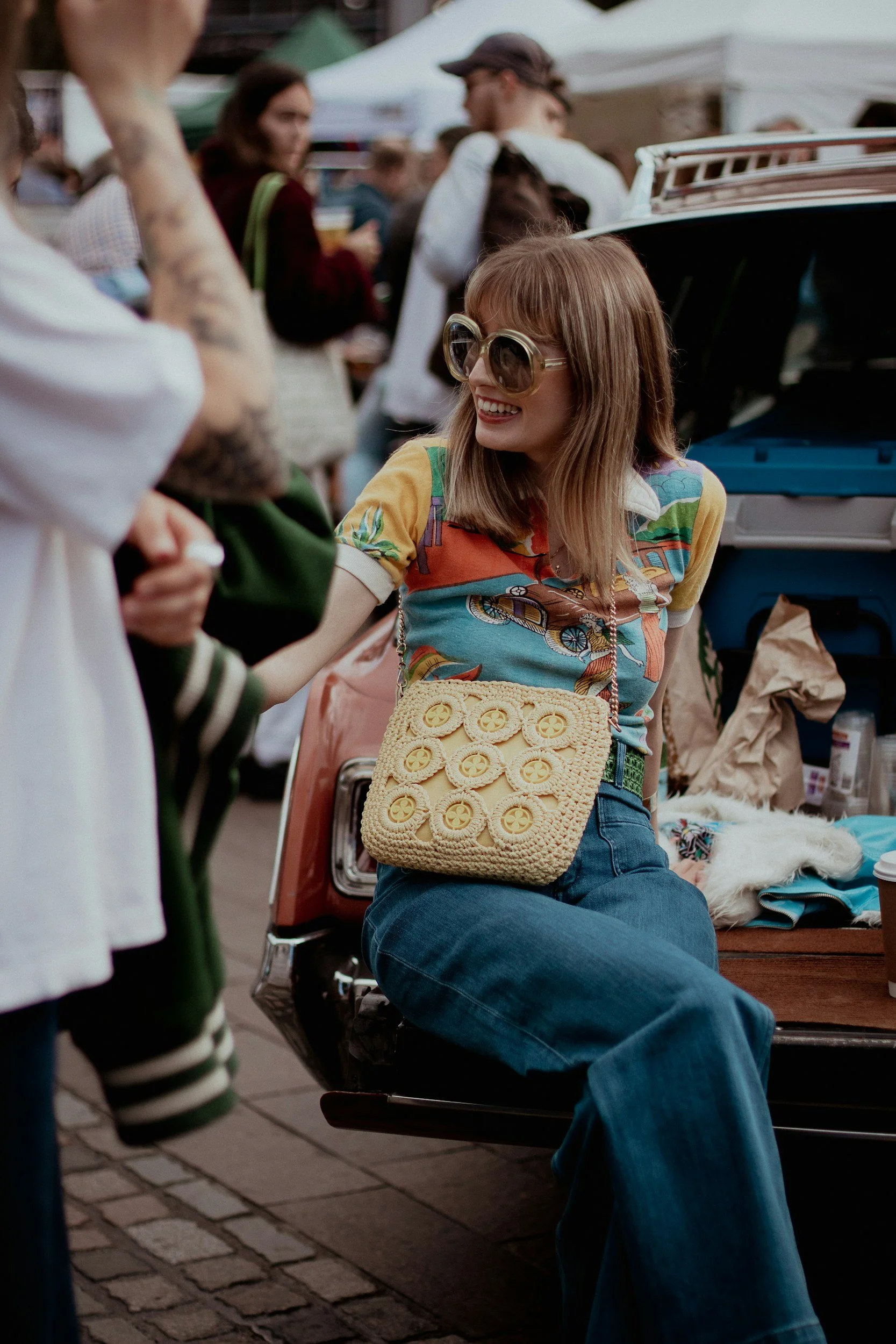
Find real one-offs at #HAHAYOUREUGLY in Berlin
Berlin: where volume, price, and design resale all exist within walking distance
Berlin is one of the few cities where second-hand shopping can take up an entire day without feeling repetitive, but only if you structure it properly. The mistake most people make is moving randomly between shops, which turns into long walks with no clear progression. It works better to divide the city into areas and treat each one as a focused block of time.
The Humana store at Humana is one of the largest second-hand spaces in Europe, and it helps to approach it with a plan rather than curiosity alone. The closest station is Frankfurter Tor on the U5 line, and the entrance is visible as soon as you exit the station, so there is no searching involved.
The building has multiple floors, and each level is organised by category rather than style. The ground floor tends to rotate faster with seasonal items, while upper floors carry heavier pieces like coats, tailoring, and older stock that hasn’t been filtered into trend-focused racks. Prices are low compared to most curated vintage stores, but that comes with the trade-off that you need time. There is no quick way through it.
Arriving close to opening, usually around 10:00, makes a noticeable difference. By midday, the aisles become tighter and the pace slows down. A practical way to move through is to choose one category at a time rather than scanning everything. For example, go through all outerwear first, then denim, then shirts, and stop once you feel your attention dropping. Staying longer rarely improves results.
Once you leave, walking toward Boxhagener Platz takes around 12 to 15 minutes. The streets shift from wide intersections to smaller blocks with cafés and independent shops. If it’s a Sunday, the market at the square runs most of the day and is worth including. On weekdays, the surrounding streets like Grünberger Straße and Gabriel-Max-Straße have smaller second-hand stores that are easier to browse because the selection is already reduced.
A short coffee stop helps here rather than pushing straight into more shops. Silo Coffee on Gabriel-Max-Straße opens early and fills up before noon, so arriving just before 11:00 usually works. If you stay longer in the area, the cafés around the square are easy to drop into without needing a reservation.
Not every trip needs to be about cities and shops. This look at Westhavelland Dark Sky Reserve shows how easy it is to combine Berlin with open landscapes and stargazing without needing a car.
Hamburg: structured neighbourhoods that are easy to repeat
Hamburg works well if you stay within one neighbourhood rather than trying to move across the city. Distances between districts are larger than they appear on a map, and once you start relying on S-Bahn or U-Bahn between each stop, the day becomes fragmented. Schanzenviertel is the most practical starting point because everything sits close together and the streets are easy to move through without planning every step.
Arriving at Sternschanze station keeps things simple. Both the S-Bahn and U-Bahn connect here, and once you exit, you are already in the area where most of the shops are located. From the station, walking toward Schulterblatt takes less than five minutes, and that street acts as a natural starting line rather than something you need to search for.
The advantage of Schanzenviertel is that you can keep your route tight. Most second-hand shops are within a 5 to 10-minute walk of each other, which means you are not constantly checking directions or thinking about transport. Streets like Schulterblatt, Susannenstraße, and Bartelsstraße form a loose triangle where you can move between shops without repeating the same path too often.
Vintage & Rags fits naturally as a first stop because of its location close to the main street. Starting here gives you a clear reference point before moving outward into smaller shops. The layout inside is structured, with categories separated clearly, so it does not take long to understand what is worth spending time on. Once you leave, you can continue along Schulterblatt and turn into side streets where the selection becomes more varied.
What helps in Hamburg is that the pace stays consistent. You are not dealing with large crowds in the same way as central Berlin, but the area is still active enough that cafés, bakeries, and shops are open throughout the day. It makes it easier to build small pauses into your route without stepping away from it completely.
A typical rhythm here is to move through two or three shops, then stop briefly rather than pushing through everything at once. Café Elbgold is positioned in a way that works well for this. It opens early, and if you arrive before noon, you can usually find a table without waiting. It is close enough to the main streets that you can return to shopping within a few minutes.
If you continue toward Susannenstraße, the shops become slightly smaller and more selective. This is where it makes sense to slow down a bit and look more carefully, because the volume is lower but the pieces are often more consistent. Distances remain short, usually no more than a few minutes between each stop, so you can move without needing to plan each turn.
From there, walking toward Karolinenviertel takes around 10 minutes and adds another layer to the route without making it complicated. The transition between the two areas is gradual, and you will notice the shift mostly in the type of shops rather than the layout of the streets. Karolinenviertel has fewer stores overall, but they tend to feel more independent and slightly less picked over.
It is easy to extend the day here without adding complexity. Once you reach Karolinenviertel, you can either loop back toward Sternschanze or continue slightly further toward Feldstraße if you want to include a few additional stops. Walking times remain short, and you are rarely more than 15 minutes from where you started.
Food breaks are easier to manage in Hamburg than in some other cities because you do not need to leave the area to find something decent. For something more substantial, Bullerei is within walking distance, though it works better if you plan ahead. Otherwise, smaller cafés and bakeries throughout Schanzenviertel are enough to keep the day moving without interruptions.
Second-hand shopping often leads you to smaller towns you wouldn’t otherwise visit. If you want somewhere that feels straight out of a storybook, this guide to spring in Monschau is worth bookmarking for a future weekend.
Soeur – Designer Second-Hand with Timeless Style, Berlin
Soeur sits in a different category from Humana, and it helps to adjust your expectations before you walk in. This is not a place where you spend an hour searching through racks. It is a smaller, more controlled space where most of the work has already been done for you.
Soeur is located a few minutes from Rosenthaler Platz on the U8 line. When you exit the station, you come up onto Torstraße, which is a busy main road with steady traffic and a mix of cafés and small shops. From there, it is usually a 3 to 5-minute walk depending on which exit you take. The shop sits slightly set back from the busiest stretch, so it is easy to miss if you are walking quickly. It is worth slowing down and checking the storefronts rather than relying only on Google Maps.
Opening hours are typically late morning, around 11:00, and arriving close to that time changes the experience. The shop is quiet, the racks are untouched for the day, and you can move through the space without interruption. By early afternoon, especially after 14:00, the area around Rosenthaler Platz becomes noticeably busier, and that carries into the shop as well.
Inside, the layout is intentionally spaced. There are fewer racks, and each one has room around it, which means you are not flipping through items quickly. Pieces are grouped loosely by type rather than strictly by size, so you need to scan more carefully. Coats and structured jackets are often placed along the walls, while lighter items like shirts and dresses are closer to the centre.
The selection leans toward neutral tones and classic cuts rather than trend-driven pieces. You will see a lot of wool coats, blazers, silk shirts, and well-made trousers. Brands are mixed, but the condition is consistently good, which is the main difference compared to larger second-hand stores. Pricing reflects that, so it makes more sense to focus on one or two pieces rather than browsing without direction.
If you are looking for something specific, it is worth asking. Not everything is always on display, and staff will often know if there are similar pieces in the back or recently added stock that hasn’t been fully arranged yet. This works particularly well if you are looking for tailoring or outerwear in a certain size.
From Soeur, walking toward Hackescher Markt takes around 10 minutes at a normal pace. The route along Torstraße and then down toward Rosenthaler Straße is straightforward, and you pass several smaller resale and concept stores along the way. These shops often focus on contemporary brands rather than vintage, and many do not advertise themselves clearly as second-hand. It is common to see a mix of new and resale pieces in the same space, so stepping inside when something looks relevant works better than relying on labels.
If you continue toward Hackescher Markt, the streets become narrower and more crowded, especially in the afternoon. The area around the S-Bahn station fills up quickly after lunch, which makes browsing less comfortable. Late morning, between 11:00 and 13:00, is usually the most manageable window.
A break before reaching that point helps keep the pace steady. Father Carpenter is a short detour from the main route and works well if you arrive before peak hours. Distrikt Coffee is slightly further north, closer to Rosenthaler Platz, and is easier to include before you start walking toward Hackescher Markt. Both open in the morning, but queues start building around midday, so earlier is easier.
Structuring this part of Mitte as a short loop makes it more practical. Start at Soeur, move toward Rosenthaler Straße, continue down to Hackescher Markt, then either circle back or continue into the side streets depending on how much time you have. Distances are short, usually under 10 minutes between each point, so there is no need to overplan the route. The main decision is timing, not distance.
Munich: fewer shops, higher prices, more planning required
Munich is not a city where second-hand shopping works on instinct. The shops are more spread out, opening hours can be less predictable than in Berlin or Hamburg, and the pricing is noticeably higher. It still works if you approach it with a clear route and accept that you will visit fewer places with more intention.
The most practical starting point is around Sendlinger Tor because it connects several U-Bahn lines (U1, U2, U3, U6, U7, U8), and from there you can walk into areas where second-hand shops are concentrated without needing additional transport. The streets around here are busy but easy to navigate, with wide pavements and clear routes toward smaller neighbourhoods.
Picknweight is one of the easier places to begin because it does not require much context. The weight-based pricing system means you are not evaluating each item individually in the same way as in curated shops. Racks are organised by colour categories, and the price per kilo is clearly displayed, so you can move through it with a bit more structure.
It still requires time. Like most weight-based stores, the selection is mixed, and you need to go through racks carefully to find pieces that justify the price once weighed. The lighting is bright and the layout is straightforward, which helps you stay focused rather than drifting between sections. An hour is usually enough here. Staying longer rarely changes the outcome.
From Sendlinger Tor, walking toward Glockenbachviertel takes around 10 to 15 minutes. The route is simple if you follow Blumenstraße and then cross into the smaller streets near Müllerstraße. You will notice the shift gradually rather than suddenly. Traffic becomes lighter, storefronts smaller, and the pace slows slightly.
Glockenbachviertel is where Munich’s more curated second-hand shops sit. They are not large, and you will not find many of them, but the selection tends to be more consistent. Stores here focus on quality rather than volume, which means fewer items on display but less time wasted going through pieces that are not worth considering.
The layout in these shops is closer to designer resale than vintage bulk. Items are spaced out, often grouped by colour or type, and the condition is usually very good. Pricing reflects this. It is common to see coats, blazers, and knitwear at levels closer to boutique resale than traditional second-hand, so it helps to arrive with a clear idea of what you are looking for rather than browsing without direction.
Walking distances between shops in Glockenbach are short, usually 3 to 5 minutes, but they are not always on the same street. It is better to move slowly and notice what is around you rather than following a strict list. Some of the smaller stores do not stand out immediately, and you can easily walk past them if you are moving too quickly.
Timing matters more in Munich than in other cities. Many shops open around 11:00 and close earlier in the evening, often by 18:00 or 19:00. Sundays are completely closed, which means you need to plan around weekdays or Saturdays. Late morning into early afternoon is the most reliable window, especially if you want to combine multiple stops without interruptions.
A short break between areas helps keep the pace steady. Café Frischhut is located close to Viktualienmarkt, which sits between Sendlinger Tor and Glockenbachviertel. It works well as a midpoint stop rather than an end-of-day break. You can step in, have something quick, and continue without losing momentum.
If you want to extend the route slightly, moving toward the Isar river from Glockenbachviertel takes around 10 minutes. There are fewer shops in that direction, but it gives you a natural endpoint rather than looping back through the same streets. From there, you can either walk back toward the centre or take public transport from Fraunhoferstraße station.
The main difference in Munich is that you are not covering a large number of shops. A realistic plan is two to four stops within a few hours, with time in between to move slowly and make decisions properly. Trying to fit in more usually leads to unnecessary walking and less focus inside each store.
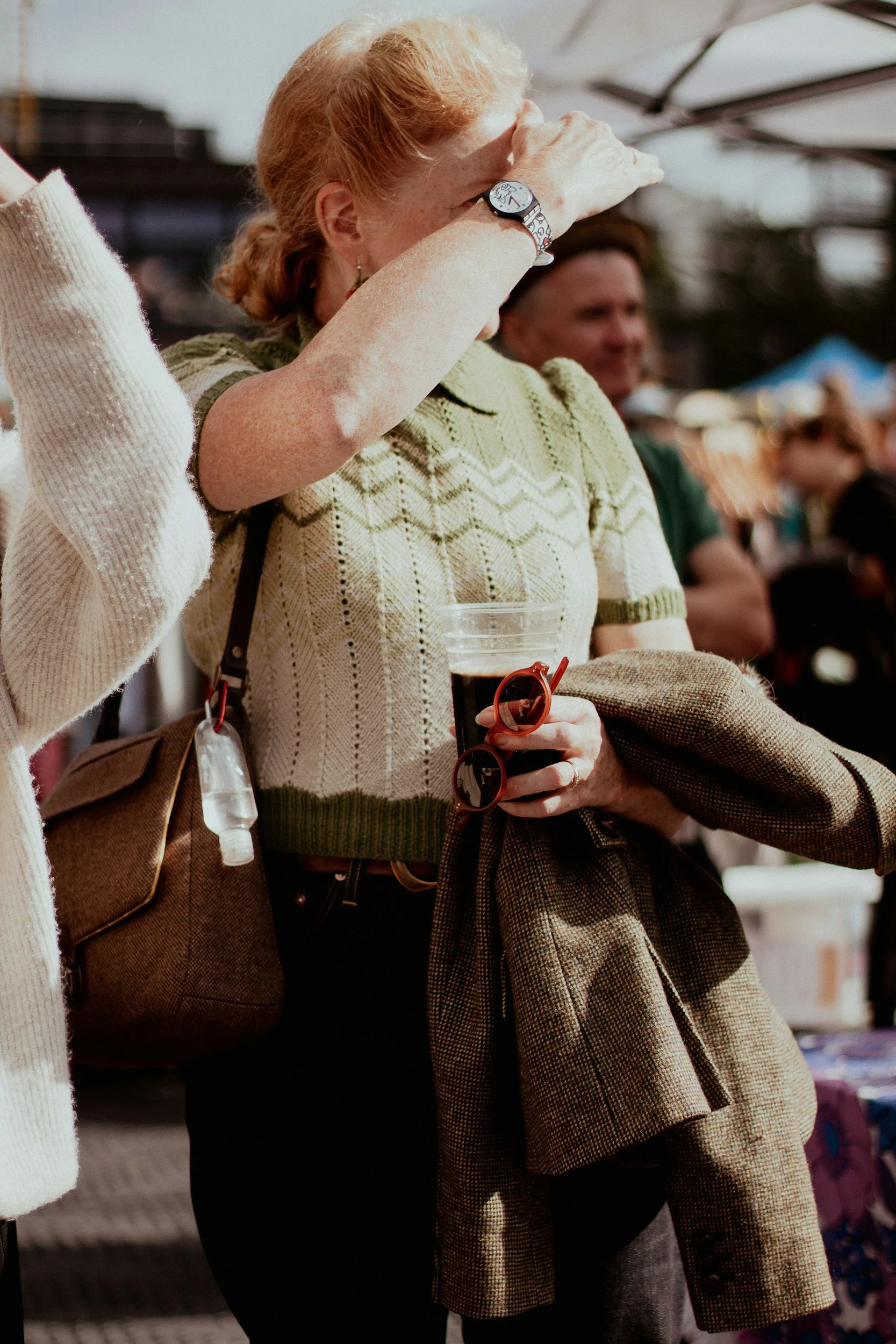
Leipzig: slower pace, smaller shops, more curated selection
Leipzig is easier to approach if you treat it as a half-day rather than trying to build a full shopping route. The second-hand scene is present, but it is quieter and more local, and the shops are not arranged in a way that allows you to move quickly between them. Plagwitz and Südvorstadt are the two areas that make the most sense, and it works better to choose one and stay there rather than trying to cover both in a single stretch.
Plagwitz sits slightly outside the centre and is easiest to reach by tram. From Leipzig Hauptbahnhof, tram lines like 14 or 3 take around 10 to 15 minutes depending on the stop. Getting off near Karl-Heine-Straße places you directly into the area where most of the shops and cafés are located. The street itself runs long and straight, with smaller side streets branching off, so it is easy to navigate without checking directions constantly.
The shops here are smaller and more selective. You will not find large volumes of clothing, and the racks are usually spaced out with fewer items on display. This means you spend less time searching but more time deciding. Prices vary, but they are often reasonable compared to Berlin’s curated shops, partly because turnover is slower and the audience is more local.
Walking between shops in Plagwitz is straightforward. Most are within 5 to 8 minutes of each other, and the route naturally follows Karl-Heine-Straße. If you step into side streets, distances remain short, but it is easy to drift away from the main line, so it helps to keep the street as your reference point.
Cafés are part of the structure here rather than something you add in later. Café Kune sits close to the main street and works well as a longer stop. It opens in the morning and stays steady throughout the day without becoming crowded in the same way as central Leipzig. Sitting down for 30 to 45 minutes fits better with the pace of the area than moving continuously between shops.
If you choose Südvorstadt instead, the route changes slightly. The area is closer to the centre and runs along Karl-Liebknecht-Straße, which is one of the main streets for cafés, bars, and smaller shops. From the Hauptbahnhof, it is around 10 minutes by tram, and once you arrive, everything is positioned along or just off that street.
Südvorstadt feels more active than Plagwitz, especially in the afternoon and early evening, but it is still manageable. The second-hand shops here are mixed in with other independent stores, so you need to pay attention rather than expecting clear clusters. Distances are short, usually under 5 minutes between stops, but they are not always in a straight line.
Timing matters less in Leipzig compared to Munich, but late morning into early afternoon still works best. Shops open around 11:00, and by mid-afternoon the streets become busier, particularly in Südvorstadt. Plagwitz remains more consistent throughout the day.
The main difference in Leipzig is that you are not trying to maximise the number of shops. The structure is slower, with fewer stops and longer pauses in between. Once you accept that, it becomes easier to move through the area without feeling like you are missing something.
Solo shopping trips have their own kind of freedom. This guide to solo second-hand shopping in Europe is helpful if you love wandering markets and shops at your own pace.
Stuttgart: spread out, but still workable with a plan
Stuttgart requires more planning than most other German cities because the second-hand shops are not grouped closely together, and the city itself is built across hills, which affects how you move between areas. Walking is still possible, but distances and elevation make it less straightforward, so it helps to focus on one neighbourhood at a time.
The Bohnenviertel area is one of the more practical places to start because it sits close to the centre but feels slightly removed from the main shopping streets. From Stuttgart Hauptbahnhof, it takes around 10 to 15 minutes on foot, depending on your route. The walk involves a slight incline, which is typical for Stuttgart, so it is worth factoring that into your timing.
Once you arrive, the streets become narrower, and the layout changes from large retail blocks to smaller buildings with independent shops. The second-hand stores here are not large, and the selection is limited compared to Berlin or Hamburg, but the pieces are often in good condition and more carefully chosen.
The shops are not always immediately visible from the main street. Some sit slightly back or on side streets, so it helps to slow down and look at entrances rather than walking quickly through the area. Distances between them are short, usually under 5 minutes, but the elevation can make it feel longer if you are moving up and down the streets.
Because the number of shops is smaller, it makes sense to spend more time in each one. Browsing here is less about covering ground and more about looking carefully at what is available. Prices tend to be mid to high, reflecting the more curated nature of the selection.
Cafés in Bohnenviertel are spaced out but easy to include in your route. Smaller bakeries and coffee spots open in the morning and remain steady throughout the day. Taking a break after two or three shops works better than trying to move continuously, especially because of the terrain.
If you want to extend beyond Bohnenviertel, moving toward the area around Marienplatz is possible by U-Bahn in around 5 minutes, or on foot in 20 to 25 minutes depending on pace. There are a few additional shops in that direction, but they are not concentrated, so it only makes sense if you have extra time rather than trying to build a full route around them.
Timing is more important in Stuttgart because many smaller shops close earlier, often around 18:00, and some may have shorter opening hours during the week. Late morning into early afternoon is the most reliable window. Sundays are closed, which means planning around weekdays or Saturdays is necessary.
If you like your vintage finds with a side of culture, this guide to Görlitz and slow travel in Saxony shows how architecture, small shops, and slower days come together in one of Germany’s most atmospheric towns.
What a day of second-hand shopping actually looks like in Germany
What tends to stay with you after a day like this in Germany is how different each city handles second-hand in practical terms.
In Berlin, the contrast is immediate. You can start at Humana at 10:00, spend an hour working through coats and denim across two or three floors, then take the U5 or U8 across the city and be standing inside Soeur before lunchtime. The shift isn’t subtle. At Humana, you’re moving through dense racks, checking labels quickly, deciding fast. At Soeur, you’re looking at maybe 30 to 40 pieces in total, spaced out, with prices that make you stop and think before touching anything. Both are normal parts of the same day, and the travel between them is usually under 20 minutes.
For something softer and slower, this piece on a mindful weekend in Germany’s fairy-tale towns is perfect if you’re craving cobblestones, calm streets, and cafés between second-hand stops.
In Hamburg, the structure is tighter. You arrive at Sternschanze, exit onto Schulterblatt, and stay within a few streets for the next few hours. From Vintage & Rags, you can walk to three or four other shops within 5 minutes each without needing directions. Most people move between Schulterblatt and Susannenstraße, then drift slightly toward Karolinenstraße if they want to extend the route. A coffee at Elbgold usually happens somewhere in the middle rather than at the start or end, because it sits right in the flow of that loop.
Cologne is even more contained. From the Hauptbahnhof, it’s a straight 15-minute walk past Schildergasse until you reach Ehrenstraße. Once you’re at Vintage Revivals, you’re already in the right place. From there, it’s about 7 minutes on foot to Brüsseler Platz, where you’ll find two or three smaller shops within the surrounding streets. Most people stop at Café Belgica without planning to, simply because it sits directly on the route. After that, it’s another 5 to 10 minutes toward Rudolfplatz, and that’s usually where the loop ends.
Munich requires more decisions. Starting at Picknweight works because it’s central, but from there you have to choose whether to continue toward Glockenbachviertel or stop after one or two shops. The walk to Müllerstraße takes around 12 minutes, and once you’re there, the shops are smaller and more spread out. You might visit two places within 20 minutes, then walk another 5 minutes to find the next one. Prices are higher, so most people leave with one item rather than several. A stop at Café Frischhut near Viktualienmarkt often fits between these two areas rather than at the end of the day.
Leipzig moves slower in a practical sense. In Plagwitz, you get off the tram near Karl-Heine-Straße and stay on that street for most of the visit. Shops are spaced every few minutes, but you’re not moving quickly between them. You might spend 20 minutes in one, then walk 3 minutes to the next, then sit down at Café Kune for longer than planned before continuing. There’s no clear “route” beyond following the main street and stepping into places as you pass them.
Stuttgart is more about adjusting to the layout of the city. From the Hauptbahnhof, it’s about 10 to 15 minutes on foot to Bohnenviertel, and the walk includes a gradual incline. Once you’re there, shops are close together, but the streets are smaller and slightly uneven, so moving between them takes a bit more time than the distance suggests. You might visit two shops within 10 minutes of each other, then stop at a bakery nearby because there isn’t a clear next step. Extending beyond that area usually means taking the U-Bahn rather than continuing on foot.
If you keep these details in mind before you start, the day becomes easier to manage.
If you’re in western Germany and want a slower day trip between vintage stops, this guide to 24 hours in the Eifel is a good reminder that quiet places are often closer than you think.
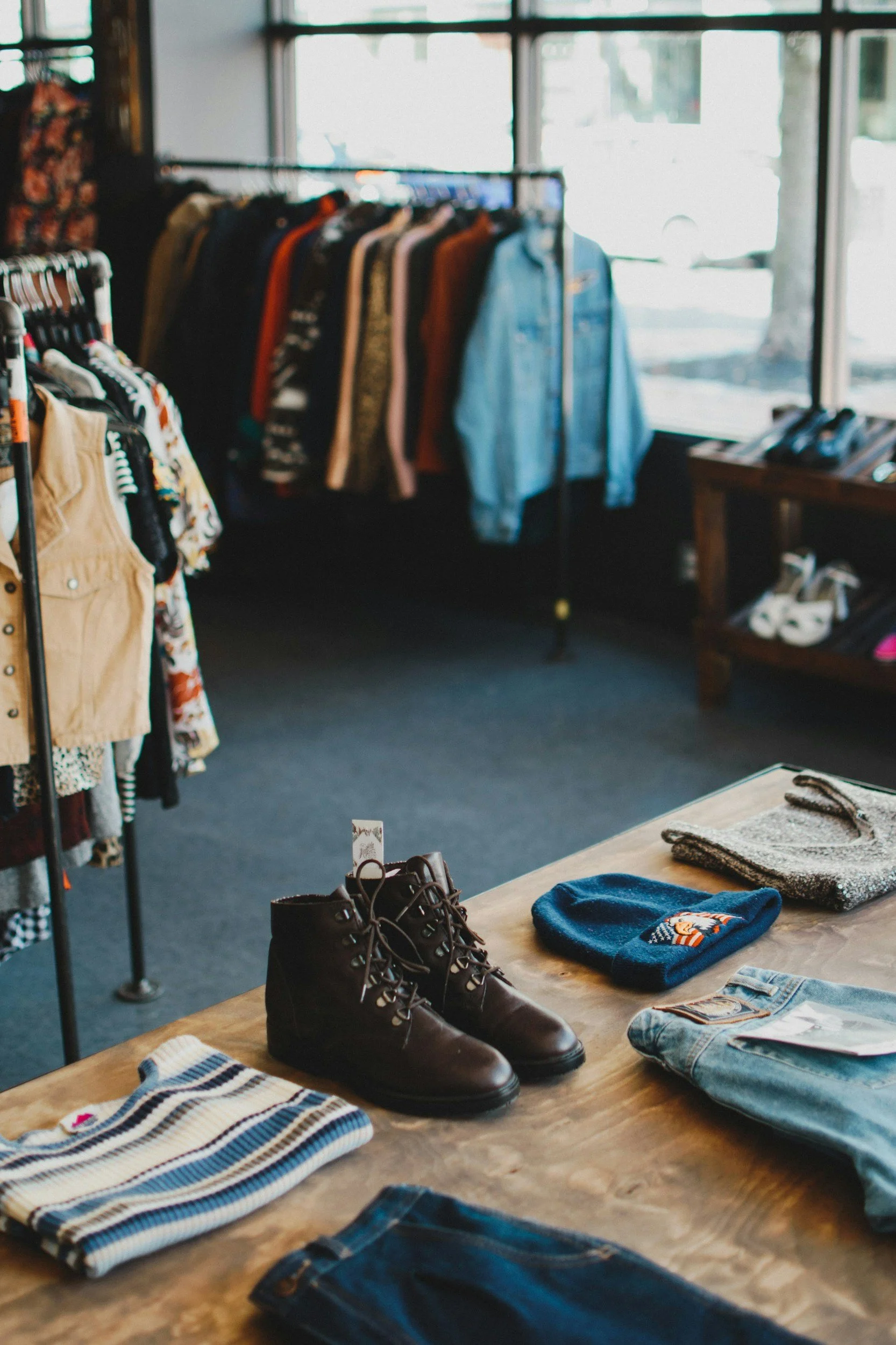
FAQ: Second-Hand Shopping in Germany
What are the best cities in Germany for second-hand shopping?
Berlin, Hamburg, and Cologne are the most reliable if you want a structured day with multiple shops within walking distance. Berlin has the highest volume, especially around Friedrichshain, Kreuzberg, and Mitte. Hamburg works best in Schanzenviertel, where everything sits within a compact area. Cologne is easier to manage because shops are concentrated around Ehrenstraße and the Belgian Quarter, which can be covered on foot in a few hours. Munich, Leipzig, and Stuttgart still work, but they require more planning and fewer stops.
Where can you find affordable thrift stores in Berlin?
The lowest prices are usually found at larger stores like Humana, where clothing is sorted by category rather than curated by style. These stores require more time because you need to go through racks carefully, but they are the best option if you are looking for value. Smaller shops in areas like Mitte or Kreuzberg tend to be more curated and priced higher.
What is the difference between vintage shops and second-hand shops in Germany?
Vintage shops in Germany usually focus on specific decades or styles, often with curated selections and higher prices. Second-hand shops can range from large thrift stores with mixed inventory to designer resale boutiques with carefully selected pieces. In cities like Berlin and Hamburg, both exist within the same neighbourhood, so it is common to move between them in a single route.
What time should you visit second-hand shops in Germany?
Late morning, between 10:00 and 12:00, is the most practical time to start. Shops are open, racks are less disturbed, and the streets are easier to navigate. In areas like Mitte in Berlin or Schanzenviertel in Hamburg, afternoons become busier, which slows down browsing. Smaller cities like Leipzig and Stuttgart remain more consistent, but earlier visits still make the day easier to structure.
Are second-hand shops in Germany open on Sundays?
Most second-hand shops in Germany are closed on Sundays due to trading regulations. Berlin is an exception in some areas during special events or market days, but you should not rely on shops being open. If you are planning a weekend visit, Saturday is the best day to go.
Which neighbourhoods are best for vintage shopping in Hamburg?
Schanzenviertel is the most practical area because shops are close together and easy to walk between. Streets like Schulterblatt and Susannenstraße have a mix of larger vintage stores and smaller curated shops. From there, you can extend your route into Karolinenviertel within 10 minutes without needing transport.
Where are the best second-hand shops in Cologne?
Start on Ehrenstraße, where shops like Vintage Revivals are located, then walk toward the Belgian Quarter around Brüsseler Platz. The distance between these areas is around 5 to 10 minutes, and you can cover multiple shops without using public transport.
Is second-hand shopping expensive in Munich?
Yes, compared to Berlin and Cologne, Munich is more expensive. Shops are more curated, and there are fewer large thrift-style stores. Places like Picknweight offer more flexible pricing, but overall, it is better to focus on specific pieces rather than browsing broadly.
How do you plan a second-hand shopping route in Berlin?
Start in one neighbourhood and stay there for at least a few hours. For example, begin at Humana in Friedrichshain, then walk toward Boxhagener Platz and continue into Kreuzberg if you have time. Alternatively, stay in Mitte and move between Rosenthaler Platz and Hackescher Markt. Trying to cover multiple districts in one day usually leads to unnecessary travel time.
Are there good second-hand shops in Leipzig and Stuttgart?
Yes, but they are fewer and more spread out. In Leipzig, focus on Plagwitz or Südvorstadt, where shops are within walking distance and the pace is slower. In Stuttgart, Bohnenviertel is the most practical starting point, but you should plan to visit only a few shops rather than building a full-day route.
Can you find designer second-hand shops in Germany?
Yes, especially in Berlin. Shops like Soeur focus on designer resale with a curated selection and higher-quality pieces. These shops are smaller and require less time, but prices reflect the condition and brand selection.
How long should you spend second-hand shopping in one area?
Two to four hours per neighbourhood is usually enough. In larger areas like Berlin, you can extend this, but it works better to divide the day into sections rather than moving continuously. In smaller cities, one focused area with a few shops is often enough for a half-day.
What should you bring when second-hand shopping in Germany?
A reusable bag is useful, as not all shops provide one. Comfortable shoes matter more than anything else because most routes involve walking between areas. It also helps to have a general idea of what you are looking for, as this reduces time spent browsing without direction.