The easiest Piedmont towns to visit by train from Turin
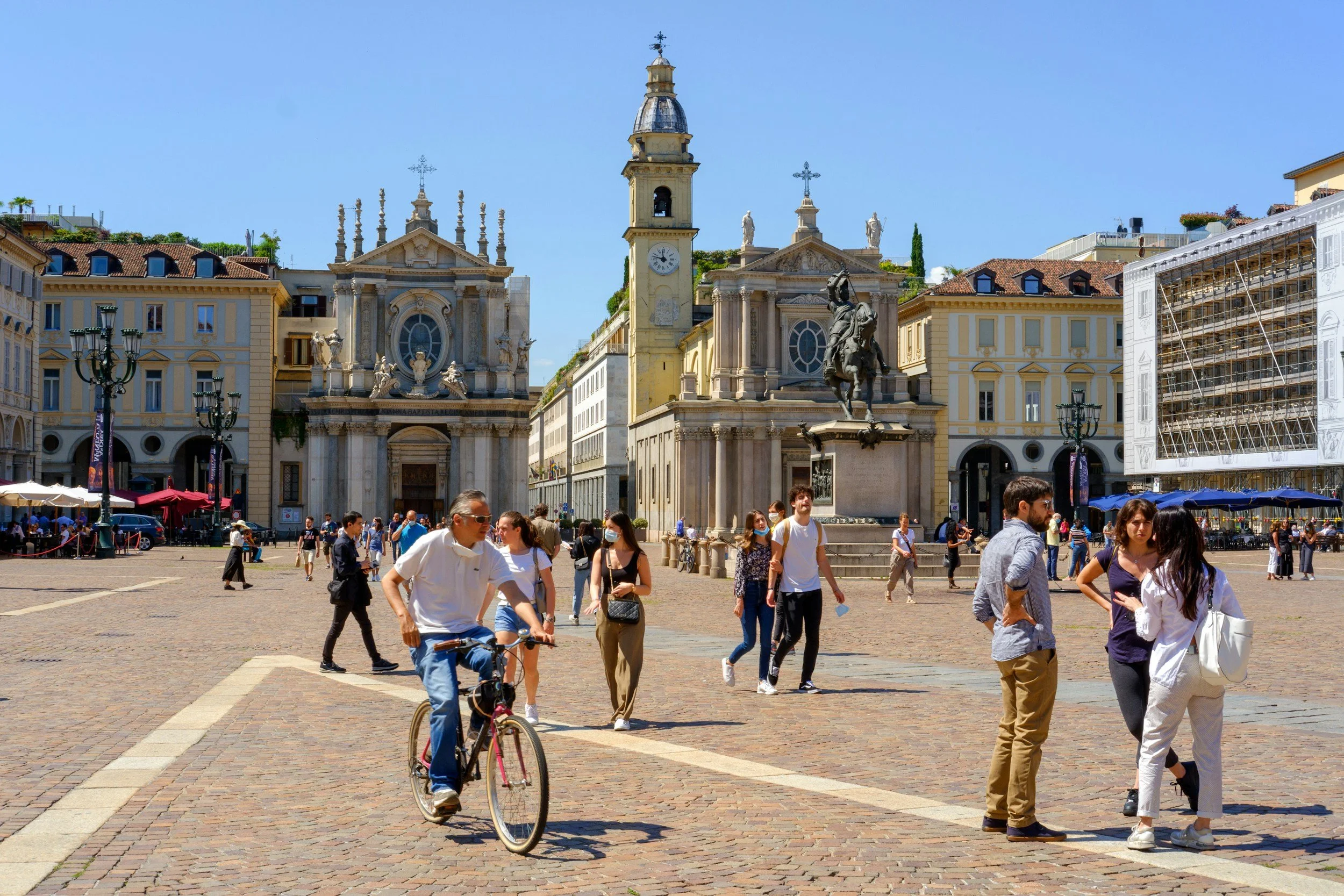
Asti and Barolo may both look like obvious Piedmont day trips when you are planning from Turin, but without a car they are completely different propositions. In Asti, you can get off the train and be walking towards Piazza Alfieri and the historic centre within minutes. Barolo does not have a railway station at all, and the same goes for La Morra and many of the wineries scattered through the Langhe. Some of the places most closely associated with Piedmont are therefore the ones that need the most planning once you take a car out of the equation.
You can still see a very good side of the region by rail. Asti, Alba, Bra, Ivrea and Susa all work well from Turin because the train gets you somewhere genuinely useful, rather than simply to the nearest town where you then have to start figuring out buses and taxis. For this guide, that is what I mean by an easy train trip: you should be able to arrive, walk into the part of town you actually came to see and spend several good hours there without immediately needing another form of transport.
That sounds obvious, but it changes the list quite a lot. A 40-minute train is not especially convenient if the station leaves you three kilometres from the old centre, and a direct service to Alba does not suddenly make the vineyards around Barolo walkable. So I have looked at the whole day instead: which Turin station makes sense, how useful the arrival station is, whether there is a steep climb waiting at the other end, how much there is to do once you arrive and whether the return journey still feels easy after a long lunch.
If you only want one answer, I would start with Asti. The journey is short, the station is close to the centre and the town has enough between Piazza San Secondo, Corso Alfieri, its markets, medieval towers and food shops to make the day feel complete without adding a winery booking. Alba, Bra, Ivrea and Susa all become stronger choices when you know exactly what you want from the day, but Asti is the one I would pick when I simply wanted to get on a train in Turin and know the rest of the day would be easy.
If Barolo and La Morra are the places you were picturing when you started planning Piedmont, I’d compare the Piedmont wine villages before deciding on day trips, because some of them make much more sense when you stay overnight rather than trying to get back to Turin.
So, can you actually explore Piedmont without a car?
Yes, and Turin is actually a very useful base for doing it. The important thing is knowing where the railway network is genuinely helpful and where it starts handing the problem back to you. It works brilliantly for towns such as Asti, Alba and Ivrea, where you can get off the train, walk straight into the centre and forget about transport for most of the day. It is much less useful once the places you want to reach are scattered between vineyards and small hill villages.
You notice that difference very quickly around the Langhe. Alba is easy: from the station you can walk towards Piazza Michele Ferrero and Via Vittorio Emanuele, browse wine shops and delicatessens, stop for lunch and have a glass of Nebbiolo without needing to organise anything else. What Alba station does not give you is an effortless route through Barolo, La Morra and a few winery tastings before dinner, even though those places look temptingly close on the map.
There are buses through parts of the Langhe, and they can work well when you have one specific village in mind. The problem comes when you try to keep the day flexible. Rural services may have long gaps, a winery appointment might not line up neatly with the return bus, and I would never plan on opening an app in La Morra at 17:00 and immediately finding a car back to Alba. That is the point where a supposedly simple car-free wine day can start feeling surprisingly organised.
I also do not think you need to visit three rural wineries to feel as though you have properly seen Piedmont. You can buy Bra cheese at a market, sit down for agnolotti and Barbera in Asti, spend an afternoon between Alba’s enoteche and food shops, or walk beneath old porticoes that are still part of everyday town life. Those experiences are every bit as rooted in the region, and they are considerably easier to enjoy when you are not checking the time of the next bus.
That is the line I have used throughout this guide. The towns here are places where the train gets you close enough that the enjoyable part of the day can begin almost immediately, rather than dropping you at the point where the next round of transport planning starts.
The towns that make the journey genuinely easy
Start with Asti if you want the simplest day out
Asti is the one I would choose when I wanted the whole day to feel easy, not just the train journey. You can leave Turin in the morning, be walking through the old centre not long afterwards, and then more or less forget about transport until it is time to go home. There are markets, medieval towers, food shops, churches and cafés, but more importantly, there is enough going on between them that the day does not fall apart if one museum is closed or you decide you would rather spend an extra hour over lunch.
It is worth getting one expectation out of the way before you go, because Asti is not a tiny wine village with vines beginning behind the last row of houses. It is a proper Piedmontese city, just on a much more manageable scale than Turin, and I actually think that helps rather than hurts it. Around Piazza San Secondo you still have people doing their weekly shopping, cafés mixed with practical everyday businesses and streets that feel lived in rather than arranged around visitors. Even on an ordinary weekday outside harvest season, there is enough happening for the trip to make sense.
Getting from Turin to Asti is very straightforward
If you are staying around central Turin, I would check Torino Porta Nuova first, but I would also search Porta Susa and Lingotto before buying anything. Asti is connected through all three, and there is no point crossing Turin first thing in the morning simply because Porta Nuova happens to be the city’s main station.
Direct journeys usually take somewhere around 35 to 55 minutes depending on the regional service, and the trains are generally frequent enough that you do not need to organise the whole day around one departure. Sundays, public holidays and engineering works can change that, though, so I would still look at the actual timetable for the day you are travelling.
There is no real reason to buy this one weeks ahead either. Regional tickets can be bought close to departure, so I would check the evening return options the night before, see how early I actually wanted to leave Turin the next morning and choose from there.
Asti station is on Piazza Guglielmo Marconi, and this is where you immediately see why the town works so well without a car. Walk up Via Cavour towards Piazza Statuto, continue into Piazza San Secondo and then take Via Pietro Gobetti out towards Corso Alfieri. You can be properly inside the old centre in about ten minutes without needing to work out a bus, taxi rank or another connection.
Take Via Cavour into the old centre rather than rushing to Piazza Alfieri
I would follow that route from the station rather than putting Piazza Alfieri into Google Maps and taking whichever road it gives you. Via Cavour brings you into one of the older parts of Asti much more naturally, and there are things worth noticing almost immediately.
The first square you reach is Piazza Statuto, historically known as Piazza delle Erbe. Torre Guttuari still rises above it, so before you have even reached Asti’s better-known sights you already start seeing traces of the merchant families and medieval towers that once shaped the city.
A couple of minutes later you are in Piazza San Secondo. I like this square because it is not simply an architectural set piece that everyone photographs and leaves. It is still one of the everyday centres of Asti, with the Palazzo Civico on one side and the Collegiata di San Secondo beside it. If the church is open, go inside rather than stopping at the façade. The crypt dates from the 10th century and contains the relics of San Secondo, Asti’s patron saint, along with Palio banners offered to him over the years.
This is also a good point to stop walking with such purpose. Via Cavour, Via Garibaldi and Via Pelletta all meet this part of the centre, with cafés, ordinary shops and smaller independent businesses mixed between the older buildings. Asti is much nicer when those streets become part of the day rather than Piazza San Secondo becoming another place you photograph for five minutes before moving on.
When you are ready, take Via Pietro Gobetti out to Corso Vittorio Alfieri, which gives the rest of the walk a loose backbone without forcing you into one rigid sightseeing route.
Asti’s towers are better when you keep finding them by accident
Asti was once filled with medieval towers, and around a dozen survive today. They are much more interesting because they have not been gathered into one neat medieval quarter. You keep seeing them between later houses and shopfronts as you walk through a city that has simply grown around them.
Torre Troyana in Piazza Medici is the one I would actively seek out. It rises 44 metres over the square, and if it is open you can climb the 199 steps to the top. I probably would, partly because this is one of the easiest places in central Asti to finally see the hills and vineyard landscape surrounding the city, which you do not really get at street level.
I would not make the whole day depend on the tower being open, though. Keep heading west along Corso Alfieri and you can pick up Torre Comentina near Piazza Roma, then more surviving towers and fortified houses around Via Roero. It becomes more of a game of noticing what is still there than following a list of monuments.
From Piazza Medici, I would eventually cut across towards Piazza Cattedrale and the Cattedrale di Santa Maria Assunta, then spend a little time around Via Natta. Torre Natta and Palazzo Natta sit here among much later buildings, and this is one of those streets where having a vague idea of what you are looking for makes a big difference. Otherwise, it would be very easy to walk past another old brick tower without realising it is one of the remnants of a city that once had dozens of them.
Most of this route is flat, so you can cover a surprising amount of Asti without really noticing the distance. The only climb that feels like an actual climb is the optional 199 steps inside Torre Troyana.
Do not treat Corso Alfieri as somewhere to rush through
Corso Alfieri is useful for getting between the cathedral, towers and Piazza San Secondo, but I would leave enough room in the day to stop using it purely as a route.
It is one of Asti’s main shopping streets, and the streets around Piazza San Secondo are worth dipping into as well. Smaller antique and art shops turn up among the older lanes, which is much more interesting than spending the afternoon moving in a straight line between churches and palazzi.
One address I would actually save is Pasticceria Giordanino at Corso Vittorio Alfieri 254. It has been here since 1912, and instead of ordering whichever pastry happens to look nicest in the cabinet, look for Polentina delle Tre Mandorle or Torta del Palio, both closely associated with the shop and Asti. It is the kind of stop that gives you something specific to remember rather than another interchangeable Italian coffee break.
If you like small museums, Asti’s Smarticket can also be good value. It currently covers Palazzo Mazzetti, the Cripta e Museo di Sant’Anastasio, Palazzo Alfieri, the Domus Romana and Torre Troyana, costs €10 and remains valid for seven days. On a day trip, I would only buy it if two or three of those places genuinely appeal to you rather than feeling obliged to get your money’s worth. Palazzo Mazzetti is currently closed on Mondays, which is another little reason to check your date before arriving with a fixed museum plan.
Market day changes Asti more than you might expect
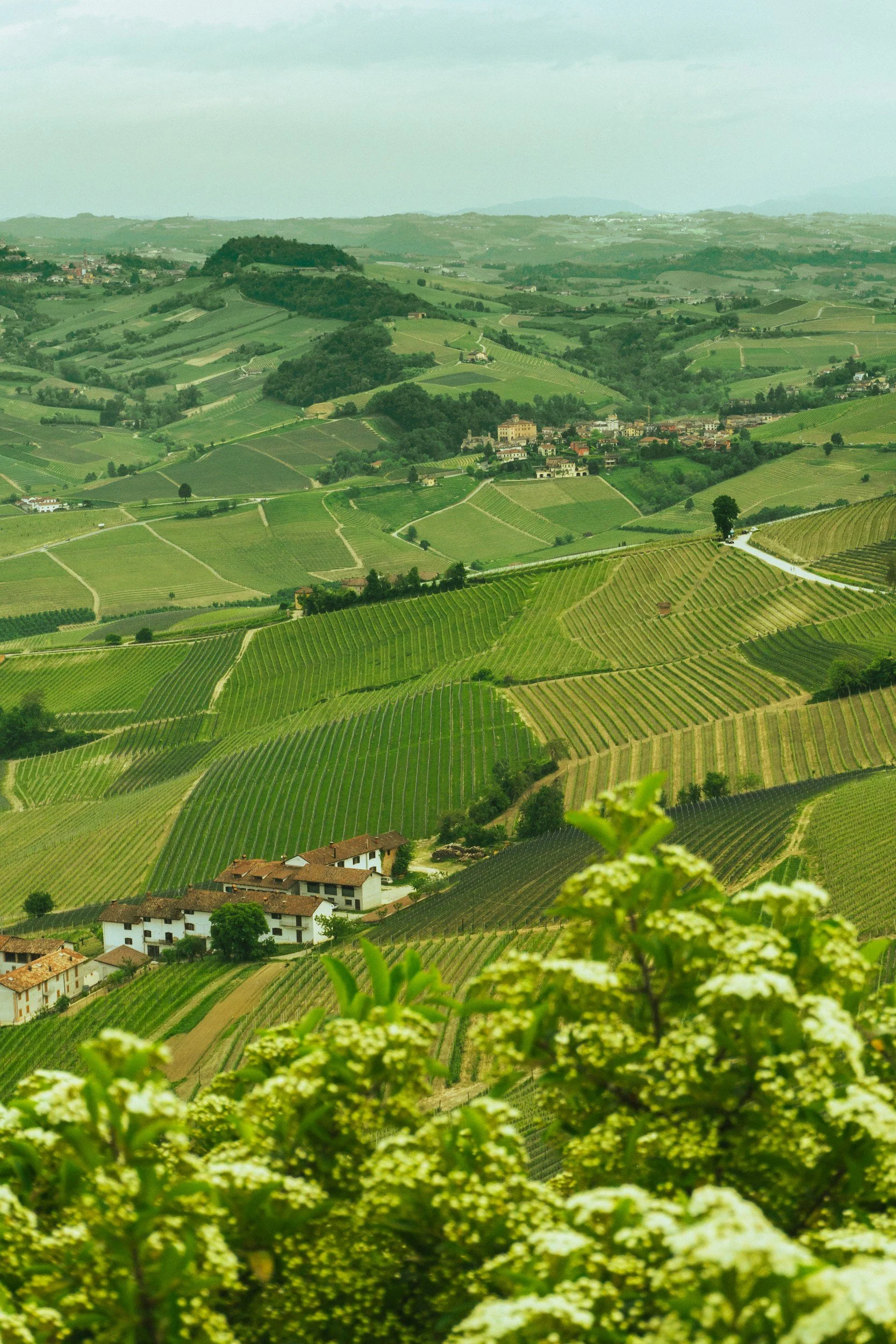
Wednesday and Saturday are the big market days, but Asti actually gives you several different market options depending on what you enjoy.
The main twice-weekly market is centred around Piazza Campo del Palio, very close to the station. Food stalls are mainly a morning thing, while clothes and general stalls continue later. There was also a fairly significant reorganisation in 2026, with stalls spread across Piazza Campo del Palio, Piazza Libertà and Largo Saracco, so I would not rely on an older map showing the entire market neatly contained in one square.
There is a useful little detail if you are heading there primarily for food: the food sellers in Campo del Palio are positioned around the steps, while plants and seeds are towards the station side. Knowing that saves you from wandering through rows of clothing when what you actually came looking for was cheese, produce and something to take back to Turin.
The much smaller Piazza Catena market is easy to overlook, but I think some readers may actually prefer it. It runs every morning except Sunday, with local producers selling seasonal fruit and vegetables. It does not have the scale of the Wednesday or Saturday market, but if what you enjoy about markets is seeing what people in town are actually buying for dinner, rather than browsing hundreds of general stalls, this one may be more interesting.
There is also the Mercato Coperto in Piazza Libertà, inside a market building dating from 1925. It sells food, regional products and wine, so it is useful if you arrive on an ordinary weekday and still want somewhere to shop for something local. It is currently closed on Sundays and Thursday afternoons.
And if your dates happen to land on the final Sunday of the month, Asti has an antiques and collectors’ market around Piazza Alfieri and Piazza Libertà. I would genuinely pick that Sunday over another random day if old objects and antique stalls are your thing, because it gives the visit a completely different focus from the large Wednesday and Saturday market.
So I would choose the day based on what you actually want to find when you arrive. Wednesday or Saturday for the big working market, an ordinary weekday when you want the streets and architecture to be easier to see, and the final Sunday of the month if you know you will happily disappear into the antique stalls for an hour.
Lunch is where I would make the day feel properly Asti
I would not eat beside the station simply because you happen to arrive hungry. Wait until you are properly inside the old centre, where lunch can actually become part of the reason you came.
If agnolotti gobbi appear on the menu, that is one of the dishes I would order here. Asti has its own De.Co.-recognised version, and a plate of them with a glass of Barbera d’Asti feels far more specific to the day than trying to work your way through a long list of Piedmont dishes simply because you are in Piedmont.
For a traditional lunch, Campanarò at Corso Vittorio Alfieri 36 is one address worth keeping. The restaurant has several generations of Asti cooking behind it and is directly in the part of town you will already be walking through, so you do not have to derail the day to get there. I would still check the opening day before travelling rather than assume lunch service will line up with your visit.
Later, Assetati at Via Cavour 83/A fits very easily into the walk back towards the station. It is both an enoteca and wine bar, so you can ask for something from Asti or Monferrato without turning the afternoon into a winery excursion. Its current opening hours lean more towards later afternoon and evening during the week, which makes it much more useful for a final glass before the train than as somewhere to build an early lunch around.
And this is one of the things I think Asti does particularly well for someone travelling without a car. You can eat agnolotti, try Barbera d’Asti, browse the food stalls and take a bottle home without feeling that the day is somehow incomplete because you did not find a way out to three wineries.
What Asti does not give you
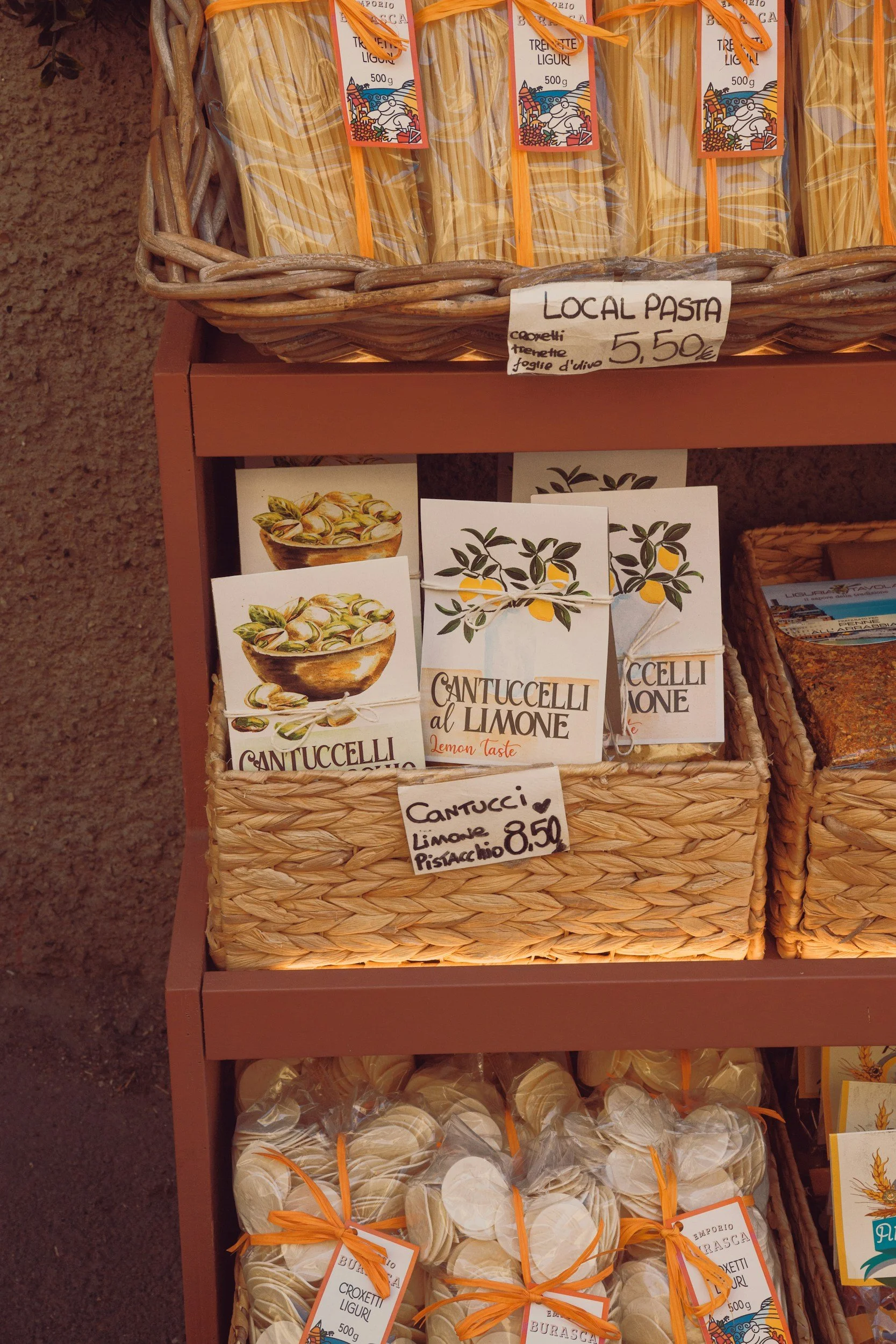
If the Piedmont day you have in your head involves a tiny stone village with vines appearing at the end of every street, Asti is not that place. The vineyard hills sit around the city rather than running through the centre, and most of what you experience at street level is brick towers, porticoes, market squares, churches, cafés and people going about an ordinary day.
You get a much better idea of the surrounding landscape from the top of Torre Troyana, but I would not try to make Asti sound more rural than it is….
For me, its normality is part of why it stays at the top of this list. Very little needs arranging once you arrive, yet there is enough between Piazza Statuto, San Secondo, Corso Alfieri, the markets, the towers and a proper lunch to keep the day going naturally into late afternoon. If I had one spare day in Turin and wanted my first look at Piedmont beyond the city, Asti is still where I would start.
If the market is the part making you lean towards Asti, I would quickly compare these Italian market towns before choosing your day, especially if you have room for more than one market stop elsewhere in Italy.
Choose Alba when food is the reason for going
Alba is the one I would choose if lunch, food shopping and wine were already high on my list for the day. It is compact and noticeably well-to-do, with good food shops, pastry counters, wine bars and cafés packed into a centre you can cross very easily on foot. But there is one expectation I would adjust before you go: Alba is not a little hilltop wine village. The train brings you into a proper town on the edge of the Langhe, not straight into the Barolo vineyards.
I do not think that makes it any less worthwhile without a car. You can eat extremely well, try local wines, shop for cheese, hazelnuts and truffle products, spend time around the medieval centre and still have a full day without arranging a single winery visit. I would just go to Alba because you actually want Alba, rather than treating it as the place you have to pass through on the way to somewhere more famous.
Getting from Turin to Alba without overcomplicating it
Alba sits on the SFM4 line, and this is one of those journeys where “take the train from Turin” is a little too vague to be useful. The regular SFM4 service runs through both Torino Porta Susa and Torino Lingotto, with Lingotto further along the route and therefore usually giving you the shorter journey. On the current timetable, allow roughly 75 minutes from Lingotto and around 80 to 85 minutes from Porta Susa.
Porta Nuova is not where most regular SFM4 trains begin, so if you are staying centrally I would check Porta Susa before automatically heading to Turin’s main terminus. It is a small thing, but there is no point adding an unnecessary trip across Turin before the actual day trip has even started.
The service is normally regular enough to make Alba very workable for the day, although I would not memorise an hourly pattern and assume it applies whenever you travel. Sundays and public holidays can be different, and 2026 has also brought quite a bit of work on this line. Current SFM notices show modified services between 31 August and 18 October because of works between Bra and Carmagnola, with replacement buses between Carmagnola, Bra and Alba on some August weekends. This is exactly the sort of route where I would check SFM or Trenitalia the evening before and again that morning rather than trust a timetable saved weeks earlier.
Once you get to Alba, the annoying part is over. The station is on Piazza Trento e Trieste and Piazza Michele Ferrero is only a few minutes away, so there is no need to work out a local bus before you can actually start enjoying the town.
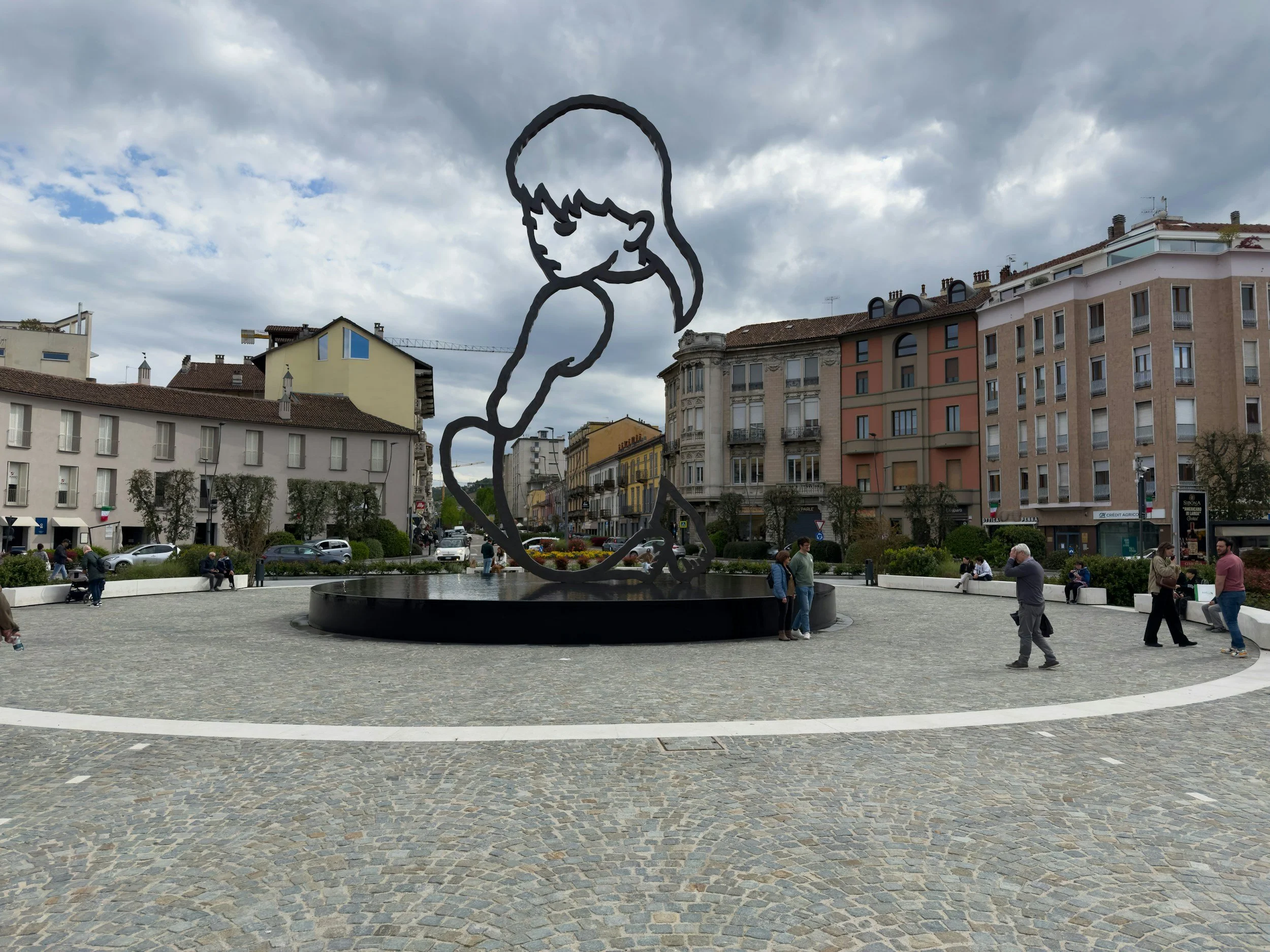
Start around Piazza Michele Ferrero and follow Via Maestra from there
I would begin at Piazza Michele Ferrero, the former Piazza Savona, rather than walking straight to the cathedral. It is still one of Alba’s everyday meeting places, with cafés beneath the porticoes, and it puts you naturally onto Via Vittorio Emanuele II, which you will hear called Via Maestra locally.
This is the street where Alba starts becoming much more than a quick cathedral-and-towers stop, and I would actually look above the shopfronts as you go. On the corner with Via Calissano is Casa Fontana-Do, one of the better-preserved medieval houses in the centre, with terracotta decoration across the façade.
Further along there is a little widening of the street known locally as the Singer corner. This was where the Ferrero brothers had their first confectioner’s shop in the early 1940s, long before the family name became synonymous with Nutella. It is a tiny detail, but exactly the kind that makes Via Maestra more interesting once you know what you are walking past.
Eventually the street opens into Piazza Risorgimento, with the Cattedrale di San Lorenzo and Town Hall facing the square. Some of Alba’s medieval towers are almost absurdly easy to miss around here because they have been absorbed into the later town. Torre Sineo rises opposite the cathedral, Torre Bonino is near the corner towards Via Maestra, and if you continue into Via Cavour you will find Torre Astesiano among the old merchant buildings.
I would keep going down Via Cavour rather than immediately turning around. The street follows one of the old axes of Roman Alba and eventually brings you towards Piazza Pertinace, where things feel a little less polished than around the cathedral. Casa Riva has that strange, almost unfinished-looking façade created by later demolitions around the square, while the nearby Church of San Giovanni contains a 1377 Madonna del Latte by Barnaba da Modena as well as a work by Macrino d’Alba.
If you like small museums, the Museo Civico Federico Eusebio fits into this route without making you cross town. It is at Via Vittorio Emanuele II 19 inside the Cortile della Maddalena and, as of August 2026, is reopening after restyling on 15 August. Current hours are afternoons from Tuesday to Friday, with longer split opening at weekends, and Monday closed. I would see it as something to add if the collections interest you or the weather turns, rather than something you need to squeeze in to make Alba feel worthwhile.
Saturday is worth choosing deliberately, not because someone called it the “best day”
If the market is one of the reasons you want to come to Alba, then yes, Saturday makes sense and I would arrive early. The weekly market spreads through a large part of the centre until roughly 14:00, including Via Maestra, Piazza Risorgimento, Via Cavour and further towards Piazza Garibaldi, Piazza Marconi and Piazza Prunotto.
What is useful to know is that the whole thing is not one long, photogenic food market. Via Maestra has plenty of clothing, accessories and household stalls mixed in, while the produce section becomes more concentrated towards Marconi and Prunotto. Piazza Pertinace also has the Slow Food Mercato della Terra on Saturday mornings, and that is where I would head if locally produced food is what you are actually interested in.
So I would come on Saturday because I wanted to see Alba in market mode, not because Saturday is somehow universally better. It is a great morning for buying food and seeing the centre busy, but not the day I would choose if I wanted clear views of the medieval façades or a quiet Via Maestra.
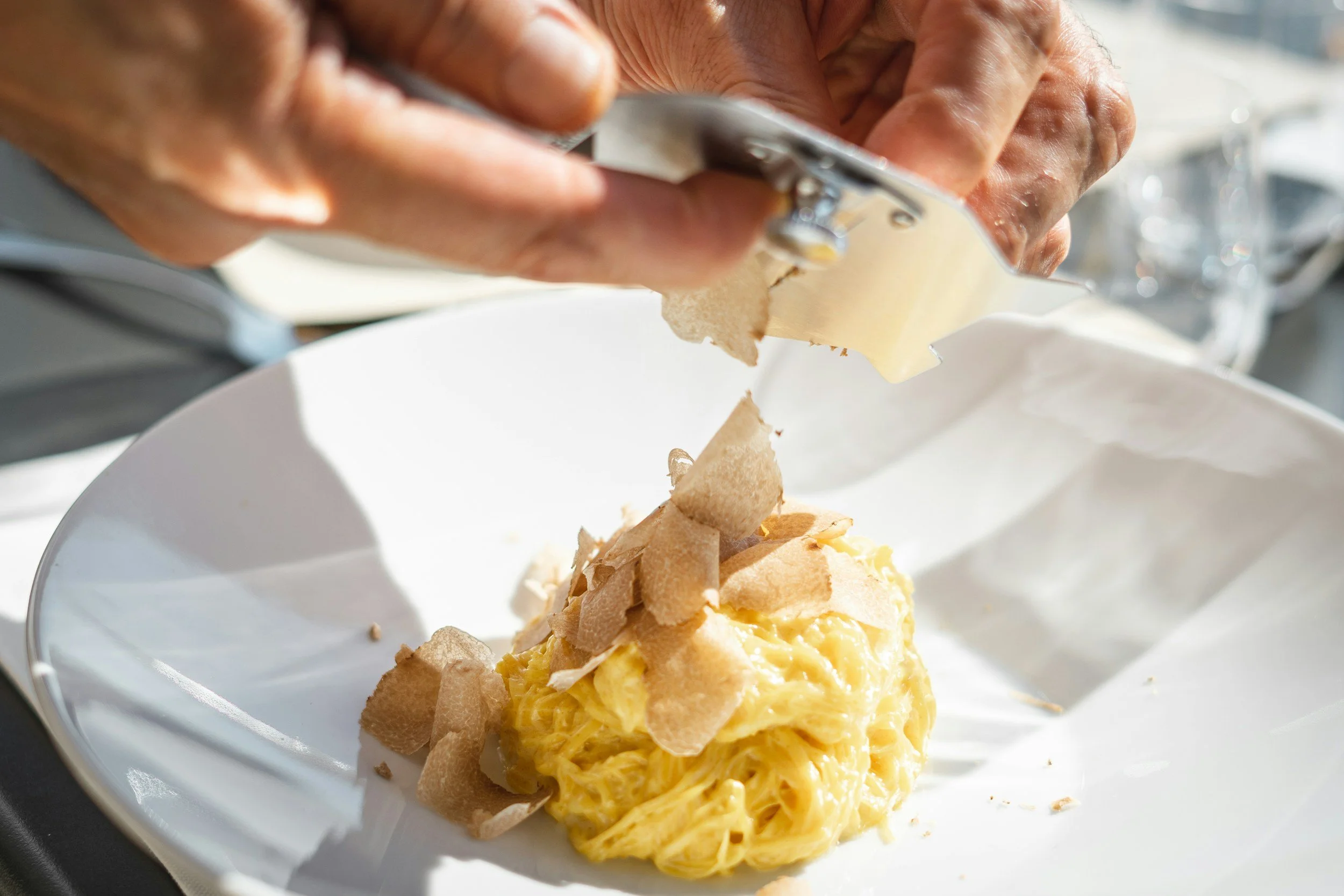
October and November are another thing altogether. In 2026, the International Alba White Truffle Fair runs from 10 October to 6 December, with the White Truffle World Market inside Cortile della Maddalena on Saturdays and Sundays. If that is exactly why you are travelling, the crowds are part of the point. If it is not, be prepared for a very different Alba from an ordinary November Tuesday. I would also book lunch rather than walking into town at 13:00 on a major fair weekend and assuming the restaurant you saved will have a table.
If you are coming between October and early December, I would check the Alba truffle guide before choosing your weekend, because the fair changes everything from restaurant reservations to how busy Via Maestra feels.
I would give lunch proper time here
Alba is not really the place where I would eat a sandwich in ten minutes just so I could fit in another church.
One address worth saving is Osteria dell’Arco at Piazza Michele Ferrero 5, which brings you conveniently back towards where the walk began and makes it very easy to give lunch a proper couple of hours without adding another detour to the day.
Behind the cathedral, around Piazza Rossetti and Piazza Miroglio, there are more cafés and wine bars, while Via Maestra itself has enough food shops and pastry counters that I would leave room for going inside a few rather than simply noting that Alba is “good for food” and walking past all of them.
And if tasting Langhe wine is the main thing you are worried about missing by not having a car, I really would not worry. You can sit down in an enoteca and try Nebbiolo, Barbera d’Alba or Barolo, ask questions, buy a bottle to take back to Turin and make the wine part of the day without organising a transfer into the hills. You do not need a photograph of yourself standing in a vineyard for the wine side of Alba to be worthwhile.
But can you actually get from Alba into the vineyards without a car?
Yes, but not in the casual, decide-after-lunch way people sometimes imagine.
Buses do run from Alba into the Langhe, including routes serving Barolo, La Morra and Barbaresco, so choosing one village and planning around it can work. What I would not do is arrive at Alba station with a vague idea of hopping between wineries and work the rest out as I go. Grandabus currently has separate routes from Alba towards Barolo and La Morra, Barbaresco, Monforte and other villages, which tells you something about how spread out everything becomes once you leave town.
The other problem is that arriving in the village does not necessarily mean arriving at the winery. Damilano, for example, is on the Alba-Barolo road in La Morra, not beside a railway station or a central piazza. Once you are trying to line up the train from Turin, a rural bus, a fixed winery appointment and then the bus and train home again, one delay or long lunch can suddenly matter far more than you wanted it to.
If visiting several estates is genuinely the point of the day, I would book a driver or organised tour from Alba and enjoy it properly. If what you really want is to drink good Piedmont wine, eat well and take a bottle home, staying in Alba is considerably easier.
That is really who I think Alba suits best. Come here if food shops, a market morning, wine and a long lunch sound just as important as traditional sightseeing. If what you want most is grand architecture or that immediate moment of stepping off the train into mountain or vineyard scenery, another town may make a stronger first impression. Alba is better when you are happy to spend a few hours following Via Maestra, going into shops that catch your attention and letting lunch take longer than you originally planned.
If you are visiting during harvest and considering staying longer, this guide looks at which Piedmont wine villages make sense in autumn and which ones become awkward without a car.
Bra works best when lunch is part of the plan
Bra is the town I would choose if I was perfectly happy for lunch to take up a large chunk of the day. There are some beautiful buildings here, but you do not really come for a packed sightseeing route. A good morning in Bra is more likely to involve the market, a coffee on Via Cavour, a couple of food shops and then sitting down somewhere properly rather than trying to fit six attractions in before the train home.
That is also where Bra starts to feel quite different from Alba. It has almost 30,000 residents, but there is much less sense of visitors being funnelled towards one obvious historic centre. Slow Food grew out of Bra and still has its Italian headquarters here, while Salsiccia di Bra and Bra DOP cheese are part of the town’s everyday food culture rather than something that only appears during festival weekends.
For some people, that will make Bra a much better day than Alba. For others, it may feel as though there is not quite enough happening. I think that is worth knowing before you go, because Bra works best when you are comfortable with the idea that coffee, lunch and the market are not filler between the sights. They are a large part of the reason to come.
The train is easy, especially from Porta Susa or Lingotto
Bra sits on the SFM4 line towards Alba, and Porta Susa or Lingotto will usually make more sense than Porta Nuova. On the current timetable, a typical direct train takes around 56 minutes from Porta Susa and roughly 48 minutes from Lingotto, with services running about once an hour through much of the day.
Sunday and public-holiday trains are thinner, so this is one of the places where I would look at the journey home before leaving Turin. There is no need to decide exactly when you will return, but I would at least know whether missing one train means waiting another hour or considerably longer.
There is also a very specific issue if you are travelling in late summer or autumn. SFM currently lists replacement buses between Carmagnola, Bra and Alba on 29 and 30 August, followed by timetable changes between Bra and the Turin side of the line from 31 August to 18 October because of works between Bra and Carmagnola. That will obviously date, but right now I would check Trenitalia for the actual day you are travelling rather than assuming the normal pattern is running.
Bra station opens onto Piazza Roma, and once you arrive you can forget about local transport. Piazza Carlo Alberto is close enough to reach on foot in a few minutes, and the rest of the centre works well the same way.
There is even a useful lunch option almost beside the station. Ristorante Battaglino at Piazza Roma 18 has been run by the same family since 1919, so if you want a traditional meal but do not feel like building the day around the Slow Food addresses further into town, this is a very easy one to keep in mind.
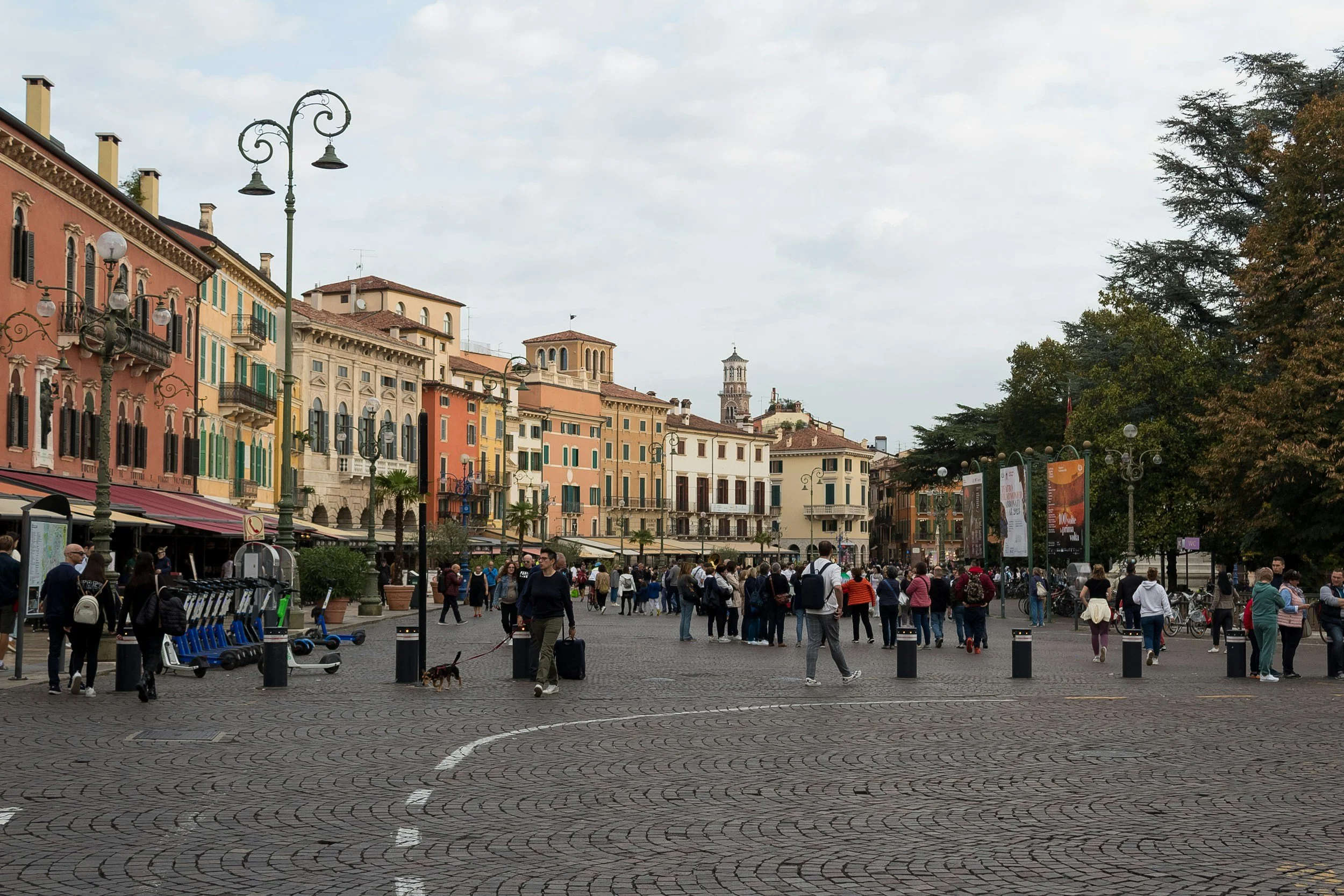
I would start on Via Cavour before worrying about museums
From Piazza Carlo Alberto, I would head into Via Cavour and have a look around before deciding what else I wanted to see.
This is Bra’s main pedestrian street and has long been one of the places people actually meet, with cafés and everyday shops rather than businesses aimed only at visitors. The writer Giovanni Arpino spent plenty of time around here too, and Bra’s own Arpino walking route uses Via Cavour as one of its main stops.
For coffee, Antico Caffè Boglione at Via Cavour 12 is an easy address to remember and has been here since 1847. I would much rather begin there than march straight towards the next church simply because it appears on a sightseeing map.
Keep going towards Piazza Caduti per la Libertà, where Bra suddenly looks much more architectural. The Palazzo Comunale has that curved Baroque façade you will probably recognise from photos, while Sant’Andrea was built from a design by Bernini under the direction of Guarino Guarini.
Nearby Palazzo Mathis contains the tourist office, which is useful if you want to check whether a church or museum is actually open that day rather than discovering a locked door after walking across town.
I would also make the small detour to Santa Chiara on Via Barbacana if it is open. Bernardo Antonio Vittone designed it, and together with Sant’Andrea it gives you enough genuinely good Baroque architecture that I would never describe Bra as having “nothing to see.” It just does not need an entire day built around monuments.
Corso Garibaldi becomes much more interesting once you know what happens there
From Piazza Caduti, continue towards Corso Garibaldi and Piazza XX Settembre.
The covered structure along Corso Garibaldi, usually called the Ala, is regularly used for food events and Slow Food’s Mercato della Terra. In 2026, Slow Food has held Sunday markets here on dates including 18 January, 15 February and 17 May, with local and seasonal produce, cheeses, salumi and food from smaller producers.
I would check the calendar rather than turn up on a random Sunday expecting it to be there, because this is not a weekly event.
If the dates do happen to line up, though, I would probably choose the Mercato della Terra over Bra’s larger general market if Slow Food is specifically what brought you here. It is smaller, but the focus is much more clearly on producers and food. Friday’s regular market is broader and much more like a normal Italian town market, with clothes and household goods mixed in alongside the things you might actually want to eat.
Friday is when Bra feels most like a market town
Friday is the big market morning, and it is much more spread out than simply saying “the market is in Piazza XX Settembre” would suggest.
Stalls run through Piazza Carlo Alberto, Via Cavour, Piazza Caduti per la Libertà, Corso Garibaldi and Piazza XX Settembre. If food is what you care about, fruit, vegetables and other fresh produce are concentrated around Piazza Carlo Alberto and Piazza XX Settembre, while Piazza Giolitti has spaces specifically reserved for agricultural producers.
Official market hours are 07:30 to 13:00, so I would aim to be in Bra around 09:00 rather than arriving just as everyone is thinking about packing up and going to lunch.
Wednesday has a smaller version around Piazza XX Settembre, Corso Garibaldi and Piazza Giolitti. There is also a producer-focused Saturday market in Piazza Giolitti, although Bra’s own public information is not completely consistent about its hours, so I would check again if that market is the main reason for choosing Saturday.
For me, Friday is Bra at its most convincing. Several of the streets you would normally walk through are full of stalls, so it is not the morning for trying to photograph empty piazzas. But I am not sure that is why I would come to Bra anyway. Seeing people buying vegetables around Piazza Giolitti and walking down Via Cavour with their shopping feels much more in keeping with the town.
If you are coming for Slow Food, give lunch the time it deserves
Osteria del Boccondivino at Via Mendicità Istruita 14 is one of those restaurant addresses where the location matters almost as much as the meal.
It opened in 1984 in the courtyard that became closely connected with the early Slow Food movement, and Slow Food Italia still has its historic headquarters at the same address today. So if you are interested in why Bra ended up becoming so important to the Slow Food story, this is a much more meaningful place for lunch than choosing somewhere purely because it has good reviews.
Boccondivino is still very much a working restaurant rather than somewhere preserved as part of Slow Food history. Lunch currently runs from 12:15 to 14:30 Tuesday to Saturday, with Sunday and Monday closed, and I would reserve if eating here is one of the reasons you chose Bra. Turning up at 13:30 on a Friday and hoping for the best feels unnecessary when the whole day is supposed to be relaxed.
Casa Slow Food, at the same Via Mendicità Istruita 14 address, is also worth understanding before you arrive. It is still an active headquarters with offices and a shop, not a Slow Food museum with exhibitions you work your way through. I would come because the address is part of the story and because Boccondivino is in the same courtyard, not because I expected an hour-long visitor attraction.
If Boccondivino is closed, or you simply want another traditional option, Osteria Murivecchi at Via Giovanni Piumati 19 is useful to know. It serves Piedmontese food from a changing blackboard menu and currently opens for lunch from Tuesday through Sunday, so it is particularly handy if your Bra day falls on a Sunday.
Salsiccia di Bra is worth actually eating while you are here
Salsiccia di Bra is one of those local specialities I would actively look for rather than just make a mental note that Bra is famous for it.
It is made by participating local butchers under the Bra sausage consortium, and it sits alongside Bra DOP cheese, bread and local produce as one of the foods that really belong to the town.
If you want to see where people actually buy it, Macelleria Scaglia at Via Rambaudi 27 is one of the butchers belonging to the consortium. You can buy the sausage there, although because it is fresh, I think most day-trippers are better off ordering it as part of lunch rather than carrying raw sausage around town and then back to Turin all afternoon.
Bra DOP cheese is much easier to take home. On a Friday morning, I would look around the agricultural producers in Piazza Giolitti before heading into a specialist food shop. Sometimes the most interesting thing to buy is already being sold in the ordinary market rather than wrapped up as something aimed at visitors.
If you want one proper afternoon detour, make it the Zizzola
After lunch, I would not suddenly start trying to fit in every small museum just because the morning was fairly relaxed.
Instead, if the weather is good, I would make the Zizzola the one bigger detour. The octagonal building sits on Monteguglielmo above Bra and has become one of the symbols of the town. The real reason I would walk up is the park and the view towards the Langhe and Roero, which finally gives you some of the landscape that you do not really see while walking around central Bra.
Inside is the small multimedia Casa dei Braidesi museum, and admission is free when it is open. The catch is that opening is seasonal and heavily concentrated around weekends, so check before walking uphill specifically to go inside.
If the weather is bad, Palazzo Traversa at Via Parpera 4 makes more sense. Its collections combine art with archaeological finds from Roman Pollenzo, but its current public opening is limited, mainly Thursday afternoons and Sundays or public holidays. I would not put it onto a Friday itinerary and assume the doors would be open.
And there is one planning mistake worth avoiding completely: the University of Gastronomic Sciences and Banca del Vino are in Pollenzo, not in the centre of Bra. The university is at Piazza Vittorio Emanuele II in Pollenzo, so neither belongs in a casual walking route between Via Cavour and Boccondivino. If one of those places is specifically why you are coming, treat Pollenzo as another transport decision rather than an extra stop you can squeeze in after lunch.
So, Alba or Bra?
If this is your first day trip into Piedmont from Turin, I would still send most people to Alba. There is more immediate variety, more to see between meals and an easier sense of what to do once you arrive.
Bra is for a more specific kind of day. I would choose it when Friday market stalls, coffee at an 1847 café, Salsiccia di Bra and two hours over lunch at Boccondivino sound better than adding another cathedral and another tower to the itinerary.
I would not automatically combine Bra and Alba either simply because the SFM4 makes it possible. You can, but both towns become less interesting when lunch is shortened and the markets turn into twenty-minute stops between trains.
Go to Ivrea for Olivetti, the old town and the Dor
Ivrea almost feels like two different towns stitched together, and that is exactly what makes it such a good change after Asti, Alba and Bra. Close to the station, Via Jervis is lined with the factories, offices, housing and social buildings created around Olivetti during the twentieth century. Walk another ten or fifteen minutes and everything changes again: the streets start climbing towards the cathedral and red-brick castle, then drop back towards the Dora Baltea and the old bridge into Borghetto.
So in the space of one day, you can go from one of Italy’s most interesting experiments in modern industrial planning to a medieval town sitting beside an Alpine river. That is a much more interesting version of Ivrea than simply treating it as the place where people throw oranges at each other once a year.
In fact, I think an ordinary day may suit this trip better. You can actually see the streets, understand the Olivetti buildings properly and walk along the Dora without barriers, crowds and festival routes taking over the centre.
The train leaves you in a surprisingly useful part of Ivrea
Direct regional trains currently run from Torino Porta Nuova and stop at Porta Susa on the way north, so if you are staying closer to Porta Susa there is no reason to travel backwards across Turin first. The quicker direct trains take around 40 to 50 minutes from Porta Susa; from Porta Nuova I would allow roughly an hour, although individual services vary.
Connections are currently broadly hourly through much of the day, but I would still check the exact date, especially at weekends, rather than treat that as a permanent pattern.
The nice thing about Ivrea station is that you arrive between the two parts of town rather than somewhere useless on the outskirts. Piazza Ottinetti in the central area is only around 800 metres away, but I would actually resist the temptation to head there first. The beginning of the Olivetti district is very close to the railway, so it makes much more sense to see that side of Ivrea while you are already standing beside it.
See the Olivetti side before you walk into medieval Ivrea
From the station, head towards Corso Jervis. One of the first buildings to look for is the original Mattoni Rossi, the Red Brick Factory, followed by the long ICO factory complex at Corso Jervis 11.
The earliest factory buildings go back to the beginning of the twentieth century, while the ICO workshops were expanded again and again between the 1930s and 1950s as Olivetti grew. The later glass-heavy sections look almost startling beside the much more conventional red-brick factory, and that contrast is part of what makes the street worth walking rather than simply reading about.
The UNESCO site also makes much more sense once you realise you are not looking for one famous building. The designation covers an entire idea of how a company and a town might work together: factories, offices, employee housing, a nursery, a canteen and recreation centre, social-service buildings and other spaces that were designed around everyday life as much as production.
That is really the interesting part of the Olivetti story. Yes, the company made typewriters here, but Ivrea was also being used to test how work, housing, childcare and social life could sit alongside each other in one place.
The UNESCO Visitor Centre is normally at Via Jervis 11, although there is a useful thing to know. While new spaces are being completed, the information point has temporarily moved a few metres away into the former Bar Esagono inside the Olivetti social-services complex. It is currently open Tuesday to Sunday from 10:00 to 18:00.
I would go in if it is open. Without a little context, some of the buildings along Via Jervis can look like ordinary mid-century offices and apartment blocks. The photographs and explanations help you understand why they mattered and what Olivetti was trying to do with them.
You can absolutely walk the area independently, especially if you download the official UNESCO map first. But this is one of the rare places where I think a guided architectural tour can genuinely add something. On the first Saturday of the month, the current Welcome Tour goes inside spaces you would not normally see from the street, including parts of the Social Services Centre, an apartment inside the semi-buried Talponia residence and one of the later ICO factory extensions.
The tour takes around two and a half hours, though, so I would only book it if the Olivetti side is one of the main reasons you chose Ivrea. If you are exploring independently, 45 minutes to an hour around Via Jervis is probably enough before continuing towards the older town. Otherwise, it is very easy for lunchtime to arrive before you have even seen the cathedral.
Then let the day change completely
From the Olivetti area, head back towards the station and continue into the centre. Piazza Ottinetti is a useful first stop because both the tourist office and Museo Civico Pier Alessandro Garda are here, and this is where you can decide whether you actually want museum time or would rather stay outside.
The Garda Museum is a slightly unusual mix, with Roman archaeology from ancient Eporedia alongside Asian art and the Croff painting collection. I would go in if the weather turns or if the Roman side of Ivrea particularly interests you, but on a bright day I would not automatically spend an hour indoors just because the museum happens to be there.
Its opening hours are useful to know before you make that decision. It currently closes on Mondays and otherwise opens from 09:00 to 13:00 and again from 15:00 to 18:00, so arriving at 13:15 leaves you with a rather unhelpful two-hour gap.
From Piazza Ottinetti, follow Via Palestro towards Piazza di Città. The Town Hall faces the square, and from here the route finally starts climbing towards the upper part of Ivrea.
It is not a brutal climb, but the cathedral and castle sit noticeably above the lower centre, so this is not quite the flat wandering day you get in Asti. I would wear shoes I was happy walking in rather than imagine you will spend the whole day moving between level café terraces.
The Cattedrale di Santa Maria Assunta is worth going inside partly because the exterior does not really prepare you for how old parts of the building are. The façade is nineteenth-century, but behind it are much older Romanesque bell towers, an ambulatory and a crypt connected with the medieval cathedral built under Bishop Warmondo around the tenth century. Behind the cathedral you can also pick out remains of the old Canons’ cloister and the Bishop’s Palace.
Next door, the four round towers of Castello di Ivrea make the upper town look much more dramatic than the shopping streets below suggest.
The slightly annoying part is that you cannot simply assume the castle will be open. In summer and early autumn 2026 it opens on Sundays… so check opening hours before you plan a day around it.
Keep going down to the Dora rather than turning back
After the cathedral and castle, I would come down through Via Arduino towards the river instead of retracing the same route to the station.
That brings you to Ponte Vecchio, which was Ivrea’s only crossing over the Dora Baltea for centuries and has Roman origins. Cross into Borghetto, the little cluster of streets on the opposite bank, and then spend a little time beside the river before coming back.
This is one of the parts of Ivrea I like most because the Dora is not some riverside attraction sitting beyond the town. You keep coming across it as you walk, and the bridge, Borghetto and upper town all feel tied together by it.
If you want a proper lunch somewhere that fits naturally into this route, Ristorante La Mugnaia at Via Arduino 53 sits neatly between the upper town and the river. It uses ingredients from the Canavese area in a more contemporary way, although I would check the opening day before relying on it because its lunch service is more limited than dinner.
For something easier to fit around the return train, I would save Pasticceria Balla at Corso Re Umberto 16 for later in the afternoon. This is the home of Torta 900, created in Ivrea at the end of the nineteenth century by pastry chef Ottavio Bertinotti and still made here by the Balla family.
One small detail I love is that the cake is filled when it is sold rather than sitting assembled in the counter all day. The shop currently opens Tuesday to Sunday with a midday break, and I would much rather make this my final coffee stop than settle for whichever café happens to be closest to the station.
I actually think Ivrea is easier to appreciate outside Carnival
The Carnival does not simply add a parade and a few decorations to Ivrea. During the main days, Piazza Ottinetti, Piazza di Città, Borghetto, Piazza del Rondolino and Piazza Freguglia become Battle of the Oranges areas, while processions move through streets including Via Arduino, Ponte Vecchio, Corso Nigra and Via Palestro. On the main Carnival Sunday, entry to the event area itself is usually ticketed at around €15.
So if the Carnival is specifically why you are coming, absolutely plan around it and let that be the whole point of the day.
If what you really want is Ivrea itself, I would come another week. The streets used for the battle are the same ones you want for the cathedral, museum, bridge and old centre, and it is much easier to get a feel for the town when they are not full of orange-throwing teams, temporary barriers and thousands of people.
You still notice how deeply the festival belongs to Ivrea even outside February. Piazza di Città, Ponte Vecchio and the battle squares are not special festival grounds somewhere on the edge of town. They are ordinary places you are already walking through, and once you know the Carnival route, it becomes much easier to imagine just how completely Ivrea changes for those few days.
I would only add a lake if you are willing to give something else up
Technically, yes, you can add one of Ivrea’s lakes to the same day. I am just not convinced you should automatically do it.
When people talk about the Five Lakes of Ivrea, they mean Sirio, Pistono, Nero, San Michele and Campagna. Lago Sirio is the largest and the easiest one to add, but it is not sitting conveniently behind the castle. It is roughly three kilometres from central Ivrea, and the local bus towards Chiaverano only runs a handful of times a day rather than behaving like a frequent city service.
You can walk, but the distances start adding up very quickly once the lake itself becomes part of the plan. The official Five Lakes area has separate walking loops around Sirio, Pistono, Nero and Campagna, and even the Sirio-Pistono route is around 10 kilometres before you add the walk from the centre of Ivrea.
So if Lago Sirio is genuinely one of the reasons you are coming, I would leave the museum out and make the afternoon about the lake instead. That gives you time to enjoy the walk rather than constantly calculating how far you still have to get back to the station.
If Ivrea itself is the priority, I would keep the day between Via Jervis, Piazza Ottinetti, the upper town, Ponte Vecchio and the Dora. Trying to fit the UNESCO district, museum, castle, lunch and two lakes into one train day may technically be possible, but I do not think it gives you a better version of Ivrea.
That is also why I would choose this over Alba or Bra when I wanted the day to be more about architecture, history and walking than food. Ivrea asks a little more of you because everything is not grouped around one central piazza, but that is exactly what makes the day interesting: over a couple of kilometres you move from Olivetti’s twentieth-century factories and housing to a medieval castle, then down to the Dora Baltea and across a bridge people have been using for centuries.
And if Piedmont is part of a longer rail trip through Italy, these car-free countryside stays are useful for seeing where staying outside a city genuinely works without creating a transport problem every morning.
Go to Susa when you want the train journey to end in the mountains
Susa is the one I would pick when the whole point of leaving Turin is to see the surroundings properly change. You do not arrive and immediately have to work out another bus to a trailhead or how to reach a mountain village. The Alps are already around you, and within a fairly compact centre you have Roman ruins, medieval streets, the cathedral, a castle and enough places for lunch that the day feels complete without adding anything else.
That is what makes Susa feel so different from Asti or Alba. The town grew around the routes crossing the Alps towards Mont Cenis and France, and that history is still very easy to read once you know what you are looking at. Porta Savoia marked the route towards Savoy, Via Francesco Rolando was once the merchants’ street, and Roman remains appear between later buildings almost casually. You are not spending the day inside an archaeological park. You are walking through a small Alpine town where a Roman gate happens to stand beside the cathedral.
The train is easy, but search for Susa specifically
Susa sits at the end of one branch of the SFM3 line, and Torino Porta Nuova is the most useful departure point. Direct trains run from there, with the journey taking a little over an hour, so if you are staying centrally this is one of the simpler days in the article to organise.
The one thing I would watch is the destination shown on the train. SFM3 continues further along the valley towards Bardonecchia, and not every service terminates in Susa, so search specifically for Susa rather than assuming the next train heading into the valley will take you where you want to go. I would give the town at least half a day, though. Add the castle, coffee, lunch and a few places you end up stopping longer than expected, and two hours suddenly feels unnecessarily rushed.
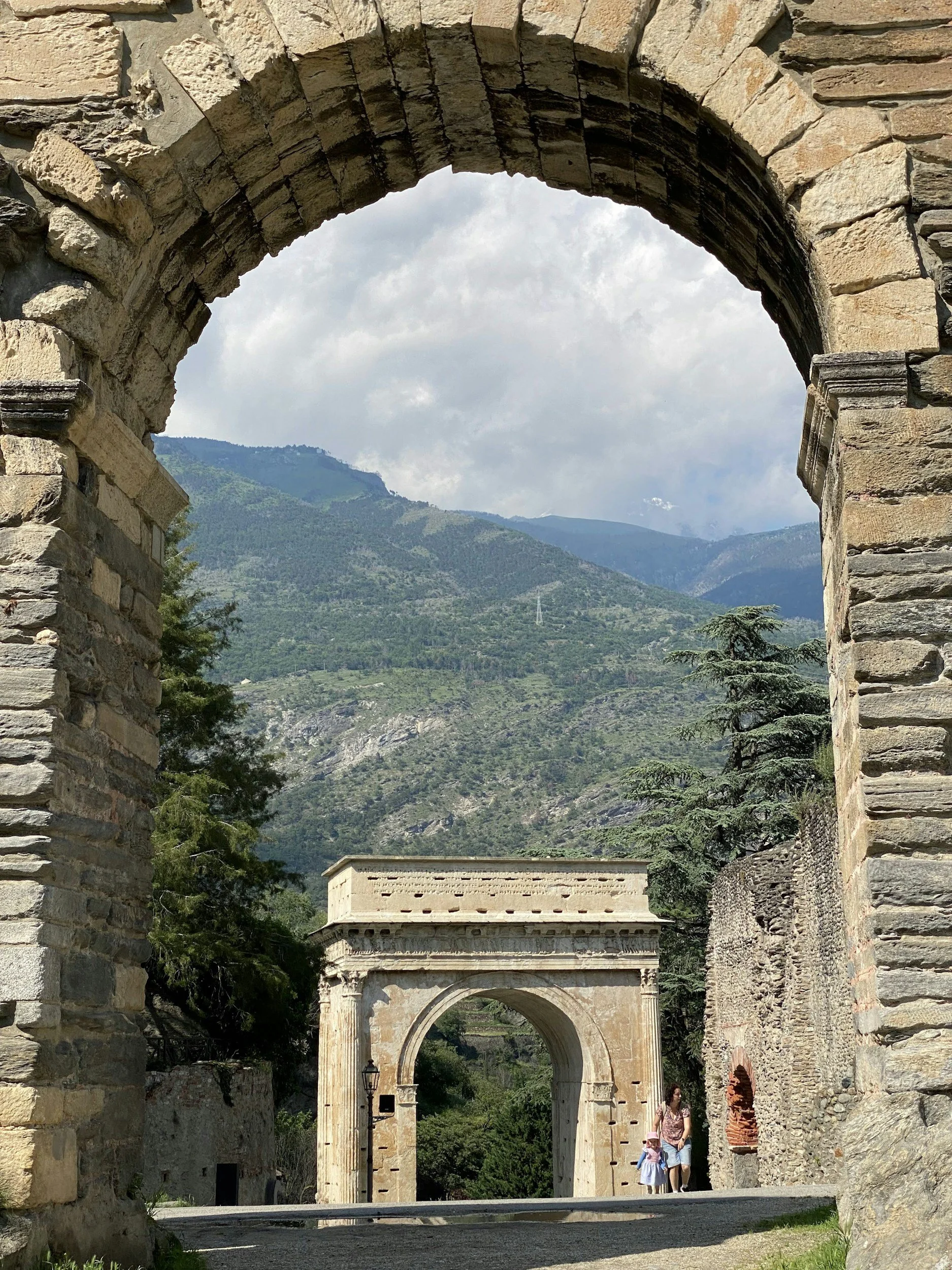
Start at Porta Savoia and let the route make sense from there
Rather than heading straight for the Arch of Augustus, begin around Porta Savoia, also known as Porta Paradiso. Walk through the Roman gate and you arrive almost immediately in Piazza San Giusto, with the cathedral and its 55-metre bell tower in front of you.
There is more packed around this square than first appears. The Bishop’s Palace is here, along with the old San Paolo bell tower and fragments of the former Canons’ buildings, so it is worth looking around properly before moving on.
From Piazza San Giusto, follow Viale dell’Impero Romano towards the Arch of Augustus. The arch is the obvious landmark, but the details beside it are what make this corner of Susa especially interesting. You can see remains of the Roman castrum and aqueduct, while at the base of the aqueduct are cup-marked rocks from the pre-Roman Celtic period. Several completely different layers of Susa are sitting within a few metres of each other, and without knowing about those markings it would be very easy to walk straight past them.
Just above this area is the Castello della Contessa Adelaide, now home to Susa’s civic museum. This is one place where the day of the week really matters. For much of summer 2026, the castle opens Friday to Sunday from 10:00 to 13:00 and again from 14:00 to 18:00, while Monday to Thursday are closed.
So if you are here on Tuesday for the market, I would not feel as though you have chosen the wrong day just because the castle doors are shut. The Roman remains around it are still there, and Susa has enough going on outside the museum to carry the day perfectly well.
After the castle, the official route drops down a long staircase into Via Assietta, where the mountains start feeling much more present again. Continue towards the Roman amphitheatre and the Convent of San Francesco before looping back through Via Rosaz.
The amphitheatre is quite modest in scale, which I actually think is useful to know beforehand. Do not arrive expecting Verona or Nîmes. It feels more like another fragment of Roman Susa woven into the edge of town, and that is really how I would see it rather than making it the centrepiece of the whole visit.
The walk back through town is one of the parts I would not rush
From the amphitheatre, resist the temptation to head straight for the station. The return through Via Palazzo di Città and Via Francesco Rolando is where Susa starts making more sense as a town people have actually lived and traded in for centuries, rather than a collection of Roman remains.
Under the porticoes on Via Palazzo di Città, look for the seventeenth-century fresco showing an exhibition of the Holy Shroud. Nearby you have the medieval De’ Bartolomei Palace and the remains of Porta delle Mercerie, the old “wares gate” connected with the merchants passing through Susa.
Via Francesco Rolando then follows what was once Via dei Mercanti, and behind some of the later façades you can still pick out medieval courtyards and towers. At the far end, look into the unusual courtyard of the former Pieve di Santa Maria Maggiore, even though the church itself is no longer used for worship.
These are exactly the little details that make the walk better. Being told that Susa has a “historic centre” does not really help you once you are there, but knowing that you are walking along the old merchants’ route towards a gate once used for wares makes the street much easier to picture.
If you still feel like adding a museum, continue towards Santa Maria del Ponte on Corso Trieste. The Museo Diocesano di Arte Sacra next door has pieces connected with churches across the valley, including the Rotario triptych associated with Rocciamelone.
Its opening is quite limited outside summer. From September to June, it is normally open only on Saturday and Sunday afternoons, while July and August have much broader hours. I would see it as a useful weekend or bad-weather addition rather than something every Susa day needs.
Tuesday is worth choosing if you like a proper town market
Susa’s weekly market takes over Piazza della Repubblica on Tuesday mornings, generally from around 08:00 until early afternoon, with food, general stalls and spaces for agricultural producers.
If that interests you, do it first. Piazza della Repubblica is close to the station, so you can walk through the market soon after arriving and then continue into the Roman and medieval centre afterwards.
I actually like that the market is slightly separate from the prettiest part of Susa. In Alba, Saturday stalls completely change Via Maestra and the cathedral area. Here, you can have a proper market morning and still see Porta Savoia, San Giusto and the Arch of Augustus without market awnings covering everything you came to look at.
Keep lunch simple and somewhere that fits the route
There is no need to spend half the morning researching where to eat.
Ristorante della Torre at Via XX Settembre 2 is right in the historic centre near the civic tower and serves Piedmontese dishes alongside its regular menu, so it fits very naturally into this walk.
If you would rather have local wine, salumi and cheese than a longer restaurant lunch, Cantine Meana at Piazza IV Novembre 2 is another useful address. It works as both a restaurant and enoteca and serves boards with cheeses and cured meats from the Susa Valley, although it currently closes on Wednesdays.
Before getting on the train home, I would also look for Focaccia di Susa. The name is slightly misleading because this is sweet rather than savoury, with sugar caramelising over the top as it bakes.
Panificio Favro at Corso Stati Uniti 118 has been making it since 1870 using a family recipe passed down from Domenico Favro, and this is exactly the sort of thing I would buy for the train back instead of settling for whichever generic pastry happens to be nearest the station.
Susa even has a local guided walk called Susa Dolce Susa, built around old sweets from the town, including the focaccia, other pastries and mountain wines. You do not need to book the walk for the food side of Susa to be interesting, but it does show how much more there is here than the Roman monuments that dominate most day-trip guides.
One important thing: Susa is not Sacra di San Michele
This is worth being very clear about because the two are constantly grouped together under “Susa Valley.”
Sacra di San Michele is not in Susa.
If the abbey is your priority, the useful railway station is Avigliana, where seasonal train-and-bus connections can take you towards the Sacra and the nearby lakes. Trenitalia itself points travellers towards Avigliana for that connection rather than suggesting Susa as the access point.
So I would not spend a perfectly easy Susa day trying to squeeze the abbey into the afternoon simply because the names appear together on regional maps. If Sacra di San Michele matters to you, build that day around Avigliana and the current seasonal bus timetable instead.
I would choose Susa from late spring into autumn, but winter still works
Late spring through autumn is the easiest time for this day because so much of Susa is best seen outside and the castle generally has broader seasonal opening. Autumn is particularly tempting because the mountain slopes start changing colour around the town without requiring you to turn the trip into a hiking day.
Winter can still work very well if what you want is a compact Alpine town rather than a long outdoor itinerary. I would just leave Turin earlier because daylight disappears faster and some of the indoor attractions reduce their opening considerably.
The nice thing is that Susa does not suddenly become a poor choice because the museum is shut. Porta Savoia, the cathedral, Arch of Augustus, aqueduct, old merchant streets and the Alpine setting are still there, and the official route is designed to be followed independently with signage around town.
That is really why Susa earns its place here. I would go when I wanted the train journey itself to feel like it had taken me somewhere different, then let Susa be enough. Between the Roman remains, Via Francesco Rolando, lunch, Focaccia di Susa and those mountains sitting behind the rooftops, there is no real need to bolt an abbey or hike onto the afternoon just to make the day feel worthwhile.
If you are planning this for January or February rather than autumn, I would compare Susa with these northern Italy towns first, because some places keep far more going on once seasonal opening hours start shrinking.
Pinerolo makes sense when you are in no rush to see a famous place
I probably would not send you to Pinerolo on your very first free day in Turin. Asti gives you more immediately, Alba has the food-and-wine pull, Ivrea has the Olivetti architecture and Susa puts you properly into the mountains. Pinerolo starts making more sense once you have seen some of those places, or when you simply fancy half a day somewhere that feels like a normal Piedmontese town rather than one of the region’s headline destinations.
And normal is meant as a compliment. The lower centre is full of porticoes, bakeries, cafés, food shops and the sort of practical businesses people actually use, while the older part of town climbs quite sharply towards San Maurizio above the rooftops. There is a cathedral, an unexpectedly important cavalry history and a huge weekly market, but no single attraction dominates the place.
That means Pinerolo will either suit you immediately or feel a little too quiet. If you like the idea of coffee, a market, a local pastry shop and a couple of hours walking without needing to collect major sights, it works very well. If you want the day to have one obvious reason for travelling all the way from Turin, I would choose somewhere else.
The train gets you straight into town
Pinerolo sits at the end of the SFM2 line, and Porta Susa is usually the easiest Turin departure if you are staying centrally. The same trains pass through Lingotto, so if your accommodation is further south, check that before travelling up to Porta Susa unnecessarily.
The direct journey currently takes around 45 to 50 minutes from Porta Susa and slightly less from Lingotto. Weekday services are fairly frequent, with trains every half hour at busier times and roughly hourly during quieter periods. Sundays are thinner, so I would at least look at the return options before leaving Turin rather than assume you can finish lunch whenever you like and find another train immediately.
I would also check for works on the actual day. SFM2 has already had periods of replacement buses during 2026, so this is not a timetable I would save several months ahead and trust without looking again.
At the Pinerolo end, everything becomes easy. The station is on Piazza Garibaldi and Piazza Vittorio Veneto is only a short walk away, so there is no suburban bus ride or awkward final leg before you reach the centre.
Stay in the lower town for a while before you start climbing
I would begin around Piazza Vittorio Veneto and then work through Via Buniva, Via Virginio and Piazza San Donato rather than immediately heading uphill.
This is where you get Pinerolo’s long porticoes, cafés mixed with ordinary shops and streets that still feel very much part of daily life. Via Buniva includes the stretch known locally as the Portici Blu, and I would let myself wander around here for a bit rather than treating it as a corridor between attractions.
Piazza San Donato is where I would make the first proper stop. The cathedral has medieval origins, although much of the building you see now comes from later rebuilding, and its bell tower from 1425 was never finished. The interior is much more decorated than the fairly restrained square outside suggests, so it is worth stepping in if the doors are open.
Directly opposite is Antica Pasticceria Castino at Piazza San Donato 42, which has been here for more than a century. Giuseppe Castino created Torta Zurigo here, with chocolate pastry, Chantilly cream, nougat and gianduia, so this is one of those coffee stops that actually belongs to the place you are visiting.
That is much more useful to me than simply being told to “try a local pastry” somewhere in town.
The upper town is steeper than the map makes it look
From the cathedral, start making your way towards Via Principi d’Acaja.
This is the part I would want to know about before arriving. The cobbled climb is roughly 450 metres long, averages around 14 percent and gets steeper than that in places. It is well known in Italian cycling for a reason.
Walking it is obviously a different thing entirely, but I would still take the slope seriously if you have knee problems, limited mobility or simply do not enjoy steep climbs. Pinerolo is not one flat historic centre where every sight sits a few easy minutes apart.
There is now a useful place to stop partway up. The Terrazze Acaja reopened in June 2026 along Via Principi d’Acaja, giving you a small viewpoint and somewhere to catch your breath before continuing. I would not build the day around them, but they are a nice addition to a climb you are already doing.
You will also pass the area around Palazzo degli Acaja. I would look at it from outside rather than climb specifically to visit the interior, because the palace is currently listed as temporarily closed.
Keep going towards the Basilica di San Maurizio and the adjoining Madonna delle Grazie. This is where the climb starts feeling worthwhile. From the piazzale you can look back over Pinerolo and the plain, with the surrounding hills and valleys giving you a much clearer sense of where the town sits.
If I were only here for half a day, this is probably where I would turn around. Walk back down, find lunch and head for the train without trying to stretch Pinerolo into an eight-hour sightseeing itinerary it does not need to be.
The cavalry museum is much bigger than you might expect
If you do want one proper museum, the most distinctly Pinerolo choice is the Museo Storico dell’Arma di Cavalleria at Viale Giolitti 5.
Pinerolo was home to Italy’s military cavalry school from 1849 until 1943, and this was where Federigo Caprilli developed the forward riding position that went on to change modern show jumping. The museum now covers around 5,500 square metres, with 24 rooms of uniforms, saddles, carriages, weapons, documents and later military vehicles.
So this is not a little local museum you squeeze into twenty minutes before lunch. If horses, military history or the cavalry school interests you, it can easily become one of the main parts of the day. If none of that particularly grabs you, I would skip it without feeling as though you had missed some essential piece of Pinerolo.
Its opening hours makes that decision easier too. It is currently open Tuesday to Thursday during the day, plus Sunday, rather than every day of the week. I would check before travelling specifically for it and certainly would not assume it can be added to a Saturday market itinerary.
Saturday is probably when Pinerolo gives you the clearest reason to come
If I was choosing a day specifically for Pinerolo, I would look seriously at Wednesday or Saturday because of the market.
It spreads across Piazza Vittorio Veneto and Piazza Roma, and the scale is much bigger than the town’s low-key reputation might make you expect. Piazza Vittorio Veneto alone has hundreds of licensed pitches, with Saturday larger than Wednesday, alongside separate spaces for agricultural producers.
Trading starts at around 07:30 and continues into early afternoon, so I would arrive properly in the morning rather than turn up at 12:45 while people are already thinking about packing away.
This is not a neat Slow Food-style market like the ones you might seek out around Bra. It is a big, ordinary town market with fruit and vegetables, local agricultural producers, food, clothing and household stalls all mixed together, and I actually think that fits Pinerolo much better.
It does completely change Piazza Vittorio Veneto, so Saturday is not the morning to choose if your main ambition is photographing the square without stalls and vans. But I am not sure an empty piazza is the best reason to come here in the first place.
A Saturday morning through the market, Torta Zurigo at Castino and then the climb up Via Principi d’Acaja to San Maurizio gives the day a very natural shape without trying too hard to turn Pinerolo into something it is not.
Who I think will actually enjoy Pinerolo
Mostly, I would choose it for someone who has been to Turin before, has a little more time in Piedmont, or simply does not need every day trip to come with a famous name attached.
It also makes a genuinely good half-day. Take a morning train, walk the lower centre and the Portici Blu, stop around Piazza San Donato, climb to San Maurizio, have lunch and head back to Turin without feeling as though you left halfway through something.
For a first and only Piedmont day trip, I would still put Asti, Alba, Ivrea and Susa ahead of it. Pinerolo does not suddenly become a better recommendation simply because fewer international visitors know about it, and I would rather be clear about that than manufacture a reason everyone needs to go.
But if you already know that the quieter details are often the part you enjoy most, there is plenty here to fill a very good few hours: the Saturday market spreading across Piazza Vittorio Veneto, Torta Zurigo opposite the cathedral, the Portici Blu along Via Buniva, the steep cobbles of Via Principi d’Acaja and that final view back across town from San Maurizio.
Cuneo is worth the extra time when you actually have a full day
Cuneo is not the trip I would choose after a slow morning in Turin when I suddenly felt like going somewhere for a few hours. The train takes longer, the station is not sitting right beside the old centre, and once you get there, the city is spread out enough that rushing it rather defeats the point.
Give it a full day, though, and Cuneo starts making much more sense. It feels more self-contained than Bra or Susa, with long porticoed streets, proper shopping streets, a big working market, museums, cafés and food shops that would all be there whether visitors came or not. The Alps are also much more present than you might expect from the centre, even though most of the day is spent on the plateau between the Stura and Gesso rather than somewhere that feels obviously mountainous.
The longer journey is the trade-off
Direct regional trains run from Torino Porta Nuova to Cuneo and usually take somewhere around 70 to 80 minutes. The same trains also stop at Torino Lingotto, so if you are staying in southern Turin, it can make far more sense to board there rather than travel back towards Porta Nuova first.
I would check the actual journey the night before rather than save one timetable and assume it will still apply. There have already been engineering closures between Fossano and Cuneo during 2026, with replacement buses when trains could not run through, so this is one route where the live Trenitalia information really does matter.
I would also count the walk at the Cuneo end as part of the journey. The station is west of the centre, and Piazza Galimberti is roughly fifteen minutes away on foot. It is an easy walk, but it does mean that a 75-minute train is not really “75 minutes to the old town” in the way Asti almost is.
Start at Piazza Galimberti, but do not stop there
You will probably reach Piazza Galimberti first, and there is no danger of missing it. The square covers more than 23,000 square metres, with nineteenth-century buildings and continuous arcades wrapping around it. Corso Nizza runs back towards the newer city and station, while pedestrianised Via Roma heads in the opposite direction into the older part of Cuneo.
Before doing anything else, I would probably stop at Pasticceria Arione at Piazza Galimberti 14. It has been here since 1923 and is the original home of the trademarked Cuneesi al Rhum, those little dark-chocolate sweets with rum cream between meringue layers that you will see all over the province. Arione still makes them here, alongside versions with hazelnut, Grand Marnier and marron cream. It currently opens from 08:00 Tuesday to Saturday, so it is especially easy to fit in before a market morning.
There is another reason to pay attention to the square if you are here at the weekend. Museo Casa Galimberti at Piazza Galimberti 6 preserves the family home of Duccio Galimberti, one of the important figures in the Italian Resistance. This is not somewhere you can simply wander into whenever the mood takes you: current visits are guided and run on Saturdays, Sundays and public holidays, usually at 15:30 and 17:00, while weekday visits need arranging in advance.
So I would see it as a good afternoon addition when the timing happens to work, rather than something every Cuneo day needs.
Via Roma is worth walking slowly
Via Roma was once called Contrada Maestra, which makes complete sense once you are on it. It has been one of Cuneo’s main commercial streets for centuries, and the porticoes here feel very different from the straighter, more uniform arcades along Corso Nizza on the other side of Piazza Galimberti.
The street has changed names several times too, including Via Nizza and rue Impériale, reflecting different periods in the city’s political history. Today those old façades have shops, cafés and restaurants underneath them, so I would keep looking up rather than spend the whole walk at shop-window level.
The Cattedrale di Santa Maria del Bosco opens directly onto Via Roma. The church grew from an earlier Benedictine oratory and was heavily rebuilt in the seventeenth century, and inside there are a few details worth actually looking for: the baptismal font from 1490, the choir altarpiece by Andrea Pozzo and the large wooden crucifix.
A few minutes further along is one stop I would make time for if the doors are open: Torre Civica at Via Roma 19. The viewing balcony is 52 metres high. There are 132 steps from bottom to top, although you can take the lift to the third floor and walk the final 30. Current admission is €5, with visits leaving every half hour during published opening periods.
The only catch is that the opening schedule changes quite a lot by month, with far more opportunities in summer and around special events. I would check the municipal calendar rather than turn up on a random Tuesday expecting to climb it.
If you do get up there, it is probably the best place in central Cuneo to understand where you actually are. From street level you catch glimpses of the mountains; from the tower you can see how the city sits between the two rivers with the Alpine arc beyond it.
Keep walking until the city starts feeling older
The part I would not cut from the day is Contrada Mondovì.
It is narrower and noticeably older than the grander end of Via Roma, with much more of Cuneo’s medieval scale still intact. This was also the heart of the former Jewish quarter, and the synagogue is still here, alongside the Confraternita di San Sebastiano and Museo Diocesano.
I would not come expecting a formal museum district. The reason to walk down here is the street itself, the older arcades and the way Cuneo suddenly changes once you get beyond the polished stretch around Piazza Galimberti.
From Contrada Mondovì, cut across towards Piazza Virginio and the Complesso Monumentale di San Francesco at Via Santa Maria 10. The former Franciscan church and convent now house the Museo Civico, with collections moving from prehistoric and Roman material into later local history and everyday life across the surrounding area.
It currently opens Tuesday to Sunday from 15:30 to 18:30, which actually works nicely for this route. You can leave it until after lunch rather than use up the morning indoors.
Tuesday is the day to choose if you want Cuneo in full market mode
If markets are part of why you are considering Cuneo, Tuesday is the day I would look at first.
The big weekly market spreads through Piazza Galimberti and Via Roma, and this is very much a normal regional market rather than a neat row of attractive food stalls. Clothing, household goods and general merchandise take up a large amount of space, which is useful to know before travelling specifically because someone online called it a “food market.”
For food, I would pay more attention to Piazza Seminario. The covered market there has food sellers on Tuesdays and Fridays, and a local food-waste project still collects unsold fruit and vegetables from traders on both days. That is actually a useful little confirmation that Friday remains a genuine food-market morning even when the huge Piazza Galimberti market is not running around it.
So you really have two different choices. Come on Tuesday if you want the entire centre busy, then work your way from Piazza Galimberti towards the food section in Piazza Seminario. Come on Friday if the covered food market interests you more and you would rather see Via Roma without the large general market taking over the street.
Either way, I would aim to be there around 09:00 or 10:00. This is a real morning market, not something kept running until late afternoon because visitors might want another photograph.
And if you are travelling specifically for what is in season rather than for one famous dish, the Italian food calendar is useful for deciding whether Piedmont makes more sense in September, October or later in the year.
Food here feels quite different from Alba
I would not come to Cuneo and try to recreate the Alba day with a different set of addresses. This part of Piedmont sits much closer to the Alpine valleys, and the food starts reflecting that.
Mountain cheeses such as Castelmagno, Raschera and Bra, Piedmontese beef, chestnuts and Cuneo’s chocolate tradition all make more sense here than spending the whole day chasing Barolo labels.
If you want an easy traditional lunch directly on the route, Trattoria Roma at Via Roma 14 is almost impossibly convenient between Piazza Galimberti and the older centre and keeps its cooking firmly Piedmontese!
Further into the old town, Osteria Senza Fretta at Via Dronero 3/bis is another place I would save. Its menu follows seasonal ingredients and local producers, and the location is prefect for this particular walk than crossing back towards the station.
And if you would rather have a local beer than another glass of Nebbiolo, Open Baladin Cuneo in Piazza Foro Boario is worth knowing about. It occupies the old market structure in the regenerated square and has more than 25 taps, with particular attention to breweries from the Cuneo area. It is a nice reminder that the food-and-drink side of Piedmont is not only about wine.
Cuneo becomes especially interesting in October
There is one weekend when the whole centre changes.
The Fiera Nazionale del Marrone runs from 16 to 18 October with food producers and stalls stretching from Via Roma into Piazza Galimberti. I would not tell everyone to rearrange their trip around it because the centre will obviously be far busier than on an ordinary autumn weekday, but if chestnuts, mountain food and regional producers are exactly what you enjoy, Cuneo suddenly becomes a very strong choice.
The Torre Civica even extends its opening during the fair, including evening access on Friday and Saturday, so you can look down over Via Roma after the stalls have filled the street below.
Before heading back, go somewhere you can actually see the landscape
If you still have energy after San Francesco, I would not immediately turn around and retrace the whole route to the station.
You could walk part of Viale degli Angeli, the long tree-lined avenue heading away from the busy commercial centre. Or, if you want to understand Cuneo’s slightly unusual geography, use the inclined lift down towards the Parco Fluviale Gesso e Stura.
The lift links the historic centre with the river park below and is free, so you can actually feel the drop between the city plateau and the rivers without turning the end of the afternoon into a long hike.
That is probably the point where Cuneo comes together best for me. You can start with Cuneesi al Rhum in Piazza Galimberti, shop the food market around Piazza Seminario, walk the old porticoes of Via Roma and Contrada Mondovì, have a proper Piedmontese lunch, spend part of the afternoon in San Francesco and still finish looking towards the mountains or down to the river.
I would not choose Cuneo over Asti if simplicity was the whole point. But if I had a full day and did not mind the extra time on the train, Cuneo gives you enough to keep the day going naturally from morning until late afternoon without having to invent things to do.
If Cuneo’s food market is what has caught your attention, I would also compare these Italian food markets before fixing your route, particularly if you are travelling after the summer market season has ended.
Places that look easy from Turin but need more planning
This is where the map can be a little deceptive. Barolo is only a short distance beyond Alba, Barbaresco looks almost next door, and a station called Orta-Miasino sounds as though it must leave you somewhere close to Lake Orta. In reality, all of these trips have another piece to solve once the train journey ends.
I would still happily visit every place below without a car. I just would not put them in the same category as Asti or Susa, where you step off the train and can more or less forget about transport for the next few hours.
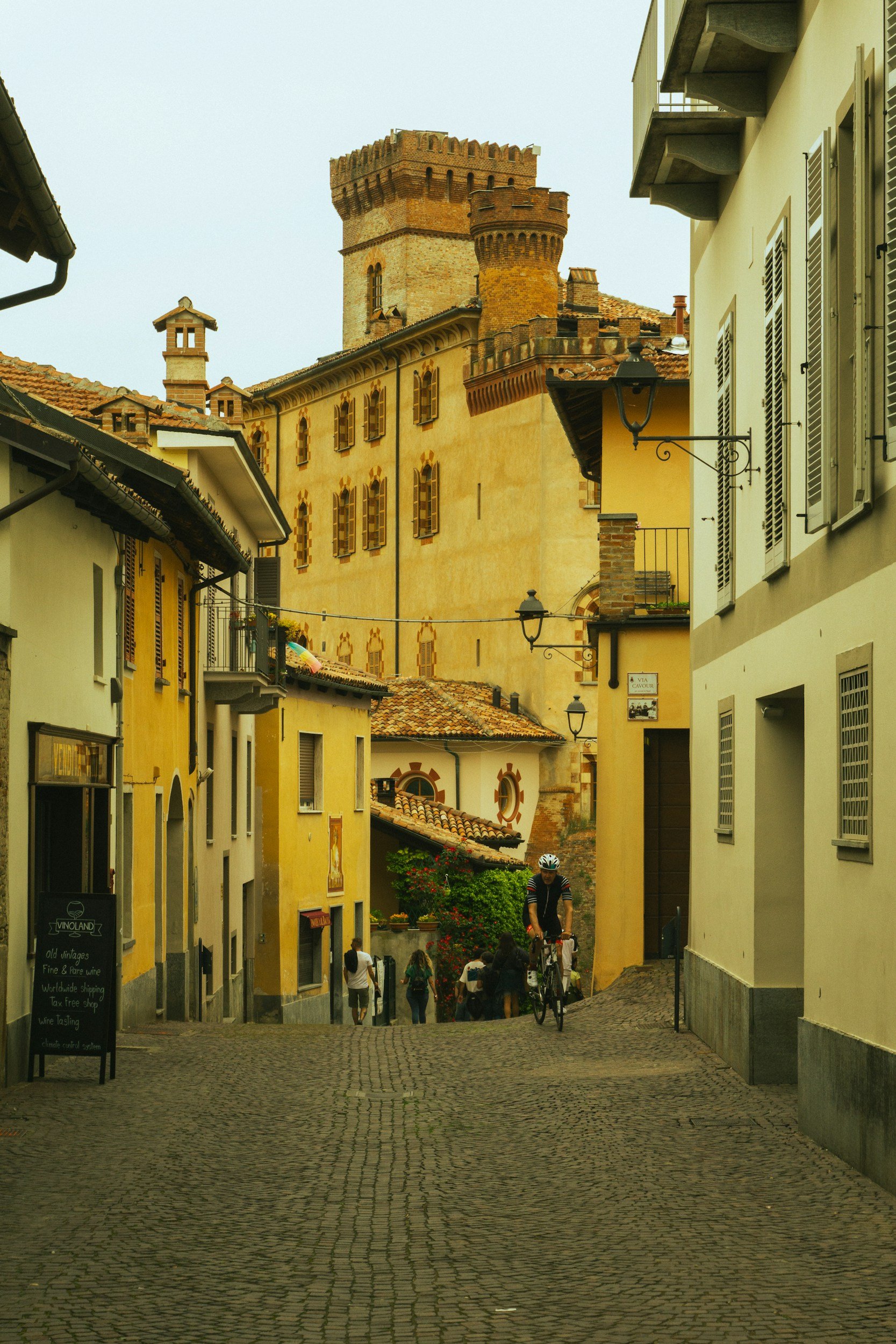
Barolo works, but I would keep the day focused on Barolo itself
Barolo is probably where most people get caught out because it appears constantly in searches for day trips from Turin. There is no railway station in the village, so the train to Alba is only the first part of the journey. From there, Grandabus currently serves Barolo on route 66, which runs through Alba, La Morra and Bra, and route 172 towards Monforte and Dogliani.
That is completely manageable if Barolo itself is what you want to see. Once you reach the village, quite a lot sits within a very small area. Castello Falletti on Piazza Falletti houses the WiMu wine museum, with four floors and 25 rooms looking at the history and culture around wine, while the castle cellars contain the Enoteca Regionale del Barolo.
For a car-free day, that enoteca is particularly useful. It represents almost 200 producers and has more than 120 labels, including wines available through tasting dispensers, so you can actually try a proper range of Barolo without spending the afternoon working out how to reach several separate estates.
There is also the Museo dei Cavatappi at Piazza Mazzocchi 4, a small museum devoted entirely to corkscrews. It sounds slightly eccentric until you are standing in Barolo, where a museum about the many ways people have invented to get into a bottle of wine feels oddly appropriate.
So a day that went Turin to Alba, bus to Barolo, WiMu, lunch, the Enoteca Regionale and then the bus back would make perfect sense to me.
What I would not do is casually add three winery appointments as well. Some producers are in or close to the village, but many estates sit out along vineyard roads. Once a winery gives you a fixed tasting time, you are trying to make that fit with the bus from Alba and, more importantly, the bus you need to catch back.
If several wineries are the entire reason you are going, that is the point where I would book a driver or join a small tour rather than spend half the day checking the time. If you mainly want to taste Barolo, the regional enoteca in the castle already solves that problem very nicely.
In La Morra, the exact bus stop really matters
La Morra is the place where I would be especially wary of an itinerary that says something vague like “get off the bus and walk the rest.”
The historic village is high on the hill, with Piazza Castello and the belvedere right at the top. That is exactly why the views across the Langhe are so good, but it also means the stop where you get off matters far more than the map initially suggests. Even La Morra’s official vineyard walks involve a proper climb back towards the village.
Current route 66 buses connect Alba with La Morra, but there are several stops around the municipality, including La Morra - Piazza, which is useful for the centre, and Bivio Annunziata, lower down near the Annunziata area. Those are very different arrivals if the thing you have saved on your phone is the viewpoint at Piazza Castello.
I would never casually tell someone to get off lower down and walk uphill unless that walk was actually part of what they wanted. A vineyard walk can be lovely when you chose it. It is considerably less appealing when you discover the climb by accident in August and have a lunch reservation waiting at the top.
Once you are in the upper village, though, you can easily spend a few good hours there. The Cantina Comunale di La Morra is in the former castle stables at Piazza Belvedere and brings together wines from local producers, including Barolo, Nebbiolo, Barbera and Dolcetto. For a car-free day, I think that makes far more sense than trying to reach several individual wineries scattered around the hills.
The tourist office at Piazza Martiri 1 is useful for walking maps and current information too, although it currently closes on Tuesdays and Wednesdays.
Then there is the Cappella del Barolo, decorated by Sol LeWitt and David Tremlett. It is one of those places that looks like an easy little addition because it belongs to La Morra, but it sits out in the vineyard landscape rather than beside Piazza Castello. This is exactly how a simple bus trip starts turning into a transport puzzle.
I would either take the bus into La Morra and keep the day around the village, belvedere, lunch and Cantina Comunale, or stay overnight and give the vineyard side of La Morra more time. Trying to fit the village, chapel and several wineries between two buses back to Alba is where I think the day stops being fun.
Barbaresco is close to Alba, but I would still plan it properly
Barbaresco is another place where the map makes everything look almost too easy. The village is close to Alba, but there is no useful passenger train taking you there.
Grandabus currently serves Barbaresco on routes 62 and 178 from the Alba side, so it is absolutely possible by public transport. I would just find the outward and return bus before booking lunch or a tasting, because Alba is not some turn-up-and-go hub with buses constantly shuttling out to Barbaresco.
Once you arrive, the village itself is tiny and very easy to explore.
The obvious landmark is the Torre di Barbaresco, but it is worth knowing that you can actually go inside rather than simply photograph it from the square. There is a multimedia museum and sensory-analysis space inside, then a panoramic terrace at the top looking straight over the Barbaresco vineyards.
Almost beside it is the Enoteca Regionale del Barbaresco at Piazza Municipio 7, housed in a former confraternity building. Again, this is exactly the sort of place that makes a car-free wine day much easier. You can taste the local wine in the village instead of turning the whole afternoon into a mission to reach one estate beyond it.
So I would happily take the bus from Alba, climb the tower, visit the regional enoteca and have lunch in Barbaresco.
What I would not write is “take the train to Alba and pop over to Barbaresco,” because that makes the transfer sound far more spontaneous than it really is. I would check the exact Alba bus stop, the return departure from Barbaresco and any tasting hours before leaving Turin.
Monforte is lovely, but I would not want one bus deciding the whole afternoon
Monforte d’Alba is possible by public transport too. Grandabus route 172 links Alba with Monforte, Barolo and Dogliani, so the basic journey is straightforward enough on paper: train to Alba, then bus.
The problem is the gap between services.
This is a rural bus route, and missing the sensible return can mean a long wait for the next one. That starts affecting everything else, from when you sit down for lunch to whether there is time for a winery and how slowly you let yourself walk through town.
And Monforte is exactly the sort of place where I would rather not be watching the clock.
The lower part of town sits around Piazza Umberto I and Piazza Italia, but the older Saracca quarter climbs steeply above them through narrow lanes towards Palazzo Scarampi and Piazza Antica Chiesa. This is the part I would actually come to Monforte for, and it is much nicer when you can walk up without mentally calculating how many minutes you have before the return bus.
At the top is the Auditorium Horszowski, an open-air amphitheatre beside the surviving medieval bell tower at Via del Carretto 16. It has hosted the Monfortinjazz festival for decades, and this upper part of Monforte is also where the vineyard landscape finally starts opening around you.
There are guided walks through the village too, leaving from the tourist office in Piazza Italia on various dates from spring onwards, which is a useful reminder that Monforte itself deserves more than being squeezed between two winery appointments.
I would absolutely go without a car if route 172 happened to line up nicely on the day I wanted. I just would not put Monforte among the easiest trips when one return bus can end up deciding when lunch has to finish.
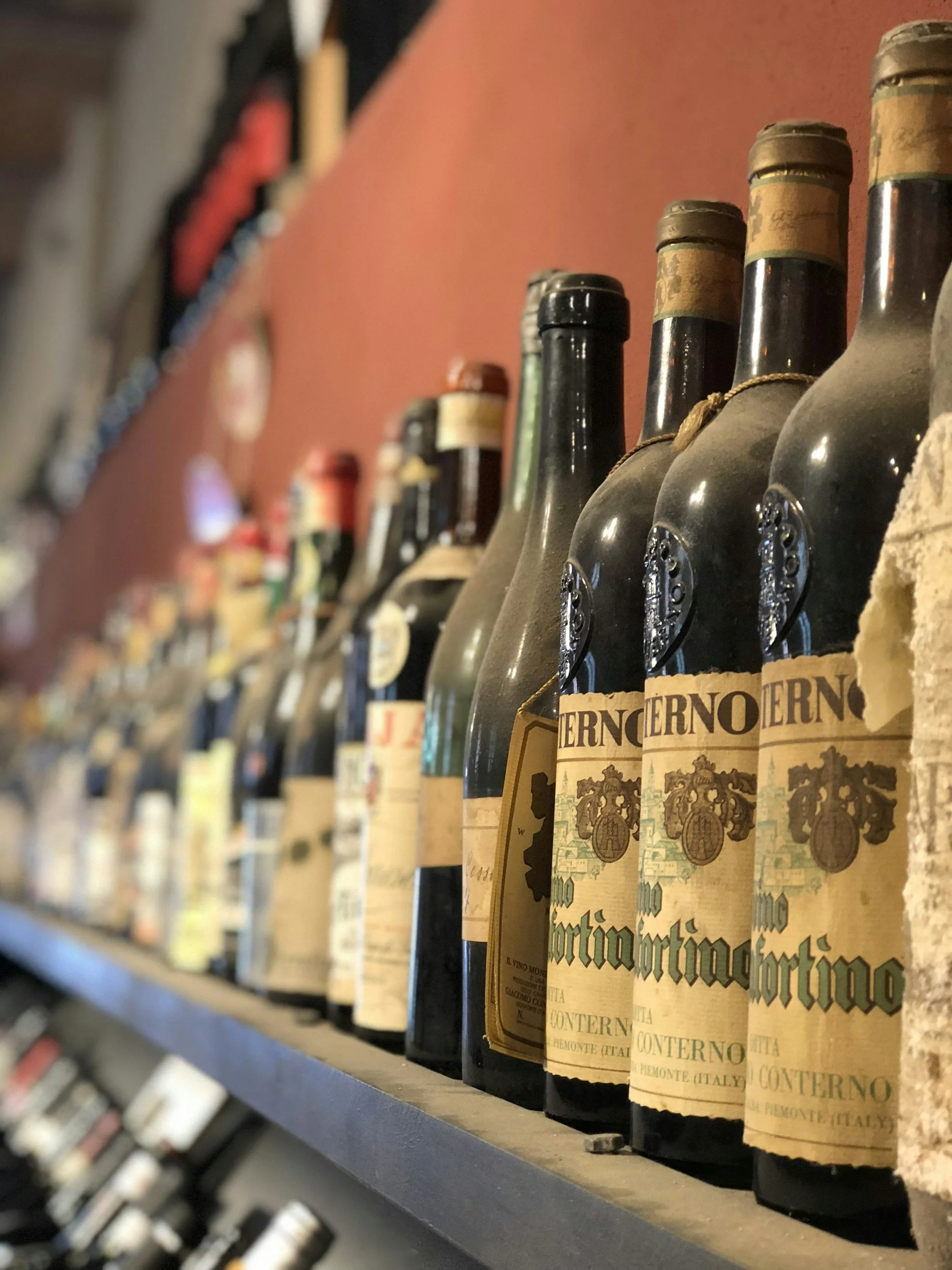
Orta San Giulio is worth the effort, but the station name is slightly misleading
Orta is probably the place I would be most tempted to force onto this list because it fits this kind of trip so well. The problem is not Orta itself. It is the amount of journey still left once you reach the railway station.
The station is called Orta-Miasino, but it is actually in Legro, above Orta San Giulio rather than beside Piazza Motta on the lake. The local tourism authority gives the walk down as around 2 kilometres, with roughly 100 metres of descent and about 45 minutes on foot.
If the station walk is making you reconsider Orta altogether, these Italian lake towns are worth comparing because they focus specifically on northern lake trips that work without renting a car.
There is a nice reason not to rush through Legro, though. The village is known for murals painted on the houses, many inspired by films made around Lake Orta, and you start seeing them around Via Vecchia Stazione. I would probably allow ten or fifteen minutes there before beginning the walk downhill.
From Legro, the route heads towards Via Marconi, passes the area around Villa Crespi and then continues along Via Fava towards the lake and Piazza Motta.
It is a lovely way to arrive. It is just not the seamless arrival that a station called Orta-Miasino makes you imagine. And unless you have arranged another way back, the pleasant downhill walk in the morning becomes an uphill return to Legro later in the day.
The train journey from Turin takes more effort too, with current routes normally involving at least one change, often in Novara, and the quickest combinations around the two-hour mark.
Once you finally reach Orta, I completely understand why you would bother. Piazza Motta has the sixteenth-century Palazzo della Comunità, boats leave from the waterfront for Isola di San Giulio, and the little streets behind the square are easy to explore without needing much of a plan.
If you walk up Salita della Motta, look for Casa Marangoni, sometimes called Casa dei Nani because of the unusually tiny windows tucked below its wooden lintel.
And I would take the boat across to Isola di San Giulio rather than only looking at it from the shore. The basilica has a twelfth-century stone pulpit inside, while the narrow lane circles the island around the Benedictine Mater Ecclesiae abbey.
So I am not leaving Orta out because it is not worth going. If anything, I think it deserves more time. I would much rather make Lake Orta its own trip, or stay overnight, than spend four hours of a Turin day on trains and station walks and then rush one of the nicest places on the lake.
If Orta is the place you keep coming back to, I would give it more time and use this Lake Orta guide rather than trying to squeeze the lake into the end of a Turin day trip.
Sacra di San Michele is a completely different kind of day
Sacra di San Michele is the easiest one to remove from a list of simple railway towns because it is not a town at all. It is an abbey sitting high on Monte Pirchiriano, and the train only gets you to the bottom part of the problem.
If you actually want to hike, Sant’Ambrogio di Torino is one of the useful stations. From the village, an old cobbled mule track climbs towards the Sacra, and the abbey itself gives the walking time as roughly 1 hour 30 minutes.
That sounds like a very good day if the hike is what you came for. I just would not hide a 600-metre climb inside the phrase “easy by train.”
The other useful option is Avigliana. Seasonal buses have operated from Avigliana station directly towards the Sacra on selected Saturdays, Sundays and public holidays, so this is the first option I would check if you want public transport without doing the full climb. Because the shuttle is seasonal, I would always check the official Sacra website for the exact date rather than assume it will be running.
This is also why I would not casually combine the Sacra with Susa. They are both in the Susa Valley, but they need completely different plans. Susa is further west and works beautifully as a simple town day once the train arrives. Sacra di San Michele makes more sense when you build the day around Avigliana or Sant’Ambrogio and whatever comes after the station.
None of these places is impossible without a car, and that is not the point of leaving them out. Barolo, La Morra, Barbaresco and Monforte can all work when the buses line up nicely with what you actually want to do. Orta is perfectly manageable if you are happy with the longer rail journey and the walk from Legro. Sacra di San Michele gives you the choice between a seasonal shuttle and a proper climb.
They are just different from the towns in the main part of this guide. For me, an easy train day from Turin means you can get off reasonably close to where you came to spend your time, rather than arriving at the point where the next round of transport planning begins.
Can you reasonably visit two towns in one day?
Yes, but there are only a couple of combinations where I think you gain more than you lose. I would not pair towns simply because two station names look close together on the railway map. The more useful question is whether you can move between them without sacrificing the market, lunch or the part of the afternoon that made you want to go in the first place.
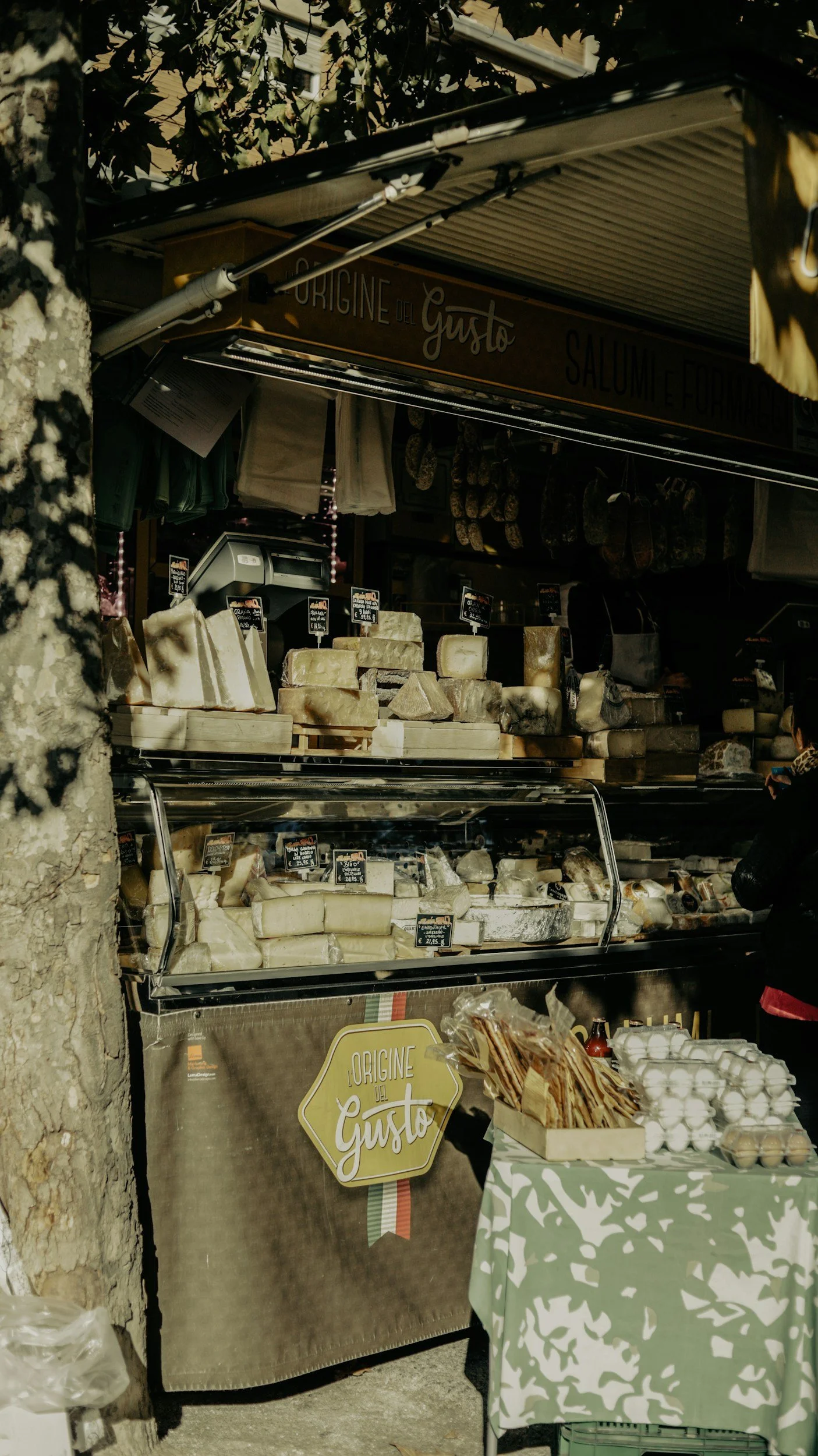
Alba and Bra are easy to combine, but lunch is where the plan usually falls apart
This is by far the simplest pairing. Bra and Alba sit on the same SFM4 train, and the current timetable is wonderfully straightforward: many Bra-to-Alba trains leave Bra at around 31 minutes past the hour and reach Alba at 53, so the journey itself is only about 22 minutes. Coming back the other way, the regular pattern is Alba at around :07 and Bra at :29.
The detail I would actually plan around is Bra’s Friday market. It finishes at 13:00, so staying until the stalls are packing away and then taking the current 13:31 train puts you in Alba at 13:53, before you have even walked into the centre. That is not how I would organise a day if a long Alba lunch is one of the reasons for going. I would either leave Bra on the 11:31 or 12:31 train, or have lunch properly in Bra and use Alba for the afternoon instead. Bra’s Friday market currently runs from 07:00 to 13:00.
Saturday sounds like the obvious day to reverse the plan because Alba has its big market, but I am less convinced. If you give Alba the morning it deserves, have lunch and then take the train to Bra, you arrive after Bra’s own most interesting food-market activity has finished. You can absolutely walk Via Cavour and the centre afterwards, but at that point I would ask whether staying in Alba for another glass of wine and a slower afternoon might actually be nicer.
So yes, combine them if seeing both matters. I just would not turn two good food towns into two hurried two-hour stops.
Avigliana and Susa work better if you choose one version of Avigliana
On paper this pairing is almost as easy. Both are on SFM3, and the current weekday pattern gives you roughly one direct Susa train each hour. A typical current example leaves Avigliana at 14:14 and reaches Susa at 14:53.
The mistake would be treating Avigliana as a twenty-minute station stop. Its medieval centre and lakes pull you in different directions. From the station side, the route into old Avigliana climbs through streets such as Via Umberto I towards Piazzetta San Giovanni and Piazza Conte Rosso; the municipality’s own route explicitly marks this section as uphill. From Piazza Conte Rosso, Via Porta Ferrata continues through another part of the medieval town.
The lakes are a separate choice. Corso Laghi leads towards that side of Avigliana, and trying to fit Lago Grande, Piazza Conte Rosso, the castle area and then Susa into the same day is where the “easy two-town trip” suddenly becomes a walking itinerary with a train deadline.
If I were combining them, I would do old Avigliana + Susa and leave the lakes for another day, or walk around Lago Grande and skip the medieval climb completely.
I would be even more careful on Sunday. The current festive SFM3 timetable has direct Susa services at wider intervals than the weekday pattern, so missing the train you intended to take can cost you much more time.
Asti and Alba make more sense as a loop than a double day trip
Asti and Alba look close, and there is a railway corridor between them, but they are not two stops on the same Turin commuter line. Asti connects to Turin on SFM6, Alba on SFM4, while the Asti-Alba connection is its own regional corridor with an integrated rail-and-bus timetable. The published service is hourly across much of the weekday, but the Saturday and holiday pattern has historically relied on buses rather than simply giving you the same railway service every day.
If I really wanted both, I would therefore look at Turin → Asti → Alba → Turin as a one-way loop rather than returning towards Turin between towns. It is actually quite a neat route when the weekday Asti-Alba connection lines up, but I would build it from the live timetable first and only then decide how long each stop gets.
One small practical point if you are using Trenitalia’s Tap&Tap rather than buying separate digital tickets: the system is now available across the SFM network and the Alba-Asti line. If you deliberately stop in Bra, Alba or Asti rather than merely changing trains, tap out to finish that journey and tap in again before starting the next one; Trenitalia also requires you to use the same physical card or device for the corresponding tap-in and tap-out.
For me, that is still the bigger point. Visiting two towns can save a day on paper, but Alba on a proper market morning or Asti with nowhere else to be after lunch usually gives you the better day.
The Turin station matters more than you might expect
One of the easiest ways to make a Piedmont day trip more annoying than it needs to be is to assume every morning starts at Porta Nuova. It is Turin’s main station, but several of the trains in this guide use the underground rail corridor through Porta Susa and Lingotto, and sometimes the best departure point is simply the one closest to where you are staying. The SFM network currently uses Porta Susa and Lingotto for several of the routes towards Asti, Alba, Bra and Pinerolo.
Before any of these trips, I would therefore search the destination from Torino Porta Nuova, Torino Porta Susa and Torino Lingotto rather than automatically choosing the first result from Porta Nuova. Five minutes spent doing that the night before can save a surprisingly pointless journey across Turin the next morning.
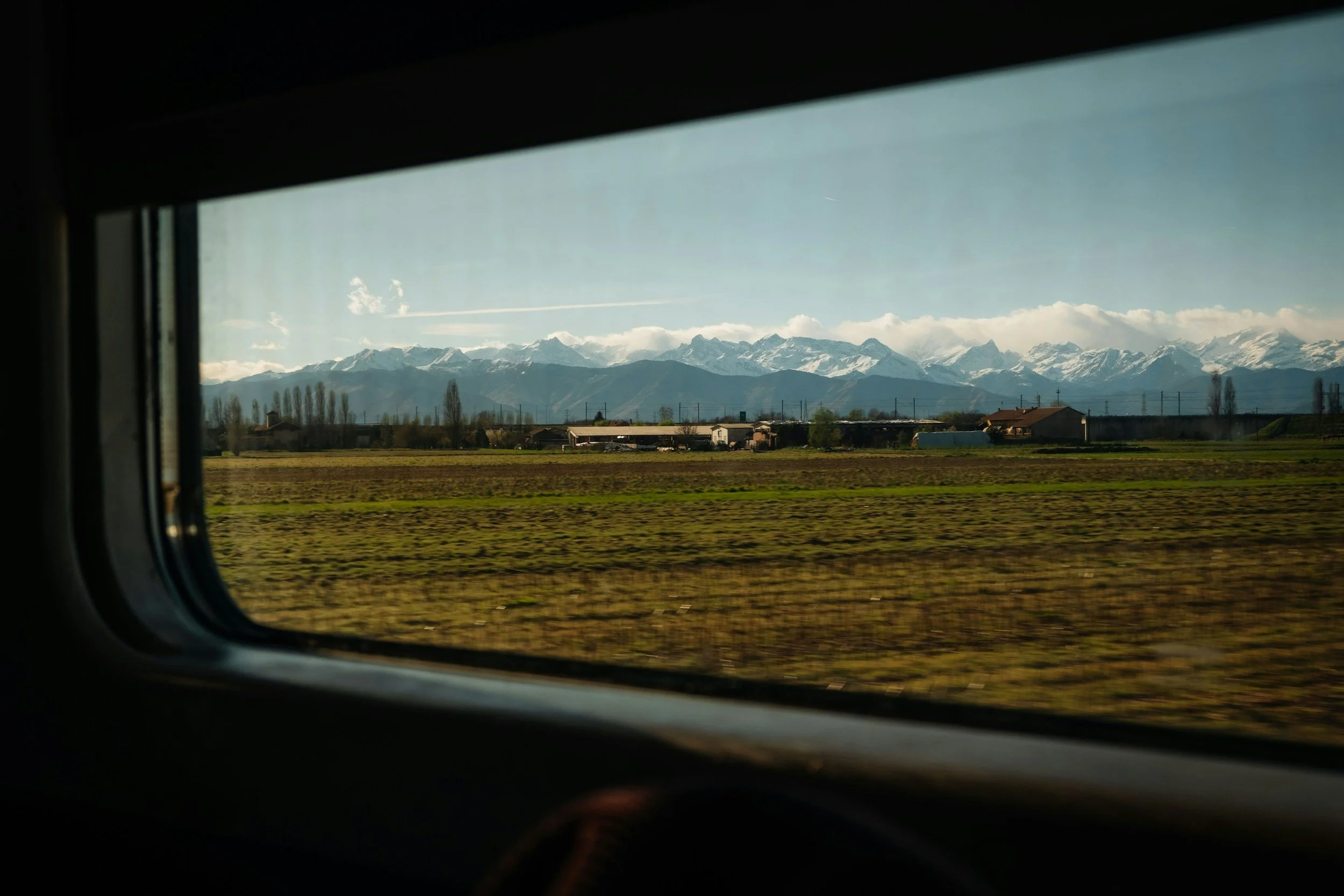
Porta Nuova still makes the most sense for some trips
If you are staying around Piazza Carlo Felice, Via Roma or the San Salvario side of the centre, Porta Nuova is about as convenient as a railway station can be. It faces Piazza Carlo Felice at the end of Via Roma, the M1 metro runs directly underneath it, and there is a tourist office immediately outside on Piazza Carlo Felice if you need anything before leaving Turin.
For the towns in this guide, Porta Nuova is the obvious starting point for Susa, because the SFM3 begins here. It is also useful for direct regional trains towards Ivrea, Asti and Cuneo, and Trenitalia lists the Ivrea/Aosta and Asti/Alessandria/Genoa corridors among the regional services using the station.
What I would not do is assume that Alba and Bra must start here too simply because Porta Nuova is Turin’s biggest station. Their regular SFM4 trains use a different route through the city, and Porta Susa or Lingotto will usually be more useful.
Porta Susa can save you crossing Turin for no reason
If you are staying around Piazza Statuto, Cit Turin or the western side of the centre, check Porta Susa before heading anywhere else.
This is particularly useful for Alba and Bra on SFM4, Pinerolo on SFM2 and Asti on SFM6, and regional trains towards Ivrea also stop here.
Even if you are staying closer to Porta Nuova, moving between the two stations is easy. Porta Nuova and Porta Susa are only three stops apart on the M1, and the metro ride itself currently takes around five minutes.
The bit I would allow extra time for is finding your train once you arrive. Porta Susa does not work like Porta Nuova, where you walk into a terminus and the tracks are more or less laid out in front of you. The railway runs underground, with the concourse and platforms on lower levels beneath the long glass station building.
So on a first visit, I would give myself ten or fifteen minutes rather than arriving with four minutes to spare. You can technically be “at Porta Susa” and still need to get downstairs, find the departure board and walk to the correct platform access.
Lingotto can be much more useful than it looks on the map
Torino Lingotto is the station people are most likely to ignore, but for journeys heading south it can be a very sensible place to board.
The SFM lines towards Alba, Bra, Asti and Pinerolo all pass through Lingotto, and regional trains towards Cuneo use it too.
So if you are staying around Lingotto, the former Fiat complex, the Oval or the Regione Piemonte tower, check the train from here before travelling north to Porta Susa only to come straight back south on the same railway.
There is also a useful little trick if you are already moving around Turin by train: Porta Susa and Lingotto are only around five minutes apart by SFM service, so the railway can sometimes be quicker than piecing together buses at street level.
The one thing to be careful with is the metro connection. Torino Lingotto railway station is not the same place as the M1 stop called Lingotto. The more useful metro connection for the railway station is now via the pedestrian route towards Italia 61-Regione Piemonte. That connection opened in 2023 and links the railway side with Via Nizza and the Regione Piemonte complex, but the rail and metro stations are still several hundred metres apart.
I would therefore allow time for the walk rather than treating Lingotto as one compact train-and-metro interchange. This is also why comparing the advertised rail time alone can be misleading. A 70-minute train from Lingotto is not actually the faster option if reaching Lingotto from your hotel takes another 35 minutes…
I would let the actual journey decide which station to use
There is no single Turin station that is best for every town in this guide.
If I were staying beside Porta Nuova and going to Susa, I would simply walk to Porta Nuova. From Cit Turin to Alba, Porta Susa makes much more sense. If I were staying down around Lingotto and heading for Bra or Cuneo, I would first see whether I could join the train there and avoid central Turin altogether.
The important thing is to make that decision from the current Trenitalia journey, not from an old travel article telling you which Turin station or platform someone used a couple of summers ago. Regional services and engineering works do change, and the most convenient option can even depend on the particular departure you choose.
This is one of the few bits of planning I would genuinely do the night before. Once you know which Turin station makes sense for your hotel and your train, the rest of the morning becomes considerably easier.
Booking regional trains without turning it into a whole thing
For these trips, I would use the Trenitalia app as the main tool and keep the SFM Torino website bookmarked for anything specific to the local network. SFM is useful when you want to understand what is happening on a particular line or check notices about planned works, while Trenitalia is the one I would open on the actual day because its Infomobility section shows current running information.
You can also save journeys as favourites in the app, which sounds minor until you have already looked up three sensible trains home and do not want to start the whole search again halfway through lunch.
Most of the journeys in this guide use ordinary Regionale or SFM trains, so there is no reserved seat and very little reason to buy weeks ahead. That is different from a Frecciarossa or another long-distance service, where your booking is tied to a particular train and seat. For somewhere like Asti or Bra, I would be completely happy buying the regional ticket that morning once I knew which departure I actually wanted.
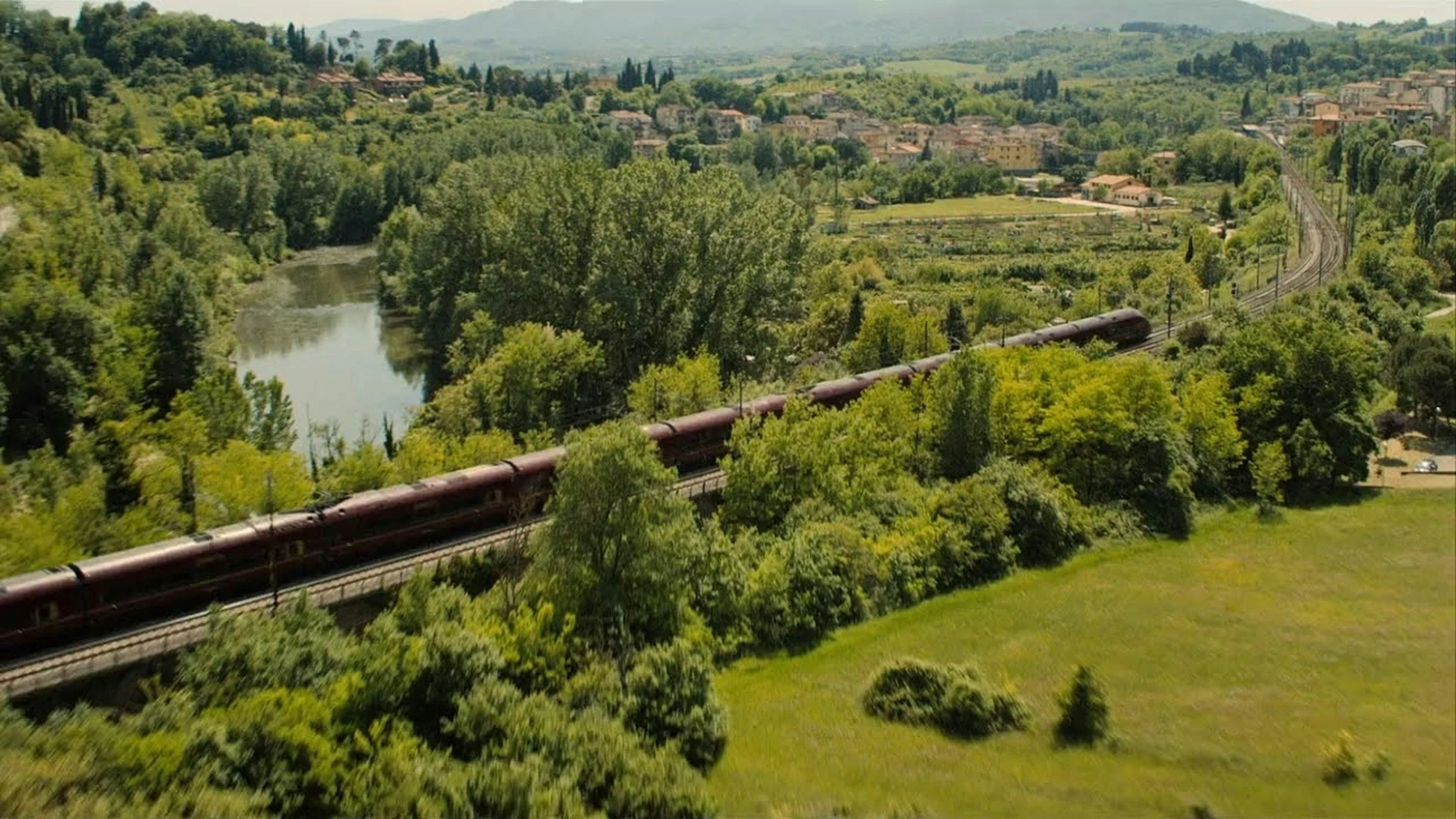
Digital regional tickets are much simpler than older Italy guides make them sound
If you buy a normal Digital Regional Ticket through the Trenitalia app or website, you no longer need to check in manually. Trenitalia changed that system, and the ticket now activates automatically at the scheduled departure time of the train you selected.
Digital Regional Tickets can currently be bought until five minutes before departure. They are personal tickets, so I would keep some ID with me as well rather than assume the QR code is the only thing I might be asked for.
You also have quite a bit of flexibility before the train leaves. Until 23:59 the day before travel, you can change both the date and departure time as often as you need. On the day itself, you can still change the departure time repeatedly, but only until the train currently attached to the ticket reaches its scheduled departure.
That is the bit I would actually remember. If you bought the 16:00 back to Turin and lunch has very clearly become a 17:00 situation, change the ticket while you are still sitting at the table. Once 16:00 arrives, that Digital Regional Ticket activates for the train you originally selected.
Paper regional tickets work differently. If you buy one from a station machine, it normally does need to be validated before boarding, and once validated the usual journey-validity window is four hours.
It is a small distinction, but it explains why two people getting onto exactly the same regional train can have completely different instructions. One person has a digital ticket that activates automatically; the other still needs to put the paper ticket through the validator before getting on.
Know roughly how you are getting home before you leave Turin
I do not mean choosing one return train at breakfast and then spending the whole day worrying about missing it.
What I would do is look at the last few sensible departures and make sure there is another workable train after the one I am most likely to catch. That way, staying an extra hour over lunch does not suddenly become a transport problem.
This matters more on Sundays and public holidays, when some regional services are thinner, and even more when engineering works are taking place. SFM itself warns that its simplified timetables may not include every temporary alteration, so a live Trenitalia search should always win over a timetable you downloaded several months earlier.
I usually find it useful to screenshot two or three return options with the train numbers included. The screenshot is not proof that the train will still run exactly as planned, so I would still check live information before heading to the station. It simply means you are not standing in Piazza San Secondo or finishing lunch in Alba trying to remember which three departures you looked at that morning.
If there is a strike, check the actual trains rather than assuming everything stops
If talk of a rail strike appears before your trip, I would start with the Italian Ministry of Infrastructure and Transport’s official strike calendar and then check Trenitalia’s separate list of guaranteed trains for Piemonte.
Trenitalia currently provides minimum guaranteed regional services in Piemonte between 06:00 and 09:00 and 18:00 and 21:00 on weekdays, and between 07:00 and 10:00 and 18:00 and 21:00 on holidays.
The important bit is that those time windows do not mean every regional train running between 06:00 and 09:00 is automatically protected. The guarantee applies to specific train numbers, so I would always check the actual service you intend to use rather than rely on the time alone.
TAP&TAP is useful, but I would still default to the app
TAP&TAP now works on a growing number of regional routes in Piemonte, including parts of the network used in this guide, and it can be genuinely convenient when you see the correct validator.
You tap a contactless Visa, Mastercard or American Express before boarding, then use the same card or device to tap out when you reach your destination. If you change trains as part of one continuous journey, you do not tap in again at the interchange.
I still think the Trenitalia app is the easier default for most visitors, mainly because there are fewer small rules to remember. TAP&TAP currently covers a standard adult second-class fare, allows one passenger per card, and depends on you remembering to tap out at the end of the journey. Forget that final tap and the system can charge the maximum regional fare rather than the journey you actually made.
So I would see contactless payment as a handy option when the marked TAP&TAP machine is right in front of you, rather than something I would assume will cover every journey in this article. Buying a normal digital ticket takes a minute, you can see exactly which train it belongs to, and there is much less chance of spending the first ten minutes of the journey wondering whether you tapped the right machine.
Should you actually stay in Turin, or move to Alba?
I would not move hotels just to save yourself one train journey. If Turin is still somewhere you actually want to spend time, staying there gives the trip much more freedom. You can disappear to Asti, Alba or Susa for the day and still come back to a completely different kind of evening, rather than making every morning and night revolve around the Langhe.
And there is no reason to book a hotel directly opposite Porta Nuova simply because you are relying on trains. If I wanted restaurants and cafés close by when I got back in the evening, San Salvario would make a lot of sense. It sits immediately behind Porta Nuova, with Via Baretti running through the neighbourhood and plenty of places still open when you return from a day trip.
If more of my journeys worked better from Porta Susa, I would happily stay around Cit Turin instead. It is quieter, known for its Art Nouveau buildings, and the Piazza Benefica market runs Monday to Saturday, so you still have something very local outside the door rather than feeling as though you chose the neighbourhood purely for its station. Both Porta Nuova and Porta Susa are directly on the M1 metro as well, so neither leaves you cut off from the rest of Turin.
That is the version of Turin I think works best for this kind of trip. I would choose an area I actually wanted to come back to at 18:00, not treat the city like an airport hotel where I sleep between trains.
If you are already leaning towards sleeping in wine country, I would compare the Piedmont stay options before booking, especially if being able to walk to dinner matters as much as being close to the vineyards.
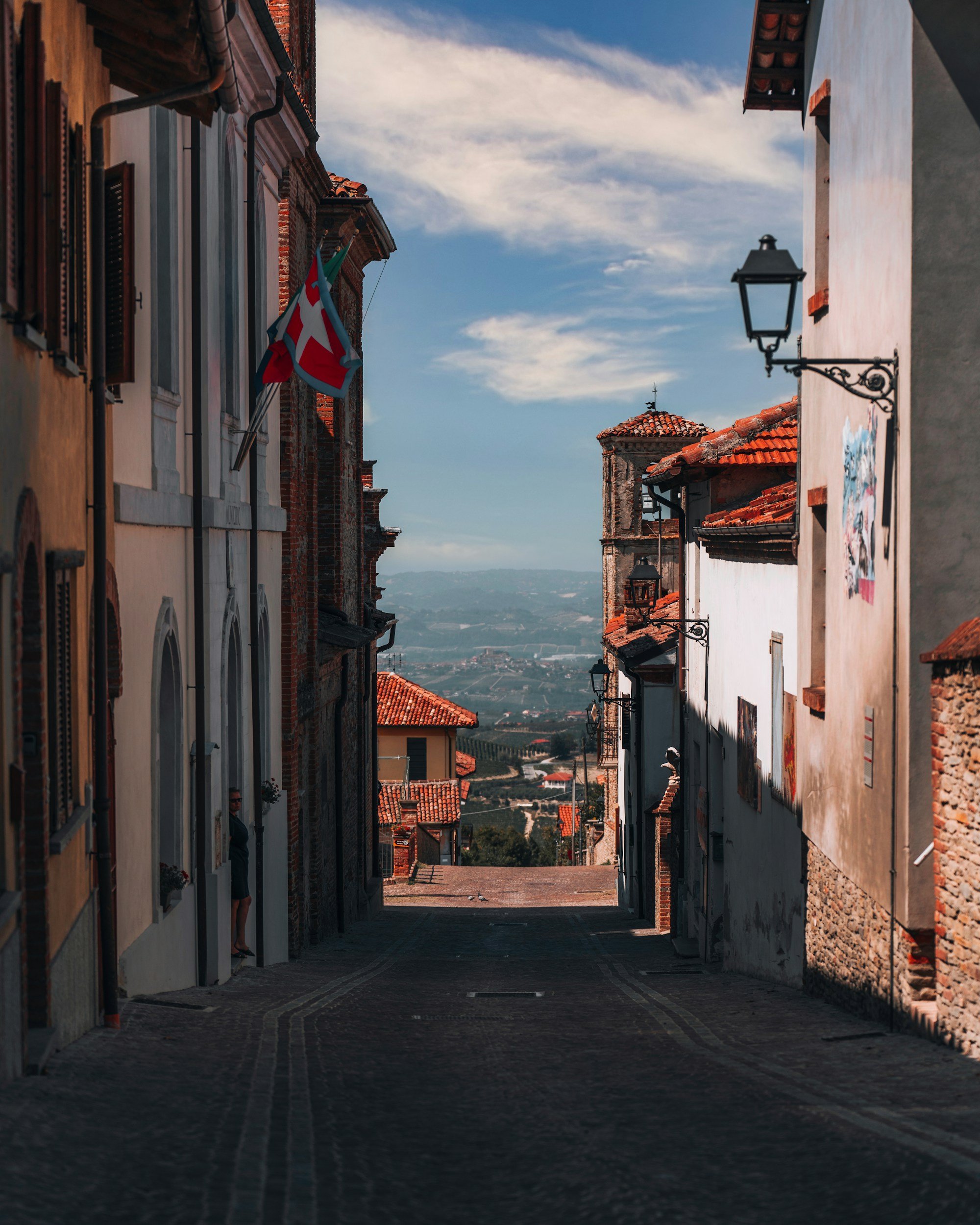
Alba starts making more sense once several days revolve around the Langhe
I would move to Alba when the question changes from “do I want to visit Alba?” to “how many of the next few days am I going to spend in and around Alba?”
If you stay there without a car, the exact accommodation address matters much more than the booking site category. Central Alba is extremely easy on foot, but the municipality spreads well beyond the compact historic centre most visitors have in mind. I would look around the corridor between the station, Via Roma, Piazza Michele Ferrero and the old centre rather than automatically choosing a countryside property simply because the listing says Alba.
That route works particularly well without a car. Via Roma brings you in from the station side towards Piazza Michele Ferrero, and from there Via Maestra carries you straight through the centre towards Piazza Risorgimento. If your hotel is somewhere along or close to that line, you can arrive with luggage, go out for dinner and head to the station again without needing another layer of transport.
It also makes the evenings easier. Piazza Michele Ferrero is lined for much of its perimeter by porticoes and cafés and is one of the places people in Alba actually use, so staying centrally does not mean coming back from a winery day to a town that has completely shut down.
Alba also starts winning if you are planning a driver-led winery day. You can be dropped back in the centre, change for dinner and leave the transport planning behind for the night. The same applies the following morning. If you want to see the Saturday market early, you can simply walk out rather than timing breakfast around the train from Turin.
That advantage becomes even more obvious during the International Alba White Truffle Fair, which usually runs from around 10 October to 6 December. A major part of the fair takes place inside Cortile della Maddalena, right in the centre along Via Maestra, so if the fair is one of the main reasons you are travelling, being able to walk there makes a real difference.
I would not move to Alba expecting it to solve the difficult part of Langhe transport, though. It makes the beginning and end of the day much easier. It does not suddenly put Barolo, La Morra or rural wineries beside the railway station.
If several estates are the main reason for the trip, I would still arrange a driver or organised tour and use Alba as the comfortable place to leave from and come back to.
Bra and Asti can work too, but for more specific trips
I could see myself staying a night in Bra if Bra itself was part of the plan. Friday market, a long dinner and a slow morning before moving on would make sense. I would be much less likely to choose it simply because I wanted a strategic base for seeing lots of different parts of Piedmont.
Asti is the more practical alternative. There is enough going on in the evening that it does not feel like you are merely sleeping beside a railway station, and its rail connections make it easier to move between different parts of the region than staying in one of the smaller Langhe villages.
I would especially consider Asti on a second or third Piedmont trip if I wanted to divide a few days between Monferrato and the Langhe rather than returning to Turin every night.
For a first car-free trip, though, I would still stay in Turin and choose one or two proper day trips rather than spending the holiday changing hotels every other day. I would move to Alba once the Langhe had clearly become the main reason for the trip, not simply because I wanted to save myself one train ride.
If the market mornings are the part of this itinerary you would most like to repeat elsewhere, these car-free market towns are a useful next step for planning the same kind of trip beyond Piedmont.
Which town should you choose?
Before getting into each town properly, you can narrow the choice down quite quickly. The journey times below are only a rough guide because regional schedules and engineering works do change, but the more useful question is what kind of day you actually want once you step off the train.
For a first day trip from Turin, Asti is the easiest place to start. Direct trains usually take somewhere around 35 to 55 minutes, and the station leaves you close enough to the centre that you can simply walk towards Piazza Alfieri without needing another connection. Wednesday and Saturday are especially good if you like markets, when the main market spreads around Piazza Campo del Palio. Just do not picture Asti as a tiny wine village with vineyards beginning behind the houses. It is a proper small city, with porticoes, medieval towers, substantial churches, ordinary shops and cafés, and that is actually a large part of why the day works so easily.
Alba is the stronger choice when food is the reason you are going. The journey is longer, roughly 70 to 80 minutes, but Saturday gives you one of the most interesting market mornings in this guide. Stalls spread through Via Vittorio Emanuele, better known locally as Via Maestra, as well as Via Cavour, Piazza Risorgimento and the surrounding squares, so the market becomes part of the whole centre rather than sitting neatly in one corner. I would choose Saturday for cheese, produce, food shopping and a busy local morning, and another day if I wanted the medieval streets to be easier to see. The important expectation to adjust is what happens beyond Alba: Barolo, La Morra and the surrounding wineries are not places you simply walk to once the train arrives.
Bra makes more sense when you are perfectly happy for food and lunch to carry much of the day. The train takes around an hour, and there is less pressure here to move between major sights. A good Bra day can be as simple as coffee on Via Cavour, food shops, the Slow Food story and a long lunch. Friday is the strongest market day, with stalls around Corso Garibaldi, the Ala and several surrounding streets, and I think that gives Bra much more reason to be the destination in its own right rather than something you quickly add onto Alba. If you need a church, palace or museum every hour, I would choose Asti. If two hours over lunch sounds entirely reasonable, Bra is probably the better fit.
Ivrea is the one I would choose when I wanted something completely different from the wine towns. The train takes roughly an hour, but the day is much more about the Dora Baltea, the older centre above the river and the twentieth-century Olivetti industrial city, now a UNESCO World Heritage Site. Those pieces are spread across town rather than gathered around one photogenic square, so Ivrea involves more walking and benefits from understanding a little about the Olivetti story before you arrive. I would give it the full day and choose it deliberately for the architecture and industrial history rather than because it happens to be another easy train from Turin.
Then there is Susa, which gives you the biggest change in landscape. The journey is longer than Asti or Bra, but when you get off the train the mountains are already around the town. You do not need another bus or a hike just to feel that you have reached the Alps. The Roman history is woven through the centre too: the Arch of Augustus, aqueduct remains and amphitheatre sit alongside Porta Savoia, the Cathedral of San Giusto and the later medieval town rather than inside a separate archaeological site. Museum and monument hours are worth checking, especially outside summer, but Susa still works even when one of them is closed.
So if I had one free day and no particular agenda, I would choose Asti. Pick Alba when the market, food shops and wine bars are the reason for leaving Turin; Bra when you want a slower day built around food rather than attractions; Ivrea for Olivetti, architecture and the river; and Susa when what you really want is to step off the train somewhere that already feels distinctly Alpine.
If you like the idea of Barolo and La Morra but are not actually fixed on Piedmont, I would compare a few Italian wine villages before deciding, especially if this is an autumn trip and you are still deciding which region to base yourself in.
FAQ: visiting Piedmont by train from Turin
What are the easiest towns to visit from Turin by train?
For the least complicated day, I would start with Asti, Alba, Bra, Ivrea, Susa, Pinerolo or Cuneo. They all have railway stations that leave you close enough to the interesting part of town that you can continue largely on foot. Asti is the easiest all-rounder, while Alba is the one I would choose if food and wine are driving the decision.
Can you explore Piedmont without renting a car?
Yes, as long as you separate Piedmont’s towns from its rural wine country. Turin is a very useful base for places like Asti, Alba, Ivrea and Susa, but the vineyards around Barolo, La Morra and Monforte are a different story. That is where buses become less frequent and a driver starts making much more sense.
Is Alba worth visiting if I am not doing a winery tour?
Definitely. I actually think this is one of the biggest misconceptions about Alba. You can spend a very good day around Via Maestra, Piazza Risorgimento, the Saturday market, food shops, enoteche and a long lunch without going anywhere near a vineyard. If all you want is to taste Langhe wines, doing that in Alba itself is much easier than arranging a rural tasting.
Should I choose Asti or Alba for my first day trip?
I would choose Asti if ease matters most and Alba if food matters most. Asti has the shorter, simpler feel to the day and more variety between architecture, markets and ordinary town life. Alba is more specifically about food shops, wine, restaurants and the Saturday market.
Can you visit Barolo or La Morra by train from Turin?
Not directly. Neither has a railway station, so you would normally take the train as far as Alba and continue by bus, taxi or prearranged driver. It is perfectly possible, but once you add a winery appointment and a rural bus home, it stops being one of the easy train trips this guide is about.
Can Alba and Bra be visited in the same day?
Yes. They sit on the same SFM4 line and the train between them is short, so this is the easiest two-town combination in the article. I would still give one town priority rather than splitting the day exactly in half, especially if you want a proper lunch or are visiting one of the markets.
Which Piedmont town has the best market for a day trip?
It depends what you want from the market. Alba on Saturday is the strongest choice for a food-focused trip, while Bra on Friday feels more like a normal weekly town market with strong local food culture around it. Asti has large Wednesday and Saturday markets, and Cuneo’s Tuesday market is much bigger and more mixed. I would choose the town first and the market second rather than assuming there is one universally “best” option.
Which town should I choose if I want mountain scenery?
Susa. You step off the train already in the Alpine valley, so you do not need to organise a hike or another transfer before the landscape becomes part of the day. The Roman remains and old centre are compact enough that you can have the mountain setting without turning the trip into an outdoor excursion.
Are the towns actually walkable from their railway stations?
Mostly, yes, which is why they made this guide. Asti, Alba, Bra and Susa are particularly easy once you arrive. Ivrea needs more walking because the Olivetti district and medieval centre sit in different parts of town, Cuneo has roughly a fifteen-minute walk before you properly reach the centre, and Pinerolo becomes noticeably steeper once you head into the upper historic streets.
Do regional trains from Turin run normally on Sundays?
They run, but I would never assume the weekday frequency carries over unchanged. Some SFM and regional routes have wider gaps on Sundays and public holidays, and engineering works can alter the pattern further. I would check the outward and return journey in Trenitalia the evening before, especially if there is only one return time you would be happy with.
Is Lake Orta realistic as a day trip from Turin by train?
It is possible, but I would not put it in the same easy category as Asti or Susa. The journey is longer and can involve a change, and Orta-Miasino station is up in Legro rather than beside Piazza Motta. You then have around a 2 km walk down towards Orta San Giulio, which is lovely in good weather but needs to be counted as part of the journey, including the climb back towards the station later.
Is it better to stay in Turin or Alba without a car?
For a first trip, I would stay in Turin. You have much more flexibility for train trips in different directions and far more choice once you come back in the evening. I would move to Alba when the Langhe becomes the main point of the trip, especially if you are planning several wine days, the White Truffle Fair or an organised winery tour.