
These European market towns are even better without a car
Some towns just work without a car. You arrive, walk a few minutes, and you’re already in the middle of things.
In Uzès, you get off near the Esplanade, walk past the plane trees, and within a couple of minutes you’re on Place aux Herbes. That’s where the market sits, surrounded by cafés and small shops, and you end up crossing the square more than once without thinking about it.
In Leiden, you leave the station and follow Stationsweg toward the canals. The market along Nieuwe Rijn and Botermarkt is already on your way into the centre, so you don’t need to “go” to it. You just pass through it as you walk.
In Lucca, the station sits just outside the walls. You cross Viale Regina Margherita, enter through Porta San Pietro, and everything stays within those streets. Markets, bakeries, cafés, all within walking distance, without needing to plan how to get between them.
That’s what makes these places different. The market isn’t something you travel out to and leave again. It sits inside the town, so you keep returning to it as part of the day.
This guide is built around towns where arriving by train puts you close enough that you don’t think about transport again. You walk, stop where it makes sense, and the rest of the day takes care of itself.
How to tell if a market town works without a car
You can usually tell before you even book anything.
Start with the arrival point. If the station or bus stop drops you within a 5–10 minute walk of the centre, it’s a good sign. In Leiden, you leave the station, follow Stationsweg, and you’re already at the canals around Nieuwe Rijn. In Lucca, you cross Viale Regina Margherita and enter through Porta San Pietro, and everything stays inside those walls.
If you need a taxi, a local bus, or a 25-minute walk along a main road just to reach the centre, it’s usually not going to work the same way.
The second thing to check is where the market actually sits. Look at the map. If it’s on a central square like Place aux Herbes in Uzès, with streets branching off it, that’s exactly what you want. If it’s pushed to the edge of town, near a parking area or a large open space, it usually means the town relies more on cars than walking.
You can also look at how the streets connect. In towns that work well, everything you’d naturally do sits within a few minutes of each other. Bakery, café, market, small shops. In Leiden, you move between Botermarkt, Nieuwe Rijn, and the side streets without thinking about direction. In Lucca, you stay inside the walls and everything stays close.
The easiest test is this:
Can you imagine arriving, walking for 10 minutes, and then not thinking about transport again for the rest of the day?
If the answer is yes, the town usually works without a car. If not, you’ll feel it as soon as you arrive.
What the walk from the station actually tells you
The part most people ignore is the walk from the station into town. That’s usually where you figure out if a place works without a car.
In Uzès, you come in near the Esplanade, walk along Avenue Général Vincent, pass residential streets first, then cafés start to appear, and a few minutes later you’re on Place aux Herbes. By the time you reach the square, you’ve already seen how the town actually functions beyond the centre.
In Ascoli Piceno, it’s more direct. You leave the station, cross Ponte di Cecco, follow Corso Vittorio Emanuele, and within 10–15 minutes you’re in Piazza del Popolo. You don’t need to think about where to go. The route is obvious.
That walk is what tells you if the town is easy to move around. If cafés, bakeries, and small shops start appearing naturally as you get closer to the centre, everything is usually connected once you arrive. If the walk feels long, empty, or disconnected, you’ll feel it every time you go in and out.
It’s a simple check, but it saves you from picking places that look good on a map and feel inconvenient once you’re there.
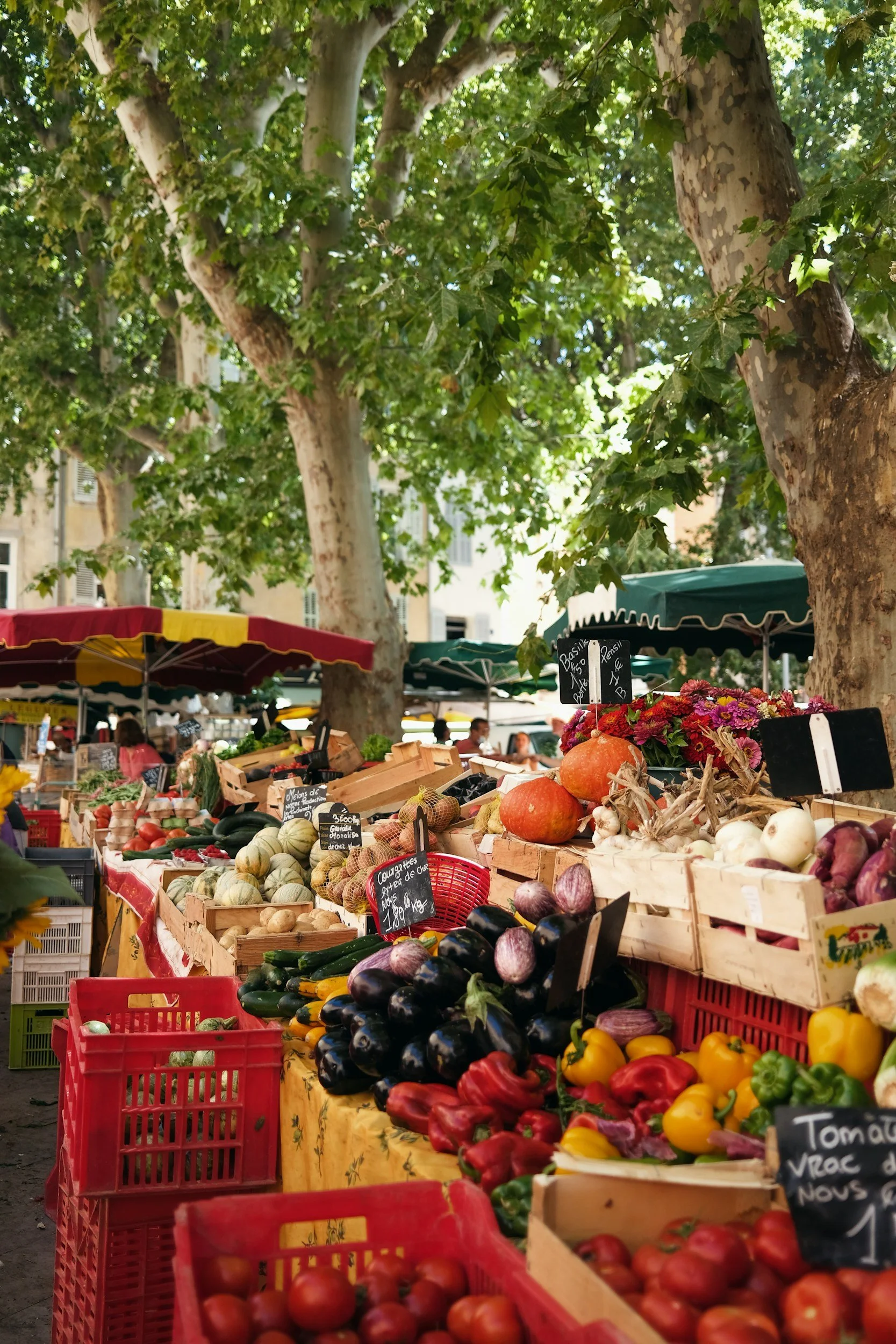
France: market towns where the centre still holds
You can usually tell within the first few minutes in France.
You arrive, start walking, and either the town pulls you straight into the centre… or you find yourself on a road that feels slightly outside of everything.
In towns that work, the transition is clear. You leave the station or bus stop, pass a few residential streets, then cafés, bakeries, and small shops start appearing, and within 5–10 minutes you’re on the main square where the market sits. In Uzès, that’s Place aux Herbes. In Sommières, it’s the stretch along Quai Frédéric Gaussorgues and across Pont Tibère. In Chartres, you follow Avenue Jehan de Beauce and end up near Place Billard with the cathedral just behind you.
In towns that don’t work as well, you notice something slightly off. The centre might look right on a map, but when you arrive, it feels separate from where you’ve been dropped off. The market might be pushed toward a larger open space near parking, or only active for a short window, and the rest of the streets don’t connect back to it in the same way.
That difference shows up in how you move. In places like Uzès, you cross Place aux Herbes several times a day without planning to. In Sommières, you keep looping between the river and the old streets. In Chartres, everything sits along a short, direct route from the station.
If you can walk for ten minutes and feel like you’ve already arrived, the town usually works without a car. If you’re still trying to reach the centre after that, you’ll notice it the whole time you’re there.
If you’re travelling in the colder months, these French winter towns you can reach without a car show how easy it can be to explore by train.
For something closer to the capital, these small towns near Paris make easy day trips with cafés, markets and walkable streets.
Uzès, Occitanie
In Uzès, everything pulls you into Place aux Herbes without needing directions.
If you arrive near the Esplanade, you walk past the plane trees, down Avenue Général Vincent, and the shift is obvious. The streets narrow slightly, more cafés appear, and then the square opens up. Arcades on all sides, tables underneath, and streets like Rue Jacques d’Uzès, Rue du Docteur Blanchard, and Rue Saint-Théodorit feeding straight into it.
On Saturdays, it starts early. By 8:30–9:00, most stalls are already set up across the square, with extra rows extending into the side streets. People move quickly at that time. Bread, cheese, vegetables, then they leave. If you stay along the outer edge first, under the arcades, you can walk the full square before it fills.
Around 10:30–11:30, the centre slows down. Café tables under the arcades fill, especially along Rue Jacques d’Uzès where it stays shaded longer. You move between tables and stalls without separating the two.
If you step away for a few minutes, the change is immediate. Walk up Rue Saint-Théodorit toward the cathedral or into the smaller streets behind it, and it’s noticeably quieter. Then you come back into the square and it feels busy again.
By 13:30–14:00, stalls begin packing up. Within an hour, most of the market is gone, but the square doesn’t empty. The tables stay out, people keep sitting, and you still cross the same routes through the square.
That’s what makes Uzès work. You don’t go to the market once. You pass through Place aux Herbes several times during the day without planning to.
If you stay within the streets directly around the square, between Rue Jacques d’Uzès, Rue du Docteur Blanchard, and toward the cathedral, everything stays within a few minutes. If you stay closer to the outer roads, you’ll feel that extra distance every time you go in and out.
Sommières, Occitanie
In Sommières, you don’t arrive into one obvious centre the way you do in Uzès. You come in slightly off to the side, and the market reveals itself in pieces.
If you walk down toward Quai Frédéric Gaussorgues first, you’ll hit the river before anything else. The stalls line the quay facing the water, set up in a long stretch under the trees. Early on, around 9:00, there’s space here. People stop briefly, buy what they need, and keep moving. It doesn’t hold you in place yet.
If you follow that line far enough, you’ll reach Pont Tibère. Most people cross without really thinking about it. The bridge is narrow, stone underfoot, and once you’re over it, everything tightens.
On the other side, around Place de la République and Rue Général Bruyère, the market sits closer together. This is where it slows down later in the morning. Stalls are packed tighter, people stand longer, and you start moving at the same pace as everyone else.
You don’t stay in one area for long. You cross the bridge, move into the streets, then drift back toward the river again. Most people end up doing that loop at least twice, because neither side feels complete on its own.
If you walk a little further up from Place de la République into the smaller streets, even just a minute or two, the change is immediate. Fewer stalls, more space, and then you drop back down into the market again.
By around 12:30, the first signs of it ending show along the quay. A few stalls start packing up, gaps appear between them, and the long line by the river breaks apart. By 13:30–14:00, large parts of that stretch are already gone, while the streets on the other side of the bridge hold on a bit longer.
If you stay overnight, this is where Sommières makes more sense. Once the market disappears, the town resets quickly. The same quay that was full in the morning is almost empty, and the streets behind Place de la République feel noticeably quieter.
Where you stay changes how this feels. If you’re near Pont Tibère, you’re in the middle of that back-and-forth movement between river and streets. If you stay further out, you’ll feel the distance every time you come back in, especially once the market has cleared.
Chartres, Centre-Val de Loire
Chartres is one of those places where you don’t really think about how to get around. It’s decided for you as soon as you leave the station.
You step out, walk onto Avenue Jehan de Beauce, and just keep going. No turns, no checking maps. The cathedral sits ahead of you the whole time, getting closer with every block. It takes about 10 minutes, and by the time you reach the older streets, you’re already in the middle of things.
The market isn’t in front of the cathedral, which catches people out. If you follow the crowd straight uphill, you’ll miss it completely. It sits slightly off to the side, around Place Billard and the surrounding streets like Rue du Bois Merrain and Rue des Changes.
In the morning, it’s already moving. Not slowly, not for browsing. People stop, buy what they came for, and leave again. You’ll notice it especially around the edges of Place Billard, where people don’t hang around for long.
If you walk through it once and then turn into one of the smaller streets, it disappears quickly. Within a minute or two, you’re back in regular streets with bakeries, cafés, and people going about their day. It doesn’t stretch very far.
Most people don’t stay in the market area for long. You pass through, then drift toward the cathedral, then maybe down toward Rue de la Poissonnerie where the streets drop toward the river. It all sits close together, but you’re not looping back the same way you do in Uzès or Sommières.
Around midday, it starts thinning out fast. Stalls pack up, gaps appear, and within a short time Place Billard feels almost empty compared to an hour earlier.
If you’re still around later in the day, the shift is quite noticeable. The streets around the cathedral and Place Billard quiet down, and it feels like a different town entirely.
Where you stay doesn’t need to be exact here, but somewhere between the station and the cathedral makes everything simple. You end up walking the same straight route in and out without thinking about it.
If your trip is shaped around food markets, these markets near Paris by train help you plan a route without needing a car.
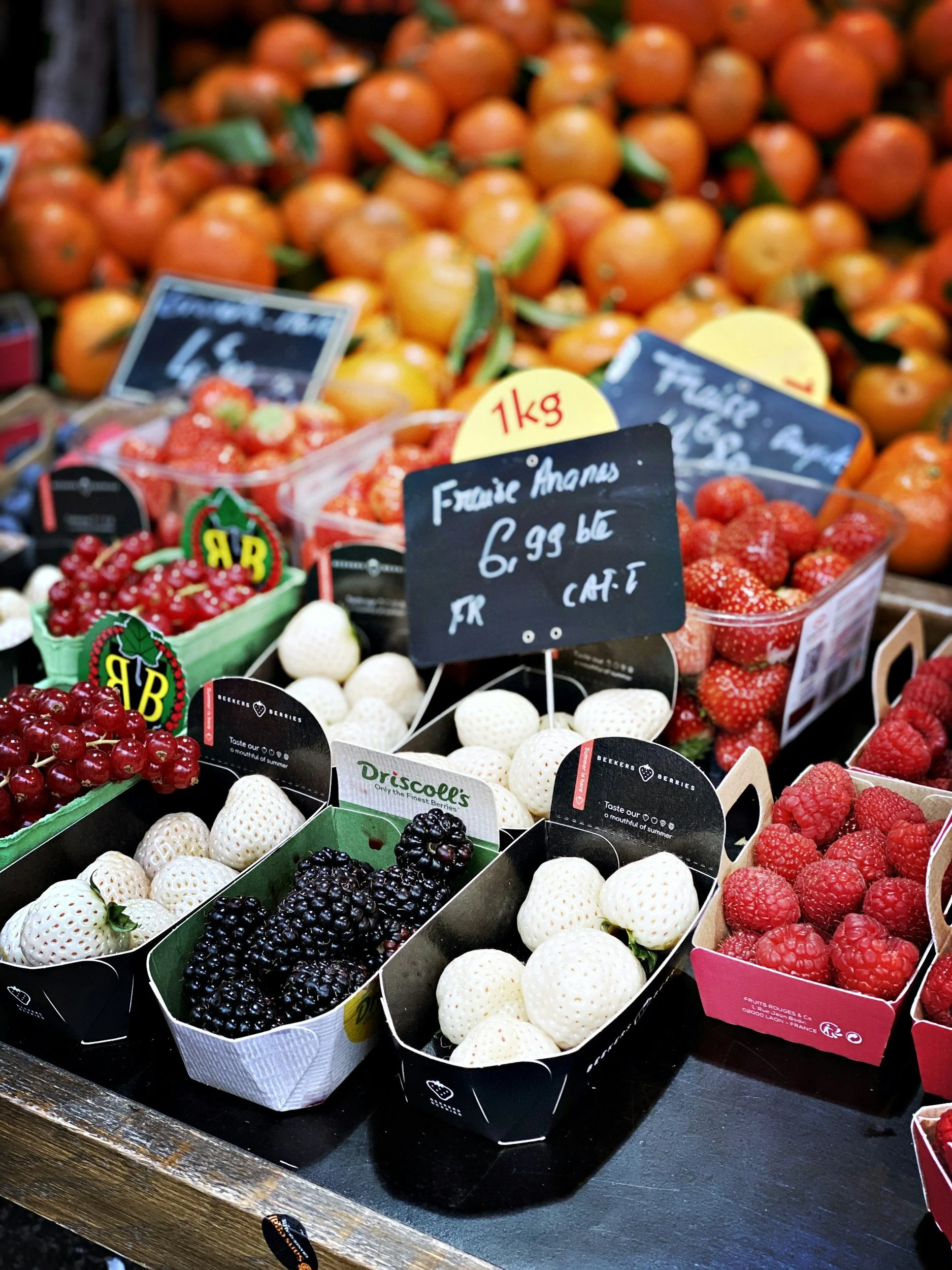
Italy: Market towns that are easy to explore on foot
Italian historic towns often resist cars by design. Restricted zones, narrow streets, and compact centres make walking unavoidable. Several Italian market towns also work particularly well for short, car-free trips by train, especially if you’re traveling alone and want somewhere compact, readable, and easy to settle into.
You basically get off the train and you’re not trying to figure out how to reach the centre. You’re already close enough to walk it. The route is usually obvious, and once you’re in, everything stays within the same few streets.
In Lucca, the station sits just outside the walls. You cross Viale Regina Margherita, pass through Porta San Pietro, and from that point on you’re inside a network of streets where you don’t think about distance anymore. The market activity shifts between squares like Piazza San Michele and the streets around Via Fillungo, but you’re always within a few minutes of where you started.
In Arezzo, it’s slightly different. You leave the station and walk uphill along Corso Italia. It takes a bit more effort, around 15–20 minutes, but the route pulls you through the town in a clear line. By the time you reach Piazza Grande, you’ve already passed cafés, bakeries, and small shops that show how the town actually works during the week.
In Ascoli Piceno, the walk is more direct. You cross Ponte di Cecco, follow Corso Vittorio Emanuele, and within 10–15 minutes you’re in Piazza del Popolo. The market isn’t always concentrated in one place, but it sits along the streets you’re already using, so you don’t need to go out of your way to find it.
What these towns have in common is how little you need to organise. Regional trains connect them reliably, stations are close enough to the centre, and once you arrive, you stay on foot.
You don’t plan routes between places. You move through the same streets more than once, stop where it makes sense, and the market becomes part of that movement rather than a separate stop.
That’s usually the difference in Italy. Walking isn’t something you choose to do. It’s just how it’d done here.
Italy works well for train travel too, and this guide to Tuscany without a car shows how to make it work between towns.
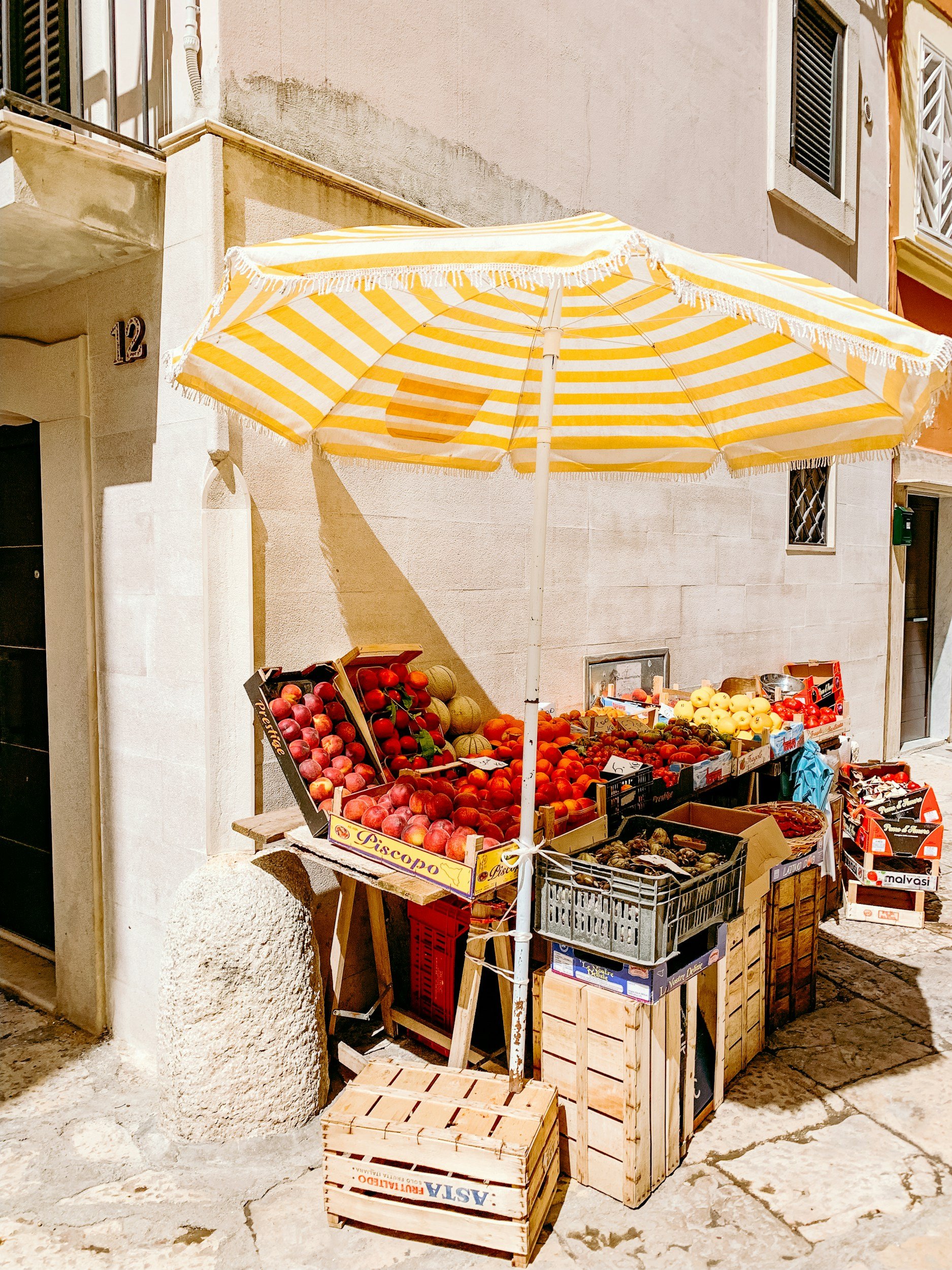
Ascoli Piceno, Marche
In Ascoli Piceno, you don’t arrive right in the centre, but the route in is so obvious you don’t really think about it.
You leave the station, head toward the river, cross Ponte di Cecco, and then just keep following Corso Vittorio Emanuele. It’s a straight line, with cafés and small shops appearing as you get closer. Within 10–15 minutes, you’re already inside the older streets.
The town doesn’t open up all at once. It tightens first, then suddenly you step into Piazza del Popolo. Wide, stone, arcades on one side, and people sitting outside even early in the day. You’ll pass through here more than once without planning to.
The market doesn’t sit in one neat square. It spreads along the streets you’re already walking. Parts of Corso Vittorio Emanuele, then toward Piazza Arringo, and into the smaller connecting streets between the two squares. You notice it in pieces rather than all at once.
In the morning, around 9:00–10:30, it’s quite focused. People stop briefly, buy what they came for, then keep moving. You don’t get stuck in one place for long because the stalls are spaced out along the route.
If you walk from Piazza del Popolo toward Piazza Arringo, you’ll keep running into it again. A few stalls here, then a gap, then more further on. It never feels like a single destination.
If you turn off into one of the smaller streets between the squares, it quiets down quickly. Then you step back out and you’re in it again. Around 12:30–13:30, things start to shift. Some stalls pack up, others stay a bit longer, and the flow of people slows. By early afternoon, it feels like a different place even though you’re in the same streets.
If you stay overnight, this is where it starts to make more sense. Once the market fades, the town doesn’t empty. People are still out, just moving differently. Piazza del Popolo fills again, but in a slower way.
Where you stay matters most if it keeps you on that main route. Somewhere along Corso Vittorio Emanuele, or between Piazza del Popolo and Piazza Arringo, means you don’t need to think about where you’re going. You just step out and you’re already in it.
Lucca, Tuscany
You leave the station, cross Viale Regina Margherita, and within a couple of minutes you’re at Porta San Pietro. Step through and everything tightens. No traffic, just stone streets and people moving on foot. You don’t pause to figure anything out, you just keep walking.
You’ll end up on Via Fillungo without trying. It cuts straight through the centre, and most routes lead back to it at some point. Shops, small bakeries, cafés, everything sits along that line or just off it. If you lose your sense of direction, you just drift back there.
In the morning, around 9:00, the shutters are still coming up on some streets. Along Via Fillungo, places like Forno a Vapore Amedeo Giusti already have people stepping in and out with paper bags. A bit further along, near Piazza San Michele, you start noticing the first stalls. Nothing grouped together, just appearing along the streets you’re already walking.
Around Piazza San Michele, the space opens slightly, with San Michele in Foro right there. You get a few more stalls here, then it thins again as you move toward Piazza Napoleone. It never pulls you into one place. You keep encountering it in parts.
If you turn off toward Piazza dell’Anfiteatro, the streets narrow, then suddenly open into that oval square. Even when the centre feels busy, it’s usually calmer here. You’ll see people sitting longer, fewer people moving through.
You’ll loop more than you expect. Back onto Via Fillungo, then down a side street like Via Roma or Via Beccheria, then out again near Piazza San Michele without really planning it. Everything is close enough that you don’t need to think about distance.
Around 11:30–12:30, it shifts. Fewer people moving quickly, more people stopping. Some stalls start packing up, especially the smaller ones along the side streets, but others stay a bit longer near the main squares.
If you walk a few minutes away from Via Fillungo, even just toward the edges of the walls or quieter streets behind Piazza Napoleone, it changes quickly. Fewer people, more space, then you step back in and it feels busy again.
Later in the day, the market fades out completely, but the movement doesn’t. You’re still using the same streets, just without the stalls.
Where you stay only matters in one way. Stay inside the walls. Somewhere near Via Fillungo, Piazza San Michele, or between Piazza Napoleone and Piazza dell’Anfiteatro means you step outside and you’re already in the middle of it.
Once you’re in Lucca, you don’t really leave that grid.
If you want countryside stays that are easy to reach, these Italian countryside stays without a car are good bases for slow days.
Spain: Market towns that still centre around the plaza
In Spain, you usually realise it when you step into the plaza.
You walk in through a few narrow streets, then suddenly it opens up and everything is there at once. Not just the market, but cafés, bakeries, people sitting, people passing through. You don’t need to decide where to go next because everything is already in front of you.
In Vic, you come in from Carrer de Verdaguer or one of the smaller streets and end up directly on Plaça Major. It’s a wide, open square, and on market days it fills completely. Later, when the stalls are gone, people are still crossing it, sitting along the edges, using it in the same way.
In Santillana del Mar, you follow Calle de Juan Infante without really thinking about it, and then you hit the small open spaces around Plaza Mayor. It’s not one big square, but you still move through the same spots again and again as you walk the main street.
In Jerez de los Caballeros, you come uphill through streets like Calle Vasco Núñez, and then you arrive at Plaza de España almost without noticing the transition. From there, the streets spread out, but you keep coming back to the same square.
That’s the difference here. You don’t move between different parts of town. You move out from the plaza, then back into it, several times without planning to. That’s why these places work so easily without a car.
Some coastal market towns also work surprisingly well without a car when their centres remain compact and self-contained. Cadaqués, for example, suits a short market-focused stay when approached slowly and without the expectation of covering ground.
Vic, Catalonia
In Vic, it happens quite suddenly.
You walk in from the station side along Carrer de Verdaguer, passing shops and cafés that feel fairly ordinary, and then the street just opens. One step you’re in a narrow street, the next you’re standing on Plaça Major. It’s wide, almost unexpectedly so, with nothing breaking the space when there’s no market.
On market days, that changes completely. By around 9:00, the square is already filled edge to edge with stalls. Not around the sides, but across the whole space, so you end up walking straight through it rather than around it. Early on, it’s still easy to move. People stop briefly, buy what they came for, then continue, so you can cross from one side to the other without getting stuck.
If you come in from Carrer de Verdaguer, the first stretch usually feels a bit more open. As you move further into the square, closer to the centre, it tightens and you start adjusting your pace. By around 10:30–11:30, it’s noticeably slower. People are standing longer, talking, and the edges of the square begin to fill near the arcades.
What’s easy to miss is how quickly it changes just outside the square. If you step into Carrer de la Riera or one of the narrower streets leading away, it becomes quieter almost immediately. Then you step back into Plaça Major and you’re in it again.
You’ll cross the square more than once without planning to. From one side into the old streets, then back again to get somewhere else. It keeps pulling you through it, even after you think you’re done.
By early afternoon, around 13:30–14:00, it starts to break apart. Stalls pack up, gaps appear, and within a short time the square looks almost empty compared to the morning. But it doesn’t stop being used. People are still crossing it, sitting along the edges, moving through in the same way, just without the stalls.
If you’re staying nearby, anywhere within a few minutes of Plaça Major, you don’t really leave that area. You keep returning to it throughout the day without thinking about it.
If you want a medieval town with quiet lanes and good food stops, Pals in Catalonia fits perfectly into a car-free trip.
Smaller Inland Andalusian Towns
In inland Andalusia, you don’t arrive straight into the centre the way you do in northern Spain or Italy. Further south, this slow travel guide to Andalusia’s markets shows how trains connect some of the region’s best towns.
You get dropped lower down, then walk up into it.
In Arcos de la Frontera, you come in below the old town, then follow streets like Calle Corredera and Calle Dean Espinosa as they start climbing. It’s not a straight line, and it doesn’t feel obvious at first. You turn once or twice, pass whitewashed houses, then suddenly you’re at Plaza del Cabildo.
It’s small, almost tighter than you expect, with views opening out over the valley on one side and the church right there. That’s where things gather. Not just the market, but people stopping, talking, sitting along the edges.
The market itself is never very big. A few stalls in the square, sometimes extending slightly into the streets just behind it. You don’t spend long “at” it. You pass through, then end up back there again later.
If you walk a minute or two away, down a side street like Calle Maldonado or further along the ridge, it goes quiet quickly. Then you come back into the square and it feels active again.
In Úbeda, it’s more open. You come in through wider streets like Calle Obispo Cobos, then reach Plaza Vázquez de Molina, which feels larger and more spread out. The market appears in parts around the edges and nearby streets rather than filling the whole space.
In the morning, around 9:30–11:30, there’s movement but not much pressure. People stop, buy something small, then continue. It doesn’t hold you in one place for long. By early afternoon, around 13:30–14:30, it changes quite quickly. Stalls start packing up, streets empty, and the centre feels almost still compared to the morning. Most of the activity moves indoors, into cafés and shaded spots.
Where you stay matters more here than in the other places. If you’re not already near the centre, you’ll feel the walk every time, especially going uphill. Staying within a few streets of Plaza del Cabildo in Arcos or Plaza Vázquez de Molina in Úbeda makes everything easier.
Once you’re up there, though, you don’t leave that area…
Staying a few streets off can change the whole trip
This is usually the mistake people only make once.
On a map, everything looks close. You think you’ll just walk in and out when you feel like it. But once you’re there, even an extra 10 minutes changes how often you move.
In Uzès, the difference is obvious. If you’re staying somewhere around Place aux Herbes or just off Rue Jacques d’Uzès, you don’t plan anything. You step out, cross the square, maybe pick something up, leave again, come back later without thinking about it. You see the market when it’s setting up, when it’s busy, and again when it’s almost gone.
Stay closer to Boulevard Gambetta or further out, and the pattern changes. You go in once, stay longer than you meant to, then hesitate to come back again in the evening. Not because it’s far, just because it feels like a separate trip.
In Lucca, it’s even clearer. Inside the walls, you’re constantly drifting between Via Fillungo, Piazza San Michele, and smaller streets like Via Beccheria without deciding to. Step outside the walls and suddenly you’re thinking about gates, crossings, and whether it’s worth heading back in.
In Sommières, being near Pont Tibère means you naturally move between the river along Quai Frédéric Gaussorgues and the streets around Place de la République. You cross the bridge without noticing. If you’re staying further away, you’ll feel that divide every time.
The part people don’t expect is how much this affects timing. When you’re close, you catch things in between. Early setup, quieter moments after the market, a second walk later in the day when everything has changed. When you’re not, you usually see one version of the town and that’s it.
A quick check before booking helps more than anything else. Open the map, zoom in, and look at the exact street. If it sits within a few turns of the main square or market, it will feel easy. If it sits just outside, even slightly, it won’t feel the same.
What people get wrong with car-free market towns
Most people don’t get the destination wrong. They get the way they move through it wrong.
The first mistake is timing.
Arriving at 11:30 and thinking you’ve “seen the market” is probably the most common one. By then, you’re catching the slowest, most crowded version of it. In places like Vic or Sommières, the earlier hours feel completely different. People move faster, buy what they need, and the space is easier to walk.
The second mistake is staying just outside the centre.
On a map, it looks close enough. In reality, it changes how often you go in and out. In Uzès, staying near Place aux Herbes means you cross the square several times a day without planning to. Stay closer to the outer roads and you’ll likely go in once, stay longer, then not come back again later.
The third mistake is trying to combine too much.
People see two or three towns on a map and assume they can move between them easily. But once you’re somewhere like Lucca or Ascoli Piceno, you don’t really need to leave. The whole point is that everything is already within walking distance.
The fourth mistake is expecting the market to be one fixed place.
In some towns it is, but in many it isn’t. In Ascoli Piceno, it appears along Corso Vittorio Emanuele and around Piazza del Popolo in pieces. In Sommières, it runs along the river and across the bridge. If you only stay in one spot, you miss how it actually works.
And finally, people leave too early.
Once the stalls pack up, the town doesn’t stop. It just changes. In Chartres, the centre quiets down quickly. In Sommières, the riverfront empties out. In Spain, the plazas are still in use, just without the stalls.
That part is usually the most overlooked, and often the most enjoyable.
FAQ: Walkable market towns in Europe
Can you visit European market towns without a car?
Yes, but it depends on the town layout.
Places like Lucca, Uzès, and Vic work well because the centre is compact and everything sits within a few streets. You arrive, walk in, and don’t need transport again.
If the station or bus stop drops you far from the centre, or the market sits outside the main area, it becomes much harder to do without a car.
What are the best market towns in Europe reachable by train?
Some of the easiest ones to reach and explore on foot include Lucca, Ascoli Piceno, Vic, Chartres, and Sommières.
They all have reliable train or bus connections and centres that are easy to reach on foot once you arrive.
How do you plan a car-free trip to market towns in France, Italy, or Spain?
The simplest way is to choose one base and stay there.
Trying to visit multiple towns in a short time usually means you spend more time travelling than actually being in the place. It works better to pick one town where everything is within walking distance and build your days around that.
For example, staying in Uzès or inside the walls of Lucca means you don’t need to plan transport once you arrive.
What time do local markets in Europe usually start and finish?
Most markets are already active by 8:30–9:00 in the morning.
The busiest and most local part is usually before 10:30, when people are shopping quickly. After that, it becomes slower and more crowded.
In many towns, stalls start packing up between 12:30 and 14:00. In places like Sommières, parts of the market can disappear quite quickly after midday.
Are European market towns walkable?
The ones that work best without a car are very walkable.
In towns like Vic or Ascoli Piceno, you can move between the main square, cafés, and market streets within a few minutes. You don’t need to plan routes or distances.
If a town requires buses or taxis to move between areas, it usually won’t feel as easy without a car.
Is it better to stay in the centre of a market town?
Yes, especially for short trips.
Staying within a few streets of the main square or market area means you can move in and out throughout the day without thinking about it. In Uzès, staying near Place aux Herbes changes how often you pass through the square.
If you stay further out, even if it looks close on a map, you’ll likely go in once and not return as often.
How many market towns should you visit on one trip?
Fewer than you think.
One or two towns is usually enough for a short trip. Once you’re in a place like Lucca or Sommières, everything is already there. Adding more locations often means rushing through each one.
Are markets in Europe only for tourists?
No, especially in smaller towns.
In places like Chartres or Vic, markets are still used for everyday shopping. That’s why the early hours feel different. People are there to buy specific things, not just to browse.
What are the best days of the week for markets in Europe?
It depends on the town, but most markets run on fixed weekly days, often midweek and weekends.
For example, Uzès is known for its Saturday market, while Vic runs markets on Tuesdays and Saturdays. In Sommières, the main market is on Saturday, stretching along the river and into the centre.
The easiest way to plan is to choose your destination first, then build your dates around the main market day. Arriving the day before usually works well, so you can see both the setup and the full market morning.
Is it better to travel by train or car for market towns in Europe?
For smaller market towns, trains or regional buses usually work better than a car.
In places like Lucca or Chartres, arriving by train puts you close enough to walk straight into the centre. Once you’re there, everything stays within a few streets.
A car can make things easier in more rural areas, but in compact towns it often adds extra steps. Parking is usually outside the centre, which means walking in and out each time instead of moving freely throughout the day.
If your focus is on markets and staying within the town, train travel is usually the simpler option.