
The day trips from Toulouse I'd actually make time for
After a day or two wandering around Toulouse, it's natural to start looking a little further afield. The good news is that you don't need to hire a car to do it. From Toulouse Matabiau station, regional trains reach some of the most interesting towns in southwest France in well under two hours, making it easy to add a day trip to your itinerary without spending half the day travelling.
The challenge isn't finding places to visit from Toulouse. It's deciding which ones genuinely work as day trips by train.
Many lists group together destinations that are completely different in practice. Some require a bus connection after the train. Some stations are a twenty-minute walk from the historic centre, while others leave you right on the edge of town. A few places come alive on market mornings but feel much quieter on Sundays, and there are towns that deserve an overnight stay rather than trying to squeeze everything into a single afternoon.
This guide focuses on six day trips from Toulouse by train that are realistic, enjoyable and easy to plan. Instead of trying to cover every possible destination in Occitanie, it looks at places where you can arrive without feeling rushed, spend a full day exploring on foot, stop for lunch in the town centre and still make an evening train back to Toulouse.
Along the way you'll find practical details that make planning much easier, including typical train journey times, what the walk from the station is actually like, which towns have the best weekly markets, where you'll encounter steep streets, and which destinations are better saved for another trip if your schedule is tight. If you're looking for the best day trips from Toulouse without a car, these are the ones that consistently make the most sense.
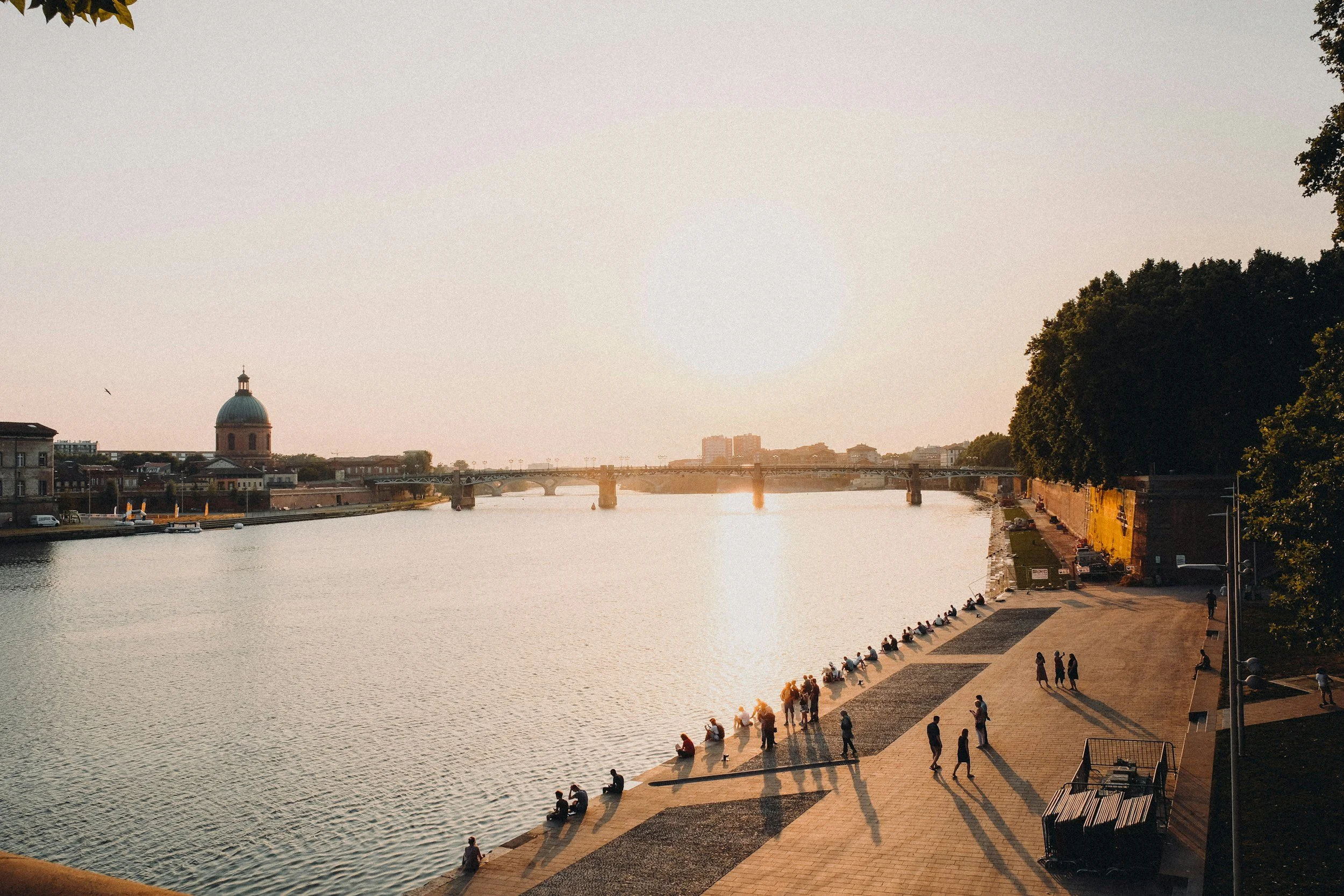
Where is Toulouse?
Toulouse is the largest city in southwest France and the capital of the Occitanie region, around two hours south of Bordeaux by train and about four and a half hours from Paris on the high-speed TGV. It's also one of the country's biggest railway hubs, which makes it an excellent base if you're planning to explore more of the region without hiring a car.
Most visitors arrive in Toulouse by train or fly into Toulouse-Blagnac Airport. If you're travelling by rail, nearly all services arrive at Toulouse Matabiau, the city's main station, about a 15-minute walk from Place du Capitole. Local buses and the metro also stop here, but if you're staying in the historic centre, it's often quicker to walk.
Travelling by train in France is generally straightforward. High-speed TGV services connect the country's larger cities, while regional TER trains serve smaller towns across Occitanie. Most of the destinations in this guide are reached by TER, where advance reservations usually aren't required and tickets can often be bought on the day if you're travelling outside busy holiday periods. Even so, it's worth checking the timetable before you head out, as smaller towns may only have one train every couple of hours, especially on Sundays and public holidays.
If this is your first train trip through France, you'll probably discover pretty quickly that some regions are much easier to explore than others. Skip the awkward connections before you start booking the rest of your itinerary.
Planning day trips from Toulouse by train
Almost every day trip in this guide starts at Toulouse Matabiau, the city's main railway station on Boulevard Pierre-Semard, just northeast of the historic centre. If you're staying around Place du Capitole, it's an easy 15 to 20-minute walk, although Metro Line A to Marengo–SNCF is handy if you're staying a little further away or have luggage. The station itself is straightforward to navigate, with ticket machines, cafés, luggage lockers and a small supermarket if you want to grab breakfast or snacks before catching an early train.
Most of the routes you'll use are operated by TER Occitanie, the regional train network. One of the nice things about travelling this way is the flexibility. Unlike France's high-speed TGV services, TER trains usually don't require seat reservations, so you don't have to lock yourself into a rigid plan weeks in advance. Tickets are easy to buy through SNCF Connect, from the ticket machines at the station or at the ticket office, and outside busy holiday periods it's often perfectly fine to decide where you're going the evening before.
You'll also spot Intercités trains on some routes, especially towards places like Carcassonne. They're long-distance services that can sometimes shave a little time off the journey, but they run less often than TER trains. For most day trips from Toulouse, the regional trains give you more flexibility and more departures throughout the day.
One thing that's worth checking before you leave Toulouse is the return journey rather than just the train out. Smaller towns such as Auch, Castres and Moissac don't always have frequent evening departures, so missing one train can sometimes mean a much longer wait than you expected. It only takes a minute to look at the timetable before you leave, and it makes the day feel much more relaxed.
The day of the week also changes the experience more than many visitors realise. Sundays are noticeably quieter across much of southwest France. Weekly markets aren't running, plenty of independent shops stay closed, and some cafés don't open until lunchtime. Trains still run, but there are usually fewer of them. If you're hoping to wander through a lively market before finding somewhere for lunch, Tuesday, Wednesday and Saturday are often much better choices.
The walk from the station into town is another detail that's easy to overlook when you're planning. In Albi, it's about 15 minutes on foot to the historic centre. Carcassonne takes a little longer, around 20 minutes across the Pont Marengo before the climb towards the medieval citadel. Moissac is one of the easiest day trips in the region, with the abbey and old centre only a few minutes from the station.
Cordes-sur-Ciel is the exception. The train arrives at Cordes–Vindrac station several kilometres below the village itself. During the main tourist season there's usually a shuttle bus waiting for arriving trains, but outside those months you'll most likely need a taxi unless you're happy with a long, steep uphill walk. It's worth knowing before you go because it's the only destination in this guide where the station isn't within walking distance of the main sights.
One last thing to keep in mind is lunch. In many of these smaller towns, restaurants start serving around noon and kitchens often finish between 2:00 and 2:30 pm before reopening later in the evening. It's a very normal rhythm in this part of France, so it's worth planning your day around it rather than assuming you'll find plenty of places still serving food at three o'clock.
Heading east after Toulouse? Before committing to Provence, what actually works explains which villages are genuinely easy to reach without a car and which ones are much more complicated than they first appear.
If you're continuing towards the Mediterranean, don't overlook Béziers. It's one of those places that's often skipped, but many travellers end up wishing they'd spent a day there.
Which day trip from Toulouse is right for you?
If you're still deciding where to go, here's a quick overview before you dive into the detailed guides below. Every destination in this guide can be reached by train from Toulouse, and apart from the short shuttle or taxi ride up to Cordes-sur-Ciel, you won't need to rent a car.
Albi
Choose Albi if you're looking for: museums, independent cafés, bookshops and a town that's easy to wander for an entire day.
Train from Toulouse: Around 1 hour 15 minutes (direct TER)
Market day: Saturday
Car needed: No
Carcassonne
Choose Carcassonne if you're looking for: medieval streets, castle walls and one of France's most iconic historic towns, with enough time to explore beyond the citadel.
Train from Toulouse: 45 minutes to 1 hour 15 minutes (TER or Intercités)
Market day: Saturday (Place Carnot)
Car needed: No
Cordes-sur-Ciel
Choose Cordes-sur-Ciel if you're looking for: artists' workshops, panoramic views, little galleries and a hilltop village that's best explored slowly.
Train from Toulouse: Around 1 hour to Cordes–Vindrac, followed by a seasonal shuttle bus or short taxi ride
Market day: Saturday
Car needed: No, although you'll need the shuttle or a taxi from the station.
Moissac
Choose Moissac if you're looking for: canal walks, one of France's finest Romanesque cloisters and a relaxed day centred around markets and local food.
Train from Toulouse: Around 1 hour (direct TER)
Market day: Saturday
Car needed: No
Castres
Choose Castres if you're looking for: colourful riverside houses, independent shops, excellent cafés and a town that still feels largely lived in by locals rather than visitors.
Train from Toulouse: Around 1 hour 15 minutes (direct TER)
Market day: Saturday
Car needed: No
Auch
Choose Auch if you're looking for: one of southwest France's best food markets, historic streets, Gascon restaurants and a full day of wandering without needing a packed sightseeing itinerary.
Train from Toulouse: Around 1 hour 30 minutes (direct TER)
Market day: Thursday
Car needed: No
Albi: cafés, bookshops and one of the easiest day trips from Toulouse
Journey time from Toulouse: around 1 hour 15 minutes by direct TER train
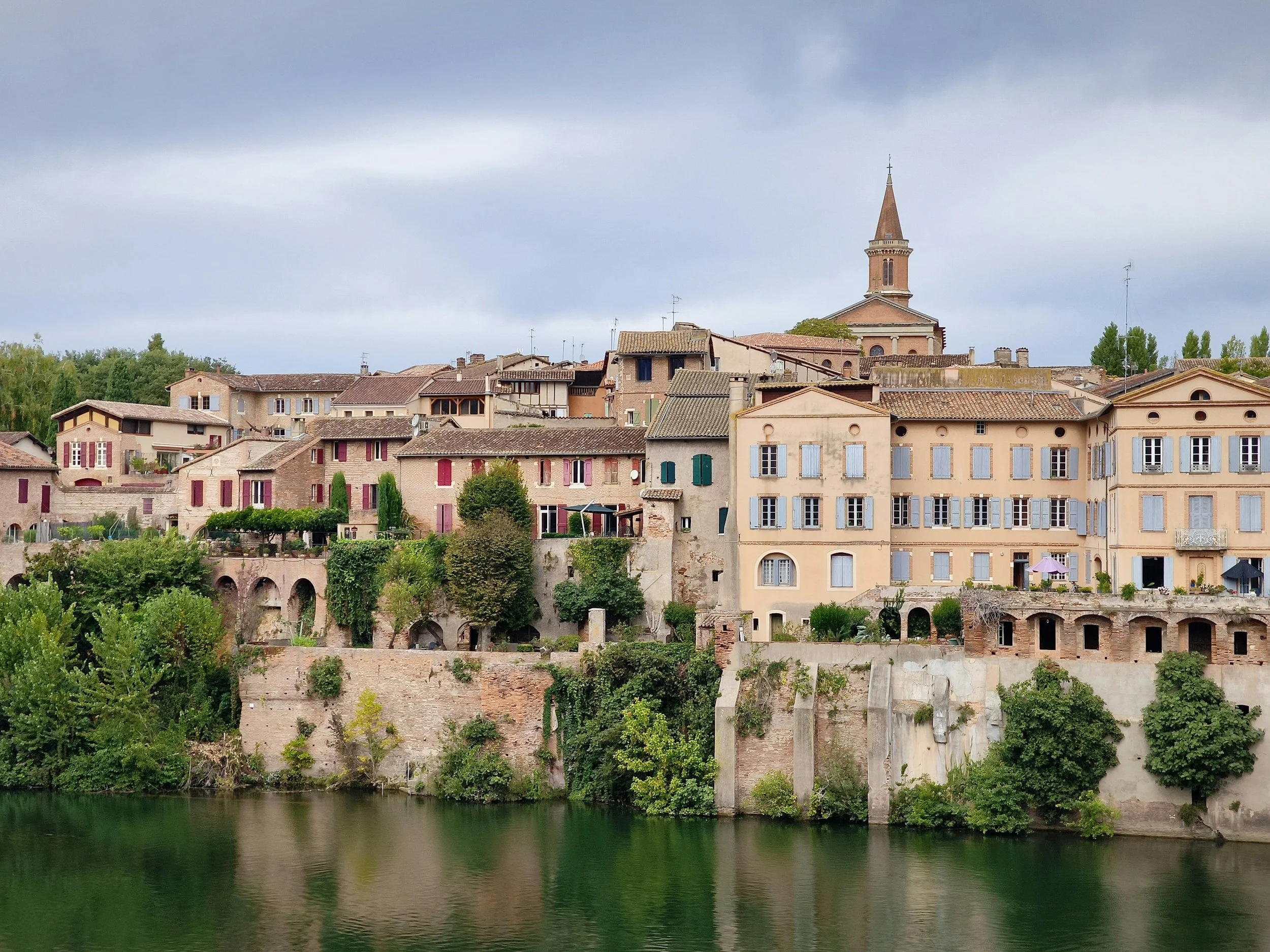
If you're only planning one day trip from Toulouse by train, I'd put Albi at the top of the list. The train journey is simple, you don't need to think about buses once you arrive, and the city is compact enough that you can see plenty without feeling like you're rushing from one sight to the next.
From Albi-Ville station, it's about a 15-minute walk into the historic centre. The route is easy to follow and gradually leads you towards the older part of town, where the red-brick buildings start replacing the more modern streets around the station. Unless walking is difficult, there's really no reason to take a taxi.
One of the first things you'll notice is that Albi doesn't look quite like many other towns in southern France. The red brick gives the whole city a different feel, especially when the afternoon sun hits the cathedral and the surrounding streets. Sainte-Cécile Cathedral dominates the skyline from almost everywhere in the centre. From the outside it feels almost defensive, more like a fortress than a church, while the inside couldn't be more different, with painted ceilings and intricate decoration that catch most people by surprise.
Right next door is the Palais de la Berbie, home to the Toulouse-Lautrec Museum. Even if you don't spend long inside, don't miss the gardens behind the palace. They look straight across the Tarn River and are easily one of the best viewpoints in Albi. It's usually much quieter here first thing in the morning before day trippers begin arriving.
From the gardens, keep walking down towards the Pont Vieux instead of heading back into the main square. Crossing the bridge gives you one of the classic views of Albi, with the cathedral rising above the river and the old brick buildings stretching along the hillside. If you continue for another few minutes along the riverside path on the opposite bank, you'll get an even wider view back across the city. It's one of those places that's worth slowing down for rather than simply taking a photo and moving on.
Back in the old town, it's the smaller streets that make Albi memorable. Wander along Rue Puech Bérenguier, Rue de l'Hôtel du Vieil Alby and around the Cloître Saint-Salvi rather than sticking to the busiest pedestrian streets. You'll come across timber-framed houses, tiny courtyards, climbing plants spilling over old stone walls and little squares where people are sitting outside with coffee rather than hurrying anywhere.
If you like browsing independent shops, spend some time around Rue Mariès and Rue Timbal. There are artisan food shops, homeware stores and small boutiques mixed in with local businesses that have been here for years. Librairie Clair-Obscur is well worth stepping into if you enjoy independent bookshops. The shelves are packed with literature, regional history and travel books, and it feels like the sort of place where people genuinely come to browse rather than buy something quickly on their way home.
Art is woven into the city beyond the Toulouse-Lautrec Museum. Galerie Nadine Granier regularly exhibits contemporary artists, and you'll often find smaller exhibitions dotted around the historic centre, particularly near Place Savène. They're not major attractions, but they add another reason to wander without a fixed route.
By lunchtime, the terraces around Place du Cloître Saint-Salvi and Place Savène start filling up. Cascarbar is a good choice if you're after something relaxed with regional dishes and local wines, while L'Épicurien serves one of the city's best seasonal lunch menus if you fancy hanging around a little longer. For something more special, Le Jardin des Quatre Saisons is known for beautifully presented dishes in a quieter setting.
If your visit happens to fall on a Saturday morning, it's worth making time for Les Halles d'Albi before lunch. This is where locals come to buy cheeses from the Tarn, duck, fresh vegetables, pastries and bottles from nearby Gaillac wineries. The atmosphere is completely different before midday, when people are doing their weekly shopping, than later in the afternoon after many of the stalls have packed away.
One of the nicest things about Albi is that you can browse the market, wander through the cathedral, cross the Pont Vieux, stop somewhere for lunch, spend an hour exploring the quieter streets around Saint-Salvi and still make your way back to Albi-Ville station without ever feeling like you've been racing from one attraction to the next. It's exactly the kind of place that makes train travel from Toulouse feel easy.
If you're already thinking about your next rail adventure, I'd start here. These small towns near Marseille are just as easy to reach without a car and make excellent day trips or weekend escapes.
Carcassonne: there's much more here than the medieval citadel
Journey time from Toulouse: around 45 minutes to 1 hour 15 minutes, depending on whether you take a TER or an Intercités train.
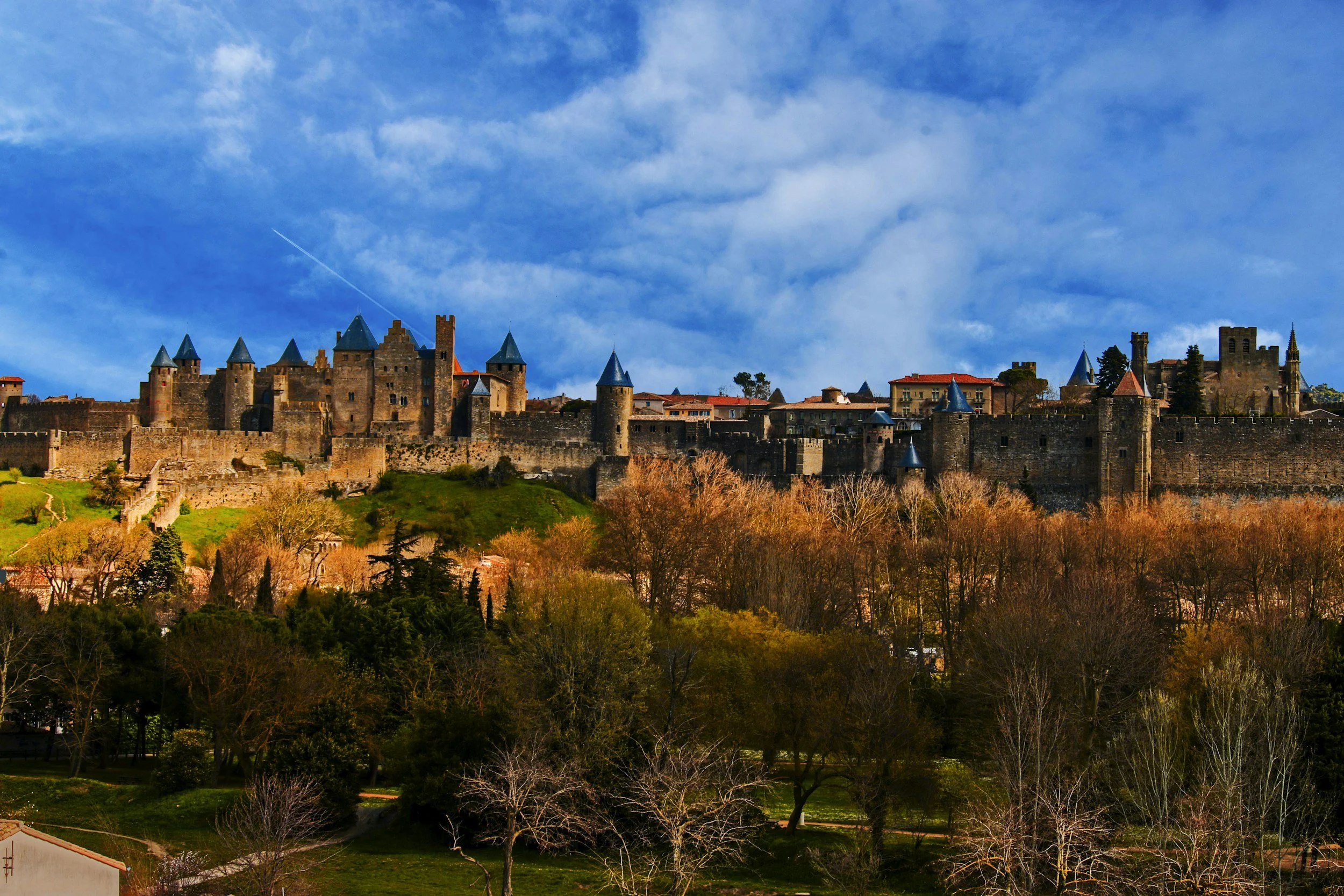
Carcassonne is probably the most famous day trip from Toulouse, and for good reason. It's close enough that you don't have to get up at sunrise, trains run regularly throughout the day, and you can comfortably spend six or seven hours here without feeling rushed.
From Carcassonne station, it's about a 20-minute walk to the medieval city. Don't be tempted to jump in a taxi unless the weather is unbearable. The walk is part of the day. You'll pass the Canal du Midi, wander through the Bastide Saint-Louis and eventually reach the Pont Vieux, where the first proper view of the fortified city appears across the River Aude. It's one of those moments that's easy to remember because the towers suddenly seem much bigger than they do in photographs.
Most people head straight through Porte Narbonnaise, but if you have time, it's worth taking a slow walk around the outside of the walls first. The western side, towards Porte d'Aude, is usually much quieter, and the views across the river and rooftops are much more open. Early in the morning you'll mostly meet photographers setting up tripods and local runners rather than tour groups.
Inside the citadel, it's easy to follow the busiest streets without really seeing much beyond souvenir shops. Instead, wander a little further towards Rue Cros Mayrevieille, the lanes around Basilique Saint-Nazaire and the quieter corners near Place Auguste Pierre Pont. These streets still have flower-covered façades, old stone archways and little details that make the city feel lived in rather than simply visited.
The basilica itself is well worth a stop. After the crowds outside, it's surprisingly peaceful, and the stained-glass windows fill the space with colour during the middle of the day. It doesn't usually take long to visit, but it changes the pace of the morning in a nice way.
If you're interested in history, walking part of the ramparts gives you a completely different perspective of the city. Looking out over the vineyards, the Black Mountains in the distance and the rooftops of the Bastide below makes it much easier to understand why Carcassonne was built here in the first place.
Before leaving the citadel, duck into Librairie Contes & Gribouilles, a lovely independent bookshop tucked inside the old walls. It's much smaller than the souvenir stores surrounding it, but that's part of its charm. You'll also come across ceramic studios, handmade soap shops and small artisan boutiques if you wander away from the main route instead of following the crowds.
Lunch is one place where slowing down really pays off. Comte Roger has built a reputation for serving one of the best cassoulets inside the walls, and despite its location, it feels much less touristy than many of the restaurants nearby. If you'd rather eat just outside the busiest streets, Le Plô is another favourite, with a terrace that's ideal on warm afternoons and a menu that changes with the seasons.
Don't leave Carcassonne without spending a little time in the Bastide Saint-Louis. A surprising number of visitors skip it altogether, but it's where the town feels most local. Around Place Carnot, people meet for coffee, browse the weekly market and stop for lunch before heading back to work. If you're visiting on a Saturday morning, the square fills with stalls selling olives, cheeses from the Montagne Noire, seasonal fruit, flowers and charcuterie from across the Aude department. It's busy, but in a completely different way to the citadel.
A few streets away, Brûlerie du Palais is one of the best places in town for coffee. They roast their own beans, and it's the sort of café where people are reading the newspaper or chatting for an hour rather than grabbing a takeaway. If you're in the mood for something sweet afterwards, Pâtisserie Bimas has excellent pastries and macarons, while Maison Bor is a good place to pick up regional chocolates before catching your train back to Toulouse.
If you've still got time before your train, walk the towpath along the Canal du Midi instead of heading straight back to the station. The canal is shaded by old plane trees, narrowboats drift slowly past, and after spending the morning inside medieval walls, it gives the day a completely different feel. It's only a few minutes from the station, but it somehow feels much further away from the busiest parts of Carcassonne.
That's probably what makes Carcassonne work so well as a day trip from Toulouse. You move between the medieval city, the quieter residential streets, the Bastide, the canal and the river, and each part has its own atmosphere. By the time you're back on the train to Toulouse, it feels like you've seen much more than a castle.
Cordes-sur-Ciel: one of the most beautiful hilltop villages near Toulouse
Journey time from Toulouse: around 1 hour by TER train to Cordes–Vindrac, followed by a seasonal shuttle bus or a short taxi ride into the village.
Cordes-sur-Ciel asks for a little more effort than the other day trips from Toulouse, but that's also part of what makes it memorable.
The train doesn't arrive in the village itself. Instead, it stops at Cordes–Vindrac, surrounded by fields and vineyards a few kilometres below the hilltop town. During the main tourist season there's usually a shuttle bus meeting the trains, while at quieter times of year it's worth booking a taxi ahead of time. You could walk, but it's a long climb that feels much steeper than it looks on Google Maps.
The moment you pass through one of the old gateways, it's tempting to stop. Most people do.
The first cafés have terraces looking out across the valley, artisan shops spill onto the cobbles and there's always someone taking photos beneath the medieval arches. Keep walking.
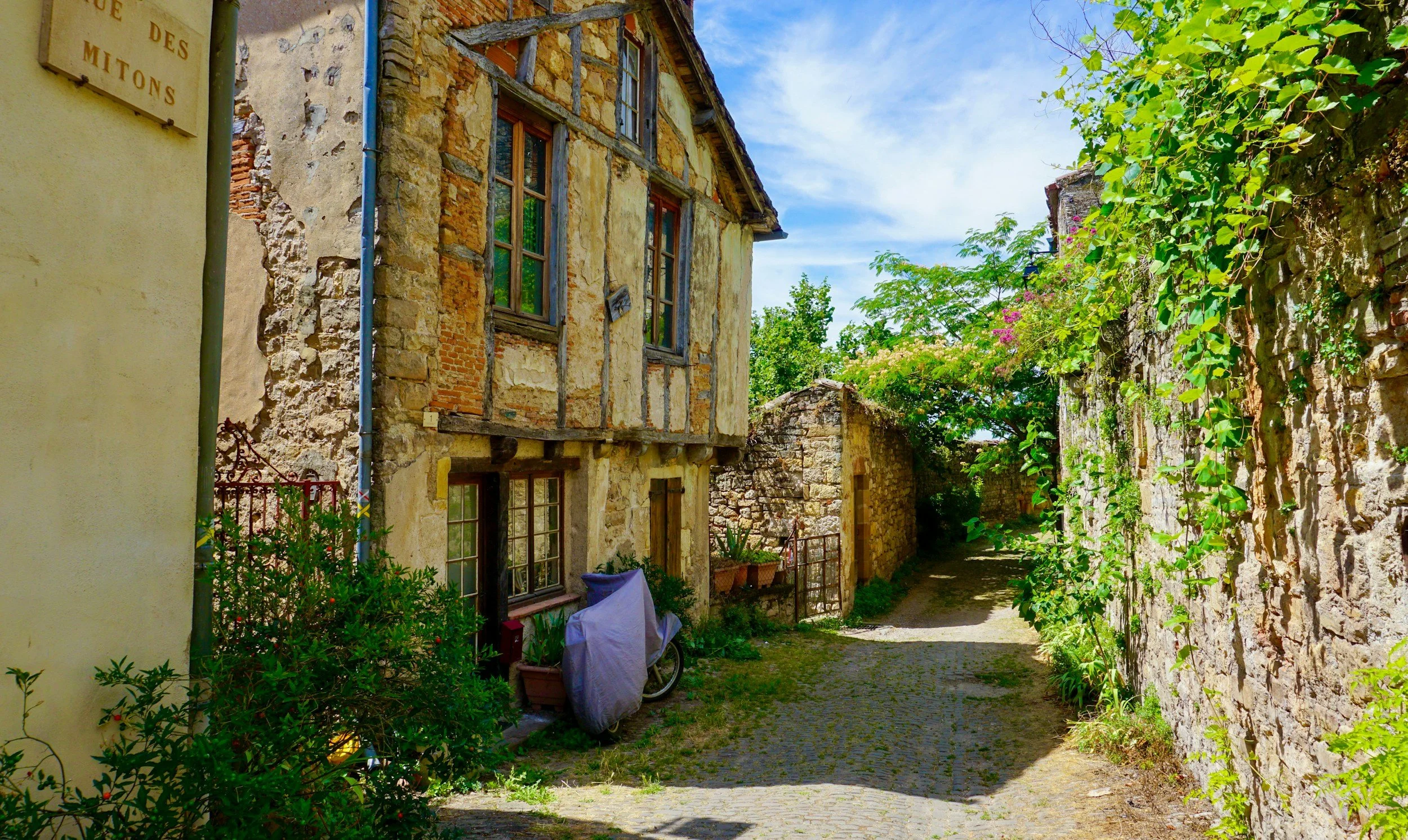
The village changes surprisingly quickly once you climb a little higher. Tour groups begin to disappear, conversations become quieter and you'll notice doors standing open to artists' workshops instead of rows of souvenir shops. Cordes has attracted painters, ceramic artists, jewellers and craftspeople for decades, and that creative atmosphere still feels like part of everyday life rather than something put on for visitors.
You'll probably find yourself following Grand Rue Raimond VII, simply because it's the main route uphill. That's absolutely fine, but don't stay on it the whole time. The little streets branching off it are often the nicest part of the village. Rue de la Barbacane twists between Gothic stone houses, Rue Saint-Michel opens onto tiny courtyards with climbing roses, and it's worth wandering down whichever lane catches your eye rather than worrying about whether you're going the right way.
One thing that's easy to miss is just how many remarkable medieval houses are packed into such a small place. Maison du Grand Fauconnier, Maison du Grand Écuyer, Maison Prunet and Maison Carrié-Boyer all sit within a few minutes of each other. It's worth slowing down enough to look above street level because that's where the details are—stone faces carved into window frames, tiny animals hidden in the masonry and beautifully preserved Gothic windows that have survived for more than 700 years.
If you enjoy bookshops, make time for Le Bouquineur. It's tucked away on Grand-Rue de la Barbacane inside a medieval building and specialises in second-hand books. The shelves seem to go on forever, and it's one of those places where you walk in planning to stay for five minutes and leave much later with an old travel book or novel tucked under your arm.
For contemporary art, Musée d'Art Moderne et Contemporain is a pleasant surprise. It's small enough to visit in under an hour but gives the village another layer beyond its medieval streets, and it's only a few steps from the main route through town.
Eventually you'll arrive at Place de la Halle, the heart of Cordes. The covered market hall has stood here since the thirteenth century, supported by thick stone columns that once sheltered traders selling cloth, leather and grain. Today it's where people naturally slow down. Some sit with coffee, others browse the artisan stalls, and there's usually someone sketching the square from one of the benches.
If you're here on a Saturday morning, the small market adds even more life. It's nothing like the larger markets in Albi or Toulouse, but you'll find local honey, cheeses from nearby farms, seasonal fruit, lavender products and regional biscuits without having to squeeze through crowds. It feels much more like a village market than a tourist attraction.
For coffee, La Théière Folle is well worth the short detour. It's a cosy little tea room with homemade cakes and one of those places where people happily spend an hour reading or chatting instead of rushing back out the door.
Lunch depends on what sort of afternoon you're after. Le Panoramique has a terrace overlooking the surrounding countryside and is a good choice if you want to linger over regional dishes. If you'd rather stay closer to the medieval centre, La Table d'Yvonne and L'Escuelle des Chevaliers both serve classic dishes from the Tarn inside beautifully restored stone buildings. Afterwards, it's worth popping into Manufacture Gourmande for handmade chocolates or local sweets to take back on the train.
The best views aren't necessarily from the very highest point in the village. Keep wandering beyond the market square until the streets begin to thin out and you'll come across small openings in the old walls looking over the Cérou Valley. Vineyards, sunflower fields and wooded hills stretch out in every direction. On certain autumn mornings, low cloud settles beneath the hill while the rooftops remain in sunshine, which is exactly how Cordes earned the name sur-Ciel- "above the sky."
By the middle of the afternoon, the day visitors start drifting back towards the shuttle bus, gallery owners chat outside their workshops, and you'll hear church bells echoing through streets that were busy only an hour earlier. It's probably my favourite time to wander because you start noticing things you completely missed on the way up - a carved doorway, a tiny garden hidden behind a stone wall, or a cat asleep on a windowsill above one of the narrow lanes.
Travelling between Lyon and Dijon later in your trip? Break the journey instead of staying on the train the whole way. It's one of those stops people rarely regret making.
Moissac: canals, cloisters and one of France's prettiest market towns
Journey time from Toulouse: around 1 hour by direct TER train.
If Albi feels like a city and Carcassonne makes an impression the moment you see its skyline, Moissac is much quieter about it. You step off the train, walk through a few ordinary streets, pass people picking up bread or unlocking bicycles outside cafés, and for a minute you wonder if you've arrived in the right place. Then the sandstone tower of Saint-Pierre Abbey appears between the rooftops and everything starts to make a little more sense.
One of the nicest things about Moissac is how easy it is to explore. The station is less than ten minutes from the old centre, there aren't any steep hills to climb, and you never feel as though you're rushing from one attraction to the next. Instead, the town slowly reveals itself as you wander. One street leads to another, the bells from the abbey drift across the rooftops every so often, and before long you'll probably have forgotten to look at your map altogether.
You'll almost certainly end up in front of Saint-Pierre Abbey, but don't be in a hurry to leave after you've seen the church itself. Walk into the cloister and the atmosphere changes immediately. The square outside might be busy with pilgrims comparing maps or locals stopping for coffee, yet inside it's remarkably peaceful. Water trickles from the fountain in the middle, sunlight moves across the Romanesque columns and every one of the seventy-six carved capitals tells a different story. Some are covered with twisting vines and mythical creatures, others depict scenes from the Bible, and the longer you sit there, the more details seem to appear.
When you step back outside, don't worry about finding the next sight straight away. Some of the nicest parts of Moissac are the streets that don't appear on many itineraries. Wander through Rue Malaveille, continue along Rue de l'Horloge, then drift towards Rue de la République without really thinking about where you're going. There are old painted shop signs, faded shutters that have probably been the same colour for decades, little courtyards hidden behind stone archways and balconies overflowing with flowers. It feels like somewhere people genuinely live rather than somewhere that's been polished for visitors.
You'll notice backpacks everywhere. Moissac has been an important stop on the Camino de Santiago for centuries, and pilgrims are constantly arriving from one direction and leaving in another. Some sit outside the abbey filling their water bottles before carrying on, others spread maps across café tables while deciding where they'll spend the night. They become part of the town's rhythm rather than something separate from it, and somehow it makes Moissac feel more welcoming than places where visitors and locals rarely seem to mix.
At some point you'll probably find yourself walking towards the Canal de Garonne without planning to. It's only a few minutes from the centre, but it feels like a completely different side of town. Tall plane trees line the towpath, narrowboats drift so slowly they hardly seem to move, and every few minutes another cyclist rolls past following the Canal des Deux Mers route between Toulouse and Bordeaux. On a warm afternoon it's one of those places where people naturally slow down, whether they're reading on a bench, eating lunch by the water or simply watching the boats pass through the lock.
If you keep following the canal for another fifteen or twenty minutes you'll eventually reach the Pont-canal du Cacor, where the canal crosses high above the River Tarn. It isn't usually the first place people think of when they visit Moissac, which is a shame because it's one of the town's most interesting pieces of engineering. Standing on the bridge with the canal beside you and the Tarn flowing below still feels slightly surreal, even when you know exactly how it works, and the views back across the river valley are well worth the extra walk.
Back in the centre, lunchtime tends to drift by rather than arrive all at once. Tables gradually fill beneath the trees around Place Roger Delthil, conversations become louder and waiters start weaving between terraces carrying plates of duck, seasonal salads and local wine. Le Florentin has long been a favourite for regional cooking just a short walk from the abbey, while Le Moulin de Moissac, set inside a beautifully restored nineteenth-century mill beside the Tarn, is somewhere you'll probably end up staying longer than you planned if you manage to get a table overlooking the river.
If you're only after coffee, Maison Mecoen is a lovely place to stop before carrying on. The cakes disappear surprisingly quickly, especially on Saturday mornings when the weekly market spills through the centre with growers selling walnuts, melons from Quercy, local cheeses, honey and bunches of Chasselas de Moissac grapes. If you're visiting towards the end of summer, you'll see those pale golden grapes almost everywhere. They're one of the few fruits in France with protected AOP status, and local shops make the most of the harvest with fresh juice, jams, desserts and baskets piled high outside their doors.
One place that's easy to miss is Librairie Flottante L'Ancrier, a bookshop inside a converted péniche moored beside the canal. It specialises in travel writing, literature and regional history, and even if you don't leave with a book it's worth stepping aboard simply because there aren't many places quite like it. Not far away you'll also come across independent food shops selling foie gras, prune products from nearby Agen and wines from the Chasselas vineyards, making it easy to pick up something local before heading back to Toulouse.
Later in the afternoon, the town feels different again. The market has packed away, the café terraces are a little quieter and more locals than visitors seem to be wandering through the centre. Along the canal, cyclists stop to refill their water bottles before carrying on, while a few pilgrims sit outside the abbey taking off their boots after a long day's walk. If you've still got half an hour before your train, it's worth taking one last walk through the old streets rather than heading straight back to the station.
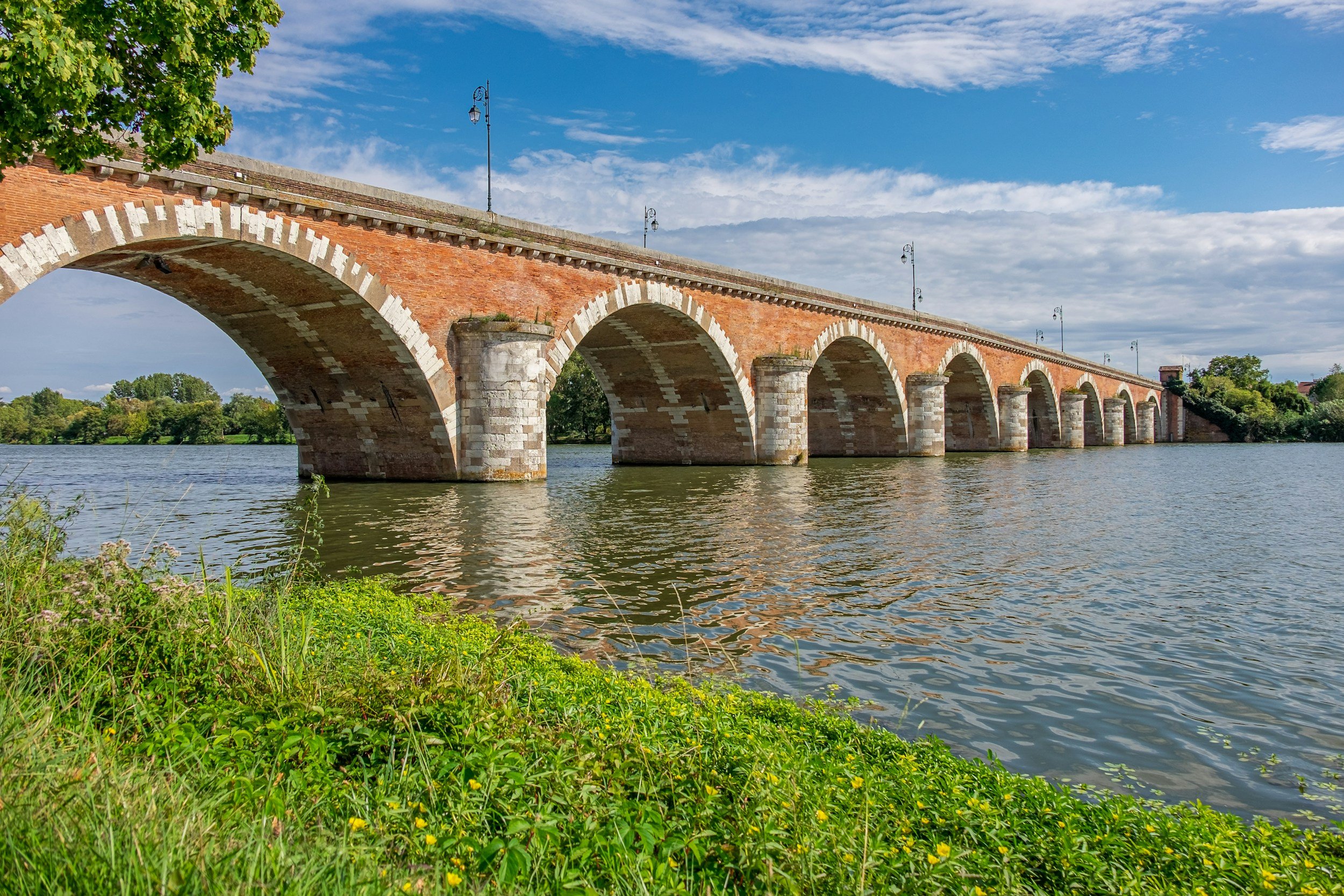
Castres: colourful riverside houses, independent shops and a slower day out
Journey time from Toulouse: around 1 hour 15 minutes by direct TER train.
Castres is probably the least talked about day trip in this guide, which is exactly why it's so easy to enjoy.
If you've spent the morning in Carcassonne weaving through busy medieval streets or joined the crowds around Albi Cathedral, Castres feels noticeably different. People are shopping, meeting friends for coffee, walking their dogs along the river and getting on with their day. Tourism exists here, but it doesn't dominate the town.
The walk from Castres station is straightforward and takes around ten minutes. You don't need to plan a route. Just keep heading towards the River Agout and eventually you'll find yourself standing on Pont Miredames, looking across at the colourful medieval merchants' houses that seem to grow straight out of the water. They aren't decorative copies built for visitors either. These were once the workshops and homes of leather merchants and dyers, and they've become one of the most recognisable views in the Tarn.
Don't rush across the bridge after taking a photo.
Walk along Quai des Jacobins instead.
The reflections change every few metres, particularly in the morning when the façades catch the light, and you'll notice little details that are easy to miss from the bridge itself. Wooden balconies leaning slightly over the river. Window boxes overflowing with geraniums. Café tables tucked beneath the houses where people linger over coffee instead of hurrying somewhere else.
The river is really what ties Castres together, and you'll cross it several times during the day without thinking about it, and each bridge gives the town a different feel. Pont Vieux is quieter than Pont Miredames and gives one of the nicest views back towards the old merchants' houses, especially later in the afternoon when the reflections become softer and rowing clubs begin heading out onto the Agout.
From there it's only a couple of minutes to Place Jean Jaurès, where life revolves around café terraces rather than famous monuments. If you're here on a Saturday morning, the market spreads through the surrounding streets with producers selling cheeses from the Montagne Noire, Tarn charcuterie, walnuts, seasonal vegetables and enormous bunches of fresh flowers. Most people seem to know the stallholders by name, which tells you a lot about the sort of town Castres is.
I found myself wandering up Rue Victor Hugo, then doubling back through Rue Sabaterie and Rue de la Liberté simply because every few shopfronts there seemed to be something independent. A little chocolatier. A delicatessen selling local products from across the Tarn. A wine merchant specialising in Gaillac wines. None of it feels curated. These are the sorts of businesses that make the centre feel lived in.
If books are your weakness, Librairie Coulier is difficult to leave empty-handed. It has a particularly good regional section with books on Occitan history, walking routes through the Tarn and beautifully photographed local cookbooks. Just around the corner, Lire à l'Occasion is packed with second-hand books stacked from floor to ceiling, while L'Octobulle has become something of a destination for graphic novels and independent comics.
Castres also has one of the biggest surprises in southwest France.
Musée Goya occupies the former Bishop's Palace overlooking the river and is home to the largest collection of Spanish art in France outside Paris. It's not an enormous museum, which is actually one of its strengths. You can spend an hour here without feeling museum fatigue, then step straight into the Jardin de l'Évêché, where André Le Nôtre's formal gardens slope gently towards the Agout. Most people stop for a few minutes before moving on, but the terrace overlooking the river is one of the best viewpoints in town and well worth lingering over.
Lunch almost seems to happen naturally in Castres. Around midday the terraces around Place Jean Jaurès start filling up, but it never feels frantic. La Foganha is one of the town's standout restaurants if you're after seasonal cooking, while Bistrot des Saveurs has built a loyal local following for modern French dishes that change regularly. If the weather's good, Ô 2 LOUPS is hard to beat simply because you can sit beside the river for an hour without noticing the time disappearing.
For coffee, I'd skip the chains altogether. L'ATYPIQUE serves excellent speciality coffee and homemade cakes in a relaxed little space just a few streets from the square, while Maison Fripon has become a favourite for brunch, pastries and long breakfasts that often stretch well into lunchtime.
If you've still got time before your train back to Toulouse, wander back towards the river rather than heading straight to the station. Late in the afternoon the quays are noticeably quieter than they were earlier in the day. Students sit along the water with takeaway coffee, rowing boats drift past, and the colourful houses you've probably photographed already somehow look completely different in the softer light.
You leave remembering the river, the independent shops, the café terraces and the feeling that you'd stumbled across a town that still belongs to the people who live there as much as the people visiting for the day.

Collioure is another place that's surprisingly easy to visit by rail, and this changes everything if you've always assumed you'd need a rental car.
If you'd rather stay somewhere for a few nights instead of moving hotels every day, find a better base before you book accommodation.
Auch: market mornings, Gascon food and historic streets
Journey time from Toulouse: around 1 hour 30 minutes by direct TER train.
If Castres revolves around the river, Auch is all about the hill.
You notice it almost as soon as the train arrives. The station sits in the lower part of town beside the River Gers, while the cathedral rises high above everything else. It looks further away than it really is, but don't be fooled. The climb is real. Comfortable shoes are definitely a better idea than sandals with smooth soles, especially if you've had rain the night before.
Rather than tackling the hill immediately, spend a few minutes down by the river. The reflections of the old town in the Gers are often at their best early in the day, before the breeze picks up, and the walk along Quai Lissagaray gives you a completely different perspective of Auch than you'll get later from the cathedral.
Sooner or later you'll reach the Escalier Monumental, the grand staircase linking the lower town with the historic centre. There are 374 steps altogether, but hardly anyone climbs them without stopping. Partly because of the view, partly because there's always something to look at along the way. Halfway up you'll pass the bronze statue of d'Artagnan, the famous musketeer born just outside Auch in Gascony. Most people stop for a photograph, but if you turn around instead you'll get one of the nicest views back across the rooftops, the river and the surrounding countryside.
Once you reach the top, the whole atmosphere changes. The streets become narrower, the traffic almost disappears and the historic centre feels much smaller than you'd expect from looking up at it below.
Instead of heading straight for the cathedral, wander around Place de la République first. The square is lined with cafés and shaded by plane trees, and by mid-morning it fills with people reading the newspaper, meeting friends or picking up pastries from the nearby bakeries. If your visit falls on a Thursday, you'll arrive just in time for one of southwest France's best markets. Stalls spread through the centre selling duck, foie gras, garlic, melons, cheeses from the Pyrenees, Armagnac and seasonal vegetables from farms across the Gers. It's the sort of market where people come with shopping trolleys rather than cameras.
The cathedral can wait.
That sounds strange to say when Cathédrale Sainte-Marie d'Auch is a UNESCO World Heritage Site, but one of the nicest things about the town is that it never feels like everything revolves around one building. Eventually you'll find yourself standing in front of it anyway. The carved choir stalls inside are among the finest in France, with more than 1,500 individually carved oak figures, and the stained-glass windows by Arnaud de Moles are unlike anything else in the region.
Just behind the cathedral, wander through the little lanes around Rue Dessoles, Rue du Pouy and Rue de l'Oratoire. This is the side of Auch that many people miss. Timber-framed houses lean slightly over narrow streets, old stone staircases connect tiny squares and climbing roses spill across pale limestone walls in early summer. There aren't many famous landmarks here, but it's probably the part of town you'll remember most.
Auch has some lovely independent shops too. Librairie Les Petits Papiers is the sort of bookshop that's difficult to leave without buying something, with shelves devoted to regional history, travel writing and beautifully illustrated books about Gascony. A few doors away you'll find artisan food shops selling Armagnac, duck confit, local honey and violet-flavoured treats that make easy gifts for the journey home.
If contemporary art is more your thing, Memento, housed inside a beautifully restored former Carmelite monastery, hosts changing exhibitions by French and international artists. It's a striking contrast to the medieval streets outside and one of the reasons Auch feels a little more creative than many towns of a similar size.
By lunchtime, the terraces around Place de la République and Place Salinis are usually full. La Table d'Oste has long been one of the town's best restaurants for modern Gascon cooking, while Le Daroles is a favourite if you're looking for classic regional dishes without anything too formal. If you'd rather keep things simple, Maison Arqué is an excellent bakery for sandwiches, pastries and flaky croustades filled with apples or Armagnac.
Coffee is taken seriously here too. Café Brûlerie du Centre roasts its own beans and is a good place to pause before carrying on, while Le Florida has one of the nicest terraces for watching everyday life unfold across the square.
Later in the afternoon, walk back towards the river using a different route instead of returning down the monumental staircase. The quieter streets around Rue de Metz and Escalier de la Treille reveal another side of the old town, with hidden gardens, old stone walls and viewpoints that suddenly open across the Gers valley. It feels much less visited than the staircase, even though you're only a couple of streets away.
Auch isn't somewhere people rush through, and that's probably why it works so well as a day trip from Toulouse. You climb the hill once, then spend the rest of the day wandering between markets, little bookshops, cathedral squares and cafés before making your way back down to the station in time for the evening train.
Before you start planning...
One thing kept coming back while researching and writing this guide, and it's probably the advice I'd give anyone planning train day trips from Toulouse for the first time. These are the sort of places that reward having nowhere else to be that day, because as soon as you start trying to fit two towns into one itinerary, the experience changes completely. On paper it might look efficient to spend the morning in Moissac before catching another train to Castres, or to leave Albi after lunch because you've already seen the cathedral, but in reality you'll probably spend more of the day checking departure times than noticing where you actually are.
What makes these towns memorable isn't usually the landmark that appears on the front of the postcard. It's wandering into an independent bookshop because the window looked inviting, sitting beside the canal for longer than you intended because another boat drifted past, discovering a family-run bakery with a queue stretching out the door, or taking a different street back to the station simply because it looked quieter than the main route. Those are the moments that are almost impossible to plan, yet they often become the part of the day you remember most when you think back on your trip.
That's why I'd treat these destinations less like a checklist and more like an excuse to spend a day somewhere different. Catch one of the earlier trains from Toulouse if you can, give yourself enough time for a proper lunch instead of something grabbed between connections, leave space to wander without constantly following Google Maps, and don't feel guilty if you spend twenty minutes sitting in a square with a coffee watching everyday life go by. Southwest France is remarkably good at rewarding curiosity, and some of the nicest discoveries happen when you've stopped trying to see everything.
Each of these six towns offers something quite different, which also means there's no real reason to rush through them. Albi is somewhere you can happily spend hours moving between museums, cafés and quiet backstreets, while Carcassonne is best enjoyed once you've wandered beyond the busiest lanes inside the citadel. Cordes-sur-Ciel encourages you to keep climbing because every few streets reveal another workshop or another view across the valley, Moissac naturally pulls you between the abbey and the canal, Castres unfolds beside the River Agout at an easy pace, and Auch is the sort of place where you can lose an entire morning between the market, little food shops and streets that don't seem to mind if you take your time.
You don't have to see all six on the same trip, and I honestly wouldn't try. One of the nicest things about having Toulouse as a base is knowing that there will always be another train next weekend, another market you haven't wandered through yet or another town that's still waiting for a slow afternoon rather than a quick visit.
Still deciding between Apt and Gordes? Before you decide breaks down the differences in a few minutes and could easily change which one you book.
If the Lot Valley is on your itinerary, this makes choosing easier than scrolling through dozens of photos and hoping you pick the right town.
FAQs about day trips from Toulouse by train
What is the best day trip from Toulouse by train?
It really depends on the kind of day you're hoping for. If it's your first visit to southwest France, Carcassonne is the obvious choice because the medieval citadel is unlike anywhere else in the region. If you'd rather spend the day wandering independent shops, cafés and quieter streets, Albi is hard to beat. Moissac works well if you enjoy canals and historic monasteries, while Castres and Auch tend to appeal to people who prefer places that still feel very local. Cordes-sur-Ciel is the one to choose if you don't mind a steep walk in exchange for one of the most beautiful hilltop villages in Occitanie.
Can you visit these towns without renting a car?
Yes, and that's one of the reasons this part of France is such a pleasure to explore. Every destination in this guide can be reached by train from Toulouse, although Cordes-sur-Ciel does require a short shuttle bus or taxi from Cordes–Vindrac station. Once you've arrived, all six towns are easy to explore on foot, so you won't spend the day trying to organise local transport.
Is it better to book train tickets in advance?
For most TER trains, there's usually no real advantage to booking weeks ahead because the price doesn't normally change in the same way it does on high-speed services. If you're travelling on an Intercités train or you're visiting during school holidays or a busy summer weekend, it's worth booking earlier, especially if you want a particular departure time.
Which day trips from Toulouse have the best markets?
If markets are one of the reasons you're travelling, Thursday is a great day for Auch, while Saturday works particularly well for Castres, Albi and Moissac. The markets all feel slightly different. Auch is especially good for regional food from the Gers, Albi has one of the liveliest covered markets in the area, and Moissac's market is smaller but has a lovely local feel.
Which town is best if I only have one day?
If you've never visited this part of France before, Albi is probably the most balanced choice. You can comfortably spend a full day wandering the old streets, visiting the cathedral and Toulouse-Lautrec Museum, browsing independent shops, stopping for a long lunch and still have time to walk along the Tarn before catching the train back to Toulouse. It never feels rushed, which isn't always true of larger cities.
Are these day trips suitable without speaking French?
Yes. You'll hear plenty of French, especially in markets and smaller cafés, but buying train tickets, ordering lunch and finding your way around is generally straightforward. Learning a few basic phrases is always appreciated, particularly in smaller towns such as Moissac or Auch, where English isn't spoken quite as widely as it is in Toulouse.
What's the biggest mistake people make when planning day trips from Toulouse?
Trying to fit too much into one day.
It's surprisingly common to see itineraries suggesting two or even three towns because the train journeys look short on a map. In reality, these places are much more enjoyable when you slow down a little. A long lunch, an unexpected bookshop, a market that keeps you browsing for an extra half hour or a quiet walk beside the river often become the parts of the day you remember most, and none of those things fit neatly into a rushed itinerary.
Which town is best for cafés, bookshops and wandering?
Albi and Auch are probably the strongest choices if that's what you're looking for. Both have enough independent cafés, local bookshops and smaller streets that you can happily spend hours exploring without feeling like you need a sightseeing plan. Castres is another good option, particularly if you enjoy riverside walks and quieter town centres where everyday life still takes centre stage.
When is the best time of year for train day trips from Toulouse?
Late spring and early autumn are hard to beat. The weather is usually comfortable for walking, markets are in full swing and you'll have longer daylight without the busiest summer crowds. September is particularly lovely if you're interested in food, vineyards and local produce, while May often brings gardens, café terraces and riverside walks back to life after winter.