These Italian towns make a much better long weekend than the obvious choices
You get off the train in Orvieto, walk straight out of the station, and within a few minutes you’re all standing there like, “okay… now what?” Not in a stressful way, just because nothing is obvious or rushed. Someone spots the funicular, you pile in with your bags, and ten minutes later you’re up in the old town looking for somewhere to sit. No plan, no pressure, just figuring it out as you go.
That’s kind of the whole point of this type of trip. You don’t want somewhere that needs organising. You want somewhere that works even when you haven’t planned much at all. Somewhere you can leave Rome or Milan in the morning and be having a late lunch together without already feeling tired.
These towns make that part easy. You don’t arrive into chaos, you don’t spend time navigating, and you don’t need to lock in every meal or activity ahead of time. You can change your mind halfway through the day, sit longer than planned, or split up for an hour and meet back again without it turning into logistics.
They also just work better for groups. You’ll find tables without waiting forever, you won’t feel like you’re in the way, and you won’t have to adjust everything around crowds. It’s the kind of place where you can say “let’s just walk for a bit” and that’s enough of a plan.
This guide is built around that feeling. Not the most famous towns, not the ones you’ve already seen everywhere, but the ones where a few days with friends actually feel easy from the moment you arrive.
Orvieto: easy to get to, easy to settle into
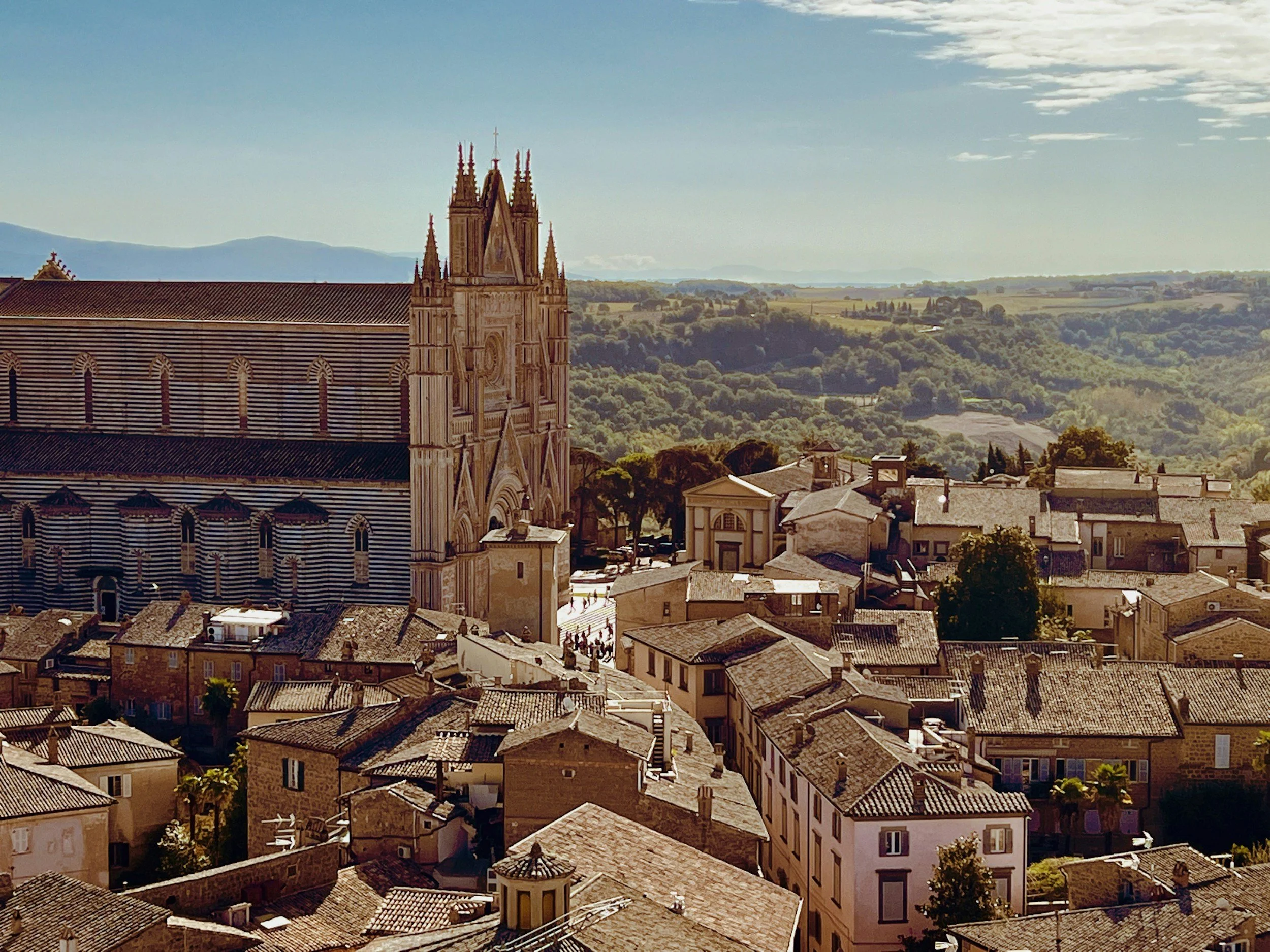
You arrive at the station in Orvieto and for a second it feels like you’re in the wrong place. The old town isn’t there, just the road and the cliff above you. Then you spot the funicular just outside the station entrance, buy a ticket at the machine, and within a few minutes you’re going straight up. It runs every 10–15 minutes, takes less than five minutes, and drops you at Piazza Cahen at the top. From there, it’s a short walk through Porta Rocca and you’re inside the town without needing a taxi or a long uphill walk.
Most people drift onto Corso Cavour without planning to. It cuts through the centre and connects everything, but it’s not a “main street” in the way you expect. You’ll pass small wine bars, bakeries, and local shops without it feeling busy. If you keep going, you’ll reach Piazza del Duomo, but it’s worth slowing down before that. Take a turn down Via dei Gualtieri or Via della Misericordia where it’s quieter and you can actually walk side by side without stopping all the time.
For a first stop, it’s easiest to sit down somewhere near Piazza della Repubblica or along Corso Cavour. Places like Caffè Montanucci are simple and reliable for coffee or something light when you’ve just arrived. If you want something more local, Osteria da Mamma Angela is a short walk away and works well for a relaxed lunch. You don’t need to overthink it. Lunch starts around 12:30, but it’s often easier to get a table after 13:30 once the first rush has passed.
In the afternoon, it’s less about “what to see” and more about where you end up. You’ll probably pass through Piazza del Duomo at some point anyway, but instead of stopping only there, walk around the side streets behind it where it gets quieter again. If you want something a bit different, head down to Pozzo di San Patrizio. It’s just outside the main centre near the funicular side, and you can walk down the spiral staircase if you don’t mind enclosed spaces. It takes about 10–15 minutes and feels completely separate from the rest of the town.
For something slower, the small galleries around the centre are easy to dip into without planning. Galleria Maitani near the cathedral often has contemporary exhibitions, and there are a few smaller art and ceramics studios scattered along the side streets where you can step in and out without committing to a full visit.
If you want to stretch your legs a bit, walk out towards the edge of town along Via Postierla or towards the quieter sections near the walls. You’ll get open views over the valley without needing to hike anywhere. It’s usually quieter here in the late afternoon, especially once day visitors start leaving.
Dinner is easy if you don’t aim for peak time straight away. Around 19:30–20:30, places start filling up, but going slightly earlier or later makes a difference. Trattoria del Moro Aronne is a good option if you want something more traditional, while Enoteca al Duomo works well for a longer evening with wine and smaller dishes. For a group, it’s usually easy to find a table if you stay flexible.
Where you stay matters more than you think here. Being inside the old town makes everything easier because you can walk back quickly without thinking about transport. Hotel Palazzo Piccolomini is central and works well if you want something comfortable without being too formal. Hotel Duomo is closer to the cathedral and puts you right in the middle of things, while smaller guesthouses along the side streets tend to feel quieter if you want a bit more space.
Getting here is simple. From Rome, trains leave regularly from Roma Termini and take just over an hour. From Florence, it’s around 1.5–2 hours with a change in most cases. Once you arrive and take the funicular, you don’t need to think about transport again unless you’re leaving.
If you’re looking slightly further out from the usual base, this guide to stays near Florence helps you see which areas still feel calm without being cut off.
Varenna: lake views and afternoons that don’t need planning
When you get off the train in Varenna, don’t rush out with everyone else trying to figure out directions. Just walk through the underpass, follow the small flow of people downhill, and you’ll hit the lake in under a minute. Most people instinctively turn uphill too early and end up on stairs straight away. It’s easier to stay by the water first and ease into it.
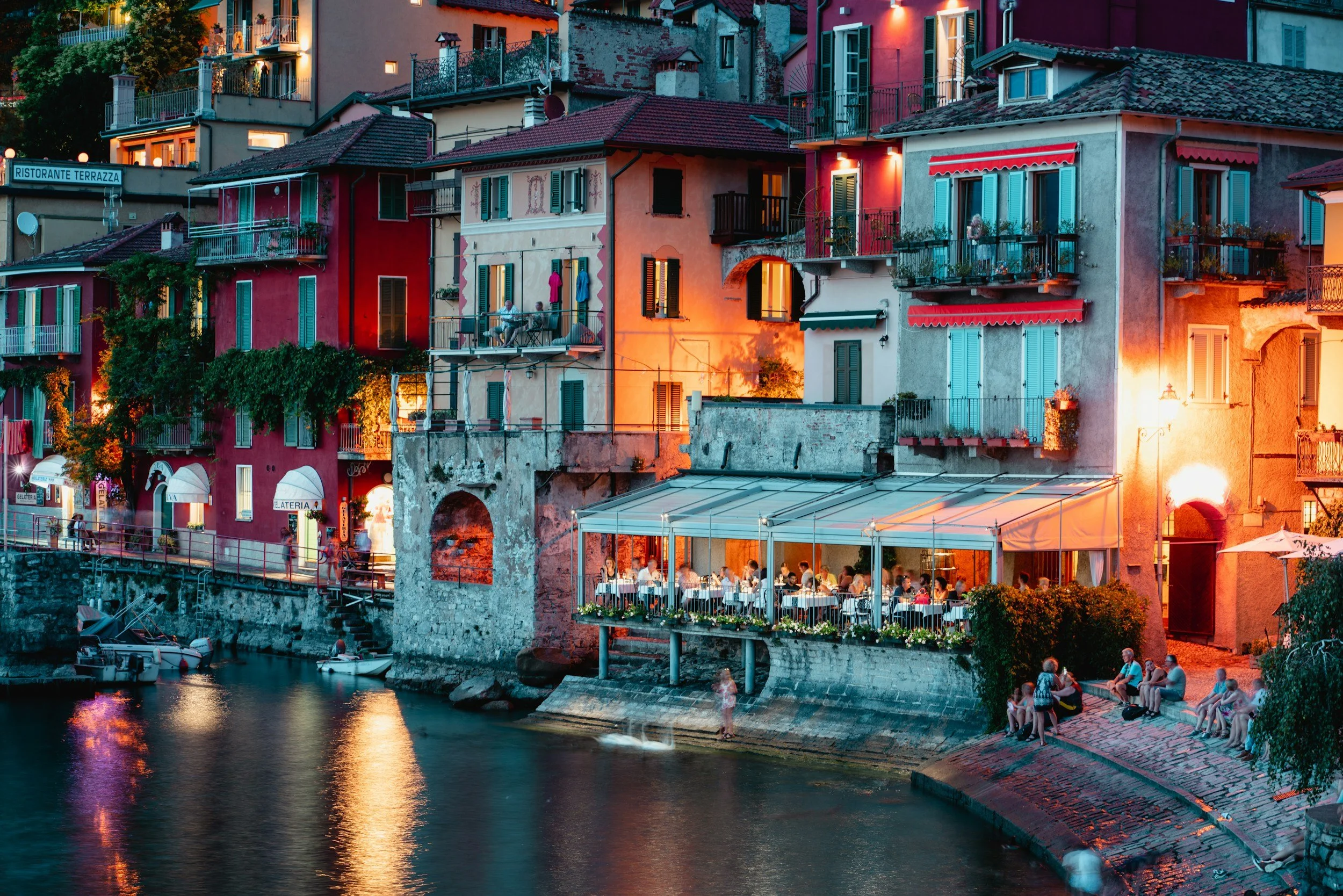
Follow the path along the lake and take Passeggiata degli Innamorati into town. It’s that narrow walkway attached to the rock just above the water. It only takes a couple of minutes, but it saves you from navigating the backstreets right away and brings you straight into the centre near Piazza San Giorgio.
That square is where you’ll keep ending up, so it’s worth clocking it early. If you split up during the day, it’s the easiest place to meet again without messaging too much. It’s also where it’s easiest to grab a table without overthinking it. If you’ve just arrived, go somewhere simple first like Bar Il Molo right by the water. It’s not somewhere you stay all afternoon, but it works to get settled.
If you want a proper lunch without the stress of queues, walk a few minutes up to Al Prato instead of staying right on the waterfront. It’s noticeably calmer, especially if you’re a group and don’t want to wait around or feel rushed.
One thing that actually makes a difference here is timing Villa Monastero properly. Villa Monastero is only about 10–15 minutes from the centre, but it gets busier late morning. If you go later in the afternoon, it’s easier to move through the gardens without stopping all the time. And if you keep walking past the main entrance area, it gets quieter quickly. Most people don’t go that far.
If you’re thinking about walking up to Castello di Vezio, do it earlier or later in the day, not in the middle of the afternoon heat. The path is steeper than it looks, especially the last part, and there’s not much shade. It’s worth it once you’re up there, but it’s better when you’re not rushing it.
Another small thing: don’t stay by the water the whole time. It’s easy to do that, but the streets just behind Piazza San Giorgio are quieter and actually more comfortable to walk through. Via Corrado Venini and the smaller lanes around it are good if you just want to wander without constantly adjusting around people.
For dinner, don’t aim for the exact sunset time unless you’ve booked. That’s when everything by the lake fills up. Either go a bit earlier or wait until after 20:30. And if you don’t want to deal with crowds at all, pick somewhere slightly uphill instead of right on the waterfront. It makes a bigger difference than you’d expect.
Where you stay can make or break how easy the trip feels. If you’re arriving with luggage, stay close to the station or along the lake. Hotel du Lac is the easiest option logistically. Eremo Gaudio has better views, but you’ll feel that uphill walk every time unless you arrange a pickup.
Getting here is simple. Trains from Milan take just over an hour to Varenna-Esino, and once you arrive, you don’t need to think about transport again.
Food plays a bigger role in smaller towns than people expect, so it’s worth checking Italian food seasons before you settle on dates.
Subiaco: quiet hills, long walks, and meals that turn into evenings
You arrive in Subiaco and it’s noticeably quieter straight away. The bus drops you near Piazza Falcone, a small square with a couple of cafés, and for a second it feels like there isn’t much going on. No crowd moving in one direction, no obvious “start point.” You just stand there, adjust your bag, and decide where to walk first.
Getting here takes a bit more effort, but that’s part of why it works. From Rome, take the train to Tivoli and then the Cotral bus into Subiaco. The last part of the journey winds through the hills for about 45 minutes, and by the time you arrive, it already feels removed from Rome. It’s not somewhere people pass through quickly.
If you’re leaning more toward somewhere close to Rome, this look at the Sabina Hills gives a clearer idea of what a slower weekend actually feels like.
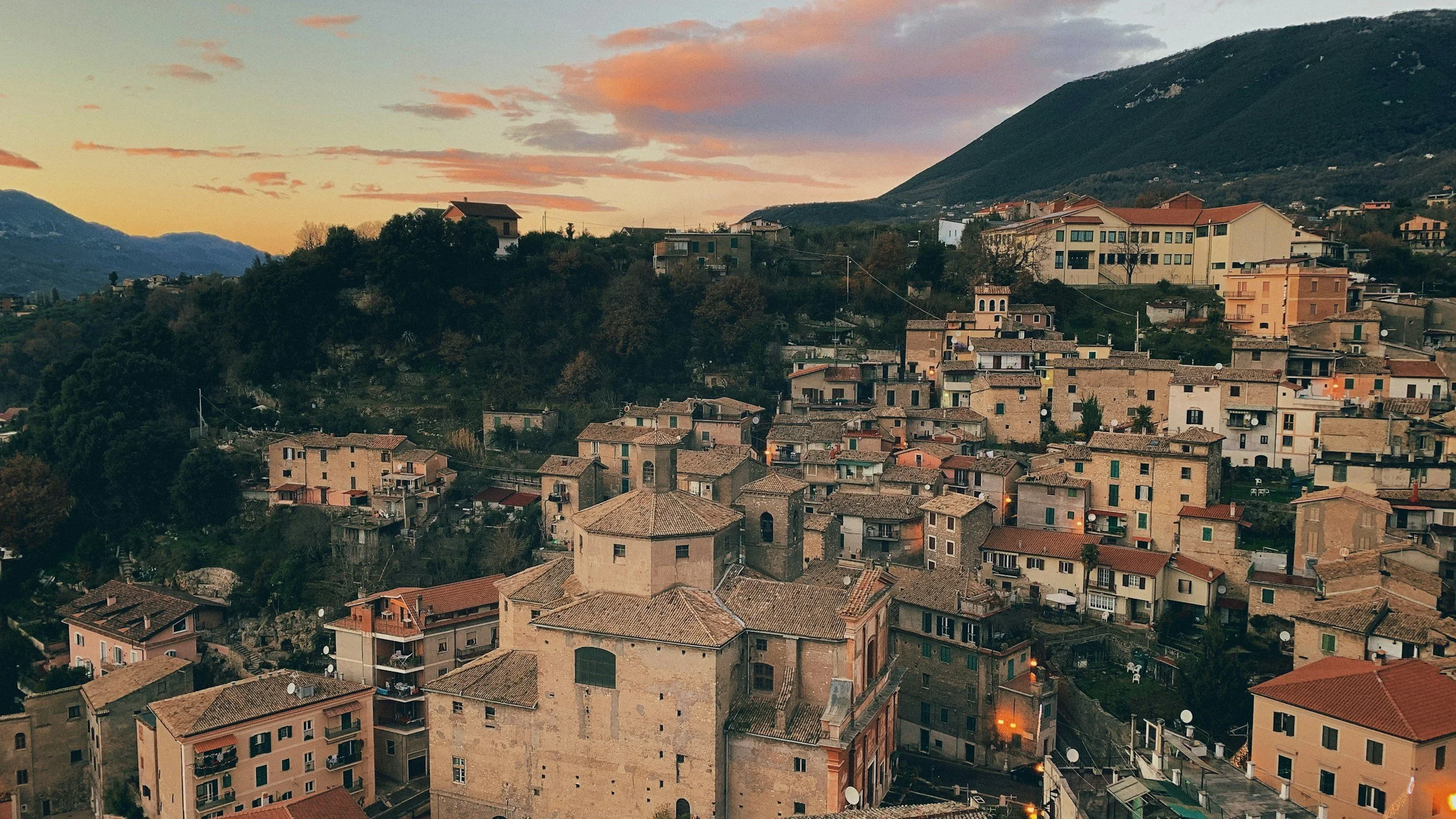
Once you’re there, the easiest way to settle in is to start walking uphill without trying to plan a route. Streets like Via Cavour and Via San Francesco take you gradually through the town, past small shops, quiet corners, and staircases that don’t really lead anywhere in particular. You’ll eventually reach Rocca Abbaziale, the fortress above the town. You don’t need to go inside straight away. Just being up there gives you a sense of the layout and how spread out everything is.
The best part of being here is getting out of the centre for a while. The walk to Monastero di San Benedetto starts just outside town and takes around 25–30 minutes. The road curves slightly, with sections of shade, and you’ll notice how quiet it gets the further you go. When you reach the monastery, it’s built directly into the rock face, and even if you don’t spend long inside, the setting alone is worth it.
If you keep going, the path continues towards Monastero di Santa Scolastica. This stretch is one of the easiest ways to spend a few hours without needing to decide anything. It’s mostly flat, quiet, and shaded in parts, which makes it ideal for just walking and talking without interruptions.
Back in town, food is where the day naturally slows down. Lunch usually starts around 13:00, and if you arrive closer to 14:00, it’s easier to find a table without waiting. Ristorante Il Cristallo is a straightforward option if you want something traditional, but it’s also worth just walking around the centre and choosing a place that feels right in the moment. You don’t need to plan every meal here.
In the afternoon, things go quiet for a while. Some places close, streets empty out a bit, and it’s a good time to either rest or head out for another walk. When everything opens again in the evening, the pace stays slow. Dinner doesn’t feel rushed, and you’ll notice people sitting longer, ordering gradually, and not checking the time.
Where you stay makes a difference here. Staying close to the centre, around the area near Piazza Falcone or along the main streets, keeps everything within walking distance. Smaller guesthouses tend to fit the pace better than larger hotels, especially if you’re travelling with friends and want something more relaxed.
Subiaco works best when you don’t try to turn it into a checklist. Walk in the morning, sit down somewhere without planning how long you’ll stay, head out again when it feels right, and let dinner take the time it takes.
Stresa: lakeside calm with just enough to do
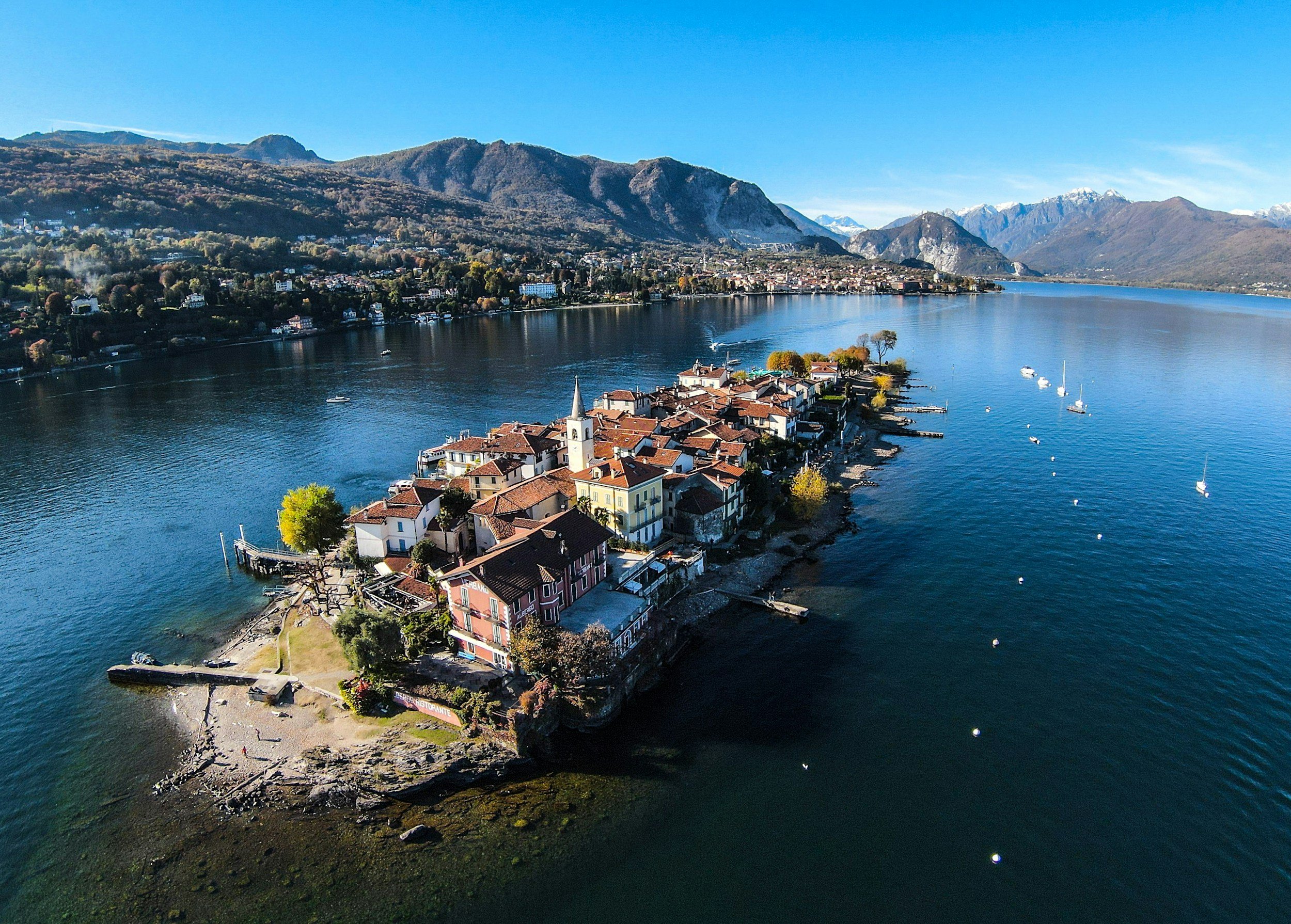
You get off the train in Stresa, walk out of the station, and just follow the slight downhill on Corso Italia. No signs needed. Within five minutes, you’re at the lake, and it’s one of those arrivals where everyone just slows down a bit without saying anything.
Most people turn left when they hit the water and start walking along Lungolago Marconi. You’ll pass a row of cafés and hotels, but it doesn’t feel rushed. It’s more like everyone is doing the same slow loop, figuring out where to sit. If you want something easy right away, stop at Bar Jolly for a drink and just take a minute before deciding anything else.
If you’re arriving around lunch, don’t sit right at the busiest stretch of the promenade. Walk a few minutes further along or slightly back towards streets like Via Principe Tommaso, where it’s easier to find a table without waiting. Ristorante Pizzeria Mamma Mia is one of those places that works when you don’t want to overthink it and just sit down together.
What actually makes Stresa work is how easy it is to change plans halfway through the day. You can walk along the lake for an hour, then suddenly decide to get on a boat without planning it earlier. The ferry dock is right in the centre, and boats leave regularly towards the Borromean Islands. Isola Bella is the most obvious one, but it’s also the busiest. If you want something that feels more relaxed, Isola dei Pescatori is easier to walk through without following a crowd the whole time.
If you stay in Stresa instead of island hopping all day, it’s worth moving slightly away from the water in the afternoon. The promenade is nice, but it can feel repetitive if you stay there too long. Streets just behind it, like Via Roma or Via Principe Tommaso, are quieter and give you a break without needing to go far.
If you want to stretch your legs properly, walk out towards Villa Pallavicino. It’s about 15–20 minutes from the centre, and the path there takes you away from the main flow. It’s one of the few places where you’ll have more space and less movement around you.
Dinner is the only time you need to think slightly ahead. Around 19:30–21:00, the waterfront fills up quickly. If you don’t want to wait, either go earlier or move a few streets back. Even a short walk away from the lake makes it easier to find somewhere you can actually sit and stay.
Where you stay matters more here than you’d expect. If you’re travelling with friends, staying close to the lake makes everything easier because you’ll keep coming back to it throughout the day. Hotel La Palma is right on the promenade and simple to manage with luggage. Smaller hotels just behind the main strip can feel calmer if you want a bit less movement outside.
Getting here is straightforward. From Milan, trains from Milano Centrale take about an hour to Stresa, and once you walk down to the lake, you don’t need transport again unless you’re heading out on the water.
Some groups end up choosing the coast instead, and this guide to the Cilento coast shows how different the pace is once you’re by the sea.
Sutri: quiet streets, ancient paths, and a table you don’t rush
You get off the Cotral bus just outside the old gate in Sutri, walk a few steps up, and you’re already inside the town without really noticing the transition. There’s no “arrival moment.” You’re suddenly on Via Vittorio Veneto with a couple of locals sitting outside a bar and not much else going on.
Walk that street all the way through first before doing anything else. It’s the spine of the town, slightly uneven underfoot, with small places that don’t change much throughout the day. You’ll pass Bar Centrale near Piazza del Comune, which is usually the easiest place to stop when you’ve just arrived. Not because it’s special, but because it’s open, central, and no one expects you to move quickly. Sit down, order something simple, and let the first half hour settle.
From there, keep walking past the square instead of turning back. The street narrows slightly and becomes quieter, and this is where Sutri starts to make more sense. You’ll see small doorways, a couple of wine spots, and people who are clearly not there for the day. It’s not a place you “cover,” it’s one you move through slowly and then repeat later.
The one place that’s actually worth going out of your way for is Parco Archeologico di Sutri, but don’t leave it until the middle of the day. Walk there either before lunch or later in the afternoon when it’s quieter. It’s about a 5–10 minute walk out of the centre, and you reach it by following the road down rather than looking for a formal entrance. The amphitheatre is cut straight into the rock, and most people only stay for 15–20 minutes, which is why it never feels crowded.
Back in town, the best thing you can do is not decide too much. Walk the same stretch again, but this time take one of the side streets without checking where it leads. Some of them loop back, some end abruptly, but they’re quieter than the main street and better for just walking without stopping every few seconds.
For food, don’t over-research. Go to Cantina di Bacco if you want something reliable, but more importantly, don’t order everything at once. Start with one dish, add something else later, and let the meal stretch. That’s how people actually eat here, and it changes the whole pace of the evening.
If you just want wine and something small, there are a couple of places along Via Vittorio Veneto where you can do exactly that without committing to a full dinner. Sit outside if there’s space, even if it feels too simple. That’s usually where the longer conversations happen.
One thing to be aware of is the afternoon lull. Between roughly 15:00 and 18:00, a lot of places close or slow down. Instead of trying to fill that time, it’s easier to either rest or head out of the centre for a walk. That’s when the town feels at its quietest.
Where you stay matters less here because everything is within a few minutes, but being inside the old town makes it easier at night. You don’t want to think about getting back after dinner, especially when everything winds down early.
Getting here is straightforward once you know where to go. From Rome, take the Cotral bus from Saxa Rubra. It takes about an hour, and the stop is close enough that you’re in the centre almost immediately after getting off.
Sutri isn’t somewhere you “see” in a structured way. You walk the same street twice, sit in the same place more than once, and let the day repeat itself a bit.
Which town should you choose?
If you’re deciding between these, it usually comes down to how you want the days to feel rather than what you want to see.
If you want something easy from the start, go with Orvieto. You’re in the centre within minutes of arriving, and you don’t need to think about transport again. It works well if you’re only going for a couple of days and want everything to feel straightforward.
If being by the water matters more, Varenna and Stresa are the better options. Varenna is more compact, so you’ll stay close together without trying. Stresa feels slightly more open, with the option to get on a boat or walk further along the lake.
If you want somewhere quieter where you won’t feel like you need to do anything, look at Sutri or Subiaco. These take a bit more effort to reach, but once you’re there, the pace is noticeably slower and the days feel less structured.
If it’s your first trip like this, Orvieto or Varenna are usually the easiest starting points. If you’ve done similar trips before and want something with less movement around you, Sutri or Subiaco tend to work better.
If wine is part of the plan, these Tuscan vineyards are worth looking at before deciding where to base yourselves.
Before you book anything, this is what actually matters
When you travel with friends, the place matters less than how easy everything feels once you arrive. You’ll notice it within the first hour. Are you walking straight into town, or are you already figuring out taxis, bags, and directions?
In places like Orvieto and Varenna, that part is done almost immediately. You arrive, walk a few minutes, sit down somewhere, and that’s it. No one is tired, no one is annoyed, and you haven’t had to organise anything yet. That sets the tone for the whole trip more than where you booked dinner.
Another thing that always comes up with friends is that not everyone wants to do the same thing all the time. These towns make that easy without turning it into a whole plan. Someone can go for a walk, someone else stays for another coffee, and you meet again later without sending ten messages about where to go. That only works in places where everything is close and predictable.
You’ll also notice pretty quickly how much timing matters. Not in a complicated way, just small things. Arriving at 13:30 when you can sit down for lunch straight away instead of waiting around. Going out for dinner slightly earlier or later so you’re not standing outside a full restaurant trying to decide what to do next. Those little shifts make the days feel smoother without you really thinking about it.
And then there’s the part no one talks about before booking: energy. Some places look great but feel busy the whole time. Others, like Sutri or Subiaco, are quieter but require a bit more effort to get to. It’s not about one being better than the other, it’s about what kind of weekend you actually want.
The easiest trips usually come down to one thing. You arrive, drop your bags, sit down somewhere, and no one asks “what’s the plan?” because there doesn’t need to be one.
FAQ: quiet towns in Italy for a relaxed weekend
Where can I go in Italy for a quiet weekend with friends near Rome?
Good options within easy reach of Rome include Orvieto, Sutri, and Subiaco. All are around 1–2 hours away and easy to reach without complicated transfers once you arrive.
What are the best small towns in Italy for a relaxing girls trip or friend getaway?
Towns like Varenna and Stresa work well if you want something by the water, while Orvieto and Sutri are better if you prefer quieter streets and less movement overall.
Are there quiet places in Italy that aren’t overcrowded with tourists?
Yes, especially outside major cities. Sutri and Subiaco stay relatively quiet even in busier months, while Orvieto and Varenna are best earlier or later in the day to avoid peak crowds.
Do you need a car to visit small towns in Italy like these?
No. All towns in this guide are reachable by train or bus. Orvieto and Varenna are especially easy because the stations are directly connected to the town centres.
How do you plan a low-key trip to Italy with friends without overplanning?
Choose a town where everything is within walking distance, like Varenna or Orvieto, arrive around lunchtime, and avoid scheduling every meal or activity in advance. These places work best when you leave space in the day.
How many days do you need for a relaxing Italian town getaway?
2–3 days is usually enough. These towns aren’t activity-heavy, so the time is better spent settling in rather than moving between places.
Where should you stay in small Italian towns when traveling with friends?
Staying inside or just next to the historic centre makes everything easier. In places like Orvieto and Varenna, this means you can walk everywhere and meet up easily during the day.
Is Lake Como or Lake Maggiore better for a quieter trip?
Varenna on Lake Como is more compact and easier to move around, while Stresa on Lake Maggiore tends to feel slightly more open and less concentrated in one area.
When is the best time to visit quiet towns in Italy?
Late May, June, and September are usually the easiest months. In summer, timing your day matters more—early mornings and late afternoons feel very different from midday.
Is it hard to find restaurants for a group in small Italian towns?
Not usually, especially if you avoid peak dinner times. In towns like Sutri or Subiaco, it’s often easier to walk in than book far in advance.
Looking for more cozy travel ideas?
Sign up for the Trippers Terminal newsletter to get new destination guides, slow travel tips, and peaceful escape ideas sent straight to your inbox.