
I’d pick Treviso for most Veneto trips. Here’s when I wouldn’t…
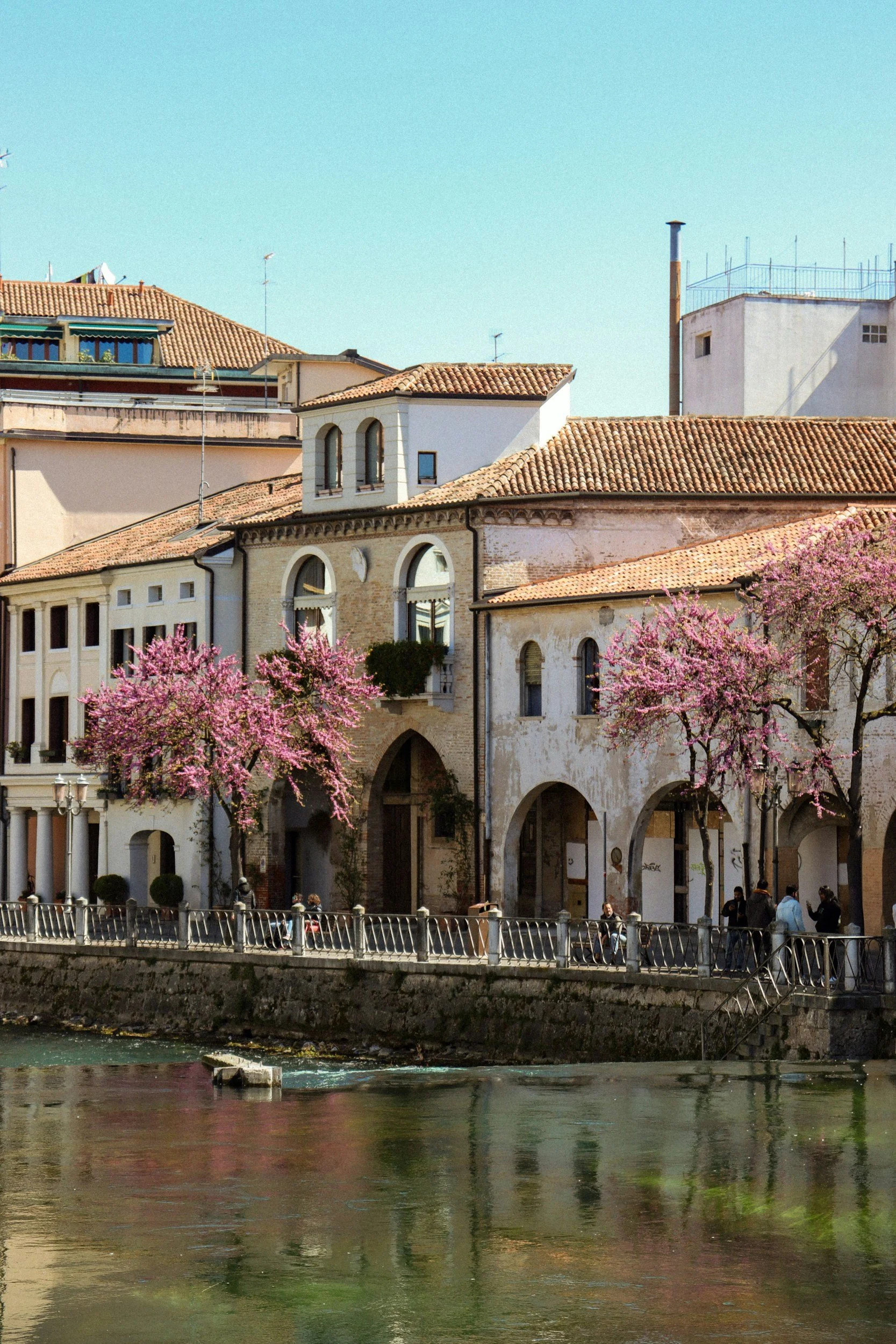
Treviso and Conegliano are close enough on the map that choosing between them can feel like splitting hairs. They are only around 20 minutes apart by train, both are easy enough to navigate without a car, and both put you in a useful part of northern Veneto. The trouble is that they make very different trips easier.
For most people, I would book Treviso. It gives you far more freedom to change your mind from one day to the next. Venice is easier, Castelfranco Veneto and Bassano del Grappa sit more naturally in the same itinerary, Treviso Airport is much simpler, and you have more going on in town when you get back in the evening. That last part matters more than it sounds. A base is not just somewhere you leave at 8am and return to sleep.
Conegliano is the one I would choose for a more deliberate trip, where the Prosecco Hills, Vittorio Veneto and Belluno are the reason for coming rather than side trips squeezed around Venice. The station is practically in the centre, so there is none of that mildly annoying daily calculation of whether you have left enough time to walk back with your shopping, your suitcase or a coffee you probably should not have stopped for.
The Prosecco part is also where I would be careful not to oversell Conegliano. Seeing “gateway to the Prosecco Hills” can make it sound as though you step off the train and spend the day drifting between wineries by bus. You do not. The buses are useful for reaching towns such as Pieve di Soligo, Refrontolo and Valdobbiadene, but the vineyards and tasting rooms are scattered through a hilly rural landscape. One planned wine day is very doable. Trying to improvise three wineries and a viewpoint on public transport is how a lovely idea turns into an afternoon spent studying bus stops.
There is also a limit to how much Veneto either town should be asked to cover. If Verona, Vicenza or Lake Garda keep appearing in your plans, I would stop trying to make Treviso or Conegliano do everything and add a second base farther west instead.
Travel itinerary will usually point to one of them
The easiest clue is not the town you like the look of most. It is the direction your plans keep pulling you.
If you are moving between Venice, Castelfranco Veneto, Bassano del Grappa and perhaps Padua, Treviso keeps those days from turning into a chain of unnecessary backtracking. Add Treviso Airport and the case gets even stronger. It is the base I would choose when the trip still has a bit of looseness to it, where you may decide the night before that Venice can wait and go somewhere smaller instead.
Conegliano starts to earn its place when the map shifts north. Vittorio Veneto, Belluno, Pieve di Soligo, Refrontolo, Valdobbiadene: once several of those names are on the itinerary, sleeping in Treviso begins to look less clever. You would be travelling through Conegliano again and again just to get to the part of the region you came for.
There is also a difference in how much planning each base tolerates. Treviso is easier to use casually. Conegliano is better when the important days are already fixed, especially a wine tour, a transfer into the hills or a northbound train day. That is not a criticism of Conegliano. It is simply a more purposeful base.
And if your plans keep stretching towards Vicenza, Verona or Lake Garda, I would stop trying to make either option work. That is where the phrase “base for Veneto” starts becoming misleading. Move west and let the geography do some of the work for you instead.
Treviso and Conegliano cannot do all of Veneto for you
Veneto looks compact enough on a map to encourage some ambitious planning. Venice, Padua, Vicenza, Verona, Lake Garda, Chioggia and Cortina all sit inside the same region, so it is very easy to start adding them to one hotel booking and assume the trains will sort out the rest.
That is where the trip can become unnecessarily tiring. The region stretches a long way east to west, and once you head north the geography changes quickly into foothills and mountain valleys where the railway stops being the whole answer. A day in Venice from Treviso is one thing. Repeated journeys towards Verona or Lake Garda are quite another, and Cortina involves an entirely different level of onward transport. Chioggia sits awkwardly enough from both bases that I would not choose either town because of it.
For a Veneto trip based in Treviso or Conegliano, I would draw a much tighter circle around Treviso province. Venice, the nearby art towns and the lower foothills. That is the part of Veneto where Treviso and Conegliano can genuinely make a holiday easier rather than simply making a long journey technically possible.
If you want to travel properly across the region, give yourself two bases. A few nights around Treviso or Conegliano can cover the north-east beautifully, then move west for Vicenza, Verona and Lake Garda rather than commuting back and forth across Veneto because the original hotel had free cancellation and you could not be bothered to repack.
If you only have time for one of them, I have compared Asolo and Bassano del Grappa properly here, including which one is easier without a car and which deserves more time.
Treviso is easier when you want a bit of freedom
Treviso is the better choice when your plans are a bit mixed. You can get to Venice, Conegliano, Castelfranco Veneto, Bassano del Grappa and Padua without feeling like every day needs to be planned around one direction, and Treviso Airport is much easier from here too.
That flexibility is probably the main reason I would choose it for a first trip. You can have a rough plan and still change your mind. If Venice suddenly sounds exhausting, you have other options. If the weather looks better north, you can go towards Conegliano. You are not locked into one type of trip.
Treviso also fits nicely into a bigger rail-based trip through the north, especially if you are collecting smaller places rather than major cities. I have a separate guide to northern Italian towns that work particularly well by train.
The station is close enough that you will actually use it
Treviso Centrale is just south of the old town, and most central hotels are around a 10–15 minute walk away. That is close enough to catch trains every day without feeling as though you have chosen to sleep beside the station.
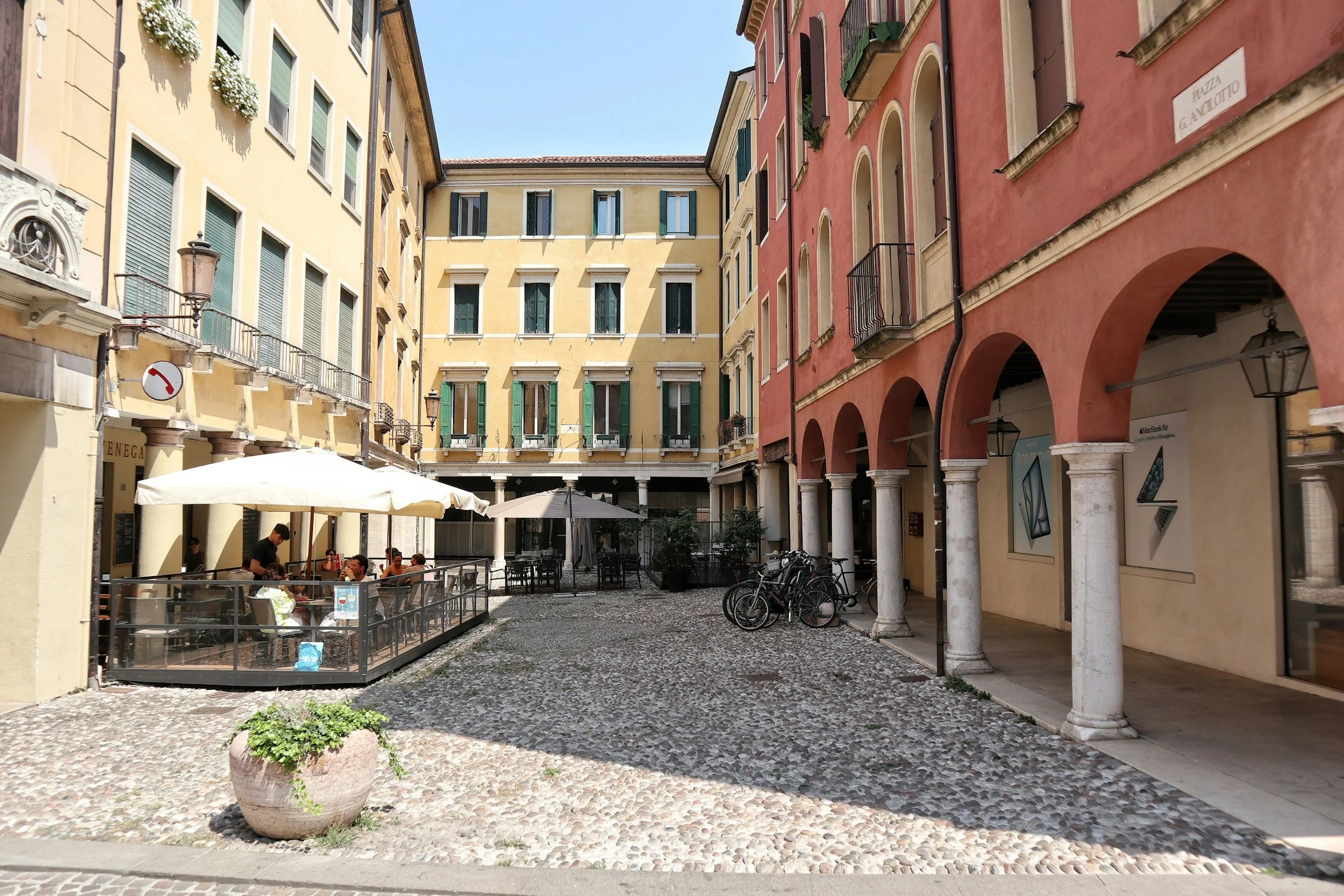
The area around Porta Altinia and Piazza Borsa is especially useful. You are close to the station, but still properly in town for the evening. I would start there before getting distracted by prettier-looking hotels much farther north.
Because those extra ten minutes do start to matter when you are doing the same walk every morning and again after a full day out.
Treviso is also quite nice when you decide to do absolutely nothing
Not every day needs to become another excursion.
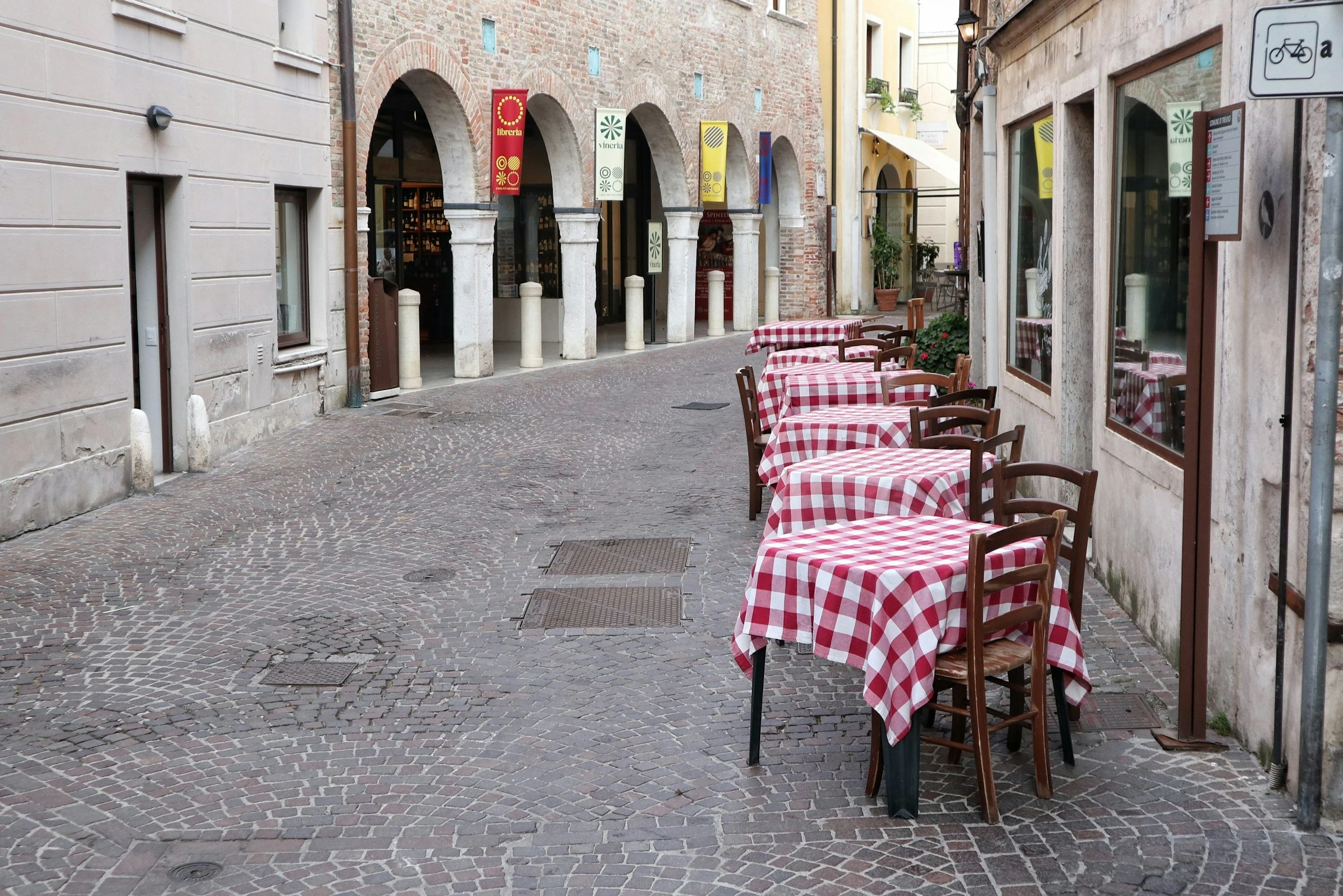
If you come back early, or wake up and decide you cannot be bothered getting on another train, Treviso is easy to spend time in. You can walk from Piazza dei Signori down towards the Buranelli canals and the Pescheria, stop for coffee, sit somewhere under the arcades if the weather turns, and still have plenty of choice for dinner later.
And Treviso has enough of its own food identity that staying in town does not feel like settling for the backup plan. This is radicchio and osteria territory, with tiramisù firmly tied into the local food story, so an afternoon built around eating rather than catching another regional train is hardly a tragedy.
That is one of the reasons I like Treviso better for a longer stay. You can use it aggressively as a transport base when you want to, then completely ignore the station the next day.
For one Prosecco day, I would stay put
If you only want one day in the Prosecco Hills, I would not move hotels just to sleep in Conegliano for a night.
The two towns are only around 17–25 minutes apart by regional train on many services, so you can head to Conegliano in the morning for a tour or transfer and come back afterwards. Some organised wine trips also pick up in Treviso.
Once you are planning two or three days around the hills, Conegliano starts to become much more useful. For one day, packing your suitcase again feels like unnecessary admin.
Where I would stay in Treviso
My first choice would be somewhere between Treviso Centrale, Porta Altinia and Piazza Borsa. You are close enough to the station for early trains, but still within easy walking distance of the centre at night.
If you care more about being right in the prettiest part of town, look around Piazza dei Signori, Buranelli or Pescheria instead. The station is still walkable from there, so I would happily take the extra few minutes for a nicer setting.
I would be a bit more careful around Porta San Tomaso if you know you will be catching trains most days. It is lovely, but farther from the station than it first feels when you are checking hotel pins.
And I would not book something just because it says Treviso Airport in the name. Unless you have a very early flight, being able to walk to dinner and the station is much more useful than being close to the terminal.
Conegliano is the better choice when the hills are the point
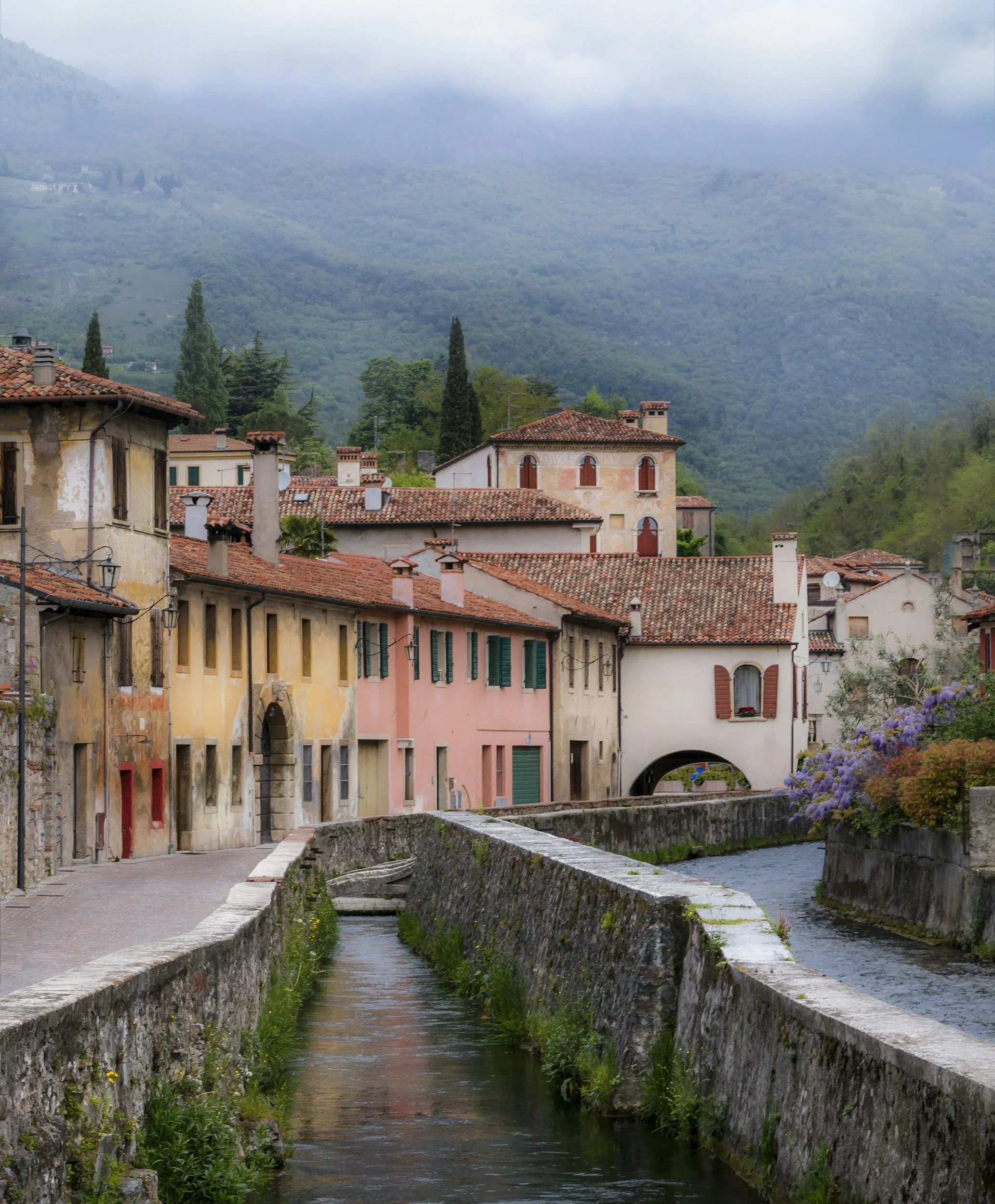
Conegliano starts to look much more interesting once your plans stop spreading across Veneto and begin clustering around the Prosecco Hills, Vittorio Veneto and Belluno.
It is a smaller base than Treviso, with fewer directions to play with, but the directions it does give you are very useful. If you already know that two or three days of the trip will be spent north of Treviso or somewhere between Conegliano and Valdobbiadene, I would rather wake up here than add the same stretch of railway to every morning.
You are basically in town as soon as you leave the station
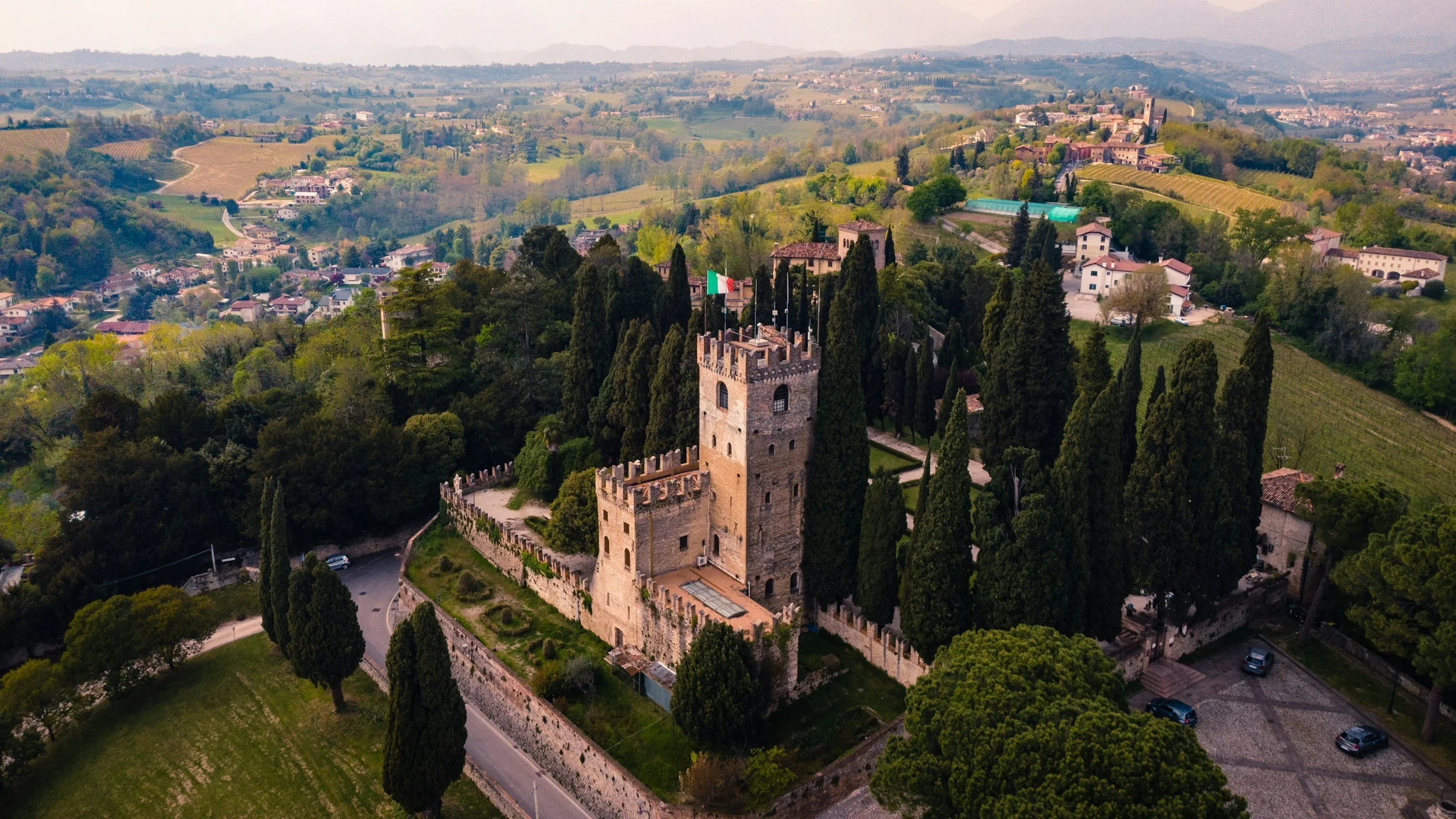
This is one of Conegliano’s nicest practical surprises. The railway station is right beside Viale Carducci, and the historic centre starts almost immediately. Piazza Cima is around five minutes away on foot, with Via XX Settembre leading through the old centre from there.
For anyone travelling with a suitcase, this is a big advantage. There is no need to choose between staying somewhere pleasant and staying somewhere convenient for trains. You can have both.
Conegliano does start climbing quite quickly once you continue towards the castle, though. Around the station, Viale Carducci and Piazza Cima, everything feels straightforward. Keep following Via XX Settembre uphill towards the castle and a hotel that looked only a few streets farther away on Booking suddenly comes with a workout attached.
I would pay attention to that if you have heavy luggage, limited mobility or an early departure. Straight-line distance is particularly unhelpful in a town that starts going uphill just when you think you are nearly there.
This is where Vittorio Veneto and Belluno become sensible day trips
Conegliano’s railway line continues north through Vittorio Veneto and towards Belluno, which gives it a completely different set of easy days from Treviso.
Vittorio Veneto in particular is close enough that it does not need to become a major expedition. Belluno takes you farther into the foothills but still uses the same northbound corridor. That is the sort of itinerary where Conegliano earns the hotel booking: you are already facing the right way when you leave in the morning.
The buses into the Prosecco area add another layer. Routes head towards Pieve di Soligo, Refrontolo, Tarzo, Col San Martino and Valdobbiadene, so you are starting much closer to the places most people have in mind when they book a trip around the wine hills.
I would still check the exact return before leaving, especially on a Sunday. Having a bus route on a network map and having a bus home at the time you want are two very different things.
Conegliano is nicest when you do not ask too much of it
I think Conegliano suits two or three nights particularly well.
After a day in the hills, being able to get off the train or bus, walk a few minutes into the centre and have dinner around Piazza Cima or Via XX Settembre sounds pretty ideal. The town is compact, you are not dealing with another urban journey at the end of the day, and there is very little temptation to over-plan the evening.
If your stay includes a Friday, Conegliano’s weekly market also gives the centre a bit more life. That would be a good morning not to disappear immediately onto a train.
I would think more carefully before booking five or six nights unless the itinerary is heavily weighted towards wine and the foothills. Conegliano has a smaller choice of restaurants and fewer easy fallback days than Treviso. If you find yourself taking the train south every second morning because you want more variety, the quieter base has stopped being particularly useful.
Stay below the castle unless you fancy carrying your suitcase uphill
My first hotel search would be around Viale Carducci, Via XX Settembre and Piazza Cima. It is a tiny area, which is part of the appeal: station, buses, old town and dinner can all be within a few minutes of each other.
I would not automatically dismiss somewhere slightly uphill if the hotel is especially good, but I would check the route rather than the distance. “Near Piazza Cima” can still mean stairs or a noticeable climb once you start heading towards the castle.
The bigger trap is farther out.
A property can use Conegliano in its location and still sit somewhere around Ogliano, San Pietro di Feletto, Susegana or the vineyard outskirts, where the whole car-free logic starts falling apart. Those places may look much more appealing in the photos, especially if there are vines outside the window, but then you need a taxi to reach the station, another taxi for dinner and transport again every time you want to go tasting.
For this particular trip, I would rather have the vineyard view during the day and be able to walk home after dinner.
Conegliano gets you closer to the wine hills, but you still need a plan
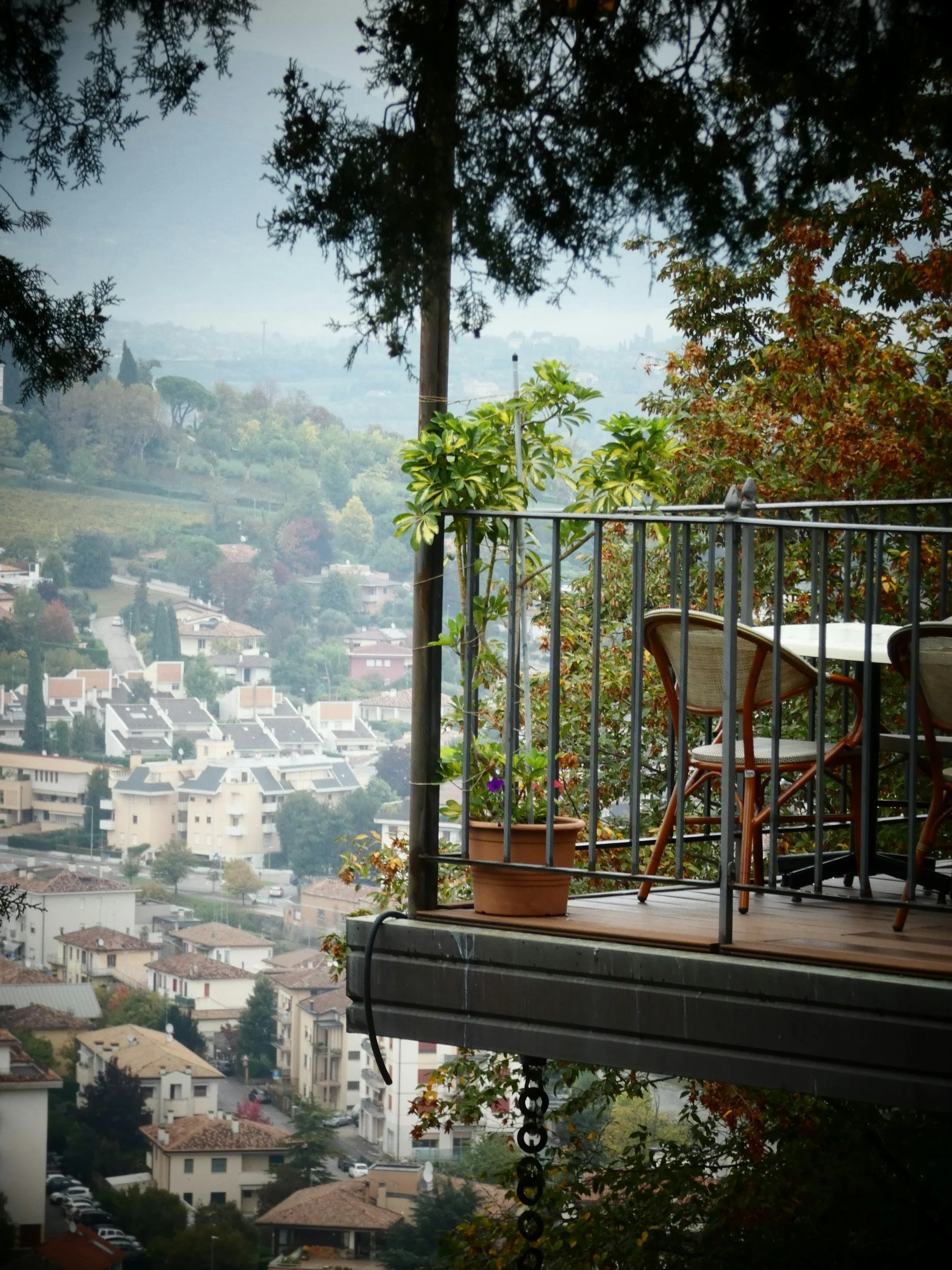
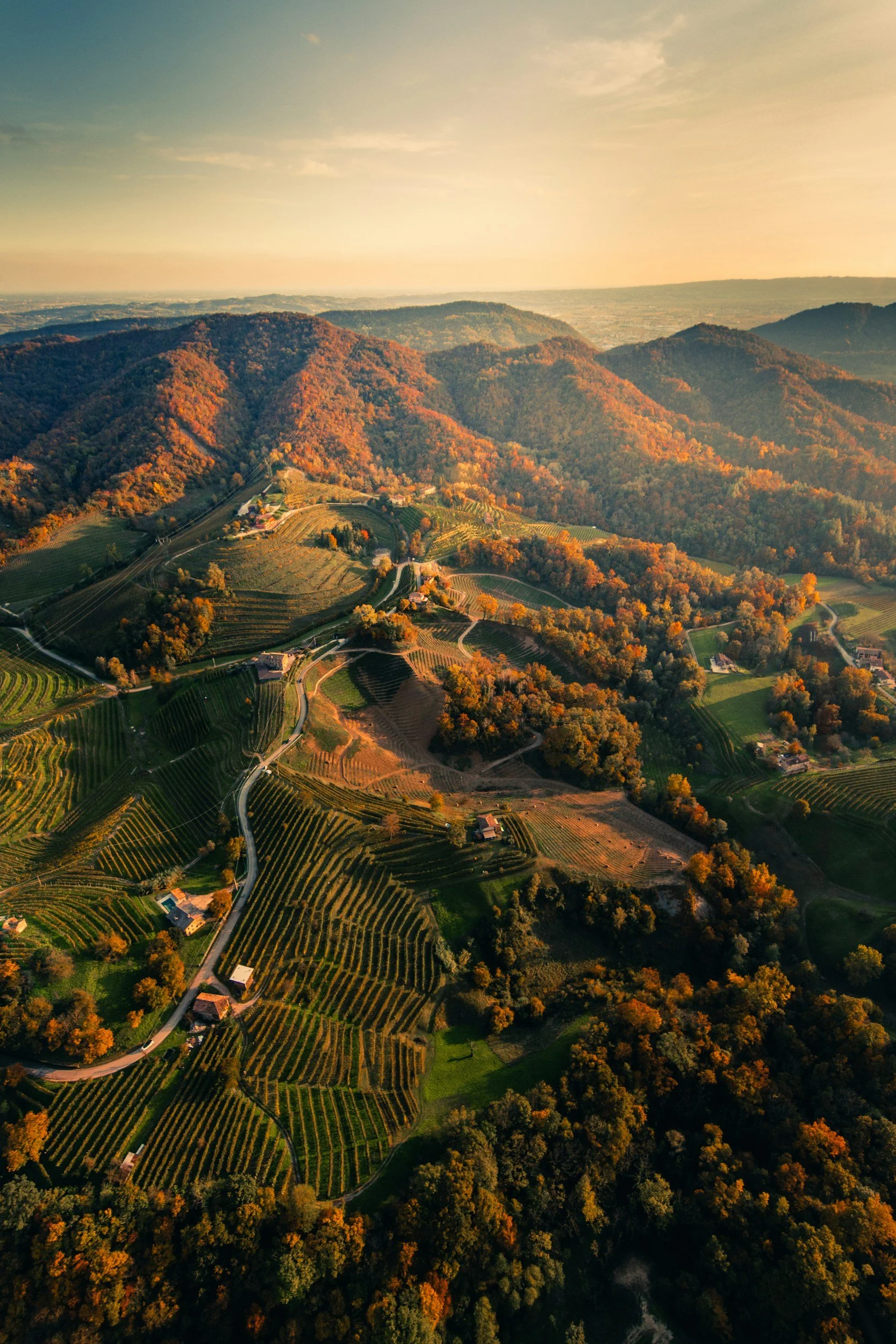
Conegliano is the right place to start if you want to reach the Prosecco Hills by public transport. MOM buses leave from here towards Pieve di Soligo, Refrontolo, Col San Martino, Tarzo, Cison di Valmarino and Valdobbiadene, using routes such as 131, 132, 134 and 139.
That sounds wonderfully convenient until you look at where the wineries are.
The buses connect the towns and villages along the main roads. A winery may be another walk away, up a lane, along a hillside or simply nowhere near the stop you assumed would be useful. In this part of Veneto, “the bus goes there” and “the bus takes me where I need to be” are not quite the same thing.
For a day centred on one place, the buses can be genuinely useful. You could head to Valdobbiadene, Pieve di Soligo or Refrontolo, spend a few hours there and work around the return timetable. One pre-booked tasting can also be perfectly realistic if you have checked the nearest stop and the walking route properly beforehand.
I would be much less enthusiastic about trying to stitch several wineries together.
Tastings are usually booked for fixed times, the next bus may not be conveniently ten minutes later, and the lovely winery you found on Google Maps may be sitting somewhere between two villages rather than beside either of them. Add lunch, a viewpoint and a missed connection and the day can become far more about logistics than Prosecco.
If I wanted to visit several producers, I would spend the money on a driver or a small-group tour. This is one of those occasions where paying for transport buys you much more than convenience. It lets you choose wineries because you want to visit them, rather than because they happen to sit closest to a bus stop.
The timetable also deserves more attention here than it does for the trains. MOM changes between summer and school-year schedules, and Sunday and public-holiday services can be much thinner. I would always check the return before booking a tasting, rather than discovering at 16:30 that the next sensible bus is not behaving the way the weekday timetable suggested.
And if more than one or two days of the trip are going to be spent like this, it may be time to look beyond Conegliano altogether. I have a separate guide to where to stay in the Prosecco Hills without a car, comparing Conegliano with places such as Valdobbiadene and Follina, and a separate Prosecco Hills weekend guide for the trip itself.
Match the base to the places already on your map
For Venice, I’d stay in Treviso.
Both towns can get you to Venice, but Treviso is the one I would choose if you expect to go more than once. You are starting closer to Venezia Santa Lucia, and over several days that extra stretch from Conegliano becomes the sort of train time you begin noticing. If Venice is taking over most of the itinerary, though, I would question both choices and stay in Venice or Mestre instead.
Castelfranco Veneto and Padua also point towards Treviso.
Castelfranco is one of the easiest smaller-town additions to a Treviso stay, and it also sits on the useful western side of the network towards Padua. You can reach both from Conegliano, but there is little reason to place yourself farther east when these are the days you care about.
Bassano del Grappa works better from Treviso; Asolo needs more patience.
Bassano belongs much more naturally in a Treviso-based itinerary. Asolo has no railway station, so the final part needs a bus, commonly via the Montebelluna/Casella d’Asolo side, and I would check that connection before deciding to go rather than waking up and treating it as an easy train day. If you are choosing between the two towns for one excursion, I have a separate guide to Asolo versus Bassano del Grappa.
For the Prosecco side, switch the advantage to Conegliano.
This is where staying farther north pays off. Buses and transfers towards Pieve di Soligo, Refrontolo, Col San Martino and Valdobbiadene begin much more conveniently from Conegliano, and many organised wine days use it as a natural meeting point. It still does not give you free movement between wineries, so I would only call this a clear win once the hills are taking up a meaningful part of the trip.
Vittorio Veneto and Belluno are very good reasons to choose Conegliano.
Both sit north of the city on the same rail corridor, so these days feel far more logical from here than from Treviso. Vittorio Veneto in particular is close enough to be an easy outing rather than something you have to build the entire day around. Belluno takes you farther into the foothills, but I would stop there rather than casually extending the promise to “the Dolomites”; mountain valleys and trailheads add another layer of transport.
Verona and Lake Garda are where I would change hotels, not just bases.
Treviso is better positioned than Conegliano, but that is not saying much when you are repeatedly travelling across Veneto. One long day west is possible. Two or three of them would convince me to move to Padua, Vicenza or Verona and keep the train time for something more interesting.
Jesolo is a useful summer extra from Treviso.
MOM runs seasonal services from Treviso towards Lido di Jesolo, so a beach day can fit into a summer stay surprisingly well. I would treat it as a nice option rather than build the hotel decision around it, because the useful service is seasonal and the exact timetable needs checking for your dates.
And if you are starting to wonder whether you would rather sleep in one of the smaller towns instead, my comparison of Asolo and Cison di Valmarino looks at a very different kind of Veneto stay.
The wrong hotel pin can undo a very good base
Choosing Treviso or Conegliano is only half the job. In both towns, I would zoom right in on the hotel location before booking, because a property that looks perfectly central on a map can still add an annoying amount of walking, hills or taxis to every day.
In Treviso, I would start around the stretch between Treviso Centrale, Porta Altinia and Piazza Borsa. It is close enough to the station for early trains, but you are already on the old-town side of the tracks, so you are not choosing convenience at the expense of somewhere pleasant to spend the evening.
From there, moving deeper towards Piazza dei Signori, Buranelli and the Pescheria is more about personal preference than practicality. I would happily stay there if I wanted the canals and old centre right outside the door, especially for a trip where I am not catching a 07:00 train every morning.
The only thing I would check properly is the walking route. Treviso is not difficult to get around, but bridges, cobbles and little canal crossings can make a route feel less direct with luggage than it looked when you booked it from the sofa.
I would think twice about going much farther north around Porta San Tomaso for a train-heavy stay. It is not wildly inconvenient, but it is far enough that you will notice the extra walk every time you come back tired.
And I would ignore the words “Treviso Airport” in a hotel name unless the flight itself is the priority. A room close to the runway but awkward for both the station and the centre can leave you relying on buses or taxis for the rest of the stay, which rather defeats the point of choosing Treviso for its easy transport.
Conegliano is even more sensitive to the exact pin, mainly because the centre is so compact.
If I were booking without a car, I would keep the search around Viale Carducci, Via XX Settembre and Piazza Cima. The station is right beside Viale Carducci, and from there you are only a few minutes from the old centre. It is one of those rare places where being close to the station does not mean staying in a slightly grim transport zone.
Then the town starts climbing.
Once you move beyond Piazza Cima and farther up Via XX Settembre towards the castle, the distance on the map stops telling the whole story. A hotel can look only a few streets away and still mean a proper uphill walk with a suitcase. I would absolutely check the gradient before booking anything higher up.
The bigger trap is the vineyard hotel that appears under Conegliano but is really somewhere around Ogliano, San Pietro di Feletto, Susegana or the surrounding countryside. Those places can look much more tempting in the photos, but they are not doing the same job. If you need a taxi to reach dinner, another one for the station and another one for a tasting, you have moved from “car-free base” into “lovely rural hotel with a transport problem.”
When I read reviews for either town, I would search for the boring words first: station, walk, stairs, steep, noise, bus stop, late check-in and taxi. They tell you far more about whether the hotel will suit this trip than another five-star comment about the croissants.
And I would pay particular attention to anything mentioning the walk at night. Being technically central is less useful if the last ten minutes back from dinner are along a road you would rather not be walking alone, or if the only practical route involves steps you did not notice on the booking map.
The same applies if walking is part of the plan: getting to a village by bus and getting to the start of a trail are two different things. I have a separate guide to walking routes through the Prosecco Hills, including the hill towns and vineyard routes that are genuinely worth planning around.
A Tuesday plan can look very different on Sunday
The trains are the easy part here. Treviso, Conegliano and the main rail towns are straightforward enough, but once you start relying on buses into the Prosecco Hills, I would stop assuming that the timetable you found on Tuesday will still look the same on Sunday.
MOM switches between summer, school-year and festive services, and that can make a big difference once you are heading towards places like Pieve di Soligo, Refrontolo, Valdobbiadene or Cison di Valmarino. A bus route may exist, but the useful return might be much earlier than you expected.
For wine days, I would always check the journey home before booking the tasting. It sounds backwards, but it saves you from choosing a lovely 16:00 appointment and then discovering that getting back to Conegliano afterwards involves a very long wait or an expensive taxi.
The time of year matters too.
September and October are some of the most appealing months for the Prosecco Hills, especially once the worst of the summer heat has gone, but harvest also means producers are busy. I would not assume you can just turn up somewhere because the cellar door is marked on Google Maps. Book the tasting and then build the transport around it.
In winter, I would keep the rural days simpler. Short daylight makes a missed bus much more annoying, and I would much rather spend a cold November afternoon back in Treviso or Conegliano than standing beside a road in the hills wondering whether I misunderstood the timetable.
Summer has the opposite problem. There can be more seasonal services, but you are also dealing with heat, exposed bus stops and August closures around Ferragosto. A route can look great on paper and still be a fairly miserable idea at 14:00.
This is basically the one part of the trip where I would be annoyingly organised: check the exact date, check the return, and then forget about it once you are out there.
Three nights is easy. A week needs a better plan
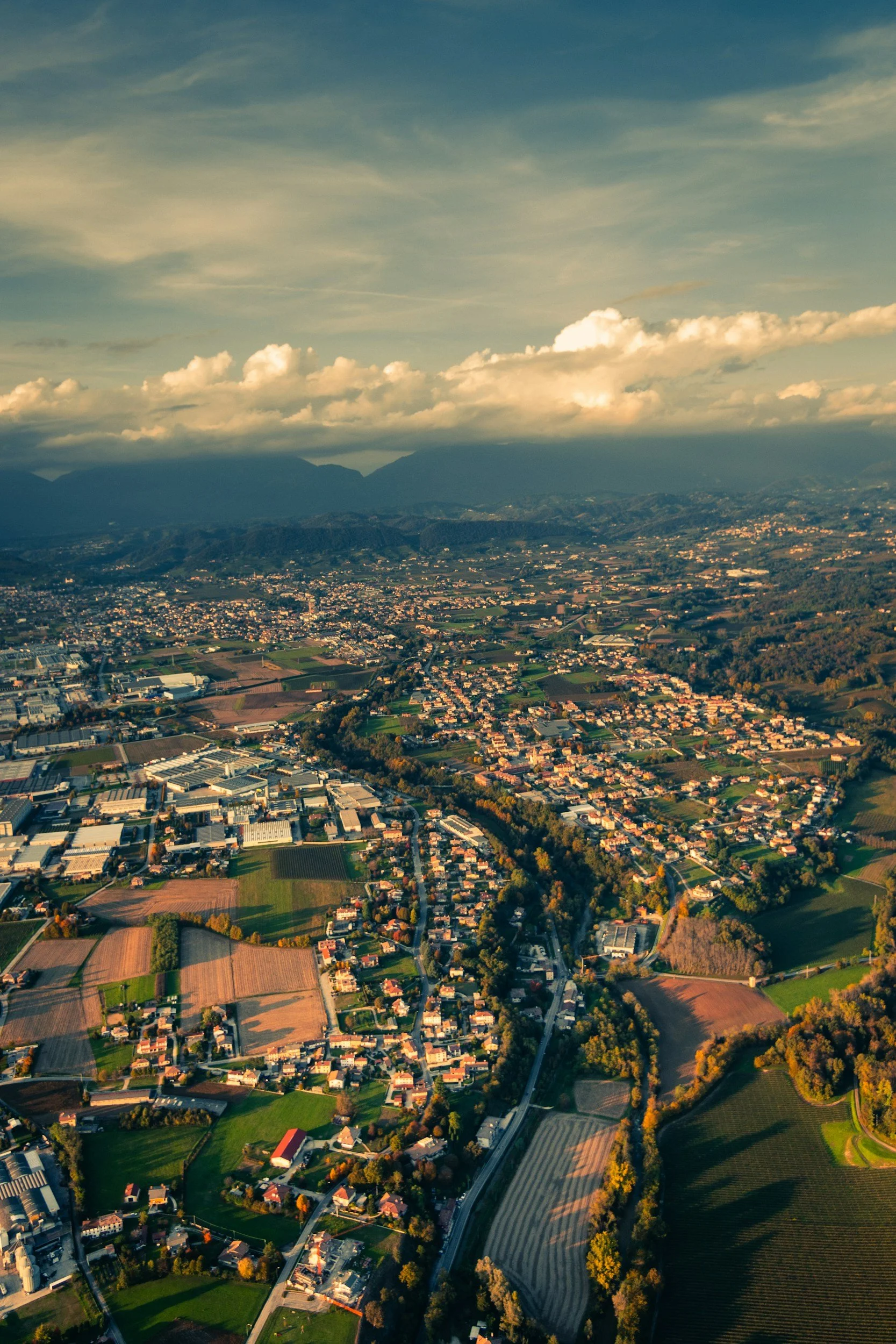
For two or three nights, I would not overcomplicate this. Treviso is the easier choice if you want a bit of everything: some time in town, perhaps Venice, perhaps another smaller place nearby. Conegliano is better if you already know why you are going and that reason involves the Prosecco Hills, Vittorio Veneto or Belluno.
With only a couple of nights, a narrower base is not really a problem. You are not asking Conegliano to entertain you for a week; you are using it because it puts you where you need to be.
At four or five nights, I would lean much more strongly towards Treviso unless at least two of those days are heading north or into the wine hills. That is long enough for the difference in evening choice and day-trip variety to start showing. If you stay in Conegliano but keep catching trains south towards Treviso and Venice, you have probably chosen the more complicated version of the same holiday.
A six- or seven-night trip is where I would stop trying to find one perfect Veneto base altogether. If the plan stretches west towards Padua, Vicenza or Verona, move once and stay there for part of the trip rather than spending several days crossing the same part of the region.
I also would not split a week into, say, three nights in Treviso and three in Conegliano just because both towns sounded good during the planning stage. They are only around 17–25 minutes apart by regional train on many services. Moving your suitcase that short distance does not suddenly open up a new part of Veneto.
The exception is when the trip changes character. A few nights in Treviso followed by a stay properly inside the Prosecco Hills gives you something genuinely different: city and rail access first, then vineyards and smaller hill towns afterwards. That is a move I can see the point of.
There are a few trips where I would stop comparing these two
If your plans keep stretching towards Verona, Vicenza or Lake Garda, I would take that as a sign to move the base west. One long day from Treviso is completely fine. Doing it again and again is when you start wondering why you are spending so much of the holiday on the same train line.
The same applies if this is really a beach trip. Treviso can be useful for a summer day towards Jesolo, but if the Adriatic is where you want to be most mornings, I would stay closer to the coast rather than keep travelling out to it.
With the mountains, I would be even more careful. Conegliano is useful for Belluno and the lower foothills, but once the plan involves an early trailhead, another bus into a valley or some connection that only runs a few times a day, I would rather sleep closer to the hike. There is nothing relaxing about starting a beautiful mountain day by staring at your phone at 06:20 hoping the first bus is where it is supposed to be.
The Prosecco Hills are similar. If you are imagining several wineries, lunch somewhere rural and a few stops in between, I would not build the day around public buses just to prove it can be done. That is exactly the sort of day where a driver or small-group tour is worth paying for.
And Venice is the one that catches people out because Treviso is genuinely good for it. For one or two days, I would happily stay in Treviso. But if you are going into Venice every morning and coming back every night, I would start asking why you are not simply staying in Venice or Mestre.
If that sounds more appealing than staying beside a railway station for the whole trip, I have also collected countryside stays in Italy that can still work without a car.
If I were booking, I would still start with Treviso
For most car-free trips, I would choose Treviso because it gives you more room to change your mind. You can do Venice, head towards the smaller art towns, keep one day for Prosecco, and still have a base that feels useful even when you decide you do not want to go anywhere at all.
I would choose Conegliano when the trip already has a much clearer shape. If the days you are most excited about involve the Prosecco Hills, Vittorio Veneto and Belluno, then I would rather stay closer to them and let Conegliano do exactly what it is good at.
And if your notes somehow contain Venice, Verona, Lake Garda, Belluno and three wineries, I would stop trying to find one clever base and split the trip. That is not overplanning. That is just refusing to spend a week commuting across Veneto because you became emotionally attached to one hotel booking.
FAQs about Veneto
Is Treviso a good place to stay for visiting Venice?
Yes, especially if Venice is only part of the trip. Treviso lets you have a day or two in Venice and then do something completely different the next morning, rather than paying Venice prices for a week you do not intend to spend entirely there.
If you already know you want to be in Venice three or four days in a row, though, I would stay closer. At that point the daily train stops being useful flexibility and starts becoming a commute.
Can I stay in Treviso and visit the Prosecco Hills?
Absolutely, and for one Prosecco day I probably would. You can travel up to Conegliano for a pre-booked tour or transfer, and some organised tours collect from Treviso itself.
I would only move the hotel north if the hills are taking up a proper chunk of the trip. One day of Prosecco does not require an entire accommodation reshuffle.
Can you visit the Prosecco Hills without a car?
Yes, but I would be quite specific about what “visit” means.
Getting to places such as Valdobbiadene, Pieve di Soligo or Refrontolo by bus is possible. Spending the day bouncing between whichever wineries take your fancy is not nearly as simple. For one town or one carefully planned tasting, public transport can be enough. For a proper winery day, I would pay for a tour or driver and stop looking at bus timetables.
Do you need a car if you stay in Conegliano?
Not for Conegliano itself. The station is right beside the centre, trains are useful for Vittorio Veneto, Belluno, Treviso and Venice, and buses leave towards several Prosecco towns.
A car becomes much more useful once your plans involve rural wineries, scattered viewpoints or accommodation outside central Conegliano. That vineyard hotel ten minutes outside town can change the whole equation rather quickly.
Is Conegliano worth staying in, or should I just visit for the day?
I would stay overnight if wine or the foothills are part of the reason you came. Two or three nights gives you time for the hills, Vittorio Veneto or Belluno without constantly returning south.
If you mainly want to see Conegliano itself, you do not need to move hotels. It is close enough to Treviso by train to visit very easily for the day.
Can I visit Venice and the Prosecco Hills from the same hotel?
Yes, and this is probably the strongest argument for Treviso.
Stay in Treviso, take the train into Venice on one day and use Conegliano or a Treviso pickup for the Prosecco day. I would much rather do that than move accommodation halfway through a short trip simply to save a small amount of train time.
Where should I stay if I want to explore more of Veneto by train?
If “more of Veneto” means Venice, Treviso province, nearby art towns and perhaps one Prosecco day, Treviso is a very useful base.
If your version of Veneto also includes Verona, Lake Garda and several days around Vicenza, I would split the trip. Those places may all be in the same region, but that does not mean they belong to the same comfortable day-trip radius.