
Which Greek island still makes sense in October: Santorini or Naxos?
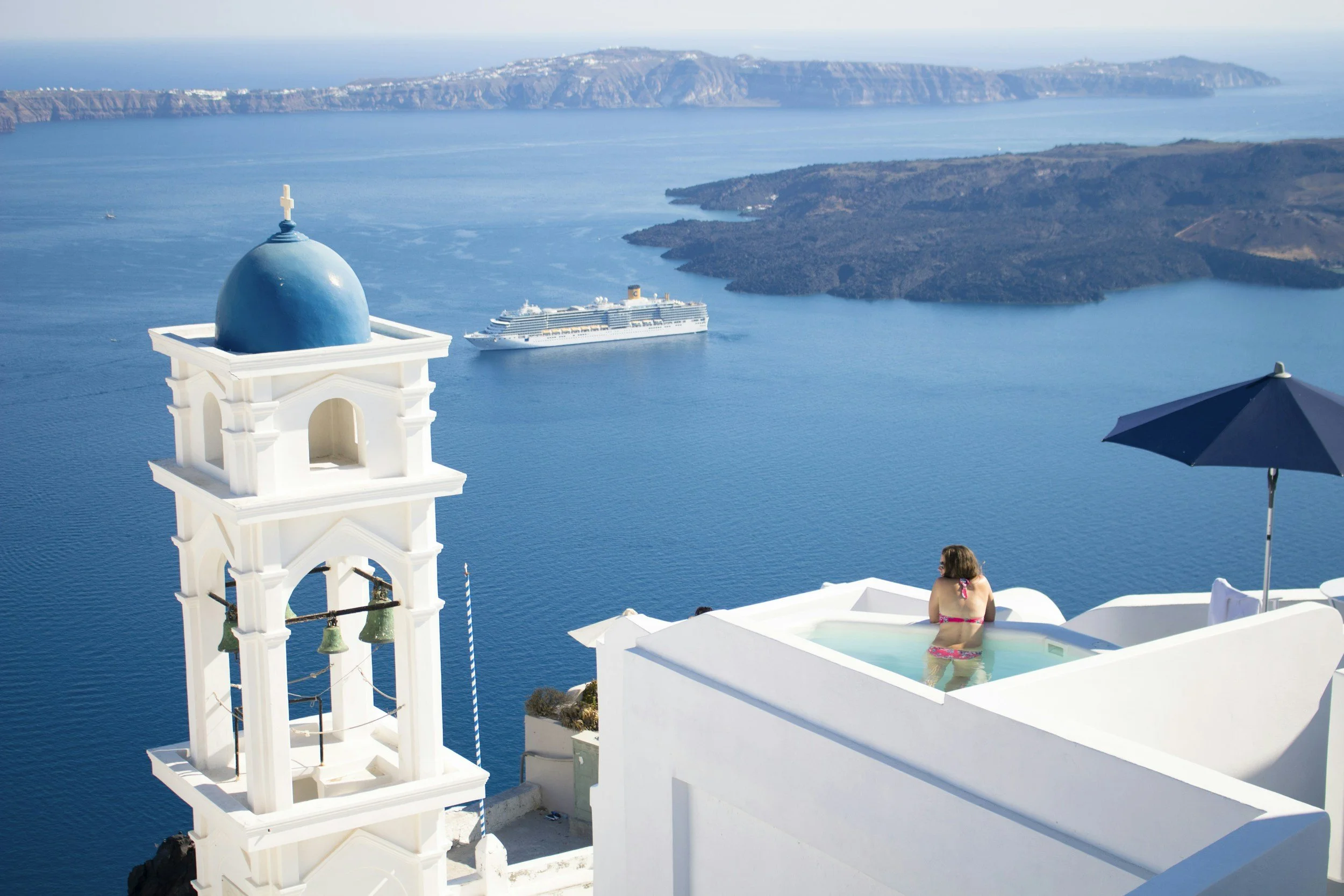
Choosing between Santorini and Naxos in October is less straightforward than it is in summer, mostly because October changes quite quickly in the Cyclades. A trip at the beginning of the month can still feel close to summer, with warm afternoons, swimmable sea and plenty of places still operating along the coast. By the final week, the same island can feel a lot quieter, with fewer beach services, thinner bus schedules and evenings arriving much earlier than you might expect.
That matters more on Naxos than it does on Santorini. Naxos is the island I would lean towards for an early-October trip if I had several days to play with, especially if beaches, good food, inland villages and a bit of exploring by car were part of the plan. Chora is still a lively more practical place, while Agios Georgios keeps the beach close without leaving you stranded somewhere seasonal once dinner rolls around.
Santorini is a bit easier to deal with once summer starts fading. You do not need a car to get much out of it, and a few days is enough to see quite a lot. If you stay around Fira, you still have buses, restaurants, wineries and places like Akrotiri within easy reach, so the trip does not suddenly fall apart because you get one cloudy afternoon or decide against the beach.
That is really the difference in October. Naxos is the one I would choose when there is still a decent chance of beach days and I have enough time to explore beyond Chora. Santorini becomes more tempting later in the month because it asks less of you logistically. But if you are travelling at the very end of October and would be genuinely disappointed by a week with little or no swimming, I would not talk myself into either of them. I would go farther south.
So which island would I book in October?
If I were booking Naxos in October, the first thing I would decide is not which beach looks nicest but how much I want to depend on the season still behaving like summer. For a trip of four to seven nights, particularly in the first half of the month, I would be very happy choosing Naxos and giving myself enough time to use the island properly. A couple of beach days, a day inland, some time in Chora and perhaps a walk suddenly feels like a much fuller trip than squeezing the island into two or three nights.
I would also make Chora or Agios Georgios the default base... Chora is the easiest choice if you want to step off the ferry, have the bus station close by and know that you will still have plenty of places to eat in the evening. Agios Agios Georgios is the one I would choose if I still wanted the beach to be part of the trip. You have proper sand right there, but you are also close enough to Chora that you are not relying on the beach area to keep you fed and entertained every evening. That matters more in October than it does in August. If the weather turns or a few places have already closed for the season, you can just walk back into town and carry on with your day.
I would be a bit more careful with Agios Prokopios, Agia Anna and Plaka. Early in October, they can still be a really nice choice, especially if you mainly want the beach. Later in the month, I would check the exact hotel and what is still open nearby before booking anything. A quiet beach sounds lovely until you realise the nearest place you had planned to eat at has closed for the season and every dinner now means getting back into Chora.
A car also makes a much bigger difference on Naxos than it does on Santorini. You can stay in Chora and get around without one, but some of the places that make Naxos really interesting after summer are inland, around Halki, Filoti, Apeiranthos and the Tragea valley. Buses do run, but once the timetable gets thinner, it becomes harder to fit several stops into one day without constantly checking when you need to head back. If I had four, five or six nights, I would rent a car for a day or two and give myself more freedom.
Santorini is easier in that sense. For a stay of two to four nights, especially without a car, Fira would be my first choice in October. The buses run through there, so you can get around without turning every outing into a connection, and you are also staying in one of the places most likely to still feel lively later in the month.
Firostefani is a great middle ground if you want the caldera but do not want to stay right in Fira. You can walk between the two, so you still have easy access to Fira’s buses and restaurants without being in the middle of everything all the time. Imerovigli is more about the hotel and the view. I would still consider it for a short trip, especially if the room itself is part of the reason for going, but later in October I would check what is still open nearby before booking.
I would also think twice about Kamari and Perissa later in the month. Early October is a different story, especially if you are hoping for beach days, but once swimming starts to feel less certain, staying there can become a bit inconvenient. You may end up heading back through Fira for restaurants, buses and most of the things you want to do anyway, which can make that cheaper beach hotel feel less like a bargain.
The middle of October is probably the trickiest part to judge because there is no neat cut-off date. One year can feel summery for longer, another can turn quiet earlier. What I would pay attention to is the exact area you are staying in, how much you are relying on buses and whether the trip still sounds good to you if the beach ends up being an occasional extra rather than the main plan.
And for the very end of October, I would only book Santorini or Naxos if I was happy with that uncertainty. You might get sunny days and still swim, but I would not choose either island for a trip that depends on hot beach weather from morning to evening. If that is the holiday you want, I would look at Crete or Rhodes instead.
If neither of these sounds quite right for your dates, I’ve also looked at which Greek islands still work well in autumn once the main summer season starts fading.
5th October and 27th October are very different trips
October gets talked about as one single shoulder-season month, but on the Cyclades it changes quite a lot from one end to the other. A hotel area that feels completely normal in the first week can be noticeably quieter three weeks later, and the difference is often less about temperature than about buses, restaurants, beach services and how much daylight you have to play with.
There is no official closing date for either island. One restaurant may finish for the season in mid-October while the one next door keeps going, and the same applies to smaller hotels, boat trips and beach businesses. So I would not try to pin the change to one exact date. It is more useful to think of October in three parts.
1 to around 10 October: you can still plan around the beach
This is the easiest part of the month for both islands. Warm afternoons are still very realistic, the sea has had all summer to heat up, and swimming can still be something you build the day around rather than something you do because you got lucky with the weather.
On Naxos, the west-coast beach areas are still much more likely to feel connected to the rest of the trip. You can stay around Agios Georgios, spend a beach afternoon farther south at Agios Prokopios or Agia Anna, then head back into Chora for dinner without feeling like you have already arrived after the season. If you rent a car, you can also use another day for Halki, Filoti or Apeiranthos and still have enough daylight to stop somewhere on the way back rather than racing the clock.
That mix is why I would give Naxos the edge in early October. You still get the beach version of the island, but you are not limited to it.
Santorini is also easy at this point in the month, especially if you are only staying a few nights. The caldera villages, wineries and archaeological sites give you plenty to do if you do not want every day to revolve around swimming. The one thing I would not assume is that October suddenly turns Oia into a quiet little village. Cruise ships are still calling at Santorini throughout the month, and Oia around sunset can feel busy on a multi-ship day even when the rest of the island feels much calmer than it did in August. Hoever, make sure to check the Official Santorini cruise arrivals before choosing your Oia day. October can still have multi-ship days, and choosing a quieter day can make a surprisingly big difference.
So in the first ten days or so, I would choose Naxos for a more rounded island trip with beaches, villages and time to explore. Santorini is still very tempting when the trip is short and the caldera is the main reason you are going.
Roughly 11 to 20 October: this is where the details start to matter
Mid-October is harder to generalise about.
You can still get a run of warm days and plenty of swimming, but the weather becomes a little less dependable and seasonal businesses start making their own decisions about when to close. This is also around the point where Naxos’s official tourism information describes the peak season as generally running to mid-October, which is a much more useful clue than the usual claim that “everything stays open all month”.
On Naxos, I would start paying much more attention to where I was staying. Chora becomes the safest bet, because it is a year-round town rather than a beach resort built around summer visitors. Agios Georgios still gives you the beach within walking distance, but I would be less casual about booking farther down the coast without checking what is still open nearby.
This is also the part of October when a car begins to earn its keep. The villages are not going anywhere, but the buses become less useful once frequencies start dropping. A day that sounds simple on paper, perhaps Halki in the morning, Filoti for lunch and Apeiranthos later on, can become oddly restrictive if you are trying to make it fit around a reduced timetable. With a car, you can change the plan if the weather turns, stay longer over lunch or head back before dark without making the whole day about transport.
Santorini is simpler without a car because most visitor routes connect through Fira. I would still check the current October timetable rather than assume summer frequencies continue, but Fira gives you more room to improvise if a beach day falls through or you decide to change plans.
This is also where I would stop saving a boat trip for the final day. October wind can move or cancel departures on either island. If a caldera cruise or day on the water is important to you, book it near the beginning of the stay so you still have another day available if the first one does not run.
By mid-October, the weather is too similar between Santorini and Naxos to be a sensible reason to choose one over the other. I would base the decision much more on whether I wanted a car, how many nights I had and how much of the trip depended on the coast.
The final third of October: stay somewhere that still works in the evening
This is where the two islands start to separate more clearly.
Naxos is not closed in late October. Chora still has people living there, ferries still arrive, and you will still find places to eat and have coffee. But the summer beach strip is no longer something I would take for granted.
That is the difference between staying in Chora and booking a hotel in Plaka because the room rate suddenly looks fantastic. In early October, Plaka can still give you exactly the beach stay you wanted. By the final week, I would want to know whether the hotel restaurant is still open, whether there are other places nearby for dinner and whether the bus times still suit me. Otherwise, that cheap room can quietly come with a car rental attached.
Santorini holds together better later in the month because it has a much bigger visitor economy, continuing cruise traffic and far more air connections. Fira is especially useful at this point. You can still reach the main parts of the island by bus, you have more restaurants around you, and you are less dependent on one seasonal pocket staying lively until your departure date.
That does not mean Santorini feels summery all the way to Halloween. Kamari and Perissa become less convincing bases once the beach is no longer the reason for the trip, and Oia can still be busy when cruise ships are in despite the overall drop in visitors.
The other big change is the light. Around the start of October, sunset is close to 7pm. By the middle of the month it is around 6:45pm, and after Greece changes the clocks on the last Sunday of October, sunset comes very early by the clock. By 31 October, it is around 5:20pm on both islands.
On Santorini, that mostly means planning hikes and sightseeing a little earlier. On Naxos, it can affect the whole shape of the day because the distances are longer and some of the best places are inland or in the mountains. If you are driving back from Apeiranthos, coming down from Mount Zas or trying to fit several villages into one day, losing that evening light is something you really notice.
By late October, I would book either island because I wanted the food, villages, walks, archaeology, wine or simply a few quiet days by the sea, with swimming as a bonus when the weather is nice.
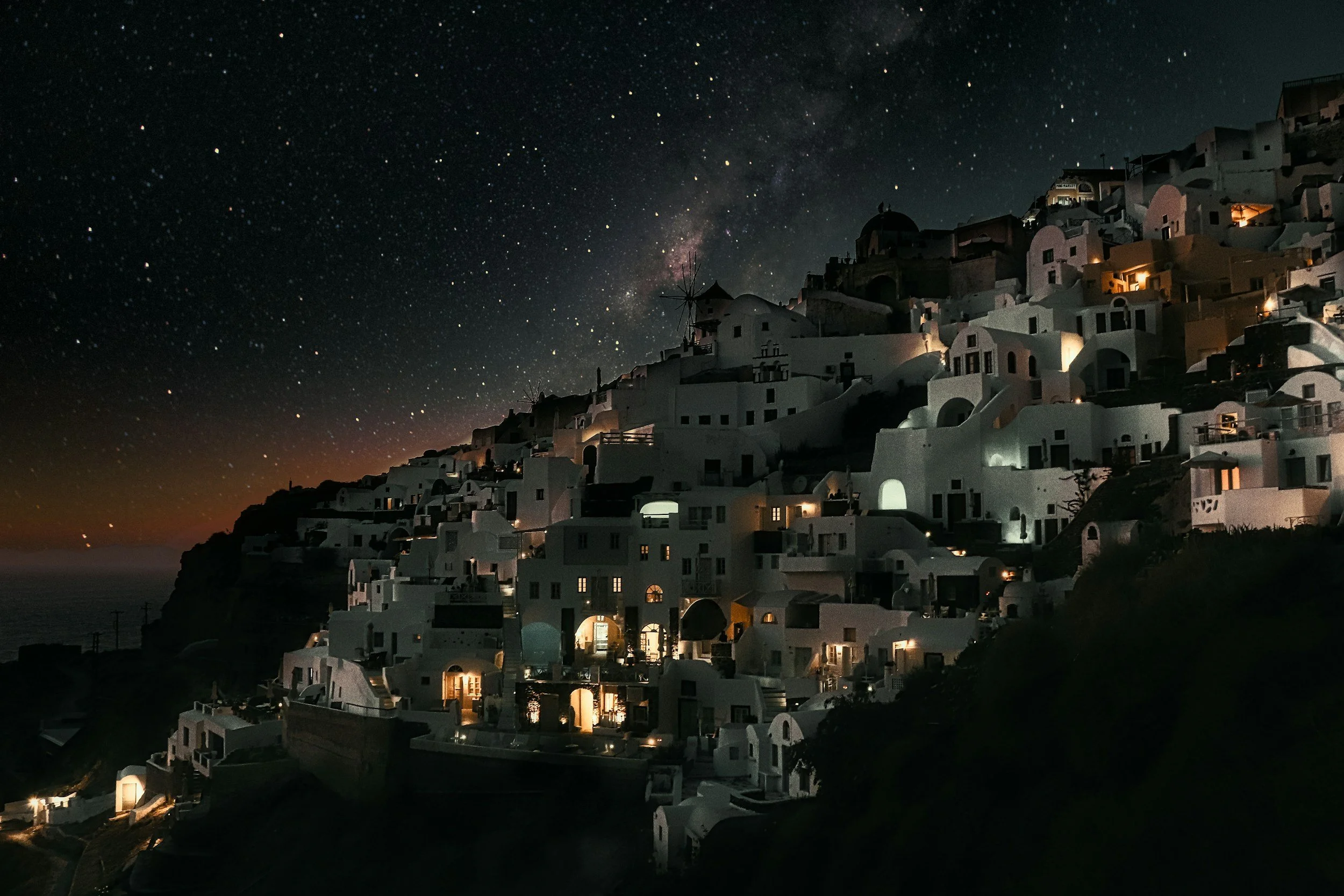
That difference between peaceful and slightly impractical comes up all over Europe in the off-season, so I’ve put together a separate guide to how to tell pleasantly quiet from inconveniently closed before you book.
If you still want proper beach days, Naxos is the easier choice
If swimming is still a big part of the reason you are going to Greece, Naxos has the advantage. Its west coast is much closer to the beach holiday most people have in mind when they start looking at the Cyclades: long stretches of sand, easy swimming and several places where you can spend a good chunk of the day by the water without feeling like you have gone there mainly to look at it.
Santorini’s beaches are interesting in a completely different way. Kamari and Perissa have dark volcanic sand, and both can still be good places for a swim in early October, but I would not choose Santorini over Naxos for the beaches themselves. Santorini has plenty of other reasons to go. Naxos is the one where the beach can still be a proper part of the holiday rather than something you fit in when the weather happens to cooperate.
The sea around both islands is often still around 22 to 23°C in October, particularly earlier in the month, so swimming is very realistic for plenty of people. The slightly confusing part is that the sea cools more slowly than the tourist season does. You can quite easily have water that feels fine for swimming while the beach around you already looks very different from July or August.
That distinction matters. A weather app might show 23°C and sunshine and make the whole thing look wonderfully summery, but it cannot tell you that the beach bar beside your hotel has finished for the year, the sunbeds have been packed away or the bus you thought you would use after dinner is now running a much thinner timetable. Swimmable water and a fully functioning beach holiday are not quite the same thing in October.
On Naxos, this is one of the reasons Agios Georgios is such a good compromise. You still get a proper sandy beach, and it is close enough to Chora that you are not relying on the beach area for the rest of the trip. If the sun is out, you can spend half the day by the water. If the wind gets annoying after lunch, you can walk back into town, find somewhere for coffee or dinner and forget about the beach for a while. You have not booked yourself into a place that only really works when the weather behaves.
For an October trip where swimming matters but I also want some flexibility, I would choose Agios Georgios over going farther down the coast almost every time.
Agios Prokopios, Agia Anna and Plaka are a slightly different decision. They give you more of that stay-near-the-beach, wake-up-and-go-swimming version of Naxos, and in the first part of October I would still be very tempted by them. If you get a good run of weather, it can feel like you have managed to borrow another week of summer after everyone else has gone home.
But I would become much more careful with those areas as the month moves on. I would check whether the hotel is still serving breakfast, whether the places I might want to eat at are open on my dates and how useful the current buses into Chora really are. Not because these places suddenly become deserted on a specific day, but because they are much more tied to the summer season than Chora is.
There is a big difference between choosing a very quiet Plaka stay because you want books, long walks and an almost empty beach, and booking it because you saw a beautiful hotel at half the August price and assumed the rest of the area would still be running normally. The first could be exactly the October trip you wanted. The second can get old fairly quickly once every dinner involves planning transport.
Santorini’s Kamari and Perissa have the same seasonal issue, although I think the decision is even easier there. Earlier in October, both can still be useful if you genuinely want to spend part of the trip by the sea. They are organised beach areas, so when things are still running you have an easy place to swim and spend a few hours.
Later in the month, I would struggle to find a strong reason to base myself there unless I had checked the area carefully and specifically wanted a very quiet beach stay. Once the weather becomes less predictable, most of the things that make Santorini interesting are somewhere else. The caldera, Akrotiri, wineries, Pyrgos, Megalochori and the Fira-to-Oia walk do not require you to be staying beside the beach, so you can easily end up travelling back towards Fira again and again.
That is where Santorini and Naxos start to behave quite differently as beach destinations. On Naxos, the beach is one of the island’s main strengths, and choosing the right base can let you keep it in the trip without being trapped by it. On Santorini, I would treat the beach more as an extra. If you wake up to sunshine and feel like swimming, great. I would not organise the whole October stay around the assumption that I will want to be there every day.
Naxos also gives you more options if one planned beach day disappears. You can stay in Chora, go inland to Halki or Filoti, drive through the Tragea valley, have a long lunch somewhere and try the beach again the next day. That is particularly useful in October because one cloudy or windy afternoon does not suddenly leave a hole in the trip.
So if I were booking early October specifically because I still wanted several proper beach days, Naxos would be my choice, and I would probably stay around Agios Georgios unless I had checked that the farther-west-coast beach areas were still running normally for my dates.
After mid-October, I would be much less confident about choosing either island primarily for the beach. You can absolutely still swim, and you could end up with several warm sunny days in a row. But if I knew I was going to feel cheated every time clouds appeared or the beach felt too windy to sit on for hours, I would stop trying to stretch the Cyclades season and look farther south to Crete or Rhodes instead.

Which island is better when the weather turns?
A day that is too cool or windy for the beach does not have to change much on either island. The bigger difference comes when the weather turns properly bad. On Naxos, a grey but dry day can be one of the nicest times to head inland, walk around the villages or spend more time in Chora. Once the rain really sets in, though, quite a lot of those plans become less appealing too.
Santorini gives you a little more to fall back on in that situation. You can move a winery visit, Akrotiri or the museum in Fira into the day without feeling like you are desperately filling the hours until the sun comes back. That is a small advantage in summer, but in October it can matter quite a bit.
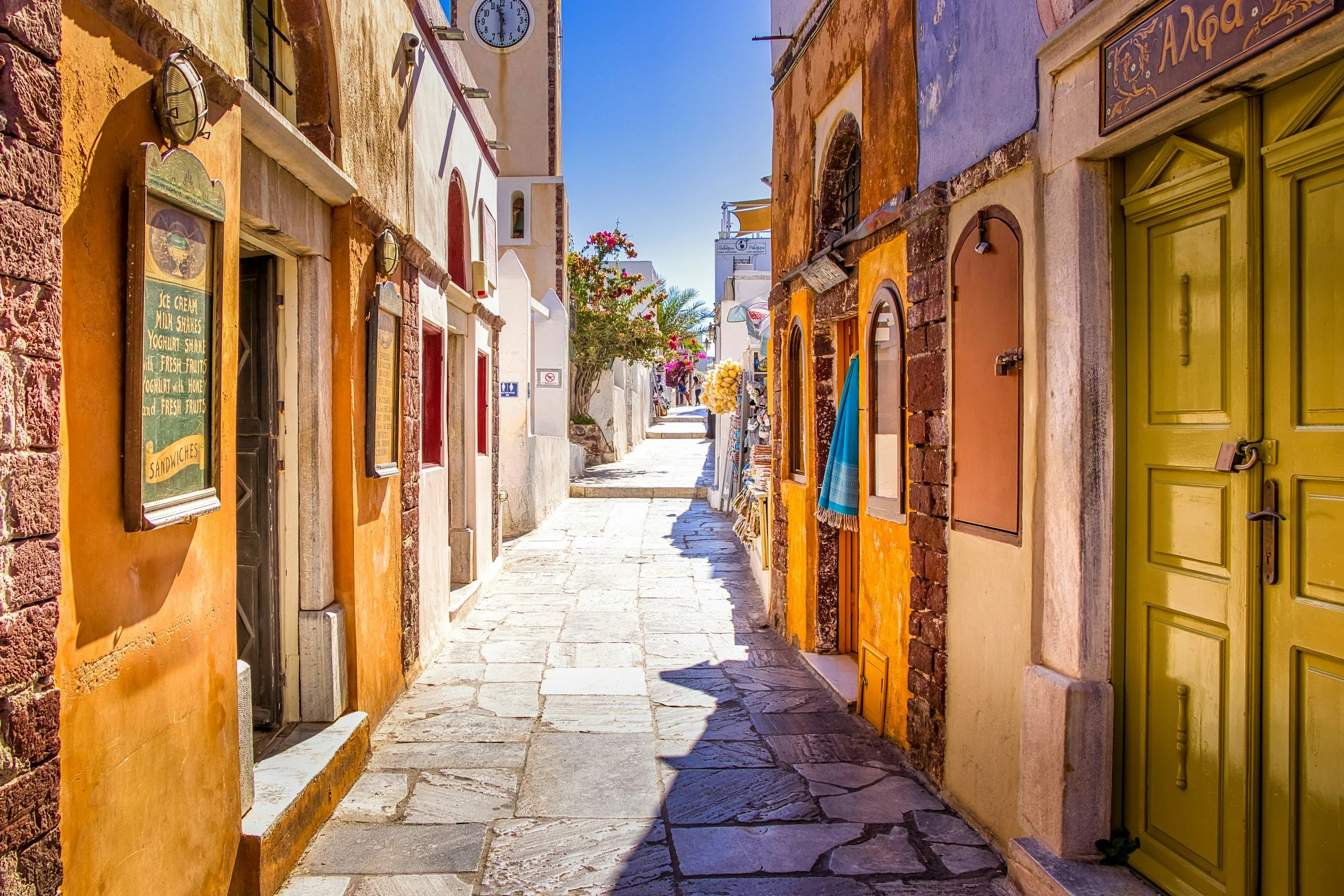
Santorini has better options when the weather is properly bad
A windy or rainy morning on Santorini can still turn into a decent day because several of the island’s strongest stops do not depend on sunshine.
Akrotiri is especially useful in October because the archaeological site sits beneath a protective roof. You can spend a couple of hours there without worrying much about rain, then continue with the Museum of Prehistoric Thera in Fira, where many of the finds from Akrotiri are displayed. The two belong together well enough that it feels like a proper half-day rather than a collection of things you have reluctantly pulled from a rainy-day list.
Fira itself is useful in this kind of weather too. You have the museum, plenty of places to stop for food or coffee and far more shelter than you do out on the caldera path. If the rain is heavy, I would much rather keep the day centred there than spend it bouncing between villages purely because they looked good on the itinerary.
Wineries give you another easy switch. Santorini’s wine culture is spread around places such as Pyrgos, Megalochori and Exo Gonia, and a tasting does not lose much because the sea looks miserable. Later in October I would still check opening days before deciding that this is what I am doing on Tuesday, but it gives Santorini something Naxos has less of: activities you can book around the forecast and still feel like you have had a proper day.
The Fira-to-Oia walk is a different story. Cooler October temperatures can make it far more pleasant than doing the exposed route in July, but I would not use it as the emergency plan for a wet day. Parts of the trail are uneven and very exposed, and once the wind gets strong the caldera is not particularly interested in your carefully planned itinerary. A cool, clear morning is ideal. Driving rain is just wet.
Santorini’s accommodation can also carry more of the trip. If you deliberately booked a room in Firostefani, Imerovigli or Oia because you wanted the caldera outside the window, spending a slower couple of hours there does not necessarily feel like wasted holiday time. That matters more in October, when you are less likely to be outside from breakfast until sunset every single day.
Naxos is better when it is cloudy, not when it is pouring
Naxos has plenty to do away from the sea, but most of its best alternatives still involve being outside.
A grey, dry day can be brilliant for heading inland. Halki and the Tragea valley are much more pleasant to explore once the July heat has gone, and villages such as Filoti and Apeiranthos give you a completely different side of the island from the west-coast beaches. Apeiranthos sits at around 600 metres above sea level, so I would check the mountain forecast rather than assume the weather will feel anything like it does beside the water in Chora.
That is also why “bad beach weather” needs a bit of interpretation on Naxos. If it is 21°C, cloudy and dry, I would happily get in a car and spend the day between the villages, stop for lunch and see where I end up. If rain is coming down properly and the mountains are sitting in cloud, I would not suddenly decide that Mount Zas is the sensible alternative because the beach plan has failed.
The island has an official network of walking routes through places such as the Tragea valley and around Mount Zas, and October temperatures are much kinder for walking than midsummer ones. But these are still outdoor plans. Cool and overcast can be excellent. Wet, windy and low cloud is a completely different day.
You can always stay closer to Chora, although even here much of the appeal is still outside. Kastro climbs above the waterfront through stepped, uneven lanes, and the Portara sits completely exposed beside the sea, so a grey afternoon and a properly stormy one are not remotely the same thing. If it is simply cool and cloudy, I would happily spend the morning around Chora and then drive towards Halki and the Tragea valley. If rain has settled in for hours, Naxos gives you fewer obvious places to disappear into until it passes.
Food helps because inland Naxos keeps going after the beach season starts fading. Graviera, kitron and Naxos potatoes are tied to the island’s farming life rather than only to summer tourism, and a long lunch inland feels like part of the trip rather than a way of killing time until the sun comes back out.
Late October can also coincide with rakitzio, the village tradition around raki distillation, although I would never build the trip around it without checking the dates for that particular year. The villages and timing vary, so it is better treated as something you might come across than a guaranteed event.
This is the clearest weather difference between the two islands for me. Santorini handles a genuinely rainy day better. Naxos handles a non-beach day better. If the forecast says cool, cloudy and dry, I would be very happy to be on Naxos. If it says two days of steady rain and strong wind, Santorini gives you more ways to rearrange the trip and still feel like you have used the day well.
Without a car, Santorini is much easier to piece together
Santorini’s bus system is not especially elegant, but it is useful. Most routes run in and out of Fira, so once you understand that, the island becomes fairly straightforward to navigate without driving. The airport bus goes there, buses from Athinios ferry port go there, and from Fira you can continue towards Oia, Akrotiri, Kamari, Perissa and the other main visitor areas.
The slightly annoying part is that journeys which look simple on a map can involve going back through Fira first. Staying in Oia and deciding to visit Akrotiri, for example, is not just a matter of hopping on one bus across the island. You generally return to Fira and change there. On a short October trip, though, I would still take that over renting a car purely because I felt I was supposed to.
The bigger thing to check in October is not whether the route exists, but how often it runs. Summer buses can be frequent enough that missing one barely matters. Once the timetable thins out, missing a connection can mean a much longer coffee break in Fira than you had planned. I would always use the current KTEL timetable for the exact week of the trip rather than anything copied into an old travel guide.
The ferry port is another reason the Fira setup matters. Athinios sits well below the caldera, and arriving there is not the same as stepping off a ferry into town. The public bus takes you up to Fira, and anyone staying elsewhere usually has another journey after that. It is perfectly workable, but it is worth remembering when comparing Santorini with Naxos, where the ferry drops you right beside Chora.
Naxos is much easier at the beginning of the trip. The KTEL office is by the port, so you can get off the ferry and check the latest timetable before wandering off to the hotel. If you are staying in Chora or nearby Agios Georgios, there is no particular reason to hire a car straight away. You can walk a lot, use buses for the west-coast beaches and reach several inland villages by public transport.
The limitations become clearer once you start trying to do more than one thing in a day.
A bus may get you to Halki, Filoti or Apeiranthos, but that does not automatically mean you can comfortably visit two villages, have a long lunch and add a walk before heading back. In summer, more frequent services give you some room to change your mind. In October, one missed return can matter much more. That is the point where I would rather rent a car for a day than spend lunch watching the clock.
It also gives you access to parts of Naxos that are awkward to piece together by bus, especially trailheads, smaller inland stops and the east coast. You can decide to stay longer in Apeiranthos, stop somewhere in the Tragea valley on the way back or abandon a planned walk because the clouds have rolled in without first working out which bus still gets you home.
This map makes the difference a lot easier to see: Santorini keeps most of the trip fairly close together, while Naxos pulls you much farther across the island.
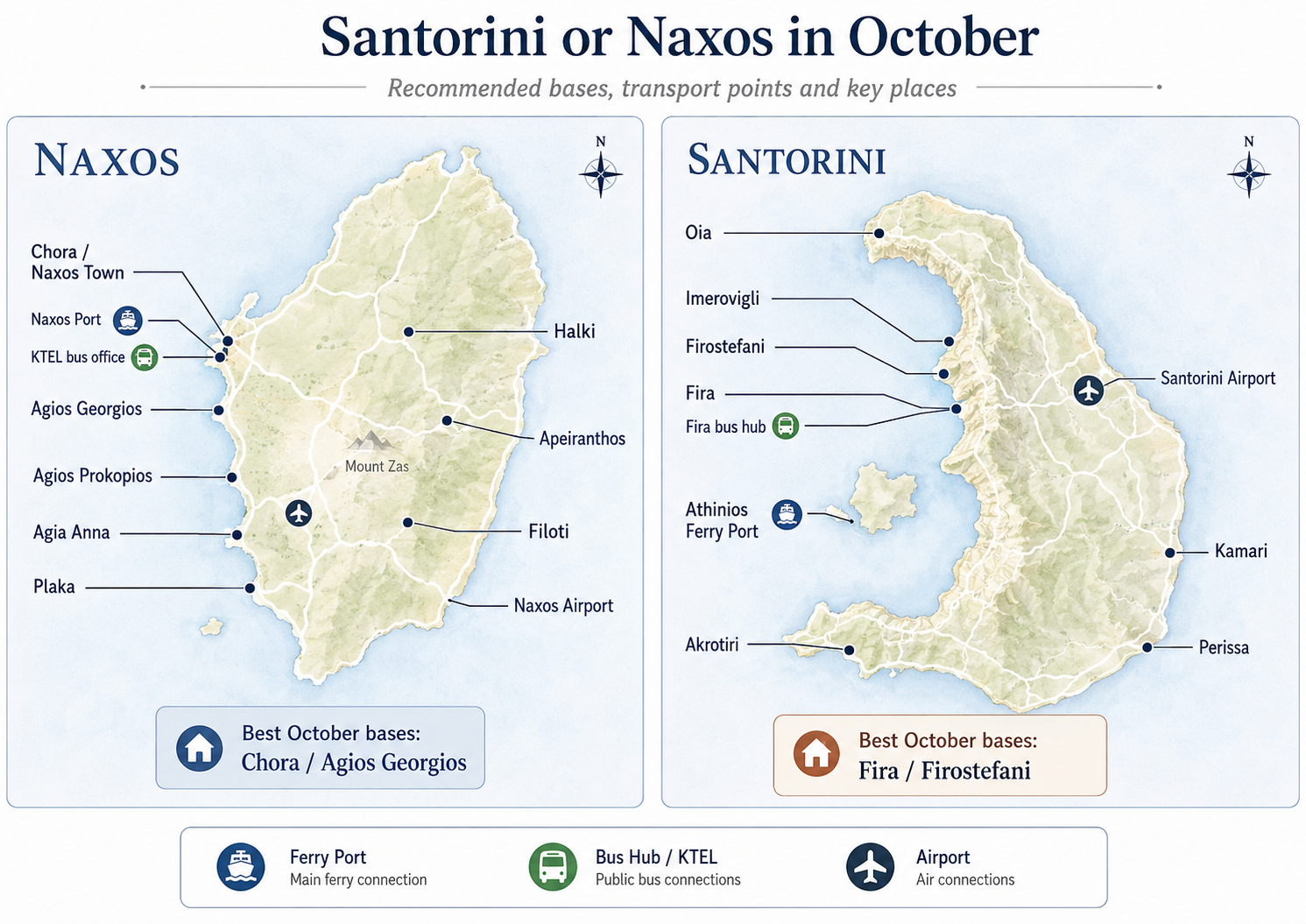
I would not rent a car for the entire stay automatically. If the first couple of days are Chora, Agios Georgios and perhaps a beach farther down the west coast, it may spend more time parked than moving. A day or two of car hire later in the trip is often enough to get the part of Naxos that public transport makes more awkward.
Driving here also needs a slightly different mindset from looking at distances on Google Maps. Apeiranthos is around 28 kilometres from Chora, but the road climbs and bends through the mountains, so 28 kilometres does not feel like 28 kilometres on a straight mainland road. Add a stop in Filoti, lunch somewhere and the temptation to keep going, and it is easy for a supposedly small loop to take most of the day.
That gets a bit trickier later in October, when the light disappears much earlier. I would not leave a walk in the mountains until late afternoon and then discover I still have a winding drive back to Chora in the dark. It is not a reason to avoid driving on Naxos, just something I would plan around rather than squeeze in at the end of the day.
You can do both islands without a car, but they feel very different that way. On Santorini, I would be quite happy relying on buses for a few days. On Naxos, I would probably use them around Chora and the west coast, then rent a car for a day or two once I wanted to get properly inland. That gives you a lot more freedom without paying for a car that sits parked for half the trip.
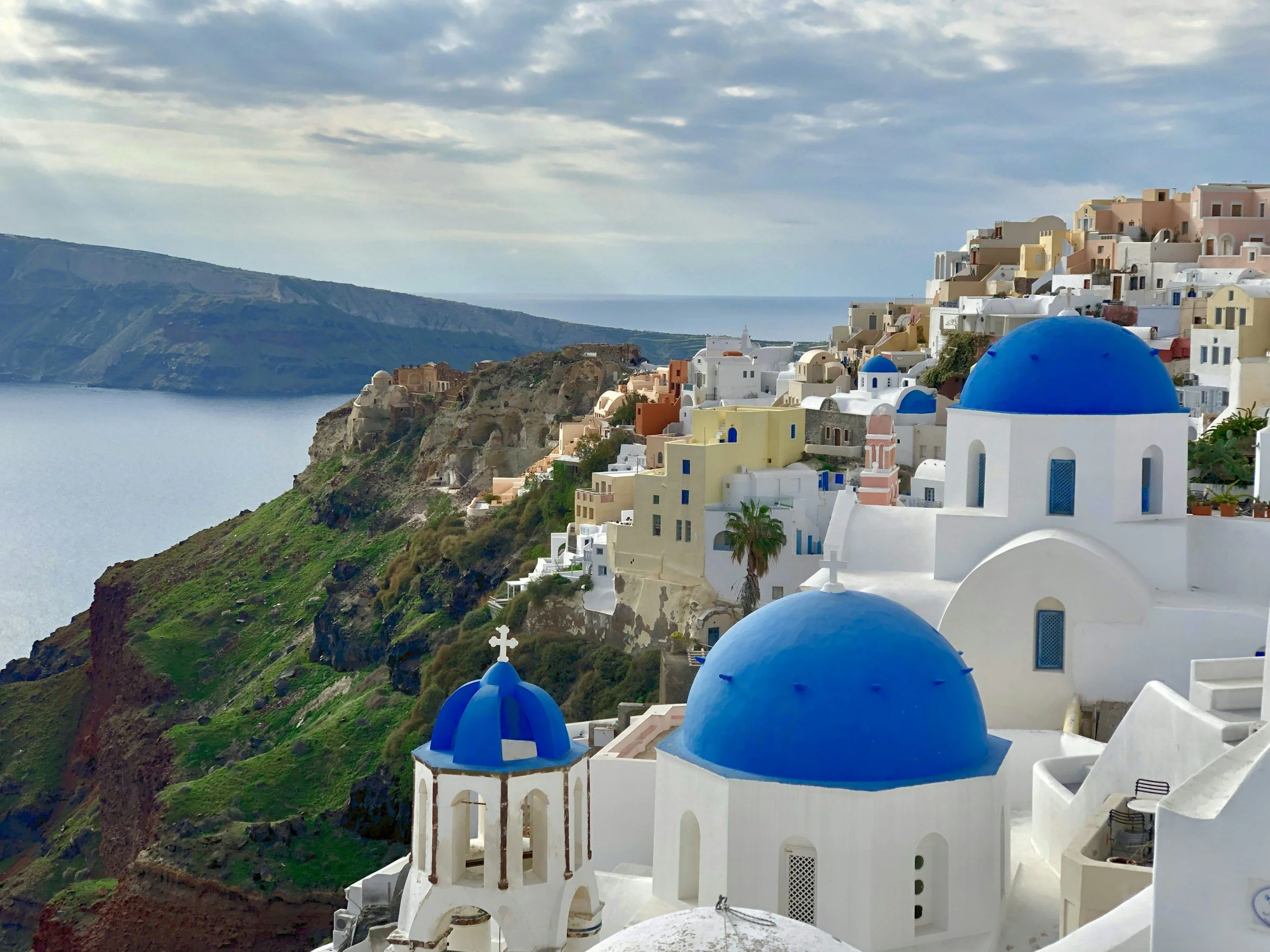
Sometimes the easier island is the one with the better flight home
The flight options can end up making the decision for you, especially if the trip is short.
Santorini has far more flights than Naxos, including more connections with Athens and, on some October dates, direct international routes too. If one of those works well for your trip, I would use it. Finishing on Santorini and flying straight out can save an extra ferry or a night in Athens, which matters quite a lot when you only have a few days.
Naxos is still easy enough to reach by air because there are year-round flights to Athens, but there are fewer of them and fewer seats. I would check those before deciding the order of the islands rather than assume I can make the transport fit afterwards. On a longer trip, you usually have more room to work around the schedule. On a short one, an awkward flight time can quietly eat a big chunk of the day.
However, the ferry arrival is almost the reverse!
Naxos is actually much nicer to arrive at by ferry. The port is right in Chora, so if you are staying in town you can get off the boat and be close to your hotel, restaurants and the bus office almost immediately. Even if you are staying around Agios Georgios, you are still starting the trip from the middle of the part of Naxos you are most likely to use rather than arriving somewhere completely separate from it.
That sounds like a small thing until you compare it with Santorini.
The ferry arrives at Athinios, down below the caldera, and nobody is walking from there to Fira with a suitcase. You still need a bus, taxi or pre-arranged transfer, and if you are staying in Oia you have quite a bit farther to go. The road climbs up from the port in switchbacks, and when several ferries arrive around the same time there can be a lot of buses, taxis, transfer vans and people trying to leave at once.
It is all perfectly doable, but I would count it as part of the travel day rather than assume the holiday starts the second the ferry docks. On Naxos, especially if you are staying in Chora, it almost does.
For a six-night stay I probably would not let that decide anything. For a three-night trip, I absolutely might. Arriving on Santorini in the afternoon and then spending more time getting up from Athinios and across to the hotel takes a bigger bite out of the trip than stepping off the ferry in Naxos Town and being basically where you need to be.
There is a direct ferry between Naxos and Santorini throughout the year, so combining them in October is very possible, and the crossing itself is not necessarily the difficult part. The thing I would check first is which services are running on my exact dates. Some of the faster seasonal ferries reduce as autumn goes on, while conventional ferries continue, so an itinerary that looks beautifully neat when you first sketch it out may need changing once you see the October timetable.
I would also let that timetable decide which island comes first rather than insisting on a particular order. If the ferry works beautifully from Naxos to Santorini and Santorini then gives you a useful flight home, I would take the easy win. There is very little joy in adding another ferry, airport transfer or night in Athens just because you decided months ago that the islands had to be visited in the opposite order.
I would also be careful about stacking too much transport into the final day. Taking a ferry from one island and then relying on a separate international flight later that same day looks efficient until wind, a delayed departure or a slower connection gets involved. If the flight home is expensive or difficult to replace, I would rather protect it with a night in Athens or finish on the island I am flying from.
This is especially relevant if Santorini has a direct international flight that works for your dates. Ending there can save an extra Athens connection and make the last day much simpler. On the other hand, if everything already routes through Athens and the Naxos flight fits neatly, there is no reason to force Santorini into the itinerary purely because its airport is bigger.
And with only a week in Greece, I would think quite hard before choosing both islands at all. The ferry between them is straightforward enough, but two hotel check-ins, two arrival days and another transfer out can eat into the trip surprisingly quickly. If one island gives you the cleaner route in and out, I would let that count for more than a tiny preference on paper.
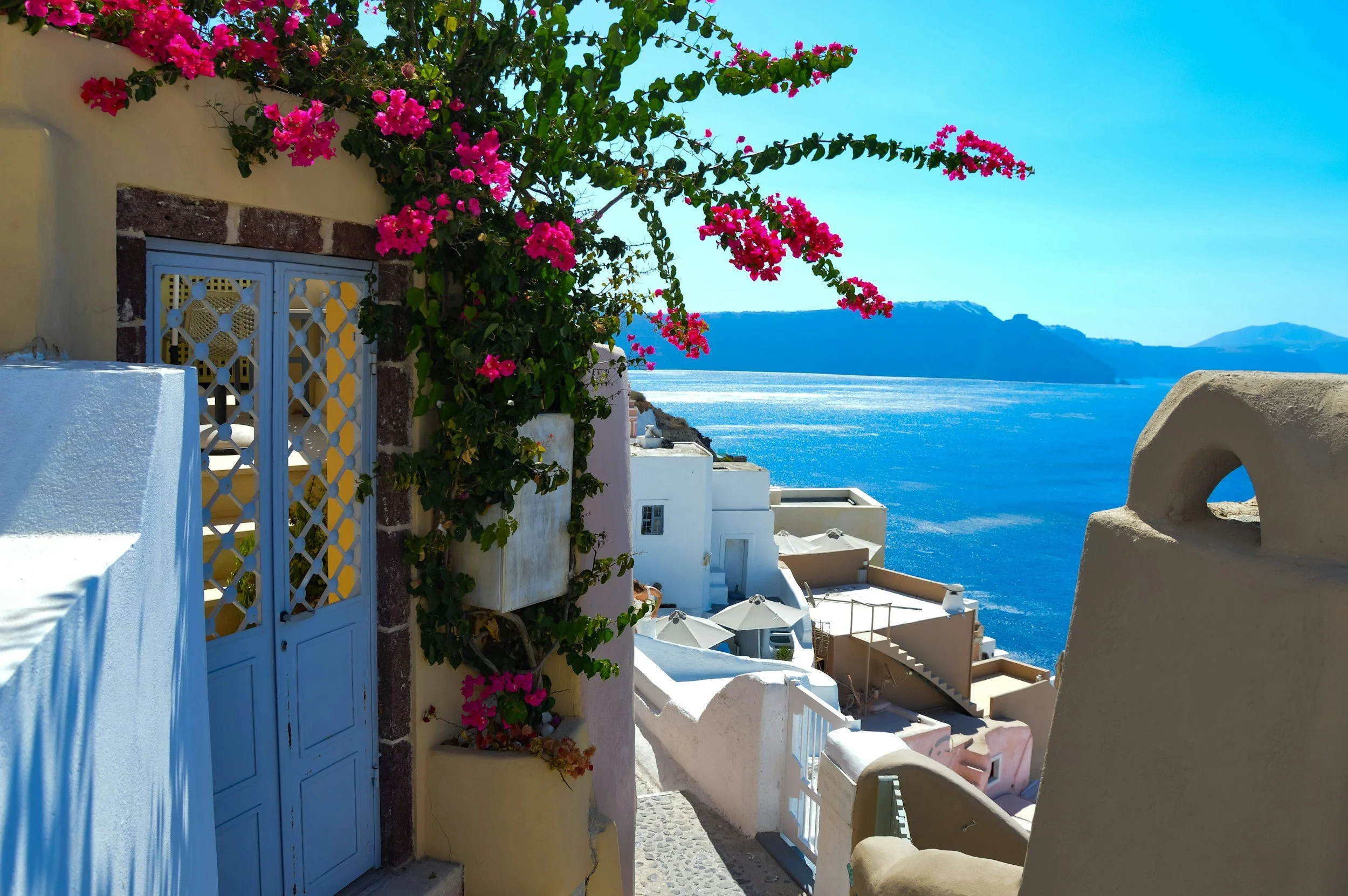
Where I’d be quite picky about the hotel
October is when I would spend less time comparing room photos and more time checking the boring little details underneath them.
On both islands, the prettiest hotel can still be the wrong booking if the area around it is already winding down, the bus stop is awkward, the restaurant you were relying on has closed for the season or the “private pool” is essentially decorative once the wind picks up.
On Naxos, the exact part of Chora matters
If I were staying in Chora, I would first look at how far the hotel sits from the port, the bus office and the flatter waterfront area.
A room up in Kastro can look much nicer than something lower down, but the old town comes with steps, uneven lanes and limited vehicle access. I would absolutely check how luggage reaches the hotel before booking. “Five minutes from the port” can feel very different when most of those five minutes are uphill with a suitcase.
If I planned to rent a car, I would also check parking before getting too attached to a room in the old town. Chora is a very useful base for exploring Naxos, but returning from a day inland and then circling around looking for somewhere to leave the car is not the part of the trip anyone puts in the hotel description.
Agios Georgios needs fewer checks because its biggest advantage is built into the location. You have the beach, but Chora is still close enough that you are not depending on seasonal beachfront places for every meal. For October, that is exactly the kind of backup I like.
Farther south, I would be much more specific.
For Agios Prokopios and Agia Anna, I would check the hotel’s exact closing date, whether breakfast is still running normally, which nearby restaurants remain open and how often the bus is running on my dates. A hotel saying “open in October” tells you almost nothing about the rest of the area.
With Plaka, I would go one step further and ask myself whether I genuinely want the quiet. If the answer is yes, lovely. If I am secretly picturing long beachfront lunches, easy buses into town and several places to choose from for dinner every night, I would not book until I had checked all three.
An inland stay needs even more thought. I would only book one if I had a car and knew what dinner looked like after dark. A pretty guesthouse near Halki or one of the mountain villages can be brilliant in October, but only if you are happy driving after dinner or have somewhere useful close by. “There are tavernas nearby” is not enough for me unless I know which ones are actually open on my dates.
On Santorini, the room can be gorgeous and still annoy you
Santorini is where I would read the hotel description properly rather than assume the location name tells me everything.
In Fira, I would check how close I am to the bus station and whether the hotel sits directly on the cliffside or on an easier-access street. Two hotels can both say “Fira” and give you completely different levels of effort every time you come and go.
The same applies even more in Firostefani and Imerovigli. A caldera hotel can involve a lot of stairs, no direct vehicle access and a porter situation that is worth understanding before arrival. I would want to know whether a taxi can get close, whether there is a lift, and how many steps I am dealing with before I book a room purely because the terrace looks incredible.
Imerovigli is also where I would check dinner more carefully later in October. The area can be wonderful when the hotel itself is a big part of the stay, but I would not assume every restaurant around me is running exactly as it did in August. If I end up walking back towards Fira every evening anyway, I want to know that before I pay extra for the quieter location.
And yes, I would check the pool.
A private pool on Santorini can add a serious amount to the nightly rate, and in October I would not pay that premium without confirming whether it is heated and how exposed the terrace is. A cold plunge pool in the shade is not much of a luxury once the afternoon turns breezy.
Oia needs a slightly different mindset. I would choose it for a short, hotel-led stay where the room, view and being in Oia are part of the point. I would not choose it because I thought it was the easiest base. You are farther from Fira’s bus hub, luggage access can be awkward and cruise traffic can still make parts of the village busy even in October.
For Kamari and Perissa, I would mainly check the date and what the hotel itself is still offering. Earlier in October, they can still work very well for a beach stay. Later on, I would want to know whether the hotel restaurant, breakfast, nearby places to eat and beach services are all still running before assuming the lower room rate is a bargain.
This is one of those months when I would happily choose the slightly less impressive room in the better location. On Naxos, I want to know that dinner and transport are easy once the beach day disappears. On Santorini, I want to know that I can reach the room without carrying my suitcase down half the caldera and that the expensive outdoor space I booked is something I can realistically use.

A cheap October hotel can get expensive surprisingly fast
October is usually easier on the budget than high summer on both islands, but the difference between Santorini and Naxos does not disappear. Santorini is still the more expensive place to stay, particularly if you want a caldera room, while Naxos generally gives you more room for your money and tends to be easier on the food budget too.
I would still be careful about comparing the nightly rate and stopping there.
On Santorini, the room that looks surprisingly affordable is often affordable for a reason. Maybe it is in Perissa rather than around the caldera, which can be completely fine in early October, but less useful later when you are spending most days elsewhere. If you end up bussing through Fira every time you want to visit another part of the island, the saving starts coming with a lot more waiting around.
Transfers can also eat into the saving pretty quickly on Santorini. You arrive at Athinios, then still have to get up to Fira, Oia or wherever you are staying. If the hotel is somewhere awkward for buses, taxis and transfers start creeping into the trip more than you expected. Suddenly that cheaper room is not quite such a win.
The caldera has the opposite temptation. October can bring some seriously nice rooms down to prices that suddenly look possible, especially once you start seeing private terraces and plunge pools in the photos. I would still check exactly what I was paying for. If the pool is unheated, mostly in the shade and catching the wind all afternoon, I would rather book a better room without one or pay for a proper heated hot tub that I might actually use.
Naxos is usually cheaper overall, but you can still get caught out there too. A beach hotel farther down the west coast can look ridiculously good value once summer is over. If it is in Plaka and you genuinely want a very quiet few days, great. If the restaurants around you have already closed and every dinner means getting in the car, that bargain starts looking a little different.
Car hire is probably the biggest extra I would allow for on Naxos. I do not think you necessarily need one for the whole trip, but if part of the reason you chose Naxos was to spend time in Halki, Filoti, Apeiranthos or farther east, I would include a day or two of driving in the budget from the start. Otherwise it is very easy to compare a cheap Naxos room with a more expensive Santorini room while quietly leaving out the transport that makes the Naxos trip you want possible.
October also makes hotel services more important than they look on the booking page. If breakfast is included, I would check that it is still being served throughout my stay. The same goes for an on-site restaurant, airport or port transfer, pool access and anything else that influenced the decision to book. A hotel can remain open while some of the summer services finish earlier.
I would pay a little more attention to cancellation terms too, particularly for the second half of October. I am not suggesting booking three hotels and deciding at the last minute, but I would be reluctant to lock myself into an isolated beach property months ahead with no flexibility at all. Ferry schedules change, seasonal flights finish on different dates and individual businesses choose their own closing days. A refundable rate can be worth a small premium when the trip sits right at the end of the season.
Santorini is where I would be most willing to spend more on location. If another €20 or €30 on the room means I can walk to dinner, reach the bus station easily and avoid paying for extra transfers, that money is doing something useful. I would be much less enthusiastic about paying a large premium for a feature I might barely use, especially an unheated pool.
On Naxos, I would probably do the reverse: keep the accommodation fairly simple, stay somewhere practical and leave some money for a car when I need one. A cheaper room in Chora or Agios Georgios can give you far more freedom than a gorgeous discounted hotel farther down the coast that quietly dictates where you eat and how you get around.
October has plenty of genuinely good hotel deals. I just would not judge them by the number beside the room alone. The better deal is usually the one that lets you spend the least amount of the trip fixing the compromises you made to save money.
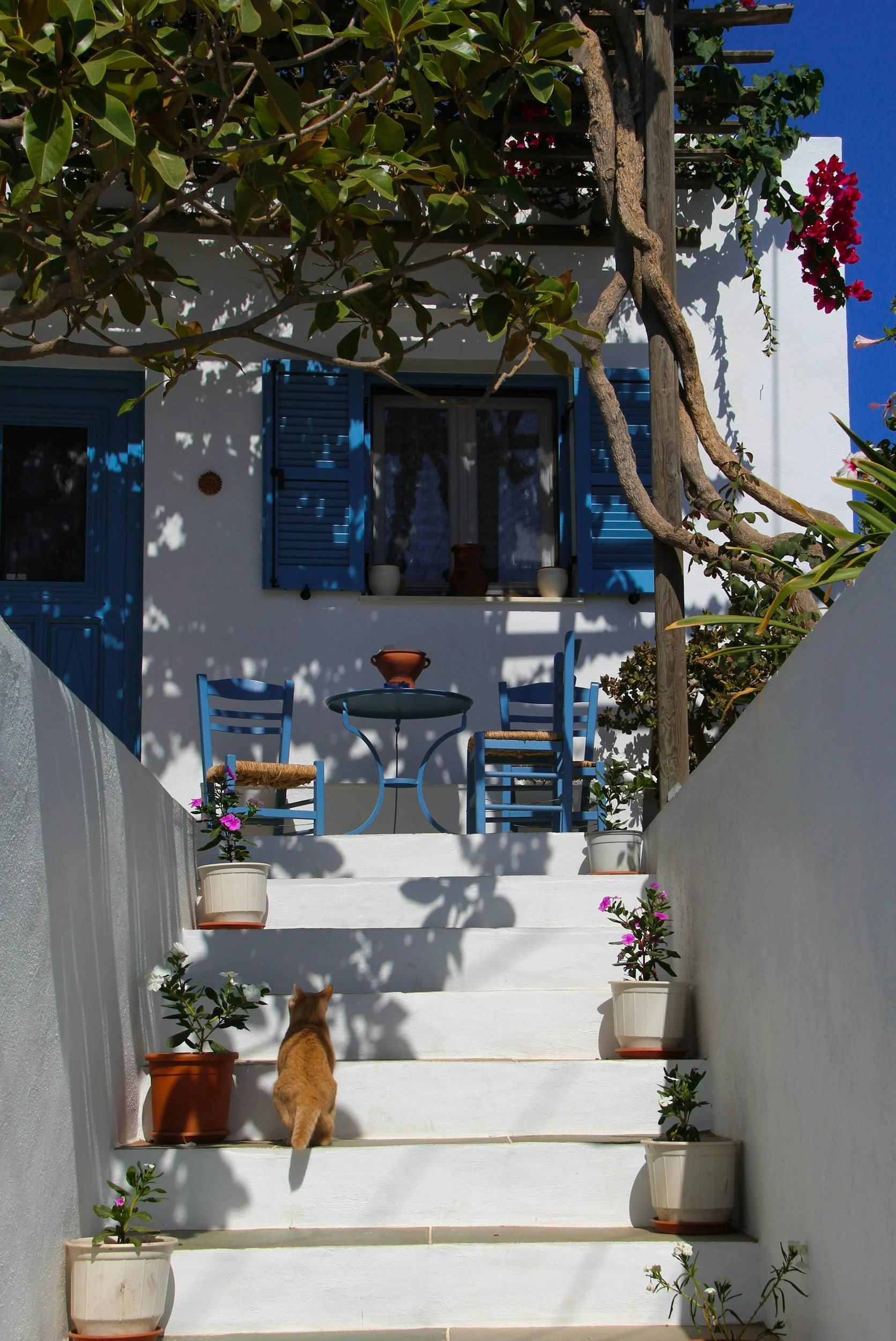
If you’re still torn, decide what would annoy you most
Choose Santorini if the thought of renting a car, checking reduced bus times or losing half a day to getting inland already sounds like work. It is the easier island to keep compact, especially later in October, and there is less chance that one change in weather will send the whole plan sideways. I would also choose it if the hotel is part of the trip rather than just somewhere to sleep. A caldera room, a winery afternoon, Akrotiri and a couple of days around Fira and Oia can still feel like a complete trip even if you never once put on a swimsuit.
Choose Naxos if you would be disappointed to spend several days in the Cyclades and barely leave town. It suits the person who wants to drive somewhere for lunch, stop in a village because it looks interesting, spend one day walking and another on the beach, then come back to Chora without having planned every hour. You do need a bit more time and, ideally, a car for part of the stay, but that effort gives you much more variety.
The easiest way to separate them is probably this: if you want the trip to be simple, Santorini has the edge. If you want it to feel broader, Naxos does.
I would also think about what kind of disappointment would bother me more. On Santorini, it might be paying a lot for a hotel and then finding the caldera crowded on a cruise day. On Naxos, it might be booking a quiet beach area and discovering that the restaurants and buses around it have already thinned out. Neither is a disaster, but most people know which version would irritate them more.
And if the only acceptable version of the holiday still involves hot afternoons, regular swimming, busy beach restaurants and no need to check what has closed for the season, I would stop choosing between these two altogether. Late October is a much better time to be realistic than optimistic.
Still undecided on the Cyclades? You can also compare Tinos and Sifnos if you would rather look beyond Santorini and Naxos.
Can you do Santorini and Naxos in the same October trip?
You can, and there are good reasons to. Santorini and Naxos are connected by direct ferry, they give you very different versions of the Cyclades, and if you have enough time, combining them can make for a really varied trip.
I would just be careful not to underestimate how much time disappears around a ferry day. The crossing itself is only one part of it. You also have to pack, check out, get to the port, wait, arrive, get to the next hotel and settle in again. On a longer trip, that is completely fine. On a short one, it can start to feel as though you have spent a surprising amount of the holiday moving between places rather than enjoying them.
With eight to ten nights on the islands, I think doing both starts to feel comfortable rather than rushed. I would probably give Santorini two or three nights and Naxos four or five, simply because Santorini is easier to enjoy in a shorter stay. Naxos benefits from having a bit more time, especially if you want to mix beach days with the inland villages, a walk, time in Chora and a day where you change your plans because the weather has turned out better than expected somewhere else.
That extra flexibility matters in October. If the wind picks up on the day you had planned to swim, or a boat trip gets moved, it is much easier to shrug and reshuffle things when you are not already moving islands the following morning. I would rather have one spare day on Naxos than feel as though every part of the trip has to happen exactly when I first planned it.
With only six or seven nights, I would usually choose one island instead. You can fit both in, but I am not convinced the trip becomes better just because you managed to include both names. If two of those nights are partly taken up by arriving, leaving or changing hotels, the remaining days go very quickly.
If you do decide to combine them, I would let the actual October ferry and flight times decide the order. There is no real benefit in forcing Santorini first and Naxos second, or the other way around, if the transport works much more neatly in reverse. And if Santorini gives you a direct flight home on your dates, finishing there can save an extra connection through Athens.
If you are flying home from Athens, I would still leave some room around that final journey rather than relying on an island ferry or flight to connect perfectly with an important international departure. October transport is still very workable, but I would rather finish the trip with a quiet final night than spend it watching the clock and refreshing a ferry tracker.
For me, the point where both islands start to feel worthwhile is when there is enough time to enjoy the contrast between them without turning the trip into a sequence of arrivals and departures. If the week is short, I would choose the island that suits the trip better and give it the extra day.
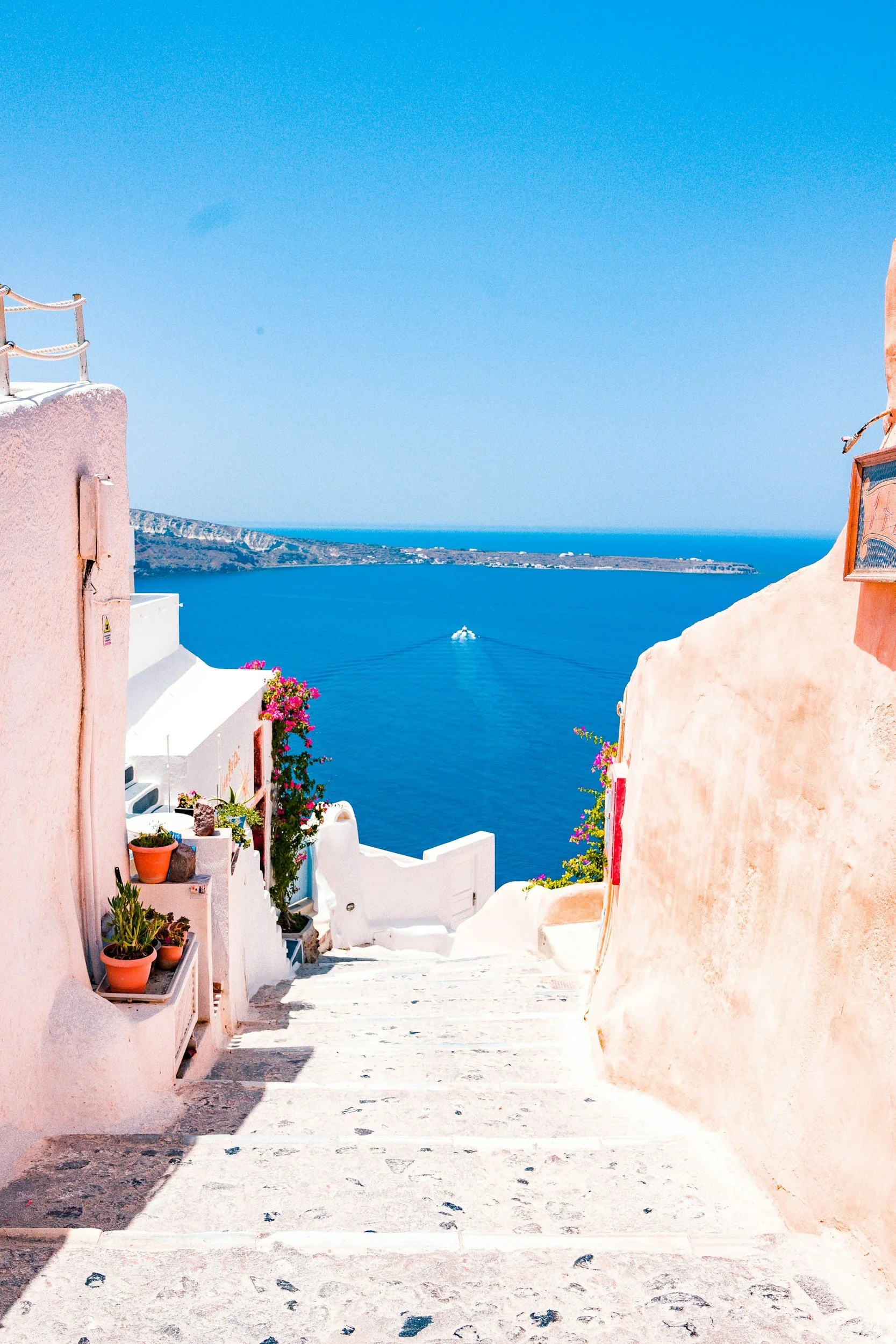
And if you are curious about a smaller Cycladic island instead, I’ve also written about what Sifnos is really like after summer, including what gets quieter and what still makes the trip worthwhile.
FAQs: Santorini or Naxos in October
Is Naxos too quiet in the last two weeks of October?
Not if you stay in the right place. Chora still works very well, with restaurants, cafés, ferries and normal island life continuing after the beach season starts winding down.
The part I would be more careful with is the west-coast beach strip. Agios Prokopios, Agia Anna and especially Plaka can feel much quieter later in the month, and I would check nearby restaurants and buses before booking there. Quiet can be lovely. Quiet because everything you planned to use has closed is less lovely.
Can you stay in Plaka or Agia Anna in October, or is Chora better?
Early in October, I would still happily consider Agia Anna or Plaka if the beach is a big reason for the trip.
Later in the month, I would choose Chora or Agios Georgios unless I had checked the exact hotel, nearby places to eat and the current bus timetable. Agios Georgios is particularly handy because you still have a sandy beach but can walk back into Chora when the coast goes quiet.
Is Oia still crowded with cruise passengers in October?
It can be. October is quieter than July and August, but cruise ships still visit Santorini throughout the month, and Oia can get surprisingly busy on a multi-ship day, especially around sunset.
If avoiding that matters to you, I would check the cruise schedule for your dates rather than assume October automatically means empty streets.
Is a private pool on Santorini worth paying for in October?
Only if you know you are likely to use it.
Before paying extra, I would check whether the pool is heated, how much sun the terrace gets and how exposed it is to wind. An unheated plunge pool can look incredible in the photos and still spend most of your stay functioning as very expensive decoration.
A heated plunge pool or hot tub is a much better October splurge.
Do ferries between Santorini and Naxos still run in late October?
Yes, the direct connection continues into October, but the exact timetable changes and some faster seasonal services reduce as autumn goes on.
I would check the ferry times for your actual dates before deciding the order of the islands, and I would avoid relying on a ferry connection immediately before an important international flight.
Is late October too late to combine Santorini and Naxos?
No, but I would want enough time.
With around eight to ten island nights, combining them can be a really good trip because they feel so different from each other. With only six or seven nights, I would usually choose one. The ferry crossing itself is manageable, but once you add packing, check-out, waiting, arriving and checking in again, a short trip starts losing more time to moving around than I think it needs to.
October is also nicer with a little room for the weather to change your plans. I would rather have one extra day on the island than one extra hotel key.