Come for the vineyards. Stay for the hill towns.
Walking through the Prosecco Hills feels different from a lot of popular Italian routes because you’re not moving between big-name sights. You’re walking through working vineyards and small hill towns where everyday life still revolves around wine, farming, and local cafés. The most practical place to start is Valdobbiadene, which sits right in the middle of the region. The town itself is compact: a small piazza, a handful of cafés, bakeries, and enoteche, and roads that lead almost immediately into the vineyards.
From the centre of Valdobbiadene, the walking routes branch out in several directions. You’ll pass narrow farm roads, stone houses, and vineyard terraces that climb the hills in layers. The terrain isn’t dramatic, but it’s constantly rolling, which makes the walk feel active without being strenuous. The paths are mostly quiet rural lanes and unpaved tracks rather than technical trails, so you don’t need specialist gear. What matters more is pacing yourself and allowing time to stop along the way.
One of the things that makes walking here so appealing is how easy it is to drop into small wineries as you go. You don’t need to book weeks in advance or commit to a formal tasting. Many producers welcome walkers who turn up on foot, especially outside peak harvest weeks. You might stop at a small cantina along a side road, try a glass of local Prosecco, and have a plate of simple snacks like cheese or cured meats before continuing. It feels more like stepping into someone’s working space than a structured tasting room experience.
If you’re planning to stay overnight, look for accommodation in the countryside around Valdobbiadene rather than right on the main square. Small agriturismi sit among the vineyards, and staying in one means you can start your walk straight from the door in the morning. Evenings tend to be quiet here, with simple meals, local wine, and early nights rather than late-night scenes.
Wine-focused trips can look very different depending on where you go, and these Tuscan vineyards give a useful point of comparison to the Prosecco area.
The best time to walk here is late spring through early autumn. In spring, the vines are bright green and the hills are full of colour. In autumn, the harvest brings a different rhythm, with more activity in the vineyards and small local festivals. Summer can be hot in the middle of the day, so early starts make a noticeable difference. If you want a few days that revolve around walking, wine, and unhurried stops rather than big sights or crowds, this area fits that pace well.
If you want a clearer picture of how the area fits together before choosing a base, this Prosecco hills guide helps you understand which towns make the most sense to stay in.
Further south, places like Ascoli Piceno offer a similar vibe but with a completely different setting, which can be useful if you’re comparing regions.

Prosecco Hills Trail
Conegliano to Valdobbiadene Via Alta: a longer ridge walk with wide views
The walk between Conegliano and Valdobbiadene is the longest and most rewarding section in the Prosecco Hills if you want more than a short loop. Locals call this route the Via Alta, and instead of following the main wine road through the villages, it climbs onto the ridges above them. You spend much of the day on gravel paths, farm tracks, and quiet lanes that move between vineyard terraces and patches of woodland.
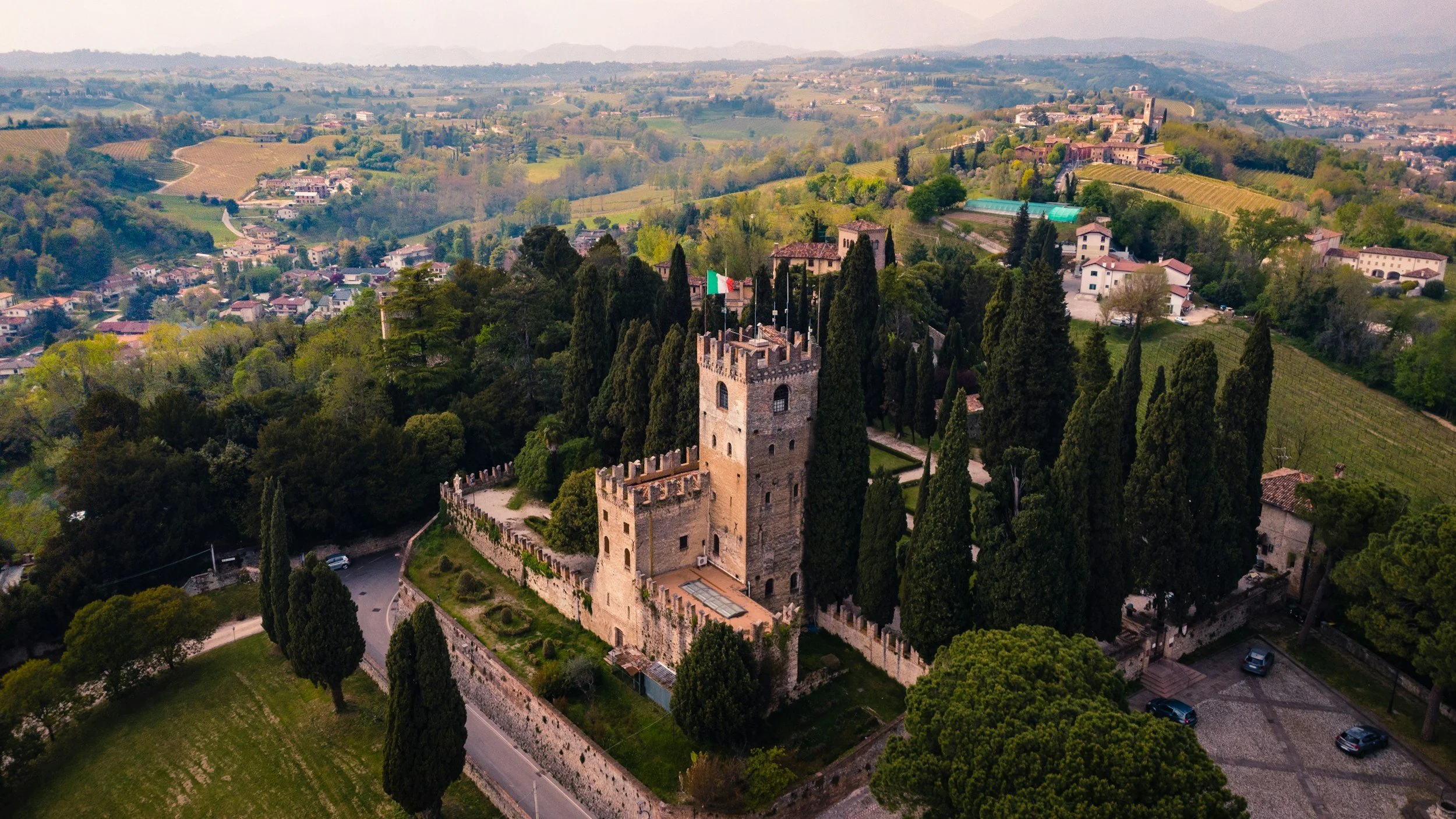
If you’re starting in Conegliano, the easiest way to begin is by walking uphill from the historic centre near Conegliano Castle. From Piazza Cima, follow Via XX Settembre through the old town and then take the small roads that rise behind the castle walls. The first section is the steepest part of the day. It takes roughly 45 minutes to gain the height of the ridge, and the views back over the rooftops and the plains start opening up as soon as you leave the built-up area.
Once you reach the higher ground, the route becomes more varied. You’ll walk past vineyard rows, small chapels, and farmhouses. Around San Pietro di Feletto, the route skirts the edge of the village, and if you want a break, you can detour a few minutes downhill to find a café or a small bar before rejoining the ridge. The terrain here is rolling rather than steep, so the effort comes from the length of the day rather than the climbs.
The mid-section of the route is where you really feel the landscape of the Prosecco Hills. The trail passes narrow roads that serve the vineyards, stone farm buildings, and viewpoints where you can look across rows of vines toward the next ridge. There aren’t many formal viewpoints, but you’ll come across natural stopping points: low stone walls, grassy banks, or small clearings where you can sit and have a drink of water.
Closer to Valdobbiadene, the path begins to descend. You pass through clusters of houses and small wineries before reaching the outskirts of town. The last stretch follows quiet residential streets rather than a main road, which makes the finish feel gradual rather than sudden. You arrive near the centre of Valdobbiadene, where cafés and enoteche line the streets around the main square, making it easy to sit down for a glass of local wine or a simple meal after the walk.
If you’re leaning toward something even quieter and less structured, these Tuscan villages show where you’d go for a more low-key version of this kind of trip.
Anyway, this route is best treated as a full day. It’s not technically difficult, but the distance and the steady movement over uneven ground make it tiring if you try to rush it. Wear proper walking shoes, carry water, and start early enough to enjoy the day rather than watching the clock. The reward is a long, uninterrupted stretch through working vineyards and small settlements, with a clear beginning and end in two towns that are easy to reach by train.
If you’re deciding between vineyard landscapes and the coast, this guide to Levanto stays gives you a good contrast in how the days would feel.
Prosecco Road, Asolo: hill paths, vineyards and wide views
Walking around Asolo gives you a very different feel from the vineyard ridges closer to Valdobbiadene. Asolo sits high above the surrounding plain, and you feel that as soon as you arrive. The bus from nearby towns drops you just below the old centre, usually near the lower end of Via Roma, and from there you walk uphill into the heart of town. The streets are narrow and slightly uneven underfoot, with stone walls, small balconies, and views that open suddenly between buildings.
The town’s centre revolves around Piazza Garibaldi. This is where most people start the day. In the morning you’ll see locals standing at the bar counters for coffee rather than sitting at tables. The fountain in the middle of the square acts as an easy meeting point, and the arcades along the edge of the piazza give you shade in summer and cover in light rain. From here, the route up to the fortress begins almost immediately.
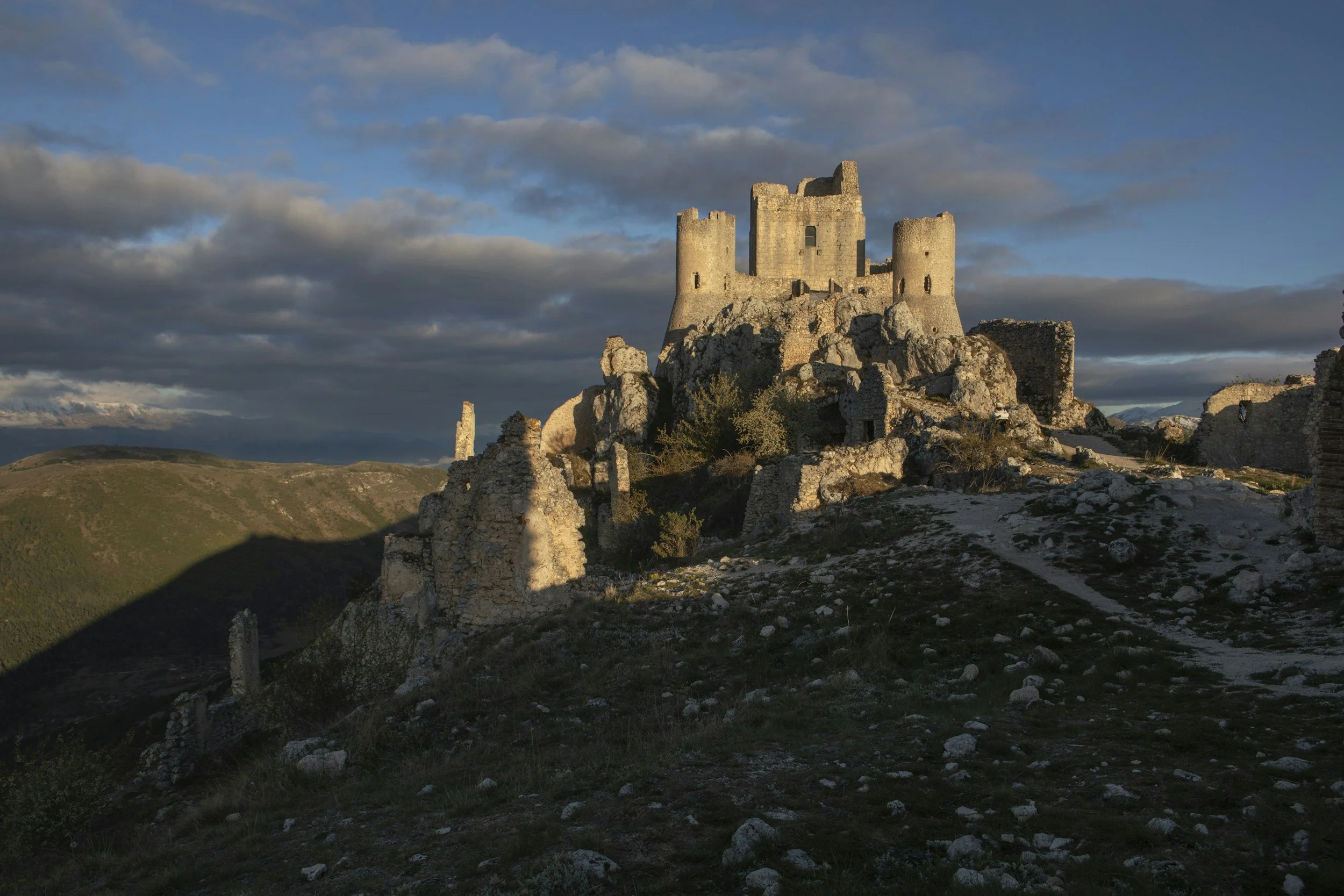
If you follow Via Browning out of the piazza, the road climbs gently past old stone buildings before narrowing into a footpath. This is the start of the route to Rocca di Asolo, the hilltop fortress that sits above the town. The walk takes around 25–30 minutes at a steady pace. The first section is paved, but it soon becomes a mix of stone steps and gravel track as you move into the trees. The climb isn’t long, but it is steady, so it’s best done in the morning or later afternoon when it’s cooler. Once you reach the top, you can walk along the old walls and look out across the patchwork of vineyards, fields, and small villages below.
If you want to turn this into a longer walk, you can continue beyond the Rocca onto the ridge path that heads toward Monfumo. This part of the route is quieter. You’ll walk along narrow country roads used mostly by locals, with vineyards on either side and the occasional farmhouse. There are sections where the path dips briefly into woodland before climbing back out onto open ground. The walking isn’t technical, but the steady ups and downs mean you’ll feel it by the end of the day. There aren’t many cafés once you leave Asolo, so it’s worth taking water or picking something up before you set out.
Back in Asolo, most places to eat and drink are within a few minutes’ walk of Piazza Garibaldi. Small enoteche and cafés line the surrounding streets, and it’s easy to sit down for a glass of local Prosecco or something simple to eat without needing a reservation, especially outside peak summer weekends. The town works well if you want a base where you can combine short walks, longer ridge routes, and time spent sitting in the centre without moving between places by car.
Not every part of Italy feels this manageable on foot, so this take on Italy for quiet travel helps you figure out where this kind of experience actually works.
Monte Cesen loop, Vittorio Veneto: high pastures, wide views and mountain food stops
If you want a longer day in the hills above the Prosecco region, the loop around Monte Cesen gives you a completely different perspective on this part of northern Italy. The easiest access point without a car is Vittorio Veneto. The town has a direct train line from Treviso and Venice, so you can arrive by rail and start the day without arranging transport. The town itself is split between the older centre of Serravalle and the more modern Ceneda area. If you arrive by train, you’ll step out in Ceneda, where cafés along Viale della Vittoria are open early enough to grab something before heading up into the hills.
The ridge walking above the town is accessed most easily from the hamlet of Pianezze, which sits at around 1,000 metres. If you don’t want to tackle the full climb on foot, a short taxi ride from Vittorio Veneto takes you up the winding SP36 road toward Pianezze, cutting out the steepest part of the ascent. From the parking area and open grassy slopes at Pianezze, marked trails lead onto the higher ground. The paths are a mix of gravel farm tracks and narrower footpaths that cut across open pasture.
Once you’re on the ridge, the landscape changes quickly. Trees thin out and give way to open grassland dotted with low stone buildings and grazing areas. On a clear day, the views stretch across the Veneto plain toward the Venetian lagoon in one direction and the foothills of the Dolomites in the other. The route isn’t technically difficult, but the constant undulation means you’re rarely on flat ground for long. The path runs along the spine of the ridge, so you’re exposed to the elements; if the weather turns, the wind can pick up quickly.
About halfway along the loop, many walkers stop at Malga Mariech, a mountain hut that operates seasonally. This isn’t a polished restaurant; it’s a working malga where the menu is built around what’s available locally. Expect dishes like polenta with melted cheese, grilled meats, and simple desserts, along with local wine. On weekends in spring and summer, the terrace fills with a mix of hikers, cyclists, and locals who’ve come up for lunch, so arriving before the peak lunch hour makes a difference.
From the malga, the trail continues along the ridge before looping back toward Pianezze. The return section alternates between open grassy stretches and short sections through trees, and in places the path runs close to the edge of the slope, giving you long views back over the vineyards below. The descent toward Pianezze is gradual, but the ground can be uneven, especially after rain, so walking shoes with good grip help.
What makes this route particularly satisfying is the combination of accessibility and scale. You can reach the starting point from a town with a train station, spend several hours walking in open countryside, stop for a proper meal in the middle of the route, and return without needing a car or complex logistics. It feels like a proper mountain day, but it’s manageable as a day trip if you start early and pace yourself.
If you’re planning this as part of a longer, slower trip, these Italian hill towns are useful to look at next, especially if you want to keep that same atmosphere.
Before you set off
The thing that makes these walks feel good in practice isn’t the scenery alone, it’s how the day actually plays out on the ground. In the Prosecco Hills, distances look short on a map, but you’re constantly going up and down between vineyard terraces. A “short” stretch between villages like Conegliano and Valdobbiadene can take longer than you expect, especially once you factor in photo stops, breaks, and the fact that the sun hits the slopes early. Starting in the morning makes a noticeable difference.
Food and drink stops aren’t evenly spaced. Once you leave the centre of Valdobbiadene or climb above the villages near San Pietro di Feletto, you can go long stretches without a shop or café. Some small wineries open for tastings, but many operate on their own schedule, and not all keep regular opening hours outside weekends. It’s worth carrying water and something simple to eat rather than relying on finding somewhere open.
Getting back at the end of the day also needs a bit of thought. Trains from Conegliano run frequently, but buses that connect the hill villages with the valley don’t always match up neatly with train times. If you’re planning to finish a walk somewhere higher up, like around Pianezze or on the ridge near Monte Cesen, check return options before you start so you’re not relying on luck.
The weather can shift quickly too. Even on warm days, the ridgelines can feel windy, and after rain the paths through the vineyards turn slick. A light layer and decent walking shoes make a big difference, especially if you’re covering a longer stretch.
If you go in with a bit of flexibility and pay attention to timing, these walks feel easy rather than complicated. You can move between hills and villages, stop for wine or food when it suits you, and shape the day as you go rather than sticking to a rigid plan.
How do you get between Conegliano and Valdobbiadene without a car?
There isn’t a direct train line between Conegliano and Valdobbiadene, so if you’re not driving, you’ll use a combination of train, bus, and walking.
Conegliano is on the main regional rail line, so it’s easy to reach by train from cities like Treviso and Venice. From Conegliano station, you can either start walking straight out of town toward the ridgeline or take a local bus into the hills to shorten the initial climb.
To reach Valdobbiadene without walking the entire route, you can take a regional bus from Conegliano. Services aren’t constant throughout the day, and schedules thin out on Sundays and public holidays, so it’s worth checking times in advance rather than assuming you can turn up and go. Many walkers choose to take the bus in one direction and walk the return leg, which gives you flexibility and avoids having to retrace your steps.
If you’re walking the high route across the Prosecco Hills, another option is to finish your walk in one of the smaller hill villages, such as San Pietro di Feletto, and catch a bus back down toward Conegliano or onward to Valdobbiadene. It’s not a commuter-style transport network, but with a bit of planning, it’s very doable without a car.
Some people combine this with a few days in the mountains, and this Dolomites route shows how different the pace feels once you head further north.
FAQ about walking the Prosecco Hills and Via Alta
Can you walk the Prosecco Hills without a car?
Yes. You can reach both Conegliano and Valdobbiadene by train. From Conegliano station, you can walk into the old town and begin climbing toward the hills. If you want to reach the higher ridges near Pianezze or Monte Cesen, you can take a local bus or taxi to shorten the ascent.
How long is the Conegliano to Valdobbiadene walk?
The full high route between Conegliano and Valdobbiadene is roughly 35–40 km depending on the path. Most walkers split it into shorter sections over one or two days, often starting in Conegliano and finishing in villages such as San Pietro di Feletto or Valdobbiadene.
How difficult is the Monte Cesen loop?
The loop around Monte Cesen is not technical but it’s a proper day in the hills. The route combines grassy ridges, gravel tracks and some rocky sections. Weather changes quickly here, and wind can be strong on the open ridgeline, so good footwear and layers are important.
Where can you stop for food along the trail?
Food options are limited on the high routes. Mountain huts like Malga Mariech open seasonally, and some wineries welcome walkers, but hours vary. It’s best to bring water and snacks, especially mid-week or outside summer.
If food is a big part of why you’re in Italy, this guide to slow food Tuscany helps you see how seasonal eating shapes the experience in a different region.
Where should you stay if you want to walk the Prosecco Hills?
If you want to walk without driving, stay in Conegliano or Valdobbiadene. Both have accommodation near the centre, train or bus links, and easy access to the main walking routes.
Is the Prosecco Hills route suitable for beginners?
Yes, as long as you’re comfortable walking several hours on uneven ground. The terrain is hilly but not technical. Distances feel longer than expected because of constant ups and downs.
When is the best time to walk in the Prosecco Hills?
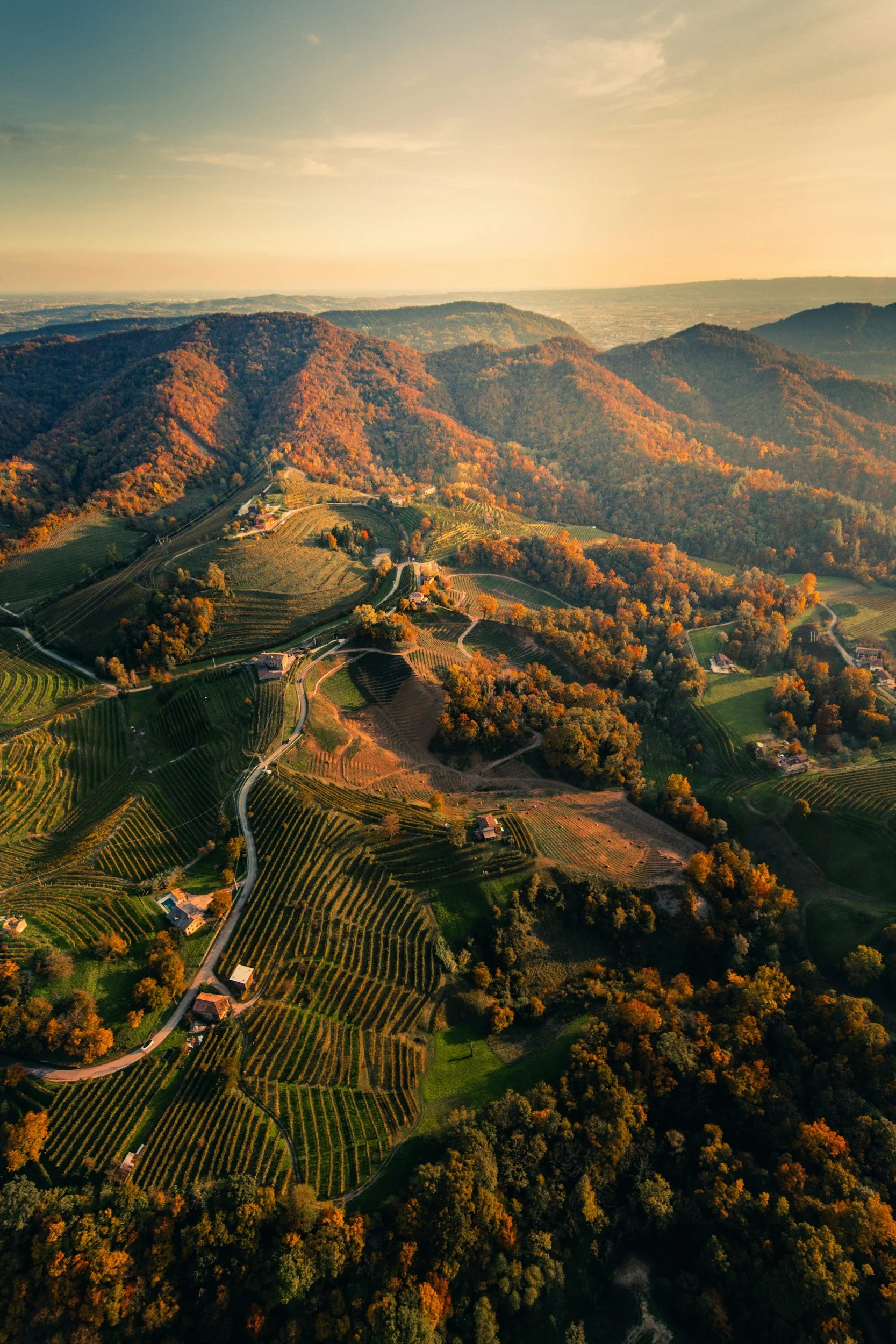
Late spring (May–June) and early autumn (September–October) are ideal. The weather is cooler, the vines are green or golden, and wineries are more likely to be open for tastings.