The best places to stay in the Prosecco Hills without a car
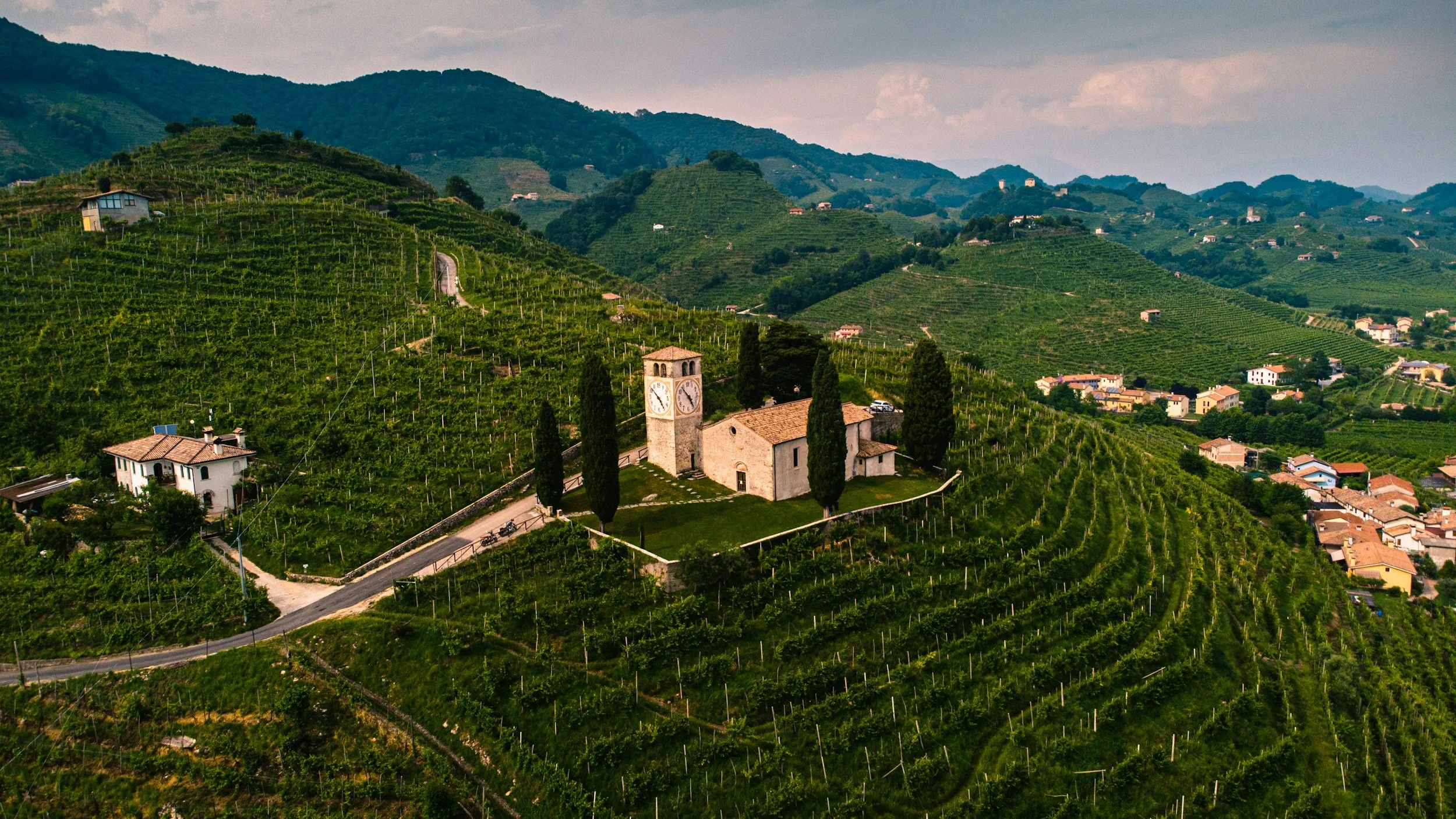
One thing I didn't really appreciate until I started planning my own trip was how much your choice of accommodation affects everything else in the Prosecco Hills. It's tempting to pick the hotel with the nicest vineyard views, but after looking properly at the map, I realised that two places which both describe themselves as being "near Valdobbiadene" can lead to completely different weekends. One leaves you a short walk from restaurants, wine bars and the bus into the hills. The other leaves you hoping you can find a taxi after dinner.
One thing that took me a while to get my head around was that the map rarely matched what the day actually felt like. I'd look at somewhere just outside Valdobbiadene or between Guia and Santo Stefano and think, "that's close enough to walk," only to realise later that the last part of the route climbed steadily through the vineyards, there wasn't a pavement for long stretches and carrying a couple of bottles of wine back afterwards suddenly made those twenty minutes feel quite a bit longer than they had sitting at home with Google Maps open. The distances across the Prosecco Hills really aren't that big, but the roads almost never run in straight lines and it's surprisingly common for a winery that looks as though it's just outside town to actually be another fifteen or twenty minutes away once you've followed the bends in the hillside.
I also don't think it's obvious until you start planning that you're not really choosing one destination here. You're choosing where the beginning and end of every day will happen, and those places feel much less alike than they look on a map. Conegliano is still a proper working town where you'll see people grabbing coffee before catching the train to Treviso or Venice, Valdobbiadene naturally revolves around the wineries and the vineyard roads that spread out towards Cartizze, while Follina feels more like somewhere people pass through slowly, stopping around Piazza IV Novembre, wandering into the abbey or sitting down for a long lunch before carrying on towards Cison di Valmarino. Even staying a couple of kilometres outside any of those places changes the trip more than most people expect, because the bakery you imagined walking to in the morning or the restaurant you thought you'd wander back from after dinner suddenly becomes another drive or another taxi instead.
That's why this isn't another roundup of hotels with nice photos. The more interesting question is where you actually want to wake up each morning. Somewhere you can walk out for coffee before catching a bus to a winery? Somewhere surrounded by vines where the evenings are almost completely quiet? Or somewhere that makes arriving by train from Venice as easy as possible? Once you've answered that, choosing the hotel itself becomes much easier.
The Prosecco Hills are smaller than they look... and bigger than they feel
I think this catches almost everyone planning their first trip to the Prosecco Hills. You zoom out on Google Maps and it all seems reassuringly close. Conegliano, Valdobbiadene, Pieve di Soligo, Follina, Cison di Valmarino, Guia, Santo Stefano and Refrontolo are scattered across what looks like quite a small area, so it's easy to assume that staying anywhere will give you the same sort of trip.
It doesn't.
The first thing to know is that the Prosecco Hills aren't built around one centre. The UNESCO World Heritage area stretches across a series of ridges and valleys rather than one historic town, and that's something you notice almost immediately once you start moving around. You might spend the morning in Valdobbiadene, stop for lunch near Col San Martino, visit a producer outside Santo Stefano and finish the afternoon in Follina, yet never feel like you've been travelling through one continuous place in the way you would in somewhere like Florence or Verona. Each village has its own little centre, its own cafés and restaurants, and then you're back among vineyards again.
That also explains why accommodation makes such a difference here. In cities, you're usually deciding between neighbourhoods. In the Prosecco Hills, you're deciding between completely different ways of experiencing the region. Staying in Conegliano means arriving by train, walking to dinner and having regular buses the next morning. Staying outside Guia or Refrontolo might mean waking up with vineyards outside your window and almost complete silence once the last visitors have gone home, but it can also mean that dinner is a drive away if your accommodation doesn't have its own restaurant.
It also took me longer than I'd expected to stop planning the trip with Google Maps. At home, it's easy to look at a hotel just outside Valdobbiadene, see that it's less than two kilometres from Piazza Marconi and assume you'll wander into town whenever you feel like another coffee or somewhere different for dinner. Then you start looking more closely at the route, notice that the last stretch follows a vineyard road with very little shoulder, or realise that what seemed like a quick walk actually involves climbing back up towards Santo Stefano after an afternoon spent tasting wine. None of those things are difficult in themselves, but they do change the way the days unfold, and I found myself choosing accommodation based much more on the roads leading to the front door than the room waiting at the end of them.
Another thing that isn't obvious until you begin piecing the journey together is that arriving in the Prosecco Hills and getting around the Prosecco Hills are really two separate parts of the trip. Getting here is straightforward enough. Regional trains from Venezia Santa Lucia and Treviso Centrale arrive in Conegliano throughout the day, and from there buses spread out towards Valdobbiadene, Pieve di Soligo, Follina and the smaller communities in between. Once you've left Conegliano, though, the network starts working very differently. The buses are designed to connect the towns rather than the wineries, which means you can quite easily spend the morning in Follina, stop in Cison di Valmarino on the way back because you notice a café you'd like to try, and finish the day in Valdobbiadene, but reaching a producer tucked into the hills above Guia, Rolle or Col San Martino often involves another walk that doesn't look particularly significant until you're actually there. That's one of the reasons I ended up thinking much more about where each day would begin and end than trying to fit as many wineries as possible into the same itinerary.
That's why I think choosing where to stay is one of the biggest decisions you'll make before coming here. It doesn't just determine where you'll sleep. It quietly decides how much of each day is spent wandering between cafés and wineries, and how much is spent checking the next bus home.
The photos rarely tell the whole story
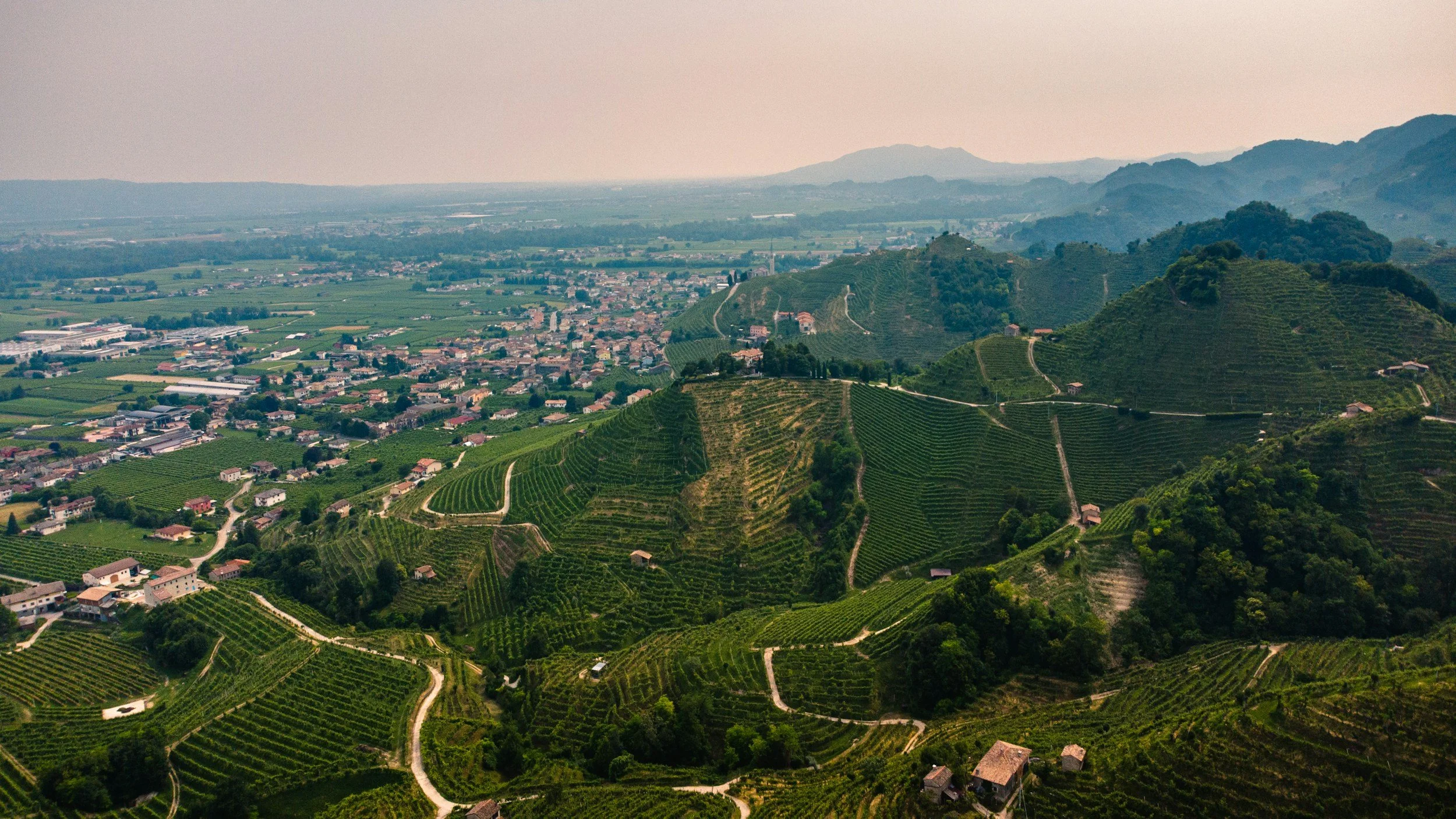
It's surprisingly easy to book somewhere that looks ideal on Booking.com and only realise later that it doesn't really fit the way you're planning to explore the Prosecco Hills. Most accommodation is marketed around the view, the vineyards or the wine, which makes sense because that's what draws people here in the first place, but once you start looking at where you'll have breakfast, where you'll eat after a tasting or how you'll get back from Valdobbiadene in the evening, completely different things start to matter.
A good example is the stretch between Valdobbiadene and Santo Stefano. There are several beautiful vineyard stays scattered along these hillsides, many with terraces overlooking Cartizze and rows of vines that seem to disappear into the distance, yet staying there without a car can create a very different trip from staying a few minutes' walk from Piazza Marconi. During the day, walking through the vineyards feels like part of the experience. Coming back after dinner is another matter entirely. Some roads have almost no lighting, several have no pavement at all, and because the vineyards follow the contours of the hills, a distance that looks short on the map often involves a much steeper climb than you'd expect.
The same thing happens around Guia, Col San Martino and Refrontolo. They're only a few kilometres apart, but they aren't villages that naturally blend into each other. Once you leave the centre, you're quickly back on quiet country roads passing vineyards, wineries and the occasional farmhouse before reaching the next cluster of houses. It creates a beautiful landscape to explore during the day, but it also means that "within walking distance" isn't always as straightforward as it sounds when you're booking accommodation months before the trip.
Restaurant opening hours also shape the evenings more than many visitors expect. In Conegliano, it's rarely difficult to find somewhere for dinner, even if plans change at the last minute, particularly around Via XX Settembre, Piazza Cima and the surrounding streets. Valdobbiadene is different. The choice is naturally smaller, and on Sunday evenings or Mondays you'll notice that several places are closed. That's rarely a problem if you're staying in the centre and can choose between a handful of restaurants, but it becomes much more limiting if your accommodation sits another twenty or thirty minutes away on foot.
Another detail that's easy to miss is how the wineries themselves are spread across the landscape. They aren't lined up along one walkable wine street where you simply move from one tasting to the next. You might spend the morning at Col Vetoraz above Santo Stefano, have lunch in Valdobbiadene, visit Bisol1542 later in the afternoon and then realise that the next producer you'd bookmarked is actually towards Col San Martino rather than back towards town. The distances aren't enormous, but they're enough that the location of your accommodation quietly starts dictating which wineries make sense to visit on the same day.
Arrival days deserve a little planning too. Travelling without a car almost always means arriving in Conegliano first before continuing by bus, and although the connections are generally reliable, they aren't designed around hotel check-in times. Missing one bus can mean reaching Valdobbiadene an hour later than expected, and smaller guesthouses or agriturismi don't always have someone available throughout the afternoon and evening. That's worth checking before you book rather than after you've already left Venice.
By the time the trip actually begins, the room itself often becomes one of the least important parts of the booking. Being able to wander into a bakery before breakfast, walk to dinner without thinking about the journey back, or finish a tasting knowing the hotel is only ten minutes away usually ends up shaping the experience far more than whether the terrace overlooks one vineyard or another.
Conegliano is much better than people give it credit for
I think people often dismiss Conegliano a bit too quickly because it isn't where they picture themselves drinking Prosecco. It's where the train arrives, where they change to a bus and, in a lot of itineraries, somewhere they're planning to leave as quickly as possible. The funny thing is that after a couple of days it's usually the place I end up appreciating most, because it quietly removes lots of the little logistical decisions that can make a short trip feel more complicated than it needs to be.
The first evening is probably the best example. If you've travelled from Venice, the journey is usually finished within a few minutes of stepping off the train rather than another bus ride later. You're walking past Piazza Giovanni Battista Cima, crossing into the old centre, and before you've really had time to think about it you're choosing between sitting outside Caffè Teatro, wandering a little further along Via XX Settembre to see which wine bars look busiest that evening, or carrying on up towards Castello di Conegliano while there's still enough light to look back across the rooftops and the vineyards stretching out beyond the town. That's a very different start to the trip from arriving in Valdobbiadene after the last afternoon bus, where you're usually thinking more about getting to the hotel than deciding where to spend the evening.
I also found myself using Conegliano in ways I hadn't expected. It became the place where I'd stop at Pasticceria Alpina before catching the morning bus, pick up fruit, bread and a piece of local cheese from Bottega del Gusto for lunch between wineries, or duck into Enoteca Veneta after dinner because I'd realised there was still one bottle I wanted to bring home. None of those things were part of the itinerary when I first planned the trip, but together they made the days feel much easier because I wasn't trying to solve little practical jobs while I was out in the hills.
Another thing I ended up appreciating was that Conegliano still feels like a normal town once the day visitors have gone. Around six o'clock you'll see people finishing work, meeting friends in Piazza Cima for an aperitivo, picking up bread on the way home or sitting outside with a spritz before dinner. That sounds like a small detail, but it gives the evenings a different feel from some of the smaller villages higher up in the hills, where things naturally become much quieter once the tasting rooms close and visitors head back to their accommodation.
I honestly wouldn't stay here because I thought it was the most beautiful place in the Prosecco Hills. I'd stay here because it lets me spend much less time thinking about trains, buses, supermarkets, dinner reservations and opening hours, and much more time deciding whether I feel like taking the road towards Refrontolo, spending another hour in Follina, or lingering over lunch because I've stumbled across somewhere that wasn't in the original plan. Those are the sorts of decisions I'd much rather be making on holiday.
After the first day or two I realised I wasn't really using Conegliano the way I'd expected. I thought it would just be somewhere to sleep before heading back out into the vineyards the following morning, but most evenings I actually looked forward to coming back. The buses from Valdobbiadene and Pieve di Soligo start arriving back towards the end of the afternoon, people finish work and spill out into Piazza Cima, the tables outside Osteria Cima, Caffè Teatro and the little wine bars along Via XX Settembre gradually fill up, and it feels much more like you're in a normal Italian town than somewhere built around tourism. I liked that because there was never any pressure to have dinner in a particular place. If one restaurant was full, I'd just keep walking for another couple of minutes and usually end up somewhere I'd probably enjoyed even more.
After the first day, I found myself doing the same thing most mornings without really thinking about it. Before catching the bus, I'd usually wander through the centre, grab an espresso, stop at a bakery for something to eat later and pick up a bottle of water before walking back towards the station. None of it was particularly memorable on its own, but I realised how convenient it was once I started thinking about some of the smaller villages. There, you might find the bakery closed because it's Tuesday, the village shop doesn't open until later, or there simply isn't anywhere to grab a coffee before setting off.
In Conegliano, I never had to think about any of that. I could leave the hotel knowing I'd have everything I needed before getting on the bus, and the only decision left was whether I felt like spending the day around Guia, Follina or somewhere I'd noticed in passing the day before.
I also liked the fact that Conegliano never made me feel as though I had to leave first thing in the morning to make the day worthwhile. If it started raining, or I simply wasn't in a hurry, there was plenty to do without feeling I'd wasted a day in wine country. I'd wander up towards Castello di Conegliano, take the steps back down through the old town, have another coffee, browse a couple of little shops along Via XX Settembre and maybe not leave for the hills until after lunch. I honestly don't think I'd have done that if I'd stayed somewhere smaller, because once you've seen the centre of a tiny village before breakfast, there's a temptation to feel you ought to move on. Conegliano never really gave me that feeling.
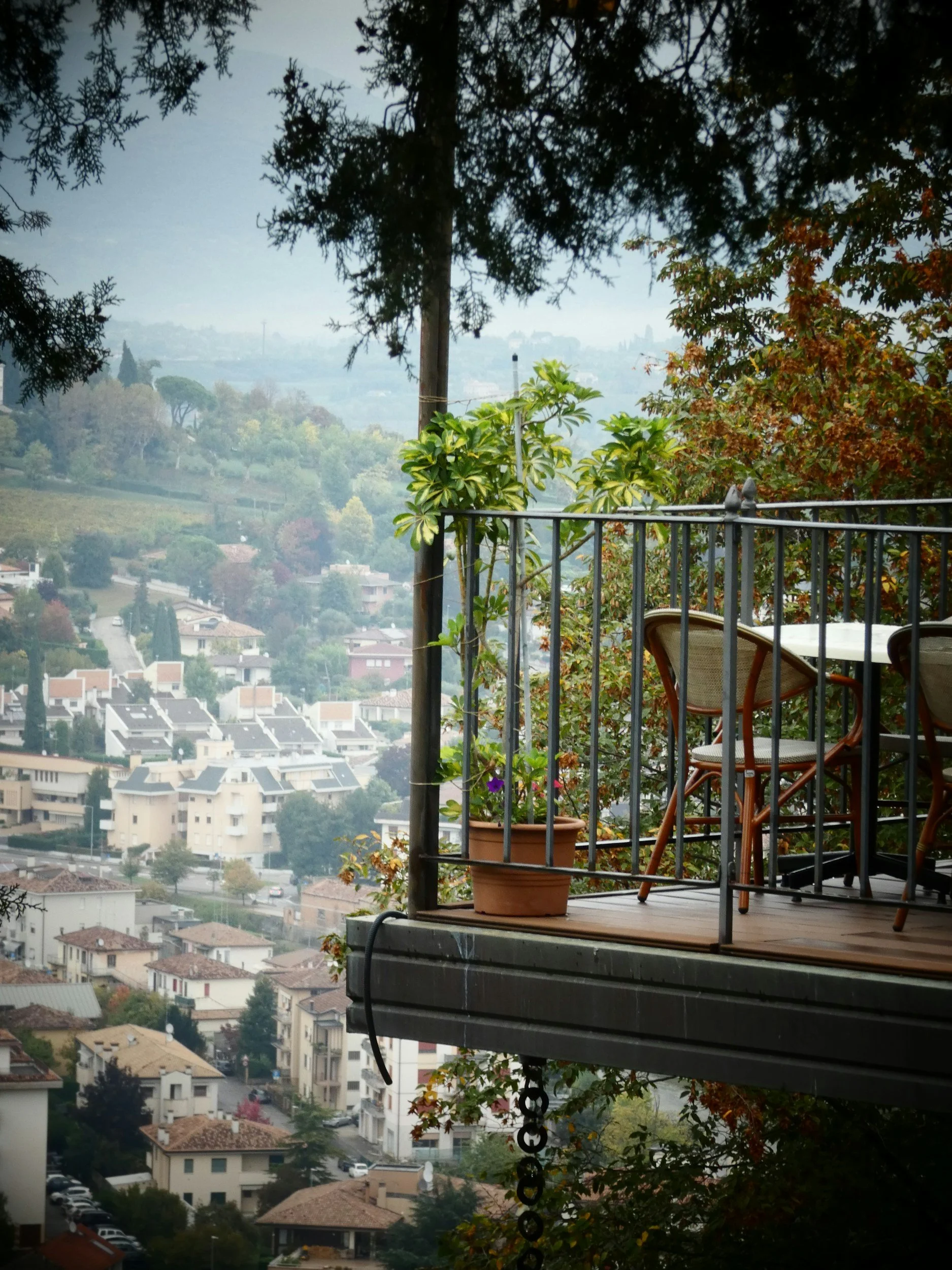
Stay in Valdobbiadene if you'd rather be close to the wineries than the station
Valdobbiadene makes much more sense than Conegliano if the vineyards are the reason you've come here. Instead of catching the morning bus out into the hills every day, you're already there when you step outside. Within a few minutes' walk, the centre gives way to vineyard roads, and before long you're looking across the slopes around Cartizze, Santo Stefano and Guia instead of streets and shopfronts.
The town itself is smaller than people often expect. Almost everything happens around Piazza Marconi and Via Garibaldi, so after the first day you'll probably stop checking Google Maps altogether. The bakery, the cafés, the wine bars and the restaurants are all within a few blocks of each other, and if you're staying somewhere close to the square it's easy to head out for breakfast without really making a plan. That's one of the advantages of staying in the centre rather than booking a vineyard stay a little further out.
Once you leave the centre, the landscape changes surprisingly quickly. Roads begin climbing towards Santo Stefano, the houses become further apart and the vineyards take over. It's beautiful, but it's also where Google Maps starts becoming slightly optimistic. A hotel that says it's 1.8 kilometres from Piazza Marconi might technically be within walking distance, but those last twenty minutes aren't the same as walking twenty minutes through Conegliano. The roads twist uphill, pavements disappear in places, and after dinner, particularly once it's dark, most people probably won't feel like walking back to their accommodation.
The wineries are another reason staying here works so well. Col Vetoraz is only a few minutes outside town, Bisol1542 isn't far away either, and because you're already based in Valdobbiadene it's much easier to fit in producers that don't sit directly on the main tourist route. One morning might start above Santo Stefano, another around the Cartizze hills, while the afternoon ends closer to Col San Martino. Looking at the map beforehand, it's easy to think all of these places are next door to each other. Once you're actually there, you realise they're connected by winding vineyard roads rather than one continuous village.
The first evening in Valdobbiadene surprised me because I'd imagined it would feel busier than it actually does. Around Piazza Marconi there's a lovely atmosphere just before dinner, people stopping for an aperitivo after work, friends chatting outside the bars and tables gradually filling up along Via Garibaldi, but it doesn't take very long before things begin to quieten down again. If you're used to somewhere like Conegliano, where it's easy to change your mind halfway through the evening and wander somewhere else if the first restaurant doesn't quite tempt you, Valdobbiadene feels much smaller. I actually liked that, but I also found myself thinking about dinner a little earlier than I normally would, particularly on Sundays and Mondays when a few places are closed and the choice becomes noticeably more limited.
One thing I hadn't really appreciated before coming is that staying in Valdobbiadene doesn't automatically mean you'll spend less time travelling. It certainly makes it easier to reach producers around Santo Stefano, Guia, San Pietro di Barbozza and the Cartizze hills, and I loved not having to think about the journey every morning, but once I started looking beyond that immediate area I realised the days still needed a bit of planning. It's tempting to look at a map and think, I'll stop in Guia, then Refrontolo, maybe call into Col San Martino afterwards, but those places don't link together as neatly by bus as they do by car. More than once I ended up deciding to stay longer where I already was instead of trying to squeeze another village into the afternoon, and looking back I actually think those slower days were some of my favourites.
I also became much fussier about checking accommodation than I normally am, although not because of the rooms themselves. I'd look at when breakfast started, whether there was somewhere to buy a coffee if I woke up before everyone else, and how easy it would be to get back after dinner without relying on a taxi. Quite a few of the smaller places around Guia, Santo Stefano and the roads climbing towards Cartizze serve breakfast from around eight o'clock, which is perfect if you're planning to spend the morning sitting outside before your first tasting, but not quite so ideal if you've booked an early visit at Col Vetoraz or you're hoping to catch one of the first buses back towards Conegliano. Those little details don't sound very exciting when you're booking, but they're exactly the sort of thing that decides whether the morning feels relaxed or slightly rushed.
What I enjoyed most about staying here wasn't actually being in the town itself. It was knowing that I could finish breakfast, turn one corner and within a few minutes be walking through the vineyards instead of waiting at a bus stop. Before coming, I thought that would mainly save time. In reality it completely changed the feel of the trip. I found myself stopping at smaller producers because they happened to be on the way, taking little roads that I probably wouldn't have bothered with if I'd travelled over from Conegliano that morning, and sitting on a terrace for another glass of Prosecco simply because I wasn't thinking about getting back before the next bus left. That's really what you're choosing when you stay in Valdobbiadene. Not a prettier town or a better hotel, but the chance to spend much more of the day out among the vines without feeling as though you're constantly travelling to reach them.
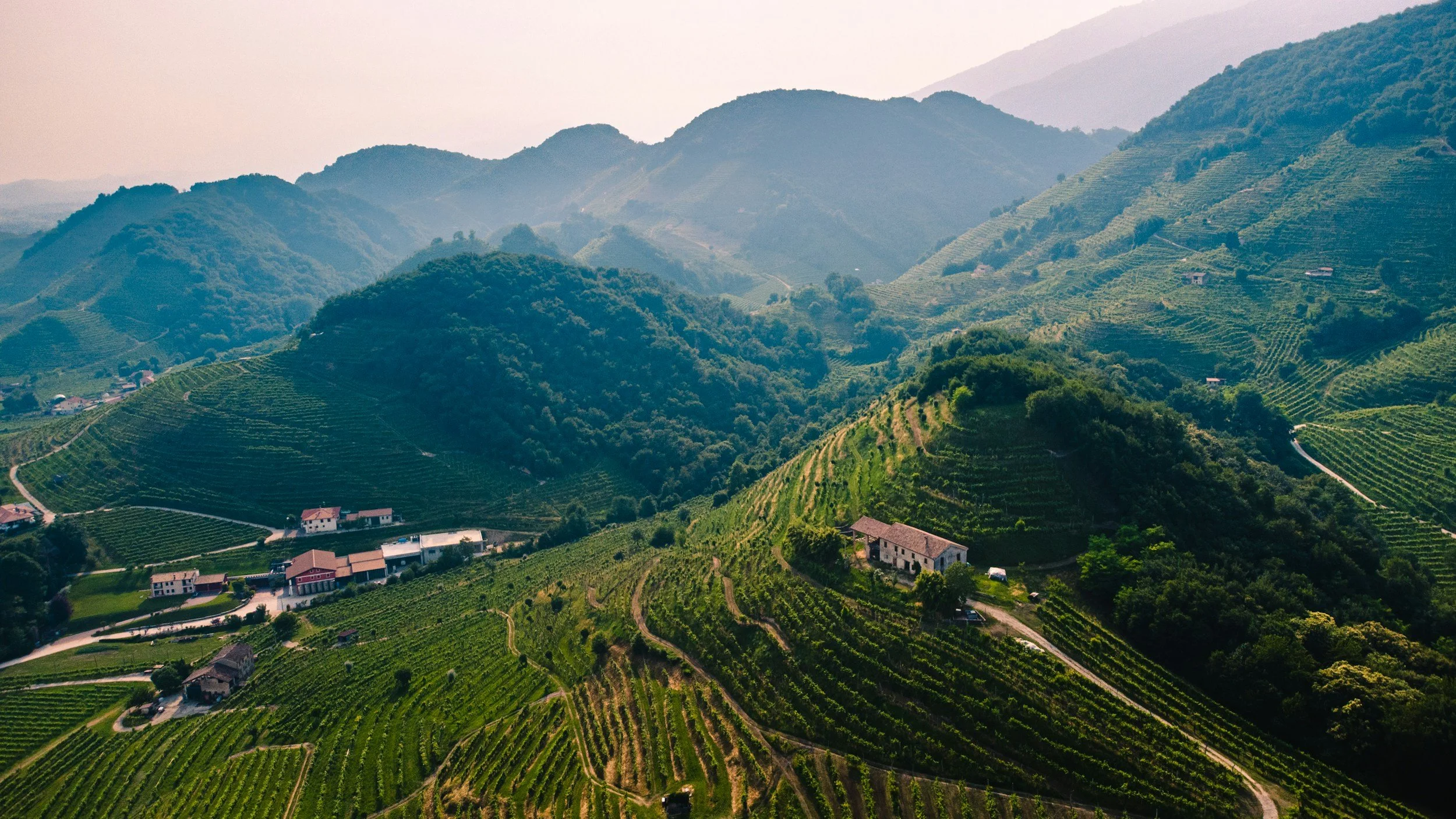
Stay in Follina if you want the village to be part of the trip
Follina is probably the easiest place in the Prosecco Hills to underestimate because most people never stay here. They arrive to see Abbazia di Santa Maria, walk through the cloisters, have lunch somewhere around Piazza IV Novembre and continue towards Cison di Valmarino or Valdobbiadene an hour or two later. Spending two or three nights here gives you a completely different impression because you're around before the coaches arrive and after they've left again.
One of the reasons I'd happily stay in Follina again has nothing to do with the wineries. It's the sort of place where the day starts quietly without ever feeling empty. By eight o'clock Piazza IV Novembre is already part of everyday life. Someone is collecting fresh bread before work, cyclists are standing outside the cafés looking over their route towards Miane, Combai or Passo San Boldo, and people stop to chat as they cross the square because they're clearly seeing neighbours rather than other visitors. Walk through Abbazia di Santa Maria before the first coaches arrive and you'll usually hear the fountain in the cloister before you hear anything else. I'd often finish my coffee long before I actually left the square because there always seemed to be something else to watch. Another group of cyclists would arrive, the bakery door would open again, someone would wheel a bicycle across the square, and before I knew it half an hour had gone.
The evenings are probably the biggest reason I'd choose to stay here instead of simply stopping for lunch on the way through. Once the last day visitors have driven back towards Conegliano or Valdobbiadene, Follina slips back into its normal routine very quickly. The tables outside La Corte and Osteria Al Caminetto gradually fill with local families and couples rather than people comparing winery visits, and if you sit outside for a while you'll notice you're hearing far more Italian than English. By half past nine the village is already much quieter than most people expect. Personally, I liked that. Dinner never felt rushed, nobody seemed to be in a hurry to leave, and walking back across Piazza IV Novembre afterwards was part of the evening rather than simply the way back to the hotel.
The other thing I hadn't expected was how often Follina quietly changed my plans. I'd leave after breakfast thinking I'd spend an hour in Cison di Valmarino, then someone would mention a viewpoint near Rolle, I'd follow the signs because it wasn't far, carry on towards Combai for lunch and suddenly most of the day had disappeared. The same happened with the road climbing towards Passo San Boldo. It was never originally the destination, but once I was already nearby it always seemed worth carrying on a little further.
That's probably the biggest difference between staying in Follina and staying somewhere like Conegliano. Conegliano makes it very easy to cover a lot of ground, while Follina almost nudges you into slowing the day down without you really noticing. I'd set off with a rough idea of where I wanted to go, but very rarely came back having followed it exactly, and I never felt as though I'd missed out because of it. In fact, those were usually the days that ended with the best meal, the nicest conversation or the producer I hadn't planned to visit in the first place.
It also makes a surprisingly good base for exploring places that many visitors only drive through. Cison di Valmarino is close enough to combine with CastelBrando without rushing, while the roads through Rolle, Combai and Miane are some of the nicest in this part of Veneto. Instead of moving from one famous winery to another, you'll pass tiny chapels, family-run producers with handwritten signs outside, small roadside fruit stalls during the summer months and stretches of vineyard where the only traffic is an occasional tractor. Those are the kinds of roads that are easy to skip if you're driving straight between Conegliano and Valdobbiadene.
Public transport is probably the biggest compromise. Buses connect Follina with Conegliano and Pieve di Soligo, but they're mainly there for local journeys rather than visitors hopping between wineries and villages. Before heading out for the day, I'd always check the last bus back, especially on Sundays when there are fewer services. Missing one isn't a disaster, but it can leave you waiting much longer than you expected. That's why I wouldn't base myself in Follina if my plan was to visit four villages and several wineries in a day. I'd keep the itinerary much lighter and enjoy having more time in each place instead.
Follina isn't the easiest place to stay without a car, and that's exactly why it suits some travellers better than others. If your trip is mainly about winery visits, Valdobbiadene is the stronger base. If you want the easiest train connections and the widest choice of restaurants, Conegliano is hard to beat. But if you'd like a few days where breakfast, dinner and an evening walk all happen in the same small village before heading out to explore a different corner of the hills the next morning, Follina is the one I'd come back to.
Ps. if you're building a longer northern Italy itinerary, a few days in Ravenna is an easy addition if you enjoy quieter cities with plenty to explore on foot.
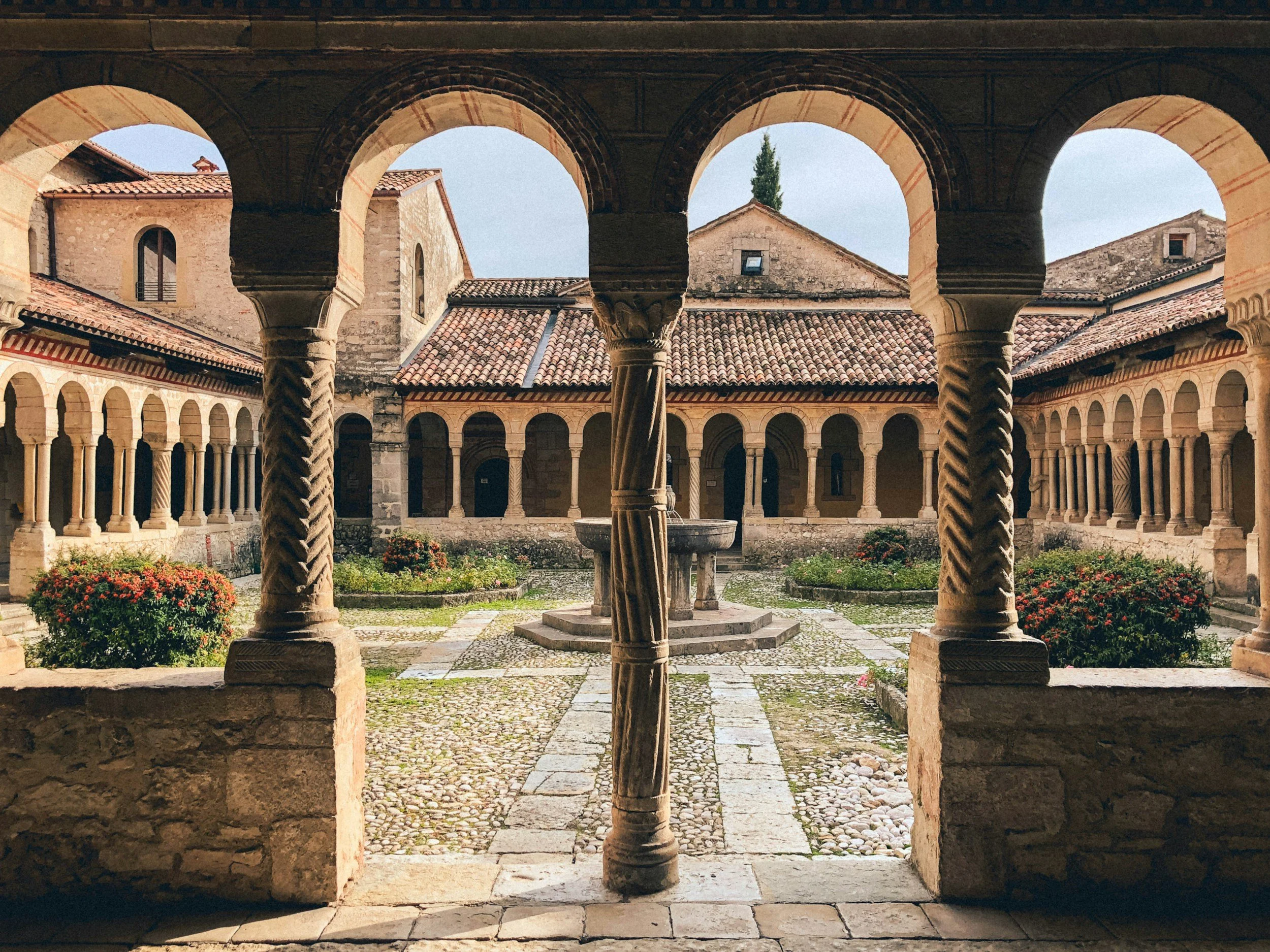
Before you book that vineyard stay...
The first few places I saved all looked almost identical. Stone farmhouse. Rows of vines outside the window. Breakfast on a terrace with the hills in the background. Somewhere between Santo Stefano, Guia and San Pietro di Barbozza. It wasn't until I started opening each one on Google Maps instead of just scrolling through the photos that I realised they weren't offering the same trip at all.
Around this part of the Prosecco Hills, being "close to Valdobbiadene" can mean completely different things. One agriturismo might leave you ten or fifteen minutes from Piazza Marconi, where you can wander into Torrefazione Spinetta for coffee in the morning, stop at Pane e Caffè to pick up something for lunch and decide where to eat once the evening arrives. Another property that's technically just as close might sit above Santo Stefano, where you're surrounded by vineyards and have incredible views, but where dinner suddenly becomes something you need to think about before you leave the room rather than after you've worked up an appetite.
The photos don't really show that difference, and neither does the distance shown on Booking.com. What makes much more of a difference is the final part of the journey. Some properties are reached by ordinary village roads, while others finish with gravel driveways weaving between the vines or narrow lanes where there's barely enough room for two cars to pass. None of that matters very much if you've hired a car and are travelling with a weekend bag, but it feels rather different after coming from Venice by train, changing in Conegliano, catching the bus into the hills and pulling a suitcase up the last stretch yourself.
Dinner is another thing I'd look at before I looked at the room. Not because there aren't good restaurants here, but because they're spread out in exactly the same way as the vineyards. If you're staying around Santo Stefano, for example, you've got places like Salìs Ristorante & Enoteca, Osteria Dolcevista, Pizzeria Belvedere and Trattoria Fos de Marai within walking distance from some agriturismi, but they don't all keep the same opening days. Salìs closes on Wednesdays, both Dolcevista and Belvedere close on Mondays, and Fos de Marai closes on Monday evening and Tuesday, which means the answer to "We'll just decide later where to eat" can suddenly become much more limited than you'd expected.
Breakfast ended up mattering much more than I'd expected, although not because of the food itself. Quite a few of the smaller guesthouses and agriturismi around Valdobbiadene, Guia and Santo Stefano don't put breakfast out until around eight o'clock, which suits the sort of morning a lot of people come here for. The vineyards are already busy, the light is just starting to reach the hills around Cartizze, and there's no real reason to rush if the first tasting isn't until mid-morning. It becomes a different story if you've booked an early visit at Col Vetoraz, arranged to meet a smaller producer before they open to other visitors or you're hoping to catch one of the earlier buses back towards Conegliano before they become busier later in the morning. It's only half an hour on paper, but I noticed that those little timings often decided whether the day began with another coffee on the terrace or with me checking my watch while buttering a piece of bread.
I also realised quite quickly that not every afternoon needed another winery. After two or three tastings, I was often happier doing something completely different for a couple of hours. Some days that meant wandering back into Valdobbiadene, buying a piece of Morlacco del Grappa or Piave from the local delicatessen, stopping for an espresso around Piazza Marconi, then sitting on a bench for a while watching people come and go before heading back out later. Other afternoons I'd browse one or two little shops, pick up something for a picnic the following day or simply wander without any real destination. Those ordinary breaks ended up balancing the trip much more than I expected, and they're one of the reasons I'd think carefully before booking somewhere completely isolated. When the town is only a short walk away, it's easy to fill an hour without planning anything at all. When every little outing means organising a taxi or working around the next bus, you're much more likely to stay where you are, even if you'd quite like to get out for a while.
I'd also be careful about choosing accommodation because it's close to Osteria Senz'Oste. It appears on almost every itinerary for the Prosecco Hills, but it's not really the sort of place you stroll to every evening. The old stone farmhouse sits above San Pietro di Barbozza, reached by a footpath from the parking area, and everything works on a self-service basis, from the food and wine to the payment. It's a brilliant stop in the middle of the day or on an afternoon walk, but I wouldn't choose a hotel simply because it looks nearby on the map.
The email that's probably saved me the most hassle over the years is also the shortest one. "We'll be arriving by bus. Is it possible to collect us in Valdobbiadene?" Some agriturismi already offer transfers if they're arranged in advance, others are happy to help if you ask, and a few assume every guest arrives by car because that's normally what happens. It's the sort of conversation that takes two minutes before booking and can completely change which accommodation makes sense without a car.
After a while I stopped looking at the rooms altogether because they all started blending into one another. Another beautiful terrace, another vineyard view, another stone farmhouse. Instead, I kept jumping back and forth between Booking.com and Google Maps, trying to picture what the first full day would actually look like. Would I be walking into Valdobbiadene for breakfast, or eating on the terrace before heading out towards Santo Stefano? If I came back after an afternoon around Guia with a couple of bottles of Prosecco under my arm, would I happily wander into town for dinner or would I look at the road and decide it was easier to stay where I was? If it rained all afternoon, would I still enjoy where I'd booked, or would I spend the day wishing I'd stayed somewhere with a little more going on? I don't think any of those questions crossed my mind when I first opened Booking.com, but they ended up being much more useful than comparing room sizes or whether one hotel had a slightly nicer balcony than another.
If you're choosing between two of Italy's best wine regions, where to stay in Piedmont makes the decision much easier once you see how differently the two areas work.
Where I'd stay depends entirely on what the trip looks like
If I was coming for a long weekend from Venice without a car, I honestly wouldn't overcomplicate it. I'd stay in Conegliano, walk from the station to the hotel, have the afternoon free without worrying about another connection and use the buses to explore the hills over the next couple of days. After travelling through Venezia Santa Lucia, changing trains and arriving in Conegliano, it's surprisingly nice to know the hotel is only a short walk away instead of another bus ride into the vineyards. It also gives you a bit more flexibility if your train from Venice is delayed, because you're not trying to make the last connection into Valdobbiadene before the buses become much less frequent later in the day.
If winery visits are going to be the main reason for the trip, I'd stay in Valdobbiadene without overthinking it. What I liked most wasn't that there were more vineyards around me, it was not having to start every morning by getting there. I'd leave the hotel, stop for a coffee in Piazza Marconi if I was in the mood, and twenty minutes later I could already be at Col Vetoraz or driving towards Guia and Santo Stefano. Once I was out there, I stopped thinking about buses altogether. If one tasting lasted longer than I'd expected, it didn't matter. If I noticed another producer on the way, I'd pull in and see if they were open. It made the whole day feel much less structured than when I was travelling out from Conegliano.
I'd choose Follina for a completely different reason. It's the place I'd book if I wanted a few days where wine wasn't the answer to everything. One day might start in Cison di Valmarino, another in Combai, and another with no plan beyond getting a coffee in Piazza IV Novembre and seeing where I ended up afterwards. I actually think that's why I liked this side of the Prosecco Hills so much. I wasn't trying to fit in another tasting before the last bus or wondering whether I'd seen enough wineries that day. Some afternoons I'd visit one producer, other afternoons I'd spend longer over lunch than I'd planned and not visit any at all.
I don't think I'd choose between Valdobbiadene and Follina by looking at hotel photos because the rooms are rarely what makes one stay work better than another. I'd think about what I'd probably be doing at four o'clock in the afternoon. If the answer is another winery, another tasting and maybe driving up towards Cartizze because I've heard about a producer there, then I'd stay in Valdobbiadene. If it's more likely that I'd be sitting outside somewhere in Cison di Valmarino after lunch wondering whether to carry on towards Combai or just head back to Follina, then that's probably where I'd book instead. I don't think either choice is better. They just suit different sorts of trips, and I probably wouldn't know which one I'd prefer until I'd worked out what I actually wanted to do between breakfast and dinner.
If I'm travelling on my own, I become much fussier about where the hotel actually is. I don't really care if it's got the best view in the hills if it means every coffee, every dinner and every little trip to buy water or something for breakfast involves organising transport first. I'd much rather walk out of the hotel and already be in the middle of things. In Conegliano, that usually means somewhere close to Piazza Cima or Via XX Settembre. In Valdobbiadene, I'd stay close enough to Piazza Marconi that going out again after dinner doesn't feel like another decision to make. In Follina, I'd look around Piazza IV Novembre, simply because I know I can wander out for dinner, have another glass of Prosecco afterwards if I feel like it, and be back at the hotel a few minutes later without checking bus times, calling a taxi or thinking twice about the walk home.
The same applies if you already know you don't want to rely on taxis. Around Guia, San Pietro di Barbozza and parts of the Cartizze hills you'll find some beautiful agriturismi, but unless the property offers transfers or you're happy arranging taxis in advance, they can become surprisingly inconvenient once the day visitors have gone home. Looking across the vineyards with a glass of Prosecco is exactly what most people picture before they arrive. Realising the nearest restaurant is a half-hour uphill walk along an unlit road isn't usually part of that picture.
If I was booking my first trip to the Prosecco Hills again, I don't actually think I'd spend very long comparing the views. By the second day you'll have driven through Guia, walked around Santo Stefano, stopped somewhere overlooking the Cartizze vineyards and probably sat outside at least one winery looking across the hills, so you're not exactly missing out if your hotel window overlooks a street instead of another row of vines.
What I'd spend time looking at is everything outside the hotel. Is there somewhere I'd happily wander for dinner without thinking twice about the walk back? If I woke up before breakfast was being served, could I walk into town for an espresso? If I came back from Col San Martino carrying a couple of bottles of Prosecco, would I be pleased I'd booked that particular place, or would I be looking at another uphill walk before I could finally put my bag down?
Those ended up being the questions that narrowed my shortlist much faster than another gallery of beautifully photographed rooms ever did. The hotels all looked lovely. It was everything around them that made one booking much more appealing than another.
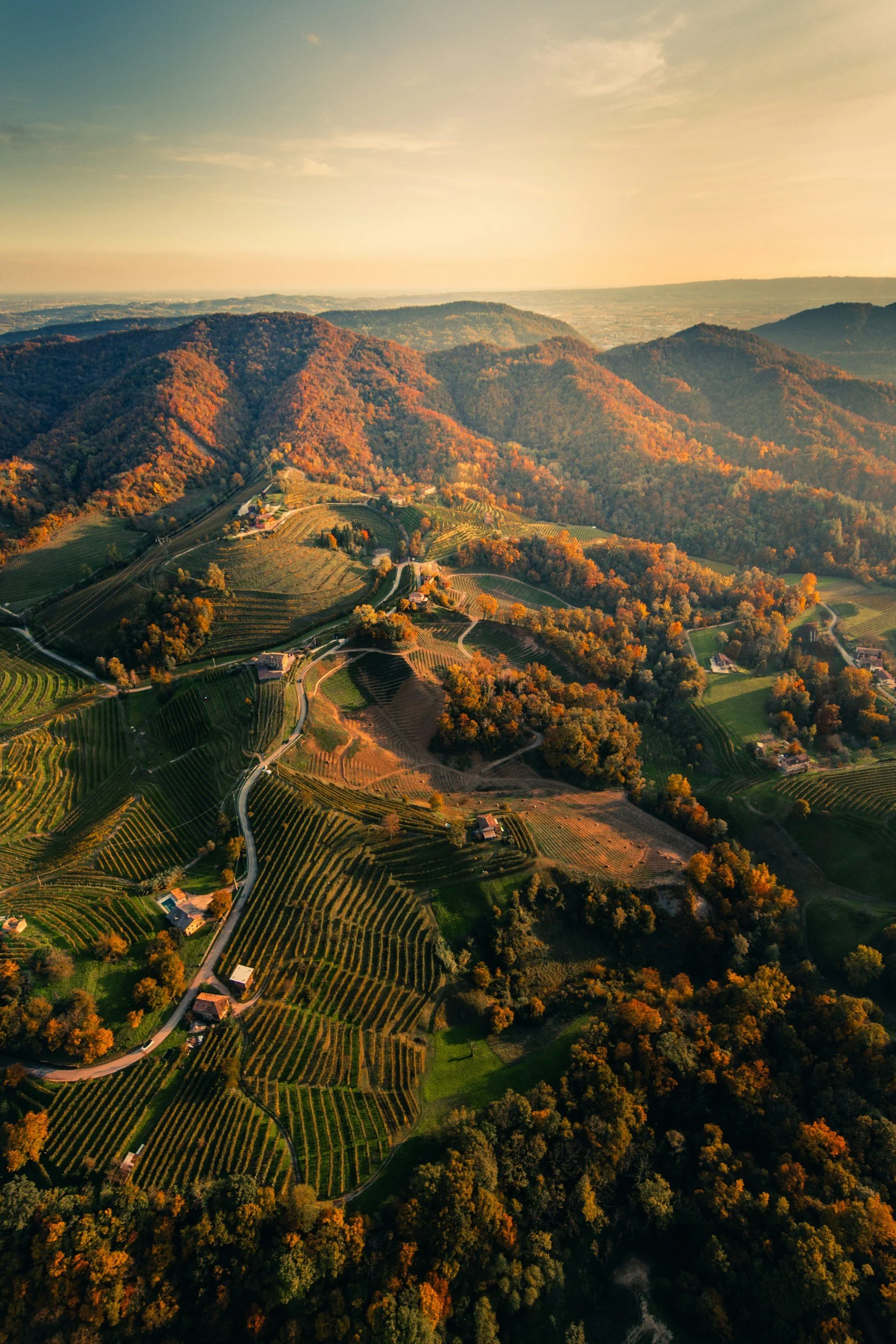
The places I’d genuinely consider booking
After a while, all the vineyard stays started looking equally tempting. They all had beautiful views, breakfast on a terrace and photos that made it very easy to imagine spending three days there. What eventually helped me make a decision had very little to do with the room itself. I was looking at how I'd get there from Conegliano with a suitcase, whether I could wander into town if I fancied another glass of Prosecco after dinner, whether I'd still enjoy that location if it rained for a day, and what I'd actually be looking at while eating breakfast besides another vineyard. A couple of the places I'd saved at the beginning quietly disappeared from the list once I realised they only really made sense if you had a car, while a few hotels I'd almost scrolled past turned out to be exactly where I'd want to be for a trip built around trains, buses and walking. They weren't necessarily the places with the best photos, but still the ones I best enjoy.
Hotel Canon d’Oro, Conegliano
For a first visit from Venice, Hotel Canon d’Oro is still the easiest recommendation to make. It sits directly on Via XX Settembre, opposite Palazzo Sarcinelli, rather than somewhere on the newer edge of Conegliano, and the walk from the railway station takes roughly six minutes. That means you can come off the train with luggage, check in and be around Piazza Cima, the Duomo di Conegliano and the lower part of the Scalinata degli Alpini almost immediately, without waiting for a bus or arranging a collection (love that!)
I liked staying here because it made the practical side of the trip much simpler. The buses into the hills are easy to reach without dragging a suitcase or walking across the whole of Conegliano first, and around Via XX Settembre and Piazza Cima there are plenty of cafés, bakeries and restaurants if you get back from Valdobbiadene in the evening and haven't decided where to eat yet. It's also one of the easier places to arrive at if you're coming by train. The reception is staffed 24 hours a day, there's a lift, and you don't have to worry about arriving after a small family-run property has closed for the afternoon. Breakfast is served from 7:00 until 10:30, but they'll prepare an earlier breakfast from 5:00 if you ask in advance, which is handy if you're catching one of the first regional trains out of Conegliano.
There is now an in-house restaurant, Il Bistrot Conegliano, open in the evenings except Sunday, although the real advantage is that you are not dependent on it. If the restaurant is closed or you change your mind, you are already in the part of Conegliano where finding another table is relatively simple.
The rooms are traditional rather than pared-back and modern, with antique furniture and a fairly classic Italian hotel look, so I would book it for the address and the practical details rather than because it feels like a vineyard retreat. On a first trip, especially one lasting only two or three nights, that is not much of a compromise. You will see plenty of vines during the day, while the hotel takes care of the hours when transport and dinner tend to become more complicated.
Hotel Cristallo, Conegliano
Hotel Cristallo is the less obvious Conegliano option I would check before defaulting to Hotel Città di Conegliano. It is family-run, only around 200 metres from the railway station and still in the centre, which makes it particularly sensible for a late arrival from Venice or anyone who would rather carry a case for three minutes than drag it over the paving of the old town. It also has a garden and free parking, although the latter is obviously less relevant here than its position beside the station.
Canon d'Oro is the one I'd choose if Conegliano is part of the trip itself and I know I'll be spending time around the historic centre. Hotel Cristallo makes more sense if Conegliano is simply where the journey starts or finishes. On those trips, I'd rather be a short walk from the station than add another ten minutes each way just for a more characterful setting.
I would still choose Canon d’Oro for two or three full days in Conegliano because the old centre is immediately outside, but Cristallo is the sort of hotel people overlook while searching for vineyard views, only to realise later that 200 metres from the station was exactly what they needed.
Hotel Diana, Valdobbiadene
For staying in Valdobbiadene itself, Hotel Diana is the practical choice. It stands on Via Roma, only a few minutes from Piazza Marconi, with the Duomo di Santa Maria Assunta, cafés, shops and the central streets close enough that you can come back from a tasting, leave bottles in the room and head out again without turning the evening into another transport problem. The hotel also offers luggage storage, which helps on the last day when the bus back to Conegliano does not line up neatly with check-out.
If you're picturing a hotel surrounded by vineyards, this isn't that. It's right in Valdobbiadene, and that's exactly why I'd book it. I could spend the day driving between Santo Stefano, San Pietro di Barbozza, Cartizze, Col Vetoraz or Bisol1542, park the car in the afternoon and walk out for dinner instead of thinking about how I'd get back from another farmhouse. That mattered much more than I expected, especially on Sunday evenings and Mondays when a few restaurants were closed and it was reassuring to have several places within a couple of minutes' walk rather than hoping the one near the hotel happened to be open.
The rooms aren't really the reason I'd book this hotel. If I wanted somewhere with a spa, a beautiful terrace and a room I'd spend half the afternoon in, I'd probably look elsewhere. I'd book this because I know I'll be out most of the day anyway. I'll leave after breakfast, spend hours around Santo Stefano, Cartizze or whichever producers I've planned to visit, and by the time I'm back I just want somewhere comfortable where I can drop my bag and walk out for dinner a few minutes later.
Villa Barberina, Valdobbiadene
Villa Barberina is a much more interesting compromise than many of the isolated agriturismi because it gives you the historic-house setting without placing you several kilometres from Valdobbiadene. The villa is on Via Roma 2, close to the town rather than high above it, with only five bedrooms, a library, gardens and a pool. It feels like a proper stay rather than a convenient hotel, yet you are not automatically signing up for taxis every time you want to eat outside the property.
I'd book Villa Barberina for a different sort of trip. If I knew I'd want a slow breakfast, an afternoon by the pool and somewhere I'd actually enjoy coming back to before dinner, this is probably the one I'd choose. The winery visits would still be there, but they wouldn't be the only reason for the trip. Before booking, I'd also check exactly how arrival works, especially without a car. The property can arrange airport transfers and rents out bikes, but it's worth knowing the plan before you arrive with a suitcase.
It's also worth knowing that Villa Barberina usually closes between November and March. I'd cross it off the shortlist straight away for a winter trip rather than spending time planning around somewhere that won't be open.
For a first visit, Hotel Diana remains simpler because it functions like a normal town hotel and does not require much thought. Villa Barberina is the one I would choose when I wanted Valdobbiadene to feel special but still wanted to walk out of the gate and remain connected to the town.
Villa Abbazia, Follina
Villa Abbazia is almost unusually well placed for this particular trip. It stands at Piazza IV Novembre 3, directly opposite the Abbazia di Santa Maria, so the restaurants, cafés and main streets of Follina are outside rather than a drive away. It also has its own restaurant, La Corte, and a bistrot, which removes the awkward question of what to do when the handful of other village restaurants are closed or fully booked.
The property is small and family-run, with rooms split between its historic buildings, and breakfast includes local products, pastries and cooked dishes. Reception is staffed from early morning until late evening, with telephone cover outside those hours, so it is more flexible than a rural guesthouse where arrival may need to happen within a narrow afternoon window.
Villa Abbazia also offers shuttle services, including an airport transfer on request, although the quoted airport transfer is expensive enough that it would not be my first plan for a budget-conscious car-free trip. The more useful question to ask would be whether the hotel can arrange a shorter local collection from a nearby bus stop or another town in the hills.
I would book it for two or three nights centred on Follina, Cison di Valmarino, CastelBrando, Miane, Combai and Rolle, rather than trying to use it as a base for daily trips to every corner of the Prosecco Hills. The public-transport options are thinner here than in Conegliano, but once back in Follina you can have dinner, walk around the abbey and return to the room without adding another journey. For someone who wants a small village in the morning and evening rather than a wine town, this is one of the few higher-end stays that still works reasonably well without a car.
Relais d’Arfanta, near Tarzo
Relais d'Arfanta is probably the hotel I'd save for a second trip, or for a visit with a car. It's in the countryside outside Tarzo, which is exactly what makes it appealing, but it also means you can't just wander out for dinner or catch a bus without thinking about it first. The hotel serves a light lunch for guests spending the day by the pool, but there's no restaurant in the evening, so I'd want a plan before arriving rather than trying to work it out after check-in.
I'd also look carefully at the arrival details before booking. Depending on where you book, check-in is listed as running until around 18:30, which could make for a fairly rushed first day if you're flying into Venice, changing trains in Conegliano and then arranging the final transfer up to the hotel. I'd simply contact the property before booking, explain how I was arriving and make sure everything lined up before paying for a non-refundable stay.
I think I'd appreciate this hotel much more once I already knew the Prosecco Hills a little. On a first trip, I'd probably want to be closer to the places I was planning to visit each day. Here, I'd be quite happy spending the afternoon by the pool, going out for one good lunch and one winery, then heading back to the hotel instead of trying to fit in another village before dinner. That's a completely different sort of weekend, and I think it's the one this property suits best.
Agriturismo Le Noci, Arfanta di Tarzo
Agriturismo Le Noci feels much more like someone's home than a hotel. With only six rooms, it's the sort of place I'd choose because I wanted a quiet couple of days in the countryside rather than somewhere with lots of facilities. Breakfast is built around local products, with homemade bread, cakes, jams and cheeses, and in summer there's a small pool if you'd rather spend the afternoon at the property than head back out exploring.
If I was travelling without a car, though, I'd look beyond the photos before booking. Breakfast is usually served between 8:00 and 9:30, while check-in normally runs from 16:00 until 18:30. Neither is unusual for a small agriturismo, but I'd want to know they worked with my plans before paying for the room. If my train into Conegliano was delayed or I needed to leave early the next morning, I'd much rather ask those questions beforehand than try to sort everything out after I'd arrived.
Around Le Noci, you really notice how quickly the roads become countryside roads rather than village streets. It's a very different setup from staying in Conegliano, Valdobbiadene or even Follina, where you can walk out for a coffee or dinner without giving it much thought. Here, I'd want to know exactly how I was getting to the property before I booked, and I'd also ask what people normally do in the evening. Reviews mention dinners and the property's own Prosecco, but I'd never assume those are available every night or throughout the year. It's the sort of question that's easy to answer with a quick email before you travel.
I'd happily book Le Noci if I knew I wanted a couple of quiet days at the property itself. I probably wouldn't book it if I was arriving late from Venice, carrying a suitcase and relying entirely on trains and buses. In that situation, I'd rather spend the first few nights somewhere easier to reach and come here once I already had a car or a much simpler plan for getting around.
Locanda Sandi, Valdobbiadene countryside
Locanda Sandi is the rural property on this list that removes one of the main rural problems because it has its own proper restaurant. The six rooms sit in a restored farmhouse, with a wine shop, bar and restaurant serving Venetian dishes, fresh pasta and meat cooked at the large fireplace, so an evening does not automatically end with another taxi into Valdobbiadene. Breakfast is served until 10:00, and the property lists transfers to both railway stations and airports among its services.
The restaurant is one of the reasons I'd consider staying here in the first place. Knowing there's somewhere good to eat without leaving the property changes the whole evening, especially compared with some of the smaller vineyard stays where dinner means driving somewhere else or hoping you've booked the right place in advance. I'd still think about transfers for the days I wanted to explore the Prosecco Hills, but once I was back for the evening I wouldn't feel the need to head out again. I'd book dinner before arriving, though. The restaurant has its own reputation, and I'd rather have a reservation than assume there would be a table because I was staying overnight.
I think I'd enjoy Locanda Sandi most if the hotel itself was part of the weekend rather than simply somewhere to sleep. I'd be quite happy spending a slow morning there, having lunch with a bottle of Villa Sandi Prosecco and only visiting one winery that day instead of trying to fit Santo Stefano, Guia, Follina and Conegliano into the same afternoon. If my plan was to be out from breakfast until dinner every day, I'd probably stay somewhere closer to the middle of the area instead.
The places I would cross off for certain trips
The more hotels I compared, the less interested I became in the vineyard view itself. I knew I'd be driving through Cartizze, stopping at wineries and looking across the hills for most of the day anyway. What I couldn't change afterwards was where I ended up in the evening.
That's why I'd probably leave Relais d'Arfanta and Le Noci for another trip unless I'd already sorted out how I was getting there. There's nothing wrong with either property, but I'd rather not spend my first afternoon in the Prosecco Hills wondering whether my train is running late, whether I'll reach check-in in time or how I'm getting back after dinner. Locanda Sandi is easier because dinner is already there if you want it, but I'd still book it because I wanted to spend time at the hotel, not because I planned to be out exploring until late every evening.
If I was travelling on my own, I'd probably keep coming back to places where I could put the car away, or step off the bus, and forget about transport for the rest of the day. Being able to walk into Piazza Marconi for dinner, decide on another glass of Prosecco afterwards or pick up something from the bakery the following morning ended up meaning much more to me than another hotel surrounded by vineyards.
If this trip leaves you wanting more quiet corners of Italy, these peaceful towns have a similar atmosphere without feeling like copies of the Prosecco Hills.
The biggest decision isn't the hotel. It's this.
One thing that surprised me after spending time planning the region was how little the distances actually tell you. Looking at a map, everything seems comfortably close together, yet the days end up feeling completely different depending on which side of the hills you keep returning to.
Some mornings begin with commuter trains pulling into Conegliano while cafés are already busy with people grabbing an espresso before work. Other mornings start with church bells carrying across the vineyards above Santo Stefano, or with cyclists gathering outside cafés before disappearing towards Passo San Boldo, Miane and the smaller roads that wind through the hills. They're only a few kilometres apart, but they don't feel like the same holiday.
If food is just as important as the wine
I realised quite quickly that meals ended up deciding the shape of the day as much as the wineries did.
In Conegliano, I'd usually grab a coffee somewhere around Piazza Cima before catching the bus, and if I wanted something for later there were plenty of bakeries and food shops along Via XX Settembre. By the time I got back in the evening, I never really had to think about where to eat. If one restaurant was full, I'd walk another minute and try the next one.
Around Valdobbiadene, lunch often took much longer than I'd expected. I'd stop at a winery thinking I'd be there for an hour, order a plate of local cheese and sopressa, open another bottle and suddenly it was three o'clock. I don't remember that ever feeling like a problem because there wasn't anywhere else I absolutely had to be.
Follina was different again. I'd sometimes have a coffee in Piazza IV Novembre, drive over to Cison di Valmarino, end up staying there for lunch and not get back until late afternoon. Other days I'd hardly leave Follina at all. I'd walk around the abbey, sit down wherever looked good and call it a day. I don't think I booked a single restaurant in advance there.
If you're travelling during Primavera del Prosecco
Primavera del Prosecco is probably the only time I'd plan the trip differently. It's not one festival in one location, but a series of local wine events that move from village to village between March and June. One weekend the tastings, food stands and winery events are centred around Col San Martino, the next they're in Guia, Miane, Farra di Soligo or another village further along the hills. Local producers pour their wines, restaurants put together special menus, and many wineries open their doors for tastings or events that aren't running at other times of the year.
If my trip happened to fall during Primavera del Prosecco, I'd check the programme before booking a hotel. Most of the year I'd happily stay in Conegliano or Valdobbiadene and drive wherever I wanted each day, but during the festival I'd be tempted to stay closer to whichever village was hosting that weekend. It means you can spend the afternoon at the tastings, wander between the different stands, stay for dinner and not have to think about getting back quite so early.
It's also one of the few times I'd reserve restaurants before arriving. Outside the festival, I usually decide where to eat once I'm there, but on Friday and Saturday evenings during Primavera del Prosecco, the villages fill up quickly with visitors from across the region, and the places I'd normally walk into can already be fully booked.
You probably don't need as much of an itinerary as you think
Before I went, I spent far too long deciding which wineries to visit on which day. Once I was there, I stopped following the plan almost immediately. A producer would recommend somewhere I'd never heard of, I'd notice a handwritten sign for a tasting while driving towards Guia, or I'd realise I was perfectly happy staying longer over lunch instead of squeezing in another stop.
The Prosecco Hills are much smaller than they look on a map, and the villages connect together surprisingly easily. Driving from Valdobbiadene to Santo Stefano, Guia, Col San Martino or Follina doesn't feel like moving between separate destinations. It feels like you're staying in the same landscape and gradually working your way through it.
I still think it's worth picking one or two wineries you'd really like to visit, especially if they recommend booking ahead, but I wouldn't try to fill every hour of the day before arriving. Some of the nicest parts of the trip happened because I had enough time to stop somewhere that wasn't on the original plan.
If you like mornings more than evenings
This probably sounds like an odd thing to think about before booking, but I realised halfway through the trip that the mornings were the part I enjoyed most.
The roads are quieter, deliveries are arriving at the cafés, bakeries are putting fresh bread in the windows, vineyard workers are already out among the vines and places like Refrontolo, Rolle and Guia feel completely different before the first visitors begin arriving. By lunchtime those villages are still lovely, but they've changed.
If that's your favourite time of day as well, I'd choose somewhere that lets you step straight into that landscape instead of travelling to it.
If this was my trip now...
After spending time in the Prosecco Hills, I don't think I'd start by choosing a hotel. I'd start by deciding what I wanted the days to look like.
If I knew I wanted to explore different wineries from morning until late afternoon and still be able to walk out for dinner afterwards, I'd stay in Valdobbiadene.
If arriving by train, walking everywhere and having plenty of cafés, restaurants and transport on the doorstep mattered more, I'd book Conegliano.
If I wanted quieter surroundings and didn't mind driving a little more between places, I'd look at Follina instead.
The hotel itself would probably be one of the last decisions I'd make. I'd rather know how I was getting around, where I'd be eating most evenings and whether I'd be travelling during Primavera del Prosecco first. Once I'd worked those things out, the list of hotels would become much shorter on its own.
If food markets are just as important to you as wineries, these market towns might end up influencing your itinerary more than you expected.
The hotel I'd actually book
This was probably the part of planning the trip where I changed my mind the most, because at the beginning I kept saving exactly the same kind of places. Beautiful old farmhouses somewhere between Guia, Santo Stefano and San Pietro di Barbozza, breakfast served on a terrace overlooking the vineyards, stone walls covered in climbing plants and a swimming pool looking across the hills. They looked exactly like the sort of places you'd imagine staying in when someone mentions the Prosecco Hills, and if I'd booked one of the first properties I saved, I honestly don't think I'd have questioned the decision for a second.
It was only after I'd spent an evening with Google Maps open alongside Booking.com that I started noticing things the photos weren't showing me. The room still looked wonderful, but I suddenly realised that dinner wasn't a five-minute stroll through the vineyards in the way I'd imagined when I first saw the listing. It meant walking along a narrow country road with no pavement, climbing steadily back uphill afterwards, and hoping I hadn't missed the last bus into Valdobbiadene if I'd decided not to walk after all. Nothing about the accommodation had changed, yet the holiday I was picturing looked completely different simply because I'd stopped looking at the room and started looking at what happened outside the front gate.
That's probably why I stopped thinking in terms of hotels, agriturismi and guesthouses altogether, because those labels don't really tell you very much in this part of Veneto. I've seen agriturismi where I'd happily stay without a car because there was a restaurant a short walk away, another winery around the corner and someone happy to collect guests from Valdobbiadene if they arrived by bus, and I've seen others where I'd be wondering by the second evening whether I'd underestimated how isolated the location really was. Looking at the photos, you could barely tell them apart.
The smaller family-run places ended up being the ones I enjoyed the most, partly because they usually seemed much happier to tell you about the area beyond the obvious highlights. Instead of recommending the biggest wineries, they might suggest stopping in Rolle early in the morning before cyclists begin filling the road, taking the quieter route through Premaor on the way to Miane, or calling into Molinetto della Croda before lunch because coach groups tend to arrive later in the day. They're tiny suggestions that don't sound particularly important while you're reading them, but they're exactly the sort of details that quietly make the day work better, and I found myself trusting those recommendations far more than another list of "must-see" attractions.
Another thing that changed once I'd looked at the map properly was how I judged value for money. At first I assumed I'd happily pay more for somewhere surrounded by vineyards because that's what I'd travelled here to see, but after plotting the wineries, villages and restaurants I wanted to visit, I realised I was going to spend most of the day out exploring anyway. The view from the bedroom window suddenly became much less important than whether I could wander into a bakery before breakfast, walk somewhere for dinner without needing to organise transport, or pop back to the room halfway through the afternoon because my backpack had quietly filled up with bottles from Bisol1542, local cheese from a delicatessen in Valdobbiadene, and far more picnic food than I'd ever planned on buying.
I also started paying attention to things I'd never normally think about when booking accommodation, simply because they kept becoming part of the day. If I woke up to heavy rain, was there somewhere nearby I'd genuinely enjoy spending the morning without feeling I'd wasted the trip? If I decided I'd had enough wine tastings for one afternoon, could I wander into a café with a book, browse a couple of little shops or buy something nice for dinner before heading back, or did leaving the property mean committing to another bus journey or another taxi? Those questions never appear in hotel descriptions, yet after a few days they're often what decide whether somewhere feels wonderfully peaceful or just slightly disconnected from everything else.
Looking back, I don't think the biggest mistake people make is booking the wrong hotel. I think it's assuming that the photographs tell the whole story, when in reality the part that shapes the holiday most is everything that happens after you've closed the hotel door behind you. Where you buy your first coffee in the morning, whether dinner becomes an easy walk or another decision to make, whether you find yourself staying out because you're enjoying the day or because getting back to the room feels like more effort than you'd planned; those ordinary moments rarely make it into the gallery on Booking.com, but they're usually the ones you'll remember long after you've forgotten what the room looked like.
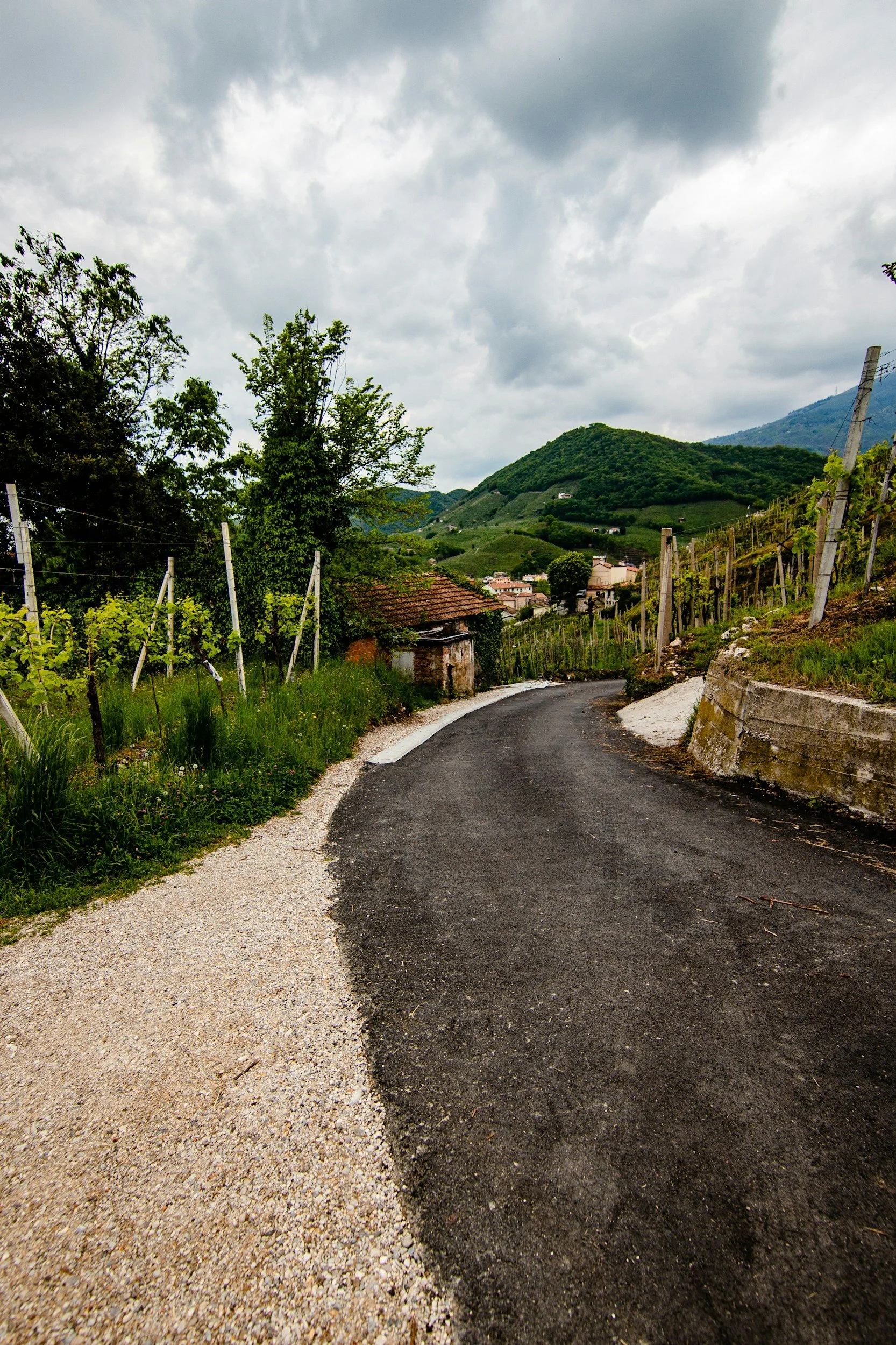
Coming in autumn rather than summer? What's in season changes more than most people expect, especially once the grape harvest begins.
I stopped booking accommodation the way I normally do
I realised quite early on that I was spending far too much time comparing bedrooms and almost no time looking at what happened once I walked out of the front door, which is slightly ironic because that's where I'd end up spending nearly all of the trip. After a couple of evenings moving hotels around on Google Maps, deleting places I'd originally loved and saving others I'd almost ignored, I found myself looking at completely different things than I normally would when booking somewhere.
The distance shown on Booking.com is usually the first thing I stop paying attention to. Around the Prosecco Hills it doesn't tell you very much because two properties can both be described as being "1.8 km from Valdobbiadene" while offering completely different experiences. One might mean a gentle walk back into town along Via San Giovanni, passing cafés and houses all the way, while another means following a narrow vineyard road above Santo Stefano where there isn't a pavement, there are very few streetlights once the sun goes down and the last part of the walk climbs much more than you'd ever guess from the map. I always end up opening satellite view and Street View instead because within a minute or two you can usually tell whether you're looking at somewhere that feels connected to the village or somewhere that really expects guests to arrive by car.
I also spend far more time looking at restaurants than wineries, which probably sounds backwards in a wine region. The wineries are the easy part because you'll visit them during the day anyway, but dinner happens every single evening, and that's usually when the practical side of staying without a car begins to matter. I don't really care if there's a producer five minutes away if the nearest place to eat is closed on Mondays, doesn't open until Thursday or means walking half an hour back along an unlit road after dark. Around Guia and Santo Stefano, those details vary much more than people expect, and they rarely show up until you start opening restaurant websites instead of hotel listings.
Breakfast has become another one of those things I automatically check, not because I particularly care whether it starts at seven-thirty or eight, but because it quietly decides what the following morning is going to look like. Quite a few smaller agriturismi around Valdobbiadene, Miane and Farra di Soligo begin breakfast around eight o'clock, which is perfect if the plan is to spend the morning sitting outside with another coffee before heading to the vineyards. It becomes less ideal if you're hoping to catch one of the earlier buses towards Conegliano, or you've booked the first tasting of the day and suddenly realise breakfast and your plans begin at almost exactly the same time.
Another habit I've picked up is looking at the road leading to the property almost as carefully as the room itself. Not because I mind a bit of gravel or a country lane, but because those last few hundred metres tell you a surprising amount about what the stay is going to feel like. Some vineyard properties around San Pietro di Barbozza or the slopes below Cartizze are reached by beautiful little lanes weaving through the vines, while others sit at the end of long drives where you immediately know you'll be relying on a lift, a taxi or your own car every time you leave. Neither is wrong, but they're completely different holidays.
Something else I nearly always do now is send one email before booking. It usually takes less than two minutes to write, but the answer often changes which property I choose.
"We'll be arriving by train and bus. Do you offer collections from Valdobbiadene or the nearest bus stop?"
I used to assume the answer would almost always be no.
It isn't.
Several family-run agriturismi are perfectly happy to collect guests if they know roughly when you're arriving, while others can recommend a local taxi driver who already knows the property well because they're the person every guest uses. It's the sort of practical information you almost never find on Booking.com, yet it can suddenly turn somewhere that looked completely unrealistic without a car into one of the easiest places to stay.
The last thing I look at has nothing to do with the accommodation itself. Before I book anything, I usually drop pins on every place I think I'll visit over the next few days. A couple of wineries, somewhere for dinner, a bakery I'd like to try, maybe Molinetto della Croda, Rolle, Cison di Valmarino or one of the food festivals if Primavera del Prosecco is running. Once those pins are all on the map, the best place to stay often isn't the one I'd originally chosen. More than once I've realised that the farmhouse with the incredible vineyard view actually left me travelling back and forth across the hills every day, while a much simpler guesthouse quietly put everything I wanted to see within much easier reach.
Looking back, I don't think any of those things would ever persuade me to book a hotel on their own. What they do is help me rule places out before they become expensive mistakes, and that's probably saved me more money, more taxi journeys and more awkward arrival days than any amount of comparing review scores ever has.
Travelling through Italy without hiring a car? These train-friendly weekends make planning the next stop much easier.
This is one part of the trip I wouldn't leave until the last minute
One thing that caught me off guard while planning the Prosecco Hills was that it wasn't the flights or the trains that disappeared first. Most of the time, you can still find perfectly reasonable train tickets between Venice Santa Lucia and Conegliano fairly close to departure, but the accommodation follows a completely different rhythm because so much of it is made up of small family-run hotels, vineyard stays and guesthouses with only a handful of rooms. Once a place like Villa Barberina, Villa Abbazia or one of the smaller agriturismi around Guia and Santo Stefano is full, there usually isn't another twenty-room hotel around the corner that feels similar.
September is the month I'd think about first, not simply because it's harvest season but because several things overlap at once. The vineyards are at their busiest, producers are working long days, visitors arrive specifically to see the harvest and accommodation that feels fairly easy to book in June suddenly becomes much harder to find, especially if you're hoping to stay somewhere surrounded by the vines rather than in Conegliano itself. If I knew I wanted a vineyard stay during the second half of September, I wouldn't leave it until the summer.
Spring catches people out for a different reason. From March onwards, Primavera del Prosecco Superiore begins moving between villages such as Col San Martino, Guia, Miane, Farra di Soligo and Santo Stefano, with each weekend focusing on a different part of the hills. If your dates happen to coincide with one of the larger weekends, the villages hosting the event can fill much faster than places only ten or fifteen minutes away. It's worth looking at the festival calendar before choosing where to stay because you might decide you'd rather be close enough to walk back after an evening tasting instead of relying on buses or taxis. On the other hand, if you're hoping for a particularly quiet weekend among the vineyards, it's just as useful to know which village is hosting that week so you can base yourself somewhere else.
One thing I probably underestimated before visiting was the difference between weekdays and weekends. Tuesday and Wednesday evenings in Valdobbiadene feel completely different from a sunny Saturday in May, when cyclists fill the roads from early morning, tasting rooms are noticeably busier and lunch can quietly stretch well into the afternoon. If your plans are flexible and you're mainly coming for the landscape rather than an event, arriving on a Sunday afternoon and staying through the week often gives the hills a calmer feel, even in the busiest months.
Late October is another period I think deserves more attention than it usually gets. The vineyards are beginning to settle after harvest, the hills around Combai, Miane and Passo San Boldo are starting to turn with autumn colour, and you'll often find much better availability in places that were fully booked only a few weeks earlier. A few wineries reduce their opening hours towards the end of the season, so I'd always check individual producers before building an itinerary, but if the goal is to enjoy the villages, the scenery and long lunches rather than ticking off as many tastings as possible, it's one of my favourite times to look.
Winter needs a little more planning than many people expect. The Prosecco Hills don't close, but they become a much quieter place between Christmas and the end of February. Some agriturismi take a seasonal break, several restaurants reduce their opening days and a few winery visitor centres pause tours for parts of the winter, particularly after the Christmas holidays. Conegliano continues feeling like a normal working town throughout the year, which is one reason I'd choose it as a base for an off-season visit, whereas some of the smaller villages can feel noticeably quieter once the festive period has finished.
Looking back, I don't think I'd ever book the trains before choosing the accommodation. There are simply too many small places here that only have six or eight rooms, and once they're full, the alternatives can completely change the sort of trip you're about to have. I'd much rather secure the place I really want first and fit the train around it afterwards than end up reorganising the whole holiday because the vineyard stay I'd been picturing disappeared while I was comparing ticket prices.
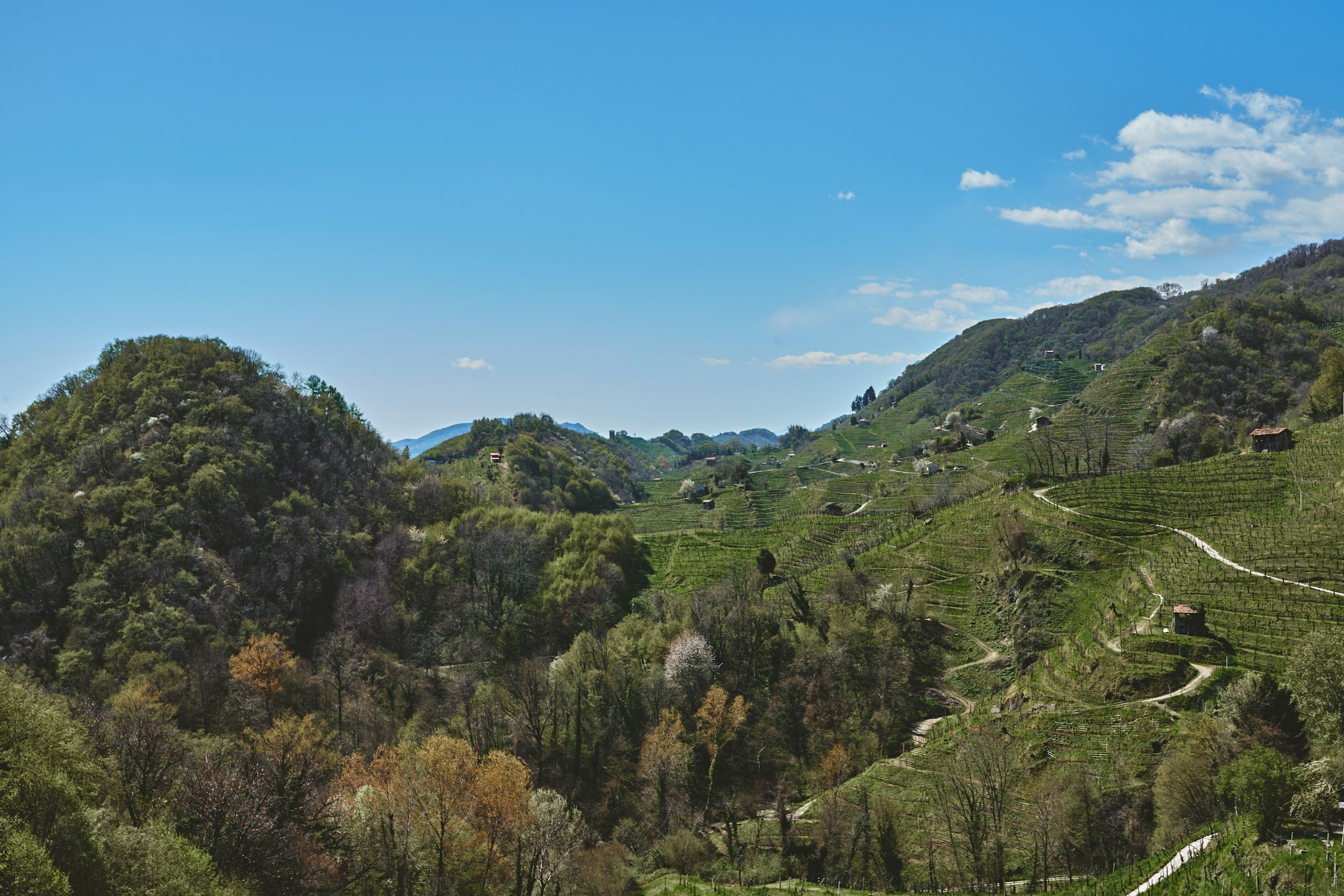
Wine tastings aren't the only reason to come here. These vineyard walks show a quieter side of the region that many visitors completely miss.
Changing hotels isn't always worth it
I used to think changing hotels automatically made a trip feel bigger. Two nights here, two nights there, another village on the last evening. On paper it always looked like I'd see more, but once I started travelling without a car I realised I was often swapping a relaxed morning for another checkout, another train or bus, somewhere to leave my suitcase until check-in and half a day that quietly disappeared without me noticing.
The Prosecco Hills are one of the few regions where I think staying put often gives you more than moving around, simply because the distances are much shorter than they first appear. It doesn't take very long to travel between Conegliano, Pieve di Soligo, Follina, Valdobbiadene or Cison di Valmarino, so moving hotels doesn't necessarily mean you'll spend less time travelling. Quite often you're just moving your luggage instead.
If I only had two or three nights, I wouldn't even consider splitting the stay. I'd choose one place, unpack properly and let the days develop naturally instead of feeling that I needed to squeeze every village into the itinerary. It's surprisingly easy to have breakfast in Conegliano, spend the afternoon around Santo Stefano and Cartizze, stop in Pieve di Soligo on the way back because a café catches your eye, and still be back in the same room before dinner without ever feeling rushed. That sort of flexibility disappears quite quickly once checkout time starts dictating the day.
Four nights is probably where I'd begin thinking differently, although only if there was a reason rather than simply because another hotel looked nice. I'd happily spend the first couple of nights in Conegliano, particularly if I was arriving from Venice, because it makes the journey straightforward and gives me time to explore the eastern side of the hills around Refrontolo, Molinetto della Croda, Pieve di Soligo and Farra di Soligo without constantly watching the clock. After that, moving to Valdobbiadene changes the feel of the trip without changing it completely. The mornings begin in the vineyards instead of on the bus, it's easier to visit producers around San Pietro di Barbozza, Guia and Col Vetoraz, and if you've booked a tasting that stretches into the afternoon, you're never very far from your hotel.
Once you've got five or six nights, splitting the stay starts making much more sense because you're no longer trying to fit everything into a long weekend. This is where I'd probably leave the wineries behind for a day or two and move somewhere like Follina instead. Not because it's difficult to reach from Conegliano, but because it encourages a completely different sort of day. Instead of planning around tasting appointments, you can wander through the cloister at Abbazia di Santa Maria, stop in Cison di Valmarino without wondering whether you're falling behind schedule, take the road up towards Passo San Boldo, or spend an hour in Rolle simply because you've heard there's a viewpoint worth seeing and the weather happens to be clear.
I also wouldn't move hotels every other night. It's tempting to book one night in Conegliano, one in Valdobbiadene and another in Follina because they're all quite different, but I think you'd spend more time checking in and out than you'd gain by changing base. The distances between them are short enough that it's usually easier to stay put and drive or take the bus for the day.
Some of my favourite parts of the trip happened because I wasn't in a hurry to be somewhere else. Lunch lasted longer than I'd expected, I stopped at another producer on the way back, or I decided to spend an extra hour in Cison di Valmarino instead of driving straight back. None of those things would have been quite as relaxing if I'd had a suitcase waiting in the hotel lobby or another check-in time to think about.
If you're wondering whether a weekend is enough, this itinerary gives a much clearer idea of how long you'll want to stay before heading home.
A few places I'd save for a second trip
One thing I've realised after planning trips around the Prosecco Hills is that there are quite a few places I'd happily stay... just not the first time.
That's not because there's anything wrong with them. Quite the opposite, actually. Some of them are among the most beautiful places you'll find anywhere in the region, but they're much easier to enjoy once you've already got your bearings and you know what a day here actually looks like.
The places I'd think twice about are some of the vineyard stays around Guia, Santo Stefano and San Pietro di Barbozza. On Booking.com they often look as though they're only a short walk from restaurants or wineries, but once you're there you realise that "one kilometre" doesn't really tell the whole story. A lot of the roads climb steadily through the vineyards, there aren't always pavements, and after a full day of tastings the last thing I'd want is another twenty-minute uphill walk in the dark.
That doesn't mean I'd avoid them altogether. I'd happily stay there if I knew I was planning a quiet weekend at the property or already had a car. I'd just be much less likely to book them for a first visit where I was arriving by train, relying on buses and hoping to wander out for dinner every evening.
I'd be just as careful with some of the agriturismi around Refrontolo. The setting is beautiful, with vineyards in every direction, but it's another place where Google Maps can give the wrong impression. A restaurant might look close enough to walk to, but once you check the route properly, it's often along quiet country roads with no pavement and more uphill walking than you'd expect. That's lovely in the middle of the day. It's much less appealing when you're heading back after dinner in the dark.
I'd probably think twice before booking somewhere high above Col San Martino as well unless the property offered transfers or I already knew I'd be eating there most evenings. It's a beautiful part of the hills, particularly if you're hoping to spend time around the Cartizze vineyards or visit smaller producers that don't appear in every guide, but it's also one of those areas where having your own car quietly changes the whole experience. Without one, I'd want to know exactly how I was getting back before I booked the room, not after I arrived.
There's another type of accommodation I'd be careful with, and that's the tiny vineyard stays where everything closes down once the owners head home for the evening. I actually love those places, but they're not always the relaxing escape people imagine on a first visit. If your train from Venice is delayed, the bus takes longer than expected or you simply decide you'd rather have dinner in Valdobbiadene before heading back, it's worth checking how flexible late arrivals really are. Some properties are wonderfully accommodating if you let them know in advance. Others have fairly fixed check-in times because there isn't a reception desk at all, just the family who live there.
One thing I almost never do anymore is book somewhere simply because it has the best vineyard view. I've made that mistake before, not in the Prosecco Hills but in other wine regions, and I always end up coming to the same conclusion. You don't spend the day looking out of the bedroom window. You spend it walking, eating, getting slightly distracted by somewhere that wasn't on the plan, stopping for another coffee because the square looks nice, or deciding to follow a handwritten sign to a producer you've never heard of. I'd much rather have an easy walk back from dinner every evening than another row of vines outside the room that I only really noticed for ten minutes before breakfast.
That's why I think I'd save somewhere like this for a second trip. The first time, I'd rather have restaurants, wineries and transport within easy reach. Once I already knew the area, I'd be much happier choosing a place where the biggest decision of the morning was whether to sit outside with a coffee for another twenty minutes before heading out.
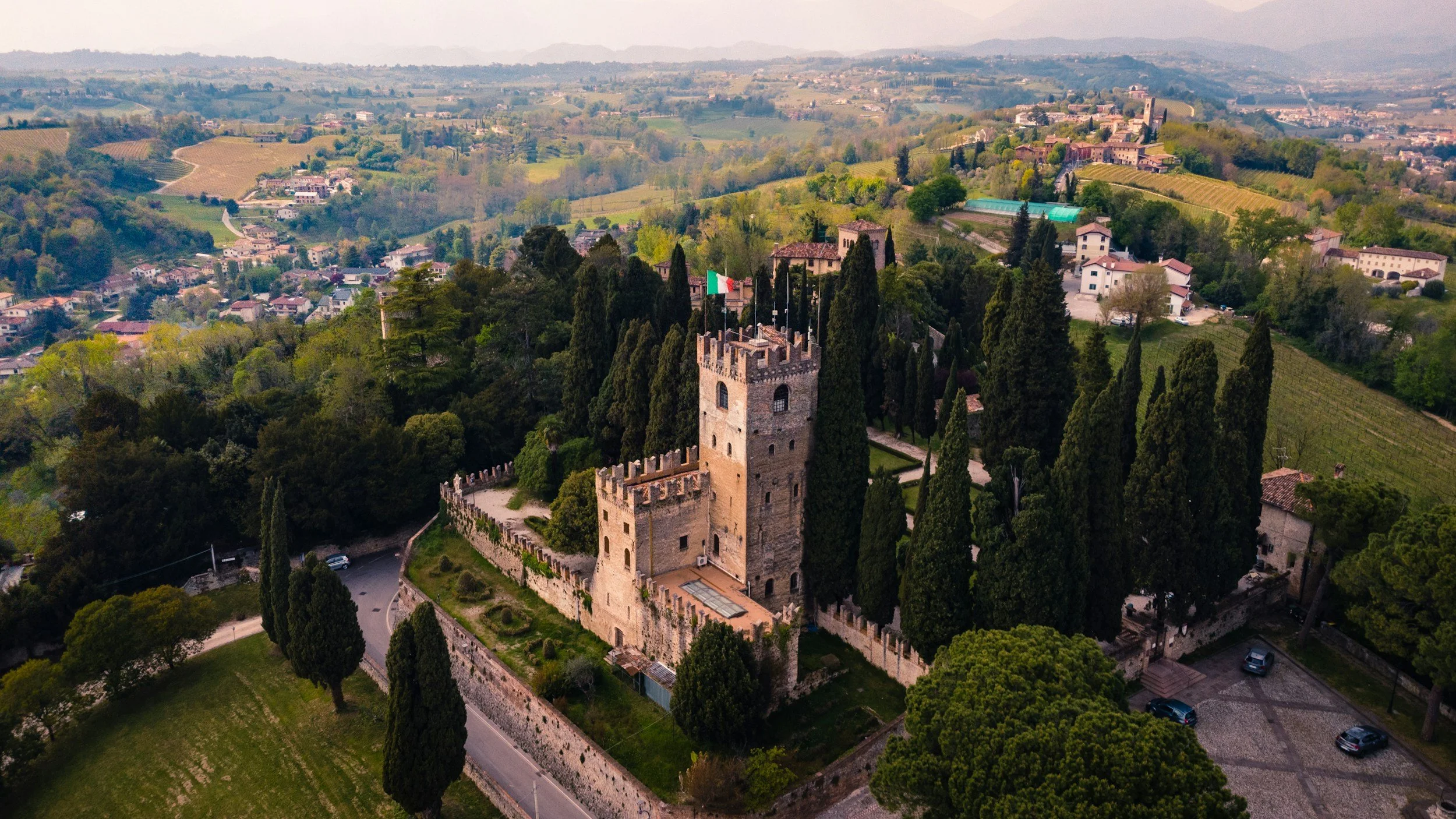
A lot of people continue towards the lakes after visiting the Prosecco Hills, and these lake towns are much easier to explore without a car than most visitors expect.
A few things that caught me by surprise
Some of the things that ended up making the biggest difference to the trip weren't the things I'd spent hours researching beforehand. They were the little practical details that only seem to appear once you're actually there, usually at the exact moment you wish someone had mentioned them.
Sunday afternoons become much quieter than a lot of people expect, particularly once you're away from Conegliano. Around Valdobbiadene, Guia and Santo Stefano, you'll still see people sitting outside with a glass of Prosecco after lunch, but by late afternoon the atmosphere changes quite quickly. Smaller shops begin closing, some cafés shut earlier than they do on Saturdays and the roads through the vineyards become noticeably calmer once the weekend visitors start driving back towards Treviso and Venice. If you're hoping to arrive on a Sunday and immediately visit several wineries, it's worth checking opening hours carefully because not all producers keep the same schedule.
I also assumed I'd be stopping for coffee whenever I felt like it, in the same way I would in a larger Italian town, but that's not always how the villages work. Around Follina, Miane and some of the smaller communities between Refrontolo and Combai, the cafés tend to follow local routines rather than tourist ones. Mid-morning is usually lively, but if you arrive late in the afternoon expecting a choice of places to sit outside before dinner, you may find far fewer options than you'd expected, particularly during the week or outside the main season.
Another thing I underestimated was how many wineries now work primarily by reservation, even if they welcome visitors. Some larger producers have regular tasting slots throughout the day, but many of the smaller family wineries around Guia, Col San Martino, Farra di Soligo and Santo Stefano prefer knowing who's coming, especially if tastings are hosted by the owner or one of the family. Sending a quick email a few days beforehand often gives you a much better experience than simply turning up and hoping someone is free.
Also, keep in mind that Google Maps never really explains is how different a twenty-minute walk can feel depending on which direction you're going. Around the vineyards, the distance might look perfectly manageable, but roads often climb much more steadily than they appear on the map, particularly between San Pietro di Barbozza, Cartizze and the higher vineyard roads towards Guia. It's not difficult walking, but after a full afternoon of tastings, carrying a couple of bottles of wine and standing in the sun, those last few hundred metres feel rather different from when you first planned the route at home.
Mobile reception is another thing I hadn't really thought about until I started relying on it. Around the towns it's rarely an issue, but once you move onto some of the smaller vineyard roads or into the folds of the hills near Rolle, Premaor or the quieter roads above Miane, you'll occasionally notice the signal dropping just enough for maps or translation apps to become slow. Downloading an offline map before setting out is one of those tiny jobs that takes a minute and often ends up being surprisingly useful.
If you're planning to bring wine home, it's also worth thinking about that before the last afternoon rather than after it. Buying a bottle here and there feels harmless at the time, but by the third winery it's very easy to find yourself carrying six or seven bottles between villages, onto the bus back to Conegliano and eventually onto the train to Venice. I usually pack a lightweight foldable tote bag inside my suitcase now, simply because it makes the journey home much easier than trying to juggle several paper carrier bags every time you change transport.
Finally, if your flight doesn't land until later in the day and you're travelling on to the Prosecco Hills that same evening, I'd seriously consider spending the first night in Conegliano, even if the rest of the trip is based somewhere else. By the time you've collected luggage at Venice Marco Polo Airport, reached Venezia Mestre or Santa Lucia, changed onto a regional train and arrived in Conegliano, there's something very reassuring about knowing the hotel is only a short walk away. Starting the trip with one straightforward evening before moving deeper into the hills the following morning often feels much more relaxed than trying to fit every connection into the same day.
Looking back, those are the sorts of details that ended up shaping the trip far more than I expected. They aren't the things people usually write about when they describe the Prosecco Hills, but they're often the little moments that decide whether the days feel uncomplicated from beginning to end or whether you're constantly making small adjustments along the way.
If you're still deciding whether Veneto is the right wine region, Piedmont instead has a completely different feel, and it's surprisingly easy to work out which suits your trip better.
FAQs about Prosecco Hills
Is Conegliano or Valdobbiadene a better place to stay without a car?
If it's your first trip to the Prosecco Hills, I'd usually choose Conegliano. The train from Venice stops here, buses spread out across the wine region, and once you're back for the evening you've got plenty of cafés, wine bars and restaurants within a short walk. It also gives you a bit more flexibility if the weather changes or you decide to visit somewhere that wasn't part of the original plan.
I'd choose Valdobbiadene if the wineries themselves are the main reason you're coming. You'll spend less time travelling each morning and it's much easier to explore places like Santo Stefano, Guia, San Pietro di Barbozza and the Cartizze hills without constantly thinking about the return journey. The trade-off is that evenings are much quieter and accommodation outside the centre quickly becomes difficult without a car.
Is it actually worth staying in the vineyards?
Sometimes.
It's also the booking decision people seem to regret most when they haven't really thought about what the evenings are going to look like.
If your idea of the perfect trip is eating dinner at the agriturismo, watching the sun set over the vines and spending slow mornings on the terrace before visiting one or two nearby wineries, then a vineyard stay is exactly what you're looking for.
If you enjoy wandering into town for another coffee, choosing between a few restaurants or deciding at the last minute to stay out longer than planned, I'd stay in Conegliano, Valdobbiadene or Follina instead. You'll still spend the day surrounded by vineyards, but you won't need to organise every evening around transport.
How many nights do you really need in the Prosecco Hills?
Three nights is where the region starts making sense.
With only one or two nights, it's easy to spend too much of the trip travelling between Venice, Conegliano and your accommodation before you've even started exploring. Three nights gives you enough time to enjoy the wineries without trying to fit everything into one day, and you'll also have time for villages like Follina, Cison di Valmarino or Refrontolo, which often end up becoming unexpected highlights.
If you've got five or six nights, I'd consider splitting the stay between two different bases rather than trying to see everything from one hotel.
Should I split my stay or stay in one place?
For two or three nights, I'd stay in one place.
The Prosecco Hills are much smaller than they first appear, and changing accommodation often means losing the best part of a morning packing, checking out and waiting for the next room to be ready.
Once you've got four nights or more, splitting the trip starts making more sense. I like the combination of Conegliano and Valdobbiadene, or Conegliano and Follina, because they create noticeably different trips without spending half the holiday moving luggage around.
What's the biggest mistake people make when booking accommodation?
Looking at the bedroom instead of looking at the map.
Before I book anywhere, I always zoom right in to see what the last few hundred metres actually look like. Is there a pavement? Is it a steep vineyard road? Could I comfortably walk back after dinner? Where's the nearest café the following morning?
Those questions usually tell me much more than another ten photographs of the room ever will.
Are buses enough to explore the Prosecco Hills?
For most first visits, yes.
The key is not trying to see too much in one day.
Regional buses connect Conegliano, Pieve di Soligo, Valdobbiadene, Follina and several of the villages in between, but they aren't designed for constantly hopping from winery to winery every hour. I found the days worked much better when I chose one part of the hills to explore rather than trying to cross the whole region before dinner.
When do hotels and agriturismi sell out?
The small vineyard stays usually disappear long before the larger hotels.
September is the busiest period because of the grape harvest, while spring weekends during Primavera del Prosecco also book surprisingly early, particularly around the villages hosting that weekend's festival.
If you're travelling in late October or during the week outside the main season, you'll usually have a much better choice, although some agriturismi reduce their opening days or close for part of the winter.
Is Follina too quiet to stay for a few nights?
Not if that's the sort of trip you're hoping for.
Follina suits people who enjoy walking around small villages, long lunches, quieter evenings and exploring places like Cison di Valmarino, Combai, Rolle and Passo San Boldo. It doesn't have the same number of restaurants or cafés as Conegliano, but that's also part of its appeal.
I'd probably choose somewhere else if nightlife was important, but if you're looking for somewhere that feels calm once the day visitors have gone home, it's a lovely base.
Can you buy wine and take it back on the train?
Absolutely, although it's worth planning for it.
It's surprisingly easy to buy "just one bottle" at each winery and end up carrying far more than you expected by the end of the day. I always travel with a foldable tote bag or a small padded wine carrier because changing between the bus in Valdobbiadene and the train in Conegliano becomes much easier when everything is packed together rather than spread across several paper bags.
If you're buying a larger quantity, many wineries are happy to arrange shipping instead.
If this is your first visit, where would you stay?
I'd book Conegliano.
Not because it's the prettiest place in the Prosecco Hills, but because it removes so many of the little logistical decisions that can otherwise dominate a short trip. The train journey from Venice is straightforward, you can walk to your hotel from the station, there are plenty of places to eat without planning every evening in advance, and the buses make it easy to explore different parts of the hills before coming back to the same base.
Once you've visited once and know the area a little better, that's when I'd start looking at vineyard stays around Santo Stefano, boutique hotels in Valdobbiadene or a few quiet days in Follina.