
Girona or Figueres: which is the better Costa Brava base without a car?
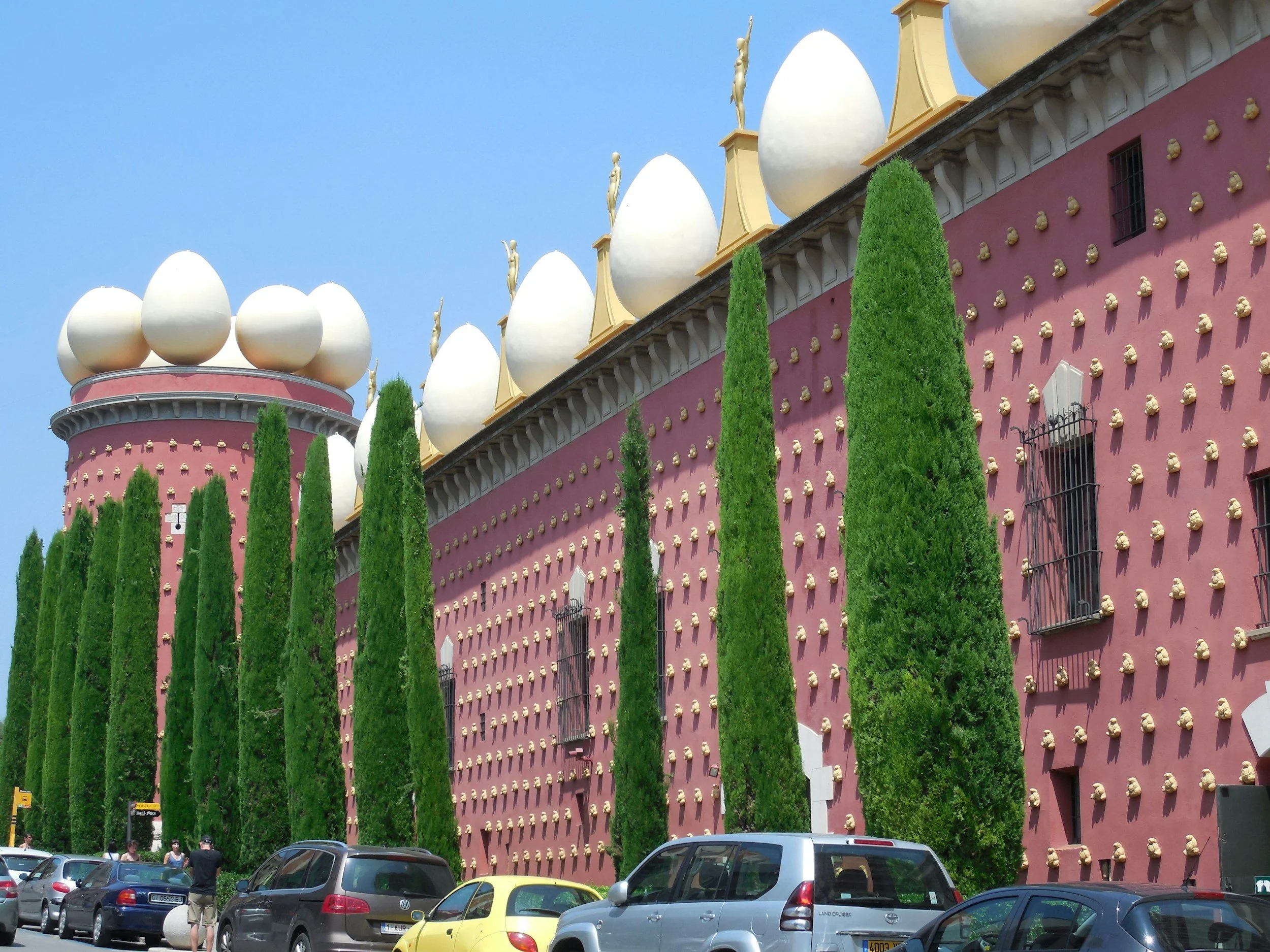
If I were planning a first Costa Brava trip without a car, I would stay in Girona unless I already knew that the north was going to dominate the trip.
Girona simply gives you more options without making every day feel like a transport exercise. You can head towards Palafrugell, Palamós, Sant Feliu de Guíxols or Tossa de Mar, take the train north to Figueres, and still come back to a city where dinner, a late walk or a rainy afternoon do not need their own backup plan. That matters more than it sounds, especially after a day built around bus times.
Figueres is the better choice when your plans are already full of Cadaqués, Roses, L’Escala, Llançà or Port de la Selva. In that case, staying in Girona starts to feel a bit silly. You are sleeping farther south, then spending the beginning and end of several days travelling back towards the same stretch of coast. Figueres may not be the city I would choose for a completely open-ended trip, but for a northern itinerary it can save a lot of unnecessary backtracking.
The Costa Brava is also much less compact than it looks when you are dropping pins onto a map. Cadaqués and Roses belong to a very different transport corridor from Pals, Begur and Calella de Palafrugell, while Tossa and Sant Feliu pull you farther south again. A place can look close enough to add casually to the next day, then turn into two buses, a limited return and an evening spent checking the time.
So if your plans are still flexible, Girona is the safer and more enjoyable base. If Cadaqués plus another couple of northern stops are already non-negotiable, I would choose Figueres.
There is one more decision to make before booking either. If the version of the Costa Brava in your head involves walking down to the beach before breakfast, staying by the water for dinner and not caring when the last bus leaves, I would skip both cities and stay on the coast instead. Girona and Figueres are useful bases for seeing the Costa Brava. They are not a substitute for living beside it for a few days.
Both cities are inland, and most of the coast still runs on buses
The trains are useful, but they only get you so far. The R11 runs through Barcelona, Girona and Figueres before continuing north towards places such as Llançà and Portbou, and the RG1 adds another useful inland route through stations including Flaçà and Blanes. They make it easy to move between Girona and Figueres, and they are handy for a few places farther along the coast, but most of the Costa Brava people come here for is still reached by bus.
There is no train pulling into Pals, Begur, Calella de Palafrugell, Llafranc, Palamós, Tossa de Mar or Cadaqués. That is why I would pay far less attention to the distance on Google Maps than to the timetable. Two places can look almost equally close, yet one gives you several sensible buses during the day while the other leaves you planning lunch around the one return you really cannot miss.
Pals is one of those places where the transport looks simple until you start checking the details, so I have covered planning a car-free weekend in Pals separately, including the bits I would sort out before setting off from Girona.
And “take the train, then connect by bus” can sound much simpler than the day feels once you are doing it. I would want to know where that final bus leaves me, how often it comes back and whether I can stay long enough to enjoy the place rather than spending the afternoon glancing at the time. In Begur, for example, arriving in the hill town does not mean you have reached the beaches below it, and Portlligat still needs extra time after the bus has brought you into Cadaqués.
The easiest way to avoid getting caught out is to search the whole journey for the actual day you want to travel, then check the return straight away. Do not assume that because a bus exists in one direction, you have a flexible connection for the rest of the day. Summer timetables can be much fuller than those in May, October or winter, and some routes also change depending on the day of the week.
I do not think a day trip needs buses every half hour to be a good one. One well-timed journey out and a comfortable return can be completely fine. I just want to know that before I book the hotel, the museum ticket or the lunch reservation, rather than discovering at 16:00 that the next useful bus is the one I should already be standing in line for.
If the different Spanish train services, station names and ticket types are starting to blur together, my guide to how to use Renfe trains in Spain goes through the practical side without turning it into a railway manual.
Why Girona is the easiest place to start with
One of Girona’s biggest advantages becomes obvious as soon as you start planning day trips: the train and bus stations are right beside each other at Plaça d’Espanya.
That saves more hassle than it sounds. You can arrive by train from Barcelona, take the airport coach into the same part of town, catch a bus to the coast the following morning and take the train to Figueres another day without learning four different departure points. If you are travelling with a suitcase or tend to book the first useful bus of the morning, this is a very nice thing not to have to think about.
It also gives you much more freedom when choosing a hotel. Stay reasonably close to this side of the centre and most of the transport for the trip begins in the same place, while the old town is still close enough that you are not sacrificing your evenings for the sake of an easy departure.
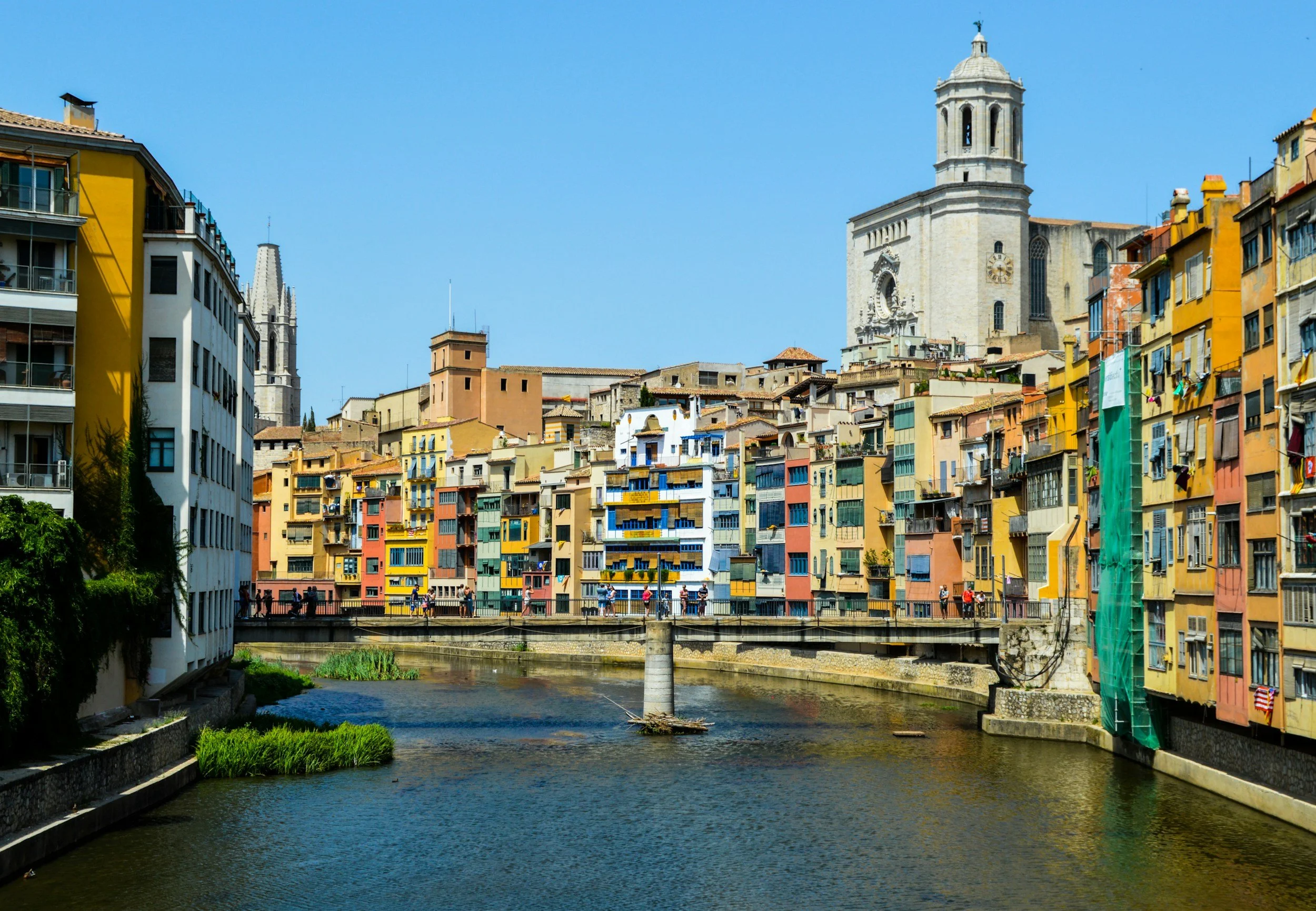
You can change direction without changing base
Girona also gives you a much better mix of days than the map first suggests. The Moventis coastal network heads towards Palamós and Palafrugell, from where places such as Calella de Palafrugell and Llafranc come into play, while other connections take you south towards Sant Feliu de Guíxols and Tossa de Mar.
In the other direction, TEISA buses open up Banyoles and Besalú, which I think is particularly useful if you are staying four or five nights. You do not have to make every day about reaching another stretch of beach just because you have based yourself near the Costa Brava. Besalú gives you a completely different day, and Banyoles is an easy one to keep in reserve when you do not fancy organising another coastal connection.
Figueres is also straightforward by train, so you can still visit the Dalí Theatre-Museum without moving hotels, and the railway continues north towards places such as Llançà and Portbou. I would not choose Girona for three separate days around Cadaqués and Roses, but having the north available for one day is very different from trying to use Girona as your northern base.
That is where Girona becomes particularly useful for a first trip. You do not need to decide in advance that this is going to be a beaches-only, medieval-villages-only or Dalí-only holiday. There are enough genuinely different routes from the city that you can look at the weather and the bus timetable and choose accordingly.
Girona is also nicer when the day trip ends early
This matters because bus days do not always fill twelve hours. Sometimes the sensible return from the coast is earlier than you would ideally choose, and sometimes after three days of connections you simply cannot be bothered with another one.
Coming back to Girona at six in the evening does not feel like the day is over. Rambla de la Llibertat, the riverfront and the lanes of the Barri Vell are all easy places to head after dropping your bag at the hotel, and there is enough restaurant choice that you do not need to plan dinner around the bus station.
Girona is useful on the less cooperative days too. If the weather turns, there is the Museum of Cinema, the Museum of Jewish History, the Art Museum and the Girona History Museum, rather than an afternoon spent trying to persuade yourself that rain on the coast is atmospheric.
For a trip built around public transport, I think this side of the base decision gets underestimated. You are not only choosing where the buses leave from. You are choosing where you will spend every morning before them and every evening after them.
I wouldn't automatically book the prettiest hotel in the old town
For this trip, my first hotel search would be around Mercadal and the lower centre, roughly between Plaça de Catalunya, Plaça de la Independència and the station. That gives you a really good compromise: the old town is close, the river is close, but getting to an early bus does not involve crossing half of Girona first.
If the itinerary is very transport-heavy, I would happily stay around Plaça d’Espanya and the Eixample instead. It is more everyday city than medieval Girona, but when you are leaving early several mornings in a row, being able to walk out of the hotel and reach the station quickly starts to feel like an excellent hotel feature.
The lower Barri Vell around Rambla de la Llibertat would be my pick if evenings in Girona matter more and you do not mind a slightly longer station walk. I would be much fussier about properties higher up around the cathedral and the upper old town. A hotel pin can look surprisingly close to the station until you add cobbles, steps, an uphill section and a suitcase that suddenly seems twice as heavy as it did at the airport.
So when you are comparing hotels, I would open the map and check the walking route to Girona bus station, not just how close the property looks to the cathedral. For this particular trip, that five or ten minutes of difference is something you may notice every single morning.

Figueres is the better base for Cadaqués, Roses and the northern coast
Figueres starts to earn its place the moment the trip becomes heavily northern. If Cadaqués, Roses, L’Escala, Llançà or Port de la Selva are the places you keep circling on the map, I would much rather wake up here than spend the first part of several mornings travelling north from Girona before the coastal part of the day has even begun.
That is especially true with Cadaqués. The Moventis line 12 runs from Figueres through Castelló d’Empúries and Roses to Cadaqués, so this is the city that sits naturally behind a northern itinerary rather than one you have to force into it. Girona can still get you there, but if you are doing Cadaqués plus Roses plus another northern day, the extra ground starts to feel pointless very quickly.
The northern routes are much easier to build around from here
Figueres is not just useful for one bus to Cadaqués. Line 10 heads towards Sant Pere Pescador and L’Escala, while line 30 covers Llançà, Port de la Selva and Portbou. Suddenly you have several quite different days available without changing base or spending half the morning undoing the geography of your hotel choice.
I would still be fussy with the timetable. A route number is useful, but it does not tell you whether you can stay for dinner, add a longer walk or decide at 16:30 that you are not ready to leave yet. If I were planning L’Escala or Cadaqués, I would check the outward bus and then immediately look at the last two returns I would realistically be happy taking. That gives you a much better idea of how relaxed the day will feel than the journey time alone.
And this is also where Figueres becomes a better base than it first looks. You are not choosing it because it has more things to do than Girona. You are choosing it because, for the northern coast, it wastes less of your day.
Figueres is more enjoyable overnight than a quick Dalí stop suggests
Figueres has a slightly unfair reputation as somewhere you visit for the Dalí Theatre-Museum, eat something quickly and leave. I would not stretch it into a five-night city break for the sake of it, but for two or three nights there is enough around you that coming back from the coast does not feel flat.
The Rambla gives the centre somewhere to gravitate towards in the evening, with cafés, restaurants and shops around it, while Sant Ferran Castle is large enough to fill a proper chunk of a day rather than being an extra you squeeze in around the museum. There is also the Museu de l’Empordà and the Toy Museum of Catalonia if the weather turns or you decide you have had enough buses for one afternoon.
That is about as much as I would ask from Figueres as a base. I do not need it to compete with Girona street for street. I need somewhere I can come back to, get dinner without overthinking it, have a walk around the centre and not feel as though the whole purpose of the city ended when the museum closed.
For a short northern trip, that is enough. For a longer stay where half the pleasure is choosing somewhere different for dinner every night and spending lazy evenings in the base itself, Girona still has more range.

The two Figueres stations are easy to mix up
This is probably the least glamorous detail in the article and one of the most useful.
Figueres station is the conventional station in the city centre, right beside the bus station. That is the one I would want close to my hotel because the regional trains and the buses towards the northern coast all come together in the same area.
Figueres–Vilafant is the separate high-speed station used by AVE, Avant and some international services. Official Figueres tourism information puts it around 1.5 km from the centre, with a shuttle coordinated with train arrivals as well as taxis.
A kilometre and a half does not sound dramatic until you arrive with luggage, realise your coastal bus leaves from central Figueres and discover that your hotel was advertised as “near the train station” without making it very clear which one.
I would not let that put me off arriving at Figueres–Vilafant. Take the shuttle or a taxi into town and forget about it until departure day. I just would not base the entire stay around the high-speed station simply to make one arrival slightly easier.
I would stay between Plaça de l’Estació and La Rambla
For this trip, I would keep the hotel search fairly tight and look first at the area between Plaça de l’Estació and La Rambla.
If several mornings involve early buses to Cadaqués, Roses or L’Escala, staying closer to Plaça de l’Estació is the practical choice. The immediate streets are more ordinary than the centre around the Rambla, but Figueres is compact enough that you are still not far from dinner or an evening walk.
If I were staying two or three nights and did not have brutally early departures every morning, I would edge closer to La Rambla and the Dalí Theatre-Museum. You get more of the city outside the hotel door, while the bus station is still close enough that reaching it does not become a daily nuisance.
The only area I would leave out of the search is around Figueres–Vilafant, unless there were some very specific reason for staying there. I would rather deal with that transfer once on arrival than spend the rest of the trip adding extra distance every time I wanted a bus, dinner or a walk into town.
For Figueres, the hotel pin matters less because the city is huge and more because the wrong “station” can quietly put you on the wrong side of your own itinerary.
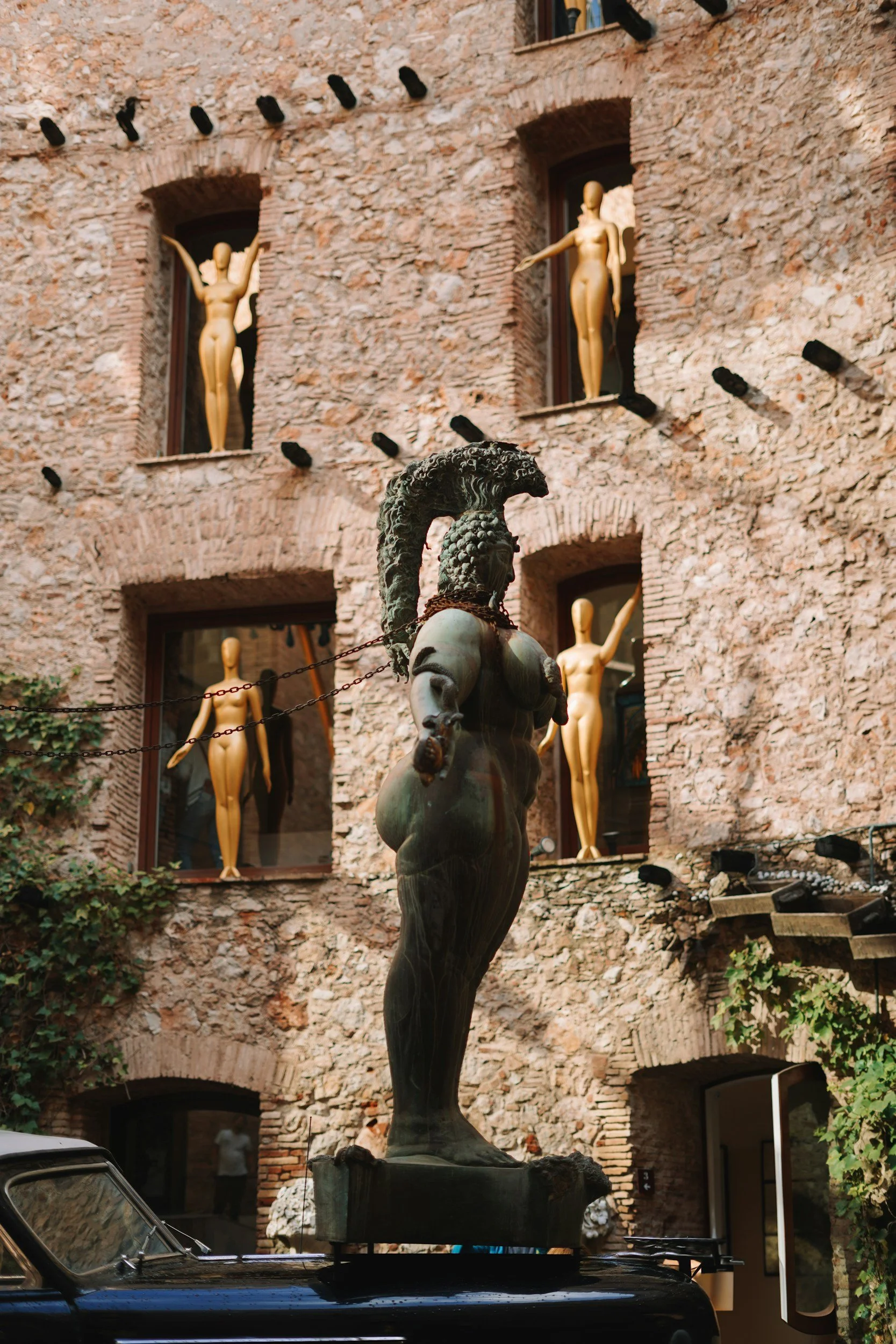
Where Girona wins, and where Figueres saves you time
For Cadaqués, I would choose Figueres without much hesitation, and the argument gets even stronger if Portlligat is part of the day. The bus starts much farther north, which gives you more breathing room once you arrive, and you will want it if you have a timed reservation at the Dalí House-Museum. Portlligat sits beyond the Cadaqués bus station, so booking museum entry too close to your scheduled arrival is a fairly unnecessary way to make a beautiful day stressful. Add Cap de Creus as well and I would start considering a night in Cadaqués rather than trying to fit everything around one return bus.
The same Figueres advantage applies to Roses and Castelló d’Empúries, and also to L’Escala. Empúries is where I would pay a little more attention: the archaeological site is outside L’Escala itself, so getting a bus into town only solves part of the journey. Check the stop nearest the ruins and the walk from there before deciding how much of L’Escala you can comfortably add to the same day.
Once you move down towards the Baix Empordà, Girona becomes much more useful. Palafrugell, Calella de Palafrugell and Llafranc all fit more naturally from here, although Palafrugell is the transport hub rather than the coastal ending most people have in mind. Depending on the season, getting all the way to Calella or Llafranc can mean another local connection. I would search for the actual seaside village you want rather than seeing a good bus to Palafrugell and assuming the difficult part is done.
Begur and Pals also favour Girona, but these are two places where I would plan the day before leaving the hotel. Pals has fewer useful public-transport options than the larger coastal towns, while Begur comes with a geographical annoyance that is easy to miss when looking at photos: the old town is on the hill and the famous coves are below it. Reaching Begur does not put you on Sa Riera, Sa Tuna or Aiguablava. If the beach is the reason you are going, check that second leg first rather than finding yourself in Begur admiring the view of the coast you were supposed to be swimming in.
Farther south, I would use Girona for Palamós, Sant Feliu de Guíxols and Tossa de Mar. Starting these days in Figueres means travelling south before you have even reached the part of the journey you came for, and there is very little benefit in doing that. Tossa is somewhere I would particularly want to protect my time rather than spend an extra chunk of the day crossing the region.
Besalú is the useful exception to all these clear north-versus-south answers. Both Girona and Figueres can work, so I would not change hotels around it. If you are already in Figueres for Cadaqués and Roses, visit from there. If Besalú sits alongside Banyoles or Olot in your plans, Girona gives you more to work with.
And there is no need to choose Girona because you are worried you will miss Figueres, or vice versa. The two cities are connected by train, so the Dalí Theatre-Museum is an easy day from Girona and Girona itself is an easy day from Figueres. Just keep that two-station issue in mind when booking the train into Figueres: regional services use the central station, while high-speed trains use Figueres–Vilafant.
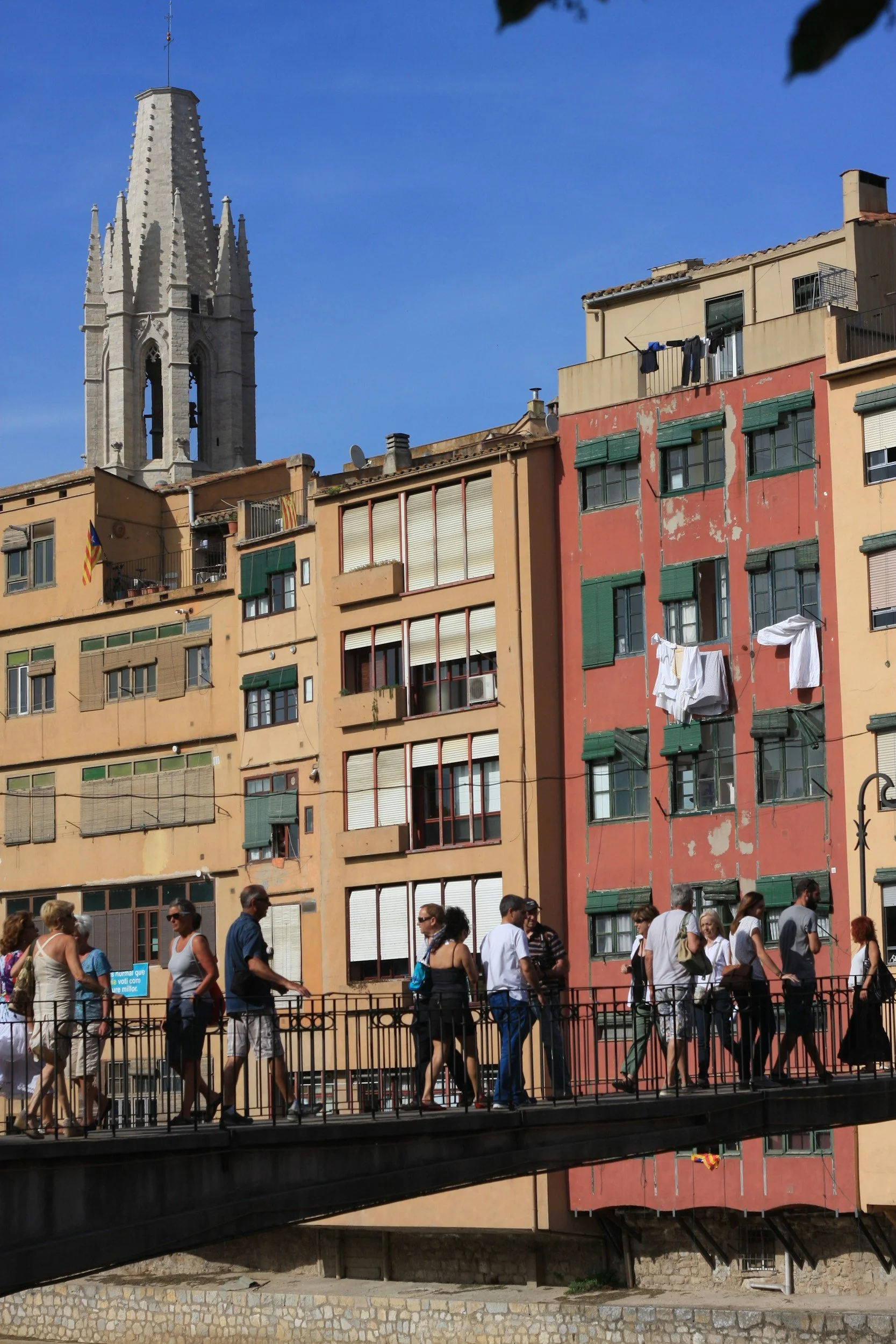
The return bus matters more than the morning one
It is very easy to look at a morning bus to the coast, see a decent departure time and think the day is sorted. I would always look at the way back first.
On some routes, you might have a couple of good returns and plenty of room to change your mind. On others, there is one bus that really works, and suddenly lunch, a museum visit or that last swim all have to fit around it. That does not make the day a bad idea, but it does change how relaxed it will feel.
The other thing that catches people out is assuming the town name is the end of the journey. In Begur, the bus gets you to the hill town, not straight down to Sa Riera or Aiguablava. In Cadaqués, Portlligat is still another stretch beyond the bus station. Those are small details when you are looking at a map at home and much more noticeable when you have a timed ticket or one useful bus home.
Cadaqués is also one place where I would leave a bit of breathing room at the end of the day. Summer traffic on the road in and out can slow things down, and if you are connecting onwards by train from Figueres, you need to check which station you are using. Figueres–Vilafant is separate from the central bus station, so I would not book anything that only works if the coastal bus arrives perfectly on time.
Once I had found a return I was happy with, I would save it on my phone and forget about it for the rest of the day. A screenshot of the right stop, the return times and one backup option is enough. I would also check whether that bus can be booked ahead, especially in summer, because the different operators do not all work in exactly the same way.
For me, the backup bus is the important bit. If there is another decent one later, the whole day feels easier. You can stay for another drink, walk a little farther or decide you are not quite ready to leave yet without spending the afternoon checking the time.

Where to stay in Girona and Figueres when you're catching buses most days
At this point, I would choose the hotel almost as carefully as the city. A beautiful room is less exciting on the third morning if reaching the bus means twenty minutes over cobbles with an early start, and staying right beside the station can feel equally unnecessary if you are only taking two day trips all week.
In Girona, I would stay somewhere between the station and the old town
For most trips, Mercadal and the lower centre are the sweet spot. Around Plaça de Catalunya and towards Plaça de la Independència, you are close enough to the station that an early bus is not a major event, but close enough to the river and Barri Vell that you still feel as though you are staying in Girona rather than beside its transport hub.
If the itinerary is packed with day trips, I would move the search closer to Plaça d’Espanya and the Eixample. It is not the part of Girona people tend to fall in love with in hotel photos, but there is something very appealing about being able to leave your room and reach the bus station without calculating extra walking time every morning.
I would go the other way and choose the lower Barri Vell if the evenings matter more and you only have a couple of early departures. Around Rambla de la Llibertat and the river crossings, you keep the old centre outside the door without pushing yourself too far uphill.
The upper part of the Barri Vell is where I would get picky. A hotel near the cathedral may look only a little farther from the station on the map, but steps, cobbles and gradient make that distance feel rather different with luggage. If mobility is an issue, or you know you are going to be catching several early buses, I would leave the prettier uphill room for another kind of Girona trip.
In Figueres, keep the search between the bus station and La Rambla
Figueres is easier because the useful area is fairly compact. I would look first in the belt between Plaça de l’Estació and La Rambla, then decide which end suits the trip better.
Closer to the station makes sense if Cadaqués, Roses or L’Escala are going to involve early starts. Move towards La Rambla and the Dalí Theatre-Museum and the evenings become nicer, while the bus station is still close enough that you are not creating a transport problem for yourself.
The only area I would actively avoid choosing for convenience is around Figueres–Vilafant. Being beside the high-speed station sounds useful until you remember that the coastal buses, central station, Rambla and most of the places you will eat or walk around are back in Figueres proper. I would much rather take the shuttle or a taxi once when I arrive than organise the whole stay around the AVE station.
When I am checking reviews for either city, I would search for the boring phrases that end up mattering most: “walk to bus station”, “steps”, “cobbles”, “street noise”, “late check-in”, “luggage storage” and “early breakfast”. In Figueres I would also look for mentions of the Figueres–Vilafant shuttle. Those comments tell me far more about whether a hotel suits this trip than another paragraph about the view from the rooftop terrace.
Skip both cities if the coast itself is the holiday
There is a point where being clever about transport stops helping. If the trip you want is mostly swimming, coastal walks and evenings beside the water, I would stop trying to decide between Girona and Figueres and stay on the coast.
Both cities are useful because they give you choices. The trade-off is that every coastal day eventually ends with a bus inland. You do not get to stay on the beach until you are hungry, decide on dinner nearby and walk back to the hotel afterwards. You need to leave when the return journey tells you to leave, and after a few days that can start to feel like quite a big compromise if the sea was the whole reason for coming.
For the southern Costa Brava, I would look at places such as Sant Feliu de Guíxols or Tossa de Mar. Around the central coast, Palafrugell, Calella de Palafrugell or Llafranc put you much closer to the coves and the Camí de Ronda. Farther north, Roses or Cadaqués make more sense when most of the trip is going to happen around the Alt Empordà coast anyway.
You give up some day-trip range by doing that, but you gain a very different type of holiday. There is a big difference between visiting Calella de Palafrugell for six hours and being able to walk down there first thing in the morning, come back to the room in the afternoon and head out again after the day-trippers have started leaving.
I would still choose Girona for a trip where the coast is only part of the plan, and Figueres for a northern itinerary with several different day trips. But if I found myself choosing a city purely because it gave me buses to the beaches I wanted to spend every day on, that would be my sign to move the hotel to the coast instead.
When it starts to make sense to move hotels
For two or three nights, I would stay put. There is no point spending part of such a short trip checking out, dragging your bag across town and checking in again. Pick Girona for a mixed first trip, or Figueres if you already know the whole point is Dalí plus the northern coast, and leave it at that.
At four or five nights, I would still usually keep one base, unless the itinerary is starting to pull in two completely different directions. Two days around Cadaqués and Roses followed by two or three around Begur, Palafrugell and the central coast is where I would start to question whether “one hotel is easier” is even true anymore. It sounds easier when you book it. It feels less clever when you are doing the same long return for the third evening in a row.
A full week is where I would be much more open to splitting the stay. Girona plus Figueres works well if the trip is mostly about seeing different parts of the region, while Girona plus a coastal town is nicer if you want the second half to feel less organised around bus times.
I think people sometimes overestimate how annoying it is to move once and underestimate how annoying repeated travel becomes. Packing a bag and changing hotels takes a little effort. Losing a couple of hours again and again because you picked one base for the entire week can eat into the trip much more.
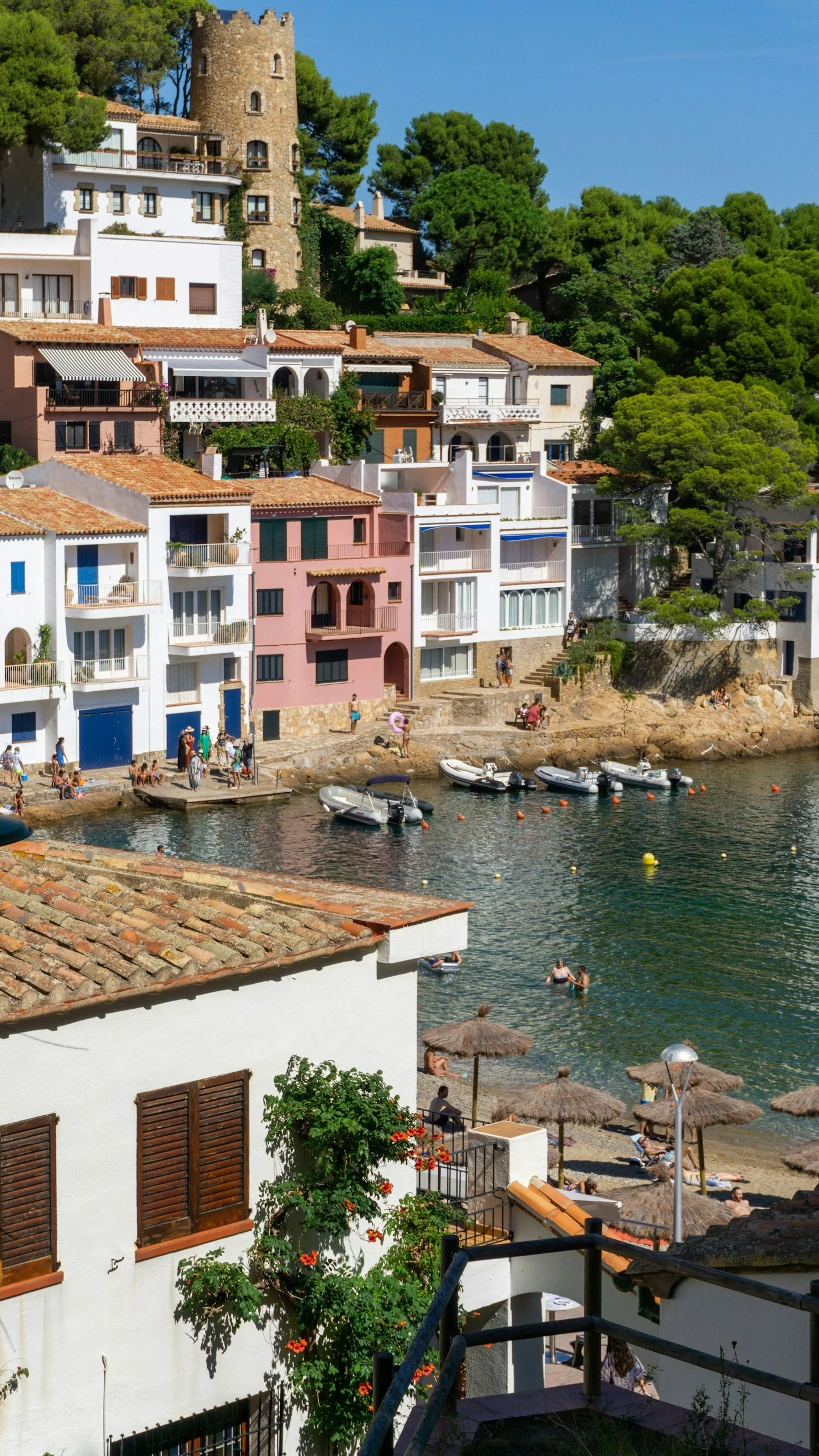
Once summer is over, Girona becomes the easier base
Outside July and August, I would be a little less ambitious about how many different pieces of the coast I tried to fit into one stay. The main buses between the bigger towns usually keep going, but the smaller local connections are often the first thing to thin out, and those are the ones that can make or break a day. Getting from Girona to Palafrugell may still be straightforward in October, for example, while carrying on to Calella or Llafranc gives you far fewer choices than it did a few weeks earlier. Suddenly the day is being shaped by one useful connection rather than by where you fancy going next.
This is where Girona starts to feel like the easier place to stay. If the weather turns or a coastal timetable looks annoying, you can simply have a day in Girona without feeling as though you are filling time until the next bus. The old town, museums, market and restaurants give you enough to work with, which I would value much more in November than in July when I am probably trying to spend every possible hour by the sea anyway.
Figueres can still be a really good choice if the trip is built around Dalí and a couple of northern days, but I would check those plans before booking everything else around them. Portlligat follows a seasonal calendar, and the Dalí Theatre-Museum has closure days outside the busiest months, so on a short trip it is very easy for one closed museum or awkward bus day to knock the whole plan sideways. That is less of an issue in summer, when there are simply more ways to reshuffle things.
May, June and early September are the nice middle ground because you can often still travel fairly freely without dealing with peak-August crowds. Later in autumn and through winter, I would keep the coast more selective and let the base do more of the work. I would still check the exact Moventis, TEISA and museum calendars for the week I was going, because a July timetable is not something I would trust for an October trip.
The place I’d book in the end
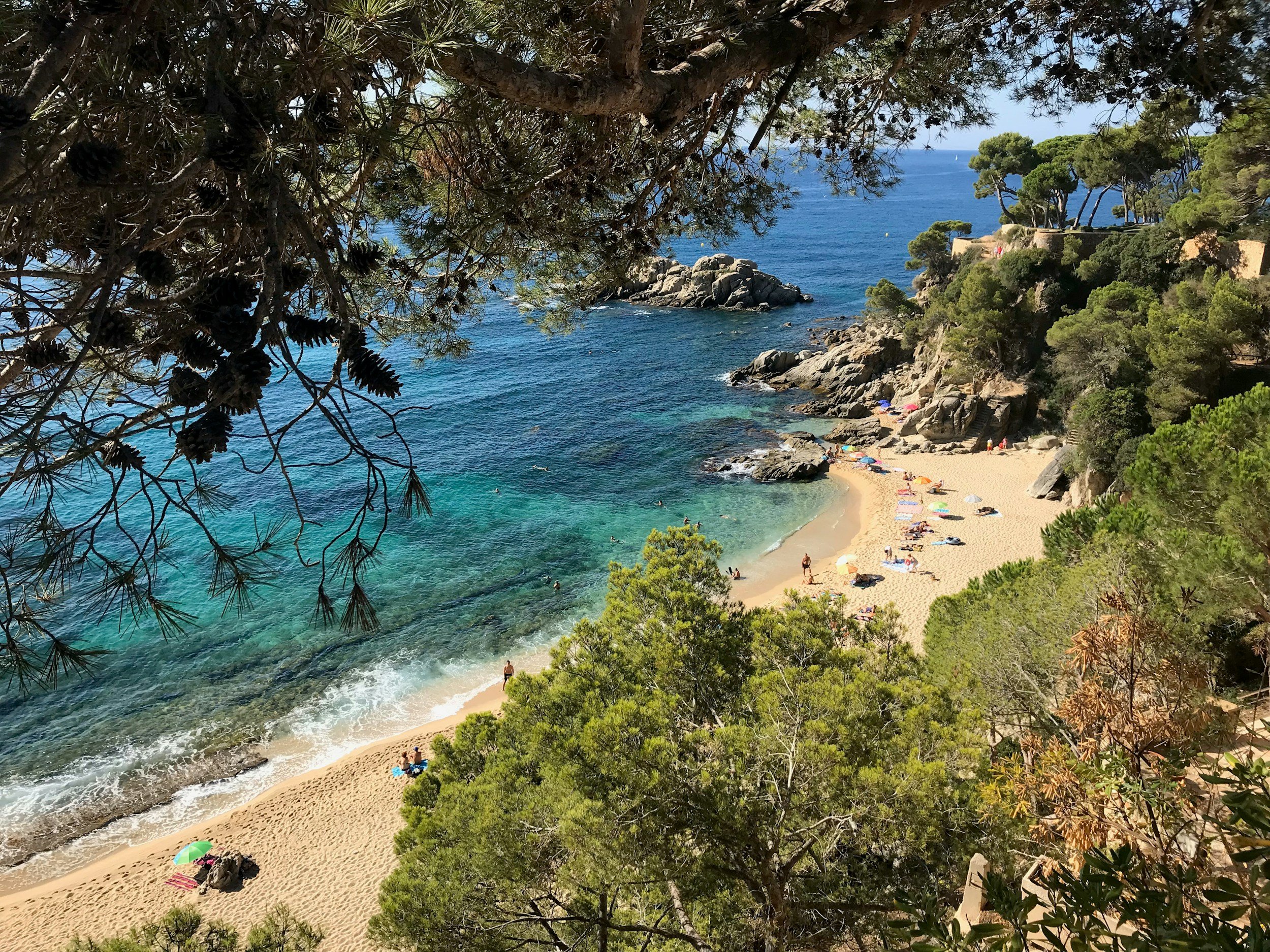
After going through all of this, I would still book Girona for a first car-free Costa Brava trip. Not because it wins every individual journey, but because it gives the trip a bit more breathing room. You can change your mind, have a slower day, come back earlier than planned and still feel as though you are somewhere you wanted to stay in the first place.
Figueres is different. I would book it when the trip had already become quite specific before I even started looking at hotels. By then, the choice should feel obvious rather than strategic. You are not choosing Figueres because it is the “better city”; you are choosing it because staying farther south would just make several days longer for no good reason.
The other thing I would pay attention to is whether I am spending too much time trying to make the transport fit the holiday I want. If I keep pushing dinners earlier, cutting walks short or watching the clock because I need to get back inland, I would move the stay to the coast. And if the week starts stretching across too much of the region, I would split it rather than pretending one base is still the simpler option.
That is probably the point where the planning gets easier: once you stop trying to find one place that does everything well.
If you are still working out how far you can get before the buses even come into the picture, I have a separate guide to small towns in Catalonia you can reach by train, including a few places that fit easily around Barcelona, Girona and Figueres.
FAQ s about Costa Brava
Is Girona or Figueres better without a car?
For a first trip, I would book Girona unless the north is already doing most of the planning for me. Girona gives you more room to change your mind once you are there, which I value more than having the shortest possible journey to one particular place. Figueres becomes the better choice when Cadaqués, Roses or L’Escala are not vague possibilities but days you already know you want.
Can you visit Cadaqués from Girona without a car?
Yes, and for one day I would not move hotels just to avoid it. But if Cadaqués is joined by Roses, Portlligat or another northern day, I would start questioning why I was sleeping in Girona at all. One longer journey is fine. Repeating it several times is where the “simpler” base starts becoming the more annoying one.
Can you reach Costa Brava beaches from Girona or Figueres?
Yes, but I would never assume that reaching the town means I have reached the beach. That distinction matters around places such as Begur, where the old town sits above the coves, and around Palafrugell, where the bus hub is not the waterfront you probably had in mind. I would check the final stop before getting excited about a beautifully short journey time.
Which Figueres train station should I use?
For a car-free stay, the station I care about most is central Figueres station, because the bus station is right beside it. Figueres–Vilafant is the high-speed station outside the centre, and arriving there is completely manageable, but I would treat it as an arrival problem to solve once rather than a neighbourhood to base the whole holiday around.
Is Figueres worth staying overnight?
I think so, but for the right trip. I would happily stay a couple of nights if the plan included the Dalí Theatre-Museum and a northern coastal day, because you gain an easier morning and avoid squeezing Figueres into a rushed stop between trains. I would be less tempted to use it for a long, loosely planned stay when Girona gives you more choice once the day trips are over.
Should I stay in Girona, Figueres or on the coast?
I would choose Girona when I still want options, Figueres when the itinerary has already committed itself to the north, and the coast when I keep trying to make bus timetables fit around the fact that I really just want to be by the water. That last one is usually fairly obvious once you notice how much of the planning revolves around getting back inland.