How to visit Barolo and Barbaresco wineries without a car
The winery has confirmed your 14:30 visit in Barolo, which looks ideal until you open the bus timetable and realise that the journey you saved only runs on school days, while the next return does not fit the tasting. Yes, you can visit Barolo and Barbaresco wineries without driving, but I would not plan to spend the day jumping between producers by bus. For an independent visit, I would keep the day quite small: a taxi from Alba into one village, one proper cellar appointment, lunch nearby, perhaps another glass at the regional enoteca, and a return time agreed before any wine is poured. If the producers are out among the vineyards, or you want to cover both Barolo and Barbaresco in one day, a driver or organised tour makes far more sense.
Google Maps is not lying when it draws a route from Alba to Barolo or Barbaresco, but it is answering a much simpler question: does a bus travel between these places at some point during the day? It does not tell you whether you can arrive before a cellar appointment, have lunch afterwards and get back to Alba in the evening. Line 2172 includes journeys linked to the Piedmont school calendar, while the current Line 62 timetable has buses reaching Barbaresco from Alba at 13:35 and 14:25 but shows the return from Barbaresco at 7:05 in the morning, which is technically a connection but not one that helps with a wine day. Once a producer has put aside 90 minutes to show you the cellar and pour their wines, I would not build the plan around arriving half an hour late, and I certainly would not wait until after lunch to start looking for a taxi back to Alba.
I would also click beyond the map pin before assuming that a central winery address leads to the cellar. Damilano is the clearest example: Via Roma 31 appears in the middle of Barolo, only a few streets from Castello Falletti, but that address belongs to the wine shop, while the cellar where the wine is made sits beside the provincial road between Alba and Barolo in La Morra. Marchesi di Barolo at Via Roma 1 and Borgogno at Via Gioberti 1 do offer booked cellar visits without requiring another journey out of the village, so I would always read the visit description rather than plan the day around the word “winery” on Google Maps.
Barbaresco has the same small print packed into an even smaller area. At Boffa on Via Torino 17, you can walk in for an informal tasting on the terrace, but the longer visit through the winery and nearby vineyards needs to be booked. Produttori del Barbaresco offers a short tasting through its wine shop below the tower, which is useful when you do not want another fixed appointment, although it should not be read as a guaranteed tour of the working cellar. I would treat the regional enoteche in Barolo and Barbaresco in much the same way: they are good places for the flexible second tasting and for comparing several producers, but not a replacement for the cellar visit.
I’d start with the winery I most wanted to visit, but I wouldn’t book it until I knew exactly where the visit happened and how I was getting back to Alba. A producer’s Barolo address can turn out to be a shop in the village while the actual cellar is several kilometres away, and finding that out after paying for the tasting is too late. Once the address and the return were sorted, I’d book lunch nearby and leave the second tasting open.
I’ve deliberately not called these the best wineries in Barolo or Barbaresco, because I haven’t tasted every producer side by side and I don’t want to pretend that I have. Even a brilliant tasting is a poor choice for a no-car day if the cellar sits down a road you cannot safely walk or the only available appointment leaves you with no journey home. I’ve focused on what I would want to know before paying: where I need to go, whether somebody has to be expecting me and whether I will actually enter the cellar or simply taste at a counter.
In Barolo, I’d book either Marchesi di Barolo or Borgogno as the one visit I had to be on time for, have lunch in the village and decide afterwards whether I wanted another tasting at the Enoteca Regionale. In Barbaresco, I’d do the same with Boffa at Via Torino 17, then walk to Produttori del Barbaresco at number 54 or the enoteca in Piazza del Municipio if there was time. That leaves enough room for lunch to take an extra half hour without the whole afternoon falling apart.
From Alba, a bus keeps the cost down but gives you very little room to change the plan, a pre-booked taxi is enough for one village, and a driver or tour is the option I’d choose for rural producers or Barolo and Barbaresco together. I would always check the return before paying for the cellar, because reaching the village is only half the journey.
I checked the bus routes, producer visits, opening hours and driver prices in August 2026. School-day codes and Sunday gaps can completely change what runs on Lines 2172 and 62, so I would open the timetable again for my own date before paying for a tasting.
Where Barolo and Barbaresco actually are, and why this gets confusing
If you’re staying in Alba, Barolo village is around 15 kilometres southwest of the centre and Barbaresco is about 10 kilometres to the east, while the two villages are roughly 24 kilometres apart. That usually means around 25 minutes in a car, which makes combining them look very simple on Google Maps. With a driver, it is; without one, I would treat them as separate days, because the buses are not running a convenient Barolo-to-Barbaresco route and the cellar you have booked may be another few kilometres beyond the village shown on the map.
The word Barolo makes the planning more confusing because it can mean the wine, the wider wine area or the tiny village of Barolo, and websites often move between those meanings without making the difference clear. Barolo wine is made across all or part of 11 municipalities, including La Morra, Monforte d’Alba, Serralunga d’Alba, Castiglione Falletto and Verduno, so a producer described as being “in Barolo” may be several hills away from Barolo village. For a day on foot, I would look at the actual street address instead: Marchesi di Barolo is on Via Roma, Borgogno is on Via Gioberti and the Enoteca Regionale is near Piazza Falletti, all within the same small centre as the stop at Piazza Cabutto. The word Barolo on the bottle tells you very little about whether you can walk to the cellar from the bus.
Barbaresco pulls the same trick, although the village itself is easier once you have arrived. Barbaresco wine can also come from Neive, Treiso and San Rocco Seno d’Elvio, so a producer appearing in your search results is not automatically somewhere you can walk to from the tower. Inside Barbaresco village, Boffa at Via Torino 17, Produttori del Barbaresco at number 54 and the Enoteca Regionale in Piazza del Municipio are close enough to share the same afternoon without arranging another car. If the producer’s address says Treiso or Neive, however, that is not a small detour to add after lunch; you will need another transfer.
A winery two kilometres beyond Barolo sounds close enough to walk, until those two kilometres turn out to follow a narrow provincial road with no continuous pavement, no street lights and nowhere safe to move aside when a car comes around the bend. Barbaresco creates a different illusion because it is only about 4.5 kilometres from Alba in a straight line, but nearly 10 kilometres away by road once the route crosses the valley and climbs towards the village. I would never use the number beside a map pin to decide whether two tastings can be joined on foot, especially after drinking wine or in autumn when these roads are dark long before dinner.
The name Bar to Bar sounds as though someone has already solved the entire problem, but it is a seven-stage hiking and off-road cycling route, not a footpath between two tasting rooms. One version reaches Barolo through Alba, Roddi, Verduno and La Morra, while the longer route carries on through Neive, Treiso and the Alta Langa, with enough climbing and descending that you plan entire days around it. I would save it for a separate walking trip rather than use it to leave a tasting in Barbaresco and reach a Barolo cellar later that afternoon.
The train gets you to Alba, but it cannot take you into either wine village because neither Barolo nor Barbaresco has a station. Neive does have one, which can look promising when you see Neive listed as part of the Barbaresco wine area, but getting off there does not put you beside Produttori del Barbaresco or the tower on Via Torino; you are in Neive, not Barbaresco village. Local buses leave Alba for several wine villages, although I would check the stop against the actual winery address before assuming that the destination name has solved the journey.
I’m being a little fussy about the words village and wine area because they change the transport completely. When I say Barolo village, I mean the small centre where the next tasting might be a six-minute walk along Via Roma; the Barolo wine area could mean a taxi towards La Morra. Barbaresco village keeps you around Via Torino and Piazza del Municipio, while the Barbaresco wine area can put your next appointment in Neive or Treiso. Every producer may make the wine named in your booking, but they create very different no-car days.
I nearly booked one of the wine villages because waking up among the vineyards sounded much nicer than staying in Alba. Once I looked at the evening buses, taxi distances and where I could actually eat after a tasting, I compared the different bases properly, and Alba started to make far more sense.
A castle in Barolo, a tower in Barbaresco and two very different village stories
Barolo keeps bringing you back to Piazza Falletti, where the castle fills one side of the square and WiMu occupies the former rooms of the Falletti family. When you leave the museum, do not look for your next tasting somewhere below the castle: the Enoteca Regionale del Barolo now pours and sells wine around the corner on Via Collegio Barolo, a useful detail if you are following an older map. In Barbaresco, a few minutes on foot take you between Produttori del Barbaresco, the parish church, the regional enoteca inside the former Confraternity of San Donato and the 30-metre brick tower above the Tanaro.
Both villages gave their names to wines made entirely from Nebbiolo, but very different people shaped the stories around them. Barolo’s name is closely tied to the Falletti family and its castle, while Barbaresco’s modern history cannot be separated from Produttori, founded by 19 growers in 1958 and now bringing together more than 50 families farming 120 hectares of Nebbiolo. A noble residence in one village and a growers’ cooperative in the other reveal far more about these places than the familiar shortcut of calling Barolo “powerful” and Barbaresco “elegant.”
Barolo, where the castle became a school and then a wine museum
From Piazza Falletti, the castle does not look like one carefully preserved piece of the Middle Ages, and its broad façade and uneven collection of towers make more sense once you know how often the building has changed. WiMu traces its oldest sections to a defensive site from the 10th century, when the hill above the Talloria valley offered protection during Hungarian and Saracen raids. The Falletti family later made it their home, rebuilding and enlarging the castle after the wars and looting of the 1500s, so the building overlooking the square records several centuries of repair and reuse rather than one tidy architectural period.
During the 19th century, these rooms were used by Carlo Tancredi Falletti and his French-born wife Juliette Colbert, known in Italy as Giulia di Barolo. Their regular guest Silvio Pellico was more than a well-connected writer: he had spent ten years imprisoned at Spielberg for his involvement with the Italian independence movement before working as the family’s librarian and trusted adviser. His presence connects the castle to the political upheaval taking place beyond the Langhe, although Giulia’s name appears far more often in accounts of how Barolo wine acquired its reputation.
Her contribution was important, but the familiar version in which Giulia hired the French oenologist Louis Oudart and more or less invented modern Barolo by herself is much too neat. Paolo Francesco Staglieno had already published instructions for producing dry, stable Piedmontese wine in the 1830s, before working on Cavour’s estate at Grinzane. The development of modern Barolo involved several estates and several people learning how to ferment Nebbiolo fully dry, protect it in the cellar and produce a wine that could age and travel without spoiling. Giulia financed and promoted wine from the Falletti estates, but she belonged to a wider period of experimentation rather than standing alone at its beginning.
Wine also occupied only one part of the couple’s work. Carlo devoted much of his life to education, while Giulia visited women held in Turin’s prisons, argued for better conditions and helped establish places where former prisoners could learn and work after their release. When she died without an heir in 1864, the family fortune passed to the charitable Opera Pia Barolo, and that decision led to the castle’s most unexpected chapter. From 1875 until 1958, it housed Barolo College, where children from the village and surrounding countryside studied, with scholarships available to pupils from families unable to pay. Former students later joined residents and local businesses in contributing money when the municipality purchased the neglected building in 1970, which means several generations knew the castle as their school long before travellers knew it as a wine museum.
The Enoteca Regionale del Barolo first opened in the castle cellars in 1982, and WiMu followed in 2010, occupying five of the building’s six floors. Anyone expecting rows of barrels and technical displays will encounter something much broader: François Confino, who also designed the exhibition route inside Turin’s National Cinema Museum, used film, sound, literature, food and the changing vineyard year alongside rooms furnished as they were during the Falletti period. The enoteca’s public tasting room and shop have since moved around the corner to Via Collegio Barolo, while the smaller Museo dei Cavatappi at Piazza Mazzocchi 4 displays 500 corkscrews inside a former wine cellar. With both museums, the castle, the enoteca and the old producer cellars along Via Roma and Via Gioberti contained within the same few streets, Barolo’s history can be explored entirely on foot between tastings.
I wouldn’t automatically choose Barolo just because it was the name I knew first. I compared the Piedmont villages for September and October, including where you can still get dinner without driving and which places become awkward once the buses stop.
Barbaresco, where a parish priest rebuilt a wine community
At the end of Via Torino, Barbaresco’s 30-metre brick tower rises above a wine cooperative founded by the village priest. The two belong to very different centuries, but their proximity says a great deal about the place: first a fortified lookout controlling movement through the Tanaro valley, then a community trying to retain the value of the wine grown around it. Written evidence mentions a tower and fortified enclosure here by the end of the 11th century, although much of the structure visible now comes from rebuilding carried out under the Visconti during the 14th century. Its entrance originally sat high above ground and could be reached by ladder from the river side, while vaulted rooms inside provided enough space for a military garrison.
The tower later lost its wooden roof, which local history attributes to a celebratory fire lit after the restoration of Savoy rule following the Napoleonic period. Rain entered the exposed interior for decades, and by the time the municipality bought the building in 1982, a cherry tree had grown inside with its branches visible above the walls. A long restoration eventually allowed visitors into the tower in 2015, and the upper platform now looks across the Tanaro towards the Roero and back over the slopes surrounding Barbaresco. Names such as Rabajà, Asili, Ovello and Montestefano stop being abstract words on expensive bottles once they can be placed among the ridges below.
Centuries after the tower defended a territorial border, Barbaresco had another identity to protect: the name attached to its grapes. Before 1894, much of the Nebbiolo grown around the village was sold for Barolo production or disappeared into ordinary table wine. Domizio Cavazza, director of Alba’s Royal Oenological School and owner of Barbaresco’s castle, gathered nine farmers and landowners to establish the Cantine Sociali di Barbaresco, making wine in the castle cellars and putting the village name on the label. His argument was straightforward: Nebbiolo grown on these hills had a distinct character and should not leave the village under somebody else’s name. The cooperative closed during the 1920s following Cavazza’s death, the First World War and Fascist policies that pushed vineyards towards arable production, leaving merchants from Alba to buy much of the remaining fruit at low prices.
When Don Fiorino Marengo arrived after the Second World War, limited employment and poor returns from grapes were driving farming families towards Alba and Turin. He revived Cavazza’s cooperative idea as a practical way to make vineyard work pay, persuading 19 growers to establish Produttori del Barbaresco in 1958. There was no purpose-built cellar for their first harvest, so the grapes were vinified in the courtyard of the parish house until the cooperative building at the foot of the tower was completed in 1960. Members agreed to deliver all their Nebbiolo to Produttori, while profits were divided according to grape quality and not simply the weight of the crop. Careful vineyard work therefore carried a direct financial value, and small growers no longer had to accept whatever price an outside merchant offered for their fruit.
You can follow that history through the village without covering more than a few hundred metres. At Piazza del Municipio 7, the former Church of San Donato was completed in 1833 using materials recovered from an older church recorded as early as 1219. The municipality later acquired the disused building and converted it into the Enoteca Regionale del Barbaresco, which opened in 1986 and now represents more than 150 wineries across the denomination. Its single nave is no longer filled with pews, but with Barbaresco labels from large estates, family cellars and producers whose doors may be several kilometres beyond the village.
The history here does more than decorate a tasting, because the tower shows you the land, Produttori explains how growers kept more of its value inside the village, and the regional enoteca extends the tasting beyond one producer. With all three gathered between Via Torino 54 and Piazza del Municipio 7, they can fill the hours around one proper cellar appointment without forcing a second or third fixed reservation into a no-car day.
If you’re thinking about October, I would check the truffle fair dates before booking anything. Hotel prices in Alba can look completely different that weekend, and the restaurants you thought you’d decide on later may already be full.
When the bus works, and when you will need a taxi
If you are imagining taking a bus from Alba and casually moving between several wineries, neither Barolo nor Barbaresco works quite like that. Barolo is possible by bus on certain days, although you will probably arrive later than you would choose yourself. Barbaresco is considerably harder because the few buses arriving in the afternoon do not come with a useful return to Alba. For one tasting and some time in Barolo village, public transport can be worth considering. For Barbaresco, rural wineries or a day covering both wine areas, you will need a taxi, driver or organised tour.
Taking the bus from Alba to Barolo
The bus from Alba to Barolo is the only public transport option I would seriously consider building part of the day around. GTT line 2172 stops at Piazza Cabutto, just below the village centre, but not every bus listed on the timetable actually goes there. Some journeys continue through Gallo, Fontanafredda or Serralunga without entering Barolo, which is why searching for the route number alone can give a very misleading impression of how frequent the service is.
The small codes above the timetable columns matter more than they appear to. SCOLG5 applies on school weekdays, SCOL6 on school Saturdays, FER6 on regular Monday-to-Saturday journeys and FER6-S when schools are closed. You do not need to memorise any of this, but you do need to match the correct column to your travel date before reserving a tasting.
When this guide was updated in August 2026, the useful school-day bus left Alba at 14:05 and arrived in Barolo at 14:41. On school Saturdays, there was a separate departure at 13:15, arriving at 13:41. The return bus left Piazza Cabutto at 19:27 and reached Alba at 19:53 from Monday to Saturday.
That timetable gives you one fairly specific kind of afternoon. You could have lunch in Alba, take the bus to Barolo, book one tasting for around 15:30 or 16:00, walk along Via Roma and visit the Enoteca Regionale inside Castello Falletti before catching the evening bus home. There may also be time for an early glass of wine, but not a proper dinner. What it does not give you is a full day of cellar visits, since there is no useful morning arrival and the surrounding wineries are not connected by village buses.
The school calendar is the other complication. Some journeys running during the holidays bypass central Barolo, even though they appear on the same route sheet, so this is not an itinerary to copy without checking the current PDF first. Make sure your chosen journey specifically lists Barolo and Piazza Cabutto rather than assuming that every 2172 bus enters the village.
Why I would not use the bus for Barbaresco
Barbaresco is where I would stop trying to make the public bus work. The timetable checked in August 2026 showed buses arriving from Alba at approximately 13:35 and 14:25, but the only departure from central Barbaresco towards Alba was around 07:05. In other words, you can get into the village for an afternoon tasting, but you cannot get back again that day.
You may also see Tre Stelle, Pertinace and Neive listed as stops and wonder whether one of them could work instead. They are not practical substitutes for central Barbaresco when the places you want to visit include Boffa at Via Torino 17, Produttori del Barbaresco at Via Torino 54 or the Enoteca Regionale in Piazza del Municipio. The distances can look manageable on a map, but the roads between these villages run through hilly wine country and are not sensible connections to add after a tasting.
For Barolo, the cheapest workable compromise is often the afternoon bus from Alba followed by a taxi back, provided the school timetable matches your date. For Barbaresco, I would arrange a taxi in both directions and agree on the return time before leaving Alba. Once your plans include wineries outside the villages or tastings in both Barolo and Barbaresco, booking a driver or joining a small tour will make far more sense than trying to piece the day together one transfer at a time. Neither village has a useful Sunday bus service.
For one village, take a taxi and walk once you arrive
You do not need to book a private driver for the entire day simply because the buses are awkward. If you are happy choosing either Barolo or Barbaresco, one of the easiest ways to visit is to take a taxi from Alba, spend the day on foot and have the same driver collect you later. Barbaresco is around 10 kilometres from Alba and Barolo around 15 kilometres, so the drive normally takes between 15 and 25 minutes. The important part is keeping the day inside the village rather than gradually adding wineries that only look nearby on a map.
Barolo is the easier place to turn into a full day. Borgogno, Marchesi di Barolo and Brezza are all within walking distance of the centre, while the Enoteca Regionale and WiMu are inside Castello Falletti. I would probably book one proper cellar visit before lunch and leave some room in the afternoon for the enoteca, another tasting or simply walking around the village. Two winery appointments are possible, but cellar visits regularly take longer than the hour shown on the booking page, especially once the tour reaches the tasting table and people begin asking questions.
Barbaresco is smaller, but that is exactly why the taxi plan works so well there. Boffa, Produttori del Barbaresco, the Enoteca Regionale and the medieval tower are all along or just off Via Torino, so there is no reason to arrange another car once you have arrived. The only thing I would organise carefully is lunch, because there are fewer places to eat than in Barolo and opening hours can leave you with an awkward gap between tastings. A reservation is much safer than arriving at midday and hoping that somewhere nearby has a free table.
What I would not do in either village is arrive without knowing how I was getting back to Alba. There is no dependable taxi rank where a line of cars waits for winery visitors, and requesting one through an app late in the afternoon may leave you waiting much longer than expected. Arrange both journeys before you leave Alba, ask for the complete return price and keep the driver’s direct phone or WhatsApp number. It is also worth agreeing on a precise collection point, particularly if your last tasting is somewhere the driver cannot easily stop outside.
If the final visit does not have a definite finishing time, tell the driver when it begins and ask how much notice they need for the return journey. That is much nicer than booking a pickup for 17:00 and spending the final wines wondering whether the cellar tour is going to overrun.
This plan stops being simple once the wineries are outside the village. A taxi to a producer near La Morra, another into Barolo for lunch, a third towards Serralunga d’Alba and one more back to Alba means arranging four separate journeys. At that point, the cost can end up surprisingly close to an all-day driver, while still leaving you responsible for coordinating every collection.
When an all-day driver starts to make sense
A private driver becomes useful when the wineries you actually want to visit are spread across several villages. This is easy to underestimate in the Langhe because a producer may make Barolo without being anywhere near Barolo village. Its visitor entrance could be outside La Morra, Monforte d’Alba or Serralunga d’Alba, reached by a narrow road that is neither practical nor particularly pleasant to walk after a tasting.
A driver and a guided wine tour are not quite the same booking. An NCC driver generally provides the car and stays with you for an agreed number of hours, but you still choose the wineries, make the reservations and decide where to have lunch. A guided tour usually takes care of those arrangements as well and may include a wine guide and the tasting fees. Some private drivers know the wineries extremely well and can help shape the day, but I would ask exactly what is included rather than assume that every driver is also acting as a guide.
When I checked prices in August 2026, Gabriele Ferrero listed an eight-hour car from Alba at €340 for up to three people, with up to 150 kilometres included. That works out at €170 each for two people or roughly €113 each for three, before adding tastings and lunch. Meet Piemonte’s guided Barolo and Barbaresco day was €220 per person and included transport, a winemaker guide and three winery visits with tastings, although lunch cost extra. For a couple, the guided option was therefore only €100 more in total than hiring the car, before the separate tasting fees for the driver-only day had been added.
I would still look beyond the number of wineries when comparing tours. Three visits can mean tasting twelve to fifteen wines over the course of the day, which is already a lot once lunch and the drives between producers are included. Two unrushed cellar visits, one good lunch and some time in either Barolo or Barbaresco will usually make a more enjoyable self-arranged day than squeezing in a third appointment simply because the car is available for eight hours.
Barolo and Barbaresco villages are only about 24 kilometres apart, but that distance is slightly misleading when planning winery visits. One producer may be on the far side of La Morra while the next is outside Treiso, turning what looked like a short journey between two wine areas into a much longer drive across Alba and several vineyard roads. This is where a local driver earns the cost, because the appointments can be arranged in an order that makes sense geographically.
The quickest way to decide is to put every winery address on the same map before booking any transport. If all the Barolo appointments sit around Via Roma, or the Barbaresco addresses are clustered along Via Torino, arrange a taxi there and back. If the confirmations mention several municipalities, an isolated località or a frazione outside the village, the wineries are not realistically forming a walking itinerary and an all-day driver will make the trip much easier.
Before booking, check what “winery visit” actually means
A booking button marked degustazione promises wine in a glass; it does not necessarily promise fermentation tanks, ageing rooms or even the building in which the wine was made. Around Barolo and Barbaresco, an address carrying a producer’s name may belong to the working winery, a village shop, a tasting room or a reception space several kilometres from production. I would look for visita in cantina and an itinerary that explicitly mentions the production rooms, barrel cellar, bottaia or vineyards. If the description says only degustazione, wine shop, punto vendita or enoteca aziendale, I would assume that the experience is a tasting rather than a cellar tour until the producer confirms otherwise.
Check whether the cellar is actually included before you book
Before paying for any tasting, check exactly where it takes place, because booking directly with a producer does not necessarily mean you will see where the wine is made. Some wineries have a shop or separate tasting room in Barolo or Barbaresco, while their working cellar is several kilometres away. You may still have a very good tasting, but you could arrive expecting barrels, tanks and a walk through the cellar only to find a few glasses waiting on a counter.
The word degustazione simply means tasting, so it does not tell you whether any part of the winery visit is included. Look for visita in cantina and read the full description rather than relying on the title. Mentions of the winemaking rooms, ageing cellar, bottaia or vineyards usually mean that you will see more than the tasting room, while punto vendita, wine shop, enoteca aziendale and sala degustazione tend to mean that the visit stays in the shop or tasting space. Even cantina can be used quite loosely, so when the description is unclear, I would ask before booking.
There is nothing wrong with choosing the shorter version, especially when you are travelling without a car. A tasting in the centre of Barolo or along Via Torino in Barbaresco can fit easily between lunch and another appointment, without taking up 90 minutes or sending you farther into the countryside. It is only disappointing when you thought you had booked something completely different.
One proper cellar visit is probably enough
For a first wine day, I would book one full cellar visit and then make the rest of the day less structured. A visit usually lasts between an hour and 90 minutes, with time in the production or ageing rooms before the wines are poured. You may see the large oak casks traditionally used for Barolo and Barbaresco, smaller French barrels or a mixture of the two, and it is much easier to understand the producer’s choices when you can ask about them while standing in the cellar.
A vineyard walk is not always part of the visit, even when the winery is surrounded by vines. Many producers own parcels in several different villages, and the vineyard connected to the wine you are tasting may be nowhere near the cellar, so check the description if that matters to you. The same applies during the September and October harvest, when tastings may continue but parts of the working cellar can be too busy for visitors.
At a small family winery, the person leading the visit may be the owner, winemaker or another member of the family. At a larger producer, it is more likely to be someone whose job is to look after visitors, which can still be very informative but will feel slightly different. I would choose the producer because you are interested in its wines or vineyards, rather than assuming the smallest cellar will automatically give you the most personal visit.
After one full tour, a simpler tasting often makes more sense than immediately booking another walk past tanks and barrels. A producer’s village shop may have its entire range available, including older vintages, larger bottles or wines that are difficult to find outside Italy, and you can spend the time talking about what is in the glass rather than hearing the basic Barolo production process for a second time.
If the Prosecco Hills are competing with Piedmont for the same trip, I’d compare the Prosecco bases before booking anything, because staying in Conegliano is not the same trip as choosing a vineyard hotel outside Follina.
The regional enotecas are useful when you do not know the producers yet
Neither regional enoteca is a winery, but both are helpful when you want to try several producers without travelling between their cellars. This is particularly useful at the beginning of the trip, when you may recognise the famous names but have no idea whether you prefer wines from La Morra, Serralunga d’Alba, Monforte d’Alba or Barolo itself.
The Enoteca Regionale del Barolo is inside Castello Falletti and brings together more than 120 Barolo labels. You can taste without committing to a particular estate and then use what you liked to decide which producer deserves a longer visit. The ordinary tasting is different from its reservable Barolo Wine Educational experience, so check which one you are booking rather than assuming that every visit includes someone guiding you through the wines.
Barbaresco’s regional enoteca is inside the former church of San Donato, beside the medieval tower in Piazza del Municipio. Its usual tasting is much simpler, with three Barbaresco wines poured at the counter and staff nearby if you want to ask about the producers. Individual visitors generally do not need to reserve, although the wines change, so it is better to arrive curious than with one particular bottle in mind.
La Vite Turchese in Barolo is another good option when you would rather compare wines than visit another cellar. Its list reaches well beyond one producer, so you can ask to taste Barolo from different villages, compare vintages or try something from Roero or Alta Langa. You will not see where the wines were made, but after a full cellar tour earlier in the day, that may not be what you need from the next stop anyway.
When a booking page still leaves you guessing, send the producer this:
Buongiorno, vorrei controllare una cosa prima di prenotare: la degustazione include anche una visita alla cantina e alle sale di vinificazione e affinamento, oppure si svolge soltanto nella sala degustazione? È questa la sede dove viene prodotto il vino?
This asks whether the tasting includes the winemaking and ageing rooms, whether it takes place only in the tasting room and whether the wine is actually produced at that address. While you are writing, it is also worth confirming the language, approximate duration and number of wines, especially when the website gives only a title and a price.
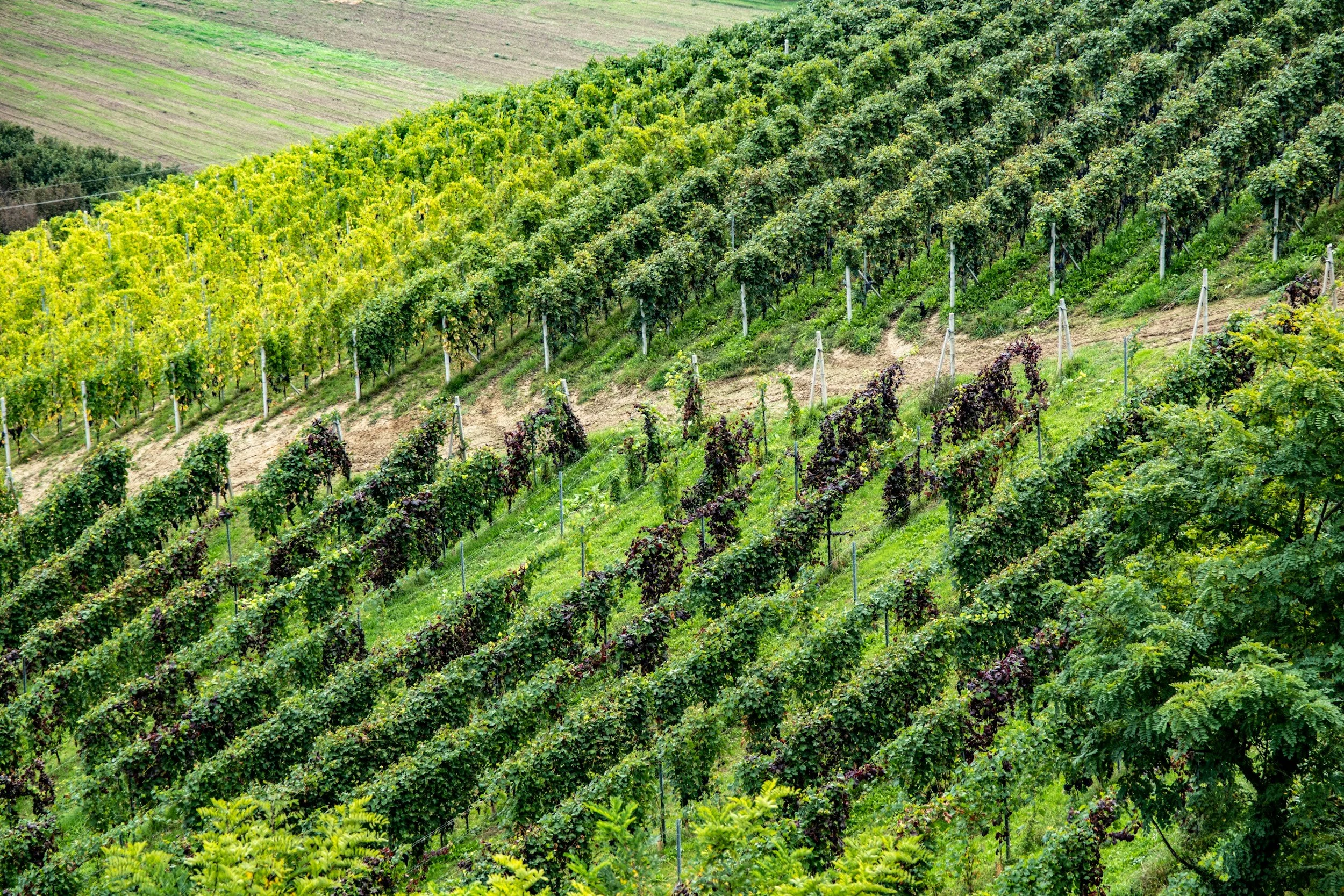
How to visit Barolo wineries without a car
The slightly frustrating thing about visiting Barolo without a car is that Barolo itself is not difficult at all. Once you get off at Piazza Cabutto, the castle is about five minutes away and almost everything you might want to include sits within a small group of streets around Piazza Falletti. You can visit a proper cellar, have lunch, try wines from several other producers and walk back to the bus stop without needing another lift. Getting there at a useful time, and knowing how you will get back to Alba afterwards, are the parts that need more thought.
Getting from Alba to Barolo
The direct bus is GTT line 2172, although you may also see it shortened to line 172. It leaves from either Alba railway station or the nearby bus station, depending on the journey, and stops at Piazza Cabutto in Barolo.
The problem is that this is very much a local school bus, not a service planned around winery opening hours. Some departures only run when schools are open, others only appear during the school holidays, and there is no service at all on Sundays or public holidays. Google Maps may show you a perfectly convenient direct bus without making it obvious that it does not run on the day you are travelling.
This is one of those timetables where the small code above the departure matters more than the departure time itself. SCOLG5 means school weekdays, SCOL6 means school Saturdays, FER6-S covers Monday to Saturday when schools are closed, and FER6 is the regular Monday-to-Saturday service. You do not need to learn all of that, but you do need to check the code above the particular bus you plan to use.
For example, the timetable includes a 12:25 bus from Alba railway station that reaches Barolo at 12:45, but only on the relevant school days. It is also too late for an 11:00 cellar visit. During the school holidays, you may find a perfectly useful afternoon bus from Barolo back to Alba without finding a practical bus in the other direction that morning.
For that reason, I would normally take a taxi from Alba to Barolo and use the bus for the return, as long as I had confirmed that it was running on my date. That gets you into the village in time for a morning cellar visit without making the entire day dependent on the Italian school calendar.
If you want to travel both ways by bus, choose the date first and then book the winery around the journeys that definitely operate. The Piazza Cabutto stop has two numbers, 12788 when arriving from Alba and 22788 when travelling back, so do not worry if two almost identical results appear in the journey planner. They are the stops for opposite directions, not two different parts of Barolo.
The timetable currently linked by GTT is still marked as being in force from January 2025, even though it remained the published version when I checked in August 2026. I would therefore use the PDF to understand the general service, then check the date-specific journey again shortly before travelling.
I have a whole folder of beautiful Italian countryside hotels that became useless the moment I checked the final five kilometres. I kept the actually reachable ones, including places around Orvieto, Lucca and Levanto where the final part of the journey can genuinely be done without a car.
Once you arrive, Barolo is easy to explore on foot
Piazza Cabutto is not the square directly beneath the castle, which is slightly confusing when you first arrive. Follow the signs towards Castello Falletti and Piazza Falletti, just over 400 metres away, and you will soon be in the centre of the village.
Borgogno is beside the castle at Via Gioberti 1. From there, you can follow Via Roma past Damilano’s village shop at number 31 and continue towards the historic Marchesi di Barolo cellars at number 1. Brezza is a few minutes farther away at Via Lomondo 4, while La Vite Turchese is at Via Alba 5. None of these walks is difficult, and you can connect them through the village without ending up on the provincial road.
There are three proper cellars you can visit without leaving Barolo: Marchesi di Barolo, Borgogno and Brezza. I would only book one of them.
It may feel wasteful to ignore the others when they are all so close, but most visits last between 75 and 90 minutes and include several wines. Two long cellar appointments would take up most of the day once you added lunch, and by the second tour you would probably be hearing another version of the same explanation about Nebbiolo, oak and ageing. One good cellar visit followed by a more relaxed tasting elsewhere gives you far more time to enjoy Barolo itself.
Which cellar should you choose?
Marchesi di Barolo is probably the simplest choice for a first visit. The entrance is at Via Roma 1, so you are visiting the historic village cellars rather than being taken to another site outside Barolo. The cellar tour normally takes around 30 to 45 minutes before the tasting begins, with the total length depending on the package you book. It is currently open every day from 10:30 to 18:00, which also makes it the easiest of the three to visit on a Sunday, although you will need taxis in both directions.
Borgogno is just off Piazza Falletti at Via Gioberti 1 and its visits generally last around 75 to 90 minutes. The options are quite different from one another, with some covering a broader selection of Langhe wines and others concentrating on Nebbiolo, individual vineyards or older vintages. I would look at the actual wines included rather than automatically choosing the cheapest tasting. Visits need to be booked, and the shop closes for part of the afternoon, so this is not somewhere I would turn up between lunch and dinner hoping that a cellar tour might be available.
Brezza is slightly farther from the castle, although we are still talking about a short walk rather than a separate journey. Its current entry visit lasts around 90 minutes and begins in the cellar before a tasting of five wines, including two Barolos. It costs €25 and the winery opens from Monday to Saturday. This would be a good choice if you want a substantial visit at a working winery while keeping the whole day inside Barolo.
Damilano is the address that needs a little more attention. The premises at Via Roma 31 are the producer’s village wine shop, where you can taste the wines and buy bottles. The working cellar is on the Alba-Barolo road in the municipality of La Morra. There is nothing wrong with visiting the shop, but it is not a cellar tour. If you book the production site instead, you will need another taxi or a driver because it is not part of the walkable village route.
What to do after the cellar visit
After a 90-minute cellar tour, I would have lunch and then go somewhere where you can try wines from several producers without sitting through another full tour.
The Enoteca Regionale del Barolo is below Castello Falletti, with the entrance from Via Collegio Barolo. It represents the wider Barolo denomination rather than one particular winery and has more than 120 labels in its collection. This makes it a good place to compare what you tasted that morning with a Barolo from another village or producer.
You do not normally need to reserve the everyday tasting, although its longer educational experiences are booked separately. The enoteca is currently open from Thursday to Sunday, with tastings until 18:00 and the shop staying open until 18:30. It is closed from Monday to Wednesday, despite some older listings suggesting otherwise.
La Vite Turchese at Via Alba 5 is a better choice when you would rather sit down and talk through a few wines at your own pace. It opens later on Monday, Wednesday and Thursday, while Friday, Saturday and Sunday have earlier opening hours. Tuesday is closed. The Italian and English pages were showing slightly different evening closing times when I checked, so I would confirm the hours during the week of the trip.
In any case, its late opening will not help if you are relying on the bus. You may still be able to order another glass at 20:00, but the final bus to Alba could already have left.
Getting back to Alba
Sort out the return before the first tasting, not while you are finishing the last one.
If you want to take the bus, look for Piazza Cabutto stop 22788 and check the journey for your actual date. Under the school-holiday timetable available when I researched this, the useful afternoon departures were 15:27 and 19:27, both taking around 25 minutes to reach Alba. The school-term timetable is different, so these should never be treated as year-round departure times.
For the 19:27 bus, I would finish the final tasting by around 18:30. That gives you time to pay, buy any bottles and walk back to Piazza Cabutto without having to rush through the village. I would also arrive at the stop at least ten minutes early and keep a screenshot of the official journey on my phone. If you miss it, there is no later evening bus waiting behind it.
If the bus does not run on your date, book the return taxi at the same time as the morning journey. Piazza Cabutto is the easiest meeting point, although the driver could also collect you outside Marchesi di Barolo or La Vite Turchese if you agree on the exact address beforehand. I would not finish a tasting at 18:30 and then start looking for a driver, especially during the Alba White Truffle Fair, the harvest or a busy autumn weekend.
My own day would be quite simple: a taxi from Alba, one cellar visit at around 11:00, lunch in Barolo and an afternoon tasting at the Enoteca Regionale or La Vite Turchese. If the 19:27 bus definitely runs, I would take that back. If it does not, I would arrange the return taxi before leaving Alba and then forget about transport for the rest of the day.
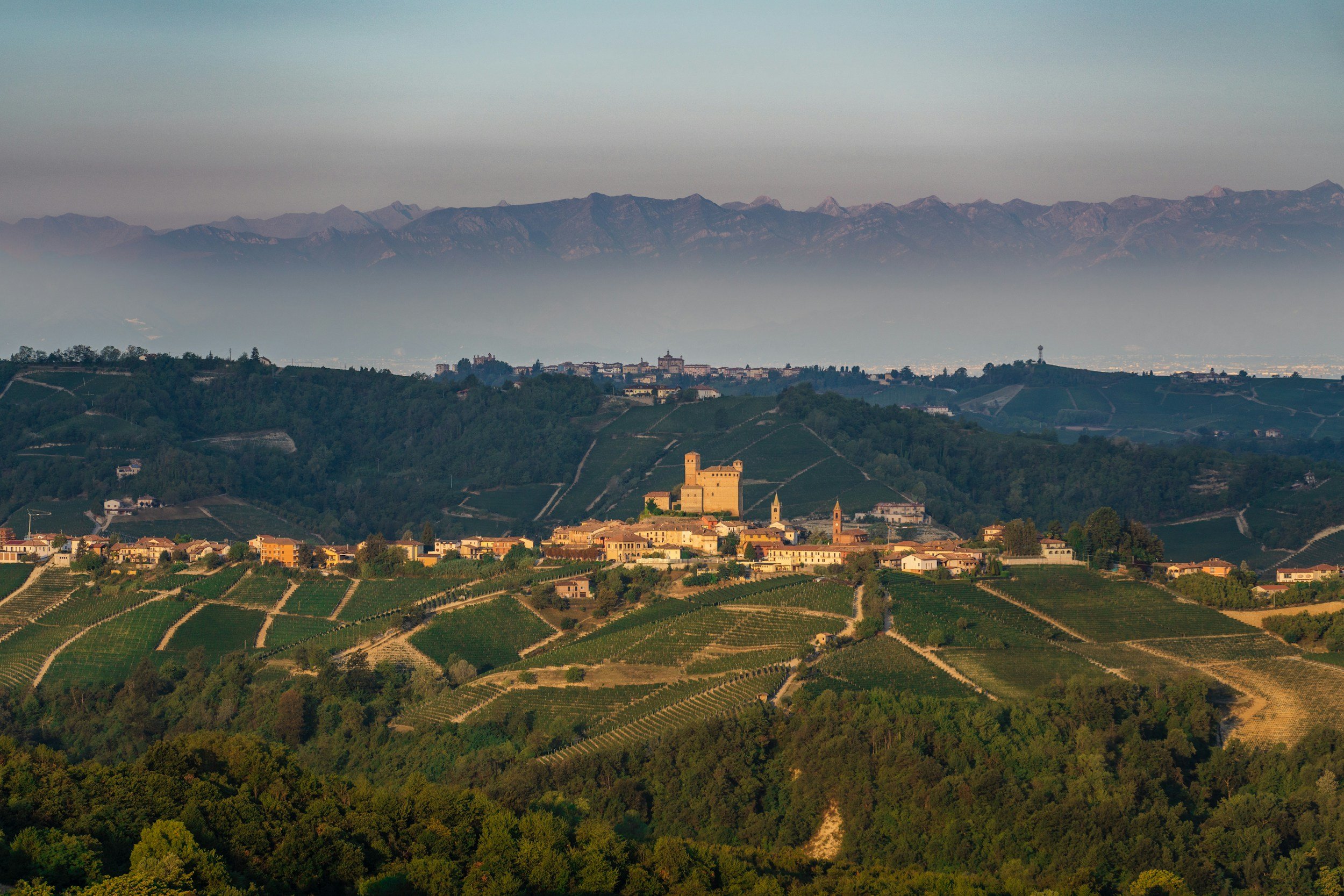
How to visit Barbaresco wineries without a car
Barbaresco is actually one of the easier Langhe villages to visit without a car, as long as you accept that the bus is probably not going to get you there. Once a taxi drops you outside Boffa at Via Torino 17, almost everything else you might want to include is a few minutes away on foot. Produttori del Barbaresco, the Enoteca Regionale, the medieval tower and both of the central lunch options are all along Via Torino or around Piazza del Municipio.
The Line 62 timetable looks more useful than it is. On the version I checked in August 2026, the buses that actually reached Barbaresco village arrived at 13:35 on school Saturdays or 14:25 on school weekdays, which is far too late for a morning cellar visit and lunch. The only bus from the village back to Alba left at 07:05, and there was no central Barbaresco service on Sundays.
Some other Line 62 buses are shown as travelling between Alba and Barbaresco, but they stop in Tre Stelle rather than in the village near the tower. Tre Stelle is part of the municipality of Barbaresco, which is why it appears in journey planners, but it is not where you want to get off for this day. The 10:40 and 17:30 departures from Alba both followed that route when I checked.
I would therefore book a taxi from Alba in both directions and forget about the bus. Barbaresco is only around 10 kilometres away, so the drive normally takes about 15 minutes, and you will not need the car again once you arrive. Reserve the outward and return journeys together, ask for the full price in advance and get the driver’s mobile number in case the cellar visit runs slightly longer than planned.
Use an actual address for both journeys rather than asking for “Barbaresco centre.” Via Torino 17 outside Boffa works well for the morning, while Piazza del Municipio beside the Enoteca is easy to find for the return. A collection around 16:30 or 17:00 gives you enough time for a cellar visit, lunch and one or two stops afterwards without leaving you stranded in the village after everything begins to close.
Start with one proper cellar visit
Boffa is the easiest producer to build the day around because it is inside the village and offers both a full winery visit and a much simpler terrace tasting. These are not the same experience. The terrace tasting may be available without a reservation, while the booked visit includes the cellar, the vineyards around the property and a tasting afterwards.
The booking form does not currently tell you how long the visit lasts, what it costs or which wines are included, so I would ask for all three before confirming. I would also check the language, particularly outside the busiest months. An appointment at around 11:00 would work well, but I would wait for Boffa to confirm the finishing time before reserving lunch.
After Boffa, it is an easy walk along Via Torino towards the tower and Piazza del Municipio. You do not need to book another cellar simply because several wine stops are close together. One proper visit before lunch, followed by a shorter tasting somewhere else in the afternoon, is enough to make the day feel worthwhile without spending most of it sitting through appointments.
Choose either Produttori or the Enoteca after lunch
Produttori del Barbaresco is at Via Torino 54, just below the tower. The wine shop is useful when you want to taste the cooperative’s wines without committing to another long visit, and it fits easily into the afternoon because you can decide on the day whether you still feel like tasting.
From Monday to Friday, it opens from 09:00 to 13:00 and again from 14:00 to 18:00. On Saturday and Sunday, it stays open from 10:00 to 18:00 without the lunchtime closure. The weekday break is worth remembering because arriving at 13:10 after an early lunch still means waiting until 14:00.
The Enoteca Regionale del Barbaresco is a few steps away at Piazza del Municipio 7 and opens every day from 10:00 to 18:00. Its usual tasting is three Barbaresco wines served at the counter, with the final tasting beginning at 17:45. Individual visitors do not need to reserve unless they are part of a group larger than eight.
I would not automatically plan to visit both. If Boffa finishes on time and you have a long lunch, one afternoon tasting will probably be plenty. Produttori makes sense when you specifically want to try its wines, while the Enoteca is better when you would rather compare three Barbarescos from different producers. If the morning visit runs late, choose whichever appeals more and leave the other one for another trip.
Book lunch rather than hoping for a table
Barbaresco may be small, but it receives plenty of wine visitors, particularly during the harvest and on autumn weekends. There are not many places to eat in the centre, so lunch is something I would reserve as soon as the cellar time is confirmed.
Trattoria Antica Torre at Via Torino 71 serves lunch from Monday to Saturday between 12:30 and 15:30. This is the more traditional option, with dishes such as tajarin and ravioli del plin, but it does not currently open for Sunday lunch.
Bistrot della Torre opens from Wednesday to Sunday between 10:00 and 20:00 and serves smaller Piedmontese dishes including vitello tonnato, ravioli del plin, farinata and focaccia. The important detail is that all of its tables are outside. It could be a lovely lunch in September sunshine and a fairly uncomfortable one in cold October rain, so I would not rely on it without checking the weather.
Sunday is still possible, but it needs to be arranged before you leave Alba. I would try to book Boffa for 11:00, reserve lunch at Bistrot della Torre, choose either Produttori or the Enoteca afterwards and arrange a taxi back at around 16:30. Without a confirmed cellar appointment, Sunday is better planned as lunch, the tower and the two flexible tasting rooms rather than turning up and hoping somebody can take you through a winery.
After two days of winery appointments, I would probably want the next stop to be very easy. I saved these walkable train towns for that sort of trip, including Parma, Treviso and Bassano del Grappa, where you can get off the train and walk to your hotel with your suitcase.
Add the tower only if there is time
The medieval tower is the easiest thing to leave unplanned. It currently opens every day from 10:00 to 19:00, entry costs €6 and the visit is self-guided. An external blue lift takes you to the first-floor entrance before you continue through the tower, and around 30 minutes should be enough.
I would add it after lunch if you have time before Produttori reopens, or at the end of the afternoon if your taxi is not due yet. There is no need to reserve it or force it into an already full day.
Ca’ Nova is also within walking distance, but I would treat it as an alternative to Boffa rather than another stop to add afterwards. The winery is at Strada Ovello 4, outside the small cluster around Via Torino, and cellar visits need to be booked. Ask for the duration, Sunday availability and the best walking route before confirming. If you choose Ca’ Nova, I would remove either Produttori or the Enoteca from the afternoon rather than plan four separate tastings in one day.
Finish the final tasting at least 20 to 30 minutes before the taxi is due. Booking the Enoteca’s last tasting at 17:45 and a taxi for 18:00 leaves no time to pay, buy a bottle or walk to the collection point. There is no useful evening bus to fall back on if you miss the driver.
The day I would book is a taxi from Alba for an 11:00 visit at Boffa, lunch in the village, one tasting at either Produttori or the Enoteca and the tower if there is a gap. With the return taxi already arranged for 16:30 or 17:00, you can spend the day walking around Barbaresco without having to think about transport again.
All the taxi planning in Piedmont is exactly what made me wonder whether Tuscany would be any easier. I found these car-free stays where the last part of the journey really can be done by train or bus, rather than depending on a taxi the hotel may or may not be able to arrange…
Can you visit Barolo and Barbaresco in the same day?
Yes, but I would only do it with a driver who stays with you for the day. With the same car collecting you in Alba, waiting while you taste and taking you between the two wine areas, there is enough time for one Barbaresco producer, lunch and one Barolo producer. Trying to put the same day together with buses, or even three separate taxi bookings, is likely to leave you watching the time far more than you want to on a wine trip.
I would not attempt it by public transport. There is no direct bus between Barolo and Barbaresco, so you would first need to travel from Barolo back to Alba and then change to Line 62. The few buses that reach central Barbaresco are tied to the school timetable, and there is no useful afternoon bus from the village back to Alba. Some journey planners will show an Alba to Barbaresco service without making it clear that the bus stops at Tre Stelle rather than near the tower and wineries.
You may be able to make a route planner produce a Barolo to Barbaresco journey of around one hour and 45 minutes, but that does not mean you can build a winery day around it. Arriving in Barbaresco after lunch is not much help when you still need time for a tasting and have no bus home afterwards.
Three separate taxis are possible and may initially sound cheaper than keeping a driver for eight hours. You would need one from Alba to the first winery, another between Barbaresco and Barolo, then a third back to Alba at the end of the day. The two village centres are around 24 kilometres apart and can be less than half an hour away in light traffic, but that changes when your chosen wineries are outside the villages. A Barolo producer near Monforte or Serralunga can add considerably more driving than the simple village-to-village time suggests.
The more awkward part is keeping three taxi bookings lined up with two winery appointments and lunch. Tastings do not always finish at the exact time written on the booking. Someone asks another question, you decide to buy a few bottles or the visit simply runs longer than expected. Twenty extra minutes at the first producer can mean a taxi waiting outside, a rushed lunch and a late arrival at the second cellar.
Before booking three individual journeys, I would ask one local taxi or NCC company for a price for the whole route, including waiting time. Once the separate collections and driving between appointments have been added, the difference between three taxis and one dedicated car may be smaller than expected.
Separate taxis make more sense when only one of the wine stops is a fixed cellar appointment. You could visit a producer in Barbaresco that morning, have lunch and then take a taxi to Barolo for an afternoon tasting at the Enoteca Regionale or La Vite Turchese. If the morning runs late, the second tasting can simply happen a little later. Two booked cellar visits give you far less room to change anything.
With one driver for the day, I would keep the plan very simple: leave Alba at around 09:30, visit one producer before lunch, eat somewhere between the two appointments and book the second producer for the middle of the afternoon. The official full-day experience promoted by the regional tourism board follows almost exactly that plan, with one Barbaresco winery, lunch and one Barolo winery. That is about as much as I would include. I would not add another tasting simply because there appears to be an empty hour on the itinerary.
Allow 30 to 45 minutes between the two producers, even when Google Maps shows a shorter drive between Barolo and Barbaresco villages. Let the available winery appointments decide which area comes first. If the Barolo estate can only see you at 10:30, start there and continue towards Barbaresco after lunch. If the Barbaresco producer has the better morning appointment, do the day in the opposite direction. Confirm both wineries before reserving the restaurant, because lunch is the easiest part to move around.
A private driver and an organised wine tour are not always the same thing. Some drivers provide the car and wait for you, but expect you to arrange the wineries and lunch yourself. A guided wine tour may take care of those bookings and include a sommelier, although the tastings and meal can still cost extra. Before comparing prices, check whether the quote includes eight hours from Alba, all the driving and waiting time, winery reservations, tasting fees, lunch and any overtime if the final visit runs late.
If you do not want to pay for a driver for the day, I would choose either Barolo or Barbaresco and spend the day there. One area gives you time for a proper cellar visit, lunch and another tasting without having to leave halfway through a conversation because a taxi is waiting. Visiting both is possible, but it is only worth doing when seeing both wine areas matters enough to pay for the car that makes the day work.
Bus, taxi, driver or tour: what each option really costs
These prices are much easier to understand once you stop comparing them as though they cover the same thing. A €3.30 bus ticket pays for one person and one journey. A €43 transfer covers the whole car, but only takes you from Alba to Barolo. A €390 private driver stays with you for eight hours, while a wine tour priced at €190 or €220 may include several tastings as well. The cheapest-looking number is not necessarily the cheapest version of the day.
I checked all of the prices below on 8 August 2026. They are useful examples rather than fixed fares, particularly for taxis and transfers, where the date, collection time, exact address and number of passengers can all change the quote.
Bus: €3.30 per person each way
Under the GTT fare table valid from 1 July 2026, Alba to Barolo is a four-band journey costing €3.30 each way. Buying the ticket from the driver adds €1, so it is worth purchasing it before boarding. Two people travelling from Alba to Barolo and back would therefore spend €13.20 in total when all four tickets are bought in advance.
That is clearly the cheapest way to reach Barolo when the timetable fits your plans. It only covers the journey to the village, however. It does not help you reach a winery outside Barolo, wait while you have lunch or provide another way home if your final tasting finishes after the last bus. A single private transfer can cost several times more than the entire return bus journey, so I would only choose the bus after confirming the return departure for the exact date.
Pre-booked transfer: €43 to Barolo in one example
Regular Alba taxi fares are not published consistently enough for me to give a dependable standard price between Alba and Barolo. The low estimates shown on some route-planning websites are calculations, not quotes from the driver who will actually collect you.
For a more realistic example, I checked the live booking system of Barolo Tour, a licensed local NCC transfer company. A standard car for two people, leaving Piazza Trento e Trieste in Alba at 09:30 on 9 September 2026 and travelling to Piazza Cabutto in Barolo, cost €43. Shared between two, that works out at €21.50 each.
The €43 covered the car, driver, fuel and the one-way journey. It did not include the return to Alba, waiting time, extra winery stops, lunch or any tastings.
I ran the same search for Barbaresco and received a quote of €54 for two people travelling from Alba to Piazza del Municipio at noon on 15 August. That journey was marked as high demand, which is hardly surprising on Ferragosto. I would not treat €43 to €54 as a normal price range, especially when Barbaresco is closer to Alba. It shows how much the date and time can affect the fare.
For a day in one compact village, I would ask at least two licensed operators for the total cost of both journeys and book the return at the same time as the outward transfer. Give them the exact addresses, collection times and number of passengers, and ask about cancellation terms. “Alba to Barolo” could mean a simple drop at Piazza Cabutto or a much longer drive to a rural estate beyond Monforte, so the destination needs to be clear.
Full-day private driver: better value once the car is shared
Ferrero Langhe Tours currently charges €370 for a car carrying up to three people around the Barolo area, or €420 for a van carrying four to seven. Both prices cover eight hours from 09:00 to 17:00, collection in Alba and up to 150 kilometres.
A day covering both Barolo and Barbaresco costs €390 for a car carrying up to three passengers or €440 for a van carrying four to seven, with the mileage allowance increased to 200 kilometres. Adding Barbaresco therefore costs only another €20 per vehicle, but you still have the same eight hours. It may look like an obvious upgrade, although in practice it means less time in each wine area and more of the day spent driving between appointments.
For two people, the €390 car works out at €195 each before adding the wineries and lunch. Three people sharing it pay €130 each. Four people in the €440 van pay €110 each, while six people bring the transport cost down to roughly €73 each. This is why a private driver can feel very expensive for a couple but become much more reasonable for a group.
The price covers the vehicle, driver and help arranging a workable route, rather than a complete wine package. You still choose the wineries, confirm the tastings and pay the producers directly. Lunch is extra as well, and collection from accommodation outside Alba may change the quote.
Barolo and Barbaresco are the names everyone knows, but I’m not convinced they are automatically the wine villages I’d enjoy most in autumn. I compared five other options, including Neive, Montefalco and Greve, by the things that would genuinely decide it for me: cafés, walks, transport and whether there is enough open after the tasting rooms close.
Wine tours: check whether the price is per person
Alba Wine Tours currently advertises a private tour “from €190,” but its visible pricing section does not clearly say whether that amount covers one person or the vehicle. The separate prices shown for children and teenagers make it look like a per-person rate, but I would ask for the total cost for the whole group before comparing it with a private driver.
The tour itself includes private Mercedes transport, a driver and guide, three winery visits with tastings, museum or castle entry and snacks. Lunch is not included. The published additions are €30 for a casual tasting menu, €50 for a higher-end restaurant and €80 for the star-chef option.
Meet Piemonte is clearer at €220 per person. Its eight-hour tour starts in Alba at 10:00 and includes transport by luxury van, an English-speaking local winemaker, three winery visits and tastings of four or five wines at each producer. VAT and the operator’s liability insurance are also included. Lunch, tips and transfers outside the listed programme cost extra, hotel collection must be requested, and the online booking system may add its own fee.
For two people, the €195-per-person cost of the combined private driver is already close to the €220 Meet Piemonte tour, even before the winery fees have been added. The driver gives you more control over which producers you visit and how the day is arranged. The tour includes the tastings and someone else handles the appointments. Neither is automatically better value; they suit different kinds of trips.
For one village, two pre-booked transfers will usually cost much less than keeping a driver for eight hours. If you want to visit several rural wineries or combine Barolo and Barbaresco, a full-day car starts to make more sense, particularly when three or more people are sharing it. For a solo traveller, a per-person tour may be the more realistic option, provided the company confirms that the tour will run without a larger minimum booking.
How I would plan a wine day in Barolo or Barbaresco without a car
If I were staying in Alba, these are the two wine days I’d feel comfortable booking without a car. Both follow the same basic plan: one proper cellar visit, lunch, and a shorter tasting afterwards only if there is still time and I still feel like drinking more wine.
I would not book two cellar tours simply because the wineries look close together on the map. Visits often run longer than expected, lunch can easily take two hours, and after a full Barolo or Barbaresco tasting, another five wines may not be nearly as appealing as it sounded that morning.
Barolo
My first choice would be a morning visit at Borgogno. The cellars are at Via Gioberti 1, beside Castello Falletti, so once the taxi drops you there, the rest of the day can be spent on foot.
I’d ask Borgogno what morning times are available and wait for its confirmation before booking lunch or transport. If the timings did not work, I’d try Marchesi di Barolo instead. Its tasting and lunch experiences include 30 to 45 minutes in the historic cellars, so it would replace Borgogno rather than become another booking on top of it.
Once the winery time is confirmed, book the taxi from Alba and the return together. For the outward journey, give the driver the address of the winery rather than simply asking for Barolo. Piazza Cabutto is an easy place to meet again later, although the driver may suggest collecting you somewhere closer to your final stop. I’d ask for the return time and telephone number in a message before leaving Alba, so there is no question about where the car will be at the end of the afternoon.
Lunch could be at Osteria La Cantinella on Via Acqua Gelata if it is serving on your date. With an 11:00 cellar visit, I’d probably reserve lunch for around 13:00 or 13:30 rather than leaving myself ten minutes to walk out of the winery and straight to the table.
After lunch, I’d see whether I felt like visiting the Enoteca Regionale del Barolo. You can taste without reserving, so there is no money lost and nobody waiting if lunch runs late. The schedule published from April 2026 has tastings from Thursday to Sunday between 10:30 and 18:00, but I’d still check the current opening hours before choosing the day.
That is the whole plan: one cellar, lunch, perhaps the enoteca and a taxi back to Alba at around 17:00. If the winery visit runs over or lunch turns into a long afternoon, skip the enoteca. You have still had the part of the day that was worth coming for.
Barbaresco
For Barbaresco, I’d book the guided visit at Boffa and ask for a late-morning appointment. It is worth being specific when making the request because Boffa also allows visitors to stop for a terrace tasting without reserving. The visit you want includes the working cellar, the vineyards around the property and a tasting afterwards.
The taxi can take you directly to Boffa at Via Torino 17. I’d arrange the return at the same time and use Piazza del Municipio as the collection point. A taxi at around 17:30 gives you most of the afternoon while still leaving some space before the tasting rooms close at 18:00. I would not book the car for exactly 18:00 and then order a final tasting at 17:45.
After Boffa and lunch, I’d choose between the Produttori del Barbaresco wine shop and the Enoteca Regionale del Barbaresco. Produttori makes more sense if you particularly want to taste the cooperative’s wines. The enoteca is better for comparing Barbarescos from several different producers. Both are in the centre and normally open every day until 18:00, so neither needs to become another fixed appointment.
You could visit both, but I would not build the day around doing so. One proper visit at Boffa, lunch and one shorter tasting is already a good wine day. If there is time for the second, it is a bonus rather than something you need to hurry towards.
Lunch is the part I’d sort out carefully, especially on a Sunday. Antica Torre’s May 2026 schedule lists lunch from Monday to Saturday, not Sunday, and other restaurants can close for several weeks at a time. Campamac, for example, was showing a closure from 3 August to 13 September when I checked. I would not rely on Google’s opening hours or assume there will be a table somewhere because the village receives visitors throughout the weekend.
A Barbaresco day could therefore be as simple as a taxi from Alba at around 10:30, Boffa at 11:00, lunch, one tasting at Produttori or the enoteca and a 17:30 taxi from Piazza del Municipio. On a Sunday, I’d only book it once lunch had been confirmed. Otherwise, I’d eat earlier, enjoy the tastings and return to Alba for dinner.
After a few days in the Langhe, I’d probably want food that didn’t arrive in another tasting glass. I collected these off-season markets for trips planned around mushrooms, chestnuts, truffles and the things people are actually buying at that time of year.
FAQs about visiting Barolo and Barbaresco without a car
Can you visit Barolo and Barbaresco wineries without a car?
Yes, you can visit Barolo and Barbaresco wineries without a car, provided you stay somewhere practical such as Alba and plan each independent wine day around one compact village. I would reserve one genuine producer cellar, arrange the outward and return transport before leaving Alba, book lunch and keep any further tasting flexible. Rural estates outside Barolo, La Morra, Treiso or Neive require a driver, because a winery address only a few kilometres away may sit along a steep provincial road with no pavement.
Is Alba a good base for Barolo and Barbaresco without a car?
Alba is the strongest base for a first no-car wine weekend because you can arrive by train, walk to a central hotel and arrange taxis or winery tours without adding another transfer. It also gives you restaurants and wine bars after the villages have closed for the evening, while Pio Cesare offers a genuine producer cellar inside Alba itself. I would stay close to the historic centre and Alba station rather than save a little on a vineyard property that requires paid transport for every dinner and tasting.
Can you get from Alba to Barolo by public transport?
Yes, selected buses connect Alba with Barolo from Monday to Saturday, but there are too few departures to treat them like a frequent village shuttle. The official GTT Line 2172 timetable includes Alba station and Piazza Cabutto in Barolo, while its current service page shows no route on Sundays and public holidays. A bus can support a day spent entirely inside Barolo village, although I would check both directions for the exact travel date before reserving a cellar appointment.
Can you get from Alba to Barbaresco by bus?
Not as a useful same-day wine trip under the current timetable. The official Line 62 timetable, effective from 1 October 2025, shows services from Alba reaching Barbaresco at 13:35 and 14:25, but the only Barbaresco-to-Alba departure shown is at 7:05 in the morning. The route exists, yet its two directions do not create a workable visitor day, which is why I would pre-book a taxi or transfer from Alba and confirm the return before entering the first cellar.
Can you walk between wineries in Barolo and Barbaresco?
You can walk between several producer cellars, tasting rooms and enoteche inside either village, but you cannot sensibly cover the wider Barolo or Barbaresco wine areas on foot. In Barolo, Borgogno at Via Gioberti 1, Marchesi di Barolo at Via Roma 1 and the regional enoteca on Via Collegio Barolo sit within the central village. Barbaresco has an equally useful cluster, including Boffa at Via Torino 17, Produttori del Barbaresco at Via Torino 54 and the regional enoteca at Piazza del Municipio 7. Once an address moves onto a vineyard road outside the village, I would check the actual walking route rather than rely on the distance shown by Google Maps.
Do you need to book Barolo and Barbaresco wineries in advance?
Yes, a proper producer cellar visit should be reserved in advance, especially when you need an English-language tour or are travelling during harvest and Alba’s autumn truffle season. Boffa explains the distinction particularly clearly: visitors may taste on its terrace without booking, but the guided visit through the cellar and surrounding vineyards requires a reservation. Borgogno also operates bookable producer visits, while the Produttori del Barbaresco wine shop and the regional enoteche are better kept as optional tasting stops. “Open” can mean that bottles are available at a counter, not that somebody is free to take you through the working cellar.
Can you visit Barolo and Barbaresco in one day without a car?
You can visit both villages in one day with a pre-booked driver or organised wine tour, but public transport does not provide a credible itinerary. Separate taxis are possible, although paying for Alba to Barolo, Barolo to Barbaresco and Barbaresco back to Alba can quickly cost more than arranging one vehicle for the day. Without a driver, I would give each village its own day; one producer visit, lunch and an unhurried regional-enoteca tasting will tell you far more than racing between two appointments with the return journey constantly in question.
Are Barolo and Barbaresco wineries open on Sundays?
Some are, but Sunday opening should never be assumed to include a cellar tour. Marchesi di Barolo currently publishes daily opening from 10:30 to 18:00, while the Produttori del Barbaresco wine shop opens on Saturday and Sunday from 10:00 to 18:00. The Enoteca Regionale del Barbaresco also lists daily opening from 10:00 to 18:00, whereas the Enoteca Regionale del Barolo currently opens for tastings from Thursday to Sunday. I would confirm the producer, lunch and return transport individually, because the absence of Sunday buses can cause more difficulty than the winery’s opening hours.