
Inside France's cheese caves: what surprised me most
You turn off the D471 just before Les Rousses, park outside a low building that doesn’t look like much from the road, and follow a small sign down a set of steps. Within a few seconds, it’s colder. Not dramatically, just enough that you notice it on your hands. The light drops, the air feels heavier, and then the space opens up into long rows of Comté stacked on wooden shelves, stretching further than you expected.
No one is guiding you through it. People move quietly, turning wheels, brushing the rinds, checking markings on the side before moving on to the next one. You walk through the same corridors they use, past cheeses at different stages, some still pale, others darker and more uneven from being handled over time. It doesn’t feel like a visit that’s been arranged. It feels like you’ve stepped into something that was already happening.
A day later, you’re in Beaufort-sur-Doron, parked along Route de Roselend with a few other cars, stepping into the cooperative where locals are buying cheese in the middle of the day. No displays, no setup, just large wedges behind the counter and people asking for a piece by age or type. Ten minutes after leaving, you’re already driving uphill towards Arêches, passing cows spread out across the slopes above the road, not grouped together, just grazing where the land allows it.
That’s when it starts to connect. The caves in the Jura, the cooperative in Beaufort, the roads between them, they’re not separate stops. They’re part of the same system, just in different landscapes.
If you’re planning a trip around this, the difficulty isn’t finding places to go. It’s understanding how they fit into a route so you’re not driving back and forth or trying to turn them into something they’re not. These are working places, spread out across regions, and they make the most sense when you pass through them at the right time rather than building the whole trip around them.
How historic cheese caves in France still shape cheese today
If you visit a cheese cave in France, the first thing you notice is how little has changed. You walk down a set of stone steps, the air turns cooler and slightly damp, and the smell shifts immediately, something between earth, milk, and something more mature that’s hard to place. Shelves are stacked with cheeses at different stages, some still pale and firm, others darker, softer, and already close to being sold.
These caves aren’t kept for tradition alone. They’re still used because they create conditions that are difficult to reproduce elsewhere. Temperature stays stable without needing constant adjustment, humidity is high but controlled by the structure itself, and air moves slowly through the space rather than being forced. All of that affects how the cheese develops over time.
In places like Roquefort-sur-Soulzon, the caves are cut directly into the limestone cliffs below the village. Natural fissures in the rock, known locally as “fleurines,” allow outside air to circulate through the caves in a steady flow. This airflow helps regulate both temperature and humidity without mechanical systems, which is one of the reasons Roquefort develops its characteristic blue veins in a consistent way.
In the Jura, especially around towns like Poligny or Arbois, Comté is aged in long underground cellars where wheels are turned and brushed regularly. These caves are often larger and more structured, but they still rely on stable, naturally cool conditions rather than artificial environments. Over months or years, the texture changes slowly, and the flavour deepens in a way that depends on both time and the cave itself.
What matters is not just the cave, but how it’s used. Cheeses are moved between different sections depending on their stage, washed, turned, or left untouched depending on what they need. Two cheeses made from the same milk can end up tasting different if they’re aged in different parts of the same cave.
Modern facilities can replicate parts of this process, but many producers still prefer these older spaces because they’re predictable in a way machines aren’t. Once you’ve worked in the same cave for years, you know how it behaves across seasons, how the air changes, and what adjustments are needed.
For visitors, it can look simple, just rows of cheese aging in a cool room, but most of the work is in the small decisions made along the way. The cave isn’t just where the cheese is stored. It’s part of how the final product is shaped.
If you’re curious how this feels closer to the mountains, this Swiss Jura escape shows a quieter, more remote version of the same idea.
Comté Aging at Fort des Rousses (Jura Region)
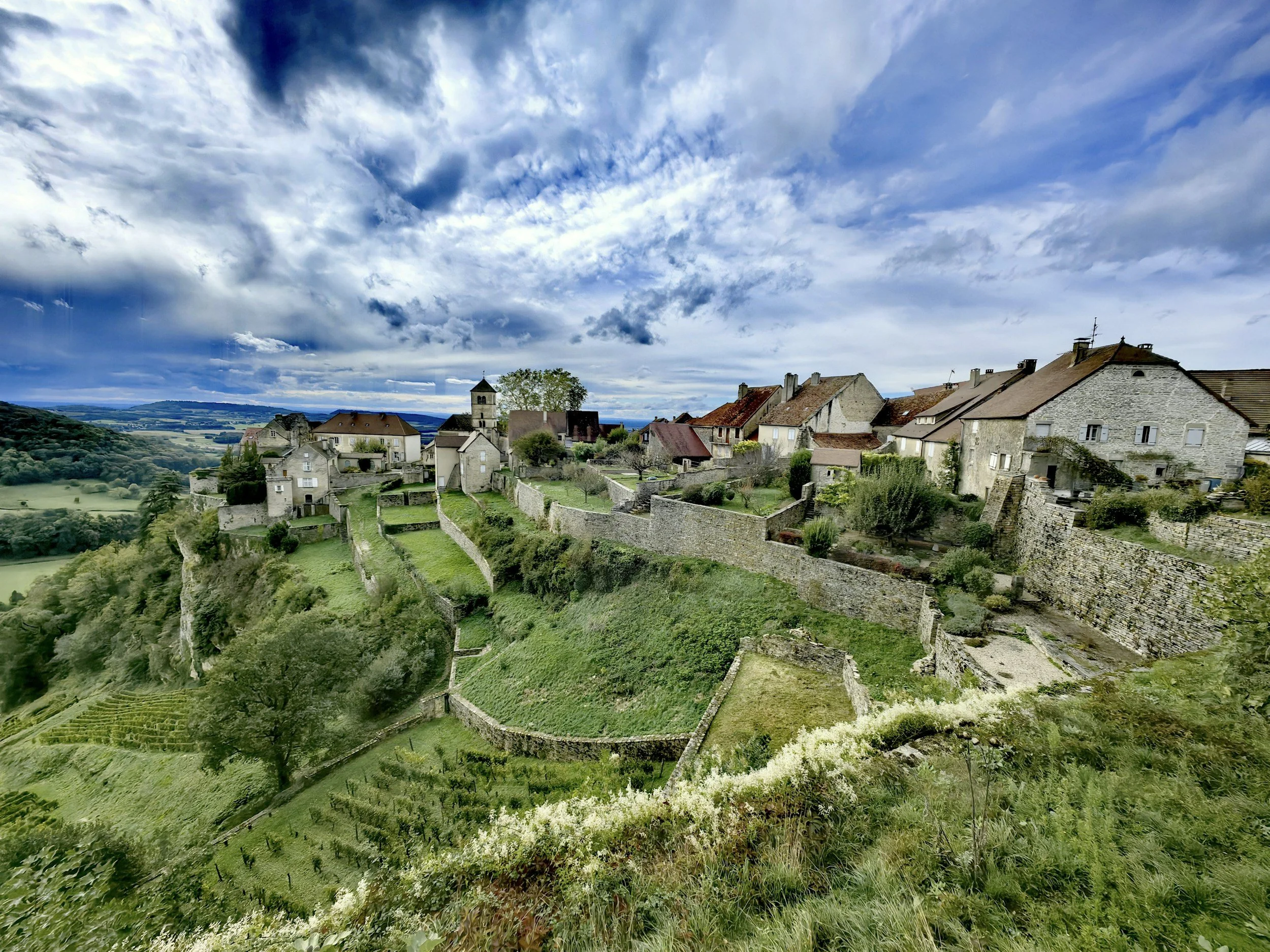
Fort des Rousses: a military fort turned Comté aging cellar
Fort des Rousses sits just outside the village, above the road that runs through Les Rousses, and it looks out of proportion the moment you see it. Thick walls, long façades, and a layout that makes more sense for military use than anything else. You don’t arrive expecting what’s inside.
The entrance is controlled, and once you’re in, it’s not one open space but a sequence of corridors and rooms that keep going further than expected. The temperature drops quickly and stays there. No variation, no adjustment, just a steady cold that doesn’t change as you move through the building.
Comté is aged here because of that consistency. The structure was built to protect and store, and those same conditions now work for cheese without needing to be redesigned. Thick stone walls hold the temperature, the interior stays cool even in summer, and the scale allows thousands of wheels to be stored without shifting the environment.
Inside, the layout becomes clearer as you walk. Long corridors branch into storage rooms where shelves are stacked from floor to ceiling. Each wheel is marked and placed with intention, not just stored. You’ll see workers moving through the space, brushing rinds, turning cheeses, checking surfaces as they go. Nothing is rushed, but nothing is left alone either.
The smell builds gradually the deeper you go. At first it’s faint, then more defined, a mix of milk, cellar air, and the rind itself. It stays consistent, just like the temperature, and becomes part of how you read the space rather than something separate from it.
What stands out isn’t the contrast between past and present, but how little needed to change. The fort wasn’t repurposed in a decorative way. It’s being used for something equally practical, just with a different outcome.
Some people turn this into more of a full countryside stay, and this French countryside weekend gives a good sense of how the days can flow beyond just visiting caves.
What aging Comté looks like in practice
Once you step inside Fort des Rousses and start moving through the corridors, it stops feeling like a single space and more like a network of rooms that each hold their own stage of the process, and the longer you stay, the more the small differences between them start to stand out. The shelves run along both sides of the walls, stacked high with wheels that at first glance look identical, but when you slow down and actually look, the variations become obvious, especially in the rind.
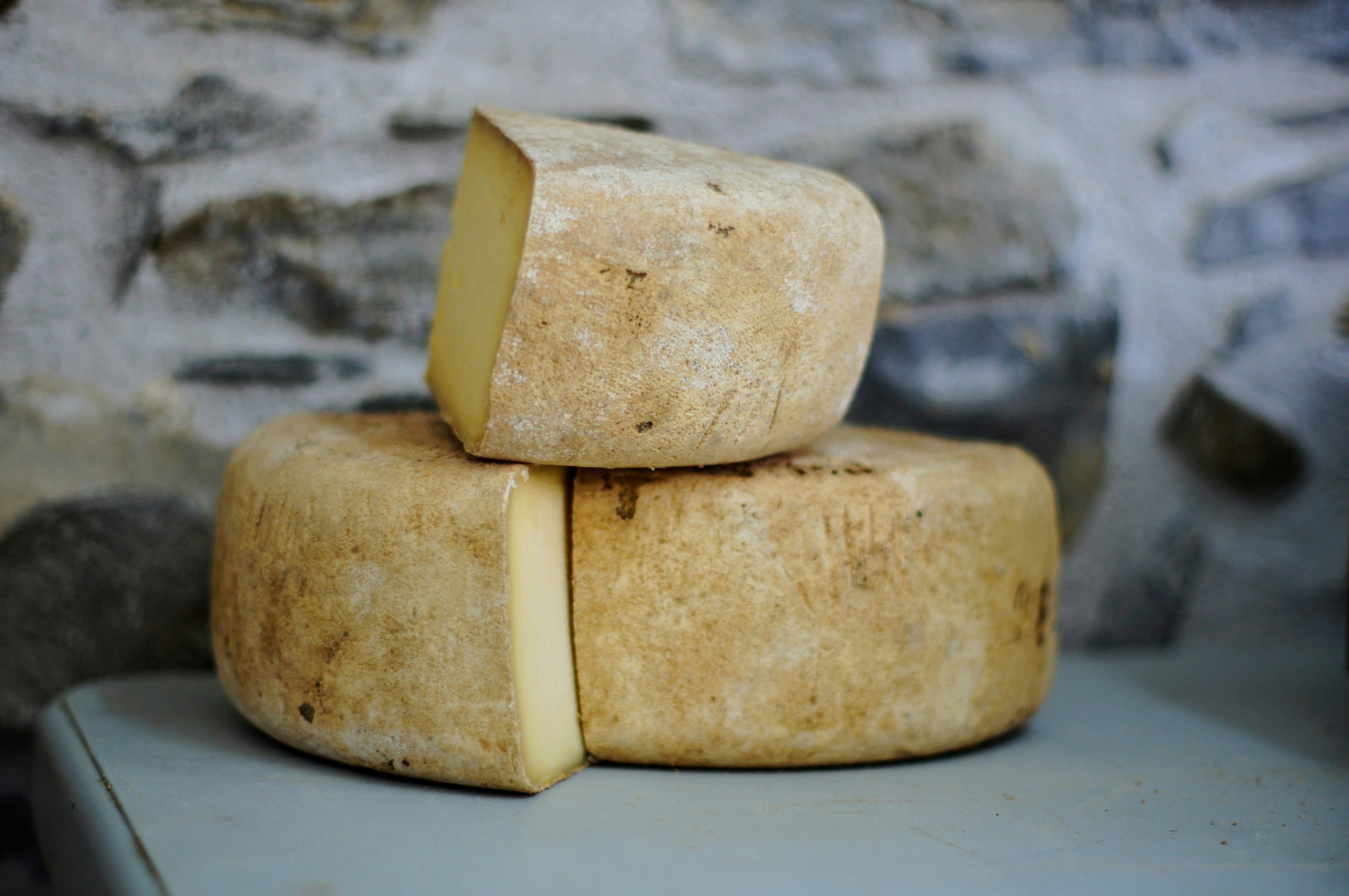
The younger Comté is easy to pick out once you know what you’re looking for, because the surface is still light in colour, almost beige, and smoother to the touch, with fewer marks from handling. Further along the shelves, the older wheels are darker, deeper brown, sometimes with a slightly uneven surface where they’ve been brushed repeatedly over time. You’ll notice that no two wheels look exactly the same, even if they’ve been there for a similar length of time.
What defines the space is not a visible “production line,” but the movement of people working through it. Someone moves slowly along the shelves, lifting each wheel just enough to turn it, brushing the rind with a cloth or brush dipped in a light salt solution, and placing it back in position before moving on to the next. It’s a continuous routine rather than a step-by-step process, and it repeats across the entire building without drawing attention to itself.
As you move deeper into the fort, the air changes slightly, not in a dramatic way, but enough that you notice it building over time. The smell becomes more concentrated, a mix of damp stone, cellar air, and the rind itself, and it stays consistent from room to room, reinforcing how stable the environment is meant to be.
Each wheel carries markings on the side, sometimes stamped directly into the rind, sometimes added as small tags, indicating where it was produced and how long it has been aging. These markings matter because the cheeses don’t remain in one place from start to finish. They are moved between different parts of the fort depending on how they are developing, and those decisions are based on experience rather than something visible to a visitor.
Some rooms feel slightly cooler, others a bit more humid, and while the difference is subtle, over the course of several months it affects how the rind forms and how the interior matures. That’s why the wheels are repositioned over time, not randomly, but in response to how each one is changing.
What becomes clear after watching for a while is that nothing about the process is quick or automated. The changes happen slowly, over months or years, and the result depends on the accumulation of small, repeated actions rather than any single stage. From the outside, it might look like storage, but inside it’s constant, hands-on work, spread across thousands of cheeses, all moving through the same environment at slightly different points in time.
Planning your visit to Fort des Rousses
Fort des Rousses is located in the Haut-Jura and makes most sense as part of a longer stay in the region. If you’re travelling by car, it fits easily into a Jura itinerary. If you’re relying on public transport, you can reach nearby towns such as Morez or Dole by train, but onward connections need planning.
Visits are guided and usually require booking in advance. Inside the fort, temperatures stay low year-round, so even in summer it’s worth bringing a layer. The pace is calm and unhurried, which suits both the space and the subject.
This isn’t a place to rush through or squeeze between other plans….
How Comté shows up in everyday life in the Jura
In the Jura, Comté isn’t something you go out of your way to find because it keeps appearing without effort, built into how people shop, eat, and move through the day rather than presented as something separate or worth highlighting.
At the market in Poligny, especially on a Friday morning around Place des Déportés, the Comté stalls are easy to spot but not treated any differently from the others. Large wheels sit directly on the counter, already cut into sections, and people step forward asking for a specific age rather than a recommendation. You’ll hear “douze mois” or “dix-huit mois,” sometimes “plus vieux,” and the vendor cuts a wedge quickly, wraps it in paper, and hands it over without slowing the line. There’s no explanation unless you ask for it, and most people don’t. The focus is on getting exactly what you need and moving on.
If you walk a few minutes from the square towards Grande Rue, you’ll start seeing the same pattern in smaller shops. Fromageries display Comté alongside other cheeses, but it takes up more space, often stacked in larger pieces rather than pre-cut portions. Some places will let you taste, but even then it’s brief, a small slice, a nod, and then back to the counter. It feels more like a regular purchase than a tasting experience.
In cafés and small restaurants, Comté shows up in ways that don’t draw attention to it. A croûte arrives at the table with bread soaked in wine and melted cheese on top, or an omelette comes out filled with Comté and nothing else competing with it. In places just off the main streets, you’ll see it grated over potatoes or folded into simple dishes that don’t try to build around it. It’s not described in detail on the menu because it doesn’t need to be.
Bakeries handle it the same way. Around mid-morning, you’ll see people stopping in for something quick, and Comté sandwiches are usually lined up with the rest. Thick slices of cheese, a piece of baguette, sometimes butter, sometimes nothing else. It’s treated as enough on its own, not something that needs to be paired or built into a more complex filling.
Near the Maison du Comté in Poligny, this becomes even clearer once you leave the building and step back into the town. You can walk a short distance and sit down somewhere nearby where Comté is served warm with bread or alongside a simple plate that doesn’t try to explain itself. It’s the same cheese you’ve just seen presented in a more structured way inside, but here it’s reduced to something practical and familiar.
If you’ve been through Fort des Rousses earlier in the trip, the contrast is hard to ignore. Inside the fort, everything is controlled, measured, and repeated across thousands of wheels over long periods of time. Back in town, none of that is visible. The cheese moves straight from that process into everyday use without any shift in how it’s treated.
Over a couple of days, you start to notice that it isn’t tied to specific moments or meals. It appears at breakfast in small portions, at lunch in something warm, in the afternoon in a sandwich, and again at dinner without changing how it’s presented.
If you’re planning this around food rather than just the visit itself, these September wine towns make it easier to time it right.
Staying in the Jura after your visit
You usually leave Fort des Rousses in the afternoon, somewhere between 15:30 and 16:30, and at that point the question isn’t what to do next, it’s where to stop for the evening without adding another drive.
If you’re already in Les Rousses, it makes sense to stay there. The village runs along the main road, with a few hotels, small guesthouses, and restaurants spaced out rather than grouped together. You park once, check in, and then everything happens within a short walk. Places along the central stretch stay open into the evening, so you don’t need to plan much beyond picking somewhere for dinner.
Poligny feels different as soon as you arrive. It’s flatter, quieter, and built around a few streets rather than one main road. If you stay near Grande Rue or close to Place des Déportés, you can walk out in the early evening, pass the same shops you saw during the day, and stop somewhere without deciding too much in advance. Bakeries close earlier, but restaurants open around 19:00, and most people head straight to one place and stay there.
What changes after about 18:00 is how quickly everything settles. Outside the centre, roads empty out, and even in town there’s less movement than you might expect. There aren’t multiple stops or places to move between. You choose somewhere, sit down, and that becomes the evening.
If you’re staying just outside the villages, which many places are, the setup is even simpler. You drive a few minutes back from dinner, park directly outside, and that’s the end of the day. No walking between bars, no second stop. Most rooms are quiet, often with views out towards fields or hills, and people tend to stay in rather than head back out.
In winter, the experience shifts quite a bit, and these French winter towns show what it’s like once things quiet down.
Visiting Beaufort cheese cooperatives in the French Alps
You don’t arrive in Beaufort country and “visit a producer” in the same way as in other regions. You drive up from Albertville, follow the road into Beaufort-sur-Doron, and within a few minutes you start seeing signs for the cooperative without anything trying to draw you in.
The main one sits just off the road as you come into the village, on Route de Roselend, and it looks exactly like what it is, a working building with a shop attached, cars parked outside, and people going in and out without it feeling like a stop you’ve planned in advance.
Inside, the first thing you notice is that it’s active. People are coming in to buy cheese, not to browse. Large wedges of Beaufort are already cut and stacked behind the counter, labelled by season or age rather than anything descriptive. You hear people asking for “été” or “hiver,” and the staff cut what’s needed and move on.
If you follow the signs inside, there’s usually a viewing area or a set path where you can see into the production space. You’re not walking through freely, but you can watch what’s happening without it being staged. Large copper vats sit in a row, and depending on the time of day, you’ll either catch milk being worked or see the space being cleaned down after the morning.
Most of the activity happens early, so if you arrive late morning, you’re seeing the end of it rather than the start. By then, the wheels have already been formed and moved on, and what’s left is the quieter part of the process.
Driving out of the village towards Arêches or up in the direction of Lac de Roselend, you start seeing where it all connects. The pastures sit above the road, and in late summer, cows are spread out across the slopes rather than grouped together. It’s not a separate visit. You pass it on the way without stopping.
That’s what makes it different from somewhere like the Jura. There isn’t a clear separation between where the milk comes from and where it’s turned into cheese.
Normandy takes a different approach to local produce altogether, and this cider route shows what that looks like in practice.
What it’s like to visit a Beaufort cheese cooperative
You come up from Albertville, follow the D925 into Beaufort-sur-Doron, and before you’ve really decided where to stop, you’re already there. The cooperative sits just off Route de Roselend, close to the centre, with a small parking area out front and people moving in and out like it’s part of a normal shop, not something set up for visitors.
Inside, it’s busy in a practical way. People step up to the counter, ask for a piece of Beaufort by type or weight, and leave again within a few minutes. You’ll hear “été” and “hiver” more than anything else, and the staff cut directly from large wedges without slowing down to explain unless you ask. The cheese is stacked behind the counter in thick, uneven pieces, not pre-packaged, just wrapped as it’s sold.
There’s usually a clear path or staircase that leads to a viewing area, and once you’re there, you’re looking straight into the working space rather than a display. The copper vats sit in a row, large and slightly marked from years of use, and the room feels functional rather than arranged. If you arrive early enough, you’ll catch milk being worked, otherwise you’ll see the aftermath, floors being washed, equipment cleaned, the next stage already prepared.
Production starts early, so by the time you get there mid to late morning, most of the active work has already moved on. It’s not a problem, but it changes what you see. You’re catching the end of the cycle rather than the start.
When you leave and head further up towards Arêches or continue on the D218b towards Lac de Roselend, the rest of it starts to make sense without needing to stop anywhere specific. The pastures sit above the road, and in late summer, cows are spread across the slopes rather than gathered in one place. You pass them as you drive, not as a separate visit.
Nothing feels separated. The cooperative, the village streets, the roads climbing out towards the mountains, they all sit within the same short stretch, so the visit doesn’t feel like a standalone stop.
Where Beaufort visits make sense
A visit to a Beaufort cooperative only really fits if you’re already moving through this part of the Alps. It’s not something you plan as a standalone stop and drive out of your way for. It works when it sits in between other parts of the day.
The easiest way to place it is on the drive up from Albertville. You follow the D925 into Beaufort-sur-Doron, stop at the cooperative as you pass through, then continue on without needing to turn back. From there, most people keep going towards Arêches or take the road up to Lac de Roselend, which starts just outside the village and climbs steadily with a few wider pull-offs where you can stop without blocking the road.
If you’re staying in Beaufort or nearby, it fits best in the morning. The cooperative is active earlier in the day, and you’ll see more if you arrive before 10:00 rather than late morning when things are already winding down. After that, it’s easy to leave the village and spend the rest of the day higher up without needing another fixed stop.
Trying to combine it with too many other visits in one day doesn’t really work here. Roads are slower than they look on the map, and once you’re up towards Roselend or further into the valley, turning back takes time. It’s easier to treat Beaufort as something you pass through once, rather than something you keep returning to.
If you’re coming from Bourg-Saint-Maurice or the Tarentaise side, you can approach from the other direction via the Cormet de Roselend when it’s open, but that’s more of a longer loop and depends on the season. For most trips, the Beaufort side is the simplest way in.
If you’re trying to keep things as quiet as possible, these Auvergne villages are worth a look before deciding where to base yourself.
How Beaufort is used locally in the Alps
In Beaufort-sur-Doron, if you walk along Route de Roselend or sit down somewhere near the bridge over the Doron river around lunch, it’s already in the dishes before you’ve thought about it. A croûte arrives with bread soaked in white wine and a thick layer of melted Beaufort on top, edges slightly crisp where it’s caught the heat. Gratins come out in small dishes, still bubbling, with the cheese worked through rather than just added at the end.
Further up in Arêches, especially in the smaller places near the centre, it gets even more direct. You’ll see plates where it’s just melted over potatoes with a bit of cured meat on the side, nothing dressed up, nothing added to balance it out. It’s filling, and it’s meant to be.
Bakeries treat it the same way. Late morning, when people are stopping briefly before heading further into the mountains, the sandwiches are already lined up. Thick slices of Beaufort inside a baguette, sometimes with ham, sometimes just butter and cheese. No extras, no variation. You take it with you rather than sitting down.
If you keep driving towards Lac de Roselend, there are small stops along the road where the menu is short and doesn’t change much. Quiches, savoury tarts, maybe a plate with bread and cheese, and Beaufort is always part of it in some form. You order, sit down, eat, and move on. No one is explaining where it comes from or how it’s made.
What becomes clear after a day or two is that it doesn’t change depending on where you are. Village, roadside stop, small restaurant, it’s used in the same way.
Comté vs Beaufort: how they’re made and why they differ
You notice the difference as soon as you’ve done both. One day you’re inside Fort des Rousses, walking through long corridors where everything feels fixed, and the next you’re driving up from Albertville on the D925, stopping in Beaufort-sur-Doron, and then continuing towards Arêches where the whole setup opens out into the landscape.
At Fort des Rousses, nothing depends on what’s happening outside that day. You move through rooms where the temperature doesn’t shift, the air stays the same, and the work is about repeating the same actions across thousands of wheels. You see Comté at different stages on the shelves, but the environment around it barely changes, and that’s the point. It’s designed so that each wheel develops under the same conditions, whether it’s been there a few months or much longer.
In Beaufort, the first thing that stands out is how quickly everything connects. You stop at the cooperative just off Route de Roselend, watch part of the process from the viewing area, and then you’re back in the car within minutes, driving past the pastures above the village. In late summer, the cows are already up the slopes towards Arêches or further along the road to Lac de Roselend, spread out rather than grouped together, and you pass them without needing to stop.
That difference carries through to how each place feels over the course of a day. In the Jura, the visit stays contained inside the fort, and the rest of the area sits separately from it. In Beaufort, you don’t really leave the process behind, because it’s along the same road, between the village, the cooperative, and the higher ground.
Even the way you move between places reflects that. Around Les Rousses, you drive between towns and then step inside a space that controls everything. Around Beaufort, you follow one road that links the cooperative to the landscape directly, without a clear break between them.
You don’t need to compare them to understand it. One is built to keep things consistent over time. The other follows whatever the season allows. Once you’ve seen both, it’s obvious why they’re made the way they are, because neither would really work anywhere else.
And if you’re building this into a short trip, these autumn French towns give you a better sense of what fits into a weekend.
How to build a trip around France’s cheese regions
If you try to plan a “cheese trip” across France as one continuous route, it quickly stops making sense. The regions are spread out, and each one works best when it’s part of somewhere you’re already going rather than something you try to connect in one loop.
The easiest way to approach it is to place these stops into trips that already exist.
If you’re heading into the Jura, whether that’s from Dijon, Besançon, or coming across from Switzerland, adding Poligny and Fort des Rousses is straightforward. You drive into Poligny first, spend time around Grande Rue or the market if it’s running, then continue up towards Les Rousses on the D471. The shift from town to forest happens quickly, and by the time you reach the fort, you’re already in a different setting without needing to plan anything complicated.
For Beaufort, it works the same way but in a different direction. You don’t plan a trip just to visit the cooperative. You place it on the route between Albertville and Bourg-Saint-Maurice, or as part of a drive up towards Lac de Roselend. You stop in Beaufort-sur-Doron, spend some time at the cooperative on Route de Roselend, then keep going. The visit fits into the drive rather than interrupting it.
Trying to combine the Jura and the Alps in a short trip usually means spending more time driving than actually being anywhere. It’s technically possible, but unless you have several days and want the drive itself to be part of the experience, it’s easier to treat them as separate trips.
What works better is choosing one region and building around it. In the Jura, that might mean one or two days split between Poligny and Les Rousses, with short drives between them. In the Alps, it’s a slower movement along one road, Beaufort, then further up towards Arêches or Roselend, without needing to double back.
Once you think of it like that, the planning becomes simpler.
FAQs about visiting cheese regions in France
Which cheese regions in France can you visit?
The most accessible regions include the Jura (for Comté), the Savoie/Alps (for Beaufort), and Roquefort-sur-Soulzon in the south. Each has cooperatives or aging caves open to visitors, usually with fixed hours rather than full-day access.
Can you visit cheese caves in France?
Yes. Places like Fort des Rousses in the Jura or the caves in Roquefort-sur-Soulzon allow visitors, either through guided tours or viewing areas where you can see the aging process without entering the working space.
Do you need to book cheese visits in advance in France?
Not always. Larger sites often have online booking or set entry times, especially in summer. Smaller cooperatives usually allow walk-ins, but opening hours can be limited, so it helps to check the same day before visiting.
What time of day is best to visit a cheese cooperative in France?
Morning is the best time, ideally before 10:30. That’s when production is still active. By late morning or midday, most of the main work is finished, and you’ll mostly see cleaning or quieter stages.
How long does a cheese cave or cooperative visit take?
Most visits are shorter than expected. Around 30–60 minutes is typical unless you join a guided tour. These are working environments, not places designed for long stays.
Are cheese cooperatives in France open on Sundays?
Some are, but many operate reduced hours or close entirely on Sundays, especially outside peak travel months. It’s worth checking opening times shortly before you go rather than relying on general schedules.
How do you get to cheese regions like the Jura or Beaufort area?
Both are easiest to reach by car. The Jura works well from Dijon, Besançon, or Switzerland, while Beaufort sits between Albertville and Bourg-Saint-Maurice. Public transport gets you close, but local travel is much easier with a car.
Can you visit both Comté and Beaufort regions in one trip?
You can, but they are several hours apart. It’s usually easier to focus on one region at a time, as combining both in a short trip often means spending more time driving than visiting.
What should you expect when visiting a cheese cooperative in France?
Most cooperatives are working spaces. You’ll usually enter through a shop, then follow a short viewing route where you can see production or aging areas. Visits are practical and often self-guided rather than structured.
Do you need to speak French to visit cheese producers?
No, but it helps to keep things simple. Many visits are visual, and in smaller places staff may speak limited English. Basic phrases or patience usually make the experience smoother.
Can you buy cheese directly from producers in France?
Yes. Nearly all cooperatives and caves have a shop where cheese is cut fresh from large wheels and wrapped at the counter.
Can you take cheese home from France when flying?
Yes, especially hard cheeses like Comté, which travel well. For destinations outside the EU, customs rules may apply, so it’s worth checking restrictions before travelling.
What’s the difference between Comté and Beaufort cheese?
Comté is produced in the Jura and aged in controlled environments like Fort des Rousses. Beaufort is made in the Alps and follows seasonal movement between valleys and alpine pastures. The production methods and environments shape how each cheese develops.
Is visiting cheese regions in France worth it if you’re not an expert?
Yes. Visits are easy to follow without technical knowledge. Most of what you see is visual and practical, and the experience doesn’t rely on prior understanding.