Late September might be Europe's best food season
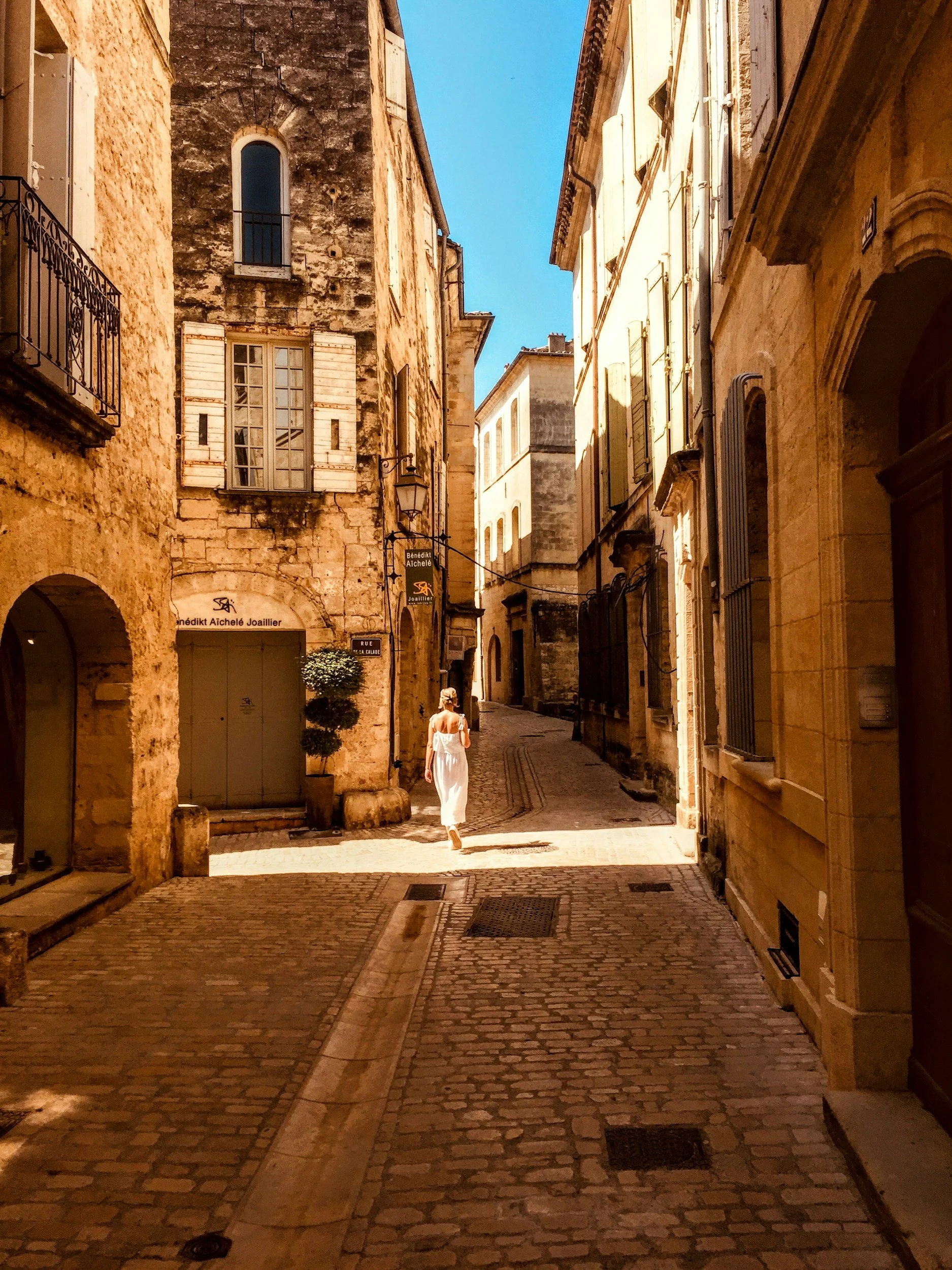
Late September is one of the most satisfying times to travel through Europe’s wine regions if you enjoy markets, long lunches, and towns where daily life still happens in the centre. The summer rush has finally eased. Rental cars are easier to park, you can usually get a café table without hovering, and small town squares start feeling local again instead of constantly rotating through visitors.
If you arrive in a wine town early on a market day in late September, the atmosphere is very different from August. In Uzès, for example, the stalls at Place aux Herbes start setting up while the sky is still soft and the first coffee drinkers are already sitting under the plane trees with croissants from Boulangerie Provençale just around the corner. By eight or nine in the morning the square is properly alive. People are carrying woven baskets, restaurant staff are doing quick rounds for vegetables and herbs, and the smell of roast chicken from the rotisserie stands drifts across the square.
It’s the same kind of shift in places like Alba in northern Italy. Walk through the streets around Piazza Savona in the morning and the market stalls are full of darker grapes, walnuts, and late figs from the Langhe hills. Bakers are already selling focaccia and grissini from wooden trays, and wine bars nearby start quietly opening their doors before lunch. A quick espresso at Caffè Umberto or a stop for pastries on Via Vittorio Emanuele suddenly turns into half an hour of people watching because the whole town passes through the same few streets.
If you enjoy places where the weekly market still anchors the town, there are quite a few small French towns where that tradition is still very much alive.
The food itself also changes around this time of year. Late September markets start mixing the last stretch of summer produce with early autumn ingredients. You still see tomatoes and peaches, but they sit beside crates of wild mushrooms, figs, olives, fresh goat cheese, and bottles of local wine that growers bring directly to market. In Beaune, market mornings around Place de la Halle often include Burgundy cheeses, saucisson, and small stands pouring local Pinot Noir for people who clearly know exactly which domaine they prefer.
For travellers who enjoy building a trip around food and wine rather than ticking off landmarks, this is when these towns really start making sense again. A day naturally falls into a simple rhythm. Coffee somewhere close to the market square. A long wander through the stalls. Maybe a stop at a wine bar before lunch. Then a slow afternoon walk through quiet streets or nearby vineyards once the morning activity fades.
Many small European towns still revolve around one strong market day each week. In Uzès the Saturday market takes over the entire centre, so arriving on Friday afternoon makes the experience much easier. You can check into a small hotel near the old town, wander through the narrow streets around Rue Grande Bourgade, have dinner somewhere local, and wake up early the next morning ready for the market.
In Alba the vibe is slightly different because the town stays active all week thanks to the surrounding wine region. Vineyards around Barolo and Barbaresco are already busy with harvest by late September, and that activity spills into the town. Wine shops on streets like Via Vittorio Emanuele stay open later, restaurant menus start mentioning new vintages, and people talk openly about the coming truffle season without the heavy crowds that arrive in October.
Even coastal towns change in interesting ways once summer winds down. Cadaqués, which can feel crowded in July and August, becomes noticeably calmer once September settles in. The harbour restaurants along Passeig de Cadaqués still serve lunch outdoors, but the pace is slower. Fishing boats move quietly in and out of the bay, and the small cafés around Plaça Frederic Rahola fill with locals again rather than day-trippers.
Late September is also simply easier to move through Europe. You can arrive by train in the afternoon and still enjoy the rest of the day. Walking between streets, cafés, wine bars, and markets feels comfortable again instead of exhausting. Evenings cool down enough that sitting outside for dinner feels pleasant rather than sticky. Across Europe there are still towns where the weekly market quietly structures the whole week.
The towns in this guide (Uzès in southern France, Alba in Piedmont, Cadaqués on the Catalonian coast, and Beaune in Burgundy) all share the same practical advantage. They sit close to vineyards, they still have active local markets, and their town centres are compact enough that you can spend most of the day on foot. In late September that combination works especially well. Markets are busy, harvest is underway in nearby vineyards, and restaurants start cooking with ingredients that have just arrived from the surrounding countryside.
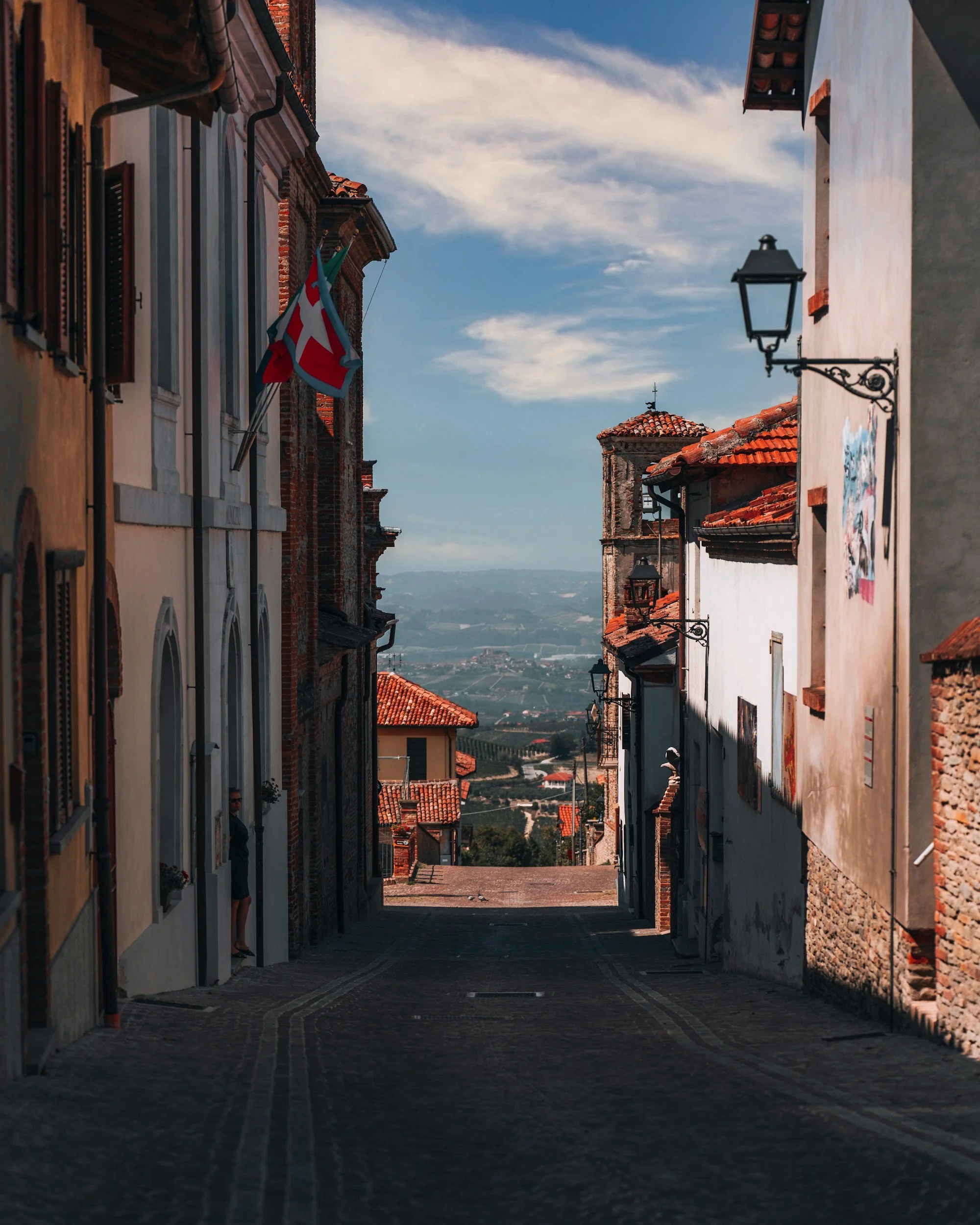
What late September weather usually looks like across southern France, Burgundy, Piedmont and Catalonia
Late September is one of the easiest times of year to move around southern Europe because the heat finally backs off without the days feeling short yet. In towns like Uzès or Saint-Rémy-de-Provence the mornings start cooler, often somewhere around 14–16°C, which means walking through the market with a coffee in hand actually feels nice instead of sticky. By midday the temperature usually climbs into the low twenties, warm enough to sit outside for lunch but not so hot that you start looking for shade every few minutes.
Catalonia tends to hold onto the warmth a little longer. Along the coast near Cadaqués or in nearby market towns like Figueres and Roses, afternoons can still feel like late summer if the sun is strong. Locals are often still swimming well into September, and harbour restaurants keep their outdoor tables open. Early morning is noticeably different though. Fishermen are already back in port, cafés are setting up slowly, and the first people walking through the market usually have a light sweater or a denim jacket on.
Burgundy and Piedmont lean further into autumn by this point. In Beaune the air can feel crisp early in the day, especially if there has been rain during harvest week. When the market opens near Les Halles de Beaune you’ll see people in scarves and light coats while the stalls start filling with mushrooms, walnuts, and grapes from nearby vineyards. The same thing happens in Alba. Walk through the streets around Piazza Savona early in the morning and the light feels softer, the shadows are longer, and the smell of baking bread from the nearby bakeries drifts across the market square.
One of the practical advantages of travelling at this time of year is that packing becomes easier. You can still travel with fairly light clothing, but you are no longer forced into summer outfits all day. A linen shirt, a cotton sweater, and a lightweight jacket usually cover everything. Comfortable shoes matter more than anything else because most of these towns are built for walking on uneven stone streets rather than quick sightseeing stops.
The difference between regions mostly shows up after sunset. In Provence or along the Catalonian coast you might still sit outside for dinner without thinking about it. In Burgundy or Piedmont the temperature often drops faster once the sun goes down, which is when restaurants start lighting heaters on terraces or people move indoors to wine bars and small dining rooms.
Late September also makes arrival days easier. Getting off a train in Avignon, Turin, or Dijon in the middle of the afternoon no longer feels exhausting. You can check into your hotel, drop your bag, and still wander through town before dinner. A short walk to the main square, maybe a stop for espresso or a glass of local wine, then dinner somewhere simple. That first evening walk often tells you more about a place than a full day of sightseeing.
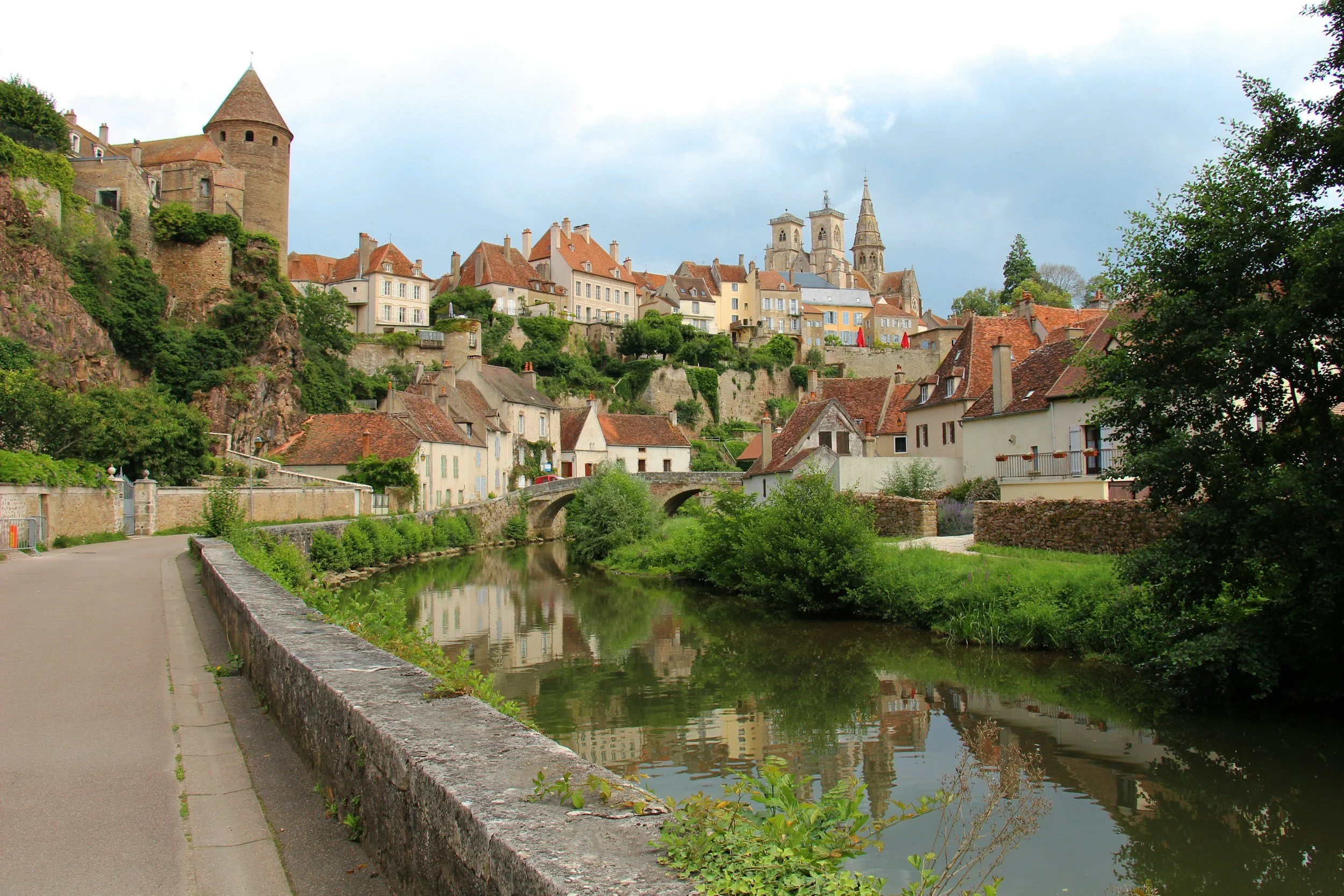
Why market culture and wine harvest season overlap perfectly this time of year
By late September the vineyards around these towns are busy from early morning. If you drive through Burgundy, the Langhe hills near Alba, or the countryside around Uzès, you’ll see small tractors moving slowly between rows of vines and crates of grapes stacked near cellar doors. Harvest is underway, and that activity quickly spills into town life.
You notice it straight away at the markets. The stalls still have the last of the summer produce, but things start looking more autumnal. In Uzès, a walk through the Saturday market at Place aux Herbes might start with tomatoes and bunches of basil, then a few steps later you’ll see figs piled high in wooden crates, walnuts from nearby farms, and baskets of mushrooms that vendors picked early that morning. Cheese stands begin offering firmer mountain cheeses alongside the softer goat cheeses that dominate earlier in the summer.
In Alba the shift shows up in a slightly different way. The market streets around Piazza Savona start filling with darker grapes from the surrounding hills, trays of porcini mushrooms, and bottles of wine from small producers who live only a few kilometres away. Bakeries nearby put out thicker breads and hazelnut pastries, and restaurants begin writing menus that revolve around what arrived at the market that morning.
The people shopping also change a bit once harvest begins. During the peak summer weeks many markets are full of visitors wandering slowly from stall to stall. By late September the balance tilts back toward locals. Restaurant owners walk through with big baskets looking for vegetables and herbs. People stop at the cheese stalls for their usual order. Vineyard workers sometimes come through for a quick coffee before heading back out to the fields.
That’s what makes market towns especially interesting at this time of year. What you see in the stalls reflects exactly what is happening in the countryside around the town that week! Grapes are coming in from the vineyards, mushrooms are appearing in nearby forests, and kitchens are already cooking with those ingredients by lunchtime. Even a simple glass of wine at a small bar in Beaune or Alba feels connected to the landscape around you, because the harvest you’re hearing about at the next table is happening just outside town.
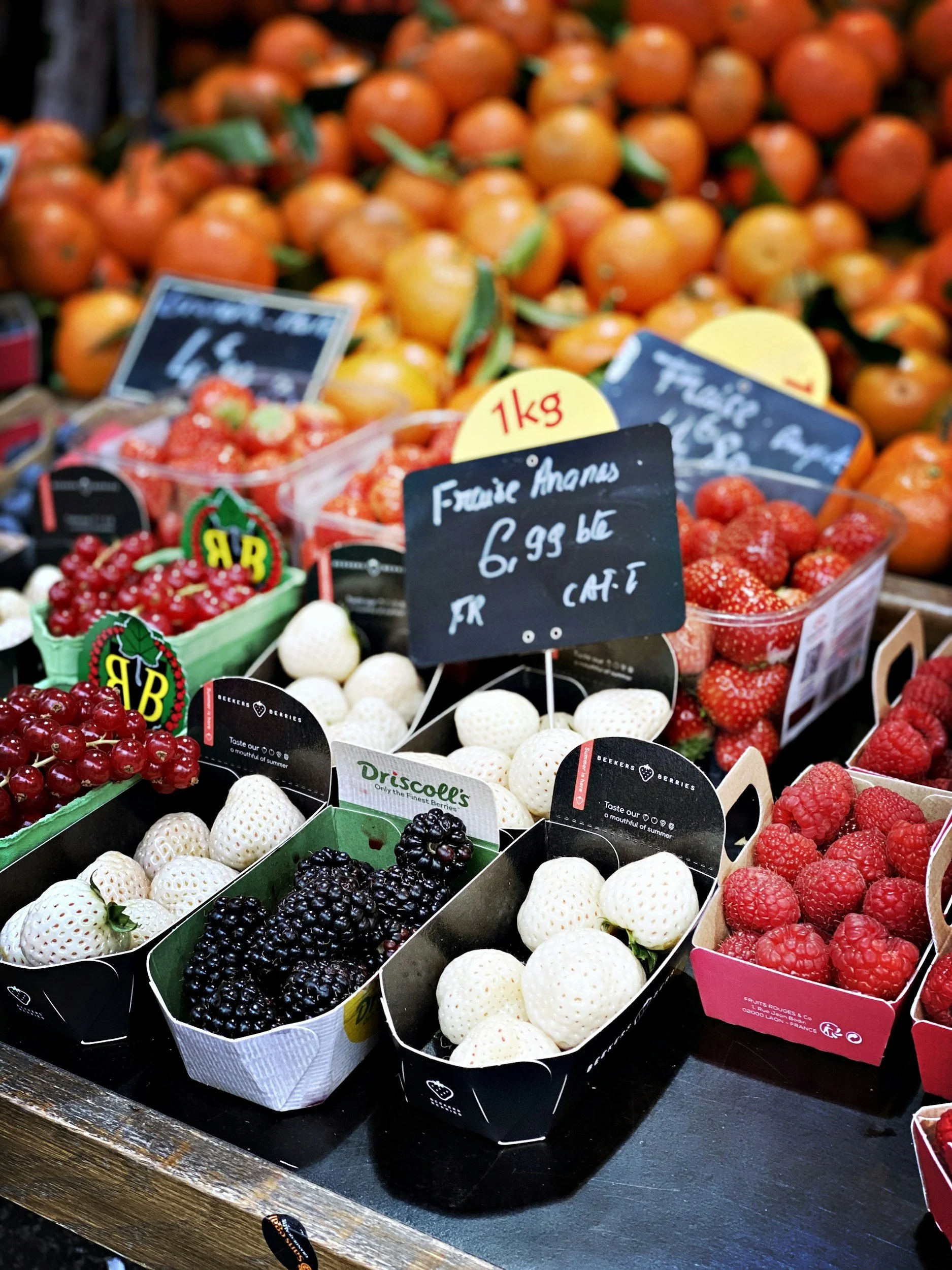
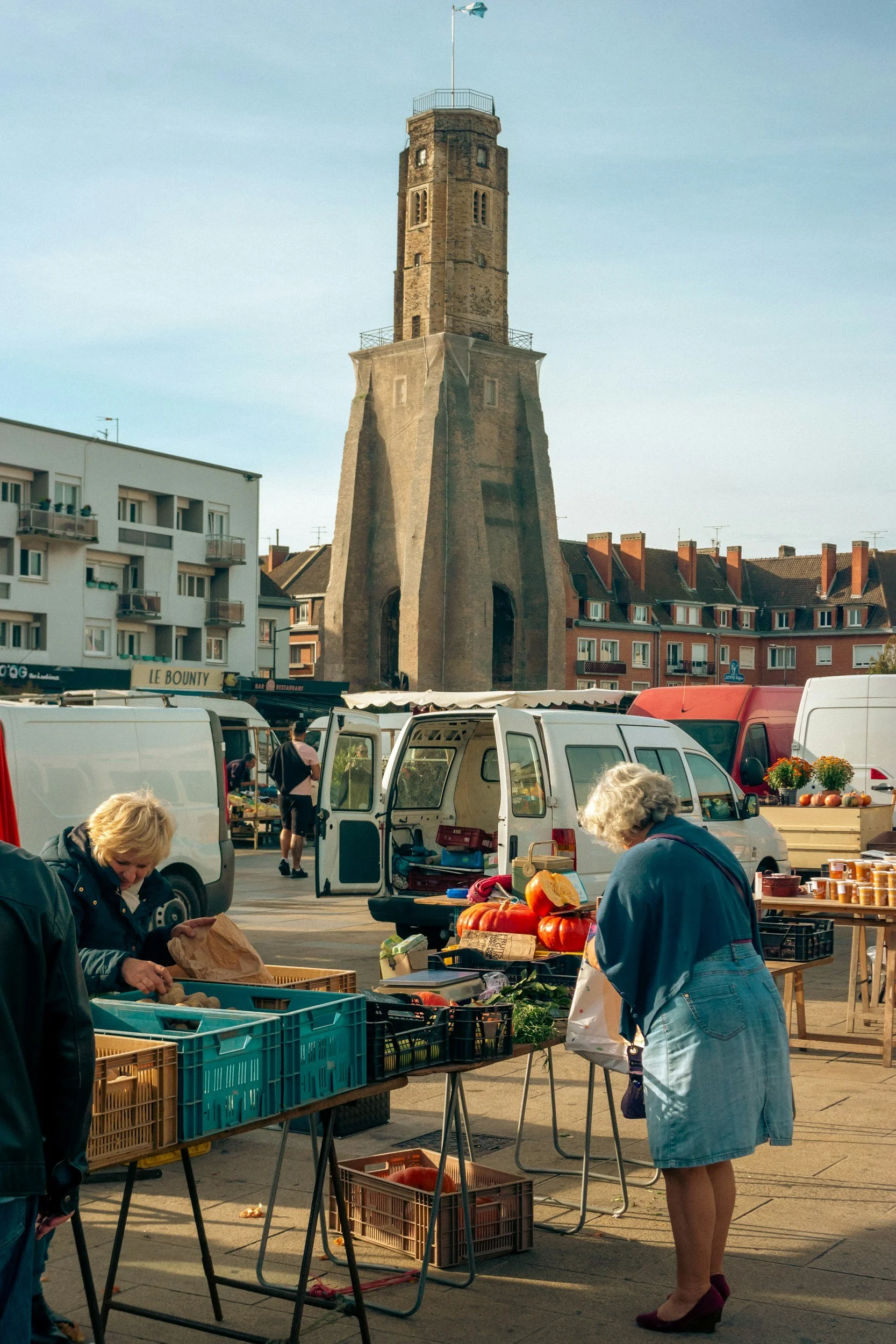
Uzès, France - Saturday market mornings and vineyards turning gold
Uzès is located in the Gard, a quiet stretch of southern France between Nîmes and Avignon. If you look at a map, it’s tucked just north of the vineyards that run along the Rhône valley and west of the busier parts of Provence. The countryside around it is a mix of vines, olive trees, and small villages connected by narrow roads. It’s also only about 15 minutes from the famous Pont du Gard, which gives you an idea of how central this area has been for centuries.
Even though Uzès feels like a classic small town, getting there without a car is actually quite easy. Most people arrive through Nîmes. The train station there sits on the high-speed line from Paris, so if you’re travelling from the capital the journey is just under three hours. Once you arrive in Nîmes, the last stretch to Uzès is simple. A taxi takes around 30 minutes, and buses run regularly from the station as well.
Avignon is the other good option. If you’re already travelling through Provence or coming from Marseille, Avignon is often the more convenient gateway. From there it’s about a 40-minute drive through vineyards and farmland before the road curves slightly uphill and you arrive at the edge of Uzès.
The moment you step into the old town, you realise why people like staying here for a few days. The historic centre is compact and almost entirely walkable. Cars mostly stay outside the main streets, and everything you need sits within a short stroll of the central square, Place aux Herbes.
A typical morning here might start with coffee under the plane trees at Café de l’Esplanade or at one of the small terraces that line the square. From there you can wander through the narrow lanes toward the Duché d’Uzès, pass bakeries on Rue Jacques d’Uzès, and eventually loop back toward the market again without ever needing a map.
Because the centre is so small, Uzès works best when you treat it as a walking town rather than a place where you rush between sights. Coffee in the morning, a slow wander through the market stalls, lunch somewhere around the square, maybe a visit to a small wine shop in the afternoon, then another walk through town before dinner!
Staying somewhere close to Place aux Herbes makes all of this easier. You can step out in the morning while the market stalls are still setting up, return to your room for a short break after lunch, and head back out again in the evening when the square fills with people having apéritifs under the trees. That simple routine is part of what makes Uzès such an enjoyable base in this part of southern France.Saturday morning at Place aux Herbes when the entire town gathers for the market
The main reason to plan around Uzès is the Saturday market. Place aux Herbes is the centre of it, but the market spills beyond the square and into surrounding streets, which means it feels less like a single event and more like the town’s weekly structure. If you arrive on Friday afternoon and stay through Saturday, you get the best version of Uzès. Go out early, before the later-morning visitors arrive from elsewhere in the region, and start with coffee first if possible. The square fills steadily, and by mid-morning the space around the stalls gets much tighter.
Markets like this are part of a wider culture in southern France where the town square still acts as the centre of the week.
The useful thing here is that the market is not just decorative. People are doing real shopping. You see baskets, trolleys, florist stops, bakery queues, and people deciding what lunch will be based on what looks best that morning. That gives the market a different tone from towns where the weekly market is mostly for tourists. There is plenty to buy if you want to bring things back to an apartment or picnic later, but even if you are staying in a hotel, it is a satisfying market to walk properly because the produce is regionally grounded and the setting still feels like a functioning square rather than a “backdrop”.
The small wine villages around Uzès where harvest season is visible everywhere
One of the nice things about staying in Uzès in late September is that you don’t have to go far to see vineyards. The town is surrounded by wine country in almost every direction, and once harvest starts you notice it straight away. Leave the centre and within ten minutes the roads are lined with rows of vines, small farmhouses, and the occasional sign for a family-run domaine.
A very easy first stop is Saint-Siffret, a small village just outside Uzès. The drive takes only a few minutes. Vineyards stretch across the low hills around the village, and during harvest you often see workers moving crates of grapes into small wineries along the roadside. It’s quiet, very local, and feels completely different from the big wine routes people usually talk about.
Another simple direction is Montaren-et-Saint-Médiers, which sits a few kilometres west of Uzès. The road there passes olive groves, vineyards, and stone houses that look like they’ve been there for generations. Around harvest time tractors move slowly along the road carrying grapes, and many of the small domaines have their doors open while the work is happening inside.
If you keep driving north you reach Lussan, a hilltop village with wide views across the surrounding countryside. The landscape here feels wilder, with vineyards mixed in between rocky hills and patches of woodland. Even if you’re not stopping for wine tastings, the drive alone is worth it because it shows how spread out the vineyards are across this part of the Gard.
The best way to explore the area is to keep things simple. Pick one direction from Uzès, drive through a couple of villages, maybe stop at a small producer if the door is open, and then head back to town. You don’t need a packed tasting schedule here. The vineyards are part of everyday life rather than a formal wine route.
Later in the evening when you sit down for dinner back in Uzès, you’ll often see wines from nearby villages on the menu. A bottle from the Gard or the Cévennes suddenly makes more sense when you’ve spent the afternoon driving past the vines where those grapes were grown.
If you want to deepen the market side of southern France more broadly, authentic weekly markets in southern France worth planning around and hidden market towns in Provence could be exactly what you’ll want to read next.
Walking streets in the historic centre where cafés spill into the square in late September
After the market begins packing up, Uzès becomes very easy to wander. The stalls disappear from Place aux Herbes, the delivery vans leave, and the square opens up again under the tall plane trees. That’s usually when people start settling into long lunches on the terraces around the square.
From here you can just start walking without much of a plan. One street naturally leads into another. Rue Jacques d’Uzès runs away from the square with small bakeries, wine shops, and a few clothing boutiques tucked into old stone buildings. If you follow it for a few minutes you’ll reach the Duché d’Uzès, the large castle that rises above the town. The streets around it are quieter and shaded, and you’ll often see locals sitting on benches or chatting outside their front doors.
Another easy loop is toward Rue Grande Bourgade, where antique shops and small food stores sit side by side. It’s the kind of street where you might stop for a minute to look at a shop window and then realise twenty minutes have passed. A bakery puts trays of pastries in the window, a wine merchant stacks wooden crates outside the door, and someone is always sitting at a tiny café table with a glass of wine even in the middle of the afternoon.
Late September makes this kind of wandering much more pleasant than it is in the height of summer. The sun is still warm, but the heat has eased enough that you can stroll slowly without constantly searching for shade. Tables at places like Le Bec à Vin or La Fille des Vignes fill steadily rather than all at once, and lunches stretch into the afternoon instead of feeling rushed.
Uzès is not a place where you rush from sight to sight. The centre is small enough that you end up passing the same corners several times during the day. Coffee in the morning near the square, lunch a few streets away, maybe a stop at a wine shop in the afternoon, and then returning to Place aux Herbes again later for an apéritif.
By early evening the square comes alive again. Chairs scrape across the stone pavement, glasses of local rosé appear on the tables, and people gather under the trees while the sky slowly fades into that soft evening light you get in southern France at the end of September.
Market foods that start appearing this time of year: figs, olives, fresh goat cheese, early mushrooms
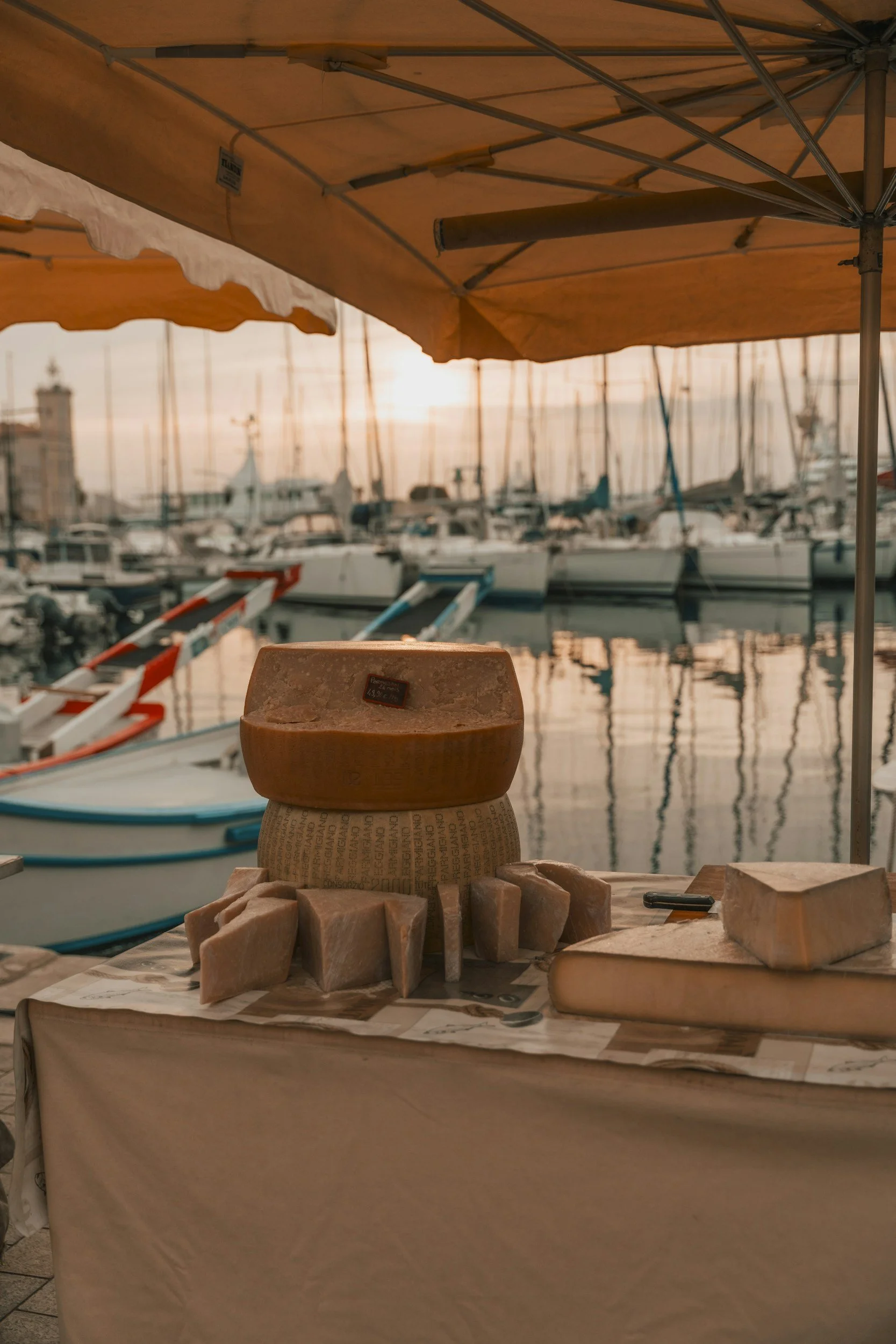
By late September the Saturday market in Place aux Herbes starts looking a little different from the peak summer weeks. The big tables of tomatoes and peaches are still there, but other things start creeping in that make the stalls feel more autumnal. One of the first things you usually notice are the figs. They’re piled high in wooden crates, dark purple and almost bursting open, often brought in from farms just outside Uzès toward Saint-Quentin-la-Poterie. Vendors slice one open now and then so people can see the deep red inside, and you’ll often see people walking away with a small paper bag of them.
Olives are another thing that shows up everywhere. One of the stands near the middle of the square usually has big metal bowls filled with different types: bright green olives with lemon peel and herbs, darker ones cured in salt, and thick tapenades made with garlic and anchovy. People stop there after buying bread or cheese, tasting a few olives while chatting with the vendor before moving on.
The goat cheese stalls are hard to miss as well. Farmers from the surrounding countryside bring small rounds of chèvre stacked neatly on straw mats. Some are very fresh and soft, almost spreadable, while others have aged a little longer and developed a firmer rind. If you stand there for a moment the seller will usually cut a tiny piece for you to taste. Many locals buy two or three at once and tuck them into baskets with a baguette sticking out the top.
Mushrooms begin appearing on the tables around this time too, especially if the weather has been a bit damp. They arrive in small baskets beside bunches of thyme and rosemary, sometimes picked in wooded areas closer to the Cévennes hills. You’ll also see walnuts, dark grapes, jars of honey from nearby villages, and the first hints of ingredients that will soon dominate autumn cooking.
Putting together a simple lunch from the market is part of the routine here! People often stop at Boulangerie Provençale just off the square for a warm baguette, then head back into the market for cheese, figs, and olives. Add a bottle of rosé or a light red from one of the small wine shops nearby and you have everything you need for an easy lunch.
Even if you’re not cooking yourself, spending time at the market changes how the rest of the day feels. Later when you sit down for lunch around the square, the dishes on the menu suddenly look familiar because you saw the ingredients earlier that morning. Goat cheese with figs, grilled vegetables with herbs, mushrooms sautéed in olive oil. It all connects back to the stalls that were set up under the plane trees only a few hours earlier…
The countryside around Uzès is part of a wider Provençal landscape where small villages and farmland still shape daily life. Read and get inspired!
Alba, Italy - white truffle season quietly starting in the Langhe hills
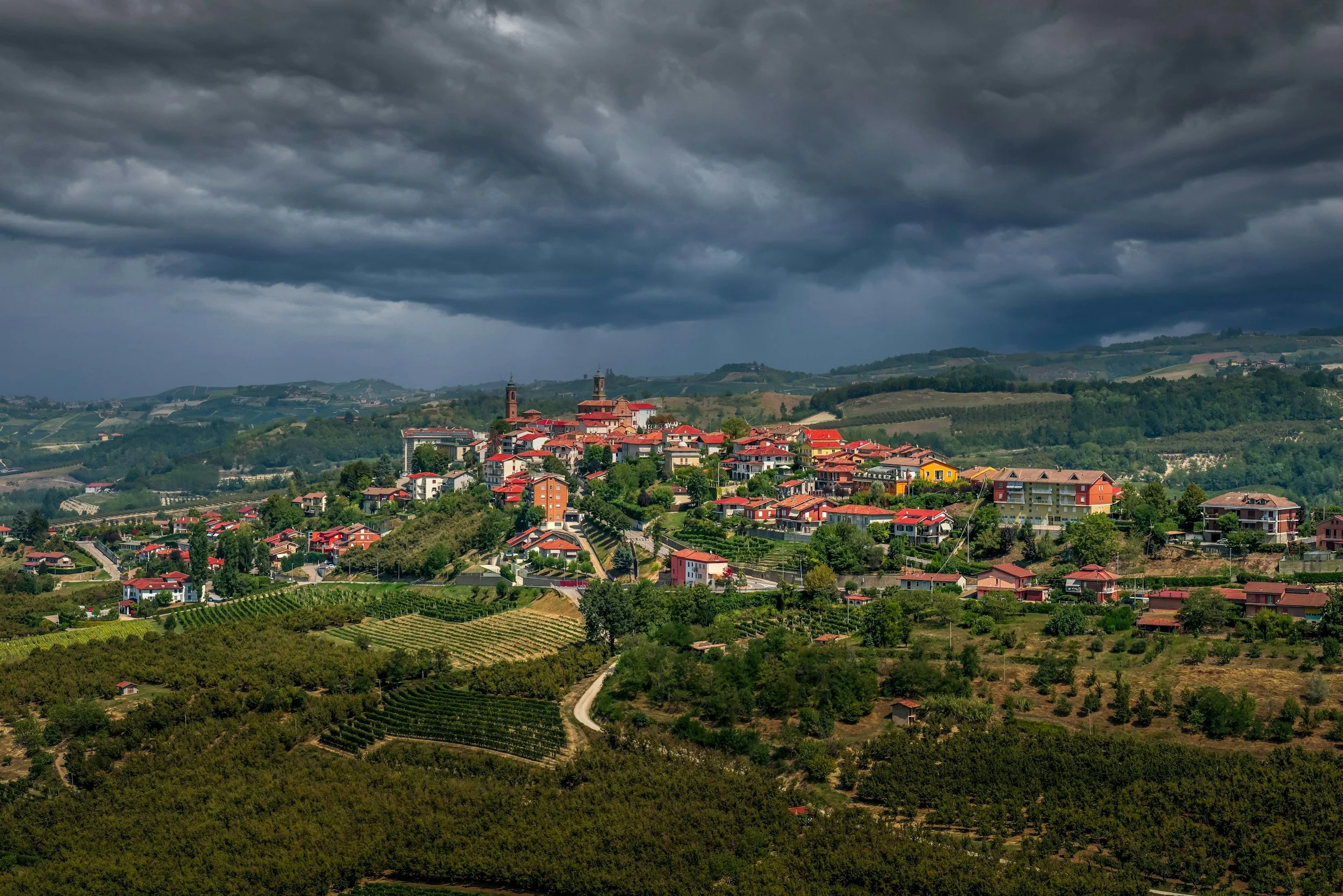
Arriving in Alba from Turin and why trains still make the most sense here
Getting to Alba is actually quite simple if you’re already travelling through northern Italy. Most people come through Turin, which works well because trains run frequently between the two. From Torino Porta Nuova the journey usually takes a little over an hour, and the scenery changes fairly quickly once the train leaves the city. Apartment blocks disappear, and before long you’re passing vineyards, hazelnut orchards, and small villages scattered across the hills.
When the train pulls into Alba station, things immediately feel manageable. It’s a small station and you’re not far from the centre. Most people just walk. Head along Corso Fratelli Bandiera and within about ten minutes you’re already reaching the edge of the old town.
The streets narrow quickly once you get there. Cars thin out, the buildings turn into warm red brick, and the rhythm slows down a bit. You’ll usually arrive somewhere near Via Vittorio Emanuele, which is one of the main streets running through the historic centre. It’s lined with bakeries, wine bars, little food shops, and clothing boutiques, so it’s a nice street to wander even if you’re just stretching your legs after the train.
First afternoons in Alba tend to fall into place easily. Drop your bags, take a walk, and eventually you’ll end up at Piazza Risorgimento, the square with the cathedral and a few cafés around the edges. People sit outside with espresso, locals pass through with shopping bags, and visitors slowly drift between wine bars. Love that kind of life…
Stopping somewhere simple for a drink is usually the best way to begin. Places like Vincafé or one of the small bars around the square start pouring glasses of Barbera and Dolcetto in the late afternoon, and it’s easy to sit there for a while just watching the town move around you.
Central Italy has similar countryside where vineyards, small farms and quiet hill towns sit close together.
Staying in Alba itself also makes the whole trip easier. The famous wine villages like Barolo, La Morra, and Barbaresco are all nearby, but they’re quiet places once evening comes and they’re harder to reach without a car. Alba gives you restaurants, markets, bakeries, and wine bars all within a few streets, while the vineyards are still close enough to visit during the day. You can spend the morning wandering through the market streets, head out into the hills for lunch at a winery, and come back into town later when people start filling the bars and restaurants again.
If you enjoy towns where food culture spills out into the streets like this, there are several similar places across Italy that are worth building a trip around.
Late September mornings when the Alba market begins filling with autumn produce
Market mornings in Alba start early, especially once the end of September arrives. By eight or nine the streets around Piazza Savona and Piazza Pertinace are already full of stalls, and people move steadily between them with shopping bags and baskets. Vendors call out prices, crates of produce are stacked on folding tables, and the smell of fresh bread drifts over from nearby bakeries.
What you notice first is how the produce changes at this time of year. Summer fruit is still around, but other things begin taking over the tables. There are piles of hazelnuts, which grow everywhere in the hills around Alba. Bags of them sit next to trays of figs and bunches of dark grapes that have just come in from nearby vineyards. Mushrooms begin appearing as well, especially porcini, displayed in small wooden boxes that draw people in for a closer look.
The market spreads across several streets, so walking through it becomes a slow loop rather than a straight line. One minute you’re looking at vegetables piled high on tables, the next you’re standing beside a cheese vendor slicing pieces from large wheels while people wait their turn. A few steps further and someone is selling cured meats hanging from wooden racks.
Coffee stops are always part of the routine here. Many people duck into a café for a quick espresso and then return to the market to continue shopping. Small bars around the square fill with locals doing exactly that… standing at the counter for a coffee before heading back outside with another bag of food.
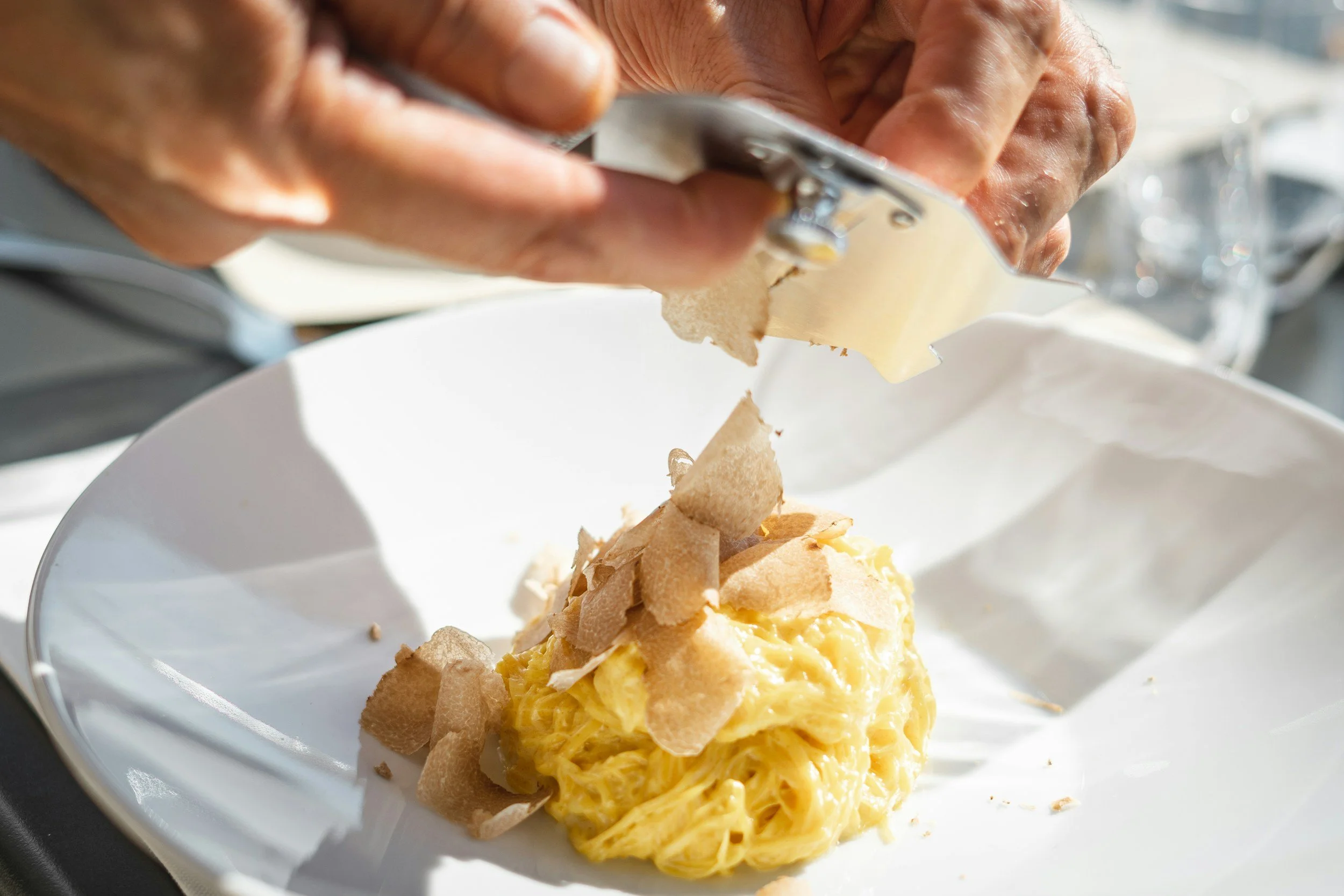
Late September also brings the first quiet signs that truffle season is approaching! Shops begin displaying jars of truffle paste or fresh truffles when they’re available, and people start talking about the upcoming fairs that happen later in the autumn.
The best way to experience the Alba market is simply to wander without rushing. Walk through the stalls once, stop for coffee somewhere nearby, and then wander back again. The pace feels relaxed, and there’s always something new to notice the second time around!
Vineyards around Barolo and Barbaresco during the first weeks of harvest
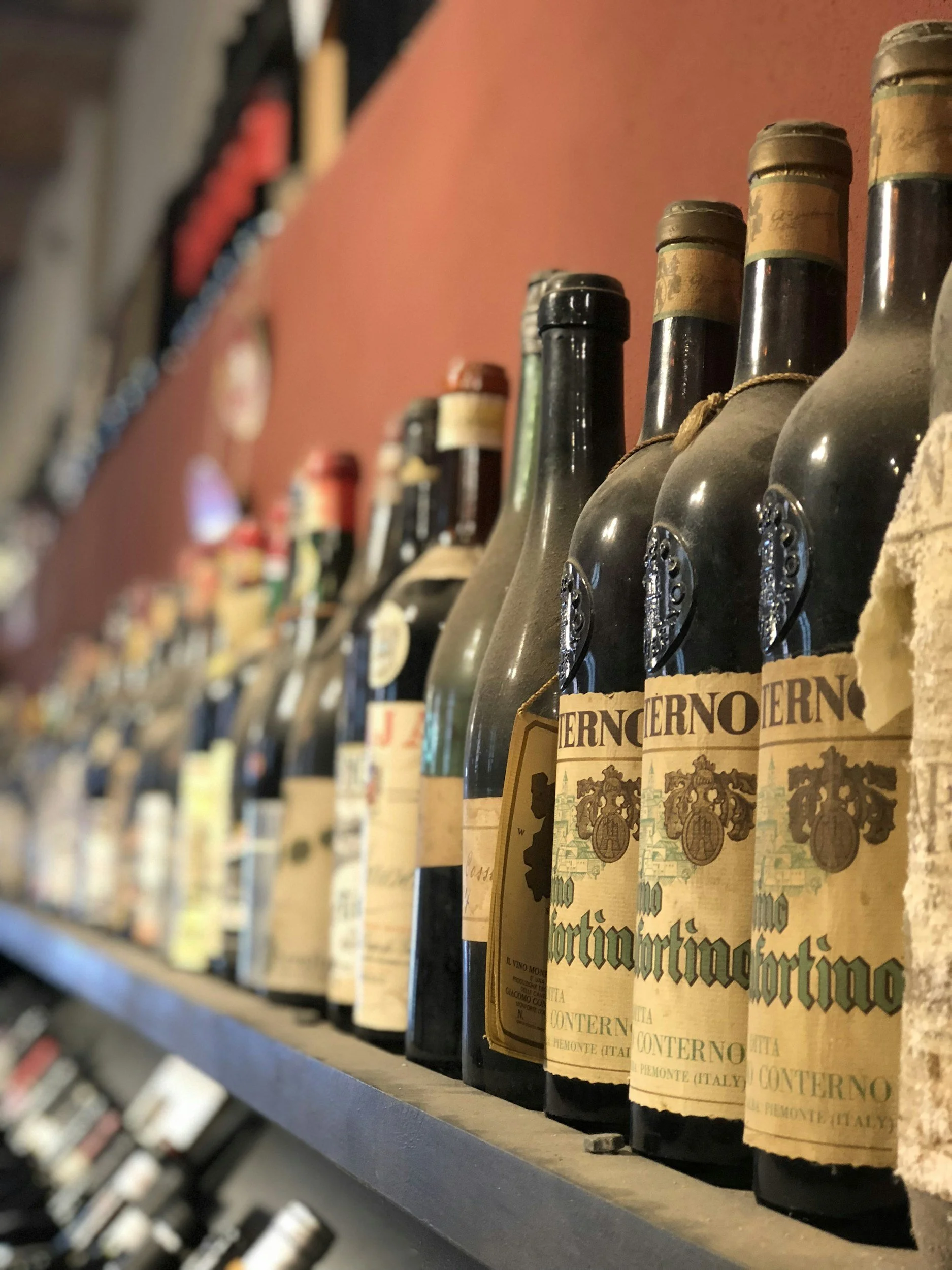
One of the reasons Alba works so well as a base is how close it is to the vineyards of Barolo and Barbaresco. You don’t need to plan a big wine tour to see them. Leave Alba and within about ten minutes the landscape changes completely. Apartment buildings disappear and the road begins winding through low hills covered almost entirely in vines.
If you drive south toward Barolo, you’ll usually pass through Grinzane Cavour first. The castle there sits above the vineyards and you can see rows of vines stretching in every direction. Continue a little further and you reach La Morra, one of the most beautiful viewpoints in the Langhe. People often stop near the square by the Belvedere terrace, where the hills roll out in soft waves of vineyards and small villages.
Late September is when harvest activity becomes very visible. Workers move slowly through the vines cutting grape clusters, plastic crates sit stacked along the rows, and tractors crawl up and down the narrow vineyard roads. Outside several wineries you’ll see piles of grapes waiting to be taken inside. Sometimes the smell of crushed grapes drifts through the air, especially near the cellar doors.
The same thing happens on the other side of Alba in the direction of Barbaresco. The drive there is shorter, maybe fifteen minutes, and the vineyards feel slightly tighter around the villages. The tower in the centre of Barbaresco village rises above the vines, and the streets around the small square are filled with wine shops and tasting rooms.
The best way to explore this area is to keep the day simple. Pick one direction and wander through a couple of villages rather than trying to see everything. For example, drive from Alba to La Morra, stop for the view, then continue toward Barolo village itself where small wine bars line the streets around the castle.
Lunch in the hills is often the best part of the outing. Restaurants in villages like Monforte d’Alba or Barbaresco serve traditional dishes that pair naturally with the local wines. A long lunch with tajarin pasta or roasted meat and a glass of Barbera makes much more sense here than trying to rush through several wine tastings.
Later in the afternoon it’s easy to return to Alba before evening. The town comes alive again around aperitivo time. Wine bars fill, people gather in the streets, and when you order a glass of Barolo or Barbaresco it tastes even better than before.
Wine bars in Alba where locals stop after the market before lunch
One of the nicest parts of a morning in Alba happens after you’ve walked through the market and the bags start getting heavy. Instead of rushing straight to lunch, people often stop at a wine bar for a while. The streets around Via Vittorio Emanuele and Piazza Risorgimento are full of small places where locals stand at the bar or sit outside with a glass of wine before heading home.
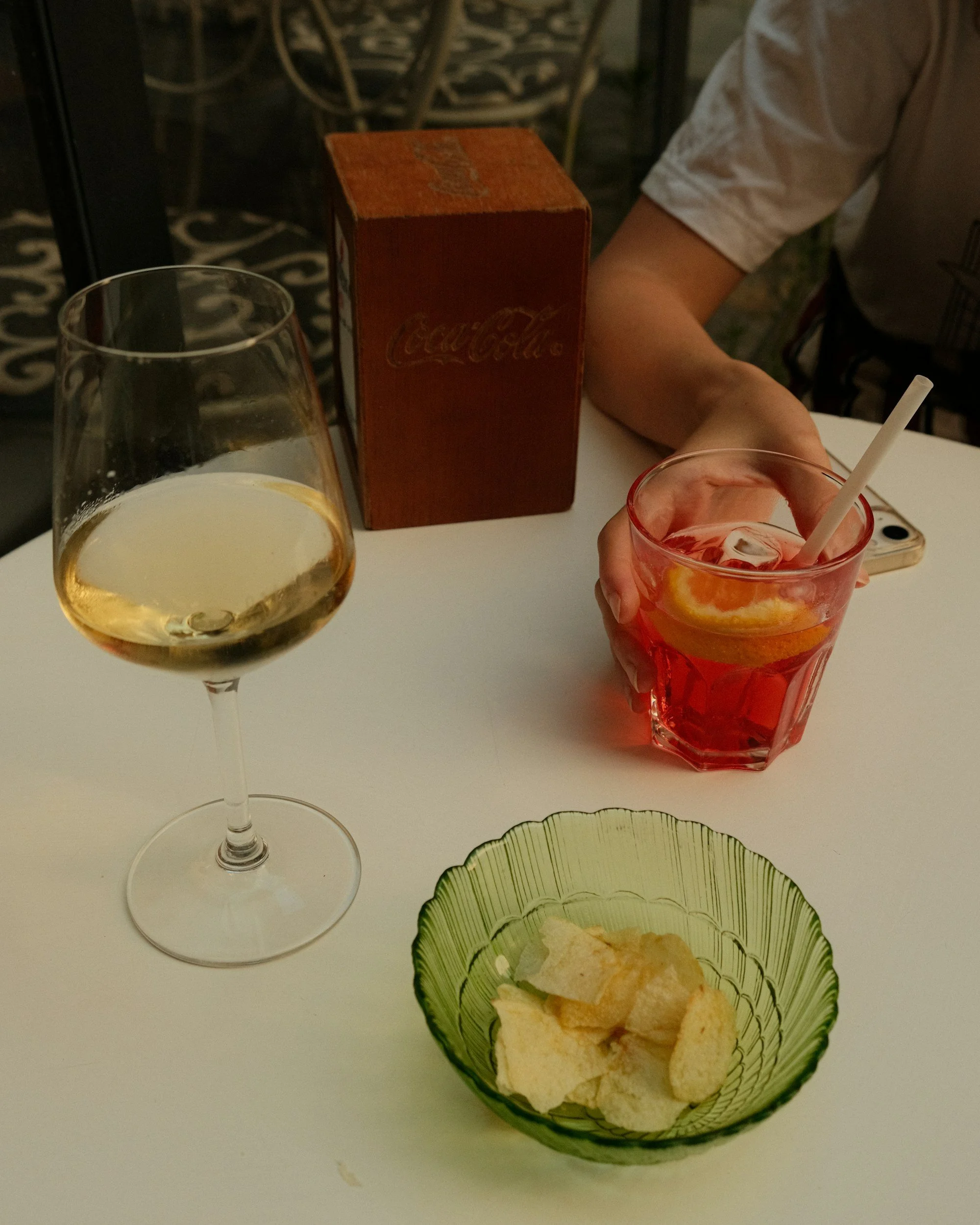
A very easy place to stop is Vincafé, right next to the cathedral on Piazza Risorgimento. Late in the morning the tables outside start filling with people who’ve just come from the market. Someone orders a glass of Dolcetto, someone else a Barbera, and small plates with olives or slices of salami appear on the table without much fuss.
A few streets away along Via Vittorio Emanuele, you’ll find several other small bars where the same thing happens. People step inside for a quick glass at the counter or grab a small table if one is free. It’s very relaxed. Nobody is analysing wine or turning it into a formal tasting. It’s simply a glass before lunch.
Another spot locals like is Enoclub, tucked slightly away from the main flow of tourists. The inside feels cosy, with shelves of bottles lining the walls and a few small tables where people linger longer than they expected. It’s the kind of place where you order one glass and then end up staying for another because the atmosphere is so easy.
Early truffle season atmosphere before the big October crowds arrive
Late September is a good moment to be in Alba if you’re curious about truffles but don’t want the town at full capacity yet. The International White Truffle Fair usually begins in October, and that’s when weekends become noticeably busier. A week or two earlier, the town is still calm enough that you can move around easily, but people have already started talking about the season.
You see the first signs of it while walking through the centre. Food shops along Via Vittorio Emanuele start rearranging their windows. Jars of truffle cream, small boxes of preserved truffles, and bottles of truffle oil appear beside the cheeses and salami. Places like Tartufi Morra, which has been selling truffles in Alba for generations, suddenly have more people standing at the counter asking questions about when the first good ones might arrive.
Restaurants also start leaning into the dishes that usually go with truffles. Menus around Piazza Risorgimento and Via Cavour begin listing plates like tajarin with butter, which is the thin egg pasta the region is known for. Even without the truffles shaved on top yet, it’s the same dish that will later carry them once the season really gets going.
The streets themselves still feel easy. You can wander between cafés, wine bars, and small shops without squeezing through crowds. Getting a lunch table is straightforward, and people still have time to chat with shop owners or sit for a glass of wine before heading to dinner.
That’s really the advantage of being here in late September. The town is clearly preparing for truffle season, but the pace hasn’t changed yet. Locals are still doing their normal routines, the market runs as usual, and visitors who arrive at this time tend to be people who enjoy the region rather than those coming just for the festival weekends.
If truffles are part of the reason for your trip, the Alba truffle fair guide is a must read!
Cadaqués, Spain - small harbour markets and Empordà wine country nearby
The winding coastal drive into Cadaqués and why arriving early in the day matters
Getting to Cadaqués is a bit different from the other towns in this guide. It’s not somewhere you just pass through on the way to somewhere else. The town sits tucked behind the hills of the Cap de Creus peninsula, and the only road in winds slowly over the mountains before dropping down toward the sea.
Most people arrive through Figueres, which is where the nearest train station is. From there the drive usually takes around forty minutes, but the last part feels longer because the road becomes very twisty. It climbs over dry hills covered with olive trees and low shrubs, and you can sometimes see the sea appearing in the distance before disappearing again behind another bend.
If you arrive late in the afternoon, especially on a sunny weekend, that final stretch can get busy. Cars move slowly and everyone seems to be arriving at the same time. That’s why coming earlier in the day makes things much easier. The road is quieter, parking in town is simpler, and the whole arrival feels calmer.
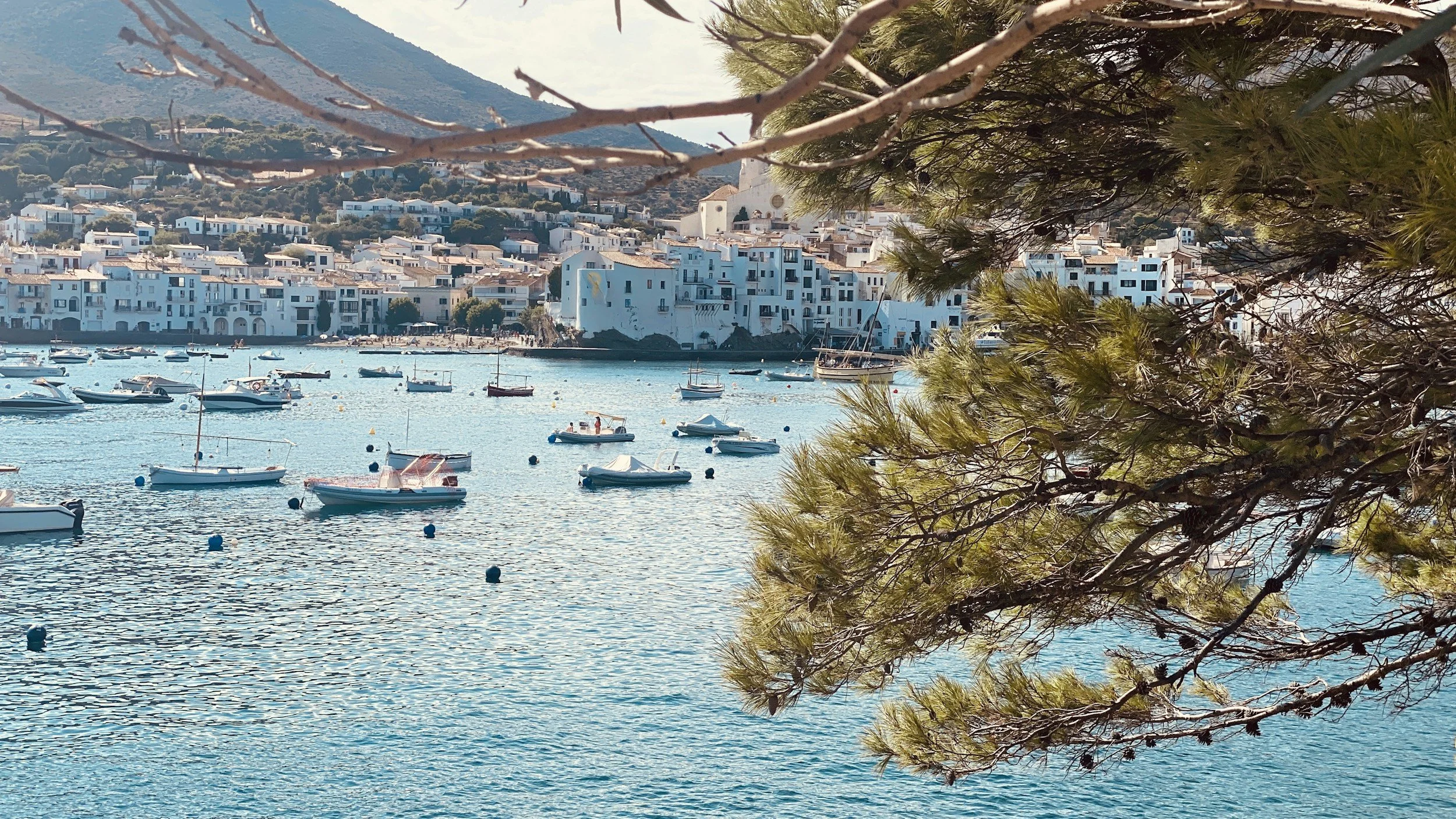
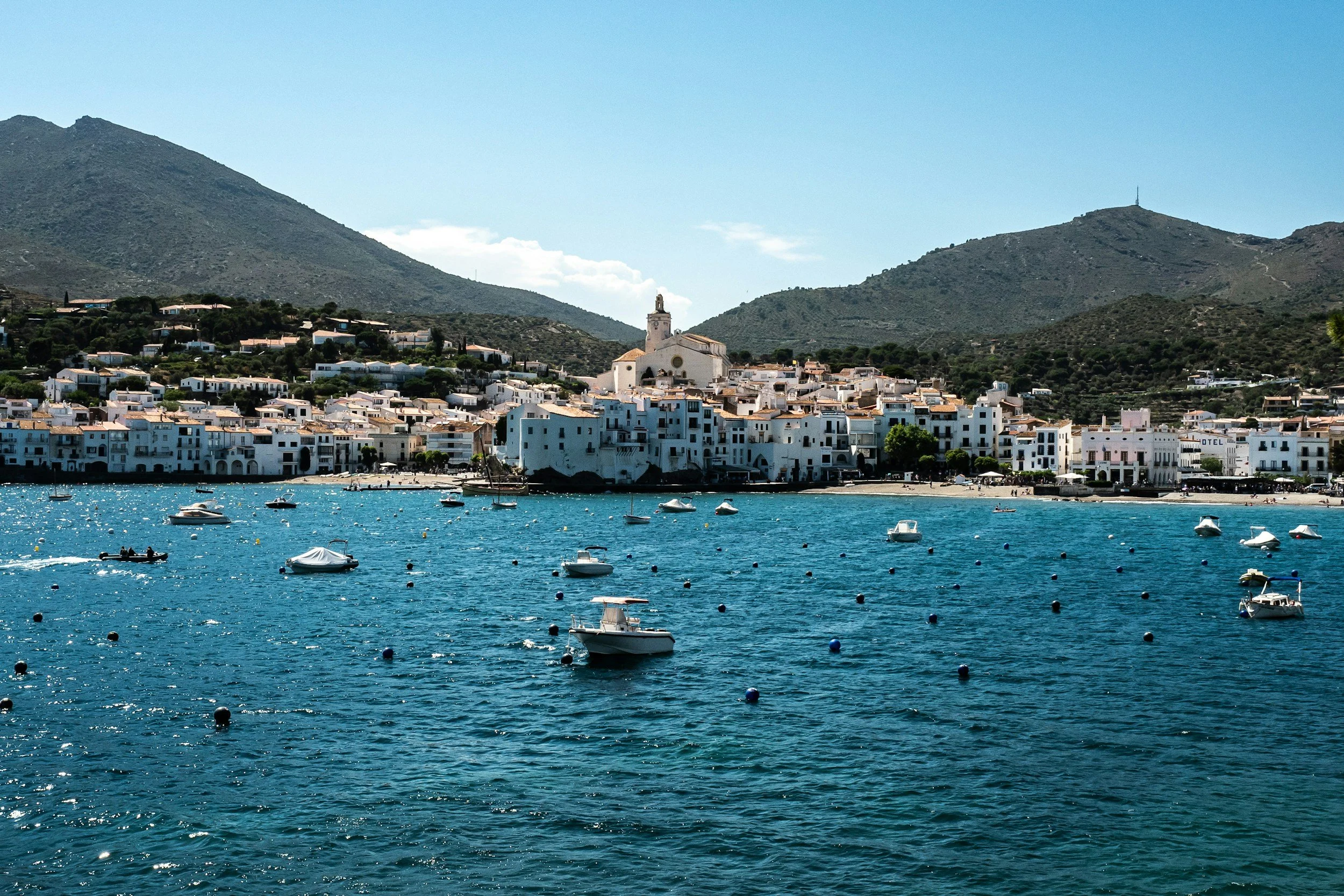
The first view of Cadaqués usually appears suddenly. After one of the final curves the road drops downhill and the town spreads out below you - white houses clustered tightly together around a small bay with fishing boats floating just offshore.
Once you reach the town itself, everything becomes very easy. The streets are narrow and most people get around on foot. After checking into your hotel or apartment, there’s rarely a reason to use the car again.
The harbour area is where people naturally gather. Small cafés line the waterfront, fishing boats rock gently in the bay, and the white buildings reflect the sunlight in that bright Mediterranean way. From there you can wander through the small streets that climb up toward the Santa Maria church, which sits above the town and looks out over the sea.
Market mornings in nearby villages like Roses and Figueres in late September
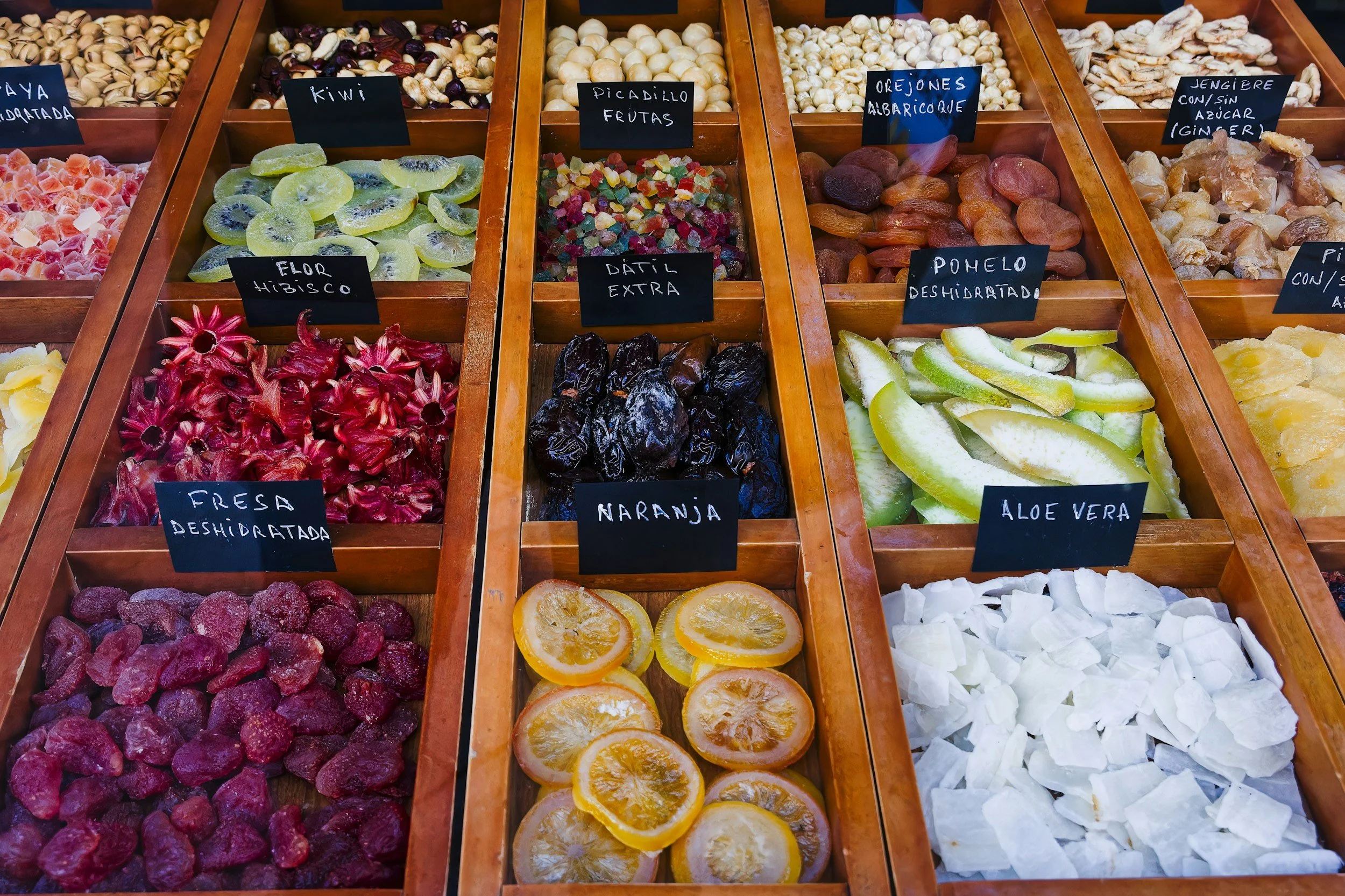
Cadaqués is beautiful, but it’s not really a big market town. If you enjoy wandering through proper food markets in the morning, it’s worth heading to one of the nearby towns for a few hours. Figueres and Roses are the easiest options, and both are close enough that you can visit in the morning and still be back in Cadaqués in time for lunch.
Figueres sits about forty minutes away and has a much larger market that spreads through several streets near the centre. If you arrive in the morning you’ll see stalls lined up with piles of vegetables, fruit, cheeses, olives, and cured meats. Locals walk through with shopping bags, stopping to chat with vendors they clearly know. It feels like a real weekly market with authentic produce.
Late September is a nice moment to visit because the stalls are full of produce from the surrounding countryside. Tomatoes and peppers are still everywhere, but you’ll also see figs, grapes, and nuts from nearby farms. The atmosphere is lively but not overwhelming, and it’s easy to wander slowly through the rows of tables without feeling rushed.
If you want to plan that kind of morning properly, it helps to know which markets around Cadaqués are actually worth the detour.
Roses, which sits along the coast not far from Cadaqués, has a smaller market but still makes a pleasant stop. The town itself is more spread out, with a long waterfront promenade and fishing boats in the harbour. The market stalls are usually set up near the centre, and the mix of seafood, vegetables, and everyday goods gives it a very local feel.
Doing a quick market stop like this works well if you’re staying in Cadaqués. Leave town in the morning, spend an hour or two wandering through the market in Figueres or Roses, then drive back over the hills toward the coast.
By the time you return to Cadaqués, the harbour restaurants are usually opening for lunch and people are settling into the slower part of the day. It’s made for easy days with market in the morning, sea views and lunch by the water later on.
Vineyards in the Empordà region where harvest activity is visible everywhere
Once you leave Cadaqués and drive back over the hills toward Roses or Figueres, the landscape changes quite quickly. The rocky coastline disappears and the road opens into farmland where vineyards stretch across the flatter land of the Empordà region.
Late September is when you start noticing how active this area is! Grapes are being picked, crates sit stacked at the edges of the vineyards, and tractors move slowly along the small country roads.
Villages like Peralada, Vilajuïga, and Espolla sit right in the middle of this wine landscape. They’re small places with quiet streets, a church square, and a couple of local restaurants where people stop for lunch. Driving through them takes only a few minutes, but it gives you a good sense of how much wine shapes this part of Catalonia.
You don’t need to organise a big tasting schedule to enjoy it. Often the nicest way to experience the area is simply to drive inland for a bit, pass through one or two villages, and stop somewhere that looks appealing.
For example, you might leave Cadaqués mid-morning, take the winding road back toward Roses, then continue inland toward Peralada, which has several wineries nearby and a small historic centre. Sit down for lunch, order a bottle of local Empordà red, and spend an hour watching the quiet village life around you…
Later in the afternoon you can drive back toward the coast and return to Cadaqués. Within an hour you go from vineyards and farmland back to white houses and fishing boats in the harbour. That contrast is part of what makes staying in Cadaqués interesting in late September.
Lunch spots along the harbour when the town slows down again after summer
By late September, lunch in Cadaqués feels much easier than it does in the middle of summer. In July and August the harbour restaurants can be chaotic by midday, with people waiting around for tables and staff rushing between crowded terraces. A few weeks later the pressure drops. Tables are still busy, but you can usually sit down without planning your whole day around it.
Most of the restaurants sit right along the curve of the harbour, looking out over the fishing boats. Walking along the waterfront around lunchtime, you’ll see menus written on boards outside and waiters setting up tables in the sun.
A couple of places locals still talk about are Casa Anita, a small restaurant just a short walk up from the harbour that has been around for decades, and Compartir, which sits a few streets back and is known for sharing plates and seafood dishes. Closer to the water there are simpler spots serving grilled fish, paella, and cold white wine.
Lunch usually starts slowly. People wander in after a swim, after a morning walk, or after driving back from somewhere inland like Figueres or Peralada. You’ll notice tables filling gradually rather than all at once.
A typical late September day here ends up being quite simple. You head out in the morning while the streets are still quiet, maybe drive inland for a market or a short vineyard visit, and then come back to town just as the restaurants begin opening for lunch.
After eating, the town goes quiet again for a while. Shops close, people disappear indoors, and the harbour calms down until the late afternoon when everyone slowly returns for a walk along the waterfront or a drink before dinner.
Walking the coastal paths when the sea is still warm but the crowds are gone
One of the nicest things to do around Cadaqués in late September is simply walk along the coastline. The sea is usually still warm from the summer months, but the heavy beach crowds have mostly disappeared, which changes the whole feeling of the place.
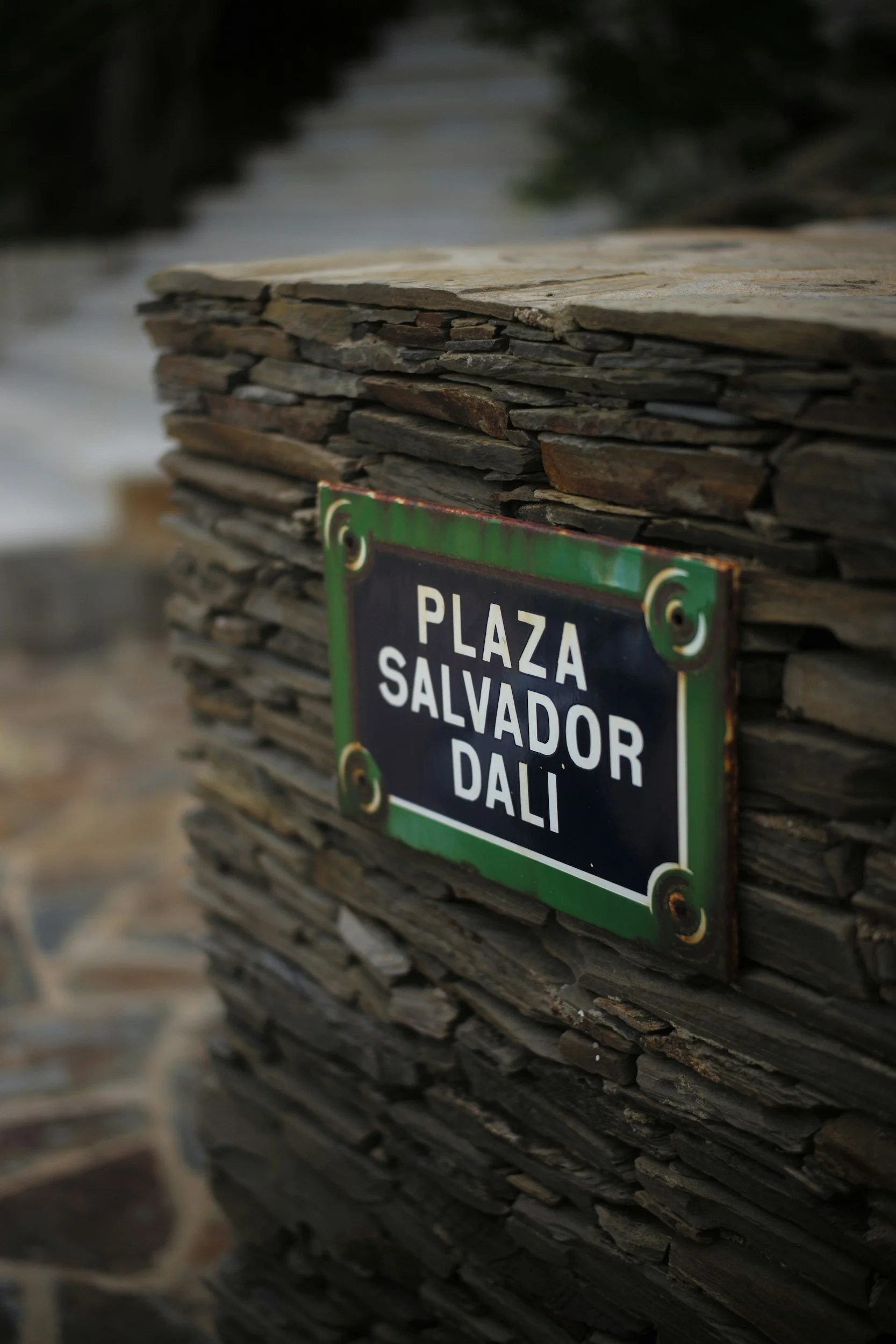
From the harbour you can follow small coastal paths that lead out of town in both directions. One easy route starts near the edge of the bay and heads toward Portlligat, the small cove where Salvador Dalí’s house sits. The walk takes about twenty minutes and follows the water almost the entire way. Along the path you pass small rocky swimming spots where locals still stop for a quick dip if the weather is warm.
Another option is heading toward the more rugged landscape of Cap de Creus Natural Park. The trails there move through dry stone hillsides and low coastal vegetation, with wide views over the Mediterranean. Late in the day the light softens across the rocks and the sea becomes calmer, which makes the walk feel very different from the harsher midday sun earlier in the summer.
Because the town is quieter at this time of year, these paths feel much more open. You might pass a few other walkers, maybe someone sitting on the rocks with a book, but it rarely feels “crowded”.
Beaune, France - Burgundy during harvest season
Beaune is one of those wine towns in France that is surprisingly easy to reach by train. If you’re coming from Paris, most people leave from Gare de Lyon and take the high-speed train toward Dijon. The journey usually takes a bit over two hours. From Lyon, it’s even simpler. Trains run north toward Dijon and Beaune appears about an hour and a half later.
When you arrive, the station is right on the edge of town. It’s not one of those situations where you need a taxi or a bus to reach the centre. You just walk. Within ten minutes you’re inside the old streets of Beaune, passing bakeries, wine shops, and small hotels.
That’s one of the reasons the town is a great idea for a short wine trip. Burgundy is full of beautiful vineyard villages, but many of them are difficult without a car. If you stay in Beaune instead, you still have the vineyards nearby, but you also have a proper town where you can move around easily on foot.
The historic centre sits inside old stone walls, and most of the streets are short and easy to explore. You’ll quickly pass the Hôtel-Dieu, the famous medieval hospital with its patterned roof tiles, then continue into lanes filled with wine bars, cheese shops, and small restaurants.
Because everything is so close together, arrival days are simple. You can step off the train, check into your hotel, and start walking around town within the hour. Many people begin with a quick coffee or a glass of Burgundy in one of the small bars near Place Carnot, which is the main square.
From that point on, the town mostly takes care of itself. Beaune has enough wine cellars, restaurants, and shops that you can easily fill the first afternoon just wandering through the streets and settling into the place before heading out into the vineyards the next day…
Morning routines around Beaune’s weekly market as harvest begins in the vineyards
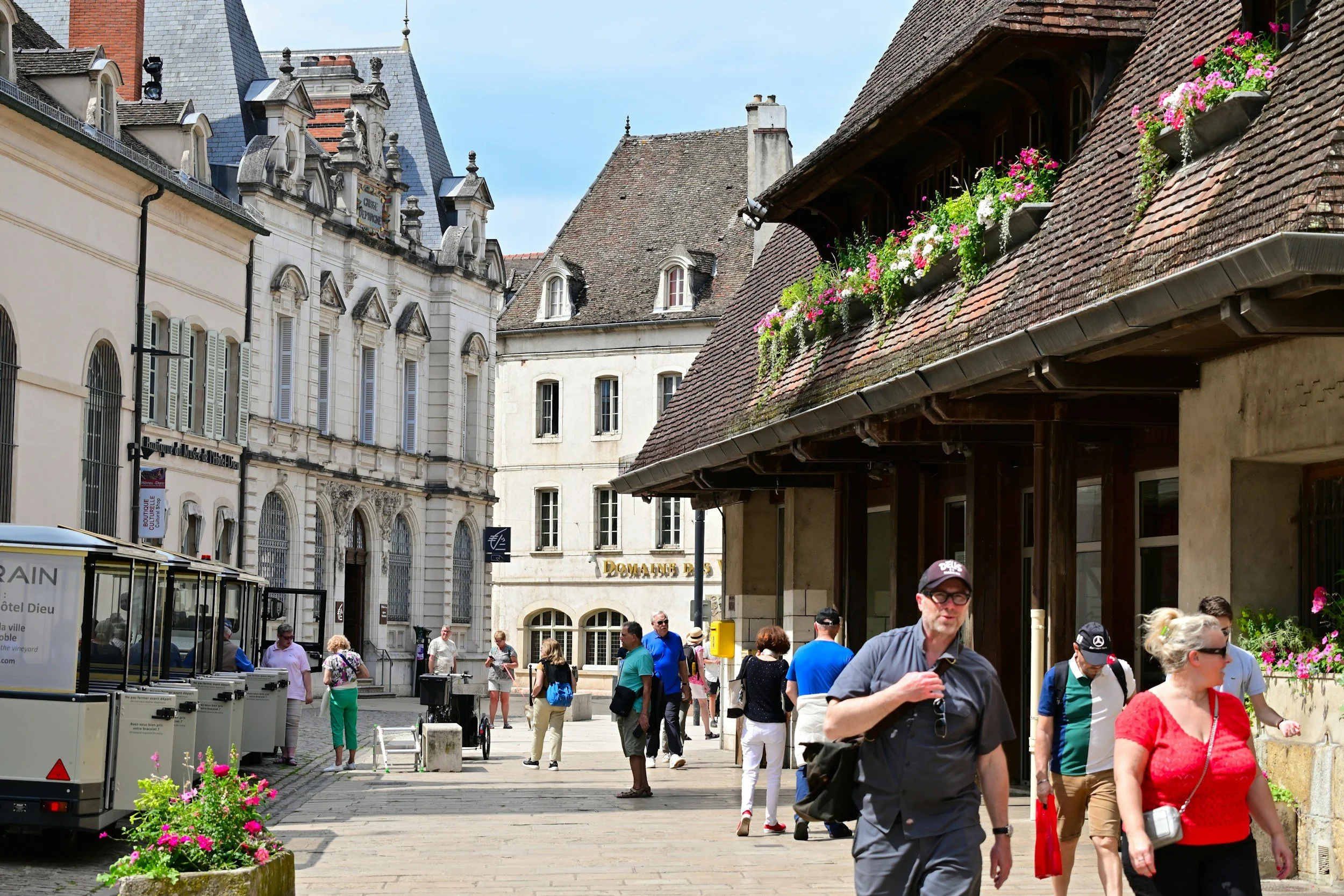
Market mornings in Beaune are easy to slip into. If you’re staying inside the old town walls, you’ll probably hear the first signs of it before you even reach the square. Vans arrive early, vendors start unloading tables and crates, and by mid-morning Place Carnot is already busy with people doing their weekly shopping.
The market spreads out from the square and into the surrounding streets. Stalls sell vegetables, fruit, cheeses, bread, sausages, olives, and bottles of local wine. You’ll see piles of late-season produce (tomatoes, figs, grapes, mushrooms) sitting next to wedges of Comté, rounds of Époisses, and jars of mustard brought down from nearby Dijon.
A good way to do the market here is simply to walk through it slowly once, without rushing to buy anything. Start near Place Carnot, wander through the stalls, then drift into one of the small streets nearby.
Not far from the square you’ll find cafés where people settle down after finishing their shopping. Order a coffee, maybe a small pastry, and sit for a while before heading back out. From there it’s easy to keep wandering through Beaune’s centre - past wine shops, bakeries, and small restaurants preparing for lunch.
What makes this time of year interesting is that the harvest is happening at the same time. Outside town, vineyards in places like Pommard, Volnay, and Meursault are busy with picking. You’ll notice vans moving through town, workers stopping for coffee, and wine conversations popping up everywhere.
Even if you spend most of the morning inside Beaune itself, the vineyards never feel far away. The market, the cafés, and the harvest season all blend into the same daily life here.
If you enjoy wine regions where small towns and vineyards sit close together, the Champagne countryside works in a very similar way.
Burgundy wine villages within a short bike ride: Pommard, Volnay, Meursault
One of the reasons Beaune is a great place to stay, is how close the wine villages are. You don’t need a long drive to reach them. If you leave the centre of Beaune and head south, the vineyards start almost immediately and the first village appears within a few minutes.
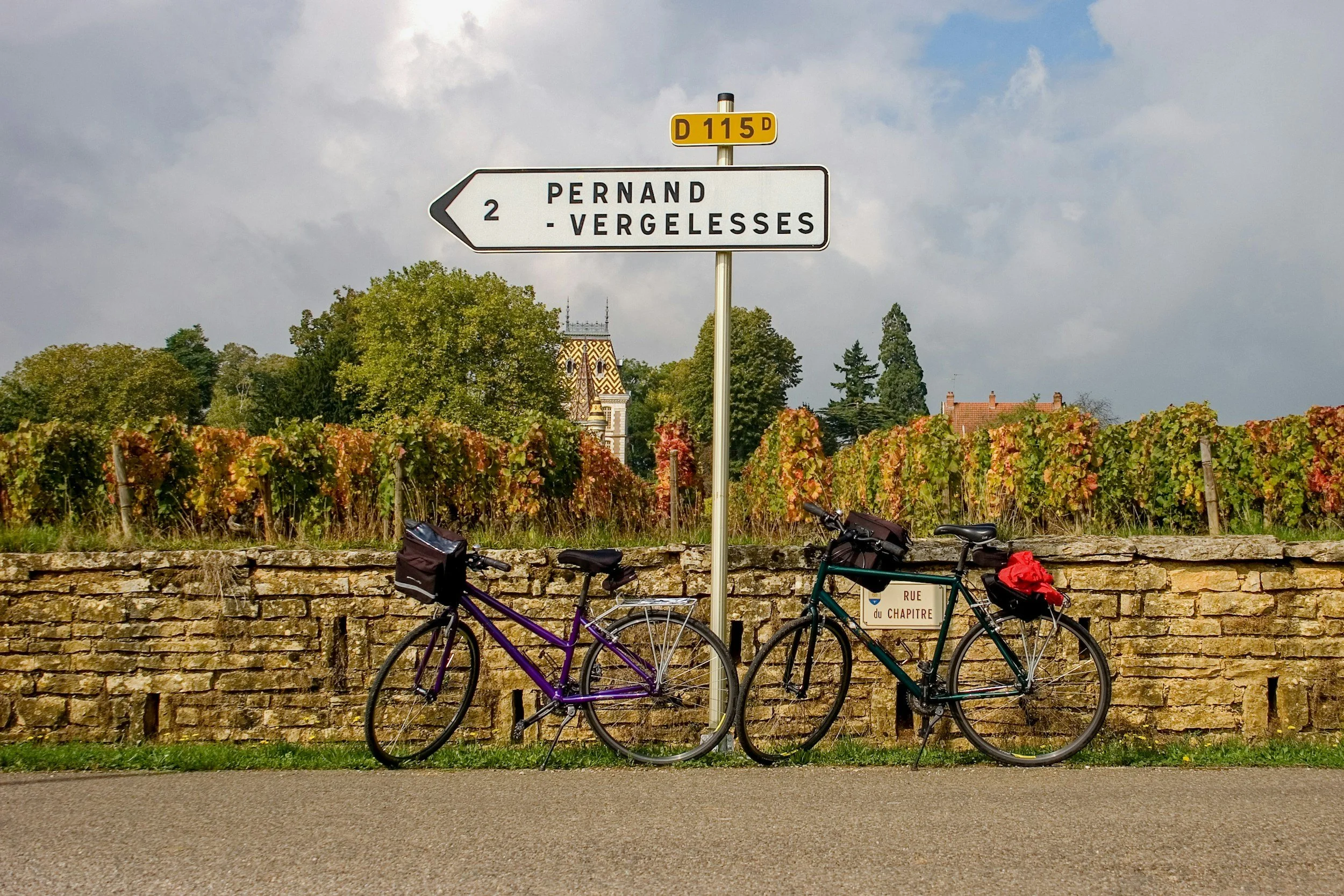
Pommard is usually the first stop. From the edge of Beaune it’s only a short ride along small vineyard roads, and the landscape is exactly what people imagine when they think about Burgundy. Long rows of vines stretch across the slopes and stone winery buildings sit right along the road. In late September you’ll often see harvest activity everywhere - crates of grapes stacked outside cellar doors, tractors moving slowly between vineyards, workers stopping for a quick break.
A few minutes further along the same road you’ll find Volnay. The village is smaller and very quiet, with narrow streets and a church sitting slightly above the houses. Vineyards climb up the hills behind the village, and you can walk through the centre in ten minutes before heading back out into the fields.
If you keep going you’ll reach Meursault, which feels a bit more lively again. The main square sits in front of the old town hall with its patterned roof tiles, and several restaurants and wine cellars open directly onto the street. It’s a good place to stop for a glass of white Burgundy or a relaxed lunch before heading back.
Many people rent bikes in Beaune and follow this route through the vineyards. The distances are short, the roads are quiet, and you pass vines almost the entire way…
Even if you don’t cycle, the same route works with a short taxi ride or a small guided tour. The key thing is how close everything is. You can leave Beaune after breakfast, spend a few hours moving between villages and vineyards, and still be back in town later in the afternoon.
Once you return to Beaune, the evening becomes simple again. The centre fills with people heading to dinner, wine bars open their doors, and the streets around Place Carnot stay lively well into the night.
If you enjoy exploring wine regions slowly like this, there are a few parts of Italy where the same kind of vineyard landscape shapes everyday life.
Wine cellars and small tasting rooms opening their doors during harvest weeks
Late September is when Beaune feels most like a working wine town. Harvest has started in the vineyards outside places like Pommard, Volnay, and Meursault, and that activity carries straight into the centre.
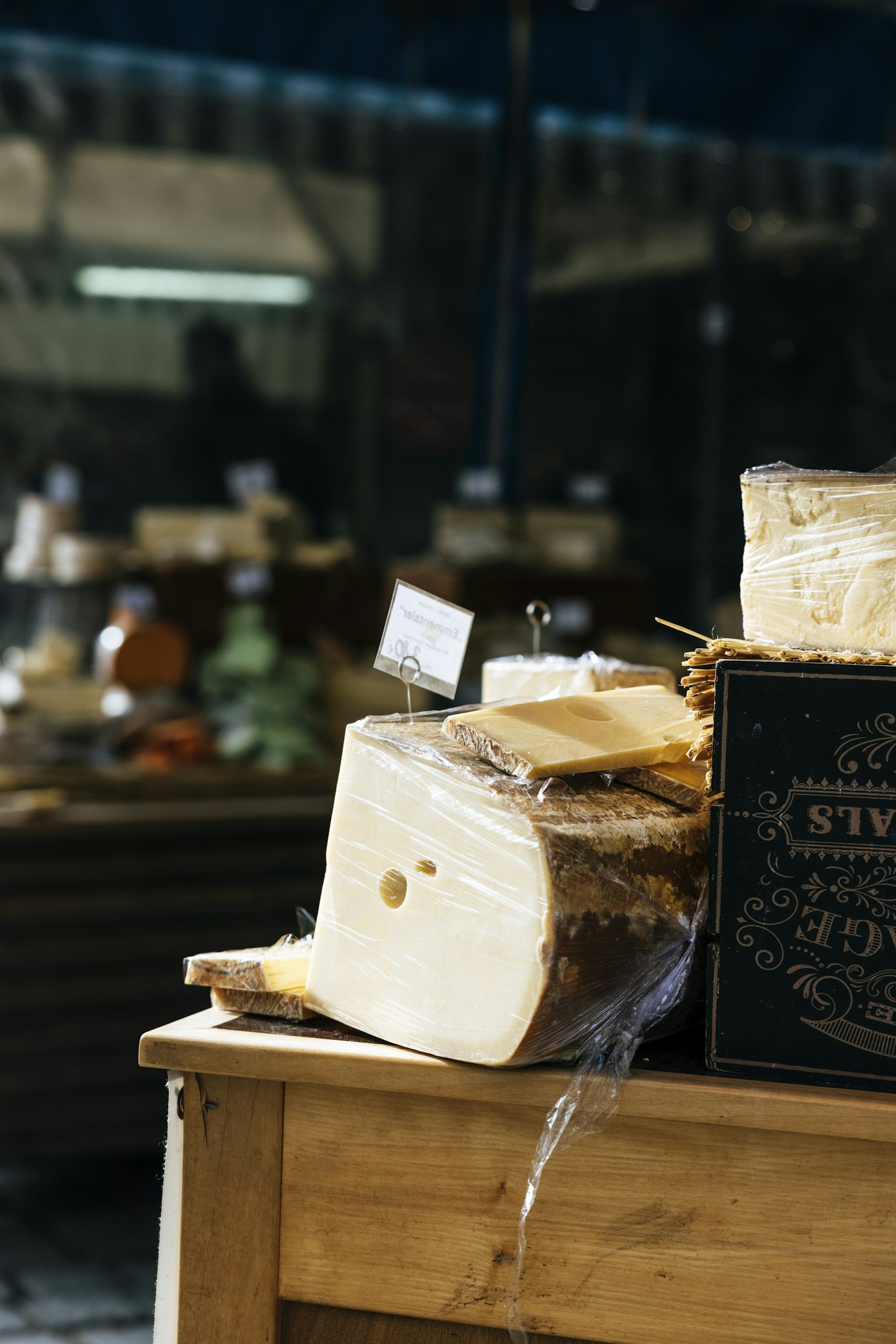
Walking through town you’ll notice cellar doors standing open. Some lead down stone staircases into cool tasting rooms, others are simple shopfronts where bottles line the walls. You don’t need an appointment for many of them. If the door is open, you can usually walk in and ask to taste a couple of wines.
A lot of these places sit along streets like Rue Paradis, Rue Maufoux, and the smaller lanes that run off Place Carnot. It’s easy to move between them because everything is close together. You might step into one cellar, taste a Pommard or Volnay, then walk a few minutes before spotting another place that looks interesting.
During harvest weeks the conversations tend to be very practical. People talk about when the picking started, which vineyards are finishing first, or how the weather has been that week. You’ll sometimes see vineyard workers in town grabbing lunch or dropping off crates before heading back out again.
The afternoon often unfolds without much planning. Walk through town, stop at a cellar that catches your eye, taste a glass or two, then head back outside and keep wandering. It feels less like a “formal” wine tour and more like moving through a town where wine is simply part of everyday life.
Late afternoon walks through vineyard paths just outside the historic centre
In Beaune, you don’t need to leave town very far before you’re standing in the middle of the vineyards. From the historic centre it’s surprisingly quick. Walk out through the streets south of Place Carnot, pass the old stone walls near Boulevard Maréchal Foch, and within ten minutes the buildings start thinning out.
Keep walking toward Route de Pommard and you’ll reach the first vineyard tracks. These are small gravel paths running between neatly lined rows of vines, often marked with wooden stakes showing the vineyard names. Some plots belong to well-known Burgundy producers, others to smaller family domaines.
In late September the area is rarely quiet. Harvest is usually underway, and you’ll see workers finishing the last rows of the day, plastic crates filled with dark purple grapes stacked beside the paths, and tractors slowly moving between the vineyard parcels. Sometimes a van pulls up beside a plot while workers load the grapes before heading back toward a cellar in town.
The paths here are easy to follow because the vineyards stretch in clear rows across the gentle slopes. If you continue south, the tracks slowly lead toward Pommard, a village only a few kilometres away. Turning slightly west takes you toward Volnay, where the vineyards begin climbing up the hillside behind the village.
Most people don’t walk all the way to the villages. A simple loop works well. Walk out from Beaune, follow one of the vineyard tracks for twenty or thirty minutes, then turn back toward the town.
By the time you start heading back, the light has usually softened across the vines. The rooftops of Beaune begin appearing again over the trees, and the church tower near the centre becomes visible above the houses.
What late September weather usually looks like in Uzès, Alba, Cadaqués and Beaune
If you move between these towns in the same trip, the main differences usually show up in the mornings and evenings rather than in the middle of the day.
Around Uzès and along the coast near Cadaqués, the warmth tends to hold on longer. Mornings are fresh but not cold, and by lunchtime people are still sitting outside in places like Place aux Herbes in Uzès or along the harbour in Cadaqués. The sun is warm enough for terrace lunches and long market mornings without that heavy heat you get in July and August.
Further north in Beaune, and also around Alba in Piedmont, the evenings start cooling down earlier. During the day you can still walk around comfortably in a light shirt, but once the sun drops the air changes. Streets quiet down a bit faster, and most people bring a light jacket if they’re heading out to dinner or sitting outside with a glass of wine.
Mornings across all four towns are usually much easier than they were in peak summer. Markets open in cooler air, which means walking around stalls actually feels pleasant. In Alba, for example, the market streets fill gradually instead of becoming packed by mid-morning. In Beaune, people take their time moving through Place Carnot before stopping for coffee.
Travel days also become easier during this time of year. You’re not stepping off a train into extreme heat, and the afternoon is still usable once you arrive somewhere new. Arriving in Beaune from Paris, reaching Alba from Turin, or driving into Cadaqués usually leaves enough time for a first walk through town, a coffee, or an early glass of wine before dinner.
Market mornings that actually shape the trip
If markets are part of the reason for going, the exact day you arrive can change the whole experience. Some towns really revolve around one specific morning.
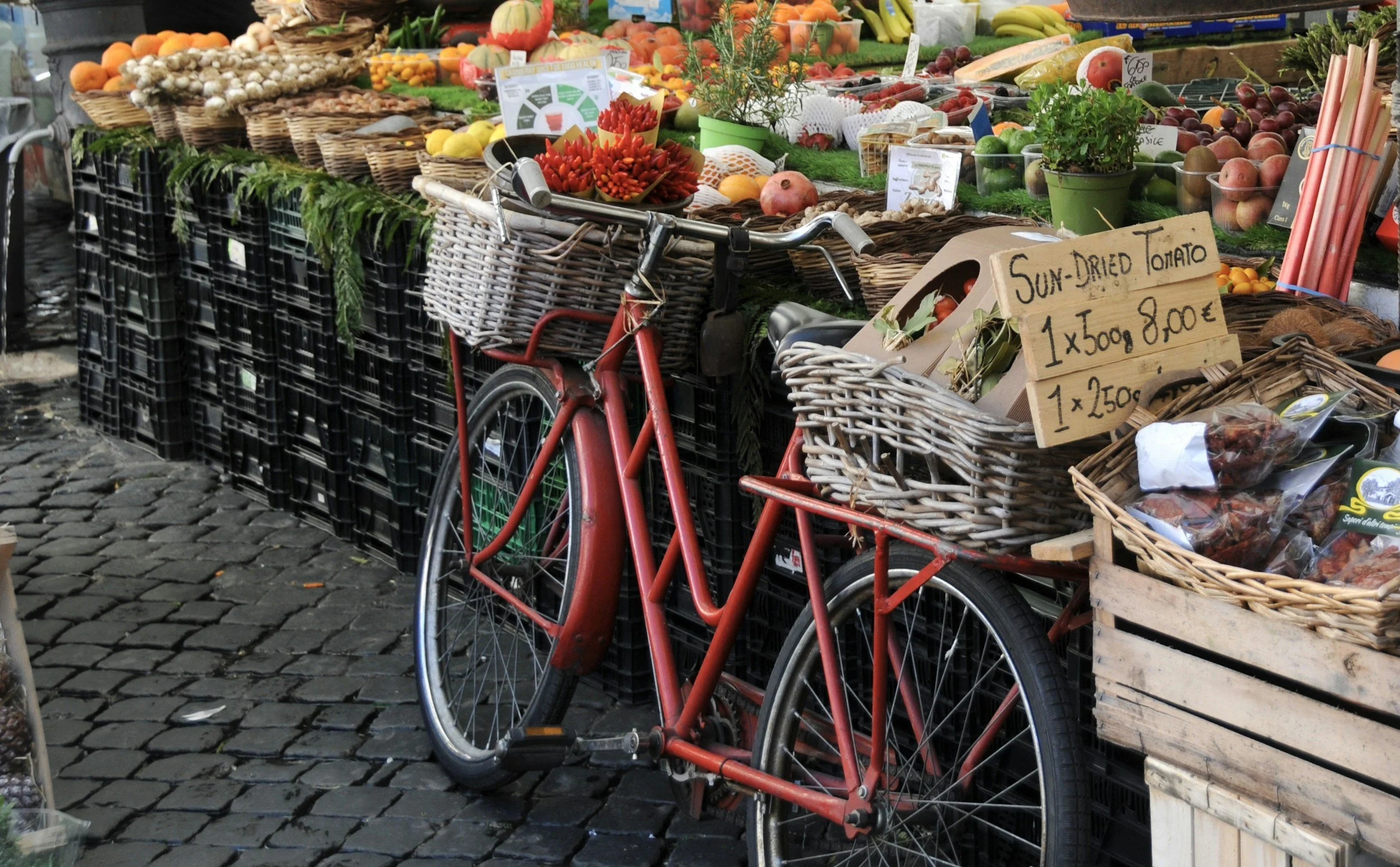
Uzès is the obvious one. The Saturday market on Place aux Herbes takes over the centre. Stalls fill the square and spread into the streets around it. By mid-morning you’re walking past tables of olives from the Gard, fresh goat cheeses from farms outside town, baskets of figs, herbs tied with string, and crates of tomatoes still warm from the sun. Bread sellers stand near the edges of the square with long wooden tables stacked with baguettes and fougasse. If Uzès is on the itinerary, Saturday morning is the moment when the town feels most alive.
In Beaune, the market gathers around Place Carnot. It’s lively but more woven into everyday life. People stop for cheese, fruit, bread, maybe a bottle of wine, then move on to coffee in the cafés around the square. The rest of the day carries on with cellar visits and long lunches. Even if you miss the market here, the town still works because the wine shops, tasting rooms, and restaurants are active every day.
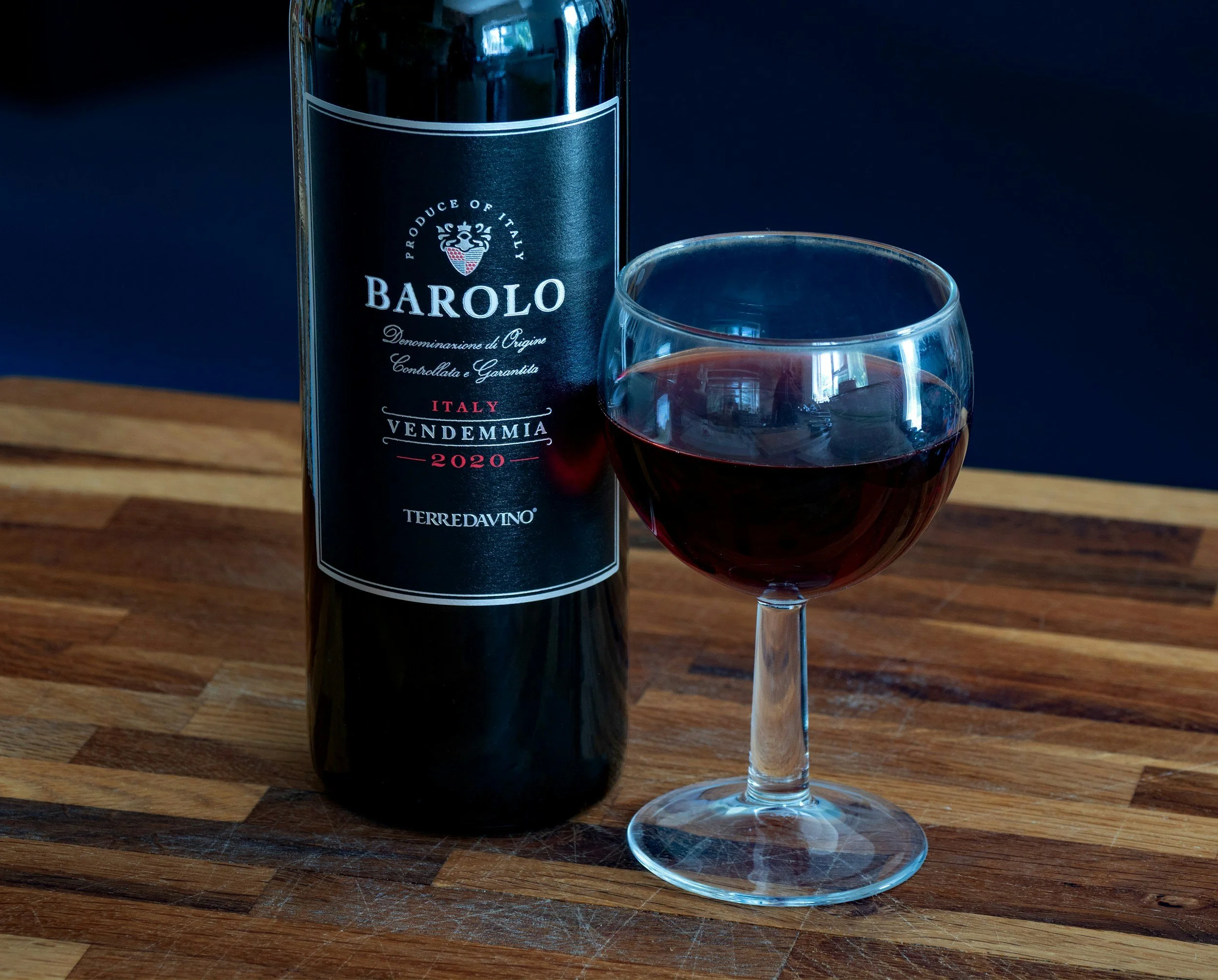
Alba is similar. The town has markets, but the food culture runs through the whole centre all week. Walk along Via Vittorio Emanuele and you’ll pass pasta shops cutting fresh tajarin, bakeries with trays of hazelnut cakes, and wine bars pouring glasses of Barbera or Nebbiolo. The market adds another layer, but Alba doesn’t “depend” on it.
Cadaqués is different again. The town itself is small, so many people pair it with a market in Figueres or Roses instead. It works quite well to drive inland for a market morning, wander through the stalls for an hour or two, then head back over the hills to Cadaqués for lunch by the harbour.
A small thing that helps: arrive the day before the market instead of trying to reach town that same morning. Getting into Uzès on Friday evening, for example, means you can walk through the centre once, see where the square is, and then start fresh early the next day when the stalls open.
Why mid-week arrivals usually work better in wine towns
Another detail that quietly improves this type of trip is arriving in the middle of the week.
If you reach towns like Beaune, Uzès, or Alba on a Wednesday or Thursday, the atmosphere is noticeably calmer. Cafés have space, wine bars are relaxed, and you can walk through the centre without the weekend crowd building yet.
Those first days are good for getting familiar with the place. You might wander through the streets in Beaune and stop into a cellar on Rue Paradis, or sit in a café in Uzès looking out over Place aux Herbes before the weekend market fills the square.
By Friday and Saturday the mood shifts slightly. Visitors start arriving, harvest activity picks up, and restaurants become busier in the evenings. If you’re already there, it just feels lively rather than hectic.
This is especially noticeable in Alba in late September. The town is starting to move toward truffle season, which really takes off in October. Mid-week the streets still feel easygoing, with locals shopping, cafés open, and people drifting between wine bars before dinner.
How many days to spend in each town if you want markets and wine
For this kind of trip, the easiest way to think about it is simply how long each town actually needs. None of these places require a packed schedule, but they do benefit from having a little breathing room.
Uzès works very well with two nights, especially if one of them is Friday. That way you’re already in town when the Saturday market on Place aux Herbes starts early in the morning. Stalls slowly fill the square (olives, goat cheese, herbs, bread, figs, honey) and the surrounding streets get busy as the morning goes on. By early afternoon the market disappears again and the town goes quiet.
Alba usually deserves two or three nights. The centre is small but there’s a lot going on food-wise. You’ll find bakeries, pasta shops cutting fresh tajarin, small wine bars, and plenty of restaurants. From there it’s very easy to spend half a day driving through the vineyards around Barolo or Barbaresco, then come back into Alba for dinner.
For Cadaqués, two nights is normally enough. The town itself is small and most of the day revolves around the harbour. Some mornings people drive over the hills toward Figueres or Roses for a market, then return to Cadaqués for lunch by the water. The rest of the day usually means walking along the coast or wandering through the narrow white streets.
Beaune is the place where an extra night helps. Three nights works nicely because you can spend one day in town (visiting cellars, walking through the centre, maybe catching the market around Place Carnot) and another day heading out toward the vineyard villages like Pommard, Volnay, or Meursault.
FAQ: September in Europe for markets and wine
Is late September a good time to visit wine regions in Europe?
Yes, late September is one of the most interesting times to visit European wine regions because harvest season has usually begun. In places like Burgundy, Piedmont, and Empordà, vineyards are active with picking, tractors moving through the rows, and wineries bringing in grapes. It’s a moment when wine towns feel connected to the surrounding countryside rather than just operating as visitor destinations.
Which European towns are best for markets and wine in late September?
Several smaller towns work particularly well at this time of year. Uzès in southern France is known for its large Saturday market in Place aux Herbes, surrounded by vineyards in the Gard region. Alba in Italy sits at the centre of the Langhe wine region near Barolo and Barbaresco. Beaune in Burgundy combines wine cellars with easy access to nearby villages like Pommard and Volnay. On the Spanish coast, Cadaqués works well as a base for visiting markets in nearby towns like Figueres or Roses while staying close to the sea.
What is harvest season like in European wine regions?
Harvest season usually means vineyards are busy throughout the day. Workers move through the rows picking grapes, crates are stacked near the vines, and tractors carry the harvest toward local wineries. In towns like Beaune or Alba, you’ll often see vans arriving from nearby villages and cellar doors opening earlier than usual because producers are actively working during the season.
Are European markets still active in late September?
Yes, many weekly markets across France, Italy, and Spain remain very active in late September. Summer produce like tomatoes, figs, and grapes is still available, but autumn ingredients such as mushrooms, walnuts, and new-season cheeses begin appearing at the same time. This mix makes markets particularly interesting during this period.
Which market days are worth planning a trip around?
Some towns are closely tied to a specific market day. The Saturday market in Uzès is one of the most well-known in southern France. Beaune has its weekly market around Place Carnot, while Alba has several market days connected to the region’s food culture. In coastal areas like Cadaqués, it can make sense to combine your stay with nearby markets in Figueres or Roses.
Can you visit European wine towns without renting a car?
Yes, many wine towns can be reached easily by train. Beaune connects well to Paris and Lyon, and Alba is accessible from Turin. Once in town, you can often walk between restaurants, wine bars, and markets. For vineyard visits, some people rent bikes, take taxis to nearby villages, or join small local tastings rather than renting a car for the entire trip.
What should you expect from the weather in southern Europe in late September?
Late September usually brings mild mornings, warm afternoons, and cooler evenings. Regions like Provence and the Catalan coast often stay warmer, while places like Burgundy and Piedmont begin cooling down earlier in the evening. Overall it’s one of the most comfortable months for walking through towns, browsing markets, and spending time outdoors.