
How to use Renfe trains in Spain without getting confused
You usually understand what confuses first-time travelers about Renfe within about ten minutes of arriving at a Spanish train station.
The departure board says Sevilla-Santa Justa on one screen, Madrid-Puerta de Atocha-Almudena Grandes on another, and suddenly there are security lines, seat numbers, train classes, and platform gates that do not appear until the last minute. Meanwhile, half the station seems completely relaxed about it.
Spain’s train system is actually very efficient once the structure starts making sense. The stressful part is mostly expectation versus reality.
A lot of people arrive assuming train travel in Spain works similarly to northern Italy or the Netherlands. Flexible regional departures. Easy little stopovers between towns. Trains every hour. Then the trip starts taking shape and the differences become obvious very quickly. Some regional routes only run a few times per day. Certain AVE stations sit outside the town completely. A connection that looked simple online suddenly includes a long wait in Zaragoza or a station transfer across Barcelona with luggage in the middle of the afternoon heat.
The map also creates a slightly false sense of distance.
Madrid to Seville feels surprisingly fast. Málaga to Granada looks close until station logistics, taxi queues, and hotel check-ins turn it into most of a day. Northern Spain becomes an entirely different experience again once regional trains replace the high-speed network.
Most of the confusion around Renfe comes from small operational details that are rarely explained clearly before the trip actually starts.
This guide is for figuring those parts out beforehand instead of standing inside Barcelona Sants staring at the departure board while your platform still says “pending” eight minutes before departure.
The routes that work incredibly well
The first time most people use Renfe successfully is usually on the big AVE routes. Madrid to Seville feels easy almost straight away. Same with Madrid to Córdoba, Málaga, Valencia, or Barcelona. You board, put your suitcase away, and suddenly half the country disappears in a couple of hours while everybody quietly drinks coffee and stares out at endless dry fields outside Ciudad Real or Córdoba province.
Madrid Atocha is often the station that makes first-time travelers panic unnecessarily. It’s huge, noisy around departure boards, and the tropical garden in the old part of the station makes it feel more chaotic than it actually is. But once you understand the flow, it’s fairly organized. Security lines first, then waiting areas near the gates, then platform access quite late compared to other European countries.
A lot of confusion starts because Spain doesn’t really work like Italy here.
In Milan or Bologna, arriving ten minutes before departure is usually enough unless something goes wrong. At Atocha on a Friday afternoon, or Barcelona Sants around 18:00 on a Sunday, those ten minutes disappear very quickly once security queues start backing up and platform numbers still say “Próximamente.”
Closer to thirty minutes feels far more comfortable on AVE routes, especially with luggage.
Barcelona Sants also tends to feel more stressful than the actual journey itself. The station is functional rather than pleasant, surrounded mostly by traffic and office buildings, and the boarding areas get crowded fast during peak departures toward Madrid. Seville Santa Justa is much calmer by comparison. Córdoba’s station is easier again. Smaller, bright, simple to navigate, and only about a 20-minute walk from the Mezquita area if temperatures are reasonable.
The speed of some of these routes still catches people off guard.
Madrid to Seville takes around 2 hours 40 minutes on many AVE services. Córdoba to Málaga barely gives enough time to settle properly before arrival. Valencia from Madrid often feels shorter than airport transfers in larger European cities.
And because the trains are so smooth, distances start becoming misleading mentally. Looking at a map of Spain before the trip, Seville feels extremely far south. Then you’re suddenly leaving Atocha after breakfast and arriving in Andalusia before lunch.
The landscape also changes more slowly than some travelers expect. Large parts of the AVE network cut through flat agricultural land, olive groves, dry hills outside Zaragoza, long empty stretches near Lleida. Beautiful in places, repetitive in others. Northern Spain feels completely different once green coastline and mountain routes replace the central plains.
The problem is that many people assume all Spanish rail travel works this smoothly.
That’s usually where the trip starts becoming more complicated.
Regional trains are where most confusion starts
The AVE routes make Spain feel incredibly connected at first. Madrid to Seville barely feels like a long-distance journey anymore. Barcelona to Girona is easy enough that people start adding extra towns almost automatically once they begin planning the trip.
Then the regional network enters the picture and the whole pace changes.
Galicia catches a lot of first-time visitors here. Santiago de Compostela to Ribadeo looks straightforward until the actual connections appear. Suddenly there are slow regional trains, long waits in Ferrol, or departures spaced so far apart that a missed connection quietly destroys half the day. Around Ferrol station itself there is not much to do besides a few local bars and traffic moving toward the naval port. It is not somewhere most people want to spend ninety unexpected minutes with luggage.
The northwestern part of Spain works very differently from the AVE corridors around Madrid and Andalusia. Vigo, Santiago, A Coruña. Fine. Once smaller coastal towns start entering the itinerary, train frequencies thin out quickly and buses sometimes make more sense altogether.
Catalonia changes too once the route moves beyond Barcelona, Girona, or Tarragona.
Sitges feels easy because trains run constantly from Barcelona Sants. Vic already feels less flexible. Towns near La Garrotxa become awkward surprisingly fast without a car, especially outside summer. Sunday mornings can feel almost suspended until later in the day when regional departures finally start appearing again.
And then there are the stations themselves.
Antequera AV probably confuses more people than almost any station name in southern Spain. On paper it sounds central enough. In reality, the high-speed station sits outside town in the middle of dry open countryside. Travelers arrive expecting to walk into the old center near Plaza Coso Viejo, maybe stop for coffee around Calle Infante Don Fernando, and instead end up searching for taxis in the heat because the historic center is nowhere nearby.
Cuenca Fernando Zóbel works similarly. Beautiful fast AVE connection from Madrid. Modern station. Completely disconnected from the old town where most visitors actually stay near the Casas Colgadas and Plaza Mayor.
The booking platforms rarely explain any of this clearly. A destination name appears, the ticket looks fast, and only afterwards does it become obvious that the station itself is twenty minutes outside town or connected mainly by taxis and local buses.
That’s usually the point where Spain stops feeling like one seamless rail network and starts behaving more regionally.
Booking Renfe tickets is less flexible than people expect
A lot of people arrive in Spain expecting train travel to feel similar to Italy. Something spontaneous and easy where you book tickets over breakfast, head to the station later, and figure things out along the way. Renfe gets less forgiving once the long-distance AVE trains become part of the route.
Madrid to Seville is usually where the pricing surprises people first. A ticket booked a few weeks ahead on a quieter weekday departure can sit below €30, then suddenly jump close to €100 a few days before departure, especially around Fridays or Sunday returns. Barcelona to Madrid behaves the same way, particularly from Barcelona Sants in the evenings when people are coming back from Girona, Sitges, Tarragona, or flights through El Prat.
The whole system feels much closer to airline pricing than regional rail.
Spain also looks deceptively manageable before the trip starts. Madrid to Málaga, Málaga to Valencia, Valencia to Barcelona. Individually the fares do not seem too dramatic, but once several last-minute AVE bookings stack together across one trip, train costs can suddenly become one of the bigger expenses.
The fare categories do not help much either. Básico, Elige, Prémium. At first glance they sound straightforward enough, but the conditions become irritatingly unclear once plans shift slightly halfway through a trip. Some tickets allow changes. Others barely allow anything at all. A cheap fare feels great until a delayed arrival or an extra night somewhere suddenly turns the ticket useless.
Renfe’s website has improved over the years, but it still feels strangely clunky for such a major rail network. Foreign cards fail randomly, seat selections disappear during checkout, pages reload unexpectedly, and sometimes the app sends everything back to the beginning again after ten minutes of entering passenger details. Trying to sort out train tickets late at night before an early departure from Madrid Atocha is not particularly enjoyable.
A lot of travelers quietly switch over to Trainline after a couple of failed booking attempts. Not necessarily because it is cheaper, mostly because the interface feels easier to understand once station names start becoming absurdly long. Madrid-Puerta de Atocha-Almudena Grandes alone looks intimidating enough when it appears across the screen just before midnight.
The station names themselves create confusion constantly. Barcelona has both Sants and França stations operating different services. Valencia Joaquín Sorolla handles most high-speed departures while Estació del Nord nearby covers regional trains. Antequera AV sits outside town entirely, which catches people off guard all the time because the station name sounds far more central than it actually is. Granada also looks easier on the map than it feels with luggage once the uphill streets around Albaicín enter the equation.
Then the train finally leaves the station and the atmosphere changes completely. People settle into assigned seats with coffee from Syra outside Barcelona Sants, takeaway breakfasts from the cafés inside Córdoba station, or paper bags from places around Calle Méndez Álvaro near Atocha. South of Ciudad Real the landscape flattens into dry fields and olive groves, the carriage quiets down surprisingly quickly, and most of the stress from the booking process disappears within half an hour of departure.
The stations feel very different depending on the city
Spanish train stations change character constantly depending on where you are in the country, and after a few journeys you start noticing how differently each city handles movement, noise, waiting, even coffee.
Madrid Atocha feels enormous during busy hours. Around the tropical garden near the older part of the station there are people dragging suitcases in every direction while departures toward Seville, Málaga, Valencia, and Barcelona stack across the boards at once. Friday afternoons become particularly chaotic because business travelers, weekend trips, and international visitors all seem to arrive simultaneously. The first time through Atocha can feel slightly overwhelming simply because there is so much happening visually at once. After a couple of departures though, the station starts making more sense and people settle into the rhythm of it surprisingly quickly.
Barcelona Sants creates a different kind of stress. Less dramatic, more cramped. Low ceilings, commuter traffic constantly moving through the station, queues around the Rodalies machines, crowded waiting areas where everyone suddenly stands up the second a platform number appears. And outside the station, Barcelona does not immediately look like the version most people imagined while planning the trip. You step out near Carrer del Rector Triadó surrounded mostly by traffic, office buildings, chain hotels, and busy intersections before eventually reaching Eixample or the older neighborhoods further away.
Seville Santa Justa feels much easier after both Madrid and Barcelona. The station layout is simpler, taxis line up directly outside, and within a fairly short time people are usually already walking through Santa Cruz, heading toward Plaza Nueva, or dragging luggage down Calle San Eloy toward smaller hotels hidden behind old wooden doors. Córdoba station works similarly. Smaller, calmer, easier to understand without constantly stopping to check signs.
Valencia catches people differently because most high-speed trains arrive at Joaquín Sorolla rather than Estació del Nord, which is the beautiful historic station building most travelers recognize beforehand from photos online. Joaquín Sorolla itself feels modern and fairly anonymous at first. The city starts feeling more like Valencia once the walk toward Ruzafa begins around Carrer de Xàtiva and Carrer de Sueca, where terraces slowly start filling in during the evening and people linger outside cafés much later than expected.
Smaller cities behave differently again, especially outside summer. Córdoba station becomes surprisingly quiet at night once the cafés inside start closing around 20:30 or 21:00, and parts of Avenida de América can feel almost empty compared to the crowds around the Mezquita earlier in the day. In Galicia and Asturias the shift becomes even stronger on Sundays. Arrivals from Madrid or León sometimes step into stations where half the cafés have already closed before the evening trains arrive and the whole atmosphere suddenly feels much slower and quieter than the larger cities further south.
The boarding system also throws people off during the first couple of journeys because Spanish stations separate waiting areas and platforms more strictly than many other European countries. Platform numbers often appear fairly late on AVE routes. Departure boards continue showing “Próximamente” while nervous passengers keep checking tickets repeatedly as departure time gets closer.
Meanwhile somebody nearby is calmly eating a bocadillo and barely looking at the screens at all.
Seat reservations, luggage, and what actually matters onboard
One thing that makes Renfe feel easier pretty quickly is the assigned seating. By the time the platform number finally appears on the board, the carriage and seat number are already printed on the ticket, so there is none of that stressful rush where everybody pushes onboard at once trying to secure space for bags and seats together.
People settle in fast once the train leaves the station. Somebody opens a bocadillo before Madrid has even disappeared outside the windows, another person is already asleep with headphones on somewhere near Córdoba, and families start spreading snacks across the tray tables like they are setting up for the afternoon.
The luggage rules online sound stricter than the actual experience usually feels. Renfe technically has size limits, but unless somebody is travelling with an excessive amount of luggage, staff rarely seem particularly interested. The bigger issue is dealing with the stations themselves while carrying heavy bags.
Barcelona Sants is exhausting with luggage during busy hours. Escalators full of commuters, long boarding areas, people crossing constantly between Rodalies and long-distance platforms. Madrid Atocha feels easier after a couple of visits, but the first time through the station surprises a lot of people because of how much walking there actually is between the metro, security areas, and AVE departures.
Granada is another one that looks simpler online than it feels once you arrive. The station itself is manageable enough, but dragging luggage uphill toward Albaicín through narrow streets and uneven paving stones in afternoon heat changes the mood of the arrival fairly quickly.
Once onboard though, the trains are usually very comfortable, even in standard class. The seats recline properly, there is enough space to work or read without feeling cramped, and most carriages quiet down naturally after departure without anybody really needing to say anything. Some routes also have silent carriages where phone calls are restricted almost completely.
The café cars depend a lot on the route and time of day. Sometimes they feel nearly empty except for a couple of business travelers drinking espresso south of Zaragoza. Other journeys feel much more social, especially on Friday routes out of Madrid where people line up for beer, coffee, sandwiches, and snacks not long after departure.
And the scenery changes constantly depending on where you are in Spain.
The AVE line between Madrid and Barcelona surprises some people because huge stretches outside Zaragoza and Lleida feel dry, flat, and repetitive for long periods. South of Madrid the landscape slowly turns into olive groves around Córdoba while heat haze sits across the plains near Ciudad Real for hours during summer afternoons.
Then northern Spain changes everything again. The train from San Sebastián toward Santiago de Compostela moves more slowly through green hills, forests, rainy coastlines, industrial towns, and small Atlantic stations where the weather suddenly feels completely disconnected from the south. Some parts near Asturias barely feel like the same country once the rain starts hitting the windows and everybody inside the carriage quietly settles in for the longer journey west.
If the slower side of Cantabria and Asturias already sounds more appealing than the usual Spain itineraries, this Santillana route fits surprisingly well into a northern rail trip.
Northern Spain actually works completely differently by train once you move west of the bigger cities, and this autumn villages route helps connect some of the quieter parts together without rushing through them.
Spain is not ideal for ultra-fast multi-stop itineraries
A lot of Spain itineraries look completely fine right up until the trip actually begins.
Madrid for two nights, Seville for two, Córdoba squeezed in because it sits on the train line anyway, Granada after that, then Valencia and Barcelona before flying home. The AVE map makes everything feel strangely close together when you first start planning.
Then suddenly half the trip is spent packing bags again.
A morning leaving Madrid does not sound particularly exhausting on paper. Coffee somewhere near Plaza de Santa Ana, metro down to Atocha, train south. But then there are security queues, people crowding around departure boards, the long walk toward the AVE gates, arrival into Málaga María Zambrano around lunchtime when several trains seem to empty at once, taxi queues outside in the heat, apartment messages saying check-in is delayed until 15:00.
María Zambrano also confuses people the first time because the station opens directly into the huge Larios shopping center, so after stepping off a train from Madrid, a lot of arrivals suddenly find themselves surrounded by escalators, clothing stores, and fast food instead of the Málaga they imagined in their heads.
By dinner near Plaza de la Merced or the wine bars around Calle Carretería, the entire day somehow revolved around moving between places.
The trains themselves are usually the easy part.
Granada catches people constantly because the city feels very different once luggage enters the equation. Online, the station looks close enough to everything. Then somebody is dragging a suitcase uphill around Cuesta de Gomérez trying not to trip over uneven paving stones while tour groups block half the street near Plaza Nueva. Apartments in Albaicín sound romantic while booking them and significantly less romantic after twenty minutes of carrying luggage uphill in afternoon heat. A lot of smaller guesthouses there also sit inside pedestrian streets where taxis cannot reach the actual entrance, something many people only realize after arrival.
Seville does something similar around Santa Cruz. Staying there feels worth it once settled in, especially during the evenings when the streets around Calle Agua and Calle Mateos Gago finally quiet down a bit, but arriving there in the middle of the afternoon with luggage while crowds spill out around the cathedral gets tiring fast. Smaller hotels in old buildings sometimes close reception for part of the afternoon too, which becomes annoying after a long travel day if nobody noticed the check-in window beforehand.
One route that usually works really well without feeling rushed is Madrid → Córdoba → Seville.
Seville becomes much easier to enjoy once you know where to escape the tourist-heavy café areas near the cathedral, and these Seville cafés are the kind of places people usually wish they had found earlier.
Córdoba naturally slows the whole trip down in a good way because the station sits close enough to the center that arrivals feel easy instead of complicated. The luggage lockers inside Córdoba station are also useful if stopping for a few hours between trains without wanting to drag bags through the old center. The city changes completely once the day-trippers leave. Around Plaza de las Tendillas later in the evening, people start lingering outside bars longer, the streets near Calle Deanes become quieter, and walking across the Roman bridge after dark feels like a completely different city from the packed afternoons around the Mezquita.
By the third station coffee and second apartment key lockbox, most people stop caring how many cities they managed to fit into the trip.
Barcelona creates a different kind of exhaustion because moving around the city already takes more energy than people expect before they arrive. Staying near Sants station sounds practical while booking accommodation, but after two days most people realize they barely spend time there anyway. Then comes dragging luggage through Gothic Quarter or El Born over uneven streets around Carrer de la Princesa while scooters, delivery bikes, tourists, and taxis all seem to appear at the same time.
San Sebastián ruins tightly planned itineraries for a completely different reason.
People arrive thinking two nights will be enough. Then lunch around Parte Vieja stretches halfway through the afternoon, evenings in Gros start later than expected, mornings near La Concha move slowly, and suddenly leaving after forty-eight hours feels absurdly early.
Northern Spain does that a lot.
Asturias, Cantabria, Galicia, the Basque coast. Distances look manageable until rain, winding roads, slower regional trains, and long lunches quietly stretch entire days without anyone really planning for it. Andalusia slows things down differently. The heat changes the middle of the day completely, dinners drift later into the evening, and cities like Cádiz, Granada, Córdoba, or Jerez feel much better once the trip stops trying to move constantly.
For example, if Tarragona starts sounding more appealing than another packed Barcelona itinerary, this low-season Tarragona guide shows what the city actually feels like once the cruise crowds disappear.
The easiest way to approach Renfe on a first trip
The people who usually enjoy train travel in Spain most are rarely the ones trying to squeeze six cities into eight days.
Spain feels much better once the trains stop being the entire focus of the trip and start functioning more quietly in the background between longer stays. The routes themselves are often smooth. It’s the constant packing, checking out, dragging luggage across another station, and figuring out a new neighborhood every forty-eight hours that starts wearing people down.
Madrid → Córdoba → Seville works well because the pacing feels natural almost the whole way through. Córdoba breaks the journey south without turning into another complicated travel day, and the station sits close enough to the center that arrivals feel easy even with luggage. Within half an hour most people are already somewhere near Plaza de las Tendillas, drifting through the smaller streets around Calle Deanes, or sitting outside with a beer waiting for the evening heat to finally disappear from the stone streets around the Mezquita.
A really common mistake is treating Córdoba like a two-hour stop between trains.
People leave their luggage in station lockers, rush through the Mezquita, eat lunch, and leave again without ever seeing what the city feels like once the day-trippers disappear in the evening. Córdoba changes completely after around 19:00. The streets quiet down, the temperatures drop, and suddenly places around Plaza de la Corredera or the Roman bridge feel far calmer than the packed afternoon version most people experience.
Barcelona → Girona → Tarragona usually works well too because the distances stay manageable and the atmosphere shifts gradually instead of constantly resetting. Girona station is simple enough that nobody really needs to think too hard after arriving, and the walk toward the old town starts fairly ordinary before the river and colorful houses near Pont de Pedra suddenly appear. Tarragona slows things down even more, especially later in the evening around Plaça de la Font once the day visitors leave and people start lingering outside restaurants much longer.
The itineraries that become stressful are usually the ones trying to combine Valencia, Granada, Bilbao, San Sebastián, and small villages all inside the same week because the map makes Spain look more compact than it actually feels once the trip starts moving.
Another mistake people make constantly is assuming every regional train runs frequently enough to improvise the route as they go.
That works on some AVE routes. It works far less once northern Spain or smaller inland towns enter the itinerary. Around Galicia, Asturias, or inland Catalonia, missing one train can quietly derail half the day because the next departure might not leave for another two or three hours.
Sunday mornings catch people off guard too.
Stations in smaller cities can feel almost abandoned outside summer. Café shutters still closed, barely anyone on the platforms, departure boards barely changing for long stretches. Somebody arriving from Madrid expecting breakfast and a quick onward connection sometimes ends up standing outside a locked station café at 09:30 wondering why the entire town still feels asleep.
Where the station sits inside the city changes the whole trip more than people expect beforehand.
Staying near Santa Justa in Seville sounds practical while booking accommodation, but after one evening most people realize they are spending all their time around Santa Cruz, Alameda de Hércules, or Plaza del Salvador anyway. The same thing happens around Atocha in Madrid. Convenient for early departures, less enjoyable once the suitcases are unpacked and the area turns into traffic, office buildings, and busy roads around Paseo de la Infanta Isabel.
Barcelona Sants creates the same tradeoff. Great for catching trains. Less great when someone realizes every evening still involves crossing half the city to reach the places they actually want to spend time in.
Spain usually starts feeling much easier once the itinerary stops trying to move constantly.
A lot of travelers trying to figure out Valencia end up somewhere between beach city and slower neighborhood trip, which is exactly where this quiet Valencia guide becomes surprisingly useful.
The Spain train route that feels completely different from Madrid and Barcelona
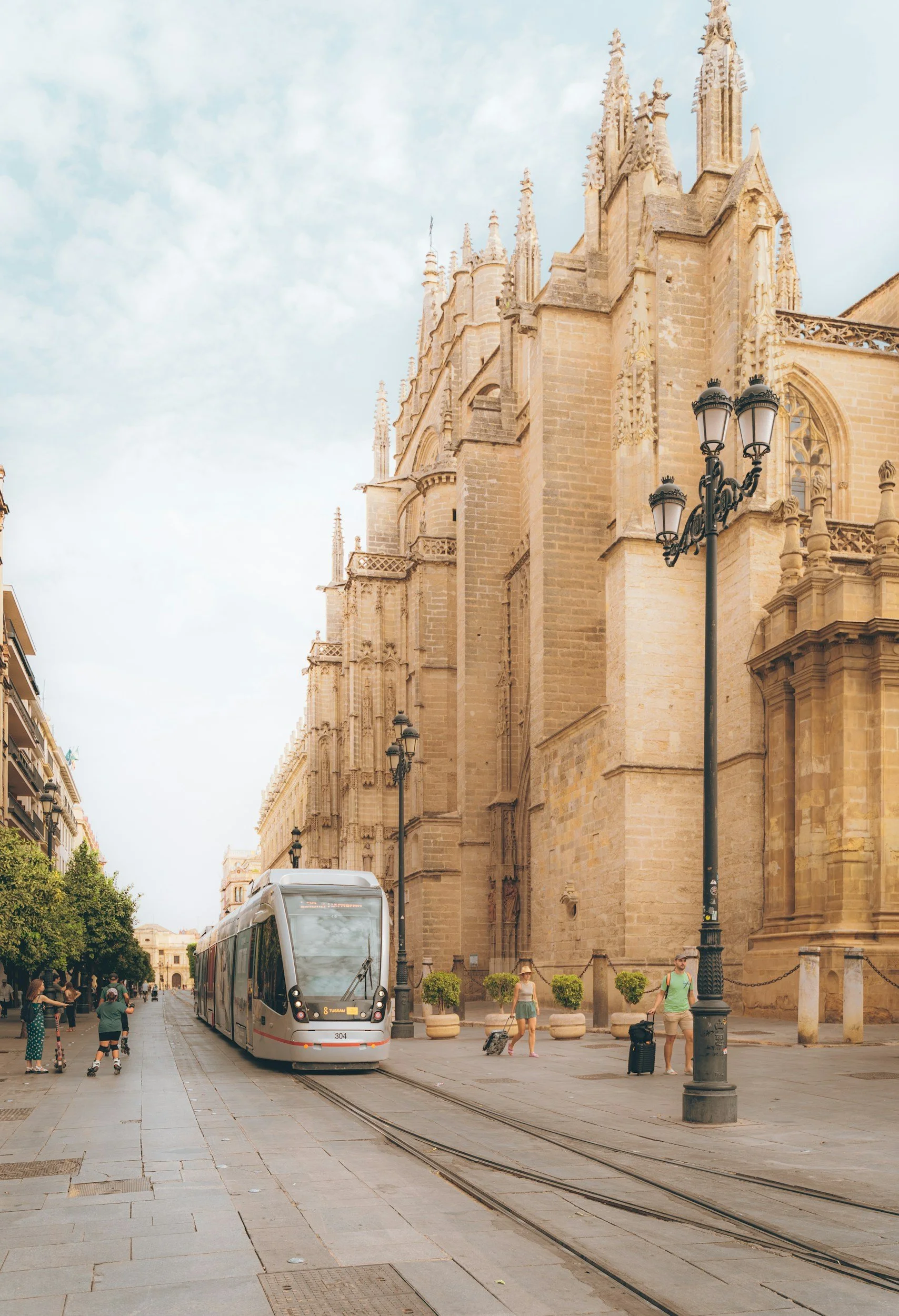
One route that barely gets mentioned outside Spain is the slower stretch moving through Girona, Figueres, smaller Catalan towns inland, and eventually out toward the coast near Cadaqués.
Most people pass straight through this part of the country on the AVE between Barcelona and France without stopping properly. Meanwhile, some of the nicest train days in Spain are sitting quietly a short regional ride away from Barcelona Sants.
Girona is usually where the route starts making sense.
The station itself is uncomplicated, which already feels refreshing after larger cities, and within fifteen or twenty minutes the atmosphere changes completely once the streets narrow near Barri Vell. Around Carrer de la Força and the lanes climbing behind the cathedral there are tiny bookstores, old stone staircases, little wine bars, bakeries selling xuixos from early morning, and people lingering outside cafés much longer than they do in Barcelona.
Late evenings around Plaça de la Independència feel especially good once the day visitors disappear and the riverfront quiets down a bit. Girona changes a lot after dark. Fewer cameras, slower dinners, more local life around the smaller streets near Rambla de la Llibertat.
A lot of people leave too quickly.
The route becomes more interesting once the regional trains start replacing the AVE lines because the whole atmosphere changes onboard too. Fewer tourists, more commuters, older trains occasionally, people carrying shopping bags instead of hard-shell suitcases.
Figueres surprises people for similar reasons. Most visitors arrive, walk directly toward the Dalí museum, then leave again without seeing much else. But around Rambla de Figueres, Carrer de la Jonquera, and the smaller streets behind Plaça de l’Ajuntament, the city feels much more grounded than people expect from somewhere associated so heavily with tourism.
Market mornings there are especially good. Produce stalls spilling into the square, older locals arguing over fruit prices, bakeries already half sold out before noon.
Then there are the smaller inland stops that almost nobody outside Catalonia seems to talk about.
Caldes de Malavella is one of them. Tiny station, hardly any stress around arrivals, old thermal spa buildings, quiet residential streets, cafés where people sit over newspapers for ages in the middle of the afternoon. Lunch stretches naturally there without anyone trying to turn it into an “experience.”
The same thing happens in places around Flaçà or smaller stations inland where the train slows long before arriving and half the platform seems occupied by people greeting each other rather than rushing anywhere.
Eventually the landscape starts changing again once the route bends back toward the coast.
Getting to Cadaqués takes more effort because the final section happens by bus after Figueres, but the slightly awkward journey is part of why the town still feels somewhat disconnected from the faster-moving parts of Spain. Dry hills, sharp coastal curves, sudden flashes of the Mediterranean appearing between rocks and pine trees.
A lot of people rush through Cadaqués in the middle of the day when the harbor is busiest and the heat reflects off the white buildings hard enough to make the whole town feel crowded and overexposed. Early mornings feel completely different. So do the evenings once people settle outside along the waterfront near Carrer del Call or the smaller backstreets climbing uphill behind the church.
One of the nicest versions of this route is moving slowly between Barcelona, Girona, Figueres, and Cadaqués over several days without trying to optimize every connection too aggressively.
A missed regional train there rarely feels catastrophic. Sometimes it just turns into another coffee near the station or an extra hour wandering around a market that was not originally part of the plan.
If Barcelona already feels too busy for the kind of Spain trip you actually want, this Sitges breakdown makes it much easier to decide whether staying smaller along the coast would suit you better.
Small Renfe details that become useful surprisingly quickly
A lot of first-time travelers arrive in Spain assuming train boarding works more or less like it does in other parts of Europe, where people drift toward the platform gradually and jump onboard a minute before departure without much stress.
Then suddenly somebody is standing inside Valencia Joaquín Sorolla holding a coffee they barely had time to drink while staff have already started closing the boarding gates because they underestimated how early the process actually begins on some AVE routes.
The stations themselves also feel much larger physically than many people expect beforehand.
Zaragoza Delicias catches people like this constantly because the station looks fairly manageable online until you actually arrive and realize how much empty space there is between entrances, cafés, waiting areas, and platforms. Someone grabbing food near the main entrance suddenly notices their departure has started boarding on the opposite side of the station and ends up half speed-walking across polished floors dragging luggage behind them while the departure boards flicker between platform numbers overhead.
Then smaller regional stations create the complete opposite feeling.
Somewhere around inland Catalonia, Cantabria, or smaller Galician towns, the station can feel almost abandoned until a few minutes before the train arrives. One quiet platform, maybe a ticket machine, somebody smoking near the parking area, and barely any movement at all until suddenly a regional train appears and disappears again within a minute or two. People expecting constant announcements and busy station cafés like Madrid or Barcelona sometimes spend the first ten minutes wondering if they are even standing in the correct place.
The temperature differences onboard also catch people off guard more often than expected.
Outside, somewhere like León or Pamplona might feel cool and fresh during spring mornings while inside the carriage the heating still seems completely convinced it is the middle of January. After half an hour, jackets start disappearing onto luggage racks, windows fog slightly near older regional trains, and somebody nearby quietly fans themselves using the paper reservation slip from the seat pocket.
Food becomes another oddly inconsistent part of Spain train travel once the routes move beyond the biggest stations.
People get used to grabbing coffee or sandwiches easily inside Madrid Atocha or Barcelona Sants and assume smaller cities will work similarly, then suddenly arrive somewhere like Zamora or Lleida where the station café operates more like a slow local bar than a transit stop. If the kitchen closes ten minutes before arrival, that is usually it until the next city. Somebody expecting a quick sandwich before a regional connection ends up buying chips and bottled water from a vending machine instead.
And after a few days moving through Spain by train, something else usually starts happening quietly in the background.
People stop trying to optimize the trip so aggressively.
A delayed regional train near Santander turns into an extra glass of wine near the station instead of frustration. Missing a connection in Girona becomes another hour inside a little bookstore near Carrer Nou or a slow lunch that was not originally planned. The schedule loosens slightly without anybody consciously deciding it should.
Some of the most interesting stops in Spain are the ones nobody originally planned for, especially inland, and these castle detours work surprisingly well if you are building a slower regional route.
The part of train travel in Spain nobody really talks about
One thing that changes train travel in Spain completely after the first couple of journeys is realizing how much the arrival time affects the whole feeling of a place.
Getting into Seville at 14:30 in August after dragging luggage through Santa Justa feels completely different from arriving around 19:00 when the heat finally starts easing and people slowly begin filling the streets again around Plaza Alfalfa and Calle Mateos Gago. The city somehow becomes softer later in the evening. Less rushed. Easier to settle into straight away.
Córdoba does this even more.
A lot of people arrive there in the middle of the day because it fits neatly between Madrid and Seville on the train line. Then they see the Mezquita surrounded by tour groups, heat bouncing off the stone streets, packed little alleys around Calleja de las Flores, and leave thinking they have “done” Córdoba in a few hours.
Then the evening comes and the whole city changes.
The temperature finally drops, people sit outside around Plaza de la Corredera much later than expected, and walking across the Roman bridge after dark feels nothing like the crowded afternoon version most people experience between trains.
Some of the things that end up shaping a Spain train trip are surprisingly small too. The apartment in Granada that looked central online until the taxi stops at the bottom of the hill and somebody realizes the rest happens on foot through Albaicín. The café inside a station in Galicia already closing before the evening train arrives. The hotel in Seville locking reception for a few afternoon hours while someone stands outside with luggage wondering if they missed the message.
Barcelona changes a lot depending on timing too. Arriving into Sants during commuter hours with luggage and tired legs feels chaotic immediately. Arriving earlier in the morning before the station fully fills up makes the whole transfer toward Eixample or El Born feel much calmer.
And northern Spain has a completely different mood again once rain enters the picture.
An evening arrival into somewhere like Ourense or Ferrol during colder months can feel strangely quiet once the station empties and the cafés nearby start closing. Then a few days later the same place suddenly feels lively once the weather clears and everybody comes back outside again.
Those are usually the parts people remember afterwards. Not really the train itself. More the feeling of arriving somewhere at the right moment instead of constantly rushing toward the next departure.
And if you’re still trying to figure out whether a rail pass even makes sense for this kind of slower Spain trip or somewhere else in Europe, this Eurail breakdown explains where passes work well and where the booking system starts becoming more complicated.
A lot of Spain’s best summer markets are nowhere near the major city routes, and this quiet market guide helps narrow down which smaller towns are actually worth adjusting the itinerary for.
What first-time travelers ask about Renfe in Spain
Is Renfe difficult to use for first-time travelers?
Usually not once the structure starts making sense.
The confusing part is less about the trains themselves and more about how differently Spain operates compared to places like Italy, the Netherlands, or Switzerland. The AVE network between Madrid, Seville, Málaga, Valencia, Barcelona, and Córdoba is generally straightforward, fast, and comfortable. Most confusion starts once regional trains, station positioning, or tighter connections enter the trip.
Why is my Renfe platform not showing yet?
This is completely normal on many AVE routes.
Inside stations like Madrid Atocha or Barcelona Sants, departure boards often continue showing “Próximamente” until fairly close to boarding time. First-time travelers usually assume something is wrong while everybody around them stays surprisingly calm and keeps drinking coffee.
Platform announcements in Spain often happen much later than people expect.
How early should you arrive before an AVE train in Spain?
Around 30 minutes before departure feels much more comfortable at larger stations, especially in Madrid, Barcelona, or Seville.
AVE trains require security screening before boarding, and queues build quickly during Friday afternoons, Sunday evenings, and holiday periods. Arriving ten minutes before departure can suddenly become stressful once luggage, escalators, security checks, and late platform announcements all start stacking together.
Is 15 minutes enough before a Renfe train?
Sometimes for smaller regional stations. Usually not for AVE departures from major cities.
At stations like Córdoba or Girona, fifteen minutes often feels completely manageable. Madrid Atocha or Barcelona Sants are different situations entirely, especially during busy travel periods.
Are Renfe trains strict about luggage?
Less than people expect.
Renfe technically has luggage size rules, but onboard enforcement is usually relaxed unless somebody arrives carrying excessive amounts of baggage. The more exhausting part tends to be navigating stations, escalators, crowded boarding areas, and older neighborhoods with heavy suitcases rather than the train itself.
Granada catches people constantly here because apartments around Albaicín often involve uphill streets, uneven paving stones, and sections where taxis cannot reach the actual entrance.
Which Renfe stations are not actually in the city center?
Antequera AV and Cuenca Fernando Zóbel are probably the two stations that confuse first-time travelers most often.
Both sound central enough while booking tickets online, but the stations themselves sit outside the historic center and usually require taxis or local buses afterward.
Valencia also catches people off guard because high-speed AVE trains usually arrive into Joaquín Sorolla rather than Estació del Nord, which is the historic station building most visitors recognize from photos beforehand.
Are Spanish train stations confusing?
Some definitely are.
Madrid Atocha can feel overwhelming during busy departure periods because of the size, commuter traffic, separate boarding areas, and huge departure boards. Barcelona Sants feels more cramped and stressful than confusing, especially around commuter hours when Rodalies passengers and long-distance travelers all mix together.
Smaller stations like Córdoba, Girona, or San Sebastián are usually far easier to navigate.
Is Trainline easier than booking directly through Renfe?
A lot of travelers end up using Trainline after struggling with Renfe’s website for the first time.
Not necessarily because it is cheaper, mostly because the interface feels easier to understand and foreign card payments fail less often. Renfe’s own website has improved over the years, but seat selections still disappear randomly during checkout and payment issues remain fairly common.
Why do train trips in Spain feel longer than they look online?
Because the train journey itself is often the shortest part of the travel day.
A Madrid → Málaga AVE train may take around three hours, but once hotel check-outs, metro transfers, station queues, luggage, apartment check-ins, and taxi waits all stack together, most of the middle of the day quietly disappears.
Spain also feels physically larger than many people expect beforehand.
Is Spain good for train travel without a car?
Very good in some regions. Much less flexible in others.
Routes between Madrid, Seville, Córdoba, Málaga, Barcelona, Girona, Valencia, and Tarragona work extremely well without a car. Northern Spain changes the experience quite a bit once smaller coastal towns or inland villages enter the itinerary.
Around Galicia, Asturias, Cantabria, and parts of inland Catalonia, buses sometimes make more sense than regional trains altogether.
If you’re trying to avoid the louder Mediterranean resort towns completely, these coastal market towns are the kinds of places that make much more sense by regional train.
What is the easiest train route in Spain for first-time visitors?
Madrid → Córdoba → Seville is probably one of the easiest and smoothest first-time train routes in Spain.
The stations are manageable, the AVE services are frequent, and the pacing between cities feels natural without needing complicated transfers. Barcelona → Girona also works very well for a shorter regional route.
What is the biggest mistake people make when using Renfe?
Trying to treat Spain like one seamless high-frequency rail network.
The major AVE routes are extremely efficient, which makes people assume the same thing applies everywhere else. Then smaller towns, regional trains, northern Spain, Sunday schedules, or stations outside city centers suddenly enter the trip and the whole pace changes completely.
Are trains or buses better in northern Spain?
It depends heavily on the route.
In Galicia, Asturias, Cantabria, and smaller coastal areas, buses are occasionally faster and more practical than regional rail. The train network becomes slower and less frequent once the route leaves the main high-speed corridors around Madrid and larger southern cities.
Why do Spain train itineraries become exhausting so quickly?
Usually because people underestimate how much energy constant arrivals and departures actually take.
The trains themselves are often comfortable and efficient. The tiring part is repeatedly dragging luggage through stations, waiting for check-ins, navigating unfamiliar neighborhoods, and reorganizing the day around the next departure every forty-eight hours.
Spain usually feels much better with fewer hotel changes and longer regional stays.