5 small-towns in northern Spain you'll love exploring on foot
If you've been researching walking holidays in northern Spain, you've probably come across the same advice over and over again: rent a car.
It isn't bad advice, but it also isn't true for every part of the region.
Northern Spain is full of mountain roads, tiny villages and spectacular coastlines, so it's easy to assume that travelling without a car will mean constantly checking bus timetables or paying for taxis. That certainly happens in some places. But stay in the right town and the experience feels completely different. You can arrive by train, leave your luggage at your hotel, and spend the next few days walking straight from your front door.
That's largely because northern Spain's public transport network is more connected than many visitors realise. Renfe links the larger cities, Euskotren follows much of the Basque coast, and the narrow-gauge FEVE railway winds through Asturias and Cantabria, stopping in places that many international travellers overlook. Where the railway doesn't reach, regional buses often pick up the journey, usually timed around arriving trains rather than operating as a completely separate system.
The bigger challenge isn't getting to northern Spain. It's choosing the right base once you're there.
Some towns look ideal on a map but leave you walking along busy roads before you reach a trail. Others have railway stations several kilometres outside the centre, or become so quiet on Sundays that finding lunch takes more planning than the hike itself. Then there are the places where everything seems to fall into place. The station is an easy walk away, the bakery opens early enough to grab breakfast before setting off, a network of coastal or mountain paths starts just beyond the last row of houses, and when you come back a few hours later there's still somewhere open for coffee or a late lunch.
The walking itself feels different here too. Instead of dry hillsides and thirty-degree afternoons, you'll spend much of your time walking through Atlantic landscapes where forests, rivers, cliffs and green valleys often sit within the same day's route. Even in midsummer, mornings are usually cool enough for a light jacket, and it's not unusual to finish a walk with muddy boots after overnight rain instead of dust-covered shoes.
The towns in this guide aren't simply easy to reach without a car. They're places where the logistics stay in the background, leaving you to think about which trail to take tomorrow rather than how you're going to get there.
If you're wondering whether northern Spain works well on your own, solo travel guide compares some of the easiest places to settle into without feeling isolated.
What counts as northern Spain?
People often use "northern Spain" as if it's one destination, but it's really a collection of regions that all feel quite different once you start travelling through them. For this guide, we're focusing on the Atlantic side of the country, including the Basque Country, Cantabria, Asturias and Galicia, as well as parts of northern Navarra and northern Castilla y León.
What ties them together isn't so much administrative borders as the landscape. Instead of the dry scenery many people associate with Spain, you'll find green hills, forests, rivers, rugged coastlines and mountain ranges that stay lush for much of the year. It's a completely different side of the country, and one that's particularly rewarding if you enjoy exploring on foot.
Each region has its own personality. The Basque Country is known for its coastal towns, excellent food and local transport that makes it surprisingly easy to get around without a car. Cantabria mixes long beaches with quiet valleys and villages tucked beneath the mountains. Asturias feels wilder again, with deep gorges, fast-flowing rivers and easy access to the Picos de Europa, while Galicia is famous for its dramatic coastline, fishing towns and woodland walks.
The Atlantic climate shapes the experience too. Rain showers are part of life here, but they're also the reason the countryside stays so green. Even in the middle of summer, mornings are often cool enough for a light layer, and walking all day usually feels much more comfortable than it would further south.
The towns in this guide are spread across several of these regions, but they have something important in common. They're places where you can arrive by train or public transport, settle in for a few days, and spend your time choosing between walking routes instead of worrying about hiring a car.
Travelling in July or August? These quiet summer markets are easy to combine with a walking holiday if you want something to do between trail days.
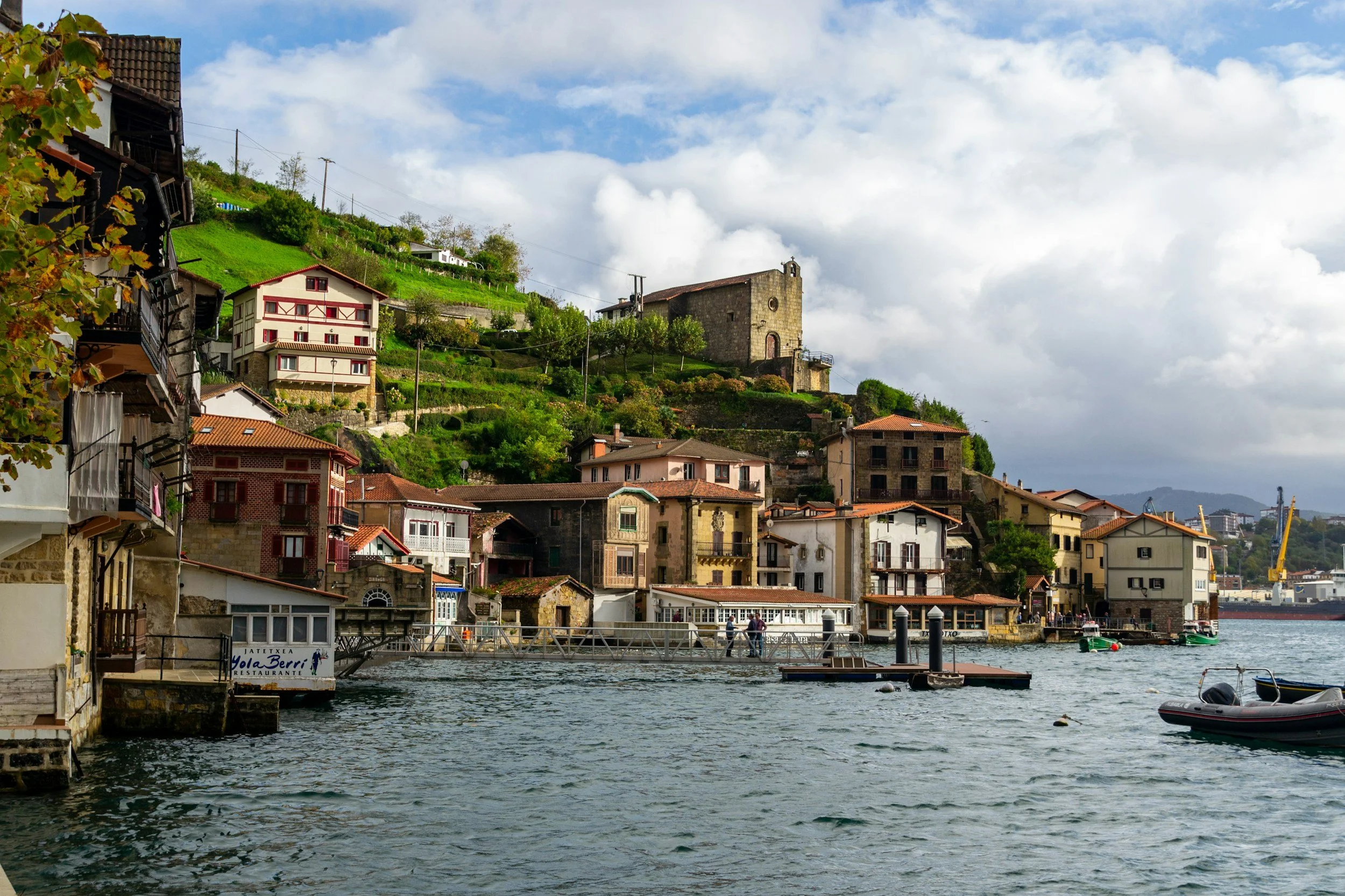
The landscapes change dramatically once you head inland, and Soria Province is a good reminder that some of Spain's best walking country isn't anywhere near the coast.
Choosing the right place to stay makes all the difference
One thing that's easy to miss when planning a walking holiday in northern Spain is that a town can look ideal on a map without working particularly well once you arrive.
Take Potes, for example. It's one of the best bases for exploring the Picos de Europa, but you'll arrive by bus from Unquera rather than by train, and if you've booked a hotel near the upper part of Calle San Roque or around Torre del Infantado, you'll be pulling your suitcase uphill over cobbles almost as soon as you get off the bus. Compare that with Ribadesella, where the railway station is only a short walk from both the old town and Playa de Santa Marina, and you're usually checked in before you've even had time to think about transport.
The same applies once you start walking. In Hondarribia, you can leave Plaza Gipuzkoa, pass through the Marina and be climbing towards Faro de Higuer and the Jaizkibel coastal paths within half an hour. In Cangas de Onís, on the other hand, many of the best walks begin outside town towards Covadonga, the Río Dobra or the Picos de Europa, so your first kilometre often looks very different from the mountain scenery that follows. That's not a drawback, but it's the sort of detail that changes how a day feels.
Breakfast is another thing people rarely think about until they're standing outside a closed café with a backpack on. In larger places like Tolosa or Ribadesella you'll usually find somewhere serving coffee and pastries before 8.30, but smaller towns can be slower to wake up, especially outside summer. If you're hoping to be on the trail early, it's often worth picking up something from a local bakery the afternoon before rather than assuming everywhere opens at the same time.
The same goes for the journey back. After spending six hours walking along the cliffs near Cabo Higuer or hiking above Fuente Dé, it's nice knowing there are still places open for a late lunch or a glass of wine. Towns with a lived-in centre, such as Hondarribia or Tolosa, tend to have more choice throughout the afternoon, while in smaller places it's not unusual for kitchens to close between lunch and dinner service.
Sundays catch out plenty of visitors as well. In Potes, some smaller food shops close completely, and in parts of Asturias you'll notice fewer regional buses running than during the week. If you're planning a full day on the trails around Bulnes, the Sella Valley or the coastline west of Ribadesella, buying lunch and snacks the evening before is often much easier than trying to find somewhere open first thing in the morning.
The little details add up. A station that's ten minutes closer to the centre, a supermarket on your walk back from dinner, or a trail that starts just beyond the last row of houses instead of beside a busy road might not influence where you book at first, but after three or four days they're usually the things people remember most.
That's exactly what the towns in this guide have in common. They don't just have good walking nearby. They're places where the practical side of travelling without a car feels straightforward, leaving you free to spend your time deciding whether tomorrow's walk should take you along the Atlantic coast, into the forests or higher into the mountains.
If Santillana del Mar has been on your list, summer guide helps you decide whether it's worth adding before or after the Picos.
Not sure whether to head north or spend a few days in the capital first? Madrid in autumn shows how different the experience feels once the summer heat has gone.
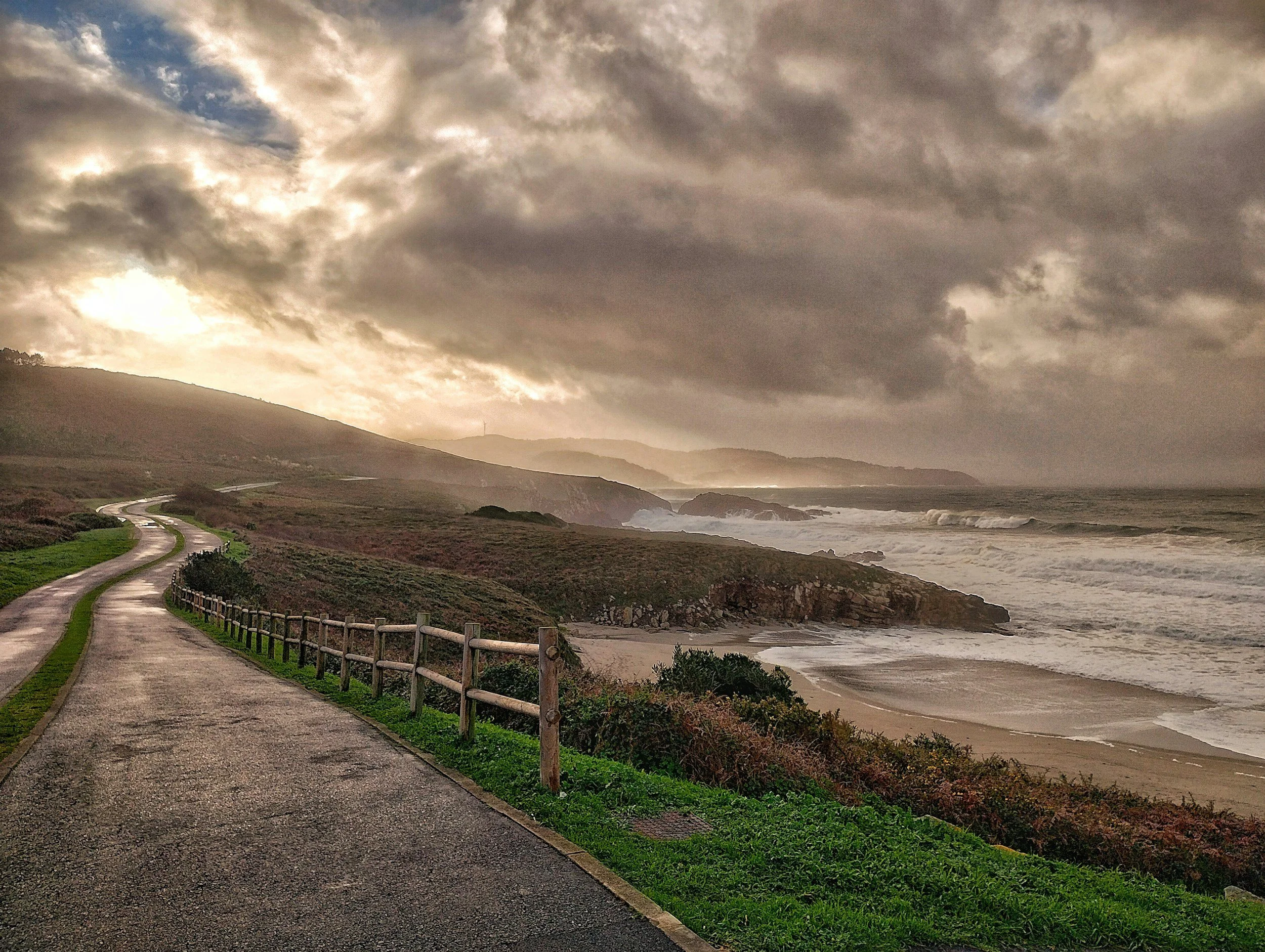
Planning your route through northern Spain
One of the reasons people assume you need a car in northern Spain is that the transport network isn't built around a single railway line running neatly along the coast. Instead, it works more like a collection of regional systems that overlap. Once you understand that, planning becomes much easier.
For most international visitors, Bilbao is the simplest place to begin. The airport has good connections across Europe, and from the city you can head in several different directions without backtracking. If your plan is to combine the Basque Country with Cantabria, Bilbao is a practical starting point because you're already connected to both the Renfe network and the regional bus services that continue west.
If your trip is focused on Hondarribia and Tolosa, I'd start in San Sebastián instead. The city sits right in the middle of the regional Euskotren network, trains run frequently throughout the day, and neither destination feels like a major travel day. You can spend the morning in San Sebastián, catch a regional train after lunch and be settled into your next base before dinner without feeling rushed.
Travelling further west is where expectations often need adjusting. Looking at the map, Ribadesella, Cangas de Onís and Potes don't appear to be very far apart, but northern Spain isn't designed for high-speed travel between mountain valleys. The railway follows the coastline, while many of the walking towns sit inland, so buses become part of the journey rather than a backup plan. That's completely normal here. Locals use them every day, and after the first connection you stop thinking about whether you're on a train or a bus.
It's also worth knowing that not every train journey is about getting somewhere quickly. The FEVE line through Asturias and Cantabria follows rivers, beaches, farmland and small villages, stopping far more often than people expect. If you're used to high-speed rail in Spain, France or Italy, the pace can feel surprisingly relaxed. That isn't really a disadvantage, as long as you build your itinerary around it. A journey that takes two and a half hours on FEVE isn't wasted time when half the route runs between green hillsides and the Atlantic.
Rather than trying to cover the entire north coast in one trip, I'd split it into regions.
One itinerary could focus on the Basque Country, spending a few nights in Hondarribia before moving on to Tolosa. The travel days are short, the landscapes change quickly, and it's easy to combine coastal walking with woodland trails, markets and pintxos without constantly packing your bag.
A second trip could explore Asturias and Cantabria, starting in Ribadesella before continuing to Cangas de Onís and finishing in Potes. The distances are longer, but the walking becomes more mountainous as you travel west, and each town feels distinct enough that you're not repeating the same experience.
That's probably the biggest planning mistake people make. They try to see the whole of northern Spain in one holiday because it looks manageable on a map. In reality, the region rewards smaller journeys. Spending four days getting to know one valley usually leaves a much stronger impression than crossing three regions in the same amount of time.
Once you've chosen the right base, the transport almost fades into the background. The decisions that shape the trip become much simpler: which trail to follow after breakfast, whether today's weather suits the coast or the mountains, and where to stop for lunch before heading back into town.
Before you start booking tickets, it's worth spending five minutes with Renfe explained. It clears up the differences between Spain's rail networks and makes planning much easier.
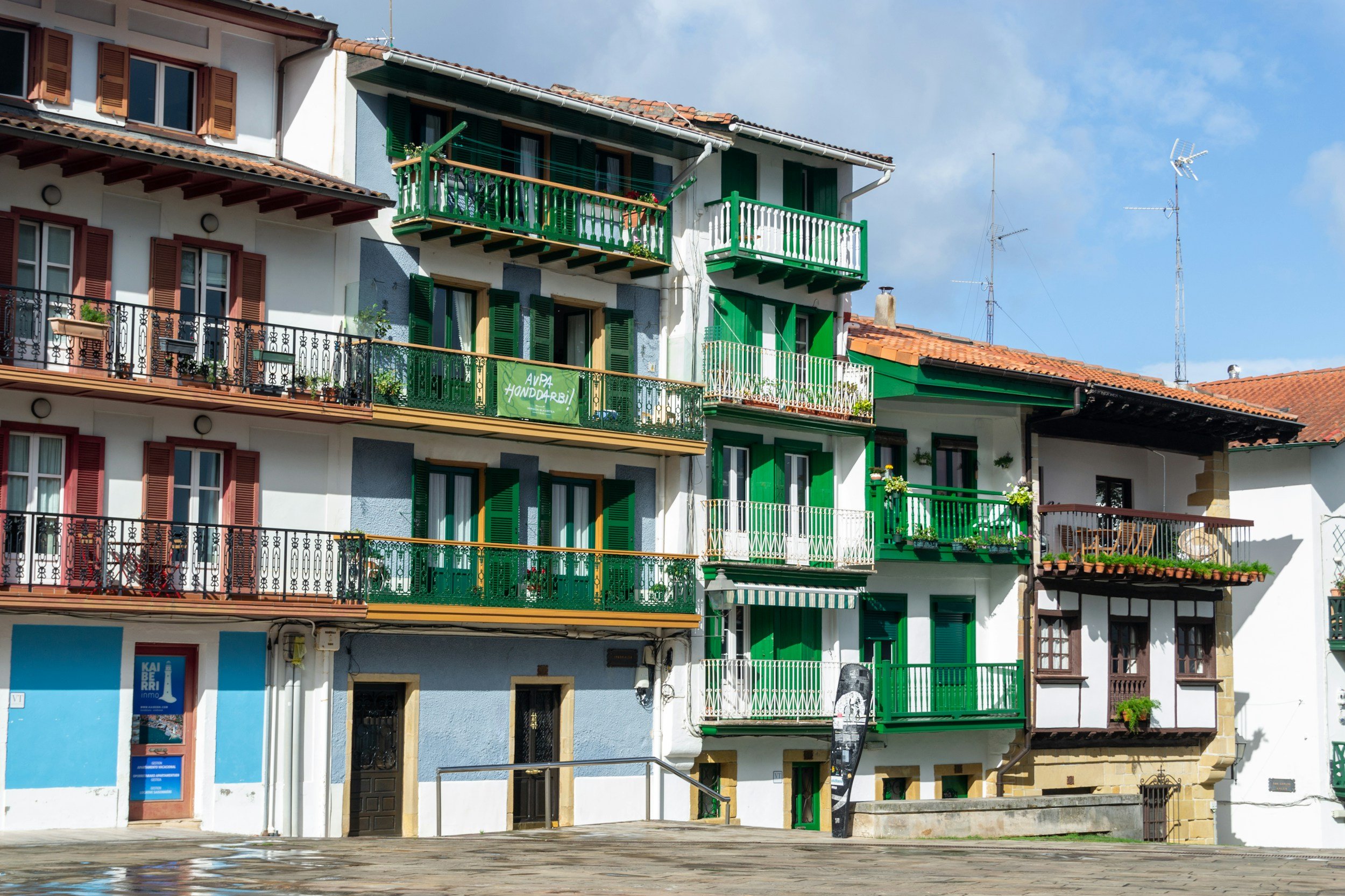
Hondarribia, Basque Country
Hondarribia is probably one of the easiest places in northern Spain to enjoy a walking holiday without a car, even though it doesn't actually have its own railway station. Instead, you'll arrive in nearby Irun on either Renfe or Euskotren. From outside the station, the E21 bus runs regularly into Hondarribia and takes around 15 minutes, while a taxi is usually an easy option if you're arriving later in the evening or travelling with heavier luggage.
Once you're there, the town feels surprisingly compact. Most people naturally spend their time between three different areas. The Marina, lined with colourful fishermen's houses and seafood restaurants, stays lively from lunchtime until well into the evening. Calle San Pedro is where locals and visitors gradually move between pintxo bars after work, while the old walled town around Plaza de Armas becomes noticeably quieter once most of the day-trippers have left for San Sebastián or crossed back into France.
It's worth giving a little thought to where you book your accommodation. Hotels inside the old town are beautiful, especially around Plaza de Armas, but getting there means pulling your suitcase over uneven cobblestones and climbing some fairly steep streets. If you're staying for several nights and travelling by train, somewhere between the Marina and Calle San Pedro is often the easier choice. You'll still be within a few minutes of everything, but arriving and leaving feels much less of an effort.
One of the reasons Hondarribia works so well as a walking base is that you don't need to spend your mornings organising transport. You simply leave town on foot. From the Marina, the route towards Cabo Higuer follows the coastline before gradually climbing to the lighthouse, Faro de Higuer. Many visitors turn around here, but it's worth continuing. Once you leave the lighthouse behind and join sections of the Talaia Trail and the GR-121 across the Jaizkibel ridge, the atmosphere changes quite noticeably. The number of walkers drops away, there are long stretches without cafés or villages, and the landscape opens into grassy cliffs looking out across the Bay of Biscay. On a clear day you can see the French coastline stretching north, while on others low Atlantic cloud drifts across the ridge before disappearing again an hour later. It's one of those places where the weather can change several times during a single walk, so even in July it's worth having a lightweight waterproof or an extra layer in your backpack.
One practical thing that's easy to overlook is food and water. Once you've left Hondarribia behind and climbed onto Jaizkibel, there are very few opportunities to buy anything until you return. Most regular walkers stop at a bakery or supermarket before setting off rather than assuming they'll find somewhere along the way. If you're planning a longer route across the ridge, that small bit of preparation makes the day much more relaxed.
Walking doesn't have to stay on the Spanish side either. The small passenger ferry across the Bidasoa River takes only a few minutes to reach Hendaye in France, and it's well worth using if you're spending several days here. Instead of treating it as a separate excursion, many walkers cross over in the morning, follow the seafront or continue towards Domaine d'Abbadia and Château d'Abbadia before returning to Hondarribia later in the afternoon. It turns an ordinary day into a walk through two countries without ever needing a car or a train.
Back in town, food naturally becomes part of the afternoon. Gran Sol has built a reputation for its pintxos over many years and often has people waiting outside from early evening, particularly on Fridays and Saturdays. If you'd rather avoid the busiest period, stop first at Ardoka Vinoteka for a glass of Txakoli or Rioja and a few seasonal small plates before heading back later. Around the Marina you'll find excellent seafood restaurants overlooking the harbour, while Calle San Pedro stays busy until late with people drifting from one bar to another rather than settling in one place for the whole evening. Around seven o'clock you'll notice local families out for their evening paseo, giving the town a very different feel than it has during the quieter mornings.
If you're planning an early start, don't assume every café will already be open. The old town wakes up slowly outside the busiest summer weeks. Pastelería Oiartzun is one of the most reliable places to pick up coffee, fresh pastries and something to take with you on the trail, while nearby supermarkets are worth visiting the evening before if you're planning one of the longer Jaizkibel walks.
Who should stay here?
Hondarribia is a great fit if you enjoy coastal walking but don't necessarily want every day to feel like a serious hiking trip. You can spend one day following the Talaia Trail across Jaizkibel, another walking into France via the Hendaye ferry, and the next simply wandering between Plaza de Armas, the Marina and Calle San Pedro without feeling like you've run out of things to do. It's also one of the few places in northern Spain where finishing a long day outdoors with excellent pintxos, a glass of wine and an evening stroll along the harbour feels just as much a part of the holiday as the walking itself.
If you enjoy adding a bit of history to a walking route, these Spanish castles make surprisingly good detours without turning the day into a sightseeing marathon.
Ribadesella, Asturias
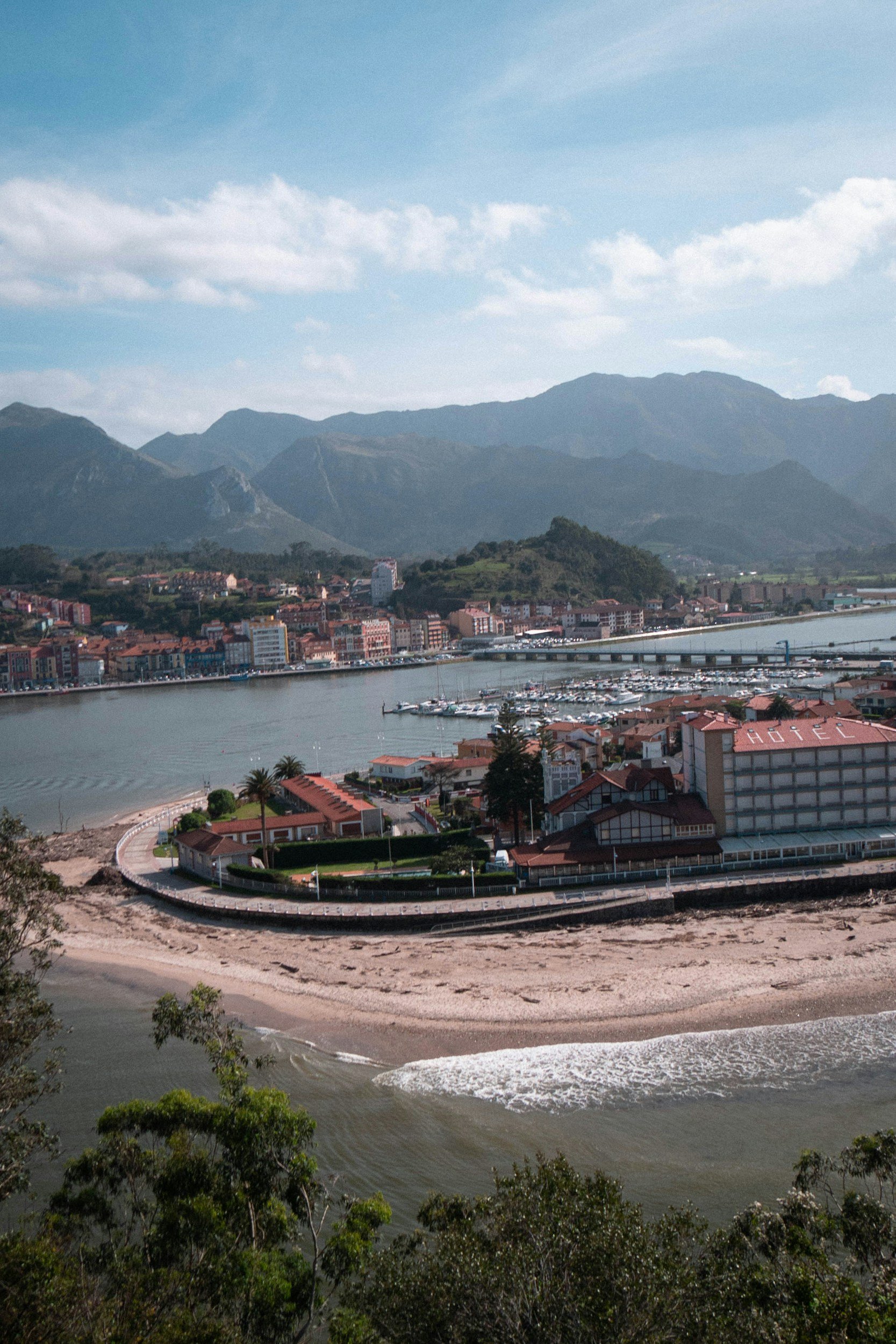
Ribadesella has a completely different feeling from Hondarribia. It is less about old streets and evening pintxos, and more about how quickly the town pulls you towards the water. The train almost drops you into the centre, which is already unusual for this part of northern Spain. Ribadesella/Ribeseya station sits close to the old town, so you can arrive on the FEVE, walk towards Plaza Nueva or the river, and be checked in before the journey has turned into another transfer problem.
That matters more than it sounds. Some towns in Asturias are beautiful once you are there, but slightly awkward at the edges. Ribadesella is not really like that. The old town, the harbour, the promenade, the cave art centre, the river and the first coastal paths all sit close enough together that the first day feels easy, even if you arrive tired or in wet weather.
The town splits itself around the Río Sella. On one side you have the old centre around Plaza Nueva, Plaza de la Iglesia, Calle Gran Vía de Agustín Argüelles and the pedestrian streets that lead towards the harbour. This is where Ribadesella feels most lived-in, especially on Wednesday mornings when the weekly market fills Plaza Nueva, Plaza de la Iglesia and the surrounding streets with food stalls, clothes, household goods and local produce. It runs roughly from 9 am to 2 pm, and if you are staying midweek it is one of the easiest ways to pick up fruit, bread or cheese before a longer walk.
Across the bridge, Playa de Santa Marina gives the town its wider, more open side. The beach is around one kilometre long, with the promenade running behind it and a row of elegant villas facing the bay. It is easy to underestimate how much of Ribadesella’s daily movement happens between these two sides of the river. The old town may be where you want coffee, groceries and cider houses, while Santa Marina is where you end up when the sky clears, when the tide is low, or when you want an uncomplicated walk after dinner.
For a short first walk, the climb to Ermita de la Guía is more useful than it looks on paper. It is not a long hike, but the approach is steeper than some people expect, especially if you take the stone steps rather than the easier road. From the top, you can see how the town works: the harbour tucked below, the Río Sella widening into the sea, Santa Marina curving away on the other side, and the darker hills sitting behind the town. It is one of the best places to go early in the morning before the beach side gets busier, or later in the evening when the promenade starts to quiet down.
If you want something longer, look west rather than staying only on Santa Marina. The PR-AS 316 Ruta Entre Playas runs from Santa Marina towards Playa de Vega, passing Tereñes and the dinosaur footprint area, with cliffs, fields and sections where the coast feels much less busy than the town below. The full route is around 13.5 km with roughly 600 metres of accumulated elevation, so it is not just a beach stroll, even though the beginning can make it seem that way. This is one of the places where visitors misjudge Ribadesella most often. Distances look short on the map because everything curves around the coast, but the walking becomes more substantial once you continue past the first viewpoints near Punta del Pozo and the Tereñes cliffs.
The quieter west side is also where Ribadesella starts to feel less like a summer beach town. Many visitors cross the bridge, walk the promenade, maybe climb to Ermita de la Guía, and then return to the old centre. Fewer keep going beyond the obvious stretch. Once you continue towards Punta del Pozo, the houses thin out, the sound of the promenade disappears, and the walk becomes more about cliffs, damp grass, wind and views back towards Santa Marina. It can feel much cooler there than it does around Plaza Nueva, even on the same afternoon.
Rain does not ruin Ribadesella in the same way it can ruin a more isolated hiking base. That is one of its quiet advantages. If the weather closes in over the coast, you can visit the Tito Bustillo Cave Art Centre or, if you have booked ahead and the cave is open for the season, the Tito Bustillo Cave itself, one of the major Palaeolithic rock art sites in Europe and part of the UNESCO-listed cave art network in northern Spain. The Cave Art Centre is near Avenida de Tito Bustillo, close enough to work as a practical wet-weather plan rather than a separate day out.
There are also smaller walks that make sense when the weather is uncertain. Paseo de la Grúa is one of the nicest low-effort walks in town, especially in the evening, following the river and harbour rather than sending you straight onto a hill or coastal route. The river side also works well when the wind is too strong on Santa Marina, which happens more often than beach photos suggest. On wet days, the old town around Plaza Nueva and Calle Gran Vía de Agustín Argüelles feels more useful than the promenade because cafés, shops and cider houses are closer together and you are not constantly crossing open, windy stretches.
Food is easy, and Ribadesella has proper Asturian cider houses rather than restaurants aimed only at visitors. Sidrería Carroceu sits by the quay and is useful after a walk when you want cider, seafood or something simple without drifting too far from the river. Restaurante Sidrería La Guía is another central option, with a terrace that makes sense if you want to stay in town rather than cross back to Santa Marina. El Campanu, facing the seafront, is more of a fish and seafood address, especially if you want something more substantial after walking the coast. La Huertona, outside the very centre, is worth considering when you want a proper meal rather than another casual cider stop, but it is the kind of place where booking ahead makes life easier in summer.
For breakfast or supplies, the old town side is usually more practical than the beach side. Plaza Nueva and the nearby streets are where you want to be if you prefer starting the day with coffee before walking, while the Wednesday market is genuinely useful if you are planning a picnic route towards Vega or Tereñes. This is one of the small reasons Ribadesella works better for several nights than it might first appear. You are not relying on one hotel breakfast or one seafront café. You can adjust the day depending on weather, tides and how far you actually feel like walking.
The main thing people misjudge is how spread out Ribadesella feels once you start crossing the river several times a day. Nothing is far, exactly, but the old town, Santa Marina, Ermita de la Guía, Tito Bustillo and the western coastal paths each pull you in a slightly different direction. If you stay near Plaza Nueva, evenings and food feel easier. If you stay along Santa Marina, the beach and promenade are right there, but you may find yourself walking back across the bridge more often for cafés, cider houses and the market. Neither is wrong, but it changes the holiday.
Ribadesella suits travellers who want walking to feel flexible rather than intense every single day. You can do a longer coastal route towards Tereñes and Playa de Vega, keep another day for Ermita de la Guía, Tito Bustillo and Paseo de la Grúa, then use a rainy morning for coffee around Plaza Nueva before heading out when the weather lifts. It is especially good if you like the idea of a walking holiday where the beach, river, cave art, cider houses and coastal paths all sit close enough together that you can change plans without feeling as if the whole day has collapsed.
Cangas de Onís, Asturias
Cangas de Onís isn't the sort of place where you arrive, take a few photos of the Roman Bridge and move on. In fact, that's probably the biggest mistake people make. The town works much better if you stay for three or four nights and treat it as your base for exploring the eastern side of the Picos de Europa rather than trying to squeeze everything into a single day.
Getting here without a car is easier than many people expect, although it does involve one extra step. The train takes you as far as Arriondas, where the ALSA buses connect with arriving services for the short journey into Cangas de Onís. The transfer is straightforward, and because Arriondas is only around eight kilometres away, you're usually in the centre before the scenery has really started to change. It feels much less like changing transport and more like the final part of the journey into the mountains.
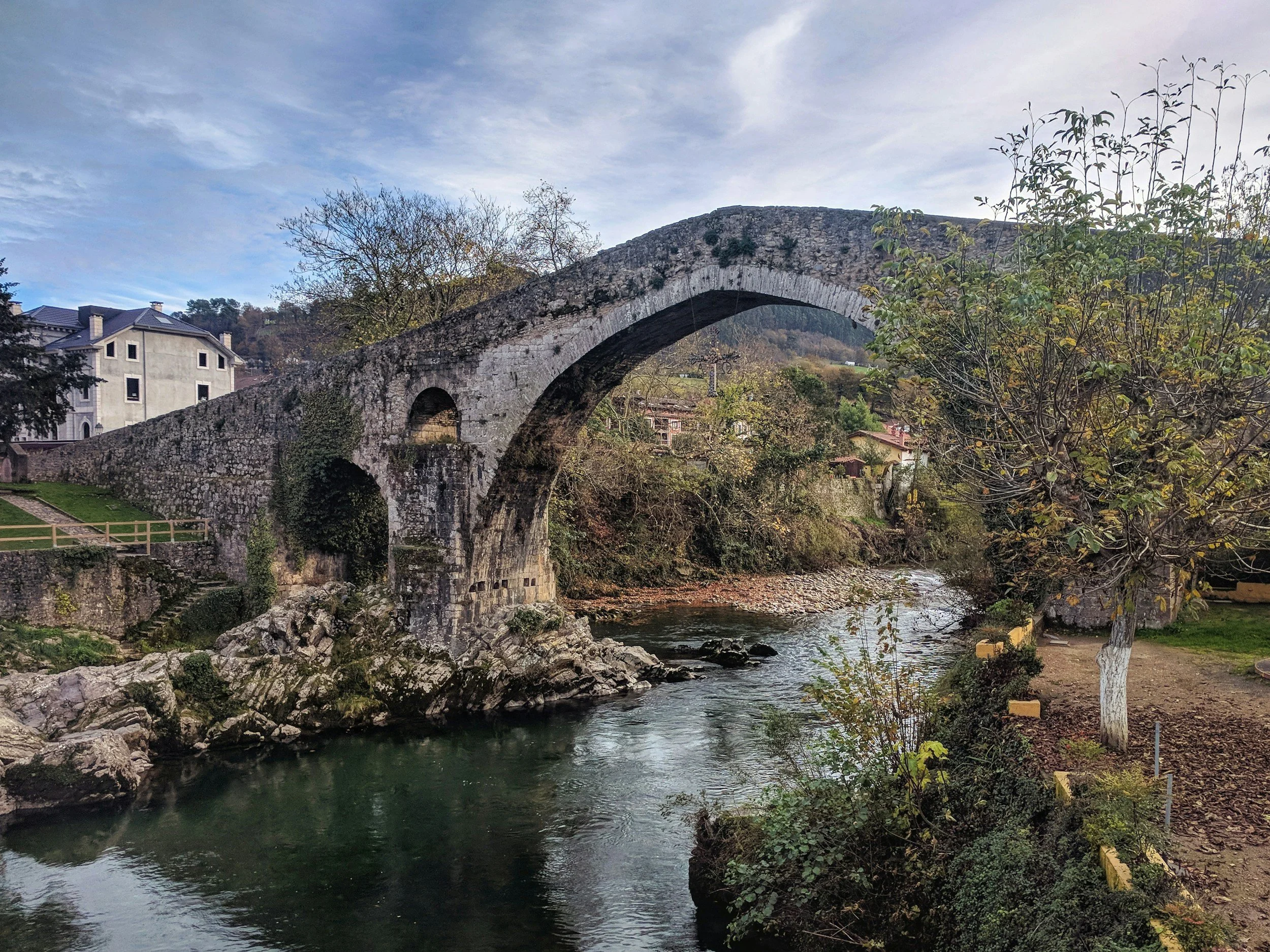
The town itself revolves around the Puente Romano, although despite the name, the bridge you see today is largely medieval. During the middle of the day it becomes one of the busiest places in town, but early mornings are completely different. Before the cafés fill up and the coaches begin arriving, you mostly hear the Río Sella flowing beneath the bridge and local shopkeepers opening for the day. Walk another five or ten minutes upstream and the atmosphere changes again. Most people never continue beyond the bridge, which means the riverside paths towards the Monasterio de San Pedro de Villanueva often stay surprisingly peaceful even in summer.
One thing that makes Cangas such a comfortable place to stay is that everyday life doesn't revolve entirely around tourism. Avenida de Covadonga is lined with bakeries, outdoor shops, supermarkets and cafés, while Calle San Pelayo and Plaza Camila Beceña stay busy with local life throughout the day. If you're planning an early hike, Confitería Peña Santa is one of the most reliable places to grab coffee and pastries before setting off, and Panadería El Molín is worth remembering if you'd rather pick up bread, empanadas or something for lunch on the trail.
The mountain atmosphere becomes more noticeable the longer you stay. Walking boots drying outside hotel doors, hikers comparing routes over breakfast, cyclists heading towards the climbs before eight o'clock and buses already leaving for Covadonga all become part of the daily routine. It doesn't feel like a resort town. It feels like somewhere people use as a starting point.
That becomes particularly obvious during the access season for the Lagos de Covadonga. Private cars are restricted for much of the summer, so shuttle buses leave early from Cangas de Onís. If you're planning to catch one of the first departures, don't assume you'll have time for a leisurely breakfast beforehand. Many experienced walkers buy supplies the evening before instead, especially if they're planning a full day around the lakes or higher mountain routes. The supermarkets along Avenida de Covadonga are much quieter in the early evening than they are first thing in the morning, when hikers are all stocking up at the same time.
Of course, Covadonga is the obvious day trip, and for good reason. The sanctuary sits beneath dramatic limestone cliffs, while the trails around Lago Enol and Lago Ercina are among the best-known walks in northern Spain. What often gets overlooked is that not every day has to involve the lakes. If the weather forecast isn't great higher up, or you simply want something quieter, there are excellent alternatives much closer to town.
The GR-105 leaves Cangas de Onís on its way towards Covadonga, gradually trading streets for woodland and small farming villages, while the walk towards Abamia and Soto de Cangas feels completely different again, passing old stone houses, grazing cattle and small chapels with the mountains never far away. Another favourite is following quieter paths beside the Río Güeña, where kingfishers, herons and trout are often easier to spot than other walkers outside the busiest holiday weeks.
One thing people consistently underestimate here is the hiking itself. Distances around the Picos rarely tell the full story. A route marked as twelve kilometres can include enough climbing to make it feel much longer, and mountain weather changes quickly. It's not unusual to leave Cangas under blue skies and find low cloud sitting across the higher slopes around the lakes an hour later. Carrying an extra layer and waterproof jacket, even in July, usually turns out to be the right decision.
Weekends feel different as well. By mid-morning the centre fills with cyclists, hikers, motorcyclists and day visitors heading towards Covadonga, and finding a table around Plaza Camila Beceña suddenly becomes much harder than it was the evening before. If you're staying for several days, it's often worth using Saturday to explore one of the quieter valley walks instead, then saving Covadonga for a weekday when both the shuttle buses and the trails are noticeably calmer.
After a day in the mountains, Cangas has exactly the kind of places you hope to find without needing to think too much about where to eat. Sidrería El Polesu and Sidrería Moreno both serve generous Asturian classics alongside local cider, while Restaurante El Molín de la Pedrera, set beside the river, is somewhere you'll happily linger over dinner after a long walk. None of them feel particularly rushed, which somehow suits the town. People arrive dusty, tired and hungry, talk about where they've been that day, then start planning tomorrow's route before dessert has even arrived.
Who should stay here?
Cangas de Onís is a great choice if you enjoy mountain walking but don't want to move accommodation every night. There are enough trails, riverside walks and villages within easy reach to fill several days, and the combination of early buses, well-marked hiking routes and a town that genuinely caters for walkers makes it one of the easiest places to experience the Picos de Europa without hiring a car.
Cadaqués is often compared with Spain's northern coast, but the atmosphere is completely different. This guide makes the choice much easier if you're deciding between them.
Potes, Cantabria
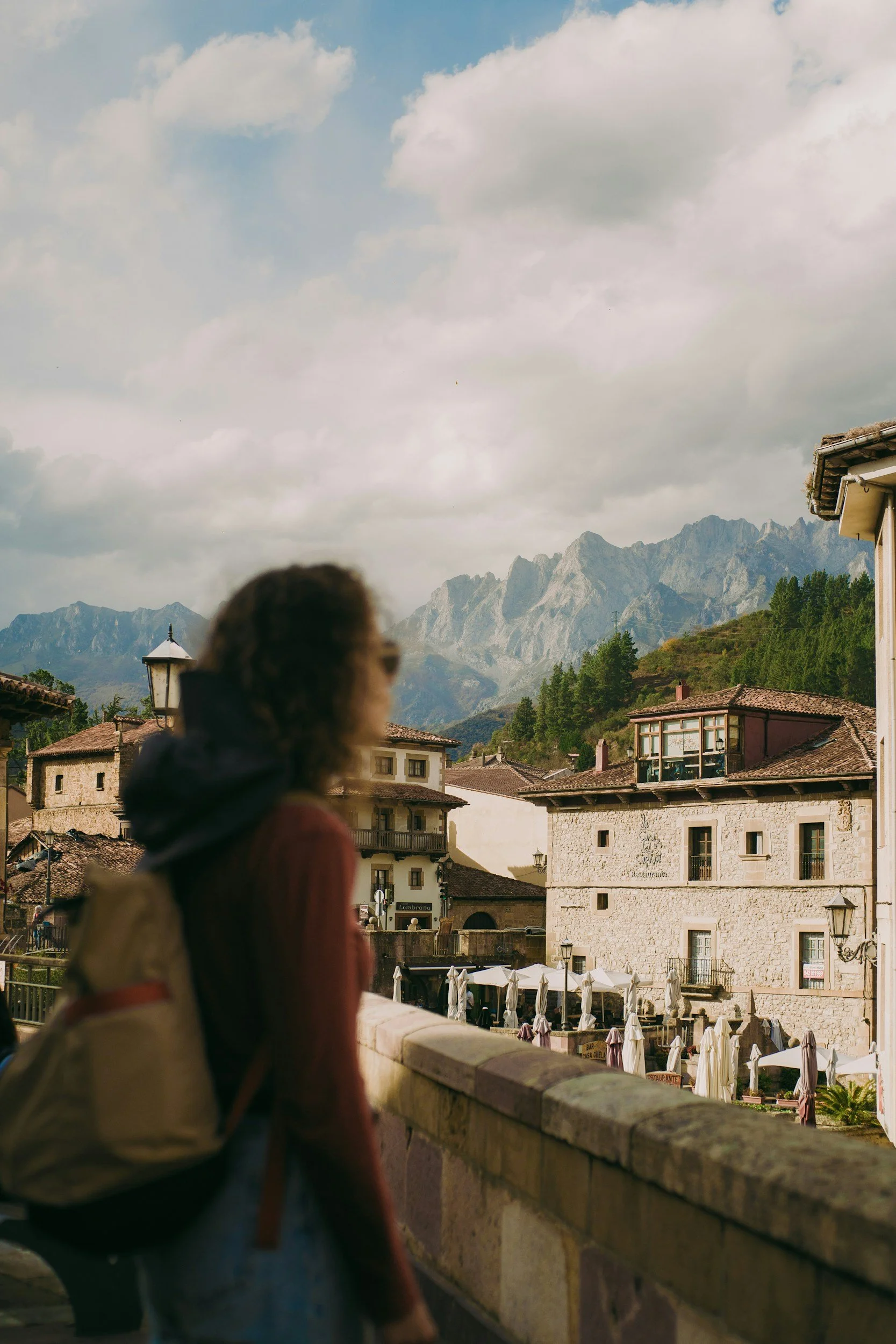
Potes is probably the place on this list that changes people's plans the most. It often starts as somewhere to spend one night before taking the cable car at Fuente Dé, then quietly turns into three or four. Partly because there are far more walks than most people expect, but also because the town itself becomes more interesting once the coaches leave and the streets settle back into their normal rhythm.
You'll arrive from Unquera by bus, following the N-621 through the Desfiladero de la Hermida, one of the longest limestone gorges in Spain. It's worth sitting on the left-hand side if you can. The road twists beside the Río Deva for almost the entire journey, and by the time the valley finally opens up around Potes, it already feels like you've travelled much further into the mountains than the map suggests.
The bus station sits just outside the historic centre, so unlike many mountain towns you don't arrive at the bottom of a long climb. Within a couple of minutes you're crossing the Deva and stepping into the oldest part of town. Even so, it's worth checking exactly where your accommodation is before booking. The distances look tiny, but Potes is built on different levels, and dragging a suitcase through Calle San Marcial or up towards Barrio de la Solana after a warm afternoon feels very different from wandering those same streets later with nothing but a camera.
Most people naturally drift towards Torre del Infantado first. It's the obvious landmark, but don't spend too long around Plaza Capitán Palacios before exploring the smaller streets around it. Calle del Sol, Calle San Roque and the narrow lanes running beside the old water channels are where Potes starts feeling less like a stop on the way to Fuente Dé and more like a town where people actually live. Walk across the Puente de la Cárcel, then loop back over the Puente de San Cayetano instead of returning the same way. It's only a small detour, but it changes your perspective completely. Looking back towards the old stone houses from the riverside is one of those views that somehow never seems to make it into guidebooks.
One thing I like about Potes is that not every walk begins with a drive. You can leave the town on foot and be surrounded by woodland surprisingly quickly. The Camino Lebaniego climbs steadily towards the Monasterio de Santo Toribio de Liébana, and although most visitors drive there, walking gives the valley time to unfold properly. The route passes small farms, chestnut trees, old stone walls and open views back across Potes before reaching the monastery itself. If your legs still feel good, keep going another twenty minutes up to the Ermita de San Miguel. Most people stop at Santo Toribio, which means the viewpoint above often feels unexpectedly quiet, even in summer.
Fuente Dé deserves its reputation, but it's also where a lot of people fall into the same routine. They arrive mid-morning, join the cable car queue, spend an hour at the top and head back down again. If you're staying in Potes rather than passing through, there's no reason to do the same. Catch one of the earlier buses or drive up if you're with friends, and you'll reach El Cable before the busiest part of the day. More importantly, don't treat the cable car as the destination. Even a short walk towards the Horcados Rojos trail or the paths across Áliva completely changes the experience. Within half an hour, most people have disappeared behind you.
The weather is another thing that's easy to underestimate here. Potes sits in the sheltered Liébana Valley, which often feels noticeably warmer than the mountains surrounding it. You can eat breakfast outside in short sleeves around Plaza Capitán Palacios, then find yourself pulling on a fleece once you reach Fuente Dé. Low cloud has a habit of sitting over the higher peaks while the valley below stays bright, and it's surprisingly common to return to sunshine after spending most of the day hiking through mist.
Not every day needs to involve big mountain scenery, though. One of the nicest half-day walks heads towards Mogrovejo, following quiet country lanes and sections of the Camino instead of the main road. Most people know Mogrovejo from photographs of its medieval tower, but the village changes completely after about four o'clock when the organised tours disappear. The small square becomes quiet, neighbours sit outside talking across the lane, and the limestone walls of the Central Massif suddenly feel much closer because there's nobody left pointing cameras at them. If you're choosing between visiting in the middle of the day or later in the afternoon, the later visit feels like a different place altogether.
Back in Potes, evenings arrive slowly. Around seven o'clock people begin gathering beside the rivers with a drink before dinner, but restaurants don't really fill until much later. Casa Cayo has been serving traditional Liébana cooking for decades, and Restaurante El Bodegón is another favourite after a long day outdoors, but if you simply want a glass of local wine and a few small plates, the terraces around Calle San Roque usually feel a little more relaxed than those immediately beside Torre del Infantado.
One practical thing that's worth knowing before your first hike is that Potes isn't somewhere where you leave shopping until the morning. Smaller grocery shops often open later than walkers would like, and Sunday options are limited. If you're planning an early start towards Fuente Dé, Santo Toribio or one of the longer routes into the Picos, it's much easier to buy fruit, bread and water the evening before. By eight o'clock, you'll often see hikers already leaving town while half the cafés are only just setting out their chairs.
Potes probably isn't the place to choose if you're looking for easy riverside walks every day. This is a proper mountain base, and even the shorter routes usually involve more climbing than the distance suggests. But if you enjoy coming back with tired legs, sitting beside the Deva while dinner slowly gets going around you, then waking up to decide whether today is a monastery day, a ridge walk or another valley entirely, it's very easy to understand why so many people end up staying longer than they planned.
If your ideal weekend includes browsing local stalls after a morning walk, these coastal markets are well worth adding to your shortlist.
Still deciding where to base yourself? These quiet Spanish towns are a good comparison if you're looking for somewhere that feels less busy than the usual tourist favourites.
Tolosa, Basque Country
If you're staying in Tolosa over a weekend, don't make the mistake of sleeping in on Saturday.
By eight-thirty the town is already awake. Bakers are carrying trays through the streets around Plaza Zaharra, people are arriving at the Tinglado market hall with shopping trolleys instead of backpacks, and the first cafés are filling with regulars ordering coffee before doing their weekly shopping. Give it another two hours and the atmosphere changes completely. Visitors begin arriving from San Sebastián, the terraces fill up and the queues outside the cheese and vegetable stalls become noticeably longer.
That's one of the reasons Tolosa works so well as a walking base. It isn't somewhere you visit between hikes. The town itself becomes part of the rhythm of the weekend.
The railway station sits only a few minutes from the historic centre, so arriving is refreshingly uncomplicated. You cross the Oria River almost immediately, pass small independent shops opening for the day and, before you've really had time to think about directions, you're already wandering between Plaza Zaharra, Plaza Verdura and the covered Tinglado market. After spending time in mountain towns where everything revolves around one viewpoint or one hiking trail, Tolosa feels different. There are always people buying bread, picking up flowers, chatting outside delicatessens or stopping for another coffee before heading home. You don't feel like you're walking through a tourist centre. You feel like you've dropped into a town going about its normal Saturday.
If you're buying supplies before a walk, this is probably the best place in northern Spain to do it. Local producers bring Tolosa beans, Idiazabal cheese, seasonal mushrooms, cider, vegetables and fresh bread into the market every Saturday morning, and it's much more enjoyable putting together a picnic here than stopping at a supermarket on the way out of town. The market starts properly around nine, but arriving before ten makes a noticeable difference if you want to browse before the busiest period.
Most people spend an hour around the market before sitting down somewhere near Plaza Zaharra, but that's usually when I think it's worth leaving the centre. The climb towards Mount Uzturre begins surprisingly close to town. Within fifteen or twenty minutes the streets give way to quiet lanes, small farmhouses and woodland, and when you stop to look back, the rooftops of Tolosa seem much further away than they really are. It's not a difficult mountain, but it climbs steadily enough that you earn the view without ever feeling like you're on a serious hike.
If you're more in the mood for distance than elevation, head for the Leitzaran Greenway instead. The old railway line has been turned into one of the nicest walking and cycling routes in the Basque Country, following the river through tunnels, old bridges and forest without demanding much climbing at all. It suits the kind of day where you leave after breakfast, stop for a picnic somewhere beside the water and drift back into town whenever you feel like it.
One thing I came to appreciate about Tolosa is how well it handles bad weather. Atlantic showers come and go throughout the year, but they don't really interrupt the day. The market carries on beneath the Tinglado, cafés stay full, bakeries become even busier and the old streets are compact enough that you're never far from somewhere dry. It doesn't have that feeling some walking destinations do, where one rainy day suddenly leaves you wondering what to do.
Back in town, it's worth wandering away from the busiest pintxo bars for a while. The little streets between Calle Mayor and the river are quieter than Plaza Zaharra, especially later in the afternoon when most day visitors have already caught the train back towards San Sebastián. If you enjoy chocolate, the Rafa Gorrotxategi Chocolate Museum makes a surprisingly good stop before dinner, not because it's a major attraction, but because it tells part of the story of why food has always mattered so much in Tolosa.
By Sunday morning the town feels different again. The market has disappeared, the streets are quieter and the Oria becomes the place people drift towards instead. Follow the riverside south instead of staying around the centre and you'll quickly leave most visitors behind. Fishermen stand along the riverbanks, cyclists pass every now and then and the pace becomes much slower than it was twenty-four hours earlier. It doesn't feel like you've travelled anywhere. It simply feels like the weekend has moved on.
Tolosa suits people who enjoy walking but don't necessarily want every day to revolve around reaching a summit. Some days you'll spend more time around the market than on the trail. Others you'll hardly notice how far you've walked because the rivers, woodland and hills connect so naturally with the town itself. That's exactly why it earns its place on this list.
Prefer coastal walks to mountain trails? Cedeira offers a very different kind of northern Spain without losing that relaxed vibe.
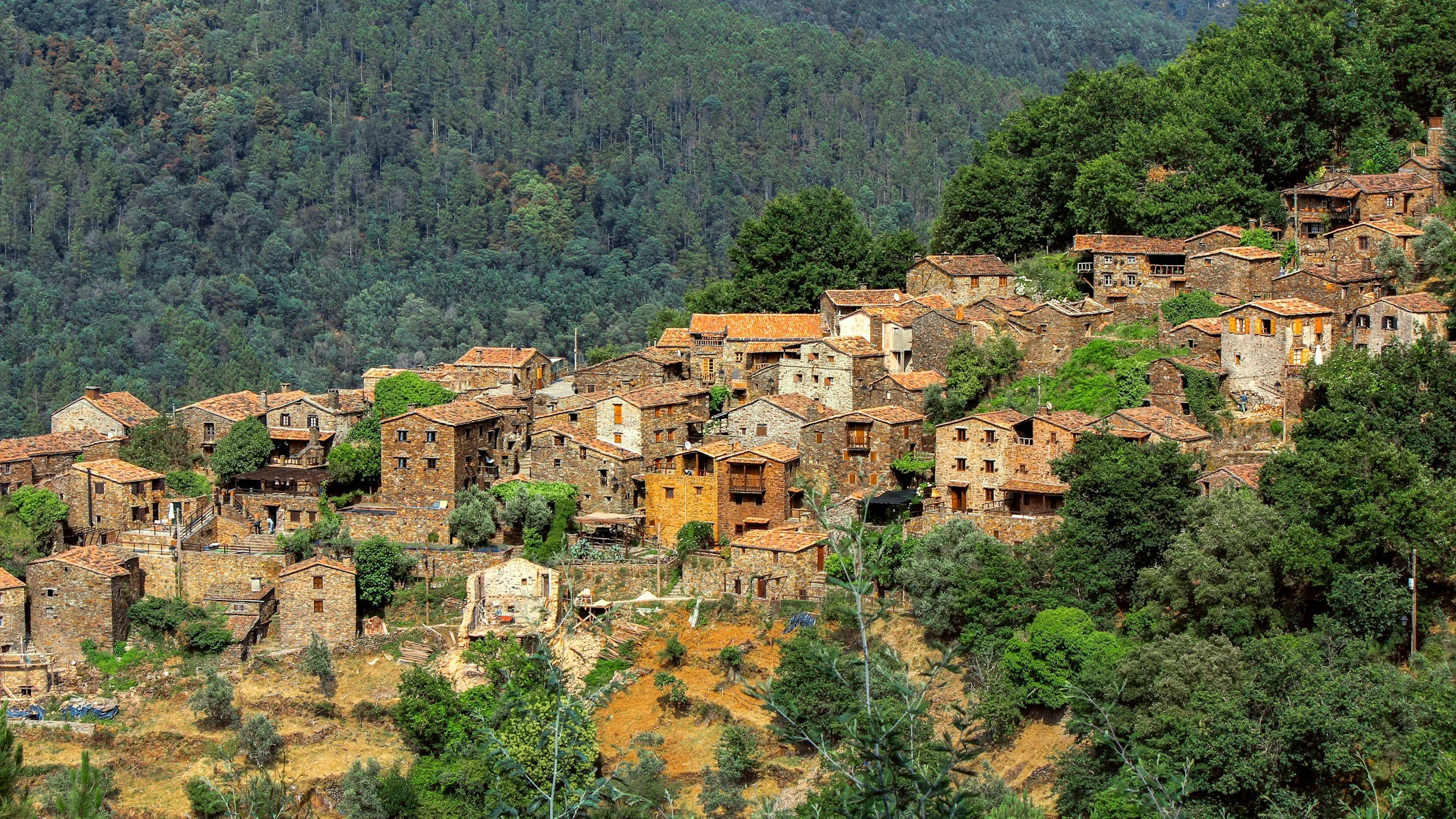
Tarragona offers another side of Spain entirely, and this low-season guide helps if you're weighing up Mediterranean history against northern landscapes.
So... which one would I choose?
The honest answer is that none of these towns replace each other. They all scratch a slightly different itch, and choosing the right one usually comes down to the kind of days you want to have rather than how many kilometres you plan to walk.
If the walk itself is the highlight, I'd head for Potes. The town sits right at the edge of the Picos de Europa, and almost every morning feels like the beginning of a mountain day. One day you might be walking up towards Santo Toribio, the next catching an early bus to Fuente Dé before the cable car queues build, and another following quieter valley paths towards Mogrovejo while everyone else is heading for the peaks. You'll work harder for your views here than anywhere else on this list, but you'll probably remember them for longer too.
If you find yourself slowing down whenever the sea comes into view, Hondarribia is difficult to beat. The walks along Jaizkibel never feel far from the Atlantic, lunch usually involves pintxos rather than packed sandwiches, and it's one of the few places where crossing into another country can simply become part of an ordinary afternoon on foot. Staying close to the Marina rather than inside the steep old town also makes a surprisingly big difference if you're carrying luggage.
For people who enjoy longer days without necessarily climbing mountains, Ribadesella probably offers the most flexibility. Some mornings might start with the walk up to Ermita de la Guía before continuing along the cliffs towards Tereñes, while others are better spent following the Río Sella, browsing the Wednesday market or waiting for a passing shower to clear before heading back outside. It rarely feels like you have to commit to one big walk, which is part of its appeal.
I'd choose Tolosa if the walking is only one part of the weekend. It's the place where you can spend an hour wandering around the Saturday market, stop for coffee, climb Mount Uzturre after lunch, then finish the day with pintxos around Plaza Zaharra without ever feeling like you've been rushing between attractions. The Leitzaran Greenway is there when you want a full day outdoors, but there's no pressure to fill every hour with hiking.
Then there's Cangas de Onís, which suits people who like having options. You can spend one day high above the tree line around the Lagos de Covadonga, another following quieter riverside paths towards the Monasterio de San Pedro de Villanueva, and another exploring villages like Abamia or Soto de Cangas without repeating yourself. It also makes the most sense if you're planning several proper hiking days rather than one or two shorter walks.
One thing all five towns have in common is that they make it genuinely possible to arrive without a car and stop thinking about transport for a while. After that, the choice becomes much simpler.
Do you want the sound of waves when you stop for lunch, or cowbells somewhere high above the tree line? Would you rather end the day with cider beside the Río Sella, a glass of Txakoli overlooking the Marina in Hondarribia, or dinner on a terrace in Potes while the last light disappears from the limestone peaks?
If you're travelling down the east coast afterwards, quiet Valencia is a useful follow-on rather than jumping straight into the busiest parts of the city.
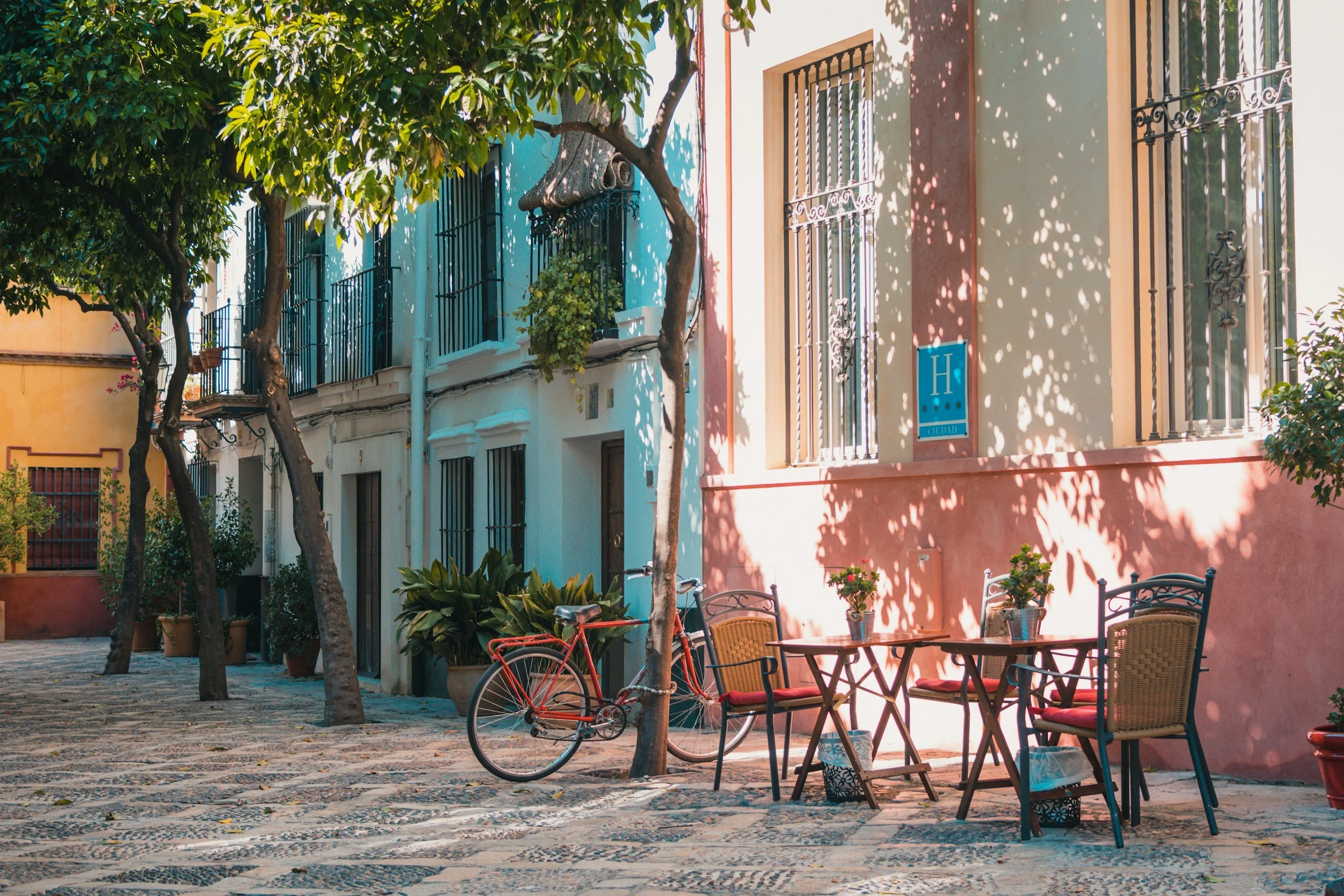
Planning to finish your trip near Barcelona? Sitges guide helps you decide whether it's worth staying there before flying home.
The things you only really notice once you're there
It's easy to spend most of your planning time comparing walking routes, train timetables and accommodation, but after a few days in northern Spain those aren't usually the things you're thinking about anymore. Instead, you start noticing the little practical details that never seem to appear in guidebooks, yet somehow influence every day.
Breakfast is a good example. In plenty of smaller towns, people are already leaving with walking poles and backpacks while cafés are still setting up their terraces. Rather than waiting around for somewhere to open, it often makes more sense to buy fresh bread, fruit or an empanada the evening before. After a day or two it simply becomes normal. You're out walking earlier, the light is softer, and the first few kilometres often feel completely different from the same route an hour later.
The maps can be misleading as well, although not because they're inaccurate. They can't show what a climb actually feels like when it's been raining overnight, when tree roots are slippery under beech trees, or when an old mule path gains height so gradually that you don't notice until you stop and look back across the valley. Distances in northern Spain rarely tell the whole story. The elevation profile usually says much more than the number of kilometres.
If this style of travel appeals to you, you'll probably enjoy these spring villages too. They have the same quieter, regional feel but in a completely different season.
The weather rarely behaves the same way for an entire day either. It isn't unusual to leave a town under clear skies, spend an hour walking through low cloud, then come back in sunshine again. The Atlantic coast, the valleys and the higher mountains all create their own conditions, sometimes only a few kilometres apart. After carrying a waterproof you never use for three days, you'll probably still pack it on the fourth.
Something else that catches people out is the humidity. Temperatures are often lower than they are further south, but clothes take longer to dry, boots left outside overnight can still feel damp the next morning, and a steady climb through woodland can feel warmer than expected even when the forecast looks comfortable. If you're travelling for more than a week with one backpack, somewhere to wash and dry your clothes properly every few days becomes surprisingly valuable.
Autumn completely changes the feel of the north coast, and autumn villages explains which places become even better once summer crowds disappear.
Some of the most useful things aren't destinations at all. A public fountain on the edge of a village. A grocery shop that's still open after the lunchtime break. A shaded bench where local walkers stop instead of the viewpoint everyone photographs. These are the places you begin remembering because they're woven into the day rather than added to an itinerary.
The days themselves don't all feel the same either. Saturdays bring fuller markets, longer queues at bakeries and more people heading into the mountains, while Tuesday mornings can feel almost entirely local again. Sundays are quieter than many visitors expect. Family lunches last for hours, smaller shops stay closed, and buses are sometimes less frequent, so it's worth thinking one day ahead if you're planning a full day on the trail.
Perhaps the biggest change happens without you noticing it. The transport that seemed so important while planning gradually fades into the background. Instead of checking train departures every evening, you're looking at tomorrow's weather in the valley, wondering whether the cloud will clear above the ridges, or deciding whether it's worth leaving twenty minutes earlier to have a stretch of path almost to yourself.
That's when travelling without a car starts to feel completely normal. You're no longer organising the day around connections. You're simply deciding where you feel like walking next.
FAQs about walking holidays in northern Spain
Should I stay in one town or move between several bases in northern Spain?
For most people, two or three bases work much better than trying to stay somewhere different every night. The distances on the map don't look particularly long, but train journeys, bus connections and mountain roads all take time. Spending three or four nights in each place gives you room to adjust if the weather changes, take a shorter walk after a long hiking day or simply enjoy the town itself instead of constantly checking departure times. Northern Spain rewards staying put more than rushing through it.
Can you hike in northern Spain using only trains and buses?
Yes, but choosing the right towns is much more important than choosing the right routes. Tolosa and Ribadesella are easy to reach by train, while Hondarribia, Cangas de Onís and Potes rely on short bus connections for the final stretch. Once you've arrived, though, you can spend several days walking without needing another car journey. That's very different from trying to move between small villages every day, where public transport becomes much less flexible.
Which town should I choose if I only have one long weekend?
It depends on the kind of walking you're looking for. Hondarribia suits people who enjoy dramatic coastal scenery, Ribadesella works well if you'd like a mix of beaches, rivers and easier trails, Tolosa is ideal if food and local markets matter as much as the walking itself, while Potes and Cangas de Onís are better choices if the mountains are the main reason you're coming.
Is northern Spain good for beginner hikers?
Absolutely, as long as you don't assume every route leads into the high mountains. One of the nicest things about northern Spain is the variety. You can spend one day following an old railway through the Leitzaran Valley, another walking along the coast near Ribadesella, then gradually work your way up to more demanding hikes if you feel like it. There isn't the same pressure to tackle big summits every day.
Do I need hiking boots, or are trail shoes enough?
For riverside walks, old railway paths and many coastal routes, good trail shoes are usually enough. If you're heading into the Picos de Europa, especially around Fuente Dé or the Lagos de Covadonga, hiking boots give much better support on rocky ground and become worthwhile if the weather changes. Even in summer, sections of the higher trails can stay damp or slippery after overnight rain.
How reliable is public transport for walkers in northern Spain?
It's generally better than many people expect, although it works differently from central Europe. Regional trains are dependable but not particularly fast, and buses often fill the gaps between railway lines and mountain towns. During summer, services to places like Covadonga become much busier, so it's worth checking seasonal timetables before travelling rather than assuming they run the same way all year.
What's the biggest mistake people make when planning a walking holiday in northern Spain?
Trying to fit too much into one trip.
It's tempting to visit five or six places because they look close together on a map, but many of the best moments happen once you've stopped moving. The second visit to your favourite bakery, finding a riverside path after dinner, changing tomorrow's walk because someone at the next table recommended it, or deciding to spend another afternoon in the mountains because the weather is finally clear. Those are the parts of the trip that tend to stay with you, and they rarely happen if you're packing your bag every morning.
If you could only choose one town, which would it be?
There's no single right answer because each town offers something quite different.
Choose Potes if you want your days to revolve around mountain scenery and longer hikes.
Choose Cangas de Onís if you'd like several hiking options without changing accommodation.
Choose Hondarribia if walking along the Atlantic coast sounds more appealing than climbing into the mountains.
Choose Ribadesella if you enjoy mixing walking with beaches, rivers and relaxed afternoons in cider houses.
Choose Tolosa if you're just as interested in local markets, food and everyday Basque life as you are in the walking itself.
If I were planning the trip from scratch, I'd choose the town that matches how I like to spend the hours between the walks, not just the walks themselves. That's usually what determines whether somewhere becomes a place you genuinely want to return to.