
Moustiers-Sainte-Marie is even better before summer arrives
You see Moustiers-Sainte-Marie before you really arrive in it. The road through the Verdon starts to tighten, cliffs rise on both sides, and then the village suddenly appears tucked into the rock above the valley, almost like it’s been placed there rather than built.
In spring, the first walk up into the village sets the tone. You leave your car below, follow the slope up, and end up in Place de l’Église where things are already moving but not busy. A few people sitting outside cafés, someone opening shutters along the stone streets, and that steady morning rhythm where nothing feels rushed or crowded yet.
From there, you naturally end up on Rue de la Bourgade, the main street running through the village, where stone steps cut between buildings and small shops open as the day starts properly. It’s not a place you need to navigate, you just move through it and the village kind of carries you upward and sideways at the same time.
Spring is when Moustiers makes the most sense. You can walk the whole village in minutes, stop without planning where, and never feel like you’re missing anything. It’s all close together, so the experience is more about how you move through it than what you’re trying to see.
This guide takes you through what it actually feels like to be here in spring, where to walk, where to stay, and how the village fits together once you’re in it.

Moustiers-Sainte-Marie in spring
You drive into the Verdon area, the road gets tighter, the cliffs start closing in, and then the village just appears tucked into the rock face like it’s been placed there rather than built. Most people stop for a moment before even getting out of the car.
In spring, that first impression hits differently because nothing feels pushed to capacity yet (if that makes sense…) Parking near the lower part of the village is still manageable, and when you walk up towards Place de l’Église, you’re not moving through crowds, just a steady flow of people, locals picking up coffee, a few visitors drifting between shops, and everything feeling open enough that you can actually see the structure of the place.
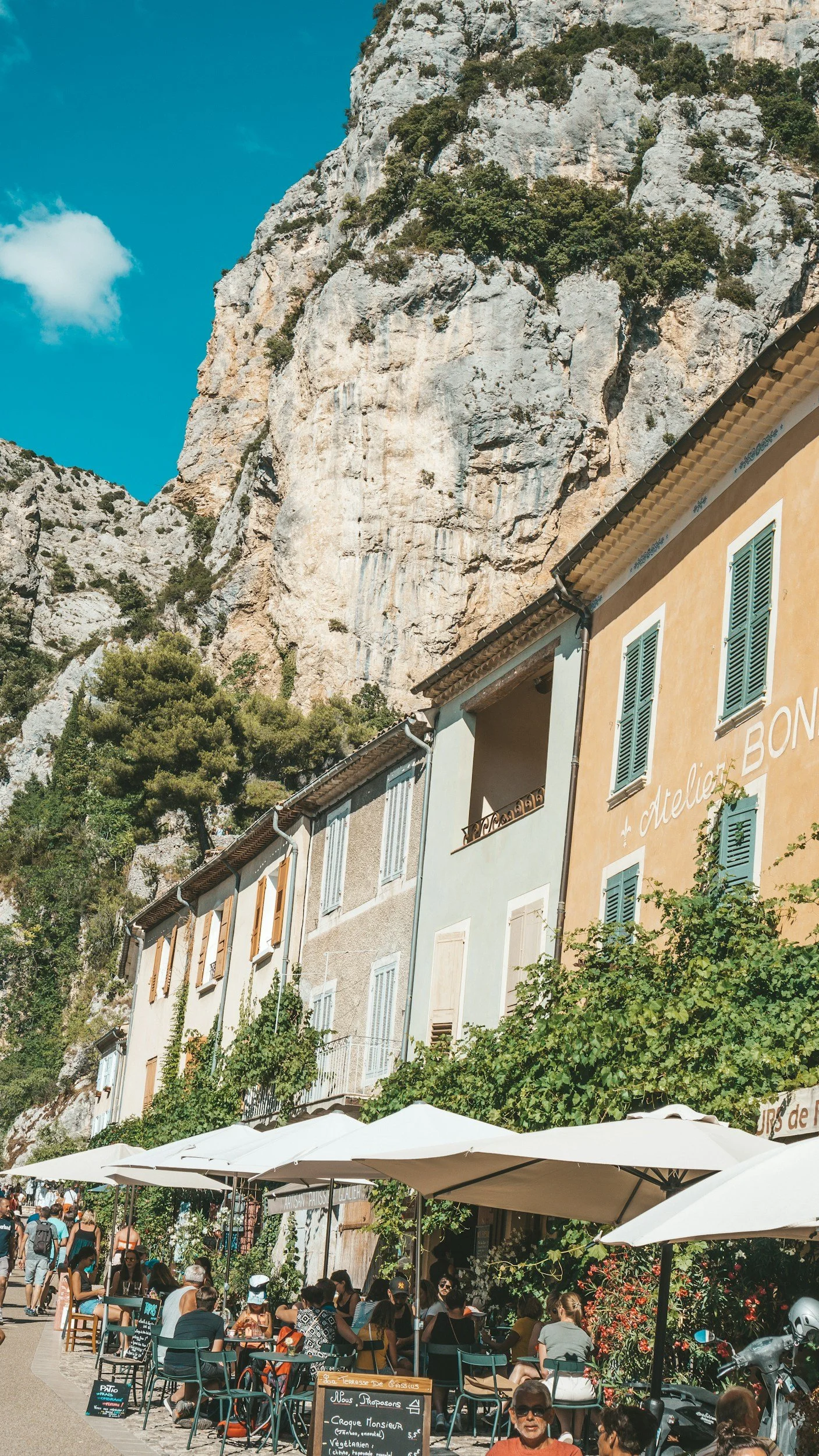
If you keep walking through Rue de la Bourgade, the main street that cuts through the centre, you’ll notice how quickly the village shifts from one level to another. Stone steps leading up between houses, small workshops half-open, doors left ajar in a way that suggests the day is just starting rather than already in full swing. It’s a simple street, but in spring it’s easy to slow down here without being pushed forward by movement.
Above the village, the path up toward the Notre-Dame de Beauvoir chapel is one of the most direct ways to understand where you are. It’s a steady climb rather than a hike, but once you reach the top, the view back over the rooftops, the cliffs, and the valley below makes it clear how tightly everything sits together. In April especially, the contrast between the quiet upper path and the village below is noticeable, not because it’s empty, but because it hasn’t yet reached its busiest season yet.
What stands out most in spring is how much space there still is in the everyday parts of the village. You can stop in small shops along Rue de la Bourgade without waiting, sit near Place de l’Église without planning it, and move between levels of the village without constantly navigating people.
That’s really the reason to come at this time. You still get the full structure of Moustiers (the cliff setting, the narrow streets, the chapel above) but without everything being compressed by summer flow. You can walk it slowly without adjusting your pace to anyone else, and the village actually feels like a place rather than a route.
If you’re drawn to this kind of setting but want something even more remote, these Auvergne villages show what that looks like further inland
Where to stay in Moustiers-Sainte-Marie
Where you stay in Moustiers-Sainte-Marie really changes how you experience the village, because everything is stacked into the hillside and even a few minutes’ difference in location shifts your whole morning.
If you stay right in the centre, near Place de l’Église, you’re stepping straight into the village as soon as you leave your door. You’re on Rue de la Bourgade within seconds, with stone steps underfoot, small cafés opening for the day, and people slowly moving between bakery stops and morning coffee. Places like Hôtel Le Colombier, just below the centre, sit in that in-between zone where you’re close enough to walk up in a minute or two, but still slightly removed from the main flow around the square.
A bit higher or tucked into the older lanes, things get quieter quickly. The streets narrow, the movement drops off, and you start your mornings with the sound of footsteps on stone instead of café noise. It feels less like stepping out into a village and more like already being inside it, just a few turns away from the centre.
Once you move outside the village itself, the whole rhythm shifts again. A short drive brings you into open space, olive trees, and wider views looking back towards the cliffs. This is where La Bastide de Moustiers, the country house linked to Alain Ducasse, sits slightly apart from the village. You’re no longer in walking distance of the centre, but the trade-off is space, quiet, and mornings that start with nothing happening around you except landscape.
There are also small guesthouses scattered along the roads leading into Moustiers, usually family-run places where you wake up to silence, not streets, and then drive or walk down into the village when you’re ready. These work well if you prefer separation between where you sleep and where you explore.
What actually matters here is not the type of accommodation, but how quickly you want to be in the village. Inside Moustiers, you’re in it immediately. Just outside it, you feel the distance the moment you wake up. And because the village is so vertical, even a few minutes of difference in location changes how the whole day begins.
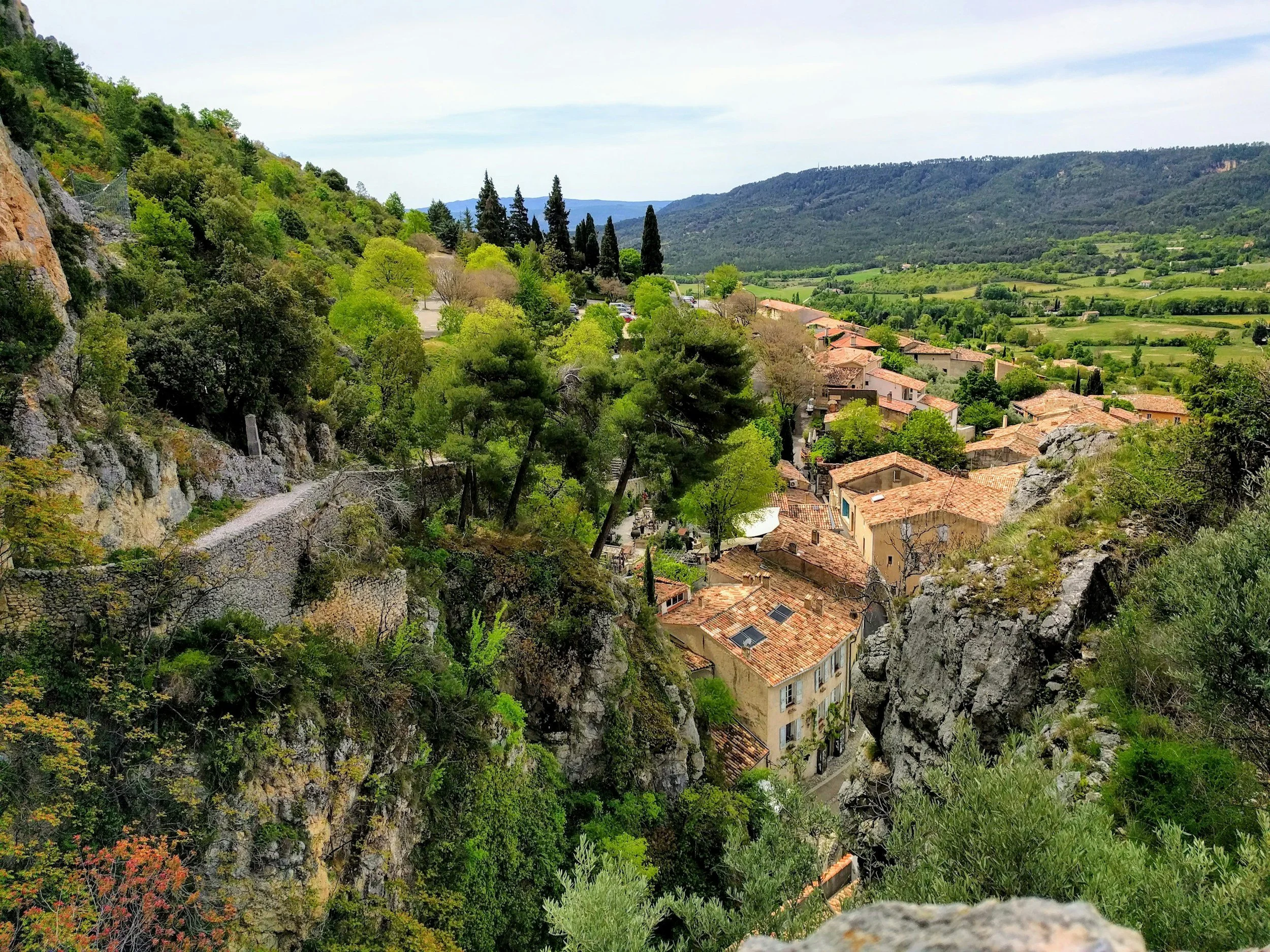
Le Relais de Moustiers – right in the heart of the village
If you want to be right in the middle of things (without the noise) Le Relais de Moustiers is a lovely pick. This warm and welcoming guesthouse sits just behind the church and offers rooms with little balconies, flower boxes, and views of the cliffs.
Try to book one of their terrace rooms facing the mountains, especially in May or early June, when mornings are cool and quiet. It’s the kind of place where you’ll want to leave your window open to hear the village wake up slowly: footsteps on cobbles, bells ringing in the distance, and the scent of warm croissants from the café below.
La Ferme Rose – on the edge of town
For something a bit more eccentric (in the best way), La Ferme Rose offers a countryside feel without being too far from the village. It’s surrounded by trees and vintage touches - think retro radios, quirky art, and mismatched ceramics that somehow feel just right.
In spring, the air smells of wildflowers and rosemary, and breakfast is served outside when the weather allows. They offer local jam, eggs from the nearby farm, and often homemade pastries. The atmosphere is relaxed, almost like you’re staying with a friend who knows how to host well. There’s also a small pool with views of the cliffs… which a rare find so close to the village.
If you’re unsure what “quiet” actually means outside peak season, this quiet vs closed breakdown clears that up quickly.

What to do in Moustiers-Sainte-Marie in spring
In spring, Moustiers-Sainte-Marie doesn’t really need an itinerary. You end up doing a few simple things, then the rest of the day just fills itself in between the village, the path above it, and wherever you stop for a coffee…
Walk up to Chapelle Notre-Dame de Beauvoir
You start just above Place de l’Église, where the village begins to tilt upward, and from there it’s either steps or a quieter path that slips behind the houses and into the hillside.
The main staircase is easy to find, but the more interesting route is the one that starts behind Rue de la Bourgade, where the buildings thin out and the sound drops almost immediately. One moment you’re in the village, the next you’re between olive trees and dry stone walls, with the cliffs rising above you and the rooftops already falling away behind.
It’s not a hike you need to prepare for. You just take your time, stop when you want, and follow the path as it climbs naturally towards the chapel. In spring, you notice small things along the way that you’d miss in summer, wild herbs growing through the edges of the path, patches of flowers near the stone, and that mix of shade and light as the trail curves upwards.
The chapel itself sits quietly between the cliffs, and the view back over Moustiers is the moment most people pause without really deciding to. The village looks smaller from up there, more tightly held into the rock, with the valley stretching out behind it.
You don’t stay long at the top. Most people don’t. You just take in the view, sit for a bit if there’s space, then head back down the same way or loop slightly differently depending on how much time you have.
What makes this walk work in spring is how empty it usually is. You’re not following a crowd, just moving at your own pace through a path that feels connected directly to the village below rather than separate from it.
If you’re wondering how this compares to other quieter parts of France, these Loire Valley towns give you a very different kind of setting to consider.
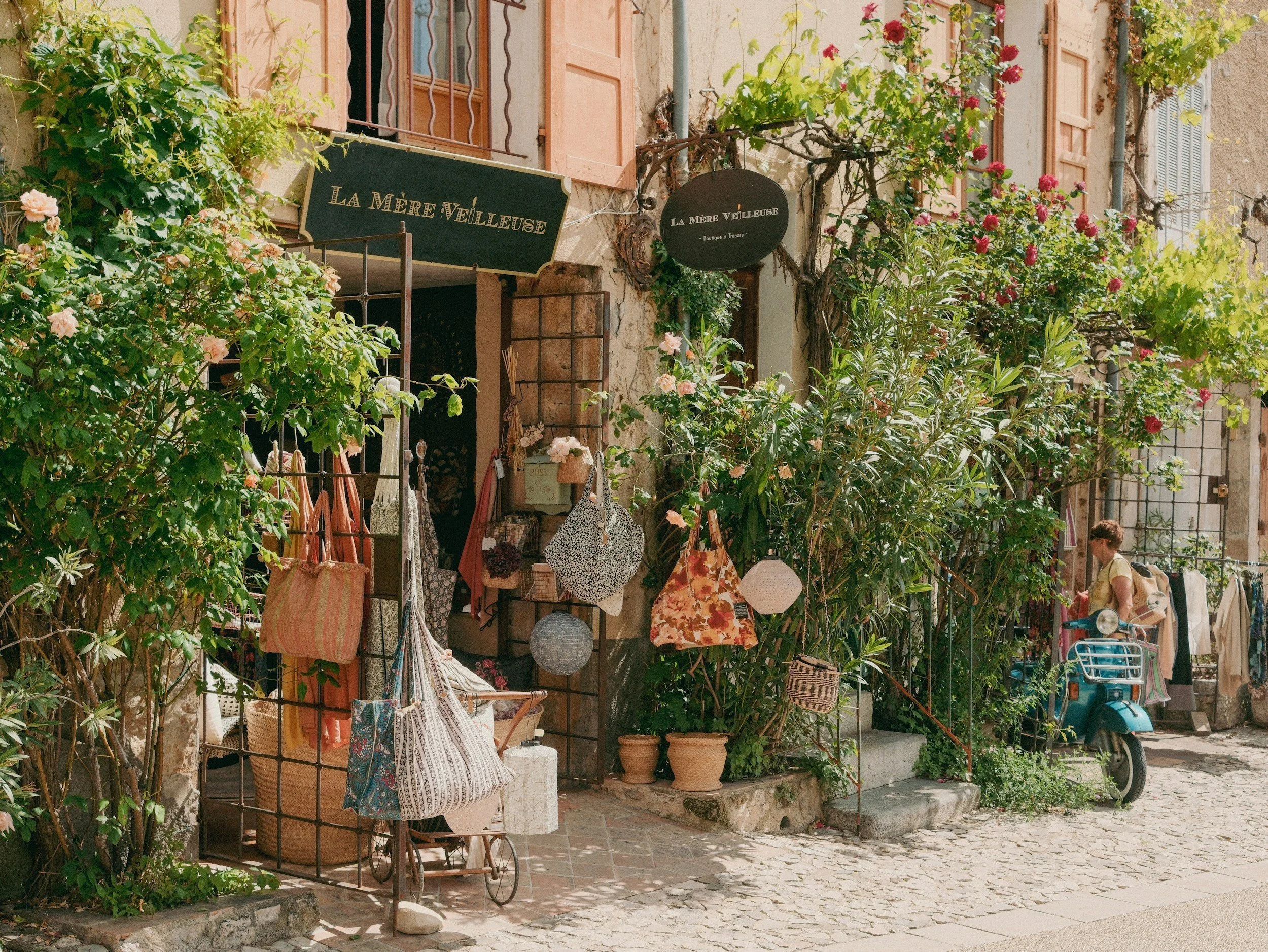
Explore the Village’s Faïence Pottery Studios
If you’re already thinking about markets and local finds, this brocante guide makes it easier to plan your visit around the right days.
Moustiers-Sainte-Marie has been producing faïence pottery for centuries, and the tradition is still very much alive today. This delicate, hand-painted ceramic is known throughout France for its soft white glaze and intricate blue and green designs - often inspired by religion, mythology, and Provençal nature.
In the quiet spring months, you can visit local workshops like Atelier Bondil and Atelier Soleil, where the pace is unhurried and the artists are often happy to chat. You’ll see how each piece is shaped, glazed, and painted by hand, so no factory lines here. Many of the designs have a story behind them, and you can feel the craftsmanship that’s gone into every dish, jug, and wall tile.
Ps. if you’re planning your timing around flowers and quieter landscapes, this Provence Verte guide shows where spring arrives a bit earlier.
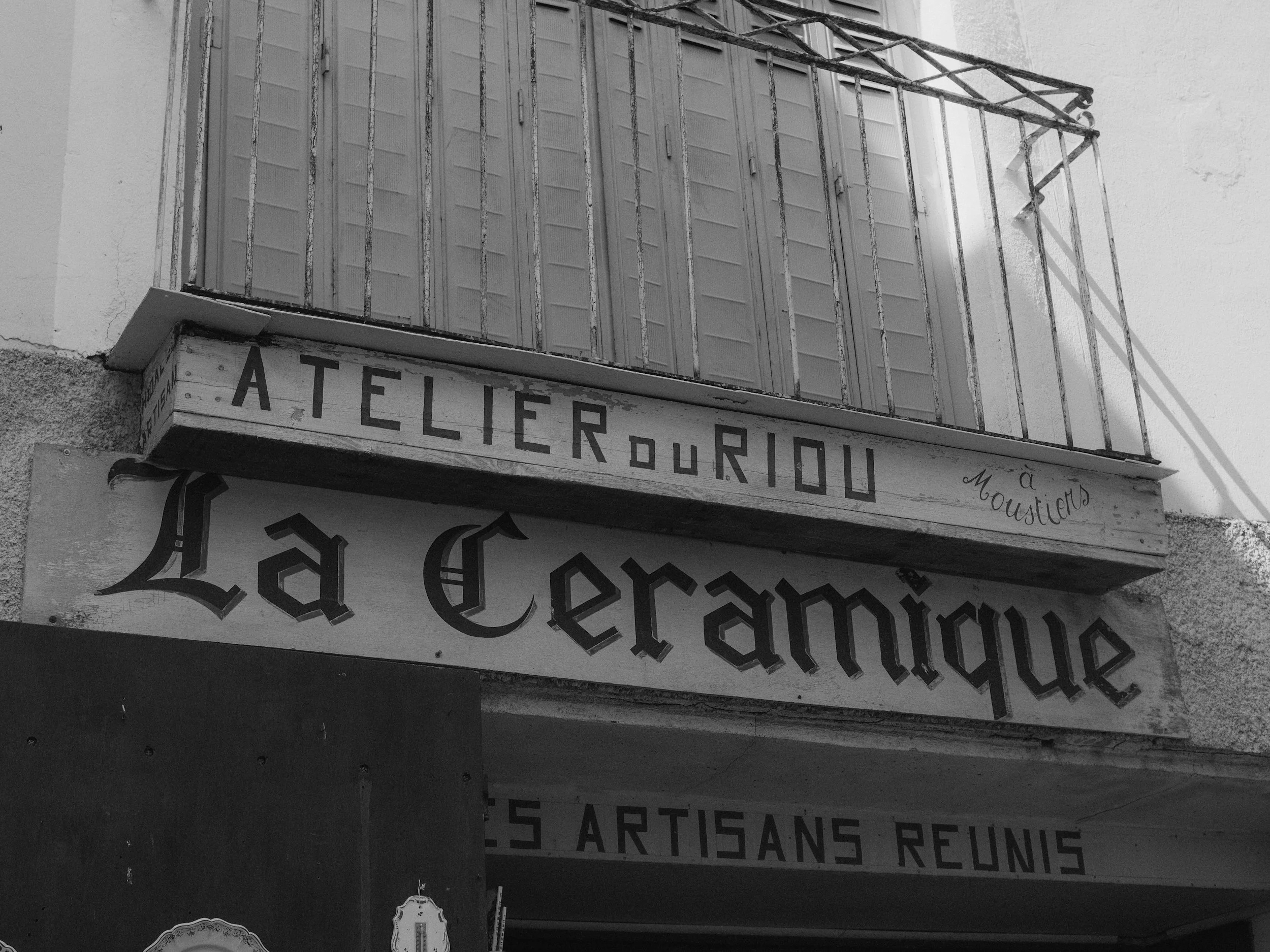
Friday market and a long lunch in the square
If you’re in Moustiers on a Friday, the small market in Place de l’Église is usually where the morning ends up happening without much planning. You don’t really need to go looking for it, you just walk up through the village and suddenly there are stalls set out between the church and the surrounding streets, with locals already moving through it before it fully fills in.
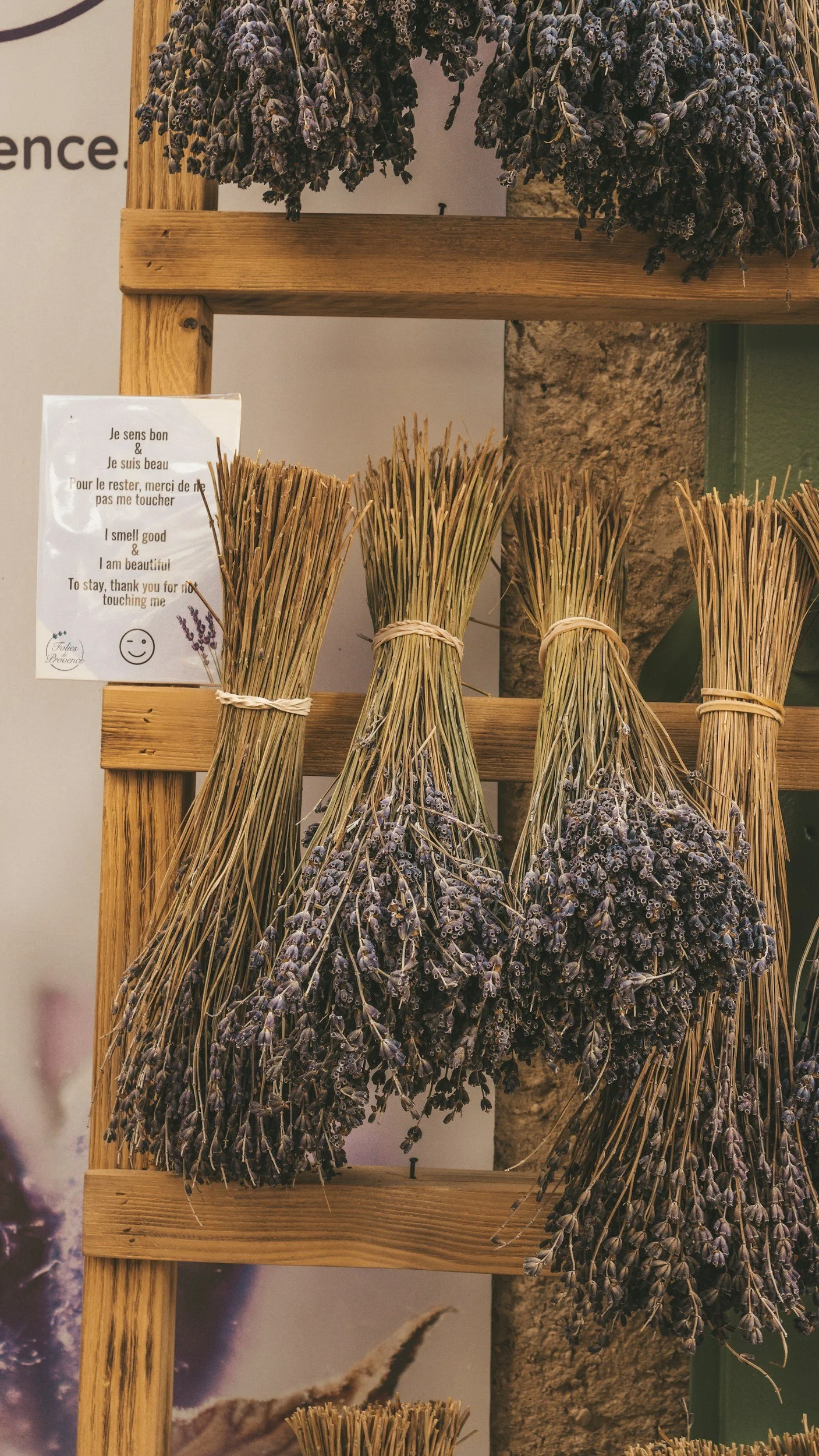
In spring, it’s very straightforward. Just goat cheese wrapped in paper, strawberries in small boxes, bread from nearby bakeries, herbs like thyme and rosemary still tied in rough bunches, and olives that people seem to buy without even stopping properly. It feels more like people doing their weekly shopping than anything set up for visitors.
The pace is what makes it stand out. People stop and talk at stalls, not just buy and move on, and you end up naturally slowing down because everything else is moving at that same rhythm anyway. You don’t need to “walk the market”, you just drift through it as it spreads slightly into the edges of Rue de la Bourgade.
Afterwards, you just stay nearby and sit down somewhere like Café Marguerite, which sits just off the main space and catches the quieter side of the village once you step a few metres away from the stalls.
The terrace is simple, a bit shaded, looking down towards the lower streets, and it tends to stay calm even when the square is still active. Food is seasonal and uncomplicated, the kind of plates that change depending on what’s available locally rather than a fixed menu trying to do too much.
A glass of rosé fits into it easily, not as something planned, just something you end up ordering while you sit and watch the market slowly thin out again. There’s no real shift from “market” to “lunch” here, it just becomes one continuous part of the morning.
And that’s really what works about this Friday in Moustiers. Everything you do naturally happens within the same few streets anyway.
If you’re not sure whether to stay here or explore more of the region, this Provence in May itinerary helps you see how Moustiers fits into a few slower days.
How to get to Moustiers-Sainte-Marie without a car
Getting to Moustiers-Sainte-Marie without a car is possible, but it takes a bit of planning because there’s no train station in the village itself. You’re essentially combining train travel with a local bus or taxi for the final stretch into the Verdon area.
Most journeys start from Aix-en-Provence or Marseille, where you’ll first take a train into Aix-en-Provence TGV or Aix-en-Provence centre depending on your route. From there, you connect to a regional bus towards Riez, which is the closest practical hub for reaching Moustiers.
If you’re coming via Aix, it’s worth skimming this Aix spring guide so you don’t rush through what’s actually a really easy base.
From Riez, the distance to Moustiers-Sainte-Marie is around 20 kilometres. In summer there are more frequent buses, but in spring services can be limited, so it’s worth checking timetables in advance rather than relying on same-day connections. If the bus doesn’t line up, a local taxi is often the most reliable option for the final leg.
Another common route is via Manosque, which connects to regional trains from Aix-en-Provence. From Manosque, you’ll still need a bus or taxi through the Verdon Regional Park, passing small roads, open plateau landscapes, and gradually tighter roads as you approach the cliffs around Moustiers.
The final approach is always the same regardless of route. You come through open countryside, then the landscape starts to shift, the roads narrow, and suddenly the village appears tucked into the rock face above you. There’s no station, no direct drop-off in the centre, so you’ll usually be dropped at the lower parking areas just outside the village and walk the last stretch up into Place de l’Église on foot.
In spring, this journey is generally easier than in high summer. Roads are quieter, buses are less crowded, and you don’t have the same level of traffic around the Verdon lakes and viewpoints. The trade-off is that public transport is still limited, so timing matters more than it does later in the season.
Once you arrive, you don’t need transport again. Everything in Moustiers is walkable, from the lower streets up through Rue de la Bourgade and into the paths leading toward the chapel above the village.
A few more things about visiting Moustiers-Sainte-Marie in spring
What surprises most people in Moustiers is how quickly you learn the layout. You can walk from the lower entrance up through Rue de la Bourgade, reach Place de l’Église, and keep going towards the chapel path in about 10–15 minutes, even with stops along the way. It’s small enough that once you’ve done that loop once, you don’t really need a map again.
That also changes how you spend your time. There’s no need to split the village into “things to see”, because everything sits on the same stretch of streets. A morning might be the market in the square, a walk up a bit higher, then back down for coffee, all without really leaving the centre.
It’s worth knowing the rhythm too. Mornings feel easiest, especially before day visitors arrive, when Rue de la Bourgade is just locals, open shutters, and cafés setting up. Around lunchtime things slow down, some places close for a break, and it gets quieter again. Late afternoon is when it opens up once more, with people drifting back into the square.
If you stay overnight, you notice how short the distances really are. You end up walking the same few streets at different times of day rather than trying to find new ones, and that’s usually enough. The chapel path, the square, and the main street already cover most of what people come for
If you’re debating Provence versus somewhere less talked about, these Provence alternatives help you decide pretty fast, and If you’re thinking of extending your trip west instead, this Lot Valley guide gives a good sense of how different the pace feels.
FAQ: visiting Moustiers-Sainte-Marie in spring
Is Moustiers-Sainte-Marie worth visiting in spring or is it too quiet?
Spring is one of the easiest times to visit because the village is open but not at full capacity. In April, it can feel slightly in-between, with fewer people and some places opening only for lunch. By May, more cafés and restaurants around Place de l’Église are open daily, but it still doesn’t feel crowded.
What is the best time of day to visit Moustiers-Sainte-Marie?
Early morning and after 17:00 are the easiest times to move around. Between 11:00 and 15:00, the narrow streets like Rue de la Bourgade fill with day visitors, even in spring. If you stay overnight, the village becomes noticeably quieter in the evening.
Where do you park when visiting Moustiers-Sainte-Marie?
You park below the village in designated lots and walk up into the center. In spring, it’s usually easy to find space if you arrive before late morning. From the parking areas, it’s a 5–10 minute uphill walk into the main streets.
Is it difficult to walk around Moustiers-Sainte-Marie?
Yes, more than people expect. The village is built on a steep slope, and most streets are uneven stone paths or steps. Walking up toward Notre-Dame de Beauvoir involves a steady climb that takes around 20–30 minutes.
Can you visit Moustiers-Sainte-Marie without a car?
It’s possible, but not flexible. The nearest major train access is Aix-en-Provence TGV, and from there you rely on regional buses, often with a connection in Riez. Once in the village, you won’t be able to easily visit nearby areas like Lac de Sainte-Croix without a car.
How long should you stay in Moustiers-Sainte-Marie?
A few hours is enough to see the village itself, but staying one night changes the experience. Early mornings and evenings are quieter, and you’re not moving through the village at the same time as day visitors.
Are restaurants open in Moustiers-Sainte-Marie in spring?
Yes, but with limited hours. Lunch is usually served between 12:00 and 14:00, and some places close completely between lunch and dinner. By May, more restaurants stay open in the evening, but it’s still a good idea to choose where to eat before it gets late.
Can you combine Moustiers-Sainte-Marie with Gorges du Verdon in one day?
Yes, but it works better if you keep it simple. The village is about 10–20 minutes from Lac de Sainte-Croix, and you can drive to viewpoints along the Gorges du Verdon the same day. Trying to cover too many stops usually turns into short visits and more driving than expected.
Is Moustiers-Sainte-Marie crowded in May?
It can get busy in the middle of the day, especially on weekends, but it’s still manageable compared to summer. The difference is noticeable if you visit early or stay overnight, when the streets clear out again.
What catches people off guard when visiting Moustiers-Sainte-Marie?
The steep layout, limited parking, and fixed meal times tend to shape the visit more than expected. It’s easy to arrive at the wrong time and find restaurants closed or parking further away than planned.