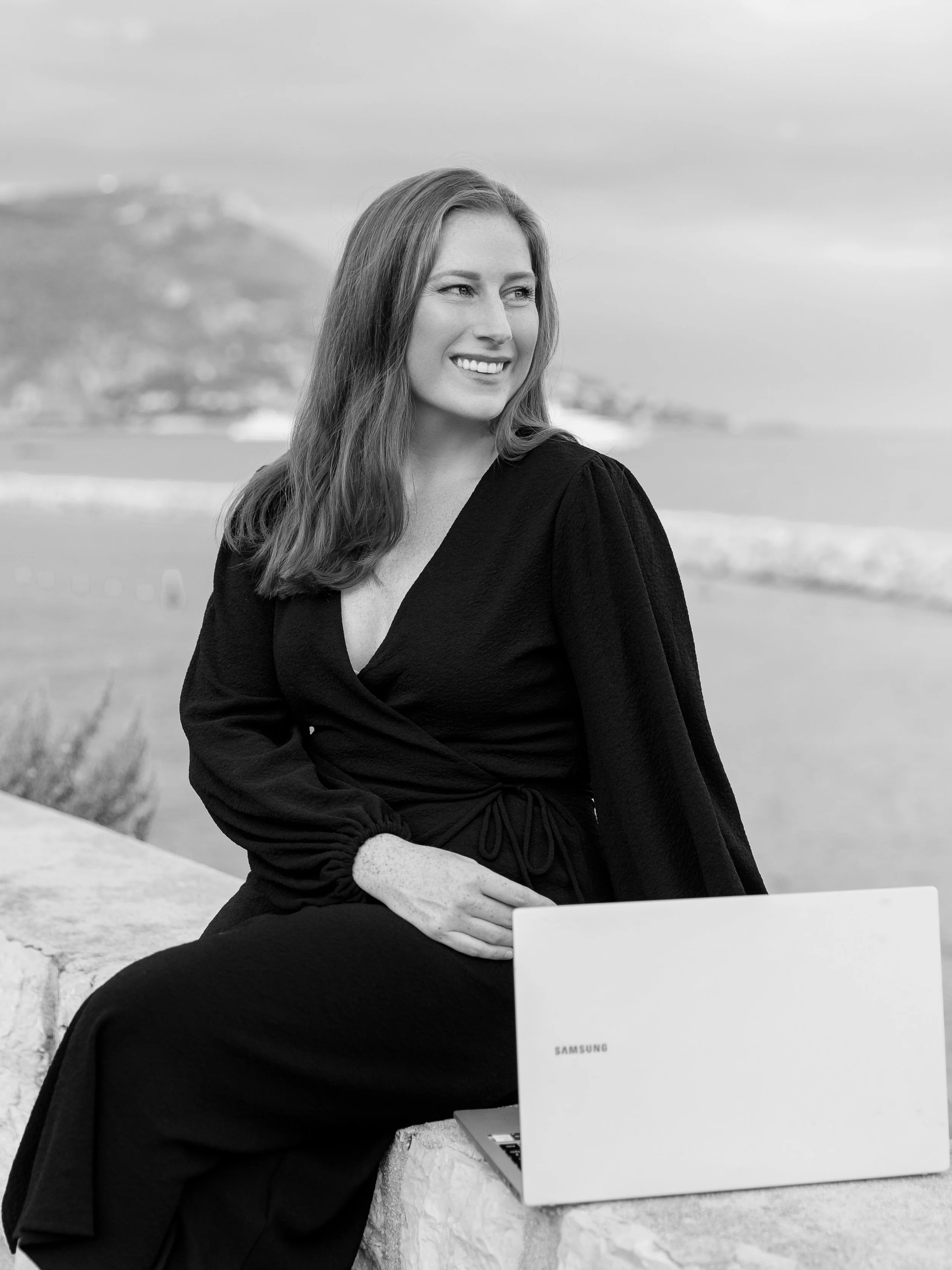
Thinking about southern France in winter? Here's what surprised me most.
Southern France in winter isn’t one single vibe, because the coast, the inland towns, and the countryside all act differently once you’re outside May to September. You notice it almost straight away, usually the first evening, when you walk into town around 18:30 thinking you’ll just find somewhere cosy for dinner and it turns out half the places are shut until March. One street feels alive, the next street is dark with shutters closed, and suddenly you’re paying attention to wind and daylight the way you normally pay attention to restaurant hours. Some weeks you land into bright, clear days and that kind of 12–16°C where you’re totally fine as long as you keep moving, and other weeks you get grey mornings with on-and-off rain and a wind that makes the coast feel way colder than you expected.
The real day-to-day stuff is routines. It’s where you go for coffee when the terraces have basically disappeared, and whether your base town has at least one place that’s open every day so you’re not starting each morning by guessing. In Uzès, that might mean grabbing something around Place aux Herbes and doing a slow loop through the old town streets while everything opens up. In Nice, it can be as simple as starting around Cours Saleya so you’ve got the market there and the old town right next to it, which makes the whole day easier. In Sète, Les Halles is the kind of place that saves a winter morning because it’s busy early, it’s warm inside, and you can actually eat something proper without turning it into a whole plan. Winter is also when distances feel different. A one-hour drive in July is easy because it stays light forever, but in January that same hour starts to feel like a decision because you’re thinking, “Do I really want to be driving back in the dark?” and “Are we going to miss the last dinner seating if we push it?”
If you’ve done Europe in the off-season before, this just feels more… practical. It helps to know which places still feel normal in winter, and which ones can feel a bit too quiet once you’re there. Arles is a good example of a town that still works because it’s lived-in, so you can base yourself near the centre, walk everywhere, find a café, do a museum, and not feel like you’re forcing the day. Some of the smaller coastal towns are better as a half-day trip, because you can do the pretty harbour walk, have lunch, and then you don’t get stuck in that weird late afternoon moment when the town goes quiet and you’re looking around for something open. Winter in southern France is basically about setting yourself up so your days feel easy: stay somewhere where things are open, a couple of good stops for coffee and lunch, and plans that don’t depend on perfect weather.
If you’re trying to narrow it down further, I put together a full guide to the winter towns in France that actually hold up in low season, so you don’t end up booking somewhere that shuts down midweek.
Where to stay in Southern France in winter (and what actually shifts after summer)
Uzès in January feels completely different from July
Uzès in January feels like a real town again. The stone streets are the same, Place aux Herbes is still the heart of everything, but the energy shifts. You’re not squeezing past summer crowds under the arcades. Instead, you see locals picking up bread, greeting each other by name, and stopping for a quick coffee before heading back to work. If you stay inside the old town walls, you can reach almost everything on foot within 5 to 10 minutes. From a small apartment near Rue Jacques d’Uzès, you’re at the square in under three minutes. From there, you can loop past the Duchy, wander down quieter residential streets, and circle back without needing a plan.
In winter, you notice which places are actually part of daily life. A bakery like La Nougatine opens early and has a small queue even in January. A café facing the square might have only a handful of tables in use, but it’s warm inside and steady. What changes from July is the assumption that everything will be open. Some boutiques close midweek. A restaurant you bookmarked might reopen only Thursday to Saturday. You can’t rely on wandering at 20:30 and choosing from ten options. You usually pick one or two solid places in advance and check their winter hours.
Getting to Uzès takes a bit of coordination. Most people arrive via Nîmes or Avignon by train. From Nîmes, it’s around 40 minutes by car. There are buses, but in winter the frequency drops, especially in the evening. If you don’t want to calculate your day around the last return bus, renting a car makes everything simpler. Parking is noticeably easier in January. You can use one of the car parks just outside the historic centre and walk in within a few minutes, instead of circling endlessly like in summer.
As a winter getaway, Uzès is a good option if you like things straightforward. A Saturday morning market still fills Place aux Herbes with produce stalls, olives, cheeses, and seasonal vegetables, even if it’s smaller than in peak season. You can spend the morning there, have lunch nearby, then walk up toward the Duchy for views over the rooftops. Another day might mean driving 20 minutes to the Pont du Gard when the weather is clear and coming back before dusk. What tends to surprise people is how early things quiet down, especially Tuesday or Wednesday evenings. By 19:30, it can feel like the town has settled for the night. If long dinners and late drinks are important to you, choose your restaurant carefully and don’t assume there will be a second stop afterwards.
Arles without the festival crowds
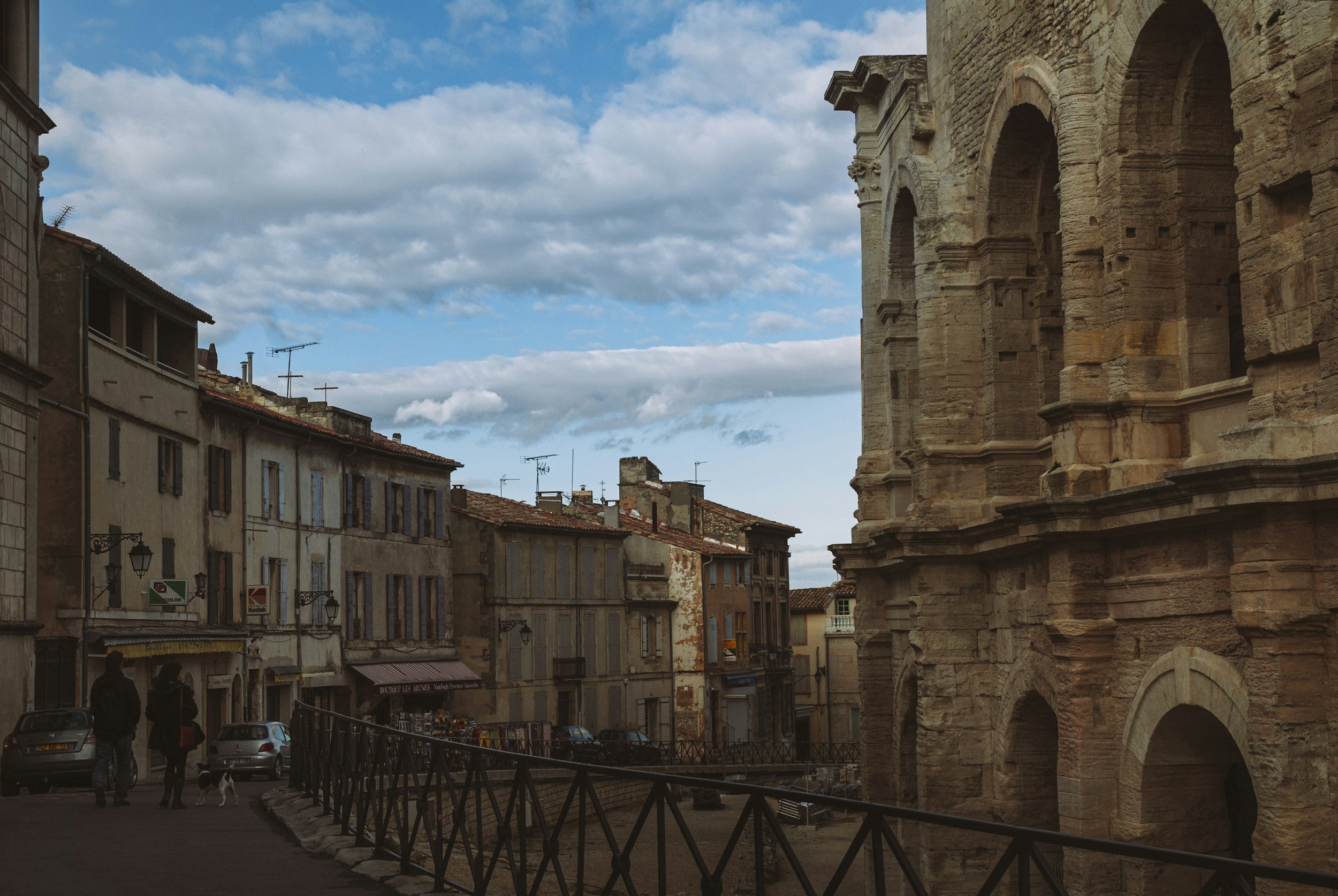
Arles in winter just feels more normal. The summer rush is gone, no festival crowds, no packed terraces, and the town goes back to being somewhere people actually live. If you stay near Place du Forum or somewhere around Rue de la République, you can walk almost everywhere in 10–15 minutes. The Arena, the little streets behind it, the river along the Rhône, it’s all close enough that you don’t need a plan. You just head out and loop back.
Cold days naturally push you indoors a bit more, and Arles is good for that. Fondation Vincent van Gogh is easy to spend an hour in without it feeling heavy. Musée Réattu is small enough that you don’t need to block out half a day. Then you step back outside, grab coffee somewhere like Café Georges, and carry on. It’s not all about sightseeing in winter. It’s more about building a simple day that makes sense with the weather.
Arriving by train is straightforward, which matters more in winter than people realise. The station is small and manageable, about a 10–15 minute walk into town if you’re travelling light. If you’ve got a suitcase, a short taxi ride saves you dragging it over uneven pavements. Once you’re in, you don’t need a car unless you’re planning countryside days. That flexibility is useful when the mistral shows up and suddenly being outside all day doesn’t sound appealing.
A typical winter day in Arles is very easy to picture. Coffee in the morning, a slow walk past the Arena, maybe along the river if it’s not too windy. Lunch somewhere solid and open, because in January you don’t assume everything is serving. After that, either another indoor stop or a shorter afternoon walk before the light fades. By early evening, the town settles down. It’s quiet, but not empty.
One of the reasons Arles is a nice option in winter is that it’s not dependent on tourists. Supermarkets are open, bakeries are busy in the morning, wine shops are running as usual. The town has this local feel, especially during winter. And if the weather cooperates, the Camargue is close enough for a half-day drive. You don’t need to turn it into a full expedition. Leave mid-morning, drive through the flat landscape, stop a couple of times, have lunch somewhere simple, then head back before dark. If the wind is strong, you adjust. Nîmes or Avignon are both under an hour away and make easy town days instead.
Pézenas midweek in February
Pézenas in February can feel almost like you’ve arrived on a quiet weekday morning before anyone else has woken up. Midweek especially, the old centre is calm. The narrow streets around Place Gambetta and Rue de la Foire are easy to cover on foot in under an hour if you’re just wandering without stopping. In summer those streets are busy with craft shops and visitors browsing, but in winter a few of the more tourist-focused boutiques close for part of the week. What’s left feels more local and practical. Bakeries are open, a couple of cafés have people sitting inside, and you quickly see which places are actually part of daily life.
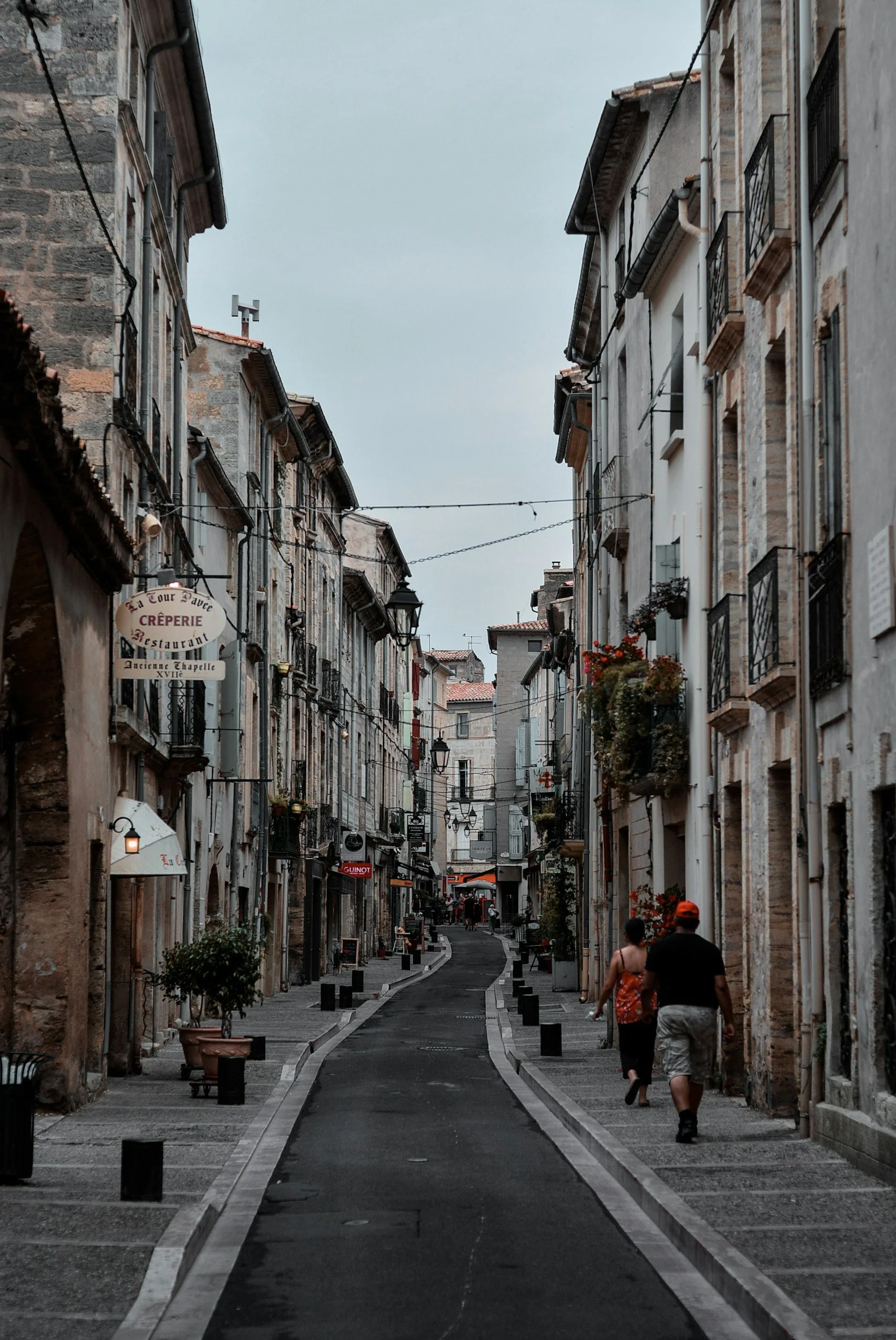
If you stay somewhere truly central, inside the old town or just at the edge near Cours Jean Jaurès, you can step outside and reach everything in five minutes. You don’t want to be staying on the outskirts and needing the car for every coffee. A winter day here is simple: bakery first, maybe somewhere along Rue Anatole France, then a slow loop through the old streets, coffee near Place Gambetta, and a look through the few shops that are open.
Pézenas is also well placed if you want options. Sète is around 30 minutes by car, so if the weather is clearer by the coast you can head there for a seafood lunch near the canals and come back before dark. If the wind is strong on the coast, you stay inland and explore smaller villages around Hérault instead.
Getting there is easiest via Montpellier. From the airport or the main train station, you’re looking at roughly 45 minutes by car. Public transport exists, but in winter the timings don’t always line up neatly, especially later in the day. A car gives you freedom to shift plans. You can spend a quiet morning in Pézenas, then drive out for lunch somewhere else without checking bus schedules. If you don’t rent a car, you can still enjoy Pézenas, but then the trip becomes about staying local and keeping everything within walking distance.
Small villages in the Luberon when shutters stay closed
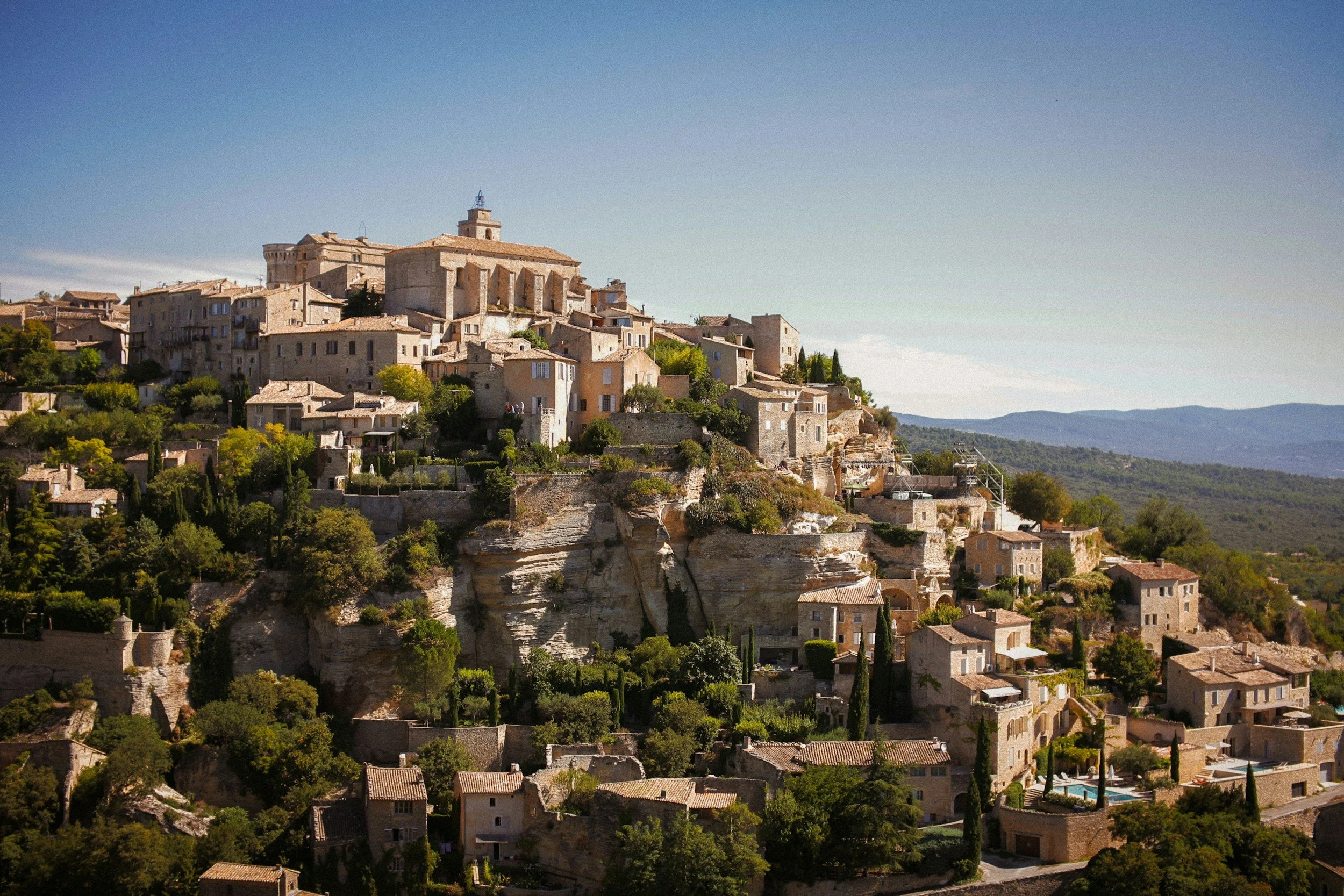
The Luberon in winter is where you really need to be honest with yourself about what you want. Villages like Gordes, Roussillon, and Ménerbes still look the part, stone houses, narrow lanes, views over the valley, but January and February strip away the summer layer. You can walk through the centre of Gordes at 10:00 and find it almost silent apart from a couple of delivery vans and one café with lights on. Half the shutters are closed because many homes are second residences. A few restaurants reopen only towards March. It’s not empty, but it’s quiet in a very practical way.
If you choose to stay inside one of these small villages in winter, you’re choosing it for the setting, not for options. You might have one bakery open in the morning and one or two restaurants serving lunch on certain days. Evenings can be very still. A walk around the village might take 20 minutes, especially if you include the steeper streets up toward a viewpoint, and then you’ve covered most of it unless you’re heading out for a longer countryside walk. That’s fine if your plan is slow mornings, reading, cooking, and one proper outing per day. It’s less fine if you expect to wander out each night and pick from several dinner spots.
Also, heating becomes a real detail here. Stone houses hold cold, and some rentals in the Luberon look beautiful online but don’t feel warm once the sun drops. You want proper heating, not just a decorative fireplace and a couple of small radiators. In winter, you’ll spend more time inside than you would in July, so comfort matters more than charm. At least for me!
Another option is to stay in a slightly larger town like Apt or even near Cavaillon, then treat the smaller villages as daytime stops. Drive out late morning when the light hits the stone façades properly, park easily because it’s off-season, have coffee somewhere that’s actually open, maybe walk a short loop, then leave mid-afternoon before everything shuts down. That way you enjoy the villages at their best without depending on them for groceries or dinner. If you stay in a tiny village with no services nearby, you can end up driving 20–30 minutes just to find a supermarket or an open restaurant, and in winter that gets tiring quickly once it’s dark by early evening.
Winter light along the Mediterranean coast
Nice in February when the sea is still blue but no one swims
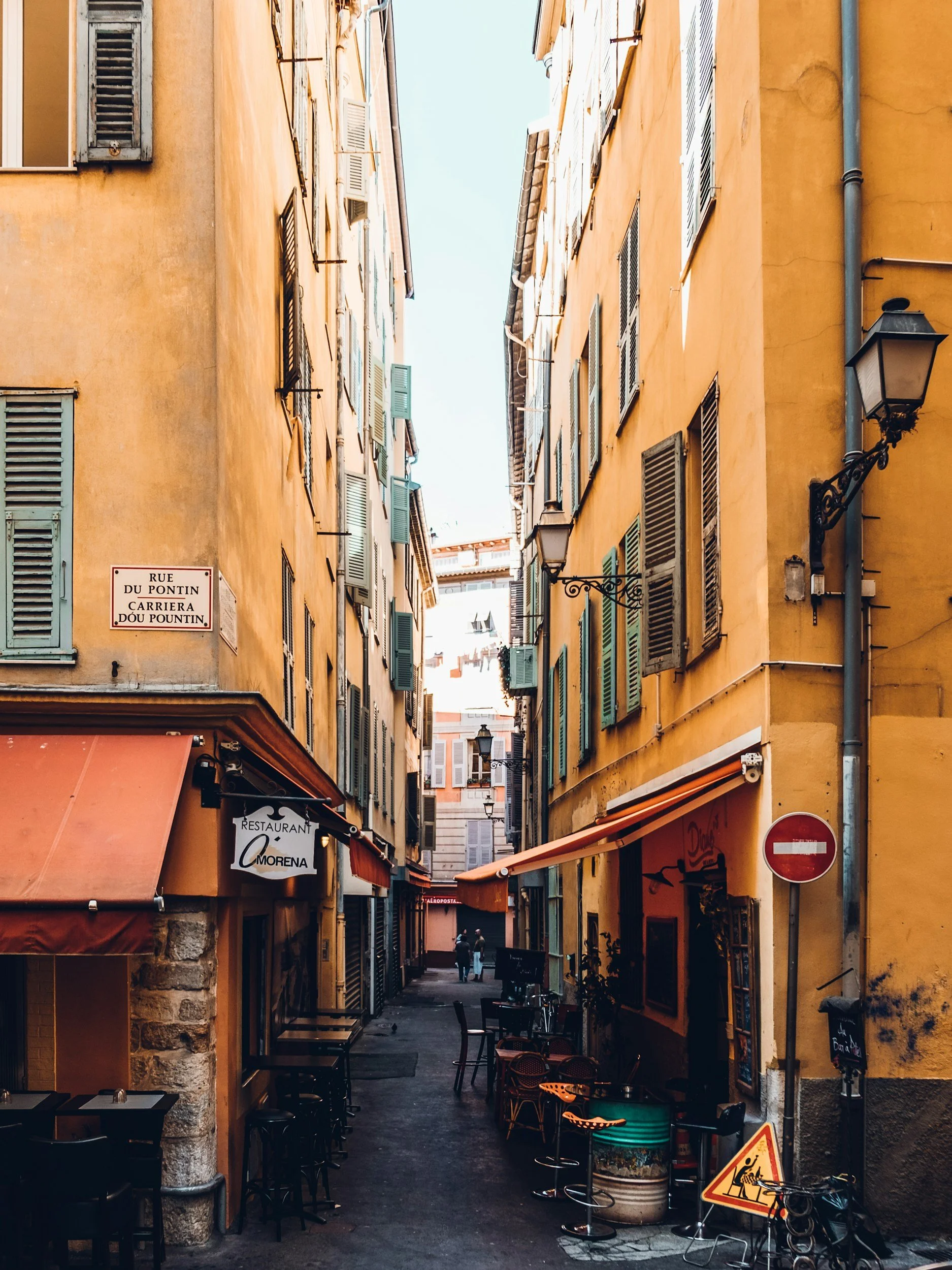
Nice in February still looks like the Riviera in photos, but when you’re actually there it feels different. The Promenade des Anglais is busy, just not with sunbathers. It’s locals walking their dogs, older couples doing their morning loop, runners in light jackets, people sitting on the blue chairs facing the sea for a while before heading off again. The beach is empty apart from a few brave souls near the water. This is the version of Nice where you can enjoy the city for its daily life: markets, cafés, neighbourhood walks, and day trips by train without summer crowds.
If you stay somewhere between the old town and the Carré d’Or, everything is easy on foot. From a small hotel near Place Masséna, you can reach Cours Saleya market in under ten minutes. In the morning the market is busy in a normal way, flower stalls, produce, locals doing their shop. You grab coffee nearby, wander through the narrow streets of Vieux Nice, maybe climb up toward Castle Hill if it’s clear enough for views. None of it requires planning. It’s easy and manageable.
Getting in and out is simple, which is part of why Nice works so well in winter. The tram runs from the airport straight into town, so you don’t need to deal with taxis or car hire unless you really want to. Once you’re settled, you don’t need a car at all. The city is built for walking and public transport.
The temperature is what you have to respect. One day you’ll be comfortable with a light jacket, the next day the wind comes in from the sea and suddenly you’re grateful you packed something warmer. You don’t plan endless walks along the Promenade without a break. You think, “Okay, we’ll walk to the port, then stop somewhere warm for a coffee,” and that’s how the day go.
The location is also very practical. The coastal train line is right there, so you can jump on a train to Villefranche-sur-Mer or Menton in under half an hour, wander for a few hours, and come back before dark. No parking stress, no mountain roads, no repacking your suitcase. You just go and return.
By early evening it’s dark, and the focus shifts to dinner. Nice has plenty of year-round restaurants, especially around the old town and toward Rue Bonaparte, but you still check winter hours so you’re not wandering around at 20:30 looking at closed doors. February here isn’t about beach days or late nights outside. It’s about easy routines, short train rides, and a city that feels lived-in even when it’s cold.
Cassis on a cold weekday morning
Cassis in winter is much smaller than people picture in their heads. In summer the harbour is packed with boats and terraces, but in January or February you can stand on Quai des Moulins and actually hear the water moving against the docks. A few cafés stay open around the port, but you won’t see rows of full tables. It feels tidy and quiet. You’re not going there for atmosphere or shopping. You’re going because you want a coastal walk, a proper lunch, and a couple of hours by the sea without noise.
If you’re based in Marseille, it’s an easy outing. The train from Marseille Saint-Charles to Cassis takes around 25 minutes, but the station sits above the town, so you’ll need a bus or taxi down to the harbour unless you want a steep 30–40 minute walk. In winter, I’d keep it simple. Arrive late morning, head straight toward the port, have coffee somewhere that’s actually open, then decide whether the weather is good enough for a walk. If you’re driving instead, parking is far easier than in summer, and you can be in the centre within minutes.
The best version of Cassis in winter is structured. Walk along the harbour, then head out toward the start of the Calanques trails if the wind is manageable. Even a shorter coastal walk gives you open views and fresh air without committing to a full hike. After that, book lunch somewhere reliable near the port, seafood places tend to stay open year-round because locals still eat there. By mid-afternoon, it’s usually time to head back. If you hang around too long, you hit that in-between period where cafés close, the light drops, and the town feels almost too still.
Access to the Calanques depends entirely on conditions. After rain, paths can be slippery. When the wind picks up, the exposed sections feel colder than expected. Winter walking here is different. You don’t stroll slowly in light clothes. You move with purpose, and you carry something warm for when you stop to look out over the cliffs. If you plan it as a half-day with lunch built in, Cassis is a good option. If you expect a full day of options, it can feel limited once the afternoon quiet sets in.
Sète with wind coming off the water
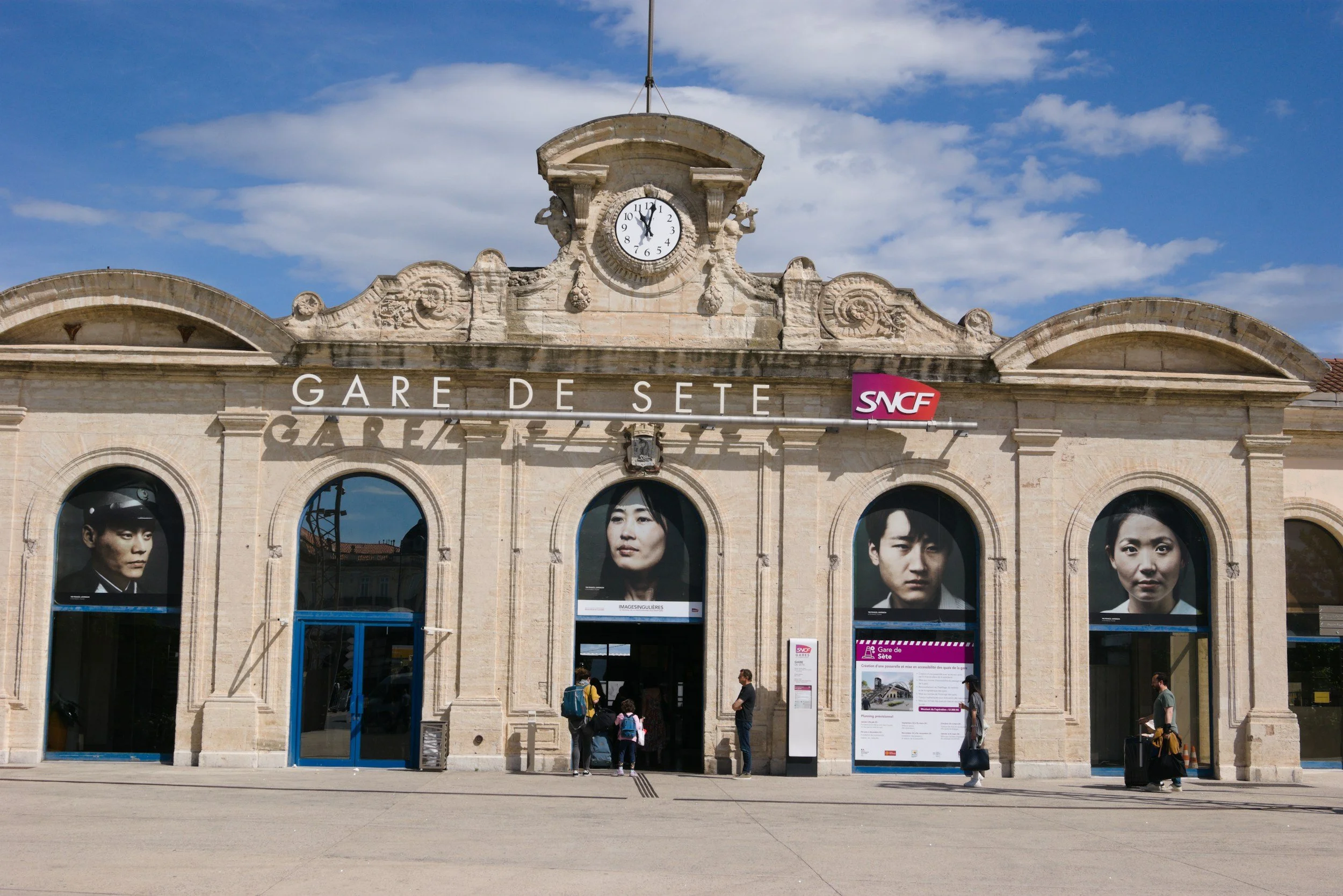
Sète in winter really comes down to the wind and the layout of the town! The canals cut right through the centre, fishing boats are tied up along the quays, and the bigger harbour opens straight out to the sea. On a calm day, it’s easy. You wander from the station, cross a couple of bridges, and within ten minutes you’re by the water. On a windy day, especially near the open harbour or up on Mont Saint-Clair, it feels much colder than the forecast says. That sea air is sharp. If you didn’t bring a proper jacket, you’ll notice it fast.
Les Halles de Sète is what makes winter here work. It opens in the morning and feels busy in a normal way. Locals picking up fish, ordering coffee at the counter, chatting with stall owners. You can stand at one of the seafood counters with oysters and a glass of white wine before lunch and it doesn’t feel like a “tourist experience,” it just feels like Saturday. Even midweek there’s movement. Around the canals, not every café is open, but enough are. You won’t struggle to find somewhere warm inside. Streets like Rue Gambetta has that local feel.
Coming from Montpellier is simple. The train takes around 20 minutes, and once you’re off, it’s an easy 10-minute walk into town. No car needed if it’s just a day trip. You can do a loop without even checking a map: station, canals, Les Halles, harbour, maybe a quick climb up toward Mont Saint-Clair if the weather behaves. The climb is steep, and in winter the wind can be strong up there, but on a clear day the view over the water and the lagoon is worth it.
A winter day here doesn’t need to be complicated. Arrive late morning, head straight to the market while it’s lively, wander the canals, have lunch near the harbour where seafood is still the main thing on the menu. After that, either walk a bit more or step into a museum if you need a break from the cold. By mid-afternoon, you’ve done enough. The light starts dropping and the wind usually picks up again.
Sète is real. You’ll see fishing nets stacked by the docks, people arguing loudly outside the market, boats coming in and out. That’s the point. It feels lived-in even in winter. Just dress properly, ignore the idea that it’s the south so it must be warm, and the town makes sense…
Temperatures, rain, and the mistral (realistic expectations)
On paper, Provence and Occitanie look almost identical in winter. If you check the forecast before you go, you’ll often see similar numbers: 9°C, 12°C, maybe 14°C on a good day. But once you’re actually there, they don’t feel the same.
In inland Provence, places like Uzès, Arles, or villages near the Luberon often get those bright, clear winter days. The sky is sharp blue, the air is dry, and if you’re walking in the sun, 11°C can feel completely fine. The catch is the mistral. When it blows, it’s not subtle. You can be standing in full sun on a square like Place aux Herbes and still feel the wind cutting straight through your coat. That’s the Provence version of winter: clear light, dry air, and wind that makes you rethink long exposed walks.
Occitanie feels slightly different, especially closer to the coast around Sète or Pézenas. The temperature might technically be the same, but there’s often more humidity in the air. A damp 10°C near the canals in Sète can feel colder than a dry 10°C inland in Provence. Grey stretches are also more common in some parts of Occitanie, particularly near the coast, where you might get a few days of flat sky and light rain that comes and goes.
Realistically, most daytime temperatures sit somewhere between 8–15°C from January to early March. It’s rarely freezing during the day in these areas, but it’s not “mild” in the way people imagine southern France to be. The difference comes down to wind and dampness. In Provence, you pack something windproof and you can comfortably plan a longer countryside walk if the forecast is clear. In Occitanie, it often makes more sense to build your day in sections: an outdoor walk, then a stop inside Les Halles or a café, then back out again.
The numbers matter less than the feel. Winter here isn’t extreme, but it’s not beach weather either. If you dress properly and accept that 12°C in shade feels different from 12°C in direct sun, you can plan your days without being caught off guard.
When the mistral makes it feel colder than it is
The mistral is what catches most people off guard. You look at the forecast, see 13°C and sunshine, and think it’ll feel mild. Then you step outside and realise the wind is the real factor. In places like Arles or across the open stretches near the Rhône, the mistral doesn’t just breeze through, it moves fast and steady. Standing in an exposed square or walking along a ridge suddenly feels colder than expected, even in full sun.
When it’s blowing, your plans shift whether you like it or not. Long countryside walks across open fields or vineyard paths aren’t much fun. Sitting outside for coffee isn’t realistic. Even stopping at a scenic viewpoint for more than a few minutes can feel uncomfortable. In villages set high on hills, like some parts of the Luberon, you’ll feel it immediately in the narrow streets that open onto wide views. The wind funnels through and stays there.
It also changes driving slightly. The roads themselves are fine, but if you’re on more open stretches between towns, especially around flat farmland or near the Camargue, crosswinds can make you grip the steering wheel a bit tighter. It’s not dramatic or dangerous, but it does make longer drives feel more tiring than they need to be.
On mistral days, town-based plans work better. Arles is a good example because you can move between cafés, museums, and small streets without being fully exposed. Indoor markets like Les Halles in Avignon or smaller covered markets give you warmth and structure. Longer lunches make more sense than long hikes. If you’re staying in Provence in winter, always check the wind speed in the forecast, not just the temperature. A calm 11°C is completely different from a windy 11°C. Save the open countryside and coastal walks for the still days, and use the windy ones for compact town time.
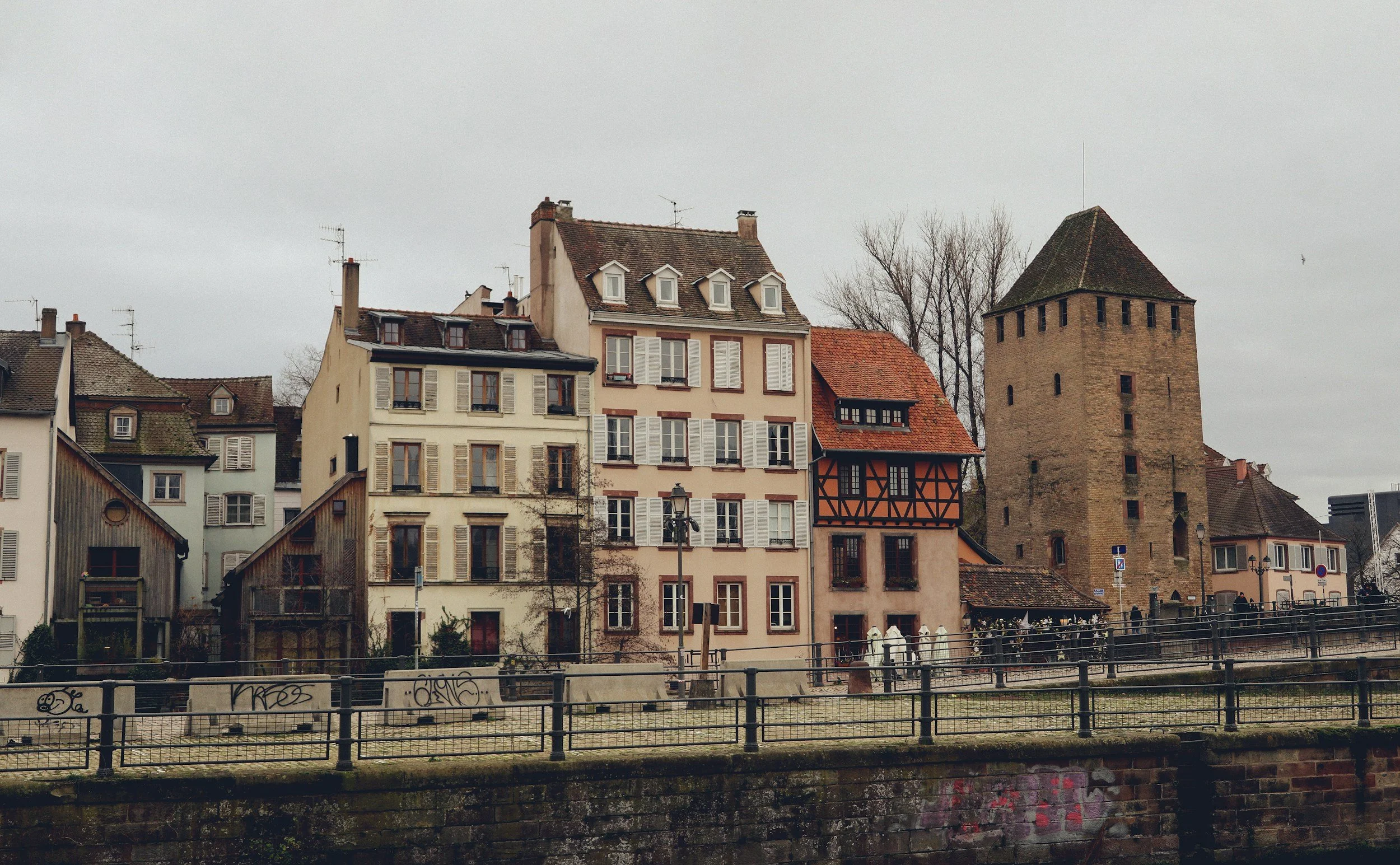
Grey weeks versus crisp blue-sky days
Winter here often comes in waves. You’ll get a few really clear days in a row where the sky is bright blue and everything feels sharper than you expected for January. Then it shifts and you get a stretch of flat grey sky, maybe light rain that starts and stops all day, and afternoons that seem to disappear earlier than you thought. It’s not dramatic weather, but it changes what feels worth doing.
On a clear day, somewhere like Uzès is easy. You can wander the old streets, sit outside in the sun on Place aux Herbes with a jacket on and be totally fine, maybe even drive out toward the Pont du Gard without questioning it. On a grey day, Uzès still works because it’s compact. You move between bakery, coffee, and lunch without needing a big outdoor plan. Cassis is different. If you go mainly for the coastline and you land on a windy, dull day, it can feel a bit flat. You walk the harbour once, maybe try for a coastal path, and then you’re cold and ready to leave.
That’s why it helps to think in two versions of a day before you go. One plan for clear, calm weather, longer walks, maybe the Calanques or a vineyard drive near Gigondas. Another plan for dull or windy days, like Les Halles in Sète, a museum in Arles, or just settling into a town with a long lunch and short walks between warm stops. If you’ve got a car, adjusting is easy. You wake up, check the sky, and go where it makes sense. If you don’t, stay somewhere where you can still build a full day on foot without relying on perfect weather.
What 12°C actually feels like when you’re walking stone streets
12°C looks fine when you check the weather. It sounds almost warm. Then you spend an hour walking through the old streets in Uzès or Arles where the sun barely reaches the ground, and you realise it doesn’t feel warm at all. In winter the light sits low, and streets like the small lanes behind Place aux Herbes or parts of Vieux Nice stay in shade most of the day. Add even a light wind and that “mild” temperature suddenly feels sharp.
It’s not that you’re freezing. It’s that you’re slightly cold the whole time if you’re not dressed right. A jacket that blocks wind makes more difference than a thick jumper. Layers help because you’ll warm up when you cross a sunny square, then cool down again the second you turn into a shaded street. The change is quick. One corner feels comfortable, the next feels chilly.
Winter days work better when you break them up. In summer you might wander for hours and only stop when you’re hungry. In January, 30–40 minutes of walking is usually enough before you’re ready to sit somewhere warm. Maybe that’s a coffee near Place du Forum in Arles or stepping inside Les Halles in Sète just to warm your hands and reset. Then you go back out again.
If you move like that, short walks, warm stops, short walks again, the day feels easy. If you try to do it like it’s July, you’ll feel tired by mid-afternoon without really knowing why. The numbers on the forecast don’t tell the whole story. The stone streets and the shade do!
Markets in winter (which ones still run and which shrink)
Saturday markets don’t stop after Christmas, but they calm down. In a town like Uzès, Place aux Herbes is still full of stalls, just not as many as in summer. There are fewer clothing tables and almost no random tourist bits. What you get instead is proper food shopping. Locals with baskets, buying leeks, carrots, winter greens, wedges of cheese, fresh bread from the bakery van parked at the edge of the square.
It feels smaller and more practical. By 9:30 it’s moving. By 11:30 some stalls are already packing up. If you arrive at midday expecting a big scene, you’ll miss the best part. Winter markets are quick. People come early, buy what they need, and leave.
You’ll still find olives, goat cheese, tapenade, seasonal vegetables, maybe a honey stall or two. But the focus is on food, not browsing. That’s actually what makes it nicer in winter. It feels like a real weekly shop, not an “event”.
The easiest way to enjoy it is to go early, do one full loop of the square, and then grab coffee straight after while it’s still lively. Sit under the arcades facing the square, watch the last few stalls trading, and then let the morning slow down.
If markets are part of why you’re coming, I listed the winter markets in southern France that still run in January and February, so you can plan around the ones that are genuinely active.
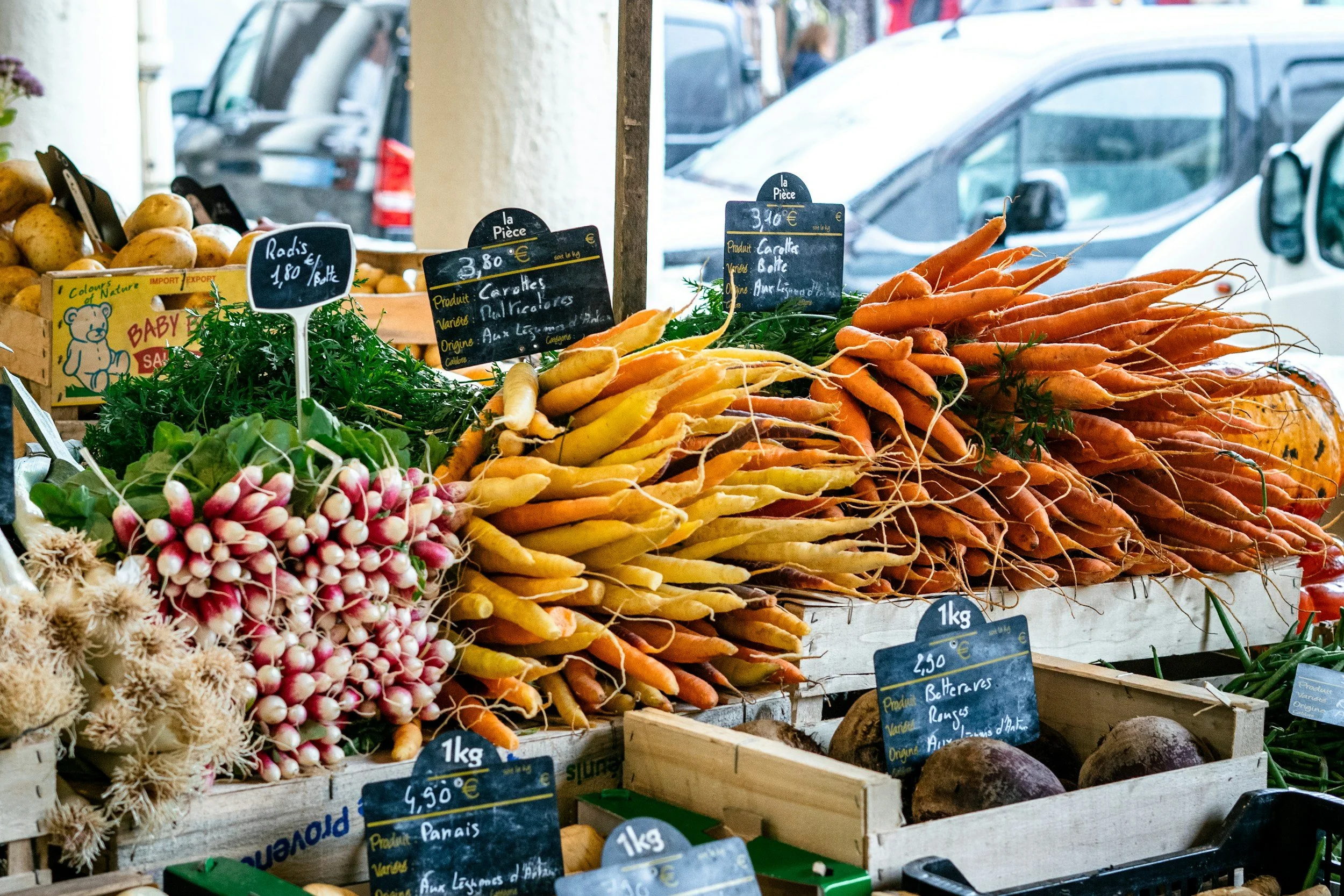
Christmas markets in December vs January emptiness
Christmas markets in southern France can be fun in December, especially in larger cities like Avignon or Montpellier where the main squares fill with wooden stalls and lights for a few weeks. But once you move into January, most of that disappears fast. Decorations come down, temporary stalls are gone, and the town goes back to normal almost overnight. If you arrive in early January expecting festive streets, you might find a quiet square and a couple of leftover lights instead.
It’s always worth checking exact dates if you’re planning around Christmas markets, because they usually wrap up before the New Year or right after. The “holiday atmosphere” doesn’t stretch all winter. It’s quite specific to late November and December. After that, towns don’t feel festive. They feel regular and sometimes a bit bare if you were expecting something else.
If you’re travelling in January or February, it makes more sense to focus on weekly markets or covered food markets like Les Halles in Sète or Avignon. Those don’t depend on decorations or events. They run because locals need them. That kind of market is far more reliable in winter than anything seasonal. It might not have fairy lights, but it will be open, busy in the morning, and part of real daily life.
Truffle season in Provence
Truffle season is one of the few things that really belongs to winter in Provence, but it’s quieter than people expect. You don’t arrive and suddenly see truffles everywhere. It’s more subtle. At a market in Uzès or in villages near Richerenches, you might spot one or two stalls with small dark truffles laid out on a simple table. No big display, no performance. Just someone weighing them carefully and locals leaning in to check quality.
If you want to see them at a market, go early. By late morning, some sellers are already done. It’s not an all-day thing. The serious buying happens first thing, and by noon the focus has usually shifted back to vegetables and cheese.
Eating truffles is actually easier than trying to “find” them. Restaurants in winter often add a few seasonal dishes, especially at lunch. That’s the best time to plan it. Lunch service is more reliable in January and February than dinner, and you can make it part of a day out rather than waiting for a late evening table that might not even be running midweek.
It also helps to keep expectations realistic. Truffle season doesn’t mean every menu is covered in shaved truffle or that every town feels like a festival. It shows up in small ways: a handwritten sign outside a restaurant, a stall at a Saturday market, a special dish listed quietly on a menu. If you’re paying attention, you’ll notice it.
Brocante fairs that still happen in winter
Brocantes in winter are usually smaller and a bit unpredictable, but that’s not a bad thing if you know what you’re walking into. You might drive into a village near Uzès or just outside Avignon on a Sunday morning and find 15 or 20 stalls set up around a square or along a side street. It’s not a huge event. You can walk the whole thing in 40 minutes without stressing.
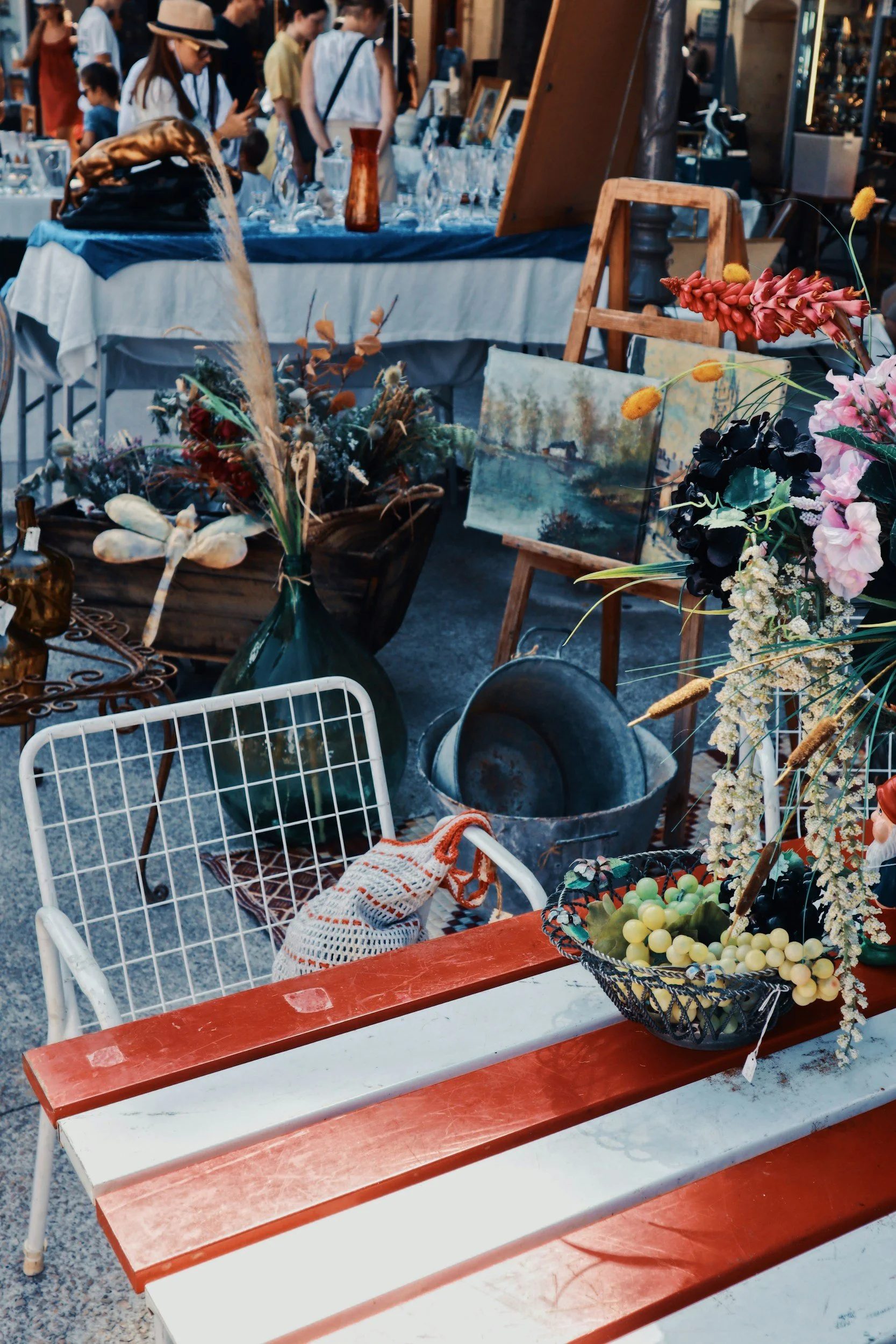
You’ll see the usual mix: old linen folded on a table, chipped café bowls, stacks of mismatched plates, heavy wooden chairs, crates of vintage postcards, maybe a box of old silver cutlery that someone is polishing with a cloth. Sometimes there’s a van with tools laid out neatly. Sometimes it’s just a few dealers who know each other, chatting while they wait for buyers. If it’s cold, they’ll probably be sitting behind their tables with scarves on and coffee in hand.
Weather makes a difference. If it’s windy or damp, fewer people show up. You might arrive expecting rows of stalls and realise it’s just a small cluster. That’s why it’s better to treat it as part of the morning, not the whole reason for the day. Do the brocante first, then head somewhere warm. In Sète, for example, you could wander any small setup near the canals and then go straight to Les Halles for coffee or oysters. In Uzès, you loop the stalls and then sit under the arcades on Place aux Herbes.
Winter is actually nicer for browsing… You can stop properly, pick something up, ask where it came from. Dealers are more relaxed because they’re not overwhelmed. You just need to accept that the bigger regional fairs usually wait until spring. Winter brocantes are quieter and smaller, but if you pair them with a good café stop and keep expectations realistic, they fit nicely into a slow morning.
Cafés, restaurants, and opening hours outside season
One of the first things you notice in winter is how many restaurants simply don’t reopen until March. This is especially true in smaller villages in the Luberon or around quiet coastal towns. You can walk through a beautiful stone village at 19:30, pass three restaurants in a row, and see handwritten signs in the window saying “Réouverture en mars.” It’s normal here. A lot of places make their money between May and September and then take a proper break.
In towns that run year-round, like Arles or Nice, you’ll still have plenty of choice, but even there, some places reduce their days. You might find a restaurant open Thursday to Sunday only. In smaller spots like parts of the Luberon, it’s more extreme. One restaurant open for lunch only. Another open just Friday and Saturday evenings. The rest closed until spring.
If you’re staying somewhere tiny because it looks charming online, check what’s actually open within walking distance. Otherwise, you end up driving 20 or 30 minutes in the dark just to find dinner. A larger town with a few reliable year-round restaurants makes life easier.
It’s very common here to have a proper lunch out and a simpler dinner in. You might have a long lunch in Arles or Uzès, something seasonal and filling, then head back to your rental, stop at a bakery or small supermarket on the way, and keep the evening quiet.
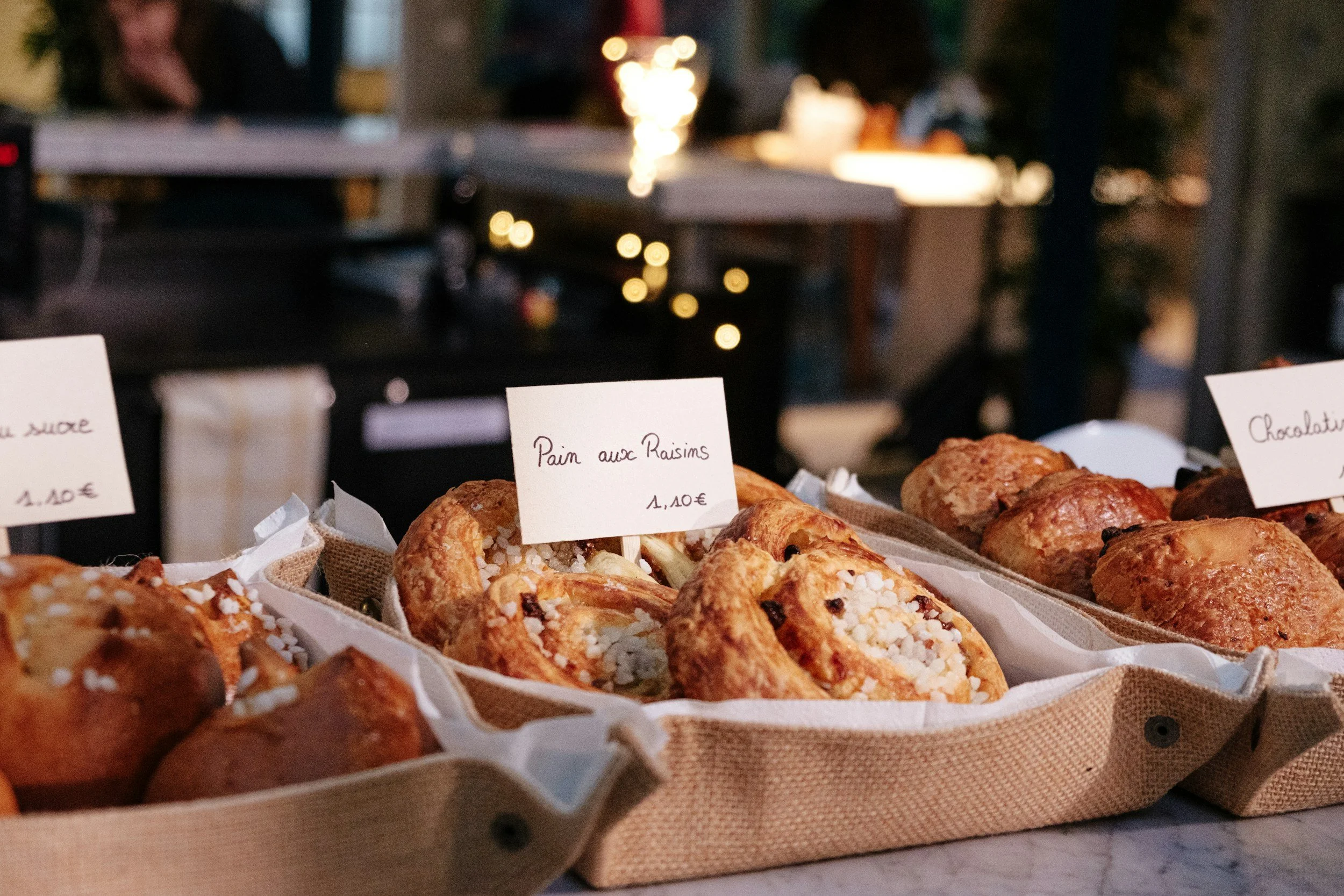
Lunch hours that stretch longer than dinner
In winter, lunch becomes the main event whether you plan it that way or not. A lot of restaurants keep lunch running steadily but scale back dinner. In towns like Uzès or Arles, you’ll see plenty of places open from 12:00 to 14:00, sometimes a little longer, while dinner might only happen a few nights a week. Turn up at 20:30 on a Tuesday in January and you might find doors already closed.
It’s easier to lean into it. Book a proper lunch somewhere you actually want to eat. Take your time. Order the full menu if it looks good. In Sète, that might mean seafood near the harbour while it’s still light outside. In Arles, it could be a warm table near Place du Forum and something seasonal that makes sense for winter. You eat well in the middle of the day and don’t feel rushed.
Evenings then become simple. Maybe you stop by a bakery before it closes and pick up bread, cheese, or something easy from a small grocery shop. Or you book an earlier dinner, closer to 19:00 than 21:00. It feels more natural in winter anyway. The best light is late morning through mid-afternoon, and you don’t want to waste that sitting around waiting for a late dinner that might not even be running. Lunch-first just fits the season better.
Bakeries that remain local all year
Bakeries are the safest bet in winter. Even when half the restaurants are closed, the local boulangerie is almost always open. In a town like Uzès, you’ll see a small line outside before 8:30, even in January. In Arles, the door keeps opening and closing with people popping in for bread before work. It’s just part of daily life.
It ends up shaping your mornings. You wake up, throw on a jacket, and walk five minutes for bread and maybe a croissant. The streets are quiet, sometimes still a bit damp from overnight rain, and that short walk wakes you up properly. You carry everything back in a paper bag and suddenly the day feels sorted. No stress about where to eat first thing.
In winter, having a bakery within easy walking distance really matters. You don’t want to drive somewhere just for breakfast, especially when it’s cold and the light is low. If you’re staying in an old town and you can reach a bakery in under ten minutes, it makes mornings simple. Even on grey days, that routine feels good!
Booking ahead isn’t really necessary
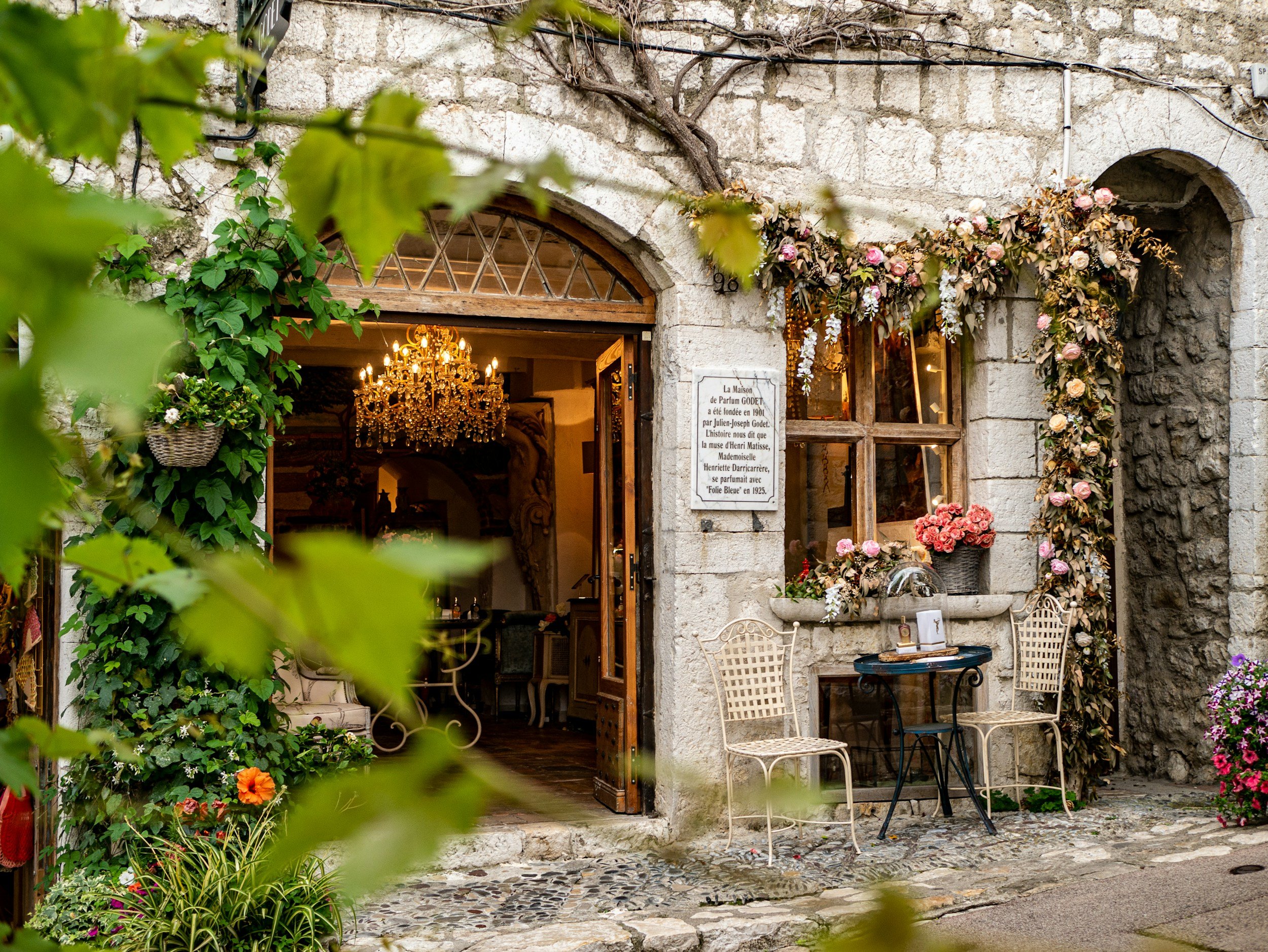
In winter, you’re not booking restaurants because they’re fully booked. You’re booking because half of them are closed. That’s the difference. In Nice, you can still be fairly relaxed about it. In smaller towns like Uzès or parts of the Luberon, midweek especially, there might only be two or three proper dinner options open.
It’s easy to misjudge. You head out around 20:00 thinking you’ll just see what looks good, and then you pass a few dark windows with signs saying they’ll reopen in March. It’s not dramatic, just inconvenient when it’s cold and you’re hungry.
The simplest fix is to pick two or three reliable spots as soon as you arrive. Check their winter opening days, maybe even pop your head in earlier to confirm. Then when evening comes, you’re not wandering around trying to figure it out. You just walk straight there and sit down.
Getting there in winter
Marseille and Montpellier are both useful airports for southern France in winter, but they serve different parts of the region more naturally. Marseille is often better for Provence, the Luberon, Arles, and anything that leans east. Montpellier can be more convenient for Hérault, Pézenas, Sète, and parts of Occitanie.
In low season, flight schedules can be thinner, and prices can vary. The key is to choose the airport that reduces your ground travel. A 1-hour drive is fine in winter. A 2.5-hour drive after a late arrival can feel longer than it should, especially if you then need to check into a cold rental and find food… If you can land closer to your base, your first day feels smoother.
Train connections from Paris when schedules are thinner
If you’re coming by train from Paris, the main lines to the south still run well, but schedules can shift, and some connections are less frequent. Cities like Avignon, Nîmes, Montpellier, and Marseille remain easy to reach, and from there you branch out.
In winter, train travel is actually really nice because you avoid driving long distances, but the last leg to smaller towns can be the tricky part. If your base is a smaller town without a station, you need to plan that last connection: bus, taxi, or car hire from the main station. It’s not complicated, but it’s the part that can make you feel “stuck” if you haven’t thought it through.
Renting a car in winter (availability and prices)
Car rental in winter can be easier in terms of availability and sometimes pricing, but you still want to book with enough buffer, especially if you’re arriving late. The main thing isn’t cost, it’s convenience! A car lets you adjust your day based on weather and opening hours, which is the whole game in winter.
Driving itself is not difficult in most of southern France in winter, but you do get wet roads, occasional fog, and wind. If you’re staying in hillside villages, you also consider narrow roads and parking. None of this is extreme, but it adds up when you’re tired, so it’s worth choosing accommodation with straightforward parking if you’re driving.
Driving conditions on smaller rural roads
Rural roads in southern France are generally fine in winter, but they can be muddy at the edges, and some smaller lanes feel darker and more isolated once the sun drops. If you’re not used to driving in rural Europe, the main adjustment is to avoid planning long drives after dark, especially in unfamiliar areas.
A good winter habit is to do your longer drives in the morning and keep late afternoon for being back near your base. That way you’re not trying to navigate tiny village roads at 18:00 in the dark when you still haven’t sorted dinner.
If you’re seriously considering skipping the car, here’s a practical breakdown of what winter in France looks like without a car, including which towns actually make it easy.
French Accommodation in winter (stone houses, heating)
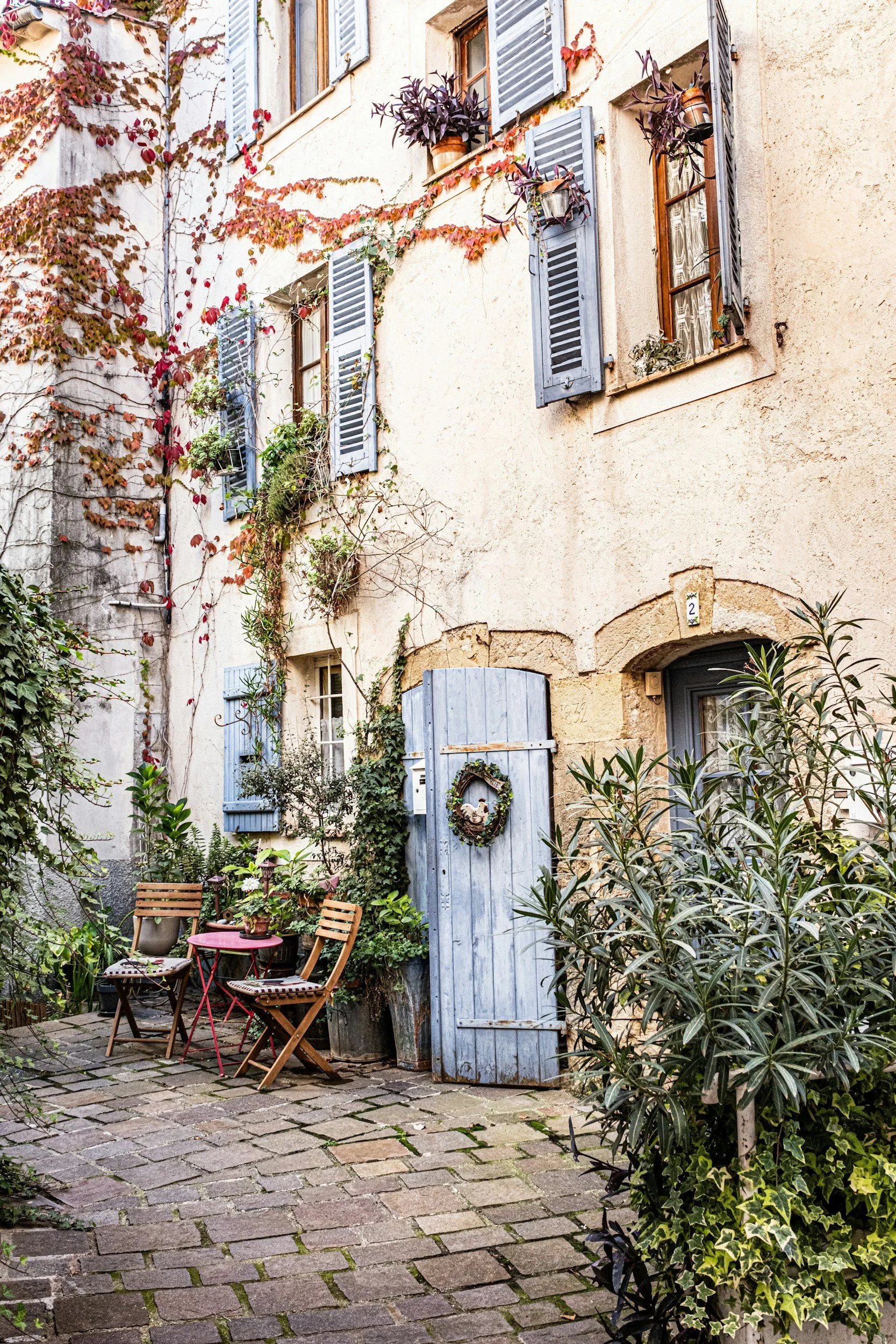
Old town apartments and insulation
Old town apartments look perfect in photos. Thick stone walls, wooden beams, shutters, maybe a small fireplace. In summer, they’re cool and pleasant. In winter, they can be cold in a way that settles into the walls. Stone holds temperature, and if the heating isn’t strong, the place never really warms up properly.
This is where the details matter. Don’t just look at location and decor. Check what kind of heating there is. Is it proper central heating, strong radiators, air conditioning with heat mode? Or just one small electric heater in the living room? In January, that makes a real difference. You don’t want to spend evenings wrapped in a scarf inside your own rental.
In towns like Uzès or Arles, staying inside the old centre is ideal because you can walk everywhere. You can pop out for coffee, come back, head out again for lunch. But that only works if the apartment is comfortable. If it’s cold, you’ll find yourself staying out longer than you planned just to avoid sitting inside. That’s when a “charming” rental starts to feel impractical.
In winter, comfort beats aesthetics. A well-heated apartment in the old town means you can come back mid-afternoon, warm up properly, maybe put the kettle on before dinner.
Farm stays that close until spring
A lot of farm stays and small countryside guesthouses shut down completely once autumn ends. In places around the Luberon or deeper into rural Provence, it’s common to see websites saying “open April to October.” That reduces your options quickly if you’re planning a January or February trip.
It doesn’t mean you can’t stay in the countryside, but you might have to adjust what that looks like. Instead of a fully serviced guesthouse with breakfast and a host on site, you might end up with a simple self-catering rental on a property that’s otherwise quiet for the season. That’s not a bad thing, it just feels different. Fewer extras, less structure, more self-sufficient.
Before you book, check properly. Not just that the listing shows availability, but that the place is fully operating in winter. Some properties technically open but run on minimal service. Others close entirely and only reopen in spring. Winter is when you see which accommodations are built around year-round life and which ones rely on summer visitors.
If your plan is built around countryside peace and long evenings inside, it can still work well. Just make sure the place is warm, properly equipped, and realistically open, so you’re not arriving to something that feels half-shut for the season.
Fireplaces that look romantic but barely heat
Fireplaces look great in photos. A stone wall, a stack of logs, maybe a little basket beside it. In reality, they’re often more decorative than useful. Some rentals include a fireplace but only leave a small pile of wood. Others expect you to buy your own or figure it out yourself. And if the main heating in the place is just a couple of weak electric radiators, that fireplace isn’t going to warm the whole apartment.
It’s easy to assume, “There’s a fireplace, we’ll be cosy.” But in January, cosy comes from proper heating first. Radiators that actually heat the room. Good insulation. Windows that don’t let in cold air. The fireplace is nice if everything else works, but it shouldn’t be the only plan.
If you’re travelling in winter, you’ll spend more evenings inside than you would in summer. You want to sit down comfortably without keeping your coat on. You want to make tea, read, relax, not hover near a small flame hoping the room warms up. So when you’re choosing accommodation, check the heating details carefully and treat the fireplace as a bonus, not the solution.
Weekly rental discounts in January and February
One of the real advantages of winter is the pricing on longer stays. January and February are quiet months for a lot of owners, and that usually shows in weekly rates. You’ll often see discounts for full weeks that make much more sense than hopping from place to place every couple of nights. Sometimes the price for seven nights isn’t dramatically higher than four or five.
Owners also tend to be more flexible. There’s less pressure from incoming bookings, so arrival days can be easier to adjust, and you’re not competing with peak-season demand. That takes a lot of stress out of planning.
It also changes the feel of the trip. In winter, moving every two nights can get tiring fast. You’re packing up in the cold, driving on damp roads, figuring out parking again, checking new restaurant hours, learning where the bakery is, then doing it all over again two days later. It starts to feel like logistics instead of travel.
Staying in one base for five to seven nights makes winter easier. You learn the town properly. You know which café opens early, which restaurant is reliable midweek, what time the market winds down. You can still do day trips, but you come back to the same place each evening.
Coastal walks and countryside trails in colder months
Calanques access outside peak season
In winter, the Calanques are easier in one way and trickier in another. You don’t have summer restrictions, no packed car parks at 8am, no crowds on the main trails. You can just show up. But the weather becomes the main factor. If it’s rained recently, some of the rocky sections are slippery. And if the wind is strong, the exposed stretches near the cliffs feel much colder than you expect.
Daylight is shorter too. In January, if you start walking at 14:00 thinking you’ve got loads of time, you don’t. The light drops quickly. It’s better to decide before you set off how far you’re going and when you’re turning back.
If you’re staying in Marseille, you’ve got options. You can wake up, check the wind, and choose a shorter route from Luminy or near Callelongue instead of committing to a long hike. Sometimes it’s enough to walk part of the way, get those big coastline views, sit for a few minutes, then head back. You still get the cliffs and the sea without pushing it.
In winter, a half-day in the Calanques works better than a full-day hike. Go out in the late morning when it’s warmer, do a solid walk, then head back into Marseille for lunch somewhere warm. That balance makes more sense when the weather can shift quickly.
Vineyard walks near Gigondas and Beaumes-de-Venise
Vineyard areas like Gigondas and Beaumes-de-Venise are actually really good in winter if you’re happy with simple walks and quiet roads. The vines are bare, the light is clearer, and there’s barely any traffic. You can park near the edge of the village and head out along small lanes between the vineyards without seeing many people at all. It’s not dramatic hiking. It’s steady walking with views of the Dentelles de Montmirail in the background.
The villages themselves are small. Gigondas, for example, doesn’t take long to walk through. In winter, you might find one restaurant open for lunch and maybe one wine cave open limited hours. Beaumes-de-Venise is similar. That’s why food needs a bit of planning. If you show up at 14:30 midweek expecting lots of choice, you might struggle. Having a car makes this easier. You can do a morning walk through the vineyards, then drive 20–30 minutes to a larger town like Vaison-la-Romaine for a reliable lunch.
Winter also makes you pay attention to where the sun is. If you’re walking on the sunny side of a hill, it can feel surprisingly pleasant, even in January. But once you move into full shade with wind, the temperature drops fast. The difference is obvious. A route that looks easy on the map can feel uncomfortable if it’s fully exposed to wind or sits in shadow all afternoon.
The key here is timing. Start late morning when the light is better, stick to routes that get some sun, and don’t overextend. A two-hour walk is more than enough in winter. Then head somewhere warm for lunch!
For more countryside bases that don’t shut down after summer, here’s my guide to French countryside towns that feel lived-in year round.
Canal du Midi in winter light
The Canal du Midi in winter is simple and steady. It’s flat, lined with bare plane trees, and much quieter than in summer. You’re not weaving around cyclists or boat rentals. It’s just you, the water, and a long straight path. If you’re in Occitanie and want an easy outdoor stretch without climbing hills, this works well. You can park near a town, walk for an hour, and turn back whenever you feel like it. There’s no pressure to complete anything.
The ground can be damp in winter, especially after rain. Some sections get muddy, and fallen leaves stay wet for days. Proper shoes make a big difference. It’s not technical terrain, but trainers with no grip can get messy quickly.
Café stops are less predictable. In summer, you might pass small waterside spots every so often. In winter, some of those are closed. That’s why it’s better to treat the canal as part of the day, not the whole plan. For example, walk a section near Béziers or close to Castelnaudary in the late morning, then head back into town for lunch somewhere reliable. Or combine a canal walk with time in a place like Narbonne where you know there are open cafés and indoor options.
An hour or two is usually enough in winter. You get the fresh air and the quiet, then you move on. Trying to stretch it into an all-day walk can feel repetitive, especially if the sky is grey.
Camargue without the tour buses
The Camargue in winter feels big and empty in a way that’s very different from summer. No tour buses, no groups on bikes, just long flat roads and open sky. But it’s completely exposed. There’s nothing to block the wind. If it’s blowing, you’ll feel it straight away when you step out of the car. Even if the temperature looks fine, the wind makes it sharp. On grey days the landscape can look almost colourless, just water, reeds, and low light.
On a clear day though, it works. The sky is wide, the light is clean, and you can drive without constantly pulling over for traffic. From Arles, you’re there in about 20 minutes. You don’t need a strict plan. Just head toward Saintes-Maries-de-la-Mer, take the smaller roads, and stop when you feel like it. Maybe pull over near one of the lagoons. Maybe take a short walk along a path if it’s calm enough.
Winter isn’t the time for long, exposed hikes here. You get out, walk a bit, look around, then get back in the car. It’s more about moving through the landscape than staying in one place. And food needs a bit of thought because not every restaurant in the area stays open all year. If you’re unsure, it’s often easier to have lunch back in Arles.
The Camargue in winter works best as a flexible half-day. Drive, stop a few times, maybe spot flamingos if you’re lucky, then head somewhere warm. If the wind picks up or the sky turns flat, you don’t push it. You just turn back.
What a normal winter day looks like in these towns
Winter mornings don’t kick off with much noise. You walk out at 8:30 and it’s just… normal. A couple of locals heading somewhere, maybe someone unlocking their shop, a van dropping off bread. No rush, no crowd building. In smaller towns like Uzès, it can feel almost still until closer to 10:00.
If you try to start “doing things” too early, you’ll notice half the doors are still closed. It’s not a big deal, but it can feel a bit pointless wandering around waiting for somewhere to open. Winter mornings just move slower.
The easiest way to handle it is simple. Go to the bakery first. Pick up bread or something small. Then find coffee somewhere you know is open. After that, the town usually starts to wake up properly. Markets get going, museums open, streets fill a little. Late morning into early afternoon is the best stretch of the day, so it makes sense to build around that instead of forcing an early start.
Afternoon light disappears earlier than expected
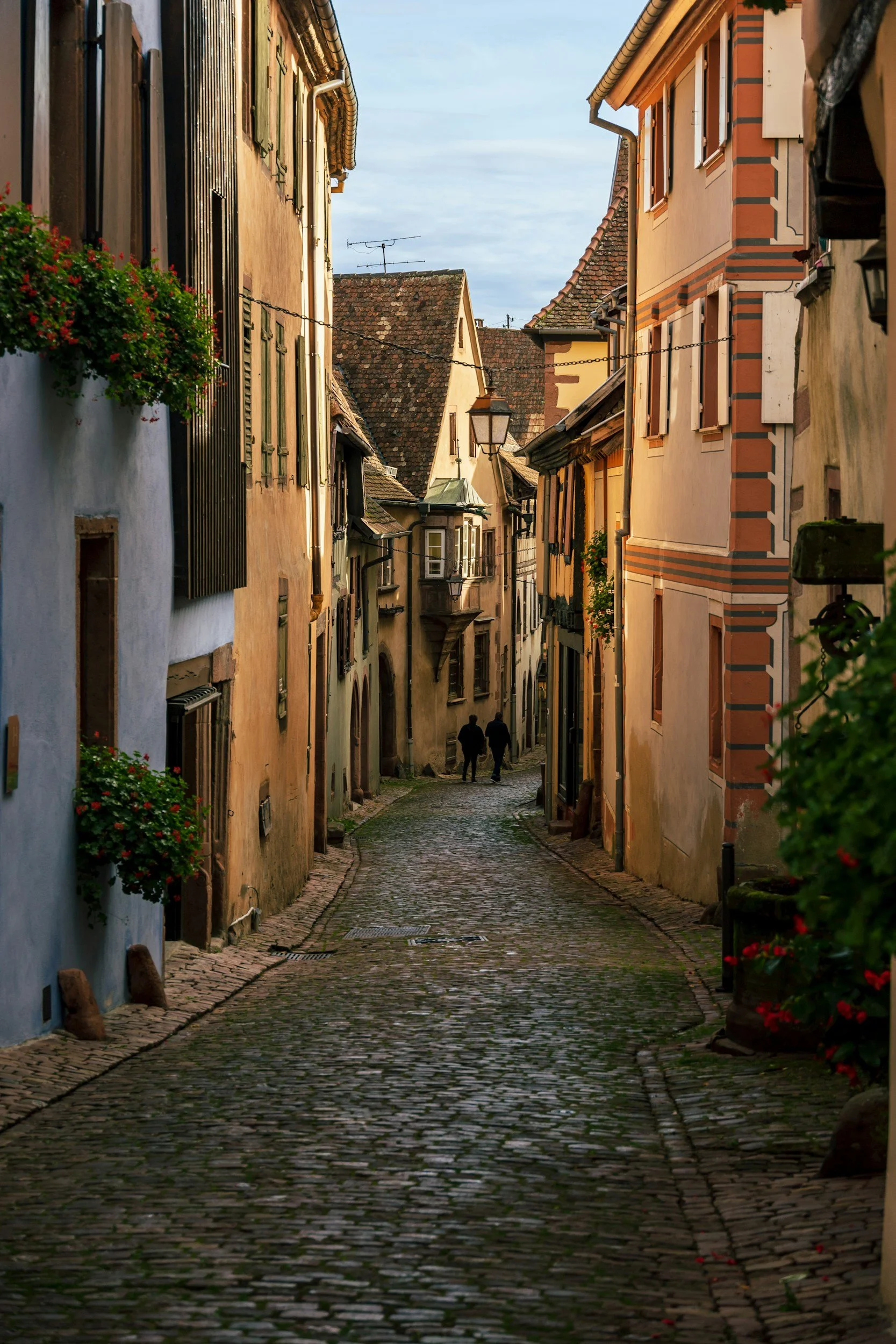
The early sunset catches people out. At 16:30 it still feels like you’ve got time, but by the time you’ve driven somewhere, parked, and stepped out of the car, the light is already fading. In the countryside or in villages where you’re there mainly to walk around and look at the setting, that makes a difference. Once it’s dark, there’s not much left to do outside.
It’s easier to front-load the day. Do the main walk, the viewpoint, the drive through vineyard roads before mid-afternoon. Save the smaller things for later. Grocery stop, quick museum visit, long coffee somewhere warm, or just heading back to your place before it gets properly dark.
If you’re driving, arriving somewhere new after sunset is rarely fun in winter. Small village streets aren’t always well lit, parking signs can be confusing, and everything feels a bit more closed. Getting back to your base before dark just makes the whole day smoother.
Evenings are quiet after 19:30
Winter evenings get quiet quickly. By 19:30 in a smaller town, you’ll notice the streets thinning out. A couple of restaurants are open, they fill once, serve dinner, and then that’s pretty much it. No hopping between bars, no late-night buzz. It just settles.
If you’re used to eating late and stretching the night out, you either shift your timing or stay somewhere bigger like Nice where there’s more going on. In places like Uzès midweek, once you’ve had dinner, the evening is simple.
This is where your accommodation really matters. If your place is warm and comfortable, the quiet feels fine. You head back, open a bottle of wine, read, unwind. If the apartment is cold or there’s nothing nearby, that same quiet can feel annoying. Winter evenings here are low-key. It’s easier when you plan for that instead of expecting summer energy.
Sundays feel very local
Sundays in winter feel very local. A lot of smaller shops close completely, shutters stay down, and the streets are quieter than the rest of the week. You’ll see families walking together, maybe people heading to the bakery before it shuts at midday, but there’s no shopping energy. It feels slower straight away.
Some towns still have a Sunday market, and those mornings can actually be lively for a couple of hours. After that, things calm down again. By mid-afternoon, it can feel almost too quiet if you weren’t expecting it.
If you’re travelling on a Sunday, it helps to keep the plan simple. A walk through town, a museum that you’ve already checked is open, or a short drive somewhere scenic works well. Don’t build the day around shopping or wandering in and out of boutiques, because many won’t be open.
Lunch is usually the safest bet if you want to eat out. Sunday lunch tends to run properly, even in smaller towns. Sunday dinner is more hit and miss, especially in winter, so if you’re counting on a restaurant in the evening, check ahead. Otherwise, treat Sunday as a nice slower day!
What actually costs less in winter (and what doesn’t)
Accommodation is where winter really shows up. Places that would be impossible to book in July suddenly have open calendars. In towns like Uzès or parts of the Luberon, apartments that are snapped up all summer sit available in January. Prices drop, sometimes a little, sometimes a lot. A full week can cost less than a long weekend would in August.
But it’s not only about paying less. It’s about having space to choose. In summer, you often grab whatever is left. In winter, you can actually compare. Is it right in the old town so you can walk everywhere? Does it have proper heating? Is there easy parking nearby?
If it’s cold outside, you want somewhere comfortable to come back to. If it’s dark by early evening, location makes a difference. Staying five minutes from the main square in Uzès or close to the centre in Arles means you don’t have to think twice about stepping out for dinner.
Winter gives you room to be picky!
Menus feel more local in winter
In winter, menus feel less “made for visitors” and more like what the kitchen actually wants to cook. In a place like Arles near Place du Forum, you’re more likely to see a short seasonal menu, maybe a stew, grilled fish, something built around what’s in season, instead of a long laminated card with the same dishes listed in four languages. In Uzès, a small bistro might offer just a few plates and that’s it. It feels more direct. You’re eating somewhere that expects locals at the tables, not tour groups.
Prices don’t suddenly become cheap everywhere, but you notice fewer obvious “tourist combo” menus. In Sète near the harbour, seafood spots still charge properly for good fish, but it feels like standard pricing rather than peak-summer pricing aimed at holiday traffic.
What changes more is your daily spending on cafés. In winter, cafés aren’t just for a quick espresso. They’re your warm reset button! You might grab coffee mid-morning in Uzès under the arcades on Place aux Herbes, then later duck into another café in Arles because the wind picked up and you need to warm up again. On a grey day in Nice, you might stop once in the old town and then again near the Promenade because it’s colder than you thought.
Car hire and train ticket differences
Car hire in winter is just easier. You’re not fighting summer crowds at the rental desk, and there’s usually plenty of availability at airports like Marseille or Montpellier. Sometimes it’s cheaper, sometimes it’s just the same but with less hassle. The main difference is you’re not stressing about whether there will be anything left when you land.
Train tickets are similar. If you’re coming down from Paris to Avignon, Nîmes or Montpellier, prices are often more reasonable outside school holidays. The regional trains along the coast, like between Nice and Menton, run as normal but feel calmer. You can actually find a seat without squeezing in.
And if you’re planning to move between regions by train, this guide on which Eurail pass actually makes sense for slow regional travel will save you from overpaying.
The biggest win isn’t always money, it’s ease. Fewer people, less pressure, fewer last-minute compromises.
If you’re staying inland, around Uzès, the Luberon or vineyard areas near Gigondas, a car just makes life simpler. You don’t want to depend on winter bus timetables. You want to wake up, check the weather, and go. If you’re on the coast in Nice or Marseille, trains and trams usually do the job. Parking in winter is easier than summer, but skipping it altogether is even better.
Winter travel works best when you keep transport simple. Inland means car. Coast means train.
Events that still happen in winter
Truffle festivals are one of the few things that actually feel like “this is winter” in Provence. They’re usually in the morning, often on a Saturday or Sunday, and they’re pretty straightforward. A handful of stalls, truffles laid out on small trays, locals talking seriously about quality and price. Sometimes there’s a cooking demo or a tasting, but it’s not a huge show. It’s focused.
Some are bigger, some are really small. In certain towns it feels like a proper market morning. In others, it’s just a cluster of stalls in a square and that’s it. Either way, go early. By late morning, it’s already winding down.
If you like building trips around seasonal food, you’ll also love this deep dive into visiting traditional French cheese caves like Comté and Beaufort producers - it’s actually one of the most underrated winter experiences.
Carnival in Nice in February
Nice really shifts during carnival in February. Normally in winter you can walk across Place Masséna without thinking about it. During carnival, that same square fills with grandstands, lighting rigs, security barriers, and crowds gathering well before the parades start. Parts of the Promenade des Anglais get sectioned off. Traffic is rerouted. You can’t just cross the road wherever you like.
The main parades usually happen in the late afternoon or evening, which changes how you plan your day. If you’re staying in the centre, especially anywhere near Place Masséna, Rue Jean Médecin, or the old town, you’ll feel it. Streets close hours before the event begins. Police block certain crossings. You might have to loop around to reach your hotel or dinner reservation. It’s not chaotic, but it’s organised and controlled.
Accommodation fills up faster during carnival, particularly central hotels and apartments within walking distance of the parade routes. Prices can rise slightly compared to a normal February week. If you’re set on being in the middle of it, book early. If you’d rather avoid the disruption, stay a little further out, maybe near the port or in the Libération area, where it feels more like regular Nice.
Restaurants near the parade routes can also be busier on event nights, so it’s worth reserving a table earlier in the evening. Some people eat before the parade, others after, which creates small peaks.
Once carnival ends, everything comes down quickly. The barriers disappear, the square opens up again, and Nice returns to its usual self.
Olive harvest season
Olive harvest season runs quietly through winter, especially in parts of Provence where olive trees are everywhere once you start noticing them. Drive between Uzès and the smaller villages toward the Gard countryside and you’ll see rows of low, silver-green trees with nets spread underneath them. In some places, the nets are still out in December and January, and tractors are parked at the edge of the fields. It’s not a show for visitors. It’s just part of the agricultural calendar.
At markets, you’ll spot the new oil if you look for it. In Uzès on a Saturday morning, there’s often a stall with bottles labelled with the current harvest year. The seller will happily let you taste a small spoonful. The flavour can be sharper and greener than the older oils, especially early in the season. In towns closer to known olive areas, like around Nyons further east, shops display fresh tins right by the counter with the harvest date printed clearly on the label.
In restaurants, you might notice a bottle of new oil placed directly on the table instead of the usual generic one. Some menus mention the name of the local producer. It’s subtle, but it’s there. You’ll also see olive tapenade and local olives featured more prominently in winter menus because they’re part of what’s being produced at that time.
If you want to visit a small olive mill, check the hours carefully. In winter, some only open a few mornings a week, and often not in the late afternoon. They’re working around harvest and pressing schedules. It’s not like summer wine tourism where everything is set up for visitors. You might need to call ahead or at least confirm online before driving out.
Olive oil makes a practical winter purchase. It travels well, and it feels connected to what’s actually happening in the region. Just don’t assume every producer is open daily. In smaller villages, if one place is closed, there might not be another one around the corner.
Small village fêtes that aren’t advertised much
Some villages still do small things in winter, but you won’t always hear about them in advance. It might be a one-day food market in a square that’s usually empty, a wine tasting at the local cave cooperative, or a truffle-themed morning in a village hall. You find out because there’s a paper poster stuck to a wall or a chalkboard outside a café, not because it’s been advertised everywhere.
You might walk into a small town near Uzès and see a few extra tables set up selling honey, cheese, or local wine. Maybe someone’s grilling chestnuts in the corner of the square. It’s not polished. It’s not designed for visitors. It’s just something happening that day.
The timing is usually short. Most of it happens in the morning. By early afternoon, stalls are packing up and the town goes back to being quiet. If you’re there at the right moment, it adds something to the day. If you arrive later, you’d never know it happened.
Who enjoys Southern France in winter?
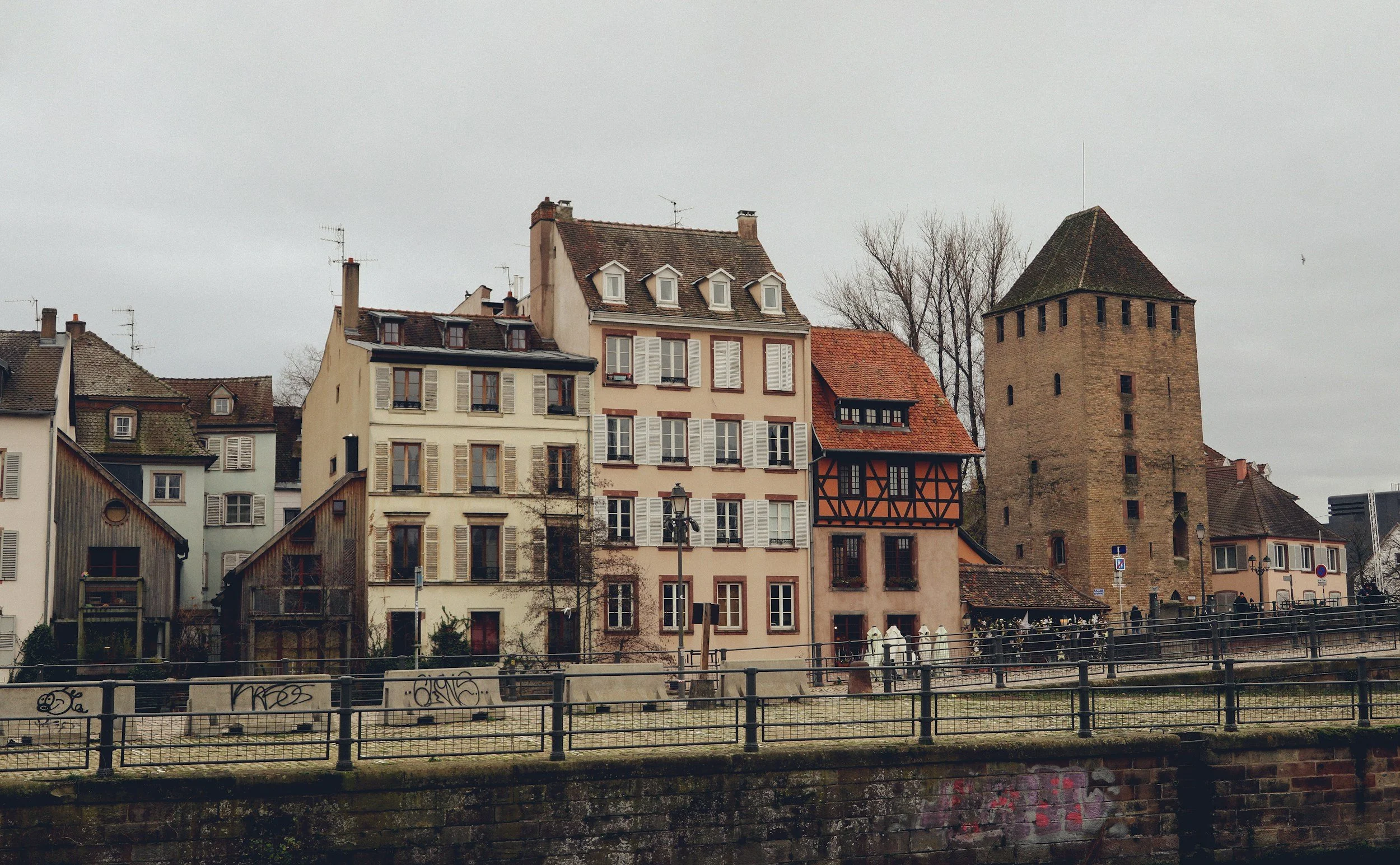
Remote workers who don’t need beach weather
Southern France in winter can actually be great if you’re working remotely and want a normal weekday rhythm instead of holiday chaos. You’re not paying July prices, and towns feel manageable Monday to Friday. The main thing is picking somewhere that actually functions in winter.
You need decent internet, obviously, but you also need everyday basics. At least a couple of cafés open during the week. A bakery nearby. A small supermarket you can walk to. In Nice, this is easy. Around Libération, the port, or near Place Masséna, cafés are open from morning into the afternoon. You can work a few hours, step out for lunch, take a walk along the Promenade, then head back. No car needed.
Uzès can work too, but it’s quieter midweek. A few cafés stay open around Place aux Herbes, but you won’t have loads of options. If you have a car, it’s easier because you can change location if you need a break from the same view.
A winter trip that feels calm, not resort-like
Winter suits couples who like things simple. No beach club music, no crowded terraces, no pressure to “make the most of it.” In towns like Uzès or Arles, you’re just part of normal daily life. You go for coffee, you book a good lunch, you walk quiet streets without weaving through crowds. It feels low-key.
Accommodation is easier too. You’re not fighting for the last romantic-looking apartment. You can actually choose somewhere central, warm, and practical. Maybe a small place near Place aux Herbes so you can walk everywhere. Or something in Arles where dinner is five minutes away. It feels more personal because you’ve had time to pick properly.
The only thing to think about is evenings. In smaller towns, once dinner is over, that’s it. Streets go quiet. If you picture your trip as late drinks and busy bars, choose somewhere bigger like Nice. But if you’re happy with a long lunch, maybe a drive through vineyard roads near Gigondas, and then an early night back in a warm apartment, winter works really well.
Solo travelers comfortable with quiet evenings
Winter works well for solo trips if you’re fine with things being low-key at night. The days fall into a simple rhythm. You head out for bread in the morning, maybe from a small bakery near Place aux Herbes in Uzès or somewhere tucked into the old streets in Arles. Grab coffee while the town is still quiet. Then pick one main thing for the day, not five.
That could be a long walk through the vineyards near Gigondas, a slow wander through Arles’ Roman streets, a train ride from Nice to Menton for a few hours, or a loop around the canals in Sète. By mid-afternoon, you’ve usually done enough. The light starts dropping and it makes sense to head back.
Evenings are simple. In Uzès or a small Luberon village, once dinner is over, the streets are empty. So you choose somewhere you actually want to eat, go early, and then go home. In Nice, it’s different. The Promenade still has people walking, the port area has restaurants open, and you don’t feel quite as alone after dark. That kind of place makes a difference if you prefer a bit more movement around you.
Where you stay matters more than usual when you’re alone. Even if you have a car, it’s nicer to be able to walk to dinner instead of driving dark country roads. In Arles, staying inside the old town walls keeps everything close. In Uzès, five minutes from the main square means you’re never far from a café.
Things that can feel surprising if you’ve only visited in summer
The shutters can mess with your head a bit in winter. You turn into a narrow street in Uzès or somewhere in the Luberon and almost every window is closed. It can look like you’ve arrived on the wrong week, like everyone left.
But a lot of people close shutters every evening, especially when it’s cold. It keeps the heat in. And yes, some second homes are empty, but that’s normal for January. It doesn’t mean the town isn’t alive.
You just have to find where things are actually happening. One street might feel completely dead at 18:00. Walk two minutes toward the main square and there’s a restaurant open, lights on, a few tables filled. In Arles, some lanes go quiet early, but around the centre there’s still movement.
Limited public transport in rural areas
Public transport still runs in winter, but it’s less frequent in smaller areas. Miss a bus in July and another one might come soon enough. Miss one in January from a rural stop and you could be waiting a while. That’s where it starts to matter.
If you’re staying in a small village without a train station, you really need to check the timetable properly. Some buses only run a few times a day, and not always at convenient hours. It’s doable, but your day ends up shaped around those departure times.
If you want to stay car-free, it’s much easier to base yourself somewhere with a proper station. Arles works. Nice works. Montpellier and Avignon too. You can arrive by train, walk to your accommodation, and use regional trains for day trips. Along the coast, especially from Nice, the train line is simple and regular.
The moment you want to jump between small villages, vineyard roads near Gigondas, or countryside spots outside Uzès on your own schedule, a car makes it easier. In winter especially, you want the option to change plans if the weather shifts or the light drops. Timetables don’t always give you that.
Short daylight hours
Daylight in winter can really throw you. You think “south of France” and imagine long, golden evenings. Then it’s 16:45 and the light is already slipping. You still have plenty of time during the day, but you can’t waste the morning.
If you only leave your apartment at 11:30 because breakfast ran long, you’ll feel the pressure later. That “we’ll just stop at one more village” idea at 16:30 usually turns into arriving in fading light, squinting at road signs, and trying to park in streets that suddenly feel darker and smaller than they did on Google Maps.
It forces you to plan differently. Instead of mapping out three stops across half the region, you pick one proper outing. Maybe a late morning walk in the Calanques, then back to Marseille for lunch. Or a vineyard drive near Gigondas, then straight back “home” before sunset. The rest stays local. Coffee near your square. A short wander. Grocery stop. Done.
The silence in coastal towns
Some seaside towns can feel almost too quiet in winter. You walk along the harbour and half the terraces are stacked up, chairs turned over, a few locals out walking dogs and that’s about it. If you’re picturing summer energy by the water, it can feel like you showed up on the wrong date.
A lot of smaller coastal places are built around holiday months. Once that wave passes, they shrink back. You might do one loop of the port, grab lunch, and realise there isn’t much else happening after that. By late afternoon it can feel very still.
If you want coast but don’t want it to feel empty, choose somewhere that actually functions year-round. Nice works because it’s a full city. People commute, shop, meet friends. Marseille is the same, especially around the Vieux-Port. Sète works too because it’s a fishing town first, beach town second. Les Halles is open, boats are moving, locals are out.
Smaller seaside towns are better as daytime stops in winter. Go for a walk, have lunch by the water, then head back to your place. Staying overnight only really makes sense if you genuinely want that deep quiet once the light drops.
What five days long weekend trip can look like in Southern France
For five winter days, two nights inland is plenty if you keep it tight. Don’t try to “see Provence.” Just pick one base and let it be that. Uzès is an easy choice because the old town is compact and you can walk everywhere. You park once and forget about the car until you need it. Avignon or Nîmes also work if you’re arriving by train and want things right outside your door.
Day one is a town day. No driving across the region. Drop your bags, walk straight out. Do a full loop of Uzès, up toward the Duchy, around Place aux Herbes, through the smaller side streets where you’ll actually see who lives there. Find the bakery you’ll use in the morning. Check which restaurants have lights on and menus outside. Have a long lunch somewhere reliable and call it enough.
Day two is your “go out” day, but keep it realistic. If it’s clear and calm, you could drive 25 minutes to the Pont du Gard, park close, walk along the river for an hour, then head back. Or take the road toward Gigondas, park at the edge of the vineyards, and do a steady 90-minute walk with views of the Dentelles. If it’s windy, skip exposed countryside and drive to somewhere more sheltered like a larger town for a market morning instead.
You’re working with light. Late morning to mid-afternoon is the sweet spot. If you leave for a drive at 15:30 thinking you’ll squeeze in one more village, you’ll probably arrive as the light fades and everything feels flat. It’s better to be back near your base by then. Stop at a small supermarket on the way back, maybe grab cheese or something simple for later.
Dinner isn’t a guessing game in winter. When you arrive on day one, look at what’s actually open. In Uzès midweek, that might mean two or three solid options. Pick one for each night so you’re not wandering around cold streets at 20:00 hoping something’s open.
2 nights near the coast
For the coastal part, choose somewhere that actually feels alive in winter. Nice is the easy option. It runs all year. Trams are working, markets are open, cafés are busy enough without being packed. You don’t need a car at all. Marseille also works if you want something bigger and a bit more raw, especially if you like the idea of having the Calanques nearby.
In Nice, you can stay near the old town or closer to the port and just walk. Morning might be coffee near Cours Saleya, then a walk up to Castle Hill while it’s still bright. Lunch somewhere around the port or tucked into the old streets. After that, maybe a stroll along the Promenade or a quick museum if the wind kicks up. By late afternoon, you’re already thinking about dinner.
If the weather is good, it’s easy to hop on the train. In 20–30 minutes you’re in Villefranche-sur-Mer or Menton. Walk the waterfront, eat, come back before it gets dark. No car, no stress. If the weather turns grey or windy, you just stay in Nice and adjust. There’s enough there that you’re not stuck staring at the sea wishing it was summer.
Marseille works the same way but feels different. You start around the Vieux-Port, wander through Le Panier, and then decide if it’s calm enough for a short Calanques walk. On a good day, you can get out for a couple of hours and still be back in the city for a late lunch. On a windy day, you skip the cliffs and stay in town.
1 flexible day depending on weather
This is the day that saves the whole trip.
In winter, you don’t plan five perfect days in advance and stick to them no matter what. You leave one day open on purpose. You wake up, pull back the curtain, and decide from there.
If the sky is clear and the wind is calm, that’s your big outside day. Maybe that’s when you head into the Calanques from Marseille and actually commit to a proper walk instead of a quick look. Or you drive through the vineyard roads near Gigondas, park wherever it looks good, and wander for an hour with real sunlight on your face. That kind of day feels amazing in winter, but only if the weather is on your side. So you wait for it.
If you wake up and it’s windy, grey, or lightly raining, you don’t try to force it. That’s when you stay in town. Do the Uzès market even if the sky is flat. Move between cafés in Arles. Book a long lunch and let it stretch. Walk shorter loops between warm stops. Winter town days can be really good when you stop expecting them to look like summer.
This flexible day is also smart if you’re changing bases. Instead of treating it like a boring relocation day, you turn it into something. Moving from inland Provence to the coast? Stop halfway for lunch. Maybe a short walk if the light is decent. Nothing ambitious. Just enough to break up the drive so you’re not arriving in a new place right as it gets dark.
FAQs: Southern France in Winter
Is southern France worth visiting in winter?
Yes, if you go in expecting normal life rather than peak-season energy. Towns like Nice, Arles, Uzès, Marseille and Sète still function properly in January and February. Restaurants are open, markets run, bakeries are busy. What you lose is beach weather and late-night buzz. What you gain is space, lower accommodation prices, and streets that feel local instead of crowded.
If you’re hoping for sunbathing and long evenings outdoors, winter isn’t it. If you’re happy with clear walks, good lunches, and quiet evenings, it works well.
How cold is southern France in winter?
Most daytime temperatures sit between 8–15°C from January to early March. It rarely feels extreme, but it can feel colder than the numbers suggest because of wind and shade.
In Provence, the mistral can make a sunny 12°C feel sharp. Near the coast in places like Sète or Marseille, wind off the water makes it feel colder. Layers and a windproof jacket matter more than heavy coats.
Is southern France rainy in winter?
It can be. Winter often comes in blocks. You might get several bright, clear days in a row, then a few flat grey ones with light rain. It’s not constant heavy rain, but it’s less predictable than summer.
That’s why flexible planning helps. Keep one day open for outdoor plans and use dull days for town-based routines, markets, museums, and long lunches.
Are restaurants open in southern France in winter?
Yes, but fewer than in summer, especially in smaller villages.
In cities like Nice and Marseille, you’ll have plenty of choice. In towns like Uzès or small Luberon villages, midweek dinner options can shrink to just a handful. Lunch is usually more reliable than dinner in winter.
It’s smart to check opening days when you arrive and make a loose plan rather than assuming you’ll “figure it out later.”
Do markets still happen in winter in Provence and Occitanie?
Yes. Weekly markets like the Saturday market in Uzès still run after Christmas, though they can be smaller. Covered markets like Les Halles in Sète or Avignon are especially reliable year-round.
What changes is scale. Fewer stalls, more locals doing their weekly shop. Morning is the best time to go, especially in winter when things wind down earlier.
Is it better to rent a car in southern France in winter?
It depends on where you stay.
If you base yourself in Nice, Marseille, Montpellier or Avignon, you can manage without a car and use trains for day trips. If you’re staying inland around Uzès, the Luberon, or vineyard areas near Gigondas, a car makes life much easier.
Winter bus timetables are thinner, and flexibility matters more because you’re adjusting to daylight and weather.
What are the best places in southern France in winter?
Places that function year-round work best.
Nice is reliable for coast. Marseille works if you want city energy plus access to the Calanques. Arles holds up well in winter with museums and good food. Uzès works for a compact inland base with access to countryside drives.
Smaller seaside villages can be enjoyable for a few hours, but they’re often too quiet to use as a main base unless you specifically want deep quiet.
Can you hike the Calanques in winter?
Yes, and it’s often easier than in summer because there are no peak-season restrictions or crowds. But conditions matter.
After rain, paths can be slippery. Wind can make exposed sections uncomfortable. Daylight is shorter, so start earlier and set a clear turnaround time. A half-day walk usually works better than an all-day plan in winter.
Are Christmas markets still open in January in southern France?
Usually no. Most Christmas markets run in late November and December and close around New Year. By mid-January, towns return to their normal rhythm.
If you’re travelling in January or February, plan around weekly markets and food markets rather than festive events.
Is southern France good for a winter couples trip?
Yes, if you’re looking for calm rather than nightlife. Winter works well for long lunches, countryside drives, coastal walks, and early evenings in a comfortable place.
If you picture late nights and busy bars, choose a larger base like Nice or Marseille. Smaller towns get quiet quickly after dinner.
Is southern France safe for solo travel in winter?
Yes. Towns feel quieter but not unsafe. The main thing is choosing the right base.
Stay somewhere central so you can walk to dinner and cafés instead of driving at night on rural roads. Make sure your accommodation is warm and comfortable, since you’ll spend more time inside than in summer.
How many days do you need for southern France in winter?
Five days works well if you split it between one inland base and one coastal base, with one flexible day for weather.
Trying to move every night in winter usually feels tiring. Fewer bases and slower days make more sense when daylight is shorter and opening hours vary.