
Not every market disappears after Christmas. These don't.
January and February are a strange time to travel in Southern France. On paper, it sounds ideal. Fewer people, lower prices, quieter towns. In reality, it often goes one of two ways. Either it feels refreshingly normal, or it feels like you arrived somewhere that has pressed pause for the season.
If you’ve ever planned a winter trip and ended up walking through a half-empty town, with cafés closed and a “market” that turns out to be three stalls and a flower truck, you already know the problem. Winter travel works only in certain places, and markets are usually the clearest sign of whether a town is still “functioning” or not.
When markets stay open in January and February, it’s rarely for visitors. It’s because locals still rely on them. People come to buy vegetables for the week, pick up cheese, order meat, and head home before lunchtime. There’s no browsing loop, no need to make it look bigger than it is. That’s what makes winter markets worth travelling for, and also why so many of them aren’t.
This guide focuses on towns where the market still plays a real role in everyday life during winter. Some of them are small, some are well known, but all of them make sense in January and February. Just as importantly, plenty of places don’t, and knowing the difference saves a lot of frustration.
Winter markets are also very different from summer ones. They’re smaller, they start early, and they don’t hang around all afternoon. Some vendors don’t come back until spring, and timing matters more than it does in July. Turn up too late and you’ll see stalls packing up. Go at the right time and it’s straightforward. You shop, you sit down somewhere nearby for coffee or lunch, and the rest of the day doesn’t need to be filled with plans.
If you tend to plan trips around everyday life rather than highlights and must-see lists, this way of travelling might already feel familiar.
Why winter markets in the south feel different from summer ones
If you’ve ever been to a market in Southern France in summer, you probably know the drill. It spreads across a few streets, sometimes more than you expected, and you end up doing a couple of laps trying to remember where the actual food stalls were. Somewhere between the clothes, soaps, and random home stuff, you’re just hoping you didn’t miss the good cheese stand.
In January and February, that mostly disappears. Markets shrink back to what people actually come for. Often it’s one square, maybe a single street. You can see the whole thing at once, which already makes it feel easier to deal with.
People behave differently too. In winter, no one’s drifting around killing time. Locals show up with proper bags or shopping trolleys, go straight to the stalls they use every week, have a quick exchange, and move on. You don’t see many people wandering around empty-handed, and conversations tend to be short and practical.
You notice the same thing in other quieter parts of France, where some villages stay functional all year and others more or less shut down once the season changes, like the towns in Auvergne and Limousin.
What’s on the tables makes more sense as well. Winter markets are built around what’s available and useful at that time of year. Crates of oranges and lemons, piles of potatoes and onions, leeks, cabbages, winter greens. Cheese stalls lean more toward aged cheeses that keep well. There are jars everywhere: honey, tapenades, preserves, terrines. And in the right towns, truffles show up quietly, sometimes on a small table with nothing more than a handwritten sign.
All of this changes how long you want to stay. Winter markets usually aren’t something you stretch across the whole morning. You go earlier, shop fairly quickly, then sit down somewhere nearby for coffee or lunch. If you try to hang around too long, it starts to feel a bit thin. Paired with a café stop or a short walk, though, it fits easily into the day without needing much effort.
Where winter markets actually work in Southern France
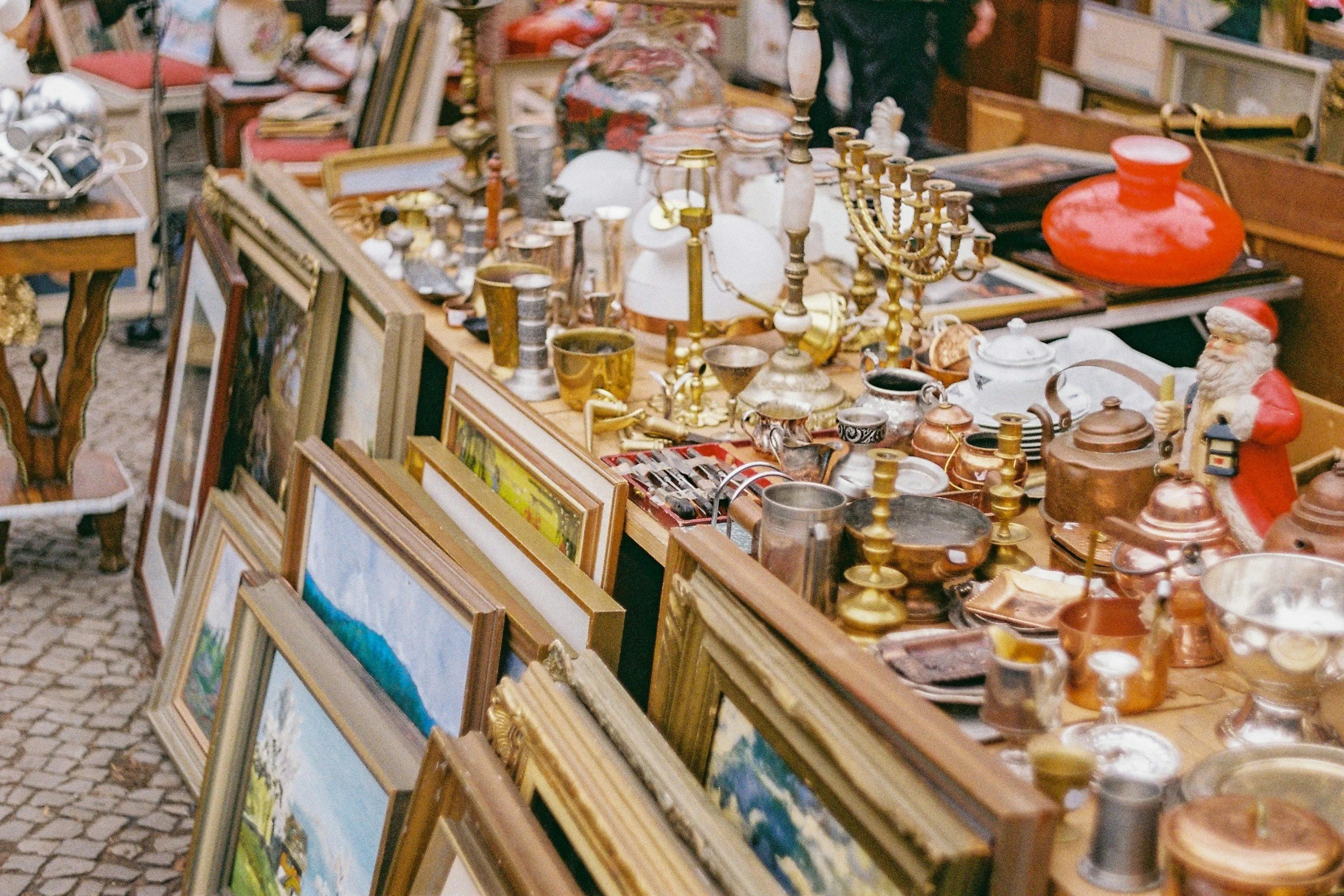
Southern France looks compact on a map, but winter markets don’t work evenly across it at all. Some towns carry on more or less as normal in January and February. Others feel like they’ve shut the door for the season, even if the weather is fine.
The places where markets still make sense in winter usually have a practical reason to exist year-round. They’re either surrounded by farmland that doesn’t stop just because it’s January, or they act as a kind of hub for smaller villages nearby. Parts of Provence, Drôme Provençale, and Occitanie fall into that category. Olives are still being pressed, citrus is still coming in, wine is still being sold, and people still need somewhere to do their weekly shop.
Town size makes a difference too. Places that handle admin, schools, or shopping for the area around them tend to keep their markets going, even if they’re noticeably smaller than in summer. Very small villages that rely on visitors often don’t. You might find a bakery open in the morning, but the market itself has either disappeared or been reduced to something you walk past in five minutes.
That’s why winter market trips usually work better when you choose one or two towns that can stand on their own, rather than trying to string together a route of villages. When a market really functions in winter, it’s usually part of a place where a couple of cafés keep normal hours, the bakery opens every day, and finding lunch doesn’t require checking three different signs or Google listings first.
Markets built around winter produce, not souvenirs
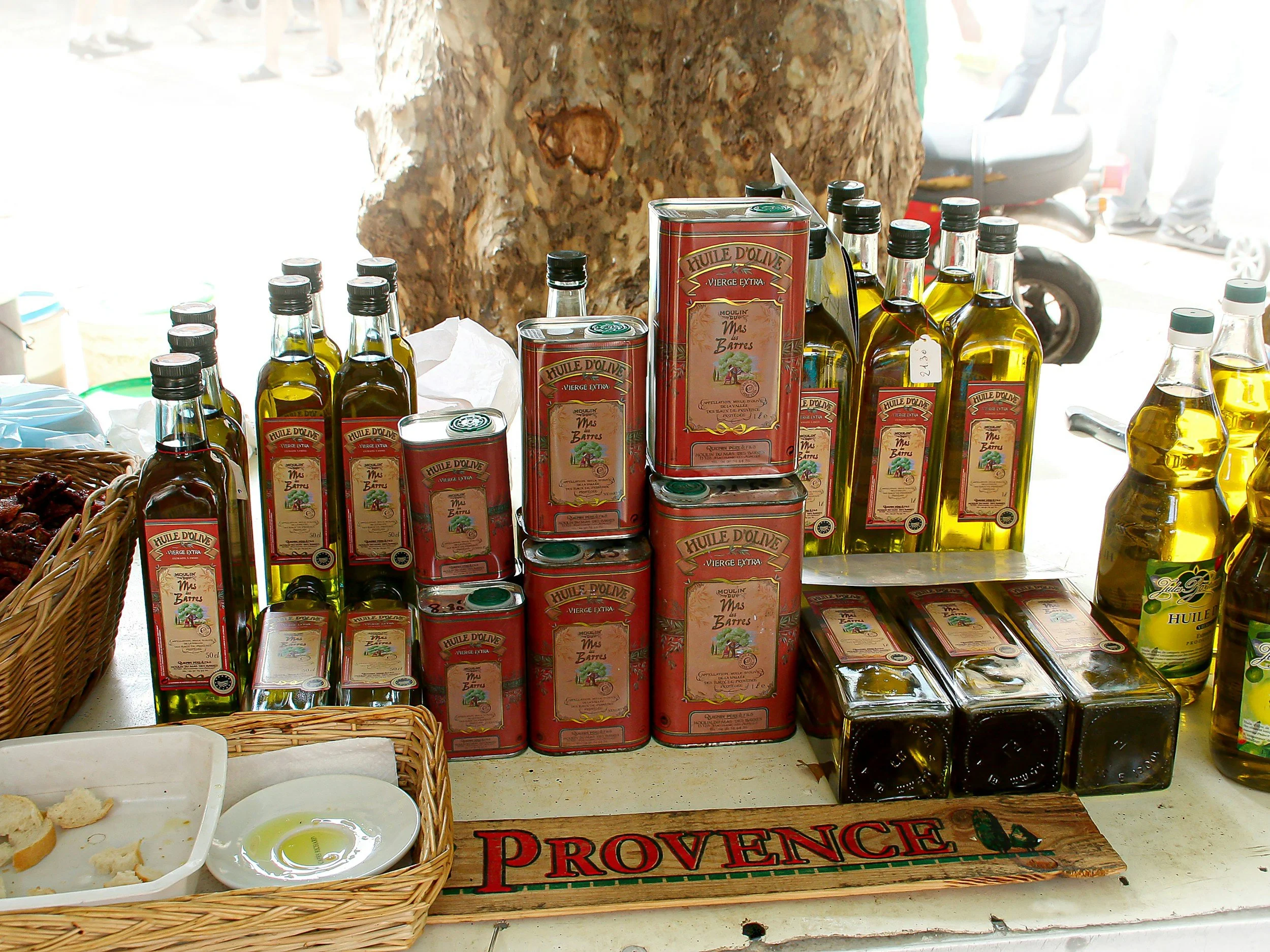
A quick way to tell if a winter market is worth stopping at is to look at what people are buying, not what’s on display.
In summer, markets often fill up with stalls that don’t really have anything to do with food. Clothes, soaps, home things, the same items turning up in town after town. In January and February, most of that disappears. What’s left is usually there because someone needs it.
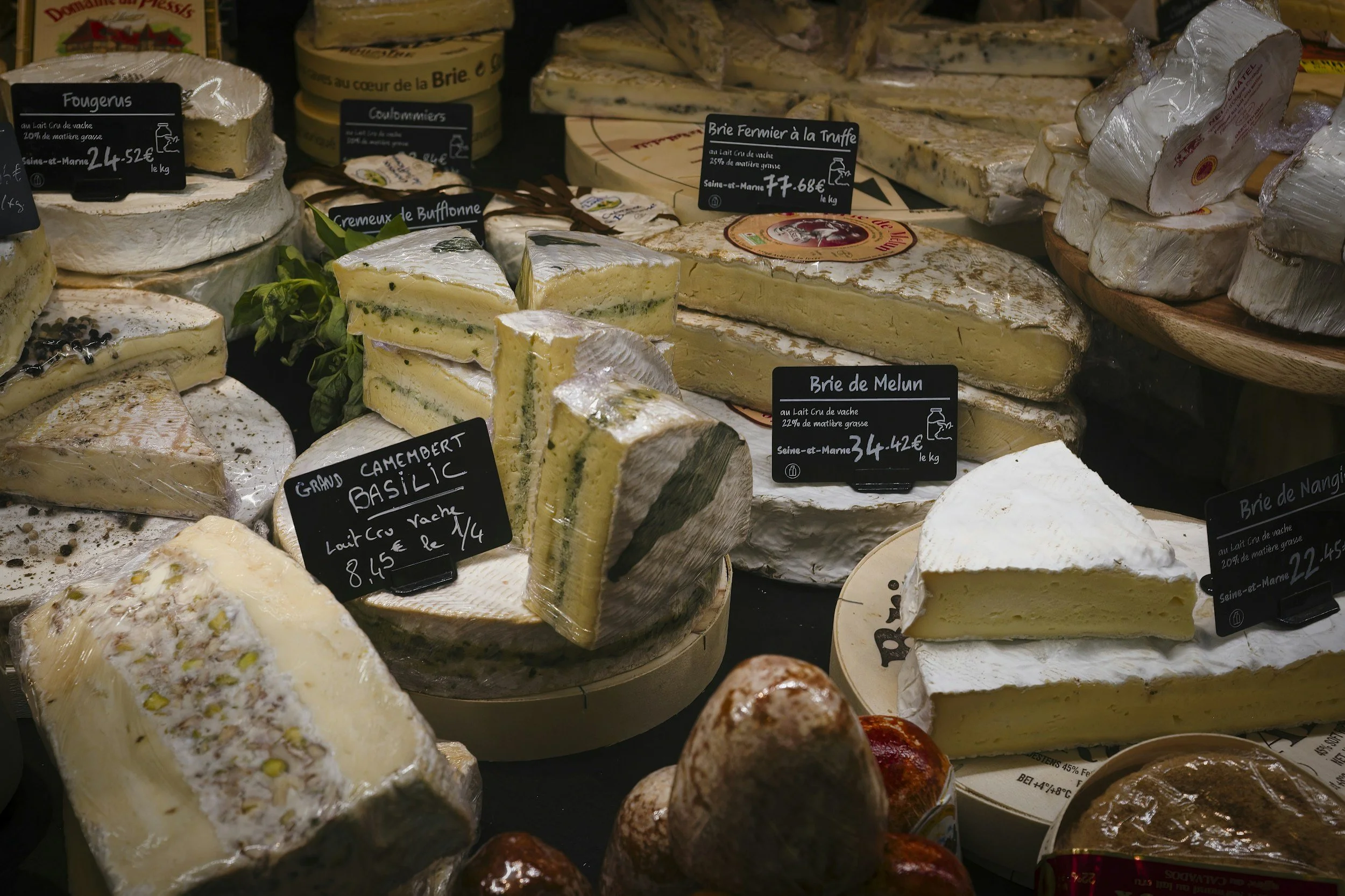
Winter markets in the south are very food-heavy. You’ll see crates of oranges and lemons, piles of potatoes and onions, leeks, cabbages, winter greens. Cheese stalls look different too. Fewer fresh cheeses, more firm, aged ones that get wrapped properly because they’re meant to last a few days. There’s usually more charcuterie than snacks you eat on the spot.
Jars take over a lot of space in winter. Honey, tapenades, preserves, terrines, olives in different marinades. It’s the kind of shopping where you’re already thinking about how heavy your bag is getting and whether it’ll all make it back to where you’re staying.
In some towns, truffles show up quietly at this time of year. No signs, no explanations. Sometimes they’re just sitting on a small table with a price written on cardboard. People who know exactly what they’re looking at stop without saying much. Everyone else walks straight past.
Because of that, winter markets feel more direct. There’s less wandering around and less standing in front of stalls without buying anything. Most people are there to get a few things and go home. If you’re expecting a market to fill a whole morning on its own, winter can feel underwhelming. If you like markets that actually work as shops, this is when they make the most sense.
And if you’re staying somewhere with a kitchen, even a simple one, winter markets suddenly click. You’re not carrying things around all day. You’re buying dinner, or breakfast for the next morning, or something that ends up back home with you long after the trip is over.
Towns in Southern France where markets still work in January and February
One thing you start to notice when travelling in winter is how quickly you can tell whether a town still has a routine or not.
In some places, market day barely changes anything. A few stalls show up, people wander through for ten minutes, and then the town goes quiet again. In others, market day still shapes how the whole place works. Shops open earlier. Cafés are properly open, not just unlocked. You see people arriving from nearby villages, parking, doing their shopping, stopping for a coffee, then heading home before lunchtime.
Those are the towns that work in January and February.
Uzès is a good example of this. The market runs on Wednesdays and Saturdays in Place aux Herbes, right in the centre. It’s easy to reach by car, and most people do. If you arrive early enough, you’ll see locals parking just outside the old town and walking in with shopping bags rather than backpacks. The bakery near the square is busy from early morning, cafés open properly, and by late morning people are already leaving with full bags. The town doesn’t shut down once the market ends, which makes it easy to stay for lunch or wander for a bit without needing a plan.
Richerenches works very differently, but the routine is just as clear. It’s a small town, and most people arrive by car, often quite early, especially on Saturdays during truffle season. You park, walk straight to the market area, and it’s immediately obvious why everyone’s there. There’s very little wandering. People know what they’re doing, and once they’re done, they leave. Outside market hours, the town is quiet, which is why it makes sense as a morning stop rather than a place to base yourself.
Carpentras is larger and easier to reach, whether you’re driving or coming in from nearby towns. On Friday mornings, the market spreads through the centre, and the difference is noticeable as soon as you arrive. Streets are busier, shops are open, and cafés are full of people taking a break mid-shop. By early afternoon, it calms down again, but during the market hours the town feels properly active.
Nyons is smaller and calmer, but Thursday mornings still feel like a shopping day. Most people arrive by car from the surrounding area. The market sits close to the centre, so it’s easy to do your shopping and then walk a few minutes to sit down for lunch. In winter, that rhythm stays intact. It doesn’t feel like something special is happening. It just feels normal.
That’s what to look for in winter. Not how big the market is, but whether the rest of the town adjusts around it. When the market still anchors the day, cafés keep normal hours, bakeries don’t randomly close, and finding lunch doesn’t turn into a guessing game. When it doesn’t, you usually realise within half an hour of arriving.
Richerenches and why it only makes sense in winter
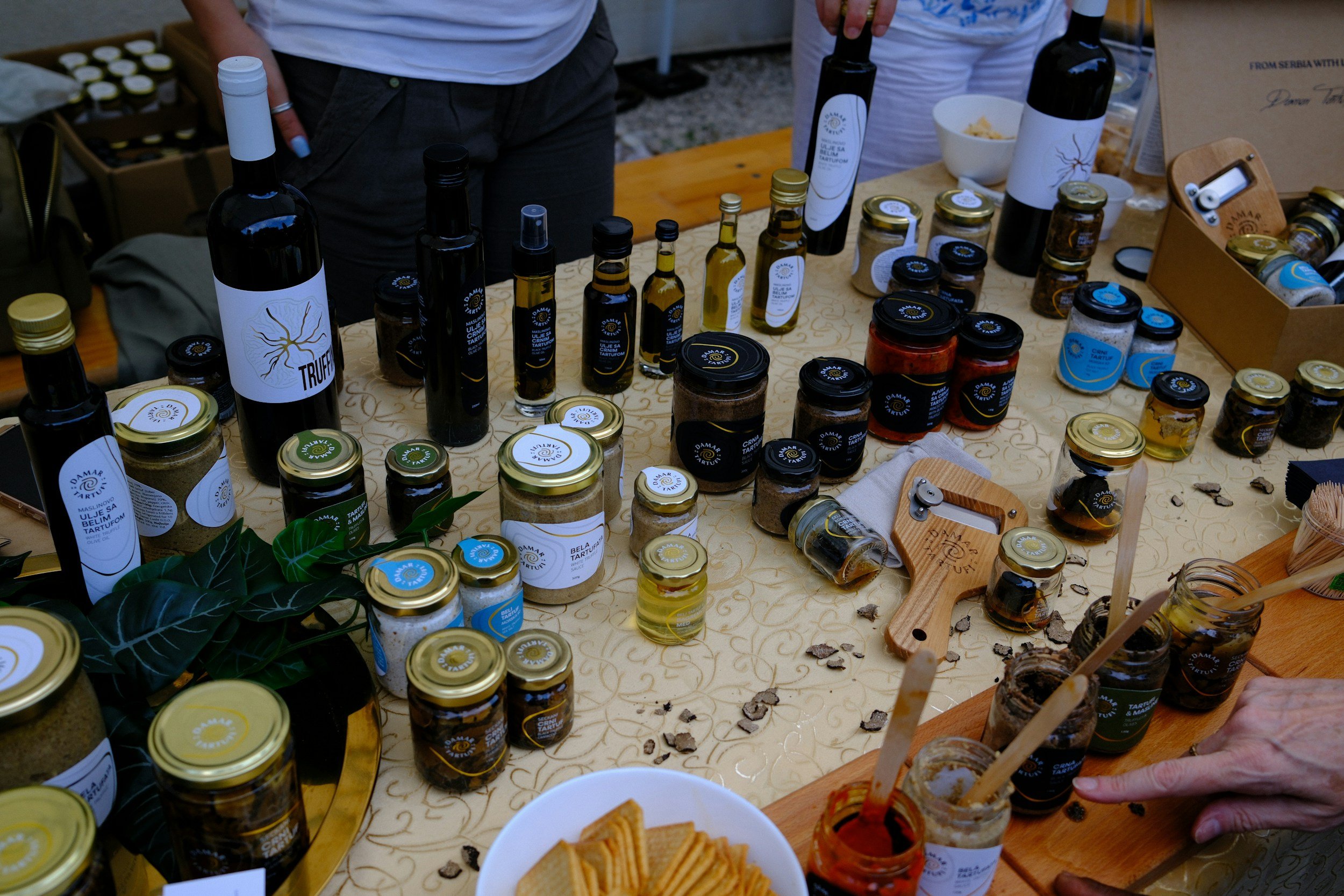
Richerenches is one of those places that can feel confusing if you don’t know why you’re there.
It’s a small town, and outside of market hours there isn’t much to do. That’s not a problem, it’s just important to understand upfront. In winter, especially on Saturday mornings during truffle season, everything revolves around the market. Outside of that window, the town goes quiet very quickly.
Most people arrive by car, and most of them arrive early. You park, walk a short distance into town, and it’s immediately obvious what’s happening. There’s no wandering around trying to work out where the market is. You follow the flow of people, and you’re there.
The truffle market itself is straightforward. It’s not laid out for browsing, and it doesn’t try to explain itself. Truffles sit on small tables, prices are written by hand, and transactions happen quickly. People stop, talk briefly, buy, and move on. If you’re expecting a relaxed stroll with lots of commentary, it can feel abrupt. If you’re interested in seeing how truffles are actually traded, it makes sense very fast.
You don’t need to buy anything for the visit to be worthwhile. Watching how the market works tells you enough. Some people clearly know exactly what they’re looking for. Others stand back, observe for a few minutes, and leave. There’s very little theatre around it.
What’s important to know is that Richerenches works best as a morning stop, not a base. Once the market winds down, the town empties out. Cafés don’t suddenly fill up for the afternoon, and there isn’t much reason to linger. The simplest way to do it is to arrive early, spend an hour or so at the market, then leave for lunch somewhere else nearby.
If you try to turn Richerenches into more than that, it usually feels flat. If you treat it for what it is, a very specific winter market tied to a very specific product, it makes complete sense.
Richerenches reminds me of places that only really work when you understand why you’re there in the first place, similar to towns like Montolieu where you really get that calm, cozy french athmosphere.
How locals actually shop at winter markets
Winter markets run on a different clock than summer ones, and that catches a lot of people out the first time.
Most locals arrive earlier than you might expect. By late morning, especially in smaller towns, stalls can already be packing up. If you turn up close to lunchtime, the market often looks half-finished, and you start wondering if you missed something. Usually, you did.
People also move through winter markets with a lot more purpose. You don’t see much hovering. Locals know which cheese stall they use, which vegetable stand they trust, and they go straight there. Orders are quick. There isn’t much small talk unless someone knows the vendor well. Bags get filled, receipts get tucked away, and people move on.
You’ll notice the bags too. Proper shopping bags, backpacks, trolleys on wheels. Very few people walking around empty-handed. It makes the whole thing feel less like an activity and more like an errand, which is exactly what it is for most people there.
Cash is still common, especially in smaller towns, even if cards are accepted more often now. Having both saves time and avoids that awkward pause when a card machine doesn’t work properly in the cold.
Winter markets also change how much people buy. Most locals aren’t loading up for the week in one go. They buy what they need for the next few days. One cheese, some vegetables, bread, maybe something for dinner that night. Carrying too much around in winter gets old quickly.
If you’re staying somewhere with a kitchen, even a very basic one, this all makes more sense. You’re not shopping for something to eat standing up. You’re buying food that has a place to go. If you’re not, winter markets can feel a bit functional, because that’s what they are.
Once you start treating them the same way locals do, earlier, quicker, and with a clear idea of what you’re there for, they become much easier to enjoy.
Italy has the same divide, with some towns working surprisingly well in winter and others feeling empty very quickly.
How to plan a winter market morning in Southern France
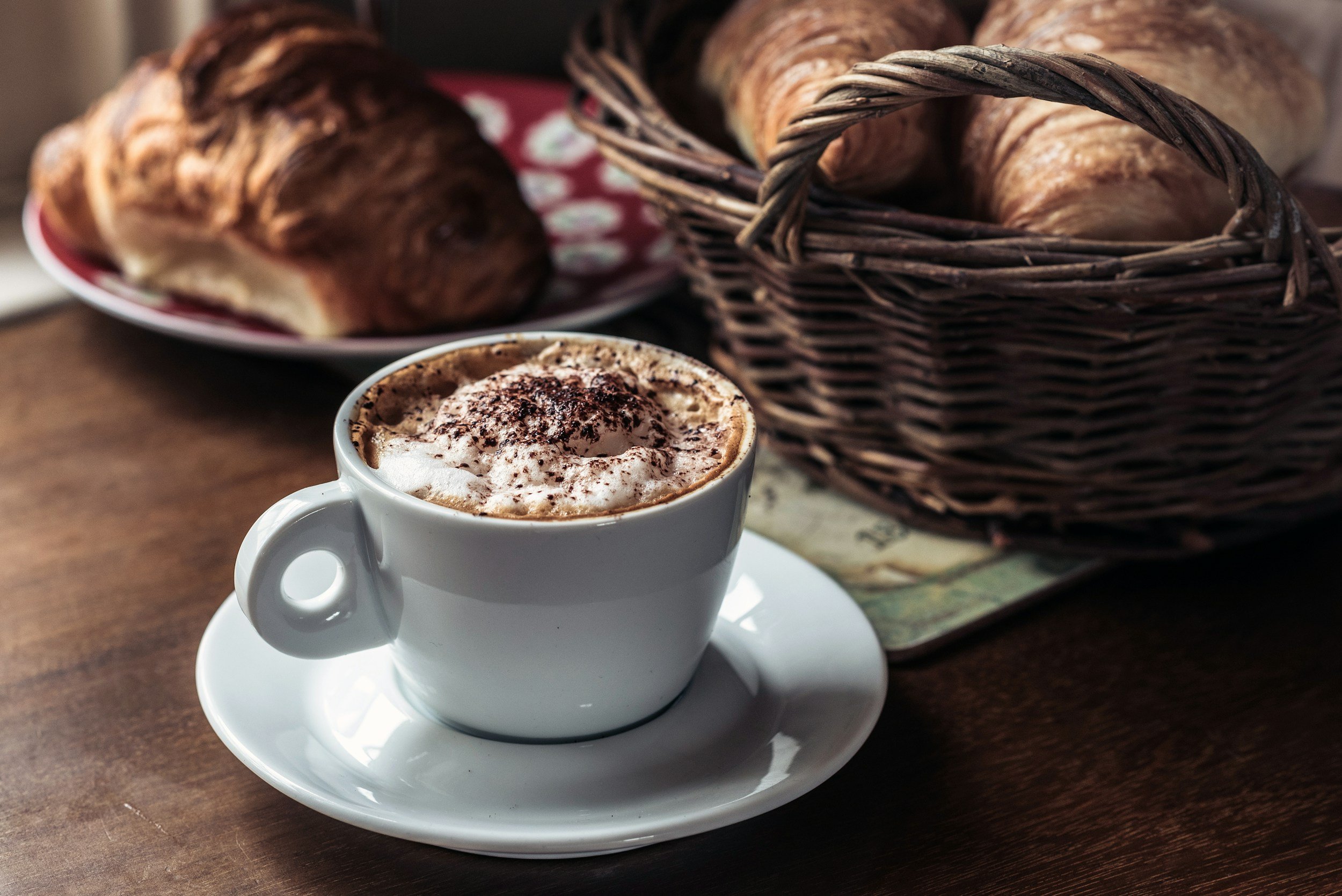
Winter markets tend to work better when you treat them as the first thing you do that day, rather than something you expect to stretch all the way to lunchtime.
A lot of people have the same experience the first time they try it. They arrive mid-morning, wander around for a bit, maybe do one or two loops, and then slowly realise that stalls are already starting to pack up. The square empties out faster than expected, cafés are either full or not quite ready yet, and it leaves that slightly frustrating feeling that you arrived just after things peaked. In winter, that happens easily.
Locals usually arrive much earlier, especially on colder days. In towns like Uzès or Carpentras, it’s normal to see people shopping by eight or nine in the morning, getting what they need while everything is still set up properly, and then sitting down somewhere nearby once their bags are full. By the time late morning rolls around, the market is already shifting from shopping mode to people heading home.
It also helps to know where you’re likely to sit down afterward, because winter opening hours are less predictable than in summer. In Uzès, cafés around Place aux Herbes are usually open on market mornings, but in smaller towns there might only be one place serving coffee before noon. Once the market starts winding down, those places fill up quickly, and if you miss that window you can end up wandering around longer than you planned.
Walking fits into the morning differently too. You’re not filling hours outdoors in January. A short walk is usually enough, just long enough to step away from the busier streets before heading back toward town. In places like Nyons or Saint-Paul-Trois-Châteaux, that often means going slightly uphill or toward the edge of town rather than following the same flat route everyone else takes.
Lunch tends to happen earlier than people expect. Outside larger towns, restaurants don’t always keep their kitchens open all afternoon in winter, so turning up around noon usually works, while waiting until two can leave you with limited options. It’s one of those small, practical details that can quietly shape how the rest of the day goes.
The winter market mornings that feel easiest are usually the simplest ones. You arrive early, do your shopping while the market is still active, sit down somewhere warm, maybe take a short walk, and then have lunch before heading back. When you stop trying to make the market itself last all day, the whole morning starts to fall into place without much effort.
This kind of slower winter pacing shows up elsewhere too, especially in places like the quieter Loire Valley towns that make much more sense outside the busy months.
Markets that look promising but disappoint in January
If you’ve travelled in Southern France in winter more than once, you’ve probably had this happen at least once, even if you don’t usually talk about it. You pick a town that looks right, the market is listed, everything sounds fine, and then you get there and it just… doesn’t really work.
It’s rarely dramatic. Nothing is wrong exactly. It’s more that you walk through the market once, maybe twice, and realise you’ve already seen everything. A few stalls, a lot of space between them, and not much sense that anyone local actually needs to be there that morning.
This comes up a lot in small villages. On paper they look ideal for winter travel, especially if you like quiet places. But if the market only ever existed because people were visiting in summer, it often shrinks to almost nothing in January. You’re done in five minutes, and then you’re standing there thinking, okay… now what?
Markets that lean more toward decoration than food can feel the same way. In warmer months, they’re pleasant enough to wander through. In winter, when many of those stalls don’t show up, there isn’t much left. What looked lively online turns out to be a couple of tables in an empty square.
What usually makes it worse is what happens next. You finish the market and start looking for somewhere to sit down, and that’s when you realise half the cafés are closed, the other half don’t open until later, and lunch suddenly feels harder than it should. That’s the moment when a short visit starts to feel awkward and drawn out.
None of this means those towns are bad. It just means winter isn’t when they work. In January and February, markets need a real reason to be there. When they don’t have one, you tend to work it out pretty quickly, usually before you’ve even managed to get a coffee.
A lot of winter travel disappointment comes from choosing towns built around peak season crowds, which is why places that aren’t overrun in summer often feel easier the rest of the year.
Is a winter market trip in Southern France right for you?
Winter market trips can be great, but they’re very specific, and they only really work if they line up with how you like to travel.
They tend to suit people who are fine with quieter days and don’t need a lot of structure to feel like a trip is going well. If you like getting up a bit earlier, doing one thing properly in the morning, and then letting the rest of the day unfold without forcing it, winter markets usually fit into that rhythm quite easily. You shop, you sit down somewhere warm, you have lunch earlier than usual, and you’re not constantly checking the time.
It also helps if you’re okay with how winter evenings work in smaller towns. Things wind down early. Restaurants fill up quickly or close altogether, streets empty out faster than you might expect, and there isn’t much reason to be out late unless you already know where you’re going. Some people find that dull. Others find it relieving. If you’re someone who’s happy to be back where you’re staying by early evening with a simple dinner plan, winter travel feels much easier.
Where winter market trips usually go wrong is when expectations don’t match the season. If you’re hoping to wander for hours, decide on dinner last minute, or have markets that stay lively all day, it can feel frustrating very quickly. The same goes if markets are the only thing you’ve planned and you expect them to carry the whole day. In winter, they’re usually one solid part of the morning, not the centre of everything.
You see the same pattern in Spain as well, where winter travel only works in towns that still function normally once the season slows down.
What tends to work best is treating the market as a stop, more than a full day activity. One good market, a proper coffee, lunch somewhere nearby, and then back without trying to squeeze in more just because you feel you should. When you stop planning winter trips as if they’re meant to behave like summer ones, they usually start making a lot more sense!
FAQ: Winter markets in Southern France
Are markets open in Southern France in January and February?
Yes, many markets are still open, but not all of them. In winter, it’s usually the larger weekly markets or towns that serve a local area that continue as normal. Smaller village markets often stop or shrink significantly until spring, which is why winter trips work better if you choose towns where the market is part of everyday life rather than something seasonal.
What are the best winter market towns in Southern France?
The best winter market towns tend to be places like Uzès, Carpentras, Nyons, and Richerenches, where markets still draw locals in January and February. These towns stay active enough in winter that the market isn’t the only thing going on, which makes it easier to plan a full morning or day without feeling stuck.
Is it worth visiting French markets in winter?
It can be, but only if you’re going for the right reasons. Winter markets are smaller and more practical than summer ones, and they’re much more about shopping than browsing. If you enjoy food markets, quieter towns, and simple days built around one main activity, winter markets often feel more satisfying than busy summer ones.
What time do winter markets start in Southern France?
Most winter markets start early, often between 7:30 and 8:30 in the morning, and they peak earlier than summer markets. By late morning, especially in smaller towns, stalls can already be packing up. Arriving early makes a big difference to how much you see and how the market feels.
Are winter markets quieter than summer markets in France?
Yes, generally they are, but “quieter” doesn’t always mean empty. In towns where the market still matters, winter mornings can be busy with locals doing their shopping, just without the crowds of visitors. In places where the market is mainly seasonal, winter can feel too quiet, which is why choosing the right town matters.
Can you plan a weekend trip around winter markets in Southern France?
Yes, but it works best if the market is one part of the plan rather than the whole thing. A good winter weekend usually includes one or two market mornings, simple lunches, and a comfortable base, rather than trying to move between lots of towns. Winter travel is more forgiving when you slow it down.