
Chartres is the Paris day trip I'd save for winter
Chartres in winter isn’t the kind of place where you plan your day around sights or feel like you need to be anywhere in particular. You arrive, drop your bag, and pretty quickly realise that this is a place where you can relax There’s no winter itinerary, no special route you’re meant to follow, no sense that the town is adjusting itself for people passing through. Life just continues as normal, and you fall into it without really trying.
If you already know France beyond the obvious places, this will feel familiar in a good way. Mornings start slowly. People walk with purpose but without hurry. Lunch happens at the same time every day, and once that window passes, things go quiet again. You start recognising patterns after a day or two (such as the same faces at the bakery in the morning). The café that’s always busy just after noon. The streets that are empty by late afternoon even though it’s not that late.
What I love about this place is that winter takes away a lot of background noise here. The Paris day-trippers mostly disappear, guided groups stop drifting through the centre, and there’s no sense that anyone is doing something “for visitors.” Shops open and close on their usual schedule. People commute in and out by train like they always do. The market sets up on the same days, selling what people actually cook with in January rather than what looks nice on a table.
As a visitor, you’re basically just stepping into the middle of an ordinary week. You walk at the same pace as everyone else, queue for bread, adjust your day around lunch hours, and head back inside once it gets dark and cold. If you like places that feel calm, routine-driven, and a bit understated, Chartres in winter makes sense very quickly!
Arriving from Paris on an ordinary winter morning
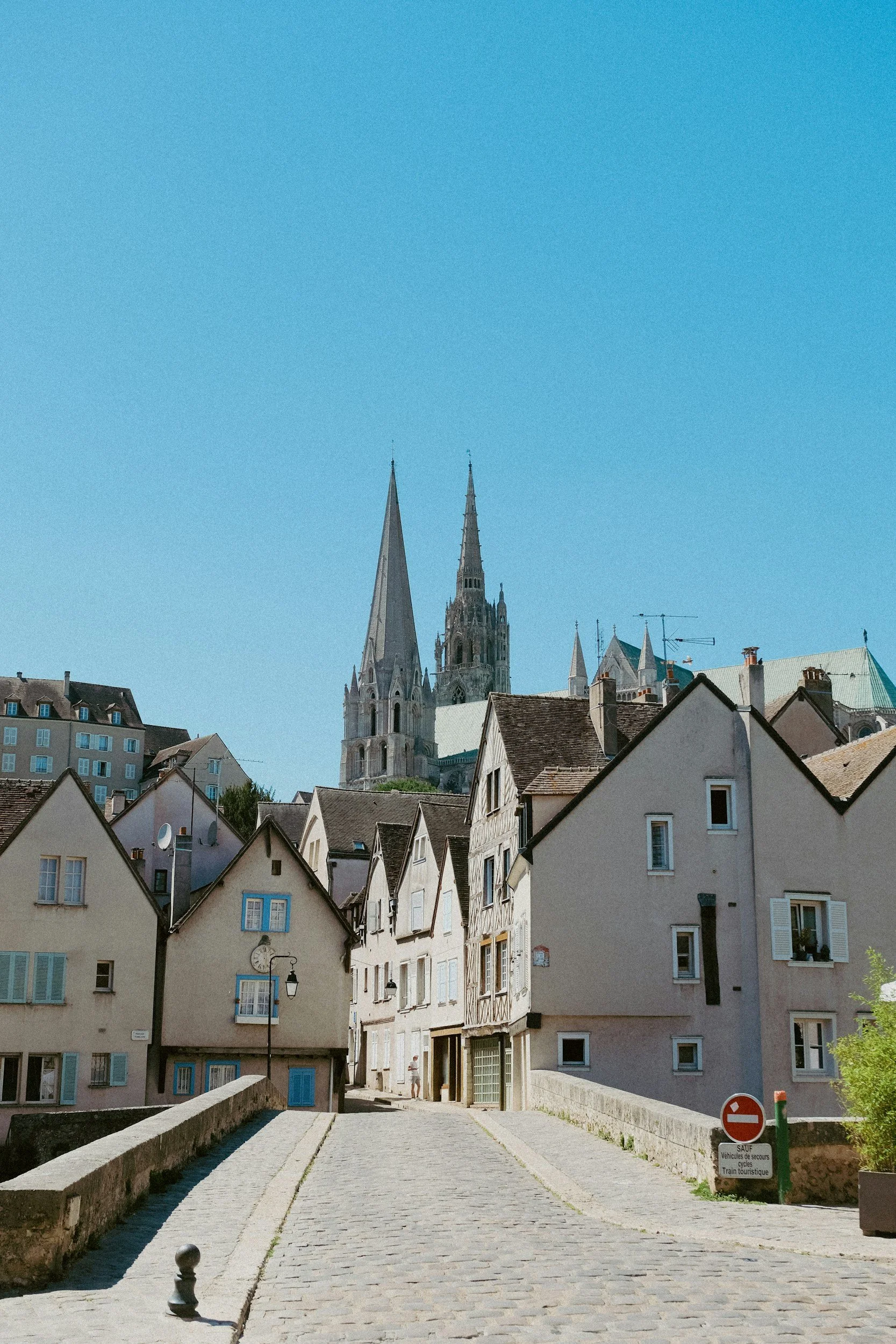
Most people arrive from Paris Montparnasse, and the train ride takes just under an hour. In winter, trains run just as frequently as they do the rest of the year, which makes Chartres easy to reach even on a whim. Morning trains are mostly commuters who already know where they’re getting off, a few students half-awake, and maybe one or two people with a small suitcase. No one’s looking around or chatting. Everyone’s just going somewhere they’ve been before.
The ride itself is pretty plain, especially in winter when everything outside is flat and grey. You’re not really watching the view. You’re probably finishing a coffee, checking the time, maybe reading a few pages of something…It’s the kind of train ride where you arrive feeling calm rather than rushed, which matters more when it’s cold.
If you get in around 9:30 or 10:00, the station is quiet but moving. People step off and head straight out. No crowding, no standing around. A couple of taxis wait outside, but most people don’t even look at them. The centre is close enough to walk, and that’s what almost everyone does. It feels like stepping into the middle of a weekday morning, which is exactly what Chartres in winter is like.
That first walk from the station toward the centre
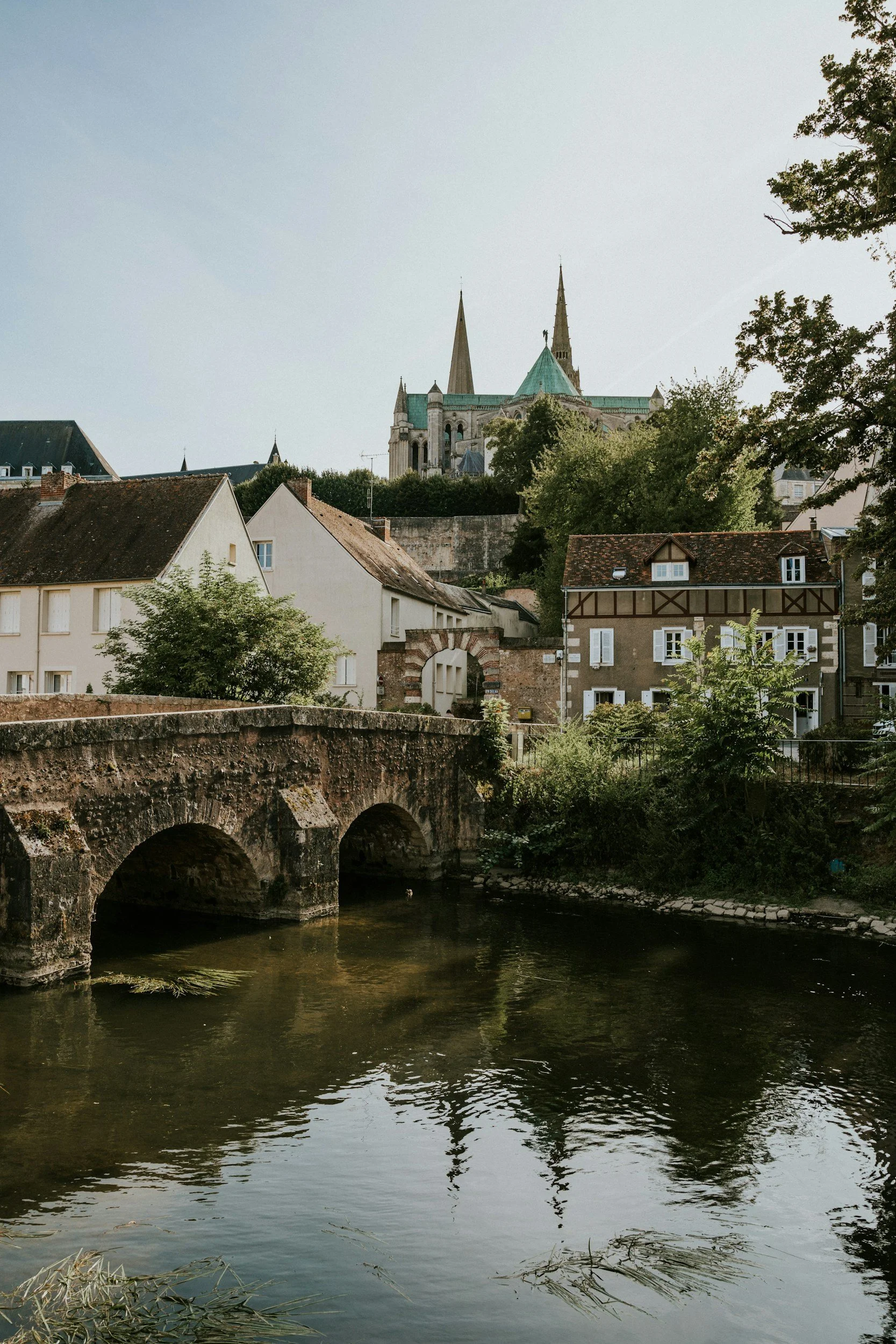
From the station, it’s usually ten minutes on foot, maybe closer to fifteen if you’re not in a hurry or you’ve got a bag pulling on one shoulder. You come out onto Avenue du Maréchal Maunoury, which is wide and practical, not especially pretty but easy to walk. In winter, that matters more than charm. The pavement is even, the crossings are clear, and you’re not picking your way over cobblestones straight away.
You pass through a stretch that feels very local. Apartment buildings, a few small offices, cars parked tightly along the street. In the morning, you’ll see people heading in the opposite direction toward the station, scarves pulled up, coffee cups in hand. A bakery near the route usually has its lights on early, and there’s often a short queue forming outside, just people grabbing bread before work.
As you get closer to the centre, the streets narrow slightly and things change without any clear line between neighbourhood and old town. You cross onto streets like Rue du Faubourg Saint-Jean and Rue de la Porte Guillaume, where shops start appearing more regularly. A café setting out a couple of tables even though it’s cold, a florist opening up, shutters being lifted one by one.
You notice the cathedral before you reach it. Notre-Dame de Chartres keeps appearing at the end of streets, then slipping out of view again as you turn a corner. It’s not a big “reveal” moment. It’s more like a constant presence, always slightly off to one side, making it easy to orient yourself without checking a map. By the time you actually reach the centre, you already know roughly where you are.
Winter weather you actually notice day to day
Usual temperatures from December through March
From December through March, Chartres stays properly cold... Most days sit somewhere around a few degrees above freezing, sometimes a bit warmer by late February or March if the sun’s out. Nights dip close to zero, and mornings often feel colder than you expect when you step outside. Snow shows up now and then, but it rarely lasts. If it does fall, it usually turns wet and messy and is gone by the next day.
What you really notice isn’t the temperature, it’s the damp! After rain, the cold feels heavier, especially near the river or in the older streets where the sun barely reaches. Pavements stay wet for ages, and cobbled areas can be slippery first thing in the morning. By March, the days stretch out a bit, but you’re still dressing for winter and planning your time around staying warm.
Because of that, you don’t spend whole days wandering around. You head out with a reason. A walk to the market, then back inside. A coffee stop to warm up, then another short loop before lunch….
Cold, damp mornings near the river
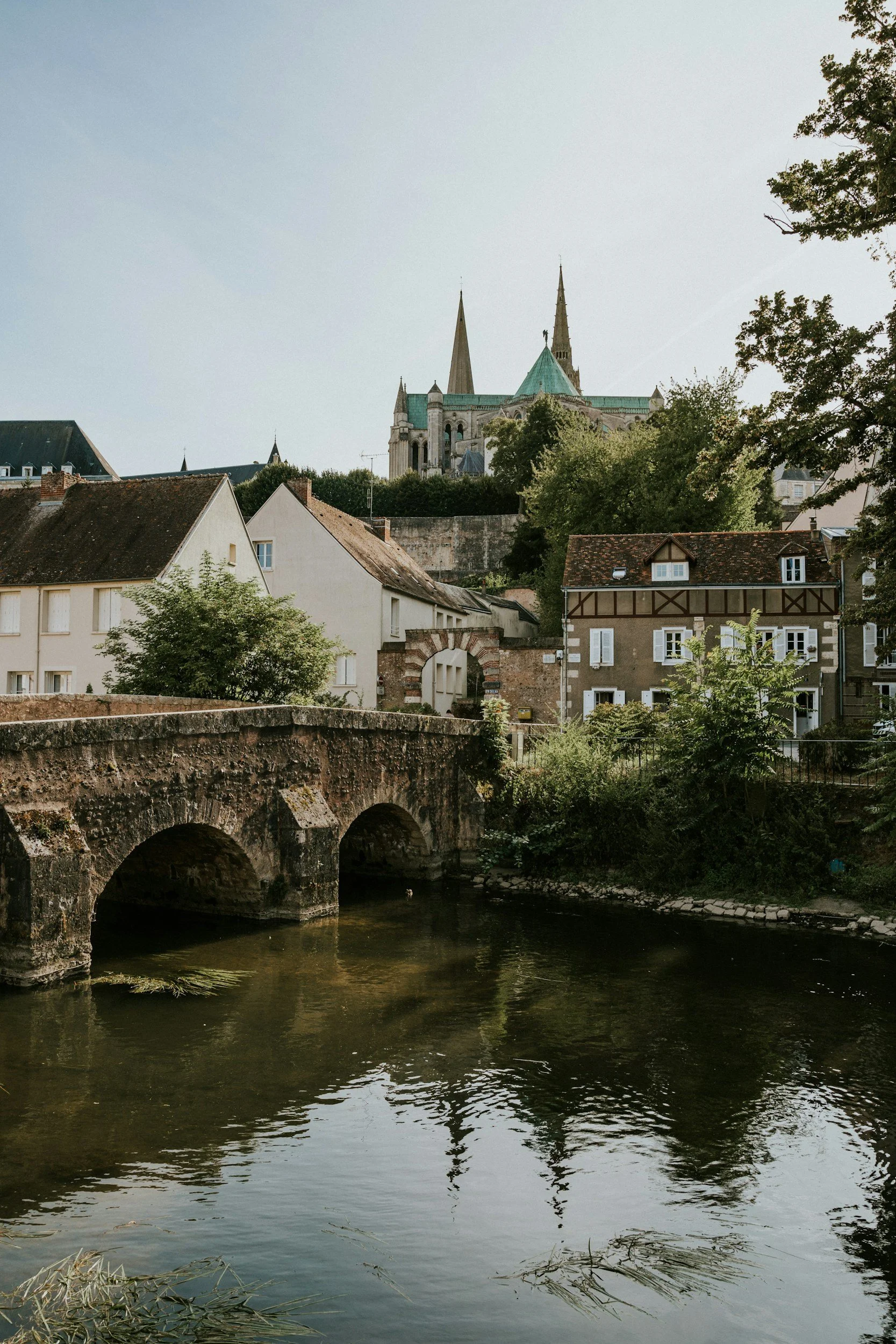
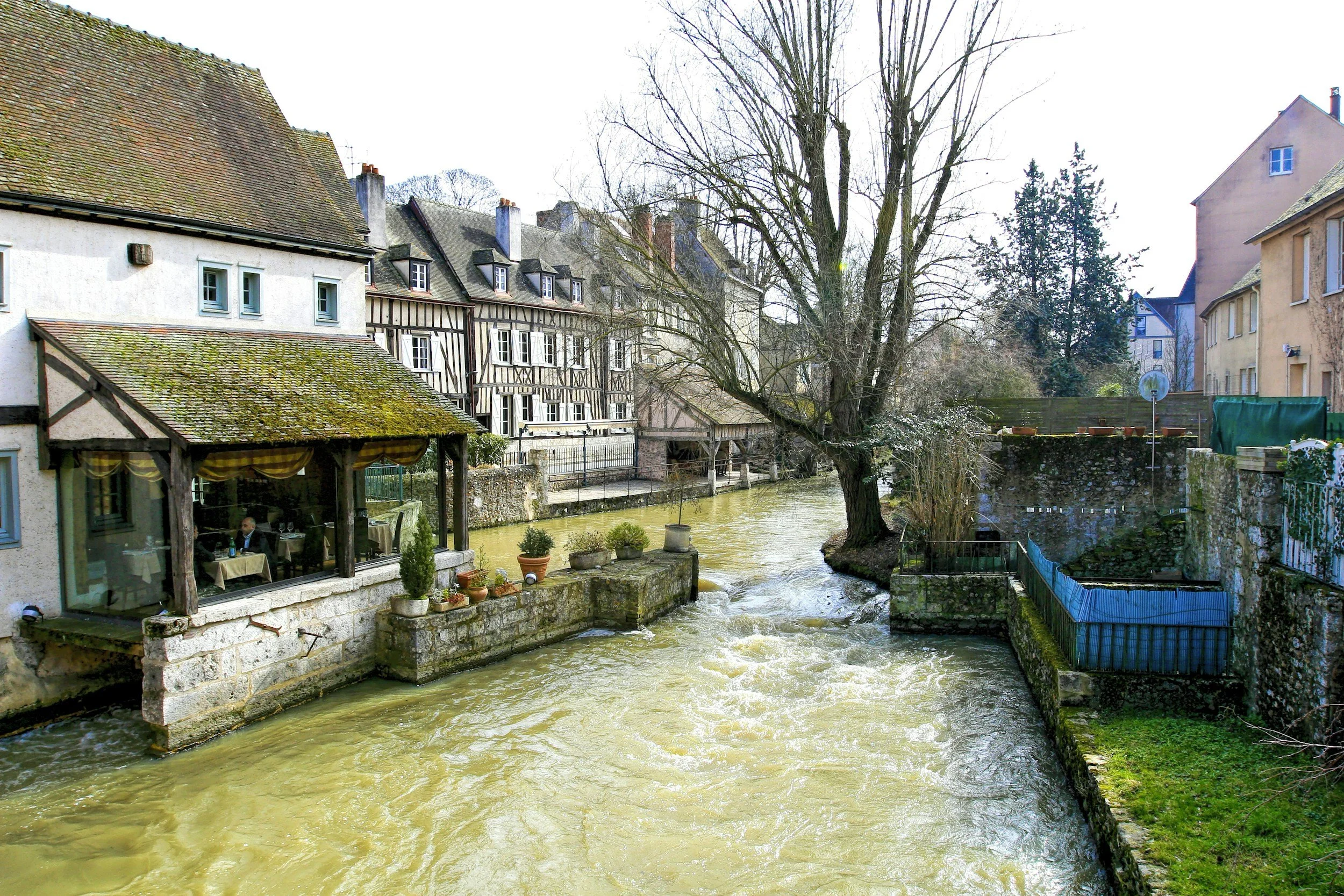
The Eure runs through the lowest part of Chartres, and winter mornings hit harder down there than anywhere else. Before 9:00, the air feels thicker, the kind of cold that sits on your face rather than just in the air. If the night’s been clear, a low layer of fog often hangs over the water and drifts slowly between the banks, especially along the stretch near Rue des Bas Bourgs and the small footbridges behind the old town.
The paths are mostly empty at that hour. A couple of people walking dogs, collars pulled up, hands deep in pockets. Someone on a bike moving quickly, not stopping. You hear footsteps before you see anyone. The river moves quietly, and the cold makes everything feel sharper, the sound of water, the scrape of shoes on gravel, the click of a bike gear changing.
You don’t stay down there long in winter. Ten minutes is usually enough before your fingers start to feel it and you turn back toward the centre. But it’s a practical route, flat and direct, and a useful way to cut between parts of town before anything opens. If you walk it early, while shutters are still down and cafés are dark inside, you get a clear picture of Chartres waking up, slowly - and that’s the best time of the day, right?
How short days change when people are out and about
By December and January, the shorter days quietly take over how the town runs. People start earlier without really talking about it. You notice more movement before 9:00, streets that are already active when it’s still grey out, cafés filling up sooner than you’d expect. Lunch happens on time and doesn’t drag on. By 14:00, things already feel like they’re winding down.
By late afternoon, the change is obvious. Around 16:30 or 17:00, streets thin out fast. Shops begin closing one by one, shutters come down, and you see people heading home rather than browsing. If you’re used to bigger cities where evenings are still busy, this can feel sudden! By early evening, the centre is calm, not empty, but clearly quieter.
The town doesn’t shut down, but it shifts inward. Cafés that stay open have people sitting inside rather than passing through. Restaurants work on a tighter schedule, and you quickly learn not to push everything into the evening.
Markets once the Christmas crowds disappear
Once the Christmas lights come down and the temporary stalls disappear, the markets in Chartres go straight back to their usual routine. The main outdoor market around Place Billard runs on its regular days, and locals keep showing up the same way they do the rest of the year. People come with shopping bags they’ve had forever, stop at the same stalls in the same order, and leave once they’ve got what they came for.
Winter markets feel quieter, but not empty. There’s no browsing for fun, no wandering back and forth deciding what looks nice. Most people arrive knowing exactly what they need. You see quick conversations, short queues, and vendors who already recognise half their customers. It feels practical and familiar, like part of the weekly schedule rather than an event.
Inside Les Halles, the covered market, things barely change at all with the season. It stays busy year-round, especially in the mornings. Locals stop by on their way home from work or after the outdoor market, picking up meat, cheese, or prepared food for lunch. This is clearly where everyday shopping happens, not something arranged for visitors.
Chartres’ winter markets are very much about weekly shopping, not browsing, which is the opposite of what you get at brocantes and vide-greniers around France, where the whole point is taking your time and seeing what turns up.
What stalls look like in winter compared to summer
In winter, the stalls look stripped back compared to summer. You see fewer colours, fewer options, and much more focus. Piles of potatoes, carrots, leeks, and onions take up most of the space. Apples replace berries. Cheeses are wrapped and stacked neatly rather than displayed for effect. Bread, eggs, poultry, and prepared dishes sell steadily throughout the morning.
There are still flowers, but fewer of them, and they’re usually there for locals rather than decoration. Fruit stalls are smaller, and what’s available makes sense for the season rather than trying to impress. Nothing feels padded out to look abundant.
This is also when you really notice how familiar the market is for the people who use it. Vendors greet customers by name, ask short follow-up questions, and already know what’s coming next. Conversations are quick and specific. Prices are rarely discussed. Bags get filled, change is handed over, and people move on. It all happens fast, but without any stress, and it gives you a very clear picture of how central the market still is to daily life, even in the middle of winter.
If you’re curious about how markets work when they’re clearly meant for residents, Chartres fits neatly alongside other winter markets in northern France that locals actually rely on, not visit for atmosphere.
The quieter stretch after late morning
Before 10:00, the market is busy and efficient. People move fast, queues form quickly, and vendors are focused on getting through orders. By about 11:30, things change. Some stalls start packing up crates, others stay open but slow right down. Fewer people are arriving, and those who are there aren’t stressing anymore.
This is the easiest time to walk through, especially in winter. You’re not squeezing past people or feeling like you’re in the way. You can stop, look at what’s left, and move at your own pace without holding anyone up. It’s quieter, simpler, and a lot more comfortable if you’re just taking it in rather than doing a full shop.
Walking around the cathedral when nothing’s going on
Midday hours when streets feel almost empty
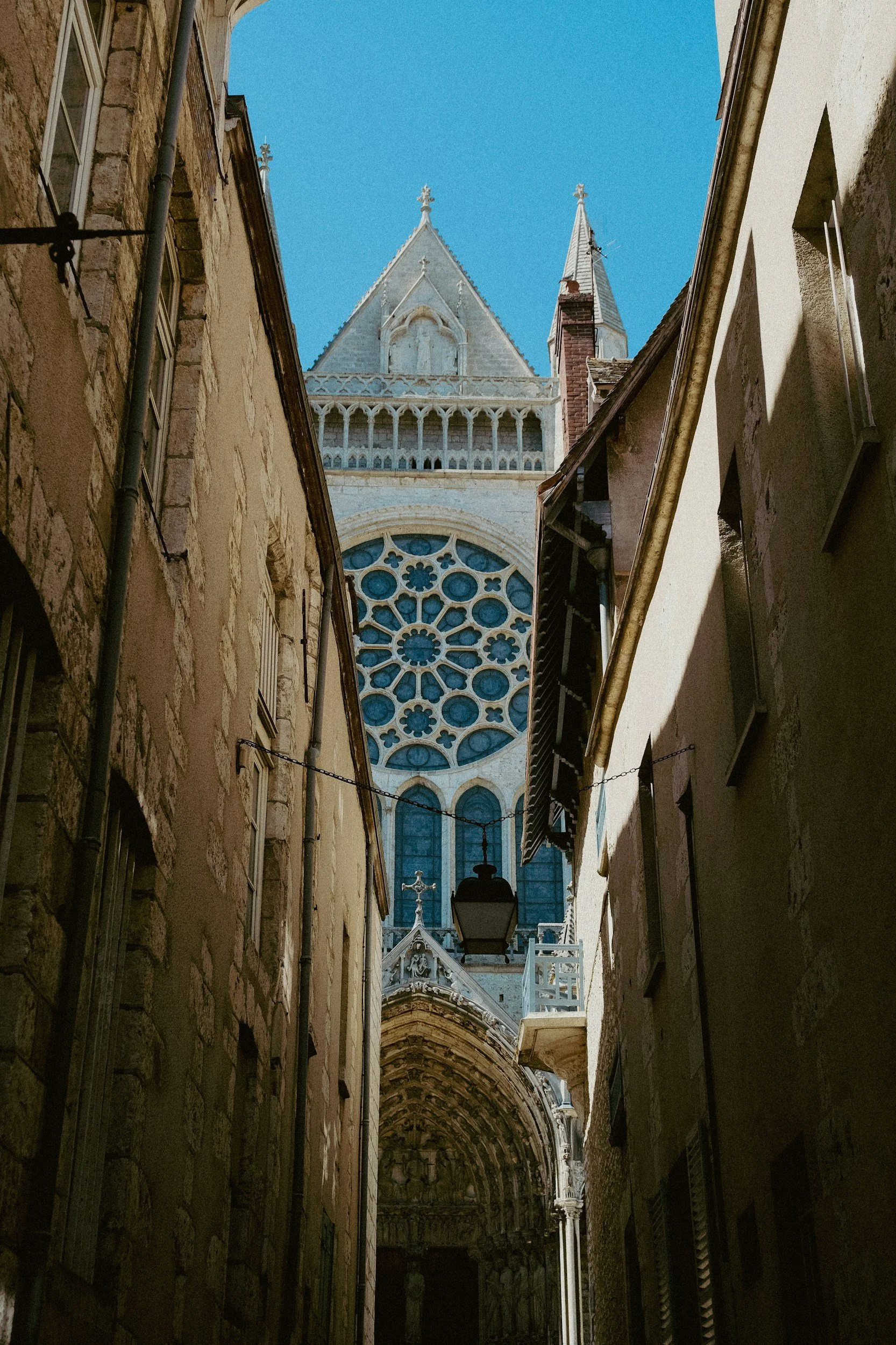
Around Notre-Dame de Chartres, winter midday is very quiet. Late morning into early afternoon, especially on weekdays, there’s barely anyone around. You can cross the square without adjusting your path or waiting for anyone to move. Most of the people you see are locals cutting through on their way somewhere else.
With no crowds around, the area feels smaller and easier to read. You notice how close everything is. One turn and you’re already on a narrow street, another few steps and you’re back in a residential stretch. Streets like Rue du Cloître Notre-Dame feel more like shortcuts than places you’re meant to stop. A delivery van pulls up, someone heads inside with a box, and then it’s quiet again.
Nothing is really happening at that time of day, and that’s exactly why it’s a good moment to walk around. You’re not competing for space, you’re not standing around unsure where to go next. You just move through it at your own pace and get a clear sense of how the centre fits together when it’s not busy.
Side streets just behind the main squares
As soon as you step off the main squares, it stops feeling like a place people visit and starts feeling like a place people live. Streets like Rue Chantault or Rue de la Porte Cendreuse are narrow and a bit uneven, with front doors straight onto the pavement. No displays, no signs telling you to stop. Cars creep through because there’s barely room, and most people walking here are just trying to get somewhere.
In winter, these streets are quiet but clearly used. You hear a door slam, someone dragging a shopping trolley, a bike being wheeled inside. During the day, you notice sounds coming from inside buildings more than anything else. A TV on, dishes being put away, someone talking on the phone. There’s nothing to look at, but that’s useful in itself. It tells you pretty quickly which parts of Chartres are residential and which parts are just for passing through.
If you’re staying nearby, you’ll end up using these streets without really thinking about it. They’re the quickest way between places, and after a day or two, they start to feel familiar rather than confusing.
Early evenings once lights come on and shops close
Winter evenings come early in Chartres, and you feel it around 17:30 or 18:00. Shops close fast once they start. One shutter goes down, then another, and within half an hour the centre feels much quieter. Anyone who needed to be out has already done what they came to do.
A few cafés stay open and get a bit busier for a short while. People stop in for a drink before heading home, but no one hangs around for long. Restaurants work on clear schedules, and if you show up late without a plan, you’ll notice your options are limited.
By 19:00, most of the town is indoors. Streets are still fine to walk through, just calm and empty. This is when short walks make sense. A quick loop, a warm drink somewhere, then back inside. After a day or two, you naturally start planning evenings around closing times and warmth, which is exactly how locals do it in winter.
Where to sit for coffee without rushing the day
In winter, cafés in Chartres are less about popping in and more about sitting down properly for a bit. Places like Café Serpente, right by the cathedral, are good examples of this. It’s warm, reliable, and used by locals as much as anyone else. People sit with a coffee and the paper, meet briefly before lunch, or warm up after the market. No one’s rushing in and out.
Another cozy place Le Georges, which works well in winter because it stays open and feels steady all day. It’s not somewhere you feel awkward sitting alone, and you’ll see plenty of people doing just that. Mid-afternoon is usually the calmest, especially once the lunch crowd clears.
If you’re mainly after something simple like a good croissant and coffee, the bakeries around Place Billard and the streets just off it are where people actually stop in the morning. Locals queue quickly, grab what they need, and move on. Croissants are best earlier in the day, before lunchtime, and by mid-afternoon the selection is usually thinner. That’s normal here and not a bad sign.
What’s useful to know is that cafés fill up at very predictable times. Late morning, especially after the market, gets busy. Lunchtime is hit or miss depending on the place. Mid-afternoon, between about 14:30 and 16:30, is the easiest time to find a seat and stay for a while without feeling in anyone’s way. If you’re planning your day around short walks and warm breaks, that window makes everything easier.
Winter opening hours you notice if you arrive late
One thing you notice pretty quickly in winter is that café hours matter more than you expect. A lot of places close after lunch, usually sometime between 14:00 and 15:00, and don’t reopen until early evening, if they reopen at all. If you head out around 15:00 thinking you’ll just grab a coffee somewhere, you’ll find plenty of places with shutters half down and chairs stacked inside.
This is especially true away from the main squares. A café that was busy at noon can be completely shut an hour later. After a day or two, you stop wandering around hoping something will be open and start keeping track of the places that stay open straight through the afternoon. Once you find one that works, you tend to go back to it rather than testing your luck somewhere else.
Spots that stay open even when it’s quiet
There are a few reliable places that don’t really change their routine for winter. Le Georges is one of them. It stays open through the afternoon, which makes it an easy fallback when everything else is closed. You’ll often see people stopping in alone, having a coffee or a drink, then heading off again.
Café Serpente is another safe option near the centre. It doesn’t feel cosy in a styled way, but it’s warm, predictable, and open when you need it. That counts for a lot in winter.
These places aren’t exciting, and they’re not trying to be. They’re just dependable. When the town goes quiet in the late afternoon and most doors are shut, having one or two spots like this makes the day much easier to plan. You know where you can sit down, warm up, and take a break without having to think too hard about it.
What to eat during winter
Lunch menus that barely change all year
Lunch in Chartres is very predictable, and winter doesn’t change that at all. Most places work with a fixed menu, usually two or three options, sometimes written on a board by the door. You might see slightly heavier dishes in winter, more stews, meat-based plates, things that make sense when it’s cold, but the structure stays the same. You’re not choosing from a long menu, you’re choosing between what’s on offer that day.
Lunch is still the main meal, and you notice it in how quickly places fill up. Between about 12:00 and 13:30, restaurants are busy with people who clearly do this every week. If you arrive during that window, you’ll get the full menu. If you turn up later, closer to 14:00, choices start disappearing and some places stop serving altogether. In winter especially, it pays to eat lunch when everyone else does rather than pushing it late.
Bakeries that close earlier in winter
Bakeries are still very much part of daily life, but in winter they keep shorter hours. Many close by late afternoon, sometimes around 17:30 or 18:00, especially on quieter days. If you’re used to grabbing bread or something sweet in the evening, that can catch you out.
Morning is when bakeries feel busiest and best stocked. People stop in on their way to work, grab bread for later, and move on. Early afternoon still works, but by then the choice is smaller. You also notice that people aren’t browsing much in winter. Most customers come in knowing exactly what they want, pick it up, and leave. If you want the best selection or a fresh croissant, earlier in the day is always the safer bet.
Simple takeaway dinners locals seem to rely on
Winter evenings in Chartres are mostly about keeping things easy. A lot of people don’t go out for dinner during the week. Instead, they pick something up on the way home and eat indoors. You see this play out in a few predictable ways once you pay attention.
First, bakeries and food shops around Place Billard and near the centre sell ready-made dishes in the afternoon, things like quiche, savoury tarts, or simple hot meals that just need reheating. These usually sell out before evening, so if you’re thinking takeaway, it’s better to buy earlier and eat later rather than heading out at 19:00 hoping to find options.
Second, the covered market, Les Halles, is a common stop earlier in the day for people planning dinner. Meat, cheese, bread, and prepared foods get picked up in the morning or around lunchtime, not in the evening. By the time shops close, most locals already have dinner sorted.
Third, weekday restaurant dinners are quieter and more limited than you might expect. Places mentioned before, like Le Georges or Café Serpente stay open and are reliable, but even they work on clear schedules. Turning up early makes a big difference. After 20:00, options drop quickly.
Fourth, many people rely on very simple combinations. Bread, cheese, soup, something warm picked up earlier in the day. You’ll notice fewer people eating out late and more lights on in apartments by early evening. Dinner is functional, not social, especially during the week.
Finally, for visitors, this just means thinking one step ahead. Dinner out is absolutely possible, but it works best if you’ve already decided where you’re going and when. If you prefer flexibility, picking something up during the day and eating in the evening feels much closer to how locals actually handle winter nights in Chartres.
The in-between season feel after the holidays
The calm stretch after New Year
Right after New Year, Chartres drops into a very quiet mode. Christmas lights come down quickly, sometimes within a few days, and anything temporary just disappears. One morning you walk out and it’s all gone. No decorations, no seasonal stalls, no reason for anyone to hang around.
During the day, the centre feels almost blank. People still go to work, stop at the bakery, cross the square on their way somewhere else, but no one is wandering. Cafés open as usual, but they’re half full at most. Markets still run, but without any extra noise or chatter. You notice how fast errands get done! People basically arrive, buy what they need, and leave.
If you stay more than a night or two, the rhythm becomes very clear. Late morning has a bit of life, lunchtime gets busy for an hour, and then the town empties out again. Afternoons are long and quiet, and evenings start early. Nothing interrupts the day, which can feel strange at first, but after a while it’s calming. You stop expecting anything to happen and just move through it.
February and March weekends without events or noise
February and March weekends feel much the same, just with slightly longer days. Saturdays have a bit of movement. People do their shopping, meet briefly for lunch, pick things up from the market. By mid-afternoon, that energy fades, and by early evening it’s quiet again.
Sundays are especially calm. Streets near the cathedral can feel empty for hours at a time. Shops are closed, cafés that are open are slow, and most people stay at home. There are no events to wander into and no background buzz carrying you along.
That’s useful to know if you’re visiting for a weekend. If you like walking around without distractions, sitting somewhere warm with a coffee, or just moving at your own pace, it works well. But you do need to give your days a bit of shape yourself. Nothing is going to pull you from one thing to the next.
School schedules and how they affect daytime energy
School routines quietly control the day more than anything else. On weekdays, you’ll notice a short burst of activity in the morning, around school drop-off. Bakeries get busy, streets feel briefly full, and then it all settles again.
Late morning through early afternoon is the quietest stretch. Cafés empty out, streets feel almost paused, and even the centre feels still. Then, in the late afternoon, there’s another short wave of movement when school lets out. Parents crossing streets, kids walking home, shops getting a little busier for half an hour.
During school holidays, things feel different. More families are out during the day, cafés stay busier for longer, and the town feels slightly less empty. Once school starts again, everything snaps back into place. After a day or two, you stop wondering why Chartres feels busy for twenty minutes and silent an hour later. It’s just running on a schedule that doesn’t change much, even in winter.
Distances that matter more when it’s cold
Station to town centre when it’s freezing
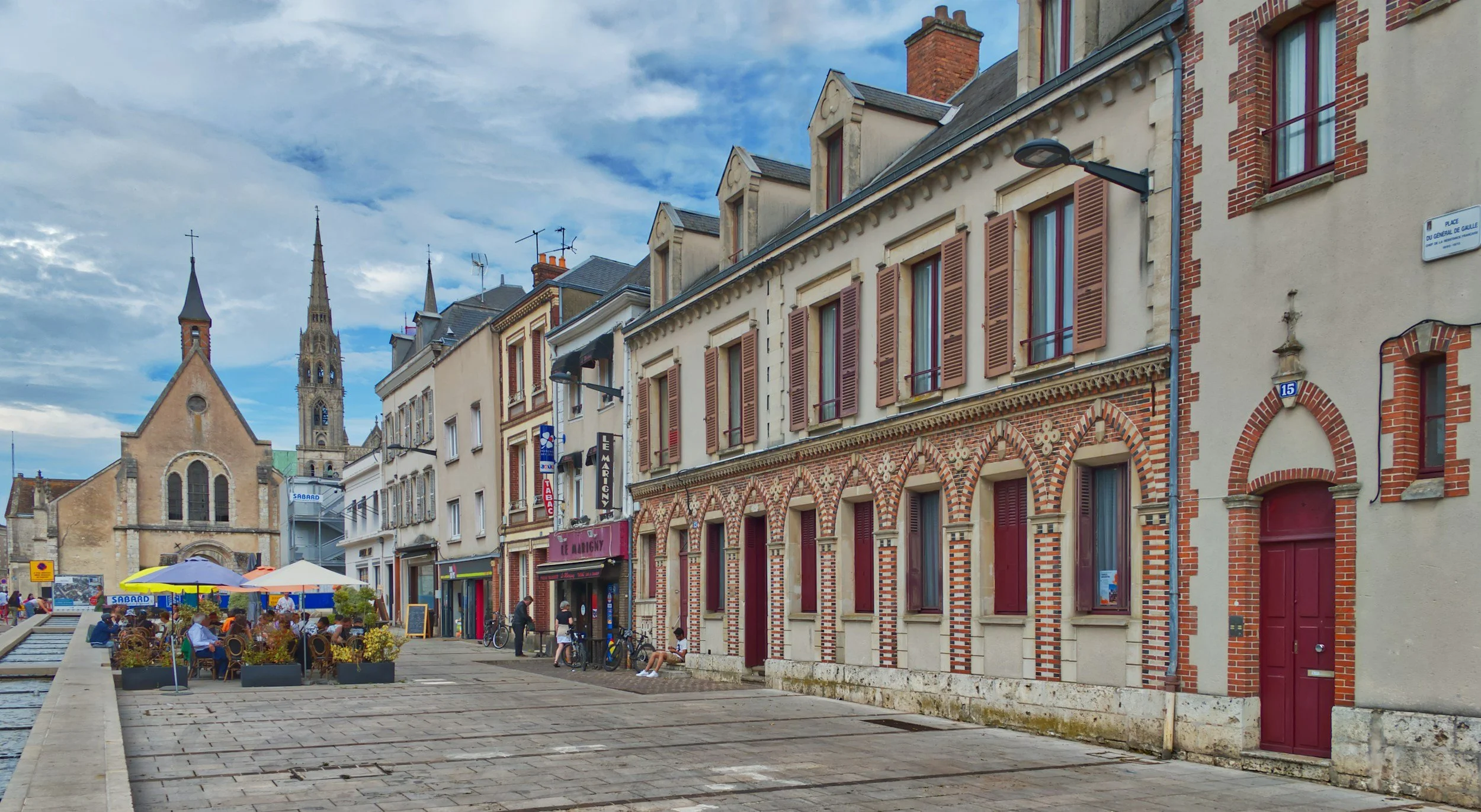
The walk from the station to the centre isn’t long, but in winter it feels longer than it does on paper! Sorry to say. Cold air, damp pavement, and a bit of wind slow you down, even if you’re walking the same route as always. You become more aware of how long you’re outside, especially first thing in the morning or after dark.
It’s not a big issue, but it changes how you move. You stop wandering just to see what’s there and start heading somewhere with a purpose. You think in terms of “get there, then warm up” rather than strolling. That makes the town feel slightly bigger in winter, even though it isn’t.
Easier walking routes versus cobbled streets
Around the cathedral and parts of the old town, there’s a lot of cobblestone. In winter, especially after rain or an overnight frost, those streets can be slippery and uneven. You notice locals avoiding certain stretches, taking wider streets instead, or sticking to smoother pavements even if it means a slightly longer route.
Following that instinct helps. Flat streets with regular pavement feel much easier on cold days, especially if you’re carrying bags or walking back after dark. You quickly learn which shortcuts are worth it and which ones aren’t when the ground is wet.
Short walks that still feel satisfying
Winter naturally breaks the day into smaller pieces. Instead of long walks, you end up doing shorter loops. A walk from your accommodation to the market and back. A short route around the centre. Down to the river and back up again. Each one feels complete on its own.
That works well in Chartres because everything is close together. You don’t need hours to feel like you’ve been out and about. A couple of short walks spaced through the day usually feels like enough, especially when the alternative is staying warm indoors.
Staying overnight in low season
In winter, where you stay in Chartres matters more than in summer because evenings are quiet and everything shuts earlier. The upside is that several smaller hotels stay open year-round and are set up for people who are actually sleeping there for work or short stays, not just passing through for a night.
Places like Hôtel Jehan de Beauce are reliable in winter because they’re used to business travellers. It’s right by the station, which is useful if you’re arriving late or don’t want to walk far in the cold, and it stays open with normal services even when the town feels quiet. You’ll usually find it calm rather than empty, with a few guests coming and going.
Closer to the centre, Hôtel Le Boeuf Couronné is another solid option in low season. It’s small, central, and doesn’t shut down for winter. Staying somewhere like this makes evenings easier because you can step out for dinner or a drink without committing to a long walk back in the cold.
The main thing to look for in winter is a hotel that stays open all day and has someone at reception in the evening. Some places technically stay open but feel half-closed once night falls, which isn’t ideal if you arrive late or want to head out after dark.
If this kind of winter stay works for you, quiet evenings, early nights, places that don’t shut down completely, you might also want a look at cozy places to stay around Champagne, where the pace is very similar once the season drops.
Places that feel more local once evening sets in
If you stay just outside the centre, especially in residential streets, evenings feel very quiet in winter. You won’t hear traffic or people coming home late. Instead, you notice everyday sounds, doors closing, someone cooking, a television on through the wall. For some people, that feels calm and reassuring. For others, it can feel a bit too still.
If you like being able to step out and see a bit of life, even if it’s minimal, staying within a short walk of the cathedral or Place Billard works better. There will still be cafés or a brasserie open, and you won’t feel like the town has completely shut down once it gets dark.
Areas that stay quiet but not empty
The easiest areas to stay in during winter are the ones that sit between residential and central. Streets that are close to schools, bakeries, or main walking routes tend to keep a baseline level of movement even in January or February. You’ll see people heading home, picking things up, or walking dogs, which helps the area feel lived-in rather than deserted.
Being within ten minutes of the centre is usually the sweet spot. You get quiet nights, but you’re not stuck somewhere that feels cut off once shops close. In winter, that balance makes a real difference to how comfortable your stay feels, especially if you’re travelling alone or spending more time indoors.
Nearby trips that still work in winter
One of the advantages of staying in Chartres in winter is how easy it is to get on a train and be somewhere else without turning it into a full-day project. Trains run regularly all year, and most nearby trips take under an hour. That matters in winter, when daylight is short and you don’t want to be watching the clock all day.
Places like Maintenon are an easy half-day option. It’s a short train ride, the station is close to the centre, and you can walk around, have lunch, and be back in Chartres before it gets dark. You’re not rushing, and you’re not committing to anything complicated.
The same goes for towns like Nogent-le-Rotrou, which stays active year-round and has enough going on to justify a few hours without needing a long walk or perfect weather. These kinds of trips work well in winter because you can keep things simple and flexible.
The reason Chartres works so well in winter is the same reason parts of Champagne do, short distances, quiet towns, and days that don’t need filling. If you’re travelling on your own, this Champagne solo travel guide follows that same logic.
Nearby towns that feel lived-in year round
The towns that work best from Chartres in winter are the ones that don’t rely on visitors. Maintenon is a good example, but so are smaller places where shops stay open, cafés still have regulars, and people are clearly living their normal routines.
When you visit these towns in winter, you’re not walking around closed streets or seasonal businesses. Bakeries are open, lunch is being served, and people are out doing errands. It feels very similar to Chartres itself, calm, practical, and easy to move through. That makes winter visits feel normal rather than flat.
Countryside views that still make sense without greenery
The countryside around Chartres doesn’t rely on colour to work. In winter, fields are bare, trees are stripped back, and the landscape feels open rather than empty. You can see further, notice the shape of the land, and understand how towns and villages sit in relation to each other.
Short train rides out of town give you that context without asking much of you. Even a simple journey through the Beauce plains shows how agricultural and spread out the area is. You don’t need clear skies or warm weather for it to make sense. In winter, these views feel honest and straightforward, which fits the pace of staying in Chartres at this time of year.
How a winter day is paced in Chartres
Winter mornings in Chartres have a short burst of activity and then calm down quickly. Between about 7:30 and 9:00, you hear the town starting up. Delivery vans pulling in, shop shutters going up, bakeries opening their doors again and again as people grab bread on the way to work. Market mornings are the busiest during this window, with stalls being set up and regulars arriving early to get in and out.
By mid-morning, around 10:00, that energy fades. Streets are still active, but in a quieter, more spread-out way. This is a good time to walk around or head to a café without feeling like you’re interrupting anything. If you like seeing a town function without crowds, this window works well.
Long, quiet afternoons that need a bit of structure
Late morning into mid-afternoon is the quietest stretch of the day. Shops stay open, but foot traffic drops. Cafés empty out after lunch, and some places close entirely until evening. This is when Chartres can feel very still, especially on weekdays.
For visitors, this is where planning helps. It’s a good time for a longer café stop, a short walk, or heading back to where you’re staying for a break. If you expect constant activity, this part of the day can feel flat. If you’re comfortable slowing down, it’s one of the easiest times to just exist in the town without distraction.
If you’ve ever enjoyed a bigger city when it’s calm and a bit stripped back, the winter pace in Chartres will probably make sense to you, in the same way Bordeaux feels very different once you step away from peak season.
Evenings that turn inward early
By early evening, usually around 17:30 or 18:00 in winter, Chartres pulls inward. Shops close quickly, streets empty out, and most activity moves indoors. Restaurants that are open expect you to arrive at a set time, and cafés that stay open see a brief uptick before things quiet down again.
This isn’t a town where evenings stretch on in winter. If you want to go out, you do it with intention. Otherwise, evenings are for being indoors, eating something simple, and resting. Knowing this helps set expectations. Chartres in winter works best if you plan your day around daylight and accept that nights are quieter and shorter.
Chartres en Lumières doesn’t run in winter, so evenings aren’t built around light shows or events and tend to be quiet once shops close.
Local shops for slow browsing in winter
Chartres isn’t full of shops, but in winter the few small ones that are there stand out more. You’re not shopping for hours. You’re stepping inside places because it’s cold, or because the window looks interesting, and then staying a bit longer than you meant to.
For books, Librairie L’Esperluète is the kind of place you naturally drift into. It’s small, quiet, and clearly used by locals. People ask for recommendations, order books at the counter, or stand flipping through pages without anyone hovering. It’s not a place you rush through, but it’s also not somewhere you sit around. Ten minutes here fits neatly into a winter walk.
Around the cathedral, there are also a few small craft and artisan shops, many linked to Chartres’ stained glass tradition. These aren’t souvenir-heavy places. They’re calm, slightly dim inside, selling glass pieces, ceramics, or simple handmade objects. In winter, they’re often empty, which makes it easier to actually look and ask questions without feeling like you’re in the way.
What’s worth knowing is that opening hours can be unpredictable. Some of these shops close for lunch. Others shut earlier in the afternoon, especially on quiet weekdays. If you see one open, it’s usually best to go in then rather than assume you’ll come back later.
These places work best as part of a short loop. Walk around the centre, step into a bookshop or a craft store, then head somewhere warm for a coffee. You’re not planning a shopping afternoon. You’re just letting these stops break up the day in a way that makes sense when it’s cold.
Indoor places that make sense on cold winter afternoons
Chartres isn’t a place where you plan your day around museums, but in winter it helps to know where you can duck inside for an hour when it’s cold or damp outside. There are a few options, and they work best when you treat them as breaks rather than main events.
The Musée des Beaux-Arts de Chartres is the one most people end up at. It’s small, quiet, and easy to get through without committing half a day. You don’t come here for a big collection or anything impressive. It works because it’s calm, warm, and close to the centre. An hour is usually enough, and it fits nicely between a walk and a late lunch.
The Centre International du Vitrail makes sense if you’re curious about stained glass beyond just looking at the windows in the cathedral. It’s focused and low-key, not something you rush through, but also not something that takes long. It’s useful context rather than a highlight, and in winter it’s an easy indoor stop when you want something quiet and contained.
Apart from that, you’ll occasionally come across small local exhibitions or galleries around the centre. These are usually temporary, sometimes tied to local artists or photography, and they’re not destinations in themselves. If you pass one while walking and it’s open, it can be worth stepping inside for ten or fifteen minutes. If not, you’re not missing anything essential.
The main thing to know is that Chartres doesn’t rely on indoor attractions to fill the day. In winter, these places work best as pauses. Somewhere warm, somewhere calm, then back outside again once you’re ready.
FAQs about visiting Chartres in winter
Is Chartres worth visiting in winter?
Yes, if you like quiet towns and don’t need constant activity. Winter is when Chartres feels most normal. Fewer visitors, no seasonal events, and a very steady routine. If you’re looking for museums, nightlife, or things happening all day, it will feel slow. If you like walking, sitting in cafés, markets, and seeing how a town actually runs, winter works well.
How many days do you need in Chartres in winter?
One full day is enough to see the centre and get a feel for the town. Two nights gives you more breathing room, especially in winter when days are shorter and evenings start early. Staying longer only makes sense if you enjoy slow days and don’t mind repeating cafés or walking the same routes more than once.
Is Chartres very quiet in winter?
Yes, especially on weekdays and in the evenings. Mornings and lunchtime are the most active parts of the day. After about 17:30 or 18:00, things calm down quickly. The town doesn’t shut down completely, but it becomes very residential. That’s part of the appeal for some people and a downside for others.
Are shops and cafés open in Chartres during winter?
Most are open, but hours matter more than in summer. Cafés often close between lunch and evening service, and smaller shops may shut earlier in the afternoon. Bakeries are best visited in the morning or early afternoon. If you find a café that stays open all day, you’ll probably go back to it more than once.
Can you visit Chartres as a day trip from Paris in winter?
Yes, very easily. Trains from Paris Montparnasse run regularly year-round, and the journey takes under an hour. Winter doesn’t affect the schedule. A day trip works well if you arrive in the morning and leave before evening. Staying overnight makes sense if you want to experience the quieter pace after dark.
What is Chartres like in the evenings during winter?
Evenings are calm and short. Restaurants that are open work on set schedules, and most people eat earlier than in larger cities. Streets are safe but quiet, and most activity happens indoors. It’s not a place for spontaneous late nights, but it works well if you’re happy with a simple dinner and an early evening.
Is winter a good time to see the Chartres market?
Yes, if you’re interested in everyday markets rather than seasonal ones. Winter markets are practical and local. Fewer stalls, less variety than summer, but very regular. Going before 10:00 is best if you want to see it busy. After 11:30, things slow down a lot.
Does Chartres feel too quiet in February and March?
It can, depending on what you’re used to. February and March don’t bring events or weekend crowds, so days feel open and unstructured. If you enjoy setting your own pace and don’t need something planned for you, that’s a plus. If you need energy around you, it might feel flat.