
Not every French town goes quiet in winter. These don't.
Arriving by TER in winter usually puts you into a town sometime between late morning and early afternoon. That’s when most regional lines run outside commuter routes, and it’s fine as long as you expect it. In places like Dole or Langres, the timing feels normal rather than limiting. You step off the train while shops are open, cafés are already busy, and people are clearly in the middle of their day. You can tell almost immediately whether the station is part of daily life or just something kept tidy for appearances. If people are getting off with shopping bags, laptops, or school backpacks, you’re not arriving into a place that’s waiting for the weekend to function.
Most stations sit just far enough outside the centre to matter in winter. In Beaune, the walk is flat and direct, about fifteen minutes on proper pavement, which feels easy even with cold air and a bit of rain. In hillier towns like Uzès, the distance might look short on a map but includes a steady incline and older stone underfoot, which you notice more in January than in June. These details change how arrival feels. A straight, well-maintained route lets you walk in without thinking. Uneven ground or a climb means you slow down and pay attention.
Buses technically exist in most of these towns, but in winter they’re usually set up around school hours and office routines. If your train arrives at 11:40 or 14:10, you’re almost always walking. That’s not a problem when the route makes sense and leads you past places that are already open. The difference between towns shows up fast. In some places you stand on the platform checking schedules with cold hands. In others, you leave the station, cross one road, and five minutes later you’re passing a bakery with the door open and people coming in and out. That’s usually the moment you know whether the rest of the day will unfold easily or feel slightly awkward to manage.
This becomes especially obvious in towns where the station is close enough that you can arrive, walk into the centre, and not think about transport again, something I’ve written more specifically about when looking at French winter towns that work without a car.
Some places just make arrival easy, and these castle towns you can reach by train are like that, you step off and you’re already in it.
And if you’re wondering whether a rail pass is worth the effort, this Eurail breakdown is refreshingly honest about it.
What Makes a Town Work in Winter
Firstly… markets that still run through winter
In towns where the market is part of the week rather than a seasonal feature, winter just changes the shape of it. In places like Nyons or Apt, the market pulls in tighter once the weather turns. Stalls move closer together, sometimes edging nearer to permanent shops or setting up where there’s a bit of shelter from the wind. Vendors start early, often earlier than in summer, because no one wants to be standing around at midday in January. The mix changes too. There’s less to eat on the spot and more produce meant to go home in a bag and be cooked later.
The important part isn’t how big the market is but that it keeps happening. Same day, same square, same stretch of street, regardless of temperature. In Uzès, people arrive quickly, buy what they need, and move on. There’s very little drifting around. Fish stalls and cheese sellers draw the first crowd, and most exchanges are brief, familiar, and to the point. You can tell who’s shopping for the week rather than for interest.
That morning vibe spills into the rest of the town. Bakeries open earlier than usual, cafés lift their shutters before their normal weekday hours, and delivery vans pass through the centre before traffic picks up. Even if you don’t plan to buy anything, the timing still affects you. Streets are active earlier, places are open sooner, and the town feels like it’s already in motion by the time most people elsewhere are just starting their day.
Markets are usually where it becomes obvious, these southern winter markets feel very different once you see who’s actually there.
Further north, these markets locals use are even more stripped back, in a good way.
Where people actually go for coffee in winter
In winter, the cafés that are open early are almost never the pretty ones you’d notice first. They’re usually near something practical: the mairie, the post office, the road people use to walk in from the station. In towns like Dole or Autun, you start recognising them quickly because they’re the only places with lights on when everything else is still shut. People go in, order without thinking, drink their coffee, and leave. No one’s there to linger on purpose. It’s just part of getting the day going.
But some smaller towns manage to have cafés that feel a bit more thoughtful without turning into destinations. In Uzès, Café du Duché works like that. It’s open early enough to be useful, which already puts it in a different category, but it’s also somewhere people actually sit. You see someone with a book at one table, someone else reading the paper, someone stopping for five minutes before work. No one’s performing a café moment. It just feels normal to be there on your own.
In Nyons, places like La Maison des Huiles d’Olive end up filling that role almost by accident. It’s not set up as a café first, but in winter people naturally stop there after the market. They sit down with a coffee, bags at their feet, and talk through what they’ve just bought. It’s very much part of errands rather than something you planned as a break.
Then there are towns like Dieulefit, where cafés quietly blur into other things. At Le Cause Toujours, you might notice a few books lying around, or something small on the wall that looks like it’s been there a while. Nothing is labelled, nothing is announced. People come in, sit, read, talk a bit, warm up, and leave when they feel like it. That’s it.
What makes these places work isn’t that they’re cozy in a designed way. It’s that they don’t ask anything of you. They’re open when you need them, they don’t rush you, and they don’t expect you to turn your coffee into an experience. Once you’ve found one café like that in a town, mornings stop feeling vague. You just go there first, and everything else can wait until after.
If this kind of town works for you, you’d probably get along with the ones near Lyon too, they have that same steady weekday feel.
Are French towns walkable in winter?
In winter, it’s not the distance that decides whether a town works on foot, it’s the ground under your shoes. You notice it straight away when you arrive somewhere like Dole, where the main walking routes are flat, practical, and made of materials that don’t turn slippery the second it rains. The older stone is there, but it’s mostly kept to squares and side streets. The routes people actually use every day are easier going, even when the weather’s not great.
In towns that function properly year-round, you can usually tell by about 8 or 9 in the morning whether walking is expected or not. Leaves have been cleared, crossings have grit on them, and the same paths are obviously being used again and again. In Beaune, the walk from the station into the centre stays usable even after a cold night because those routes are clearly part of daily life, not just something tourists use in summer. When frost hits, it’s dealt with early, not left until it becomes a problem.
The priority routes are almost always the same. Station to centre, centre to market, market to grocery store, grocery store to cafés. In places like Nyons, once those connections are clear, everything else feels easier. You end up walking in a loose loop without really thinking about it, doing what you need to do and heading back the same way. That’s when a town starts to feel manageable in winter, not because it’s pretty, but because you’re not constantly watching your footing or rerouting your day around bad pavement.
If you’ve ever had that slight “something’s off here” feeling in winter, this quiet vs closed town explains it properly.
Shops that stay open beyond tourist season
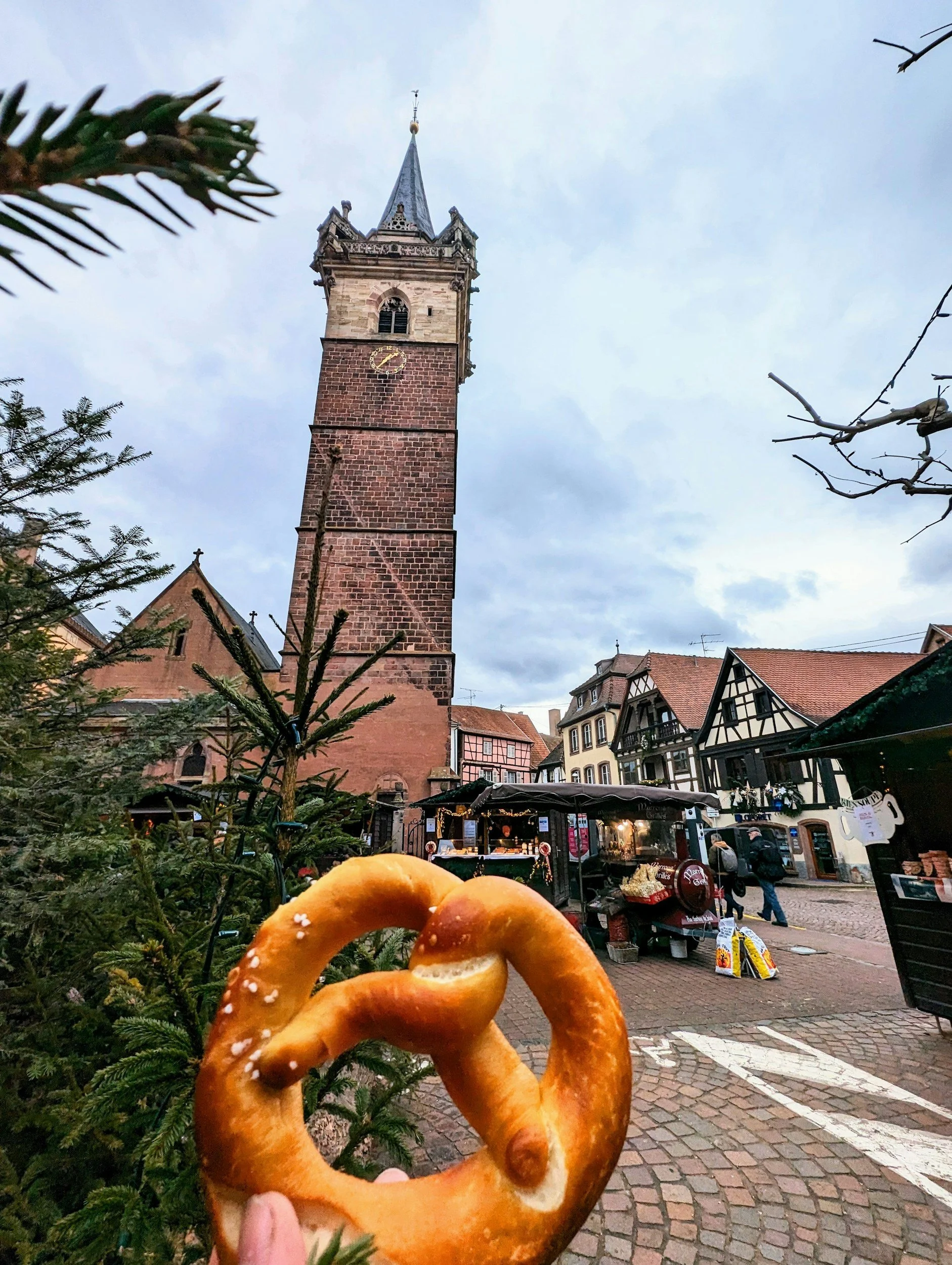
You usually notice this within a day or two. In towns where people actually live year-round, shops don’t suddenly vanish once November hits. They just adjust a bit. In places like Autun or Dole, a bookshop might be shut on Mondays, or a clothes shop might close earlier than in summer, but it’s still there. Lights are on, doors are open, and you’re not second-guessing whether it’s worth walking out because everything might be closed anyway.
What you don’t get are those long stretches of shuttered fronts that make a place feel paused. Even on quiet winter afternoons, there’s usually a butcher open, a small grocery store ticking along, a pharmacy that hasn’t changed its hours. You can head out after lunch, pick things up as you go, and wander back without watching the clock. It feels normal, just slower.
If you’ve stayed in places that rely more on tourism, the difference is obvious. Shops don’t just shorten hours, they close properly, sometimes for weeks. Streets empty out by mid-afternoon, and once a few shutters go down, the rest seem to follow. After a couple of days, you start planning around it, or you stop bothering to go out at all. In towns where shops stay open for locals, that never really happens. Winter is quieter, sure, but the place still works the way it’s meant to.
If you’re trying to picture what “lived-in” really looks like, this French countryside year-round gets it right.
Market days people actually organise their week around
In winter, market day stops being something you go to for a stroll and turns into something people quietly plan around. In towns like Nyons or Uzès, you notice that appointments, errands, even lunch plans bend slightly to fit the market morning. People aren’t turning up to browse. They come with bags, they move fast, and they leave once they’ve got what they need. Stalls sell out earlier, conversations are shorter, and there’s a clear sense that this is about the week ahead, not the next hour.
You see the knock-on effect everywhere else. Cafés open earlier and expect a rush before nine. Bakers are busier than usual first thing. Some restaurants already know what they’ll be cooking for lunch because they’ve spoken to the same producers they talk to every week. For a few hours, the centre feels busier than you’d expect for a winter weekday, then it all drops back down again once people head home.
If you’re around for more than one market day, the repetition stands out. Same stalls, same setup, same faces on both sides of the table, even when the weather’s miserable. That’s when it’s obvious the market isn’t there to create atmosphere or fill space. It’s part of how the week is organised, and everything else in town quietly adjusts around it.
What lunch looks like in winter
In towns where daily life doesn’t switch off for the season, lunch works pretty much the same way in January as it does in May. In places like Dole, Autun, or Nyons, restaurants open on weekdays without making a thing of it. Doors open around noon, a simple menu is written up, and service runs its course. There’s no chalkboard outside trying to pull people in and no sense that they’re waiting to see if anyone shows up. Lunch just happens.
You spot the regulars immediately. Someone eating alone at the same table they always take. A pair of colleagues coming in, ordering quickly, and being back out the door within forty minutes. Portions are solid but not heavy, the kind of food that makes sense when it’s cold out and you’re going back to work afterward. Stews, pasta, something baked, nothing dressed up. The menu doesn’t stretch itself just because it’s winter, and it doesn’t shrink either.
What makes this easy, especially if you’re staying more than a couple of days, is that nothing feels provisional. Lunch starts when it’s supposed to start and ends when it’s supposed to end. If you miss it, you miss it. If you make it in time, you eat normally. There’s no guessing whether places are open, no sense that service is scaled back or only there for show. After a few days, you stop thinking about it entirely, which is usually the best sign that a place is working the way it should.
How afternoons is spent in small towns
Winter afternoons in towns with real daily life have a very clear shape. Once lunch wraps up, there’s a window of a few hours where everyone does what they need to do before things start closing. In places like Dole or Autun, you feel it almost straight away. Streets aren’t crazy busy, but they’re active. People are out with purpose, walking from one place to the next, not wandering around.
This is when people go to the post office, stop by the pharmacy, pick up groceries for dinner, or deal with small practical things that don’t need their own slot in the day. You see the same faces moving through the centre, crossing paths, heading home with bags. Cafés stay open, but they quiet down. A few people sit inside reading or warming up, but no one’s treating it as an event. It’s just somewhere to pause for a bit before heading on.
If you’re staying in town for a few days, this part of the day ends up being the easiest. There’s nothing to plan and nothing to miss. You step outside, do what you need to do, maybe sit somewhere for a bit if you feel like it, and head back before it gets dark. The afternoon basically exists because people still have things to do, and that’s enough to give it shape.
And if you’re unsure how long to stay anywhere, these towns worth a few nights explain why one night usually doesn’t work.
Choosing the right town for a winter stay
You usually realise this kind of town works without a car because you stop checking maps almost immediately. In places like Langres or Crest, everything you actually need ends up folded into the same small area. Where you’re staying, where you buy food, where you grab a coffee, where you deal with errands. Nothing is far enough away to require planning, which makes a big difference in winter when you don’t want to be outside longer than necessary.
What helps is that the centre isn’t cut off from where people live. Residential streets lead straight into the main part of town, so there’s a steady trickle of movement all day. Someone walking a dog late morning. Someone else heading home with a bag of groceries mid-afternoon. Lights coming on in apartments while it’s still light out. The town doesn’t empty once the shops shut, it just quiets down a bit.
That’s why being without a car feels normal here after a day or two. Not because transport is especially good, but because you rarely need it. Distances stay reasonable even when it’s cold or damp, and simple things don’t turn into whole outings. You walk out, do what you need to do, and walk back. It feels less like a choice and more like how the town is meant to be used, especially in winter.
If you’re staying longer than a few days, these distances start to matter in very practical ways, especially if you’re travelling without a car in winter, where small differences add up faster than expected.
Regional train lines that still run reliably in winter
In winter, it’s not about how often the train runs, it’s about whether it shows up at all. On the older, well-used regional lines, things usually keep moving even when the weather isn’t great. Routes through places like Besançon, Dijon, or down through the Drôme towards Crest don’t suddenly disappear because it’s January. Trains might be less frequent, but they’re predictable, which matters much more when daylight is short and you don’t want to spend hours waiting around.
You feel the difference at the stations, too. Even smaller ones are usually monitored, and there’s someone around who knows what’s going on. When there’s a delay, it’s announced plainly, not wrapped in vague language. Boards update, times change, and you’re not left guessing whether you should wait or give up and go home. That kind of clarity takes a lot of friction out of winter travel, especially when you’re moving between smaller towns rather than heading into a big city.
Because of that, these lines work well if you’re staying put for a while. You can plan a day trip or a short hop to the next town without building your whole week around it. If you go, you go. If you don’t, nothing falls apart. The train becomes something you use when it makes sense, not something you have to manage carefully, which is exactly what you want in winter.
Where people still sit outside when the sun’s out, even in winter
You only really notice this on clear days, usually late morning or just after lunch. In towns where cafés are used by locals first, people don’t automatically move inside just because it’s winter. In places like Uzès or Nyons, you’ll see a few tables outside that are quietly occupied when the sun hits the right spot. Not full terraces, just two or three people sitting with a coffee or a glass of something, coats still on, scarves wrapped properly.
The seating itself tells you a lot. Chairs are pushed up against walls, tucked into corners, set where the wind doesn’t reach rather than where the view is nicest. No heaters, no blankets laid out for effect. People sit down, finish one drink, and head on. It’s very practical. They’re not trying to make the most of winter light or enjoy the moment, they’re just taking advantage of a clear patch in the day.
What’s interesting is how unremarkable it all is. No one’s lingering, no one’s photographing anything, and no one seems particularly pleased with themselves for sitting outside in January. People dress for the weather and carry on as usual. It’s just part of the day, the same way it would be in March or October. That’s usually the sign you’re somewhere that’s used to itself year-round, not adjusting its habits just because the season’s changed.
Why the week matters more than the weekend
In winter, you start to realise that the busy day of the week often isn’t Saturday. In towns like Nyons or Autun, the centre feels most alive on market day, even if that falls on a Wednesday or Thursday. That’s when people are out early, shops are fully open, cafés are busier than usual, and errands get bundled together. By comparison, weekends can feel surprisingly flat once you’re outside school holidays.
This throws you slightly at first if you’re used to planning around weekends. You might expect Saturday to be the day when everything happens, but instead it’s quieter, shorter, more inward-looking. Locals have already done what they need to do earlier in the week. On market day, you see people crossing paths repeatedly, carrying bags, stopping briefly for coffee, then heading home. On the weekend, the same streets are calmer, sometimes almost still.
After a few days, you stop fighting it. You learn that Tuesday or Thursday is when you go out properly, and the weekend is when you stay closer to home. You don’t plan much for it because there’s nothing to miss. In winter especially, this rhythm becomes very clear. Without visitors filling the gaps, the week shows its real shape, and it’s organised around practical needs rather than the idea of free time.
What evenings look like in winter (and when things close)
In winter, evenings in towns like Gray or Mende follow a very predictable pattern, and that predictability is the useful part! Restaurants open early, usually around seven, sometimes earlier on weekdays. Most places run a single service. People arrive close to opening time, eat, and leave. By half past eight or nine, kitchens are closing and streets are already quieter. If you turn up late, there usually isn’t a backup option a few doors down.
Cafés extend the evening slightly, but not much. You might still find one open until nine or ten, especially near the centre, but it’s obvious when things are winding down. Chairs get stacked, lights dim, and people finish up rather than settle in. There’s no overlap between dinner and late-night life because late-night life doesn’t exist here in winter. That’s not a criticism, it’s just how the day is structured.
This matters if you’re staying more than a night or two. You start planning dinner the same way locals do, earlier rather than later, and you stop assuming you can decide at the last minute. Evenings become short and contained, which makes days feel more complete instead of stretched. Once you adjust, evenings stop feeling empty. They feel finished. You eat, you go home, and the day closes without dragging on or needing to be filled with something else.
Practical things that make a bigger difference in winter
Winter weather changes how you move through a town much more than people usually admit. It’s not about averages, it’s about what happens on a random Tuesday afternoon. In places with regular winter rain, like Dax or Bayonne, you notice very quickly which streets drain properly and which ones don’t. Towns that work year-round tend to have covered arcades, practical pavements, and routes that let you get across the centre without getting soaked every time you step outside.
In colder inland towns, it’s a different issue. In places like Mende or Langres, what matters is how quickly ice is dealt with. You notice whether main walking routes are cleared early, whether crossings are treated, and whether slopes are avoidable. A town can look manageable on a map and still be exhausting if every short walk turns into something you have to concentrate on.
This is why staying close to the centre matters more in winter than at any other time. A ten-minute walk in summer becomes something you plan around when the weather turns. If you’re five minutes from the bakery, the café, and the grocery store, you go out more often and think about it less. If you’re twenty minutes away on uneven ground, you start stacking errands or staying in. That’s the real impact of winter weather. It doesn’t stop you from doing things, but it quietly decides how often you bother.
Weather becomes part of daily logistics in winter, especially outside alpine areas, and it’s one of the reasons winter travel in parts of France and Italycan feel more manageable than people expect.
Distances between station, centre, and accommodation
This is one of those things that looks minor on a map and then quietly decides how your days go. A walk that feels completely reasonable in July can feel annoying fast in winter, especially if it involves a hill, bad paving, or streets that empty out early. Towns that work well year-round usually keep these distances tight. In places like Dole or Gray, the station, the centre, and most places to stay sit close enough together that you don’t really think about it. You arrive, walk straight in, and you’re done.
The routes matter as much as the distance. In towns that function properly in winter, the walk from the station into town is obvious and direct. No steep climbs right away, no dark shortcuts you’d rather avoid after 17:00, no stretches where you’re guessing if you’re still going the right way. You see other people using the same route, which helps. It feels normal to walk it with a bag, even when it’s cold.
That’s what makes walking feel like the default instead of something you’re forcing yourself to do. If where you’re staying is ten minutes from the station and five minutes from shops and cafés, you go out more often without planning it. If it’s twenty minutes away on uneven ground, you start bundling errands together or staying in once you’re back. Over a week, that difference really adds up. It’s not dramatic, but it’s the difference between a place feeling easy to live in and one that slowly feels like more effort than it’s worth.
Towns that are already awake by 9am

By nine in the morning, you can usually tell exactly what kind of town you’re in. I personally love mornings… In places like Langres or Mende, things are already happening in small, ordinary ways. A bakery door keeps opening and closing. Someone is dragging bins back inside. A delivery van is double-parked for two minutes because the driver knows it won’t be an issue. A café near the centre has a couple of people standing at the counter, coats still on, finishing coffee before heading off.
What makes it feel real is that it’s not all happening in one place. It’s spread out. You notice movement on side streets, not just along the main square. Someone crosses the road with a work bag. Someone else is walking back home with bread tucked under their arm. Shutters are half-open, not all at once, but one by one. You’re not watching a rush, you’re watching a town ease into the day the way it always does.
If you stand still for a few minutes, you start recognising patterns. The same person passes twice. The café fills and empties again. The street never goes quiet, but it never gets busy either. That’s usually the moment you stop wondering whether the place works in winter. When a town is already doing its thing by nine in January, the rest of the day doesn’t need managing. It just unfolds the way it’s supposed to.
Grocery shops that stay open all winter, not just bakeries
You feel the difference immediately in towns where there’s more than just a bakery keeping things going in winter. In places like Gray or Mende, there’s at least one grocery shop that stays open year-round, with normal hours, even on quiet weekdays. That changes how you live there day to day. You can cook properly. You don’t have to plan food shopping around trips elsewhere or stock up every time you go out.
What’s on the shelves shifts a bit once winter sets in. Less grab-and-go food, more ingredients people actually cook with. Vegetables that last, bigger packs of basics, things meant for dinners at home rather than picnics. You see the same people coming in every few days, not once a week with a car full of bags. Opening hours don’t jump around, which means you stop checking before you go out.
That kind of shop tells you a lot about who lives in a town. If it’s open all winter, it’s because people rely on it, not because visitors pass through. It’s one of the clearest signs that the place is functioning for residents first, which makes a longer winter stay much easier without thinking too hard about logistics.
Where you stay also plays into this more than people realise, especially in winter, when being close to shops and daily services matters far more than amenities or views.
Short walks that still work in winter light
In winter, walking stops being about distance and starts being about timing. When it gets dark early, towns that work well tend to have short, obvious routes close to the centre that people use every day. In places like Dole or Langres, those routes are easy to spot because they’re maintained and used constantly. Along the canal, around the ramparts, beside a river. Flat ground, good surfaces, and lighting that actually works.
These walks aren’t meant to go anywhere in particular. They’re loops people do because they fit into the day without effort. You don’t need to plan them, check the weather carefully, or commit to being out for an hour. You step outside, walk for twenty minutes, and head back before it’s fully dark.
That’s what keeps people moving through winter without turning it into a task. When the route is nearby, cleared, and familiar, walking stays part of the routine. It doesn’t become something you postpone or overthink just because the days are shorter.
Why some towns feel easier than others in winter
In towns where winter life is real, nothing really changes just because visitors aren’t around. In places like Lons-le-Saunier or Saint-Flour, shops open on the days they’re meant to open, markets run when they always run, cafés have the same people coming in at the same times, and trains stick to their schedules. There’s no sense that anything is being “kept going” for show. It’s just how the place works.
What you don’t see is any effort to fill gaps. No extra events added because it’s quiet, no attempts to make things feel busier than they are. If it’s a slow Tuesday, it stays a slow Tuesday. If the market is small that week, it’s small. Cafés don’t extend hours to catch imaginary foot traffic, and restaurants don’t stay open late on the off chance someone turns up.
That’s what makes winter stays easier than people expect in these towns. You don’t need to adjust to a reduced version of normal life, because there isn’t one. You fit into routines that already exist. After a few days, you stop noticing the absence of visitors altogether. The town doesn’t feel quiet because something is missing. It feels quiet because that’s how it usually is, and everything still works exactly the same.
If you slow it down even more, the Lot Valley is where you really feel how little needs to happen for a day to feel full.
FAQ: visiting France in winter
Which towns in France are actually good to visit in winter?
The best towns in France in winter are the ones that function year-round, not the ones built around tourism. Places like Dole, Langres, Autun, Nyons, and Mende stay active through winter, with shops open, cafés used by locals, and weekly markets still running. The key sign is weekday activity, not how busy it feels on a weekend.
Are small towns in France open in winter or do they shut down?
It depends on the town. In places with a strong local population, shops, cafés, and restaurants stay open with slightly reduced hours. In more tourism-dependent towns, many places close between November and March, especially midweek. You’ll notice the difference quickly by checking if everyday shops like bakeries, pharmacies, and grocery stores are open on a Tuesday morning.
What is the best region in France to visit in winter without a car?
Eastern and central France tend to work best for winter travel without a car. Regions like Bourgogne-Franche-Comté, parts of Auvergne, and the Drôme have reliable regional train lines and towns where the station, centre, and accommodation are within walking distance. Towns like Dole, Besançon, and Autun are especially easy to manage without needing a car. Down south it shifts a bit, but not as much as you’d think, these towns near Marseille still run on the same kind of everyday rhythm.
Is France worth visiting in winter if you’re not skiing?
Yes, but it’s a different kind of trip. Outside ski areas, winter in France is quieter and more focused on daily life. Instead of sightseeing, the experience is built around cafés, markets, short walks, and local routines. It works best if you’re comfortable with slower days and don’t need constant activity.
Are French towns walkable in winter?
Many are, but walkability depends on surface and layout more than size. Towns that function year-round tend to maintain main walking routes, clear leaves or frost early, and keep paths between the station, centre, and shops usable. Flat towns with practical paving are much easier than steep historic centres during colder months.
How cold does it get in France in winter?
In most small towns, temperatures typically range from 0°C to 10°C. Inland areas can feel colder due to damp air or wind, while higher-altitude towns may experience frost or occasional snow. The temperature itself is manageable, but shorter daylight hours and grey days affect how you plan your time.
Do markets still run in France during winter?
Yes, in towns where markets are part of everyday life. Winter markets are usually smaller and more focused on food rather than browsing. They take place on the same day and in the same location year-round, often finishing earlier in colder weather.
Is it easy to travel between towns in France in winter?
Yes, if you stay on established regional train routes. Lines connecting cities like Dijon, Besançon, Lyon, and smaller towns in between continue running throughout winter. Trains may be less frequent than in summer, but they are generally reliable and predictable. If you’re trying to figure out how to actually do this without a car, this winter in France without one makes it feel a lot less complicated.
How many days should you stay in one town in winter?
Two to four nights works best. This gives you time to settle into the town’s rhythm, understand how the week is structured, and avoid feeling like you need to move constantly. Staying longer often makes the experience more enjoyable than trying to see multiple places quickly.
What kind of trip is France in winter best for?
France in winter suits travellers who prefer routine over sightseeing. It works well if you enjoy walking without a strict plan, spending time in cafés, visiting markets, and observing daily life. It’s less suitable if you’re looking for nightlife, guaranteed sunshine, or a packed itinerary.