These Spanish castles are worth the detour
You’re standing in a quiet square in inland Spain, it’s late morning, and apart from a bakery opening and a few locals crossing the street, there’s not much movement yet. The castle you came for is already visible above the rooftops, but getting there isn’t just a matter of walking up and taking a few photos. Some are fully open and take a couple of hours to explore properly. Others are closed, sitting on ridgelines or farmland where the visit is about the walk and the setting rather than going inside. A few are tied to guided tours with fixed times that shape your entire day if you don’t plan ahead.
This guide is built around how these places actually work when you visit them. Not just where they are, but how you reach them from nearby towns, when they’re quiet, what kind of access you’ll realistically have once you arrive, and how to combine them with a stop that makes sense for lunch or an overnight stay. You’ll notice that some are closer to cities like Zaragoza or Barcelona, while others take you into areas where public transport doesn’t really work and you need to rely on a car.
If you’re trying to plan a route through Spain that includes castles without ending up in the most crowded or heavily restored sites, this is the kind of detail that actually changes the experience. Not just which castles to choose, but how to visit them in a way that feels manageable once you’re there.
Castillo de Belmonte
Castillo de Belmonte sits just outside the village, and getting there on foot is straightforward if you start near Plaza del Pilar. Most people follow Calle Cervantes out of the center, where the houses gradually give way to open land, and the castle stays in view the whole time. The last part of the walk is more exposed than it looks on a map, with no shade and a steady incline, so going up in the middle of the day during summer is harder than it needs to be. If you go earlier, before around 10:30, the light is softer and the whole approach feels quieter.
If you’re arriving by car, follow the signs for “Castillo” from the CM-3102 road. The parking area is just below the outer walls, and from there it’s a short gravel path uphill. It only takes a couple of minutes, but it’s uneven in places, so it’s worth wearing proper shoes rather than sandals if you plan to walk the walls later as well. Most visitors arrive late morning into early afternoon, often in small groups, so if you want more space inside, it helps to either arrive early or wait until later in the day when things ease off again.
Tickets are sold just inside the entrance, and most people buy them on the spot. There’s usually no need to book ahead unless it’s a weekend or a busy holiday period. One small thing that makes a difference is not rushing straight through after buying your ticket. If you hang back for a few minutes in the entrance courtyard and let the first group move ahead, the rooms inside feel noticeably calmer. There’s also a combined ticket that includes the Colegiata de San Bartolomé in the village, but you have to ask for it at the desk as it’s not always clearly mentioned.
Guided tours run at set times, mostly in Spanish, and they tend to move through the castle at a steady pace without stopping much in the smaller rooms. If you prefer to move around freely, the self-guided visit works better here. The layout isn’t complicated, but it’s not linear either, which means you can take small detours without losing your way. Audio guides are sometimes available, but they’re not always offered unless you ask.
Once inside, the courtyard is where people naturally slow down. It’s a two-level space with wooden ceilings and detailed stonework, and even when there are others around it doesn’t feel loud. Instead of following the main route straight ahead, it works better to turn left and head up toward the ramparts first. That section is often quieter because most visitors start with the interior rooms and work their way out.
Up on the walls, the view is very open. You’re looking out over flat farmland, vineyards, and long rural roads rather than mountains or dramatic scenery. Villages like Monreal del Llano and Villaescusa de Haro sit low on the horizon, and once you take a moment to look properly, the position of the castle makes more sense. It was built here in the 15th century under Juan Pacheco to oversee movement across this part of La Mancha, not to sit in isolation.
Inside the rooms, you can move more freely than in many other castles. You’re not just looking through doorways, you can step inside, walk across worn floors, and move between smaller spaces that aren’t always obvious at first. Some of the side rooms sit just off the main path and are easy to miss if you’re moving quickly. Slowing down here changes the experience quite a bit, especially on the upper levels where there’s less foot traffic.
Back in the village, lunch follows a local schedule rather than a visitor one. Most kitchens don’t really get going before 13:30, so arriving earlier usually means waiting. Along Calle Mayor, you’ll see a few bars opening gradually, with locals coming in steadily rather than all at once. Bar La Muralla, just off the main street toward the edge of the old town, is a reliable option if you want something simple without overthinking it. The menú del día is usually the easiest choice, and service runs at its own pace.
If you stay overnight, mornings feel very different. Between 08:00 and 10:00, the streets are quiet, with a few shops opening and people picking up bread from local bakeries rather than sitting down for long breakfasts. It’s a good time to walk back out toward the edge of the village and look at the castle from a distance, without the activity around the entrance.
Getting here takes a bit of planning, which is part of why it still feels relatively calm. There’s no direct train connection, so most people arrive by car. From Madrid, it’s just over two hours using the A-3 before turning onto smaller regional roads. From Cuenca, it’s closer to an hour and twenty minutes. The last part of the drive passes through smaller towns with limited services, so it’s worth filling up before leaving the main roads rather than assuming you’ll find a petrol station nearby.
Because it takes a bit more effort to reach, people tend to spend more time once they’re here. You’re not being moved along in the same way as in more accessible historic sites, and that changes how the visit feels. You can walk the full structure, step in and out of rooms, and spend time on the walls without feeling like you’re following a set route.
Castles in this part of Spain often come with almost no crowds, which is why places like Soria province tend to stay under the radar even for people who’ve traveled a lot.
Castillo de Zafra
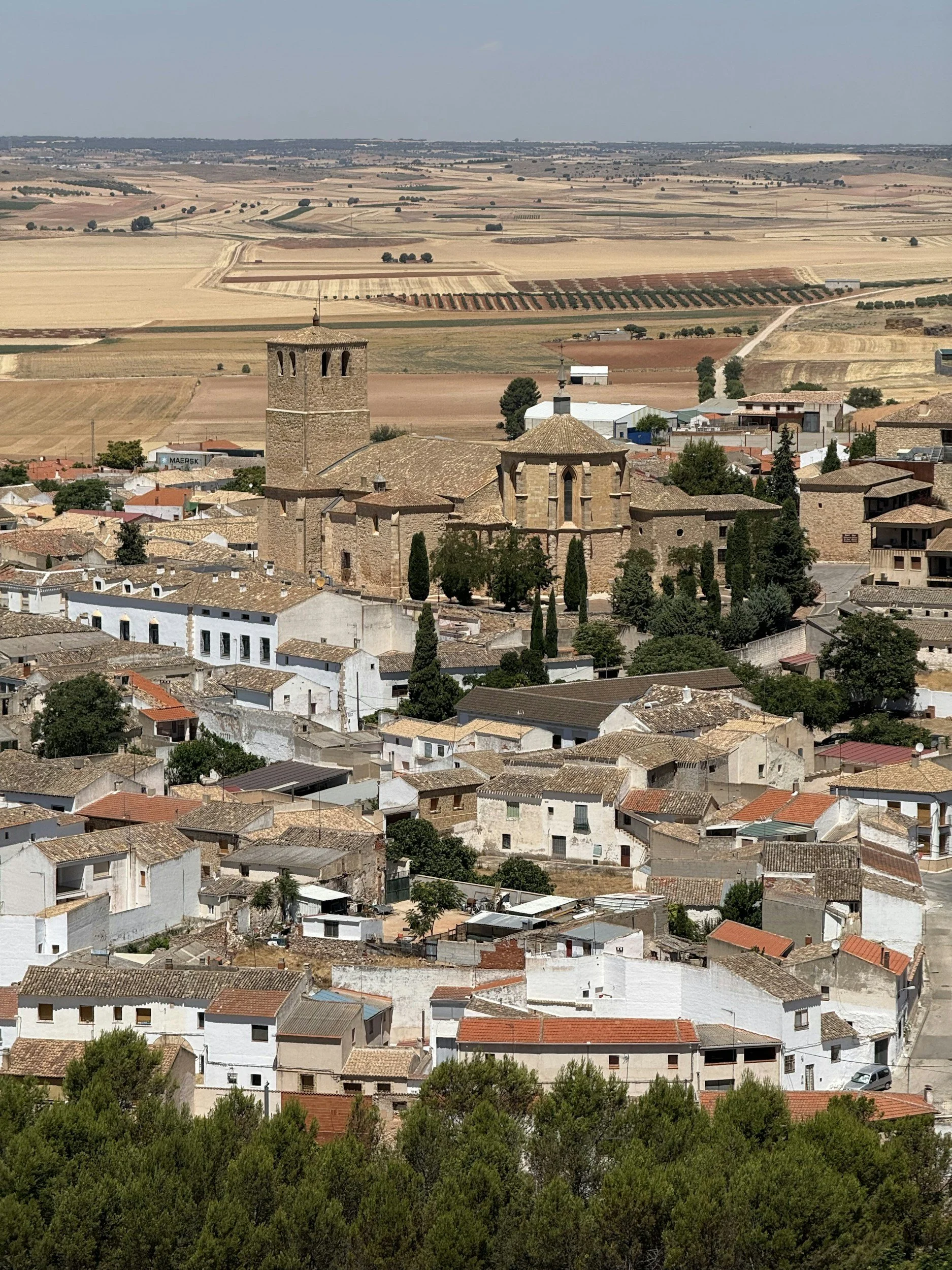
Castillo de Zafra sits on a narrow ridge in the Sierra de Caldereros, about 25 minutes by car from the small town of Molina de Aragón. It’s one of those places that looks close on a map but takes a bit of effort to reach in practice. The last part of the drive is along local roads that narrow down quickly, and most people end up parking near the small hamlet of Campillo de Dueñas or along the dirt track leading toward the ridge. From there, you’re looking at a walk of roughly 20 to 30 minutes depending on where you stop the car.
The path itself isn’t marked in a formal way, but it’s easy enough to follow. You’ll see the castle ahead of you the entire time, rising directly out of the rock rather than sitting on top of a hill. The ground is uneven and exposed, with loose stones in parts, so proper shoes make a difference here. There’s no shade along the route, and very little shelter from wind either, which is something to factor in depending on the season. In summer, going early in the morning or later in the evening is noticeably more comfortable, while in colder months the wind across the ridge can feel stronger than expected.
Unlike Castillo de Belmonte, you can’t go inside Castillo de Zafra. It’s privately owned and closed to the public, so the experience is entirely about the approach and the setting rather than interiors or exhibitions. That said, this is exactly why it feels different from most castle visits in Spain. There are no ticket desks, no opening hours, and no structured route. You walk up, spend time around the base, and leave when you’re ready.
The best views are not right at the entrance gate, but slightly off to the side along the ridge. If you continue walking a little past the main approach, you’ll find angles where the castle aligns with the rock formations beneath it, which gives a better sense of how it was built into the landscape. Most visitors stop too early, take a few photos, and turn back without exploring those extra few minutes along the path.
Because there’s no formal entrance, there are also no facilities nearby. There are no cafés, water points, or toilets once you leave the village, so it’s worth bringing what you need with you rather than assuming anything will be available. Campillo de Dueñas itself is very small, with limited services, so most people either stop in Molina de Aragón before heading out or plan to eat there afterward.
If you do go to Molina de Aragón, it’s worth walking through the old town rather than just stopping for food. The streets around Plaza de España and the area near the bridge over the Río Gallo have a bit more movement, especially around lunchtime. You’ll find a few simple restaurants offering set menus, and it’s a practical place to reset after the walk rather than trying to find something closer to the castle.
Getting to this part of Spain takes more planning than most visitors expect. From Zaragoza, the drive is just under two hours, and from Madrid, it’s closer to two and a half. Public transport isn’t a realistic option here, as connections to Molina de Aragón are limited and don’t align well with visiting the castle itself, so having a car makes a significant difference.
Because access is more involved and there’s nothing commercial built around it, Castillo de Zafra doesn’t attract the same type of visitor as more accessible sites. You won’t find large groups or guided tours here, and even on busier days, people tend to come and go without staying too long. If you give it a bit more time and walk beyond the first viewpoint, the area opens up in a way that most visitors don’t fully take advantage of.
Some of these stops make more sense as part of a longer route, especially if you’re already looking at autumn villages across the north.
Did you know?
Castillo de Zaf was the backdrop for the iconic Tower of Joy scene in Game of Thrones! Fans will recognize it as the place where Ned Stark and Lyanna Stark share a pivotal, emotionally charged moment. Walking through these ruins, you can almost feel the connection to that scene, with the castle’s haunting beauty and secluded atmosphere adding depth to th experience. For any Thrones fan, it’s not just a visit to a historical site—it’s a chance to stand where the show’s unforgettle past comes to life.
Castillo de Balsareny
Castillo de Balsareny sits above the town on a low hill rather than a dramatic peak, which changes how you approach it. If you’re coming on foot from the center, start near Plaça de l’Ajuntament and follow Carrer del Castell out of town. The road curves gently uphill, passing a few residential houses before opening up, and the castle only really comes into full view near the end. It takes around 15–20 minutes at a steady pace, and there’s very little shade on the final stretch, so going earlier in the day is noticeably easier in warmer months.
If you’re driving, continue past the town and follow signs toward “Castell” and Ermita del Castell. There’s a small parking area just below the chapel, and from there it’s a short walk along a gravel path that loops slightly before reaching the entrance. It’s not difficult, but the ground is uneven, and after rain it can be a bit slippery, especially near the final turn where the path narrows.
Access is only possible through guided visits, and this is where planning makes a difference. Tours don’t run continuously, and outside weekends and peak periods, there are fewer time slots than most people expect. If you arrive without checking, you can easily end up waiting an hour with nothing around you, as there are no cafés or facilities up by the castle itself. Tickets are paid on site just before the tour starts, and groups tend to be small, often a mix of locals and visitors from nearby towns rather than large tour groups.
The tours are usually in Catalan or Spanish, and they move at a steady pace through the castle without much time to stop independently. That said, the layout here works well for a guided visit because the spaces are quite compact and connected. You move from the central courtyard directly into adjoining rooms without long corridors or separate wings, which makes it easier to understand how everything functioned together rather than as isolated sections.
Inside, the courtyard is enclosed and smaller than people expect, with a well in the center and stone walls that still feel solid rather than reconstructed. From there, the route takes you through storage rooms, living areas, and defensive sections without much separation. Some of the doorways are low and slightly uneven, so you’re naturally moving a bit slower, which helps you notice details that are easy to miss if you’re rushing.
One part that stands out is the upper section of the walls. You don’t get wide ramparts here, but there are a few points where the guide will stop briefly, and from there you can see how close the castle sits to the town below. The Llobregat River runs through the valley, and you’ll notice how tightly Balsareny is clustered around it rather than spreading out. It’s a greener landscape than further south, with wooded areas and cultivated land rather than dry plains.
Because everything is tied to the guided schedule, timing shapes the experience more than the castle itself. Arriving five to ten minutes before the tour starts works better than coming early and waiting, especially since there’s nowhere to sit apart from the low stone walls near the entrance. If you miss a slot, it’s usually easier to go back down into the village and return later rather than staying up there.
Back in Balsareny, most of the activity is along Carrer Major and around Plaça de l’Ajuntament. In the morning, bakeries open early, and you’ll see people stopping in briefly rather than sitting down for long breakfasts. For lunch, things start around 13:30, and a few small restaurants serve menú del día without much variation. It’s not a place where you plan your visit around food, but it works well as a straightforward stop after coming down from the castle.
Getting here is relatively simple compared to more remote castles. From Barcelona, it’s just over an hour by car via the C-16, and the road is direct without complicated turns. There are bus connections, but they don’t always line up with the tour times, so you’d need to plan carefully if you’re not driving. Once you’re in town, everything is close enough to manage on foot.
Because visits are limited to small guided groups, you don’t get crowds building up inside the castle. At the same time, you don’t have the freedom to move at your own pace, so it’s a different kind of visit compared to places where you can wander freely. It works best if you treat it as a short, structured stop rather than somewhere you’ll spend a full afternoon.
It’s easy to default to the same well-known areas, but a quick look at these hidden villages usually changes people’s plans pretty fast.
Castillo de Alcañiz
Castillo de Alcañiz is part of the town rather than something you visit separately, which changes how the whole experience works. When you arrive in Alcañiz, you’re already looking up at it. The easiest way to reach it on foot is from Plaza de España, crossing the square and heading up along Calle Mayor before turning into the narrower streets that lead uphill toward the Parador entrance. It takes around 10–15 minutes, but the incline is steady and the paving stones are worn, so it’s not a quick walk, especially in heat or after rain.
If you’re driving, there’s a road that loops around the back of the hill toward the Parador de Alcañiz. Parking is limited and tends to fill around midday when hotel guests are coming and going, so it’s easier either earlier in the morning or later in the afternoon. If you’re already in town, walking up is usually simpler than trying to find a space.
The main thing to know before you go up is that this isn’t a fully open castle. Part of it operates as a hotel, which means access is controlled. You enter through the same main area as hotel guests, and from there you buy a ticket for the visitor route. There’s no wandering freely through the entire structure unless you’re staying overnight. Most people don’t realise that until they’re already inside, so it’s worth adjusting expectations before you go.
Tickets are sold just inside the entrance, and there’s usually no need to book in advance. Once you’re in, you follow a set route through the historic sections. It’s not guided unless you join one of the scheduled tours, and those tend to be in Spanish and move fairly quickly between stops. If you’re more interested in the space than the full historical explanation, the self-guided visit works better here because you can pause where you want without holding up a group.
The part people spend the most time in is the painted Gothic hall. It’s not obvious from the outside, but once you’re in, the ceiling and upper walls are covered in medieval paintings that take a few minutes to properly notice. Most visitors walk in, look up briefly, and move on, but if you stay a bit longer, you’ll see details that aren’t immediately clear, especially along the upper sections of the walls.
From there, the route continues through stone corridors and vaulted rooms that reflect how the castle shifted from a defensive structure into a more residential space. It’s not overly restored, and some of the rooms feel quite plain, but that also means you’re seeing the structure more directly rather than a staged version of it. The connection to the Order of Calatrava is referenced throughout, but not in a way that dominates the visit.
At a certain point, you’re led back outside onto sections where you can look down over the town. This is where it becomes clearer how closely the castle is tied to Alcañiz itself. You’re not looking out over empty land, but straight down onto Plaza de España, the arcaded buildings around it, and the church of Santa María la Mayor. You can trace the streets you walked earlier and see how compact the old center actually is.
Once you come back down, it’s worth spending a bit of time around the lower part of town rather than moving on immediately. Plaza de España is the main reference point, but it changes depending on the time of day. In the morning, you’ll see a few cafés open under the arcades with people stopping briefly rather than sitting for long. By early afternoon, the square fills more evenly, and you’ll notice people moving between bars rather than staying in one place.
If you walk out of the square along Calle Alejandre, you’ll find a few smaller spots that feel less exposed than the main plaza. This is where locals tend to go for a quieter coffee or a quick drink. For lunch, most places open kitchens around 13:30, and menú del día is the default rather than something you have to look for. It’s not a place where you plan a food-focused stop, but it works well if you follow the local timing instead of trying to eat early.
Getting to Alcañiz is relatively straightforward by car. From Zaragoza, it’s about 1 hour and 30 minutes via the N-232, and the drive is direct without complicated turns. From Teruel, it takes closer to 1 hour and 45 minutes. Public transport exists, but the schedules are limited and don’t line up well with a day visit, so having a car makes a noticeable difference.
Because the castle functions partly as a hotel, the visit feels a bit more controlled than in places where you can move freely. At the same time, it’s integrated into the town in a way that makes it easier to combine with a few hours in the center rather than treating it as a separate stop. It works best when you see it as part of a half-day in Alcañiz, walking up, spending time inside, and then coming back down into the streets where everything connects.
After a few days inland, the shift toward the coast feels noticeable, and somewhere like Cedeira gives you that contrast without losing the slower pace.
Castillo de Loarre
Castillo de Loarre sits above the village rather than in it, so you don’t really pass through Loarre on the way up. If you’re coming from Huesca, the road (A-1205) winds gradually upward for about 30 minutes, and the castle appears quite suddenly on the hillside once you get closer. It’s not a long drive, but the final stretch has a few tight curves, so it takes slightly longer than it looks on a map.
There’s a proper parking area just below the entrance, and from there it’s a short, slightly uneven walk uphill. Most people arrive mid-morning and early afternoon, often as part of day trips from Huesca or Zaragoza, so if you want more space inside, arriving right when it opens or later in the afternoon makes a noticeable difference. The setting is more exposed than expected, with very little shade, so timing matters more here than at castles that sit within a town.
Tickets are sold in the visitor center just before the entrance, and this is where things are a bit more structured than in smaller sites. You can choose between a standard ticket or one that includes an audio guide, which is actually worth taking here because there aren’t many written explanations once you’re inside. The audio guide follows the layout closely and gives context without forcing you to move at a fixed pace.
Guided tours are available at set times, mostly in Spanish, and they tend to move through the castle in a fairly direct way. If you prefer to explore more freely, it’s easier to go self-guided and follow the route on your own. The layout isn’t complicated, but it has enough variation that you can take small detours without losing your sense of direction.
Once inside, the first thing you notice is how intact the structure feels. This isn’t a reconstructed site with large open gaps, but a castle where walls, towers, and interior spaces still connect in a way that makes sense as you move through them. Instead of heading straight into the main courtyard, it’s worth taking a few minutes near the entrance to look back toward the surrounding landscape. From here, you can see how the castle sits above the plains leading toward Huesca, which explains its position better than anything inside.
The route naturally leads you through a series of enclosed spaces and then opens up into the central courtyard. From there, you can access different levels, including the upper sections of the walls. The church inside the castle, with its thick stone columns and simple structure, is one of the quieter areas because many visitors pass through it quickly. If you stay a bit longer, especially when there aren’t groups moving through, the space feels noticeably calmer than the more exposed sections.
Walking the upper parts of the castle gives you a wider view across the surrounding area. You’re looking out over open land with low vegetation rather than dense forest or urban areas, and the horizon stays clear in most directions. It’s not a dramatic viewpoint in the usual sense, but it gives you a better sense of how isolated the castle once was.
Back down near the entrance, there’s a small café and rest area, but it’s limited and tends to fill up quickly during peak hours. It works better for a short stop rather than a proper meal. If you want to sit down for lunch, it’s easier to head back toward Loarre village or continue on toward nearby towns where there are more options.
If you do go into Loarre village afterward, most of the activity is centered along the main road and near the small square. It’s quiet for most of the day, with a few cafés opening around midday. Lunch follows the usual timing, starting around 13:30, and options are simple rather than varied. It’s not a place where you plan a long stop, but it works well as a short break after visiting the castle.
Getting here without a car is possible but not practical for most people. There are limited bus connections from Huesca, but they don’t run frequently and don’t always align well with visiting hours. Having a car makes the visit much easier, especially if you want to combine it with other stops in the area.
Because Castillo de Loarre is easier to reach than more remote castles but still sits outside a town, it attracts a steady flow of visitors without feeling completely crowded. The experience depends a lot on timing, but if you avoid the busiest hours, you can move through most of the structure at your own pace without feeling rushed.
Not everyone wants to stay inland the whole time, so comparing it with places like Valencia quiet spots can help you decide what direction to go.
After a few stops, you start to notice that castles in Spain aren’t presented in one consistent way, and that’s what tends to catch people off guard. One morning you’re buying a ticket and walking straight into a fully restored interior like in Belmonte, and the next you’re standing below a locked gate at Zafra with no signage, no staff, and no clear “entry point” beyond the path you just walked. Both are normal here, and neither feels unusual once you’ve seen a couple.
In Aragón, especially around places like Alcañiz and further north toward Loarre, castles often sit right next to the town or just above it, and people treat them as part of the landscape rather than something you build a full day around. You walk up, spend some time, then head back down into the streets where everything continues as usual. In towns like Alcañiz, you’ll leave the castle and be back in Plaza de España within minutes, with people already sitting down for coffee under the arcades or moving between bars along Calle Mayor.
Further south, around Belmonte, the experience shifts slightly. The castle is still central, but the visit is more contained. You drive up, park below the walls, go inside, and then return to the village where lunch doesn’t start until well after 13:30. If you arrive too early, you end up waiting because nothing is open yet, which isn’t something you really factor in until you’ve done it once.
What also stands out is how little is explained on site in some of these places. You won’t always find detailed panels or clearly marked routes, and in some cases, like Zafra, there’s nothing at all beyond the structure itself. That means you’re relying more on what you see around you, how the land is laid out, where the roads run, and how close the nearest village actually is. It’s less guided than people expect, but also more direct.
If you’re planning a route, it helps to think in terms of how these places fit into a normal day rather than trying to connect as many as possible. Driving between regions like Aragón and Castilla-La Mancha takes longer than it looks once you leave the main roads, and stopping in smaller towns in between usually adds more to the day than trying to fit in one extra castle.
These are the details that don’t really show up when you’re just searching for “castles to visit in Spain,” but they’re the ones that shape how the trip actually works once you’re there.
Some towns manage to combine both history and somewhere you actually want to stay a few nights, which is why Santillana del Mar keeps coming up in plans like this
How to choose which castles to visit (based on how you actually travel)
Most people don’t struggle with finding castles in Spain. They struggle with choosing which ones make sense for the way they travel once they’re there.
If you only have a short trip and want a straightforward visit, places like Castillo de Belmonte or Castillo de Loarre are easier to work with. You can park close, buy a ticket on arrival, and spend a couple of hours moving through the structure without needing to plan your day around fixed timings.
If you’re already driving through quieter parts of Aragón or Castilla-La Mancha and don’t mind a bit of effort, Castillo de Zafra fits better. It’s not a stop you combine with anything else nearby, and there’s no infrastructure around it, but that’s also why it feels completely different from the others.
For a more structured visit where everything is explained as you go, Castillo de Balsareny works, but only if you’re comfortable adjusting your day around guided tour times. Showing up without checking means you’ll likely be waiting.
Castillo de Alcañiz sits somewhere in between. You can visit part of it without much planning, but because it also functions as a hotel, access is more controlled and the visit feels shorter unless you’re staying overnight.
The easiest mistake is trying to fit too many of these into one route. They don’t work the same way, and the time it takes to move between them adds up quickly once you’re off the main roads. Choosing two or three that fit naturally into where you’re already going usually works better than trying to cover everything.
And if seeing castles from a distance isn’t enough, the idea behind this castle hiking route shifts the whole experience into something more active.
FAQ: Exploring Castles in Spain
Can you go inside castles in Spain or are they closed?
It depends on the castle. Some, like Castillo de Belmonte and Castillo de Loarre, are fully open and you can walk through rooms, courtyards, and towers on your own. Others, like Castillo de Balsareny, only allow entry at specific times with a guided tour. Then there are castles like Castillo de Zafra where the interior is completely closed, and the visit is limited to walking up to the site and viewing it from the outside.
Do you need to book tickets in advance for castles in Spain?
Most of the time, no. Tickets are usually bought on arrival at the entrance. The exception is castles with limited access or guided-only visits, where showing up without checking times can mean waiting a long time for the next tour. Weekends and public holidays are the only times when advance planning really matters.
What time of day is best to visit castles in Spain?
Early morning or late afternoon works best, especially in inland regions like Aragón and Castilla-La Mancha. Many castles sit on exposed hills with little shade, so visiting between 12:00 and 16:00 in summer can feel much harder than expected. Arriving early also means fewer people, particularly at places like Castillo de Loarre.
Are castles in Spain accessible without a car?
Some are, but most are not practical without one. Towns like Alcañiz have limited public transport connections, but schedules are infrequent and don’t align well with visiting hours. Remote sites like Castillo de Zafra are difficult to reach without a car, and even nearby villages often have no direct transport links.
How long does it take to visit a castle in Spain?
For open castles like Belmonte or Loarre, you’ll usually need 1.5 to 2 hours to see everything without rushing. Guided visits, like at Balsareny, are shorter and follow a fixed route, usually around one hour. For castles you can’t enter, such as Zafra, most visits last 30–60 minutes depending on how far you walk around the site.
Are there toilets, cafés, or facilities at Spanish castles?
Not always. Larger sites like Castillo de Loarre have a visitor center with basic facilities and a café, but many castles do not. At places like Zafra, there are no services at all once you leave the nearest village. It’s worth bringing water and planning a stop in a nearby town rather than expecting anything on site.
Which castles in Spain are easiest to combine in one trip?
It works better to group castles within the same region rather than trying to cover too much distance. For example, Castillo de Loarre can be combined with time in Huesca, while Castillo de Alcañiz fits naturally into a stop in the town itself. Distances between regions like Aragón and Castilla-La Mancha are longer than they appear once you leave main roads.
Are Spanish castles suitable for a quick stop or do they require planning?
Some can be quick stops, but many require more planning than expected. Castles with fixed tour times or limited access can’t be visited spontaneously, and even open sites often sit outside towns with no nearby services. It’s usually easier to plan one castle per day and build the rest of your route around it.
What should you wear when visiting castles in Spain?
Surfaces are often uneven, with gravel paths, worn stone steps, and narrow staircases. Proper shoes make a difference, especially at sites like Castillo de Zafra where you walk across rocky ground. In warmer regions, there’s also very little shade, so water and sun protection matter even for shorter visits.
Why are some castles in Spain closed or only partly open?
Many castles are privately owned, under restoration, or not fully adapted for visitors. That’s why access varies so much. Some are maintained as historical sites with full entry, while others remain closed but still accessible from the outside. It’s normal to visit several castles in one trip and have completely different access each time.
Did you know you can hike between castles in Europe, enjoying the peace of nature while uncovering the beauty and history of these iconic landmarks?