
Montpellier in winter is nothing like you imagined...it's better
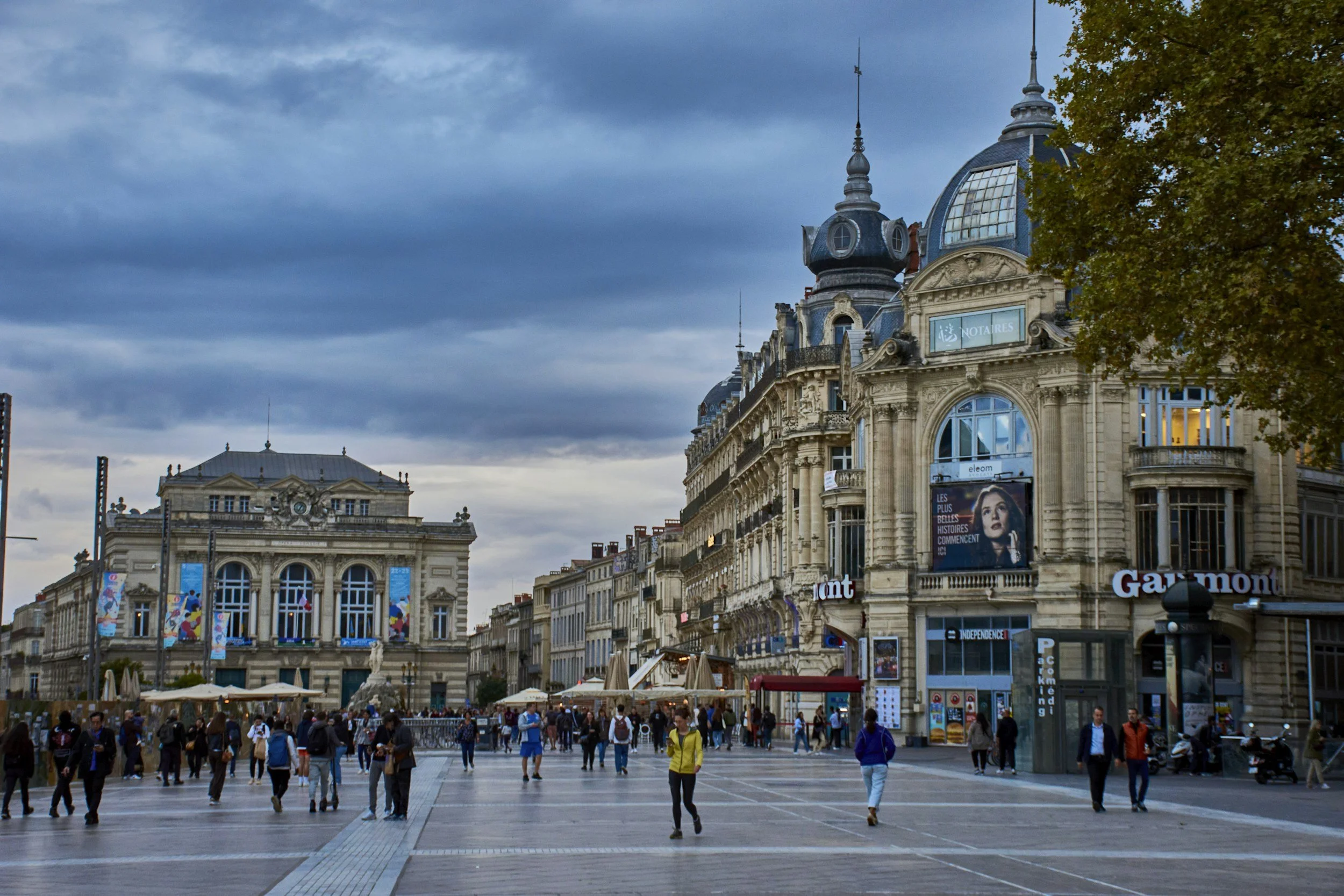
Montpellier might not be the first place you think of for a winter getaway in southern France, but I wouldn't dismiss it just because the temperatures have dropped. In fact, if your idea of a good weekend involves wandering through old streets, browsing food markets, finding a lovely café and spending an afternoon somewhere interesting, winter might actually suit Montpellier rather well.
You could start a Saturday morning at the Marché des Arceaux, make your way into the historic centre along Rue de l'Ancien Courrier, stop for coffee or a browse through an English-language bookshop, and still have the afternoon for the impressive collections at Musée Fabre. There's enough variety here to fill a couple of days without travelling far beyond the centre, and you don't need a car to enjoy it.
Of course, this isn't the Mediterranean winter holiday where you pack a light jacket and expect to spend every afternoon in the sunshine. January can be cold, rain is a possibility, and some places have shorter opening hours or close on particular days. But Montpellier has something that makes those conditions easier to work around: a compact old town, plenty of indoor places worth visiting, and enough everyday city life to make the trip enjoyable even after the Christmas festivities have ended.
And perhaps that's the more interesting reason to visit. You're not coming to Montpellier in winter to recreate a summer holiday. You're coming for a few good days in a southern French city where the markets, independent shops, architecture and cultural life are reason enough to make the journey.
If you're still deciding where to go, there are other French towns worth visiting in winter, particularly if you enjoy places with enough everyday life to make a trip worthwhile outside the main tourist season.
Winter changes the pace, so plan for the day you get
Montpellier in winter is a little unpredictable, and that's worth knowing before you pack. Daytime temperatures generally reach around 12–13°C, which can be perfectly pleasant for exploring, especially when the sun is out. But mornings are noticeably colder, and a windy or rainy afternoon can make the city feel quite different. Bring a warm coat, a few layers and shoes you won't mind walking in all day.
Some of Montpellier's loveliest places are outdoors, particularly around Promenade du Peyrou and the old aqueduct at Les Arceaux. On a clear winter afternoon, I'd give this part of the city plenty of time. There are beautiful buildings around Place de la Canourgue on the way, and it's a nice stretch to explore without having a particular destination in mind. If the weather isn't cooperating, you can always save that walk for another afternoon and spend a few hours with the paintings at Musée Fabre instead.
December brings something extra to the city. From 27 November to 30 December 2026, the Christmas market takes over Place du Peyrou, giving you another reason to head towards this part of Montpellier later in the day. But January and February have their own appeal, especially if you'd rather spend your time exploring the city's usual cafés, shops and markets than organising a weekend around Christmas events.
There is no need to have every hour planned before you arrive. I'd choose the market morning and the museum I'd most like to visit, then leave the rest of the weekend open enough to enjoy a sunny afternoon when one comes along.
If browsing regional food markets is one of your favourite parts of travelling, there are some lovely market towns in Languedoc worth considering for another trip through this part of southern France.
Montpellier is only one side of the story, of course. If you're considering a longer trip, it's worth looking at what winter in southern France is actually like, as the experience can vary quite a bit depending on where you go.
Give the old centre time between coffee stops
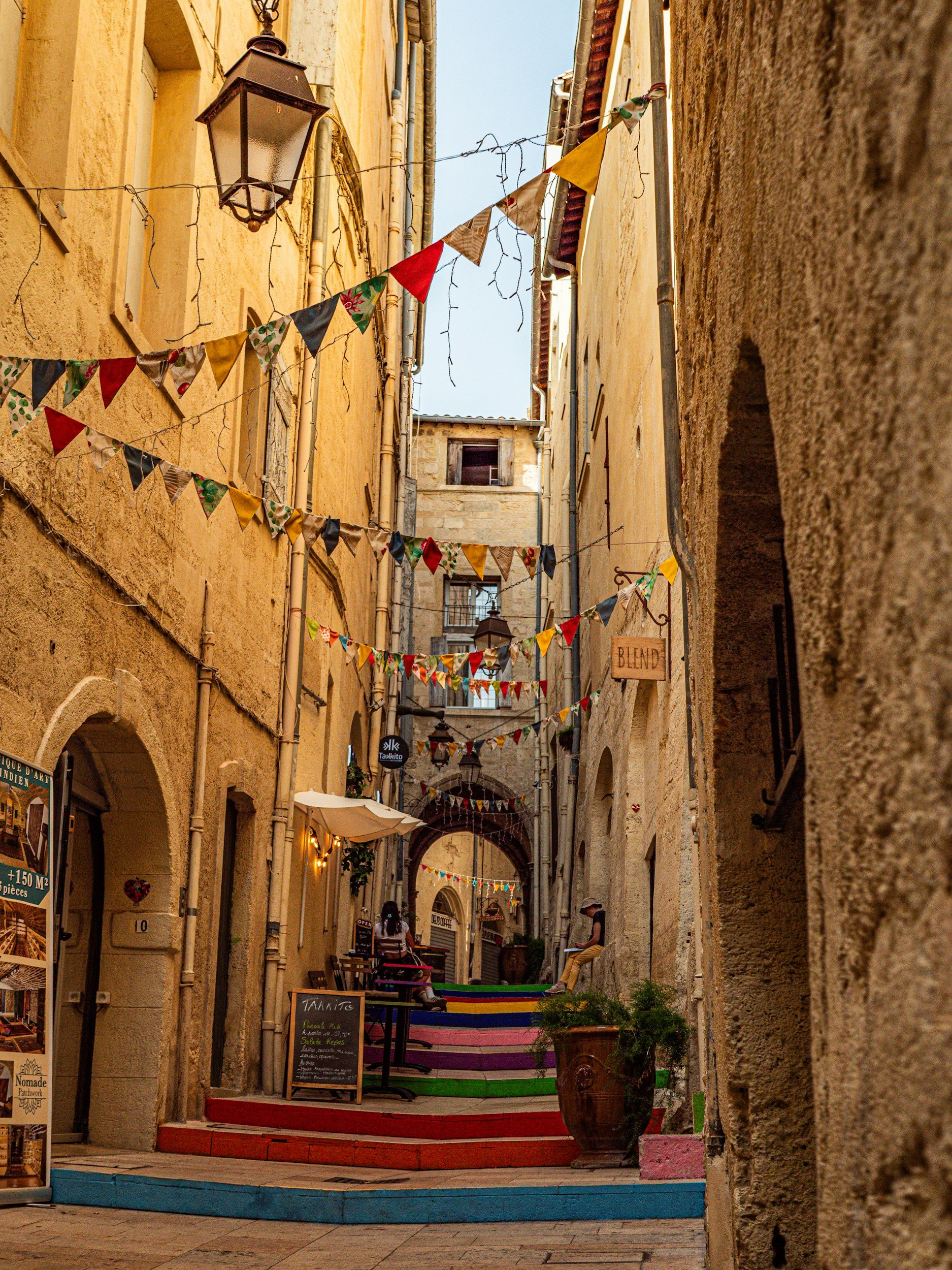
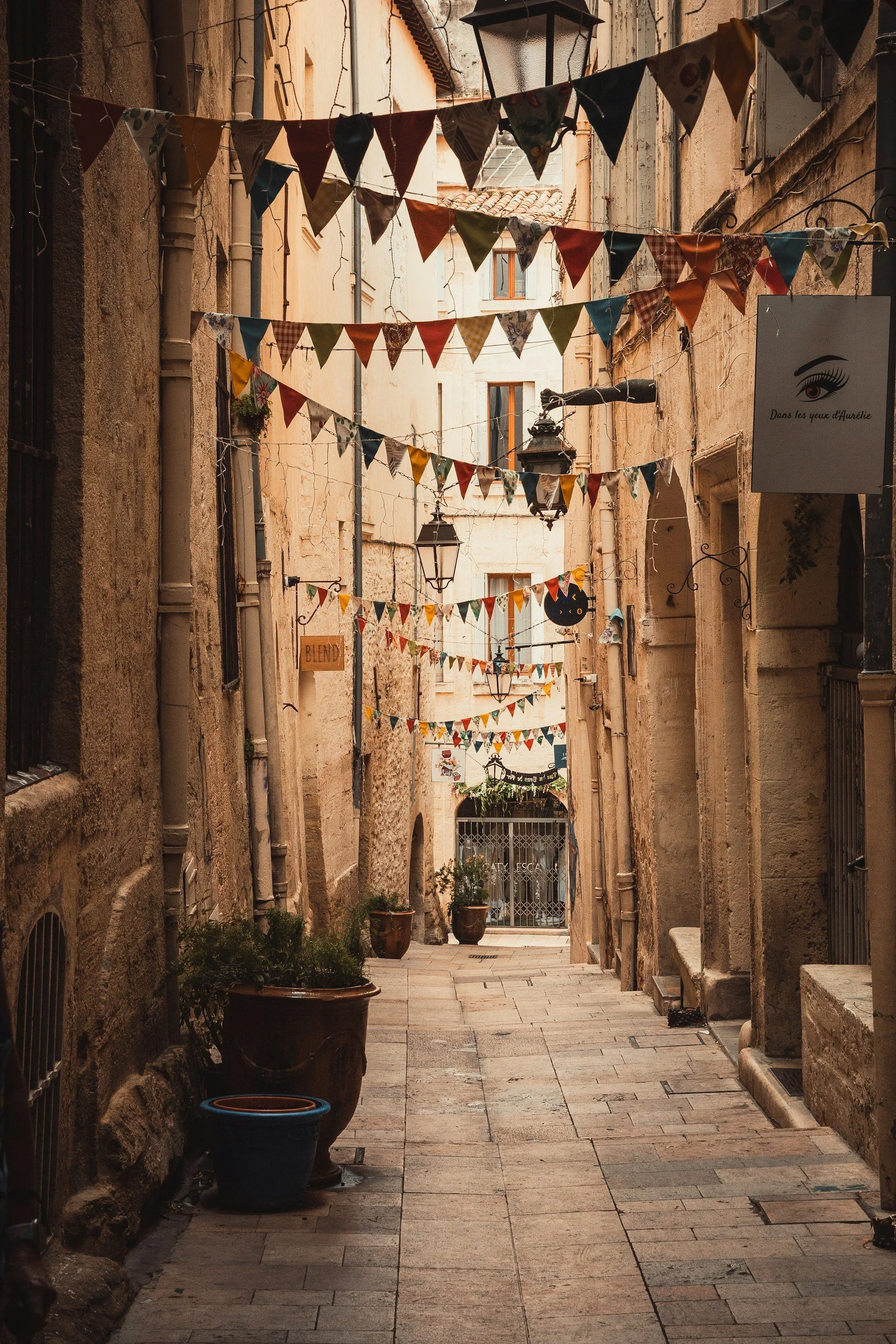
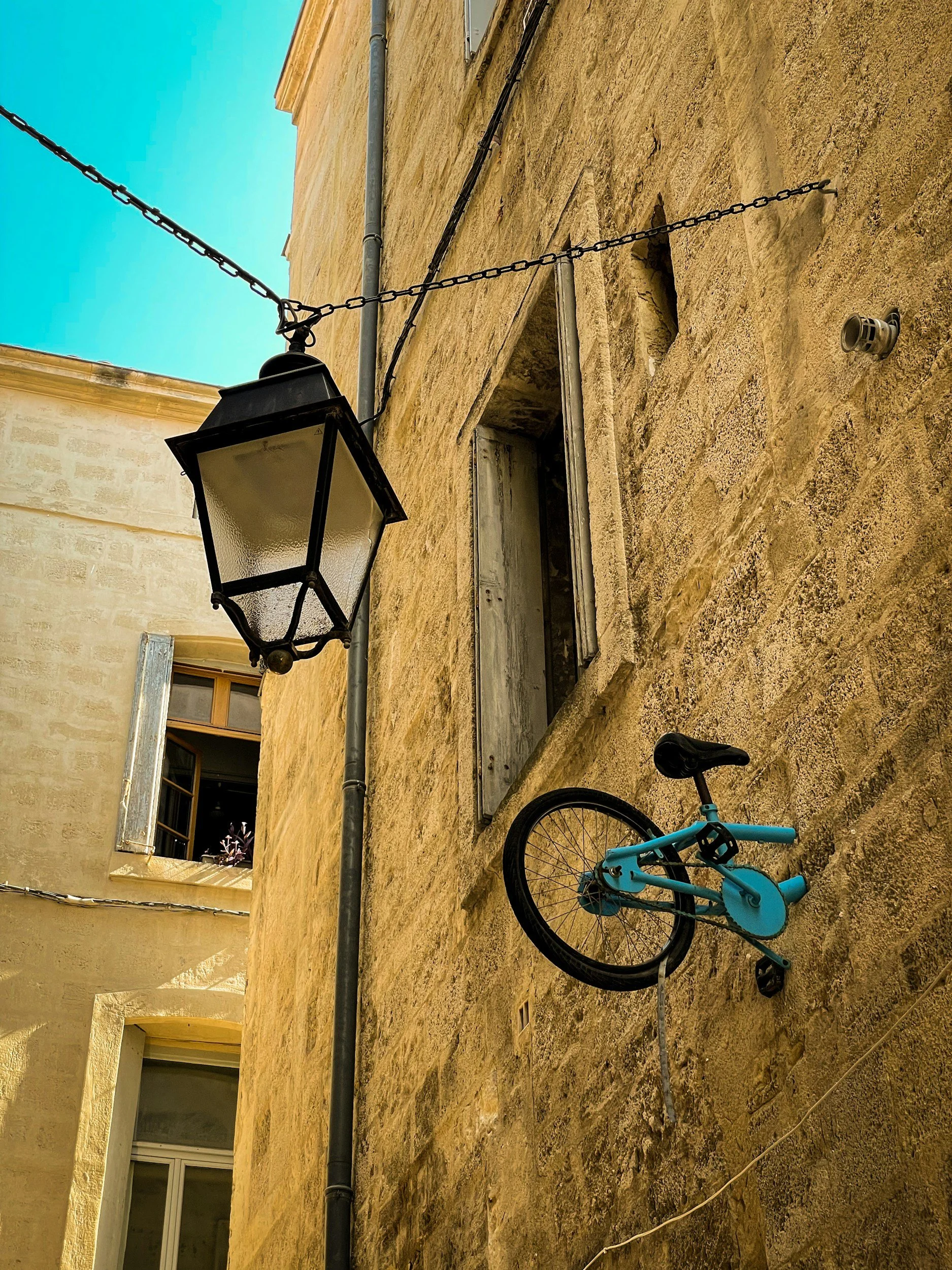
One of the nicest things about Montpellier's historic centre is how easily you can move between its little cafés, bookshops and old streets without needing much of a plan. The Écusson is largely pedestrianised, and although Place de la Comédie is where many visitors begin, I'd spend much more time exploring the narrower streets around Saint-Roch and Sainte-Anne. This is where Montpellier becomes particularly interesting, with centuries-old buildings sitting alongside everyday shops and cafés, and small squares appearing between the streets.
Start with coffee near Saint-Roch
Café BUN on Rue des Étuves would be my first stop, particularly on a cold morning. It's a Montpellier coffee roaster with a lovely vaulted room inside, so you're not relying on finding a sunny terrace to enjoy your morning coffee. There are two central locations, but this one makes more sense if you're starting near Place de la Comédie or Saint-Roch station.
From here, I'd make my way towards Place Saint-Roch and Rue de l'Ancien Courrier, following some of the smaller connecting streets rather than sticking to the main shopping routes. Rue du Bras de Fer is particularly worth seeking out. It's a narrow, distinctive little street, with an English-language bookshop that gives you a very good excuse to stop.
Le Bookshop, at number 8, sells new and second-hand English books and has its own café. It's exactly the sort of place I'd include in a winter weekend, not because you need another coffee, but because browsing a bookshop and then sitting down with something to read is a rather lovely way to spend part of an afternoon. You can bring your own book or read one you've purchased there, although the new books on sale aren't intended as café reading material. It's open Tuesday to Saturday, so save this stop for another day if you're exploring on Sunday or Monday.
If you're visiting in January or February, keep an eye out for escalettes, the thin, traditional waffles associated with Montpellier and the Carnival season. They're a small reminder that southern France has its own winter food traditions, even after the Christmas markets have disappeared.
Follow the old streets towards Canourgue
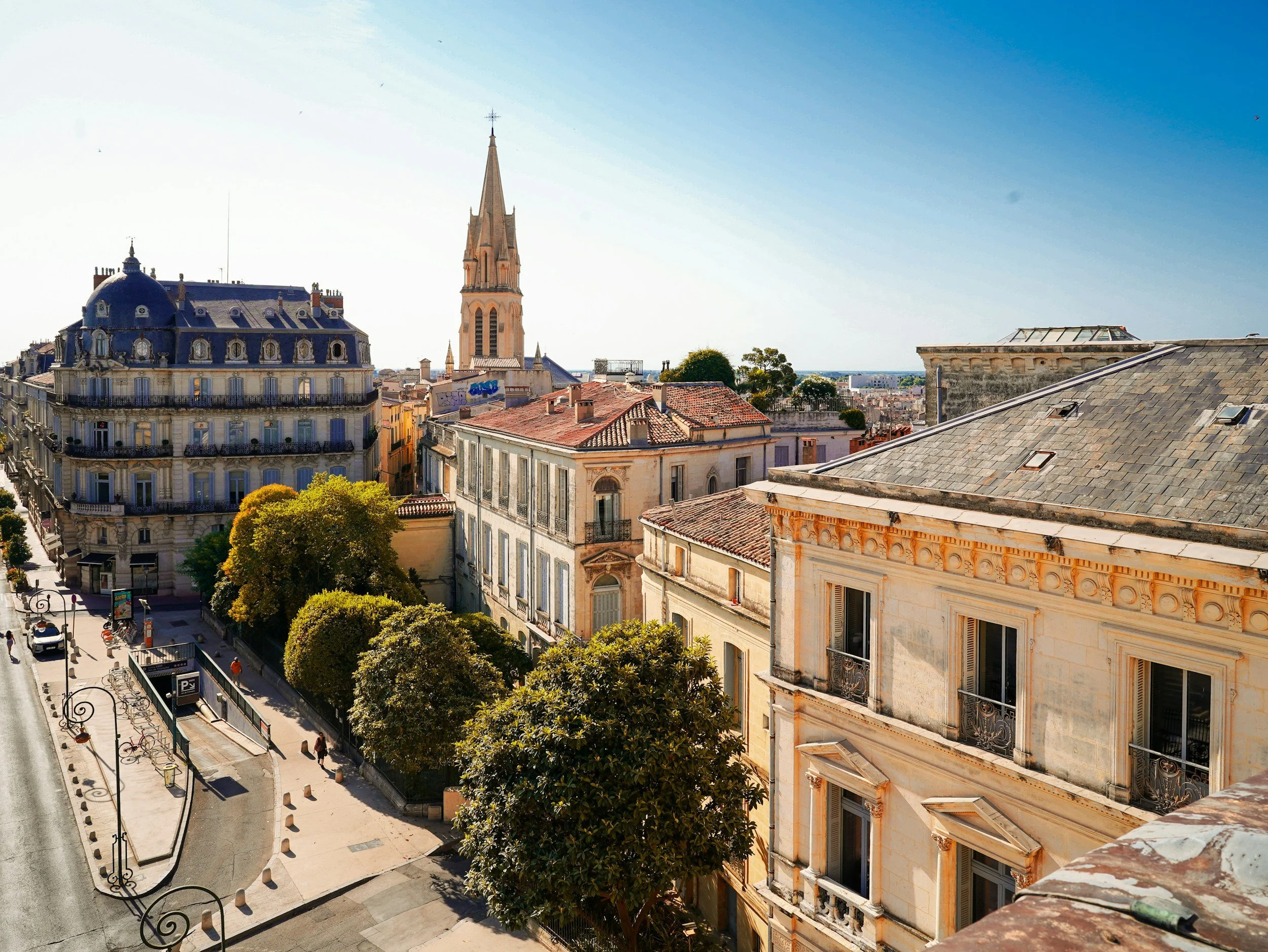
The walk becomes more interesting as you head through Place Sainte-Anne towards Place de la Canourgue. Around Saint-Roch, the appeal is in the smaller streets and shops, but Canourgue feels noticeably different. It's a more spacious square, with mature trees, benches and elegant seventeenth-century townhouses surrounding it. Hôtel Richer de Belleval is one of the most prominent buildings here, and the square is worth visiting for the architecture alone.
Something I find particularly interesting about Montpellier is how much of its architectural history is tucked away behind fairly modest-looking entrances. The historic centre has numerous hôtels particuliers, the grand private townhouses built for wealthy families, often with elaborate internal courtyards and staircases that aren't visible from the street. Many aren't freely accessible, but their presence gives you another reason to pay attention to the buildings rather than simply looking for the prettiest street.
From Canourgue, it's a natural continuation towards Promenade du Peyrou, where the closely packed streets give way to a much more open part of Montpellier. I'd keep that final stretch for a pleasant afternoon, especially in winter when it's nice to make the most of a little sunshine. And if the weather has other ideas, the old centre is compact enough that you can enjoy the cafés and bookshop without committing to a long outdoor walk.
Saturday mornings beneath the Arceaux aqueduct
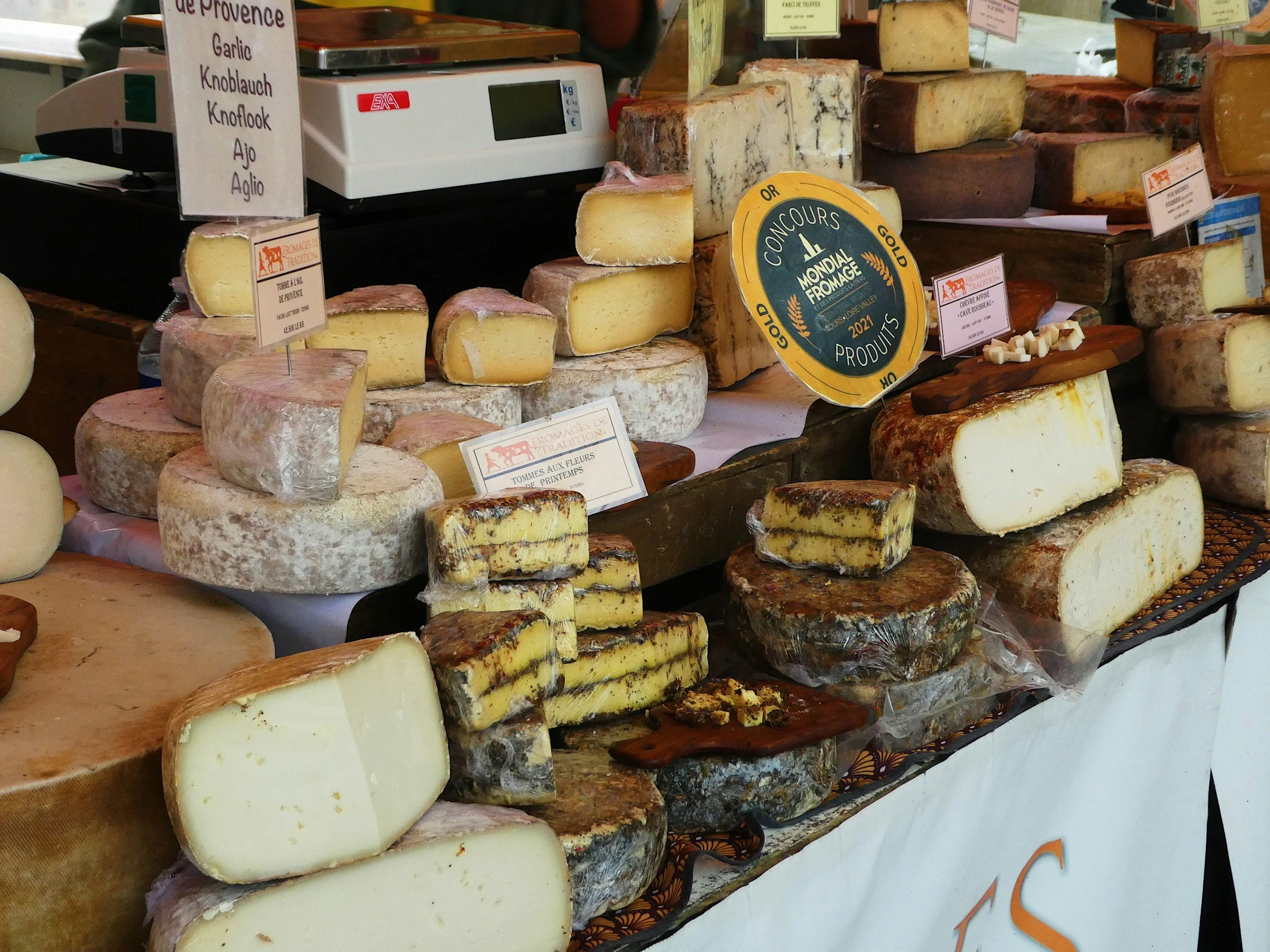
If there's one morning I'd arrange a winter weekend in Montpellier around, it's Saturday at Marché des Arceaux. The market stretches along Boulevard des Arceaux beneath the arches of the Saint-Clément aqueduct, an impressive eighteenth-century structure that makes this feel quite different from an ordinary market square.
Every Tuesday and Saturday, from 7 am until 1:30 pm, the boulevard becomes an outdoor food market. It's a place to browse fruit and vegetables, cheeses and other food stalls, with the added pleasure of seeing what people are buying for their kitchens rather than simply browsing souvenir shops. You don't need to be staying somewhere with cooking facilities to enjoy it, either. There's plenty of interest in looking around, choosing something small to take away and getting a feel for the food culture of this part of southern France.
I'd arrive during the morning rather than leaving it until the stalls are preparing to close. From here, you're already close to Promenade du Peyrou, so there's a natural opportunity to continue towards the historic centre afterwards.
Of course, an outdoor market isn't quite as appealing when it's pouring with rain. Montpellier has two covered food markets worth knowing about: Halles Castellane, tucked into the historic centre, and Halles Laissac, closer to its southern edge. Castellane is particularly convenient if you're exploring around Saint-Roch, while Laissac makes an easy stop when approaching from Place de la Comédie. Both give you a chance to browse food stalls without committing to a morning outdoors, and they're useful on days when Arceaux isn't operating.
Sunday is for antiques and old objects
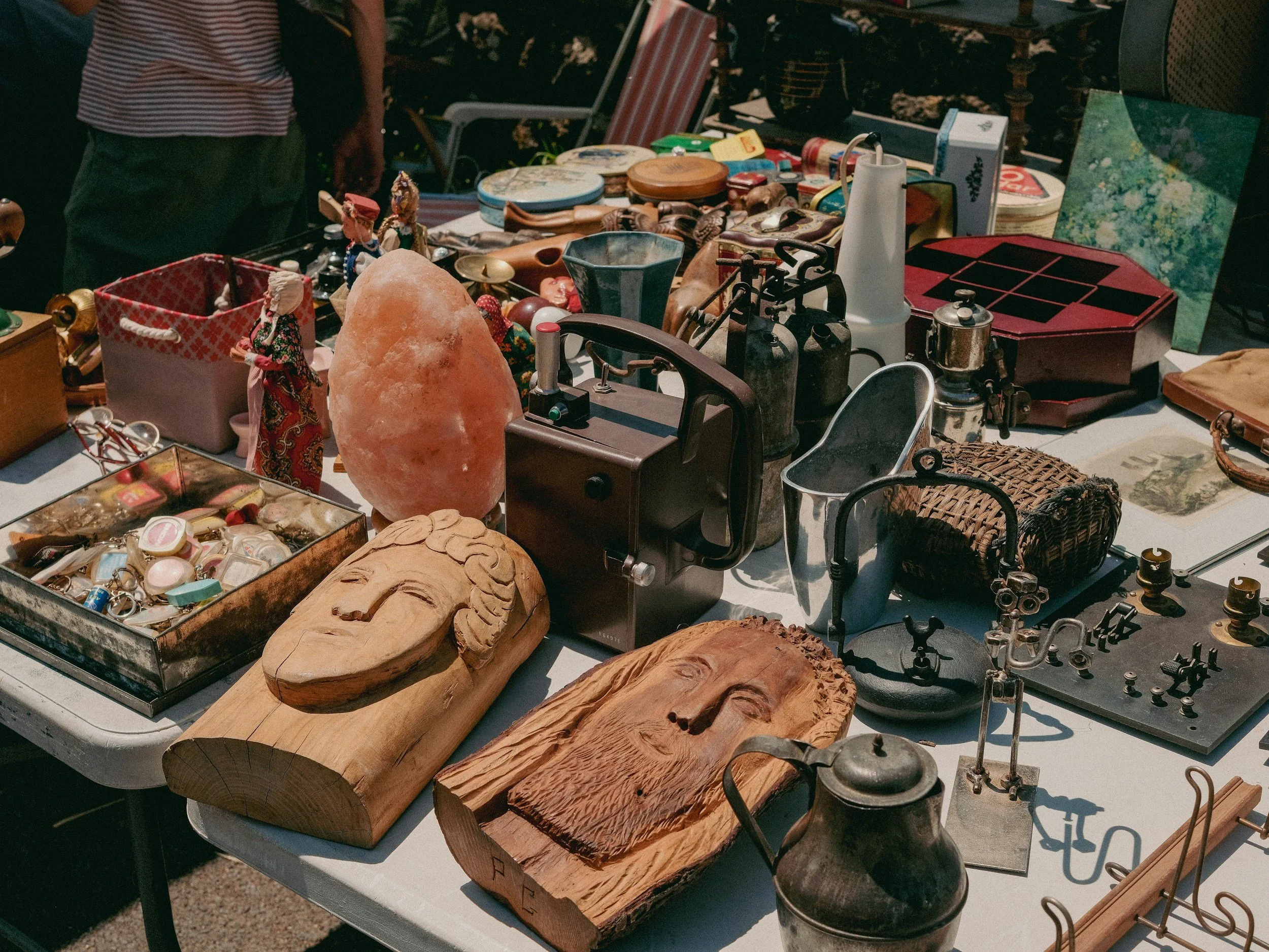
Sunday brings something completely different with Les Dimanches du Peyrou, Montpellier's regular antiques and second-hand market. Instead of choosing ingredients for lunch, you're looking through old furniture, books, decorative pieces and vintage objects. It's the sort of market where having no intention of buying anything doesn't particularly matter. Sometimes the interesting part is simply seeing what turns up.
The antiques market is normally held on Promenade du Peyrou, a beautiful open square near the Arc de Triomphe, just beyond the narrow streets of the historic centre. It's a particularly nice setting for a Sunday morning, with plenty of space to browse before heading back into the Écusson for coffee or lunch.
If you're visiting towards the end of 2026, there's a small change worth knowing about. Between 9 November and 31 December, the antiques market moves to Boulevard des Arceaux to make room for Montpellier's Christmas market at Peyrou. Outside those dates, it's still worth checking the location before setting off, as arrangements can change.
If you love both food markets and antiques, I'd definitely try to include a Saturday and Sunday in your stay. Start one morning exploring the food stalls beneath the aqueduct and spend the next browsing old books, furniture and vintage finds. It's a lovely combination, and neither morning needs to take up the entire day.
Montpellier isn't the only place in Occitanie where the market calendar is worth paying attention to. In some of the smaller towns, choosing where to stay around market day can make quite a difference to the experience.
Put one afternoon aside for art
I wouldn't visit Montpellier without making time for at least one of its art museums. The city has a surprisingly substantial collection of European painting, alongside contemporary galleries and a dedicated photography space. Even on a beautiful winter afternoon, there's a good argument for spending a few hours indoors, particularly when the alternative is trying to squeeze another five stops into the same day.
Start with Musée Fabre
If you're only visiting one museum, I'd choose Musée Fabre, just a short walk from Place de la Comédie. It's one of Montpellier's most important cultural institutions, with a permanent collection that takes you through several centuries of European art. You'll find everything from classical painting to more modern work, including pieces by Gustave Courbet, Frédéric Bazille and Pierre Soulages.
Bazille is perhaps the most interesting connection to explore while you're here. He was born in Montpellier in 1841 and later moved to Paris, where he became friends with painters including Claude Monet and Auguste Renoir. His career was remarkably short, ending when he died at just 28 during the Franco-Prussian War. Seeing his work in Montpellier adds another dimension to the visit, particularly when you've spent the morning walking through the city where he grew up.
The collection also includes Courbet's La Rencontre, sometimes known as Bonjour Monsieur Courbet, depicting the artist meeting his patron Alfred Bruyas near Montpellier. It's a wonderful example of how the museum's collection connects with the region's own artistic history, rather than simply bringing together famous names from elsewhere. As with any museum, individual works may occasionally be on loan or temporarily unavailable.
I'd happily give Fabre two or three hours rather than trying to see every room quickly. The regular adult ticket is €9 for the permanent collection, or €12 including temporary exhibitions, according to the September 2026 prices. It's normally open Tuesday to Sunday, from 11 am until 6 pm, but closed on Mondays. Check the Musée Fabre website for current exhibitions and room access before visiting.
Or spend the afternoon with contemporary art
If you'd rather see something more experimental, MO.CO. is a good alternative. The main exhibition space is on Rue de la République, near Saint-Roch station, and its programme changes throughout the year. From 5 December 2026 to 2 May 2027, the scheduled exhibition Je suis le fantôme de mon propre opéra explores art beyond conventional boundaries.
You might also come across MO.CO. Panacée, but it's worth knowing that these are two separate venues. Panacée is in the historic centre on Rue de l'École de Pharmacie, offers free entry and has its own exhibition programme. Its winter 2026–27 exhibition features June Crespo, whose sculptural work makes this a particularly interesting choice for anyone drawn to contemporary forms rather than traditional painting. Panacée normally closes on Mondays and Tuesdays, and both spaces can close between exhibitions, so take a look at the current MO.CO. programme before deciding.
For something smaller, there's also Pavillon Populaire, Montpellier's free photography gallery near Esplanade Charles-de-Gaulle. Its exhibition of Lucien Hervé's photography, scheduled from 9 December 2026 to 11 April 2027, focuses on an artist particularly associated with architecture and the use of light and shadow. After spending time among Montpellier's old façades and grand squares, that could make for an interesting change of perspective.
For a first winter weekend, Musée Fabre would still be my choice. There's plenty to discover in its permanent collection, and the connection to Montpellier's own artistic history gives it something beyond the usual museum experience. But if photography or contemporary sculpture interests you more, I'd be quite happy to choose one of the smaller spaces instead and give it the attention it deserves.
A relaxed plan for two winter days in Montpellier
If you can arrange your trip around a Saturday and Sunday, you'll have a particularly good combination of things to do in Montpellier. I'd arrive on Friday if possible, settle into somewhere central and leave the evening free for dinner. That way, Saturday morning is yours to enjoy rather than being spent travelling, checking into a hotel or figuring out where to leave your luggage.
Two full days are enough for the city itself, although three nights would make the trip more comfortable if you're travelling a long way. There's plenty to enjoy without adding an excursion outside Montpellier, and I'd much rather have time for a proper lunch or an unexpected stop than spend the weekend watching the clock.
Saturday: A market morning and an afternoon in the old town
Start at Marché des Arceaux, preferably sometime during the morning when there's still plenty of time to browse. From the aqueduct, you can make your way towards Promenade du Peyrou and continue into the Écusson, stopping for lunch once you're back among the smaller streets.
I'd keep the afternoon for Musée Fabre, especially if you've been looking forward to seeing the collection. Since it doesn't open until 11 am, there's no reason to hurry away from the market first thing. Giving the museum a couple of hours still leaves plenty of time for coffee or a bookshop visit later, provided you remember that Le Bookshop closes at 7 pm on Saturdays.
The evening is perhaps the easiest part of the weekend to enjoy without much planning. Stay around the historic centre for dinner, perhaps near Saint-Roch or Place Jean-Jaurès, where you'll find a concentration of restaurants and bars. I'd choose somewhere that appeals rather than making another journey across the city.
Sunday: Antiques, a late lunch and whatever time remains
Sunday is a little different, particularly if you're travelling home that evening. I'd begin with Les Dimanches du Peyrou, leaving enough time to look around without worrying about fitting in another major attraction before lunch. If you're visiting during the Christmas-market period, remember that the antiques move to Boulevard des Arceaux rather than their usual Peyrou setting.
Afterwards, I'd find somewhere for lunch and see how much of the afternoon is left. If you have a late departure and the weather is pleasant, the Jardin des Plantes could be a lovely addition. It's on the western side of the historic centre and normally opens during winter afternoons from Tuesday to Sunday, so it fits better here than into an already busy Saturday.
With an earlier train, I'd leave the garden for another trip and enjoy a final coffee before collecting my luggage. Trying to fit in one more museum when you only have an hour or two rarely makes for a particularly pleasant end to a weekend.
What if you only have one full day?
I'd choose Saturday, particularly if this is your first visit. You'll have the food market in the morning, time for the old streets and the option of spending part of the afternoon at Musée Fabre. That's already a satisfying day, and you won't need to travel beyond the centre to fill it.
One thing I would be careful about is making Monday your main museum day. Musée Fabre, MO.CO. and several smaller cultural venues are normally closed, as is Le Bookshop. Montpellier isn't closed for business on Mondays, of course, but if art and independent shops are a big part of why you're visiting, I'd make sure at least one of your full days falls between Tuesday and Saturday.
Stay central and check which station you're arriving at
For a winter weekend in Montpellier, I'd look for somewhere to stay between Saint-Roch station and Place de la Comédie, or just inside the surrounding streets of the Écusson. It's a convenient part of the city to come back to after dinner, and you won't need to think much about public transport once you've arrived.
There is something appealing about staying in an old apartment tucked away in Montpellier's historic centre, especially around Saint-Roch or Sainte-Anne. But I'd pay as much attention to the building as the location. Some of the older properties have narrow staircases, no lift or rooms overlooking streets that stay lively well into the evening. In January or February, good heating and a comfortable room are probably going to matter more than a particularly beautiful entrance.
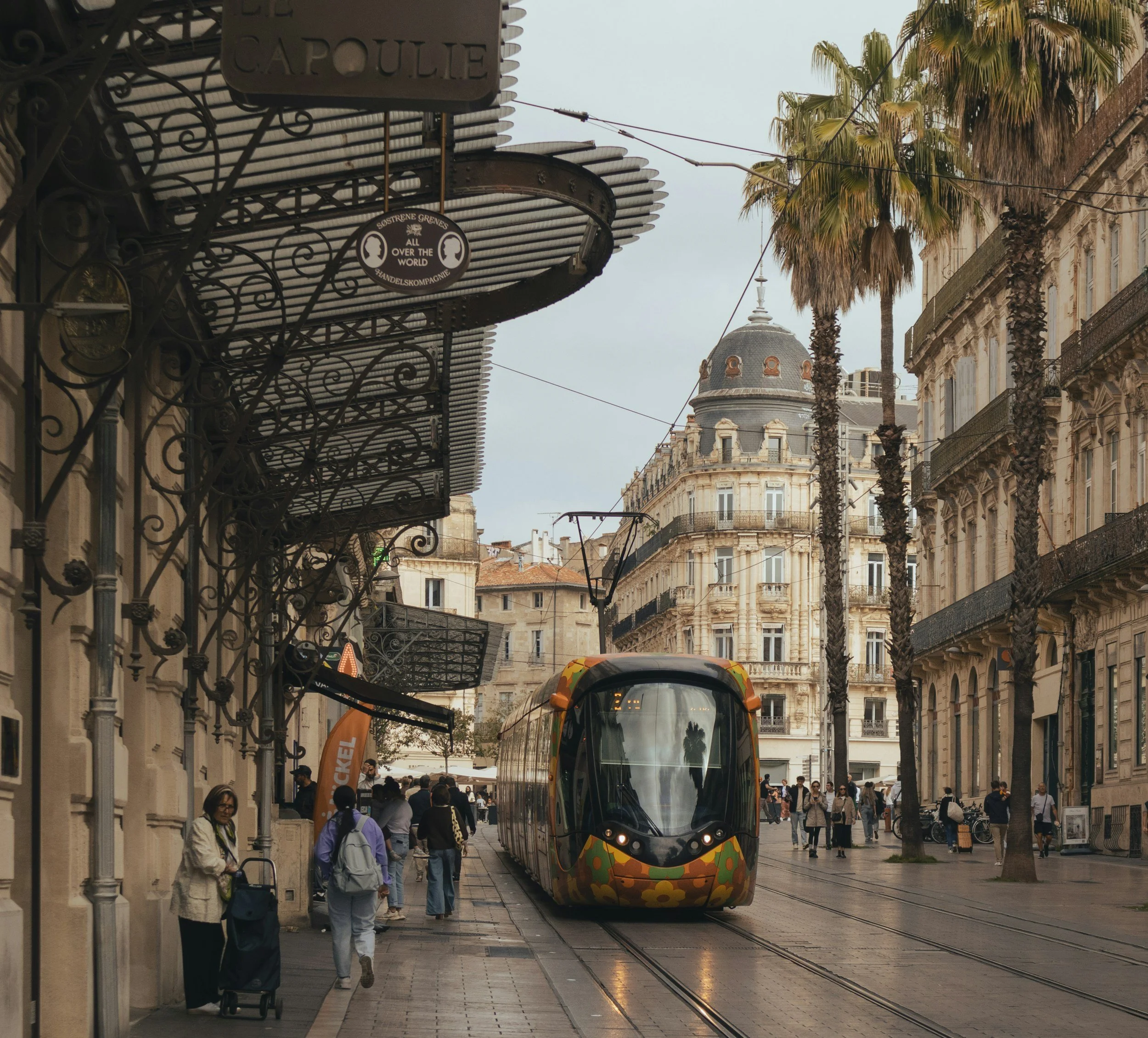
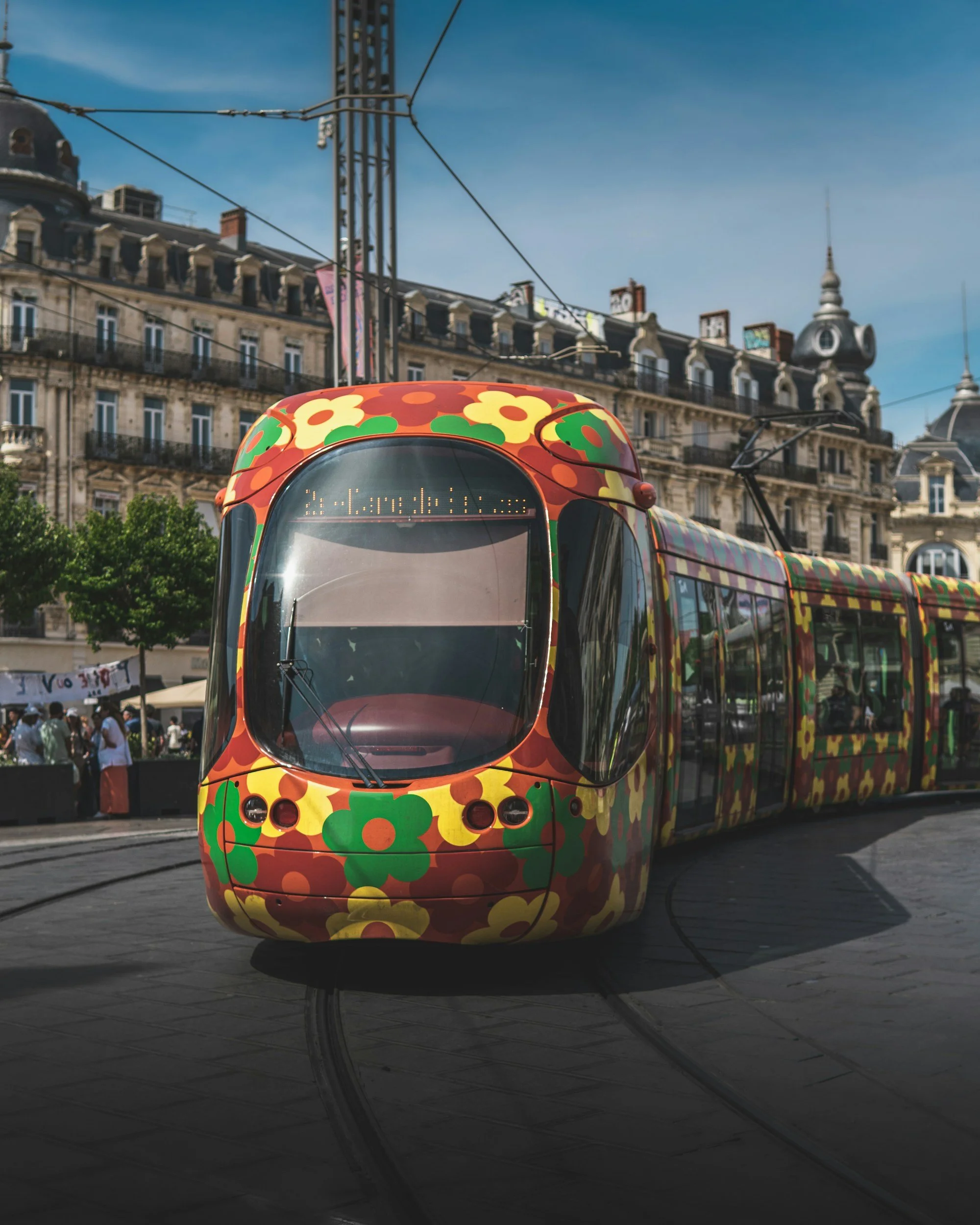
If you're travelling to Montpellier by train, it's worth checking which station you'll arrive at, as the city has two. Montpellier Saint-Roch is right in the centre, within walking distance of Place de la Comédie and the Écusson, so it's the most convenient option for a short stay. Montpellier Sud de France is further out, but since October 2025, tram line 1 has connected it directly to the city centre, making it an easy enough arrival point too.
A standard tram ticket costs €2.10 and is valid for 90 minutes. You can find current fares and connections in Montpellier Tourism's transport guide. It's also worth knowing that although Montpellier has introduced free public transport for eligible local residents, visitors still need to buy a ticket…
For accommodation, I'd choose a small hotel or apartment within easy walking distance of the old centre. Being able to pop back to your room between exploring and going out for dinner is especially nice in winter, and with so much of Montpellier accessible on foot, I'd only look further out if I'd found somewhere particularly appealing to stay.
If you enjoy this part of France and would like to explore another city without renting a car, Béziers is also surprisingly easy to visit by train, with its own historic centre and a different feel from Montpellier.
How to get to Montpellier
Montpellier is easy to reach without a car, particularly if you're already travelling through southern France. It has good rail connections with Paris, Lyon and several other cities, while Montpellier Méditerranée Airport is a convenient alternative if you're coming from further away.
Arriving by train
If you're travelling from Paris, the fastest direct trains take around 3 hours and 15 minutes, making Montpellier perfectly manageable for a long weekend. Lyon is even closer, with journeys starting at around 1 hour and 35 minutes, while Marseille is roughly 1 hour and 30 minutes away.
You can also reach Montpellier by train from Toulouse and Barcelona, although I'd compare departure times carefully if you're only staying for a couple of nights. A late arrival and an early departure can quickly turn a weekend into just one proper day in the city.
I'd book through SNCF Connect and, where possible, choose a service arriving at Montpellier Saint-Roch. It's the most convenient station if you're staying in the historic centre. Some high-speed trains use Montpellier Sud de France instead, which is further out but connected to the centre by tram.
Flying to Montpellier
Montpellier Méditerranée Airport is the closest airport, although direct flights depend on where you're travelling from and the time of year. Winter schedules can be more limited, so it's worth comparing flights before settling on your dates.
From the airport, shuttle bus 620 takes you to Place de l'Europe in approximately 25 minutes. From there, you can continue by tram towards the historic centre.
For a weekend spent mainly in Montpellier itself, I wouldn't bother renting a car. Once you've reached your accommodation, most of the places worth exploring are close enough to enjoy on foot, which is one of the nicest things about choosing the city for a short winter break.
Montpellier also fits nicely into a longer rail journey through France. If you're considering visiting more than one place, I've put together some winter destinations in France you can reach without a car.
Montpellier is worth a winter weekend, but not for the reasons you might expect
I think Montpellier is at its most appealing in winter when you stop expecting it to feel like a Mediterranean holiday. There’s something rather nice about planning a weekend around a Saturday food market, getting distracted by the bookshops and smaller streets of the Écusson, and having an entire afternoon to enjoy Musée Fabre without feeling you should be somewhere else.
If you're booking a Sunday-to-Tuesday break mainly for Montpellier's galleries and museums, remember that Monday will be a difficult day for that particular plan. I'd choose a weekend with Saturday as a full day instead, especially in January or February when the weather might make indoor attractions more appealing.
Of course, if you're dreaming of beach days and long evenings beside the sea, I'd save Montpellier for a warmer month. But if you're the kind of traveller who gets just as excited about an antiques market as a beautiful view, there's a lot to like about spending a winter weekend here. And personally, I'd much rather have two days filled with places I genuinely want to explore than spend a holiday chasing sunshine that may never arrive.