

Before you book Alsace at Christmas, work out where you’re staying

The annoying thing about planning the Alsace Christmas markets without a car is that Colmar and Strasbourg both look like sensible bases until you start planning the village days properly.
The train between them is quick, roughly half an hour, which makes Strasbourg seem close enough that staying there should barely matter. But a village day does not begin when the train leaves Strasbourg. It begins when you leave your hotel, walk to the station, allow enough time for the train, arrive in Colmar, find the shuttle departure point and do the same thing in reverse when you are tired and ready to go home. Do that once and it is fine. Build three days around it and you may start wondering why you did this to yourself.
So if the Wine Route villages are the part you are most excited about, I would stay in Colmar. The Christmas shuttle network is centred on Colmar station, which removes one whole layer of planning from those days. Strasbourg is the better choice when you mainly want Strasbourg and the villages are a side trip rather than the structure of the holiday. And with four or five nights, I would seriously consider splitting the stay instead of choosing one city and repeatedly travelling back to it.
The base is only where the puzzle starts, though. Some of the most famous village markets run on surprisingly limited dates, the shuttles are much more useful on certain days than others, and a route that looks wonderfully neat on a map can become far less neat once queues, walking and winter traffic get involved. This is the part most Alsace Christmas guides skim over, and it is the part that can make the biggest difference to the trip.
Where you stay starts to matter once the village days begin
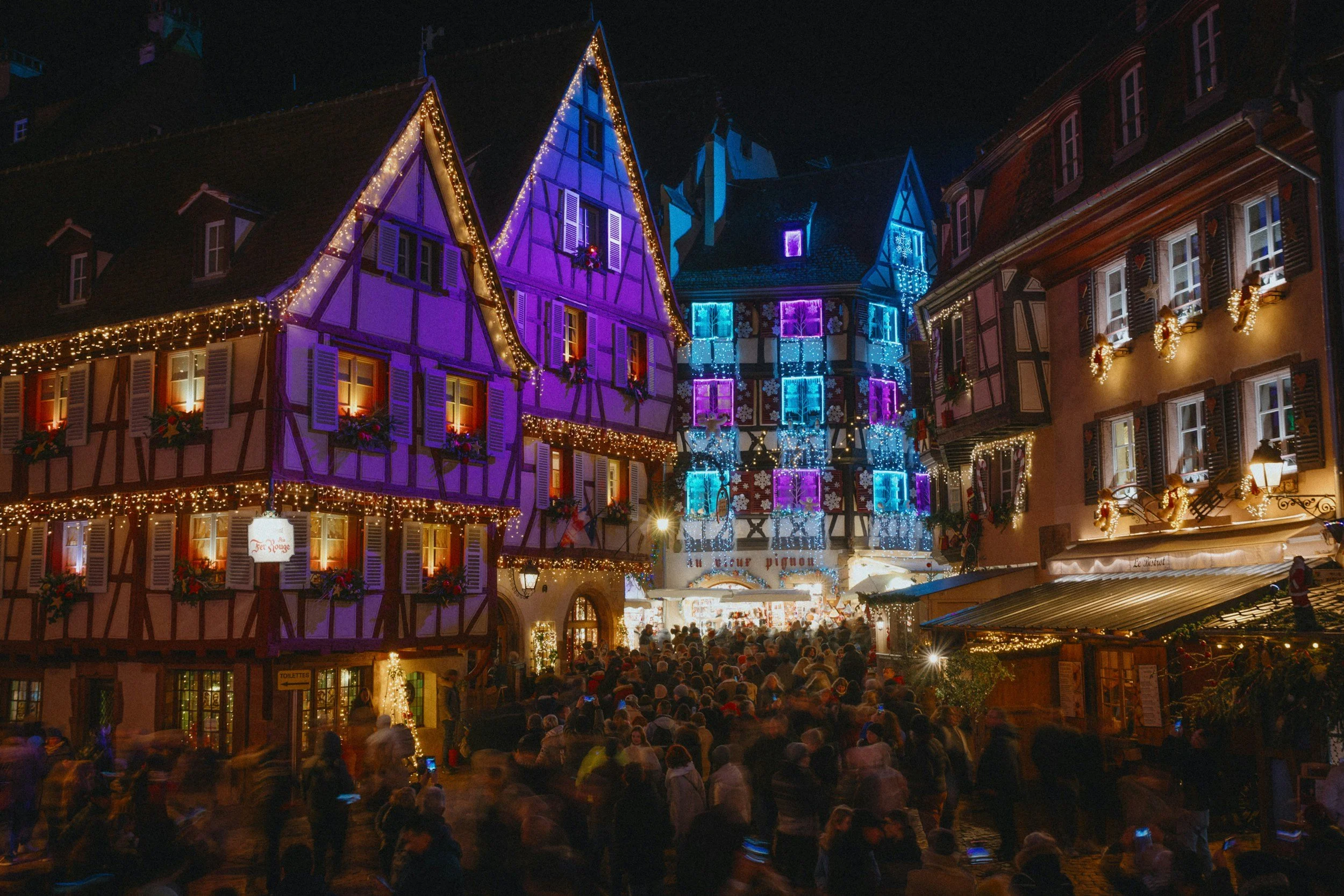
In Colmar, aim for the station side of the centre
Colmar is compact enough that you do not have to choose between sleeping beside the station and being somewhere nice for the evening. The more useful area is in between.
The station is roughly a 15-minute walk from the old town, so I would look around the Champ de Mars and Place Rapp side of the centre rather than automatically booking the prettiest room buried deepest in the historic streets. You are still close to the markets at night, but you are not crossing the whole centre every time you have a morning shuttle to catch.
This is where hotel maps can be slightly misleading. Two properties can both be labelled “central Colmar”, yet one leaves you with a very easy walk to the station while the other adds another stretch every single village day. In December, with a coat, an early start and a return after dark, those extra walks count more than they do when you are casually comparing hotels from the sofa.
Before booking, I would check two walking routes: hotel to Colmar station, and hotel to the old town. If you only have one village day, staying deeper in the centre is hardly a disaster. If you are planning several, I would give the station walk much more weight.
Strasbourg is better when you want Strasbourg to be part of the trip
The roughly 30-minute train between Strasbourg and Colmar is the number that makes Strasbourg look deceptively convenient for everything.
And for one village day, it is. Strasbourg station is also around a ten-minute walk from the central festive area, so staying there can suit a trip that is mainly about Strasbourg with one day out in the Wine Route villages.
Where it becomes less appealing is repetition. You have the walk to Strasbourg station, the train, enough time to change in Colmar, the shuttle itself and then the same sequence on the way back. The train ride is short; the entire journey is not.
That is why I would not rule Strasbourg out just because the shuttles leave from Colmar. It is still the stronger base for someone who wants the bigger-city evenings, is arriving and leaving by rail, and only plans to devote one day to the villages. I just would not choose it for a trip built around catching those shuttles again and again.
If you have four or five nights, I’d probably split it
For three nights, I wouldn’t bother changing hotels. By the time you’ve packed up, checked out, moved your bags and checked in again, you’ve made a short trip feel unnecessarily complicated.
With four or five nights, though, I’d be much more tempted. One or two nights in Strasbourg and two or three in Colmar gives you time in both without spending several days doing the same train journey back and forth.
It especially suits a trip where you genuinely want both sides of Alsace, rather than treating one as somewhere you simply pass through. If you’re mostly coming for the villages, I’d still stay in Colmar. If you mainly want Strasbourg and one village day, stay there. But if you’re already trying to give both equal time, moving hotels once can be the easier option.
The shuttle network makes much more sense once you see where the trains stop
The Christmas shuttle map can give the impression that there is one neat festive transport network covering Alsace. There isn’t. Everything is built around Colmar.
Strasbourg, Sélestat, Colmar and Mulhouse sit on the main north-south railway line, while many of the Wine Route villages sit to the west of it. Colmar is where those two worlds meet. You arrive there by train, then switch to the Christmas shuttles for places such as Kaysersberg, Riquewihr, Ribeauvillé and Eguisheim.
That also explains why staying somewhere that looks “central in Alsace” can be misleading. Sélestat, for example, is very close to Colmar by train, but it does not put you directly onto the village shuttle network. You still have to get to Colmar first. Strasbourg is the same idea on a larger scale. The train connection is easy; it just happens before the part of the journey you were planning around in the first place.
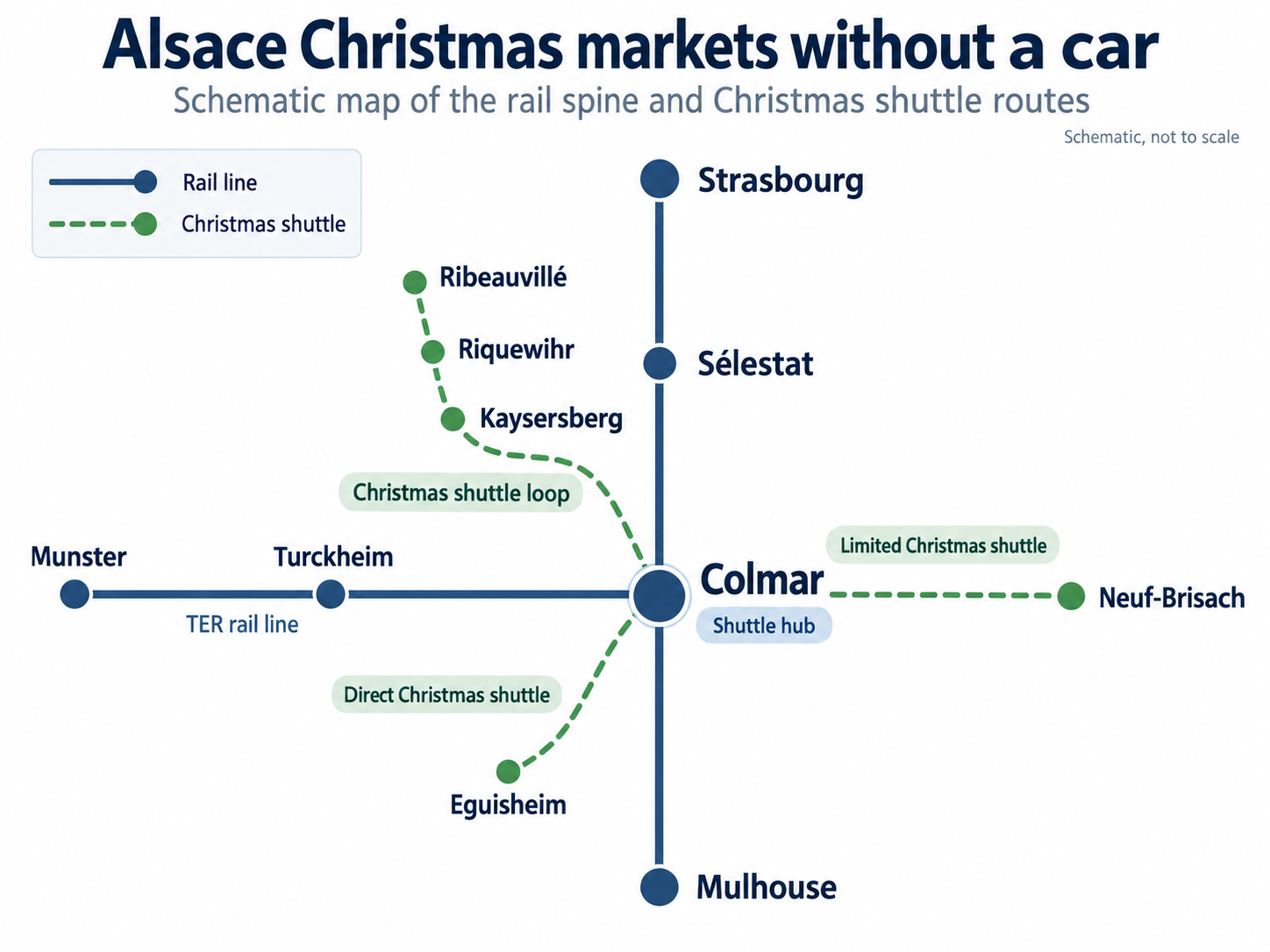
The distinction between those branches matters. Turckheim and Munster are also served by train from Colmar, so the festive shuttle is not automatically the smartest option for them. Kaysersberg, Riquewihr and Ribeauvillé are different: the seasonal shuttle is much more central to a car-free visit there. Eguisheim has its own direct shuttle pattern, while Neuf-Brisach is a much narrower seasonal exception rather than somewhere to casually add to any trip.
And the word seasonal matters here. The Christmas shuttles run only during the core Advent period, currently from 27 November to 20 December, rather than all the way through the wider Christmas-market season. Colmar, Eguisheim, Turckheim and some other markets continue beyond that point, but the special shuttle network does not. So a late-December trip may look identical on a market calendar while needing a completely different transport plan.
I also wouldn’t think of these buses as a festive hop-on/hop-off service. The routes run on different days, some villages have much more limited market dates than others, and several places have perfectly usable regular transport alongside the Christmas network. The useful question is not simply which shuttle goes there? It is whether the shuttle is the best option on the day you are going.
This version feels much more specific to Alsace, and the local geography is doing the explaining rather than us just stating rules.
Buy the shuttle ticket before you plan the day around it
There is still quite a bit of old advice online saying you can buy a Christmas shuttle ticket once you arrive in Colmar. For the current season, tickets are sold online only, so this is one thing I would sort out before the trip rather than leaving it until you are there. Sales open on 12 November at 12:00 CET, and the number of tickets available for each date is limited.
The main Friday-to-Sunday network pass costs €17 and covers unlimited journeys on the included shuttle lines for that day. That is the ticket you need for the classic Kaysersberg, Riquewihr and Ribeauvillé circuit. On Monday to Thursday, Line 3 to Eguisheim costs €8, while the €10 Explorer pass is only for Lines 4 and 5. In other words, the cheapest ticket is not automatically the right one just because it says “Explorer”.
Children under 12 travel free, but they still need to be included in the booking with their own free ticket. That is an easy detail to miss when “free” sounds as though no reservation is needed.
If your date sells out, check again three days before travel. The operator says that small extra batches are released then. I would treat that as a second chance rather than a plan, especially if your whole weekend depends on one particular shuttle day.
The other thing I would not assume is that your ticket secures a place on a specific bus. The operator sells day passes, not reservations for a particular departure. So even with a valid ticket, I would leave some margin around the bus you hope to catch instead of planning the day around an exact departure as though you had a booked seat.
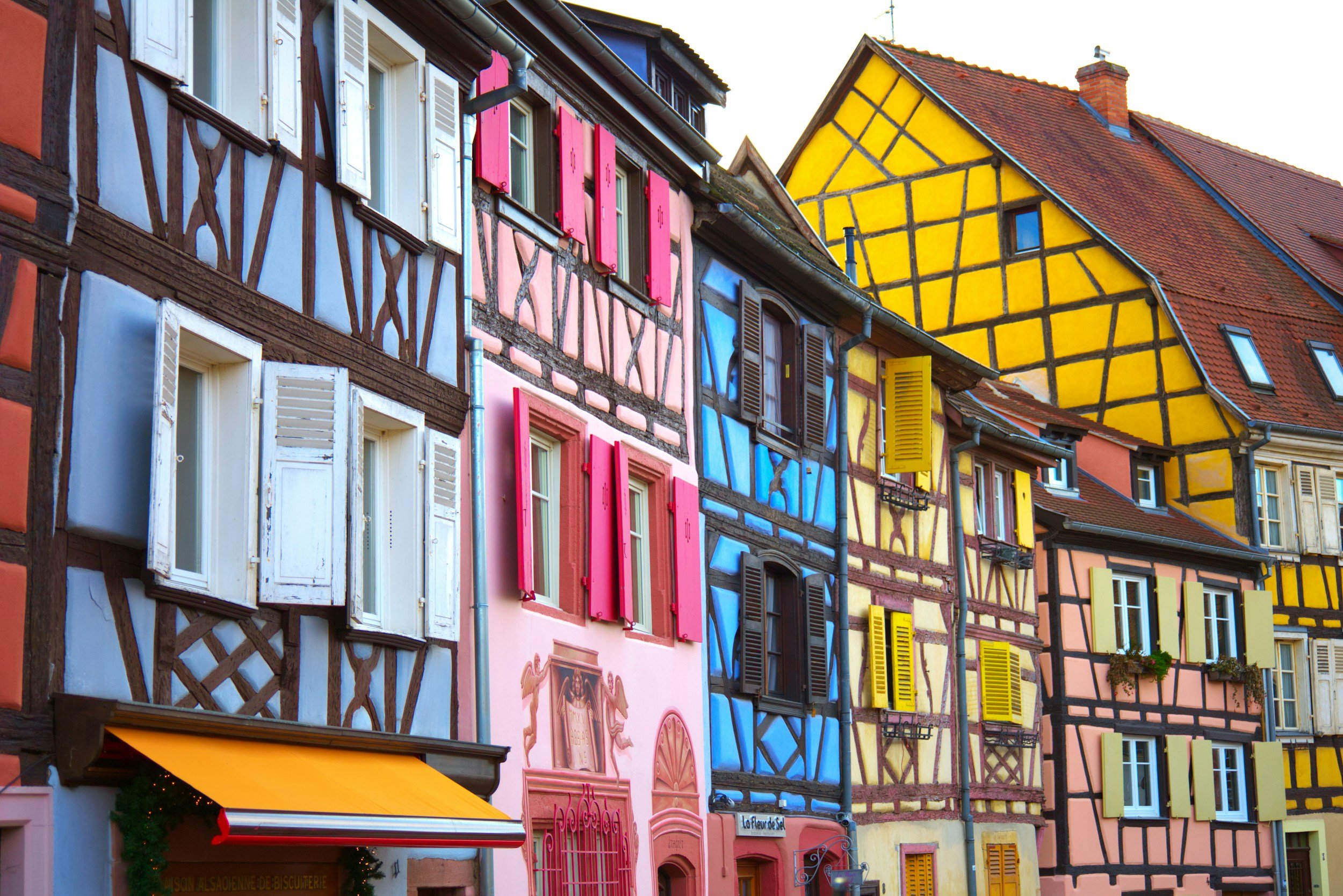
And if the crowds are starting to make you question the whole Christmas plan, some Alsace market towns are much nicer in spring than they are during the busiest Advent weekends.
Lines 1 and 2 only look complicated (until you realise they’re the same loop)
The easiest way to understand Lines 1 and 2 is to forget the route numbers for a moment, because they are covering the same three villages and simply travelling in opposite directions. Line 1 goes from Colmar to Kaysersberg, then Riquewihr and Ribeauvillé before returning to Colmar, while Line 2 starts with Ribeauvillé, continues through Riquewihr and Kaysersberg, and then heads back. On Fridays each runs roughly hourly, while Saturdays and Sundays are much more frequent, with departures about every 30 minutes.
That means I would choose the village first and the line second. If Kaysersberg is the place you are most keen to see, Line 1 gets you there with the least messing around, while Line 2 is the obvious choice if Ribeauvillé is the priority. Riquewihr sits between the two whichever direction you take, so it is the easy middle stop rather than somewhere you need to organise the whole day around.
You are not tied to the same line for the rest of the day either. In fact, the neatest way to use the loop can be to go out in one direction and come back in the other, because Line 1 gets you to Kaysersberg fastest but also brings you back more directly from Ribeauvillé, while Line 2 does the reverse. There is no reason to sit through the long side of the loop just because you happened to board that number in the morning.
I would still plan the day around two villages and leave the third as a maybe, even though three looks perfectly achievable when you first see the weekend timetable. The frequent buses help, but they do not remove queues, road traffic, the walk from the stop into town or the possibility that you simply want to stay longer than expected. A three-village day can work, but it is much easier to enjoy when you are happy to drop the final stop rather than spending the afternoon watching the clock.
The current timetable has the final completed weekend loops reaching Colmar at roughly 20:30 to 20:45, with Friday services ending around a similar time, although I would still use the live timetable for your exact day and avoid pairing the final possible shuttle with a tight onward train. A little delay on the road is irritating; a missed long-distance connection is a much bigger problem.
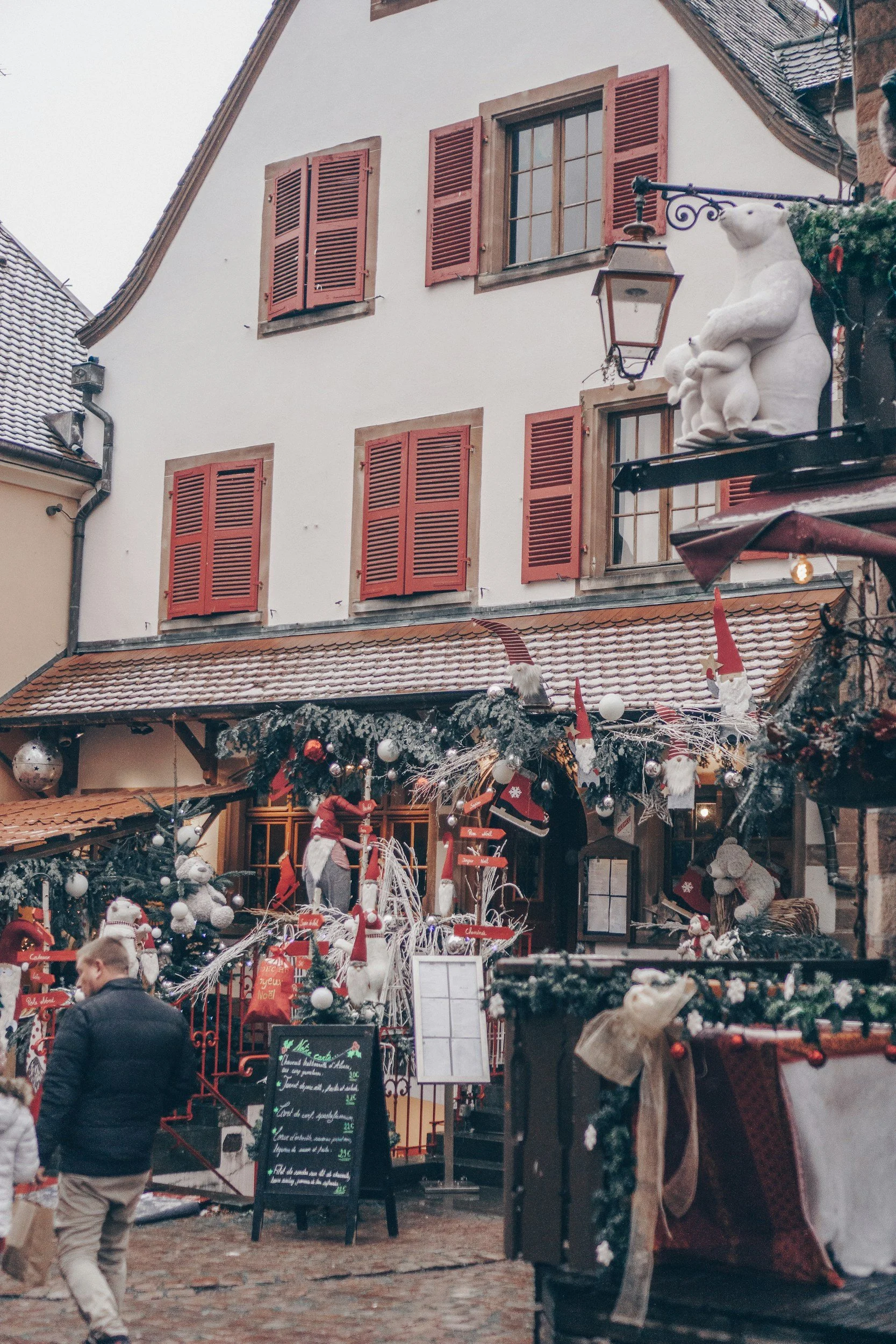
Kaysersberg involves a bit more walking than the timetable lets on
Kaysersberg is the one stop where I would allow more time than the route map suggests, because the bus does not drop you in the centre of the market. The official timetable names the stop as the 5e Division Blindée parking area in Kientzheim, and a recent family report estimated the walk from there to Kaysersberg at around 20 minutes. That is not an official walking time, so I would still check the current pedestrian route before travelling, but it is enough to show that this is a proper last stretch of the journey rather than a two-minute wander from the bus.
For most travellers that is unlikely to change the plan, but it becomes much more relevant with small children, limited mobility or a day that already tries to fit all three villages into a few hours. In those cases, the walk belongs in your timing just as much as the bus journey does.
The route map won’t tell you which markets are actually open
This is probably the easiest mistake to make when planning Alsace at Christmas: you see a village on the shuttle map, assume its market is running throughout Advent, and only later discover that the dates do not line up nearly as neatly as the transport does.
Colmar and Riquewihr have relatively long seasons, while Kaysersberg is a Friday-to-Sunday market rather than an everyday one, so a midweek trip already looks quite different from the classic weekend version. You can still travel around very easily, but you are not getting the same set of markets simply because the buses or trains exist.
The date I would pay closest attention to is Ribeauvillé’s medieval Christmas market, because it only runs on two weekends: 5–6 and 12–13 December. If you have been picturing a day that includes Ribeauvillé, Riquewihr and Kaysersberg, those are the weekends when the three line up properly. They are also the weekends when I would expect more pressure on transport and accommodation, so you are choosing the fullest version of the trip at the same time as the busiest one.
Midweek gives you a different sort of trip. Eguisheim and Turckheim both run much later into December, and Turckheim has the added advantage of being reachable by train from Colmar, which gives you more freedom than the shuttle map alone suggests. Munster also has a longer festive pattern than the core shuttle season, with its main weekend market continuing alongside additional late-December dates.
Then there is Neuf-Brisach, which is the sort of place I would only add if the dates happen to fit perfectly. Its market runs 11–13 December, but the Christmas shuttle serves it only on 12–13 December, so it is not a general “maybe we’ll go there too” option for most trips.
The bigger cutoff is 20 December, when the special Christmas shuttle network finishes. That does not mean the Christmas markets are over. Colmar, Eguisheim, Turckheim and parts of Munster’s festive programme continue beyond that point, but the transport setup changes completely and you need to start thinking in terms of TER trains and regular regional buses instead.
So I would choose the dates before I chose the village wish list. For maximum overlap, the two Ribeauvillé weekends are the obvious choice. For a calmer midweek trip, I would focus on Colmar, Eguisheim and the rail-served towns instead. And after 20 December, I would treat the trip as a different transport plan altogether rather than assuming the Advent shuttle network is still there.

Alsace is far from your only option either. These French towns are particularly easy to reach by train in winter if you are looking into a longer trip and will travel dy public transport.
The other shuttle lines are useful for completely different reasons
Lines 3, 4 and 5 look like three more branches of the same Christmas network, but I wouldn’t plan around them in the same way at all. One gives you a useful weekday village trip, one duplicates a railway that may already do the job better, and the last operates for such a narrow window that most visitors can ignore it entirely.
Eguisheim is the shuttle I’d look at for a weekday village day
Line 3 runs directly between Colmar and Eguisheim, and this is the part of the special network that becomes particularly useful if your trip includes a Monday-to-Thursday stay, when the main Kaysersberg, Riquewihr and Ribeauvillé loop is no longer running in the same way. The weekday fare is currently €8, while at weekends Eguisheim falls under the wider network ticket.
I would just be careful with the word daily, because it makes the service sound far more spontaneous than it is. On the current weekend timetable, there are stretches of more than two hours between departures, which means I would decide roughly when I want to leave Eguisheim before I even get on the bus in Colmar, rather than arriving and assuming I can simply head back whenever I have had enough.
That is also why I would not automatically bolt Eguisheim onto a day already involving the three-village loop. It fits much more naturally with a morning or afternoon in Colmar, and if you are travelling midweek it gives you a village day without having to force a weekend-style itinerary onto dates when the transport does not support it.
Turckheim and Munster are the two places where I’d check the train first
Turckheim and Munster both appear on Line 4, but they are also directly connected to Colmar by TER, and that gives you an option the other Wine Route villages do not have. Before buying another shuttle ticket or organising the day around a road timetable, I would open the current train schedule and compare the two.
There is no need to use the Christmas bus simply because it has a festive route number attached to it. The TER avoids the same road congestion that can delay the shuttles, and depending on the day, it may fit your plans much more neatly. Line 4 still has its uses, especially if you already have a network pass or its particular departure suits you better, but I would treat the train as a real alternative rather than a backup.
It is also part of the reason Turckheim and Munster are useful later in December, because once the special shuttle season finishes, the railway is still there. That gives you considerably more freedom than a village whose easiest seasonal connection disappears with the Christmas buses.

If French regional trains still feel slightly mysterious, this guide to using TER trains in France explains the bits that are useful before you start building connections around them.
Neuf-Brisach is really a very specific weekend plan
I would barely think about Line 5 unless my dates happened to fall exactly right.
The Neuf-Brisach market runs from 11 to 13 December, while the special shuttle only operates on 12 and 13 December, so this is not a route you need to keep in the back of your mind throughout Advent.
If you are there that weekend and Neuf-Brisach is somewhere you already want to see, then it suddenly becomes a very convenient option. For everyone else, I would simply leave it off the plan rather than trying to squeeze every branch of the shuttle network into one trip.
Where I’d look for a hotel in Colmar if I planned to use the shuttles
I would not obsess over being right beside Colmar station, because then you are simply moving the walking to the other end of the day. The more useful compromise is somewhere between the station and the old town, with Champ de Mars and Place Rapp being the area I would start checking first. From there, the station is still manageable in the morning, but you are also close enough to come back from the markets at night without feeling as though dinner now requires another expedition across town.
The station and the centre are only about 15 minutes apart on foot, which is why almost every hotel can look reasonable when you first open the map. The difference appears once you ask yourself how often you are going to make that walk. If you have one shuttle day, I would barely let it influence the booking and would happily stay deeper in the old town. If you are planning two or three village days, I would start caring much more about which side of the centre I am on, because that same extra ten minutes gets repeated in the morning, again in the evening, and probably once more with luggage at some point.
So rather than filtering for “central Colmar” and calling it done, I would open the walking directions for the exact property and check three separate journeys: the hotel to the station, the hotel to the old town, and the station to the hotel with luggage. They sound like almost the same thing, but they are not quite the same trip when you are dragging a suitcase behind you or trying to catch a morning shuttle rather than heading out for a relaxed evening.
That is why I would be slightly suspicious of the hotel that looks perfect because it sits right in the prettiest part of the historic centre but puts the station on the far side of everything. It may still be the right choice, especially if you only have one village day, but I would choose it knowing that I am trading a nicer doorstep for a longer repeated walk rather than assuming “central” automatically means convenient.
For this trip, the best location is probably not the hotel closest to either end. It is the one that makes both the station and the evening part of Colmar easy enough that you stop thinking about the walk altogether.
Sélestat looks convenient on a rail map, but that is only half the story
Sélestat is the alternative that can look especially clever when you first start comparing bases, because the train to Colmar can take around 10 minutes and on a map it sits neatly between Strasbourg and Colmar. The problem is not the train itself, it is what comes after it. If your day depends on the Christmas shuttles, you still need to reach Colmar, allow enough time for the connection and then repeat the whole thing on the way back, so a very short train ride can end up creating more faff than the timetable makes obvious.
That does not make Sélestat a bad choice. I would happily consider it if accommodation in Colmar was poor for my dates, if I found somewhere I much preferred, or if Sélestat itself was part of the trip rather than just somewhere to sleep. I just would not choose it because it looks “more central” and assume that means the village days become easier. Some regular bus connections towards the Wine Route villages can be useful, but weekday, Sunday and holiday service varies enough that this is one of those situations where the live planner matters more than a general route number.
A stay in Riquewihr, Eguisheim or another village is a different decision, because then the village itself is part of what you are choosing. I can see the appeal of having the evening there after the day visitors thin out, or waking up without needing to travel there first, and for the right trip that can be far more valuable than having the most efficient transport base.
I would just keep the rest of the itinerary fairly light. Onward services are less forgiving, evening buses can be sparse, and the Christmas shuttles are not really something I would want to rely on for moving hotels with luggage, especially when the operator only accepts bags when space allows.
So a village stay suits the person who wants to spend proper time in that village and does not mind having fewer options afterwards. If your plan involves several day trips, late returns and moving around with luggage, the location may be lovely, but it starts asking you to work quite hard for it.
The best plan changes depending on the dates you choose
Once the dates are fixed, the trip becomes much easier to shape because the “best” day is not the same on a busy early-December weekend as it is on a Tuesday or during Christmas week.
If you want the widest overlap of the famous village markets, the weekends of 5–6 and 12–13 December are the ones that stand out, because Ribeauvillé’s medieval market is running at the same time as Kaysersberg and Riquewihr. That gives you the most choice, but it is also the version of Alsace where I would leave the most room for queues and road traffic. Start with whichever end of the loop matters most to you, use Riquewihr as the middle stop, and only add the third village if the day is still going smoothly rather than deciding in advance that all three have to happen.
A weekday trip is much easier if you stop trying to imitate that weekend circuit. Colmar with Eguisheim on Line 3 works far more naturally, and Turckheim or Munster become useful because you can reach them by TER rather than depending on the road shuttles. You lose the full Kaysersberg-Riquewihr-Ribeauvillé combination, but you also lose quite a lot of timetable watching, which is not a terrible trade if you would rather have a calmer day than the longest possible list of markets.
After 20 December, I would mentally put the Christmas shuttle map away and plan from the ordinary transport network instead. Colmar still works well as an anchor, and places such as Eguisheim, Turckheim and Munster can remain part of the trip, but TER, Fluo and Trace become much more important and the holiday timetable needs checking for the exact date. Late December is still perfectly viable without a car, it just needs a different plan from the classic Advent weekend that most guides are describing.
If Christmas is only one part of the trip, I’ve also looked at where I’d stay in Alsace without a car when trains and regular buses matter more than the festive shuttle network.
The shuttle map leaves out the awkward bits
The shuttles themselves are not especially complicated, but I would not plan the day as tightly as I might with a train. Once you are out in the villages, you are dealing with normal December road traffic, people all wanting to head back at similar times and stops that are sometimes further from the market than the little dot on the map suggests, so I would leave myself enough room for the day to be slightly imperfect.
The operator specifically warns that traffic can delay the buses, and that is the main reason I would be careful with anything important you book afterwards. If the shuttle gets back to Colmar a bit late and you are walking to your hotel, who cares. If you have given yourself 20 minutes to catch a non-refundable train home, you are suddenly spending the last part of the day checking the time instead of enjoying it.
I would think the same way about the return buses. Travellers have reported long queues and buses filling before everyone waiting managed to get on, particularly at busy times, and while that does not mean you should expect a problem every weekend, it is enough for me to avoid treating one particular departure as the bus I absolutely have to catch. Having another option half an hour later makes the whole thing much less stressful.
I also would not choose a shuttle day to move hotels if I could avoid it. Luggage and pushchairs are only taken when there is enough space, and the driver can refuse them when the bus is full, which is fair enough when you imagine a busy Saturday service but not especially convenient when the suitcase contains everything you own for the week. With a pushchair, I would simply give myself more flexibility and avoid depending on the busiest possible departure.
For anyone who needs step-free access, I would check directly with the operator before travelling. The buses scheduled for the normal timetable are planned to be accessible for passengers with reduced mobility, but extra vehicles brought in when things get busy may not have the same equipment, and that is one detail I would want confirmed rather than guessed.
Dogs come with a similar caveat. Non-assistance pets may be refused when the bus is crowded, while assistance dogs are treated differently, so I would check the latest rules if travelling with one rather than assume that having a ticket means there will definitely be space.
And then there is the part of the journey that never appears in a timetable: the walk after you get off. Kaysersberg is the obvious example, but it is a useful reminder for the whole network because the stop name can make it sound as though you are arriving right at the market when you may still have a decent walk ahead. If you have children with you, walk slowly, or are trying to fit several villages into one day, those extra minutes are not really extra at all. They are part of the journey.
I would still use the shuttles very happily. I just would not plan them down to the minute. A little space for a full bus, a slow road or a longer walk is much nicer than spending the afternoon behaving as though you have a connecting flight to catch.

If the busiest Alsace weekends sound like more people than you want to deal with, Montbéliard is a Christmas market I’d seriously consider instead.
Before you book, do these seven things
Once I had my dates, I would stop researching and start locking things in, but in a very particular order. Alsace is one of those trips where a beautiful hotel and a saved list of villages can still leave you with awkward logistics if you book them in the wrong sequence.
Check the market calendar before paying for the hotel. I would make sure the places I care about are open on the days I am there, especially the more limited village markets.
Choose the base from the trip I am really planning, not the trip I vaguely imagine taking. If I only end up with one village day, that changes the accommodation decision quite a bit compared with three.
Open the hotel map properly. In Colmar, I would check the walk to both the station and the old town before booking, because “central” on a hotel site tells you surprisingly little about how convenient the mornings will be.
Put the shuttle ticket release in the calendar. For the current season, sales open on 12 November at 12:00 CET. If a particular weekend matters to me, I would rather buy early than discover later that the obvious day is gone.
Decide which village gets first place. That is enough. I would choose the route that gets me there cleanly and leave the third stop as something I can add if the day is going well, rather than turning the entire trip into a small transport project.
Save the live timetable and one backup route. I would want the shuttle timetable on my phone, but I would also save the relevant TER, Fluo or Trace option where one exists, because I would rather know the alternative before I need it.
Recheck the boring things a day or two before travel. Market hours, service alerts and the last sensible return are exactly the details I would rather spend five minutes checking in advance than discover while standing at a bus stop.
That is probably the point where I would close the tabs and consider the trip planned.
And if arriving by train is part of the appeal, I’ve collected more European market towns that are especially good without a car.
FAQ: Alsace Christmas markets
Can I buy Christmas shuttle tickets at Colmar station?
No. For the current season, Christmas shuttle tickets are sold online only, so I would buy before arriving rather than rely on older guides that still mention purchasing them at the station or bus stop. Tickets are released in limited numbers for each day, with a small additional batch released three days before travel if the first allocation has gone.
Does one Christmas shuttle ticket cover several villages?
The main Friday-to-Sunday €17 pass covers the full Christmas shuttle network for the day, so you can use it for more than one eligible village and switch between lines. The cheaper fares are more limited: the €10 Explorer ticket only covers Lines 4 and 5, while Line 3 to Eguisheim has its own €8 weekday fare.
It is still a day pass rather than a reservation for a particular bus, so buying one does not mean you have booked a seat on a specific departure.
Does the ALSA+ pass include the Christmas shuttles?
No. ALSA+ is not valid on the special Christmas shuttle network. It can still be useful for regular regional trains and buses elsewhere in Alsace, so do not assume that buying one pass automatically covers every part of a car-free Christmas trip.
Do children need a Christmas shuttle ticket?
Children under 12 travel free, but they still need to be included in the booking with a free ticket. I would add every child when booking rather than assume that travelling free means turning up without one.
Can I bring luggage or a pushchair on the Christmas shuttle?
Yes, but only when there is enough room on the vehicle, and the driver can refuse luggage or pushchairs if the bus is too full. That is why I would avoid planning a hotel move and a busy village-shuttle day at the same time if you have another option.
Are all Alsace Christmas shuttle buses wheelchair-accessible?
The vehicles planned for the published timetable are intended to be accessible for passengers with reduced mobility, but additional buses brought in during busy periods may not have the same equipment. If accessible transport is essential rather than simply preferable, I would contact the operator before travelling and confirm the service you intend to use.
Can I take a dog on the Christmas shuttles?
Non-assistance pets can be refused when buses are crowded, while assistance dogs are treated differently under the operator's conditions. If you are travelling with a dog during one of the busiest weekends, I would check the current rules directly rather than assume there will always be space.
Where do the Christmas shuttles leave from in Colmar?
The Christmas shuttle network is based at Colmar station, rather than somewhere inside the old town. The historic centre is roughly a 15-minute walk away, which is why your hotel location matters more if you are planning several shuttle days.
Can I still visit the Alsace Christmas markets after the shuttle season ends?
Yes, but you need to stop planning around the special shuttle network. Some markets continue later into December, including Colmar, Eguisheim, Turckheim and parts of Munster's festive programme, while TER trains and regular Fluo or Trace buses become much more important. Holiday service can differ from ordinary weekday timetables, so I would check every journey for the exact date rather than using an old screenshot or blog timetable.
What should I check again just before the trip?
I would recheck the live shuttle timetable, the individual market dates and hours, any transport disruption, the last realistic return and the regular transport fallback. These are the parts of the article most likely to change from one Christmas season to the next, and they are also the details most capable of messing up an otherwise very easy trip.