Where should you stay in Alsace if you are relying on trains and buses?
You can find a beautiful hotel in Riquewihr, picture yourself having dinner there after the day-trippers have gone, and only afterwards realise that the bus you need the next morning barely runs on Sundays. Or you book Strasbourg because it seems like the obvious choice for trains, then spend two days heading south through Colmar because the villages you actually want to visit are all down that way. Alsace is absolutely possible without a car, but your choice of base makes a much bigger difference than it first appears.
If the Wine Route is the main reason you are coming, Colmar is the best single base for most trips. It puts you much closer to places like Eguisheim, Kaysersberg, Riquewihr and Ribeauvillé, while still giving you proper train connections, restaurants and enough to do in the evening. Strasbourg makes more sense if you want the easiest transport overall, more city life, better options when the weather is poor and a base that works well throughout the year. And if you keep looking at the smaller towns because you really do not want to stay in either city, Sélestat is the one worth taking seriously. It sits directly on the main railway between Strasbourg and Colmar, so you get a quieter base without making every journey unnecessarily complicated.
How long you are staying matters too. With two or three nights, I would normally pick one base and stay put. Once you have four nights or more, though, Strasbourg and Colmar together often make far more sense than trying to make one of them work for the entire trip. You only move hotels once, but you avoid repeatedly travelling the same stretch of railway just to get closer to the Wine Route.
That is really what this guide is about. Not which town looks nicest in photos, but which one will actually make your trip easier once you start checking train times, village buses, Sunday services and the journey back after dinner. I’ll also look at where within Strasbourg and Colmar it makes sense to stay, because being on the wrong side of town can matter almost as much as choosing the wrong base altogether.
If you are looking at September or October, I would also check the autumn festival dates before booking anything. Some weekends are much busier and more interesting than others.
Why Strasbourg has better connections, but Colmar can still be the easier place
One of the easiest mistakes to make when planning Alsace without a car is to look at the map, notice how close everything appears to be and assume that staying somewhere roughly in the middle will make the journeys easier. The problem is that the railway and the Wine Route do not follow quite the same line. Strasbourg, Sélestat and Colmar sit along the fast north-south railway through the Alsace plain, while many of the villages people are actually coming to see sit farther west, tucked closer to the vineyards and the foothills of the Vosges. Riquewihr, Kaysersberg, Ribeauvillé and Eguisheim are all close enough to Colmar to look almost interchangeable on a map, but they are not stops on the main Strasbourg-Colmar railway.
That is why Strasbourg can be the best-connected place in Alsace without necessarily being the best-positioned one for a trip built around the central Wine Route. From Strasbourg-Ville, you can head south to Sélestat, Colmar, Mulhouse and Basel, take regional trains towards places such as Saverne, cross into Germany via Offenburg and reach Strasbourg Airport at Entzheim by train in only a few minutes. If you are staying near Place de la Gare, Faubourg National or the western side of Grande Île, the station is easy to reach on foot and you have an enormous amount of flexibility if your plans change.
Colmar has fewer directions to choose from, but it has something more useful if Riquewihr and Eguisheim are the reason you booked the trip in the first place: the journeys into the central wine villages tend to start there.
The R016 heads from the Colmar area towards Riquewihr and Ribeauvillé, the R013 serves the Kaysersberg valley, and the R030 is useful for Eguisheim and Rouffach. During the Kut’zig season, the tourist bus follows the same basic geography, leaving from Colmar and circulating through Ribeauvillé, Riquewihr, Kaysersberg, Turckheim and Eguisheim. Its Colmar stops at the railway station and by the tourist office at Unterlinden are another reason I like the area between the station, Champ de Mars and the western old town for a car-free stay. You can walk into the historic centre for dinner, but you are not starting every village day with a long trek back across town.
If you stay in Strasbourg and want to spend a day in Riquewihr, for example, the first part is almost ridiculously easy. You board a direct TER at Strasbourg-Ville and about half an hour later you are in Colmar. But Colmar is where the journey changes. You still need to walk over to the bus departure point, catch the R016 or use Kut’zig when it is running, and only then continue west towards the vineyards. There is nothing especially difficult about doing that, and for one village day I would not think twice about it. It is only when several days of your trip follow the same pattern that the extra Strasbourg-Colmar leg starts to feel slightly pointless.
The same geography explains why some villages that seem extremely close to the railway are less convenient than you might expect. Riquewihr does not suddenly become a rail destination because an online journey search brings up something with “gare” in the name. The useful stop for visitors is effectively part of the regional road network, and once you arrive in the village you are dealing with bus stops rather than a railway platform beside the old centre. Kut’zig uses stops such as Riquewihr Poste, Kaysersberg Porte Basse and Eguisheim Parking de la Mairie, which gives you a much better sense of how the final part of these journeys actually works.
Turckheim is the interesting exception on this side of Colmar. It has a real railway connection on the line that heads west from Colmar through Turckheim and Munster towards Metzeral, so you can leave Colmar station and be in Turckheim in roughly ten minutes without checking a rural bus at all. That small difference matters more than it sounds. If you stay overnight in Turckheim and decide the next morning that you want coffee in Colmar, a museum day at Unterlinden or an onward train to Strasbourg, you still have a railway station to work with rather than organising the whole morning around one bus departure.
Obernai works on another branch altogether. The railway runs from Strasbourg through Obernai and Barr before reconnecting with Sélestat, which is why Obernai makes so much sense for someone whose trip leans towards northern Alsace. You can stay close to Place du Marché, walk to the station in a few minutes and reach Strasbourg directly without having to return to the main Strasbourg-Colmar line first. But if your saved places are all around Kaysersberg, Eguisheim and Riquewihr, Obernai being “on the Wine Route” does not magically make those journeys convenient. You would be choosing a lovely base in the wrong part of it.
Sélestat is perhaps the place where the map is most tempting. Geographically, it looks almost perfect: Strasbourg to the north, Colmar to the south, Obernai and Barr within the wider rail network, and Haut-Koenigsbourg rising to the west. The station is on the main Strasbourg-Basel line, so getting north or south is refreshingly simple, and you can come back into town for places such as the Bibliothèque Humaniste, Rue des Chevaliers and the streets around Place d’Armes without feeling as though you have based yourself in a transport interchange.
But Sélestat does not inherit Colmar's village buses simply because it happens to sit between Strasbourg and Colmar. If you are spending the day in Strasbourg, Colmar or another rail-connected town, its position is excellent. If the plan is Eguisheim in the morning and Kaysersberg in the afternoon, you will often find yourself heading to Colmar first anyway. That is why I like Sélestat so much as a smaller car-free base, but would never sell it as a secret shortcut to every famous village.
This is the distinction worth remembering before you book anything: Strasbourg gives you the widest network, while Colmar places you closer to the journeys most Wine Route visitors actually want to make. Sélestat gives you a very good rail compromise, Obernai works particularly well for northern Alsace, and Turckheim is unusually practical for a small wine town because it still has a train.
If this trip has made you wonder whether Alsace is actually the easiest wine region to do without a car, my wine regions by train guide is a useful one to compare before you decide.
Stay in Strasbourg if you want the easiest all-round trip
Strasbourg is the place I would choose if I wanted to arrive in Alsace, drop my bag and know that the rest of the trip would still work even if I changed half my plans afterwards. Colmar is better positioned for several of the wine villages, but Strasbourg gives you much more freedom to improvise, and that becomes genuinely useful once bad weather, Sunday timetables or awkward rural bus connections start getting involved.
What Strasbourg makes easy
Arriving is the first obvious advantage. The fastest direct TGVs from Paris Est reach Strasbourg in under two hours, so you can leave Paris after breakfast and still be walking towards Grande Île before lunch. Strasbourg Airport is even more straightforward: Entzheim-Aéroport station is connected to the terminal by a covered footbridge, and the TER takes about eight minutes into Strasbourg-Ville, with frequent departures during the day. There is no airport bus followed by a tram and then another walk with your suitcase. You arrive at the main station and you are already where you need to be.
From there, the useful part of Alsace is very easy to reach by train. Colmar is around 32 minutes away on a direct TER, while Sélestat takes roughly 20 minutes. Strasbourg also works particularly well if Alsace is only one part of a bigger trip because you can continue south towards Mulhouse and Basel, and getting into Germany is hardly a production either. Tram D crosses the Rhine into Kehl, and ordinary CTS tickets include the German stop, which gives you a much better sense of how close the border really is than simply reading that Strasbourg is “near Germany”.
What I like even more, though, is how much choice you have when you decide not to leave the city at all. If the forecast turns just as you were planning a vineyard day, Strasbourg gives you enough alternatives that the day does not suddenly feel wasted. The Musée d’Art Moderne et Contemporain, at Place Hans-Jean-Arp, is particularly convenient if you are staying on the western side of the centre because it sits just beyond Petite France, while the Musée Tomi Ungerer at 2 avenue de la Marseillaise is a good choice if illustration and graphic art sound more appealing than another day spent outdoors in drizzle.
There is also much more going on at street level than you get in most Alsace bases. On Grand’Rue, Quai des Brumes at number 120 is the sort of independent bookshop I would happily disappear into for half an hour, and a few doors away AIDA Galerie at 130 Grand’Rue adds contemporary art to a street that already has cafés and small independent shops rather than just the usual souvenir stores. Strasbourg has a genuinely strong book and gallery scene, so these places feel like part of the city rather than something added for visitors.
Coffee is easy to work into the day too. Café Bretelles - Petite France sits at 36 rue du Bain-aux-Plantes, right in the stretch I naturally end up walking through between the station side of the centre and the canals, while Cafés du Monde at 116 Grand’Rue is handy if you are already browsing around the western side of Grande Île. If you want to take something Alsatian home without buying it from the first tourist shop near the cathedral, Mon Oncle Malker de Munster at Place de la Grande Boucherie specialises in regional food products and is far more interesting for edible souvenirs.
That is really why Strasbourg feels so easy as a base. You do not need every excursion to work perfectly. If you miss a connection back from Colmar, decide you cannot face another bus, or wake up to proper horizontal rain, you still have a city you would be happy to spend the day in.
What becomes less convenient
The trade-off is that the Wine Route does not really begin when your train leaves Strasbourg. If you want Riquewihr, Kaysersberg or Eguisheim, those 32 minutes to Colmar are often only the first part of the journey.
A realistic Kaysersberg day from Strasbourg might start with a TER from Strasbourg-Ville to Colmar, followed by the R013 bus or Kut’zig when the seasonal service is running. For Riquewihr, you may make the same Strasbourg-Colmar journey and then continue on the R016 or Kut’zig. The Kut’zig circuit itself makes the geography very clear because its Colmar stops come first before the route heads out through Ribeauvillé, Riquewihr, Kaysersberg, Turckheim and Eguisheim. It is built around Colmar, not Strasbourg.
For one village day, I really would not care. The Strasbourg-Colmar train is fast enough that it barely feels like a serious commute. But if you have planned separate days around Eguisheim, Kaysersberg and Riquewihr, you are repeating the same journey south every morning before the part of the day you actually planned has even begun. That is the point where Colmar starts making much more sense.
Strasbourg is also a very different choice if what you really want is to wake up somewhere small enough to walk straight into vineyards. You can certainly find quieter corners here, especially early along Quai de la Bruche or around the western side of Petite France, but Strasbourg is still a proper city. There are trams, commuters, university districts, busy shopping streets and a large restaurant scene. Personally, I see that as a huge advantage for several nights, but someone dreaming about staying in Turckheim or Kaysersberg should not book Strasbourg and expect the atmosphere to feel interchangeable.
Christmas exaggerates that difference even more. Strasbourg’s Christmas market spreads across Grande Île and draws enormous crowds, so staying centrally at that time is both incredibly convenient and very busy. Place Kléber, Place Broglie and the streets around the cathedral are not where I would stay in December if what I really wanted was a quiet evening once the day was over.
Where I would actually stay in Strasbourg without a car
I would look at the stretch between Strasbourg-Ville station and western Grande Île, rather than simply searching “Strasbourg old town” and picking whichever hotel looks nicest.
For me, the sweet spot runs roughly from the centre-facing side of Place de la Gare through Faubourg National and Place Saint-Pierre-le-Vieux, along Grand’Rue and into the western side of Petite France. You are close enough to the station that an early train to Colmar does not become a whole morning operation, but you can still step outside in the evening and immediately have somewhere worth going.
Grand’Rue is especially useful because it feels properly central without putting you all the way over by the cathedral. From here you have independent bookshops, galleries, bakeries and cafés on your doorstep, while Rue du Bain-aux-Plantes, Place Benjamin-Zix and Rue des Moulins are only a few minutes away in Petite France. If I had spent the day travelling around Alsace, this is exactly the kind of area I would want to come back to because dinner does not require another round of planning.
On Rue des Moulins, L’Oignon gives you a proper French dinner tucked into Petite France rather than one of the most obvious tourist-facing squares. Nearby, Rue des Dentelles is one of those little streets you are likely to wander into anyway, and there are independent gallery spaces mixed in rather than just restaurants aimed at passing visitors. If you want something more traditionally Alsatian, Au Pont Corbeau on Quai Saint-Nicolas is farther across Grande Île but still very easy to reach on foot from this side of the centre.
There is also a genuinely good viewpoint almost on the way between the station and Petite France. The terrace on top of Barrage Vauban looks back across the Ponts Couverts, Petite France, the cathedral and the branches of the Ill, and because it sits at the western end of the historic centre, you can pass it naturally at the beginning or end of the day instead of treating it as another attraction you have to schedule. Quai de la Bruche nearby is another stretch I like for the same reason. It is central, but it feels calmer than the streets around the cathedral, and you are walking beside the water rather than through the busiest pedestrian routes.
Petite France itself can also work very well, especially around Rue du Bain-aux-Plantes, Quai de la Bruche and the Ponts Couverts end, but I would be slightly more selective here. The prettiest address is not automatically the easiest one if you are catching trains every morning, and the cobbles become a lot less charming when you are dragging a large suitcase over them at 07:00.
I would be equally cautious with hotels described simply as being in “central Strasbourg”. The city centre is much broader than that little stretch between the station and Petite France. A hotel towards the eastern side of Grande Île or into Krutenau can still look perfectly central on a booking site, but it adds distance every single time you use Strasbourg-Ville. That is absolutely fine if Strasbourg itself is the main destination and you are mostly using trams locally. It is less appealing if you have three regional train days planned.
Krutenau is another area I would choose for restaurants and a livelier evening rather than peace and quiet. It is a student district with plenty of places to eat and drink, which can be great if that is what you want, but I would not put a light sleeper there just because it looks attractive on a neighbourhood guide.
I would generally skip Orangerie, Robertsau and the more residential outer neighbourhoods for this particular trip as well. They can be lovely places to stay when Strasbourg itself is the destination, but taking a tram across the city before every TER departure defeats some of the reason for choosing Strasbourg as the easy transport base in the first place.
Who I think Strasbourg suits best
Strasbourg makes the most sense if your Alsace trip is broader than the Wine Route. I would choose it without much hesitation if I were arriving late, leaving early, coming straight from Paris, flying through Strasbourg Airport or continuing into Germany afterwards, because so many little logistical problems simply disappear.
I would also choose it for a first visit where I wanted two quite different versions of Alsace in the same trip: one day taking trains and buses out towards the vineyards, another around MAMCS, Grand’Rue and Petite France, and an evening where I could decide at 19:30 that I wanted dinner somewhere completely different without first checking whether the only two restaurants nearby happened to be open.
It becomes an especially good base in the colder months, when Kut’zig is not running and the weather makes an entirely outdoor village itinerary less dependable. Strasbourg still gives you direct TER trains south whenever you want them, but you also have museums, galleries, bookshops, cafés and a much bigger choice of restaurants when you do not. That flexibility is the real reason I would choose Strasbourg over a smaller town. It is not simply that there is “more to do”; it is that changing your plans rarely causes the whole day to unravel.
If, on the other hand, you already know that three of your four days are going to revolve around Riquewihr, Kaysersberg, Eguisheim and Ribeauvillé, I would stop trying to make Strasbourg win the argument and stay in Colmar instead. Strasbourg is the better all-round place to stay, but there is not much point choosing the biggest transport hub if most mornings begin by travelling away from it.
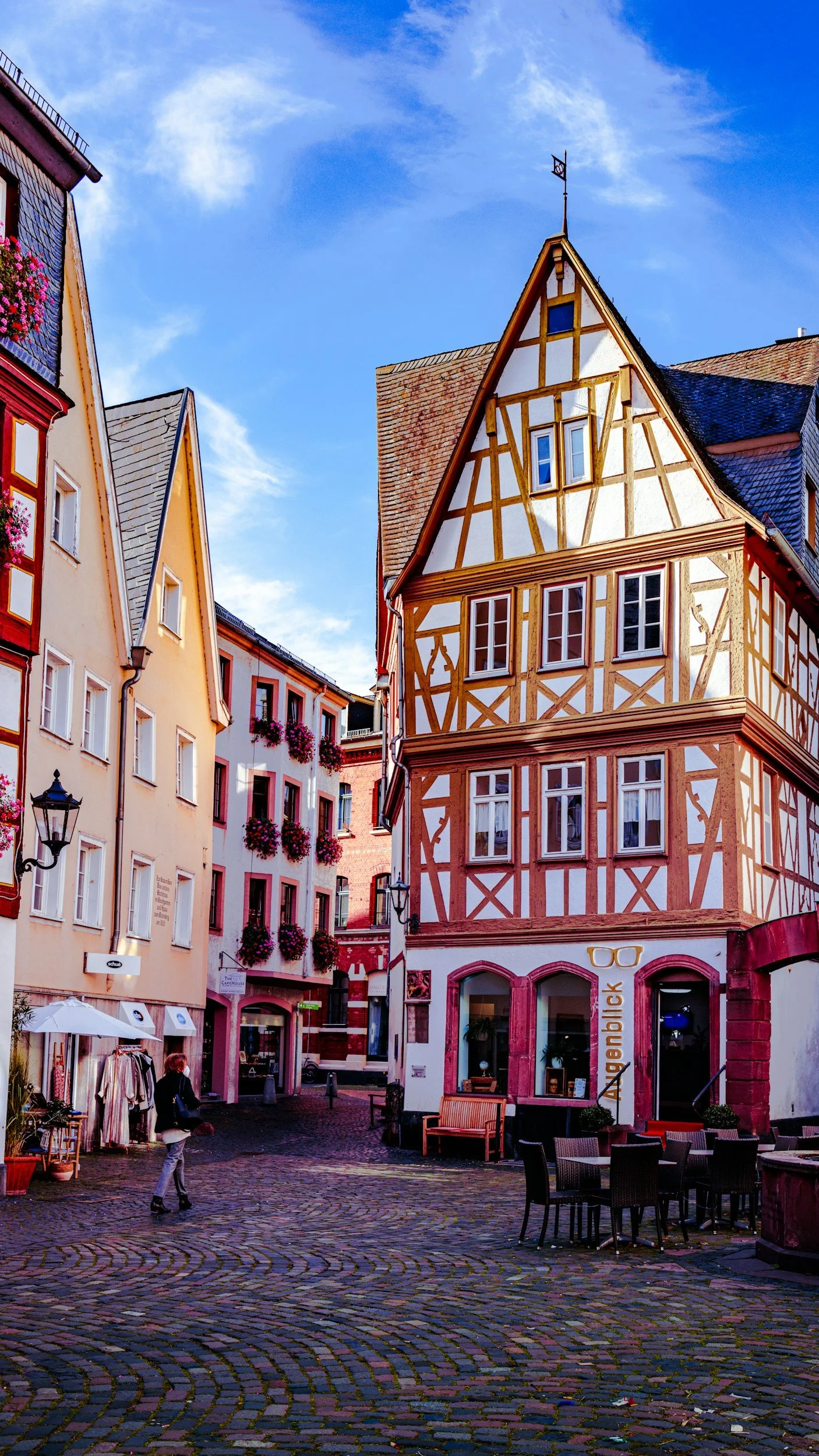
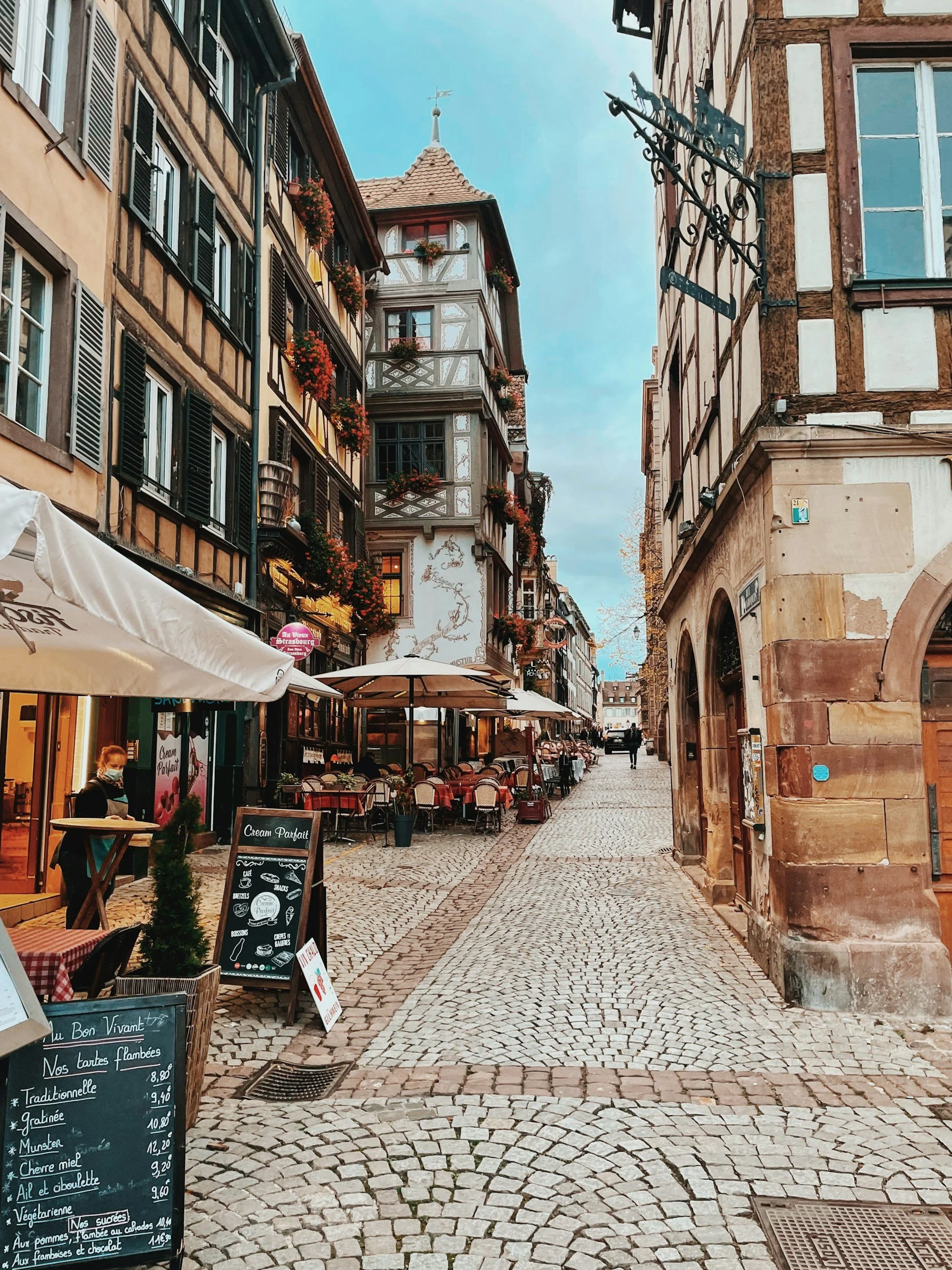
Stay in Colmar if the Wine Route is the reason for the trip
If I already knew that Riquewihr, Kaysersberg, Eguisheim and Ribeauvillé were going to take up most of my saved places, I would stay in Colmar rather than Strasbourg. Not because Colmar has better transport overall, because Strasbourg clearly wins that one, but because Colmar puts you where the easy railway part of the journey and the slightly more awkward village part actually meet.
That sounds like a small distinction, but it changes the whole trip. Colmar station is not just where you catch the train back to Strasbourg. The regional bus station is here too, Kut’zig stops directly outside the railway station before making another stop at Unterlinden, and the seasonal Christmas shuttles into the surrounding villages also leave from the station. If you stay in the right part of Colmar, you can realistically walk out of your hotel in the morning and choose between a train, a normal regional bus or a seasonal shuttle without first having to cross half the town.
What Colmar makes easy
The railway side of the trip is very straightforward. Direct TER trains run north through Sélestat to Strasbourg, with the Colmar-Strasbourg journey taking around 32 minutes on the faster services and usually running often enough that you do not need to build your whole day around one departure. Southbound trains take you to Mulhouse in roughly 18 minutes, and there are also direct services continuing through Saint-Louis to Basel SBB, with some Colmar-Basel journeys taking around 45 minutes.
So choosing Colmar for the Wine Route does not mean trapping yourself in southern Alsace. You can still decide over breakfast that you fancy a day in Strasbourg, or keep heading south towards Switzerland afterwards without turning the journey into a complicated chain of connections.
The bigger reason to stay here, though, is what happens once you leave the railway.
Colmar’s regional bus network is set up around exactly the places most Wine Route visitors want to reach. The R013 heads towards the Kaysersberg valley, the R016 serves Riquewihr and Ribeauvillé, and the R030 runs towards Eguisheim and Rouffach. The official tourist office lists regional stops either at Colmar station or beside the Théâtre Municipal, which is useful to know before booking a hotel because those two points sit at opposite ends of a very manageable stretch of the centre.
Kut’zig makes Colmar even easier when it is running. Its first stop is Colmar Gare, followed five minutes later by the Office de Tourisme at Unterlinden, before the loop continues through Ribeauvillé, Riquewihr, Kaysersberg, Turckheim and Eguisheim. I would never book a trip assuming Kut’zig is available just because I am travelling sometime between spring and autumn, because it is seasonal and does not run every day throughout the entire season. But when it does line up with your dates, Colmar becomes ridiculously convenient for seeing several of the central Wine Route villages without having to organise a separate bus journey for every single one.
Christmas works in a similar way, although with a separate seasonal network. The official shuttles leave from Colmar train station and connect the city with places including Kaysersberg, Riquewihr, Ribeauvillé, Eguisheim, Turckheim, Munster and Neuf-Brisach. The important bit is that different routes operate on different days and the shuttle period changes each year, so I would always check the exact dates before booking around it. “There are Christmas shuttles from Colmar” is true, but it is not quite enough information if your hotel dates fall just outside the operating period.
Turckheim is even easier because you do not need a bus at all. Trains run west from Colmar on the Munster-Metzeral line, and the journey to Turckheim is usually only around ten minutes. That makes it one of the easiest places to add if you want a smaller-town evening or even one night outside Colmar without ending the day by trying to find a taxi back through the vineyards.
What I also think gets overlooked is that Colmar is big enough to still be enjoyable once the day trip is over. You are not choosing good transport at the expense of having somewhere to eat, drink coffee or spend a rainy afternoon.
If I came back from Kaysersberg wanting a proper Alsatian dinner, Wistub Brenner at 1 rue de Turenne would be on my list, while Le Comptoir de Georges at Place des Six-Montagnes-Noires beside Petite Venise takes the winstub idea in a slightly more modern direction. If you want something a bit more special, Colmar also has restaurants such as L’Atelier du Peintre, Restaurant Girardin and À l’Échevin in the Michelin selection. In other words, three or four nights here does not mean rotating between the same two dinner options because nowhere else is open.
Coffee is much better than you might expect from a town with such a busy tourist centre. Petit à petit - Omnino at 8 rue Morel does specialty coffee, MaDam Coffee at 13A rue des Marchands serves espresso, batch brew and hand-filter coffee, and AMETY Café on rue des Tripiers is another independent option if you want breakfast or coffee before spending the day in town rather than racing straight to the first bus.
There are good non-food stops as well. Feuilles d’Encre, tucked into Cour Waldner Stephan near rue des Marchands, is an independent general bookshop, while Le Libroscope on rue du Rempart gives you another local bookshop rather than a chain. The tourist office also recommends independent craft and regional shops such as Hop Là!, which focuses on local art and craft, and Savonnerie Scala. If I had an hour before dinner, I would much rather spend it wandering through those streets than standing in another queue in the busiest part of Petite Venise.
And if the weather is awful, Musée Unterlinden is right in one of the most useful areas of town. It sits in the former Dominican convent at Place Unterlinden, with collections ranging from archaeology and medieval Upper Rhine art to modern and contemporary work, with the Isenheim Altarpiece at the centre of it all. I also like Unterlinden as a base because the museum, the tourist office and one of the Kut’zig boarding points are all within the same small area, so it manages to be practical without feeling like you have chosen your hotel solely around transport.
The important catch with using Colmar as your Wine Route base
Colmar makes the villages easier, but it does not magically turn rural transport into a city metro.
Kut’zig is the obvious example. It is seasonal, and even during the months when it is running, the number of operating days changes through the year. The current pattern is stronger in high summer and more limited in spring and autumn, so I would always plan around the actual date rather than read “April to October” somewhere and assume that means every day in between.
The regular buses need the same bit of attention. Kaysersberg’s own tourist office explains that the R013 runs from Colmar Monday to Saturday rather than on Sundays and public holidays, and some departures change depending on whether schools in Zone B are in term or on holiday. This is exactly the sort of detail that can make a route look completely normal in a journey planner until you realise your travel day is the one awkward exception.
So if Kaysersberg is one of the places you absolutely want to visit, I would check both the outward and return R013 before deciding which day to go. The same applies to Riquewihr, Ribeauvillé and Eguisheim on their respective routes. Colmar gives you the best starting point, but I still would not turn up at the bus stop in the morning and hope the timetable works itself out.
Sunday is where this matters most. There is a big difference between saying “Colmar has buses to the villages” and knowing there is actually a bus back from the village you picked at the time you want to leave. That difference feels much bigger when you are standing at a rural bus stop and you already have dinner booked back in Colmar.
The other thing to be realistic about is the crowds. Petite Venise, rue des Marchands, Place de l’Ancienne Douane and the area around Maison Pfister can be very busy during summer days, and Christmas brings another level of visitor numbers entirely. I would not book a hotel in the absolute busiest part of the historic centre because I had been sold the idea of a quiet small-town stay. Colmar is compact, but it is also one of the most visited places in Alsace, and during peak periods you definitely notice it.
Evenings can feel much nicer, though, especially once a lot of day visitors have gone back to Strasbourg or left on coach tours. I particularly like the idea of walking back through rue des Têtes, rue des Boulangers, rue des Clefs and the quieter western side of the centre rather than assuming the whole evening needs to happen beside the canal.
I still would not rely on complete spontaneity for dinner every night. The smaller winstubs and the better-known Michelin-listed restaurants can fill up, especially at weekends, in summer and around Christmas. Colmar gives you much more choice than Riquewihr or Eguisheim, but that does not mean the exact restaurant you want will have a table at 20:00 because you decided five minutes earlier that you were hungry.
Where I would actually stay in Colmar without a car
This is where I think the usual advice to “stay in the old town” becomes a bit too vague to be genuinely helpful.
For a car-free Wine Route trip, I would start with the corridor running from Colmar station through Champ de Mars towards the western old town and Unterlinden. It gives you the best balance between getting to transport in the morning and actually enjoying where you are staying once you come back.
The station and the historic centre are close enough that you do not really have to choose one or the other. Champ de Mars sits between them, so somewhere around Avenue de la République, Avenue de la Marne, Rue Bruat, Place Rapp or the streets immediately west of the old centre keeps you within a comfortable walk of the platforms while still putting restaurants and the historic streets close by.
I actually like Champ de Mars as the dividing line. On one side you have the railway station and regional buses, and on the other you are almost immediately back into the centre around Place Rapp, rue des Têtes and the streets leading towards Unterlinden. It means an early R013 or train to Strasbourg does not require a twenty-minute march across town, but you also do not feel like you booked your hotel because it happened to be opposite a platform.
Unterlinden is another area I would seriously consider, especially if you want to feel properly inside the centre. The tourist office is at Place Unterlinden, Kut’zig stops there after leaving Colmar station, and the Musée Unterlinden is on the square itself. From here, rue des Têtes, rue des Clefs and rue des Boulangers lead straight into the older streets, but you are still on the western side of the centre rather than all the way down in Petite Venise.
It is also a much better area than it first appears if you like having somewhere to go without planning another “thing to do”. You can walk along rue des Têtes past Maison des Têtes, cut towards the independent shops around rue des Marchands, stop for coffee and still be back at Unterlinden within a few minutes. Colmar also has several smaller contemporary galleries scattered through the centre, so an hour between lunch and dinner does not have to become another round of souvenir shopping.
If I found the right hotel, western old town would probably be my favourite overall choice. Somewhere around rue Stanislas, rue des Têtes, Place Rapp or the western ends of the central pedestrian streets keeps you close to Champ de Mars and Unterlinden while still feeling much more like being in Colmar than sleeping directly opposite the station.
I would not automatically dismiss a hotel near Place de la Gare either. If village transport is the main priority, there is something very satisfying about being able to walk downstairs and be almost immediately at the buses, Kut’zig or your TER. The station building itself is one of the more distinctive ones in the region, with its red-brick façade and clock tower, but the surrounding streets still feel more like an ordinary transport district than the historic centre. Basically, brilliant at 07:30 and not quite as exciting when you step outside after dinner.
What I would be more hesitant about is going too far in the other direction and booking deep inside Petite Venise purely because the hotel photographs look perfect. Staying around rue de Turenne, quai de la Poissonnerie or the southern end of the old town can be lovely if Colmar itself is the priority, but if you are leaving for villages on three consecutive mornings, that extra walk back towards the station starts happening again and again. Add luggage and cobbles on arrival day and the supposedly perfect location can become slightly less convincing.
There is absolutely no reason to avoid Petite Venise altogether. I would just ask myself whether I am choosing it because I specifically want to wake up there, or because a booking site has labelled it the “best area in Colmar”. Those are not necessarily the same thing.
I would be much more cautious with hotels around the Parc des Expositions, Avenue de la Foire aux Vins and the northern commercial edge of Colmar. Those addresses can still appear in a general Colmar hotel search, and sometimes the rooms are larger or cheaper, but they put you away from both the station and the old town. The same goes for accommodation in Horbourg-Wihr east of Colmar. It may be described as only a few minutes from the centre by car, which is not especially useful information when you do not have one. Unless I had already checked a bus that worked for the times I actually needed, I would rather pay a little more and stay somewhere where walking is always an option.
I would use exactly the same test for vineyard properties outside town. “Near Colmar” can easily mean a beautiful hotel among vines several kilometres from the railway station. Perfect if you have a car, much less perfect if you need to be at Colmar Gare for an 08:30 Kut’zig. Before booking anything out there, I would want to know exactly how I was getting there with luggage, how I was getting back after dinner and whether the transfer still existed on a Sunday.
Who I think should choose Colmar
Colmar is the base I would recommend most confidently to someone visiting Alsace for the first time who already knows that the Wine Route is the main reason for the trip. If your notes contain Eguisheim, Kaysersberg, Riquewihr, Ribeauvillé and Turckheim in much bigger letters than Strasbourg’s museums or Germany, it simply makes sense to stay closer to the transport serving those places.
It works particularly well for three or four nights because that gives you enough time to use Colmar as an actual town rather than somewhere you only sleep between buses. You can spend one day using village transport, another taking the train to Strasbourg or Sélestat, and still have evenings around Unterlinden, rue des Marchands and Petite Venise without changing hotels halfway through.
I would also put Colmar high on the list if you are travelling while Kut’zig is operating, provided you have checked that it really does run on your chosen day, and at Christmas when the official village-shuttle network is in service. In both cases the station becomes even more useful, which is why the exact location of your hotel matters almost as much as the fact that it is in Colmar.
And I think Colmar really suits the traveller who wants something compact without going all the way down to village scale. You can walk to dinner, find genuinely good coffee, browse an independent bookshop, spend a rainy afternoon at Unterlinden and still have a railway station that can get you to Strasbourg or Basel the next morning. That combination is surprisingly hard to replace once you move farther onto the Wine Route.
The main reason I would choose Strasbourg instead is if the villages were only one part of the trip, or if I were travelling in a quieter period when the seasonal transport was not running and I wanted as much flexibility as possible. But if I had three days and a list containing Riquewihr, Kaysersberg and Eguisheim, I would not add a Strasbourg-Colmar train to every morning just because Strasbourg has the bigger station. I would stay in Colmar and start the day where the useful village transport actually starts.
Can a smaller Alsace town work as your base?
Yes, but I would be quite picky about which one. There is a big difference between spending a lovely afternoon in an Alsace village and waking up there on day three of a car-free trip when you suddenly need to get somewhere else. The smaller places that work best are the ones where you can still walk to a useful railway station, find dinner without booking the only open restaurant days ahead, and change your plans without needing a taxi to rescue the day.
For me, Sélestat is the strongest smaller base overall, Obernai makes much more sense if your trip is focused further north, and Turckheim is the one I would choose for a short stay near Colmar when I actually wanted the small-town part of the trip to be the point. Riquewihr, Kaysersberg and Eguisheim are different again. I would happily sleep in any of them, but I would do it because I wanted that particular village outside the busiest daytime hours, not because I expected it to work as smoothly as Colmar for exploring the rest of Alsace.
Sélestat is the smaller town I would take most seriously
Sélestat is the smaller Alsace base I would look at first if Colmar feels a little too busy but I still want the freedom to wake up, look at the weather and change my plans without the whole day becoming a transport puzzle. Its biggest advantage is very simple, but it matters a lot here: the train station is genuinely useful. Sélestat sits directly on the Strasbourg-Colmar-Mulhouse line, with the fastest direct services reaching Strasbourg in about 20 minutes and Colmar in roughly 11 to 12 minutes. There are plenty of departures in both directions, so this is not one of those places where technically having a station sounds great until you realise the next useful train is two hours away.
The station also works surprisingly well with the historic centre. The Bibliothèque Humaniste puts the walk at around ten minutes, which means you can stay somewhere central and still catch an early train without needing to add a local bus or taxi to the beginning of every day. I would look around Place du Dr Maurice Kubler, Rue des Chevaliers, Rue Sainte-Barbe and Place d’Armes, or somewhere along the easy walk between those streets and the station. Sélestat is compact enough that you can come back from Strasbourg, drop your bag and go straight back out for dinner without thinking about transport again.
What I like most is that Sélestat feels like much more than a clever railway choice once you are actually there. The Bibliothèque Humaniste is genuinely worth your time, not just something to mention because every historic town apparently needs a museum. It holds the personal library of Renaissance humanist Beatus Rhenanus, which is on UNESCO’s Memory of the World register, alongside manuscripts and early printed books, and the building at 1 Place du Dr Maurice Kubler was redesigned by Rudy Ricciotti. Even if old books would not normally decide where you stay, this is the kind of place that gives Sélestat a real identity beyond “town between Strasbourg and Colmar”.
A few minutes away, Maison du Pain d’Alsace on Rue du Sel is another address I would actually stop at rather than rush past. It is part museum, part working bakery, with the story of Alsatian bread and baking traditions woven through the building. Then there is Quai des Tanneurs, which makes much more sense once you know what you are looking at. The old canal used by the tanners was covered over in the early twentieth century, but the water still runs beneath the street, and some of the houses still have the narrow façades, high gables and steep roofs that were useful for drying hides. Numbers 1 and 17 are especially good examples, and if you notice the old tanners’ emblems above the doorways, the whole street suddenly feels much less like another pretty historic lane.
This is also where Sélestat starts to feel quite different from Colmar. It certainly gets visitors, but there is still a lot of ordinary town life going on around you, especially during the week. On Tuesday morning, the market fills the Neja Waj area with around 150 regular traders plus another 30 to 40 itinerant sellers, with fruit and vegetables, cheese, charcuterie, flowers, cooked food, books and regional products. It is not six stalls arranged around a square for visitors. It is a proper weekly market used by people from Sélestat and the surrounding area, and if I were staying here I would absolutely try to overlap my trip with a Tuesday morning.
The independent shops help with that feeling too. Librairie Pleine Page at 13 Rue Sainte-Barbe has been here for more than thirty years and is still an independent general bookshop, with literature, essays, travel, comics and regular events rather than just a shelf of Alsace postcards and regional cookbooks. Just around the corner, Galerie Café La Ligne Bleue at 1A Rue Sainte-Foy is one of those places I would probably end up going back to more than once. It sits inside the seventeenth-century Mönchhof, once the granary of Sainte-Foy church, with around 250 square metres of contemporary exhibition space and a café downstairs that feels more like a cabinet of curiosities than a standard coffee shop.
Sélestat also has enough good places to eat that I would feel comfortable staying for a few nights, although the choice is obviously smaller than in Colmar. Acolytes at 39 Rue des Chevaliers is in the Michelin Guide for modern cooking, while Au Bon Pichet is the more traditional Alsatian option and is also Michelin-listed. I actually quite like that combination. You do not need thirty restaurants if there are a few genuinely good ones you would happily return to, and it fits the town better than a centre full of nearly identical menus aimed at day visitors.
Another reason Sélestat earns its place here is Haut-Koenigsbourg. The seasonal L500 shuttle leaves from Sélestat station for Château du Haut-Koenigsbourg, with stops around Kintzheim including Cigoland, the Volerie des Aigles and Montagne des Singes. The operating calendar changes, so I would still check your actual dates rather than assume the shuttle runs every day, but if the castle is high on your list, Sélestat is a very logical place to base yourself without a car.
Where I would be careful is turning Sélestat into something it is not.
It is not on the Kut’zig loop, which currently starts in Colmar and continues through Ribeauvillé, Riquewihr, Kaysersberg, Turckheim and Eguisheim. So if three of your days revolve around those villages, you may find yourself taking the 11-minute train down to Colmar and only then starting the part of the journey you actually planned. Eleven minutes is nothing dramatic, but if you are doing that every morning, some of the cleverness of staying in Sélestat starts to disappear.
The setting is different too. Sélestat sits out on the Alsace plain rather than right against the vineyard slopes, so you do not step out of your hotel and immediately get the same vineyard backdrop you would in Turckheim, Kaysersberg or one of the smaller wine towns farther west. What you get instead is a proper historic town with Sainte-Foy, Saint-Georges, Quai des Tanneurs, Rue des Chevaliers and the Bibliothèque Humaniste, plus easy trains north and south. There is also the Ill*Wald nature reserve nearby and a stronger contemporary-art side than you might expect, so it never feels like somewhere that exists only because people need a bed between Strasbourg and Colmar.
There are fewer hotels and restaurants to choose from than in Colmar, and I would take that seriously if you like being able to decide everything at the last minute. I would also pay close attention to the hotel’s actual location. Some properties listed in the wider Sélestat area sit well outside the walkable centre, including countryside and vineyard hotels several kilometres from the station, which rather defeats the point of choosing Sélestat for the railway in the first place. The historic centre itself is only around ten minutes on foot from the station, so for a car-free trip I would choose that simple station-to-centre setup over a spa, a vineyard view or a slightly cheaper room farther out.
That is really how I would use Sélestat. I would choose it because I want quieter evenings, a proper local market, an independent bookshop and café I would actually go back to, and a main-line station close enough that I can still be flexible. It makes sense if one day might be Strasbourg, the next Haut-Koenigsbourg and another Colmar, and I like the idea of coming back somewhere that feels less intensely visitor-focused at the end of the day.
I would not choose it because I was hoping to find a calmer version of Colmar with equally easy access to every famous Wine Route village, because that is not what Sélestat does best. If Riquewihr, Kaysersberg and Eguisheim are the main reason for the trip, Colmar still wins. Sélestat becomes the more interesting choice when having good trains and a quieter town to come back to matters more than being as close as possible to the central vineyards.
Obernai works beautifully when your trip leans north
Obernai is the smaller base I would choose if I wanted Strasbourg to stay very easy, but did not necessarily want to sleep in a city every night. The logistics are refreshingly simple compared with many Wine Route towns: Obernai station is only about 500 metres, or roughly six minutes on foot, from the centre, and direct TER trains to Strasbourg take around 32 minutes, with up to two trains an hour at busier times. The same A07 line continues south through Barr towards Sélestat, so you are not staying somewhere that feels cut off the moment you want to go beyond the immediate area.
That makes Obernai especially good for a trip combining Strasbourg with the northern part of the Wine Route. You can spend the day in Strasbourg, come back for dinner without worrying about a rural bus, then walk straight out towards the vineyards the following morning. If that sounds more like the trip you want than three consecutive days around Riquewihr and Kaysersberg, Obernai starts to make a lot of sense.
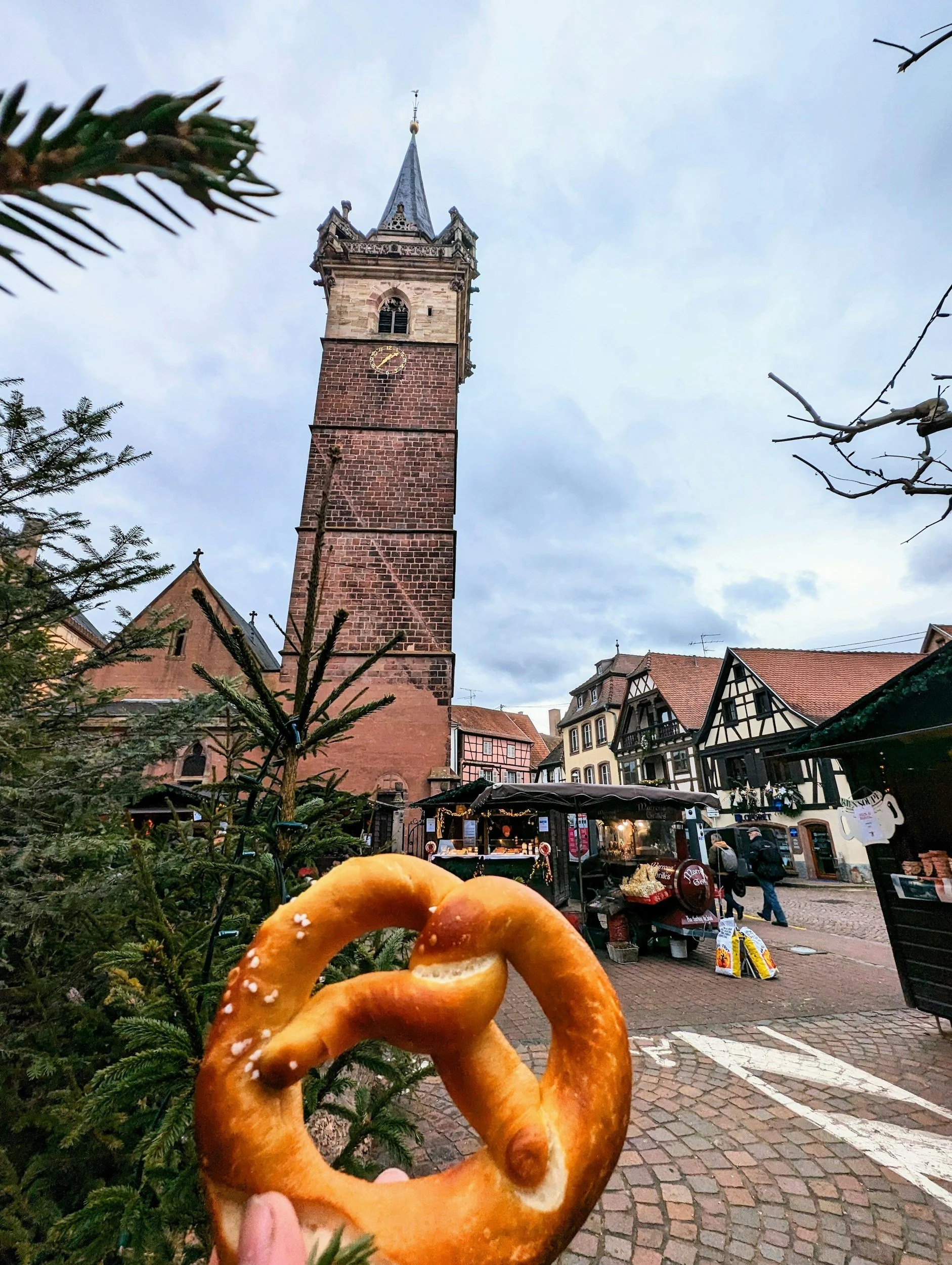
It is also substantial enough to enjoy for two or three nights. Place du Marché is the obvious centre, with the Hôtel de Ville, Kappelturm and Sainte-Odile fountain all close together, while Rue du Marché, Rue Dietrich and Rue du Général Gouraud give you restaurants, shops and somewhere to wander once you have finished looking at the main historic sights.
Obernai’s Thursday market dates back to at least 1301 and still runs on Thursday mornings around Parking des Remparts and Halle Gruber, so I would absolutely try to overlap with it if markets are one of the things you enjoy most in smaller towns. If you arrive for the weekend instead, there is also a smaller Saturday Bi’O market, with more than twenty local producers selling seasonal food. I like that Obernai still has these everyday reasons for people from the area to come into town, because it stops the centre from feeling like it exists purely for visitors.
For breakfast, I would probably head to Pain Vivant by Thierry Schwartz at 7 Rue du Marché rather than automatically taking a table on the main square. The bakery uses organic flours and natural sourdough, and it is an easy place to pick up bread or a pastry before the market, a train to Strasbourg or a walk into the vineyards. After a couple of mornings, this is exactly the kind of place that can become part of your routine, which I always find more enjoyable than treating every meal as another attraction to research.
There are enough independent places nearby to give the centre some personality too. Le Libr’air at 14 Rue Dietrich is a proper independent bookshop, Cup&Co at 5 Cour des Artisans is where I would go if I wanted to sit down with coffee for a while, and Galerie Goralsky at 63 Rue du Général Gouraud gives you a small contemporary-art stop if you have time before dinner. There are also specialist wine and regional-food shops around the centre, so browsing does not automatically mean moving from one souvenir store to the next.
Dinner is another reason I would feel comfortable staying for more than a single night. Winstub Le Freiberg at 46 Rue du Général Gouraud is there when you want something properly Alsatian, while La Dîme at 5 Rue des Pèlerins is another established option in the centre. Monsieur Madame at 54 Rue du Général Gouraud gives you something less traditional, and if you want one special meal, La Fourchette des Ducs at 6 Rue de la Gare is almost comically well placed for a car-free traveller because it sits right between the station and the historic centre.
I would use that same stretch when looking for a hotel. Somewhere around Rue de la Gare, Rue du Marché, Rue Dietrich or the streets leading into Place du Marché gives you the nicest balance between practical and pleasant. You can walk to the station in minutes when you need it, but you are still coming back into the centre at the end of the day rather than towards a hotel on the edge of town. Obernai also has its free Pass’O urban buses from Monday to Saturday, with line A linking the station, centre and eastern parts of town, but if you stay around this pocket you may barely use them.
One of Obernai’s biggest advantages, though, is that you do not need to catch anything at all to feel properly connected to the Wine Route. The vineyards begin just above town, which gives it a very different feel from Sélestat. Walk up towards the National Memorial on Allée du Mémorial, around 1.6 kilometres from the station, and you reach a belvedere looking back over Obernai towards Mont Sainte-Odile. It is also the starting point for the Schenkenberg wine trail, which climbs through the vineyards.
That is probably the part I would enjoy most about staying here. You could pick up bread on Rue du Marché in the morning, walk out of the centre and be among vines shortly afterwards without organising anything or catching a bus. On a clear day, the views open across the Alsace plain towards the Black Forest, and you can even pick out the silhouette of Strasbourg Cathedral in the distance. It makes the surrounding landscape feel like part of the stay rather than somewhere you have travelled out to see.
Mont Sainte-Odile is another reason Obernai works well, although this is where I would check the timetable carefully. The regional line 257 links Strasbourg, Obernai, Klingenthal, Mont Sainte-Odile and Champ du Feu, but the service towards Mont Sainte-Odile is much thinner than the trains to Strasbourg, with only limited direct connections on some days. So yes, you can get there without a car, but I would not leave the planning until breakfast and assume there will be another bus in an hour.
That does not make Obernai difficult. It just means the town is particularly good at some things and not especially good at others. If I wanted Strasbourg, Obernai itself, vineyard walks and perhaps Mont Sainte-Odile when the transport lined up, I would be very happy here. If the whole trip was really about Eguisheim, Riquewihr and Kaysersberg, I would choose somewhere farther south instead.
From Obernai, those central Colmar-area villages usually mean working down towards Sélestat or Colmar and then changing onto another bus or shuttle. Doing that once is completely manageable. Doing it again the next morning and then again the day after is where the location starts working against you. Obernai suits a Strasbourg plus northern Wine Route trip much better than it suits someone trying to split the difference between Strasbourg and Colmar.
I would also pay attention to local bus days if Ottrott or Mont Sainte-Odile are important to you. Obernai’s Pass’O network runs Monday to Saturday, while the regional services have their own timetables, and the mountain routes are nowhere near as forgiving as the TER. The train is the part you can rely on fairly casually. Anything heading farther into the countryside deserves a quick check before you build a day around it.
If Obernai still sounds a little busier or more polished than what you had in mind, Barr is the quieter alternative on the same A07 railway line. It works particularly well if you want vineyard walks from the doorstep and slower evenings, but I would choose it for exactly that reason rather than expecting the same restaurant choice and overall convenience you get in Obernai.
For most people wanting a smaller northern Alsace base, though, Obernai is the easier choice. You can walk six minutes from the station to a proper historic centre, pick up bread at Pain Vivant, browse Le Libr’air, have a completely different dinner the following evening, head up through the Schenkenberg vineyards when you feel like staying local and still be in Strasbourg in around half an hour when you do want the city.
The only thing I would not do is choose Obernai for an itinerary that is really centred on Colmar. If Riquewihr, Kaysersberg and Eguisheim are the places you are most excited about, you will simply spend too much time travelling south. Obernai is much better when you use it for what it actually does well, rather than trying to make it conveniently halfway to everything.
If TER trains are still a bit of a mystery, my TER train guide covers the practical stuff I always want to know before a trip, without making the French rail system sound more complicated than it is.
Turckheim is the one I would choose when I actually want the small-town stay
Turckheim is where I would go if I had already spent a couple of nights in Colmar and wanted the trip to feel noticeably smaller for a day or two, but without crossing into the kind of village stay where one missed bus can throw off half the day. The reason it works so much better than several of the famous villages nearby is simple: Turckheim has a train station, and Colmar is only around nine to eleven minutes away on the direct TER. Current SNCF schedules show roughly sixteen Colmar-Turckheim journeys on a typical day, which is nowhere near the frequency you get between Strasbourg and Colmar, but it is still enough that the train feels genuinely useful rather than something you have to plan the entire day around.
The station itself is very small and unstaffed, so I would not arrive expecting a ticket office, café or luggage service. There is a TER ticket machine, and tickets can of course be bought on your phone, but otherwise it really is just a small local halt. I actually think that fits Turckheim quite well. You have the convenience of a railway, but once you arrive, you are very clearly somewhere much smaller than Colmar.
What makes the setup especially nice is that you do not get off the train miles away from the interesting part of town. From the station side, you approach the historic centre through Porte de France, the southern medieval gate, and from there you are almost immediately at Place Turenne, the Corps de Garde and the beginning of Grand’Rue. Rue des Vignerons, Rue des Bénédictins and Rue Brûlée are all within the same compact pocket, and Turckheim’s own heritage route takes only around 50 minutes to cover the three surviving gates and the main historic buildings. That gives you a pretty good idea of the scale. You can arrive, check into your hotel and know that the rest of the evening can be done entirely on foot.
That is also why I think Turckheim is much more interesting as an overnight stay than as a quick lunch stop from Colmar. You can easily “see” the centre in a couple of hours, but staying gives you the part that is harder to get on a day trip. You can have dinner on Grand’Rue, walk through the streets once most afternoon visitors have gone, and from May through October join the night watchman at 22:00 outside the Corps de Garde. Turckheim still runs the round every evening during that period, with the watchman walking through town carrying his lantern, horn and halberd. It is a little eccentric, very specific to Turckheim and, for me, a much better reason to sleep here than simply wanting an early photo of Porte de France.
The vineyards are another big part of the appeal because you do not need to organise a tasting tour or catch another bus to feel like you are properly on the Wine Route. The Sentier du Dragon starts from town and runs for about 3.5 kilometres through the vineyard slopes, with information panels and views over Turckheim, the Alsace plain and towards the Vosges. The trail is linked to the local legend of the dragon associated with Grand Cru Brand, the vineyard rising above the eastern side of town, so it feels very rooted in Turckheim rather than like a generic countryside loop that happens to pass some vines.
If you do not feel like doing the whole trail, even walking out towards Porte du Brand and up onto the lower vineyard slopes gives you that immediate change from town to countryside. This is one of the biggest reasons I would choose Turckheim over Sélestat for a short wine-town stay. You can pick up breakfast, walk through a medieval gate and be looking back over rooftops and vines within minutes, without needing to turn the morning into an excursion.
You can also taste wine without having to arrange a taxi to an estate somewhere outside town. Domaine François Baur is at 3 Grand’Rue, almost absurdly convenient if you are staying in the centre, while Vins d’Alsace Alphonse Meyer et Fils is on Place de l’Église. A little farther out, Domaine Hurst is on Rue de la Chapelle and works with vineyards including Grand Cru Brand. That is one of the small things I really like about staying here: wine tasting can simply be part of the afternoon, and afterwards you walk back to your room rather than start thinking about how to get back to Colmar.
Food is where I would plan a little more carefully than I would in Colmar, because there are enough good options for one or two nights but not an endless amount of backup. La Table du 12 is at 12 Grand’Rue, L’Autrefois is farther along at 47A Grand’Rue, and Caveau du Vigneron is at number 5. For breakfast or something sweet, Pâtisserie Carl at 13 Grand’Rue is particularly handy if you are staying inside the old centre. I would be perfectly happy eating locally for a couple of nights, but I would not arrive on a busy weekend with no reservation and assume there will be ten other restaurants waiting if the first place is full.
That becomes even more relevant on Sundays and Mondays, when opening days matter more in a small town. Turckheim has restaurants, winegrowers and everyday shops, but the fallback is much thinner than in Colmar. I would check dinner opening times before booking the hotel rather than discovering at 19:30 that the place I had been planning to try was closed and the next easy option was a train ride away. The whole point of staying somewhere smaller is to enjoy being there, not to spend the evening travelling back to Colmar because you forgot to check where you could eat.
There is still more everyday life here than you might expect from such a compact centre. Turckheim has a weekly market selling produce, cheese, meat and other local goods, so the town is not made up entirely of tasting rooms and hotel entrances. There is also the Musée Mémorial des Combats de la Poche de Colmar at 25 Rue du Conseil, which focuses on the fighting around the Colmar Pocket during the winter of 1944–45. It is a completely different side of Turckheim from the Wine Route imagery and a useful place to know about if the weather turns and the Sentier du Dragon suddenly looks less appealing.
Christmas is another time when Turckheim becomes particularly useful without a car because you have two realistic ways of getting back to Colmar rather than relying on one seasonal service. The Christmas shuttle network includes a Colmar-Turckheim-Munster route on its operating days, but the ordinary TER continues to run as well. That gives you an extra bit of flexibility if the shuttle timetable does not suit, tickets are limited or road traffic is heavy. The Christmas shuttle currently uses Place de la République in Turckheim, which is close to the historic centre, so you do not have to walk out to some distant roadside stop either.
I would still check the train timetable before making evening plans in Colmar, because Turckheim is not on the kind of railway where trains run every half hour until late at night. The gaps are wider than on the Strasbourg-Colmar line, and some directions finish earlier than you might expect. If you are sleeping in Turckheim, the important thing is to check the last useful train back from Colmar rather than assuming the station gives you unlimited flexibility.
Longer day trips also tend to pull you back through Colmar. Strasbourg from Turckheim normally means changing there, and while the fastest journeys can come in under an hour, it is still another connection to think about. If you want to spend every day bouncing between Strasbourg, Sélestat, Riquewihr and Eguisheim, Colmar is simply the cleaner base.
Turckheim makes much more sense when at least part of the trip is meant to happen right here. Walk the Sentier du Dragon, taste wine on Grand’Rue, have a long lunch, perhaps take the train farther up the valley to Munster, then come back in time for the night watchman rather than treating the hotel as somewhere you only see after dark.
That is why I would normally give Turckheim one or two nights, either after Colmar or somewhere in the middle of a longer Alsace trip. I could also see it working for longer if you genuinely wanted slow mornings, vineyard walks and plenty of time locally, because Colmar is still close enough whenever you want more restaurants, museums or onward trains.
What I would not do is choose Turckheim because it looks like a quieter version of Colmar and expect it to handle exactly the same itinerary. It will not. The trains are less frequent, the station is unstaffed, restaurant choice is much smaller and most bigger journeys still send you back through Colmar. But if what you actually want is a couple of nights where you can walk through Porte de France, pick something up from Pâtisserie Carl, head into the Brand vineyards, taste wine without organising a driver and wander back along Grand’Rue in time for the 22:00 watchman, Turckheim is one of the few small Alsace towns where doing all of that without a car still feels genuinely easy.
And if you are travelling in September and still deciding between wine regions, I would compare Alsace with Burgundy in September before booking. The two trips suit quite different moods and travel styles.
What about Riquewihr, Kaysersberg and Eguisheim?
I would happily spend a night in Riquewihr, Kaysersberg or Eguisheim. I just would not book four nights in one of them thinking I had found a prettier version of Colmar that would somehow be equally convenient for the rest of Alsace. That is where a lot of accommodation advice gets a little carried away. All three work very well when waking up in the village, having dinner locally and being able to walk into the vineyards the next morning are part of what you actually want from the trip. They are much less convincing when the hotel is simply meant to be a base for going somewhere else every day.
For a first car-free trip, I actually like the idea of using one of them after two or three nights in Colmar. Do the more transport-heavy part first, when you are taking buses out to different villages or catching the TER to Strasbourg, then move once and give yourself a night where you do not particularly need to get anywhere. I would travel reasonably light for that part too. Arriving at Porte Basse in Kaysersberg or the mairie stop in Eguisheim with a small overnight bag is a very different experience from trying to manoeuvre a large suitcase through a bus and then over cobbles because the hotel looked conveniently central on Booking.com.
Kut’zig does not completely fix the hotel-transfer problem. It is a hop-on, hop-off sightseeing circuit from Colmar through the central Wine Route villages, and its published timetable is built around daytime exploring, with the later passes through Riquewihr and Kaysersberg still falling in the early evening rather than after dinner. That is great when you want to spend a few hours in each village; it is much less useful if your plan is an early departure from your hotel or dinner in Colmar followed by a late journey home. I would use Kut’zig for what it is very good at and check a separate transfer plan before booking an overnight stay around it.
The boarding points make this feel more real than the phrase “accessible by public transport” does. Kut’zig uses Riquewihr Poste, Kaysersberg Porte Basse and Eguisheim Parking de la Mairie, so you are getting off at a village bus stop and walking the rest of the way rather than arriving at a staffed railway station with lifts, a waiting room and somewhere obvious to leave luggage. If your hotel is deep inside the old centre, that last stretch is on foot.
Riquewihr is the one I would choose if I wanted to sleep inside the village walls
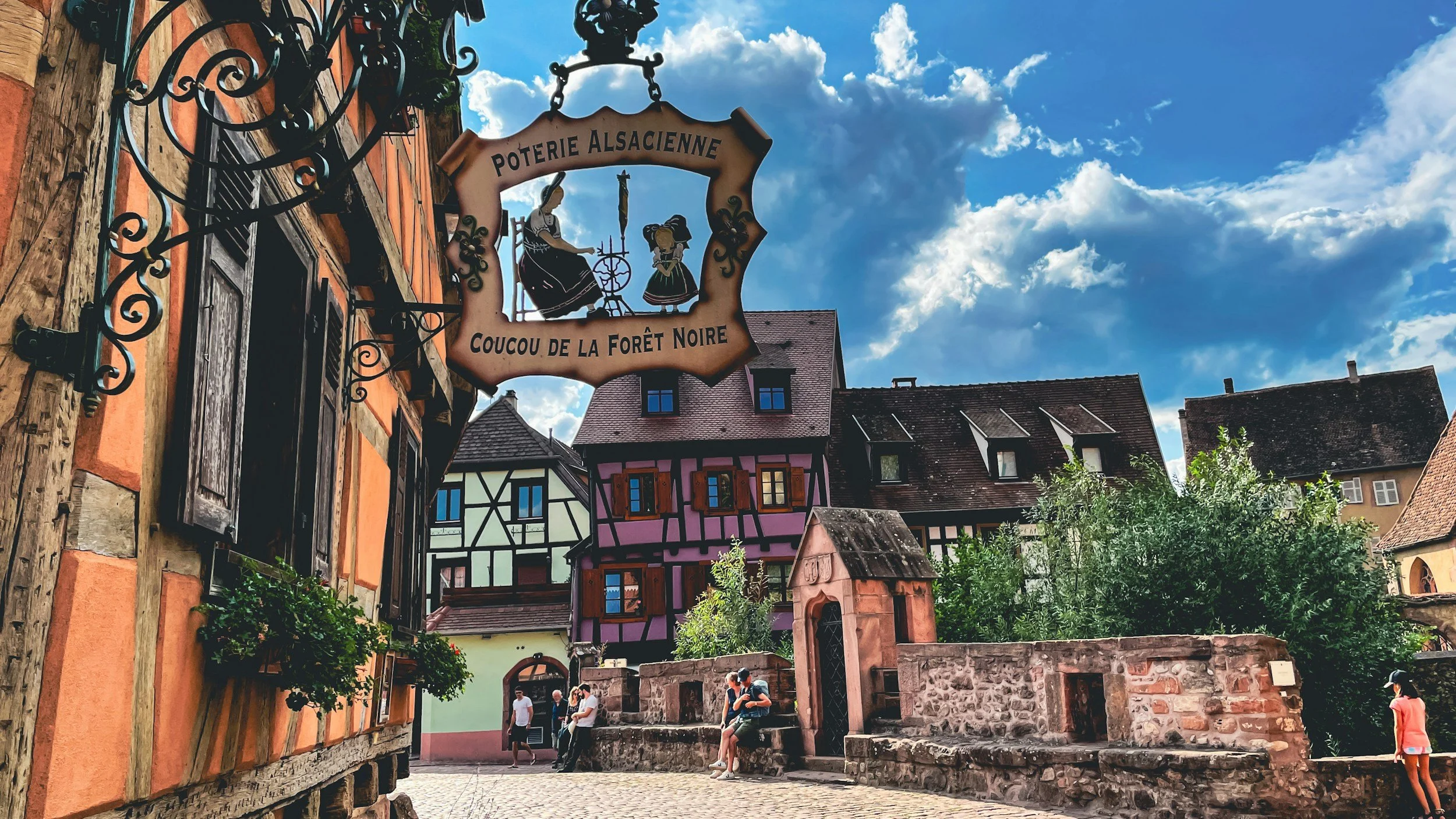
Riquewihr makes much more sense to me as an overnight stay once you stop treating Rue du Général de Gaulle as the whole village. That main street can be incredibly busy in the middle of the day, but the lanes around Rue des Juifs, Rue des Écuries and Rue de la Couronne give you a different version of the place, especially towards the end of the afternoon. At the upper end of town you reach the Dolder, the thirteenth-century defensive gate, while Rue des Juifs takes you towards the former Thieves’ Tower and the sixteenth-century Winemaker’s House. These are all within such a small area that an overnight stay is less about fitting in more sightseeing and more about having time to wander without following the same up-and-down route as everybody arriving for two hours.
I would also use the morning for the vineyards rather than trying to squeeze in another village before lunch. Riquewihr sits directly below the Grand Cru Schoenenbourg, and the local tourism office has developed Géovino wine routes through the surrounding vineyard landscape. The larger network runs for 35 kilometres through eleven wine villages, but there are individual village circuits that take only around one to two hours, including a Riquewihr route. That is much more realistic after breakfast than setting off on another bus journey immediately, and it gives you a reason to stay here that has nothing to do with getting the main street to yourself for a photograph.
Wine tasting is unusually easy to do on foot as well. One useful quirk of this part of Alsace is that many of the growers’ cellars are inside the villages rather than sitting remotely among the vines, so staying in Riquewihr means you can arrange a tasting and walk back to your accommodation afterwards. The local tourism office still recommends contacting winegrowers ahead, particularly around the September and October harvest, when somebody who normally welcomes visitors may quite reasonably be out working in the vineyards instead.
Dinner is not a reason to avoid Riquewihr either. La Grappe d’Or on Rue des Écuries is a strong option for more traditional cooking, while La Table du Gourmet at 5 Rue de la 1ère Armée and AOR La Table, le Goût et Nous at 2 Rue de la Piscine take things in a much more creative direction. All three remain in the current Michelin selection. I would still reserve rather than assume a busy tourist village equals unlimited evening choice, because once one or two restaurants close for their weekly day off, the number of realistic alternatives shrinks much faster than it would in Colmar.
The transport is why I would keep the stay short. The R016 links Colmar with Riquewihr and Ribeauvillé, and Kut’zig is excellent when its operating calendar matches your dates, but you do not have a train to fall back on if you suddenly want an early start elsewhere. I would spend one night here because I wanted dinner, wine, an evening around the old walls and a morning walk into Schoenenbourg. I would not spend four nights here while travelling back towards Colmar every morning.
Kaysersberg gives you more to do locally than you might expect
Kaysersberg is probably the easiest of these three for me to imagine spending a full day and night in without feeling that I had run out of things to do by mid-afternoon. The centre stretches along Rue du Général de Gaulle beside the Weiss, so it feels a little less compressed than Eguisheim, and you can peel away towards Rue des Forgerons, the fortified bridge and the streets below the castle instead of following one obvious circuit through town.
The fortified bridge is worth slowing down for rather than treating it as another photo stop. Its current fortified form goes back to the early sixteenth century, and there is a small former lock-up built into the bridge itself. From there, you can continue along the Weiss and then climb towards Château de Kaysersberg, either by the stairways or through the vineyard paths. The keep has a 122-step staircase at the top, with views over Kaysersberg, the vineyards and, in clear conditions, as far as the Black Forest.
If I had slept here, that is exactly what I would leave for the morning. There is a five-kilometre circular walk taking in the castle, the lower slopes and the vineyards, with around 160 metres of ascent, so you can have a proper couple of hours outside without arranging transport at all. It makes Kaysersberg a much more convincing overnight destination than simply saying the village is “lovely once the day-trippers leave”, because there is actually somewhere interesting to go before you even think about catching a bus.
There are also a few places in the centre that make staying locally more enjoyable. Le bruit qui court – Bistro & Objets, at 112 Rue du Général de Gaulle, is one of my favourites from the research because it is not just another café. It combines a tea room with a gallery of work by Alsatian artists and craftspeople, second-hand objects you can browse and occasional workshops and events. If I had a slow afternoon in Kaysersberg, I would much rather end up there than spend another hour moving between souvenir shops.
You can also stop at the Centre Schweitzer, housed at the birthplace of Albert Schweitzer, or use the smaller craft and local-food shops around Rue du Général de Gaulle and Rue des Forgerons rather than making every stop about wine. The town’s tourism office specifically highlights its independent craftspeople, local producers and winegrowers, and recommends booking tastings ahead during harvest when growers may be out in the vineyards.
Kaysersberg is particularly good if food is part of the reason for staying overnight. Winstub du Chambard gives you the Alsatian side of things, La Vieille Forge at 1 Rue des Écoles is a more modern option, and at the other end of the scale La Table d’Olivier Nasti sits at 9–13 Rue du Général de Gaulle. That is a pretty unusual amount of serious dining for a village of this size, and it makes one night here much easier to justify if you want the evening itself to be part of the plan.
The catch is the bus. The regular R013 runs between Colmar, Kaysersberg, Orbey and Le Bonhomme from Monday to Saturday, and the valley tourist office is very explicit that individual journeys can change according to the Zone B school calendar. That matters far more when you are sleeping here than when you are visiting for lunch. A Saturday arrival followed by a Sunday checkout requires a different level of planning from a Tuesday day trip, especially when there is luggage involved.
Kaysersberg can work for longer if you deliberately want to stay in the Kaysersberg Valley, use the walking network and explore farther towards the Vosges. It makes much less sense if you expect to use the hotel as a jumping-off point for Strasbourg, Eguisheim, Ribeauvillé and several other parts of Alsace. The village is a good base for its own valley; that is not the same thing as being the easiest base for the whole region.
Eguisheim is the one where I would keep the luggage especially light
Eguisheim is so close to Colmar on a map that it is easy to assume transport will barely matter. In reality, there is no railway station in the village, and the regular R030 connects Colmar, Eguisheim and Rouffach. That is perfectly workable, but it still means thinking about the bus rather than simply turning up at a platform whenever you are ready to leave.
Once you are there, though, Eguisheim is wonderfully compact for a one-night stay. Place du Château Saint-Léon sits in the middle and Rue du Rempart loops around the old enclosure, so you can walk the whole central area without needing a plan. I would especially go back along Rue du Rempart Sud later in the evening or early the following morning, when you are not simply moving around the same circuit with everybody who arrived in the afternoon.
I would also get outside the ring of streets, because that is where Eguisheim becomes much more interesting. The official Sentier viticole d’Eguisheim starts on Rue du Bassin, between the stork park and the campsite, and takes around two hours. Information panels explain the seven Alsace grape varieties and the work done in the vineyards through the year, while the route runs through the landscape of the Eichberg and Pfersigberg Grands Crus, with views back towards Eguisheim and the Three Castles above the vineyards. In summer there are also guided versions with local winegrowers, which end with a cellar tasting. Even if you do it independently, that is exactly how I would spend the morning after staying here.
There are quite a few small local businesses hidden among the more tourist-facing shops too. Rempart Joaillerie et Maison d’Art occupies a fifteenth-century house built against the old wall, with jewellery made downstairs and painting, sculpture, ceramics and photography displayed upstairs. The tourism office also lists Poterie du Terroir, Salaison Fromagerie du Pigeonnier, Boulangerie Pâtisserie Marx and La Boutique du Champignon among the village’s specialist shops. Those are the sorts of places I would actually look for if I had the evening and following morning here, rather than trying to squeeze every shop into the busiest two hours of a day trip.
Dinner is decent for somewhere this small, but again I would decide before arriving rather than leave it entirely to chance. Au Vieux Porche at 16 Rue des Trois-Châteaux and Le Pavillon Gourmand at 101 Rue du Rempart Sud are both in the current Michelin selection, the former leaning more traditional and the latter combining modern and Alsatian cooking. The fact that Le Pavillon Gourmand currently closes on certain weekdays is a good reminder of why opening days matter more here than they do in Colmar: a couple of closures can remove a significant share of your dinner choices.
And this is probably the village where I would be most reluctant to arrive with a large suitcase. The Kut’zig stop is at Parking de la Mairie, the R030 is a bus rather than a rail connection, and the interesting part of the stay is inside a very compact pedestrian centre. None of that is difficult with an overnight bag. It is just less appealing if you are hauling a large case around because you moved hotels for one night.
That is really the question I would use for all three villages: do I want tomorrow morning to begin here? If the answer is yes, the extra transport planning can be completely worth it. In Riquewihr, you can walk up into Schoenenbourg after breakfast; in Kaysersberg, climb through the vineyards to the castle before the day gets busy; in Eguisheim, follow Rue du Bassin out onto the Eichberg and Pfersigberg wine trail.
If what you actually want is a hotel from which you can keep travelling around Alsace every day, I would leave the luggage in Colmar.
When I would stay in one place, and when I would split Strasbourg and Colmar
I would not automatically split an Alsace trip just because Strasbourg and Colmar are both worth seeing. The train between them is too easy for that. TER currently covers the route directly in around 32 minutes, with departures throughout the day, so changing hotels simply to avoid one Strasbourg-Colmar journey usually creates more hassle than it saves.
Where I change my mind is when Colmar stops being a day trip and starts becoming the starting point for two or three separate Wine Route days. If you are staying in Strasbourg but repeatedly taking the train south, arriving in Colmar and only then joining the R013 towards Kaysersberg, the R016 towards Riquewihr and Ribeauvillé or the R030 towards Eguisheim, you are adding the same first leg every morning before the part of the day you are actually excited about has even started. Colmar’s regional buses leave from the station area or beside the Théâtre Municipal, so once several of those village days appear in the same trip, sleeping there starts to make a lot more sense.
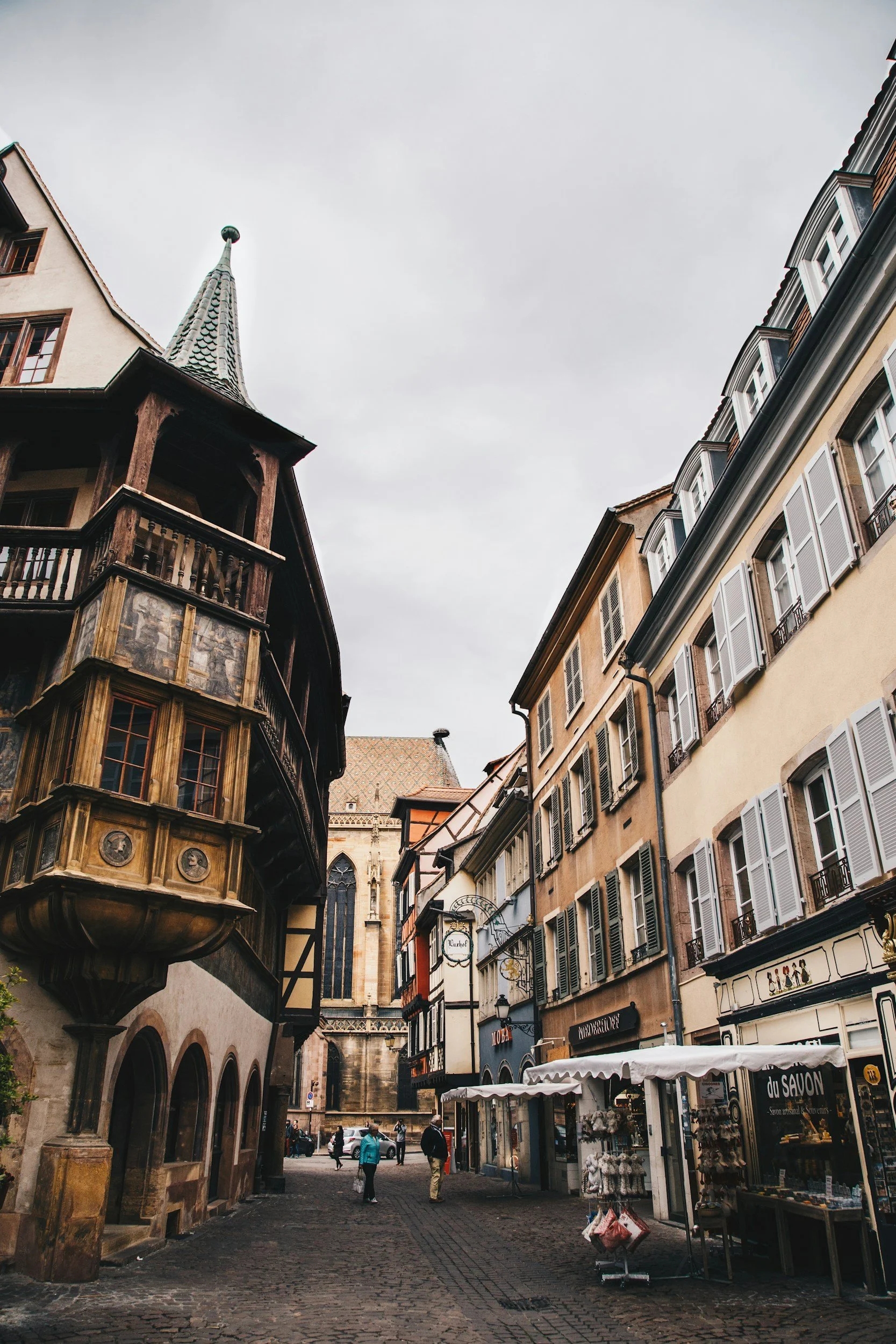
Colmar
For two or three nights, I would stay put
With only two or three nights, I would almost always choose one base and leave the suitcase alone.
If Strasbourg itself matters just as much as the villages, especially if you are arriving by TGV from Paris, flying into Strasbourg Airport or continuing into Germany afterwards, I would stay in Strasbourg. You can still take the direct train down to Colmar for the day and be back that evening without giving the journey much thought. One 32-minute train each way is not enough of a problem to justify checking out, carrying luggage across town, waiting for another room to be ready and then unpacking again.
The same logic works in reverse if the Wine Route is the main reason you are going. If I had three nights and most of my saved places were Eguisheim, Riquewihr and Kaysersberg, I would stay in Colmar from the beginning and take the train to Strasbourg once. You are not giving Strasbourg up at all. You are just avoiding an extra train before every village day.
This is also where I would resist the urge to make the trip look more efficient on paper than it will actually feel. Two nights in Strasbourg followed by one night in Colmar sounds neat when you write it down, but in reality that is a hotel checkout, luggage, another check-in and another unpacking session in a trip that barely had time to settle in. I would much rather have one proper evening in whichever place I chose.
If that were Strasbourg, I would use the evening for something I could only really enjoy by staying there, perhaps dinner around the western side of Grande Île and a walk back through the quieter end of Petite France or along Quai Saint-Thomas without keeping half an eye on the last train. In Colmar, I would do the same thing differently and stay around the southern old town after the busiest part of the day. The Marché Couvert at 13 Rue des Écoles has around twenty traders selling produce, cheese, meat, bread, pastries and other regional food, so even a short Colmar stay can include something more local than simply leaving for the next village first thing in the morning.
Four or five nights is where I would usually stay in both
Once you have four or five nights, I think the Strasbourg-versus-Colmar debate becomes much less useful because, for a first trip, staying in both is often the easiest answer.
Two nights in Strasbourg followed by two or three nights in Colmar gives you a very natural split. You have Strasbourg while you are already close to its museums, restaurants, main station and wider rail network, then you make one short move south and spend the Wine Route part of the trip much closer to the buses and shuttles you actually need.
The move itself is hardly dramatic. The direct TER takes around 32 minutes, and there are enough departures through the day that you do not have to plan your morning around one specific train. If you stay around the western side of Strasbourg’s centre and then choose somewhere along Colmar’s station-Champ de Mars-Unterlinden corridor, the walking at either end is manageable too.
I would not turn the transfer into an “activity day”. Have breakfast, check out, take whichever direct train suits you and move on. If your Colmar room is not ready yet, you do not have to spend three hours walking around with your suitcase either. The Colmar tourist office currently lists Colmar Vélo-Vélodocteurs, Locker Center and La Conciergerie as luggage-storage options, while Locker Center at 8 Rue de la Grenouillère currently has self-service lockers from 07:00 to 23:00. Strasbourg station also has left-luggage lockers on platform 1 near gate 8, which can be useful if you are doing the journey in the opposite direction.
That is why I do not find the Strasbourg-Colmar move particularly disruptive. You are not packing up for half a day of travel. You are changing base along the same railway line.
The benefit starts to show once you count the journeys you no longer need to repeat. One return Strasbourg-Colmar trip is already about an hour of train time before you add the walk through the station, waiting for the next connection and then the second bus or shuttle into the vineyards. Do that on two separate Wine Route days and suddenly the “easy 32-minute train” has become the same stretch of railway four times. Moving to Colmar once means travelling that route once with your luggage and then starting the following mornings where the useful village transport already is.
I also think there is a nicer reason to split the trip than simply saving time. Staying in Strasbourg gives you an evening where you are not checking a TER timetable to get back to Colmar, while staying in Colmar means you are still there after many daytime visitors have moved on. The point is not that you fit in more sights. It is that neither city has to feel like somewhere you only visit between train times.
For many north-to-south trips, I also like Strasbourg first and Colmar second because the geography keeps moving in the same direction. It works particularly well if you arrive from Paris and eventually continue towards Mulhouse, Saint-Louis or Basel. Direct Colmar-Basel trains can take around 44 to 50 minutes, so finishing in Colmar can save you from travelling back north to Strasbourg only to turn around again. If your flight home leaves from Strasbourg Airport, I would simply reverse the order and finish in Strasbourg instead.
With six nights or more, I would only add a third base if I genuinely wanted to stay there
Once you have six nights or more, there is room to make the trip more interesting than Strasbourg plus Colmar, but I still would not start changing hotels every other night just because Alsace gives you plenty of tempting options.
I would keep Strasbourg and Colmar as the two main bases, then ask whether one or two nights somewhere smaller would actually change the feel of the trip.
Turckheim is the easiest extra stay if you are already around Colmar. The direct train takes only around ten minutes on many services, the station is close to Porte de France and the historic centre, and the following morning can be completely different from another Colmar day. You can walk into the Brand vineyards, buy something from Pâtisserie Carl, taste wine locally and spend most of the day without needing transport at all. That feels worth moving hotels for.
Obernai makes more sense if the extra night belongs to a northern Alsace trip. Its station is only around 500 metres from the centre, Strasbourg is roughly half an hour away by direct train and the Schenkenberg vineyards begin above town. I would add Obernai because I wanted a couple of days around Obernai itself, the vineyards and perhaps Mont Sainte-Odile, not because I had looked at the map and decided it seemed conveniently halfway between everything.
The same goes for Riquewihr, Kaysersberg or Eguisheim. A one-night stay can be one of the nicest parts of a longer trip if you are quite happy for everything to become smaller for a while. Have dinner locally, walk into the vineyards the following morning, fit in a tasting you can reach on foot and stop worrying about getting across Alsace before lunch.
That is the difference between a third base that adds something and one that simply adds more luggage.
A longer stay also gives you time for the little things that are easy to skip when every town is treated as a day trip. In Colmar, that might mean actually buying breakfast, cheese or something for a picnic from the Marché Couvert on Rue des Écoles rather than only passing it on the way to Petite Venise. In Strasbourg, it might be a slow morning around Place Saint-Pierre-le-Vieux, where local roaster Omnino has operated a coffee kiosk, before heading towards the station later. Strasbourg also has a strong independent bookshop and gallery scene, which is another reason I would rather give the city two proper evenings than reduce it to a station-cathedral-station day.
For me, the easiest rule is this: with two or three nights, choose one base; with four or five, Strasbourg plus Colmar usually makes the trip easier; with six or more, you have room for one smaller stay that you actually want for its own sake.
I would not add Turckheim, Obernai or a wine village because moving hotels somehow makes the itinerary look more complete. I would add one because I wanted a morning where I did not need to catch anything at all.
And that is really the best test for the Strasbourg-Colmar split too. If moving once removes several repeated journeys and gives you proper evenings in both places, it is worth it. If all you are saving is one easy 32-minute train ride, I would leave the suitcase exactly where it is.
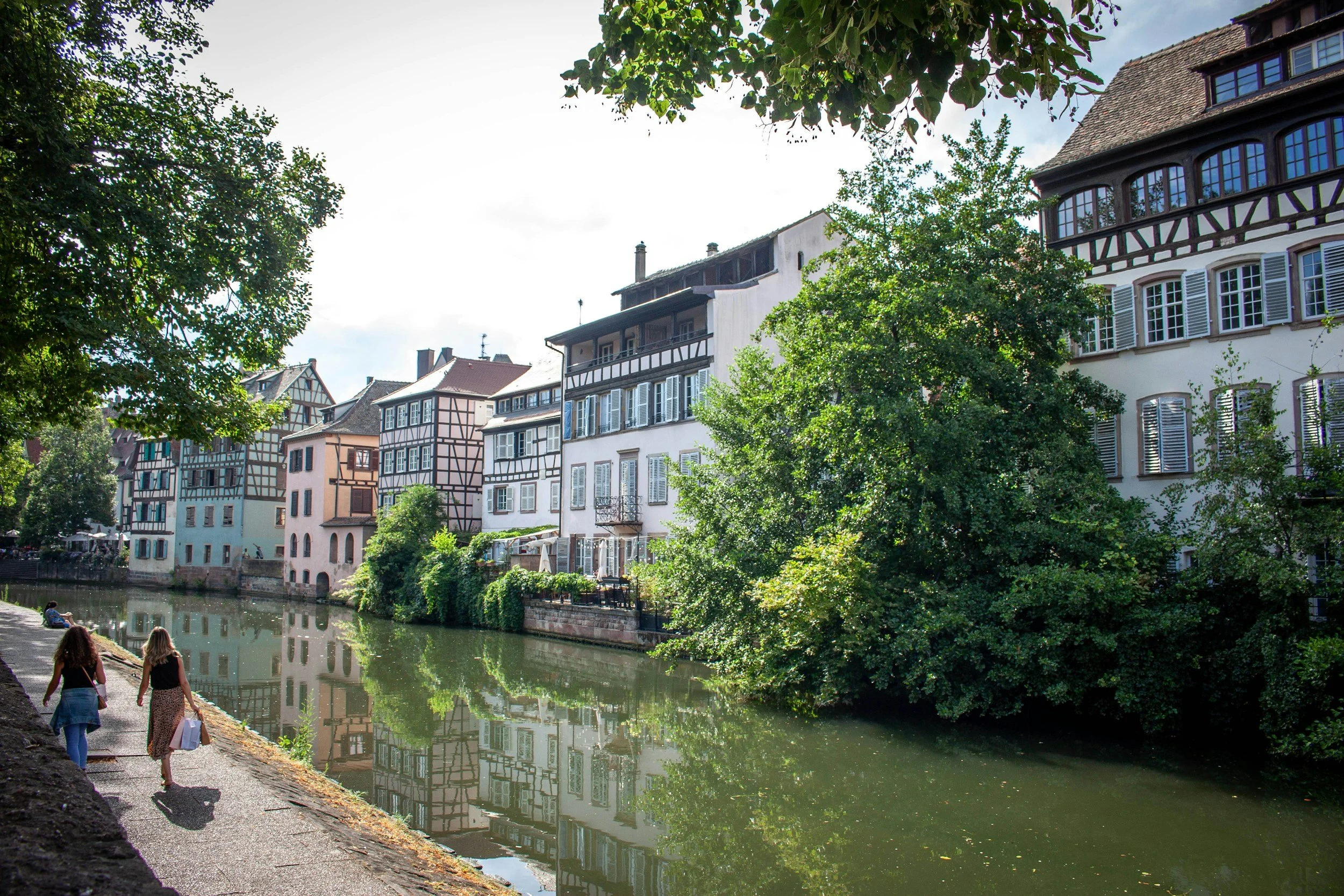
If the Christmas side of Alsace is what you are most excited about, Montbéliard at Christmas is worth checking before you settle on the usual route. It is a completely different kind of winter trip.
When you visit Alsace matter more than you think
This is one part of the trip I would check before booking the hotel, not once I was already in Alsace. Colmar can feel almost ridiculously convenient on a Saturday when Kut’zig is running, then quite a bit less convenient on a Monday when the same bus is not operating and one of the regular village routes has a thinner timetable. Christmas changes the network again, and January is another trip completely.
The railway between Strasbourg, Sélestat and Colmar is the reliable part. It is the transport heading west into the Wine Route where the day and season really start to matter, which is why I would never tell someone that Colmar is simply “the best base” without knowing roughly when they are going.
April to October is when Colmar really comes into its own
This is the part of the year when I would be most tempted to choose Colmar for a Wine Route-heavy trip because Kut’zig adds a very useful second option alongside the ordinary regional buses.
The circuit starts at Colmar Gare, calls again at the tourist office at Unterlinden, then loops through Ribeauvillé Gare Routière, Riquewihr Poste, Kaysersberg Porte Basse, Turckheim République and Eguisheim Parking de la Mairie before heading back to Colmar. You buy a day ticket and can get on and off around the route, so doing two or three villages in the same day becomes much simpler than trying to piece together separate rural buses yourself.
The bit I would pay attention to is that “Kut’zig season” does not mean it runs every day from spring through autumn. The current pattern is much lighter in spring and autumn, with service from Friday to Sunday and on public holidays in April, May, June and October. In July, August and September it runs Tuesday through Sunday and on public holidays. So even in the middle of summer, Monday is still not the day I would casually plan around Kut’zig.
I would always recheck the exact pattern for the year of travel rather than treating those weekdays as permanent. The useful point is that Colmar’s advantage changes quite a lot depending on whether Kut’zig is actually running on the day you want to use it.
When it is, staying somewhere between Colmar station, Champ de Mars and Unterlinden becomes even more useful. You can have breakfast in town, walk to one of the two Colmar stops and be heading towards Ribeauvillé or Riquewihr without spending the first part of the morning trying to work out which normal bus matches which school-calendar timetable.
I would also book Kut’zig ahead rather than assume I could sort it out while walking to the stop. The operator sells tickets by date, asks for an intended departure stop and time, and marks some departures as busier than others. You can still hop on and off later, but it is clearly set up as a planned day out rather than something you just appear for whenever you feel like it.
There is another reason I would check the Kut’zig website shortly before travelling: Wine Route events can actually change the route. Recent traffic notices have included disruption around Ribeauvillé’s Fête des Ménétriers and the temporary suspension of the Turckheim République stop during the Turckheim–Trois-Épis hill climb. Summer and early autumn are full of wine festivals, village events and bigger celebrations, so a route that normally looks straightforward can be tweaked for a day.
That is exactly the kind of thing I would rather know over coffee the night before than discover while standing at Porte de France wondering where the bus has gone.
Summer also brings some of the busiest events in the region, from Colmar’s Foire aux Vins d’Alsace to wine festivals in the villages, while September has Ribeauvillé’s long-running Fiddlers’ Festival. I would not avoid those dates automatically because they can be a brilliant reason to go. I would just expect fuller buses, busier restaurants and the occasional change to where traffic can move through the village centre.
So from April to October, Colmar is at its strongest when your dates line up well with the transport. Before I booked the hotel, I would check three things: is Kut’zig running that day, is there a major event affecting the village I want, and what is my final journey back?
November to March is a different kind of car-free trip
Once Kut’zig finishes for the year, the whole setup changes. The trains between Strasbourg, Sélestat and Colmar are still there, and the regular rural buses do not suddenly disappear, but you lose that easy hop-on, hop-off loop through the famous central villages.
That is when Strasbourg becomes a much stronger one-base choice for me, especially outside the Christmas period.
The villages are not inaccessible. Colmar still has the railway and the regular regional routes, and the R013 towards Kaysersberg, for example, runs through the year from Monday to Saturday. The catch is that school-calendar variations still matter and the route does not normally run on Sundays or public holidays.
In July, planning one rural bus carefully is barely noticeable because you have Kut’zig as another option and plenty of daylight once you arrive. In February, when you are depending much more heavily on the normal network and some village businesses have reduced winter opening, I would want the day to be a little more thought through.
I would also be careful with the idea that the Wine Route somehow “closes” in winter, because it does not. You can still have a very good stay in Colmar, take trains, visit villages on confirmed bus days and find restaurants and winegrowers that remain open. There is just less room for winging it.
That is the real difference for me. One restaurant may stay open all winter while another cuts evening service or closes several days each week. A wine estate might still welcome visitors but only by appointment. I would check the places I actually wanted rather than rely on a broad assumption that everything is either open or closed.
Strasbourg gives you much more breathing room when the weather or opening hours are not playing along. A cold, wet day does not leave you trying to invent a second village bus trip. You can stay around Grande Île, go to MAMCS or the Musée Tomi Ungerer, browse somewhere like Quai des Brumes and still have a huge choice of dinner afterwards.
That is why I see Strasbourg as the safer winter base. It is not necessarily the more atmospheric choice for the Wine Route; it just gives you far more ways for the day to still be good.
Colmar can absolutely still win if the villages are the main reason for the trip. I would just choose those village days after checking the current bus timetable, rather than booking the hotel first and assuming I could sort out Eguisheim, Riquewihr and Kaysersberg once I got there.
Christmas basically has its own transport system
Christmas deserves its own section because Colmar suddenly gets an entirely different shuttle network.
The Christmas shuttles leave from Colmar train station and serve Kaysersberg, Riquewihr, Ribeauvillé, Eguisheim, Turckheim, Munster and, on selected dates, Neuf-Brisach. Tickets are sold online, and the network runs for a defined Advent period rather than all winter.
The detail that really matters is that the routes do not all run on the same days.
The circuits linking Colmar, Kaysersberg, Riquewihr and Ribeauvillé currently run from Friday to Sunday, while the Colmar–Eguisheim line also has Monday-to-Thursday service. The Turckheim–Munster shuttle is another weekend-focused route. So “there are Christmas shuttles from Colmar” is true, but it does not mean every village is equally easy on a Wednesday.
Kaysersberg is a good example of why that matters. Its main artisanal Christmas market is concentrated on Advent weekends, from Friday through Sunday, around the Cour de l’Arsenal and behind Sainte-Croix church. Riquewihr’s Christmas market currently opens daily during its Advent run, even though the direct Colmar Christmas shuttle serving Riquewihr is more weekend-focused.
That can completely change how I would structure the trip.
If I wanted Kaysersberg, Riquewihr and Ribeauvillé over a December weekend, Colmar is a very practical base, and I would stay somewhere with an easy walk to the station rather than all the way down in the southern end of Petite Venise. If I were there Monday to Thursday, I would look much more carefully at which markets and regular buses still line up instead of assuming the weekend Christmas setup continues all week.
Strasbourg still makes more sense when Strasbourg’s own Christmas market is the main event. It spreads across Grande Île with more than 300 chalets on several squares, including the historic Christkindelsmärik around Place Broglie and the bigger displays around Place Kléber and the cathedral. Staying in Strasbourg means you can walk back to the hotel once you are done rather than thinking about another train at the end of the night.
For a first Christmas trip of four nights or more, this is probably when I like the Strasbourg and Colmar split most of all. Stay in Strasbourg for the city markets and evenings, then move once to Colmar for the Wine Route villages. You avoid going back and forth between the two cities during one of the busiest periods of the year, and Colmar station becomes your starting point for the village-shuttle days.
I would book village accommodation much earlier at Christmas too, and I would sort out dinner. Just because a market runs until 20:00 does not mean you can wander into whichever small restaurant you like afterwards. Kaysersberg’s market weekends bring a lot of people into a very small centre, while Ribeauvillé’s medieval Christmas market only takes place on selected weekends rather than throughout Advent.
And I would buy the Colmar Christmas shuttle tickets once sales open rather than plan the whole hotel stay around the assumption that I could definitely get them later. The current system uses online-only ticketing, with the release date announced each year.
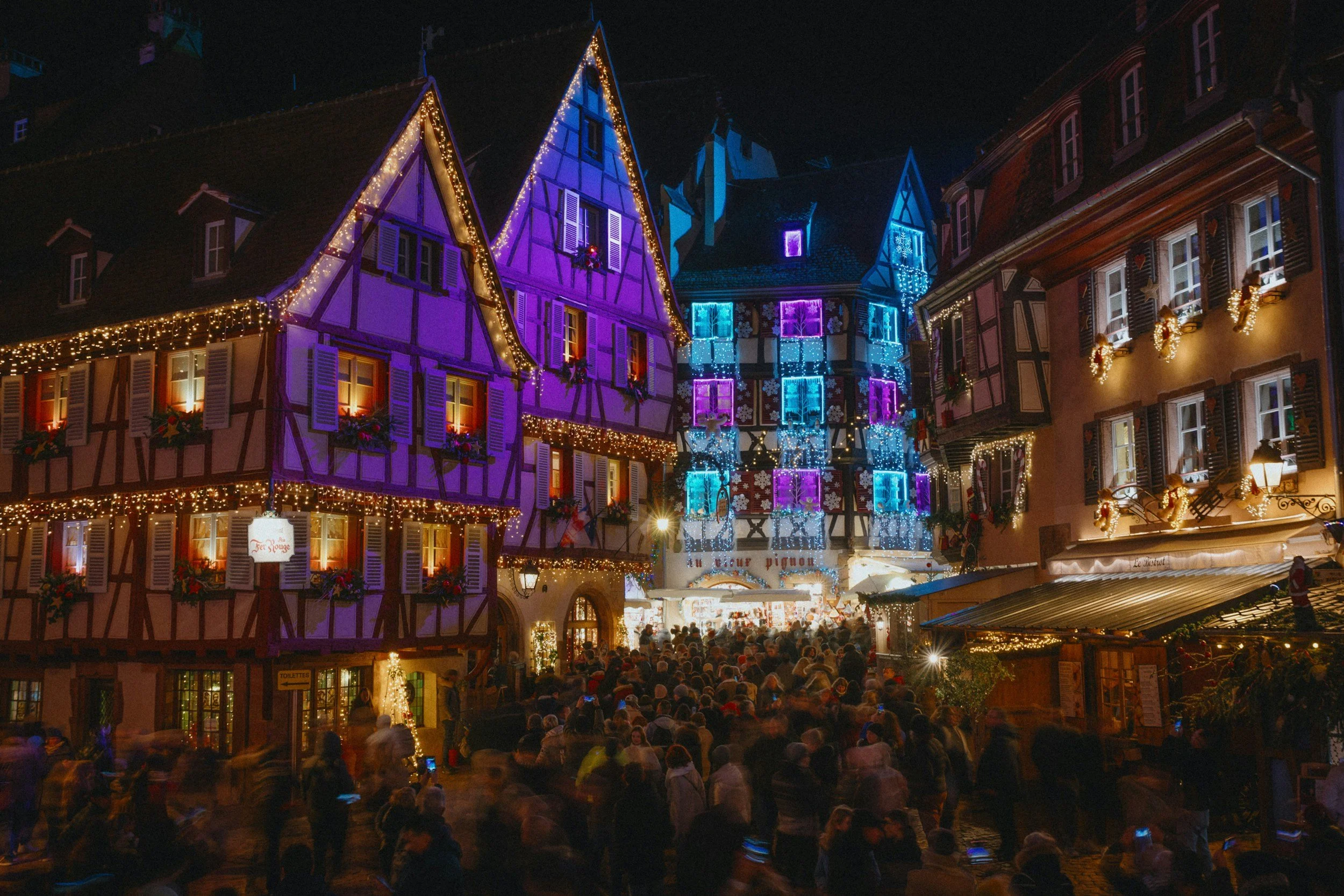
Sundays, Mondays and public holidays are the days I would double-check everything
If you remember one practical thing from this whole section, make it this: check the journey out and the journey back for the exact day before you book around a small village.
Kaysersberg makes this easy to understand. The regular R013 runs Monday to Saturday and not normally on Sundays or public holidays, while individual departures can also change between normal school periods and Zone B school holidays.
Kut’zig has its own weekly gap. In its fuller summer pattern it currently runs Tuesday through Sunday, which still leaves Monday without the service. In spring and autumn the week is shorter again.
Then Christmas comes along and rearranges everything once more. Some Colmar shuttles become weekend-only, Eguisheim has weekday Christmas service too, and the markets themselves can follow a completely different calendar from the transport serving them.
Restaurants and independent shops add another layer. In Strasbourg or Colmar, one closed restaurant is mildly annoying because you can walk five minutes and find something else. In a smaller village, especially on a Sunday evening or Monday outside peak season, that can change the whole evening. I would check the restaurants I actually wanted rather than assume I could decide at 19:30, particularly if I was staying somewhere without a train back to Colmar.
This is also why I would never choose Riquewihr, Kaysersberg or Eguisheim simply because Google Maps shows a bus connection. The useful question is not whether a bus exists somewhere in the timetable. It is whether your outward bus runs on the actual day you are travelling, whether your return still works after dinner, and whether that day happens to fall on a public holiday or a school-holiday timetable.
For a car-free Alsace trip, the calendar is not boring admin to leave until later. It can genuinely change which town makes the best base. Colmar might be the obvious choice on one set of dates, Strasbourg might make far more sense three days later, and a village stay that looks completely straightforward on Friday can become much more awkward when you need to leave with your luggage on Sunday morning.
Has this trip made you wonder whether Alsace is actually the easiest wine region to do without a car? My wine regions by train guide is a useful one to compare before you decide.
The hotel test I would use before booking anywhere in Alsace
I would not choose an Alsace hotel from the room photos first. For this kind of trip, I would open the map, find the hotel, then find the exact train station or bus stop I expect to use most mornings. That usually tells me far more than whether the room has exposed beams, a spa downstairs or a view over the vines.
In Colmar, for example, the regional coaches leave from Colmar station or beside the Théâtre Municipal, while Kut’zig uses Colmar Gare and the tourist office at Unterlinden. Those are the points I would actually care about when comparing hotels. If I knew I wanted three village days, I would much rather stay somewhere around the station, Champ de Mars, Place Rapp or Unterlinden than save a bit of money on a room that gives me another bus journey before I have even reached the Wine Route transport.
Strasbourg is similar. The station is only around a ten-minute walk from the historic centre, so there is a surprisingly generous area where you can have both easy trains and a nice evening on foot. I would look between Place de la Gare, Faubourg National, Grand’Rue and western Grande Île before automatically choosing somewhere farther across the centre. A hotel can absolutely be advertised as “central Strasbourg” and still leave you with a much longer walk to Strasbourg-Ville every morning, which gets old quite quickly if Colmar, Sélestat or Obernai appear several times in your plans.
Then I would check what happens when I come back at the end of the day. Can I walk to dinner, or am I now waiting for another bus just because I want something to eat?
In Strasbourg and central Colmar, I would not worry too much because there are plenty of alternatives within walking distance. In Turckheim, Kaysersberg, Riquewihr or Eguisheim, I would be much more specific. I would open the restaurants I actually liked, check their weekly closing days and make sure there were at least two realistic dinner options near the hotel. Two restaurants being closed on a Monday barely matters in Colmar. In a village with a much shorter list of places to eat, it can completely change the evening.
I would do exactly the same with transport, and I would check both directions on the actual date. It is surprisingly easy to find a perfectly good bus into a village and then realise the return journey is much earlier than you expected.
Kaysersberg is the clearest example. The regular R013 between Colmar and the Kaysersberg valley runs Monday to Saturday, and some departures change depending on the Zone B school calendar. If my hotel booking included a Sunday checkout, I would want to know exactly how I was leaving Kaysersberg before paying for the room, not while eating breakfast on Sunday morning and hoping there was a simple answer.
Kut’zig needs the same check. Its stops at Riquewihr Poste, Kaysersberg Porte Basse and Eguisheim Parking de la Mairie are village bus stops, not railway stations with lifts, waiting rooms and somewhere obvious to leave luggage. The current timetable is also built around daytime sightseeing. The later passes through Riquewihr and Kaysersberg are still in the early evening, so I would never assume Kut’zig could get me back after a long dinner in Colmar or out of the village in time for an early onward train.
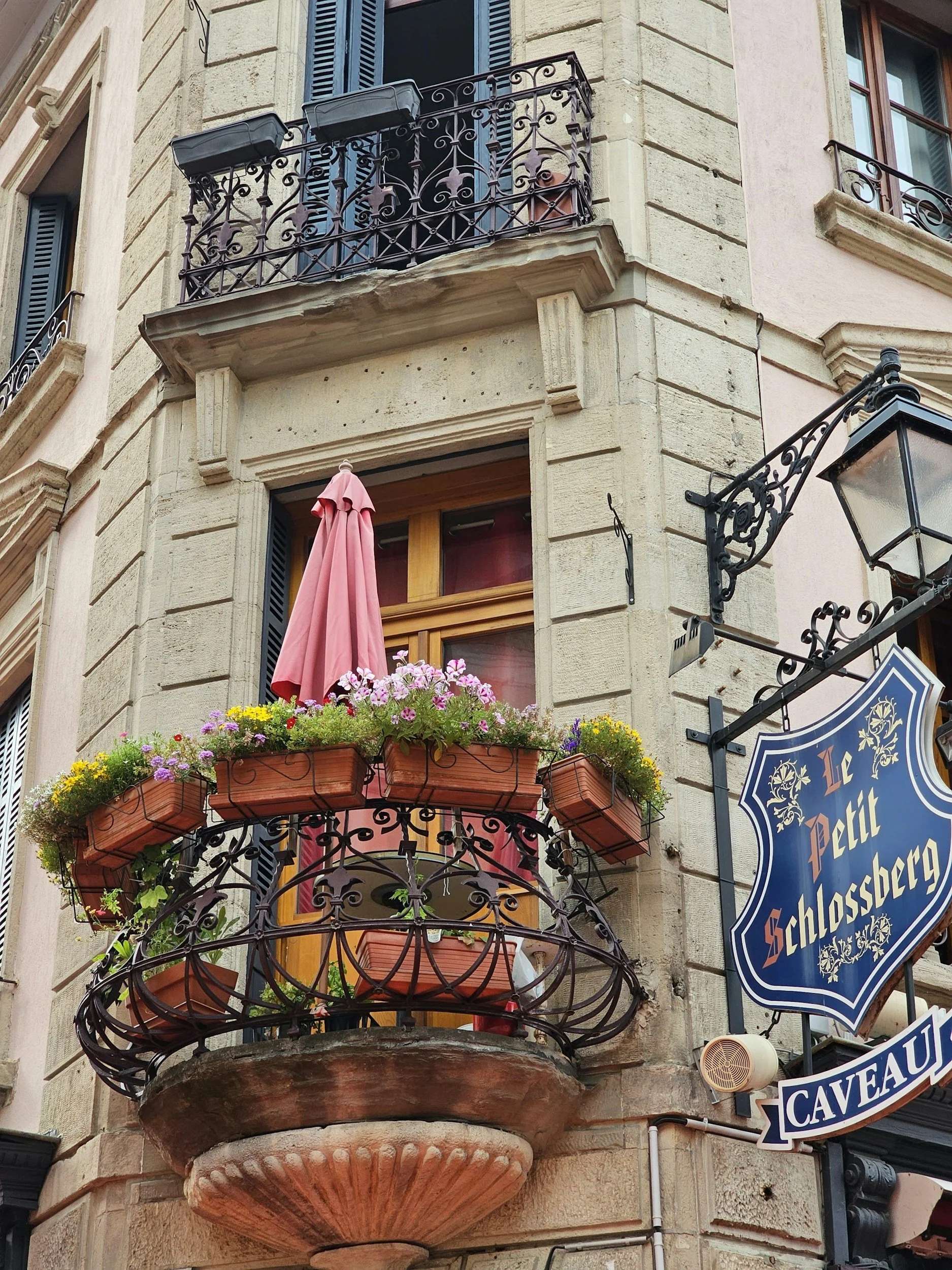
I would be suspicious of the words “near Colmar”
This is one of the easiest traps in a hotel search.
A property can quite reasonably describe itself as being near Colmar while sitting several kilometres outside the centre. Horbourg-Wihr, for example, lies east of Colmar and is part of the wider TRACE bus network, but some accommodation there is more than three kilometres from central Colmar. That may be completely fine if the right TRACE bus works for your plans. It is far less appealing if your day starts with an early regional coach from Colmar station and you have accidentally given yourself another connection every single morning.
I would be equally careful around Avenue de la Foire aux Vins and the Parc des Expositions. That part of Colmar can work well for exhibitions, events and drivers, but it is not the same thing as staying between the station and the old town. If a hotel description talks a lot about motorway access and free parking but says very little about walking to Colmar station, that usually tells you who the property was designed for.
The same applies to vineyard hotels outside town. “Ten minutes from Colmar” always makes me want to ask one more question: ten minutes by what? A hotel among the vines might be exactly what I wanted for a quiet weekend, but if those ten minutes assume a car and I need the R016 from Colmar station at 08:30, the location is not nearly as convenient as the description makes it sound.
I would also picture the journey with the bag I am actually taking
This is not the glamorous part of planning Alsace, but it is one of the things I would think about before booking.
A ten-minute walk through Petite France or Colmar’s old centre sounds easy, and usually it is. Add a large rolling suitcase, cobbles and an early departure, though, and suddenly I may prefer a hotel a few streets closer to the station.
It matters even more in the villages. You may be getting off at Porte Basse in Kaysersberg, Riquewihr Poste or Parking de la Mairie in Eguisheim, then walking the rest of the way into a pedestrian historic centre with everything you brought. That would not put me off staying for a night, but it would definitely change how I packed.
If I were doing two or three nights in Colmar followed by one night in Kaysersberg, for example, I would seriously consider keeping that last stay as light as possible instead of moving a huge suitcase just because technically I could.
Colmar does at least have luggage-storage options if hotel timings are awkward. The tourist office currently lists Colmar Vélo-Vélodocteurs, Locker Center and La Conciergerie, so an early checkout does not automatically mean spending the afternoon pulling a suitcase around the old town.
I would count how many times I am repeating the same journey
This is probably the quickest way to spot that I have chosen the wrong base.
If I am staying in Strasbourg and taking the train to Colmar once, I would leave the hotel exactly where it is. There is no reason to move for one easy trip.
If I notice that three separate days begin Strasbourg → Colmar → village bus, I would start looking at Colmar hotels instead.
If I am staying in Sélestat because I like the quieter town but every morning begins Sélestat → Colmar → Kaysersberg, Riquewihr or Eguisheim, I would ask myself whether I am really using Sélestat for what it does well.
And if I am considering Turckheim but nearly every day requires a train back to Colmar before I can go anywhere else, I would probably sleep in Colmar and visit Turckheim instead.
That sounds almost too obvious when you write it down, but hotel searches have a funny way of distracting you with pretty rooms and “excellent location” labels until you stop thinking about what the days will actually look like.
So before I booked, I would ask myself three very ordinary questions: can I walk to the transport I need, can I walk to dinner when I come back, and does the whole setup still work on the most awkward day of my trip?
Then I would check the luggage, the final bus home and if the hotel still looks good after all of that, perfect. If it only works because the description quietly assumes I have a car, I would keep looking.
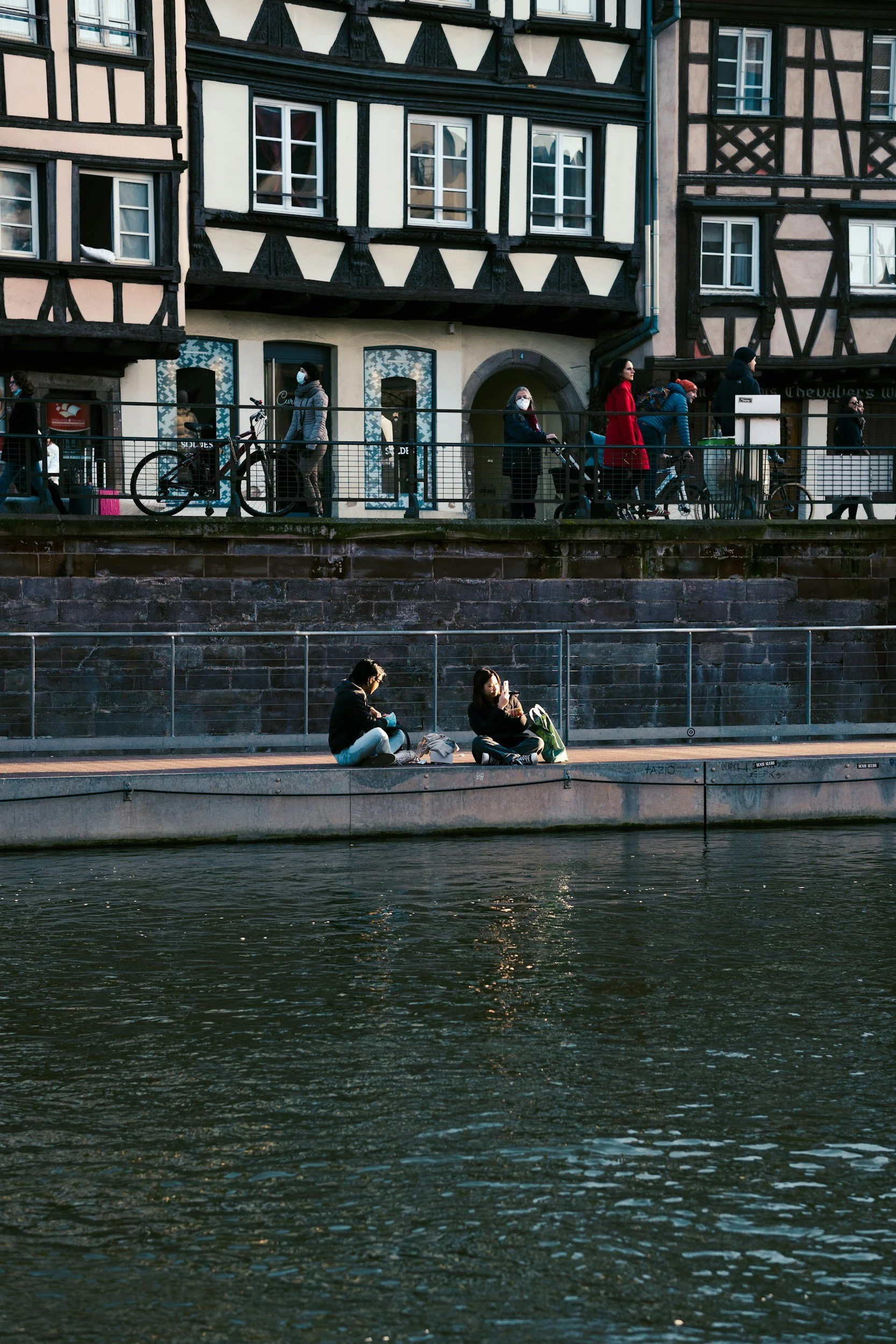
So, where would I actually book?
By this point, I would stop comparing towns and look at the first two or three days of the trip I am actually planning.
If most mornings begin with a village west of Colmar, I would book Colmar and make life easy for myself. If the plans keep changing between Strasbourg, museums, trains, Germany and the occasional Wine Route day, I would stay in Strasbourg. And if what I keep coming back to is the idea of quieter evenings and a smaller town rather than squeezing in as much as possible, that is when Sélestat, Obernai or Turckheim start becoming much more interesting.
The useful clue is usually in the journeys you are repeating. If the same connection appears at the beginning of several days, I would move the hotel closer to where the second part of those journeys begins. If it only appears once, I would leave the suitcase alone.
I would also be realistic about what I want from the evenings. There is a big difference between wanting somewhere quiet to come back to and wanting somewhere so small that dinner, Sunday transport and the next morning’s departure all need planning. Sometimes Colmar is the better choice precisely because you can spend the day somewhere tiny and then come back to a place where you still have options.
And if I kept going back to a hotel in Riquewihr, Kaysersberg or Eguisheim because I loved the idea of waking up there, I would probably book it. I would just build the trip around that decision instead of pretending it was the most efficient base. One night where you have nowhere else to be until late morning can be far more enjoyable than choosing the technically perfect transport hub for every night of the trip.
Before paying for anything, I would do one last check with the actual travel dates open beside me: where does my first journey start, how am I getting back in the evening, and does the same plan still work on the awkward day of the trip? If those three answers look easy, you have probably found the right base.
That is really the advantage of travelling Alsace without a car: you do not need to stay in the place with the most roads. You just need to stay somewhere that matches the trip you are genuinely planning.
In case you are still not sure when Alsace makes the most sense, my spring or Christmas comparison might help, because the same towns can feel completely different depending on the season.
FAQs about staying in Alsace without a car
Is Colmar old town walkable from the train station?
Yes, and this is one of the reasons Colmar works so well without a car. From Colmar station, you can walk through the Champ de Mars side of town and reach the western edge of the historic centre in roughly ten to fifteen minutes. Place Rapp, Rue des Têtes and Unterlinden are particularly well positioned if you want to stay somewhere that feels properly central without putting yourself at the opposite end of town from the station.
I would not automatically book the hotel directly opposite the platforms, though. Unless you have very early departures, the area between the station, Champ de Mars and Unterlinden is a much nicer compromise. You are still close enough to walk to the regional buses and trains in the morning, but dinner, coffee and the old town are right there when you come back.
Colmar’s regional bus station is also beside the railway station, while Kut’zig uses both Colmar Gare and the tourist office at Unterlinden, so the western side of the centre is particularly useful if the Wine Route villages are a big part of the trip.
Do I need to book the train from Strasbourg to Colmar in advance?
For the ordinary Strasbourg–Sélestat–Colmar TER, I would not plan the trip around advance reservations in the way I would for a TGV from Paris. The regional route is frequent, with the current Strasbourg–Colmar service taking around 32 minutes and running roughly every half hour through much of the day.
I would still buy my ticket before boarding, either through SNCF Connect, TER Grand Est or at the station, but I would not worry about locking myself into a particular Strasbourg–Colmar train weeks beforehand. SNCF’s current Grand Est reservation rules are mainly relevant to certain Fluo trains connected with Paris rather than an ordinary regional journey between Strasbourg and Colmar.
The connection I would check more carefully is whatever comes after Colmar. Missing one TER is usually easy to recover from. Missing the rural bus you needed for Kaysersberg can mean a much longer wait.
Can you visit Riquewihr and Kaysersberg in the same day without a car?
Yes, but I would much rather do it on a day when Kut’zig is running.
Both Riquewihr and Kaysersberg sit on the same seasonal Kut’zig circuit from Colmar, so you can get off in Riquewihr, spend a few hours there and continue around the route to Kaysersberg later. The circuit also includes Ribeauvillé, Turckheim and Eguisheim, although I definitely would not try to squeeze all of them into the same day just because the bus technically makes it possible. Kut’zig requires a reservation and runs on a seasonal calendar, with more operating days in summer than in spring and autumn.
Without Kut’zig, combining Riquewihr and Kaysersberg becomes less neat because the regular routes are organised differently. Kaysersberg uses the R013 from Colmar, while Riquewihr is served by the R016 corridor. I would check the actual connections before deciding to combine them rather than assume two villages that look close on the map will have a convenient bus between them.
Personally, I would rather have a long lunch and a proper vineyard walk in two villages than rush through three or four just to say I had been there.
Do buses from Colmar to the Alsace wine villages run on Sundays?
Some do, some do not, and this is exactly why I would never make a blanket statement that “the villages are connected by bus”.
Kaysersberg is the clearest example: the regular R013 from Colmar runs Monday to Saturday and not normally on Sundays or public holidays. The timetable can also change depending on the Zone B school calendar.
Riquewihr, Ribeauvillé and Eguisheim use different Fluo routes, so you need to check each village separately for the actual date rather than assume the R013 rule applies everywhere. Colmar’s transport information currently lists R016 for Riquewihr and Ribeauvillé and R030 for Eguisheim and Rouffach. Seasonal services such as Kut’zig and the Christmas shuttles then add another timetable on top.
If I were planning a Sunday village day, I would check the outward and return journey before booking the hotel. Finding a bus out at 10:00 is not particularly helpful if the return you assumed existed at 18:00 does not.
Can you take luggage on the Kut’zig bus?
No. This is one detail I would absolutely know before using Kut’zig as part of an overnight village plan.
Kut’zig’s own FAQ says that luggage is not accepted because the vehicles do not have large enough luggage compartments and the aisles are very narrow. The same restriction applies to normal strollers, apart from folded umbrella strollers.
That means Kut’zig is excellent for a day out from Colmar, but it is not the bus I would rely on for moving hotels with a suitcase from Colmar to Riquewihr or Kaysersberg.
If I wanted one night in a village after staying in Colmar, I would either arrange a transfer that accepts luggage, use the relevant regular bus after checking its baggage conditions, or leave the large case in Colmar and take a smaller overnight bag if my accommodation setup allowed it.
This is a small detail, but it completely changes how practical that “one romantic night in a wine village” becomes.
Is the Alsa+ pass worth buying for a car-free Alsace trip?
It can be, but I would price the day first rather than buy one automatically.
The Alsa+ 24h Solo gives one person unlimited travel for 24 hours on participating trains and Fluo buses within the zone you choose, with versions covering all of Alsace, an individual department or an urban area. There is also an Alsa+ Groupe Journée for two to five people on Saturdays, Sundays and public holidays.
Where it becomes interesting is on a day with several journeys, perhaps a regional train plus buses and local public transport. For something simple like Strasbourg to Colmar and back, I would compare it with ordinary tickets before deciding.
There is also an important catch for this particular trip: Alsa+ does not cover every tourist shuttle. The current conditions specifically exclude the Colmar Pays des Étoiles Christmas shuttles, so having an Alsa+ pass does not mean every seasonal bus mentioned in this guide is included.
I would think of Alsa+ as a transport pass to investigate once you know the day’s journeys, not something you need to buy simply because you are visiting Alsace without a car.
Is Strasbourg Airport or EuroAirport better for Colmar without a car?
If you are starting the trip in Strasbourg, Strasbourg Airport is wonderfully easy. The airport railway station is linked to the terminal by a covered footbridge, and the train into Strasbourg-Ville takes around eight minutes, with up to five departures an hour. From Strasbourg you can then continue directly to Colmar.
If Colmar is your first base, EuroAirport Basel-Mulhouse can actually be very practical too. There is not currently a railway station directly at the terminal, so you first take Distribus line 11 to Saint-Louis SNCF station. The airport says that bus takes around 10–15 minutes and normally runs every 15–30 minutes; from Saint-Louis there are direct trains north towards Mulhouse, Colmar, Sélestat and Strasbourg.
So I would not choose the flight solely because one airport has “Strasbourg” in its name. If your first nights are in Strasbourg, Strasbourg Airport has the simpler arrival. If you are heading straight for Colmar and EuroAirport has the better flight, I would be perfectly happy using the Saint-Louis connection.
The one thing I would not do is assume EuroAirport already has a direct train station. A direct rail link is planned, but it is still a future project, so for now the line 11 + Saint-Louis train connection is the relevant public-transport route.