
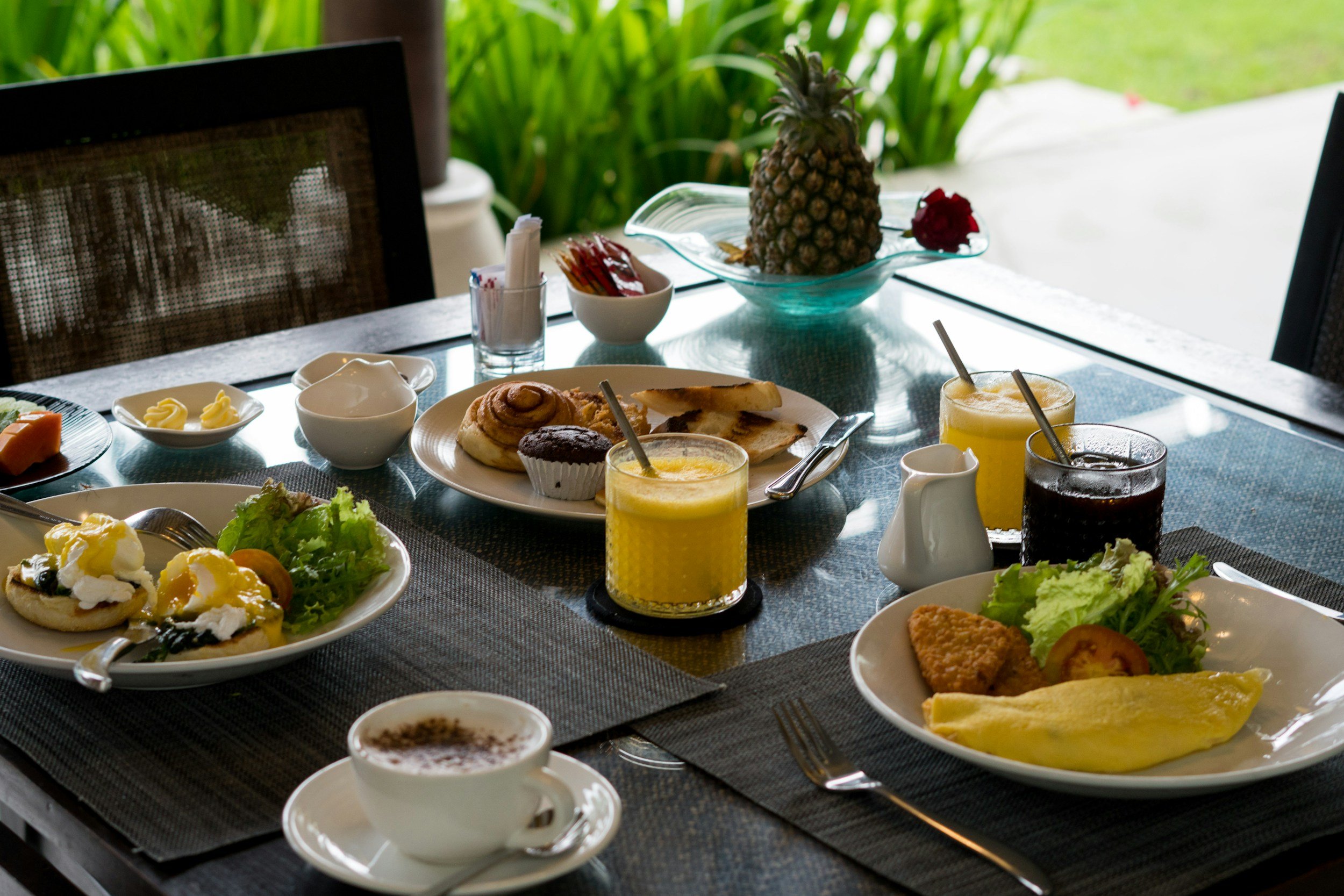
I'd happily book these hotels for breakfast alone
You go down for breakfast expecting the usual setup, and then something feels slightly different. The bread doesn’t look identical to every other hotel you’ve stayed at. The yogurt isn’t perfectly smooth. Someone asks how you want your eggs instead of pointing to a tray. It’s small things, but you notice them straight away.
After a couple of stays like that, it becomes quite easy to tell which places actually care about where their food comes from and which ones are just using the wording. And it usually has nothing to do with how big the breakfast is. The places that do this well keep it simple, but everything on the table makes sense for where you are.
That’s what ties the hotels in this guide together. A farm estate outside Volterra where you walk past the gardens before you sit down to eat. A vineyard stay near Bordeaux where breakfast feels connected to the land around you, not brought in from somewhere else. A coastal hotel in Cornwall where the menu shifts depending on what’s coming in that week. And even in Copenhagen, where things move faster, you still notice it in the way bread, dairy, and produce are handled.
They also work without much effort on your side. You can reach most of them by train and a short taxi, or directly from a nearby airport. Once you’re there, you’re not spending time figuring out where to go next. You eat, you take your time, and the rest of the day follows from that.
If breakfast is something you actually look forward to when you travel, these are the kinds of places where it becomes part of the stay rather than just something you pass through.
Biohotel Grafenast above Schwaz in Tyrol
Biohotel Grafenast sits above Schwaz on a small plateau called Grafenast, reached by a narrow road that winds up from the town in about ten minutes. If you arrive by train, Schwaz station is easy to reach on the Innsbruck–Salzburg line, but the last stretch up isn’t something you want to do on foot with luggage. A taxi is the simplest option. There’s also the Kellerjochbahn gondola on the edge of town, near the Silberregion area, which runs in the warmer months. It takes you up to Hecherhaus, and from there you can walk the last part toward Grafenast in about 20 minutes. It’s a nice route once you’re settled, but not how you arrive.
Up here, you’re above everything rather than in it. You can still see Schwaz below, but the noise doesn’t carry. There are a few other buildings scattered along the plateau, but no real village structure, just paths, open land, and forest. In the morning, the light hits this side early, and people usually drift out onto the terrace before heading in for breakfast.
Breakfast is the part that stays with you, but not because it’s presented as something special. It’s more that everything is clear and easy to understand. Bread comes from nearby bakeries in Schwaz or is baked on site, and you’ll often see where it’s from written next to it. Butter, yogurt, and cheeses come from farms in Tyrol, not in a vague way but with actual names and places attached. Eggs are cooked fresh instead of sitting out, and things are brought out in small batches rather than piled up.
No one rushes through it. People sit longer, go back for more coffee, and move between inside and outside depending on the weather. On clear days, the terrace fills up first, facing out toward the Karwendel side of the valley. It’s not a quick breakfast before heading out. It becomes part of the morning.
Rooms are simple in the same way. Wood, clean layouts, nothing unnecessary. Some face the valley, others toward the hillside. If you have a balcony, you’ll end up using it more than you expect, especially early in the day or later in the evening when things slow down again.
You don’t need to plan anything once you step outside. One of the easiest walks is toward Hecherhaus, which takes about half an hour along a wide gravel path. It’s mostly level, so it doesn’t feel like a hike. If you keep going from there, you can head up toward Kellerjoch, but most people turn back and return in time for the afternoon. There are also shorter loops around Grafenast that take less than an hour and bring you back without needing to check a map.
Going down into Schwaz usually only happens if you need something specific. The center around Franz-Josef-Straße has a few cafés and bakeries, and the Silberstadt area is practical, but it’s not where you spend your time if you’re staying up here. Most people arrive, settle in, and stay.
Dinner follows the same approach as breakfast. It changes depending on what’s available, and once you’ve had one evening there, you understand how it works. You don’t really look for alternatives unless you’re staying longer.
The season changes how much you move around, but not the overall structure. In summer and early autumn, people spend more time outside, walking or sitting on the terrace between meals. In winter, the stay becomes more contained, with shorter walks and more time inside. The gondola doesn’t always run, so that’s something to check if you were planning to use it.
Vals is one of the best places for natural SPA experiences and thermal baths, check it out if you want to spoil yourself this year!
The Scarlet above Mawgan Porth on the north Cornwall coast
The Scarlet sits just outside Mawgan Porth, on a low cliff that looks straight out over the Atlantic. You don’t arrive into a town first and then walk over. The road from Newquay comes in along the coast, dips slightly toward the village, and then you turn off before reaching the beach. The hotel is set above it all, so once you’re there, you’re not moving through anything. You’re already where you need to be.
Getting there is fairly simple, but the last part matters. Newquay Airport is about ten minutes away by car, which is why a lot of people choose this area for a short stay. If you’re coming by train, Newquay station works, but connections can be limited. Bodmin Parkway is more reliable, then it’s about a 35–40 minute taxi along the A30 and down toward the coast. The final stretch past Watergate Bay is the one to pay attention to. Once you pass the main turn down into Mawgan Porth, the traffic drops off, and it becomes much quieter.
Mawgan Porth itself is small. There’s a cluster of places near the beach, including a surf school, a few cafés, and the Merrymoor Inn just above the sand, but it doesn’t spread beyond that. From the hotel, you walk down in about ten minutes on a clear path that drops you near the center of the bay. It’s useful if you want to get out for an hour, grab something simple, or just see the beach at a different level, but most of the time you stay up where you are.
Breakfast is one of the parts that shapes the day without feeling like a set activity. It runs over a long window, and people come down at different times rather than all at once. You’ll notice Cornish dairy straight away, thick yogurt, local butter, cheeses, and breads that change slightly depending on what’s coming in. Eggs are cooked fresh, not sitting out, and the menu shifts enough that it doesn’t feel repeated if you stay a couple of nights. Most people take their time with it. If the weather allows, the outside tables fill first, facing directly out toward the water.
Rooms are set up so you don’t lose that view once you go inside. Large windows, terraces, and simple layouts that don’t distract from what’s outside. If you’re only staying one or two nights, it’s worth choosing a sea-facing room because that’s where you’ll actually spend time, even if it’s just sitting for a while before heading down to dinner. The interiors are quiet, nothing decorative for the sake of it, just materials that don’t compete with the setting.
The spa is spread out rather than contained. You move between indoor pools, outdoor hot tubs, and quiet spaces depending on the time of day. The hot tubs along the edge of the cliff are the ones people come back to, especially later in the day. You’re looking straight out at the water with nothing in front of you, and that’s usually where people stay the longest. Early morning and late afternoon tend to be quieter if you want to avoid the middle of the day.
Stepping outside the hotel, the easiest thing to do is walk. The path down to Mawgan Porth beach takes about ten minutes, and once you’re there, you can join the South West Coast Path. Heading north toward Bedruthan Steps takes a bit over an hour, depending on pace, and the route moves between open cliff sections and slightly more sheltered paths. It’s not a complicated walk, but it changes enough along the way to keep it interesting. If you go south instead, Watergate Bay is about an hour, with a wider beach and more places open during the day if you want to stop.
Back in Mawgan Porth, The Merrymoor Inn is the most straightforward place if you want something casual without planning. It sits just above the beach and works for a simple meal. There are also a couple of smaller cafés near the sand where you can stop for coffee, but it’s not somewhere you spend a full day unless you’re staying nearby.
Most people don’t go much further than that, but if you do, Newquay is about 15 minutes by car. It’s busier, with more shops and restaurants, but it changes the feel quite quickly. Padstow is around 25–30 minutes and has a more compact harbor area, which works better if you want a few hours out, but again, it’s something you decide in advance rather than adding in between other plans.
The time of year shifts how much you use the surroundings. In summer, the beaches below fill up during the day, and the coastal paths see more people moving through. Early mornings and evenings are still quieter. Outside peak season, everything slows down, and you spend more time at the hotel itself, moving between breakfast, walks, and the spa without needing to think about timing too much.
Borgo Pignano between Volterra and San Gimignano
Borgo Pignano isn’t the kind of place you arrive to quickly. The last part of the drive slows everything down. You leave the main road outside Volterra, follow a narrower route for a few minutes, and then turn onto gravel. It’s not far, but it’s enough to separate it from everything else. By the time you reach the buildings, you’ve already shifted pace without really noticing it.
Most people come by car from Pisa or Florence. It’s the easiest way, and once you’re there, you don’t need to think about transport again. If you arrive by train, it usually means Pontedera or Volterra Saline first, then a longer taxi ride. It works, but it requires a bit of planning. The estate isn’t connected to anything nearby, so arrival is the only part that needs thinking through.
The property is spread out in a way that takes a little time to understand. It’s not one main building with a garden around it. There are different houses, open fields, paths between them, and areas that are clearly being used rather than just maintained. You might walk toward the pool and pass vegetable gardens, then head back a different way and come through olive trees without seeing the same route twice.
Breakfast is made with love, and every morning you start noticing the details. Bread isn’t identical each morning. Fruit changes. Honey and jams feel like they’ve come from somewhere nearby rather than a supplier. Eggs are made fresh, and things are brought out in smaller amounts instead of everything being set out at once. You don’t need to read anything to understand where it’s coming from.
People don’t treat breakfast as something to get through. You’ll see tables stay occupied longer than you expect, especially outside. There’s no reason to rush off, and nothing in the setup suggests that you should.
The rooms depend on where you’re staying on the estate. Some are close to the main house, others are set further out. If you’re only there for a couple of nights, being closer makes things easier, but the trade-off is that the quieter spots are usually the ones a bit further away. The interiors are simple, nothing that pulls attention away from the setting.
Most of the time, you don’t leave the estate straight away. You walk instead. There are paths that lead out past the gardens and into the open land, and they’re easy to follow without planning. You can be out for an hour and feel like you’ve covered a lot, even though you haven’t gone very far.
If you do go somewhere, Volterra makes the most sense. It’s close, about 15–20 minutes by car, and easy to step into without needing a plan. You park outside the walls, walk in, and spend a couple of hours moving through the streets. It’s enough to break up the stay without changing the pace too much.
San Gimignano is also nearby, but it feels very different. It’s busier, and you notice that immediately. It works better if you go early or later in the day. Otherwise, it can feel like you’re just moving through it.
Back at Borgo Pignano, the day tends to fall into place without much effort. Dinner is on site, the menu changes, and after the first evening you know how it works. There’s no need to look elsewhere unless you’re staying longer.
Time of year changes where people spend their time, but not how the stay works. In summer, the pool becomes the center of the afternoon. In spring and autumn, there’s more walking and sitting around the main house. Either way, you’re mostly staying in one place.
Manon les Suites in central Copenhagen near the lakes
Manon les Suites is just west of Copenhagen’s inner lakes, on Gyldenløvesgade, which is one of those streets you probably wouldn’t seek out on its own but end up appreciating once you’ve stayed there. It sits between the busier parts of the city and the more residential areas around Nørrebro, so you’re close to everything without being right in the middle of it.
If you arrive by train, it’s about a 10–12 minute walk from Copenhagen Central Station. You can also take a short bus ride along Vesterbrogade or H.C. Andersens Boulevard and get off near the lakes, but walking is usually easier unless you have heavy luggage. From the airport, the metro to Nørreport is often the quickest route, then it’s another 10-minute walk from there.
The first thing you notice when you walk in is the central courtyard with the pool. It’s what most people have seen in photos, but in reality it’s more compact than it looks. Rooms are arranged around it, so depending on where you stay, you’ll either face into that space or out toward the street. If you want it quieter, a room away from the courtyard makes a difference, especially in the evenings when people tend to gather there.
Breakfast is served upstairs and follows the same approach as the rest of the hotel. It’s organic, but more importantly, it’s consistent with how people in Copenhagen actually eat. You’ll find good bread, cheeses, yogurt, eggs, and simple dishes that don’t feel overworked. It’s not a huge spread, but it’s well put together. People tend to come and go rather than sitting for a long time, which fits the rhythm of the city more than a slower countryside stay would.
Once you step outside, the location starts to make sense. The lakes are about two minutes away, and that’s where most people head first. Walking along Sortedams Sø or Peblinge Sø is an easy way to start the day, and from there you can continue toward Nørrebro or back toward the city center without needing to plan a route.
If you head toward Nørrebro, you’ll reach areas like Ravnsborggade in about 10 minutes, where there are smaller cafés, bakeries, and second-hand shops. Jægersborggade is a bit further, around 20–25 minutes on foot, but it’s one of the better streets in the city if you want something more local, with places like Coffee Collective and smaller food spots that stay busy throughout the day.
Going the other direction, toward the center, takes you back past the lakes and into areas like Torvehallerne, which is about a 15-minute walk. It works well for a casual lunch, especially if you don’t want to commit to a full restaurant. From there, you’re close to Nørreport and the main shopping streets, but it’s easy to step away again if it starts to feel too busy.
Closer to the hotel, there are a few reliable places that don’t require planning. Sidecar on Skyttegade is about 10 minutes away and works well for breakfast or lunch if you want something outside the hotel. Atelier September is further toward the center but still walkable, and it’s one of those places people return to more than once during a stay.
Evenings around Gyldenløvesgade are fairly calm. There’s movement, but it doesn’t build into anything overwhelming. If you want more activity, you can walk 10–15 minutes toward Vesterbro, where there are more restaurants and bars, but it’s just as easy to stay local and keep things simple.
If you’re also all over danish breakfast, we have written a full guide exploring the best local spots in town.
Les Sources de Caudalie in the vineyards outside Bordeaux
The drive out from Bordeaux is short, but it shifts more than you expect once you leave the city behind. You pass through Pessac, where the traffic is still steady, then it thins out around Léognan and Martillac. The vineyards start appearing along the roadside, and not in a polished way, just rows running close to the road with small château signs you might not notice unless you’re looking for them. Then you turn in toward the estate, off Route de Lartigue, and the last stretch is quieter, with only the occasional car heading the same way.
From Bordeaux Saint-Jean it’s usually around twenty minutes by taxi. That’s the easiest option, and most people stick to it rather than trying to piece together buses. Once you’re there, you don’t really think about getting anywhere else unless you’ve planned to.
The estate doesn’t reveal itself all at once. You arrive, check in, and then start moving through it gradually. A path takes you past a small stretch of water, then over a wooden walkway, then into a more open section where the vines sit close to the buildings. The main areas are connected, but not in a straight line, so you end up discovering things by walking rather than being shown where everything is.
Breakfast is one of those moments where the details become clear without anyone pointing them out. You’ll notice breads from local bakeries in Martillac or Léognan, soft cheeses from producers in the Graves area, and yogurt that has a slightly different texture than what you get in larger hotels. The fruit changes depending on what’s available locally, and the eggs come out fresh rather than being left on display. Nothing is labelled heavily, but you can tell it hasn’t travelled far.
Most people end up outside if the weather allows, especially on the terrace near the water or facing the vineyard rows. You sit down thinking you’ll have a quick breakfast, and then you stay longer without planning to. There’s no rush around you, and nothing pulling you away from the table.
Rooms are spread across different buildings, which means your walk to breakfast or dinner might take you past a different part of the estate each time. If you’re closer to the main house, everything feels immediate. If you’re further out, you pass through more of the grounds on the way, which ends up being part of the stay rather than something inconvenient. Inside, the rooms stay simple, with views that draw your attention outward.
During the day, it’s easy to step outside without deciding what you’re doing first. You might follow a path between the vines, circle around the lake, and then end up near the spa without having planned it. There are no fixed routes you have to follow, but the paths are clear enough that you don’t feel lost either.
If you leave for a few hours, Bordeaux is close enough that it doesn’t interrupt the day too much. The area around Quai des Chartrons works well for a walk, especially near Rue Notre-Dame where there are smaller shops and cafés, and the stretch toward Place de la Bourse is easy to move through without needing a plan. It’s usually enough to go in, walk around, and come back before it turns into a full day out.
Martillac itself is very small. You’ll pass through it on the way in, maybe notice a local bakery or a few houses along Avenue de Bordeaux, but it’s not somewhere you spend time once you’re staying at the hotel.
Back on the estate, the evening settles into a rhythm that feels familiar after one night. Dinner is served on site, the menu changes depending on what’s available in the region, and people tend to stay at the table a bit longer before heading back to their rooms. Some take a short walk after, usually along the same paths they used during the day, but everything stays close.
The season changes how much time is spent outside rather than how the stay works. In summer, people stay near the pool or along the vineyard paths during the afternoon. In spring and autumn, you see more movement between the buildings and shorter walks around the estate. The pace doesn’t shift much, just the way you move through it.
Bordeaux is actually one of the best towns for solo travel, and we have written a guide on all the best areas, wine bars and local boutiques to explore.
How to plan a hotel stay in Europe around local food
If breakfast is the part you look forward to, it’s worth choosing places where it’s taken seriously in a practical way. Not a long buffet with everything laid out, but a smaller setup where you can tell where things come from. Bread from a nearby bakery, dairy from the surrounding region, eggs made to order instead of sitting out. It changes how the morning feels without needing to make a point of it.
Most of the hotels in this guide are easy to reach without adding complicated travel. In Copenhagen, you walk from the station or take the metro from the airport and you’re there. In places like Bordeaux or Tuscany, the final stretch usually means a short taxi or drive, but it’s predictable and doesn’t take much planning once you know it. After that, you don’t need to move much unless you want to.
What works best is keeping the structure simple once you arrive. You have breakfast, take your time with it, and then decide what the day looks like. Sometimes that’s a short walk nearby, sometimes it’s heading into a town for a few hours, but you’re not building the day around getting from one place to another.
Across all of these stays, the common part isn’t the idea of sustainability, it’s how closely the food is tied to the place you’re in. You notice it in small ways at first, and then it becomes part of the routine. That’s usually what stays with you more than anything else.
FAQ: hotels in Europe with local and organic breakfasts
Which hotels in Europe serve organic or locally sourced breakfast?
Hotels like Biohotel Grafenast in Tyrol, Borgo Pignano near Volterra, Les Sources de Caudalie outside Bordeaux, The Scarlet in Cornwall, and Manon les Suites in Copenhagen all focus on local sourcing. In practice, that means bread from nearby bakeries, regional dairy, seasonal fruit, and eggs cooked fresh rather than set out in large buffets.
What is an organic breakfast at a European hotel actually like?
It’s usually smaller and more focused than a standard hotel buffet. You’ll see fewer options, but clearer sourcing. At places like Grafenast or Borgo Pignano, ingredients come from nearby farms or the estate itself, and menus change slightly depending on what’s available rather than staying fixed.
Are there eco hotels in Europe where food comes from the property itself?
Yes. Borgo Pignano in Tuscany and Les Sources de Caudalie in Bordeaux both use produce grown on the estate or sourced directly from nearby farms. You’ll notice it in things like house-made bread, estate-grown vegetables, and seasonal menus that shift throughout the week.
Can you reach these hotels without renting a car?
In cities, yes. Manon les Suites in Copenhagen is walkable from Nørreport or the central station. In rural areas, you can usually take a train to the nearest town and then a short taxi. For example, Grafenast is reached via Schwaz, and Les Sources de Caudalie via Bordeaux. The final 10–30 minutes typically require a transfer.
How many nights do you need for a food-focused hotel stay in Europe?
Two nights works well. That gives you one full morning to actually enjoy breakfast without rushing, plus time for a short walk or nearby visit, like the coast near Mawgan Porth in Cornwall or a half-day in Volterra from Borgo Pignano.
Do you need to leave the hotel for meals?
Usually not. Many of these places are set up so you stay on site. Borgo Pignano and Les Sources de Caudalie both serve dinner based on regional ingredients, and in more remote locations there aren’t many nearby alternatives anyway.
What’s the best time of year for hotels focused on local food in Europe?
Late spring, summer, and early autumn are the most consistent because local produce is available and menus change more frequently. In winter, the experience is still good, but the range of ingredients is narrower and stays feel more focused on indoor time.
Are these hotels suitable for a short weekend trip?
Yes, especially those near airports or train hubs. Copenhagen and Bordeaux are the easiest for short stays. Cornwall and rural Tuscany take a bit more planning, but still work if you keep travel simple and avoid adding extra stops.
What should you check before booking a hotel with organic breakfast?
Look for specific details, not general wording. Hotels that mention where their bread, dairy, or produce comes from tend to be more reliable. Phrases like “locally sourced” or “seasonal” only matter if they’re backed up with real examples.
Can you combine multiple eco hotels in one trip?
It’s possible, but it works better regionally. Tuscany hotels can be combined together, and Bordeaux works with other vineyard stays. Mixing too many countries in one trip usually adds travel time without improving the experience.
Want more slow stays and food-focused travel recs around Europe?
Subscribe to the Trippers Terminal newsletter for handpicked places worth booking (and eating your way through).