
If breakfast matters, start your Copenhagen trip here
You step out in the morning and within a few minutes you’re already making a choice without really thinking about it.
If you walk towards the centre, down Gothersgade or past Kongens Nytorv, you’ll pass cafés where people are already sitting down with coffee and plates in front of them, and once you sit, you’re there for a while. If you go the other way instead, cross Dronning Louises Bro before it gets busy and turn into streets like Guldbergsgade, it’s a different setup. People are standing outside bakeries, holding a coffee and a bag with something warm, eating as they walk or stopping briefly before moving on.
Both are normal here, but they don’t mix well in the same morning.
That’s usually where people get it slightly wrong. They try to do one quick stop and then another sit-down place, and by the time they get to the second one, it’s full or the timing feels off. Most places in Copenhagen are either quick or slow. You don’t really combine them.
What makes breakfast here work is getting that first decision right. Do you want to sit properly and stay, or do you want something you can carry and keep walking with? Once you know that, the rest becomes much easier.
This guide isn’t about listing every café. It’s about the places that actually fit into those two types of mornings, with enough detail so you don’t end up standing outside somewhere wondering why it’s not working.
Democratic Coffee in Copenhagen: almond croissants inside the library
Democratic Coffee is inside the Copenhagen Central Library, which means you don’t really “find” it unless you walk into the building on purpose. From Krystalgade it just looks like a normal entrance, and then once you’re inside, the café is off to the side with a small counter and usually a short line forming in front of it.
Most people come here for one thing. The almond croissant. You’ll see it straight away because almost everyone in line is holding one, either to eat there or take away. They bring them out in batches rather than stacking everything up at once, so if you arrive around 9:00–10:30, you’ll often see a fresh tray coming out while people are waiting. If there’s a choice, just go with whatever has just been put out instead of overthinking it.
The space is tight, and it moves quickly. People step in, order, take their coffee and pastry, and either find a seat in the library or head straight back out. There are a few small tables near the counter, but they fill up fast, especially mid-morning. If you want to sit, it’s easier to walk further into the library where there are longer shared tables and a quieter setup that actually works if you want to stay for a bit.
Coffee is simple here. Flat whites, filter, maybe an espresso. No one is standing around deciding what to order. The baristas keep things moving, and even when there’s a line, you’re usually holding your drink within a couple of minutes.
Timing makes a difference. Around 8:30–10:30, it feels like a steady flow of locals picking something up on the way somewhere else. Closer to 11:00–12:00, it gets busier and a bit more cramped, especially near the counter. If you arrive later than that, you’ll notice more people lingering and fewer places to sit.
Because it’s right in the centre, just a few minutes from Strøget, this works best as a stop while you’re already walking through the area rather than somewhere you plan your whole morning around. You go in, get the croissant and a coffee, sit for a bit if there’s space, and then head back out again.
If you’re already thinking “I could build a whole weekend around this,” this Copenhagen weekend guide shows how to stretch it beyond just one morning.
Mirabelle Bakery in Copenhagen: sourdough bread, pastries and a slower Nørrebro morning
Mirabelle Bakery sits on Guldbergsgade in Nørrebro, a few minutes past Dronning Louises Bro if you’re coming from the centre. You cross the bridge, keep walking straight for a bit, and then turn into quieter streets where it feels more local and less like you’re moving between main sights.
The first thing you notice is the line. It usually forms outside along the pavement, especially between 8:30 and 10:30. People aren’t standing there for long, but no one is rushing either. Some already know what they’re getting, others take a minute at the counter, then step aside with a bag and a coffee before someone else moves forward.
Inside, everything is close together. Bread stacked behind glass, trays of pastries laid out in front, and just enough space to order and move on. You’ll see large sourdough loaves, but most people go for something smaller they can eat straight away. Buns, pastries, often more than one thing in the same order.
What makes a difference here is timing what’s just come out. They don’t keep everything piled up all morning. Trays come out in rounds, and if you happen to be there when something fresh is added, that’s usually the best thing to go for. You’ll notice people adjusting their order on the spot when they see something new arrive.
Seating is limited and a bit scattered. A few tables inside, some outside if the weather allows, and otherwise people stand nearby or walk off with what they’ve bought. A lot of people take their coffee and pastry and head back towards the lakes or sit along the water for a while instead of staying right outside the bakery.
Coffee is ordered at the same time as everything else, and most people keep it simple. You don’t see long conversations about what to get. It’s more a quick decision, order, and then out again.
The area around it makes a difference too. Once you leave Guldbergsgade and head back towards the lakes, the pace slows down compared to the centre. It’s easy to turn this into a longer morning without planning it. Walk, stop, sit somewhere for a bit, then keep going.
If you’re deciding when to go, earlier works better, not just to avoid the line but because you’ll see more coming out fresh rather than choosing from what’s already been there for a while.
Atelier September in Copenhagen: a small breakfast spot near Gothersgade
Atelier September sits on Gothersgade, a short walk from Kongens Nytorv, but it’s easy to miss if you’re not looking for it. The street itself is busy, with shops and people moving through all day, and then you step inside and it’s much smaller and quieter than you expect.
There aren’t many tables, and they’re close together, so the room fills up quickly once people start arriving mid-morning. Around 9:00, you can usually walk in and sit down without much waiting. Closer to 10:30–11:30, there’s often a short line outside, and people tend to wait rather than leave because there aren’t many similar places nearby with the same setup.
This isn’t a quick stop like a bakery… Once people sit down, they stay for a while. You’ll see a lot of tables with one plate and one coffee, nothing over-ordered, but no one rushing either. It’s more of a place where you slow down without turning it into a full brunch.
The menu is short, and most people don’t spend long deciding. You’ll notice the same few things coming out again and again, plates that are simple but slightly more put together than what you’d get at a takeaway spot. Coffee arrives first, food a bit later, and the pace stays steady even when it’s busy.
What makes a difference here is when you go and how you fit it into your morning. If you come straight from somewhere like Nyhavn or after walking through the streets around Kongens Nytorv, it works as a natural stop. If you arrive later, you’re more likely to wait and then stay longer once you’re inside.
After you leave, you’re still in a part of the city where it’s easy to keep walking without needing to plan the next step. You can head towards the smaller streets behind Gothersgade or back towards the water, depending on how you want the rest of the morning to go.
If you want it quieter, go earlier. If you don’t mind waiting and want to sit a bit longer, later in the morning works too.
In Seville, breakfast rarely stays just breakfast, and this guide to Seville cafés is a good reference if you’re wondering how those slow mornings turn into half-days.
Grød in Copenhagen: porridge on Jægersborggade that people actually come back for
Grød on Jægersborggade is the one most people end up at, partly because of the street itself. If you walk over Dronning Louises Bro and keep going into Nørrebro, it’s about 8–10 minutes before you turn into Jægersborggade. The street is short, with small shops packed close together, and it’s usually already busy in the morning with people moving between a bakery, a coffee spot, and this place.
You don’t really hesitate when you walk in. There’s a line most of the time, but it moves quickly because everyone already knows what they’re getting. The menu is right above the counter, and you order straight away, pay, then step aside while they prepare it.
What comes out looks simple, but it’s not plain. Bowls with oats, but topped properly. Fresh fruit, compote, nuts, sometimes something slightly heavier depending on what you choose. You’ll notice most people don’t customise anything. They just pick one of the combinations and stick with it.
If you’ve never had it here before, it’s easy to order too much. The bowls are filling, more than they look when you see them coming out. A lot of people add a coffee and nothing else, and that’s enough.
The space is small, and it fills up fast between 9:00 and 11:00. There are a few tables inside, some outside when the weather allows, and otherwise people take their bowl and find a spot nearby or eat quickly and leave. It’s not somewhere people sit for an hour. You eat, finish, and move on.
What makes this one work is how it fits into the street. You don’t come here and then leave the area. You step outside and you’re already on Jægersborggade, where people are doing the same thing. Picking up something small, walking a few steps, stopping again. If you keep walking, you’re back towards the lakes without needing to think about direction.
If you want it quieter, go earlier, around 8:00–9:00, when the street is just starting to wake up. If you arrive closer to 10:30, expect to queue for a bit, but it moves steadily and doesn’t feel chaotic.
If you’ve ever left a café wishing you’d found a quieter one just around the corner, this list of Edinburgh cafés is exactly that feeling, but in a different city.
Sonny in Copenhagen: a small breakfast spot just behind Rådhuspladsen
Sonny sits on Rådhusstræde, one of those short streets right behind Rådhuspladsen where everything feels a bit more contained. You turn off the main square, walk past a few storefronts, and suddenly it’s quieter, with people already sitting outside with coffee even early in the morning.
Around 8:30–9:30, it’s still fairly easy to walk in and get a table. After that, especially closer to 10:30, there’s usually a line forming along the street. It doesn’t look chaotic, but people don’t leave quickly either, so the wait can stretch a bit even if it doesn’t seem like much at first.
Inside, it’s compact. Tables close together, not much space to stand, and once it fills up, everyone settles in properly. This isn’t somewhere people rush through. You’ll see a lot of tables with one plate and one coffee, sometimes a second round, and people staying longer than they probably planned.
The menu is short enough that you decide quickly without overthinking it. After a few minutes, you’ll notice the same plates coming out again and again from the kitchen, which makes it easier to choose. Coffee usually arrives first, then the food follows a bit later, especially when it’s busy.
What helps here is knowing how to fit it into your morning. If you come straight from the central station area or after walking along Strøget, it works as a natural place to stop and sit down properly for a bit. If you try to squeeze it in between too many things, it doesn’t really work because the whole point is that you stay longer than expected.
When you leave, you’re already in a part of the city where it’s easy to keep walking without deciding too much. You can head back towards the square, cut through smaller streets, or just drift in whichever direction feels easiest.
If you want it quieter, go early. If you don’t mind waiting and want to sit for longer, later in the morning is fine, but it’s rarely quick once you’re inside.
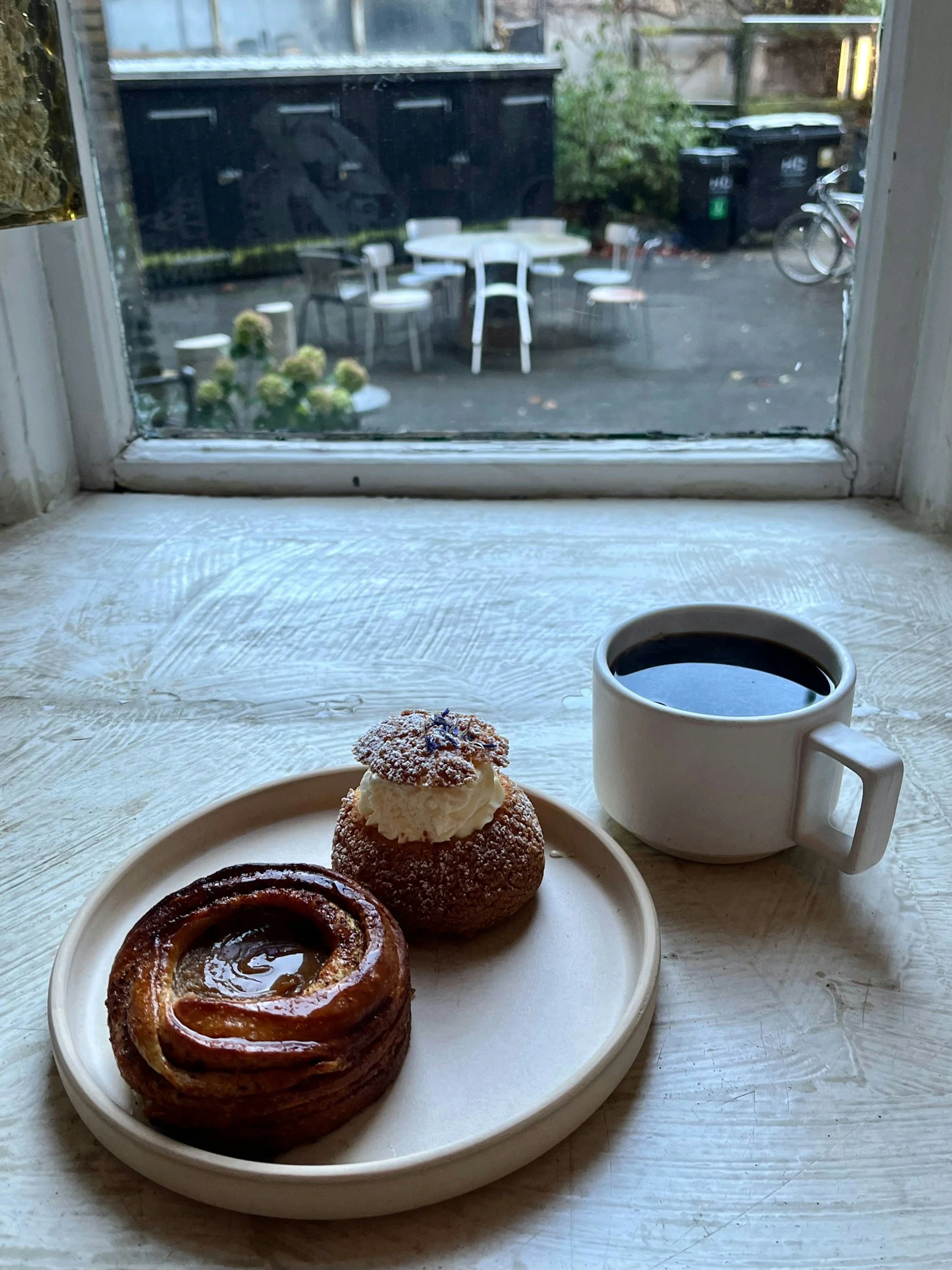
How to plan a simple breakfast morning in Copenhagen
If you try to fit two or three breakfast spots into the same morning, it usually ends up feeling off. Not because the distances are long, but because the timing doesn’t line up once you’re there.
It’s easier to decide what kind of stop you want before you leave.
If you’re starting in the centre and just want coffee and something quick, go early and keep it simple. Walk down Krystalgade and go straight into Democratic Coffee around 8:30–9:00. Get a coffee and a croissant, then don’t sit right by the counter. Walk further into the library where there are longer tables and more space. You’ll see people doing the same thing, sitting quietly for 10–15 minutes before heading back out towards Strøget or Nørreport.
If you want to sit down properly, don’t try to combine it with anything else. Go straight to Sonny on Rådhusstræde or Atelier September on Gothersgade and expect to stay. Around 9:00 it’s manageable. After 10:00, you’ll likely wait outside for a bit, and once you’re in, you’re not leaving quickly. These places only really work if you let the morning slow down there instead of trying to move on straight after.
If you’re heading towards Nørrebro, it’s a different rhythm. Cross Dronning Louises Bro before 9:30 if you can, while it’s still relatively quiet, and go straight to Mirabelle Bakery on Guldbergsgade. Get what you need there, then either walk a few minutes to the lakes and sit along the water or continue down to Jægersborggade and stop at Grød if you want something more filling. Trying to do both back-to-back usually doesn’t make sense once you’re there.
What tends not to work is saving everything for later. By 10:30–11:30, most of these places are full, and you end up waiting outside more than actually sitting down. Earlier always gives you more flexibility, even if you don’t have a fixed plan.
You don’t need a full route for this. Just pick one area, go a bit earlier than you think you need to, and let the rest of the morning build from there.
Gothenburg has a similar café culture but feels a bit more low-key day to day, and these Gothenburg spots show where you’d go after the obvious places.
FAQ: best breakfast in Copenhagen
Where to have breakfast in Copenhagen near the city centre?
Around Kongens Nytorv and Rådhuspladsen, places like Atelier September and Sonny are within walking distance and easy to fit into a morning without planning a route.
Where can I get coffee and a pastry in Copenhagen (not a full brunch)?
For a quick stop, Democratic Coffee is one of the easiest options in the centre, especially if you just want a coffee and something like an almond croissant without sitting down for long. In Nørrebro, Mirabelle Bakery works the same way but with more variety.
What time should I go for breakfast in Copenhagen to avoid queues?
Before 9:00 is the easiest. Between 9:30 and 11:00, most popular cafés fill up and you’ll likely wait, especially at smaller places like Sonny or Atelier September.
Where to find cinnamon buns in Copenhagen that don’t sell out early?
Most bakeries bake in the morning, and popular items are gone before late morning. At places like Mirabelle Bakery, going before 10:00 gives you the best chance of getting what you want rather than choosing from what’s left.
Is porridge a normal breakfast in Copenhagen?
Yes, especially at places like Grød, where it’s the main thing on the menu. It’s usually served with toppings already added and is more filling than it looks, so most people order just one bowl and a coffee.
Do you need to book breakfast cafés in Copenhagen?
Most places don’t take reservations for breakfast. It’s usually first come, first served, and lines form outside rather than through booking systems.
Which neighbourhood is best for breakfast in Copenhagen?
Nørrebro is one of the easiest areas if you want multiple options close together, especially around Jægersborggade. The city centre is better if you want to stay within walking distance of main sights.
Is breakfast expensive in Copenhagen?
Yes, compared to most European cities. A coffee and pastry is manageable, but a sit-down breakfast with a dish and coffee can feel expensive, so many people keep it simple and order less.
Can you sit and work in Copenhagen cafés in the morning?
Some places allow it, but many are small and fill up quickly. Cafés like Democratic Coffee work better for short stays, while smaller spots often expect you to move on once you’ve finished.
Do cafés in Copenhagen serve breakfast all day?
Most café-style places do, especially those with simple menus. Bakeries focus more on the morning, while sit-down cafés continue serving breakfast dishes into the early afternoon.