
These treehouse hotels make slowing down surprisingly easy
You think you’re almost there, and then the road keeps going. It turns into gravel, narrows a bit, and suddenly you’re driving through forest instead of past houses. In places like Harads in northern Sweden, you can go a few minutes without seeing anything but pine trees. In parts of South Tyrol near Bressanone, the road climbs just enough that you start to look out over the valley before you even stop the car. Then you park, grab your bag, and walk the last bit. Sometimes it’s a wooden walkway, sometimes just a path through the trees. Either way, that short walk is where everything shifts.
Treehouse stays across Europe aren’t all the same, and it’s worth knowing that before you book. Some are set just outside small towns, like in the Black Forest or near Annecy, where you could drive ten minutes and be at a bakery on a place like Hauptstraße or near the lakeside. Others are more tucked away, where once you’ve arrived, you’re not going anywhere unless you really mean to. Both work, but they feel completely different once you’re there.
Inside, things tend to be simple, but not in a stripped-back way. More like everything has a reason to be where it is. Windows are placed where you’ll end up sitting anyway. Balconies aren’t just there for the view, they’re where you’ll have your coffee without even thinking about it. In colder places like Sweden or Finland, you notice quickly if the heating works properly, and the good ones do, so you don’t spend time adjusting anything.
Mornings don’t really start with a plan. You basically wake up, look outside, step out for a minute, and then stay a bit longer than you thought you would. In southern places like France or Italy, you might hear something in the distance, a tractor, a dog, something that reminds you you’re not completely isolated. Further north, it’s quieter than that. Just the forest, maybe some wind, and not much else!
If you go out, it’s usually something simple. A path through the trees, a short loop that brings you back the same way, or a walk toward a nearby clearing or lake. In Austria and Germany, these paths are often well marked, so you don’t need to check anything before heading out. In more remote places, you just follow what’s there and turn back when you feel like it.
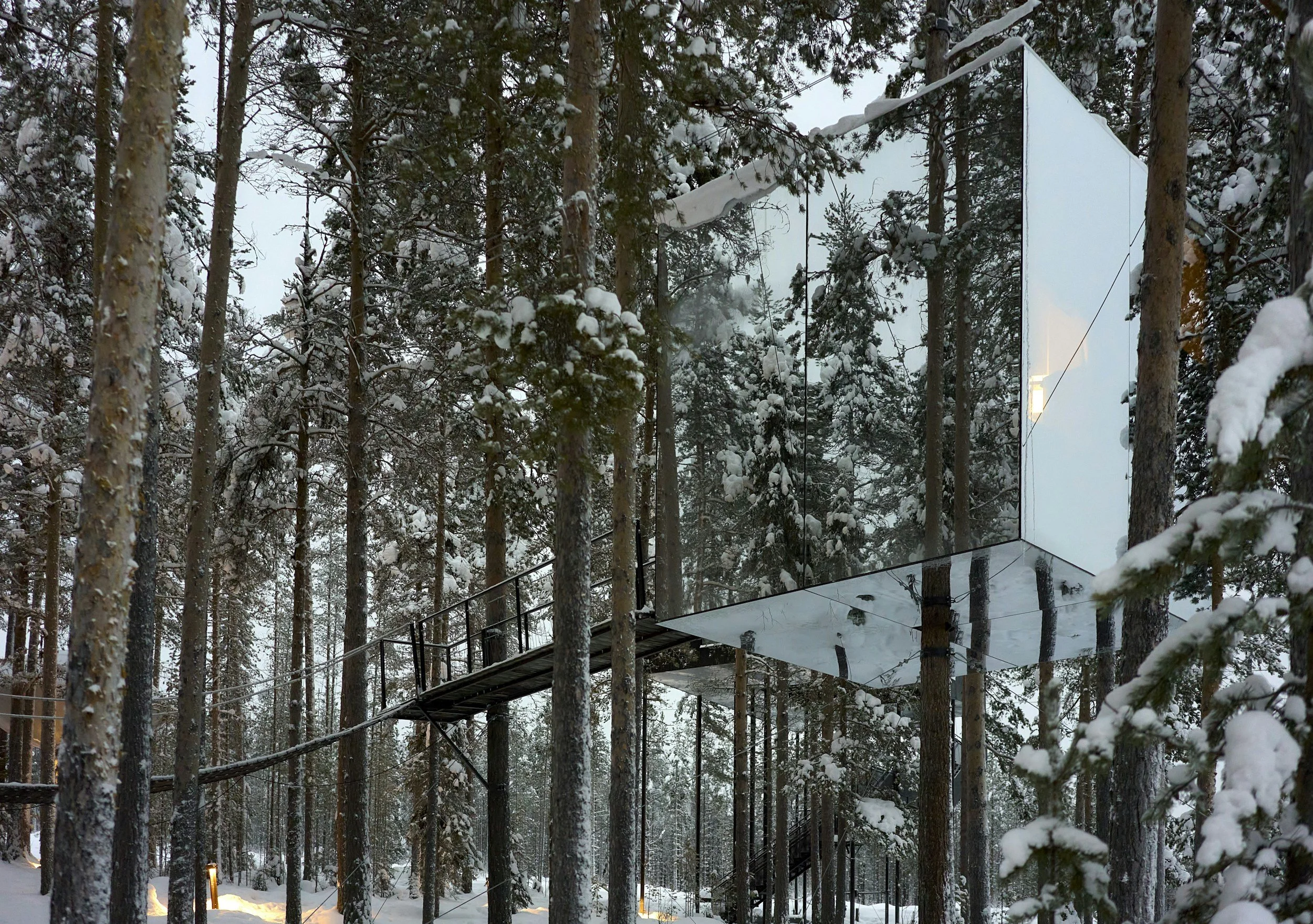
Tree hotel (mirror cube) in Harads, Sweden
Granö Beckasin by the Ume River in Swedish Lapland
Granö Beckasin sits right along the Ume River, about 75 km inland from Umeå, and the drive out is part of understanding where you’re going. You follow the river upstream on road 363, passing small villages like Vännäs and Vindeln, then smaller places like Granö itself, where there’s a local ICA store, a petrol station, and not much else. It’s not a dramatic arrival, but by the time you turn in toward the property, you’ve left behind any sense of city movement.
If you’re arriving by train or flight, Umeå is the closest hub, and from there it’s an easy one-hour drive or taxi. The last part doesn’t require any effort, no gravel roads, no searching for signs. You arrive, park, and the river is already right in front of you. That simplicity makes a difference compared to other treehouse stays where the last stretch can feel like a project in itself.
The treehouses are set among tall pine trees just above the riverbank. You walk a short distance from the main building along a wooden path, and then you’re there. They’re not hidden deep in the forest, but they’re placed in a way that gives enough space between each one so you don’t feel close to other guests. The structures are simple, raised above the ground with large windows facing the water, so the view stays with you whether you’re sitting inside or just waking up.
Inside, everything is built around that view. The layout is straightforward, with space to sit near the window and enough room to move around without it feeling tight. In winter, the heating works without you needing to adjust it constantly, which matters more than you expect when temperatures drop well below freezing. In summer, you’ll likely have the windows open, letting in the sound of the river and the forest.
Breakfast is served back in the main building, about a two-minute walk from the treehouses. It’s simple, but it reflects the region. You’ll find bread, crispbread, local dairy, and things like smoked fish or eggs depending on the day. It’s not a large spread, but it’s enough, and it works better over a couple of mornings than something more elaborate would. People come down, eat, and then head back out again without much delay.
The river shapes most of what you end up doing, even if you don’t plan it that way. There’s a path running along the water, and it’s easy to follow it for as long as you want. You might walk past small clearings, wooden benches, or spots where the river widens slightly and slows down. It’s not marked as a “trail” in a formal way, but you don’t need anything more structured.
If you want something more organised, there are options that are easy to add without overplanning. In winter, dog sledding and snowshoeing are the main ones, and they usually start directly from the property or nearby. Northern lights viewing works well here because there’s very little artificial light, and you don’t need to drive anywhere to see them, just step outside and wait. In summer, it shifts toward kayaking or rafting on the Ume River, and the water conditions here are steady enough that it works even if you haven’t done it before.
Granö village itself is very small. There’s the ICA Nära store if you need something practical, and a few houses spread out along the road, but it’s not somewhere you go to spend time. Vindeln, about 20 minutes away, is slightly larger and has a few more services, but again, you’re not coming here for towns or cafés.
Back at the property, evenings are quiet in a way that doesn’t feel forced. Dinner is served in the main restaurant, usually based on what’s available locally, with dishes that reflect northern Swedish ingredients rather than anything complicated. After that, people tend to head back to their cabins or walk down to the river again.
The difference between seasons is noticeable. In winter, everything revolves around the cold and the dark, and the days are shorter. You spend time outside in smaller blocks, then come back in. In summer, it’s the opposite. The light stays late, sometimes well past 22:00, and you find yourself outside longer without planning to be.
If you like to spend a few night in Umeå before or after your visit to Granö Beckasin, this guide is packed with all our favourite cafés, bars and art galleries in town.
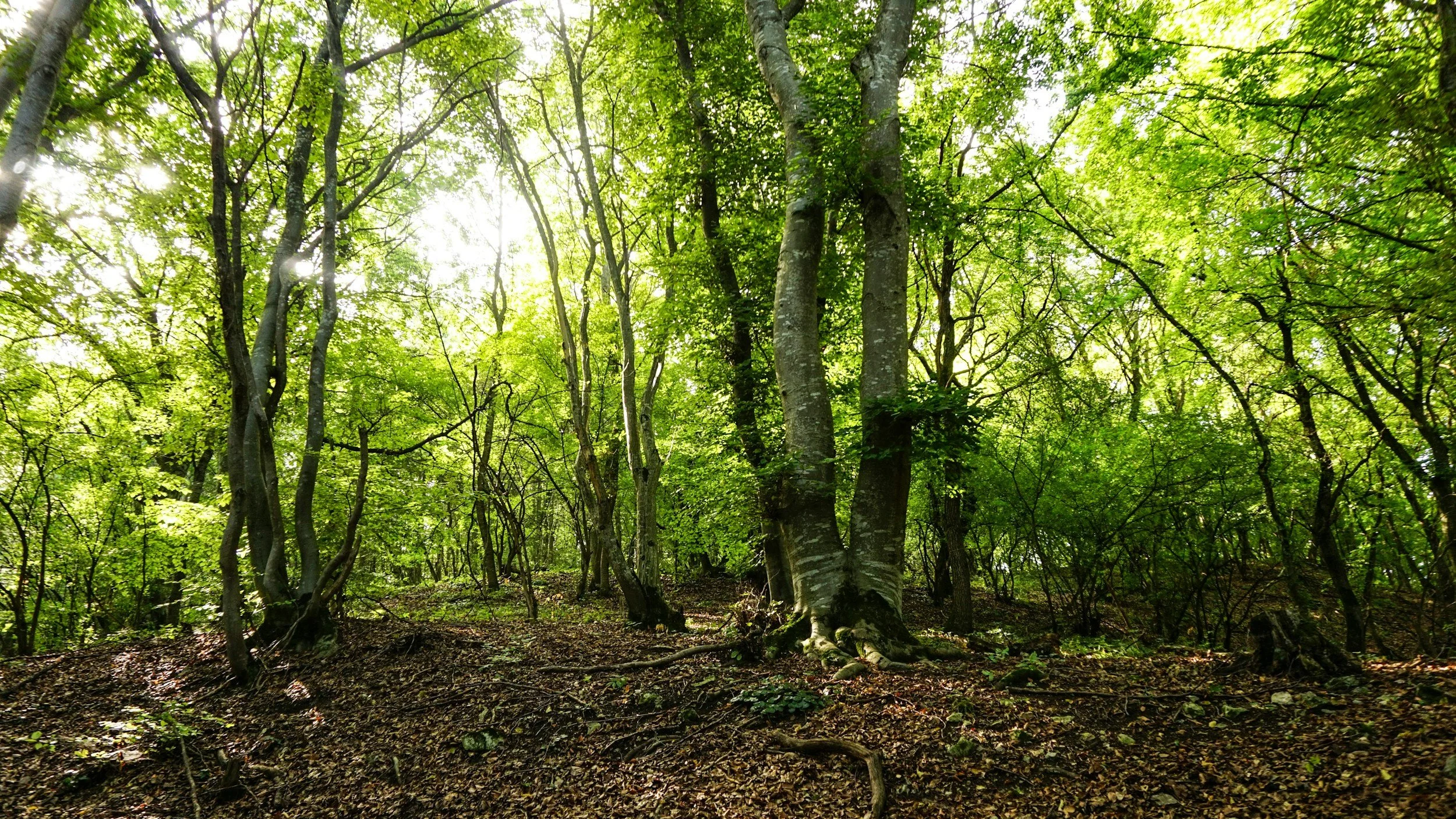
Les Cabanes de Salagnac near Sarlat in the Dordogne
You’re driving through the Dordogne thinking you’re close, and then the road keeps narrowing. It’s that stretch between Sarlat-la-Canéda and Souillac where you pass stone houses, low walls, and fields that look the same for a while. Then you turn off again, onto a smaller lane, and after a few minutes you’re there. No big entrance, no sign that you’ve arrived somewhere structured. You park, get out, and walk the rest.
If you’re coming by train, Souillac is the easiest station to aim for. It has direct connections from places like Toulouse or Brive-la-Gaillarde, and from there it’s about a 15-minute drive. Sarlat station works too, but it’s a bit further out and the timing isn’t always as convenient. Either way, the last part is always by car or taxi, and it’s better to sort that in advance because there’s nothing nearby to rely on.
The cabins aren’t grouped together. You don’t see them all when you arrive. Each one sits somewhere in the trees, and you reach it by following a small path that winds slightly uphill or across the forest floor. It’s not a long walk, but enough that you feel the change from open countryside to something more enclosed before you get there.
Once you’re up in the cabin, you’re not looking out over a view in the distance. You’re in the trees. Branches at eye level, leaves moving with the wind, and just enough space between cabins that you don’t notice anyone else unless you go looking for them.
Breakfast is brought to you in a basket in the morning, usually left at the base of the treehouse and pulled up with a rope. It sounds like a detail you’d forget about, but it changes the whole morning. You don’t get dressed and head somewhere, you stay where you are. Inside, it’s simple. Bread and pastries from a nearby bakery in Sarlat or Souillac, fruit, maybe yogurt, coffee. Nothing overdone, but it fits the setting.
You end up taking your time with it without planning to. Sitting outside, going back for another coffee, not really thinking about what comes next.
If you do leave the cabin for a bit, the paths around the property are enough for a walk without turning it into something structured. You follow one, loop back another way, and end up where you started without needing to check anything. It’s not about distance, it’s more about being outside for a while.
If you want to go further, Sarlat is the place that makes sense. It’s about 20 minutes by car, and once you’re there, you park outside the old town and walk in. The area around Place de la Liberté is where most people end up, but the smaller streets just off it are usually quieter. If you go early in the morning, you’ll see the town before it fills up. Later in the day, especially in summer, it gets busy enough that you won’t stay as long.
You can also stop in Souillac on the way back, maybe around the area near the abbey or the small square by Rue de la Halle, but it’s more of a practical stop than somewhere you build time around.
Back at the cabin, the evening is simple. Some places offer dinner baskets, others expect you to bring something with you. Either way, you eat where you are, sit outside for a bit, and then head in. There’s no reason to go anywhere else, and that’s quite clear once you’ve been there for a few hours.
The time of year changes how it feels more than how it works. In summer, the trees give enough shade that you’re outside most of the day. In spring and autumn, it’s quieter, cooler, and you notice the forest more.
France is full of cozy countryside stays, and here explore a few villages well worth a visit. Think markets, wellness strolls and wine…
My Arbor above Brixen on the Plose hillside
You leave Brixen and within a few minutes you’re already climbing. Past the roundabout near Viale Mozart, then up toward St. Andrä on the road that keeps winding through forest. It doesn’t take long, maybe 10–15 minutes, but it’s enough that the town drops away behind you. You pass the lower Plose lift station, keep going a little further, and then the hotel shows up between the trees without much buildup.
If you arrive by train, Brixen station is easy to reach on the Innsbruck–Verona line. From there, a taxi is the only part you really need to plan. It’s a short drive, but not something you want to piece together with luggage. Once you’re up there, you’re done with moving around unless you decide otherwise.
The first thing you notice isn’t the reception or the entrance, it’s the structure itself. The rooms extend out from the main building on long wooden supports, so you’re not just next to the forest, you’re slightly in it. When you walk into the room, you don’t feel like you’re inside a building in the usual way. You’re looking straight out into trees or across the valley without anything blocking it.
Most rooms face toward the Eisack Valley, and that’s where you end up sitting without thinking about it. Early in the morning, you’ll see the light move across the valley before you even get out of bed. In the evening, it shifts again, and you notice it because there isn’t much else pulling your attention.
Breakfast is in the main restaurant, and it’s larger than what you get in smaller treehouse stays, but it still leans local. Bread from bakeries in Brixen, cheeses and yogurt from South Tyrol, eggs made fresh instead of sitting out. It’s the kind of breakfast where you take a plate, sit down, and then end up going back again because there’s no reason to rush it.
People sit longer here. You’ll see that quickly. Coffee turns into another coffee, and no one is looking at the time.
Stepping outside, you’re already on the Plose side of the mountain, so you don’t need to drive anywhere to get going. If you walk downhill, you’ll reach St. Andrä in about 40–50 minutes. It’s a simple route, passing small houses and open sections where the view opens out again. There’s a bakery and a couple of small places there, but it’s more of a stop than somewhere you stay long.
If you go the other way, you’re heading toward the lifts. The Plose cable car and trails are close enough that you can decide on the spot whether you want to go higher up or just stay where you are. In summer, the trails above the tree line open up quickly once you take the lift, with routes toward places like Rossalm that don’t require much planning. In winter, everything shifts toward skiing, and you’re already positioned for it without needing to drive.
Going back down into Brixen is easy, but you notice the change straight away. The center around Domplatz feels more active, with people moving between cafés and shops along Via Portici. It works well for a couple of hours, especially if you want a proper coffee or something simple to eat, but most people head back up before the day turns into something busier.
Back at the hotel, the spa is where time tends to disappear. The outdoor pool runs along the edge of the building, and once you’re in it, you’re looking straight out over the valley. Inside, there are quieter areas and saunas, but you’ll probably come back to the pool more than once without planning to.
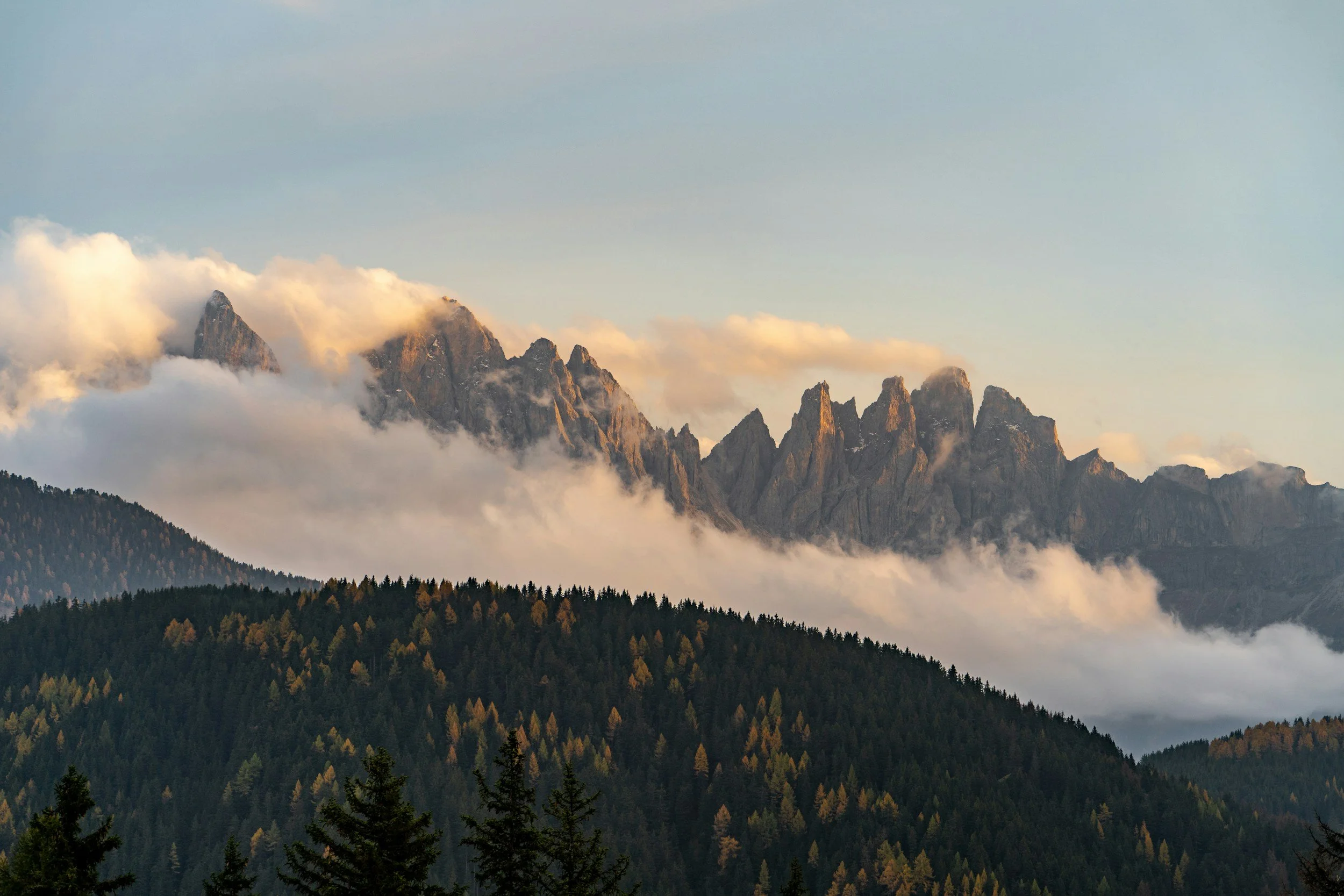
Nolla Cabins on Vallisaari just outside Helsinki
You start at the harbour in Helsinki, usually near Kauppatori, where the small ferries leave. It feels like a normal city departure at first, people heading out to Suomenlinna, a bit of movement around the docks, then you’re on the boat and within a few minutes the city is behind you. The ride out to Vallisaari takes about 20–25 minutes, and you pass low islands, open water, and bits of coastline that already feel quieter than anything in town.
Once you step off the ferry, there are no cars, no roads in the usual sense, just wide gravel paths and wooden walkways leading into the island. From the dock, you follow the main path inland, pass the café area near Luotsipiha, and then continue for about 10–15 minutes toward the cabins. You’re carrying what you need, so you notice the distance more than you would otherwise, but it’s not difficult, just enough to make you think about what you brought.
The Nolla cabins are set in a small clearing rather than hidden deep in the forest. You’ll see them before you reach them, simple structures with angled roofs and large front windows. They’re close enough to each other that you’re aware of other guests, but spaced out enough that you still feel like you have your own spot.
Inside, everything is reduced to what you actually need. There’s no running water in the usual sense, no full electricity setup, and that becomes clear straight away. Solar panels power small essentials, and the space is arranged so you can sit, sleep, and look out without anything getting in the way. It’s not trying to feel like a hotel room. It’s closer to staying somewhere temporary that’s been thought through properly.
Breakfast isn’t something you go out for. You either bring it with you or keep it simple using what you have. Most people pack bread, fruit, maybe something for coffee, and use the shared cooking areas nearby if needed. There’s a café closer to the ferry dock at Luotsipiha, which works during the day for something extra, but in the morning you’re usually at the cabin.
What you end up doing during the day depends more on the island than on the cabin itself. Vallisaari has a network of paths that take you along the coastline and through the middle of the island. If you walk toward the western side, you’ll reach open cliffs facing the sea, with views back toward Helsinki in the distance. Other paths take you past old military structures, like the Alexander Battery, where the landscape opens up again.
You don’t need to plan a route. You just start walking and turn when you feel like it. Most loops take one to two hours depending on how far you go, and you’ll pass a mix of forest, open grass areas, and coastal sections without repeating the same view too often.
By late afternoon, the island starts to quiet down as day visitors leave on the last ferries. That’s when it changes. The paths empty, the café closes, and it feels more contained. You head back to the cabin, sort out something simple to eat, and stay there. There’s nowhere else to go, which is what makes it work.
Evenings are straightforward. You sit outside, maybe walk a short distance again, then head in. The light lingers quite late in summer, and you notice how slow it fades compared to the city. Once it’s dark, it’s properly dark, with no streetlights around you.
Løvtag in the forest near Mariager Fjord
You leave the main road just outside Hobro and it doesn’t feel like you’re heading toward a hotel at all. The road narrows, you pass a few farms with low brick houses and open fields, and then it turns into forest. No clear entrance, no big sign, just a small place to pull in and park. If you weren’t paying attention, you’d probably drive straight past it.
From there, you carry your bag the last few minutes on a soft path through the trees. It’s not far, but it’s enough that you stop thinking about the drive and start noticing what’s around you instead. The ground changes under your feet, the air feels different, and by the time you see the cabins, you’ve already slowed down.
Each cabin sits around its own tree, lifted slightly above the forest floor. You don’t see them all at once. You notice one, then another further off, spaced out so you’re aware of other people but not close to them. The spiral staircase wraps around the trunk, and you carry your bag up step by step, which takes a moment but feels part of the stay rather than an inconvenience.
Once you’re inside, the forest doesn’t disappear. The windows are large and placed on multiple sides, so wherever you stand or sit, you’re looking out into trees. Not a distant view, just branches, light moving through leaves, and whatever’s happening outside at that moment. In the morning, the light comes in early, especially if you’re facing east, and you’ll notice it before you even get out of bed.
The space is compact, but it’s laid out in a way that you don’t feel restricted. There’s a small kitchen area with what you need to make something simple, a table by the window, and a bed positioned so you don’t have to move far to see outside. You end up using everything without thinking about it. Nothing feels added just for the sake of it.
Before you arrive, most people stop in Hobro to pick up food. There’s an ICA-style supermarket and smaller shops along Adelgade, plus a bakery if you want fresh bread in the morning. It’s worth doing that properly, because once you’re at Løvtag, you’re not going to head back out unless you’ve forgotten something important.
Breakfast becomes something you build yourself, but that’s part of why it works. You make coffee, slice bread, maybe cook eggs, and sit down without a time to follow. Some people stay inside by the window, others step out onto the small terrace. Either way, you’re not going anywhere straight after, and that changes how the morning feels.
If you go out for a walk, you don’t need to plan it. There are small tracks through the forest that you can follow without checking a map. Some lead slightly downhill toward more open areas, where the trees thin out and you get closer to Mariager Fjord. You won’t always see the water clearly from the paths, but you’ll notice the shift in the landscape, flatter ground, more light, a bit more space between the trees.
Walking here isn’t about distance. You might be out for an hour and not cover much ground, but it doesn’t feel like you need to. You just go until you feel like turning back.
If you want to leave for a few hours, Mariager town is about 20 minutes away by car and is the easiest place to head to. You park near Torvet and walk toward the harbor, where there are a couple of cafés and small shops. The streets are quiet, and you don’t need a plan. You might sit by the water for a bit, pick up something to bring back, and then leave again without spending too long there.
Back at the cabin, the afternoon tends to slow down without you deciding to slow it down. You might sit outside for a while, go back in, make something simple to eat, and then sit again. There’s no background noise apart from the forest, no one passing by, nothing pulling your attention away.
Evenings feel different here compared to most places. Not because anything is happening, but because nothing is. You cook, eat, maybe open a window or step outside again, and then head in when it starts to get darker. In late summer, the light lingers longer than you expect. In autumn, it drops earlier and the forest changes tone. In winter, you’re inside more, but the space still works because everything is already there.
What makes a treehouse stay actually work
After a couple of nights in places like this, you start noticing the small things that don’t show up in photos. Not the cabin itself, but everything around it.
How far you actually have to carry your bag from the car. Whether that “short walk” is flat or slightly uphill through forest. If there’s somewhere nearby to buy food before you arrive, or if you’ll wish you had stopped in a town like Hobro, Souillac, or central Helsinki on the way in. None of it is difficult, but it changes the stay more than people expect.
Evenings are another thing people don’t always think through. Some places have a restaurant or offer dinner baskets, others don’t. When there’s nowhere else to go, that detail matters. You don’t want to realise too late that you should have picked something up before check-in.
Light is one of those things you only notice once you’re there. Some cabins sit deeper in the forest and stay shaded most of the day. Others catch the morning or evening sun and feel completely different, even if they’re only a few meters apart. It’s not something most listings explain clearly, but it affects how much time you actually spend sitting outside.
And then there’s the part that’s harder to describe until you’ve experienced it. After a day or so, you stop thinking about what to do next. You’re not checking maps, not planning meals, not looking for somewhere else to go. You just stay where you are a bit longer than you expected.
That’s usually when you know you chose the right place.
For more cozy sleeps in the sleep country Sweden, read this article where we break down the best places this year.
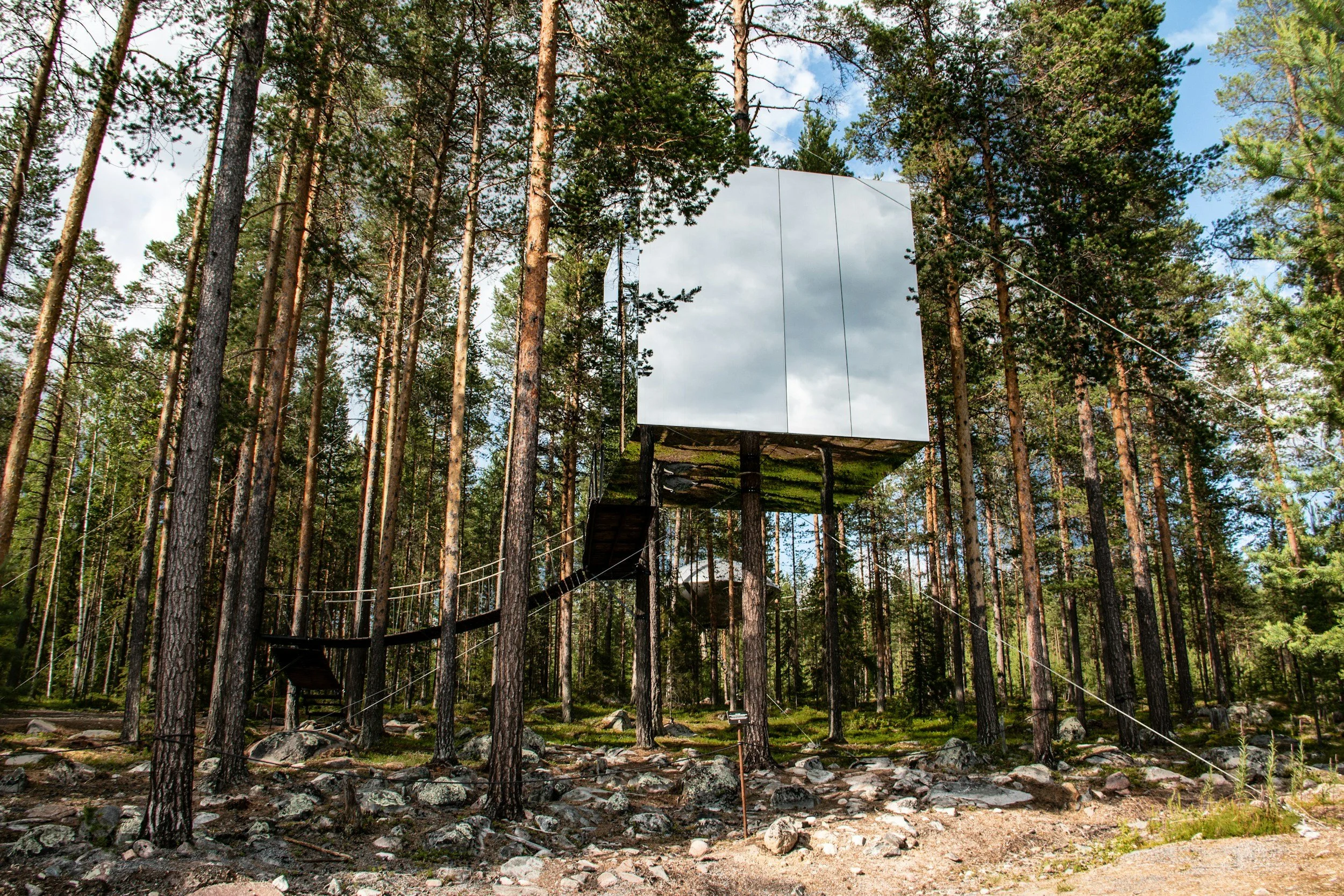
FAQ: treehouse hotels in Europe
Where are the best treehouse hotels in Europe located?
Treehouse hotels in Europe are usually found in forested or rural areas rather than cities. Popular locations include Swedish Lapland near Granö, the Dordogne region near Sarlat in France, South Tyrol above Brixen in Italy, and coastal or island settings like Vallisaari near Helsinki. Most are within 1–2 hours of a major city but feel much more remote once you arrive.
Can you stay in a treehouse hotel in Europe without a car?
In some cases, yes. Nolla Cabins on Vallisaari can be reached by ferry from central Helsinki. However, most treehouse stays require a short taxi or car transfer from the nearest train station, such as Brixen for My Arbor or Souillac for Les Cabanes de Salagnac.
How do you get to treehouse hotels in rural Europe?
The most common setup is train + taxi. For example, you take a train to Brixen, Bordeaux, or Umeå, then continue 10–60 minutes by car. The final part is often a smaller road or short walk through forest, which is part of the experience.
Do treehouse hotels in Europe have private bathrooms and heating?
Most mid- to high-end treehouse hotels do, including places like My Arbor in the Dolomites or Løvtag in Denmark. More minimal stays, such as Nolla Cabins near Helsinki, may not have full electricity or running water, so it depends on the type of stay you book.
What should you pack for a treehouse stay?
A small bag works best, as many cabins require a short walk from parking or ferry docks. It’s also worth bringing food if the property doesn’t have a restaurant, especially in places like rural Denmark or the Dordogne where shops are 15–20 minutes away.
Do treehouse hotels in Europe include breakfast or meals?
Some do, often as a basket delivered to your cabin, like in parts of France. Others expect you to bring your own food or use a small kitchen inside the cabin. In more remote locations, there are usually no nearby restaurants, so this is something to check before booking.
Are treehouse hotels in Europe suitable for winter stays?
Yes, but the experience changes. In northern regions like Sweden, winter stays focus on snow, shorter daylight hours, and indoor comfort. In southern Europe, many treehouse hotels close or reduce services outside the main season.
How private are treehouse hotels in Europe?
Most cabins are spaced out, but not completely isolated. You’ll usually have your own terrace and view, but other cabins may be within sight through the trees. Layout varies a lot between properties.
How many nights should you stay in a treehouse hotel?
Two nights is ideal for most stays. It gives you time to settle in, enjoy the surroundings, and not feel like you need to rush. One night often feels too short, especially if travel time is more than a couple of hours.
Are treehouse hotels in Europe worth it?
They are if you plan to stay in one place and not move around much. Treehouse stays work best when you’re not treating them as a base for sightseeing, but as the main part of the trip.