
5 Welsh villages that make it easy to spend a weekend outdoors
Wales is one of the easiest places in the UK to slow down for a few days. Step outside the larger cities like Cardiff, Swansea, or Bristol, and the landscape quickly opens into green valleys, stone villages, and long stretches of coastline.
Many travelers head straight for Snowdon (Yr Wyddfa) or the bigger seaside towns, but some of the most memorable places in Wales are much smaller. Villages where the pace of life is still shaped by the weather, the farming season, and the rhythm of the sea.
You’ll find narrow streets lined with slate cottages, village bakeries that open early, and walking paths that begin right at the edge of town. A morning might mean a slow walk along a river, a coastal path above the cliffs, or a cup of tea in a café where locals stop in after work.
The same kind of quiet coastal atmosphere can also be found in several hidden coastal villages in England that are perfect for a slower summer trip, where small harbours and cliff paths create a similar sense of calm.
This guide focuses on a handful of places across North, Mid, and West Wales where that slower rhythm still exists. Small towns and villages where you can stay a few nights, walk straight into nature, and experience a quieter side of the country.
Brecon Beacons (Bannau Brycheiniog): Quiet Walks Above the Black Mountain
The Brecon Beacons (now officially called Bannau Brycheiniog) cover a large part of southern Wales, but some corners of the park still feel surprisingly quiet.
The western side of the park, near the small village of Llanddeusant, is one of those places. The roads narrow, farms sit far apart, and the hills open into wide moorland that feels far removed from the busier hiking areas closer to Pen y Fan.
One of the most memorable walks here leads to Llyn y Fan Fach, a mountain lake tucked beneath the cliffs of the Black Mountain range.
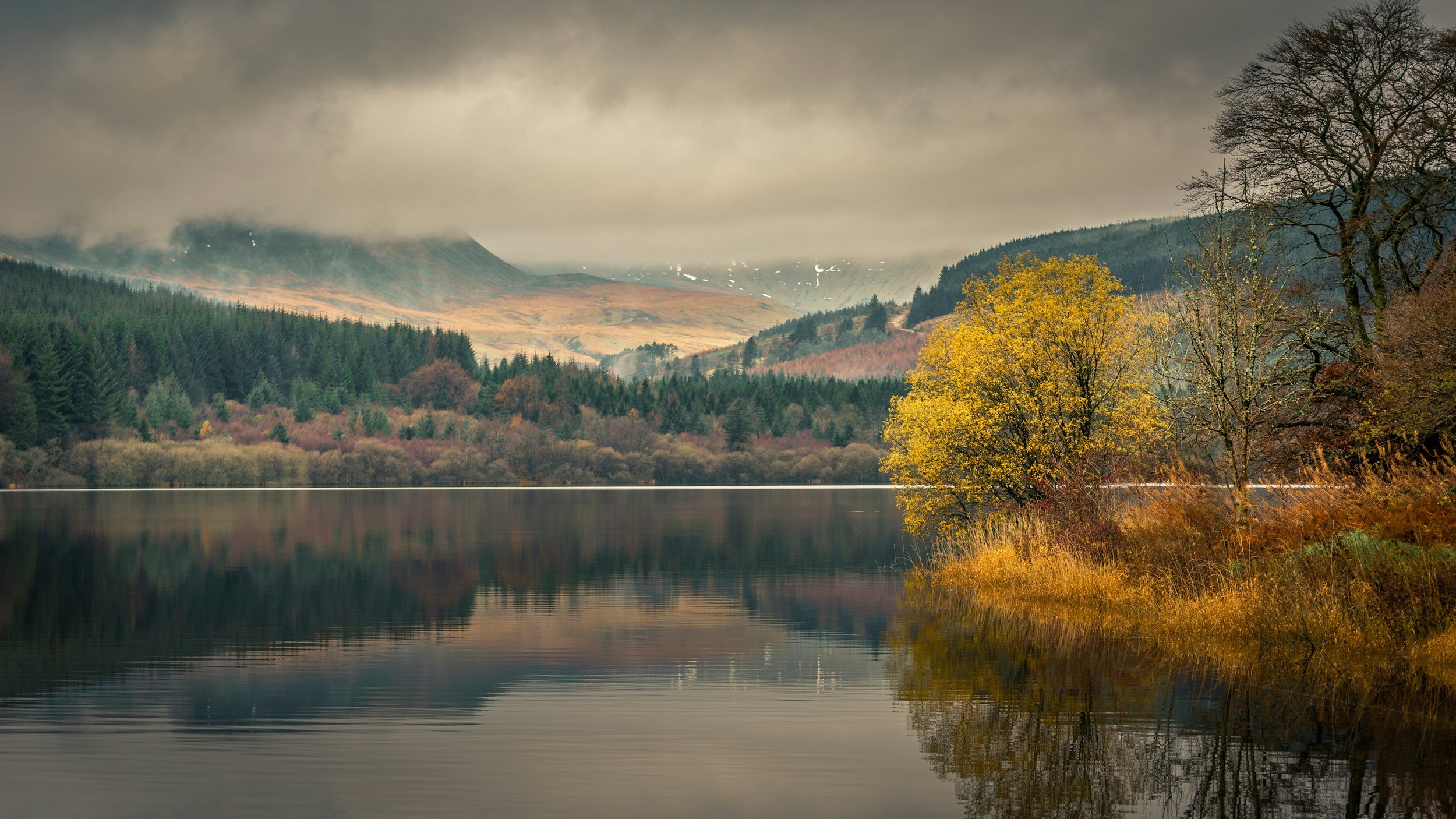
Llyn y Fan Fach
Walking to Llyn y Fan Fach
The walk begins at Llyn y Fan Fach car park, a small gravel parking area reached via a narrow country road from Llanddeusant.
From the car park, a wide stone track leads gently uphill through open grazing land. The first part of the walk is gradual and easy to follow, with sheep scattered across the hillsides and long views across the valley behind you.
After about 30–40 minutes, the landscape suddenly opens up and the lake appears below the steep escarpment of the Black Mountain.
The full walk is about 3 miles (5 km) round trip, and most people take 1.5 to 2 hours if they stop along the way.
Even in summer, this part of the park usually feels calm. You may pass a few other walkers, but long stretches of the trail are often quiet.
The lake is tied to one of the best-known pieces of Welsh folklore - the story of the Lady of the Lake, a mythical woman said to have emerged from these waters centuries ago. Whether you know the legend or not, the setting is striking: still water, steep green slopes, and the constant sound of wind moving across the hills.
Many walkers pause here for a while before heading back down the same path.
A Good Base: Crickhowell
If you’re staying nearby, Crickhowell makes an excellent base for exploring the Brecon Beacons without being right in the busiest parts of the park.
The town sits along the River Usk, about 30 minutes from the western hills, and has one of the nicest small high streets in this part of Wales. Along High Street, you’ll find independent shops, bakeries, and a handful of cafés where locals stop in throughout the day.
For a relaxed lunch or coffee, Number 18 Café is a popular stop, while the historic Bear Hotel has been welcoming travelers for centuries and makes a good place to settle in for dinner after a day outside.
Another local favourite just outside town is Nantyffin Cider Mill, a cosy pub known for its cider and hearty Welsh food.
After Dark: One of the UK’s Best Night Skies
Bannau Brycheiniog is also an International Dark Sky Reserve, which means light pollution here is extremely low.
On a clear night, stepping outside after dinner often reveals a sky filled with stars that are difficult to see in most parts of the UK.
It’s a simple ending to the day, but one that is amazing.
Where to Stay
This isn’t a place for chain hotels. Instead, choose a locally run guesthouse, a countryside eco-retreat, or a converted shepherd’s hut tucked away in the hills.
Ty Croeso, near Crickhowell, is a great example of what makes this area so special. An adults-only B&B with views over the Usk Valley, it’s quiet, comfortable, and full of thoughtful touches: from homemade Welsh cakes on arrival to a wood-burning stove for evening reading sessions. Mornings begin with local eggs and fresh sourdough, served in a sunlit dining room with sweeping views.
If you're after something more off-grid, there are several off-the-beaten-path cabins near Llangadog and Trecastle where you'll fall asleep to nothing but the sound of wind through the trees.
Getting There
Despite its remote feel, Bannau Brycheiniog is fairly easy to access - especially if you don’t mind a little detour from the train.
By train: Travel to Abergavenny, Merthyr Tydfil, or Llandovery - all are within an hour or two from Cardiff and Bristol.
From there: You’ll need a car or taxi to access walking routes and accommodation deeper in the park. Some eco-lodges offer pick-up if arranged in advance, but a rental car gives you the freedom to explore at your own pace.
Our best tip: Avoid the A470 during busy weekends… it’s a beautiful drive but can get congested. Instead, take the scenic backroads from Llandovery for a quieter approach.
Gower Peninsula: Quiet Coastal Walks Just Outside Swansea
Just west of Swansea, the Gower Peninsula feels a world away from the city. Within half an hour the roads narrow, sheep start appearing in the fields, and the coastline opens up into wide cliffs and quiet beaches.
Gower was actually the first place in the UK to be named an Area of Outstanding Natural Beauty back in 1956, but it still feels surprisingly low-key. Most people visiting Wales head further north to Snowdonia, which means the beaches here often feel calm - especially outside school holidays.
Villages like Pennard, Parkmill, Bishopston, and Llangennith are small and rural. You’ll see stone cottages, farm tracks, and coastal paths running along the cliffs above the Bristol Channel.
The rhythm here is simple: a coastal walk, maybe a stop for coffee somewhere, and a slow afternoon near the sea.
One of the most beautiful places to experience that is Three Cliffs Bay.
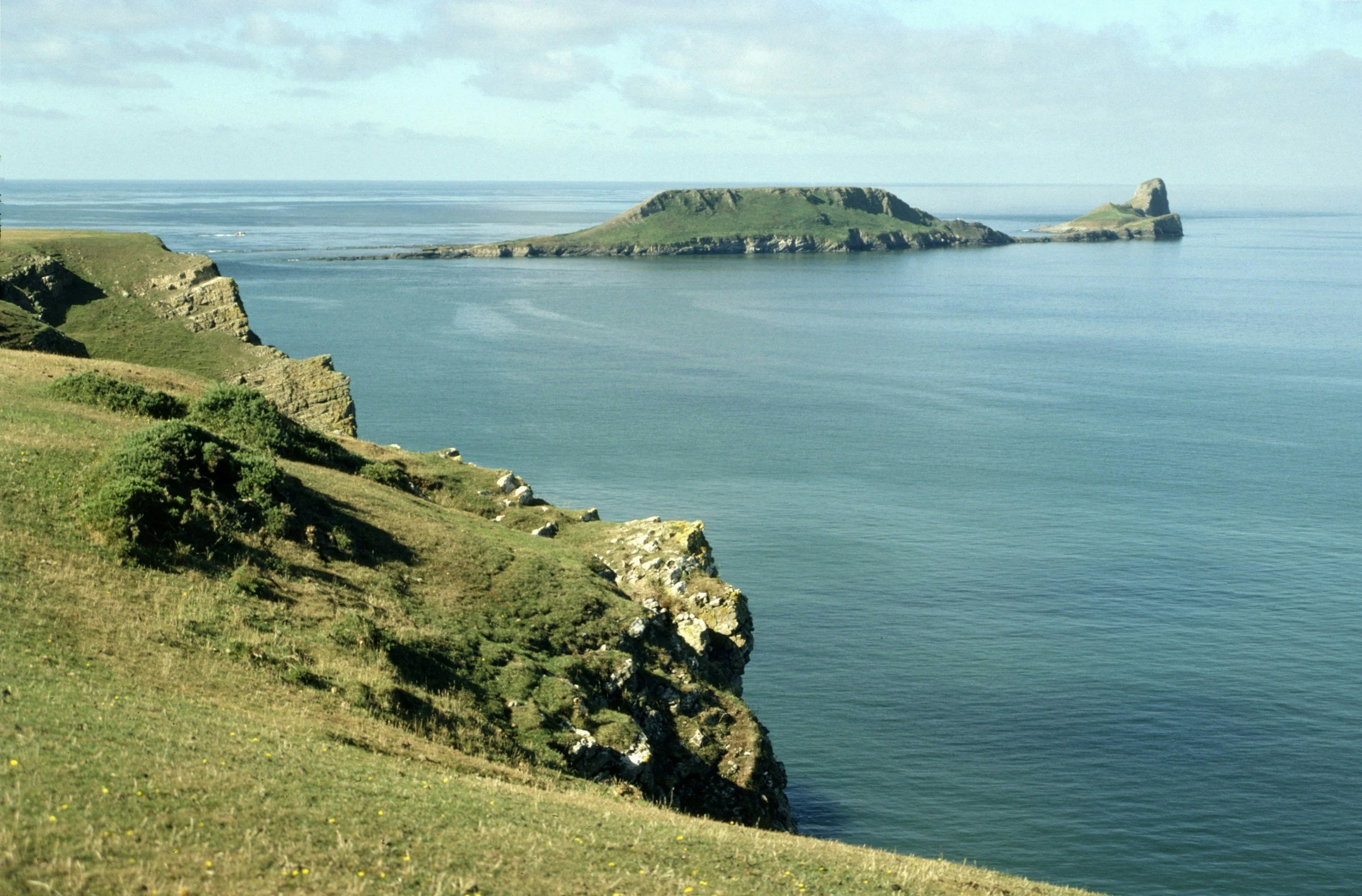
Catch the sunset at Three Cliffs Bay for a moment of pure mindfulness as the sky transforms in shades of pink and orange.
Walking Down to Three Cliffs Bay
There are a few ways to reach Three Cliffs Bay, but one of the easiest starts from the Southgate car park near Pennard Golf Club.
From the car park a grassy path follows the cliff edge for about 10–15 minutes. Suddenly the view opens up and you see the three limestone cliffs rising from the sand below.
Another lovely route starts in Parkmill village. A small footpath follows the Pennard Pill stream through woodland and open fields before reaching the beach about half an hour later. It’s an easy walk and one locals use all the time.
When the tide is low, the beach becomes enormous. Wet sand stretches across the estuary and reflects the sky like a mirror. You can walk across the flats toward Pobbles Bay, which tends to be even quieter.
If you walk up toward the grassy ridge above the beach, you’ll find the ruins of Pennard Castle. The stone walls date back to the 1100s and sit overlooking the dunes and the sea. It’s one of those views that makes you stop for a minute.
This stretch of coast is also part of the Wales Coast Path, the long walking route that follows the entire Welsh shoreline.
Slow Days on the Gower Coast
Three Cliffs Bay is only one part of the peninsula.
A short drive away, Oxwich Bay offers a wide sandy beach backed by dunes and woodland. It’s one of the easier beaches to access and a good place for a long walk along the water.
Further west, the road climbs toward Rhossili, where the landscape becomes more dramatic. From the Rhossili viewpoint, you can see the entire curve of Rhossili Bay, a three-mile stretch of sand that feels huge when the tide is out.
But many of the nicest moments here are smaller ones.
Stopping in Mumbles for ice cream at Joe’s Ice Cream, a local favourite that’s been around for generations. Walking around the old stone buildings at the Gower Heritage Centre in Parkmill. Or simply following the coastal path near Llangennith, where surfers gather on windy days.
Spend enough time looking out over the water and you might spot grey seals swimming near the rocks. They’re fairly common along this coastline, especially in spring and autumn.
Where to Stay
If you stay overnight, somewhere small usually fits the atmosphere best.
The Gower Hotel in Bishopston is a comfortable base not far from Three Cliffs Bay. The village has a couple of relaxed pubs and small local shops, and it’s easy to reach the coastal paths from here.
Further west, around Rhossili or Llangennith, there are several stone cottages available to rent. Many sit right beside fields that slope toward the sea, with walking routes starting straight from the front door.
Getting There
Most visitors reach Gower through Swansea.
Trains run regularly from Cardiff, Bristol, and London Paddington. From Swansea, the drive to the peninsula takes about 30–40 minutes.
A car is helpful here because the beaches and villages are spread out, and buses are limited.
If you have time, take the road through Pennard and Southgate instead of heading straight to Rhossili. It’s slower, but the views of the coastline along the way are worth it.
Snowdonia (Eryri): Quiet Valleys and Mountain Walks Without the Crowds
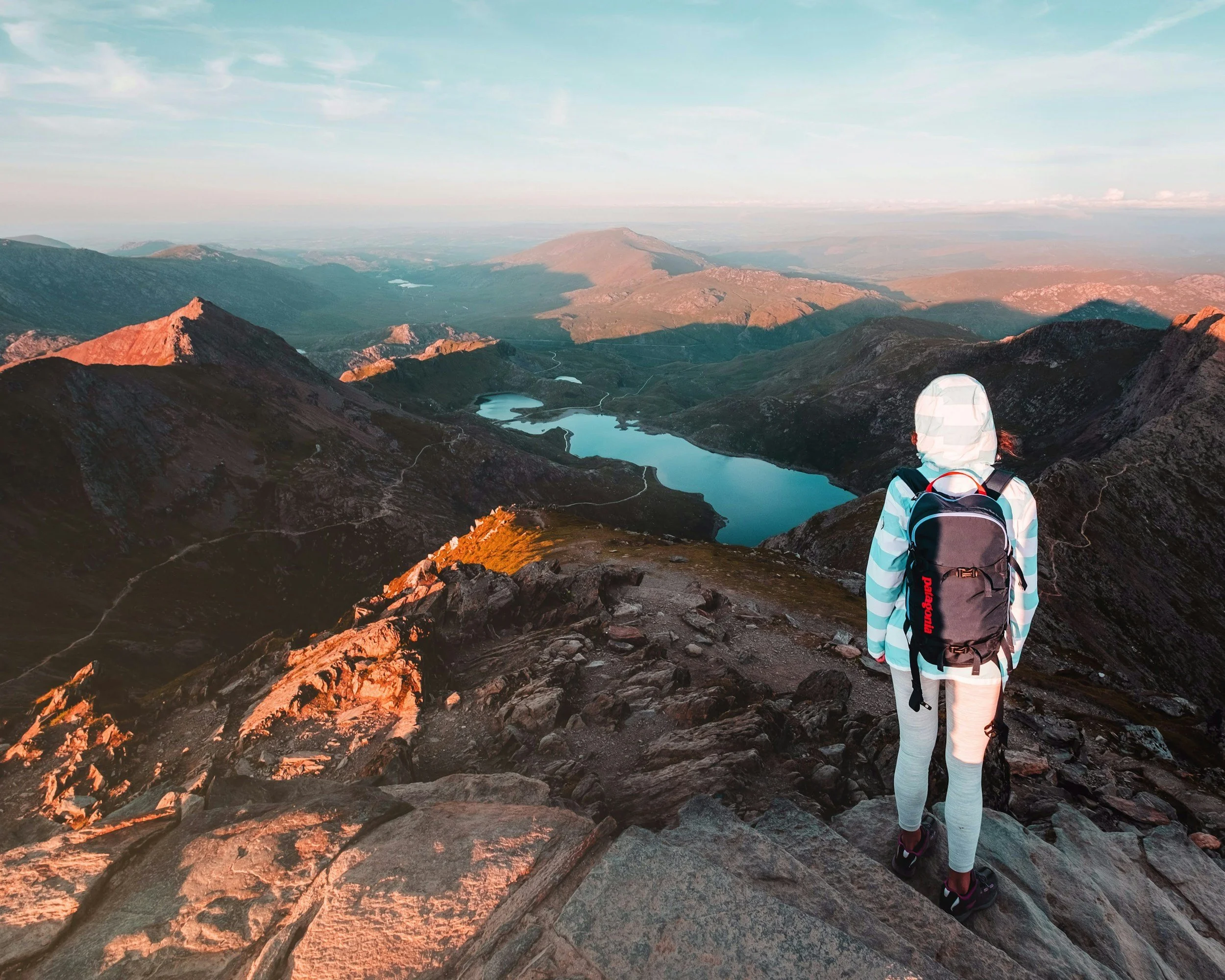
Cadair Idris
When people picture Snowdonia National Park (or Eryri, as it’s known in Welsh) they usually think of Mount Snowdon and the long lines of hikers heading for the summit.
But much of the park feels very different.
Once you leave the main Snowdon routes and drive deeper into the valleys, Snowdonia becomes a much quieter place. Narrow roads run between stone farmhouses, sheep graze along the hillsides, and lakes sit tucked between the mountains.
You don’t need to climb the highest peaks to experience the landscape here. Some of the best moments happen on slower walks beside the water or on mountain paths that locals have used for generations.
Two places that capture this side of Snowdonia especially well are Llyn Gwynant and Cadair Idris.
If you enjoy exploring landscapes on foot like this, you might also enjoy these vineyard hikes across Tuscany and Bordeaux, where walking trails wind between historic villages and wine estates.
A Slow Walk Around Llyn Gwynant
Llyn Gwynant sits along the A498 between Beddgelert and Capel Curig, in the Nant Gwynant valley. If you drive this road early in the morning, the lake often appears suddenly between the mountains, completely still.
There isn’t one official loop around the entire lake, but several easy paths run along the shoreline and through nearby woodland. Many visitors park near Llyn Gwynant Campsite and follow the informal paths along the water for an hour or two.
On calm days the mountains reflect perfectly on the lake’s surface. In spring the surrounding slopes turn bright green, while autumn often brings low mist drifting slowly across the water.
Keep an eye on the hillsides above the lake - wild goats are sometimes spotted along the rocky slopes, and herons often stand quietly near the shoreline.
If you continue driving east toward Pen-y-Pass, you’ll see some of Snowdonia’s most dramatic mountain scenery without having to climb a single summit.
Cadair Idris at Sunrise
For a mountain hike that still feels peaceful, head south toward Cadair Idris, near the small town of Dolgellau.
It’s one of the most famous peaks in southern Snowdonia, but it rarely feels as crowded as Snowdon.
One of the classic routes is the Minffordd Path, which starts near Tal-y-llyn Lake. The trail climbs steadily past small waterfalls before reaching Llyn Cau, a glacial lake sitting in a steep mountain bowl below the summit ridge.
Starting early in the morning makes a huge difference here. The trails are quiet, the air is cooler, and the views across the surrounding valleys slowly open as the sun rises.
There’s also an old Welsh legend about the mountain. According to folklore, anyone who spends a night on Cadair Idris will either wake up a poet… or not wake up at all.
Where to Stay
If you want a peaceful base inside Snowdonia, Beddgelert is one of the nicest villages in the park.
Stone cottages line the river, small bridges cross the River Glaslyn, and walking paths run directly from the village into the surrounding valleys. It’s popular, but it still feels calmer than larger hubs like Betws-y-Coed.
Ty Mawr Hotel, just outside the village, is a comfortable place to stay with views of the mountains and a relaxed restaurant serving traditional Welsh dishes.
If you prefer something quieter, the Nant Gwynant valley has several small cabins and cottages tucked into the hillsides. Many come with wood burners, simple kitchens, and wide views across the valley.
Getting There
The easiest way to reach Snowdonia is by train to Bangor or Porthmadog, both of which have regular connections from Manchester, Birmingham, and London.
From there, renting a car makes exploring much easier, since many of the lakes, valleys, and trailheads sit far from the train stations.
If you’re travelling without a car, the Snowdon Sherpa bus service connects several villages and walking routes during the main hiking season. Staying in Beddgelert or Betws-y-Coed makes it easier to use these routes.
Try a sunrise hike to Cadair Idris for a serene, less-traveled path for a more meditative experience with stunning views at the summit.
Pembrokeshire Coast: Cliff Walks, Quiet Villages, and Wide Atlantic Views
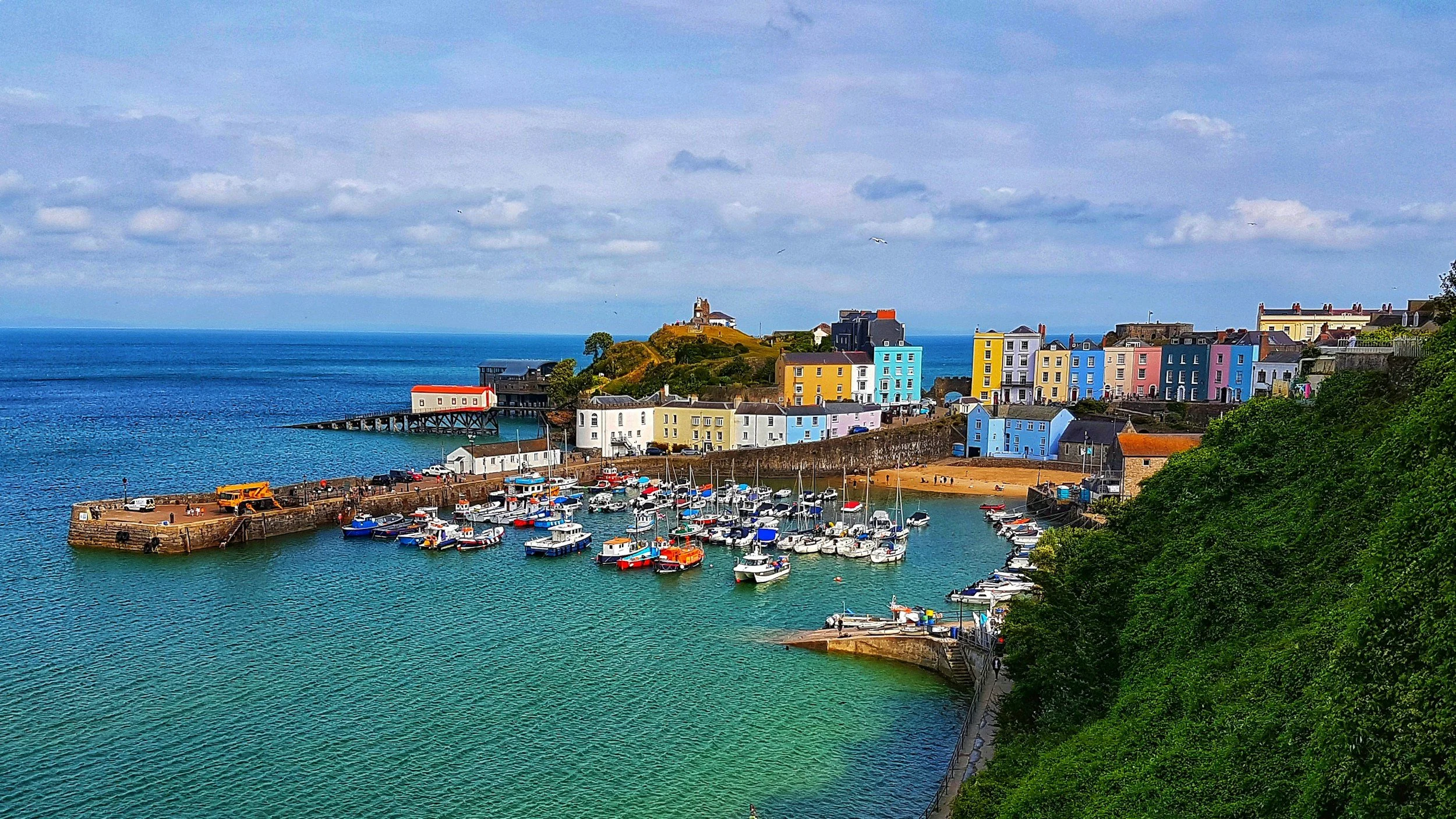
St. David’s Head
On the far western edge of Wales, Pembrokeshire Coast National Park stretches along the Irish Sea with steep cliffs, small sandy coves, and long walking paths that follow the coastline for miles.
It’s the only national park in the UK focused almost entirely on the coast, and once you get away from the busiest beaches, it still feels surprisingly quiet.
The landscape here is simple but powerful: grassy cliffs, seabirds riding the wind, and the sound of waves breaking far below the path. You don’t need a complicated itinerary in this part of Wales. Most days are best spent walking a stretch of the coast, stopping in a small harbour village, and watching the tide come and go.
Travelers who enjoy exploring historic landscapes on foot may also like these castle-to-castle hiking trails across Europe, another peaceful way to experience the countryside.
Two places that capture the atmosphere particularly well in Wales are St Davids Head and the harbour village of Solva.
Walking the Coast at St Davids Head
Just outside the tiny city of St Davids (the smallest city in Britain) the coastline opens into one of the most beautiful sections of the Pembrokeshire Coast Path.
Many people start the walk near Whitesands Bay, a wide sandy beach about five minutes outside town. From the car park, the path climbs gently onto St Davids Head, a grassy peninsula that pushes out into the sea.
The loop around the headland is roughly 3–4 miles, depending on how far you wander. It’s not a difficult walk, but the views are big. Cliffs drop into the water below, seabirds circle above the rocks, and the wind coming off the Irish Sea is almost always present.
Along the path you’ll pass low stone walls and the remains of ancient settlements that have stood here for centuries. It’s easy to imagine people walking these same cliffs long before the coast path existed.
If you look down toward the water, there’s a good chance you’ll spot grey seals swimming below the cliffs, especially on calmer days.
This is the kind of place where you end up stopping often — not because you’re tired, but because the view keeps pulling your attention back to the sea.
Solva: A Small Harbour Village That’s Easy to Like
About 10 minutes east of St Davids, the village of Solva sits tucked into a narrow harbour along the coast.
The road down into the village curves toward the water, where colourful houses line the harbour walls and fishing boats sit tied up along the quay.
At low tide, the harbour empties out and you’ll see wide stretches of sand and boats resting on the mud. A few hours later the water slowly returns, and the whole place feels different again.
A slow walk along the harbour is the best way to spend time here.
You’ll pass small galleries, cafés, and a few independent shops along the waterfront. MamGu Welshcakes is a great stop for coffee and traditional Welsh cakes, while The Cambrian Inn just up the hill is a good place for a relaxed meal after a coastal walk.
Solva has quietly built a reputation as a small hub for artists, and several galleries show work inspired by the surrounding coastline.
By early evening, once most visitors have left, the harbour settles into a slower rhythm again.
Where to Stay
If you want somewhere peaceful to stay, it’s worth choosing a base slightly away from the busiest seaside towns.
Trefloyne Manor, just outside Tenby, sits in the countryside overlooking fields and woodland. It’s a comfortable place to stay with a relaxed restaurant and plenty of space to unwind after a day by the coast.
If you prefer something closer to the sea, small stone cottages in villages like Porthgain or Abercastle offer a quieter stay right beside the coast path.
Getting There
The easiest way to reach this part of Wales is by train to Haverfordwest or Fishguard Harbour, both connected through Swansea and Cardiff.
From Haverfordwest it’s about a 25-minute drive to St Davids.
A car is helpful here because the beaches and villages are spread along the coastline. If you’re travelling without one, local buses do run between Haverfordwest, Solva, and St Davids, and you can access parts of the coast path directly from these villages.
If you can visit in May, early June, or late September, the weather is often still good but the beaches and trails feel noticeably quieter.
Elan Valley: Quiet Reservoir Roads and Wales’ Darkest Night Skies
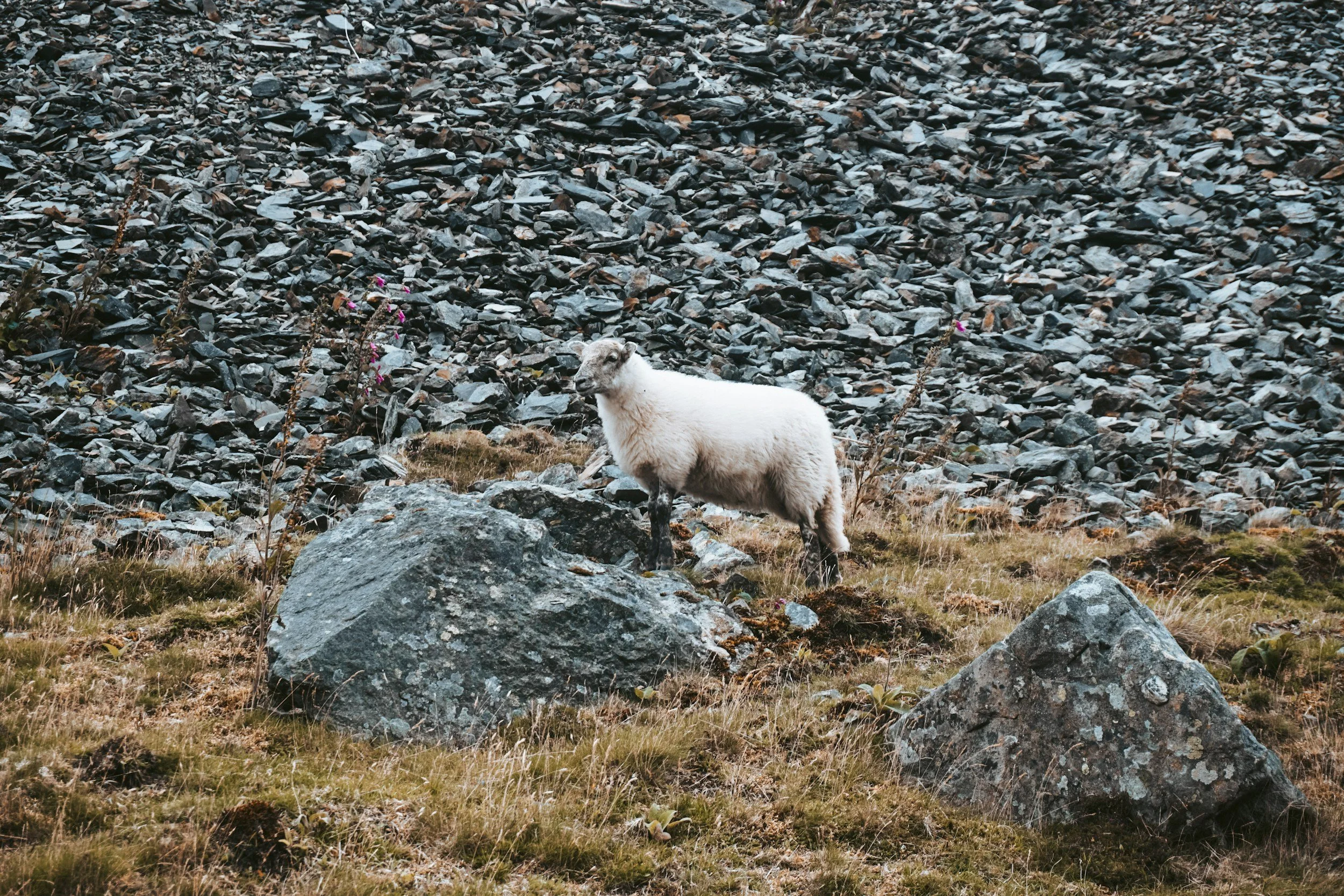
About ten minutes outside the small town of Rhayader in mid-Wales, the road suddenly opens into one of the quietest landscapes in the country: the Elan Valley.
Instead of villages and busy viewpoints, you’ll find a chain of huge reservoirs, old stone dams, and long empty roads running through the hills. The reservoirs were built in the late 1800s to supply water to Birmingham, and the entire valley still feels shaped by that history.
Once you leave Rhayader and start following the reservoir road, things get quiet quickly. Phone signal drops out in places. Sheep wander across the road. And the only real plan most people have here is to stop now and then and walk along the water.
Walking Around the Reservoirs
The easiest way to explore Elan Valley is simply to follow the road that runs past the dams.
The first one you reach is Caban Coch Dam, a huge curved stone wall that holds back the first reservoir just outside Rhayader. There’s a small viewpoint here where people usually stop to take in the view before continuing deeper into the valley.
Further along the road you reach Claerwen Reservoir, which feels even more remote. The surrounding hills are mostly open moorland, and it’s common to drive for several minutes without seeing another car.
You don’t need to plan a big hike here. Some of the nicest walks are simply along the reservoir edges or the old service roads used when the dams were built. They’re wide gravel paths where you can walk beside the water for as long or as little as you like.
Look up occasionally and you’ll probably spot red kites circling above the valley. They’re common in this part of Wales and easy to recognise once you know their forked tails.
Nights Under the Darkest Skies in Wales
Once the sun goes down, Elan Valley changes again.
The area sits inside the Cambrian Mountains Dark Sky Park, which means there’s almost no light pollution. On clear nights the sky fills with stars in a way that’s hard to see near cities.
You don’t need a telescope or a special viewpoint. Many people simply pull over at one of the reservoir lay-bys, turn off the headlights, and step outside for a few minutes.
Give your eyes ten minutes to adjust and you’ll start to see more and more stars appearing above the hills.
Where to Stay
Most visitors stay in Rhayader, which sits right at the entrance to the valley.
One of the best known places to stay nearby is the Elan Valley Hotel, just outside town on the road toward the reservoirs. The building dates back to the Victorian period and was originally used by engineers working on the dams.
If you’d rather stay somewhere quieter, the countryside around Rhayader has plenty of shepherd’s huts, cabins, and small cottages scattered through the hills. Many come with wood-burning stoves and outdoor seating, which is perfect if you want to sit outside and watch the night sky.
Places like Elan Valley naturally lend themselves to the same kind of slow, offline travel you’ll find at some of the best digital detox retreats across Europe, where the focus is on switching off and spending time in nature.
Getting There
The closest railway station is Llandrindod Wells, about a 20-minute drive from Rhayader.
From Rhayader, a single scenic road runs through the Elan Valley for roughly 20 miles, passing all of the main reservoirs along the way.
Public transport is very limited once you leave town, so having a car makes exploring much easier.
Before heading into the valley, it’s worth picking up food or supplies in Rhayader, as there aren’t many shops once you’re deeper in the hills.
Why Wales Works So Well for a Slower Kind of Travel
One of the things that makes Wales special is how easy it is to find quiet landscapes without going far off the map.
Within a few hours’ drive you can move between very different places: the sea cliffs of the Gower Peninsula, the mountain valleys of Snowdonia, the small harbour villages along the Pembrokeshire Coast, and the reservoir roads of the Elan Valley. None of them require complicated planning or long hikes to enjoy.
Many of the best experiences here are surprisingly simple. A morning walk along the Pembrokeshire Coast Path. A slow drive through the reservoirs outside Rhayader. Sitting on the grass above Three Cliffs Bay while the tide comes in. Watching the evening light settle over the mountains near Beddgelert.
Wales also rewards travellers who move slowly. Small villages still have local bakeries and pubs where people linger over lunch. Coastal paths connect one bay to the next. And the countryside is open enough that you’re rarely far from a quiet place to stop and take in the view.
If you’re looking for a trip that feels calmer rather than busier, Wales is an easy place to start. Not because it promises anything special, but because the landscapes naturally encourage calmness.
Sometimes the best travel memories come from places where nothing much is happening - just good air, wide views, and enough time to notice them.
If you’re based in the UK and looking for something closer to home, these quiet towns near London you can reach by train offer another easy way to step away from busy city life.
FAQs about visiting Wales
When’s the best time to visit Wales if you want some peace and quiet?
Late spring (May–early June) and early autumn (September) are usually spot on. The trails are calmer, the weather’s gentle, and you won’t be sharing every view with a crowd. Summer has its charm too, but things get busier… especially on the coast.
Do I really need a car to explore the quiet parts of Wales?
Honestly, yeah. You can get to a few spots by train or local buses, but if you’re looking for those off-the-radar lakes, tucked-away villages, or cliff paths with no one else around, a car gives you the freedom to take it slow and get off the beaten track.
Is it a good destination for solo travelers?
Definitely. Wales is safe, friendly, and perfect for solo wanderers. The guesthouses are welcoming, people say hello on trails, and it’s totally normal to eat alone in a café or sit by the sea doing nothing. It’s a great place to go when you need space without feeling isolated.
Are there wellness or mindfulness retreats?
Yes, but not in an overly commercial way. You’ll find yoga stays, eco-cabins with hot tubs, and even shepherd’s huts in the hills that offer digital detox without calling it that. Some places include optional meditation or forest bathing walks, but even just being out here feels like a reset.
What kind of mindful things can I do in Wales?
You don’t need a schedule. Take a long walk and leave your phone behind. Sit by a river and listen. Bring a good book and stay somewhere you can hear the wind at night. That’s the vibe.