The best base outside Venice for exploring Veneto by train

The easy answer would be Padua. And, for most people planning their first car-free trip around Veneto, that is probably the answer I would give.
But it depends surprisingly quickly on what you want to do once you get there.
If your week is some mixture of Venice, Vicenza, Verona, Bassano del Grappa and perhaps Ferrara, Padua gives you the most breathing room. You are not committing yourself too heavily to one side of the region, and if you change your mind halfway through the trip, you still have plenty of useful rail options. That flexibility is the main reason I would choose it as the default rather than because Padua happens to sit nicely in the middle of the map.
Treviso becomes much more tempting, though, if you land at Treviso Airport and your plans are mostly Venice, Conegliano, the Prosecco Hills and Belluno. In that case, choosing Padua because it looks more central can actually make your trip less convenient. Vicenza has its own very specific case too. If you are travelling for Palladio, Verona and the western side of Veneto, it can be a much smarter base than Padua, even though I would not choose it for a more scattered itinerary.
This is where these three cities get more interesting as bases than they first appear. They are close enough that almost everything looks possible on Google Maps. And technically, a lot of it is. But “there is a train” is not really the same thing as “I would happily do this journey three times during a five-night trip.”
That difference matters more than I think people realise when they book accommodation. A 35-minute train is lovely. A 35-minute train followed by a change, a poor Sunday service and a twenty-minute walk back to your hotel is a different proposition. The cheapest room can stop looking quite so clever once you have done that walk twice a day for most of the week. And reaching Conegliano by train still leaves you with the problem of getting into the Prosecco Hills themselves. Rail gets you very far in Veneto, but not always to the bit you came for.
So this comparison is really about how your trip will feel once you start repeating the journeys. I want to look at where each city gives you an easy day, where it starts becoming inconvenient, how much the station location should influence where you sleep, and when trying to cover both the Prosecco Hills and Lake Garda from one base stops being a sensible plan.
Padua is the best all-round answer. But there are plenty of Veneto trips where I would book somewhere else.

Before you choose a place to stay, look at where your days are going
The easiest way to choose badly is to open a map of Veneto, look for the city that appears most central and assume that will also be the most convenient. On paper, Vicenza can look like the obvious compromise and Padua can seem equally good for every direction. The railway map tells a different story. Padua and Vicenza sit on the main east-west line between Venice and Verona, while Treviso belongs to a different north-eastern axis towards Conegliano and Belluno. That is the bit of geography that explains almost every recommendation later in this guide, and it matters far more than how close the three cities look to one another on a road map.
I would start with the two or three places you most care about and group them by direction. Venice pulls you east. Verona and Peschiera del Garda pull you west. Conegliano and Belluno pull you north-east. Ferrara and Bologna pull you south. Once you do that, the base decision starts to feel much less vague. A trip built around Venice, Vicenza and Verona is spending most of its time on one corridor, so Padua or Vicenza immediately look stronger. A trip centred on Venice, Conegliano and Belluno points in another direction entirely, and Treviso becomes far more practical. The combination I would pay closest attention to is Verona or Lake Garda on one side and Belluno or the Prosecco Hills on the other. One cross-region day is fine. Repeating that journey is where a neat one-base plan starts to become tiring rather than clever.
A simple way to make the choice more realistic is to give repeated journeys extra weight. If Venice is just one day in a six-night trip, I would not let it choose the hotel for you. If you plan to go into Venice twice, head towards Verona another day and spend time in Vicenza as well, those repeated east-west journeys should matter much more than one possible excursion north. I would count airport days too, but only once at each end. Arriving easily with luggage is useful, especially after a late flight, but one straightforward transfer should not outweigh five days of inconvenient rail travel in the middle of the trip.
There are also a couple of places where the network can look simpler than it is. Castelfranco Veneto is an important junction and you will see several lines meeting there, but that does not mean every northern journey suddenly becomes direct or frequent. Some routes still require a change or depend on a service pattern that is much less useful than the railway diagram suggests. This is exactly why I would not choose a base simply because two places appear joined by a line. The difference between “connected” and “convenient enough to repeat” is one of the biggest traps in this part of Veneto.
One easy thing to mix up when you start searching trains is Venezia Mestre versus Venezia Santa Lucia. Santa Lucia is the station in Venice itself, right at the end of the causeway. Mestre is on the mainland and often shows up because you may need to change there. That is not a problem in itself, but it does make the journey a little less flexible, especially later in the evening or on a Sunday when there may be fewer useful connections. If I had the choice, I would always prefer a direct train to Santa Lucia rather than one that depends on a smooth change at Mestre, even if the total journey time looks almost the same.
Before I even looked properly at hotel prices, I would map out the places I knew I definitely wanted to visit and see which direction most of those days were pulling me. The trips you will repeat matter much more than the one place you might squeeze in. Once you do that, the base choice usually becomes a lot clearer than it ever does from simply asking which city looks most central.
Padua is the easiest base to get right
Padua is the city I would book if I knew I wanted to explore Veneto by train but hadn’t decided exactly what every day would look like yet. You can change your mind here without creating much trouble for yourself. Venice Santa Lucia is generally around 26 to 50 minutes away on a direct train, Vicenza roughly 18 to 30 minutes, Verona about 42 to 65 minutes, Ferrara around 55 to 70 minutes and Bassano del Grappa roughly an hour on the useful direct services. None of those journeys is particularly ambitious, and that combination is the important bit. You can spend one day east, another west and another heading north towards Bassano without feeling as though you chose your hotel for one specific excursion.
Padua is also easier to arrive in than you might assume from looking at Venice airports first. It is on the high-speed network, which is handy if you are coming from Milan, Bologna, Florence or Rome, and Venice Marco Polo Airport does not require you to drag your luggage through Mestre before beginning the trip. As of September 2026, Busitalia is running a direct coach between Marco Polo and Padua, with a published journey of about 45 minutes and services roughly every 40 minutes through much of the day. I would check it again before travelling, but it is a genuine point in Padua’s favour if VCE is your airport.
The part I would be much fussier about is where I stayed in Padua. Padova station sits north of the historic centre, and the difference between booking near the Scrovegni/Eremitani area and going much farther south is something you will notice once trains become part of the daily routine. The walk to Scrovegni is roughly 10 to 12 minutes; by the time you reach the central market area it is closer to 18 to 20. For a rail-heavy trip, I would search along that line from the station through Scrovegni and Eremitani towards the central squares, rather than being tempted too far towards Prato della Valle just because the accommodation looks nicer on the map. Twenty minutes does not sound like much until you are doing it with a day bag every morning and again after dinner.
Once you get down towards Piazza delle Erbe, Piazza della Frutta and Piazza dei Signori, Padua starts feeling less like somewhere you are simply sleeping between train days and more like a place you are happy to come back to. The markets are still part of everyday life around the squares, and the university keeps the centre busy well beyond the sightseeing hours. I like that in a base. If I have spent the day in Verona and get back around half past six, I want to be able to walk straight into dinner or sit somewhere for a while, not feel as though the day ended the second I stepped off the train.
Staying in Padua also makes the Scrovegni Chapel easier to fit in, because entry is timed. If the only slot left is early, late or just slightly awkward, it is much less of a problem when you are already staying in the city. It is a small detail, but these are the things that make a base easier to live with rather than just well connected on paper.
Where I would start hesitating is when Conegliano, Belluno and the Prosecco side of Veneto keep creeping into the plan. Conegliano is often around 1 hour 15 minutes to 1 hour 40 minutes away, usually via Mestre or Treviso, and Belluno is more of a commitment again. There are selected direct services, but other journeys need a change and the pattern is something I would always check for my own date. One Belluno day would not put me off Padua. Belluno, Conegliano and a Prosecco day all in the same trip probably would, because at that point I am spending too much time heading away from the part of the network Padua handles best.
For a first trip with a bit of everything in the plan, though, Padua still gives you the most freedom to change your mind as you go. The main compromise is that you will walk a little farther to and from the station. For me, that is much easier to live with than choosing a base that gives me awkward train journeys for half the week.

Vicenza makes more sense when the trip is really about Palladio and the west
Vicenza is the one I would choose only when the trip has a pretty clear western lean. If Palladio is a big reason you are coming to Veneto, and Verona or Lake Garda are also high on the list, Vicenza starts to look very convincing. If Palladio is just one afternoon among a week of Venice, Prosecco and Belluno, I would not plan the whole stay around it.
Vicenza is at its easiest on the main line. Verona is usually around 25 to 40 minutes away, Venice roughly 45 to 60 minutes, and Peschiera del Garda can be around 45 to 75 minutes depending on the train. Padua is close enough that I would barely think about it. If your plans are mostly Palladio, Verona and a bit of Lake Garda, that is a very comfortable part of Veneto to base yourself in.
Where it gets less neat is when you start assuming every nearby place will be just as simple. Treviso is not a quick little cross-region hop, and Bassano del Grappa is one of those places that looks easier on the map than it sometimes is in the timetable. Some trains are direct and convenient, others are slower or need a change. That is why I like Vicenza much more for a trip with a clear western focus than for one where the days are scattered all over the region.
I would also be quite picky about the hotel location. The station and bus station sit together south-west of the centre, so I would look along Viale Roma and into the western half of Corso Palladio. Piazza dei Signori is farther in, and Teatro Olimpico is around 1.4 kilometres from the station. If I knew I was catching trains most days, I would not keep moving farther east just because one hotel looked nicer on the booking site. Staying around western Corso Palladio gives you the centre one way and the station the other, which is a much easier setup when you are heading out early or coming back after dinner.
The Palladian villas are where Vicenza gets a little less simple. UNESCO’s listing includes the city itself and 24 villas spread around Veneto, so you cannot just stay in the centre and assume they will all be easy to reach. Villa La Rotonda and Villa Valmarana ai Nani both need a bit more planning, usually a bus-and-walk combination or a taxi, and opening days can vary. Staying in Vicenza definitely helps, but I would still plan those villa days properly rather than treating them like another easy city-centre stop.
I would also check the calendar before booking. Vicenzaoro can push hotel prices up quickly in January and September, which can make the whole “Vicenza might be better value” idea disappear pretty fast. I would also have a quick look at current rail works around Vicenza, especially if several of your day trips rely on the Verona-Padua line.
For me, Vicenza works best when Palladio, Verona and western Veneto are genuinely a big part of the trip. If Treviso, Conegliano and Belluno keep finding their way onto your list, I would take that as a sign that another base will suit the trip better.

Treviso starts making a lot more sense once the trip points north-east
Treviso is the one that can suddenly become the obvious choice when your flight lands at Treviso Airport and your main plans are Venice, Conegliano and the Prosecco side of Veneto. In that situation, travelling farther into the region just to sleep in Padua starts to feel a bit unnecessary.
Treviso Airport has direct public transport into the city and towards Treviso Centrale, which makes arrival much cleaner than routing yourself through Mestre first. That matters even more on the way home. If you have an early flight, I would much rather have a short connection from the city than spend the final night thinking about an extra transfer with luggage.
Treviso Centrale is also in a really handy spot if you are planning to use the train a lot. It sits just south of the old walls, and you can usually walk into the centre in around 10 to 15 minutes. I would look around Porta Altinia and Piazza Borsa, then towards the central squares, rather than being tempted by an airport hotel just because it sounds convenient. You still get an easy station walk, but you are also somewhere you will actually want to come back to in the evening.
This is also where Treviso starts to look very good on the timetable. Venice Santa Lucia is usually around 30 to 40 minutes away, and Conegliano can be as little as 18 to 25 minutes. Those are the sorts of journeys I would be perfectly happy doing more than once. Verona is a very different proposition. It is often around 1 hour 40 minutes to two hours or more, usually with a change, and Peschiera del Garda is generally two hours or more. I would happily do one longer day west. If I was planning several, I would start wondering why I had chosen Treviso as my base in the first place.
Belluno also fits much more naturally with Treviso, but this is one journey I would always check for my own dates rather than rely on an old route description. Services and connections in this part of the network have changed over time, and some older advice online is no longer especially useful. Treviso is still the strongest of these three bases for Belluno, with many journeys taking roughly 1 hour 40 minutes to two hours, but I would check the evening return before committing to the day.
The only part I’d be careful not to make sound too easy is Prosecco. Conegliano is simple enough to reach by train, but that is really where the next bit of planning starts. The wineries, villages and walking routes are spread through the hills, so you may still need a taxi, a tour or a bus that lines up with your day. Treviso gets you neatly to the gateway. It does not solve the whole Prosecco day for you.
Treviso is the one I’d choose when most of the trip is pointing towards TSF, Venice, Conegliano and northern Veneto. If Verona or Lake Garda start showing up more than once, though, I’d take that as my cue to shift the base west rather than spend several days criss-crossing the region.
And if Prosecco is becoming more than a day trip in your head, have a look at the weekend I’d actually plan in the Prosecco Hills.
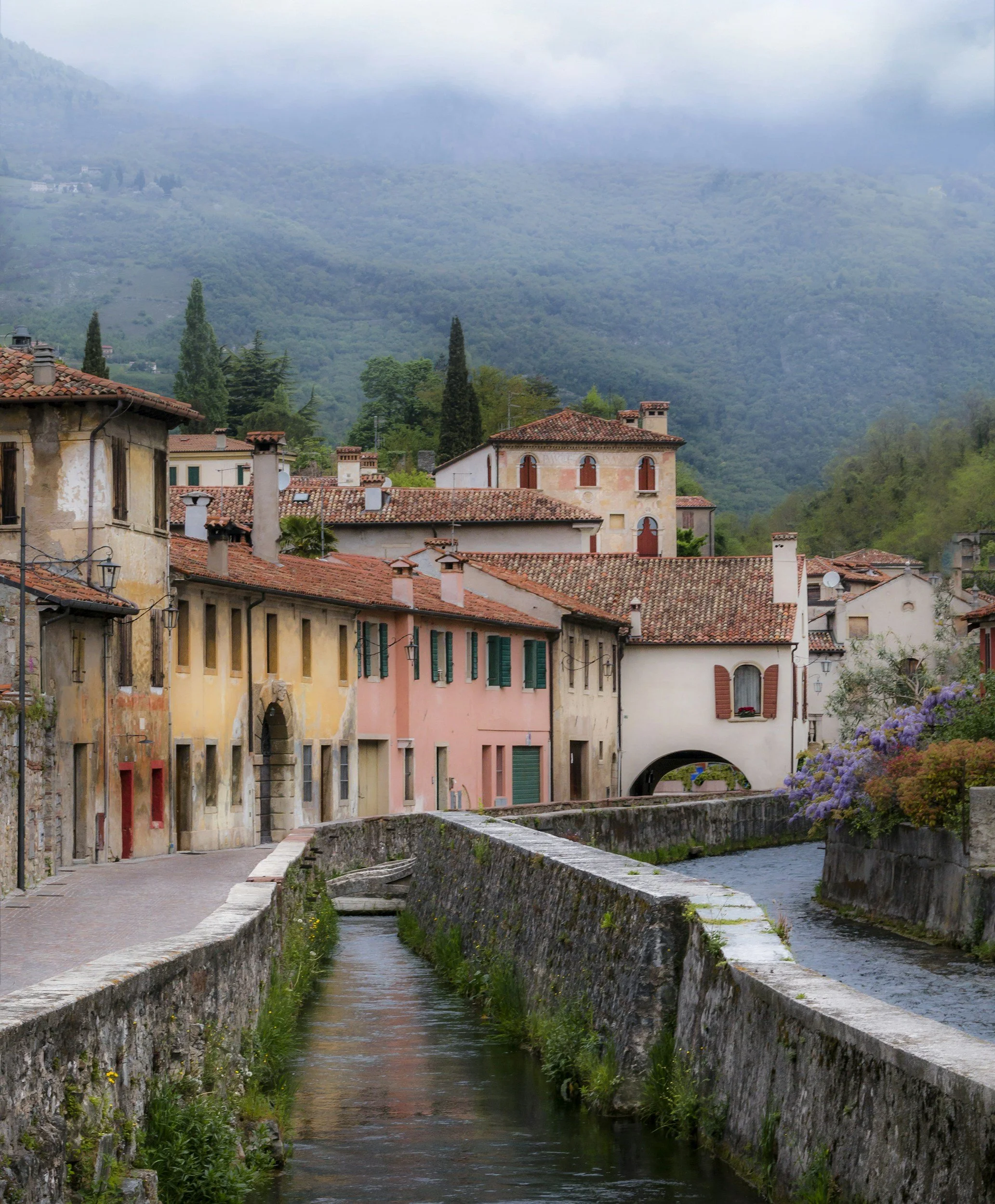
If you’re already wondering whether you should just stay in Conegliano instead, I went down that rabbit hole too. This is when I’d pick Treviso, and when I’d choose Conegliano instead.
The day trips look very different once you include the journey home
This is where I’d stop getting distracted by the fastest journey that happens to appear in the search results and ask something more useful: would I still be happy doing this after the walk to the station, a change, the journey back in the evening and then another train day tomorrow?
The times below are there to give you a realistic idea of the journey, not to promise one exact service. Timetables change, so I would always check your own dates before booking around them. I use three simple ratings. Comfortable means I’d happily do the trip more than once. Workable once means I’d do it for somewhere I really wanted to visit, but I would not want several days like it. Poor for repetition means the journey is possible, but if it keeps appearing in the itinerary, I’d probably choose a different base.
Venice is comfortable from all three bases. From Padua, Venezia Santa Lucia is usually around 26 to 50 minutes away and direct; from Treviso it is around 30 to 40 minutes and also direct; from Vicenza, roughly 45 to 60 minutes. That is why I would not let one Venice day decide the whole trip. If Venice is only part of the plan, all three cities handle it well enough. Padua and Treviso are the ones I would favour if you expect to go in more than once because the journey is short enough that it does not start eating into the day.
Verona is easy from Vicenza or Padua, and much harder to justify from Treviso. From Vicenza, you are usually looking at around 25 to 40 minutes; from Padua, roughly 42 to 65. From Treviso, it is more often around 1 hour 40 minutes to two hours or more, usually with a change. I would happily do that once if Verona was high on my list. I would not stay in Treviso and plan two Verona days, because by the second one I would probably be wondering why I had not based myself farther west.
Bassano del Grappa is a little less obvious. Padua is the easiest option, with useful direct trains taking around an hour. Vicenza looks as though it should be better because it is closer, but the timetable is not quite as neat as the map suggests. Some trains are quick and direct, while others take longer or need a change. I would still consider it very doable from Vicenza for one day, and Treviso is similar, with many journeys taking around one to one and a half hours via Castelfranco. Bassano is exactly the sort of place where I would check a few different departure and return times before deciding how easy the day really is.
Bassano can easily turn into one of those places you start considering for an overnight too. Before you decide, I’d read how I’d choose between Bassano and Asolo for a weekend because they give you two very different versions of this part of Veneto.
For Conegliano, Treviso is the easy winner. Direct trains can take as little as 18 to 25 minutes, so I would not think twice about doing that journey more than once. From Padua, it is more often around 1 hour 15 minutes to 1 hour 40 minutes, usually with a change, which is fine for one day but not something I would want to keep repeating. From Vicenza, journeys can stretch towards two hours depending on the connection, and at that point I would start questioning the base. And even from Treviso, the train only gets you as far as Conegliano. If the real plan is wineries, hill villages or walking in the Prosecco Hills, you still need to work out the last part of the day separately.
Belluno needs a bit more thought whichever base you choose. Treviso gives you the best starting point, but even then the journey is usually around 1 hour 40 minutes to two hours, so I would see it as a good one-off day rather than an easy repeat trip. From Padua, some services can get you there in just over two hours, while others need a change, so this is one I would always check properly for my own dates. From Vicenza, the journey can push well beyond two hours and involve changes. That is about where I would stop trying to make the day fit and choose a better base instead.
Ferrara is where Padua becomes especially useful. Direct trains are usually around 55 to 70 minutes, which feels completely reasonable for a day trip. From Vicenza, you are more often looking at around 1 hour 20 minutes to 1 hour 45 minutes with a change, so I would do it once if Ferrara really mattered to me. From Treviso, the journey is much longer and usually involves a change, so I would not build repeated Ferrara days around that base. It is outside Veneto, but that is exactly why I like Padua for a mixed itinerary: it gives you a few extra directions to play with when the trip starts spreading beyond the obvious Veneto stops.
And then there is Peschiera del Garda. Vicenza is the strongest of the three, at roughly 45 to 75 minutes depending on the train, so I would call that comfortable with the right service. From Padua, around 1 hour 10 minutes to 1 hour 35 minutes feels workable once. Treviso is usually two hours or more with a change, which is poor for repetition. If Lake Garda is taking up more than one day, though, I would probably stop trying to make any of these three fit and start looking at Verona as the western base instead. Four hours of train travel in a day is technically possible. I just would not choose to spend my holiday proving it.
The other thing I would check is what happens later in the day. A route can look easy at 09:00 and much less appealing at 20:30, especially on a Sunday. On the main Venice–Padua–Vicenza–Verona line there is generally more room to change your plans. On thinner routes, missing one useful train can leave a much bigger gap. So for any day where I wanted dinner before heading back, I would search the return journey first rather than assuming the evening service looks like the morning one.
High-speed trains can also shave time off some of the main-line journeys, particularly towards Verona, but I would see them as a nice option rather than the basis of the whole plan. Frecciarossa and Italo services are train-specific and can cost more, so the cheapest, most flexible day may still be the regional train rather than the fastest one on the screen.
And finally, the train only tells you how quickly you reach the station. Belluno may still be the start of the day rather than the final destination. Conegliano does not put you beside a winery. Palladian villas outside Vicenza come with their own buses, walking and opening-day problems. Those are the details I would look at before deciding that a 60-minute train automatically equals an easy day trip.

I’d be quite picky about where the hotel is
Once I had picked the city, I would not just sort the hotels by price and choose the nicest room. For this kind of trip, where the hotel sits on the map matters almost as much as the hotel itself.
You will probably be walking to the station most days, sometimes early and sometimes later than you meant to after dinner. I would want to be somewhere between the station and the part of town I would naturally spend my evenings in. Not right beside the tracks, but not so far into the centre that every train day comes with another long walk at either end.
In Padua, I would look between the station and the central market squares, around Scrovegni and Eremitani. The Scrovegni area is only around 10 to 12 minutes from the station, while the market squares are closer to 18 to 20. Once you start moving farther south towards Prato della Valle, the hotels may look nicer, but you are also adding that walk to every single train day. Twenty minutes never looks like much on Google Maps. It feels rather different in July when you have already been out since breakfast and still have to do it again after getting off the train.
Vicenza is a little easier to judge. I would keep the search around Viale Roma and the western half of Corso Palladio. The station and bus station sit together just outside the centre, so you can still get to Piazza dei Signori easily in the evening without making the station annoying to reach the next morning. If I knew I was using trains most days, I would not be too tempted by a hotel right at the eastern end of the historic centre.
And Treviso is probably the easiest of the three when it comes to hotel location. Treviso Centrale sits just south of the walls, and the useful part of the centre is only around 10 to 15 minutes away. I would keep my search around Porta Altinia, Piazza Borsa and the streets leading into the centre. I also would not choose an airport hotel just because I was flying from TSF. It might make one morning slightly easier, but I would rather have the rest of the trip work better.
The extra walking adds up surprisingly quickly once you start using the station every day. Say one hotel is twelve minutes farther away than another. Over five train days, that is ten extra walks, or about two hours of the trip spent just getting between the hotel and the platform. Maybe the room is €20 cheaper per night and saving €100 over five nights feels completely worth it. I might make the same choice. I would just rather see the trade-off clearly before deciding I had found the better deal.
I would also ignore any blanket claim that Padua, Vicenza or Treviso is always cheaper than Venice. Hotel prices move around far too much for that. Vicenzaoro can push Vicenza rates up sharply, Padua has its own busy fair periods, and big events in Venice can spill demand into the surrounding rail cities. I would compare all three for the exact same dates, with roughly the same room standard and cancellation terms, and see what the difference really looks like for that particular trip.
That is also why I think where you put the hotel pin is more useful than a list of ten hotel names. Hotels change, prices change and the best-value property this year might not be the best-value one next year. The useful stretch between the station and the part of town you will actually want to come back to in the evening is much more dependable.

When I’d stop trying to make one hotel cover the whole trip
I really do like unpacking once and being done with it, so I would not split a short Veneto trip just because it makes the map look tidier. For three nights, I would stay put and accept one slightly awkward day trip. Moving hotels sounds harmless when you are planning at home, but in reality it means checking out, doing something with your luggage, timing another train around that, then checking in again. On a short trip, I would rather spend those hours somewhere I came to see.
Once the trip gets to five, six or seven nights, I would start looking at it a little differently. If the same long journey keeps appearing twice, that is usually the point where I would stop trying quite so hard to make one base do everything. A week that includes Verona or Lake Garda in one direction and Conegliano, Belluno or the Prosecco Hills in the other is a good example. You can make it work from one place, but eventually you are spending a lot of time on trains just to avoid changing hotels once.
For a wider trip, I would probably split the week between Padua and Treviso. A few nights in Padua gives you the more mixed part of the itinerary, then you can move east and be much better placed for Conegliano, Belluno and the Prosecco side of Veneto. If Palladio and Verona matter more, I would be just as happy with Vicenza and Treviso. The important thing is that the move needs to save you enough time to justify packing up. Ten or fifteen minutes here and there would not be enough for me. Avoiding two long return journeys probably would.
What I would not bother doing is moving from Treviso to Conegliano just to make the trains easier. They are already close enough that changing hotels creates more hassle than it solves, and it does not fix the awkward part of a Prosecco day anyway. You still need to work out how to get from Conegliano station into the hills. I would stay in Treviso and spend that energy on getting the last part of the day right.
If you do want to wake up in the hills rather than keep day-tripping from Treviso, I’ve already worked through where I’d stay in the Prosecco Hills without a car, including the places that are much easier than they first look.
The airport is where I would make an exception. If I landed late at Treviso Airport, or had an early flight that meant setting an alarm for some horrible hour, I would happily spend the first or last night in Treviso even if the rest of the trip was based somewhere else. That kind of hotel move solves a real problem. I am much more willing to repack for an easier arrival or departure than just to save a few minutes on one day trip.
And if Lake Garda starts becoming a bigger part of the trip, I would stop trying to make the original base stretch that far. Once Peschiera is more than a one-off and you are adding extra time around the lake, I would move the western part of the trip to Verona. At that point, keeping Padua or Vicenza as the base starts creating more travel than it saves.
For a longer trip, I would be even more open to using two or three bases. Veneto is big enough, and the rail lines pull in different directions enough, that a couple of well-placed stays can make the trip feel much easier than spending every evening travelling back to the same hotel just so you only had to unpack once.
And if the whole idea of getting off the train somewhere smaller than Venice is what brought you here, I’ve saved more northern Italian towns I’d happily plan a train trip around
The last check I’d make before booking
By this point, I would stop comparing Padua, Vicenza and Treviso in isolation and look at the trip I had actually built, because that is usually where the answer becomes much more obvious. I would think about the two days I cared about most and ask myself which base makes those days easiest to enjoy, not just technically possible. If one of them comes with a long journey, a weird change or an annoyingly early last train back, that would matter more to me than shaving ten minutes off a day I was only half interested in anyway.
Then I would do one last practical check before booking: make sure the hotel is sitting where I want it on the map, look up the return journey for the trickiest day on my actual travel date, and check that some event has not suddenly turned my supposedly good-value option into the most expensive city of the three. If everything still looks straightforward after that, I would book it and stop tinkering with the plan. And if I found myself having to explain to myself why a two-hour journey with a change was “really not that bad”, I would probably take that as my answer too.

FAQs about Veneto by train
Which Veneto base is best if I want Venice, Verona and the Prosecco Hills in the same trip?
That is exactly the sort of itinerary where I would be careful about choosing one base just because it looks central. Padua is probably the best single-base compromise, because Venice and Verona are both easy enough and Conegliano is still possible for one day.
But if Prosecco is more than a one-off, I would split the trip. A few nights in Padua followed by a few in Treviso would save a lot of unnecessary crossing back and forth.
Is Treviso still a good base if I am flying into Venice Marco Polo rather than Treviso Airport?
Yes. I would not rule Treviso out just because the airport is VCE rather than TSF. The airport matters once at the beginning and once at the end, while the day trips matter every day in between.
If the rest of the trip is mostly Venice, Conegliano and northern Veneto, I would still choose Treviso and simply plan the airport transfer properly.
Should I stay in Conegliano instead of Treviso for the Prosecco Hills?
Only if the Prosecco Hills are becoming a major part of the trip. Conegliano gets you closer to the hills, but it does not remove the last-mile problem. Wineries and villages are still spread out, so you may need a taxi, bus, tour or driver once you arrive.
If I also wanted Venice, evenings in a larger town and easier rail connections, I would stay in Treviso. If I wanted several days focused almost entirely on Prosecco, I would start looking at Conegliano or staying in the hills themselves instead.
Are Sunday train journeys around Veneto much worse?
Not necessarily, but I would check them rather than assume the weekday pattern carries over. The main Venice–Padua–Vicenza–Verona line usually gives you more flexibility, while thinner routes can have wider gaps between useful services.
If I had a Sunday day trip that really mattered, I would check the return journey first, especially if I wanted to stay for dinner. That is often more revealing than looking at the fastest morning train.
Is Bassano del Grappa easier from Padua or Vicenza?
The map makes Vicenza look like the obvious answer, but I would not decide from geography alone. Padua often has a very useful direct pattern, while Vicenza can be excellent on some departures and less convenient on others.
Bassano is one of those places where I would check the actual timetable for the day I wanted to go rather than assume the closest city automatically gives me the easiest trip.