
Avignon or Nîmes? Where I’d stay without a car
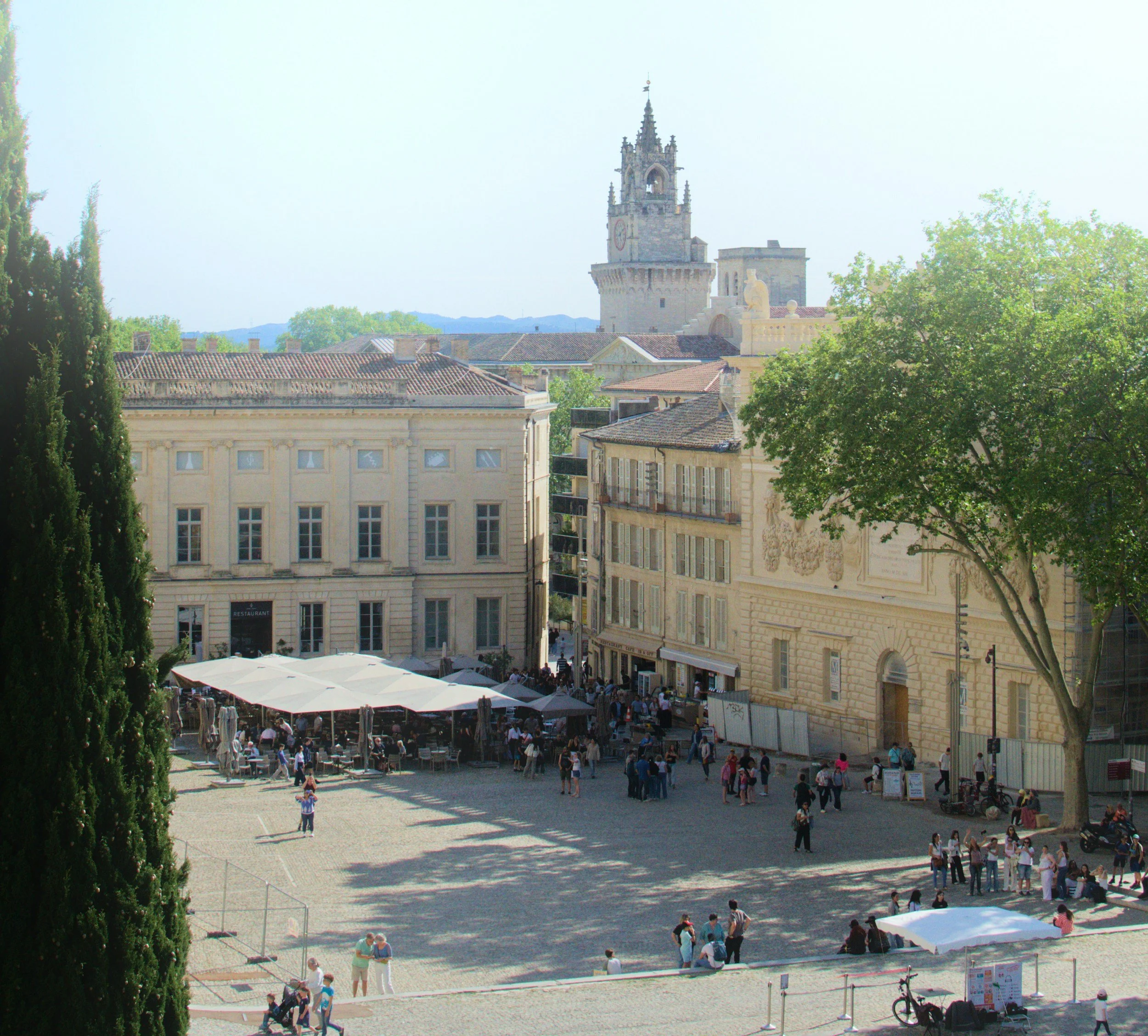
If you're planning a few days in southern France without a car, Avignon and Nîmes are both lovely places to consider. They're only about half an hour apart by direct train, both have beautiful historic centres, and both offer the sort of days I particularly like the idea of in France: starting at a food market, wandering through old streets, finding somewhere good for lunch and not feeling the need to fill every afternoon with sightseeing.
But although the two cities are close, choosing one over the other can give you a surprisingly different trip.
I'd lean towards Avignon for a first visit, especially if you're hoping to see a little more of Provence. You could spend a Sunday browsing the antiques and food stalls in L'Isle-sur-la-Sorgue, take the train to Arles or make a day of visiting Saint-Rémy-de-Provence. And I like that Avignon has plenty to enjoy without leaving town, too. There's Les Halles for a morning of food shopping, the little streets around Place des Corps Saints and Rue des Teinturiers, and enough cafés and restaurants that you don't have to plan every meal in advance.
If you're going specifically for the antiques, it's worth having a little plan before you arrive. I've put together a guide to spending Sunday in L'Isle-sur-la-Sorgue, with more on the market, the antiques dealers and how to enjoy the town beyond the stalls.
Nîmes, though, is a city I'd be very tempted to choose for its own sake. Its Roman buildings are impressive, of course, but what appeals to me just as much is how easily you can spend a day between Les Halles, the independent shops around the old centre and Jardins de la Fontaine. You could quite happily spend the morning in town before heading towards the gardens, without making a single museum booking. And with Montpellier a short train ride away and the Saturday market in Uzès within reach by bus, there's plenty to explore beyond the city as well.
For a three- or four-night trip, I wouldn't bother changing hotels between the two. You can visit one from the other easily enough, and I'd much rather have a few evenings to get to know the streets around my accommodation than spend part of a short holiday checking out of one hotel and into another.
I also think it's worth being a little selective about day trips here. Southern France has so many appealing towns that it's tempting to plan a different excursion every day, but some of the nicest parts of a trip can be the hours you haven't planned. A market that takes longer than expected, a lunch you don't particularly want to finish, or finding a favourite little square and going back the following morning for coffee.
So while Avignon would be my starting point for a first car-free trip around Provence, I wouldn't book it automatically. If the places you're most interested in are around Nîmes, or you simply prefer the idea of spending your evenings there, that's a very good reason to choose it instead.
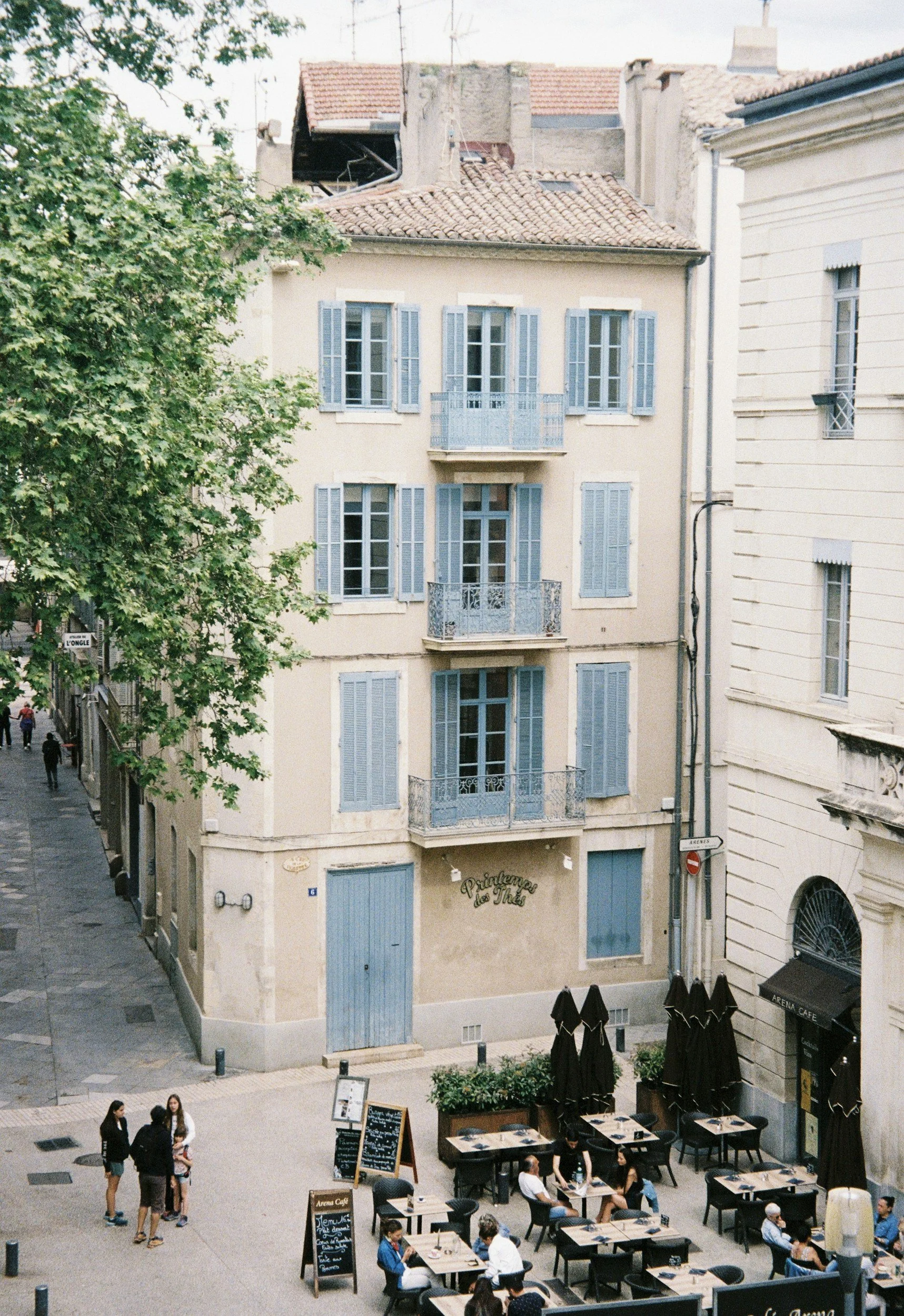
If you're still comparing accommodation around the region, I've also put together a guide to lovely places to stay in Provence without a car. It might be useful if you've found a beautiful hotel outside Avignon but aren't quite sure how practical the location will be.
Why I'd choose Avignon for a few days in Provence
One of the things I really like about Avignon as a base is how many different kinds of days you can have without changing hotels. You could spend Sunday browsing antiques in L'Isle-sur-la-Sorgue, visit a Roman theatre in Orange the following day, then head towards the Alpilles for a completely different side of Provence.
But I'd be quite happy spending a day or two in Avignon itself. There are food markets, little squares, wine bars and plenty of streets worth exploring beyond the famous Palais des Papes. And after a day out, I think it's nice to come back somewhere that still has something to offer, even if all you feel like doing is finding a good restaurant and having a glass of wine.
Start with the food markets and see where the morning takes you
I'd begin at Les Halles, Avignon's covered food market on Place Pie. It's where you'll find around 40 traders selling cheeses, fresh vegetables, olives, charcuterie, bread and prepared food. Even if you're staying in a hotel without a kitchen, it's worth going just to browse and pick up a few things for lunch.
Look out for fougasse, the Provençal flatbread that often comes with olives, and some good tapenade to go with it. Depending on the season, you'll also find beautiful local fruit and vegetables, regional cheeses and all sorts of things that are difficult to resist when you're travelling somewhere with such a strong food culture.
Les Halles is open Tuesday to Sunday, usually until early afternoon, but I'd go in the morning while there's still plenty to choose from. You can't really miss the building, thanks to its enormous green wall covered in living plants.
If you're there on a Saturday, I'd also make time for the outdoor market around Place des Carmes. The stalls stretch through the surrounding streets towards Place Pie, selling produce, food and other goods between roughly 8am and 1pm. It's a lovely excuse to spend the morning wandering around the old town without having anywhere particular to be.
Sunday brings a flea market to Place des Carmes, with second-hand and vintage finds. If you enjoy rummaging through old objects, books and whatever else turns up on the stalls, it's another reason not to leave Avignon too early in the morning.
After the market, I'd head towards Place Saint-Didier or Place des Corps Saints for coffee. Both are good areas to explore if you want to get away from the restaurants immediately surrounding the palace.
Le Saint Chocolat, near Place Saint-Didier, is one place to look into for coffee, pastries or breakfast. And around Place des Corps Saints, you'll find several cafés and restaurants with tables overlooking the square. I think it's a nice part of Avignon to get to know, especially if you're staying nearby and want somewhere to come back to during the trip.
From there, you can walk along Rue des Lices towards Rue des Teinturiers, which is probably one of the streets I'd be most interested in exploring.
It's a cobbled street running beside a narrow canal, with old water wheels left from the days when textile production was an important part of Avignon's economy. There are little theatres, restaurants and cafés along the way, and it's quite different from the large stone buildings and busy squares around the Palais des Papes.
I'd also wander towards Place Saint-Pierre, tucked away behind the main palace area. The small square has a beautiful church façade and old buildings around it, and it's worth including if you're already exploring that part of town.
Of course, I'd still visit the Palais des Papes on a first trip. It's one of those buildings where the size alone makes it interesting, especially once you're inside the enormous halls and courtyards. But you don't necessarily need to devote the whole day to monuments.
If you enjoy art, the Musée du Petit Palais nearby is worth considering too. It has a collection of medieval Italian and Provençal paintings, and admission is free. I particularly like having a museum option that doesn't need to become a major planned activity. You can spend some time there and still have most of the day for everything else.
And definitely try some local wine while you're here
Avignon is a great place to get to know the wines of the southern Rhône Valley, and you don't need to visit a vineyard to enjoy them.
I'd make time for a wine bar one evening and try something local, especially if you're interested in discovering a few wines beyond the familiar Côtes du Rhône.
Look for names such as Gigondas, Vacqueyras, Cairanne and Rasteau on the wine list. They're all from the surrounding Rhône wine region, and it's interesting how much the styles can vary between neighbouring appellations.
Châteauneuf-du-Pape is probably the most famous name nearby, particularly for its red wines. But I wouldn't automatically order the most expensive glass. I'd rather ask for a recommendation and try something from a smaller appellation that I might not come across at home.
Le 17 Place aux Vins, near Place des Corps Saints, is one wine bar worth looking into, especially if you like the idea of having a glass outside on a square. Another option is the Carré du Palais, opposite the Palais des Papes, which has a strong focus on Rhône wines and also hosts wine-related workshops.
And for something sweet, keep an eye out for papalines d'Avignon. They're little pink chocolates filled with an oregano-based liqueur, which sounds like a slightly unusual combination, but they're a local speciality and rather more interesting to take home than another lavender souvenir.
The day trips I'd actually make time for
With four or five nights in Avignon, I wouldn't try to visit somewhere new every day. I'd probably choose two proper outings, depending on which market days fall during the trip, and leave the rest fairly open.
L'Isle-sur-la-Sorgue would be one of my first choices, especially if I could go on a Sunday.
The town is known for its antiques dealers, and there are shops and galleries throughout the centre, alongside the canals and old water wheels. Sunday is when the food and antiques markets bring everything together, so it's a good day to visit if browsing is a big part of the appeal.
I'd start with the food market, perhaps pick up something for breakfast or lunch, then spend some time among the antiques shops and along the canals. You don't need to be particularly serious about antiques to enjoy looking around, although I'd allow a few hours if you love old furniture, ceramics, prints and second-hand finds.
One thing to keep in mind is that Sunday can get busy. If you're more interested in the canals, little shops and cafés than the market itself, I'd consider another day. The town also has a Provençal market on Thursday mornings, which could be a nice alternative depending on your plans.
It's only around half an hour from Avignon by direct regional train, so you can have a proper morning there without feeling as though you've spent half the day travelling.
For something completely different, I'd consider Orange.
Its Roman theatre is one of the best-preserved in Europe, and the enormous stage wall is quite remarkable. The theatre is within walking distance of the station, which makes it a fairly straightforward outing.
I wouldn't necessarily spend a full day in Orange unless I was especially interested in Roman history. You could visit the theatre, explore the centre, stop somewhere for lunch and still be back in Avignon with time to enjoy the evening.
Then there's Saint-Rémy-de-Provence, which I'd choose for a more traditional small-town day.
The town has narrow streets, little shops, cafés and restaurants, with the Alpilles hills just outside the centre. It's also associated with Vincent van Gogh, who stayed at Saint-Paul de Mausole, but I'd be just as interested in wandering around town and browsing the shops selling olive oil, regional food and homewares.
If you're visiting on a Wednesday, there's a large market in the morning, and that would probably be my preferred day. It's a good opportunity to look for Provençal produce and local specialities, perhaps buy something for a picnic or just enjoy a slower morning before lunch.
Saint-Rémy is reachable by direct bus from Avignon. It does take a little more planning than the train outings, but it's perfectly reasonable as a day trip if the bus times suit you.
Nearby Les Baux-de-Provence is another place worth considering, especially for its medieval village perched above the surrounding landscape. There are limited public buses from Avignon on certain days, including outside the summer season, although I'd check the return carefully before committing to it.
Personally, I wouldn't feel the need to squeeze both Saint-Rémy and Les Baux into one day. They're quite different places, and I'd rather spend a proper morning in Saint-Rémy, have a long lunch and enjoy the town than spend most of the afternoon keeping an eye on the time.
If wine is one of your main interests, you could also consider an organised outing to the vineyards around Châteauneuf-du-Pape. The village and surrounding wine estates make an interesting contrast to Avignon's wine bars, and a tour with transport included can be useful if you'd like to visit more than one producer without driving.
What makes Avignon appealing to me is that you can have all these different options without needing to plan an especially busy holiday. I'd probably end up choosing a market town, one more cultural or countryside outing, and then spend the rest of the time in Avignon.
There are enough streets to explore, places to eat and little corners to discover that staying in town for a day wouldn't feel like missing out on Provence. It would be part of enjoying it.

Why I'd be tempted to stay in Nîmes instead
Nîmes tends to be introduced through its Roman history, which is understandable when you have a 2,000-year-old amphitheatre sitting right in the middle of the city. But I think there's a lot more to enjoy here than spending a day visiting ancient monuments.
What appeals to me about Nîmes is how much you can do on foot. The old centre is compact, with food markets, independent shops, little squares and some beautiful gardens all within easy reach of one another. You could spend a morning browsing the market, have lunch somewhere around the Écusson (the historic centre), then walk towards Jardins de la Fontaine in the afternoon.
And although Avignon has more of the connections I'd choose for a wider Provence trip, Nîmes has some really interesting places within reach too, particularly if you're drawn towards the Gard, Montpellier or the coast.
Start at Les Halles, then explore the old centre
I'd begin the morning at Les Halles de Nîmes, the covered food market on Rue des Halles. It's open every morning, including Mondays, which is useful if you're visiting at the beginning of the week when quite a few museums and smaller businesses may be closed.
The market has a strong regional food identity, and it's worth having a look around even if you're not planning to cook anything.
One speciality to look for is brandade de Nîmes, traditionally made from salt cod and olive oil. You'll often find it sold ready to eat or prepared for taking home, and it's one of the foods most closely associated with the city.
Another local favourite is petit pâté nîmois, a small pastry traditionally filled with veal and pork. You might also come across Picholine olives, which have strong connections to the Gard, along with olive oils, cheeses and wines from the surrounding region.
If you're interested in wine, keep an eye out for Costières de Nîmes, the local appellation known for red, white and rosé wines. It's a nice one to try while you're here, particularly if you've spent some time in Avignon discovering the wines of the southern Rhône.
I'd go to Les Halles before lunch, when there's still a good selection on the counters. The market generally closes at 1pm, and individual traders may keep slightly different hours.
From there, I'd wander towards Place aux Herbes, one of the squares in the old centre, close to the cathedral. This part of Nîmes is especially appealing for exploring without a plan, with small streets leading between shops, restaurants and little squares.
Rue Fresque is another street I'd make time for. It's part of the old shopping area, with independent boutiques and businesses, and is a good place to browse if you enjoy discovering smaller shops rather than spending an afternoon on the main shopping streets.
You could easily spend a couple of hours around this part of town, especially if you stop for coffee or lunch along the way.
I'd also walk past the Maison Carrée, the remarkably well-preserved Roman temple in the centre of Nîmes. It's one of those buildings that makes the city's history feel very present, particularly because it's surrounded by the streets and buildings of an ordinary modern city.
Opposite the temple is Carré d'Art, the contemporary art museum designed by Norman Foster. The contrast between the modern glass building and the ancient temple is interesting in itself, and I'd consider visiting the museum if I wanted something different from Roman history.
Its collection focuses on modern and contemporary art, so it makes a nice alternative to spending the whole trip visiting archaeological sites. You can also visit the museum independently of the city's other monuments, rather than buying a combined sightseeing ticket.
An afternoon in Jardins de la Fontaine
One place I'd definitely make time for is Jardins de la Fontaine, which is a little different from the old streets and busy squares around the centre.
The gardens were created in the eighteenth century around the site of an ancient spring, and they're among the earliest public gardens in Europe. You'll find formal paths, stone terraces, fountains and classical statues in the lower gardens, with the landscape becoming much more wooded as you head uphill.
I'd probably begin with a walk through the lower gardens, which are easy to enjoy without making it into a long excursion. It's a good place to spend some time outdoors after exploring the market and old town.
If you're feeling energetic, you can continue uphill towards Tour Magne, a Roman tower overlooking the city. The walk is steeper than the lower part of the gardens, but it gives you a chance to see a completely different side of Nîmes, with wooded paths and views across the surrounding rooftops.
You don't need to make the climb to enjoy the gardens, though. I'd happily spend an hour in the lower part, then head back towards the centre for a coffee or an early evening drink.
One small thing worth knowing is that the gardens have opening hours, and they close earlier during the autumn and winter months. So if you're visiting outside summer, I'd plan this walk for the afternoon rather than leaving it until after dinner.
And if you enjoy Roman history, the Arènes de Nîmes are obviously worth considering too. The amphitheatre is still used for concerts and events, which is quite remarkable given its age. I'd check the visiting arrangements for your dates, particularly if you're travelling during one of the city's ferias or a major event.
But you don't have to see every Roman monument to have a good stay in Nîmes. I'd be quite happy with a morning at the market, some time exploring the Écusson, a visit to Carré d'Art and an afternoon in the gardens.
The day trips that make Nîmes particularly appealing
If I were staying in Nîmes for four or five nights, Uzès would be one of the first places I'd look at visiting, especially if my trip included a Saturday.
It's a beautiful old market town in the Gard, with narrow streets, stone buildings and the lovely Place aux Herbes at its centre. Saturday is the main market day, when stalls spread through the square and surrounding streets selling local produce, food, clothing and other goods.
I'd go for the market, then allow plenty of time to explore the town afterwards. There are cafés and restaurants around Place aux Herbes, and it's the sort of place where I'd rather stay for lunch than head straight back once the market stalls begin packing away.
Wednesday is another market morning in Uzès, although it's a smaller producers' market rather than the larger Saturday event.
You can reach Uzès by bus from Nîmes, with a useful Saturday morning service. It's worth planning the return in advance, but a market morning and lunch make a very reasonable day out.
If you're planning to visit on market day, I've written a more detailed guide to Uzès, including the streets, cafés and little places worth exploring once you've finished browsing the stalls. I'd definitely leave some time for the town itself rather than heading straight back after the market.
Montpellier is another strong reason to choose Nîmes, particularly if you like the idea of combining a smaller historic city with a livelier university city.
It's around 35 minutes away on a direct regional train between Nîmes Centre and Montpellier Saint-Roch, so you can arrive close to Montpellier's historic centre without needing another long journey across town.
I'd spend the day exploring the old streets around Place de la Comédie and the Écusson, browsing independent shops and stopping for lunch somewhere away from the busiest central square.
Montpellier has a different character from Nîmes, with a larger student population, plenty of cafés and a strong contemporary cultural scene. If you enjoy cities where you can spend hours walking between bookshops, cafés, galleries and old streets, it's an easy day trip to add.
Then there's the possibility of heading south towards Aigues-Mortes and Le Grau-du-Roi.
This is one of the more interesting differences between staying in Nîmes and Avignon. Nîmes has a direct regional railway towards the coast, passing through the Camargue landscape and reaching Aigues-Mortes before continuing to Le Grau-du-Roi.
Aigues-Mortes would be my choice if I wanted another historic town. Its medieval walls surround a compact centre, and the town sits in a completely different landscape from the inland cities, with salt marshes and lagoons nearby.
You can explore the streets inside the walls, walk along the ramparts if they're open, and spend some time having lunch in town. It's quite an interesting contrast after a few days among the stone buildings and Roman monuments of Nîmes.
If you continue to Le Grau-du-Roi, you reach the Mediterranean coast, with its fishing-port heritage and beaches. I'd consider it if I wanted a day beside the sea rather than another historic-town visit.
The trains on this branch aren't especially frequent, so it's worth choosing your day carefully. And while the railway gets you to Aigues-Mortes and Le Grau-du-Roi, it doesn't mean you can easily reach every nature reserve or wildlife-watching area in the Camargue independently.
What I particularly like about Nîmes is that you could spend one day browsing the market in Uzès, another exploring Montpellier, and perhaps head towards the coast if the weather is nice. It's a lovely mix of places to visit, without having to pack up and move somewhere new.
And I'd make sure to leave enough time for Nîmes itself. Between the food market, old streets, gardens and museums, there's plenty to fill a day without making any plans beyond where to go for lunch. If those are the things you enjoy most about travelling, I'd be very tempted to stay here rather than in Avignon.
The day trips that could make the decision for you
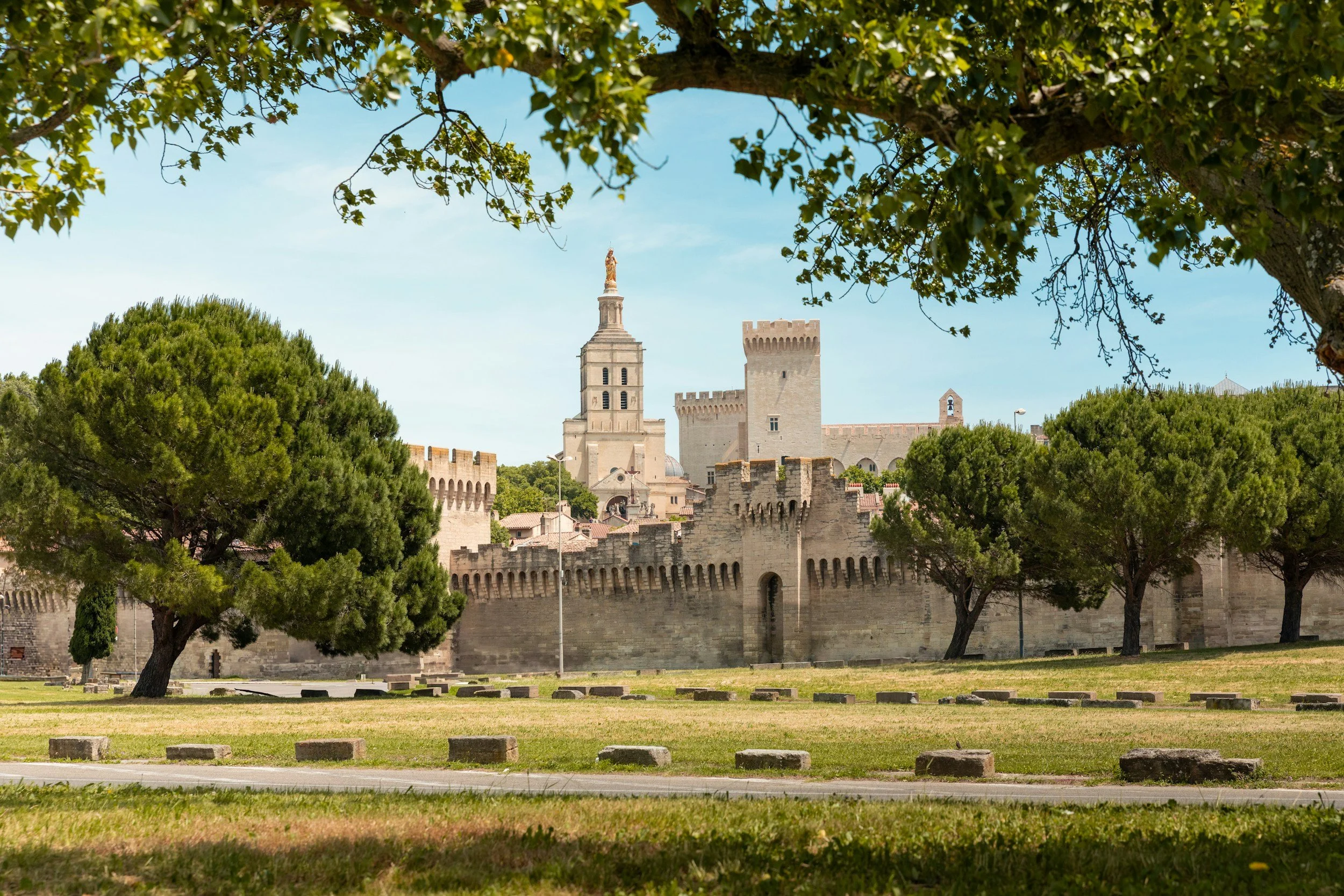
If you've been looking at Avignon and Nîmes on a map, you might be wondering whether it really matters which one you stay in. They're only about half an hour apart by train, and several of the places you'll probably want to visit are within reach of both.
But I'd spend a little time thinking about the outings you're most excited about before choosing a hotel. There's a difference between somewhere being possible to visit and somewhere being easy enough that you can enjoy the day without constantly checking when you need to leave.
And personally, I'd rather have time for a proper lunch or an extra wander around a market than spend it waiting for a connecting train.
Arles is an easy day out from either city
Arles would be near the top of my list from either base. It's a city I'd allow more time for than you might initially think, especially if you enjoy photography, art and wandering through old streets.
The Roman amphitheatre is an obvious place to start, but I'd also explore the streets around Place du Forum, where you'll find cafés and restaurants among the old buildings. There's the Fondation Vincent van Gogh if you're interested in art, and the Saturday market is worth considering if your dates line up.
I'd be tempted to plan a late lunch in Arles rather than trying to fit in another town afterwards. There's enough to enjoy between the Roman buildings, smaller streets and galleries, and it seems a shame to rush through it just because the train journey is short.
From Avignon Centre, direct trains can take around 16–20 minutes, making Arles an especially easy outing. From Nîmes Centre, the direct journey is generally around half an hour, which is still perfectly reasonable.
The only thing I'd watch from Nîmes is which train you choose. Some services go directly, while others involve a much longer journey with a connection through Avignon. It's worth looking at the actual departures rather than assuming every train takes the same amount of time.
I certainly wouldn't choose Avignon over Nîmes just because it saves you a few minutes on a single trip to Arles. If Arles is the only excursion you've decided on, I'd be much more interested in which city you'd prefer to spend your evenings in.
I'd plan Uzès and Pont du Gard around the right day
Uzès is one of those places I'd happily organise part of a trip around, especially if I could be there for the Saturday market.
The stalls spread around Place aux Herbes and into the surrounding streets, and I'd want enough time to browse properly before settling somewhere for lunch. Even after the market begins packing away, there's the old town to explore, with its stone buildings, small shops and cafés.
You can reach Uzès by direct bus from both Avignon and Nîmes, so it's not exclusively a Nîmes day trip, despite being in the Gard.
From Nîmes, bus 152 has a useful Saturday morning service, getting you there early enough for the market. Avignon's bus 115 also has morning connections to Uzès, so you don't need to rule it out if you're staying on the other side.
What I would avoid is assuming the same plan works every day. Wednesday has a smaller producers' market, while Sunday bus services are quite different. If Uzès is one of the places you're really looking forward to, I'd choose the market day first and arrange the rest of the trip around it.
Pont du Gard is a little different. It's one of the places that looks so straightforward on a map that you could easily assume you'll work out the transport when you get there.
The aqueduct is between Avignon and Nîmes, and both cities have regional bus connections, but the useful departures depend on the day.
If you're staying in Avignon, bus 115 is a convenient option, with a morning departure and an early-afternoon return, including on Sundays. From Nîmes, bus 121 works on certain weekdays and Saturdays, although you'll need to check that your particular departure stops at Rond Point Pont du Gard. The Sunday services on the current timetable don't stop there, which is worth knowing if you're planning a weekend visit.
Once you're there, I'd leave plenty of time to explore the area around the aqueduct rather than heading straight back. It crosses the River Gardon, with walking paths and viewpoints around the site, and you don't need a ticket to enjoy the outdoor surroundings. I'd be just as interested in finding a nice spot by the river and taking in the setting as visiting the monument itself.
The museum and discovery spaces are optional paid visits, so you can decide how much of the day you want to spend there.
And although Uzès and Pont du Gard are relatively close together, I wouldn't automatically plan them as one excursion. The buses don't necessarily line up neatly, and I'd rather enjoy Uzès without having to leave just as I'm deciding where to have lunch.
The places I'd choose from Avignon, and the ones I'd save for Nîmes
The more I look at the different possibilities, the more I think the choice comes down to what sort of days you'd like to have.
From Avignon, I'd be drawn towards L'Isle-sur-la-Sorgue for its antiques and canals, Orange for the Roman theatre, or Saint-Rémy if I wanted a small-town day with a market and a long lunch. They're quite different outings, but they fit together nicely over a few days.
From Nîmes, my plans would look different. I'd make room for Uzès on a Saturday, perhaps spend a day in Montpellier browsing shops and exploring the old centre, and consider Aigues-Mortes if I wanted to see a different landscape. The medieval walls, salt marshes and flat coastal surroundings are a lovely contrast to the inland towns.
And if the weather was particularly nice, I'd be tempted to continue towards Le Grau-du-Roi for some time beside the Mediterranean. It's not the sort of coastal train line where you can assume there's another departure every few minutes, so I'd plan that day a little more carefully.
I'd give more thought to the places you actually want to visit than the number of day trips each city offers. If most of the towns you've been saving are around Avignon, that probably tells you something. But if you're more excited about a Saturday in Uzès, exploring Montpellier and coming back to Nîmes for dinner, I'd go with that instead.
And if you're still torn, think about where you'd rather spend a day without any particular plans. Both cities have enough to keep you occupied, and visiting the other by train is easy enough. I'd much rather settle into one place for a few nights, discover a couple of favourite cafés and have time to enjoy the city I've chosen.
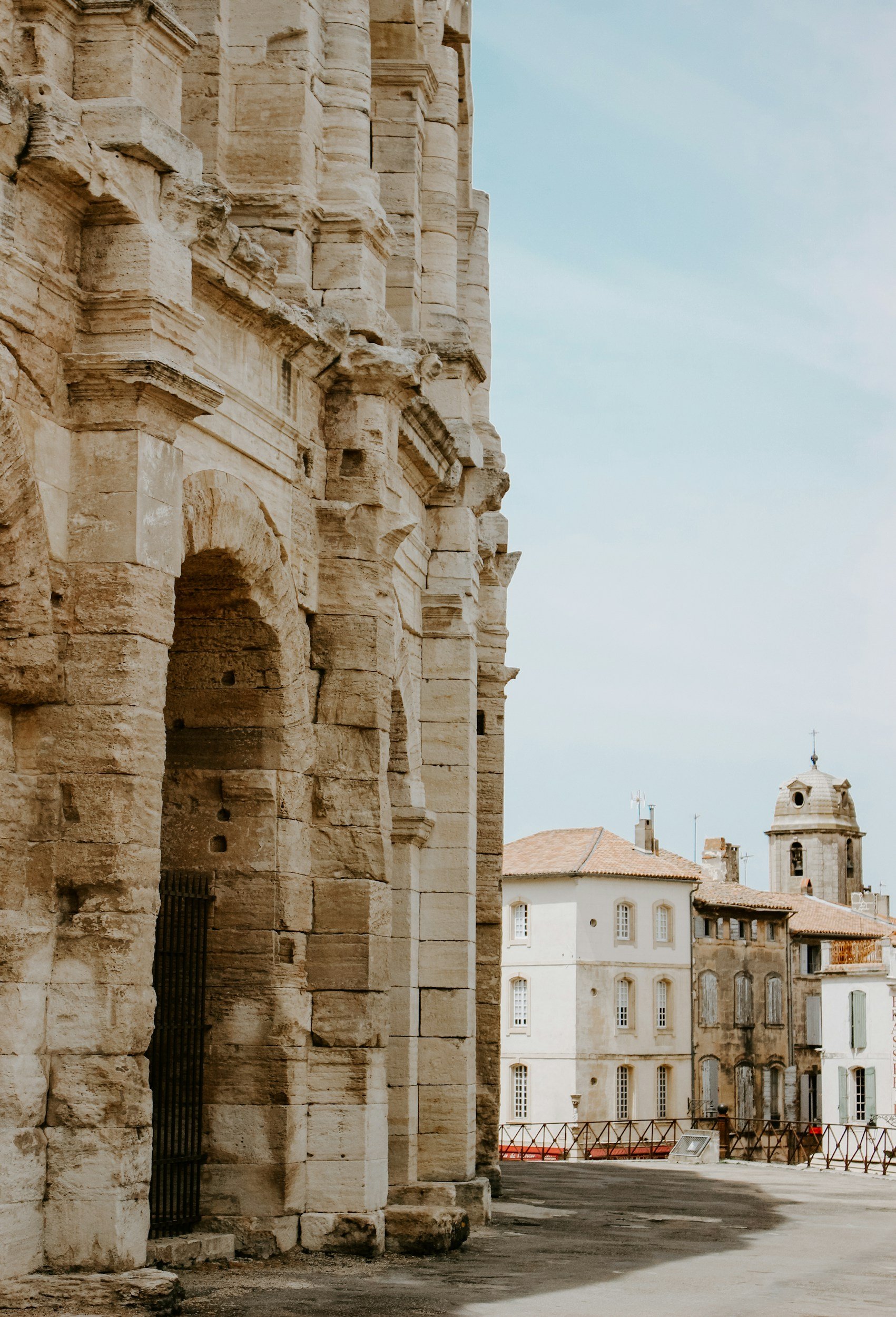
Where I'd stay in Avignon or Nîmes if I didn’t have a car
I think where you stay makes quite a difference in both cities, especially if you're planning several day trips. There's something lovely about coming back in the afternoon, dropping your things at the hotel and heading out again for dinner without having to think about transport.
I'd look for somewhere in the historic centre, close enough to the station that leaving for the day feels easy, but in a neighbourhood where you'll actually enjoy spending time. Having a bakery, a few restaurants and a nice square within walking distance can make a surprisingly big difference over four or five nights.
And I'd pay attention to the streets surrounding the accommodation, not just the distance to the main attractions. You might find a beautiful little guesthouse in an old building, but if you're walking twenty minutes in the opposite direction every morning to catch a train, that charm might wear off a little.
In Avignon, I'd look around Place des Corps Saints and the southern old town
Avignon has two railway stations, and this is worth understanding before you book anything.
Avignon Centre is the one you want to be near if you're planning independent day trips. It sits just outside the southern city walls, with Porte de la République leading straight into the historic centre. From here, you can walk towards the main shopping streets, markets and older neighbourhoods without needing local transport.
Avignon TGV is around six kilometres outside town. If you're arriving from Paris or travelling on a high-speed service, your train may stop there instead. A regional train connects it with Avignon Centre in about six minutes, although you'll need to allow a little longer for waiting and getting to your hotel.
I wouldn't avoid Avignon TGV if it gives you a convenient connection. I'd just make sure I wasn't booking accommodation near it by mistake, thinking I'd be staying in the old town.
For the actual neighbourhood, Place des Corps Saints would be my first choice. It's a pretty square with the old Célestins church at one end, several places to eat and cafés where you can sit outside. I like the idea of being able to wander down for coffee in the morning or come back for a glass of wine after spending the day somewhere else.
It's also a useful location for exploring the parts of Avignon that interest me most. Rue des Lices is nearby, and you can easily wander towards Rue des Teinturiers, with its cobbled street, canal and old water wheels. Les Halles and Place Pie are also within the old centre, so a morning spent browsing the food market doesn't need much planning.
I'd look at the smaller streets around Rue des Lices and Square Agricol Perdiguier as well. Square Agricol Perdiguier is a little public garden beside the former Saint-Martial church, just inside the city walls, and it's a pleasant place to pass through on your way into town. Staying around here would mean having the station relatively close while still feeling part of Avignon's historic centre.
If you find somewhere around Place Saint-Didier, that could be lovely too. It's a little further into the old town, with food shops, cafés and the church around the square. I'd be quite happy staying in this part of Avignon, especially if the accommodation was in one of the smaller old buildings rather than on a busy main street.
The area around the Palais des Papes is another option, particularly if you've found a hotel you really love. You'll be close to the palace, Place de l'Horloge and the older streets towards Rue de la Balance, but it's a longer walk back towards Avignon Centre. That wouldn't necessarily put me off, although I'd think twice if I were planning to catch trains or buses on most mornings.
One detail that's easy to overlook is that regional buses leave from Avignon's PEM bus station on Avenue Monclar, near Avignon Centre. If you're hoping to visit Saint-Rémy, Uzès or Pont du Gard, you'll probably be starting some mornings there rather than at the railway station. Staying in the southern old town makes that particularly convenient.
I'd also check whether the hotel is on a pedestrian street and how you reach it with luggage. Avignon's old centre is lovely for walking, but some of the smaller streets have cobbles, and historic buildings don't always have lifts. If you've found a charming room on the third floor of an old townhouse, it's worth knowing exactly what you're booking.
And if you're visiting during the Festival d'Avignon in July, I'd pay particular attention to the location. The festival brings theatre performances and events throughout the city, including smaller venues around Rue des Teinturiers. It's a wonderful time to visit if you enjoy theatre, but perhaps not the moment to assume every little street will be peaceful in the evening.
For an ordinary spring or autumn visit, though, I'd be very tempted by a small hotel or apartment somewhere between Place des Corps Saints and Place Saint-Didier. It's the sort of area where I'd enjoy having a few familiar places to return to rather than feeling as though I was staying beside a railway station purely for convenience.
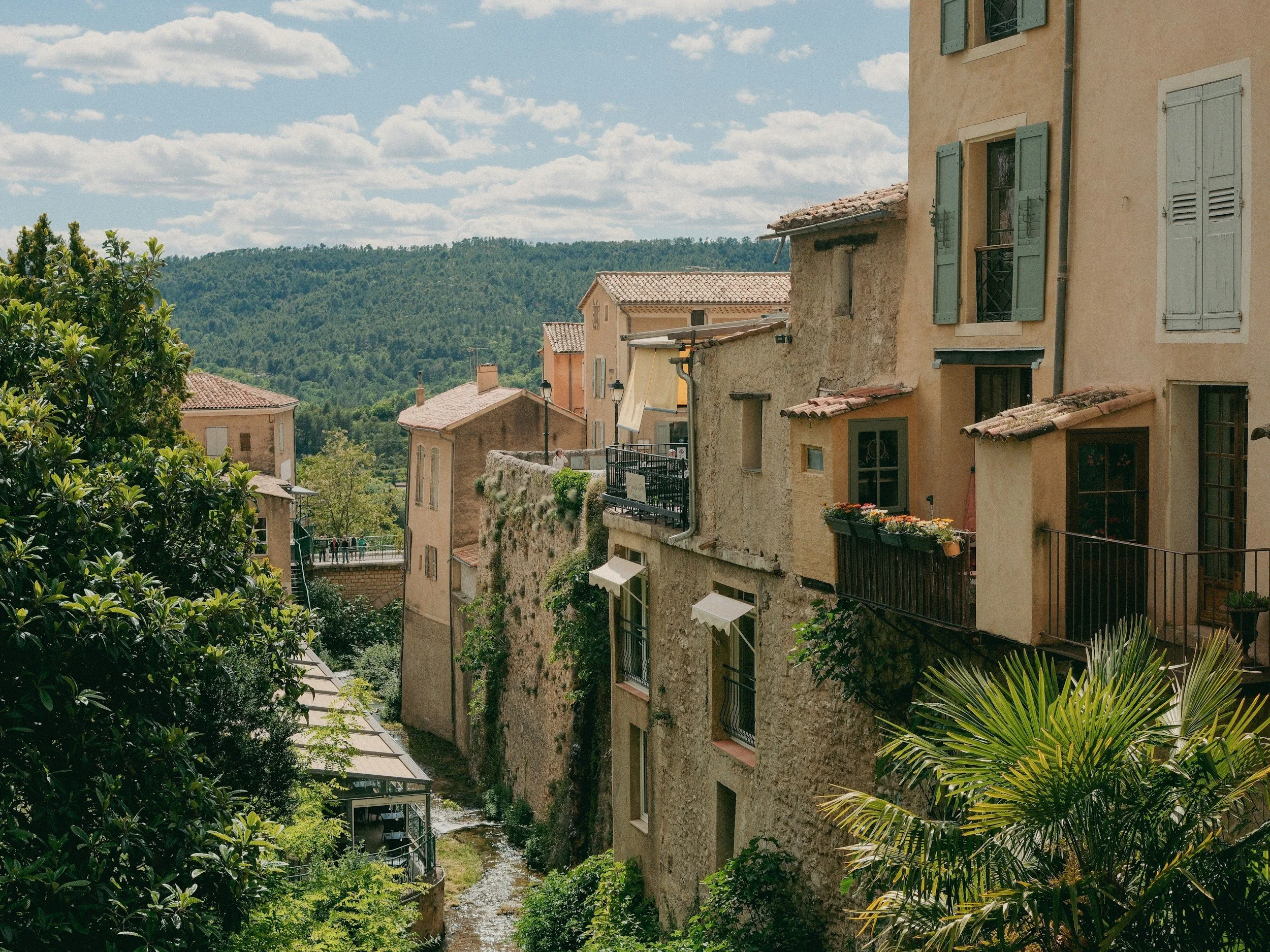
In Nîmes, I'd stay between the arena and the Écusson
Nîmes is particularly easy to arrive in by train, provided you book the right station.
Nîmes Centre is wonderfully placed for exploring the city. When you leave the station, Avenue Feuchères leads towards the Esplanade Charles-de-Gaulle, and from there you're practically at the Roman arena and the historic centre. It's quite a nice way to arrive somewhere, especially when you've got a suitcase and don't particularly want to work out another connection.
Some TGV services arrive directly at Nîmes Centre, which is worth checking when you're booking. Other high-speed services use Nîmes Pont du Gard, a separate station around 14 kilometres outside the city. There's a connecting regional train to Nîmes Centre, taking about eight minutes on the train itself, but you'll need to allow for the connection.
And despite its name, Nîmes Pont du Gard isn't beside the famous aqueduct. That's a completely separate excursion, so don't book a train to that station expecting to find the monument when you step outside.
For accommodation, I'd be drawn towards the Écusson, Nîmes's historic centre. It's a maze of old streets, shops and small squares, and staying here would mean being able to explore much of the city without thinking about transport at all.
The area around Place aux Herbes would be particularly appealing. You're close to the cathedral, Les Halles food market and streets with independent shops and restaurants. I love the idea of being able to go out for coffee, stop at the market for something fresh and wander back to the hotel before deciding what to do with the rest of the day.
Rue Fresque is another street I'd look around, especially if you enjoy browsing smaller shops. It's part of the old centre, close to Place aux Herbes, and has a mix of boutiques and local businesses. Staying somewhere in the surrounding streets would give you plenty to explore just by stepping outside.
I'd also consider the area around Maison Carrée, particularly if you like being near museums, cafés and some of the city's most interesting architecture. The Roman temple sits opposite the modern Carré d'Art building, and the surrounding streets connect naturally with the rest of the old centre.
If I were planning several train excursions, though, I'd probably stay a little closer to the Arènes and Esplanade Charles-de-Gaulle. You're still right beside the historic centre, but with an easier walk back to Nîmes Centre when you're leaving early or arriving home in the evening.
The Esplanade is also quite a pleasant place to walk through, with its trees, fountains and views towards the arena. Avenue Feuchères gives the approach from the station a more open, spacious feel than some of the narrow streets further into the Écusson.
For a longer stay focused mainly on Nîmes itself, I'd be tempted to look towards Jardins de la Fontaine. The gardens are beautiful for a morning walk, and the surrounding area puts you near the western side of the old centre.
I can imagine enjoying a morning walk through the lower gardens before heading back towards town for breakfast, especially in spring or early autumn when it's pleasant to spend time outdoors. The upper gardens rise towards Tour Magne, so you could make the walk longer if you felt like it.
The only thing I'd keep in mind is that you're further from the railway station and some regional bus departures. That might be absolutely fine if you're staying in Nîmes for its museums, restaurants and gardens, but less convenient if you're heading out on day trips most mornings.
In both cities, I'd have a good look at the street itself before booking, rather than relying on the neighbourhood description. A hotel overlooking a lively square might be lovely for evening drinks, but perhaps less so when you're trying to sleep. And while I love the idea of staying in an old French townhouse, I'd definitely check for air conditioning in summer and a lift if the room is several floors up.
For Nîmes, I think I'd be happiest somewhere between the arena, Maison Carrée and Place aux Herbes. It's a lovely part of town to have on your doorstep, with the food market, little shops and plenty of places to eat nearby. You'd also be close enough to the station for day trips, while still having the gardens and much of the old centre within easy walking distance.
What if you're dreaming of Provençal villages and vineyards?
I think it's worth being a little careful with the word Provence when you're planning a trip without a car. You might be imagining a few days exploring old stone villages, stopping at vineyards and having lunch somewhere overlooking the countryside. And while that's certainly possible in parts of the region, it's not quite the same holiday as staying in Avignon and taking the train to nearby towns.
Avignon is well placed for exploring, but some of those beautiful villages you see in photographs are surprisingly awkward to reach by public transport. The distances might look small, yet travelling between two neighbouring villages can involve going back through a larger town or waiting several hours for the next bus.
The Alpilles are a good example of where I'd be selective. You can reach Saint-Rémy-de-Provence from Avignon by bus, and the town is a lovely place to spend a day in its own right. But if you're hoping to continue through the countryside to several more villages, things become a little less straightforward.
Les Baux-de-Provence is possible without a car, even outside the summer season on certain days. The regional 707 bus has a limited Monday-to-Saturday service, with a return in the afternoon. That's useful if you'd love to see the medieval village and its rocky setting, but it does mean committing to a fairly specific day rather than deciding over lunch where to go next.
And Les Baux is worth giving some time to. The village sits on a limestone outcrop above the Alpilles, with the remains of its château overlooking the surrounding olive groves and vineyards. It's a very different experience from wandering around Avignon's old centre, especially if you've been hoping to see some of Provence's countryside.
The Luberon is where I'd think more seriously about an organised tour. Places such as Gordes, Roussillon and Ménerbes are often included in photographs of Provence, but getting between them independently isn't always practical. You might be able to reach one village on a particular bus, yet find that visiting a second one the same day is difficult.
I'd consider a small-group tour leaving from Avignon if those places were a priority. Yes, it's more expensive than taking a regional bus, but having transport arranged between the villages means you can spend the day enjoying them rather than working out connections. I'd look for a tour with a smaller number of stops and enough time to explore on foot, rather than one that tries to cover half the Luberon before dinner.
The same applies to vineyards. Châteauneuf-du-Pape is close to Avignon, but the village, individual wine estates and tasting rooms aren't all conveniently grouped around one public transport stop. If you specifically want to visit producers, walk among the vineyards or compare wines at several estates, a guided outing with transport included is worth investigating.
And I'd be quite selective about what I book. A vineyard visit where you have time to learn about the wines and enjoy a proper tasting sounds much more appealing to me than spending the afternoon driving between several very short stops.
None of this means you need a car to enjoy Provence. I'd simply decide how important the countryside villages are before choosing a base. If one lovely village day would make you happy, Avignon can work very well. If the entire holiday revolves around the Luberon and visiting small rural places independently, the accommodation and transport need a little more thought.
I've written more about this in my guide to getting around Provence without a car, including the places that are easier to reach independently and where it's worth considering another approach.
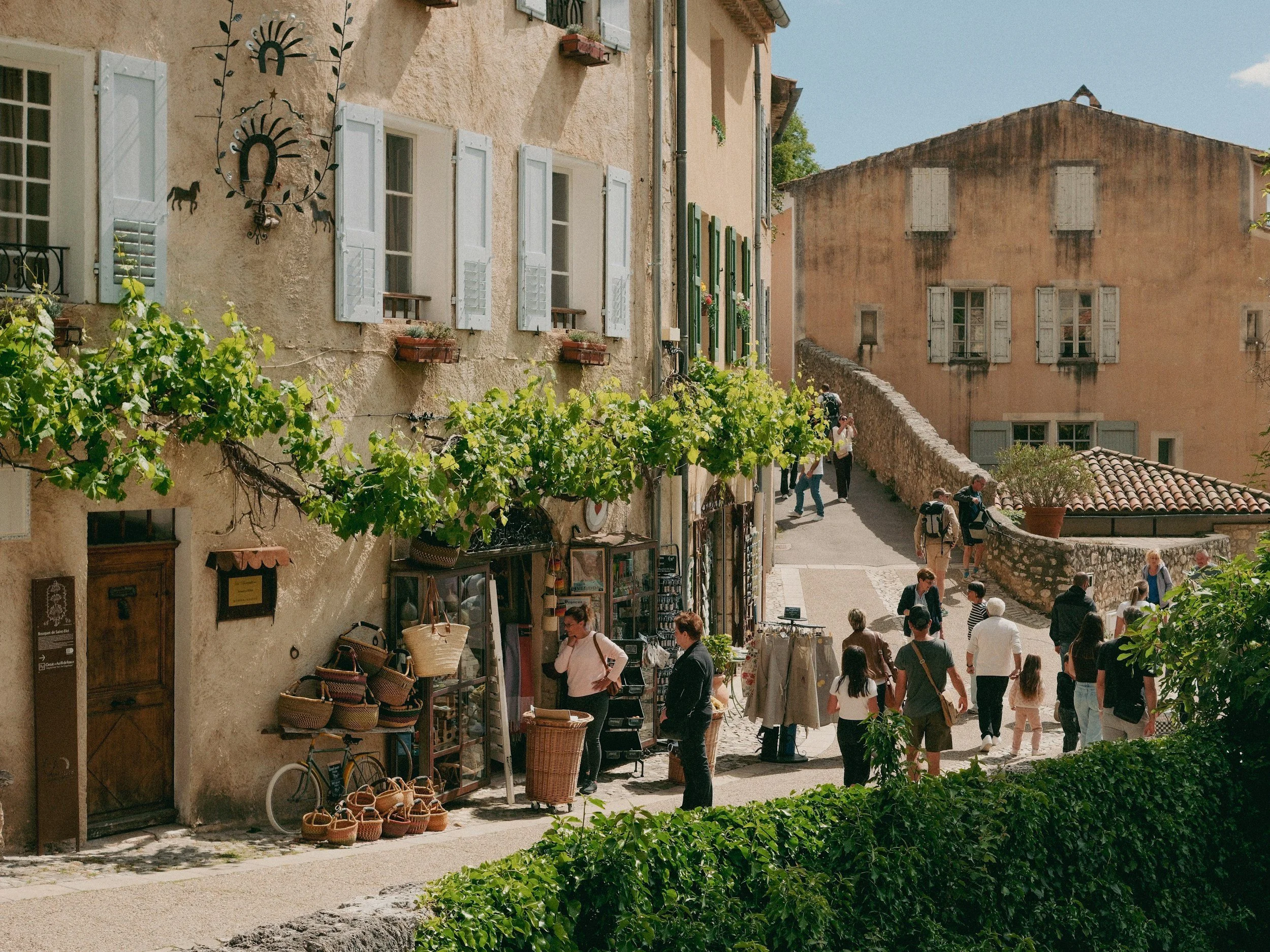
A few things worth knowing before you book
I think three nights is perfectly reasonable for either Avignon or Nîmes, especially if you're arriving by train and want a few days of markets, good food and exploring rather than a packed sightseeing holiday.
Three nights usually gives you two full days, and I'd be quite happy spending one in the city and the other somewhere nearby. There's no need to turn the arrival afternoon into another excursion, particularly if you've travelled a long way. I'd rather check into the hotel, go for a walk and find somewhere nice for dinner.
Five nights gives you a different kind of trip, and it's probably what I'd choose if I wanted to explore beyond the city. You can make room for a couple of longer outings, perhaps something rural that needs a little more planning, while still having an afternoon free when you feel like staying put.
I also think five nights makes more sense if you're particularly interested in food and markets. In this part of France, quite a few of the experiences I'd most enjoy happen on specific mornings, and having more days makes it easier to fit them in without arranging everything else around one market.
For a shorter stay, I wouldn't split my accommodation between Avignon and Nîmes. They're close enough that moving hotels seems like more trouble than it's worth. If you're spending a week or longer travelling through southern France, though, staying in both could be lovely, especially if you plan to continue west towards Montpellier afterwards.
I'd pay attention to the weekday, not just the weather
If there's one thing I'd check before booking a train or hotel, it's which days of the week I'll actually be there.
Imagine arriving somewhere on Saturday afternoon, looking forward to spending the next morning browsing a particular market, and realising you've missed its main trading day. It's such an easy thing to overlook when you're choosing dates around cheap train tickets or accommodation.
Markets in southern France have their own schedules, and they're worth planning around if you enjoy them. The Friday morning market in Carpentras, for example, could be a lovely addition to an Avignon stay. It's a traditional Provençal market spread through the town centre, with food and other stalls, and the town is connected to Avignon by regional train.
If you're interested in antiques, Sunday in L'Isle-sur-la-Sorgue is an obvious choice, while a Saturday in Uzès gives you the larger market there. But I wouldn't necessarily spend every market morning somewhere new. Sometimes it's just as nice to buy a few things from the local food hall and enjoy breakfast near your accommodation.
Monday is another day I'd pay attention to. Quite a few museums close at the beginning of the week, including the Musée du Petit Palais in Avignon and Carré d'Art in Nîmes. That doesn't mean Monday is a bad day to visit, but it's worth leaving yourself something else to enjoy rather than assuming every museum will be open.
The time of year matters too, and not only because of the weather.
July in Avignon is quite an experience because of the theatre festival. Performances take place throughout the city, including in smaller venues and temporary spaces, and the atmosphere is very different from an ordinary spring or autumn visit. I'd love the idea of being there for the theatre, but if you're hoping for a quiet few days with early evenings, I'd choose the dates and hotel location more carefully.
Nîmes has its own big events, especially the ferias around Pentecost and in September. These celebrations bring bullfighting events, music and festivities into the city, and the atmosphere around the arena and central streets can be very lively. It's something to be aware of rather than accidentally discovering that your peaceful-looking hotel is in the middle of a major celebration.
Personally, I'd be drawn towards late spring or early autumn for either city. You can enjoy the markets, sit outside for lunch and spend plenty of time walking without planning everything around the hottest part of the day.
Winter could be lovely too, particularly if you enjoy museums, quieter streets and cosy lunches, but I'd be more careful with countryside excursions. Some buses have limited services, the gardens close earlier and individual attractions may have shorter opening hours. I'd also check the opening days of any restaurants I was particularly hoping to visit, especially in smaller towns.
And what about the cost?
I wouldn't choose between Avignon and Nîmes based on the assumption that one is always cheaper. Accommodation prices change with the season, the location and what's happening in town, and a lovely room in one city might be better value than a fairly ordinary one in the other.
I'd look at the complete stay rather than just comparing nightly rates. If you're saving €15 or €20 on a room but staying somewhere that makes every excursion more complicated, the saving might not feel particularly worthwhile after a few days.
One nice thing about travelling around this region is that some of the regional buses are inexpensive. The liO services towards places such as Uzès and Pont du Gard have published single fares of €2, so you can make a day trip without spending very much on transport. Regional trains have their own fares, and I'd check the journey you actually want rather than assume every destination costs roughly the same.
I'd also be quite happy choosing just one paid attraction in each city and spending the rest of the time enjoying everything else. Nîmes has its beautiful public gardens, Avignon has its markets and old streets, and neither city requires you to buy a sightseeing pass to have a good few days.
If I were going to spend a little extra, it would probably be on a particularly good lunch, a wine tasting or a room in a neighbourhood I really liked. One of the nicest things about this part of France is how much of the experience revolves around ordinary pleasures anyway, from choosing something at the bakery in the morning to finding a restaurant serving dishes from the region.
And I'd much rather come home remembering a lovely afternoon over lunch than feeling proud of how many admission tickets I'd managed to use…
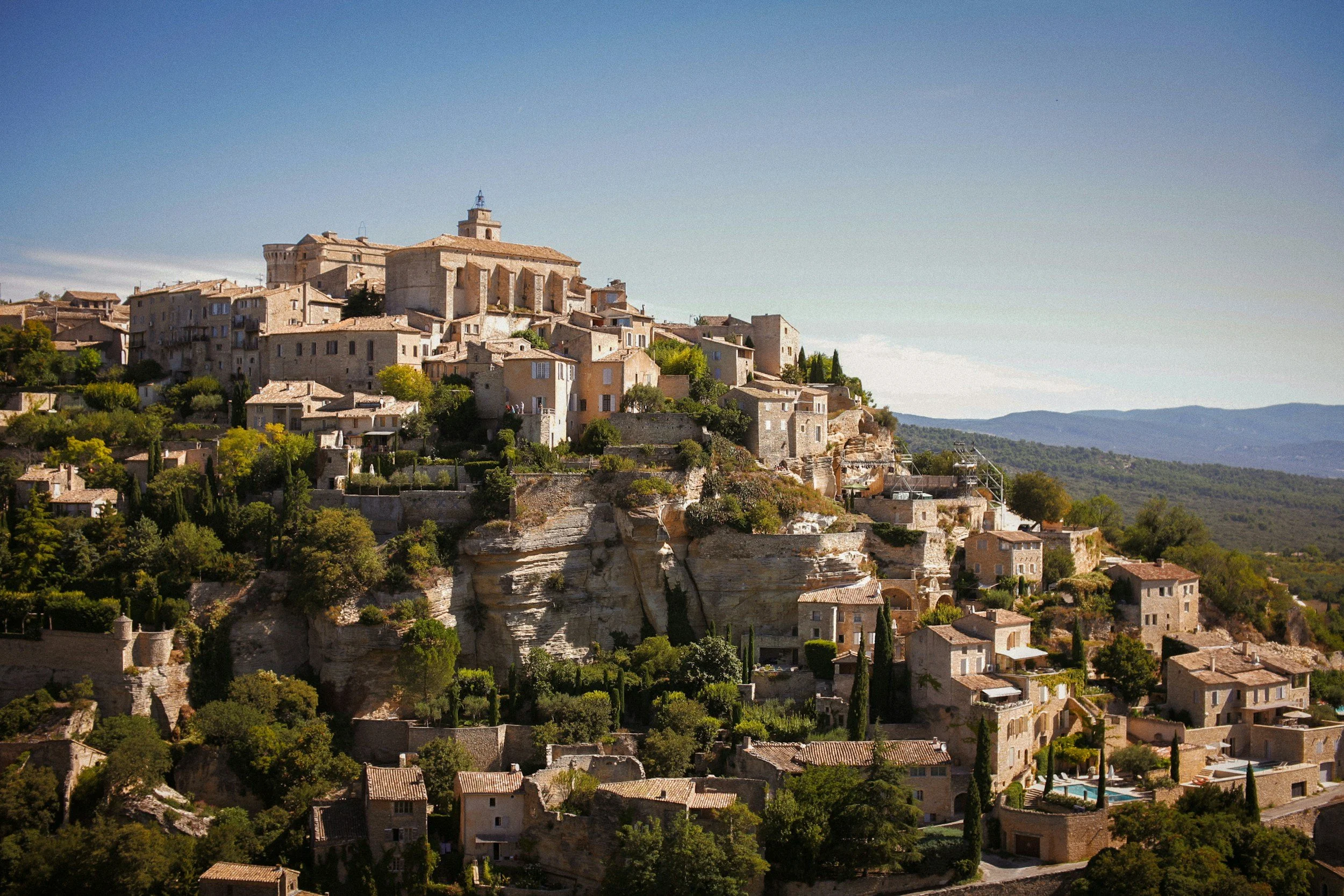
So, where would I book?
Before making the final decision, I'd open a map and save the places I'd really like to visit, then look at a few hotels in each city. I'd pay particular attention to what was within walking distance of the accommodation, because that's where you'll probably spend more time than you realise.
In Avignon, for example, I'd love to have Place des Corps Saints nearby for an evening glass of wine, or be able to walk to Les Halles in the morning and pick up some fougasse and local cheese for lunch. In Nîmes, I'd be tempted by somewhere close to Place aux Herbes, where I could start the day at the food market and perhaps take a different route back through the Écusson each morning.
And I'd leave room for the little discoveries you can't really plan in advance. You might come across a small wine shop selling bottles from a producer you've never heard of, find a restaurant serving a regional dish you'd never thought to order, or realise that the garden you passed on your first afternoon is somewhere you'd quite like to return with a coffee and a book.
One thing I'd definitely do is look up a few restaurants before arriving, not to book every meal, but to have two or three options saved for the evenings. After a full day out, I don't particularly enjoy walking around hungry trying to find somewhere that isn't fully booked or about to close. Having one nice dinner arranged and leaving the rest open feels like a good compromise.
I'd also resist filling the final morning with another attraction. If you're leaving by train in the afternoon, there's something lovely about having time for a proper breakfast, perhaps buying some local olive oil or a bottle of wine to take home, and enjoying one last walk through the old centre without worrying about getting somewhere else.
For me, that's the kind of trip worth planning a little more carefully in the beginning: not because you need to organise every hour, but because choosing the right place to stay gives you more freedom to enjoy everything else.