The Belgian towns I'd happily visit instead of Brussels
Belgium is one of those countries that gets much more interesting once you leave the obvious places behind.
Most visitors spend their time in Brussels, Bruges, or Antwerp, which makes sense, but some of my favourite places in Belgium are the towns that barely make it onto a first-time itinerary. The places where market day still feels like part of everyday life, where people are carrying flowers and vegetables home rather than taking photographs of them, and where you can spend an entire afternoon wandering around without feeling like you're moving between attractions.
That's what I like about Belgium's smaller towns. You don't need much of a plan. You arrive, find the main square, stop somewhere for coffee, browse a bakery window, maybe wander through the market if you've timed it right, and before long you've settled into the pace of the place without really trying.
Take Durbuy in the Ardennes. People love mentioning that it's one of the smallest towns in the world, but that's never been the interesting part to me. What stays with you are the stone houses, the narrow lanes, the smell of waffles drifting out from somewhere nearby, and the fact that an hour after arriving you still haven't done anything particularly noteworthy, yet somehow feel like you've had a good day.
The towns in this guide have that in common. They're places where markets still bring people into the centre every week, where local cafés fill up in the morning, and where the experience comes more from being there than from ticking off a list of sights. If you're looking for small towns in Belgium that feel local, walkable, and genuinely enjoyable to spend time in, these are the places I'd start with.
If you’ve ever travelled somewhere and realised your favourite part of the day was just… sitting somewhere and watching life happen, this is very much that kind of trip.
Durbuy, Belgium (smallest town)
Durbuy: stone streets, river views, and market mornings in the Ardennes
The first thing that surprised me about Durbuy was how small it actually is.
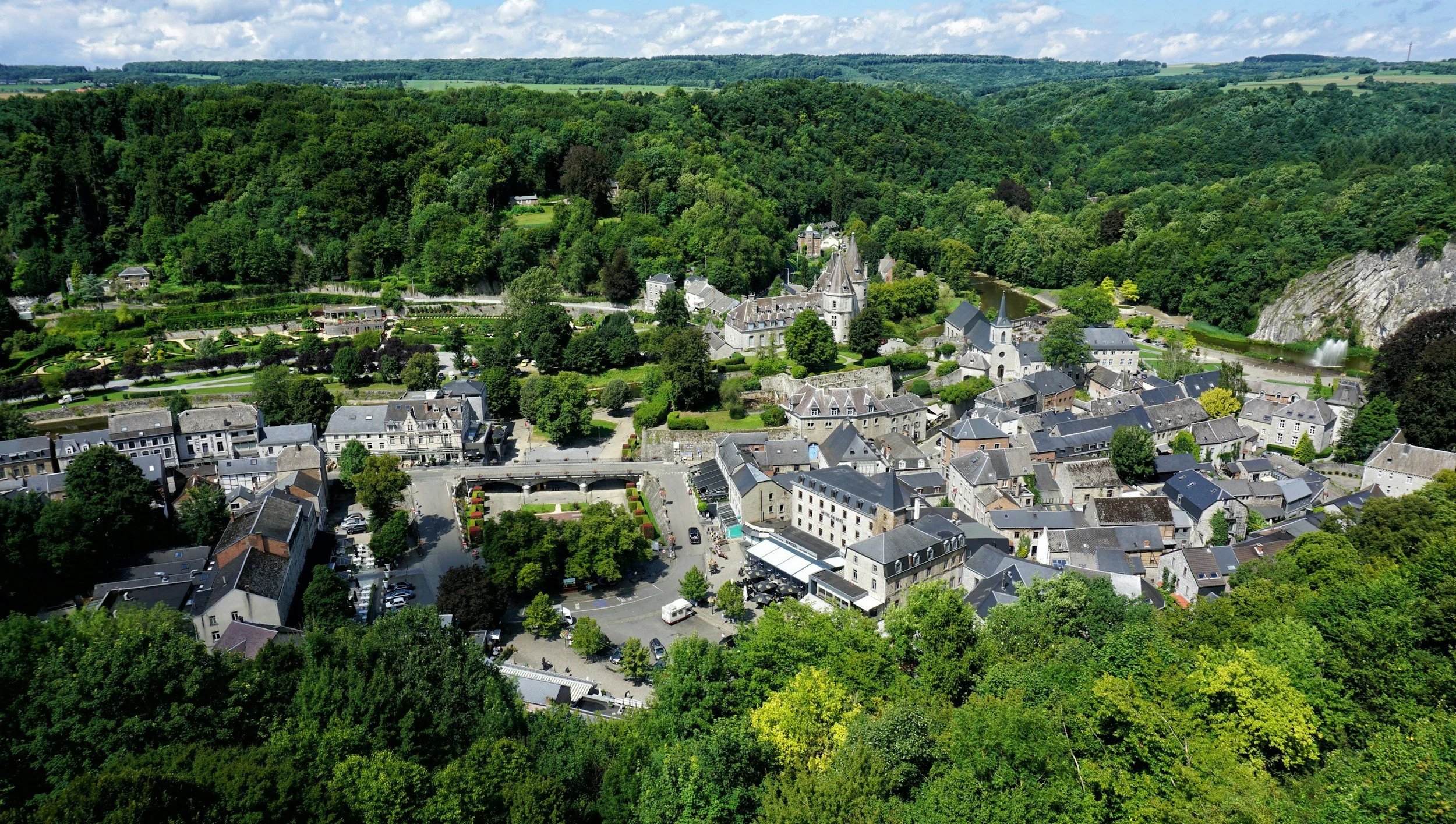
People talk about it as if it's a destination packed with things to do, but when you arrive you realise the old town is really just a handful of narrow stone streets folded into a bend of the Ourthe River, surrounded by wooded hills on almost every side.
Most visitors cross the bridge from the car park and head straight into the centre, but I always think it's worth pausing for a minute before you do. From the bridge you can see the old stone buildings rising above the riverbank, kayakers drifting along the water in summer, and the steep forested slopes behind the town that make Durbuy feel more like the Ardennes than the Belgium most people picture.
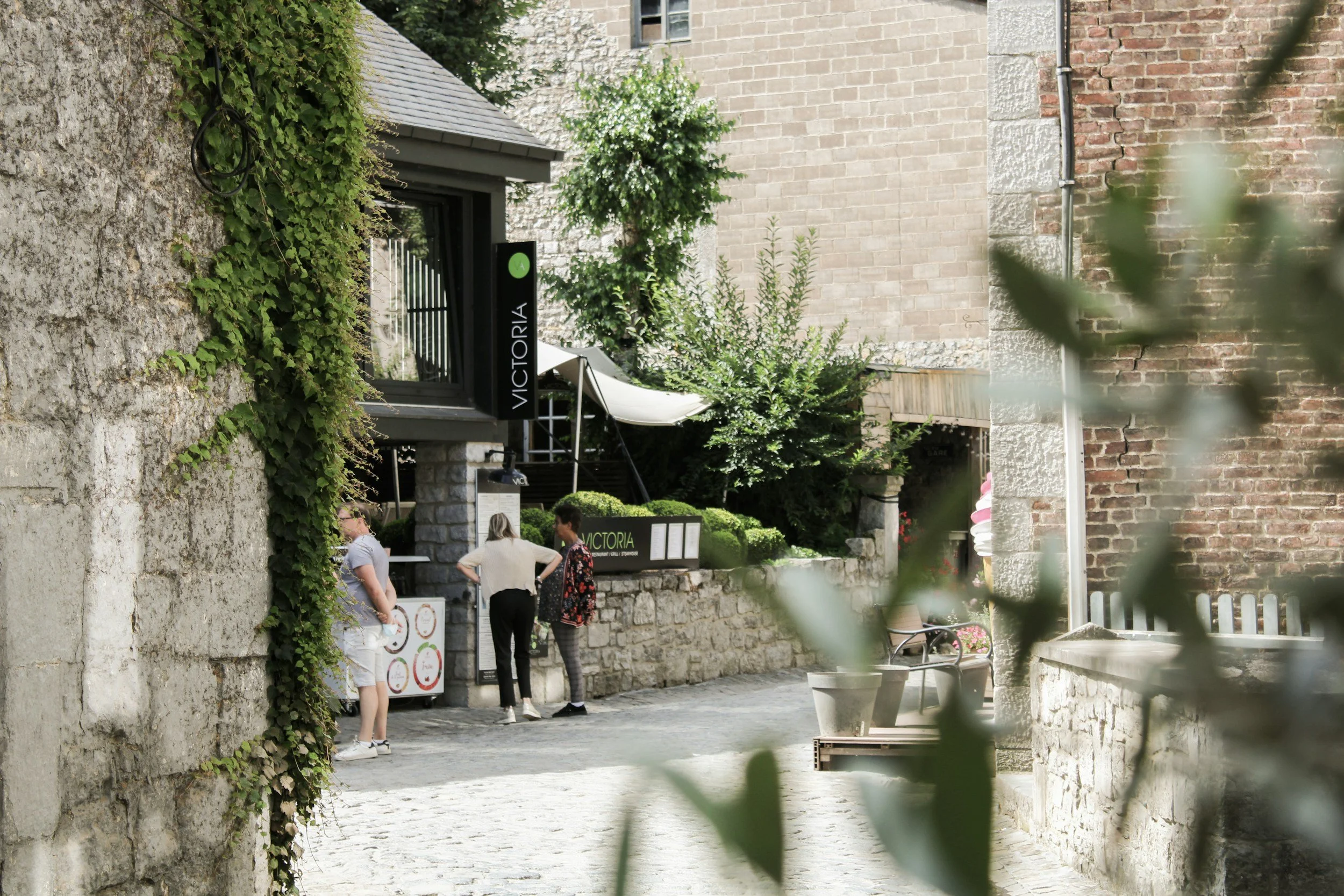
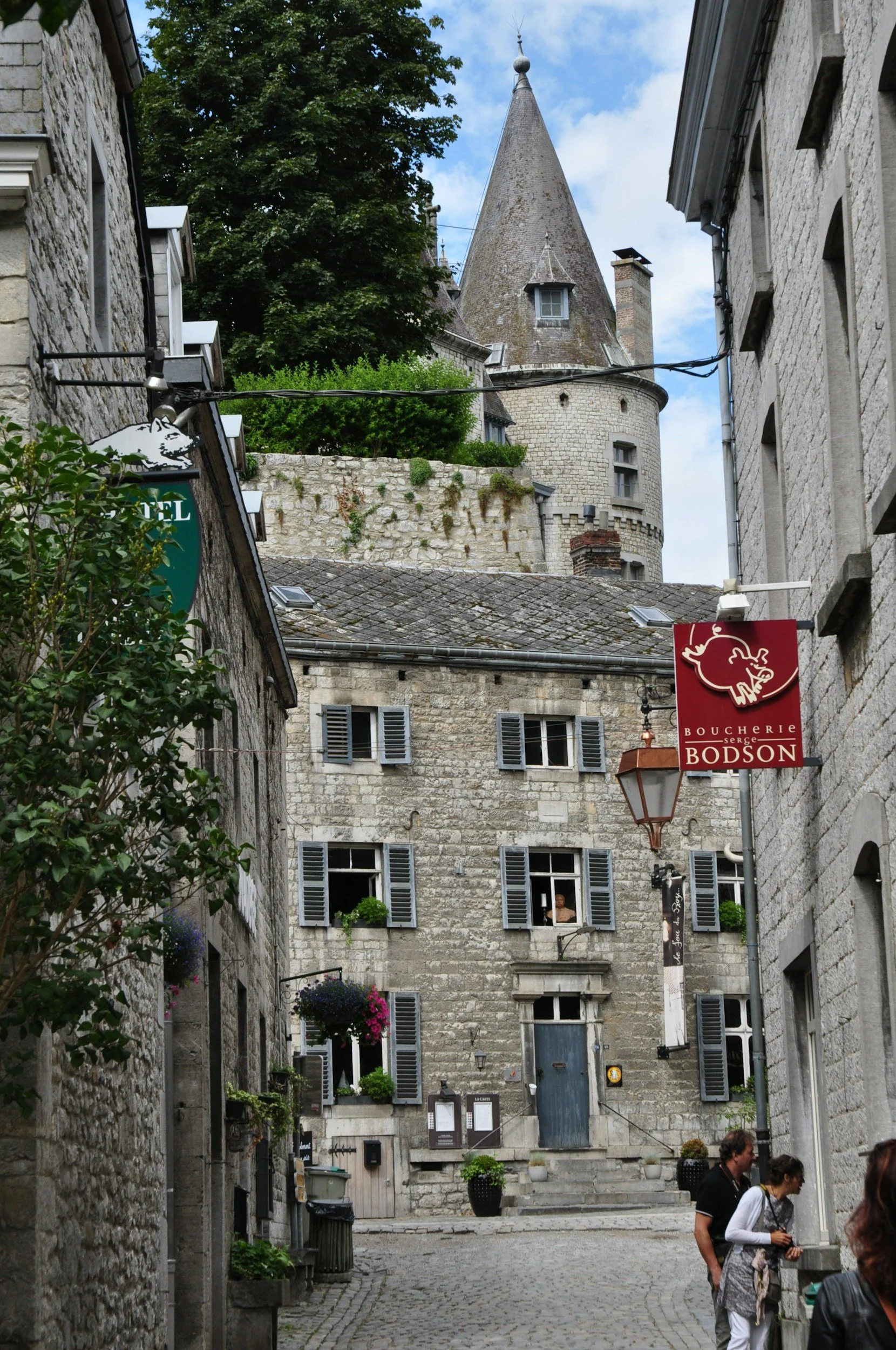
Once you're inside the old centre, there isn't really a route to follow. Rue des Récollectines, Rue Alphonse Eloy and the little lanes connecting them twist between old limestone buildings filled with bakeries, chocolate shops, small galleries and Ardennes food stores. In the morning you'll often smell waffles and fresh bread long before you see where they're coming from.
One place I always find myself stopping is Boulangerie-Pâtisserie Debailleul near the centre. Not because it's famous, but because the window is usually full of locals popping in for pastries, bread, or something sweet to take home. That's often a better sign than any guidebook recommendation.
If you're in town on market day, head towards Place aux Foires. It's not a huge market, which is part of the appeal. You might find local honey from nearby villages, Ardennes cheeses, cured meats, seasonal vegetables, and stalls selling jars of confiture made from local fruit. The atmosphere feels more local than tourist-focused, especially earlier in the morning before day-trippers begin arriving.
One thing I like about Durbuy is that you don't need to constantly look for the next thing to do. After wandering around the centre for a while, most people naturally drift back towards the river. The path along the Ourthe is one of the nicest places to spend an hour, especially on warmer days when people sit on the grass, children throw stones into the water, and kayaks pass underneath the bridge heading downstream.
For lunch, La Canette remains a reliable choice for traditional Belgian dishes, while Le Pain d'Antan is a good stop if you'd rather grab something simple and continue exploring. If the weather is good, I usually prefer taking something away and finding a bench near the river instead.
Getting there:
Durbuy is about an hour and a half by car from Liège, or a two-hour drive from Brussels. If you’re coming by train, you’ll need to hop off at Barvaux station, which is a 10-minute bus ride from the town center. It’s easy enough to get here, but once you arrive, you’ll feel like you’ve stumbled upon your own little Belgian secret.
Before leaving, walk across the bridge towards Parc des Topiaires. Most visitors know it for its sculpted hedges, but the walk there is just as enjoyable as the park itself. The views back towards the old town are some of the best in Durbuy, especially later in the afternoon when the light catches the stone buildings and the surrounding hills begin casting shadows across the valley.
And if you still have some energy left, take the short climb up to the Belvédère. The view isn't dramatic in the Alpine sense, but it gives you a much better understanding of the town's setting. From above, Durbuy looks less like a destination and more like a small cluster of stone buildings tucked into the landscape, which is probably why so many people end up staying longer than they expected.
Dinant: market mornings, riverside cafés, and one of Belgium's most surprising towns
The first time you arrive in Dinant, it's hard to know where to look first. The citadel sits high above the town, the cliffs rise almost straight out of the river, and the distinctive dome of the Collegiate Church seems squeezed into a space that shouldn't really exist. It feels dramatic when you first see it, especially if you're arriving by train because the station sits directly across from the waterfront, but once you start walking around, Dinant quickly feels less like a sightseeing stop and more like somewhere people simply get on with everyday life.
Most of that life happens along the Meuse. The Croisette and Quai Charles de Gaulle follow the river through the centre of town, and it's one of those places where it's easy to spend longer than expected. You'll pass cyclists following the riverside path, locals sitting outside cafés with coffee, boats moving slowly through the valley, and if you've arrived on a market day, stalls selling everything from Ardennes cheeses and charcuterie to flowers, fruit, vegetables, and jars of local honey. It doesn't feel particularly curated for visitors, which is probably why it feels enjoyable to wander around.
Sooner or later you'll end up away from the river and somewhere around Rue Grande or Place Reine Astrid. This is where Dinant starts feeling much more local. People are carrying shopping bags home, stopping to chat outside bakeries, or picking up lunch before heading back to work. I always think these streets are more interesting than the main viewpoints because they're where you actually get a sense of the town beyond the famous photographs.
Tip: Just outside the town, make sure to visit Leffe Abbey, one of Belgium’s oldest breweries. Take a peaceful walk through the abbey grounds, where you can soak up the serene atmosphere before sampling a refreshing pint of Leffe beer. It’s a perfect way to end your visit to Dinant, connecting with the town’s history and traditions while enjoying a local brew.
One thing you'll notice quite quickly is how proud Dinant is of Adolphe Sax. The colourful saxophones along the bridge are only the beginning. Walk through town and you'll keep spotting references to him, whether it's outside Maison Sax on Rue Adolphe Sax, in shop windows, on signs, or tucked into corners you weren't expecting. Even if you know very little about music, it's impossible to spend a few hours here without learning who he was.
Food in Dinant feels very tied to the region. Most visitors try a couque de Dinant at least once, partly because they're curious and partly because every bakery window seems to have them stacked inside. They're famously hard and made mainly from honey and flour. Personally, I think the local flamiche is much more interesting. It's a simple cheese tart that you'll see on menus around town and one that locals seem far more excited about than the biscuits tourists take home.
After a while, it's worth walking beyond the busiest part of the centre because Dinant changes surprisingly quickly. The route towards Maison Leffe follows the river and feels noticeably calmer, while the walk further south towards Rocher Bayard opens up views of the valley and passing kayaks heading towards Anseremme. On a warm day you'll often see cyclists rolling past, people sitting beside the water, and very little sense of urgency anywhere.
The view from the Citadel is still worth making time for, not because it's the most famous thing to do in Dinant, but because it helps everything below make sense. Looking down from above, you can see just how tightly the town fits between the cliffs and the river, with wooded hills stretching away in every direction beyond the valley.
I actually like Dinant best towards the end of the day. The busiest part of the afternoon fades away, people settle onto terraces overlooking the Meuse, and the cliffs start casting long shadows across the water. Nothing particularly dramatic happens, but it's the point where the town feels least like a destination and most like itself.
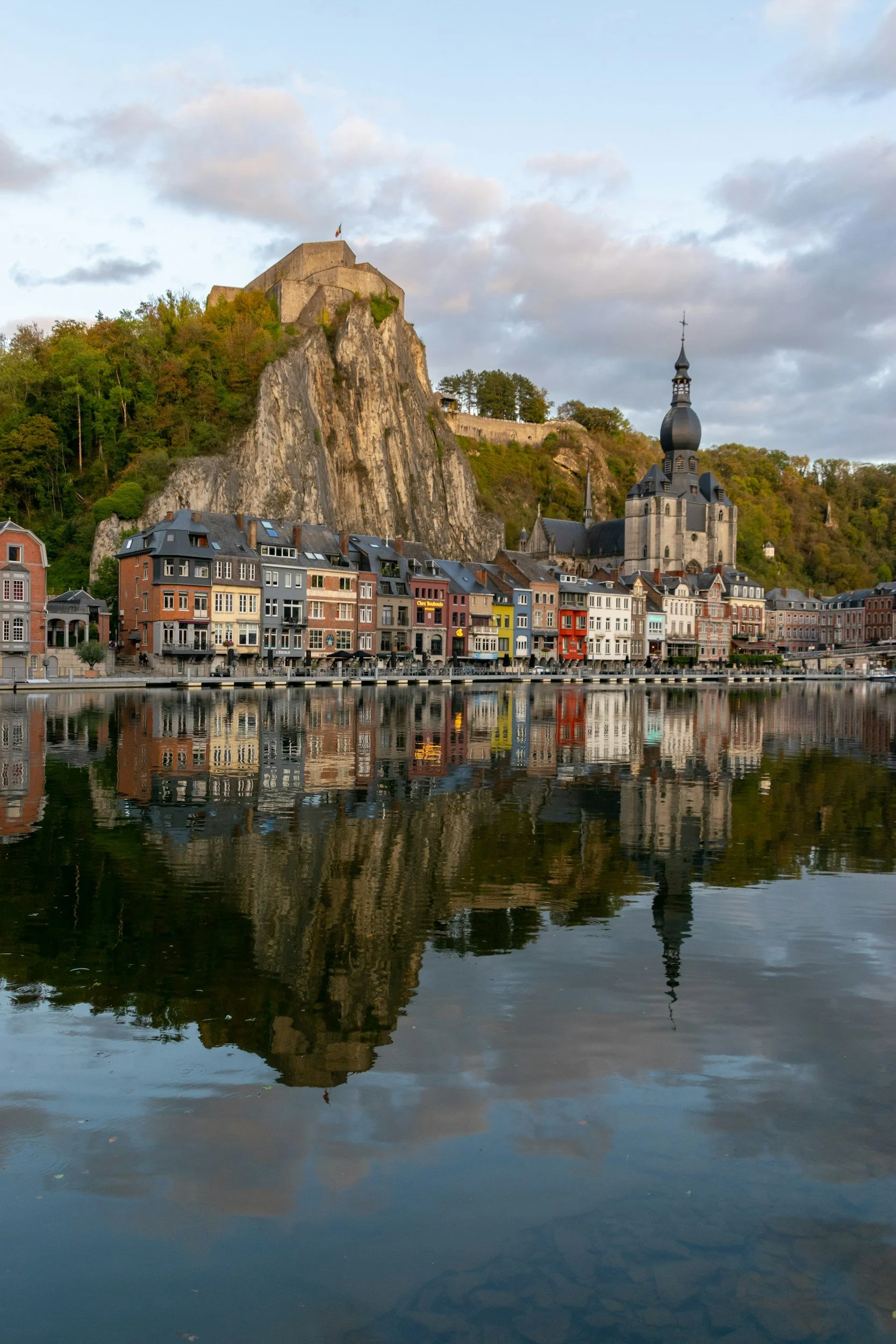
Getting there: Dinant is located about an hour’s drive from Brussels and Namur, making it an easy day trip from either city. You can also reach Dinant by train, with a 30-minute ride from Namur, followed by a short walk to the town center. The train station is conveniently located, giving you easy access to explore the town and its surroundings without the hassle of driving.
🍓 Did you know?
Between Namur and Dinant, there's a corner of the Ardennes nicknamed "Strawberry Country"!
Nestling in Wépion, the Musée de la Fraise traces the history of a fruit that is emblematic of the local area. From cultivation to tasting, you'll discover a heritage that's as tasty as it is unusual...
Mechelen: market squares, riverside paths, and one of Belgium's easiest day trips
Mechelen is one of those towns that often gets overlooked simply because it's sitting between Brussels and Antwerp.
The train journey takes less than half an hour from either city, but when you step into the centre it feels very different. The pace drops almost immediately. People are cycling to work, picking up bread from neighbourhood bakeries, stopping for coffee on Grote Markt, and carrying shopping bags home from the weekly market.
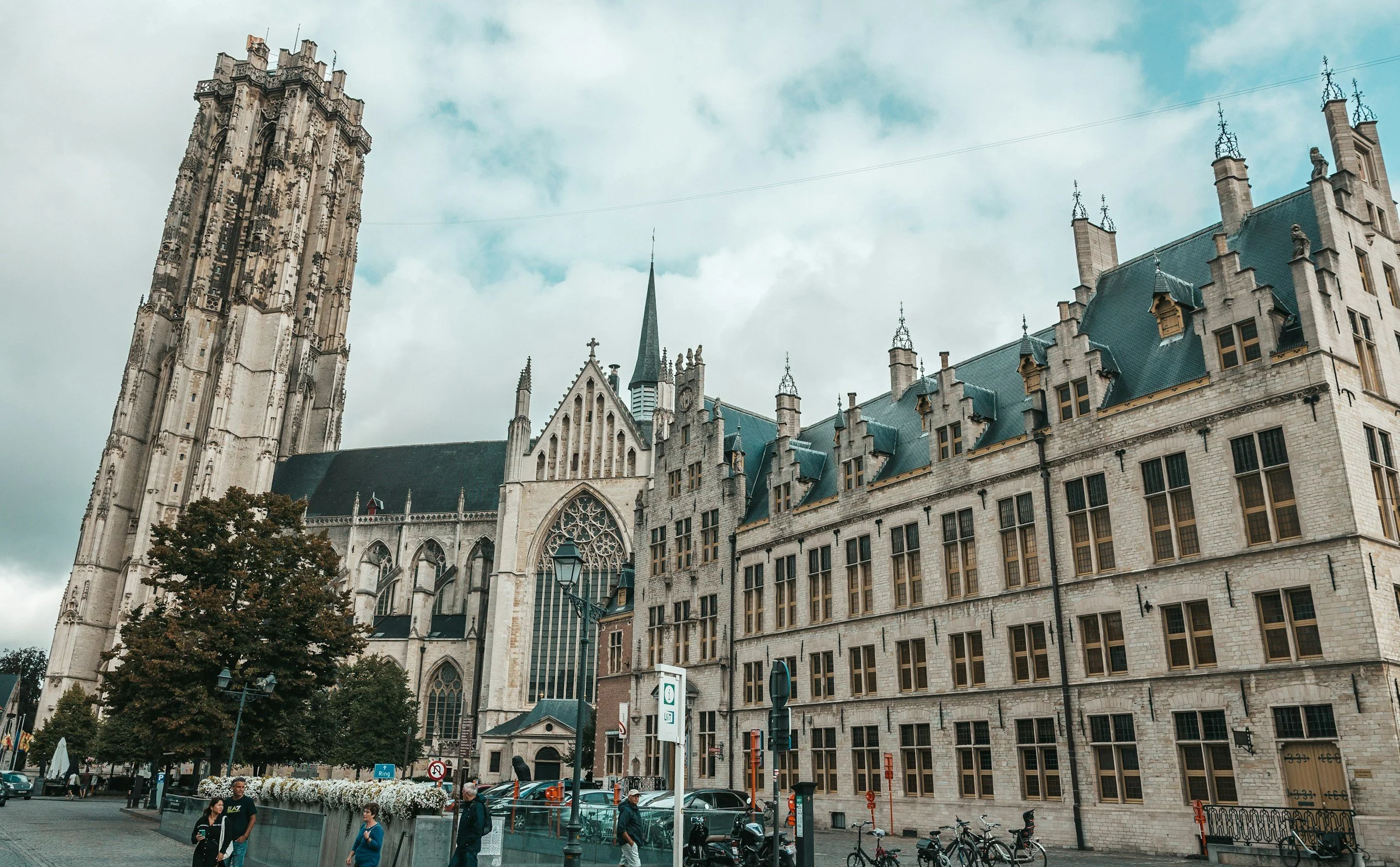
Most people naturally end up at Grote Markt first because the tower of St. Rumbold's Cathedral dominates almost every view in town. If you arrive on a Saturday morning, you'll find the square filled with market stalls selling flowers, fruit, vegetables, cheeses, rotisserie chicken, fresh bread, and local specialities. It feels like a proper market rather than something organised for visitors. People arrive with shopping trolleys, stop to catch up with neighbours, and queue at the same stalls they've probably been visiting for years.
From there I usually wander towards Botermarkt and the smaller streets around Onze-Lieve-Vrouwestraat rather than staying on the main shopping streets. There are independent bookshops, chocolate shops, bakeries, and little corners that still feel very local. The Grote Markt gets the photographs, but these streets are where I always end up spending most of my time.
If the markets are what you liked most here, these feel very similar but in a slightly warmer setting, especially the smaller towns in France where everything still centres around market days.
And this one is a mix of both Spain and France, where you start to notice how different regions do it in their own way.
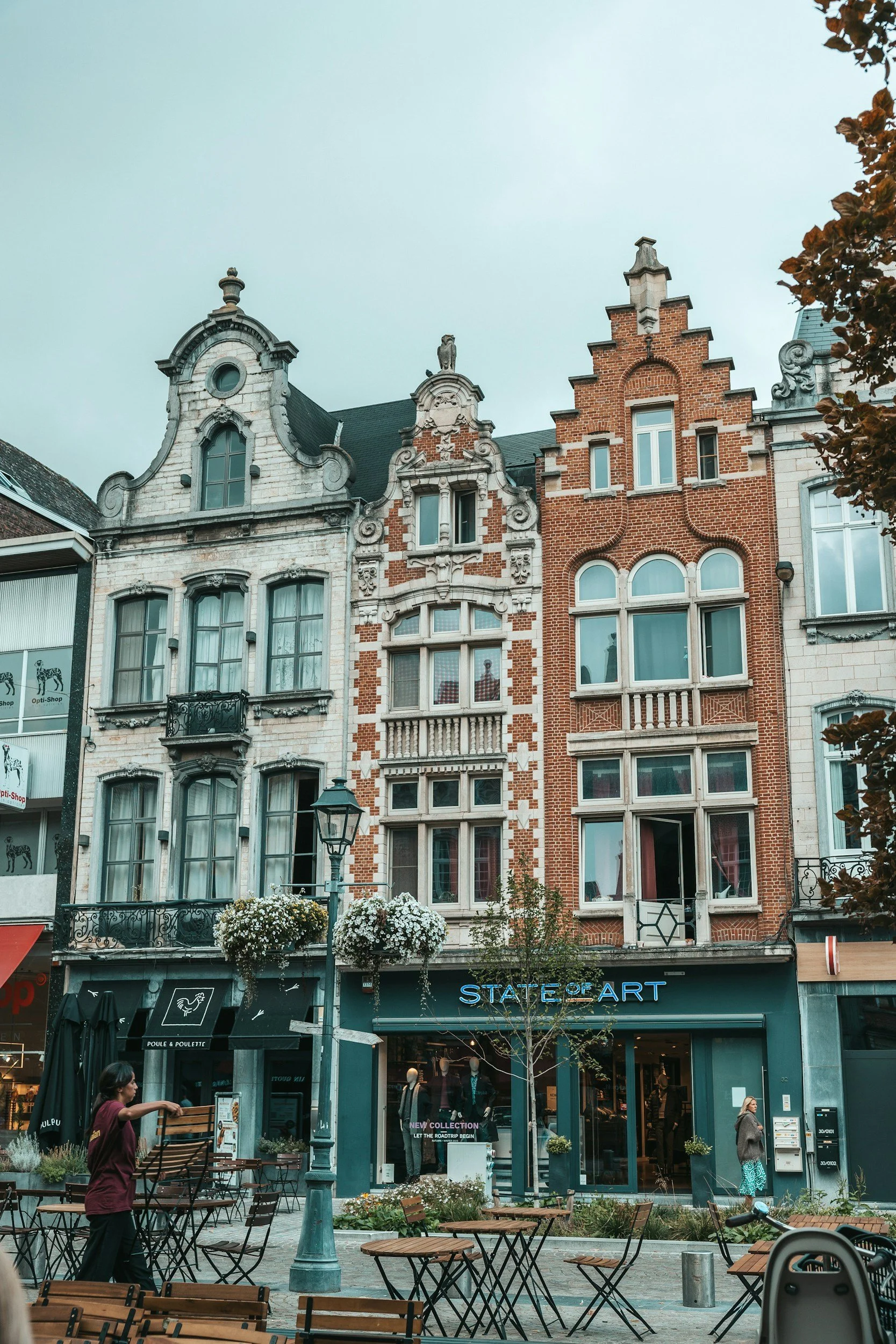
One area that's worth seeking out is the Groot Begijnhof. It's only a few minutes from the centre, but somehow feels much quieter. The narrow cobbled lanes, whitewashed houses, old brick facades, and tiny squares make it one of the nicest places to walk in Mechelen, especially early in the morning before many people are around.
Eventually you'll find yourself back near the Dijle. The river winds through the town in a way that feels much more integrated than in many Belgian cities. Around Haverwerf, where the colourful historic houses sit directly beside the water, you'll get some of the best views in town. The wooden Dijlepad walkways run partly below street level, giving you a completely different perspective of the river, the bridges, and the backs of buildings that most visitors never see.
Around lunchtime, Vismarkt starts coming alive. The square sits beside the river and fills with people meeting friends, having lunch, or sitting outside with a drink. De Vleeshalle is nearby and makes a good stop if you're travelling with people who all want something different. The old market hall now houses a collection of independent food stalls serving everything from Belgian classics to international dishes.
For coffee, Kaffée-ine remains one of the most popular independent cafés in town, while Funky Jungle has become a favourite brunch spot. If you have a sweet tooth, stop by Bakkerij Carl or one of the traditional bakeries near Bruul and pick up something to take with you as you walk.
Getting there:
Mechelen is about a 30-minute train ride from Brussels, making it super easy to get to. It’s the perfect day trip from the capital, offering a quieter escape without straying too far from the action. If you’re coming by car, it’s a short drive - about 40 minutes from Brussels. Either way, getting here is easy, and once you arrive, you’ll see that it’s worth every minute.
If you're interested in Belgian beer, Het Anker is worth the short walk from the centre. The brewery has been producing Gouden Carolus here for generations, and even if you don't take a tour, it's an interesting part of the town's identity.
Most people climb St. Rumbold's Tower for the view, and it is worth the effort. Looking down from the top, you can see how compact everything is. The market square, the river, the beguinage, the church spires, and the red rooftops all fit together within a surprisingly walkable centre.
What I like most about Mechelen it is simply a very pleasant Belgian town where market day still matters, people spend time by the river, and everyday life feels more interesting than the sightseeing.
If you're looking for more hidden gems and unique experiences in Belgium, be sure to check out our guide to Antwerp: Markets, Light, and Cozy Escapes, where we dive deeper into the city's quieter corners and local spots.
Tournai: market squares, old book stalls, and a slower side of Belgium near the French border
Tournai feels slightly different from other Belgian towns, although it can be difficult to put your finger on exactly why at first.
Maybe it's because France is only a few kilometres away. Maybe it's because the centre still feels like somewhere people live their daily lives rather than somewhere built around visitors. Whatever the reason, it has a slightly rougher, more lived-in feel than places like Bruges or Ghent, and I mean that as a compliment.
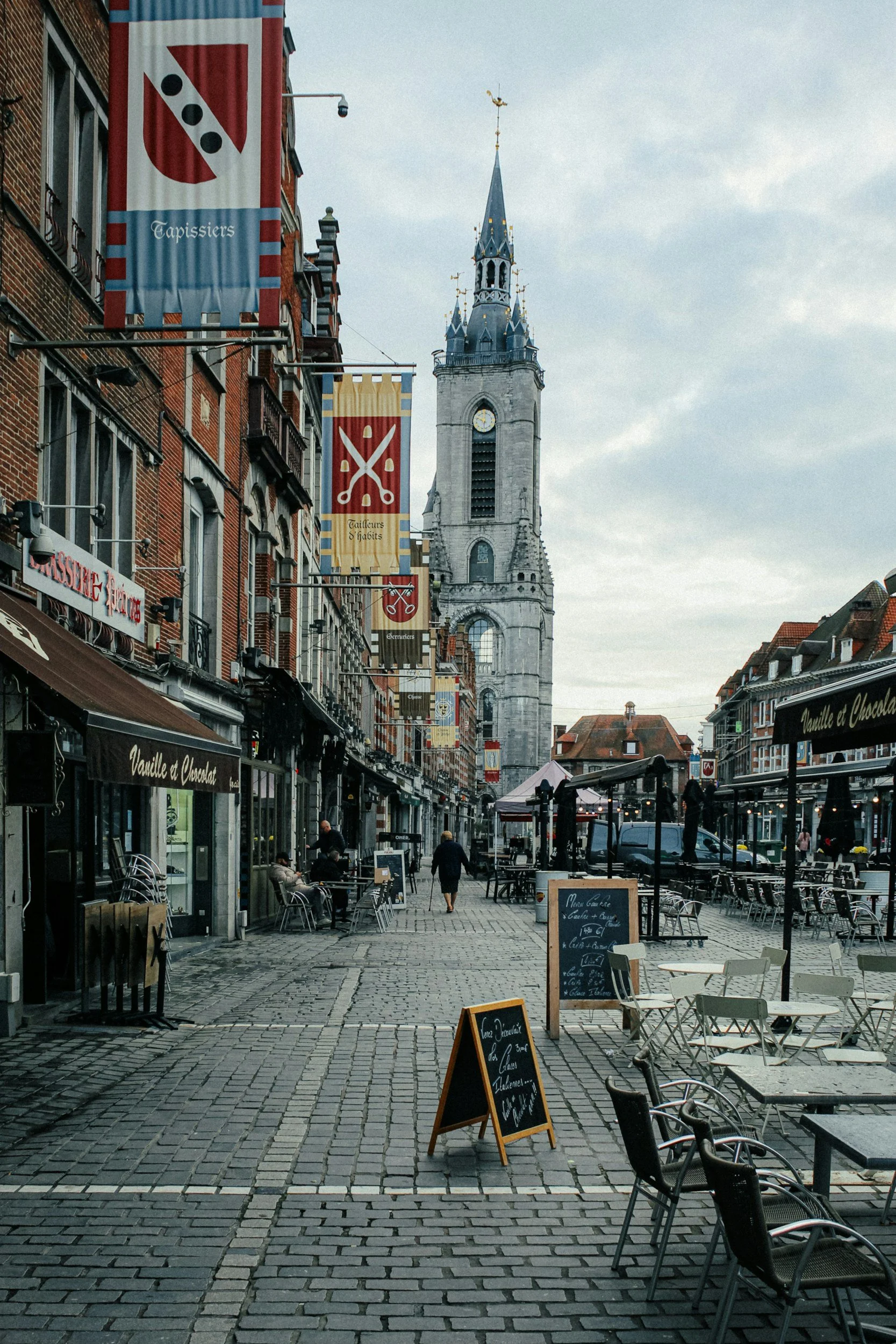
The cathedral dominates almost every view. You'll be walking along a side street, looking at a bakery window or a bookshop, and suddenly one of the five towers appears between the rooftops again. Around Place de l'Évêché and the streets surrounding the cathedral, the buildings feel properly old. Not freshly restored old. The kind of old where the stone has darkened over centuries and some shopfronts look like they haven't changed much in decades.
Saturday mornings are probably my favourite time to be here. Around Place de Lille, people arrive carrying shopping trolleys and woven baskets rather than cameras. Stalls sell seasonal vegetables, flowers, cheeses from Wallonia, roast chickens turning slowly on spits, crates of strawberries in summer, and piles of asparagus in spring. You see neighbours stopping to chat halfway through their shopping and market traders greeting customers by name. It feels like the market would still happen exactly the same way if no visitors showed up.
From there I usually drift towards Grand-Place. Not because there's a route worth following, but because that's where everyone eventually seems to end up. Café terraces begin filling around lunchtime, waiters weave between tables carrying beers and croque-monsieurs, and people settle in for much longer than they originally intended. If you're there during one of the monthly book markets, the square becomes even better. Tables covered with old Tintin comics, forgotten novels, vintage travel books, dog-eared cookbooks, and boxes of records that someone has clearly spent hours sorting through.
The streets between Place de Lille and Grand-Place are where I always spend most of my time. Rue des Chapeliers, Rue Royale, and the smaller lanes around them aren't packed with attractions, which is partly why they're enjoyable. There are antique shops where nobody seems in a hurry to sell you anything, traditional bakeries with queues spilling onto the pavement around lunchtime, chocolate shops, independent clothing stores, and the occasional café that looks exactly the same as it probably did ten years ago.
On one Sunday each month from May to September, the Grand-Place transforms into a bustling second-hand book exchange. You’ll find a variety of books: from novels and comics to school books, thrillers, and even encyclopedias. There’s something for every type of reader!
One thing I wasn't expecting was how much I liked the riverfront. Around Quai des Salines and the paths along the Escaut, the town suddenly feels more open. Cyclists roll past on their way home, students sit by the water, and people cross between both sides of the river without really paying attention to the fact that they're walking past one of the town's most famous landmarks. The rebuilt Pont des Trous sits nearby, but what I remember most is simply watching everyday life happen around it.
If you have time, it's worth wandering beyond the obvious centre towards Place Saint-Pierre. The streets become quieter, the houses more residential, and you start seeing a side of Tournai that most day-trippers never reach. It's also where you'll notice just how close the town feels to northern France. The architecture, cafés, and even some of the menus begin feeling slightly less Belgian and slightly more French.
By late afternoon, the pace slows again. Market stalls have disappeared, people are sitting outside cafés with a final drink, and the cathedral towers catch the evening light above the rooftops. Nothing dramatic happens. That's probably what I like about Tournai. It never feels like it's trying to impress anyone. It's simply a very pleasant place to spend a day wandering around, stopping when something catches your attention, and seeing where you end up next.
One of the best bakeries in the world… Pâtisserie Quenoy
Getting there:
Tournai is just under an hour’s drive from Brussels, and you can easily reach it by train as well, with regular services connecting it to both Brussels and Lille in France. The town’s train station is just a short walk from the town center, making it easy to get around and explore.
It’s not just Belgium that feels like this. There’s a town in Italy, Ascoli Piceno, where everything revolves around one huge stone square, and people just stay there for hours without really doing anything. It’s hard to explain until you see it.
And then there are parts of Tuscany where the days follow almost the same pace… a small market, a long lunch, and not much else planned. This one gives a better picture of that.
Why these small Belgian towns are worth visiting
One thing I like about travelling around Belgium is how little time you spend getting anywhere.
In a lot of countries, visiting smaller towns means committing to long drives, complicated connections, or an entire day built around transport. Here, places like Mechelen, Dinant, Tournai, and Durbuy feel surprisingly accessible. You can leave Brussels in the morning and be somewhere completely different before you've even finished your coffee.
What surprised me most wasn't how beautiful these towns were. You can see that from photographs. It was how different they felt from one another despite being relatively close together. Dinant feels tied to the river and the cliffs. Durbuy feels like the Ardennes. Mechelen revolves around its squares and waterways. Tournai carries a strong French influence that you notice almost immediately.
They're all small enough to explore on foot, but none of them feel interchangeable.
If you're planning a trip through Belgium, I'd honestly choose one or two of these towns and give yourself time to wander around without trying to see everything. They're the sort of places that reveal themselves gradually rather than all at once, which is probably why so many people end up wishing they'd stayed a little longer.
If you’re ever tempted to stay somewhere like this for a few days instead of just passing through, Uzès is probably the closest example of what that actually feels like in practice. It’s a wonderful place to visit in the spring!
FAQ: Small towns and local markets in Belgium
What are the best small towns to visit in Belgium outside Brussels and Bruges?
Durbuy, Dinant, Mechelen, and Tournai are among the best small towns to visit if you want to see a different side of Belgium. Each has a walkable centre, a strong local identity, and regular markets where everyday life still revolves around the town square. They're also easy to reach from larger cities, making them ideal for day trips or slower weekend breaks.
What are the best day trips from Brussels by train?
Mechelen, Tournai, and Dinant are all excellent day trips from Brussels. Mechelen takes around 25 minutes by train, Tournai about an hour, and Dinant roughly 90 minutes. All three have compact historic centres that are easy to explore on foot without needing additional transport once you arrive.
Is Durbuy worth visiting?
Yes, especially if you enjoy smaller towns and countryside scenery. Durbuy is often called one of the smallest towns in the world, but what makes it memorable is its setting in the Ardennes, its stone streets, riverside walks, local food shops, and relaxed pace. It's easy to explore in a day, although many visitors end up staying longer than planned.
Is Mechelen worth visiting instead of Bruges?
If you're looking for a historic Belgian town with fewer crowds, Mechelen is a great alternative. You'll still find impressive architecture, market squares, riverside walks, and excellent cafés, but the atmosphere feels more local and less visitor-focused than Bruges, particularly outside peak summer months.
Which Belgian town has the best local market?
That depends on what you're looking for. Mechelen has one of the largest weekly markets among the towns in this guide, while Tournai feels particularly local and community-focused. Dinant combines market stalls with a beautiful riverside setting, while Durbuy offers a smaller market surrounded by the scenery of the Ardennes.
Can you visit Dinant without a car?
Yes. Dinant is one of the easiest small towns in Belgium to reach by train. Direct services run from Brussels, and the station is located just across the river from the historic centre. Once you arrive, everything from the citadel and cathedral to the cafés and riverfront can be explored on foot.
What is the prettiest small town in Belgium?
Many travellers would choose either Dinant or Durbuy. Dinant is known for its dramatic location between the Meuse River and towering cliffs, while Durbuy is loved for its stone houses, narrow lanes, and Ardennes setting. The best choice depends on whether you prefer riverside scenery or a countryside atmosphere.
Are Belgian market towns worth visiting in winter?
Yes. While some seasonal markets and outdoor terraces are less active during winter, towns like Mechelen, Dinant, Tournai, and Durbuy remain enjoyable throughout the year. The quieter months often make it easier to explore historic centres, local cafés, and weekly markets without the crowds that arrive in summer.
Can you combine Belgium and northern France in one trip?
Absolutely. Tournai is particularly easy to combine with northern France thanks to its location near Lille. The train journey between the two takes around 25 minutes, making it easy to experience both Belgian and French market towns during the same trip.
Do you need a car to visit Belgium's small towns?
Not necessarily. Mechelen, Dinant, and Tournai are all easy to reach by train and can be explored entirely on foot. Durbuy requires a short transfer from Barvaux station, but many visitors still reach it without driving. Belgium's rail network makes it one of the easiest countries in Europe for exploring smaller towns without a car.
When is the best time to visit Belgium's market towns?
Late spring through early autumn is usually the most enjoyable period, particularly from May to September when weekly markets, café terraces, and outdoor events are at their busiest. However, these towns also work surprisingly well outside the main season, especially if you prefer quieter streets and a more local atmosphere.
Which Belgian town is best for a weekend trip?
If you want a riverside setting and dramatic scenery, Dinant is hard to beat. For historic streets and Ardennes landscapes, Durbuy is a great choice. Mechelen works well if you're interested in markets, cafés, and easy train connections, while Tournai offers a mix of history, book markets, and a distinctly French-influenced atmosphere.