Thinking about the Richerenches truffle market? Here's what the morning is actually like.
Richerenches in France is one of those places that can feel strangely normal and oddly intense at the same time. On a Saturday morning in winter, this small village turns into a working truffle hub, and it happens fast. People arrive early, park wherever they can, greet each other like they’ve done it for years, and get down to business.
If you’re coming for the atmosphere rather than a shopping spree, the experience is absolutely doable. But it helps to understand what you’re walking into. This is not a slow browse between jam stalls and lavender soap. It’s a market with two speeds: the professional trade that moves with purpose, and the public-facing side that’s more accessible but still very focused.
The basics are simple: the main winter market season runs roughly mid-November to mid-March, and the Saturday market is the weekly anchor. Official listings for the current season show Saturday morning trading, typically around 9:30 to 13:00. What changes week to week isn’t the schedule. It’s the mood, the pace, and how “open” it feels to visitors.
This guide is for those who likes food culture, but doesn’t enjoy being herded into it. You’ll get the context that makes the market make sense, plus the small practical choices that keep the morning calm.
Why Richerenches feels different from other Provençal markets
A lot of Provençal markets are social. Even when you’re buying, you’re chatting. You stop for a coffee, you drift, you come back around for the cheese. Richerenches, on truffle Saturdays, is different. It’s still local, still rural, still unmistakably southern France, but it’s built around something valuable and seasonal, and that changes how people move.
Truffles pull in professionals. That’s not marketing language, it’s just the reality of a product that’s traded, priced, checked, and bought in serious quantities. Some of the most useful information about Richerenches is simply how the market is split: the Avenue de la Rabasse (named for the Provençal word for truffle) hosts the terroir market and retail sales, while the Cours du Mistral is reserved for professionals, brokers, and producers. Once you know that, the whole morning becomes easier to read.
It also helps to place Richerenches geographically. The village is located in the Enclave des Papes, a little pocket of Vaucluse surrounded by Drôme. That detail isn’t trivia. It explains why the area has its own micro-identity, and why nearby towns can feel like they share a culinary culture without being on the standard Provence circuit.
If your mental image of Provence is summer markets and sun-bleached villages, Richerenches in winter is a reset! It’s coats, cold air, breath visible when you speak, and people warming their hands around paper cups. There’s still plenty to eat and look at, but the centre of gravity is the truffle itself, and the market behaves accordingly.
If you’re building a quieter France trip around towns that feel lived-in and local, the pacing here pairs well with a longer stay in the region rather than a rushed detour. A good companion read, especially if you like trips with a slower base, is this guide to French towns worth staying 3–5 nights.
When the market actually happens, and why timing matters more than you think
The Richerenches truffle market runs in winter, typically mid-November through mid-March, with Saturday mornings as the main weekly moment. But the detail that matters more than the headline is the time window.
You’ll see slightly different “official” times depending on the listing (9:00 to 13:00 is commonly stated, and 9:30 to 13:00 is also used for the current season). In practice, what visitors feel as “the market” begins earlier than the neat hours suggest, because the energy starts before the public side looks busy. The professionals arrive with intention. The retail side fills in behind that.
If you want to avoid the most chaotic version of the morning, you have two workable strategies:
Arrive early enough that you’re parked and oriented before the village tightens up. That doesn’t mean you need to be dramatic about it, but it does mean you shouldn’t aim for “mid-morning” like you would for a normal market. Mid-morning is when day-trippers tend to land, and it’s when the streets feel most compressed.
Or arrive later, when the market is winding down and the urgency has already passed. The trade will be mostly done, and you’ll miss the peak buzz, but you’ll also miss the sense of being in everyone’s way.
Which approach is better depends on why you’re going. If you want to see the truffle world in motion, earlier is better. If you’re more interested in a calm winter outing with a bit of market atmosphere, arriving later can be surprisingly pleasant.
There’s also the season itself. Early winter can feel more professional-heavy, and some sources note that retail sales and rules can shift earlier in the season. If you’re going specifically to buy, it’s worth checking the most current local listing close to your date. If you’re going to observe and absorb, you can be more flexible.
And a small honesty point: if you hate crowds and tight spaces, don’t choose the big festive dates. Richerenches has other truffle-related events that draw large numbers, including the well-known truffle mass in January that brings significant crowds. The Saturday market is the better choice for a calm, controlled experience, but even then, some Saturdays are simply busier than others.
How the truffle market is structured, and what visitors often misunderstand
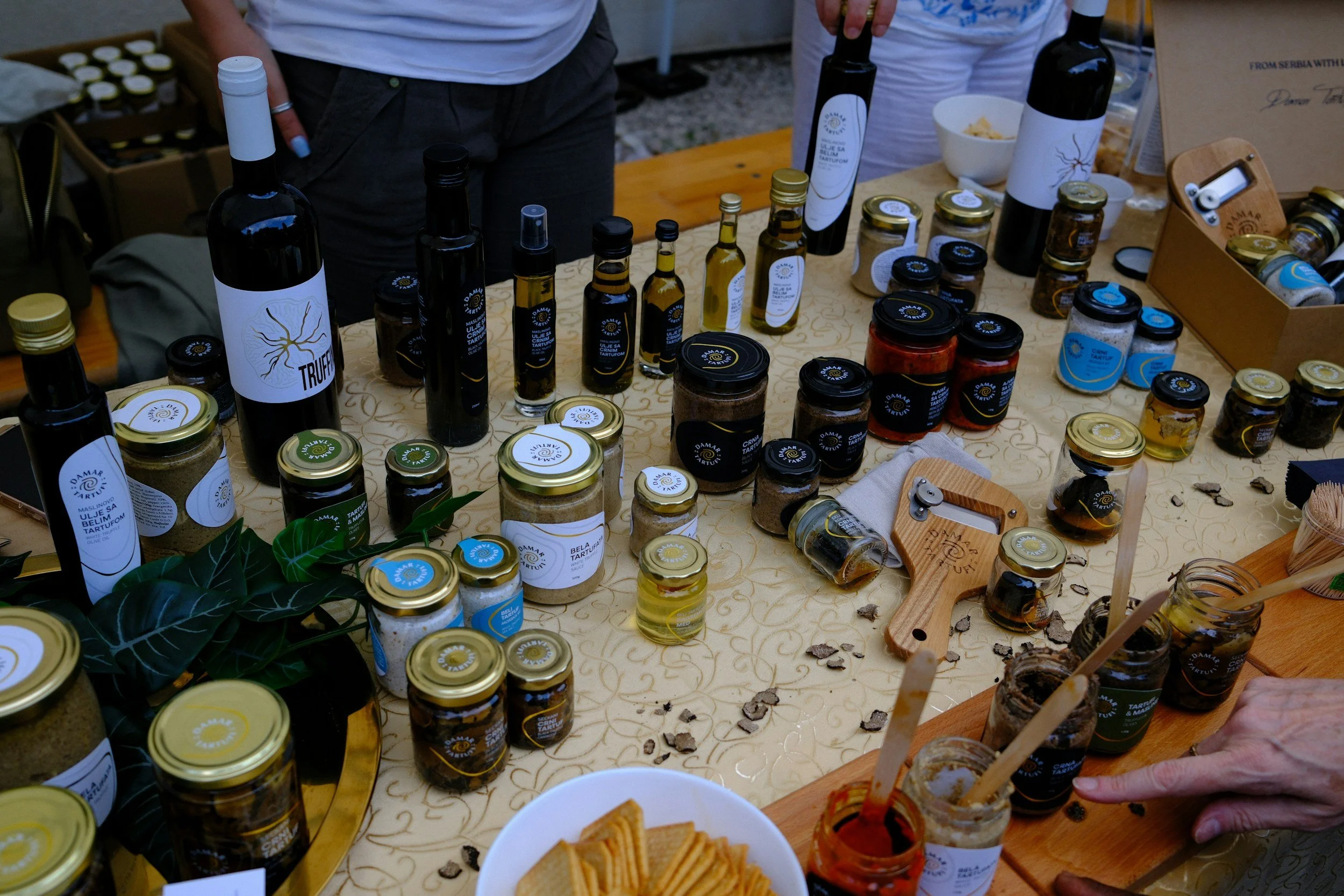
The biggest misunderstanding is assuming Richerenches works like a normal market with truffles added on. It doesn’t. It’s more accurate to think of it as a truffle market with a market around it.
The two-location structure is not just a fun detail. It’s how you decide where to spend your time. On the Cours du Mistral, the professional market is for wholesalers, brokers, producers, and buyers who know what they’re doing. It can look opaque from the outside because it isn’t designed for spectators. People are not there to explain. They’re there to trade.
On the Avenue de la Rabasse, you’ll find the terroir market and retail truffle sales for individuals. This side is more legible as a visitor. There’s still plenty of expertise in the air, but it’s a space where you can ask questions without disrupting a transaction that’s happening at speed.
Another thing visitors misunderstand is what “seeing truffles” looks like. You may imagine baskets on display like cherries in June. In reality, truffles are handled with care. They’re checked, weighed, discussed, sometimes kept discreet. The product is expensive, and the mood reflects that.
It’s also worth remembering that truffles are seasonal agriculture. The week’s weather affects quality and quantity. Some Saturdays will feel abundant. Others will feel more restrained. That variability is part of what makes the market real. It’s not curated to look full.
If you want the morning to feel less confusing, give yourself a few minutes to simply watch. Notice where people cluster and where they don’t. Notice who walks with purpose and who meanders…
And if you’re the kind of traveller who likes to understand local systems, Richerenches is a good reminder that “market culture” in France is not one thing. Truth is, a village brocante, a coastal fish market, and a truffle trade morning operate on completely different “social rules”.
Visiting without getting in the way: observing respectfully as a non-buyer
You can absolutely go to Richerenches without buying truffles. In some ways, that’s the best way to go the first time. You’ll see more, you’ll feel less pressure, and you’ll be less likely to overpay for something you’re not fully confident choosing.
The key is to act like you understand it’s a working space. That doesn’t mean being stiff or anxious. It just means moving with awareness.
On the professional side (Cours du Mistral), treat it like you would treat a small auction room or a busy harbour at dawn: interesting to watch, but not a place to drift into the middle of. Keep to the edges, don’t block pathways, and don’t stop suddenly when people are clearly moving from one point to another. If you’re with someone, keep conversations low and physical space tight. This is not the spot for wide-stance browsing.
On the retail and terroir side (Avenue de la Rabasse), you have more freedom. You can approach stalls, ask a simple question, and step back. If you want to photograph, be discreet and quick. Not everyone wants their transaction documented, and it’s better to assume that privacy is part of the culture around an expensive product.
If you do want to ask about truffles, keep it practical. What size is good for two people? How should you store it overnight? What’s the difference between this week and last week? You’re more likely to get a warm answer if the question feels genuine.
There’s also a quiet etiquette around buying. If you’re not buying, don’t monopolise the seller’s attention when there’s a line. Watch, listen, and choose your moment.
And finally: if you feel like you’re in the way, you probably are. Siorry. That’s not shame though. It’s just a signal to shift three steps to the side and let the village keep functioning. When you do that, the market immediately becomes more enjoyable.
Where to stand, and how to read the atmosphere
Richerenches on a Saturday morning has a particular kind of density. It’s not “festival crowded.” It’s more like concentrated: cars, people, and purpose compressed into a small village frame. Once you accept that, you can make better micro-decisions.
The most comfortable place to be, as a visitor, is usually slightly off the main current. You’ll still see plenty. You’ll just feel less pinned. If you find yourself in the thickest knot of people and you’re not actively doing something, that’s the moment to move. Step toward the edge of the street. Give someone room to pass. Let the flow keep flowing.
Pay attention to the people who look like they belong there. They tend to move in straight lines, and they don’t stop to scan. They know exactly where they’re going. If you’re standing in the path of that kind of movement, you’ll feel it quickly.
Also notice how conversations cluster. If two or three people are deep in discussion near a stall, that’s likely a transaction. Don’t wedge yourself into that space. If you’re curious, stand back. The scene will make sense from two metres away.
The atmosphere also changes with weather. On cold, bright days, the market feels sharp and brisk. On damp days, it can feel a little tighter, because everyone huddles. If you’re particularly crowd-averse, choose a dry day if you can. You’ll feel less boxed in.
And a useful psychological trick: decide your “exit points” early. Know where you’ll step away if it feels too much. That might be a side street, a café, or simply your car for ten minutes. Having an easy place to go keeps the morning calm, even if the market is busy.
If you’re building a winter trip that includes other quiet, atmospheric experiences, it can be satisfying to pair a market morning with something slower later in the day, like a countryside walk or a night-sky stop. If that’s your style, you might enjoy this piece on stargazing holidays in Europe as a different kind of winter travel experience.
What to do once the market winds down
One of the smartest ways to enjoy Richerenches is not to treat it as a single-activity morning. The market is intense because it’s concentrated. Once it winds down, the village and the surrounding area feel calmer almost immediately. That contrast is part of the charm, and it’s where you can build a better half-day.
After 11:30 or so, you’ll often feel the shift and people start leaving. If you’ve arrived early, this is a good moment to step away from the market centre and let the rest of the morning breathe.
The Enclave des Papes area is well-suited to a small loop: a short drive between villages, a stop for bread or cheese, a quiet walk if the weather allows. You don’t need a packed itinerary. In fact, if you over-plan, you’ll miss the main advantage of being here in winter, which is that time feels less competitive.
If you want something simple and satisfying after the market, aim for a late coffee and something small to eat. Even if you’re not chasing “truffle dishes,” you can still find good local products around the market, and winter is a forgiving season for slow meals. You’ll also spend less time trying to dodge tour groups, because the general Provence summer crowd isn’t the one that shows up here.
If you’re staying nearby, consider explore Richerenches further by spending the night in the region rather than driving in and out. It changes how the morning feels. When you’re not racing back to a base hours away, you’re more likely to let the market be what it is: interesting, specific, and short.
If you’re looking for a nearby town with a different mood (still southern, still manageable, more of a “stay a few days” place), this guide to autumn in Uzès is useful even outside autumn. The point isn’t the season label. It’s the pacing, the cafés, and the idea of choosing one town as a base and letting the region come to you.
Eating truffles nearby without chasing restaurant hype
Let’s be realistic: truffles can be underwhelming if you don’t know what you’re looking for… right? Or rather, if you expect them to behave like a normal ingredient. A truffle dish that’s too loud, too creamy, or too showy can flatten the whole thing into an expensive blur.
The better approach in this region is to keep it simple and accept that “truffle season” doesn’t need to mean “truffle everything.” Sometimes the best truffle moment is not a plated, photographed meal. It’s the smell when a vendor opens a container. It’s the way people talk about this week’s quality versus last week. It’s noticing how winter food culture shifts toward richer, earthier flavours.
If you do want to eat truffles, go for places that treat them as an accent rather than a performance. You’re looking for restraint: a little grated over eggs, a small amount folded into something warm, a dish where the truffle is allowed to be itself. If a menu reads like it’s trying too hard, it usually is.
Also, set expectations about cost! Truffles are expensive, and they are priced like a luxury agricultural product because they are one. If you’re the type of traveller who hates feeling upsold, it’s better to choose one intentional truffle experience and keep the rest of your meals normal. The region has plenty of excellent everyday eating that doesn’t need to be truffle-branded to be good.
And one more honest detail: not every truffle product sold around the market is worth buying. There’s a difference between fresh truffles and “truffle-flavoured” things. If you’ve ever tasted synthetic truffle oil, you know exactly what I mean. If you’re unsure, ask what’s actually inside, and don’t be embarrassed about choosing nothing.
If you enjoy food travel that’s more about regional character than the most famours spots, you’ll likely enjoy other culinary reads on Trippers Terminal that focus on what people actually eat and how places feel day to day. Enjoy!
Practical logistics: getting there, parking, and why a car still matters
Richerenches is not difficult to reach, but it’s not a place where you can rely on effortless public transport on a winter Saturday morning. For most travellers, a car is what makes the experience comfortable.
The closest major rail gateways in this part of France are Avignon (including Avignon TGV) and other regional stations. From Avignon TGV, there are options that combine train and taxi, or bus routes, but they’re slower and less flexible than driving, especially if you’re trying to arrive early. Driving from Avignon to Richerenches is roughly an hour by car.
If you are coming without a car, you can still make it work, but plan for a more constrained day. You’ll likely need to commit to a longer travel window, and you may not have the easy “step away” option that makes busy markets feel calmer. For a lot of people, that’s the difference between enjoying Richerenches and feeling trapped in it.
Parking is the other reality. .. This is a small village. On market Saturdays, it fills up. If you arrive later, accept that you may park further out and walk in, which can actually be fine if you prefer a bit of distance before you hit the market density.
Wear shoes you can stand in. Winter in Provence can still be cold, and village streets can be damp. This isn’t the morning for delicate footwear.
If you’re planning a longer Provence or southern France trip and you want it to feel calm, not frantic, it’s worth building your itinerary around a few bases rather than constant moving.
Is Richerenches worth it if you are not a truffle obsessive?
Yes, Richerenches can be worth it even if you’re not obsessed with truffles, but only if you like the kind of travel where you’re happy to witness local life without needing to participate fully. If you need an activity to be interactive and visitor-friendly to enjoy it, this may not be your favourite morning.
The market is fascinating because it’s specific. It’s not trying to entertain you. It exists because truffles are grown here, and winter Saturdays are when they’re traded.
If you’re coming from far away, it makes more sense as part of a regional winter weekend than as a standalone “must-do.” Think of it as one scene in a larger trip: a market morning, a long lunch, a drive through small towns, a quiet evening somewhere warm.
It’s also worth acknowledging that some Saturdays will simply feel too busy. Even if you do everything “right,” you can’t control who else shows up. If you arrive and the village feels packed in a way you know you won’t enjoy, give yourself permission to leave. That’s not failure. That’s good judgement.
On the other hand, if you hit a calm Saturday, the market can feel like a genuine privilege to witness. You’ll hear how people talk about quality and season. You’ll notice how quickly expertise shows up in small gestures. You’ll see a part of rural French food culture that doesn’t exist in summer!
If you want to explore the region a bit more
Richerenches rarely makes sense as a one-off stop. Once you’re here, you’re already in a part of France where borders don’t really matter in daily life. Provence blends into Drôme Provençale almost without you noticing, and the pace stays the same even as the scenery shifts.
Just north of Richerenches, Drôme Provençale feels like a natural next step. The markets are still working markets, villages are small and quiet, and it’s the kind of place where staying put for a few nights makes more sense than rushing around. This guide to slow travel in Drôme Provençale shows how the region works best when you take it slowly.
If you’re heading west, Provence Verte offers a softer, greener side of Provence that’s especially nice outside high summer. It’s calmer, less expected, and good for trips earlier in the year. The guide to Provence Verte in spring focuses on timing, countryside, and villages that still feel everyday.
Going south changes the mood again. If you like the idea of ending a trip by the sea but want to avoid Riviera intensity, Menton is a good in-between. It’s coastal, but still grounded. This guide to a quiet weekend in Menton is perfect after inland markets and small towns.
And if markets are what drew you to Richerenches in the first place, there are other Provençal towns where markets are still part of weekly life rather than a spectacle. This guide to Provence’s market towns connects naturally if you’re planning more than one market morning.
FAQ:s about visiting the Richerenches truffle market
When is the Richerenches truffle market held?
The winter truffle market season runs roughly from mid-November to mid-March, with the main market on Saturday mornings. Official listings for the current season show Saturday opening around 9:30 to 13:00.
What time should you arrive at the Richerenches truffle market?
If you want to avoid the most stressful parking and crowding, arrive early enough to park and orient yourself before mid-morning. If you prefer a calmer atmosphere and don’t mind missing the peak activity, arriving closer to the end of the market can also work.
Can you visit the Richerenches truffle market without buying truffles?
Yes. Many visitors go to observe the atmosphere and understand how the market works. The simplest way to do it respectfully is to keep to the edges of the professional area (Cours du Mistral) and spend more time on the terroir and retail side (Avenue de la Rabasse).
Is the Richerenches truffle market crowded on Saturdays?
It can be, especially on peak winter weekends and on dates tied to other truffle events. The Saturday market is a working market that attracts professionals, so even when it’s not “touristy,” it can still feel busy.
How do you get to Richerenches from Avignon?
Driving is the most straightforward option and takes roughly an hour. There are also mixed public transport options that can involve train plus taxi or bus routes, but they’re slower and less flexible for an early market morning.
Is the Richerenches truffle market suitable for tourists?
It depends on what you mean by “suitable.” If you enjoy observing local systems and you’re comfortable in busy, practical environments, it can be a great morning. If you want a visitor-oriented market built for browsing, it may feel intense.