
Ferrol to Ribadeo by train: the slow Galician route I’d plan around
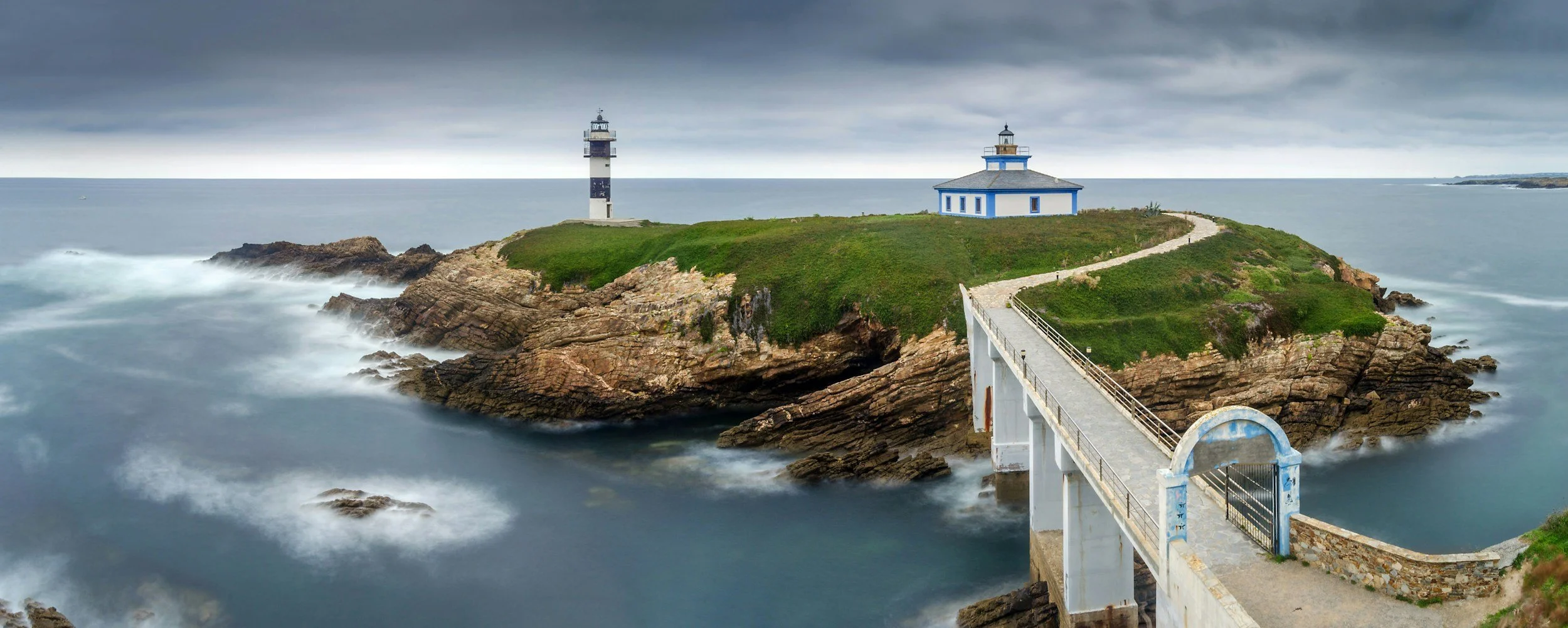
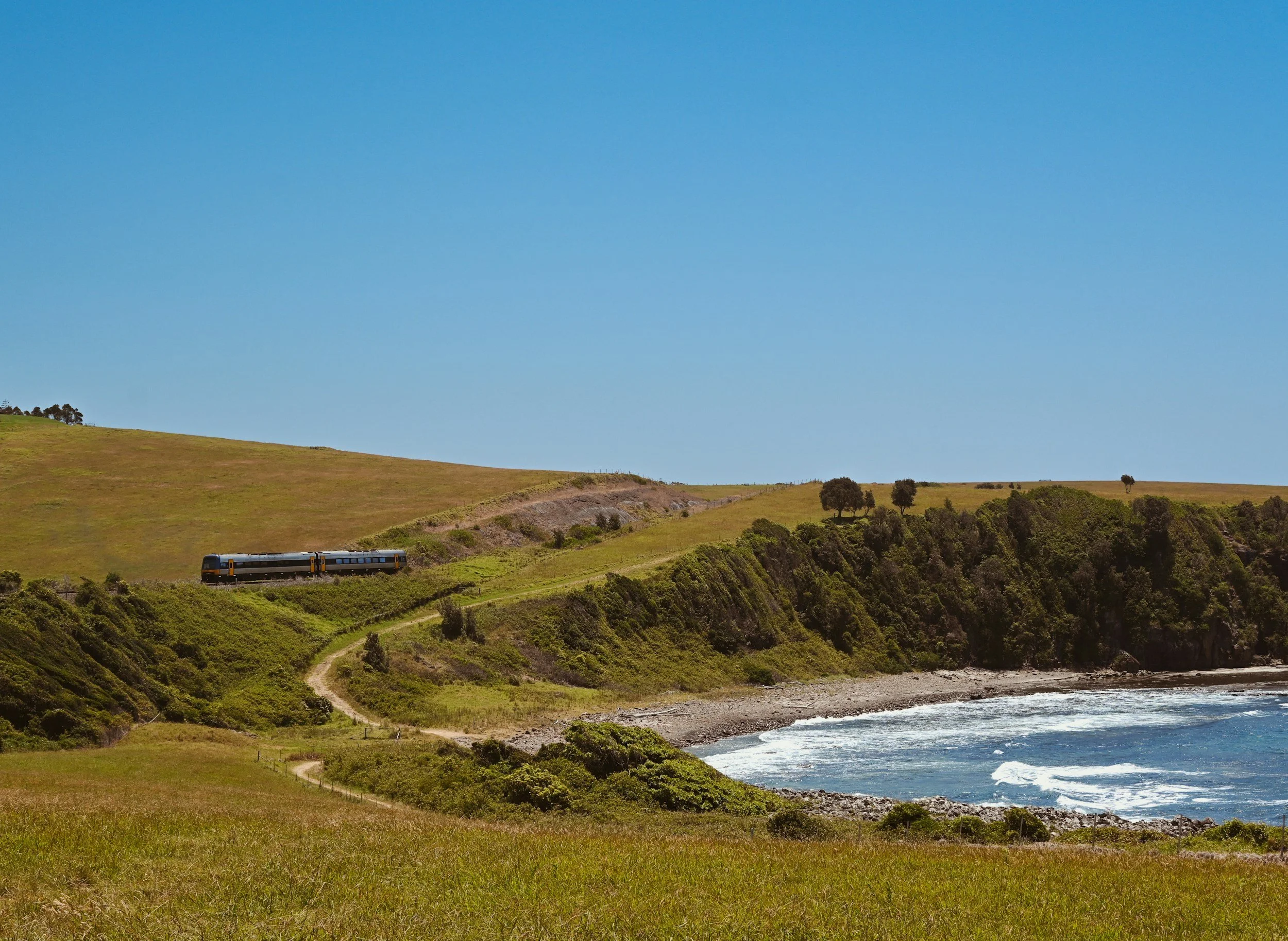
The narrow-gauge train from Ferrol to Ribadeo has started getting a little more attention recently, and not without reason. The Guardian included the reverse journey in a list of Europe’s best coastal railways, which is a strong endorsement for a route that still feels slightly obscure compared with Spain’s faster and much easier-to-understand trains. Over a little more than three hours, it crosses roughly 146 km of northern Galicia through estuaries, wooded sections, small towns and stretches of the A Mariña coast, with the scenery opening up and disappearing again rather than sitting outside the window the entire way.
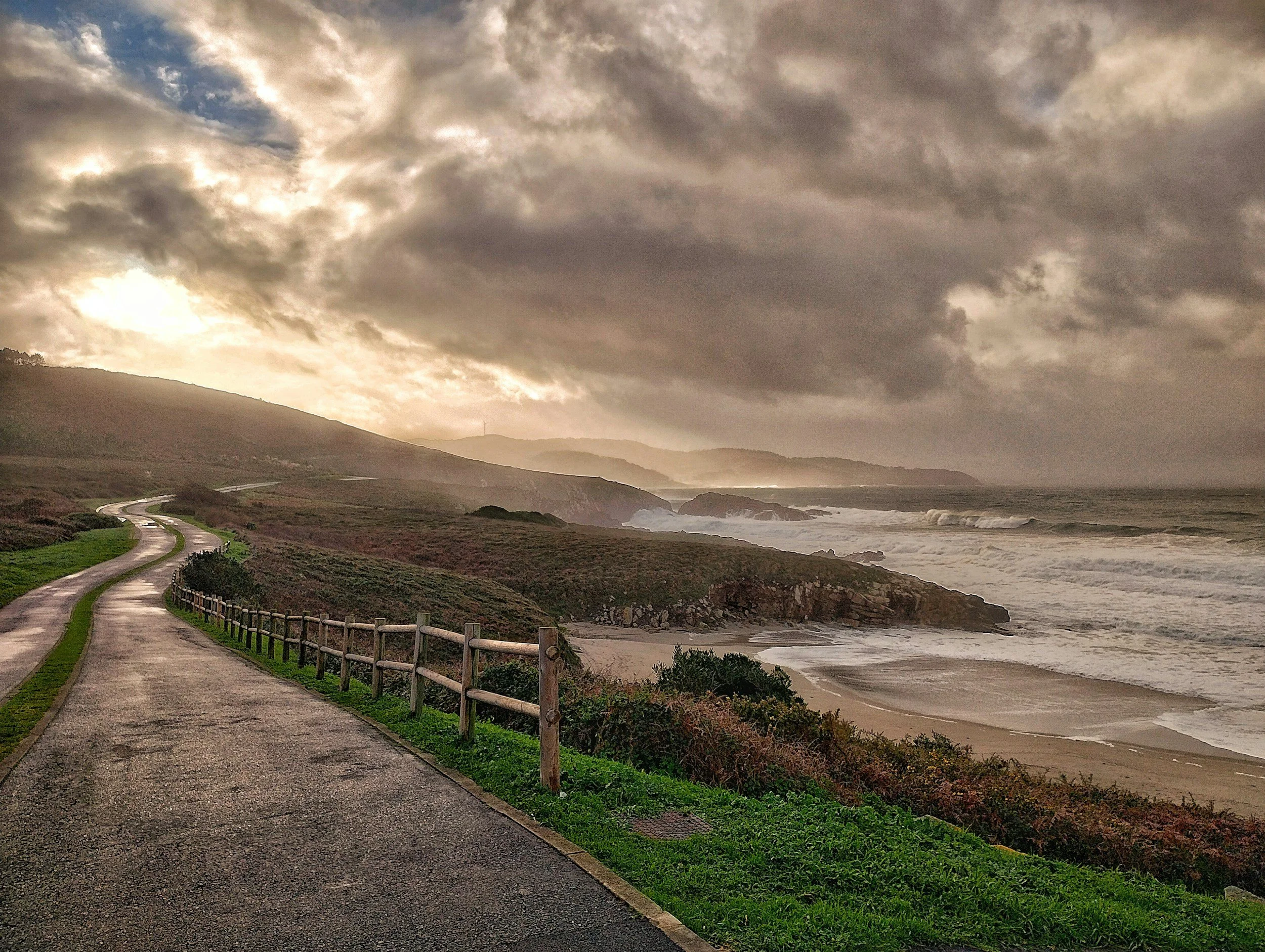
That last part is useful to know, because this is not one long Atlantic panorama and I would not plan it expecting one. Some of the most attractive sections come later, after a quieter start through more inland and rural stretches, and the line curves enough that views appear on both sides. It feels much more varied than the phrase “coastal railway” suggests, and I think that makes it more interesting rather than less.
This guide is specifically about travelling from Ferrol to Ribadeo, not about tackling the entire narrow-gauge network towards Asturias or Bilbao. The full journey is inexpensive and long enough to feel like a proper trip, but neither the price nor the distance is the part that needs much thought. The timetable does.
There are only a small number of direct trains each day, and the gaps between them can be long enough to completely change your plans if you miss one. That is why I would be careful with the very tempting idea of getting off in several places along the way and simply catching the next train later. On a frequent railway that would be an easy afternoon. Here, it can leave you standing around for hours in a place where you had only planned to stop for lunch.
So yes, I think the Ferrol to Ribadeo train is worth planning into a trip, but only if you want the journey itself. If your main concern is reaching Ribadeo quickly, this is not the clever choice. If spending part of the day crossing northern Galicia on a small regional train sounds like something you would enjoy anyway, then the route becomes much more appealing, and much easier to plan once you know where the timetable can catch you out.
Is the Ferrol to Ribadeo train worth taking?
I would take it once, and I would take the full Ferrol to Ribadeo journey rather than trying to improve it by squeezing in several stops.
The reason is that the route has enough variation to keep three hours interesting. You leave Ferrol through a much more ordinary suburban and rural landscape than the “coastal railway” label might suggest, then the journey starts opening out around the northern rías. Later come places such as Ortigueira, O Barqueiro and O Vicedo, before the line continues through A Mariña towards Ribadeo. Some stretches are wooded, some are inland, and sometimes the coast appears only briefly between trees or around a bend. I would much rather know that beforehand than spend the first hour wondering where all the sea has gone.
That also makes the full ride more satisfying than choosing one short stretch purely because somebody has labelled it the prettiest. You see the landscape change rather than arriving halfway through it, and for a first journey there is something pleasantly uncomplicated about getting on in Ferrol, putting your bag down and staying there until Ribadeo.
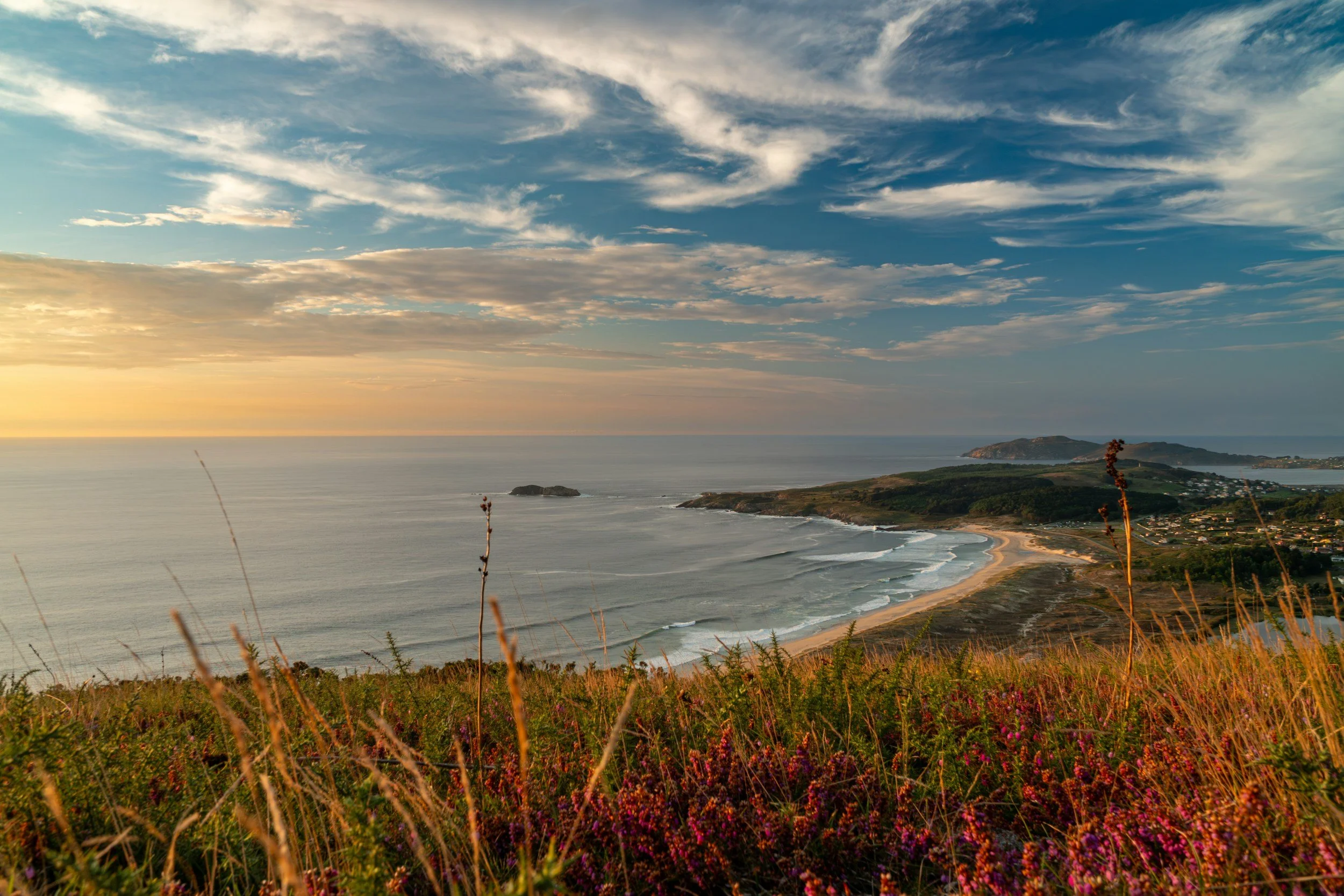
Who this train suits
This is a particularly good fit if northern Galicia is already the destination rather than somewhere you are racing through. It works well as part of a car-free trip between smaller towns because those three hours do not need to be justified as “lost” travel time. You are already moving through the part of Spain you came to see.
It also suits people who enjoy noticing the route itself: the rías around Ortigueira, the small stations, river mouths, settlements and the quick glimpses of coast that disappear almost as soon as you have spotted them. I would not promise a photographer three hours of clear coastal shots from the window, but there should be enough changes along the way to stop it feeling like a long commuter ride.
With normal luggage, I would keep the first trip very simple and stay in Ribadeo afterwards. Arriving with the evening still your own is a much nicer way to use this railway than getting off the train and immediately checking the clock for the next connection.
When I would choose the road instead
There are days when I would not take this train at all.
If I needed to reach Ribadeo quickly, I would use road transport. A car or private transfer covers the distance much faster, and spending several hours on the railway becomes difficult to defend when the journey itself is not something you particularly want.
I would also skip it before a flight, an expensive long-distance train or another fixed booking that leaves little room for delays. The same applies if Praia das Catedrais is the main purpose of the day and you already have a specific low-tide window to work around. Combining a sparse regional railway with another time-sensitive plan is where a pleasant day can start requiring far too much clock-watching.
For onward travel from Ribadeo, especially towards Asturias, I would compare the rail and coach options for the actual date rather than assuming that staying on the narrow-gauge network is automatically the nicest or easiest choice. The railway continues east, but there is no prize for remaining loyal to it when a coach gets you where you want to go more sensibly.
And if you need guaranteed step-free boarding or assistance, I would not book this section based on general Renfe accessibility information alone. The exact train and stations need checking first, because the available information for this part of the network is not clear enough to make promises on someone else's behalf.
First, make sure you’re searching for the right train
Finding this train is more confusing than riding it, mostly because the railway has kept its old name while Renfe has changed the labels around it.
You will still see FEVE everywhere when researching the route, and that is the name most travellers use when talking about Spain’s northern narrow-gauge network. Renfe, however, may show the service under Cercanías AM, Regional, Regional RAM or Media Distancia Ancho Métrico, depending on which part of its website you have landed on. You do not need to decode all of that before travelling.
The important thing is not to rely on the Ferrol Cercanías page for the full journey. That section of Renfe’s website is centred on the local Ferrol network and its station search runs as far as Ortigueira. If you are sitting there wondering why Ribadeo has apparently vanished from the railway, you have not discovered a mysterious break in the line. You are simply looking at the wrong planner.
For Ferrol to Ribadeo, go to Renfe’s general timetable or journey planner, enter Ferrol and Ribadeo as your start and end points, and look for a direct Regional service. That is the through narrow-gauge train you want. There is no need to build a separate Ferrol–Ortigueira journey and then start hunting for another train east from there.
I would also search by the towns rather than by “FEVE”. FEVE is still useful when reading about the route, but Renfe’s booking system does not always use the same language that travel guides do, and that is where a surprisingly simple journey starts looking much more complicated than it is.
Once the direct Ferrol–Ribadeo service appears, the naming problem is basically solved. The part that deserves more attention is the timetable itself, because choosing the wrong departure can have a much bigger effect on your day than choosing the wrong railway label.
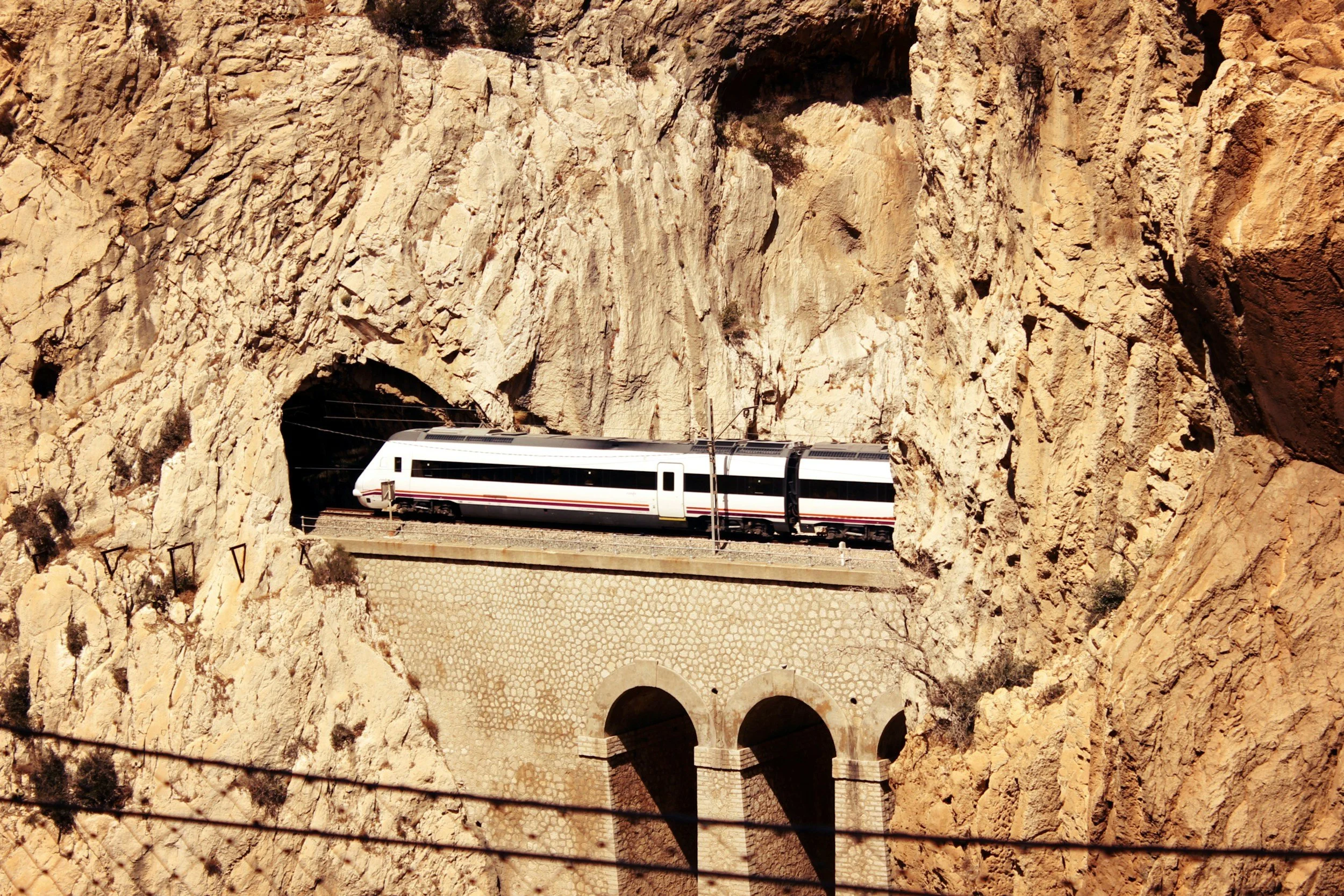
How often does the Ferrol to Ribadeo train run?
This is the part I would check before booking anything else that day, because the trains are spread out enough that one departure can be much more useful than another.
The full journey takes just over three hours. When I checked Renfe on 16 September 2026, there were four direct trains from Ferrol to Ribadeo:
08:20–11:26
10:45–13:53
15:30–18:38
19:05–22:15
I would not treat those exact times as permanent, because timetables change, but they show the pattern quite well. There is an early train, one later in the morning, then a fairly big gap before the afternoon service and another before the evening one.
If I were doing this for the first time, I would probably choose the late-morning train. You still get a relaxed start in Ferrol, but you arrive in Ribadeo early enough to have lunch, check in and still feel like you have a day left. The early train is useful if you want as much time in Ribadeo as possible, but I would not choose it just for the sake of arriving earlier.
The last train is the one I would be more careful with. On the timetable I checked, it arrived after 22:00, which is fine if your hotel knows you are coming and you already know where you are going. It is less appealing if you are arriving for the first time with luggage and then trying to work out the walk into town in the dark.
The fare was around €11 one way when I researched this route, which is very reasonable for a journey of this length, but that is not really the bit that needs much planning.
Why I wouldn’t try to stop everywhere
The gaps between trains are the reason I would not plan this like a railway where you can casually get off, have lunch somewhere and catch another one an hour later.
On the day I checked, the gaps between departures from Ferrol were about 2 hours 25 minutes, 4 hours 45 minutes and 3 hours 35 minutes. So missing the late-morning train could mean waiting until well into the afternoon.
That also changes how attractive some stops look. Loiba, Foz or another small place along the route might look easy when you see it on the map, but the important question is what time the next train leaves. A two-hour stop can very quickly turn into four or five hours, and that is quite a long time if all you wanted was lunch and a walk.
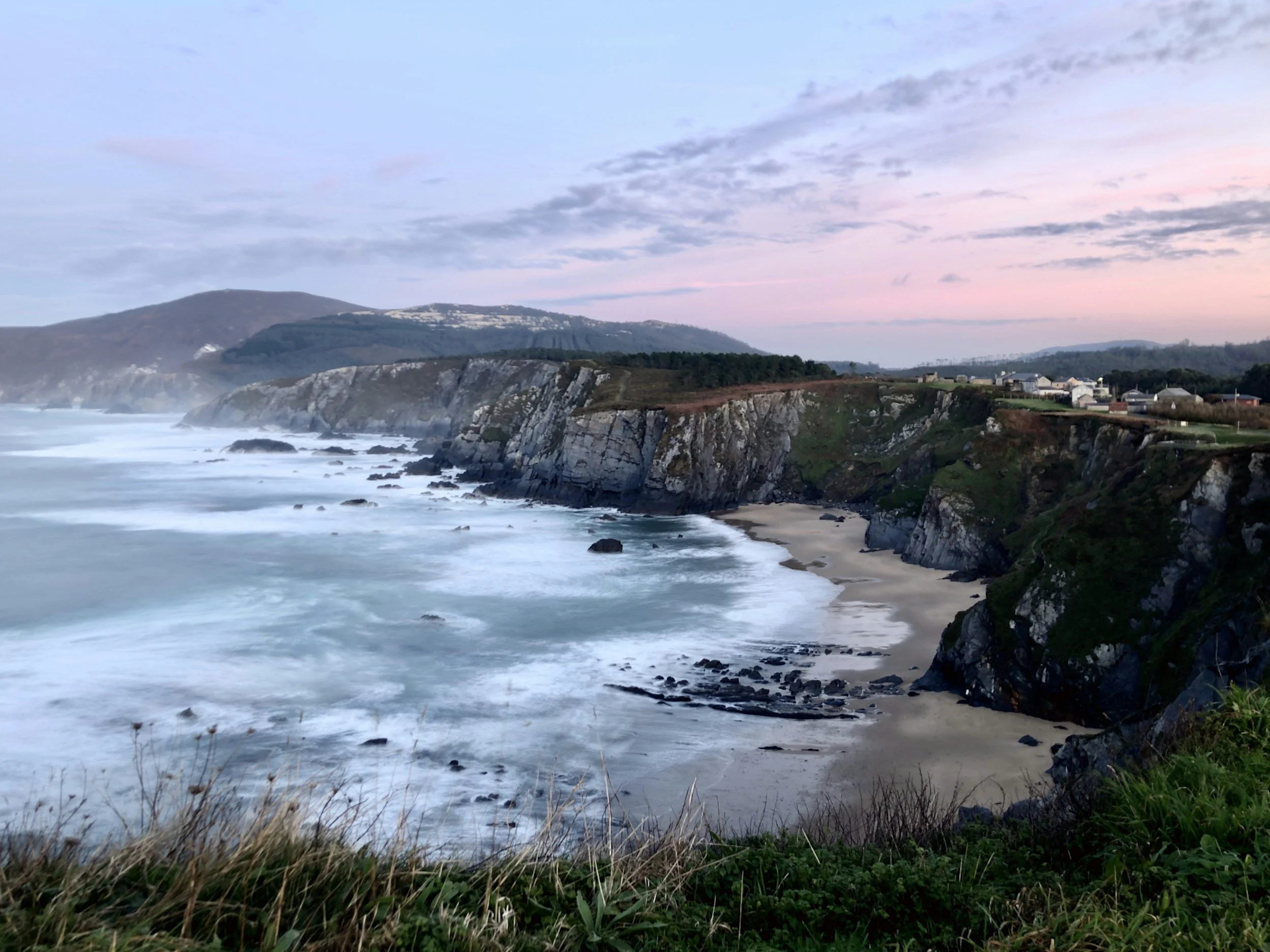
I would keep it simple and choose one place to break the journey properly rather than trying to fit several into the same day. Viveiro is the one that makes the most sense for that.
Should you ride straight through or stop overnight?
For a first trip, I would keep it simple and stay on the train all the way from Ferrol to Ribadeo. This route already takes its time, and once you start adding stops, the day can become very train-focused very quickly.
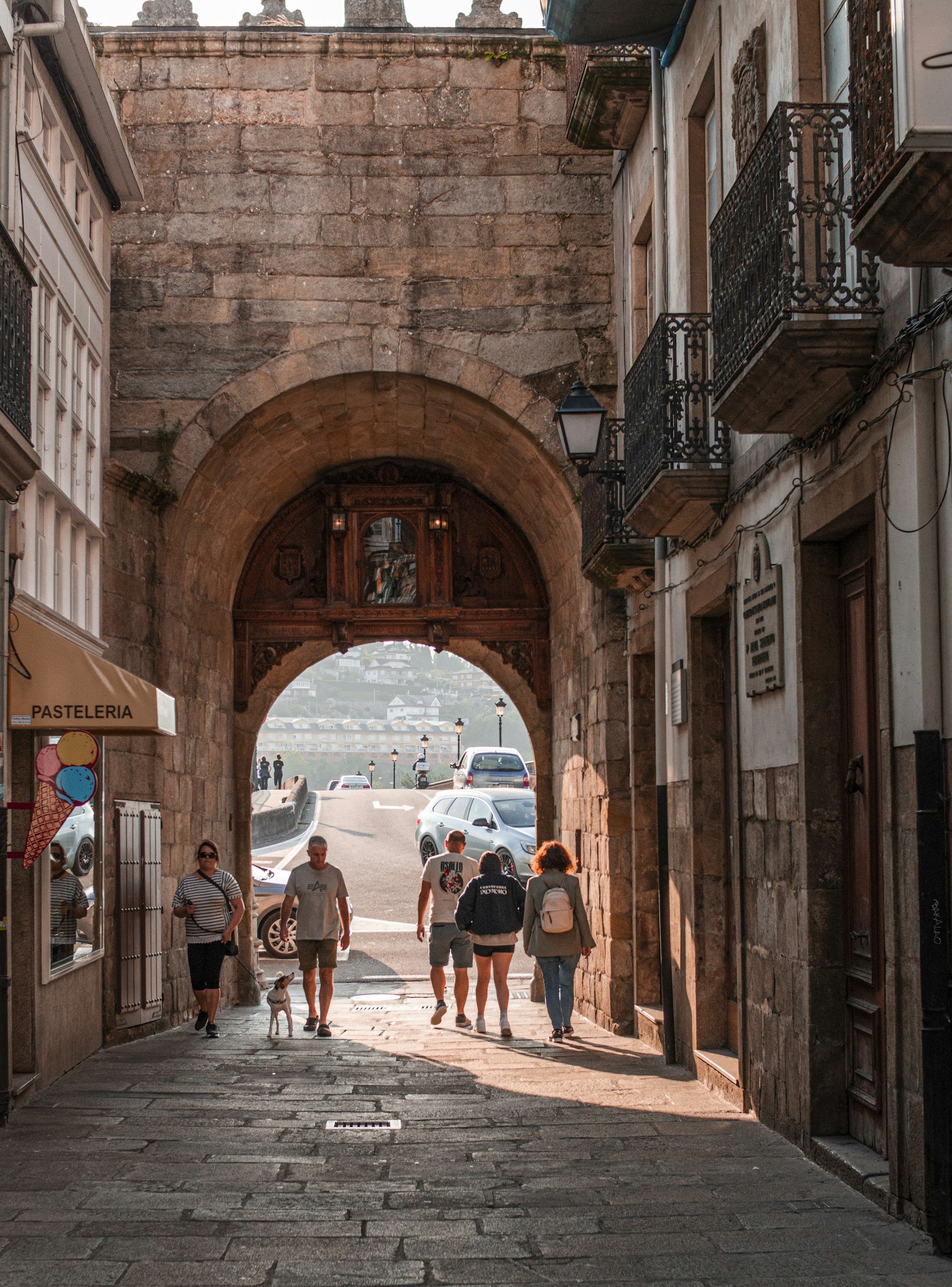
The one exception is Viveiro. That is the stop I would deliberately build around because it gives you something back for the extra time. You arrive somewhere with a proper centre, a waterfront, restaurants and enough going on to make an afternoon and evening feel easy rather than improvised.
Loiba, Foz and Viveiro all look tempting when you see them strung along the same railway line. I would still resist trying to squeeze them into one day. On this timetable, that sounds better on paper than it feels when you are standing around waiting for the next train.
For a first trip, stay on to Ribadeo
I would do the full journey once before getting clever with it.
You leave Ferrol, settle in, and the landscape changes gradually as you move east. The earlier part is greener and more inland, then the route starts opening around the rías before continuing through A Mariña towards Ribadeo. Staying on means you get that progression rather than dropping into one section and wondering what you missed.
There is also something very appealing about not having to make the journey more complicated than it needs to be. You board once, keep your bag with you and arrive in Ribadeo with the afternoon still useful if you choose a late-morning departure.
I would stay there that night as well. After three hours on a slow regional train, the last thing I would want is another connection hanging over the day.
If you have an extra night, use it in Viveiro
Viveiro is the split I would choose because it does not feel like a compromise.
The first leg from Ferrol is roughly two hours, which is enough railway for one day without overdoing it, and you arrive with time to leave your bag and enjoy the town properly. The old centre and waterfront give you enough for an afternoon, and being able to have dinner without calculating the next train in your head changes the whole feel of the stop.
The following day is much lighter. Viveiro to Ribadeo takes only a little over an hour, so you can keep the morning in Viveiro and still arrive in Ribadeo at a very civilised time.
That is why I would not use Viveiro as a long same-day stop unless the timetable happens to line up unusually well. A four-hour gap can sound generous until you factor in walking from the station, finding somewhere to leave your luggage, eating, and then starting to think about getting back to the platform again.
And if the real question has now become which town deserves the night, my Ribadeo or Viveiro comparison goes into that properly rather than trying to squeeze another town debate into this train guide.
If three hours feels like too much, start in Viveiro
Viveiro to Ribadeo is the version I would pick for someone who likes the idea of the railway but does not necessarily want to spend half the day on it.
The journey takes a little over an hour and runs east through A Mariña, past places such as San Cibrao, Burela, Foz and Barreiros. It gives you a good sense of this part of the line without asking much from the rest of your day.
I would not call it the best section of the railway, because that is too neat and the evidence does not really support it. You miss the stretch west of Viveiro around Ortigueira, O Barqueiro and O Vicedo, which is part of the reason the full journey is worth doing in the first place.
So I would choose the short section because it is easy to fit in, not because it has magically collected every good view into one hour. If you have the time, take the full route. If you have another night, stop in Viveiro. If you are curious but not committed, start there and keep it simple.
If you are still deciding where to base yourself around here, I have also looked at the northern Galicia towns that work best without a car, because some places along this coast are considerably easier than others once you remove the car.
Buying the ticket is less straightforward than it should be
This is one part of the journey where I would ignore any article that gives you one absolute rule.
You will find guides saying FEVE tickets cannot be bought online, others saying they can, and older traveller reports describing tickets being sold onboard at small unstaffed stops. The reason they do not all agree is fairly simple: the system has changed, and ticket sales can still depend on the service and station you are using.
For Ferrol to Ribadeo, I would start with Renfe’s general journey planner and try to buy the direct Regional service there. When I researched this route, Renfe was showing a normal purchase path for the trains I checked, so there is no reason to assume from the start that you need to buy onboard.
If Renfe shows the train but does not let you complete the purchase, I would simply move on to Ferrol station and try the ticket office or machine there. I would much rather allow an extra twenty minutes at the station than spend ages clicking around different booking websites trying to force an online ticket that may not be available that way.
The situation is slightly different if you board at one of the smaller halts later along the line. Some of these stations are very basic and may not have a ticket office or machine at all. In that case, follow the instructions at the stop and speak to the train staff as soon as you board. Tickets have been sold onboard on this network, but I would not rely on that as a universal rule unless Renfe confirms it for your journey.
Third-party booking sites can be useful for comparing services, but I would not make one of them my only source for this particular train. Renfe is where you are most likely to see the current service itself, and that matters more here than having the slickest booking screen.
The five checks I would make before travelling
Open Renfe’s general timetable or journey planner.
Search Ferrol to Ribadeo for the date you are travelling.
Choose a direct Regional service rather than trying to create a connection yourself.
See whether Renfe lets you complete the purchase online. If it does not, allow extra time to buy at Ferrol station.
Check the service again shortly before travelling in case the timetable, engineering works or replacement transport has changed.
The main thing is not to get too attached to one booking method. This is still a small regional railway, and the practical answer may simply be: try online first, and if Renfe does not cooperate, buy locally.
If Renfe still feels more complicated than it has any right to be, I have a fuller guide to using Renfe trains in Spain without getting confused, including the bits that tend to cause problems once you move beyond the obvious high-speed routes.
What the train actually looks like from the window
The first thing I would lower my expectations about is the start, because Ferrol to Ribadeo gets described as a coastal railway and that can make it sound as though you leave the station and immediately start gliding past beaches. You do not. For a while, you are simply getting out of Ferrol, passing through Narón and Xuvia before the route becomes greener and quieter around San Sadurniño, Moeche and Cerdido, with woodland, fields and small settlements outside rather than much sign of the Atlantic.
That is not necessarily a bad thing, but it is useful to know before you board because otherwise the first part of the journey can feel slightly confusing, especially if you have been reading glowing descriptions of one of Europe’s best coastal railways and are now looking at trees…
Ferrol to Ortigueira: give it a bit of time
Once you are beyond the Ferrol suburbs, the railway settles into rural Ferrolterra and stays there for a while, passing through San Sadurniño, Moeche and Cerdido before the route begins turning back towards the coast. This is a much quieter part of the journey, with woodland, fields and scattered settlements outside the window, and there are stretches where the train feels much more like a local railway carrying you through everyday northern Galicia than one of those scenic routes people travel across Europe specifically to photograph.
I would not treat any of these early stops as an obvious sightseeing break simply because the train calls there. With such large gaps between services, getting off somewhere like Moeche or Cerdido without a very specific reason and a carefully checked return train can turn a quick look around into several hours of waiting. For most visitors, this section is better experienced from the carriage, especially because the scenery is still building rather than peaking.
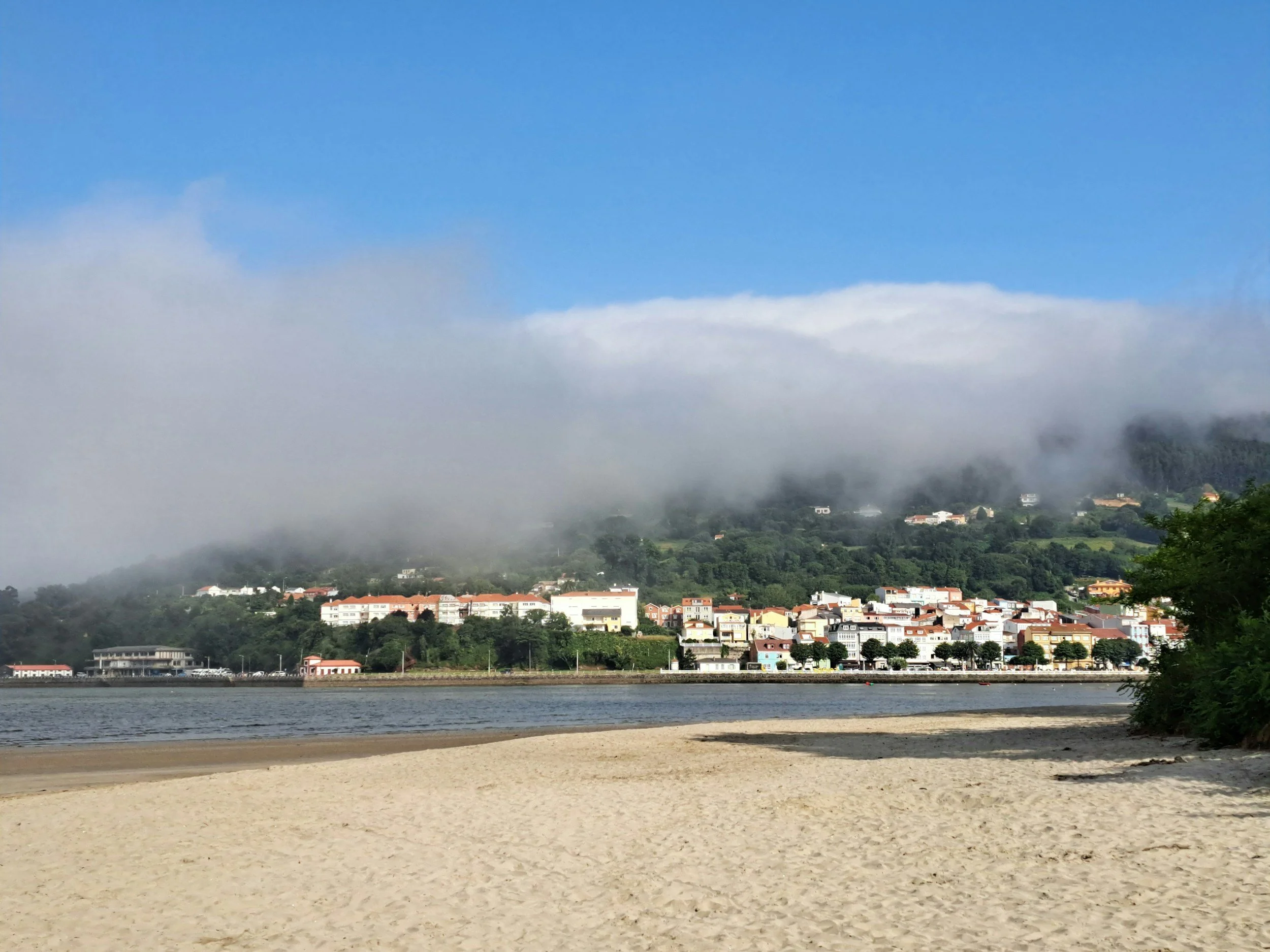
It is also the point where I would stop worrying about whether I had somehow booked the wrong railway because the Atlantic has failed to appear. Get comfortable, have whatever food or drink you brought with you and let the train work its way east. The slower, more inland start gives the journey a bit of contrast, so when the landscape begins opening around Ortigueira and water starts appearing beside the line, you notice the change immediately rather than having had coast outside the window for the previous hour.
Approaching Ortigueira, the route begins to feel less enclosed and the railway starts meeting the rías rather than simply cutting through green countryside. This is where I would start paying more attention to the window, because from here onwards the scenery changes more quickly and some of the best stretches arrive in fairly short bursts between trees, bends and tunnels.
Ortigueira to Viveiro: this is the section I would pay attention to
From Ortigueira onwards, this is the part of the journey where I would start paying much more attention to the window. The railway begins working its way around the rías and through the stretch towards Loiba, O Barqueiro and O Vicedo, and the landscape becomes much less predictable than it was earlier in Ferrolterra. You can spend several minutes with trees and green slopes close to the train, then come around a bend and suddenly find a wide stretch of water beside you, only for it to disappear again almost as quickly.
That is why I would keep my phone somewhere easy to reach rather than buried underneath everything else in my bag. This is not a route where you necessarily see a huge view coming ten minutes in advance. Some of the nicest openings are surprisingly brief, particularly as the line curves around the rías, crosses more enclosed sections and then suddenly gives you another glimpse towards the coast. If you spend too long deciding whether something is photo-worthy, there is a fair chance you will be photographing a tree by the time the camera opens.
The area around O Barqueiro and O Vicedo is the stretch I would especially watch for. O Barqueiro sits beside the estuary at the mouth of the River Sor, with the railway passing through a landscape that feels much more closely connected to the water than the inland section earlier in the journey. From here towards O Vicedo, you get that very northern Galician combination of green slopes, little settlements, river and sea all squeezed surprisingly close together, and the train keeps changing direction enough that the view never belongs permanently to one side.
I would not worry too much about claiming a particular window for the entire journey either. The railway bends around the landscape rather than following one clean east-west line, so a good view on the left can easily become a better one on the right a few minutes later. If the carriage is quiet, I would simply move when there is something worth seeing rather than spending three hours defending the seat somebody online told me was the “correct” one.
Loiba is where I would be slightly more careful, because the name appears on the railway and it is very easy to assume this gives you convenient access to the cliffs you may already have seen in photos. It does not. The station serves the wider Loiba area, while the famous cliff-top viewpoint and bench need their own walking or taxi plan, and with the gaps between trains I would not get off spontaneously and hope to work it out afterwards.
So for this particular stretch, I think the train itself is the better way to experience the landscape unless Loiba is somewhere you specifically want to visit. Stay onboard, keep an eye out around Ortigueira, O Barqueiro and O Vicedo, and accept that some of the best views will appear for thirty seconds rather than obligingly sitting beside the tracks while you get the perfect photo.
Viveiro to Ribadeo: more coast, more towns, more everyday Galicia
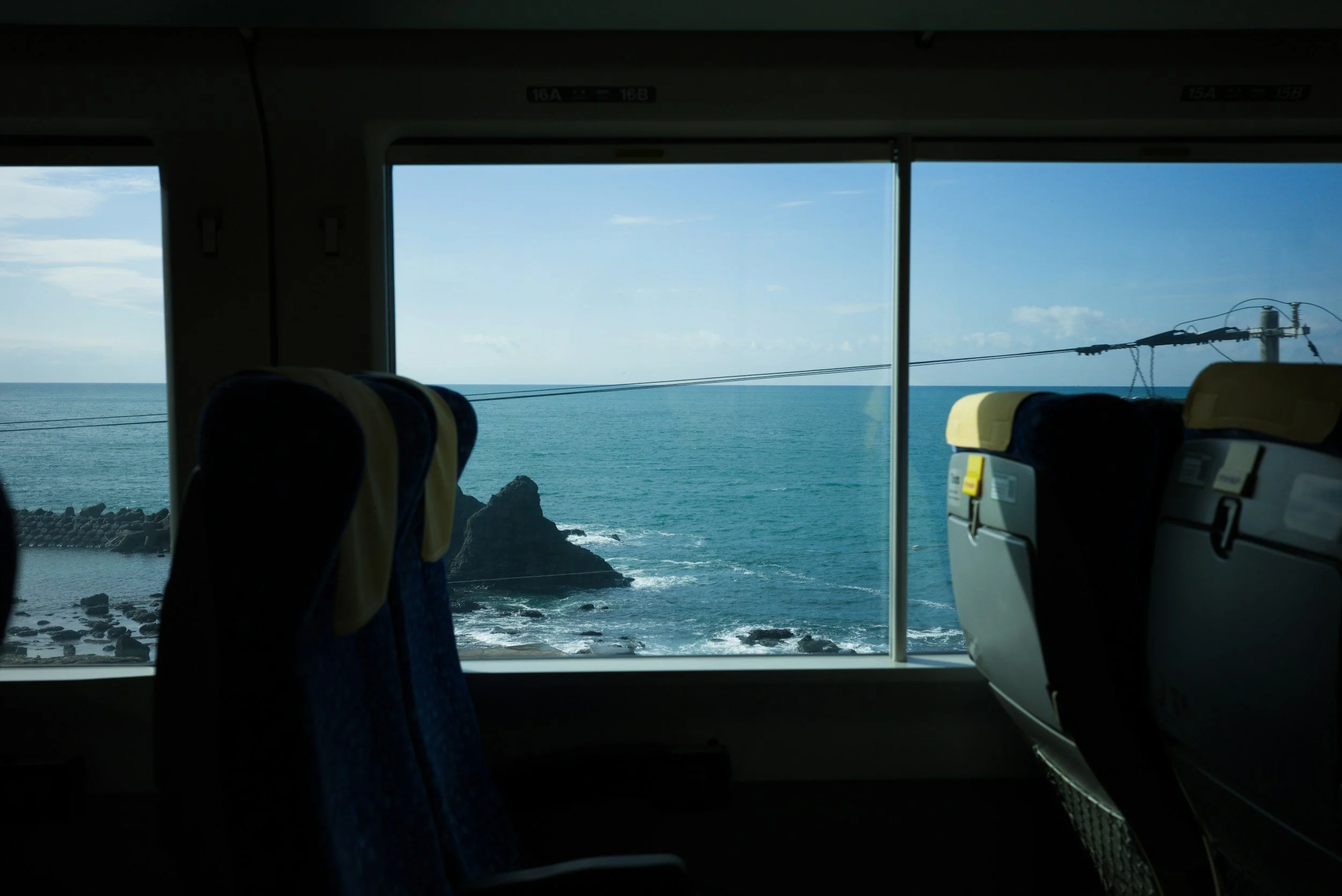
East of Viveiro, the railway moves into A Mariña and the whole journey starts to feel busier. You are no longer passing mainly through the quieter landscape around O Barqueiro and O Vicedo; instead, the train threads through a string of small coastal towns and settlements, with San Cibrao, Burela, Foz and Barreiros appearing along the way. The sea is still there, but so are houses, roads, apartment blocks, fishing and industrial areas, beaches and ordinary bits of town that nobody has tidied away for visitors.
I think that makes this section more interesting than a perfectly uninterrupted coastal panorama would be. You get a much better sense of how people actually live along this part of Galicia, because the railway is woven into the coast rather than sitting above it as some separate scenic attraction. One moment you might be looking across water, the next you are passing behind houses or through a built-up stretch, and then the line opens again towards a beach or river mouth a few minutes later.
Around San Cibrao, I would start paying a little more attention to the window again. The railway continues east through this more developed coastal strip towards Burela, which is one of the larger working towns along the route, before eventually reaching the area around Foz. This is very different from the wilder-feeling section west of Viveiro, but I would not see that as a downgrade. It gives the journey another layer, because northern Galicia here looks inhabited and useful rather than preserved simply because the landscape happens to be pretty.
The stretch around Fazouro and the Río Ouro is another part I would watch for. Water starts working its way back into the view around the river mouth and coast, but again it comes in pieces rather than one long panorama, with trees, buildings and bends in the railway constantly getting in the way. I quite like that about this route because you never reach a point where you think, “right, this is the scenic section, I can stop paying attention afterwards.” Something else tends to appear five minutes later.
Further east, around Foz and Barreiros, you are getting closer to Ribadeo and the railway continues alternating between coast, settlements and short inland stretches. This is also where the temptation to start treating every station as access to a beach becomes stronger, because the map makes the sea look extremely close in places. In practice, station names and easy beach access are not always the same thing, which becomes particularly important later if Praia das Catedrais is part of your plans.
For me, this is why Viveiro to Ribadeo works so well as the shorter version of the railway. In a little over an hour, you do not just get a few nice sea views; you see quite a lot of A Mariña changing outside the window, from Viveiro’s ría through working coastal towns, beaches and river mouths before reaching Ribadeo. It feels like travelling through the region rather than taking a train that exists mainly because somebody decided tourists would enjoy the scenery.
So… which side of the train has the best views?
From Ferrol to Ribadeo, I would start on the left-hand side. If you are travelling back the other way, start on the right.
That is the easiest rule to remember, and it also explains why you might have seen people recommending the right-hand side elsewhere. However, I would not overthink the seat beyond that, though. This railway curves around the rías and through the landscape enough that the better view keeps changing, especially around Ortigueira, O Barqueiro and O Vicedo. If the train is quiet, just move when something interesting appears on the other side.
So yes, left from Ferrol is the one I would choose first, but I would not sit there stubbornly for three hours if all the good stuff suddenly turns up across the aisle.
A few practical things before you board
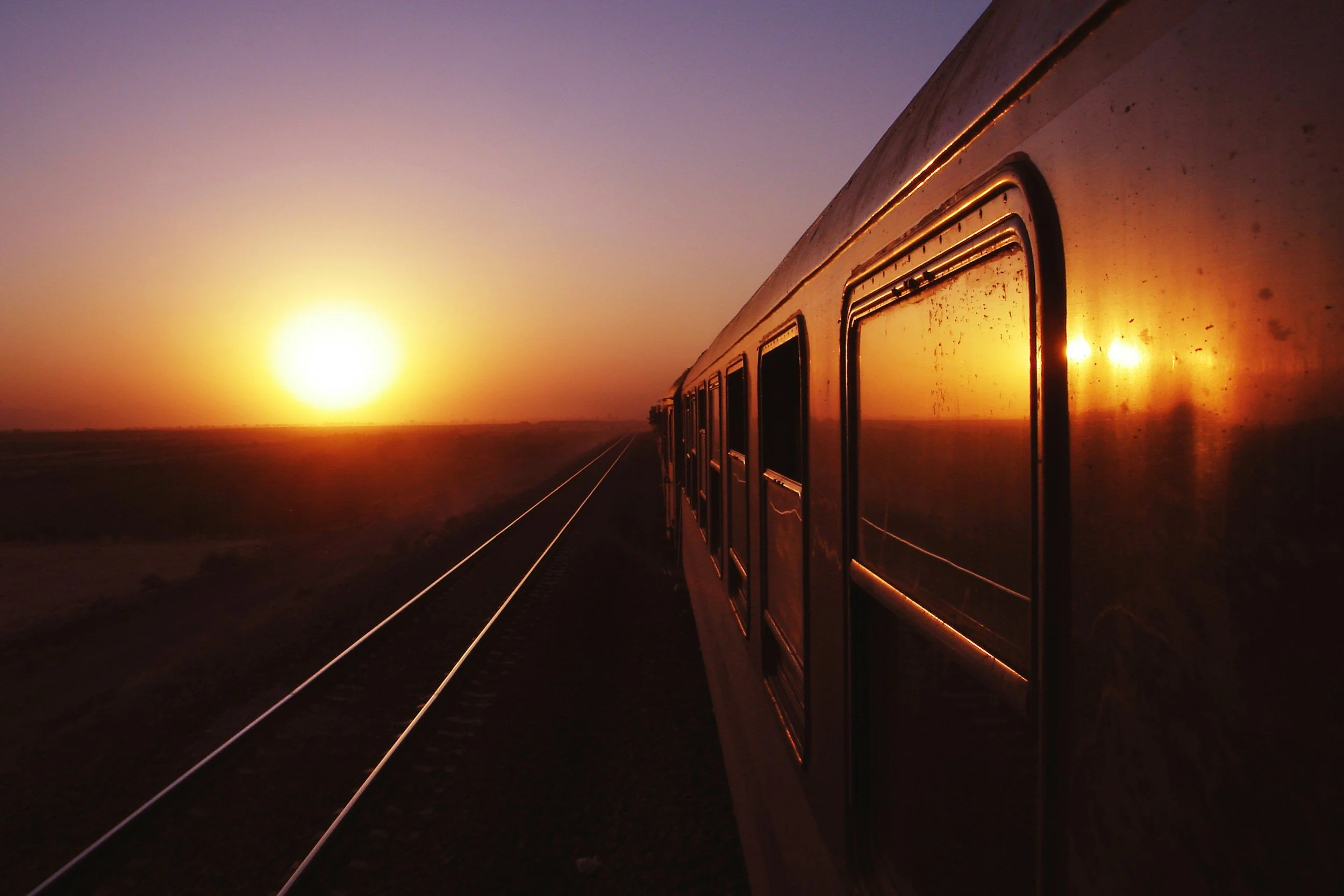
I would prepare for this as a small regional train rather than one of those Spanish long-distance services where you can buy something onboard, put a huge suitcase somewhere out of the way and forget about it.
The trains on this route are fairly simple, often only one or two carriages, and there is not much in the way of luggage storage or anything to buy onboard. That is completely fine once you know it, but I would not get on expecting to pick up lunch later because somewhere between Ferrol and Ribadeo there may simply be nowhere to do that.
Bring food. Proper food.
For the full journey, I would bring water and something more substantial than a snack you bought at the last second.
If you take a late-morning train, you are going to hit lunchtime somewhere along the route, and three hours suddenly feels quite long when the only thing in your bag is half a packet of biscuits. I would either eat before boarding or pack something you are genuinely happy to call lunch.
I’ve heard other travellers mention a small toilet onboard, but I would still use the station facilities before you leave if you can. The trains on this route can vary, so I would not assume every service has exactly the same setup just because one traveller happened to have it.
I would not bring a ridiculous suitcase
Normal luggage is fine. I would just keep it reasonable.
These trains are small, and there is not always loads of space to put bigger bags, so this is probably not the trip where I would bring the biggest suitcase I own and hope there is a huge luggage rack waiting for me. If you can lift it yourself, move it easily and keep it close without blocking half the carriage, you are making life much easier for yourself.
That matters even more if you are using one of the smaller stops along the route, because some of them are very basic and I would not count on someone being there to help you wrestle a heavy bag on or off the train.
Bikes are possible, but I would check first
Renfe allows full-size bikes on many Regional trains, but the exact rules depend on the service and whether a bike space needs to be added to the booking.
If I were travelling with a bike, I would check the exact train in Renfe rather than relying on a general rule. Look for wording such as “Admite bicicleta sin reserva” or “Plaza bicicleta disponible”, and if it is not clear, I would ask Renfe before turning up at the station with a full-size bike and discovering that this particular train has nowhere sensible to put it.
Accessibility is the part I would not guess about
This is the one area where I would want a proper answer before travelling.
When I researched the route, I could not find enough clear information for the exact Ferrol–Ribadeo journey to confidently say that it is fully step-free or that every station along the way will work for someone who needs assistance. Viveiro and Ribadeo also did not have detailed enough station information for me to fill in the gaps myself.
So if you use a wheelchair, cannot manage steps or need help boarding, I would contact Renfe or Adif’s Acerca assistance service and give them the exact train and stations you plan to use. I would much rather get that confirmed beforehand than tell someone “it should be fine” and have the platform or train turn out to be the one part of the trip that does not work.
The stops that look much easier on the map
This is where I would be careful with route planning, because a railway map tells you where the train stops but not necessarily whether that stop is useful for the place you are trying to visit.
Northern Galicia is especially good at making distances look harmless. A station can appear very close to a beach or viewpoint, but once you look properly there may still be a rural walk, no obvious taxi waiting outside and very little around the platform itself. For some places that is completely manageable. For others, I think it is easier to use the train to reach a proper base and organise the final part of the journey from there.
I would visit Praia das Catedrais from Ribadeo
Praia das Catedrais is the place where I would resist the temptation to make the railway do everything.
There is a stop at Os Castros, roughly 2 km from the beach, so technically you can get reasonably close by train. The problem is that those final two kilometres are only one part of the plan. You still need to work out the walk from the halt, how you are getting back, when low tide falls and whether access needs to be reserved for your date.
And the tide is the part I would plan first. The famous arches and rock formations are a low-tide experience, so there is little point finding a beautifully convenient train if it delivers you at the wrong time. During the periods when access is regulated, you also need the free Xunta authorisation, which adds another fixed element to the day.
That is why Ribadeo is the base I would use for the beach. Sleep there, check the tide for the following day, then look at the local transport options for that date. Seasonal buses have operated between Ribadeo and Praia das Catedrais, and a taxi gives you even more flexibility when the tide window does not line up neatly with public transport.
It also gives you a much easier fallback if the weather is poor or your plans change. You are in Ribadeo rather than standing at a rural halt deciding whether a 2 km walk to the beach still sounds appealing in the rain.
Loiba is better treated as a separate outing
Loiba is possible by train, but I would only get off there if the cliffs were one of the main reasons for my trip and I had planned the whole outing beforehand.
The station is in the wider Loiba area rather than beside the cliff-top viewpoint, so you need to map the route from the platform rather than assuming you will see signs and simply follow everyone else. I would work out the walking distance, how long I wanted at the coast and the return route before choosing the train.
This is also one place where I would think about the time of year. A walk that feels completely straightforward on a long summer afternoon can become much less appealing when daylight is shorter, the weather turns or you realise you need to be back at a small station at a very specific time.
If the walking plan looks awkward, I would arrange a taxi in advance. I would not rely on arriving at Loiba and finding one spontaneously, because this is not the sort of station where I would expect a line of taxis outside waiting for the train.
The other option is simply not to combine Loiba with the Ferrol–Ribadeo travel day at all. If the cliffs matter enough that you want time there rather than a rushed visit shaped around the railway, give them their own outing. That feels much more sensible than spending the whole afternoon checking the time because you need to make it back to the platform.
Cedeira does not belong in this rail itinerary
Cedeira is different because there is no clever railway workaround to find. The Ferrol–Ribadeo train does not serve it.
It often appears in the same northern Galicia planning conversations because geographically it belongs in this part of the coast, but it needs road transport! If Cedeira is high on your list, I would build it into a separate day from Ferrol or arrange transport specifically for it rather than trying to connect it somehow to this railway.
I would be quite strict about that, because this trip already has a very natural line through Ferrol, Ortigueira, Viveiro and Ribadeo. Adding Cedeira means leaving that line and introducing another transport problem for a place the train was never going to help you reach in the first place.
So I would use Ribadeo for Praia das Catedrais, give Loiba its own proper plan if you want the cliffs, and keep Cedeira for a separate road-based day. That is much easier than trying to make every interesting place on the north coast fit one railway simply because they all look reasonably close together on a map.
How I’d split the journey over three days
If I were doing this route over a few days, I would keep it very simple: Ferrol to Viveiro, sleep there, then continue to Ribadeo the next day and sleep there too. It gives the train enough space to be enjoyable without turning the trip into one long exercise in checking departure boards.
You could do the whole railway in one go, of course, but Viveiro is the point where stopping overnight feels natural rather than forced. You get the longer western section first, including the stretch around Ortigueira, O Barqueiro and O Vicedo, then arrive somewhere with an old centre, waterfront and enough places to eat that you can put your bag down and forget about trains for the rest of the day.
Day 1: Ferrol to Viveiro
I would have breakfast in Ferrol, pick up something for the train and aim for a late-morning departure. The timetable I checked had a train leaving at around 10:45 and arriving in Viveiro just before 13:00, which is the kind of timing I would look for even if the exact schedule changes later.
That gives you a normal morning in Ferrol rather than starting the day in the dark, and you still get the most interesting western part of the railway before lunch. By the time you have passed Ortigueira, Loiba, O Barqueiro and O Vicedo, you have already seen a very different side of northern Galicia from the more urban start around Ferrol.
One thing I would check before booking accommodation is whether you are arriving at Viveiro station or Viveiro Apeadero, because they are not the same stop. I would map the hotel against the one you are actually using rather than assuming every booking site has done that homework for you.
Once the bag is dropped off, I would keep the rest of the day easy. Walk through the old centre, head down towards the waterfront, have dinner somewhere in town and leave it at that. I would not look at the free afternoon and immediately decide it needs another excursion attached to it.
Day 2: Viveiro to Ribadeo
The second day is much lighter, which is exactly why I like this split.
You can keep the morning in Viveiro, have breakfast slowly, walk around again if you feel like it and then take a midday train east. The current pattern I checked had a departure around 12:45 reaching Ribadeo a little after 13:50, so you are only on the train for just over an hour and still arrive with most of the afternoon left.
That eastern stretch runs through A Mariña via places such as San Cibrao, Burela, Foz and Barreiros, so it feels quite different from the day before. There is more everyday coastal life outside the window here: working towns, houses, beaches, river mouths and little bursts of sea between them.
Ribadeo station is not right in the historic centre, so I would allow a bit of time at the other end rather than mentally arriving the moment the train stops. With a light bag, the walk is fine. With a heavy suitcase, I would probably just take a taxi and save myself the unnecessary battle.
Then I would stay in Ribadeo and leave Praia das Catedrais for the following day unless the tide and transport happen to line up perfectly. I think it is much nicer to arrive, get your bearings, walk around town and have dinner than immediately start rushing towards another place.
Day 3: decide what you want Ribadeo for
This is the day where I would choose one thing and give it enough time.
If you mainly wanted to see Ribadeo, stay put. Spend the morning around the historic centre and port, have lunch there and enjoy the fact that you do not have another train to catch.
If Praia das Catedrais is the reason you came this far east, check low tide first and build everything else around that. From Ribadeo, you can then look at the local bus or taxi options for your date rather than trying to force the beach into whatever gap the railway gives you.
And if you are continuing into Asturias, I would compare the coach and narrow-gauge train properly before deciding. Ribadeo has onward coach links towards Oviedo, and depending on where you are going next, that may be a much easier continuation than staying on the railway just because you started the trip by train.
For me, the nicest part of this three-day version is that none of the places feels like a connection. Viveiro gets an afternoon and evening, Ribadeo gets a proper overnight, and the railway sits between them rather than taking over the entire trip!
If you are carrying on east, I would decide where you want to stay before choosing the transport, and this guide to where to stay in Asturias without a car should make that next part much easier to plan.
How much buffer I’d leave for this train
I would trust this train enough to plan a day around it. I just would not plan a day where everything falls apart if it arrives late…
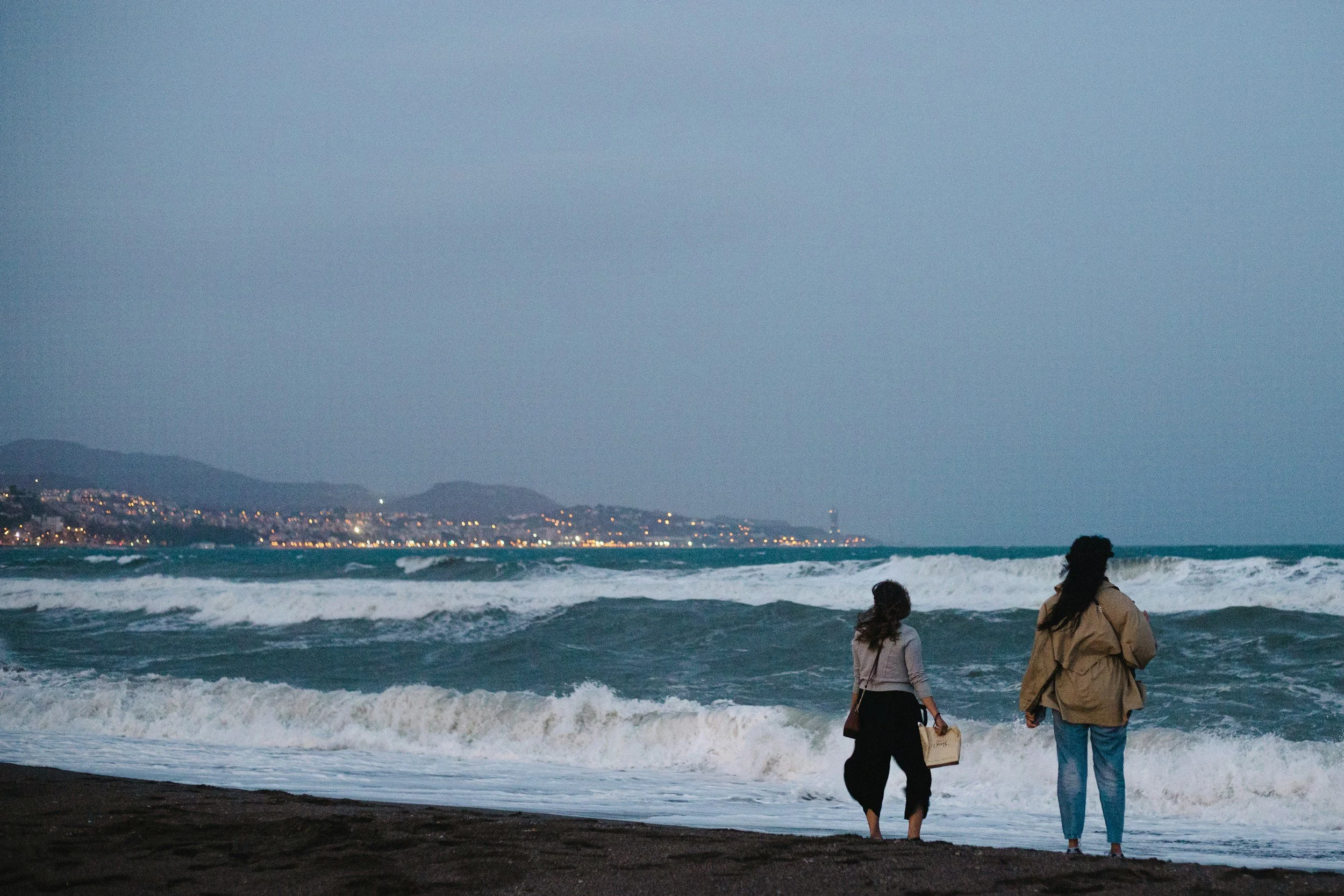
Northern Galicia gets real weather, and this is a small railway running through a landscape of slopes, cuttings and fairly exposed coastal sections. In January 2025, Storm Herminia stopped the Ferrol–Ribadeo–Oviedo service for two days before trains started running again, and Adif has also been working on drainage, slopes and sections with temporary speed restrictions between Ortigueira and Burela.
That does not mean delays and cancellations are a normal part of every journey. I would still book the train quite happily. It just means I would check Renfe again on the morning I travel rather than assuming the timetable I saved three months earlier is the final word.
I would also screenshot the train details while I still have a good connection and keep the hotel number somewhere easy to find. Those are boring little things until the train changes and suddenly you are very pleased you did them!
My rule: Ribadeo is where the travel day ends
This is the easiest way I can think of to plan the route without turning it into something stressful.
Once I arrive in Ribadeo, I am done travelling for the day.
I would not book a flight, an expensive long-distance train or anything non-refundable a couple of hours after the scheduled arrival and then spend three hours on the FEVE silently calculating whether I am still going to make it. If something important comes next, I would sleep in Ribadeo first.
If an overnight genuinely is not possible, I would leave several hours rather than one neat little connection that only works if everything runs exactly to time. There is no reason to make a slow regional railway prove how punctual it can be when you could simply give yourself some room.
If your train is cancelled
I would start with Renfe rather than immediately opening every transport app on my phone. Ask whether there is replacement transport for your train and where it leaves from, because road replacement has been used during disruption on this line before, although I would never assume there will automatically be a bus every time something goes wrong.
If Renfe cannot get you where you need to go, then I would start checking Bus.gal, Arriva and ALSA for the journey you are trying to salvage. This is especially useful once Ribadeo or Asturias is involved, because road connections may suddenly be much more practical than waiting for another narrow-gauge train.
I would contact the accommodation as soon as I knew I was going to be late as well. That takes two minutes and is much nicer than arriving several hours after the expected check-in time and hoping somebody is still there.
A taxi would be my last option rather than my first reaction. Before agreeing to one, I would check exactly how far it needs to take me and what the fare will be, because replacing a short local leg is one thing; trying to recreate half the Ferrol–Ribadeo railway by taxi is something else entirely.
And if the original plan is clearly gone, I would let it go. I would rather arrive late, eat dinner and restart the next morning than spend a lot of money trying to force the day back onto a timetable that no longer exists.
If this sort of trip is your thing, I have also pulled together northern Spanish towns that are particularly easy to explore on foot, which fits very nicely with a wider car-free trip through the north.
The way I’d do this trip
If I were booking this tomorrow, I would probably keep it simple and take a late-morning train all the way from Ferrol to Ribadeo, then stay there for the night. Not because the other versions are wrong, but because on a first trip I would rather see the whole route once before deciding which bit deserves more time.
If I had an extra night, Viveiro would be the place that might change my mind. Breaking the journey there does not feel like interrupting it for the sake of adding another stop; it gives you a proper afternoon and evening in town, then leaves only a short run to Ribadeo the next day. That is probably the nicest version if the railway itself is one of the reasons you are in northern Galicia.
And if I were already somewhere around A Mariña, I would be perfectly happy with Viveiro to Ribadeo. I would not feel as though I had failed to do the “real” journey just because I skipped the first two hours. An hour on this line is enough to understand its character, and sometimes that is all you want.
What I would not do is keep trying to improve the trip once the basic plan works. This route is very easy to overthink because there are so many places on the map that look tempting, so many bits of Renfe terminology to decode and so many ways to convince yourself that one more stop would make the day better (it probably will not.)
Pick the version that fits comfortably into the rest of your trip, leave some room around it and then stop planning. That feels much more in keeping with the railway anyway.
FAQs about the Ferrol to Ribadeo train
Is there still a direct train from Ferrol to Ribadeo?
Yes. When this guide was researched, Renfe was running direct Regional narrow-gauge trains between Ferrol and Ribadeo, with the full journey taking a little over three hours. I would still check your own travel date before booking accommodation around it, because this is not a timetable I would assume stays identical year after year.
Where are the stations compared with the town centres?
Ferrol station is on Avenida de Compostela and is walkable from A Magdalena and the central part of town, although I would allow a little more time if you are staying down near the naval port.
In Viveiro, pay attention to the station name because Viveiro and Viveiro Apeadero are different stops. I would map your accommodation against the actual stop on your journey before booking.
Ribadeo station sits outside the tight historic centre, but it is still walkable. I would allow roughly 15–25 minutes depending on where you are staying and how much luggage you have. With a heavy suitcase, I would probably just take a taxi rather than start my Ribadeo stay mildly annoyed at a hill or pavement.
Can I buy the Ferrol to Ribadeo ticket online?
Renfe was showing a purchase option for the direct Regional trains when I researched the route, so that is where I would try first. Older advice saying FEVE tickets must always be bought at the station or onboard is not something I would treat as a permanent rule anymore.
If Renfe shows the train but will not let you complete the purchase, try the ticket office or machine at Ferrol. At a small unstaffed halt, follow the instructions there and speak to the onboard staff as soon as you get on rather than quietly hoping someone eventually comes looking for you.
Can you take the train to Praia das Catedrais?
Technically, you can get off at Os Castros, which is around 2 km from the beach, but I would not choose that as the easiest way to visit. You still need to deal with the walk, low tide, the return journey and any seasonal access requirements.
I would stay in Ribadeo and organise the beach from there instead. It gives you far more control over the one thing that really matters at Praia das Catedrais: arriving at the right time for the tide.
Can I bring a bicycle on the train?
Possibly, but check the exact service first. Renfe allows full-size bikes on many Regional trains, although some services require a bike space or free bicycle add-on while others allow bikes without a reservation.
I would look at the booking details for your train rather than arriving with a full-size bike and assuming a small carriage will somehow find space for it.
Is the train suitable if I need step-free access or boarding assistance?
I would confirm this directly with Renfe or Adif before booking. I could not find clear enough information for the exact Ferrol–Ribadeo journey to confidently say that every train and station combination is step-free.
If you use a wheelchair, cannot manage steps or need boarding assistance, contact the Acerca assistance service with the exact train and stations you intend to use. This is one of those situations where “it should probably be fine” is not a useful answer.
What is the easiest way to continue from Ribadeo towards Asturias?
Do not assume you need to stay on the narrow-gauge railway just because that is how you arrived. Ribadeo also has coach connections towards Asturias, including Oviedo, and depending on the date and where you are going next, the bus may be considerably more convenient.
I would check both Renfe and ALSA for the actual day and choose whichever fits the next part of the trip better. By that point, you have already had your slow-train experience; there is no need to prove your loyalty to it all the way to Oviedo.