
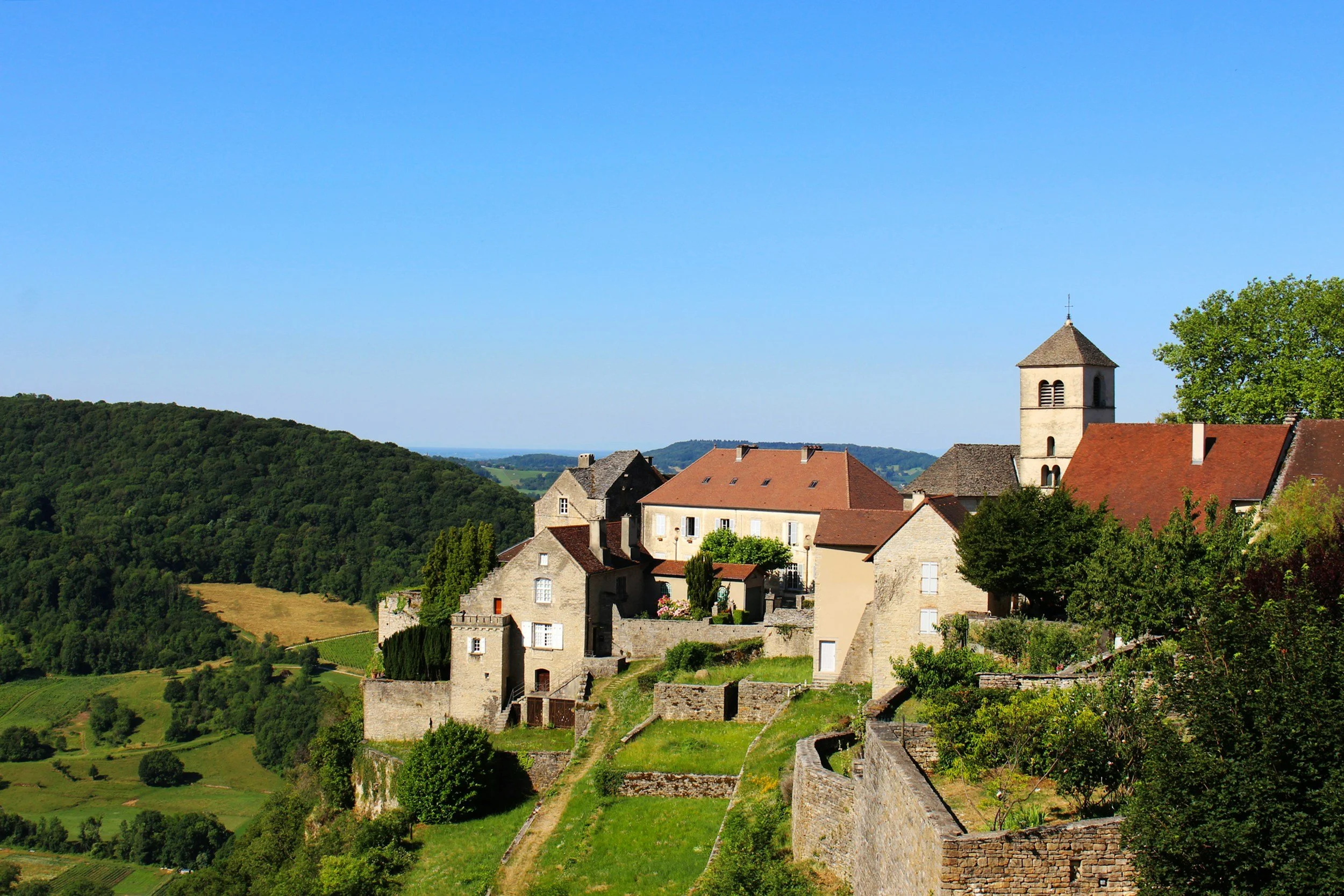
You don't need a car or a long list of winery appointments to enjoy a weekend in Arbois. Some of the best reasons to visit are right in the centre: Jura wine tastings, a cheese counter selling Comté and Morbier, and a chocolatier whose local almond cake is worth knowing about. Then there are the old streets along the Cuisance, where houses extend towards the river and narrow bridges connect different parts of town.
Arbois is well worth staying overnight for, especially if you enjoy good food and want to get to know a small French town rather than spend the weekend driving around the countryside. Saturday can include a visit to a wine cellar, a little shopping around Place de la Liberté and a walk towards the Gloriette Tower. Come Sunday, there's the possibility of another short tasting or a long lunch at La Finette, where chicken with vin jaune and morels is one of the regional specialities.
One thing might change your plans, though. Arbois has its weekly market on Friday morning, so arriving on Saturday means missing it. If markets are a favourite part of your trips, it's worth coming a day earlier. Otherwise, Saturday and Sunday give you plenty to enjoy, provided you arrange your wine tasting and check your return train before committing to lunch.
And although Jura wine is the obvious attraction, there's more to Arbois than what's in the glass. You can visit Louis Pasteur's former home, learn about the region's winemaking at Château Pécauld or simply spend an afternoon exploring the streets around the Cuisance. It's a lovely combination for a weekend, with enough to keep you interested without needing to fill every hour.
If the idea of spending a weekend in a small French wine town appeals to you, Chablis is another place I'd consider. It's a different wine experience, but equally tempting if you enjoy combining tastings with good food and a little time exploring the town.
Choose one Jura wine tasting
You could easily fill a weekend in Arbois visiting wine cellars, but I'd be quite happy choosing one and leaving the rest of the day for the town. And there's something fun about tasting wine in the Jura, particularly if your usual French favourites come from Burgundy or Bordeaux. You might be offered a red that's almost the colour of rosé, or a white that tastes nothing like the Chardonnay you had in mind.
You could make a whole afternoon of it with a tour of a working wine cellar, or pop into a tasting room in the old town, try a few Jura wines you've probably never heard of and see if there's a bottle worth taking home. I quite like that you can do either without worrying about driving anywhere afterwards.
Spend an afternoon at the Fruitière Vinicole d'Arbois
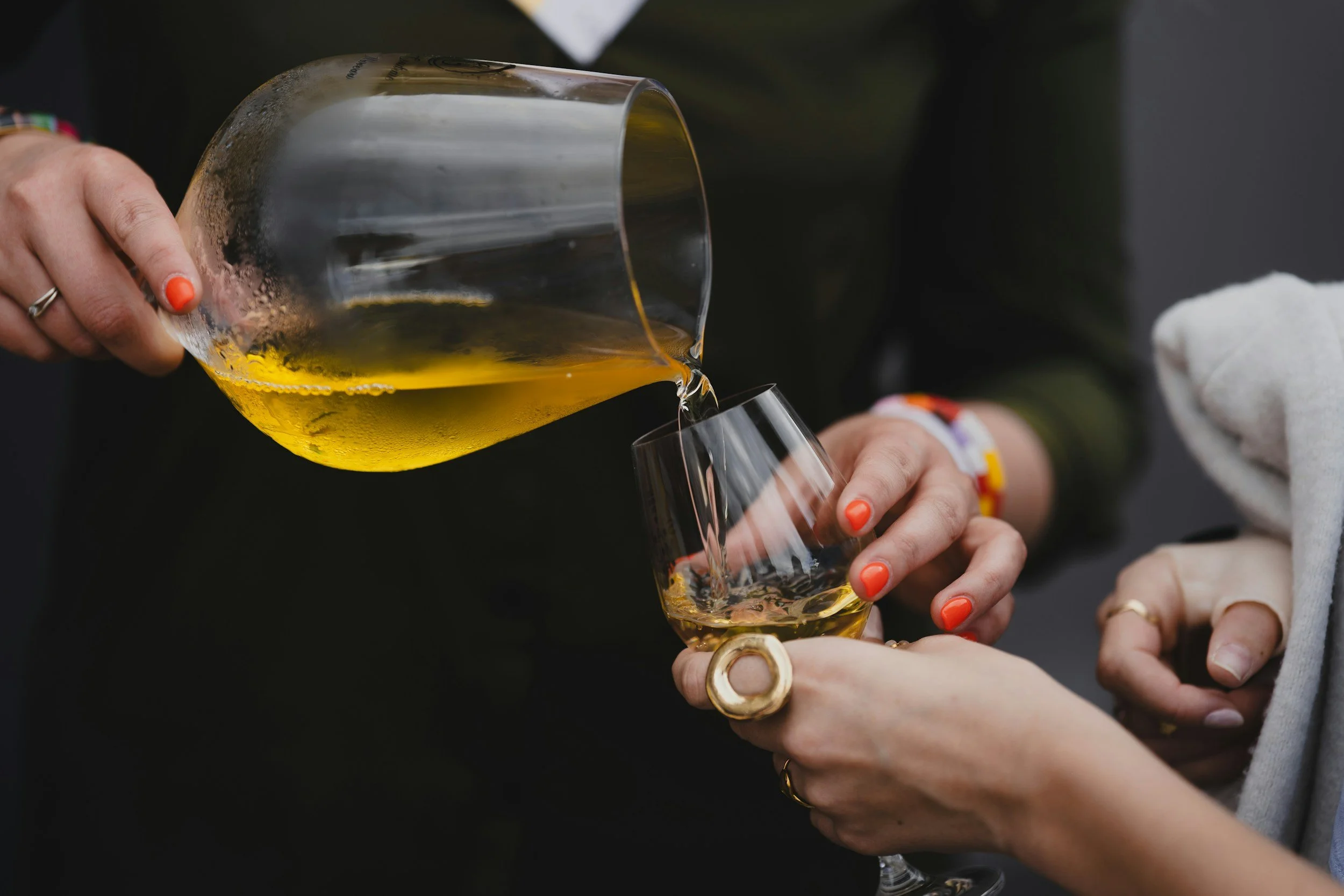
If you fancy spending a couple of hours getting to know Jura wine properly, the Fruitière Vinicole d'Arbois is worth a look. It's a wine cooperative, which means local growers bring their grapes here rather than making wine at individual estates. I quite like the idea of getting a glimpse of the region's winemaking without having to leave Arbois and drive around the vineyards.
The visit takes you through the production facilities and cellar before finishing with a tasting of four wines. It lasts around two hours and costs €9, with the option to add vin jaune or vin de paille for another €2 each. I'd be tempted to pay the extra for vin jaune, especially if it's your first encounter with Jura wine. It's one of the region's more unusual specialities, and tasting it here seems a much better introduction than buying a whole bottle without knowing what you're getting.
In summer, tours are offered at 11am and 4pm from Tuesday to Saturday. The 4pm visit would fit rather nicely into a Saturday, particularly if you've already made lunch plans and fancy doing something different in the afternoon. Outside summer, you'll need to arrange a visit in advance, depending on availability.
Just make sure you turn up at 2 rue des Fossés. The cooperative also has a wine shop at 43 place de la Liberté, but that's a separate address. It's worth confirming the meeting point when booking, along with whether the tour can be given in English.
Another possibility is the Cave de la Reine Jeanne at 5 rue de Bourgogne. Here, tastings and visits take place by appointment in a medieval Gothic cellar. I think that sounds particularly interesting if you love old buildings and would enjoy seeing a different side of Arbois's wine heritage. You'll need to contact them beforehand, but it's a lovely alternative to a more conventional winery tour.
Or try a few Jura wines at Domaine Rolet
For a more relaxed introduction, Domaine Rolet has a tasting room at 11 rue de l'Hôtel de Ville, among the shops and streets you'll probably explore anyway. It's the sort of option that makes more sense for someone who wants to enjoy a little Jura wine without turning the whole afternoon into a wine excursion.
The caveau is a place to taste and buy wine, rather than a guided tour of the production facilities. It publishes daily opening hours of 10am–12.30pm and 1.30–7pm, apart from Christmas Day and New Year's Day. It's worth contacting the domaine ahead of time to arrange a tasting and find out what's being poured. It's also one of the more useful options if Sunday is your only opportunity.
Now, if there's one wine I'd be curious to try in Arbois, it's vin jaune. It's made from Savagnin grapes and aged for years in barrels beneath a natural layer of yeast. The result is quite unlike an ordinary white wine, with a distinctive savoury character that can surprise people trying it for the first time. It even comes in its own unusual bottle, the 62cl clavelin.
You might love it, or you might decide that a small taste was quite enough. Either way, it's interesting to compare it with an ouillé Savagnin, where the barrels are topped up during ageing. The two can be remarkably different, and it's a much more enjoyable way to understand Jura wine than trying to memorise grape varieties beforehand.
And don't ignore the reds. Poulsard, sometimes written as Ploussard, is particularly worth asking about. It's often very pale and much lighter in style than the reds many people associate with France. If you're someone who doesn't usually drink red wine, this might be a pleasant surprise.
Another address worth knowing is Domaine Martin Faudot, whose tasting room is tucked beneath the arcades at 24 Grande Rue. It normally opens on Sunday mornings outside January, making it a useful alternative if Rolet doesn't fit your plans.
Personally, I'd be tempted by the shorter tasting for a first weekend in Arbois. A couple of unfamiliar wines, a conversation about what you're drinking and perhaps a bottle to take home would be quite enough. There are still cheeses to buy, pastries to try and the little bridges over the Cuisance to explore afterwards.
And if you find yourself getting curious about how French cheeses are made and matured, there's a whole other world to explore. I've written more about France's cheese caves and the traditions behind cheeses such as Comté.
From Place de la Liberté to the Cuisance
One of the pleasures of a small French town is coming across shops that still specialise in one thing and do it particularly well. Arbois has a few of those, and I'd be quite happy spending part of Saturday browsing the food counters before heading down towards the river.
Start at Place de la Liberté, where Hirsinger is going to be difficult to walk past if you have a sweet tooth. This family-run chocolatier has been part of Arbois for generations, and alongside all the beautiful chocolates and pastries, there's a local speciality called L'Arboisien. It's a soft almond cake, and personally, I'd be much more curious to try something that's actually associated with the town than order my usual French pastry. Have a look at what's on the counter, though, because the selection can change.
And since we're already talking about food, there's another stop just around the corner. At 5 rue de l'Hôtel de Ville, Grosjean is a traditional butcher's and charcuterie shop with a cheese counter that's particularly interesting if you love French cheese. This is Comté country, after all, and there's also Morbier, with its distinctive dark line running through the middle. I'd ask what Comté they have available and whether there are different ages to choose from. A younger Comté can taste quite different from one that's been matured much longer, and comparing them is a nice way to discover a little more about the region. Plus, taking home a good piece of French cheese is rarely a bad idea.
And that's part of what makes this area of Arbois so enjoyable. You can go from looking at chocolates to choosing a piece of Comté, then find yourself beside the river just a few minutes later. It's a lovely mix of everyday town life and little places you'd probably never discover if you were rushing between wineries.
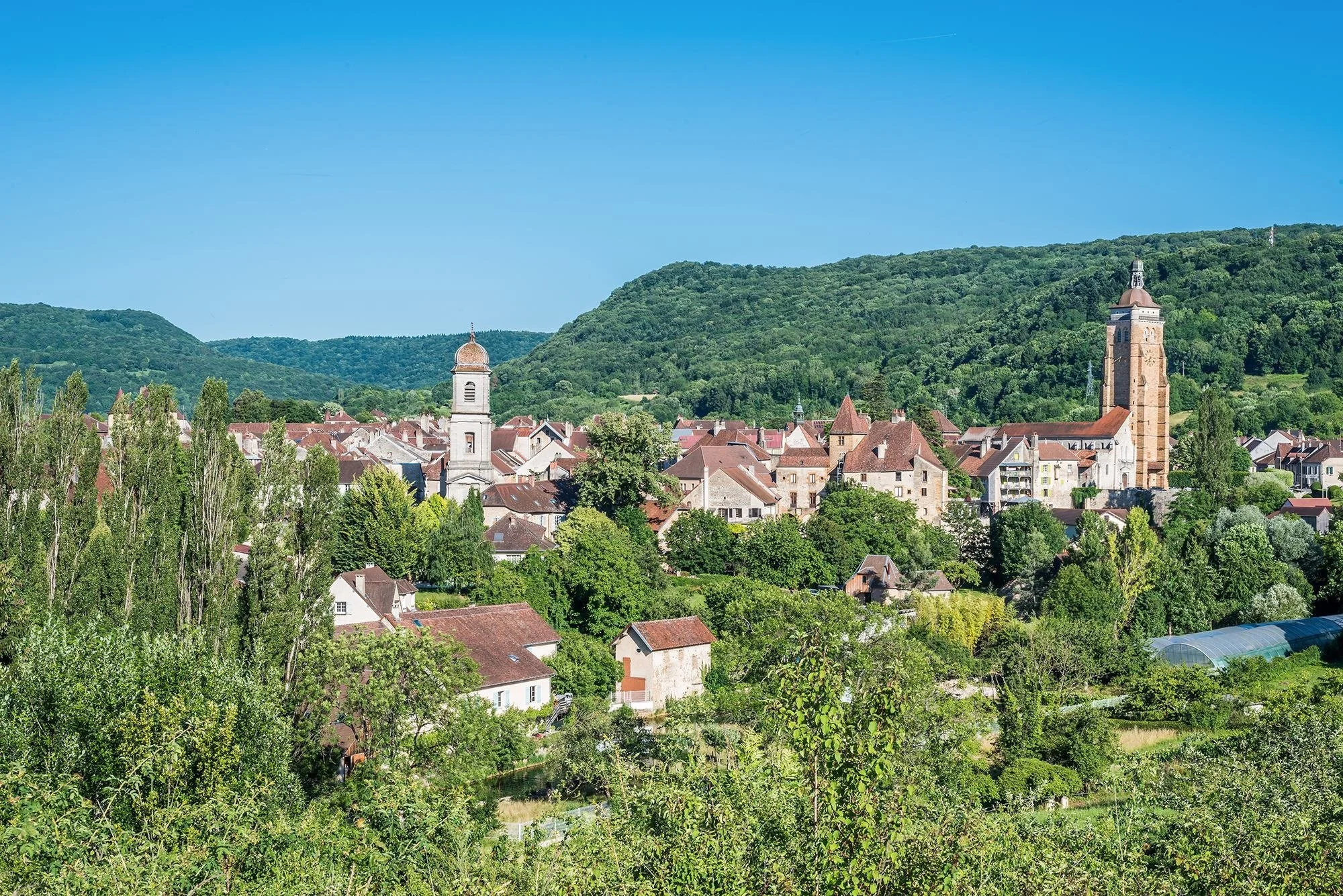
From rue de l'Hôtel de Ville, make your way towards Pont Saint-Just, near the church. This is where I'd put the food shopping on hold for a moment and get my camera out. Take a look at the houses along the Cuisance. Some actually extend out over the river, built on parts of the town's old defensive walls. It's quite fascinating to think that what was once part of Arbois's fortifications eventually became part of people's homes.
The river has an interesting history of its own, too. It wasn't always simply something lovely to look at. Local craftsmen worked along its banks, using the water for their trades, and you can still see how closely the older buildings sit together around it. I think those little details make walking through an old town much more interesting, especially when you begin to understand why the streets and houses look the way they do.
Keep going through the old streets towards Pont des Capucins, the narrow bridge beside the Gloriette Tower. This is another corner I'd want to spend a few minutes exploring, with the river, old houses and the tower all close together. The Gloriette is another surviving reminder of Arbois's former defences, although today it's the sort of place where I'd be far more interested in taking a few photographs and having a look around than thinking about medieval fortifications.
There isn't one long path following the river, so you'll find yourself dipping in and out of the little streets between the bridges. I actually think that sounds like a much nicer way to explore Arbois. You get to see more of the town, and there's always the possibility of spotting another shop you missed earlier. From the Gloriette Tower, you can make your way back towards Place de la Liberté, perhaps with a quick return to Hirsinger if those chocolates are still on your mind.
And there's one more thing I'd try to squeeze into the weekend if the dates work. Arbois holds its weekly market on Friday mornings at place du Champ de Mars, usually between 8am and noon. If you can arrive early enough, it's a nice excuse to start your visit with a look around the stalls before heading into the old town. Unfortunately, it's not a Saturday market, so a traditional weekend trip means missing it. But with the cheese shops, pâtisseries and wine tasting rooms scattered around the centre, there's still plenty to keep a food lover happy.
Make room for Pasteur's house or the wine museum
There's something quite unexpected about finding Louis Pasteur's former home in the middle of a small Jura wine town. Most of us know his name from pasteurisation or vaguely remember learning about him in school, but in Arbois, you can actually visit the house where he spent time with his family and worked on some of his scientific ideas.
It's one of two places I'd consider adding to the weekend if you have a free afternoon. The other is the Jura wine museum at Château Pécauld, which is particularly interesting if you've enjoyed discovering the local wines and want to know a little more about how they're made.
A look inside Louis Pasteur's former home
At 83 rue de Courcelles, the Maison et laboratoire de Louis Pasteur is more than a museum dedicated to a famous scientist. It's also his former family home, with furnished rooms and the laboratory where he carried out research.
What makes this house so interesting is the chance to see a completely different side of Pasteur. Alongside the laboratory, there are furnished rooms from his family home, so you get a glimpse of how he lived when he wasn't busy making scientific discoveries. I find that far more appealing than a museum filled with information boards, especially when the building itself has such a personal connection to the man.
And considering you've probably spent part of your weekend tasting Jura wine, there's a rather nice connection here. Pasteur's research helped us understand what actually happens during fermentation, including the role of microorganisms. So while you're enjoying the local wines, you're also visiting the town where one of the people who helped transform our understanding of winemaking spent so much of his life.
The house has recently been restored, with a permanent exhibition about microorganisms added in 2026. If you're particularly interested in seeing Pasteur's original laboratory, I'd check which rooms are included in the visit before booking.
You'll find the house on the station side of Arbois, which could work nicely if you have a later train home. Just bear in mind that opening hours vary throughout the year, and during the colder months, you may only be able to visit in the afternoon.
The Jura wine museum at Château Pécauld
If you've found yourself getting quite interested in Jura wines, there's another place in Arbois that might catch your attention. The Musée de la Vigne et du Vin du Jura is tucked inside Château Pécauld, and I have to say, exploring the region's wine history in an old château sounds like a rather nice way to spend an afternoon.
Inside, you'll find the tools and equipment once used by local winegrowers, from working in the vineyards to making the wine itself. I particularly like that they've also planted vines in the grounds. If you're visiting during the growing season, you can actually see some of the grape varieties you've been hearing about, rather than just reading their names on wine labels. It's a small detail, but it makes the whole experience a little more interesting.
Now, if you've already spent two hours exploring the cellars at Fruitière Vinicole, you might have had your fill of winemaking for one weekend. But if you opted for a shorter tasting at Rolet and still fancy learning a little more, Château Pécauld could be a lovely addition, especially on a rainy afternoon.
Just check the opening hours before heading over, as the museum has a shorter visiting season and more limited afternoon hours during winter, with some closures in January. Parts of the château are accessible, but the cellar involves stone steps and a spiral staircase.
Between the two museums, Pasteur's house would probably be my first choice. There's something about seeing his family home and laboratory together that makes me more curious. But if Jura wine has really caught your interest, I can see the appeal of spending another hour at Château Pécauld before heading back into town.
For another small French wine region that deserves a closer look, Bugey is an interesting option near Lyon, particularly if you enjoy discovering wines that don't get nearly as much attention as Burgundy or Bordeaux.
Sunday lunch and the train home
Before booking your train home, have a look at the menu at La Finette. They serve some proper Jura specialities, and personally, I'd be quite annoyed with myself if I left Arbois without trying at least one of them. Especially after a Saturday spent discovering the local wines. I'd much rather have something delicious to look forward to on Sunday than spend the morning getting ready to leave.
And there's still time to enjoy a bit more of Arbois before lunch. Perhaps you'll end up back at Hirsinger because you couldn't decide which chocolates to buy the day before, or take another walk by the Cuisance. If Saturday didn't leave much room for wine tasting, Domaine Rolet and Martin Faudot are both possibilities on Sunday morning, although the latter closes in January. Otherwise, I'd leave the morning completely open and see what I feel like doing.
Make time for lunch at La Finette
La Finette sits at 22 avenue Louis Pasteur, and this is where I'd look for a proper Jura lunch rather than another familiar French bistro meal.
Now, the menu is where things get interesting. Chicken with vin jaune and morels would be very high on my list. Vin jaune isn't just something the Jura is famous for drinking; it's also a favourite ingredient in the local cooking, particularly when paired with morels. These mushrooms are quite a delicacy, and together with the wine, they make one of the region's classic dishes. After spending a weekend in Arbois, I'd be far more tempted by something like this than a dish I could order in almost any French restaurant.
Although, there's also the Comté fondue, and that makes the decision considerably harder. Just imagine sitting down to a pot of melted Jura cheese after a chilly morning exploring Arbois. Comté is produced in the surrounding region, so this is a particularly good place to enjoy it. I suspect the fondue would win me over on a cold winter Sunday, while the chicken with vin jaune and morels would be my choice if I wanted to try something especially typical of the Jura.
La Finette serves Sunday lunch from 11.30am to 2.30pm, and I'd definitely reserve a table if it's one of the meals you're looking forward to. Check the current menu when booking, as dishes can change. And if you're catching a train later that afternoon, aim for an early sitting so you can enjoy your lunch properly rather than spending half of it wondering whether you'll make your connection.
When Sunday needs to be shorter
Of course, not every train journey home is going to cooperate with a long Sunday lunch. If the only sensible connection leaves Arbois in the morning, I'd simply enjoy the regional food on Saturday instead.
If Sunday lunch isn't going to work with your train, you can always visit La Finette on Saturday instead. And for dinner, there's Le Bistronôme at 62 rue du Faramand, right beside the Cuisance. I rather like the idea of dressing up a little for dinner, enjoying a good meal by the river and then walking back through Arbois afterwards. Just make sure you reserve a table, as it's closed on Sundays.
And if you do have to catch an early train, I wouldn't try to squeeze in too much before leaving. Perhaps pick up one last pastry, have a final look around the old streets and make your way to the station. After a weekend of good wine, local food and exploring Arbois, that's a perfectly lovely way to finish.
Getting to Arbois and where to stay
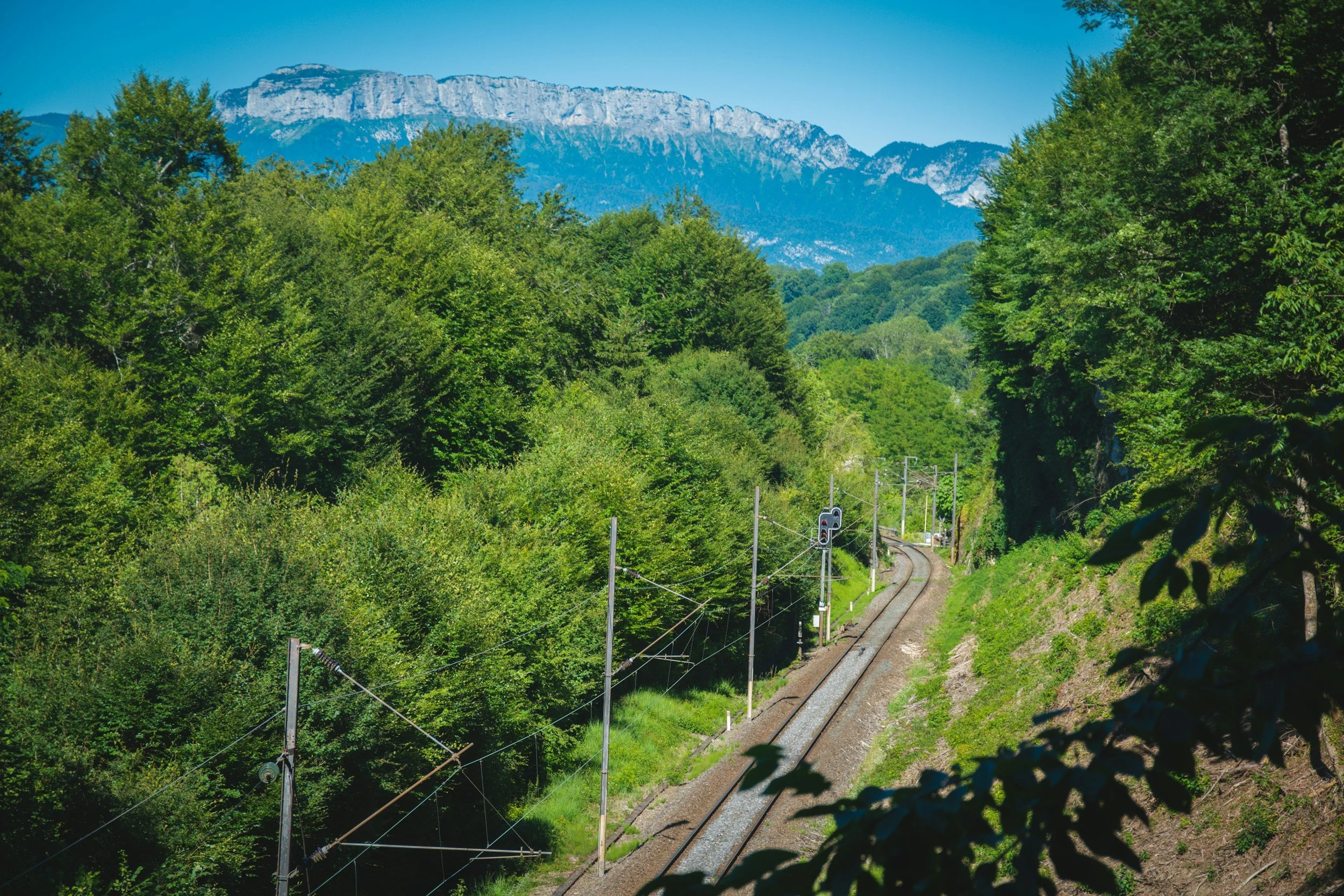
You can quite happily spend a weekend in Arbois without a car, which is especially handy when wine tasting is part of the plan. The town has its own railway station, and once you've dropped off your bags, there's very little reason to think about transport again until it's time to leave.
Getting there is fairly straightforward from some parts of France, although I'd pay attention to the train connections if you're coming from farther away. There are a couple of details that could make the difference between arriving in time for a leisurely Saturday lunch and spending half the afternoon getting there.
Getting to Arbois by train
Start by searching for Arbois on SNCF Connect. It sounds obvious, but there's another station called Mouchard that often appears in journeys to this part of the Jura, and the two are not interchangeable.
Coming from Besançon is particularly convenient. Direct regional trains from Besançon-Viotte can get you to Arbois in around 35 to 50 minutes, depending on the service. That makes Arbois a very tempting little weekend addition if you're already spending time in eastern France. You could have breakfast in Besançon and still be in Arbois with plenty of Saturday left to enjoy.
Dijon is another possible starting point, although the journey isn't always as simple. Some trains take you through Besançon, while others involve a change at Mouchard. I'd look at the actual connections rather than choosing a departure based purely on the shortest advertised journey time.
And yes, you can get here from Paris, too. You'll generally be combining a longer train journey with a regional connection, so it's perfectly manageable for a weekend if the times work in your favour. Just make sure your booking takes you all the way to Arbois. If it ends at Mouchard, you'll still need to get to town, and I wouldn't count on finding a taxi waiting outside the station.
If you're not particularly familiar with French regional trains, my guide to travelling around France by TER explains how the connections work and what to look out for when booking.
Arbois station is a little outside the old centre, but it's not an awkward arrival. Allow roughly 20 minutes to walk into town, depending on where you're staying and how much luggage you've brought. I'd probably stick to a small weekend bag for this trip rather than drag a large suitcase through town.
Where I'd stay in Arbois
For me, the location of the accommodation would matter more than having a particularly fancy hotel. I'd want to be somewhere around Place de la Liberté, rue de l'Hôtel de Ville or the little streets near the Cuisance.
Imagine heading out for dinner, enjoying a glass of Jura wine and then being able to walk back through the old town afterwards. No taxis to arrange, no designated driver, and no need to watch the time because you're staying several kilometres away. That's exactly the kind of convenience I'd look for on a weekend like this.
I'd also choose the old centre over somewhere beside the station. You're unlikely to spend much time at the station itself, whereas being close to the shops, river and restaurants makes the rest of the weekend much easier. Just check the property's actual address before booking, particularly if you're arriving late on Friday.
As for how long to stay, Saturday night is enough if you can arrive early and leave after lunch on Sunday. You'd have time for a wine tasting, a wander through the town and a good dinner, followed by a Sunday morning that doesn't involve packing up at dawn.
If you're travelling from Paris or somewhere that involves a few train changes, I'd seriously consider staying two nights. Arrive on Friday evening, find somewhere nice for dinner and wake up on Saturday knowing you've got the whole day to enjoy Arbois. It also means you can change your plans a little if the weather turns out to be less than wonderful.
Now, if you love a French food market as much as I do, there's one reason to arrive a little earlier. The Arbois market takes place on Friday mornings and wraps up around noon, so you'd need to arrive quite early or spend Thursday night in town. I wouldn't plan an entire extra day around it, but if you're already exploring the Jura, I'd certainly be tempted to make it work.
And one last thing before you book: have a proper look at the Sunday train times. After all, if you've spent the weekend discovering Jura wines and local food, it would be a shame to miss out on lunch at La Finette because your train leaves too early. I'd much rather enjoy one last good meal than spend Sunday morning watching the clock.