
Should you visit Møns Klint from Copenhagen or stay overnight on Møn?
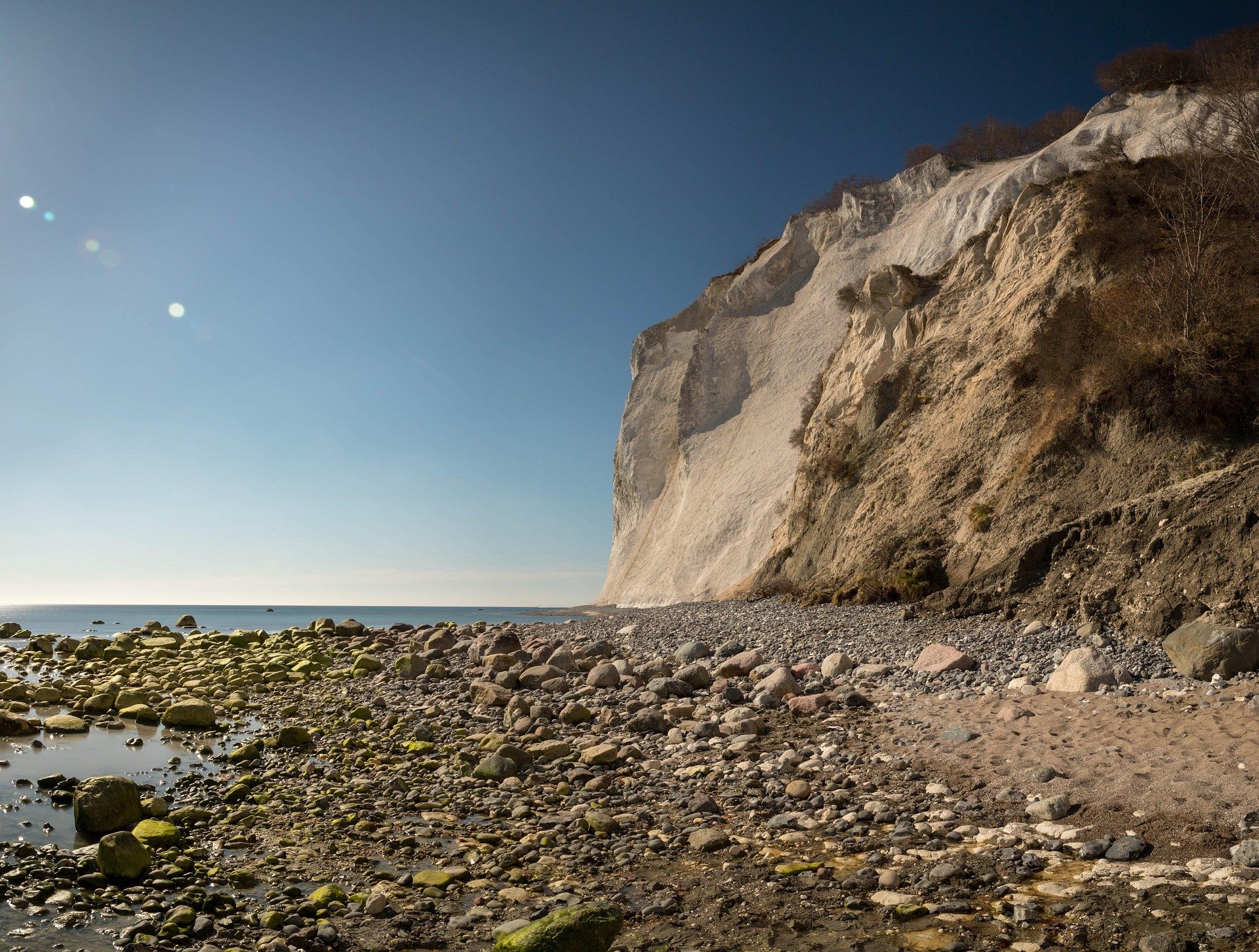
Møns Klint is completely doable from Copenhagen without a car, but the day is longer and more tightly organised than it first seems. You are not simply getting on a train in Copenhagen and stepping off beside the cliffs. The journey runs through Vordingborg and Stege before the final seasonal bus takes you to the GeoCenter, and a realistic day can mean more than six hours in transit for around four to five hours at Møns Klint. I would still do that if I were already staying in Copenhagen and really wanted to see it. I just would not describe it as an easy little escape from the city.
Those four or five hours can be enough, but you will notice the clock. There is time for a shorter walk, the cliffs and beach, something to eat and perhaps part of the GeoCenter, but once you start looking at the longer hiking routes, the day becomes a series of choices. The final bus only runs a handful of times, so missing one is not the same as waiting another twenty minutes for the next metro. It can add hours. That is the part I would want to know before getting excited about a “day trip from Copenhagen” search result.
If Møns Klint is one of the places you are most excited about in Denmark, I would stay overnight on Møn. One night gives you enough breathing room to choose a longer walk, spend proper time at the GeoCenter, deal with less-than-perfect weather and avoid spending the whole afternoon mentally counting backwards from the bus home. You do not need a three-night countryside retreat to justify it. Even one night changes the trip quite a lot.
Who I’d keep it as a day trip for, and who I’d stay overnight for
If I were on a short Copenhagen trip and Møns Klint was one of several places I wanted to see, I would keep my hotel in the city and do it as a day trip. That version works best when you are travelling during the direct-bus season, the weather looks decent and you are happy to be selective once you arrive. A shorter cliff walk, some time down by the beach and perhaps part of the GeoCenter is a perfectly good day. I would just go into it knowing that this is the edited version of Møns Klint, not the day where you casually decide to add another trail because the weather is nice.
I would stay overnight as soon as the walking becomes part of the reason for going. The Fossil Route is about 2.3 km, while the Biodiversity Route is 6.1 km, and the much longer Cliff King’s Kingdom route runs for 14.5 km. Once you also want to descend the hundreds of steps to the beach, spend proper time in the GeoCenter and stop somewhere without checking the clock every few minutes, the day-trip version starts asking you to choose between things you travelled all that way to do.
An overnight also buys you something I think matters more here than it would on an ordinary city break: weather flexibility. These are exposed chalk cliffs, forest paths and steep stairways, so a grey or wet afternoon can change what you want to do quite quickly. With one night on Møn, you can move the longer walk to the better part of the weather, separate the GeoCenter from the outdoor time, and in spring or autumn you can stay late enough for the island’s Dark Sky setting to become part of the trip rather than something you read about while heading back towards Copenhagen.
So I would not make the decision based on whether an overnight sounds more “special”. I would make it based on how much of Møns Klint you would be annoyed to miss. If you mainly want to see the cliffs and take one good walk, Copenhagen is fine. If your saved tabs are already full of hiking routes, beach access and places to stay on Møn, I would take the hint and give it the night.
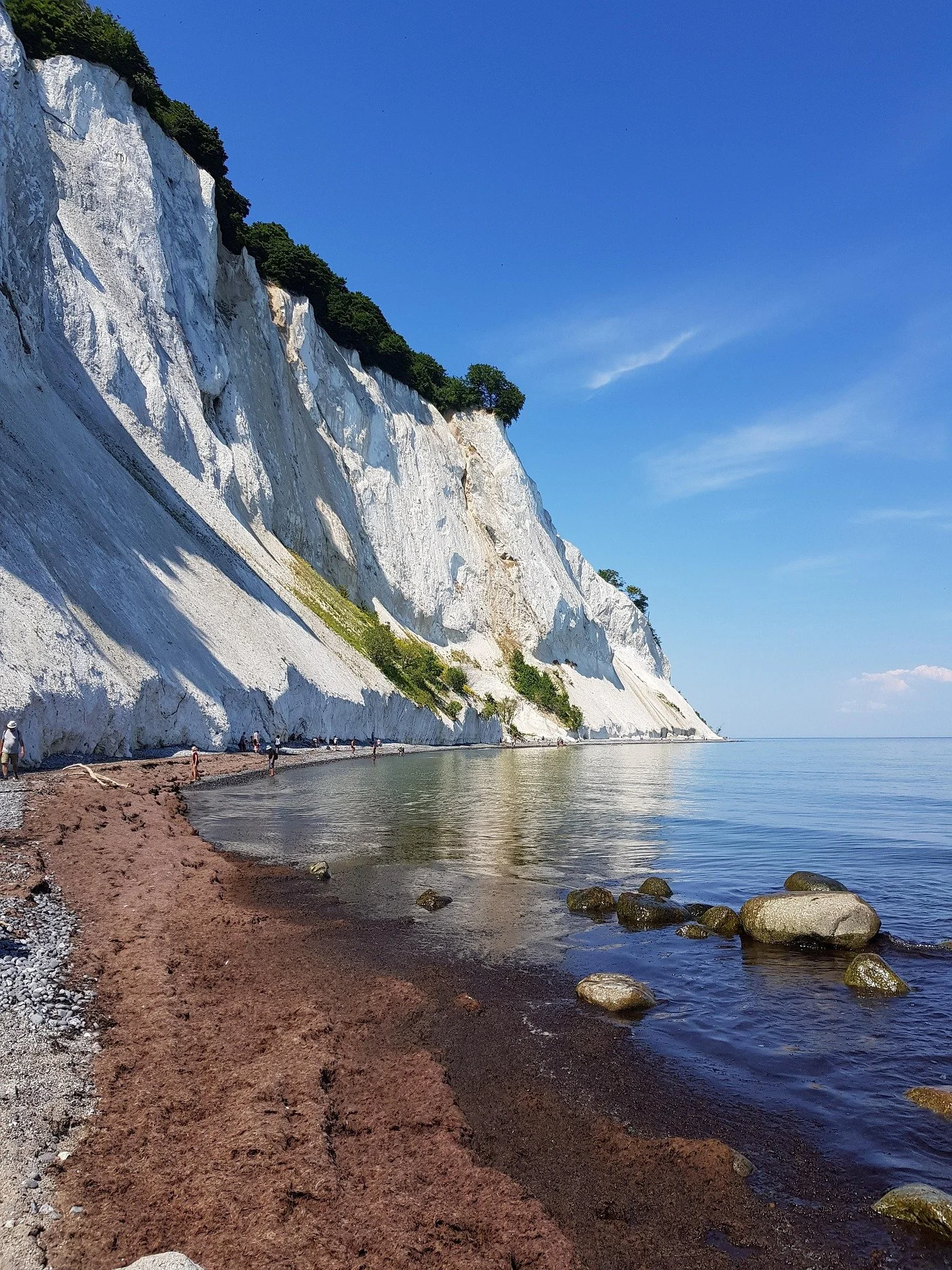
What the Copenhagen journey looks like in real life
On paper, the route is not especially complicated. From København H, you take the train south to Vordingborg, change there for bus 660R to Stege, then take the seasonal 678 from Stege to Møns Klint GeoCenter. Two changes is not terrible by European public-transport standards, but the important part is that the three legs do not all run with the same frequency. The train gets you out of Copenhagen easily enough; it is the final bus from Stege that starts dictating the day.
A representative itinerary shows it much better than saying the trip takes “around three hours”. You might leave København H at 09:08, reach Vordingborg at 10:05, catch the 660R five minutes later and arrive in Stege at 10:52. Then there is another wait before the 678 leaves at 11:20, finally getting you to Møns Klint at 12:01. So you can leave Copenhagen after breakfast at a completely civilised hour and still be arriving at the cliffs around lunchtime. On the way back, a useful 678 might leave at 16:43, with you back in Copenhagen at roughly 19:55.
That five-minute change in Vordingborg is one reason I would search the whole journey in Rejseplanen rather than trying to build it leg by leg. The route planner is matching the train and bus connections for you, and it is also much more useful than saving an old bus number from somewhere online. Older websites may still tell you to take bus 664 from Vordingborg, while current journey planning uses 660R, so I would trust the live itinerary over a saved route number from an old blog post.
Stege is where I would start watching the clock properly. In the example above you have around half an hour between buses, but that wait is also a reminder that this is not a turn-up-and-go journey. If one connection moves, you cannot assume another 678 will be along ten minutes later. I would therefore save the whole route in Rejseplanen before leaving Copenhagen and check it again that morning, rather than treating each leg as a separate little trip. The next part of the planning really comes down to that final bus, because its timetable decides how much freedom you have once you reach the cliffs.
The bus from Stege is the one I would plan everything around
Bus 678 only runs a handful of times a day, and the gaps are big enough that I would treat its timetable almost like a set of appointments. In the main-season timetable I checked, departures from Stege were at 08:45, 11:20, 13:40, 16:00 and 17:32, with return buses from Møns Klint at 09:28, 12:03, 14:23, 16:43 and 18:30. The journey itself takes around 40 to 45 minutes, which is not the problem.
The important bit is what happens if you miss one. If you are aiming for the 11:20 from Stege and something goes wrong earlier in the journey, the next bus is not half an hour later. It is at 13:40. That pushes your arrival at Møns Klint into the afternoon and suddenly turns a decent four-or-five-hour visit into something much tighter. You then either cut the cliffs short and take the 16:43 back, or stay for the 18:30 and accept a very late return to Copenhagen. That is why I would plan this trip around the 678 first and fit the train from Copenhagen around it, rather than the other way around.
The same applies on the way back. The 16:43 gives you a useful late-afternoon escape, but the 18:30 is the final direct bus in the current timetable. I would not treat that last one casually, especially after a long day on the cliffs. If you miss it, you are no longer dealing with a slightly later train home; you are dealing with the fact that the direct bus connection you built the day around has gone.
And I would be careful with the season dates. The GeoCenter says bus 678 operates during the main visitor season, but the timetable linked for the summer and autumn period does not cover the whole spring window in exactly the same way. I would therefore ignore any old article that gives one simple annual date range and check the full journey in Rejseplanen for the day you plan to travel. This is one of those routes where the precise date matters more than the route number you saved six months earlier.
How I’d use four or five hours at Møns Klint
If you arrive around midday and have roughly four to five hours before the useful return bus, I would be fairly ruthless about what I tried to fit in. The 2.3 km Fossil Route, which takes around 1 hour 15 minutes, is the easiest one to combine with the rest of the site. You could do that, go down to the beach, stop for lunch and still have some time left for the GeoCenter without spending the entire afternoon checking the time. For a Copenhagen day trip, that is probably the version I would choose.
The 6.1 km Biodiversity Route takes closer to two hours and changes the balance quite a bit. It still fits, but I would stop pretending I was also going to do everything else properly. If I chose that walk, I would probably pair it with either the beach or a shorter visit to the GeoCenter, rather than trying to squeeze in a full museum visit, lunch and a long stop below the cliffs as well. Four or five hours disappears surprisingly quickly once you start moving between the forest, cliff edge and beach rather than simply standing at one viewpoint.
The 14.5 km Cliff King’s Kingdom route is the easy one to rule out. The official estimate is around six hours, so I would leave that for an overnight stay rather than spend the whole walk wondering whether I was going to miss the bus home. Even if you are a fast walker, Møns Klint is not really the place where I would want to turn a six-hour route into a personal speed challenge just to prove it can be done.
I would also give the beach more time than the map makes it look like it needs. Two of the main stairways have 468 and 497 steps, which means getting down below the cliffs and back up again is a proper part of the visit, not something I would tack on between lunch and the GeoCenter. If those stairs are part of the experience you care about, I would build around them rather than treat the beach as a quick detour.
So with a day trip, I would choose one walk, one proper cliff or beach experience, something to eat and a selective GeoCenter visit. The temptation is to see that you have nearly five hours and assume everything fits. Technically, quite a lot does. Enjoyably, less does.
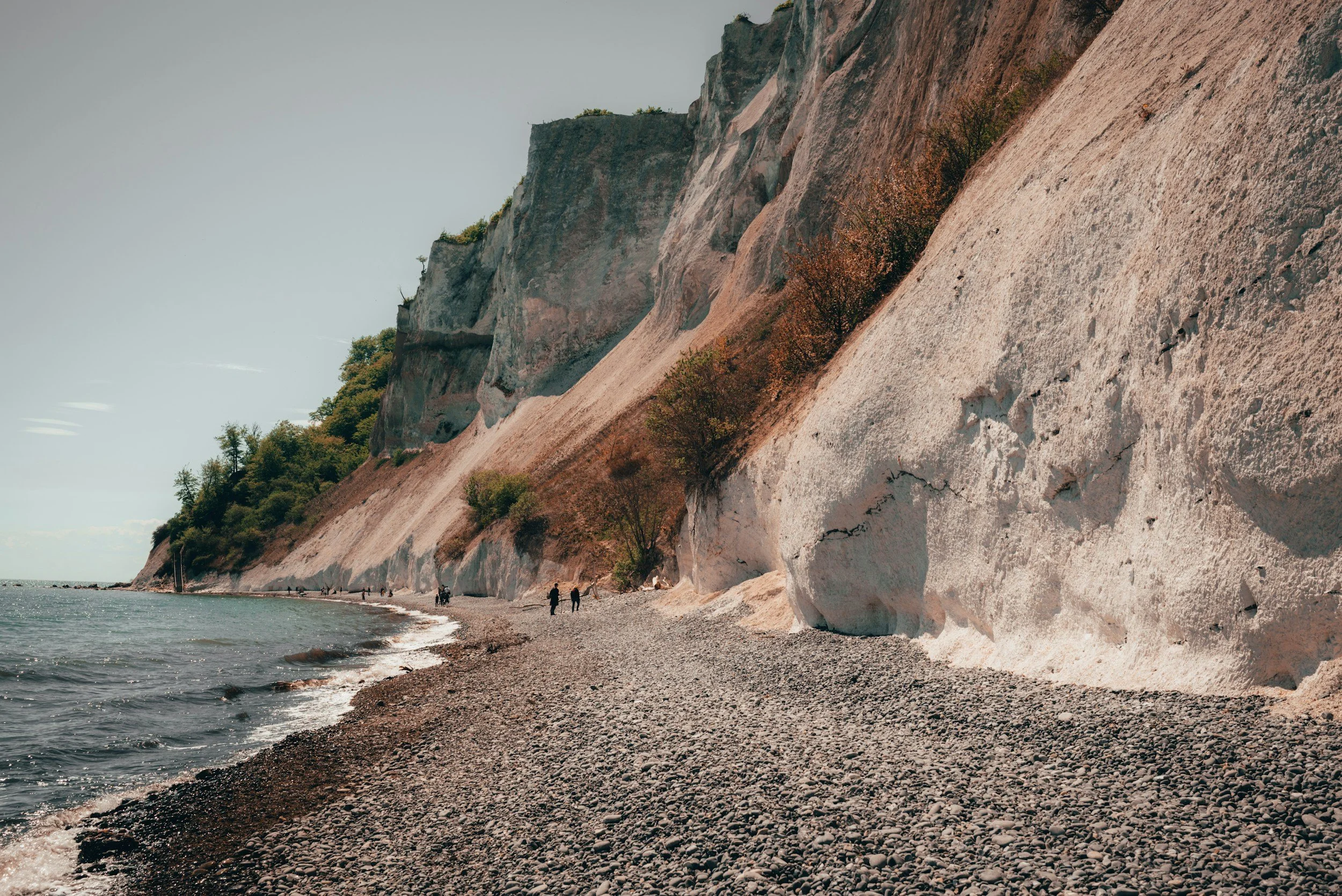
When I’d keep it as a Copenhagen day trip
I would still choose the day trip if I only had a few days in Denmark and was already settled in Copenhagen. In that situation, changing hotels for one night can easily eat into the time you were trying to save: packing up, storing luggage, checking in somewhere else, then moving again the next day. If Møns Klint is one place you really want to see but not the main reason for the whole trip, I would rather accept the long transport day and keep the rest of the itinerary simple.
I would also be much happier doing it this way with a good weather forecast and the direct seasonal bus running normally. The whole day depends on those connections lining up, so this is not the trip I would force on a grey, unsettled day just because I had pencilled it in three months earlier. With one clear day in the forecast, though, the compromise feels much easier to justify: you know you are giving up some flexibility, but at least the hours you do have at the cliffs are likely to be the hours you wanted. Bus 678 is seasonal, so I would only plan the independent Copenhagen version after checking the complete journey for the exact date rather than assuming it runs throughout spring and autumn.
The other thing I would be realistic about is how much Møns Klint I need from the day. If one shorter walk, the cliff edge, some beach time and perhaps part of the GeoCenter would leave me happy, I would not move hotels purely because an overnight gives me more possibilities. The day trip becomes frustrating when you want the longer hike, a proper museum visit, time below the cliffs and room to change your mind. If you are happy with a more edited visit, it can still be a very good use of one Copenhagen day.
If this is starting to sound like rather more transport than you wanted from a Copenhagen day trip, I’ve also put together the genuinely easy day trips from Copenhagen. Those are much more in the get-on-a-train-and-go category.
The organised tour is easier, but you give up time at Møns Klint
The organised excursion from Copenhagen is much easier logistically because someone else is dealing with the route, the timings and the return. You are not watching the connection in Stege or wondering whether one delayed bus is about to throw the afternoon off. But the day is split between Møns Klint and the Forest Tower, so although the excursion lasts around 8 hours 30 minutes, only about 2 hours 45 minutes are spent at Møns Klint.
That is enough time to see the cliffs properly, but I would go in with a fairly clear plan. The shorter Fossil Route can fit, and you can still spend time at the cliff edge or around the GeoCenter, but once you start adding the beach or a longer walk, the margins get much tighter. The organised trip removes the transport stress, but it also removes a lot of the freedom to decide on the day that you want another hour outside.
The Forest Tower changes the value of the tour quite a bit too. If it is somewhere you already wanted to visit, combining both places in one day is very efficient. If you are mainly booking because you want Møns Klint, though, I would look at the time split quite carefully before paying for the convenience. You may end up spending a large part of the day on an attraction that was never really part of your Denmark plan in the first place.
For me, the organised option suits someone who wants the logistics handled and likes the idea of seeing two places in one day. The independent trip is more fiddly, but it gives you a bigger block of time at Møns Klint and much more control over how you use it. This is more important than the simple question of coach vs. public transport.
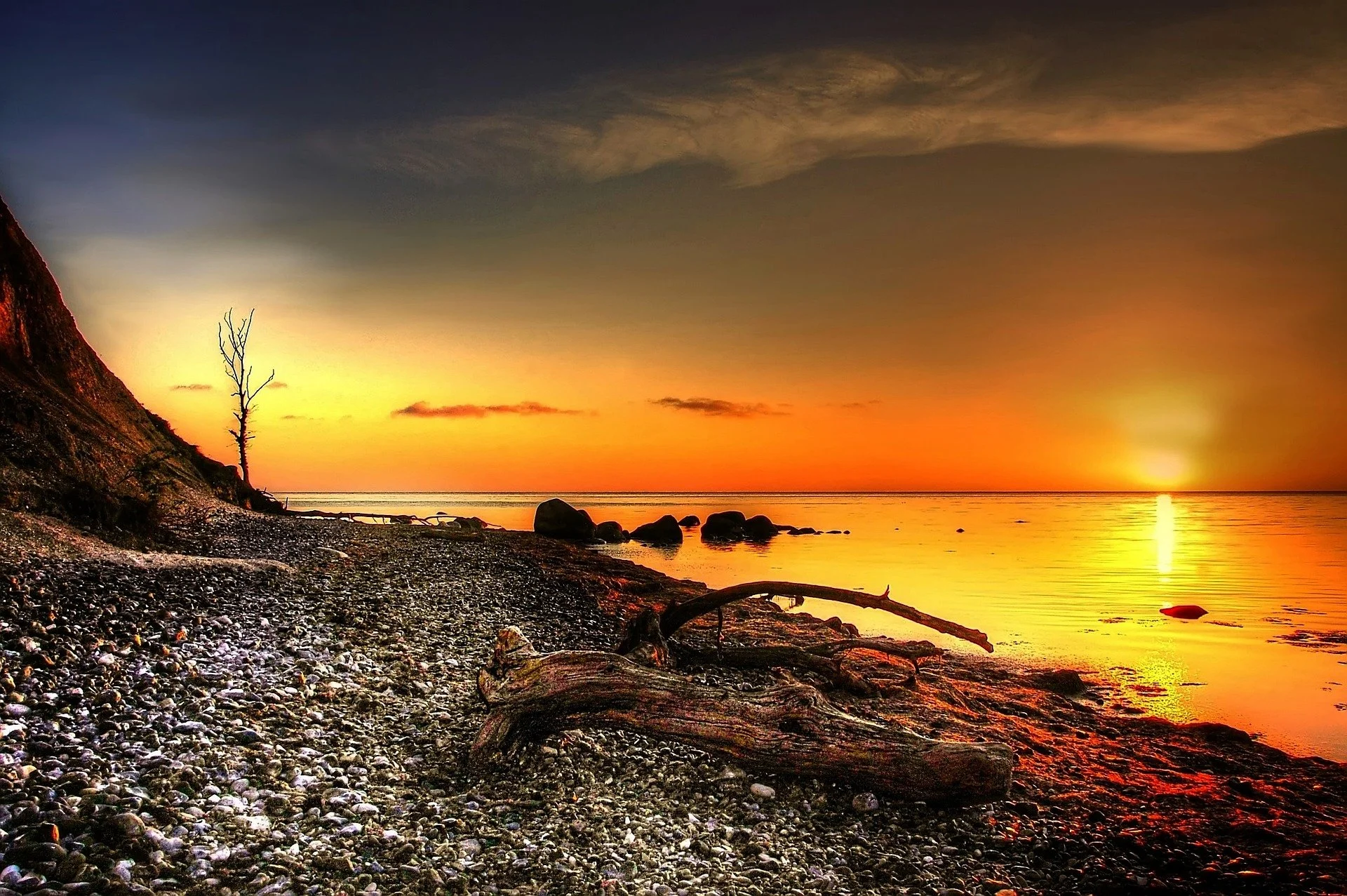
What I’d do with one night on Møn
With one night, I would stop trying to make the GeoCenter, beach and longer walks compete for the same afternoon. I could arrive from Copenhagen, spend the first part of the day around the cliffs and GeoCenter, then leave the longer walk for the next morning when I was not already counting backwards from a return bus. That is where the 14.5 km Cliff King’s Kingdom route suddenly becomes a realistic plan rather than something I would immediately rule out on a day trip.
I also like the flexibility an overnight gives you if the weather is not behaving. On a day trip, you get the weather you get during those four or five hours. Stay over and you can swap things around: do the GeoCenter when it is raining, save the cliff walk for a clearer spell, or leave the beach stairs until the ground feels less slippery. That feels much more useful here than simply saying an overnight gives you “more time”, because the outdoor part of Møns Klint can change quite a lot depending on the conditions.
The other advantage is that you are no longer tied to the middle of the day. The Copenhagen connections naturally put day-trippers at Møns Klint around lunchtime, while staying over gives you the option of being there earlier or later, when the cliffs are quieter and the light is softer. I would rather have that extra freedom than try to squeeze another attraction into the itinerary just because I had travelled all the way to Møn.
And in spring or autumn, the overnight can give you one thing the Copenhagen day trip cannot really offer: time for Møn’s Dark Sky after the daytime visitors have gone. I would still treat that as a bonus rather than the main reason to stay, because summer evenings stay light for a long time and winter transport is much more awkward without a car. But in the shoulder seasons, when darkness arrives earlier and the public-transport options can still be useful, it adds something genuinely different to the trip rather than simply stretching the same afternoon over two days.
And if the Dark Sky part is the bit that has caught your attention, Anholt is the Danish island I’d look at for a proper winter stargazing trip.
September and October are especially interesting if you want darker evenings without committing to a winter trip. If you’re building a longer Denmark trip around that time, I’ve also collected the Danish towns I’d choose for an autumn weekend without a car.
For one night without a car, I’d stay in Stege
If I only had one night on Møn, I’d make life easy and stay in Stege. You arrive there on the 660R from Vordingborg, the 678 to Møns Klint leaves from there, and you have a much better chance of finding dinner, picking up anything you forgot and dealing with luggage without having to turn it into a project. That may not sound very exciting when you are comparing countryside stays, but on a short trip I would rather have the boring bits sorted so I can spend my energy on the cliffs instead.
The obvious downside is that you are still around 40 minutes from Møns Klint by bus, so Stege does not give you that wake-up-and-walk-straight-outside version of the trip. If your whole reason for staying over is to get an early start, do a longer hike or stay near the cliffs later in the day, I can see why Stege might feel like only half a solution. But for one night, I think it is a very fair trade. You get an easy arrival, an easy evening and a much simpler departure the next morning.
I’d only move out towards Østmøn if I really wanted the accommodation to be part of the Møns Klint experience. Camp Møns Klint and Villa Huno put you much closer to the landscape, and Camp Møns Klint is served by the 678. That sounds ideal until you start asking the less glamorous questions: how far is the exact bus stop with a suitcase, can I get dinner there, what happens if I arrive later than planned, and is the property even operating on my dates? Those details matter a lot more without a car than a lovely-looking map pin.
So my own cut-off would be pretty simple. For one uncomplicated night, Stege. For a stay that is really about walking, the cliffs and being outside, Østmøn, but only once I had checked the exact logistics. A beautiful place near Møns Klint is still a bad booking if the last kilometre involves dragging a suitcase along a country road and wondering where dinner is coming from.
And if you’re planning more of Denmark without a car, I went through the same kind of base decision for Bornholm in where I’d stay on Bornholm without spending half the trip on buses.
Outside the 678 season, the last 5.5 km changes everything
Once bus 678 is no longer taking you straight from Stege to Møns Klint, I would plan this as a completely different outing. The alternative is bus 667 from Stege to Magleby, and from Magleby you still have roughly 5.5 km left to reach the cliffs, either on foot or by bicycle. That distance is not terrible in isolation, but it looks very different once you remember that you need to cover it again on the way back and that the whole reason for coming is probably to walk when you get there.
Walk both ways and you have already added around 11 km before counting a single trail at Møns Klint, never mind the stairs down to the beach. For someone who genuinely wants a long walking day, that may be fine. For a traveller who simply thought the winter route involved swapping one bus for another, it is a pretty important difference. I certainly would not arrive in Magleby and decide what to do from there.
A bicycle changes the calculation quite a lot. Bikes can be rented in Stege, with another seasonal rental option in Borre, so I would look at that first if I wanted to attempt the trip outside the direct-bus period. A pre-arranged taxi is another option. Without one of those, I would be much less enthusiastic about doing the whole thing from Copenhagen and back in a day, because too much of the day starts disappearing into simply reaching Møns Klint.
I would check the GeoCenter calendar as well rather than assume everything at the cliffs follows the same season as the landscape itself. The natural area can be visited beyond the main visitor season, but the GeoCenter normally opens from Easter until the end of October, and beach or stair access can change because the cliffs are actively eroding. So an off-season visit can still be very worthwhile, but I would go because I wanted the landscape and the walking, with a clear plan for that Magleby-to-cliffs stretch, rather than trying to recreate the summer day trip with fewer buses.
What I’d book if this were my trip
For a first trip without a car, I’d probably book one night in Stege and leave it there. It’s not the most romantic answer on paper, but it gives me the version of the trip I’d actually enjoy more: arrive without fuss, have somewhere easy to eat, leave the bag, sleep properly, then head to Møns Klint the next day without feeling like every part of the trip needs solving. For one night, I’d take that over a prettier countryside stay that leaves me checking bus stops, dinner options and luggage logistics before I’ve even arrived.
If I knew from the start that I wanted the cliffs to be the whole point of the trip, then I’d look at Østmøn instead. That’s the version where I’d want more time outside, maybe a longer walk, maybe an earlier start, and in spring or autumn I’d be tempted by the Dark Sky side of Møn too. I’d just be much fussier about the practical details before booking, because “near Møns Klint” can still mean surprisingly awkward without a car.
And if I only had a few days in Copenhagen and really did not want to move hotels, I’d keep the day trip, but only when bus 678 is running and the forecast looks decent. I’d go knowing I’m getting the shorter version of Møns Klint and be fine with that. If the buses already sound like the part of the trip I’d resent, I’d book the organised excursion and let someone else deal with it, even if that means less time at the cliffs.
For me, that’s really the decision. I wouldn’t try to squeeze the absolute maximum out of every option. I’d choose the version that leaves me least likely to spend the day watching the clock or wondering whether I’ve made the wrong transport choice. Møns Klint is enough of a journey without turning the whole thing into an endurance test.
FAQs about visiting Møns Klint
Is Møns Klint free to visit?
You do not need a GeoCenter ticket simply to see the cliffs and spend time outdoors at Møns Klint. The GeoCenter is the paid part, with its exhibitions, cinema and indoor experiences. So if your priority is walking and the landscape, you do not need to add museum admission automatically. I would still check current access before travelling, because individual stairways and parts of the beach can occasionally close as the coastline changes.
Can I take a bicycle on the bus to Møns Klint?
Yes. The GeoCenter specifically says that bicycles can be taken on the bus, which is especially useful outside the direct 678 season when bus 667 only gets you as far as Magleby and the final 5.5 km is on foot or by bike. If cycling is going to be essential to the plan rather than a nice extra, I would still check the current transport rules before travelling rather than assume every bus will have unlimited space.
Is the GeoCenter included in the organised Copenhagen tour?
Yes. Entry to GeoCenter Møns Klint is included in the organised Copenhagen excursion, along with the transport and an English-speaking guide. What is slightly easy to miss is that entry to the Forest Tower is not included, even though the tour stops there first. So I would factor that extra admission into the comparison if you are deciding whether the tour is good value.
Can I visit Møns Klint if I cannot manage the beach stairs?
Yes, you can still see the cliffs without tackling hundreds of steps. There is a 267-metre accessible walkway at the GeoCenter, with several cliff viewpoints that can be reached by wheelchair, walking frame or stroller. You will miss the beach-level view if the stairs are not suitable for you, but I would not write off Møns Klint completely because of that.
Can you visit Møns Klint when the GeoCenter is closed?
Yes, the outdoor landscape and the GeoCenter are separate things, so a closed museum does not automatically mean Møns Klint itself is off limits. I would be more careful in winter, though, because public transport is harder and beach or stair access can change due to erosion and maintenance. I would check current access rather than turning up on the assumption that every route down the cliffs will be open.
Is Klintholm Havn a good place to stay without a car?
It can be, but I would treat it as a seasonal alternative rather than the safest first choice. Bus 678 passes through Klintholm Havn on its way towards the cliffs, and staying there gives you a harbour, beach and more straightforward food options than an isolated countryside stay. Once the direct bus is not running, though, it becomes much less convenient without a car. For one uncomplicated night I would still choose Stege; Klintholm Havn is more interesting if you specifically want that coastal setting.
Is “Mons Klint” or “Moens Klint” the same place as Møns Klint?
Yes. Møns Klint is the correct Danish spelling. You will also see people search for Mons Klint or Moens Klint when they do not have the Danish ø on their keyboard. They all refer to the same chalk cliffs on Møn.